Sacramento artist taps into a childhood obsession for his latest show
Pop art in the ‘60s and a growing critique of consumer culture at the end of modernism led art into an aesthetic of mash ups, parodies and pastiche. Pulp art, comic books, baseball cards and the developments of global branding strategies all collided into Wacky Packs, a series of stickers that mocked consumer goods through parody, produced by Topps Trading Company in 1967, and originally illustrated by Art Spiegelman (writer/artist of the graphic novel Maus) and Norman Saunders. Fast forward 45 years, the influence of these seemingly benign stickers can be found in the artwork of Bruce Gossett.
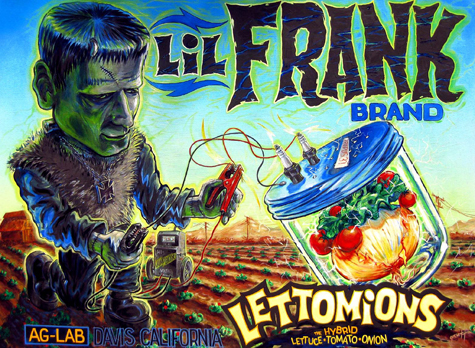
Gossett’s works have been seen at a few select galleries around Sacramento and sold at various car shows over the past decade, but his current work draws specifically on the playfulness and base impulses of a childhood fascination: Wacky Packs. His artwork follows this tradition of plagiarism and parody, using existing advertisements and iconography from the custom car world to create tongue-in-cheek fine art works that connect an adult world of masculine custom hot rods with the juvenile playfulness of puns and gore.
Gossett has developed his art over the years working with multiple graphic forms, all of which have influenced his relationship to the canvas, his preferred medium. He’s printed T-shirts, rock and car show posters, stickers and done customized airbrushing and detailing on cars. He once tried his hand at stand-up comedy, only to realize he didn’t like the spotlight and has since found his calling in a small, insulated shed-studio in the back yard of his West Sacramento home. Gossett spent years going up and down California, attending car shows, selling his works: T-shirts, posters, stickers, fine arts. And the influence of this culture has been foundational to his development as a graphic and fine artist.
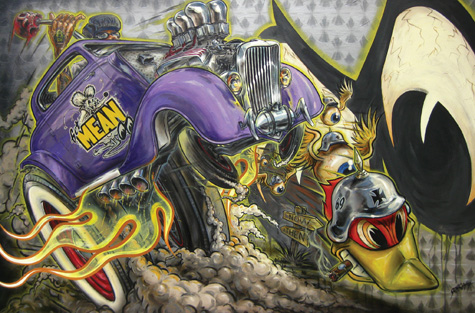
But it’s not just car culture in general that Gossett finds alluring, it’s a specific subspecies of that broader category, those custom car creators, the seedy underbelly of that combination of Detroit automobiles and California counter culture. This DIY renaissance of the automobile, the material object that transported America from farmlands to urban spaces, appears in the work of Gossett as an image set to be appropriated and employed according to a particular set of aesthetics.
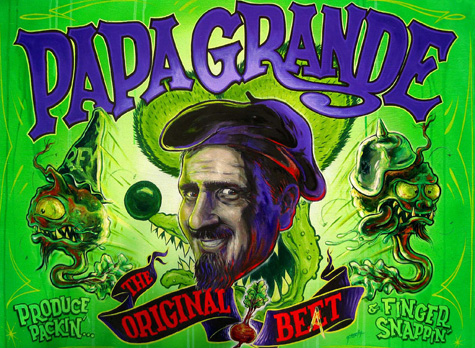
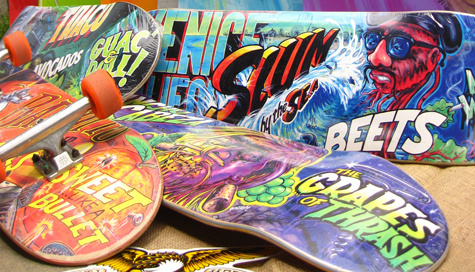
These counter culture references are manifest in his current work, the Speed Equipped series, which will be shown for Second Saturday in October at So-Cal Speed Shop on Del Paso Boulevard. The Speed Equipped show focuses specifically on parodies of logos for hot-rodding companies like Moon Speed Equipment, from which the show takes its name. Gossett has created a set of produce brands with the low-brow humor of those Wacky Packs, and he has even been tapped by Anti-Hero Skateboards and local John Cardiel to create the artwork for a pro-series of decks. Gossett’s works span multiple culture groups and as such he’s a significant contributor in the battle against bourgeois ideals and high-art. He’s a working class artist, and that’s just why we like him.

Tell me about your new show, Speed Equipped.
I was obsessed with Wacky Packs in the ‘70s. They were parodies of national products. You know, household products, Windex and stuff like that. They basically mocked them and made fun of them. They were stickers in chewing gum packs. I remember kids covering their closet doors with them, much to the chagrin of their parents. I got obsessed with them. It was funny. The imagery was so base and crude, like it was painted with a broomstick or something. The humor was just great.
Finally, I thought about it one day, and I’ve never seen parodies of the speed equipment. I’ve always been immersed in the car thing, and I thought why not make fun of the icons of the rod and custom world. It’s something I’ve been working on over a two-year period. I’d like to get them out there and get them seen. I think there’s a generation that grew up in the ‘70s around Wacky Packs, skateboarding, punk, irreverence and that audience totally would get it.
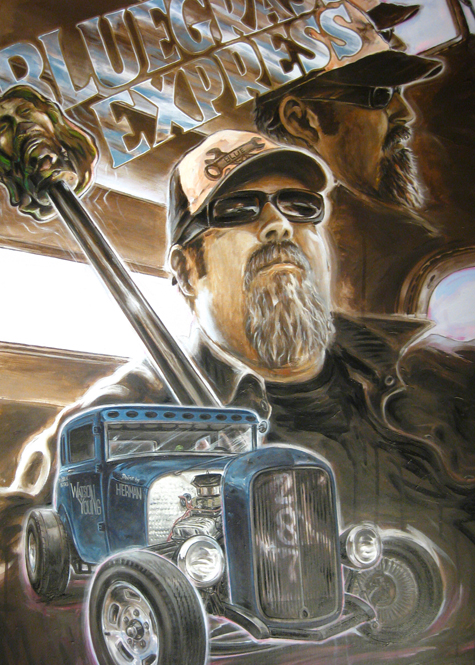
I’m also showing some of my Builders Series. It’s the guys that build cars that I dig, but they’re the new generation of builders as opposed to the old generation. It’s not fair cars and Sunday drives, lawn chairs and car shows. There’s a new generation of builders and hot-rodders and the vast majority of them are coming out of the skateboarding world.
Can you explain how that series is different for you? How it’s a change of direction from your previous work?
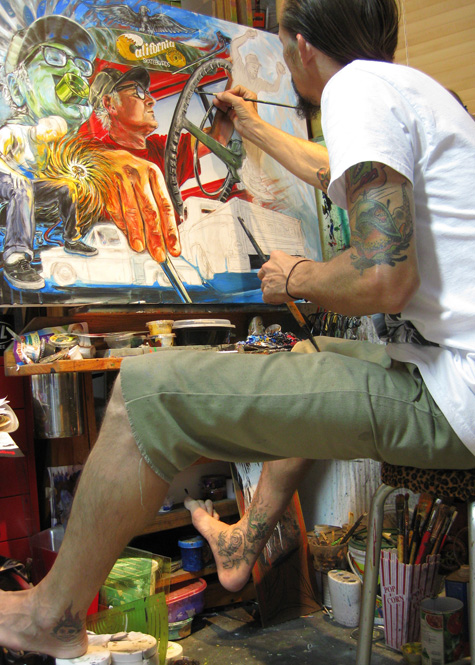
The Builders Series is more photo-based. Sometimes it’s the vehicles they build, and I’ll focus on that. Other times I’ll start introducing images of the builder, so it’s a little more personal. It’s difficult, painting portraitures and capturing likenesses. It’s more representational, photo-realistic, but I’m making them psychedelic, lots of drips, lots of maneuvering of the surfaces so that you know it’s a painting as opposed to an airbrushed, photo-realistic work.
What’s the best and worst parts about being an artist?
Being locked in the studio is boring, frankly. There’s nothing more I’d like to do than be in the studio for 10 hours and paint. But by that eighth hour, I’m probably pretty sick of it. The days are weird. There are times when it’s fun; there are times when it’s work. I think I like the beginning and the end best. I like when it hasn’t been touched and I first lay in backgrounds, working from the rear forward. You’re establishing a mood when you first start, so it’s fun. Anything is possible. And in the end, it’s always nice to finish something. You’re happy it’s out of the way.
Once I finish something, I don’t want to look at it for a while. Then a week later I’ll obsess over it for about a week, and then I’m usually pretty good with it. For that reason I always have half a dozen paintings going at any given time.
How do other forms, graphic design, T-shirt printing, etc., influence your work?
These are like complex graphics really. My knowledge and experience over the years from different industries, sign painting, pin-striping, graphic applications for hot rods, on vehicles, I get a lot of influence from those other forms. To produce really clean graphics you work rear forward. Do your infill colors and then hit the black lining. It’s really the cleanest way of producing stuff.
When did you decide to take your artwork seriously?
After about the first year, I took it seriously. I started in 1989. I’ve always designed stuff and did things with paint. We stole Testors paints from Thrifty’s and pay for a ten-cent ice-cream cone, and we’d customize our skateboards. I’ve always been around cars, my family was in the car industry. I wanted to get away from it, so I actually tried my hand at stand-up comedy. That didn’t go real well. Then I took a class at City College, the material was stale but I took to it real easy. I realized not only that I had an aptitude for it, but that I enjoyed it. And I was useless in other areas. I just had a short attention span, and the art thing seemed limitless. It really took off in the mid 90s when I really started pursuing more of a car based or an automotive bend.
What is it about cars and hot rod culture that you find so alluring?
I’ve always had old cars. My first car was a 1972 Chevelle I fixed up before I had my license. It seemed like a meathead world to me. You’ve got to understand the ‘80s. It was the dark days for this car thing. There was a renaissance in the ‘90s, and I got introduced to Big Daddy Roth and that whole world. It was like the thinking man’s hot rod. It was the Bad News Bears, and I missed that from when I was a kid. I realized there were these weirdo hot-rodders, and it totally clicked with me. I decided to get back into it. I built a few cars. I just jumped in.
Even if it doesn’t have cars, I still call some stuff hot rod art. It’s just got an aesthetic. Even a portrait or something, just the way the paint’s moved, it screams hot rod to me. I like a lot of aggression in my art, a lot of action and movement.
How’d you get hooked up with Anti-Hero Skateboards and John Cardiel?
Cardiel saw my Fresh Ripe and Delicious show at A Bitchin Space. He saw the preview in the University Art window, and he totally got it. He totally remembered the Wacky Packs. He said, “I’ve got six riders and I want you to personalize a piece for each one.” I got where each rider was from, their hometown, where they were born. I did a bit of research and developed ideas. It was crude, tounge-in-cheek, vulgar, but it was a skateboard company, no holds barred, and he totally got it. He’s a squirrel; he’s cooler than shit. It was the most perfect client you could ever ask for.

Bruce Gossett’s Speed Equipped opens at So-Cal Speed Shop in Sacramento on Oct. 6, 2012 from 4—9 p.m. The Second Saturday reception will take place the following week, Oct. 13, 2012 from 5—10 p.m. While there, check out a preview of Gossett’s Builders Series. For more info, contact Gossett via http://www.facebook.com/BruceGossettStudios.
Art Brutal
When Submerge caught up with local artist Gale Hart, she was building, of all things, a skateboard ramp in her studio.
“I think I started [skateboarding] when I was 17, 18, when they started building skate parks,” Hart says. “I saw a skate park and said, ‘Oh, I’ve got to learn how to skate.'”
Over the past few years, the 53-year-old artist reports that she has been “really into” skateboarding. While it may not directly affect her art, she does say that the frenetic activity is strangely relaxing.
“It’s one of those things that you have to be completely present while you’re doing it, so it takes me away from any stress,” she explains. “It’s like nothing else I’ve ever done. I’ve bicycled and you can daydream and stuff while you’re bicycling, and it’s not like you have to be consciously alert.”
It may not be what’s expected of a woman in her 50s, but doing what’s expected hasn’t had much sway over Hart through out her life. Just out of high school, she spent much of her time living on the road, in a van, traveling to parks and malls where she would ply her woodcarvings. She recalls, “Back then, malls were really high caliber, a lot different than they are now. It was like a way artists could promote themselves.” But further back than that, Hart remembers realizing her talent for drawing at age 12, though the work she was producing at the time was quite gruesome.
“I started drawing seriously when I was around 12—I mean real morbid, dark stuff,” she says. “Other people started noticing that I had talent, but they had such an aversion to what I was drawing—knives through hearts, daggers through ears and just weird things that pre-teens kind of do.”
Though she says, “I actually don’t think I ever wanted to do anything when I grew up for a living,” Hart eventually settled into her role as an artist, a role that she says comes with great responsibility.
Over the years, she has worked in many mediums—such as photography, sculpture and painting—and has also helped promote the work of others through her gallery A Bitchin’ Space. She has also been curator for shows such as the Circus Art Show, the second installment of which featured live performers, over 100 artists and attracted over 3,000 visitors (including the mayor of Sacramento). She says that experience “kicked her ass,” and now, after a four-year break, Hart has returned to painting. Her latest work can currently be seen at the Solomon Dubnick Gallery as part of The Animal Within exhibit, which will host a Second Saturday reception on Feb. 14, and will be on display through Feb. 28. On very short notice, Hart was kind enough to answer a few of our hastily formulated questions.
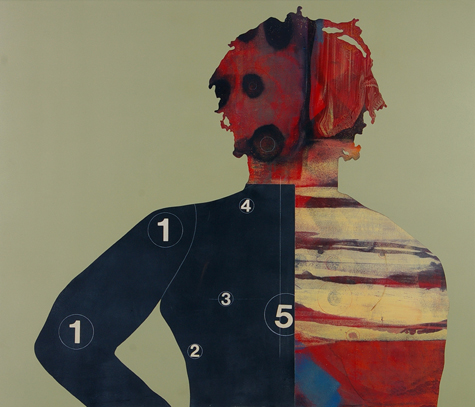
5 Points
You were talking about drawing really gruesome images as a pre-teen, and I noticed a link on your site to Artbrut.com, I think. I was wondering if you consider yourself an outsider artist, or if you align yourself with the art brut movement.
Well, with the lowbrow movement, I think things changed in my age. I was doing stuff that’s popular now back when I was a teenager. It didn’t have its day then. Defining myself, I think I’d say I was more self-taught. I’d say that the fact that I didn’t go to an art gallery until I was in my 30s, I guess you could kind of consider me in that genre (outsider art), but I’d go more with self-taught.
A lot of the images I saw of yours were frightening—even the funnier ones. One image from the Why Not Eat Your Pet series features some of the Seven Dwarves surrounding Porky Pig. Are you hoping to shock people who view your artwork?
Well, no, I’m hoping to educate them. I’m hoping that my ability as an artist is interesting enough that people take the time to stop and look at my work because of my skill, and then they’ll get the message.
People are really attached to Warner Brothers and primarily Walt Disney characters. People just have this affection for them, especially my generation and people from their 30s to about their 60s. When you do something with the Walt Disney characters that’s out of the norm, people freak out. They get in your face. And I think, well at least they’re paying attention, but it’s interesting to me because I could take the same content and not use a recognizable character and people will not get the same attention the Disney characters do. I find that really interesting how they care more about the Walt Disney character sometimes than they do with what’s going on in the message and what they’re participating in with their lifestyle.
That’s interesting. I guess people really take those characters to heart.
Yes, I don’t think my intention necessarily is to shock. I think art is a great tool for raising consciousness. I think artists have a responsibility—when they really discover that inside themselves and see what their work evokes in people. Not just, “Oh wow, you’re a great artist,” or, “Oh wow, your technique is good. How do you make those surfaces?” When people come up to me and go, “I really get what you mean,” and, “Oh, man, I didn’t know that happened,” then you just start to be responsible and realize, “I’m really affecting the people who see me.” As an artist, you’re public. I think that comes with a certain amount of responsibility. If you want to really contribute to helping the planet or humankind, I think then, when you know that you can do that, that people will make the right choices as artists, and I did. I just can’t sit around and paint pretty pictures or blow people away with my talent, or all the normal things that the ego drives within art. All of those things are going to remain in my art, but I feel more obligated to talk about how we treat other species.
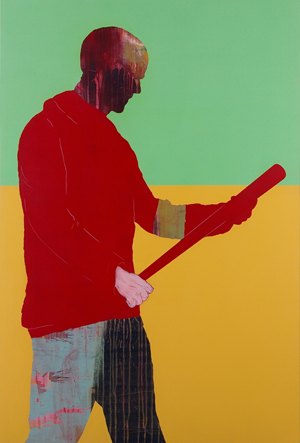
Bully
The relationship between man and the animal kingdom seems to be a common theme that runs through The Animal Within paintings and your other work. Is it just a hope to educate that draws you to those themes?
How we treat animals reflects who we are as a society, so it’s not just about the animals. It’s about who we are as humans. We’re taking creatures that are so sensitive and so innocent”¦innocent beyond belief. They’ve created no problem in the world other than doing their job, whatever their job might be as the animal they are, and we’re just destroying them and destroying everything else around them. It’s mostly just, “Knock it off.” Come on, people, just knock it off. You have so much power and control. I mean, if someone doesn’t eat an animal, they save a life. The average person eats 83 animals a year. I save 83 lives a year by not eating them. That’s pretty empowering. It’s about raising awareness. If it was about shocking people, I could do that. I could do that to the point where it makes them turn their heads, but I want to invite people into my work and at the same time, I want to put that information out there too.
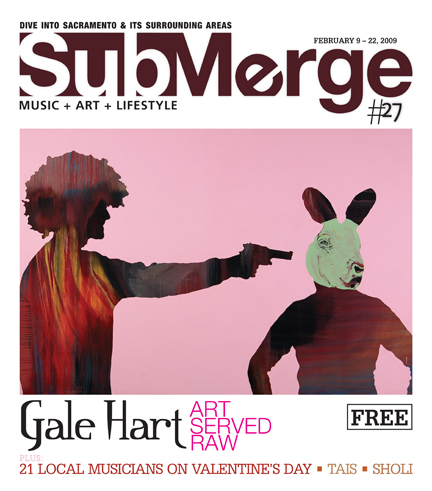
I wanted to ask you about one specific painting in the exhibit, which also appears on our cover (see below), Forced to Wear Make-up. A lot of the painting is silhouetted, but there’s a small section, an animal’s face, that’s a lot more detailed. Would you mind talking about that piece a bit?
I like that juxtaposition of either pencil and paint, or mixing mediums so maybe they
have a collage element to them. Actually, I don’t really care for collage work that’s done with not an artist’s own work. I like it when artists use collage within the context of their own work.
For that piece, those silhouettes were two people I knew. What I was looking for was something that was super flat, and at the same time, there’s a lot of content and energy in the work too. I like that juxtaposition”¦
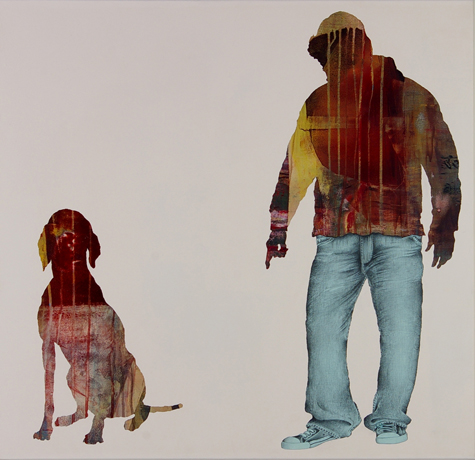 Property
Basically, it’s an abstract painting, and that abstract has got a lot of dimension to it. It’s got highs and lows. But then all of a sudden, when it becomes a figure and it becomes the silhouette, it loses all that. You can’t see the depth. I find that as an illusion, kind of, so I’m kind of interested in that. Now mind you, that all this work is experimental. All you’ve seen is all the work I’ve done, and I did that in a month. Basically, Jan. 1 I just started painting. So to talk about it is a little difficult, because it’s new to me, too.
In Forced to Wear Make-up, you have a silhouette of a very violent image, but the background is a very gentle pink. Is that something you planned on when the image was in your head, or is that something that came up while you were painting it?
In everything I do, I try to make the background this really inviting kind of pastel, sweet, soft color. And the movement in the abstract is all dark and dreary or bloody looking. It’s the dichotomy and hypocrisy of us as humans. That’s what some of that intention is with using soft pastel colors with stuff that’s really brutal.
Local Artist Eli Trujillo Mixes it Up on the Palette
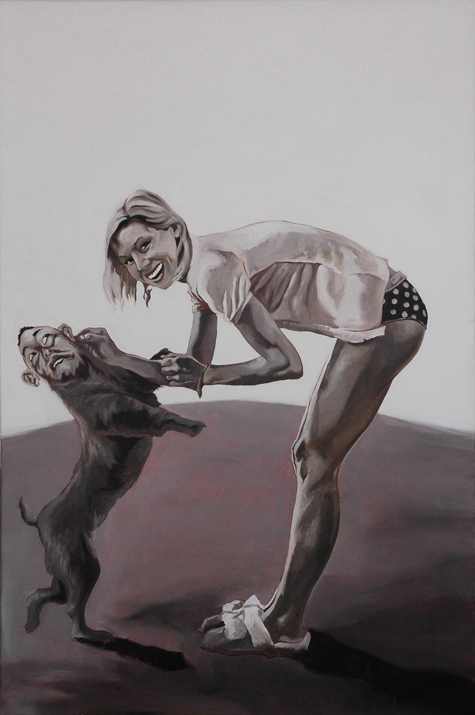
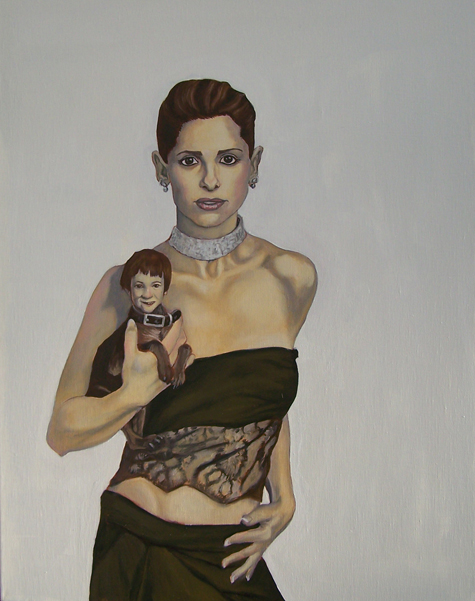
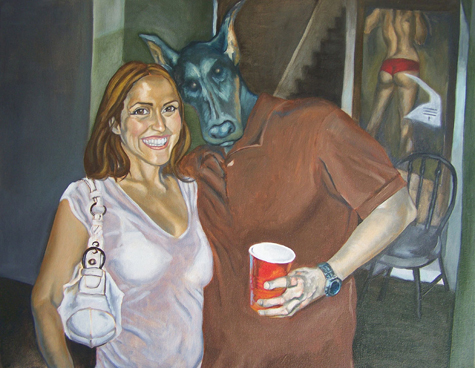
A beautiful blonde plays with her dog in the park—wait, does that dog have a human face? A young couple takes in an art gallery pose for the camera—hold on, looks like the boyfriend has morphed into a gargoyle! Enter the colorful and sometimes bizarre world of local artist Eli Trujillo. Most of his paintings begin with a real person in mind, either a friend or family member, or perhaps a recent celebrity infatuation; but when the genius begins, Trujillo starts making changes.
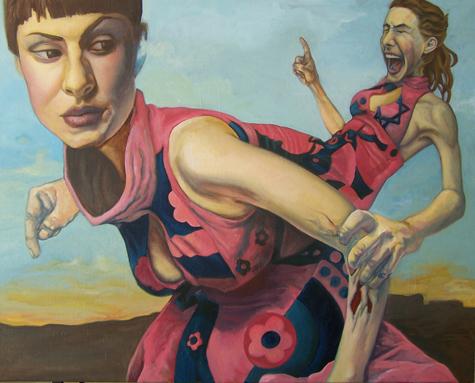
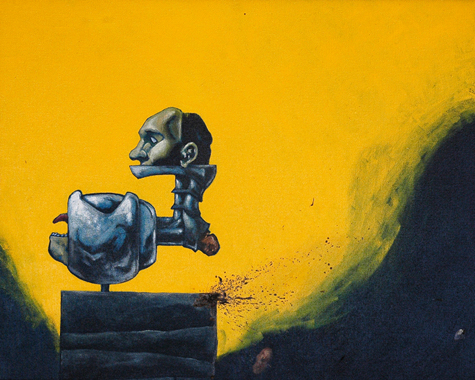
He describes his sometimes funny, sometimes serious twists on real people as “not exactly a remix; more like a cover toon.” Growing up on a diet of comic books, Trujillo cites comic book painter Simon Bisley as the artist who sparked his interest in painting. Add the influence of Norwegian figurative painter Odd Nerdrum, and what emerges are unlikely portraits that morph ordinary humans into two-headed women, dogs with human heads and bug-eyed cartoon beauties.
“One of the major things that comic books did was give me a strange idea of what humans should look like, as far as guys being super buff, having six packs and being able to punch through walls,” Trujillo said.
Unfortunately, the real-life Trujillo does not possess superhuman strength, and spent many years working regular jobs, including a brief stint blending Caramel Machiattos at Starbucks, which he quit after watching Fight Club too many times.
“I just started hearing about consumerism and the corporate world. I was going to try and do with less and see if I could make it not working,” Trujillo explains.
His days of corporate freedom lasted two glorious weeks; then, it was back to the daily grind and another mindless job. Eventually, though, the small boy that used to draw cartoons spoke up, and he began to take his art more seriously. In 2007, Trujillo quit another job to pursue a degree in Art Studio at California State University, Sacramento.
Since moving to Sacramento in 2004, Trujillo’s work has been shown mostly in smaller, more alternative art spaces like Greg Pond Photography in 2006 and Studio Yes in 2007, as well as A Bitchin’ Space in 2007 and the Brick House Gallery in 2008.
Beginning Sept. 13, Trujillo’s paintings will be part of a circus-themed group show at A Bitchin’ Space. The various paintings will make up a circus train, but it’s doubtful that Barnum & Bailey would approve. This show is “a protest for animal cruelty,” Trujillo says. And don’t expect participating artists to spoon-feed their message to the public. Trujillo explains that it’s up to local Sacramentans to decipher their protest message: “We tell people it’s just a circus show,” he said.
Although Trujillo’s paintings pack a powerful (and colorful) punch, most aren’t intended to make a statement.
“I’m just letting people know what’s going on in my head,” he said. Movie buff and self-proclaimed junk—TV watcher, many of his paintings highlight celebrities.
“It’s interesting that you can get infatuated with people that you don’t know,” he said. “Most recently, I have been working with the ideas of celebrity worship, idealism and the unreasonable expectations they create. In conjunction with these works, I am beginning to use photos from my family archive in the same manner, creating an interesting juxtaposition when shown together.”
Trujillo also creates what he calls “personal propaganda” pieces, which serve as good advice—directed toward himself. For example, he’ll paint a picture of himself with no shirt on.
“I’ve got a nice gut going on. [The pictures] make me not want to eat ice cream so much,” he laughed.
Trujillo says that these paintings are meant mostly for himself, but it’s quite possible that others could learn from them as well.
“Almost all my paintings are personal and autobiographical, so I think it’s hard for people to really get a hold of them,” he said.
Formal instruction in art has greatly improved his ability with techniques like space and volume, and he’s noticed that his paintings have become increasingly more realistic as his skills improve.
“I’ve recently been making a conscious effort to place the figures in an environment rather than, say, a red or gray background, to create a more believable space,” he explained. Looking back on work that was completed in the past, he notes that some paintings are much more juvenile than others, and oftentimes he’ll change or alter these paintings. “Something I’ve just started doing is not being afraid to change things”¦even two years after its finished,” he says.
On the other hand, though, he hasn’t lost his love for goofy-looking superheroes. “Although I take my paintings seriously, I also try and inject a bit of humor into them. I would love to see someone fall over laughing at one of my works, but this has yet to happen.”