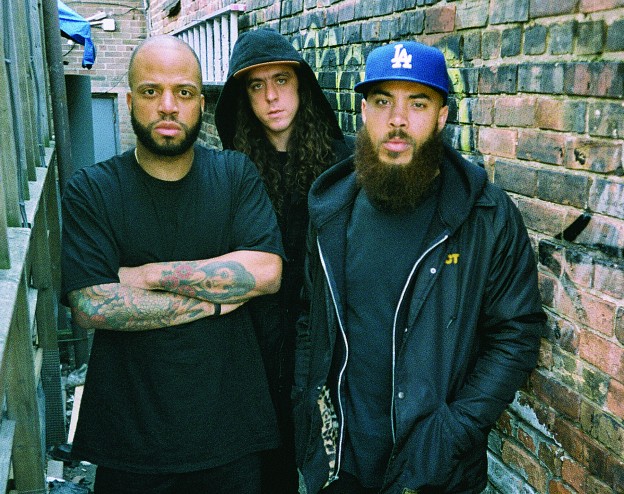
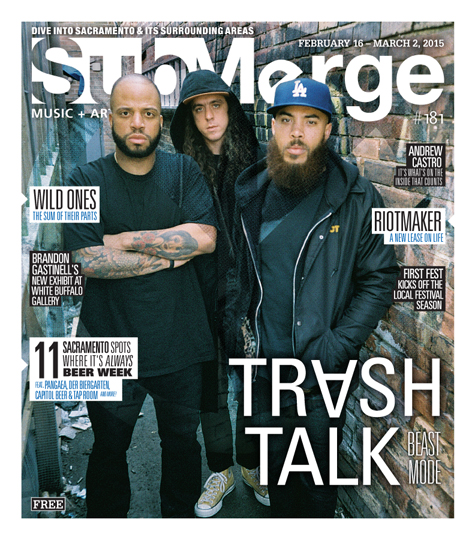
I love Lee Spielman’s tweets. Sometimes you can tell he’s been smoking weed: “Antwon just showed me a photo of @JLo and said ‘Look @MelissaJoanHart got ass.’” Other times, you can tell he’s high out of his goddamn mind: “You ever stop and admire how nice someone’s front yard is?” And, on occasion, his tweets are downright frightening: “Talking to the Sacramento newspaper later today about playing our first show there in about 7 years. Might Marshawn Lynch the interview.” Ah, Lord. Do you know what is worse than an awkward interview? Nothing. So for the next day I was truly scared about talking with Spielman, the singer whose band Trash Talk I consider one of my favorites.
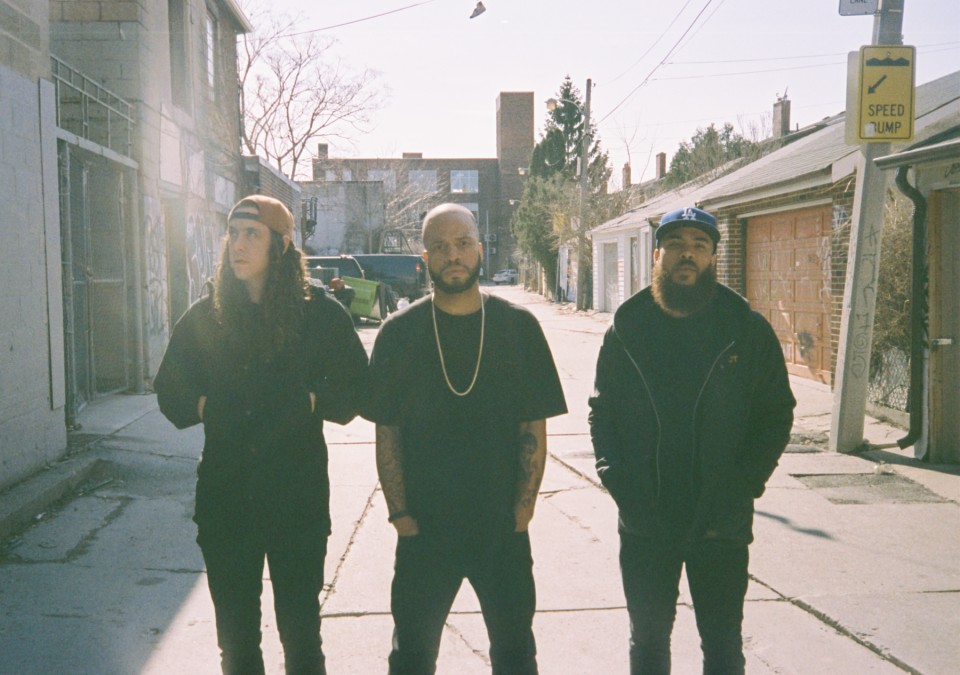
Trash Talk has been playing hardcore music for the past 10 years and the band has seen a dizzying amount of success, especially for such an aggressive, not-pop-friendly band. They’ve played huge festivals, gotten to work with incredible producers—like Steve Albini (on the Trash Talk album) and Alchemist (on No Peace)—and they even signed to the Odd Future label, which still confuses hardcore and punk purists to this day.
The band, known for their chaotic live shows where the crowd tends to break limbs and destroy venues, is 100 percent chaotic energy. So, needless to say, the prospect of talking with Spielman was exciting, and I had a lot of questions for the Sacramento native. I wanted to know what he thinks about his old hometown and why he left; I wanted to ask him about his collaboration with Odd Future; I was dying to hear him discuss his band’s wild reputation and some of the trouble he’s gotten into with Trash Talk; and I was also wondering why his publicist said he was working construction.
So, I guess the question is: Did Lee Spielman Marshawn Lynch this interview? Well, that’s up to you to decide.
I was so stoked to see you still have a 916 number.
Yeah, I’ve had the same number since I’ve ever had a phone.
The publicist said you were doing construction.
No, I’m building something for us.
What are you building?
Just a bunch of shit for our tour. A bunch of crazy shit. I can’t really talk about it. You’ll see eventually.
Do you work on a lot of other stuff that’s not music?
Yeah, we’re working on a lot of shit. That’s why I’ve been building all fucking day. Working on a lot more stuff that’s outside the box. The last couple months we’ve been having a lot of fun doing creative stuff, from, like, art and ‘zines to collaborating with other artists and brands that we like and not keeping it so cookie cutter on our side.
Oh, OK. Man, I love No Peace. It’s so good.
I appreciate that, man. We were trying to do something different from the demos to what we have now. I don’t even know what the next stuff is going to sound like, but it’s just kind of boring to make the same music over and over. We all know by this point we know how to make short, fast, aggressive punk songs. It’s kind of fun to test ourselves, and we try to do that every time.
When you think back to the beginning of Trash Talk is it odd to think that your little hardcore band ended up being successful and you’re getting to tour and travel and things like that?
Yeah, it is weird. But, then again, it’s something I’ve always loved and have been involved in forever. So it’s weird, but I don’t know what else I would want to do. I’ve been involved with this stuff since I was a little kid, so it almost makes sense. And it’s kind of rad that it turned out the way it did. But I think [our success is] because ever since we started we’ve been 100-percent all the way.
What do you think you would be doing if you weren’t in Trash Talk?
I have no idea. I’d probably would have went to college and shit like that.
Is it weird that we still kind of claim you as a Sacramento band?
I did a lot of things there as a kid. We started playing there when I was a little kid. I booked shows there for the better part of high school years. It was almost like I could say that I learned how to be in a band and how to tour through booking shows in Sacramento.
Was that at Westcoast Worldwide?
Yeah. [Mike Hood] would leave for tour and me and my friend Jason T. would legitimately go to every single show there. We didn’t care what kind of band it was, whether it was a thrash band, a punk band, whatever. I don’t even think they knew my name until the first year. We went so many times and…we kind of took over for a little while. That taught me how to treat bands on tour—how to pay bands, how to book shows, how to promote shows. I kind of owe that whole area of us starting [to that period of time] because I booked all our first tours and it was like, “Hey, remember that time I booked you a show in Sacramento? Can you book me a show in New Jersey?” It was just kind of a tradeoff and punk and hardcore is cool for that. I met all my best friends like that.
Anthony Anzaldo from Ceremony was talking about Westcoast Worldwide and he remembers it being a huge pile of shit.
Yeah, it was a shithole. But it was our shithole, so it was OK.
Do you ever miss Sacramento?
Yeah, my family still lives there. Some of my best friends still live there. I’ve just been going so hard doing other shit. I don’t know, the day I turned 18 I got in our bass player’s car and drove straight to Seattle, and then I haven’t moved back home since then. But it’s been fun because I’ve lived in London, Seattle, Philadelphia, San Francisco, Richmond, Virginia. I feel like every kid should get out and see what’s up. Sacramento is a beautiful place and I’d be psyched to have a house there one day or some shit. I’m too young to be stuck there right now.
Do you think it was important for your band to get out of this place and just go?
I think we got to the point where it was like we were getting asked to play a lot of shows in Southern California and stuff and it was like, “Fuck it, let’s just go to Southern California. We drive there every weekend, anyway.” We all kind of moved apart. Our bass player was living in Bakersfield, our drummer in Los Angeles, our guitar player in Seattle, so one of the main reasons of me moving out was so we could all move to one place and operate as a unit. That helped us get a lot of shit done.
What has Odd Future helped you do?
There’s just other opportunities. It’s more like a whole new set of eyes and ears to work with on the creative side. And just kids in general. I don’t feel that punk and hardcore should be stuck to punk and hardcore kids. [Music should be] projected to someone that can make their own opinion to whether or not they like it, but a lot of time people don’t get the chance. Some kid at an Odd Future show may never have heard of anything like this, but the second he sees it he’ll know it’s his favorite shit. So I think it’s really important to do shit like that in general. Like, we’re coming through Sacramento with Ratking. We’re down to play with Wavves. Or a DJ. Or whatever. It doesn’t matter.
I never heard Ratking until I looked at your flyer and YouTube’d them. They’re really good.
That’s what it’s all about. Shit like that. And then vice-versa. There’s probably a kid in Sacramento who’s never heard of us and going to see Ratking and typed [Trash Talk] in and is like, “Damn, this is tight.”
Skateboarding has always had this connection between punk rock and hip-hop.
I’ve always said that forever. Like, Ratking, we’re going on tour with them. There may rap and stuff and we play a different genre or style of music, but at the same time we’re all the same kids. We got into music for a reason and we’re traveling with our friends, seeing the world, having fun—skating, tagging—doing whatever we want. At the end of the day, regardless of the genre, we’re kind of the same kids.
Since you guys are touring so much, do you ever just get tired out? Like you don’t even want to go on stage?
For sure. Sometimes I’m like, “This fucking sucks. I can’t do this.” But then maybe like 10 seconds before the first note it’s like, “Alright, this is OK.” Then five minutes into the set it’s like, “This is fucking sick.” Halfway through it’s like you forgot how you’re feeling. But this next tour is like 30 days. It’s definitely going to take its toll.
Have you ever played Harlow’s before?
No, I’ve never been there. Is it on J Street or some shit?
Yeah, it has a weird ‘80s lounge vibe. And VIP booths.
That’s tight. We haven’t played Sacramento in hella long. I’m curious to see what’s going to happen.
Do you guys get in a lot of trouble at your shows?
Yeah, a lot. It’s a blessing and a curse. It’s one of those things, people book us to play and they’re like, “Oh, I want this crazy show!” and they get it and they’re super bummed. The crowd’s not bummed. It’s usually the owners or some shit. But it’s not like we ever go out of our way to intentionally break anything. It’s usually not even us. It’s usually the crowd doing too much. We’ve been in trouble a shitload of times. We’ve had riots. We’ve had police shut down our shows. It’s kind of weird now. Every time we pull up, they know we’re pulling up and they have a list of rules of shit we can’t do before we walk in the building.
Is there one rule that people always have for you guys?
Don’t climb on shit.
Well, good, man. I’m glad you didn’t Marshawn Lynch me.
I thought about it.
Who knows what will happen when Trash Talk plays Harlow’s. That’s why you have to be there to find out. The show is March 16 and also features Ratking and Lee Bannon. Tickets for the all-ages show are $15 in advance and can be purchased at Harlows.com.
Mistah FAB breaks past ties and forges a new route
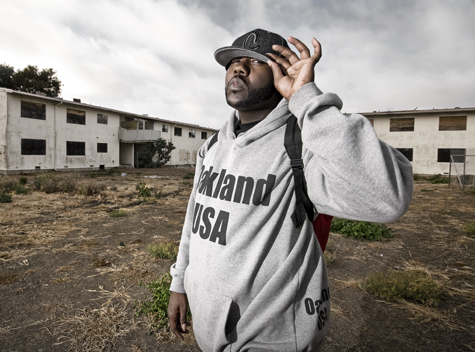
On the heels of the hyphy movement of the mid-Aughts, Oakland rapper Mistah FAB struck gold with the single “Ghost Ride It” in 2006. With its lifted Ghostbusters theme synth line and instructions on how to “ghost ride the whip” (which is such a dangerous hobby that I’ll refrain from describing it for the kids’ sakes), “Ghost Ride It” earned Mistah FAB a contract on Atlantic Records.
He inked the major label deal in 2007, but his anticipated album Da Yellow Bus Rydah never saw a release date. When I asked FAB whether he still ghost rides the whip for nostalgia’s sake, he said, “Naw, man. It’s too dangerous now.
“I’m not trying to make it seem like I’m some old-ass critic,” he said. “I’m 28. My mind is just not there anymore. I don’t even like going out much. I’m an old-ass young man. Going out is boring to me now. I have a daughter, and my main thing is getting home to her.”
Last month, FAB dropped his I Found My Back Pack mixtape, which was rooted in the traditional boom-bap hip-hop vibes, instead of the Bay-centric sonics synonymous with his style. With a new album title for his next official release, FAB talked about the changes in his style, his attitude toward music and the changes in Bay Area music.
The I Found My Back Pack mixtape is neither a sound nor style typically associated with your music, but you’ve always had ties with the backpacker community. Why did you commit a mixtape-worth of material to that style?
Even when hyphy was in its glory days, the albums I put out during those times still had songs that showed ability and a plethora of styles. Unfortunately, what was popular at the time took away from my ability to be creative and speak to the artier hip-hop fans.
It’s been a while since I wanted to focus on that craft. Not only to display my ability, but to just prove to myself that I could still make music that doesn’t have to glorify diamonds, clothes, cars and materialistic items, nor do I have to be on the club scene.
Have you paid much attention to reactions to the mixtape and this new direction?
I’ve enjoyed it. I love the mixed emotions. I love that people are still shocked and say things like I didn’t expect you to do that, which is unfortunate. After all, what’s an artist if he’s not able to reinvent himself, be creative and give people something new to talk about? I love the fact that people are still able to have things to say about me.
From researching the projects you’re working on with Alchemist and DJ Drama and listening to your recent interviews, it feels as though you’re in the middle of a significant change in your career. Especially since your next album will no longer be titled Yellow Bus Rydah, but Liberty Forever.
Life is about growth. Life is about change. It’s about accepting some of the areas you indulged in and admitting faults… With the changes I’ve made musically, if I was to put the album out with the title Yellow Bus, before listening to it people would assume it would be on one of the previous styles I was on and wouldn’t give it its fair shot.
The name of the album is actually the name of my daughter, Liberty Forever. But as for the direction I’m going in, I don’t feel like I’m at fault for it, but I definitely influenced some people to do some negative things. As well as some things I’m pretty sure they wish they didn’t do. It was a wonderful moment. We had fun. We enjoyed it. Some weren’t able to bounce out of it and grow out of it, but it’s like when you’re in college and you’re a wild party animal. Then you see some friends years later and they’re like, “What’s up, bro. Let’s go party.” But you’re like, “Naw, I’m a businessman now.” I’m not trying to say that I’m better, but this ain’t college no more. You know?
That explains my growth; like a frat bother growing up. We had fun, the college days [the hyphy days] were great. Now we’re on the business route.
You’ve reached a point where it’s no longer enough for people to associate you with a Bay sound or hyphy, but as an artist known nationally and not pigeonholed as a regional act, is what you’re saying?
I’ve always had an ability to work with everyone. On my Son of a Pimp album I had a beat by Kanye West, but it stayed under the radar. I am known by the name. I might not be an in-house name to the fans and everyday people, but the landlords know me. It allows me to work with different artists.
On my new album, whenever it does come out, cats like Lupe Fiasco, Rick Ross, Bun B, Snoop Dogg and Jadakiss are on there. I’m working with people’s favorites. It’s very humbling to grow up listening to these guys, wanting to be like some of these guys and now they view me as a peer.
Are you still on Atlantic Records?
I’m not. I’m going through the final stages of this release. But I’m able to make more moves this way. It’s no hard feelings. They gave me an opportunity I didn’t capitalize off of due to surrounding things going on in my life. There’s no excuse for it. Atlantic is a great label. It’s a growing step. I’ve graduated in my maturity to realize that some things I missed because I was immature, not ready for certain challenges–challenges that I am ready for now.
You’ve always struck me as an artist that, despite your deal not working out with Atlantic, you could sustain purely on your live performances and self-released material. I’ve always thought that spoke volumes of your identity as a self-made man.
I appreciate that, man. That’s always been the most significant part of my career, my ability to do a live show as well as continue to create. Unfortunately a lot of artists get idle in their creative processes when they’re awaiting major albums or signed to labels. They just get lost in the sauce. Their relevance erodes. Fortunately for me, I’ve been able to stay relevant on pretty much all levels–the Internet, thank God for the Internet. Sites like Twitter and World Star Hip Hop allow artists free promotion. Shouts to all the blogs that post my new songs and continuously show me love.
It’s my work habit too. I’m addicted to the music. I’m in the studio constantly. I have libraries of music. So it’s nothing for me to put a project together just to sell at shows. For this tour I’m about to be on, I put together a freestyle mixtape. I’ve been able to financially survive. I love my art, but love doesn’t pay bills. What pays bills is hard work and dedication to creating a product and selling yourself–not literally–to keep yourself relevant.
How do you feel about the emergence of Lil’ B in the Bay Area and his elevation to the national spotlight?
I love Lil’ B. When he was 13 or 14 years old, I first recorded a song with [The Pack] and I will always support Lil’ B. I feel that he’s a marketing genius. People are so judgmental on artists that they critique him without even meeting him. He’s established a lane for himself that no one else was covering, no one else was worried about, no one else had even thought about. I don’t see anyone giving him credit for reinventing himself. He turned himself into an entity and made a brand out of himself. The people are ignoring that. We’re in a game where marketing and strategizing of commerce is something that should be saluted, and no one is giving him credit. It just shows you how selfish people are. It’s just disgusting to look at the way people view him.
My concern is it seems that every time an artist from the Bay gets the push into the national spotlight, there’s encouragement at first and then it gets cannibalized by backlash.
I want to shout all the Bay area fans who are haters. They’re like a selfish kid. You know how a kid will have a lot of toys, but then there’s the one toy they never play with that strikes big? They want to say, “That’s my toy! That’s my toy! I had that toy first.” Then it becomes, “That toy’s old. Fuck that toy now. I hate that toy.” It’s like goddamn, bro, are you serious right now? The world finally gets a chance to see what we have and all of a sudden you want to start hating?

Boy Meeting World, Making Great Music
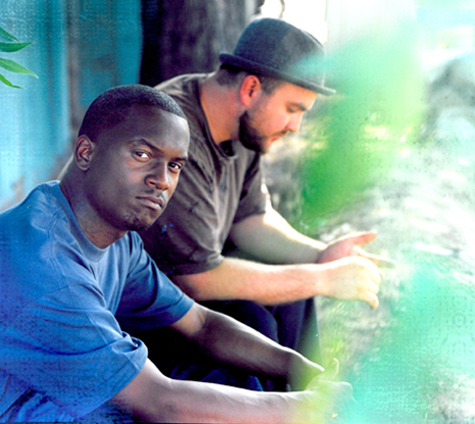
At 21 years old, rapper Fashawn has the maturity and foresight of men many moons his elder. The Fresno native grew up fast and, using hip-hop as a tool, persevered as one of the genre’s youngest and most promising talents. With his debut album, the aptly titled Boy Meets World, Fashawn paints a candid picture of life as an adolescent coming into his own, making sense of relationships and the experiences that are transforming him into the artist we hear through our speakers. He writes from an autobiographical point of view, and it shows with his ability to evoke a broad range of human emotions through his stories. As the listener you see his vision, and feel his joy and pain.
Fresh off a tour with Ghostface Killah, Fashawn along with producer Exile is back on the road for the annual How the Grouch Stole Christmas showcase, which features the Living Legend and show founder The Grouch and Oakland’s shining star Mistah FAB. It’s an amazing lineup unmatched by any tour of note this year, so take advantage of everything each artist has to offer and enjoy a good hip-hop show.
ÂÂ
It’s been a big year for you with your debut dropping, and then The Antidote mixtape with Alchemist. How much of it was planned? And were you surprised by how successful this year was for you?
I would say that most of it wasn’t planned. The stuff with Alchemist, that wasn’t planned at all. That came up from just me hanging with Evidence, and at the time he took me on the Rock the Bells tour. I had the chance to stay at Alchemist’s crib, and from that we started building in the studio and making records. That came out by accident you could say. Just me hanging with Evidence and going to Europe and all that, this time last year I wouldn’t have pictured this. As far as Boy Meets World, we’ve been planning that for a while now. We started recording this album in like early 2008, and we got the label situation around February and we’ve just been going hard ever since.
You mentioned that the album has been planned for a while. Has the Boy Meets World title and concept always been the vision?
Yeah, I said to myself a while ago that if I were to drop an official debut album, that’s how I want to start things off. I think it was a perfect time. I turned 21 the day before my album dropped, and it was just the right time for everything. I had the concept in my head before I even went across the world and saw all these places.
There are points on the album where you talk about how you’ve been rhyming since you were 9.
Yeah, just having fun. I didn’t really start writing rhymes until I was 12. I’ve been in the studio since I was 12 and dropped my first mixtape then.
How did everything you’ve done up to Boy Meets World differ from what you had been doing?
On the mixptapes, it was just me going hard and just spitting the craziest rhymes I could think of. Just trying to find my voice and the direction I want to go. On Boy Meets World, I found my voice. The records on the mixtapes were just me spazzing out, but on the album you hear the concepts and all that. The songs were really produced; you know, Exile really did his thing and made sure everything was precise.
In terms of the music that Exile brought forth, what did he bring out of you? How do you think the direction of the album would have differed if it were a bunch of producers contributing a few beats?
I think if I were to have gotten like Alchemist and 9th Wonder joints on there, the vibe would have been a lot different. With Exile, we have certain chemistry and through the whole record you can feel that. It’s one story, kind of like a score to a movie. I don’t think I could have got that if I worked with a bunch of producers.
This is a very personal album, is there one song that you feel represents you best and why?
I would say “Boy Meets World,” which is like the 10-minute opus at the very end of the album. It’s really just explaining my story from day one to now, from being a young kid with dreams of rhyming to actually growing up and being a man and realizing those dreams. All the experiences I’ve had”¦ “Boy Meets World,” that sums me up right there.
Does all this seem surreal to you at this point? Or in your eyes is this reward for all your hard work?
Nah, it’s very surreal. I’m very lucky to have a great team around me that works really hard. I have a strong work ethic, but it’s a blessing to have the feedback we’re having. You can’t plan that feedback; that’s just something that falls into your lap.
Can you talk about some of pressures that come with the acclaim?
I guess just people calling your album a classic and asking for a second—that’s the only pressure. I don’t know; I’m just enjoying what I’m doing. I love going out every night and doing shows, and promoting my ideas and my music. I heard Lil Wayne say, “What’s life without pressure? Pressure can either make a diamond or shatter things to sand.” I feel like a diamond right now.
When you’re writing for the next album, do the accolades and people calling your debut a classic affect you or motivate you?
I’m already going in different direction creatively. I don’t know, I don’t think it affects me. I think I established myself and who I am with Boy Meets World, just bringing the audience into my life. By doing that with my first album, I feel like I can take my audience wherever I like from the club to the library.
One of my favorite songs on the album is “When She Calls.” The storytelling on that one is crazy, I was wondering if it is rooted in someone you know or is any of it autobiographical?
It’s not autobiographical. When you listen to it, you hear the story through the guy’s eyes, and the second verse is watching the story unfold through someone else’s eyes. And the third verse is what if it never happened. The story was inspired by a friend of mine who killed himself over a girl who didn’t even”¦ I just wanted to show how intense love can be. It was one of the hardest songs to write for the album, actually it was the last song I wrote and recorded. It was a story that people could relate to. It’s a dark subject, but these things happen all the time so I felt the need to talk about it.
To wrap it up, what’s next for Fashawn?
I’m working with a new mixtape with Green Lantern, which should be out soon. I’m constantly in the studio, always working.
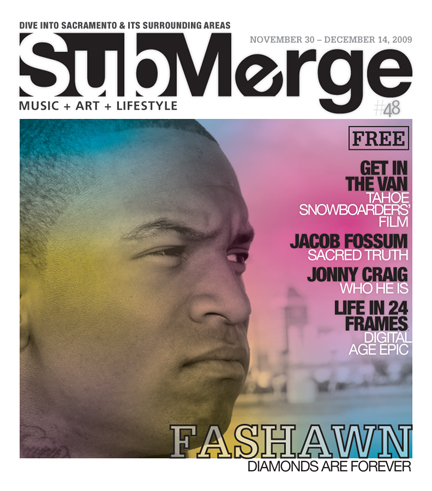
Fashawn played the Empire Events Center on Dec. 12 as part of the How the Grouch Stole Christmas tour with The Grouch, Mistan FAB and Exile.