I started hearing about Jeff Landi a decade or so ago, and it was always in the context of how surprising it was that someone so kind and humble was also so technically gifted.
I don’t need to tell you that there are scores of hateful photographers who sneer pretentiously from behind their expensive Canons. Landi’s photos are special because he’s different. While his work is technically impeccable, what stands out is the outright humanity of his photos. Browsing his work can be an emotional experience wrought with tenderness, pain, surprise, glee, dignity and, well, lots and lots of skateboarding.
Perhaps most surprisingly is how he manages to conjure such emotion in what can sometimes be a really dry genre. Even his photos without human subjects seem to exude a playfulness and compassion that are more than the sum of the objects depicted. His food photos, for example, are vibrant to the point of suggesting motion, and his action shots, while unquestionably portraying motion, evoke a kind of calm that lends itself to the compassion that seems to be the hallmark of his work. To meet the guy, it’s not a surprise. He’s just as full of energy as he is of kindness. Landi is a busy guy between traveling for work, being a dad, shooting personal and corporate photography and now with an upcoming show at Beatnik Studios. With all he has going on, I caught up with him at, of all places, a Sacramento Kings game at the Golden 1 Center to chat about it all.
Landi was able to juggle our interview and the game flawlessly, knowing player names, calling out the big plays and adding context for his unsavvy guest, which in hindsight is probably something photographers get really good at; balancing the action in front of them with the reason they’re there in the first place. We sat down, grabbed a coffee (we’re both dads out on a weeknight after all) and talked about his work over some Red Vines.
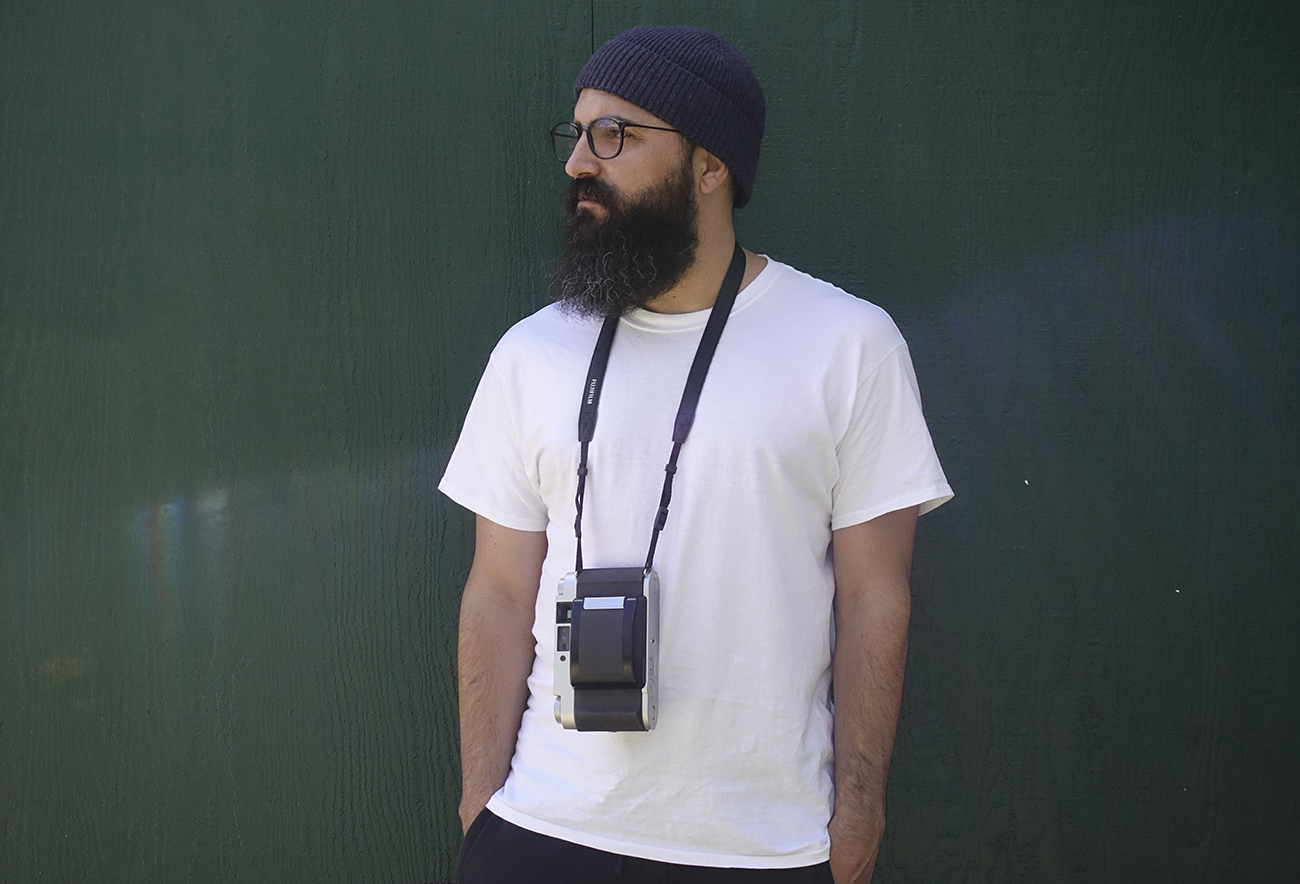
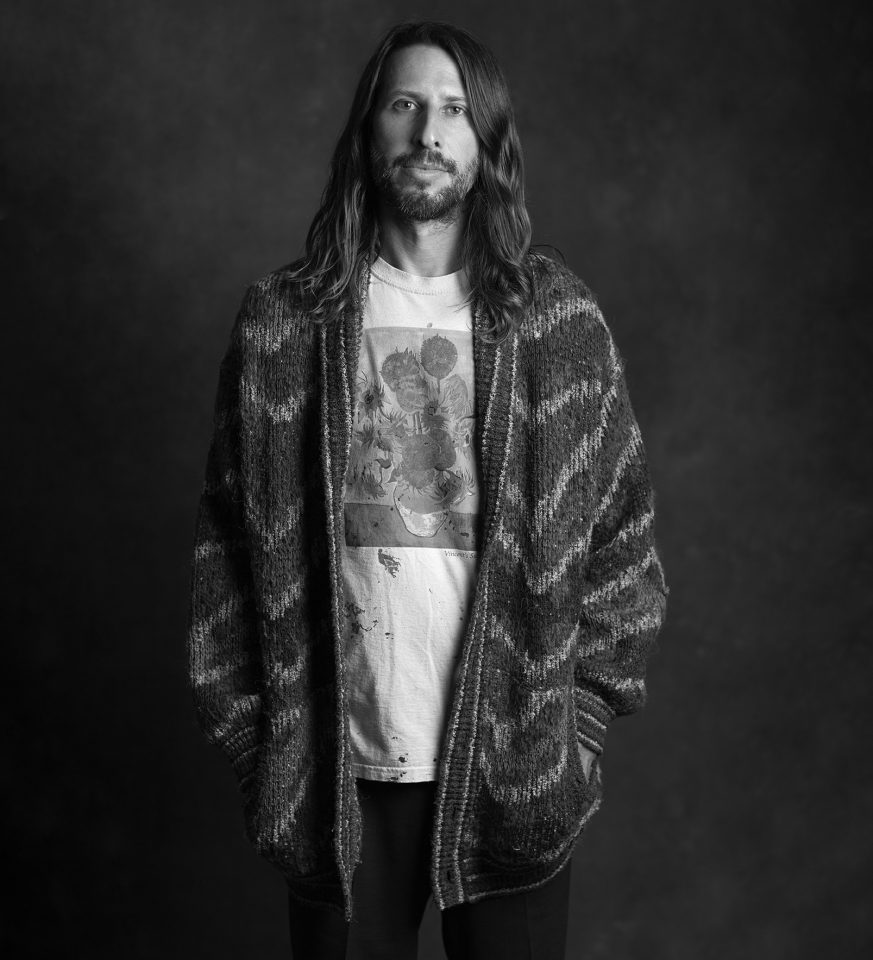
Photo of Jeff Landi by Dan Herrera
How’d you get started?
I think I was always sort of generally interested in photography and videography, but as kids we grew up skateboarding, and from 12 on, we always had video cameras, filming each other. I think as an extension of that, I started taking photos. As I got older, it started to interest me as a career. Initially I took a photo class at Sac State and I fucking hated it! I’m like, “There’s no way I could do this. I’m not interested and I don’t have an eye for it.” Maybe six months later, I had moved to San Francisco and thought I’d give it another crack. So I took a black and white class with an instructor at City College, and she had been working in New York as a printer for some well-known, older street photographers, and she just shared so much inspiring imagery with us—all of this old classic street photography and just brought actual prints and books of other artists, and that got me excited about photography again. I didn’t know what I wanted to do with it, and my photos were awful, but she inspired me. I also had a really good friend in that class who went on to do a lot with photography and video stuff, and we also had another friend who was just there using the dark room all the time, so we had a little crew and I had this teacher, and I wasn’t shooting any skateboarding at that point.
Really, so it was separate for you? You were skateboarding still, I assume?
Absolutely. I was goofing off and randomly taking a picture here and there, but I wasn’t proactively shooting anything. Actually, in that class I did one skateboarding photo and the teacher loved it. She said, “You found what you should be doing” … I looked [at it] recently and it’s not really a very good photo. It has meaning for me, but aesthetically, not so much.
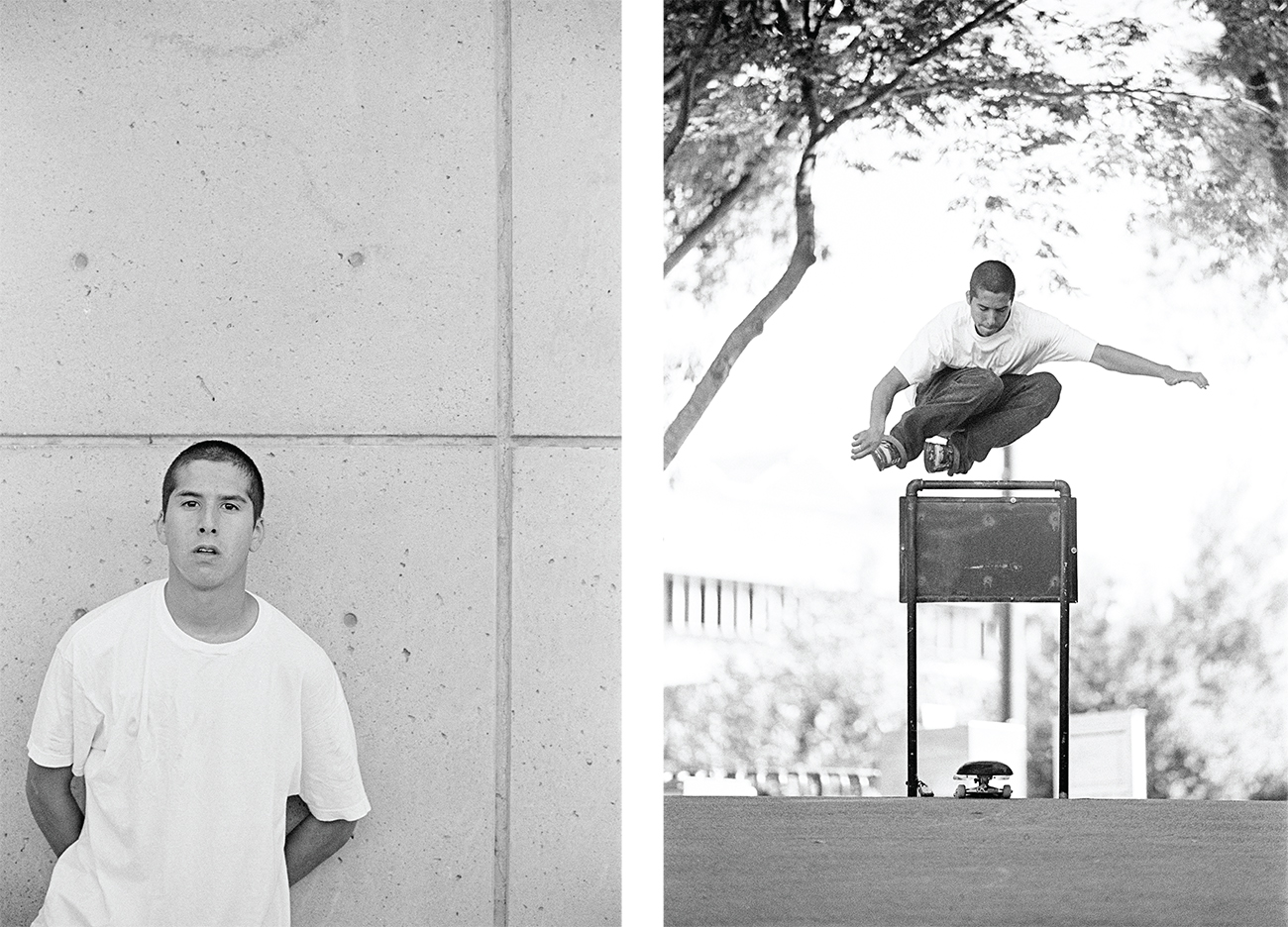
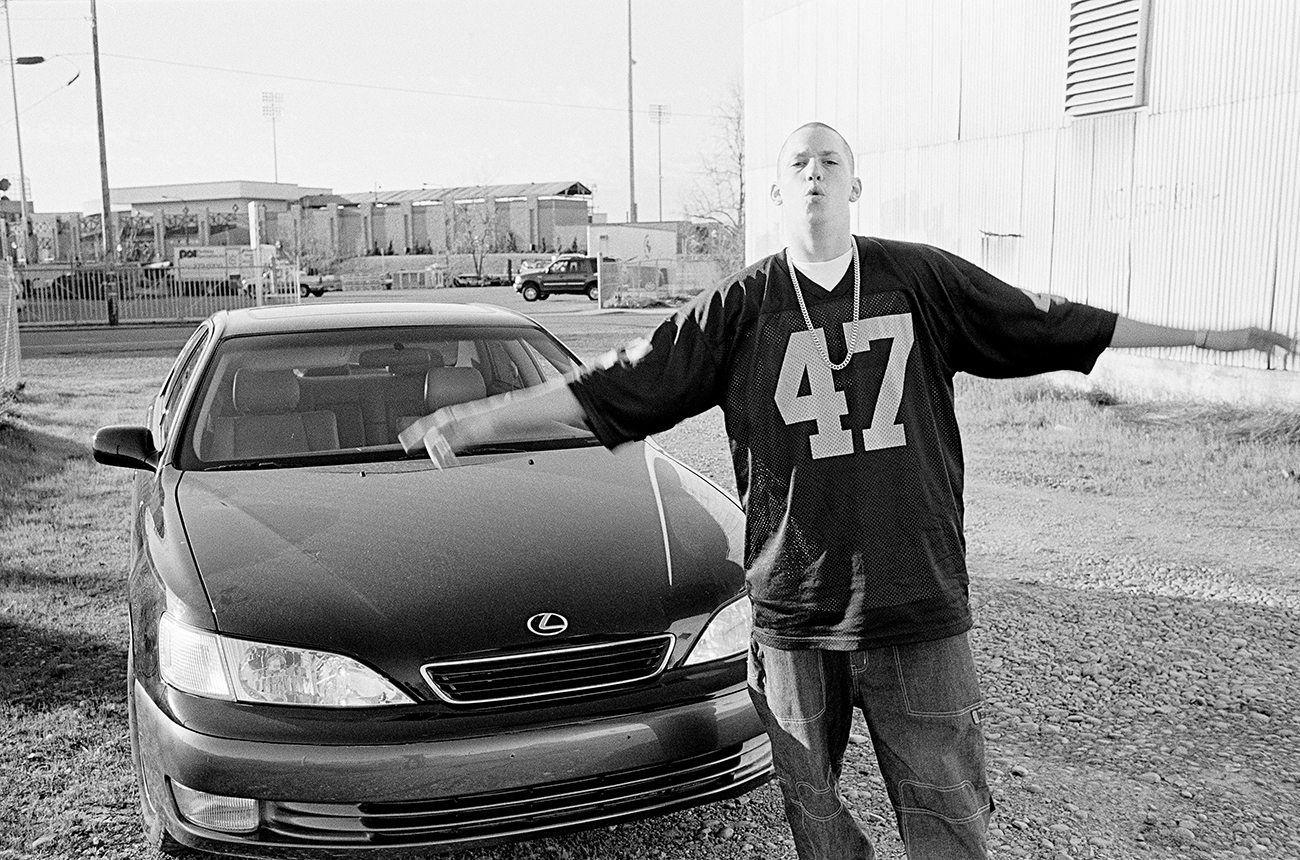
Photos by Jeff Landi | Omar Salazar | 2002
You’ve clearly grown.
Maybe. I think I’ve just shot a lot more. There’s a lot more opportunity for success when you shoot more.
What led you to doing it professionally?
From that class, I started shooting a lot of skateboarding, and got a gig. I started shooting photos for Heckler, if you remember them. Those guys were a huge influence. We all grew up skateboarding and I was just peripherally good, but I knew the Heckler dudes and hung out with some of their photographers. So I had a little experience with them and they hooked me up with film and they had a darkroom and ran my photos—graciously, I might add. Somewhere in there, my friend was working for another skateboarding company called Slap, which is a sister publication of Thrasher. I was fostering that relationship, and then went to San Francisco State and kept exploring photography, and I was already on my track photo-wise, but long story short, my last semester there, they gave me a project on Slap, just photographing for an article about Sacramento skateboarding, and it just took off from there. I graduated and got a retainer gig from them.
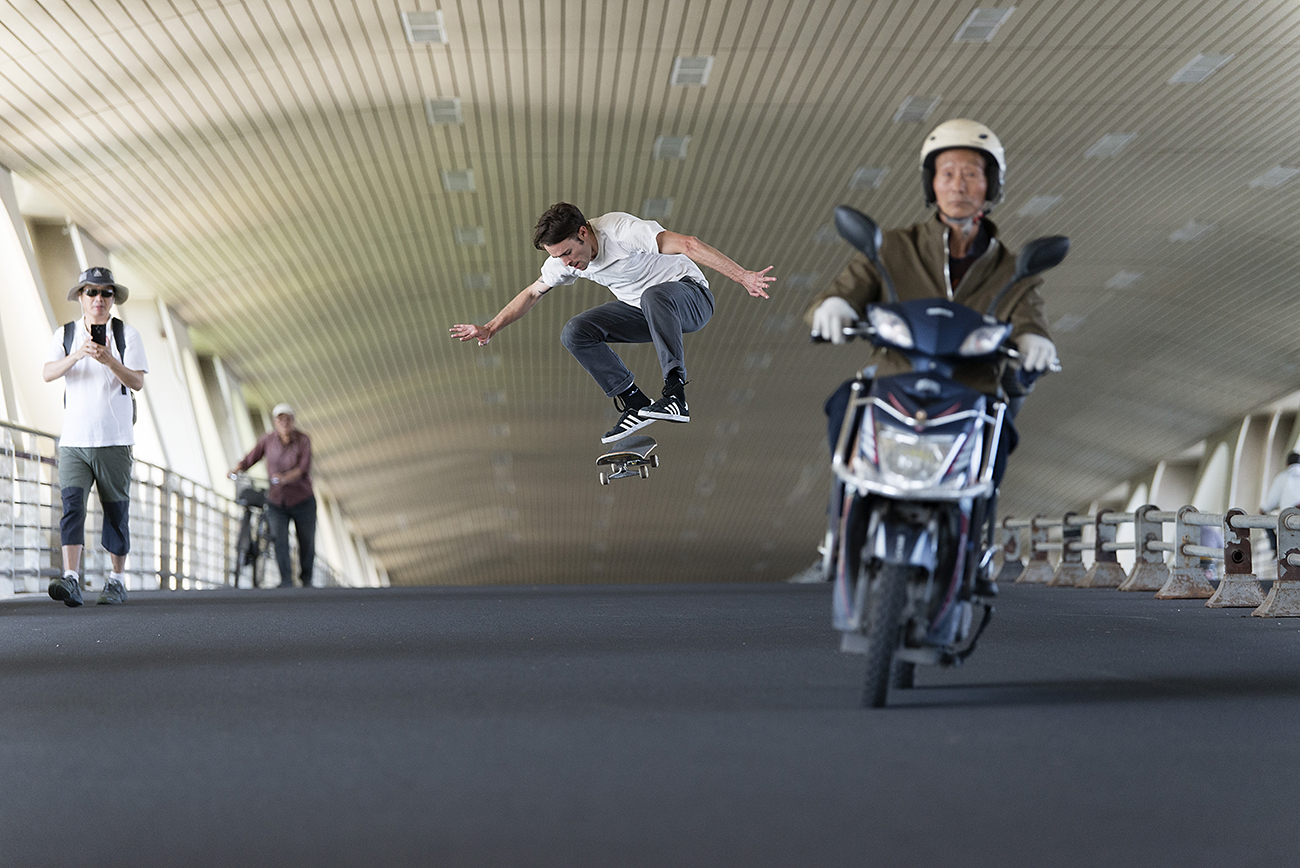
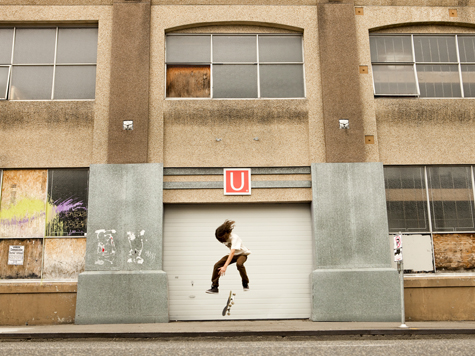
Let’s talk about the subject matter. I noticed that even what you call your “skateboard photos” don’t seem to be of tricks as much as they’re highlighting a bigger story. I’m thinking of the photo on your site of a guy doing a kickflip under a bridge with a scooter in the foreground.
Yeah, I just shot that. That’s only a few months old.
There’s another with a group of kids pushing their friends on a skateboard. It’s interesting to me, because those aren’t classic skateboarding photos. They’re humanity photos with skateboards in them.
Yeah, I have a couple things going on. I’m really attracted to action photos. It doesn’t really matter what sport it is, I love action photos. I also really love photography that involves people and tells a story. I try to have more depth to my images.
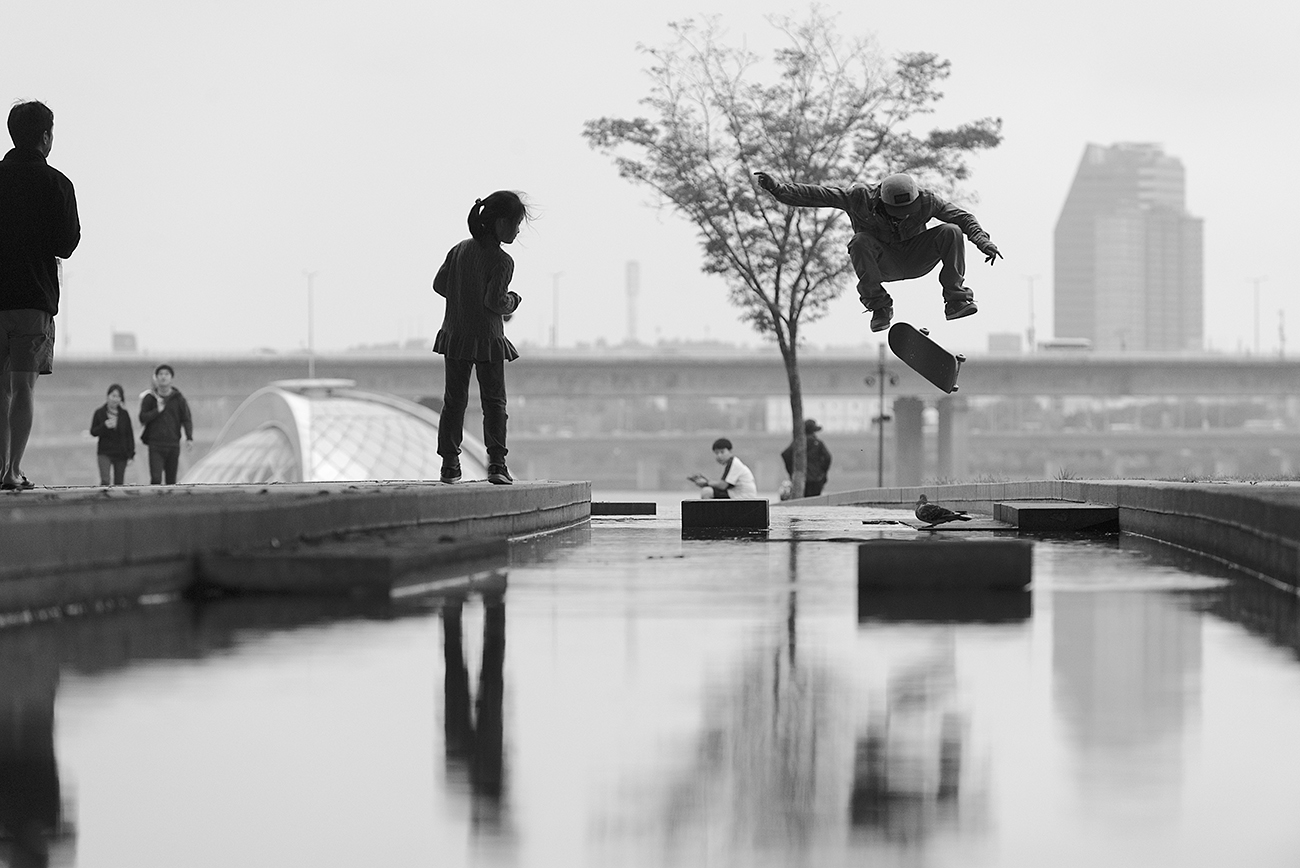
Yoshiaki Toeda | Varial Heelflip | Korea | 2014
It shows.
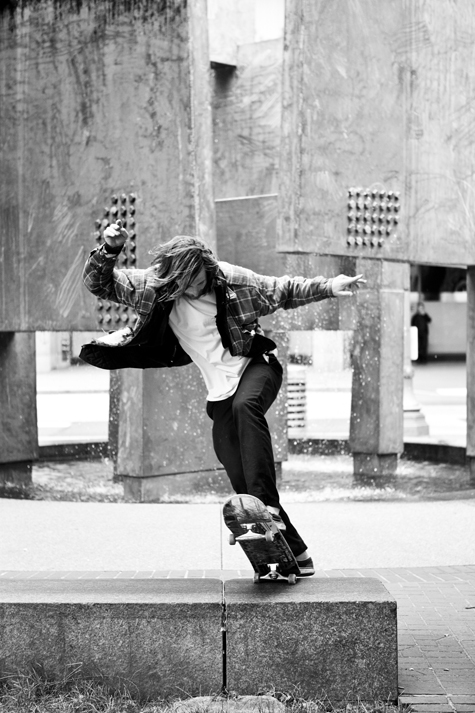
Well it’s hard. I mean, you write, so you know. Sometimes the work is just the work, but sometimes you get happy accidents. I love happy accidents. For example, my favorite photo these days is this black-and-white photo of this guy skateboarding and he’s going over water and there’s a little pigeon in the foreground. I wasn’t going to take that photo and my friend said, “Hey you should shoot this,” and so I was looking at it, and the girl looking over, the people, that bird, those are all happy accidents. I mean, I try to stage those things a lot, but it depends. I try to take pride in what I do and shoot things that I think are cool, and to be honest, I’m painfully insecure about it.
Really? Why?
I could rattle off 45 photographers who are better at what I do than me.
Does it keep you humble and hungry?
I don’t know. I just really try to take the picture of the photo that I see, as corny as that sounds.
No, that’s perfect! That’s what I was hoping you’d say, because it seems like there’s a lot of you in your photos.
I don’t know if that’s good or bad, because then you’re not documenting, you’re putting your spin on what’s there. But it’s through my eye, and I guess that’s where I get really insecure just going like, “I like it.” I always feel like I’m lacking for depth or artistry.
Photo by Jeff Landi | Nestor Judkins | Kickflip | Shanghai | 2017
Do you start out with an agenda more often than not?
Yeah. When I’m on a trip, it’s like a turn and burn thing where they need images constantly for social media, so you can’t wait for those things to happen. Like that photo under the bridge. I could have waited, but I staged it. We were watching something else and doing some more traditional things and then I asked him to push toward me and do a few kickflips and waited for the scooter. I mean, it’s all really happy accidents in the end, but you don’t know if the timing is going to work. Is that guy going to swerve at the right time, while looking at the camera? Also … is it all going to be aesthetically pleasing? I love all of that stuff, but what’s important is the skateboarding to me. The skateboarding has to be right, and if the skateboarding isn’t right, none of that other shit matters at all.
So in a way you’re kind of enhancing the happy accident?
That’s a good way to put it, yeah. I’m trying to tell a story and that story was happening before I got there. It was happening a little further down the bridge, and if I can curate that story a little bit, I’m into it. I’m not trying to fake a story. It’s something maybe that I’ve set up or already seen, but it’s something that’s real. I’m not telling a fairy tale. Everything I do is a frozen moment in time.
Let’s talk about the street photography show at Beatnik. It’s called Still in the Streets. How’d that come together?
Well, Wes [Davis], who is one of the owners, invited me to be a part of the show. He wants me to focus on my photos from the late 1990s to early 2000s. Work that I shot mostly here in Sacramento. It’ll be mostly skateboard-related images. I know that Wes wants me to show more lifestyle oriented stuff, but I’ll show action photography from that era and a little lifestyle and portrait stuff that’s kind of the backstory to the action stuff. It’s really about street skateboarding.
Given what you’ve said, is it weird to go back and look at those images critically?
No. Not really. Only a little in that I really only like large images and I get really particular. I’m not that particular when it comes to other people’s work, but with my own work, I want it to look a certain way, so it can be a little challenging. Mostly when I go back and look at it, I just wish I would have shot more. I don’t think I shot enough.
Photo by Jeff Landi | Brandon Biebel | 2002
Head down to Beatnik Studios (723 S St., Sacramento) on April 6 for the opening reception for Still in the Streets, which features photographs by Jeff Landi, Kent Lacin, Marion Post Wolcott, Richard Hughes and Alexis Wilson. The exhibit, which will run through May 21, highlights four generations of street photographers. The opening reception will run from 6–9 p.m. There will be a second artist reception on May 4, also from 6–9 p.m. For more information, go to Facebook.com/beatnikstudiossacramento or Beatnik-studios.com.
**This piece first appeared in print on pages 22 – 23 of issue #262 (March 26 – April 9, 2018)**
The symbiotic relationship between skateboarding and the arts formed almost from the sport’s onset—the street culture that skating emerged from was one of such complete freedom of creativity that it was inevitable that art would eventually permeate every pore of the industry. The skill and dedication necessary for both are just as indistinguishable, from the tireless hours spent landing and perfecting a trick, to the focus, patience and imagination it takes to erect a piece of artwork, both disciplines seemed destined to unite.
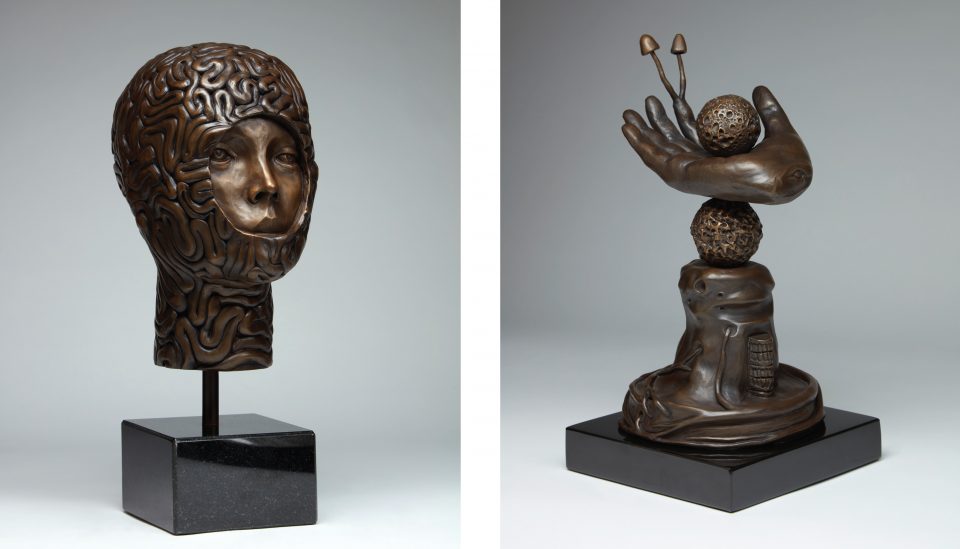
For Stefan Janoski, a local legend of sorts who honed his prowess on the board on the streets of Sacramento with the likes of Brandon Biebel and Omar Salazar, these worlds collided decades ago, too. A professional skateboarder known for his effortless, laid-back approach to some of the gnarliest tricks in the book, Janoski has been painting and sculpting since before he landed his big shoe contract with Nike and launched his eponymous sneaker line in 2004.
“I was into art before I was even into skating,” Janoski admits. “When I was a kid and they [asked], ‘What do you want to be when you grow up,’ I said I was going to be an artist. When my sister taught me that they’re called ‘starving artists,’ I would tell everyone I was going to be a starving artist.”
Thanks to the skate culture’s voracious appetite for celebrity sneakers, and a solid deal with a titan shoe company, Janoski’s able to work on his artistic endeavors without having to rely on the local soup kitchen for sustenance.
Local skate fiends and art collectors unfamiliar with the professional skateboarder’s artistic portfolio are in for a treat when Janoski unveils his new body of work, titled Nightmares of Normality, on Nov. 3 at Beatnik Studios in Midtown Sacramento. For Janoski, bringing this show to Beatnik is a homecoming of sorts—it’s only after departing Sacramento for Brooklyn, New York, in the early 2000s that he really began to focus on his artistic yearnings. Seeking refuge from the bitterly cold East Coast winters, Janoski hunkered down and reemerged with a prolific collection of work that many of his family and friends in Sacramento haven’t been privy to until now.
The bulk of the work in the upcoming show is from those prolific days in his Brooklyn warehouse—a space so massive in scale that the work born from its brick confines reflects the enormity of the space in which they were created.
“You know in New York the winters are very cold, so it’s a great place to do art if you want to stay inside for months,” he says with a chuckle. “I was going on [tour] at the same time, but when I was there I would just be in the house making stuff. I started trying to make, like, really tall papier-mache guys, but that didn’t really turn out, so then I just started hanging huge canvases on the walls and just painting. I just had all of these funny little ideas and I thought they’d be even funnier if they were big.”
Janoski’s work is a menagerie of mediums, scales and techniques. He comfortably shifts gears from the skatepark to the music room—yes, he even finds time to write and play music—to the easel. But it’s the solitary nature of his work that fuels the creative process and breathes life into his creations—introspection, rather than inspiration serves as its catalyst.
“A lot of it’s what’s going on in my head, [and] of course reflective of what’s going on around me,” he explains. “I mostly just either think of something that I’ve never seen that I would love to see, or I have [a specific] idea or sometimes I make stuff for no real reason and then it ends up going together with something else. There’s lots of different ways my pieces emerge.”
With exhibitions in New York, London and Hong Kong, it’s only fitting that Janoski bring his work back home to share with those who have supported both his skating career and creative endeavors since way back in the day, especially with a body of work that shows the evolution of his mediums from sketches to painting to sculpture.
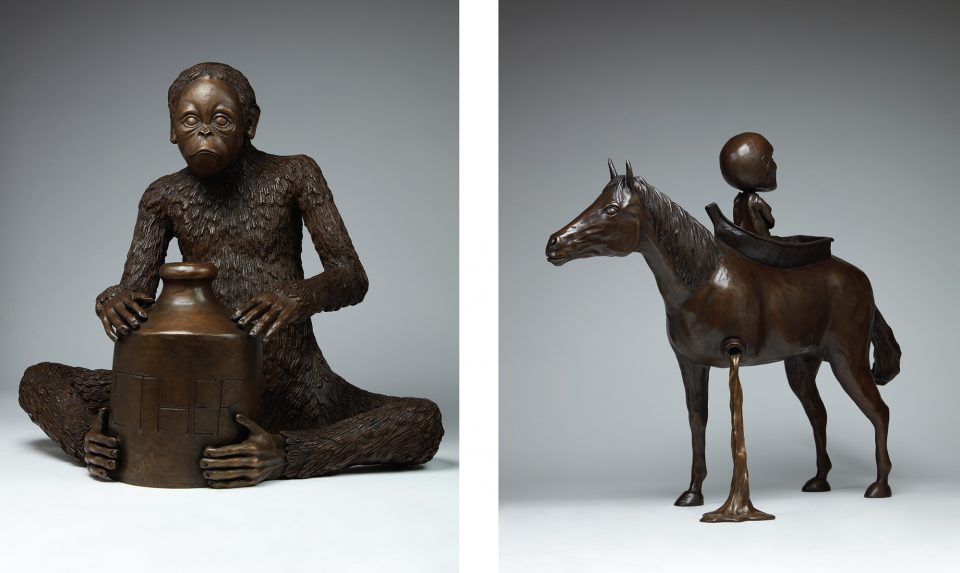
“I had always sculpted, but not very much. I was always much more into paintings and stuff, and then I just had these ideas that I thought would be better as sculptures,” Janoski says. “When I made them, I was like, ‘I’m going to cast them in bronze and do the whole thing.’ Once I did that I loved it. Then all of my ideas became three-dimensional after that. I didn’t even have painting ideas any more. That’s all I’ve been doing for years. I mean, I still do the paintings and drawings and everything else, but mostly when I’m going out to the art room I just sit there and sculpt.”
From the expansive canvases that were born out of the frenetic energy of New York, to his growth in the sculptural arts, Nightmares of Normality will feature work that moves from his commentary on family, to more abstract themes dealing with religion.
“I just learned through trial and error. At first my armatures were not sturdy,” he admits. “I made the sculptures and then had to drive them to the foundry in Queens, and I’d be in the car holding this sculpture that’s wobbling around. The roads in New York have the biggest potholes, so the whole drive me and my wife would be hectically trying to get there without ruining the whole thing. It’s pretty funny, but now I’ve gotten a lot better, so they’re pretty sturdy.”
The upcoming show will showcase seven or eight of the expansive pieces made within the frigid confines of his Brooklyn warehouse as well as a collection of bronze sculptures ranging in size from miniature to colossal. Nightmares of Normality will also feature the work of skateboarder-turned-artist Joe Castrucci, who collaborated with Janoski on several pieces. Castrucci also happens to be of the owners of a skate company that sponsors the skater-cum-artist.
“It’s actually going to be a lot of art, and then Joe Castrucci, who is the owner and the artist behind Habitat Skateboards, made graphics of my sculptures,” Janoski explains. “The art he did for the show is actually based on my art, so there’s going to be skateboards with his graphic interpretation of my sculptures, which is pretty cool.”
Setting up the show was a concerted effort between Janoski, Wes Davis of Beatnik and Castrucci. After all, Janoski currently resides in Los Angeles with his wife, so collaboration was an elemental component of bringing his work back to his native haunts. After delays in coordinating the effort, Janoski credits the team for finally enabling him to bring the work he has amassed during his time away from home.
“I was going to do an art show out here [earlier] but it fell through, so I was talking to Wes, who is my old friend, and [as] we started planning this show, I said, ‘Hey, I have all these paintings and all of these sculptures I did out in L.A. as well,’ so we just figured, like, ‘Hey, let’s just put it all in there.’”
Concepts can get heavy when you talk about art, especially when you’re dealing with the size of bronzed sculptures. But bringing a sense of levity to the work is an important component of the creative process for Janoski.
“I like to have a good sense of humor,” he admits. “I like to take things that are considered serious but show them in a way that shows they’re not serious if you [really] think about it.”
The opening reception for Stefan Janoski’s Nightmares of Normality will take place at Beatnik Studios (723 S St., Sacramento) on Nov. 3, 2017, from 6–9 p.m. For more info, go to Facebook.com/beatnikstudiossacramento or Beatnik-studios.com. The exhibit will be on display until Nov. 22.
**This article first appeared in print on pages 18 – 19 of issue #251 (Oct. 21 – Nov. 6, 2017)**
Another Sacramento great is leaving the area and headed to Portland. On June 10, violinist Joe Kye will play what has been dubbed as his last show before he heads to a much wetter climate. “I am a full-time musician, and have been since 2013. Before that, I was a high school English teacher in Seattle,” said Joe Kye. “ My wife is very supportive! She’s finishing up her residency at UC Davis Medical Center, which is why we moved down here in the first place. A partnership is about jointly discussing and agreeing to a division of responsibilities. I like to think we do a pretty good job of always searching for balance.” This show is also special because it’s a benefit for the Mustard Seed School, a free private school that helps “meet the needs of homeless children.” Tickets for the show can be purchased at Joekye.com/tour. And while Kye doesn’t actually move to Portland until July, he will be back in late July at California WorldFest in Grass Valley and again in late October as part of a tour.
For the past six years, Beatnik Studios has played a vital role in Sacramento’s art and music scenes, hosting creative events, throwing rad parties and gallery openings and acting as a crucial link in the arts chain. In August 2013, Beatnik partners Lindsay Calmettes and Wes Davis (both amazing artists/photographers in their own rights and, in full disclosure, Davis has taken many photos for Submerge over the years) took things to the next level by purchasing their own building. The early 1900s “brick and steel battleship” is, according to Beatnik’s press release, “Over 12,000 square-feet of limitless potential.” The building is located at 723 S Street in the Southside neighborhood of downtown Sacramento and was originally built by PG&E. Purchasing and renovating the building was truly a family affair with members of both Lindsay and Wes’ families coming together to assist with the massive amount of work. The Beatniks also found “grease for their wheels” thanks to the PACE (Property Assessed Clean Energy) funding program called YGreen.
“Sacramento YGreen has made it possible for our small business to take on a large-scale commercial renovation project,” they wrote.
The new space allows Beatnik Studios to remain a multi-faceted creative business just like it’s always been: Event space, music venue, art gallery, photography studio, wedding venue—you name it, Beatnik can probably host it. Flexibility is the name of their game. To celebrate their big move and b-day, Beatnik will host a free six-year anniversary and grand re-opening party on Saturday, Aug. 2, 2014, at the new location. The party runs 6 p.m. to midnight and will feature live music by Guero, Jazz Gitan, The Foxtails, Proxy Moon and IdeaTeam as well as a dance performance by Aerial Evolution. There will also be food, drinks, art and all sorts of other rad creative things to enjoy. Learn more at Beatnik-studios.com
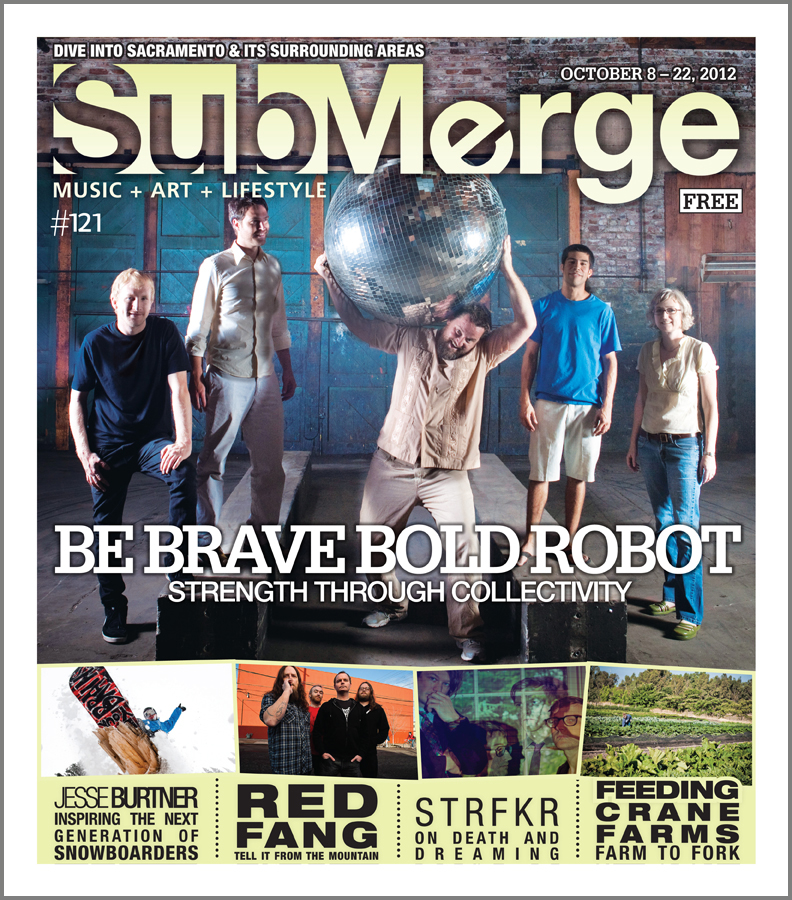
Not many bands sport a badge of longevity inching toward eight years, but plenty of musicians can include their names in the pages of Be Brave Bold Robot’s local history. With roughly 23 former players fondly dubbed “Forever Members,” BBBR is a staple in the folk scene for good reason. If mad scientist, Dean Haakenson, hears you can play an instrument and likes you as a person, you can write your way into his project…forever.
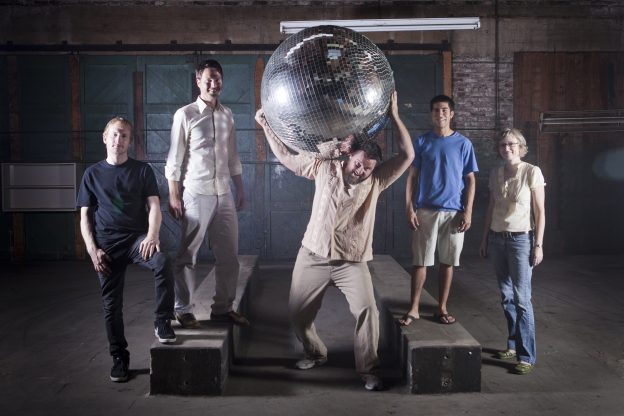
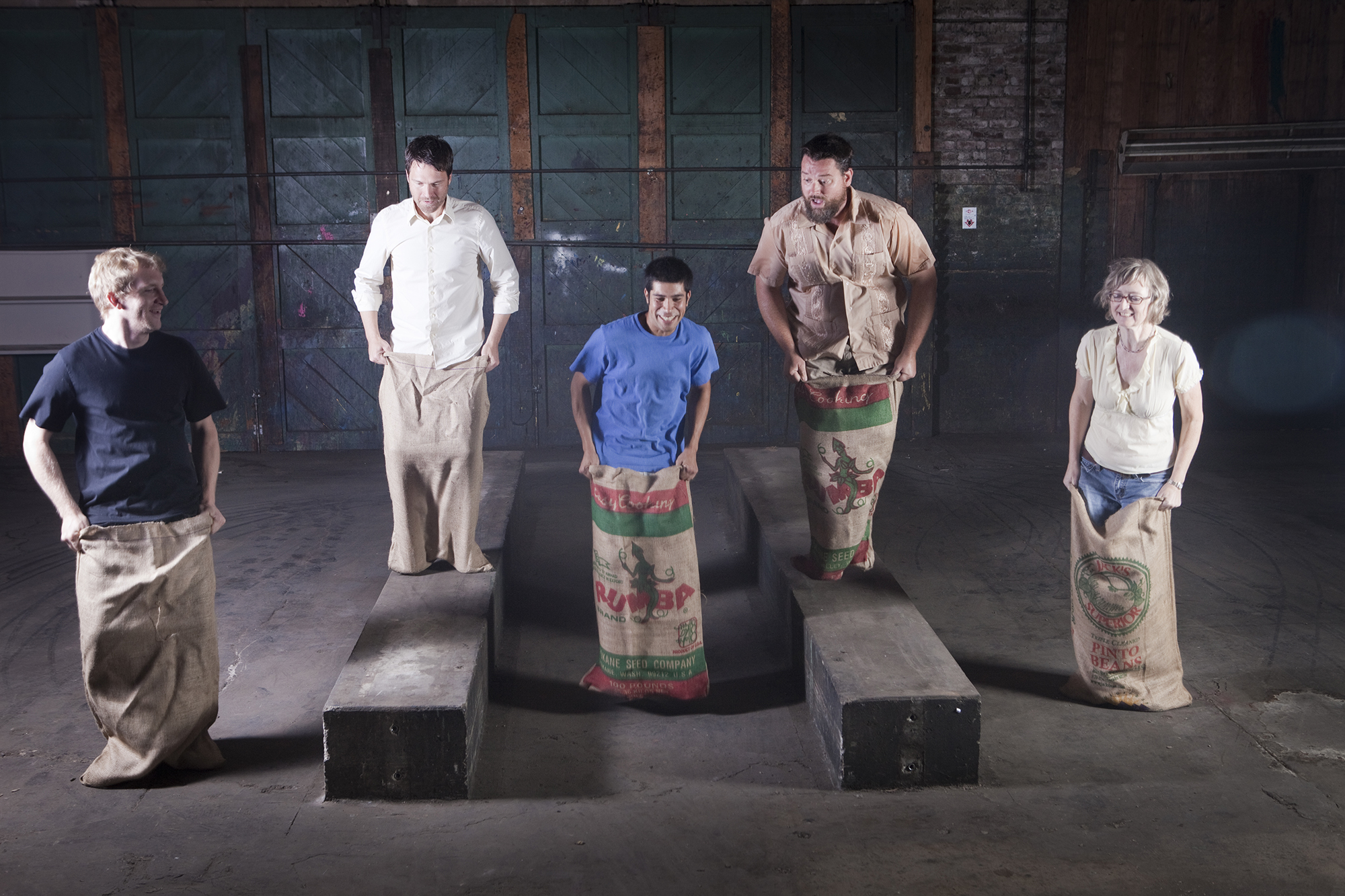
My night with Be Brave Bold Robot did not begin with an unsettling ride to West Sacramento in Haakenson’s Technicolor Volkswagen Bug, but a few points of interest are worth a mention prior to him offering a lift in his shrunken, two-seater Partridge Family bus of a VW. As follows: I snuck into an empty warehouse along with the band and a photographer for a photo shoot. Cut my hand lifting a giant disco ball. There was a potato sack race. Haakenson sweated through two shirts. No one discovered us. No one was handcuffed or fined for trespassing. No vandalism occurred. My palm only bled for a minute.
But in Haakenson’s gutted and rusted VW, I sat shotgun to a man who rolled down the driver side window with a pair of pliers and casually talked of how his car, a present from his mom, stalled regularly as we took the Highway 50 on-ramp headed toward West Sacramento. I thought of the band’s moniker as he shimmied the VW into traffic and it strained its way to the speed limit. Be brave.
We arrived safely to Haakenson’s home, and I was ready for a beer, for there is no finer way to gain a stranger’s trust or settle one’s nerves after relinquishing your own fate into his hands. Haakenson and his drummer Michael Ruiz claimed two of the four mysterious wheelchairs on the back patio–why does one man have so many? The rest of us (bassist Matty Gerken, viola player Catie Turner and saxophonist Jacob Gleason) sat in metal chairs or benches with microbrews in hand. Like all interviews, the awkward phase deteriorated and stories were flung freely, which led to how one becomes one of those Forever Members listed on Facebook. Over the years Haakenson developed a simple criterion: play four shows. It may take four consecutive shows, or it could take eight years, but until you’ve played four you are not an official Forever Member.
“It’s a credit to Sacramento to have so many people I’ve met over a number of years join me,” he said and he was right.
To my left sat Jacob Gleason, soft spoken most of the night, but he was first to share his admiration for Dean that led to joining Be Brave Bold Robot. It began with loving the first self-titled record and led to Gleason “[bugging] Dean enough that he finally started letting me play with him.” Going around the table, Catie Turner joined after seeing BBBR live and striking up a post-set conversation with Haakenson, who upon learning she played viola gave her a recording and let her write herself into the music. She’s been a member since.
“He was like, ‘You should play on my record,’ and I said, ‘You’ve never even heard me play,’” she recalled.
“It’s a Dean thing,” she said. “He’s so hands off. He didn’t know me, didn’t know my playing. It was unlike any experience I’ve ever had with an organized band.”
Matty Gerken offered an anecdote on the BBBR’s rotating cast: “One time we played a show at Sac State and in order to play that show we needed to have one Sac State student in the band. So we brought in Chuck; good student, he’s from Iowa, like me. He had enough parts in the songs to get us qualified to play. He was a member for one show.”
Gerken saw Be Brave Bold Robot play based on the name. He caught a Fox and Goose show, went to an after party with the band, which resulted in him mastering the first record. “I sort of learned all the songs from listening to them over and over while mixing them,” Gerken said. “When Tommy [Minnick] the former bass player decided he didn’t want to play anymore, I said, ‘Well, I know all the songs incidentally.’”
Haakenson’s lackadaisical approach stems from understanding his friends and band mates have their own lives and careers. Without the pressures of commitment, being in a band can always be as fun as it sounds. No one’s government job is at risk, no one’s missing PTA meetings and no one’s on heroin to deal with the pressure of stardom. Members come and go and come back again when they have time or miss the fun of being in BBBR.
“It changed my life here,” Turner said, who hadn’t played in a band since leaving San Francisco.
Haakenson exudes gratefulness beyond his once a member, always a member attitude. The tape recorder clicked; side A was over. With everyone in good spirits, we agreed to call it and begin band practice. While guitars were tuned and more beers were emptied into mason jars, Haakenson handed me a copy of 2010’s Take a Deep Breath. He directed me to the living room where the original artwork of Kyle Larsen hung; he had two of Larsen’s pieces. Local writer Josh Fernandez probably doesn’t know it, but he is a cherub muse for BBBR, coining intoxicating limericks that echo through Haakenson’s mind. The new album’s title was partially lifted from Fernandez’s 2008 review, which was recited to me nearly verbatim during our hang out. Fernandez referred to Haakenson as “under a thin sheet of madness,” it led to the title of the band’s upcoming album Under a Thin Veil of Madness.
Under a Thin Veil of Madness began with sessions at Expression College for Digital Arts in Emeryville. “They offer free recordings to bands in exchange for being guinea pigs for their audio recording classes,” Haakenson said. “We went in there for an eight-hour session and got four songs done that are new to this album, and had plenty of time left to record four other songs.”
Going in there was concern of the album being in the hands of pupils, but by the end of their session the band was so close with the students that a kid named Willie Ramsey is doing the Under a Thin Veil of Madness artwork, expanding Dean’s collection of art and adding an honorary band member once again. “I was concerned that we were getting learned on,” Gerken said. “They had an experienced instructor there and it was clear that guy was all business.”
In the eight years of having one of the most recognizable band names in Sacramento, the true source of the moniker eludes Haakenson. He loves that about his band. Before it was his band it was his ‘zine. Prior to the ‘zine it was a graffiti tag by a girl in Arcata, Calif., who claims she saw it done by a San Francisco artist. Some theorize it was lifted from the Isaac Asimov’s science fiction series I, Robot. “I’ll put out a call right now,” Haakenson said. “I’ll pay $100 for the documented source.”
May it always be obscured and tucked in mystery to preserve the legend of Be Brave Bold Robot. It’s apropos to a band that tucks mementos to childhood in its song lyrics and sneaks away from families and responsibilities into a West Sacramento living room to drink, chat and practice like a discovered teenage Never-Never Land.
“I have a child-like way about me, which I think is maybe what makes me endearing to the people I meet on a regular basis,” Haakenson said. “I think I’m OK with confrontation, but I’d much rather make people happy.”
Catch Be Brave Bold Robot when they play Beatnik Studios in Sacramento on Oct. 26, 2012 and celebrate the release of Under a Thin Veil of Madness. Also playing will be Appetite, Cold Eskimo and Buzzmutt. The music for this Final Friday show gets underway at 9 p.m. and there is a $5 to $10 suggested donation.
Community celebrates fine artist Milton 510 Bowens’ 20 years of service to art and education
Beatnik Studios on 17th between Broadway and X Street blends harmoniously with Milton 510 Bowens’ latest solo exhibition, Echoes of the Sweetest Sounds.
The former is an urban loft-style gallery made of brick that brings photography, music and local artistry to a shared space. The latter is a well-honored fine artist’s resolve to educate about music, history and social justice through art.
Echoes… celebrates 20 years of Bowens’ work with pieces never before seen in Sacramento and gives a unique spin to this year’s local Black Music Month events (renamed African-American Music Appreciation Month by President Barack Obama).
In the last 20 years, Bowens has reshaped his philosophy as a fine artist and taken the approach of a community activist and documentarian. Since, he has achieved great recognition nationally. Starting in 2009, his art became part of the syllabus for a course study in the Harlem Renaissance at Cornell University’s Africana Studies and Research Center. He is also a spokesperson for the K—8 art immersion program Any Given Child in public schools across the country in conjunction with the Kennedy Center for the Performing Arts in Washington, D.C.
Bowens has had paintings showcased at the National Civil Rights Museum in Memphis, Tenn.; been touted by local newspapers as having the largest solo exhibition (150 large pieces) in the United States in his hometown of Oakland; received this year’s Sacramento Artistic License Award; and received a resolution from the California Legislative Black Caucus for his work on arts and education in public schools.
Undoubtedly, this unconventional exhibition has a message.
“After you’ve done something for 20 years, it’s hard to choose what to show, but instead of doing a montage of random pieces…I chose those [pertaining to] music,” Bowens says, leaning back and looking relaxed on a sofa at the gallery after grabbing lunch at Slice of Broadway. “Beatnik, jazz, counterculture…it all goes together.”
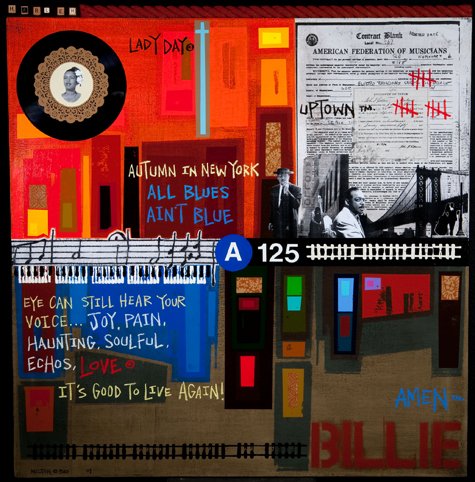
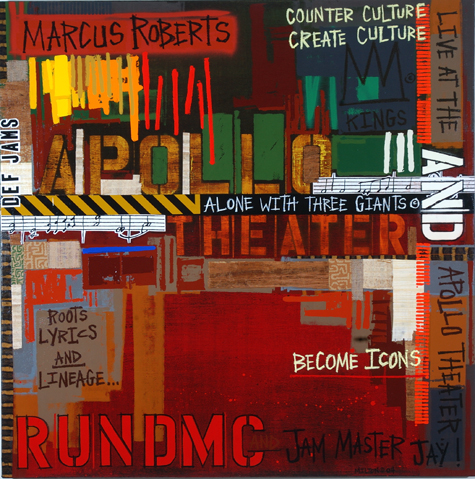
The pieces come from Bowens’ Afro-Classical collection and some from his Soul Music series. He journeys through the jazz era and its historical importance in Afro-Classical with recurring images of everything from records, piano keys and musicians’ portraits to railroad tracks, slave ownership documents and tally marks. On his pieces, he writes what he feels, quotes that he admires and pushes the viewer to take a closer look, “Don’t just hear what the work is saying, listen.”
Bowens mixes media with organic materials like cloth, doilies and prints for “richer depth and more substance.” In pieces like God Bless the Child and Straight No Chaser, the use of children’s building blocks and rope along the top of the canvas adds another three-dimensional element.
“I am trying to poetically encourage people to linger a little bit,” he says of his collages with lyricism that sometimes holds a double meaning.
Bowens says he doesn’t approach his art with a “painterly perspective,” though he has the training and knows the techniques. He attended art schools early on as a high school student in Oakland and later at the California College of the Arts and multiple schools while serving in the Army Special Forces. Two military museums collected and showed his work, and his time in the service helped shape his current philosophy.
“I was in a rapid deployment unit with special forces so I got to travel and see art I’d only ever seen in my textbooks,” he says of the experience. “Seeing it in its original environment was uniquely transforming for me. I was exposed to the fact that there is no magical pixie dust when it comes to art. I learned the definition of art–skill, emotion, spirituality, commitment–and that’s where I’m at today.”
The title Echoes of the Sweetest Sounds originally came up in 1998, Bowens says, when his philosophy and technique changed, and it has become a recurring theme.
Eye Too Am America
“When I listen to music, it’s not just for its commercial appeal,” he says, working up to a more pronounced position in his seat. “There is a poetic standpoint, an emotional response. Quality music to me is like a snapshot of history.”
Take Bowens’ piece Chain Gang for instance, named for a Sam Cooke song. It has photo images of black men in striped garb imposed onto it, as well as a white man with his dogs and gun off to the left, and a worker looking down, holding a hoe to the right.
“I love Sam Cooke’s ‘Chain Gang,’ and when you start to listen to the lyrics, that could be considered one of the first civil rights theme songs,” Bowens says.
The top corner is a bright yellow, followed by bright blue and red. The bright colors sit atop Bowens’ neutral base, like all his pieces, of brown and black to portray not only his urban environment but also to hark back to the Harlem Renaissance, and before that, to slavery.
“The only true colors are what rest on top of the surface, and below that the colors are all muted,” he says. “That’s because when I went to a California museum, or the Oakland Museum…nothing there reflected my Oakland, or my California. In my paintings, you will see the gritty undertone of Oakland, because I grew up seeing concrete buildings and basketball courts.”
Documentary filmmaker Ken Burns largely influenced Bowens’ transformation as well. The artist loved Burns’ idea of taking black and white historical photographs, putting music behind them and then putting the interviews conducted in the documentary in bold color. It was the idea of combining “time, space and history” that enveloped Bowens, so much so that it was all he could do. He even went “cold turkey,” he says, on his other techniques.
Since this change, Bowens says his message is becoming clearer, his work more calculated, his compositions tighter. But the exhibition still shows his reach, including a huge drawing done completely in pencil called Ancient Musicians, a collage of jazz masters and cultural icons that brings Bowens’ collection to a detailed, pictorial climax.
Another influence is Bowens’ family. He gives his mother the credit for helping him reach his career today. Being the youngest of 10 children, and the fifth boy (hence 510), Bowens said his mother could have had less patience with him, but instead she gave the notorious child scribbler scrap paper by having his siblings cut Safeway brown paper bags for him. Bowens incorporates brown paper into his works because of this.
Now, the younger members of Bowens’ family are his biggest influencers.
Autumn In New York
“I have two special goddaughters who help me as an artist see how art can affect young people,” he says.
Bowens works with goddaughter Mizauni, a second-grader, spending time with her as she learns to read and write. She recently won her school-wide reading competition and her family has seen “amazing success” in her educational ability since the two have been spending time together.
“I want to model what I’ve done with Mizauni to help hundreds of children in Sacramento,” Bowens says. Sacramento became the pilot city for Any Given Child, in which Bowens helped place local professional artists in schools to provide an integrated art curriculum and one-on-one interaction with students. Schools in other parts of the state, as well as in Portland, Ore., and Las Vegas, are following suit.
“We take what they are studying, like California history or ancient civilizations, and add art as a teaching mechanism,” Bowens says. “Studies have shown that students have better retention of information this way, instead of just memorization.”
Bowens says he is working toward other projects with youths, including starting a mentor diversion program in Alameda County with the juvenile court system and an art and literacy campaign in Sacramento.
“I’m getting ready to rival [my largest exhibition in Oakland] with the Art of Storytelling exhibition that will engage a program for fine art and literacy, specifically one for third grade literacy,” he says.
Bowens is basing the program off a study that upcoming correctional facilities decide on the number of beds they need by looking at the local third grade reading level.
“It’s not something terrible, it’s just if we see a problem coming, we need to prepare for it,” he says. “We need to get involved now. I’m not a minister… I’m not a counselor, I’m a painter. But I believe I have the skills to make a change and inspire young people to read.”
Some messages like this one are loud and clear in his work, while others take a little longer to see. But that’s the beauty of contemporary fine art, and though Bowens says his art “isn’t to decorate, but to educate,” he adds that he does enjoy seeing it hanging on the walls.
Alone With Three Giants
To catch Echoes of the Sweetest Sounds, visit Beatnik Studios at 2421 17th Street by June 26, 2012.
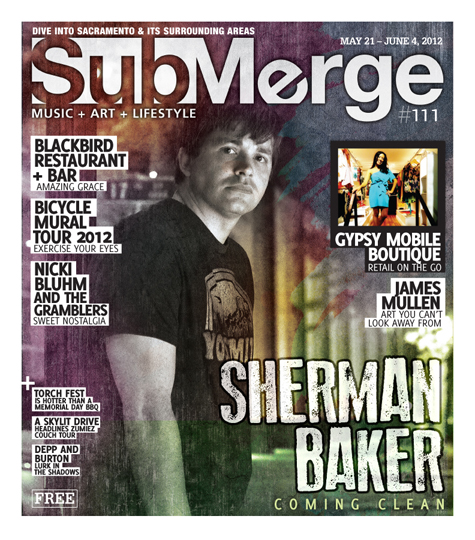
Singer/Songwriter Sherman Baker bears his soul, battles addiction and existential dread…all in a day’s work
Words by Joseph Atkins – Photos by Amy Scott
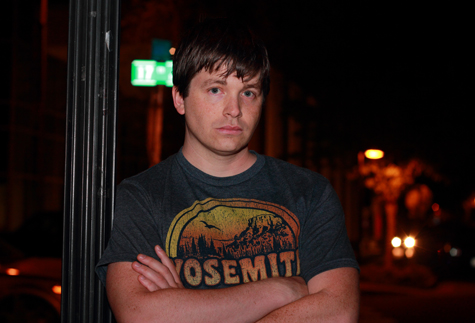
Sherman Baker has lived multiple lives: struggling Los Angeles actor, recovering heroin addict, mild-mannered songwriter. Yet, there’s something about him that eschews both of the former descriptions and settles on the latter. Baker’s bigger than you imagine, listening to his new full-length, Seventeenth Street. His songs make him sound fragile, delicate; but in person his wide shoulders wrap a guitar while he sings upwards into a microphone. On stage he appears focused, intent. His look is exactly right for the sound, and the qualities of Baker’s sound ultimately condition the person he is.
Up close, it’s hard to tell how much of his personality is shaped by the quiet childhood he describes or the humility of a recovering addict, or where they bleed together. But their silent strength produces songs that slowly engulf one’s attention. Baker has enough self-confidence to expose himself, musically or otherwise, to talk honestly about his past and present. He has a soft-spoken manner that leaves a small impression. He’s like a subtle fill that piques one’s interest and becomes the highlight of a track after multiple listens. He’s normal yet unique, exotic in his low-key banality.
There’s a subtlety to his brand of song craft, a fusion of Dylan and Elliott Smith, with the tonal foundations of old school pop. His hooks and harmonies draw out the anguish and joy of repeated failure and angst, verse after verse. Below them, a series of string melodies and rhythms complement and exacerbate his vocal tracks, as the lyric content demands. There’s a focused tension on the struggle of daily life and survival, but I’d suggest this is bigger than just Baker’s struggle with himself. Seventeenth Street is relaxing, serious and thoughtful in its treatment of uncertain conditions–Baker’s and otherwise. We sat down over water and espresso to discuss these uncertainties, the ups and downs of growing.
On your opening track, “Constant Contact,” you plead repeatedly for the world to “stop posting things.” Did you check in on Foursquare when we got here?
I did not. I’ve been trying really hard to not be obvious like that. That song came from Facebook [where] an ex-girlfriend used to post about me while we were dating. She’d be like, “Don’t you hate when guys do this.” And then 20 lurker dudes would be like, “Yeah, fuck that guy.”
Do you have other songs about her?
Some of the other songs like, “Golden Gate Park,” “Man on a Wire” and “Sign of Light” are about a [different] ex-girlfriend whom I feel essentially left me for dead and didn’t seem to care that I was overdosing and attempting suicide.
In one of my favorite lines from “Sign of Life” you sing, “There’s no time for philosophy/When you’re fighting/To survive.” The next track follows with another line: “We have tried to be good/But I’d rather be wrong than dead inside.” What is the major antagonist in your life?
The new record is basically about heroin addiction. I was shooting heroin in 2008 to 2009. It wasn’t like, “Oh, Elliott Smith did it, or John Coltrane.” It was a simple addict progression from Vicodin to heroin. A typical Intervention episode was my life. I went to rehab, and after six or seven weeks of horror, I finally came out. The last two years I’ve been moving away from it. I tried to off myself. I was put in a mental hospital. The tension is me trying to fight existential dread.
Yours is actually a success story. Many addicts never even get to rehab. How were you able make the decision to get clean and stay that way?
It’s a daily struggle to stay clean, but I need to in order to survive. There isn’t a way to abuse opiates that doesn’t end in death or severe impairment. My uncle was kind enough to pay for me to go after I asked him for help. It was in L.A. I needed to get out of town. I went a long way from any dealers or money. I was forced to spend a month in one bed crying, shitting and puking on myself. Literally. It was so incredibly painful emotionally; I have felt a little bit numbed ever since. But I’m also certainly a much stronger person. I’m lucky.
I think really great artists tend to be addicted to creating. Do you feel like overcoming one addiction has allowed you to focus your attention more into your musicianship?
One hundred percent. On a physical level, my energy is up; it’s like night and day. I’ve been looking at my music like an athlete–how can I get better every day? Quitting smoking, writing every day, practicing every day, I’m always thinking about what things are helping me. I have a drive to write and make music that is certainly not rational. I’m not making money. Music is my art.
You’re releasing the album yourself. How’d it all come together?
My father died, which opened up money from my family that wasn’t being used for his medical care. I had a really low budget. I recorded a lot of it at my uncle’s house. He’s got a really big place up in Granite Bay. We actually did some of the drums. All the guitars, all the vocals, all the bass–everything I did–was done there.
We mixed at The Hangar and did some of the live drums and bass there. Matt McCord played drums, and Kris Anaya [Doom Bird] played bass on a few songs. Robert “Flossy” Cheek did the mixing.
There’s a definite Elliott Smith influence on the record, but the recording process sounds a lot like his process as well.
Elliott Smith would be a good analogy except I don’t play drums–minus the brilliance factor.
Losing your father seems like a big moment in your narrative. Are there points on the new CD where his loss is felt?Â
Yes, “Lonely Star” is about him to some degree. The bridge lyrics, “Where is the green light?/The future you told me of?” is a reference to The Great Gatsby’s last page about the green light of the dock. It was my father’s favorite book. A lot of the record is about mortality in some way. That might be part of the problem with selling it.Â
What happens if you never sell all the CDs you print?
I’m used to disappointment. If people don’t want to buy my music, I can’t force them to… I’m pretty reconciled to living a low income, humble lifestyle, regardless.
Do you still believe in those divisions between DIY, indie and major labels?
Not really. Death Grips are the latest example of a “big deal,” and they’re as DIY as it gets. I think pipe dreams have definitely disappeared. In the ‘90s, there were a lot of kids thinking, “I just gotta get that deal and then… Chicks!”
You spent some time in L.A. as an actor. How did you get there?
I got into a good acting school. It’s where Denzel Washington went; Elizabeth Banks was there while I was. It actually helped me learn to sing. By the time I left, I just wanted to do music. I went to L.A. because I had an agent; it was a great opportunity. I was trying to get on soap operas. I wanted to focus on music instead.
Then in 2007 my personal life got crazy, and I just dropped out and did drugs for two or three years. I didn’t do much at all. I did in my head, but I wasn’t functioning.
Acting seems like a curious choice seeing as you feel uncomfortable in front of a camera.
I don’t like being looked at. I don’t like being on stage and being looked at, still. I don’t mind being heard because I’m comfortable with how I sound. My stage presence is just as shitty as it ever was; I just stare at the ground and sing. I just couldn’t care less about my stage presence. I’ve just never said, “Oh, I wish I could be like Steven Tyler.” Never. I just don’t care.
Head to Beatnik Studios in Sacramento on June 2, 2012 to celebrate the release of Sherman Baker’s newest album, Seventeenth Street. Also performing will be Autumn Sky, who also happens to be releasing her new CD that day. If that wasn’t enough for you, Ricky Berger will open. Showtime is 7 p.m. For more info, go to http://shermanbakermusic.com/.
Endings, as the saying goes, often lead to new beginnings. When Sacramento indie rock band Holiday Flyer called it quits in 2002 after almost 10 years as a group and four full-length albums, its members found new avenues to express themselves musically. Three-fifths of Holiday Flyer–which began as the brother/sister duo of John and Katie Conley, but grew into a five-piece band by its final album, 2001’s I Hope–went on to form Desario just two years later. Frontman John Conley, bassist Michael Yoas (making the jump from bass back to his first instrument guitar in Desario) and drummer Jim Rivas were joined by bass player Mike Carr. Desario released its first album, Zero Point Zero, in 2009. On February 28, 2012 the band will put forth its sophomore effort, Mixer, which shows that even after many years as vital parts of the Sacramento scene, the guys of Desario are still looking for new ways to expand their craft.
Yoas produced and engineered the entirety of Mixer, which was mixed by Larry Crane (who has worked with Elliott Smith, among others). Last time around, on Zero Point Zero, Yoas recorded everything except the drums. He says he and Conley had been playing music together as far back as the ‘80s. “We started in punk bands together in high school. We wrote together back then, and then I didn’t play music for quite a while.”
It was eight to 10 years by Yoas’ estimation that he hadn’t played music until his old friend lured him back into the studio. Yoas laid down bass for a few tracks on Holiday Flyer’s third album You Make Us Go and enjoyed an expanded role as a fixture on I Hope.
“Jim [Rivas] and I joined and put our stamp on it with bass lines and drums and percussion and added some arrangements,” Yoas says. “But for the most part, Holiday Flyer was John’s vision.”
Desario is an entirely different animal. Instead of leaning on one songwriter, the band takes a four-heads-are-better-than-one approach. In fact, the title of the album refers to the fact that the songs on Mixer were a group effort.
“It really is a band effort,” Yoas explains. “Other than the lyrics–John writes all the lyrics–it really can start with any one of us.”
This time around, the songs came together in Desario’s practice space, evolving from jams to the fully realized recordings found on Mixer. The album has a layered, sometimes spacey sound that’s imbued with underlying warmth. Songs such as “Victoria Island,” which begins with a sort of watery synth burble, stretches out into a well-paced five-and-a-half minutes of absorbing rock, layered with shimmering, distorted guitars. It’s indicative of what you’ll find on Mixer–songs that are a bit challenging, yet easy to get lost in.
On an early Saturday morning, Yoas took the time to answer some of our questions about how the album came together, and revealed how Desario thrives by keeping their songwriting process fluid.
How was the process of producing Mixer as opposed to Zero Point Zero?
Kind of arduous at times. When it’s your own music, you’re never quite sure if you’re going in the right direction or not. You’re constantly second guessing yourself. But in the end, we’re really happy with it.
Are you at all interested in producing other people’s work, or have you produced other people’s work?
Yeah I am. I’ve recorded some demos for a couple of bands. I haven’t finished them through yet, but I’m definitely interested in recording some other bands in town and getting more into that.
How is it working on someone else’s stuff as opposed to working on your own?
Honestly, it’s a lot easier for me. I have no problem giving my opinion on something, or if I’m hearing something to add or take away, it’s pretty easy giving my opinion and feel good about it. I am an avid music fan as well. When you hear something, just throw it out there.
When you’re giving feedback when you were working on Mixer, did you find that you had to be more tactful in giving your opinion since you’re a member of the band?
Absolutely…
Do you find yourself holding back sometimes? You’ve known the guys for a while. It must be an interesting dynamic in the studio.
Oh, you mean giving Desario advice?
Yeah.
Oh no. I’m not tactful at all [laughs]. As far as the guys in my band, I think at times I might have been kind of hard and had a vision and did everything I could to get out of them what I was hearing, knowing that we could all go back in the end as a group and sort things out and edit things. I definitely wanted to try to get a lot of different takes of everything just to have options.
As far as your vision for this record, is that something that came through in the writing of it or afterward when you started recording?
Definitely in the writing. We were going through a phase with this batch of songs. This batch of songs probably came together over the course of three years or so. We were trying to do things–for lack of a better term–more intricate and more elaborate, I guess, and not by choice, but for whatever reason it’s the place we were in for a couple of years. Just looking to make it as interesting with synthesizer and other elements we didn’t use at all on the first record.
You mentioned that the songs came together from jamming as a band. How did you like working that way?
It’s funny, all of us in the beginning were like, “It’s tough for us to jam. It’s hard to come in without any starting point and create music.” As we evolved as a band, we found that we all played so well together, it was really easy to jam–starting with one of Jim’s drumbeats or Mike’s bass lines. It could be anything that would make someone say, “Hey, keep doing that,” and that’s how most of the songs on Mixer started…
There has been many practices where we don’t have any shows to practice for, or we’re not recording anything. We’re very diligent. We have a scheduled practice night every week, and regardless of what’s going on, we make it a point to go in that night and practice, even though we have no reason to be there, just to see what might come out of it.
In that regard, are you guys writing all the time now? Has that process opened you up to be more prolific songwriters?
I think so. We’re constantly writing. With the stuff that we’re writing after Mixer, we’re taking a slightly different approach. John and I are trying to noodle with some ideas together and bringing them to the band to see if they think it’s worth moving forward with those ideas at this point. We’re constantly trying to change how we song-write, just to keep it interesting and so we’re writing different kinds of songs all the time.
So you’re working on stuff with John for a next record?
As a band we’ve already got six songs written. We basically have all the ideas for another album’s worth of material that we just need to hash out as a band and get arranged and just get it completed.
No rest for the weary, then.
Exactly. Yes, we’re always writing, but we definitely go into practice now with an idea of what we want to do instead of going in without any purpose.
You guys have a listening party coming up for Mixer before playing the CD release show on March 3. What do you have planned for the listening party?
We’ve got two hours at Phono Select. We’re going to let the CD play a couple of times in the store. It’s going to be available for sale. We’re going to put out some beverages and snacks. We’re just going to make it a real casual thing–come in, check out the record and enjoy a beer or a glass of wine and just have a good time.
Is it more nerve-wracking to play the new songs live or watching people listen to the CD at the listening party?
That’s a good question. I’m a little more anxious about watching people listen to the record than playing live. Playing live, obviously, I’m more focused on what I’m doing than watching the reaction of people listening to it.
Desario’s CD release show will take place at Beatnik Studios on March 3, 2012. Joining Desario will be Tremor Low from Oakland and Hearts + Horses.
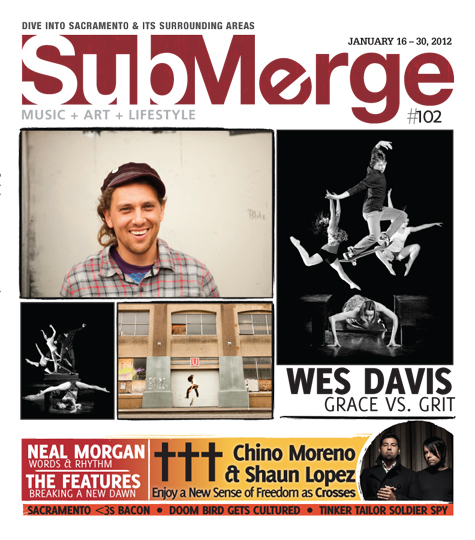
Photographer Wes Davis gives skating a touch of grace in new exhibit, Step Free
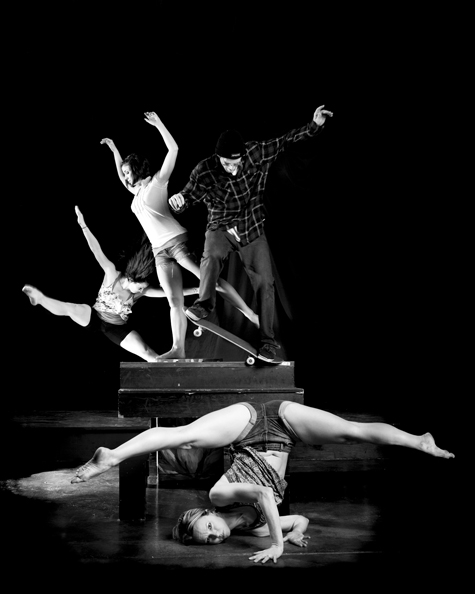
Local photographer Wes Davis has captured an unusual occurrence from behind his camera lens. In the same frame, a skater is caught ollying midair as two dancers are frozen in a leap behind him, while a third dancer crouches below. In another frame a skater grinds a platform while two dancers twirl in the background, positioned as though together the three form a sequence, while another dancer holds the splits upside down beneath them. In each shot, Davis captures the ability of human bodies to fill space with motion.
These photos make up half of Davis’ contribution to Step Free, an exhibition at Beatnik Studios consisting of work by both Davis and local painter Jayme Goodwin. Goodwin’s paintings are primarily focused on dancers, while Davis’ photo collection, an array of both black and white and colored digital photos, juxtaposes the art of dancing against the art of skating. This is the first time these photos are being showcased in an exhibition.
Creating a photography exhibition that features skaters alongside dancers had been an idea floating around in Davis’ head for some time, he tells Submerge during a morning visit to Beatnik Studios.
Portrait of Davis by Mark Dillon
The half of his photos that are in color had been taken within the last one to two years, capturing his friends in their natural elements, flipping boards, ollying and grinding surfaces around Sacramento, Loomis and Portland, Ore. A longtime skater himself, the photos encapsulate an important element of his life on film.
“Pretty much anytime that you’re skating with friends, it doesn’t really matter where you are,” he says. “I really like skating the streets, just being able to push around and zigzag in and out of people, it’s kind of my favorite place to skate. But really it’s who you’re with rather than the place you’re at.”
The other half of the exhibition, the black and white photos, materialized about six months ago.
Davis found some willing members of CORE, a local dance collective, to take part in a photo shoot at Beatnik. Finding skaters for the shoot was easy, he simply had to round up some friends. The crew spent a one-day session at Beatnik and, voila, you have prints that bring skaters to the forefront of an unusual backdrop–dancers. Female dancers leaping, flying through the air, balancing on one arm, on one hand, or just posing with a smile, while a skater soars overhead, board in tow.
Davis’ shots are raw, organic, anything but contrived. The dancers are dressed in shorts and sleeveless shirts, the skaters in T-shirts and jeans. Several of the frames capture laughter, or the subtle awkwardness before someone makes their next move, it’s as though everyone was constantly in motion throughout the entire shoot.
The subjects were allowed a lot of freedom, too, Davis says.
“I like to capture people’s natural movements and their natural expressions, as opposed to portraiture, where you’re trying to create a natural look,” he explains.
Ryan Stark, 360 Flip - Photo by Wes Davis
His requests of his subjects were minimal: dress comfortably, in whatever clothes are suited for skating or dancing on any given day. He set up a space where the skaters could perform jumps. Then the dancers were asked to fill the outside space with any movement of their choice. The result is whatever passed through the lens of his Canon 5D Mark II.
You could say that the result is a contrast of feminine versus masculine or of grace versus grit. But this stops short of Davis’ intent, which is to reveal the similarities between dancing and skating and the skill that each requires, rather than the differences.
“Dancers go through hell, they break bones, they get hurt, they’re constantly battling wounds,” Davis says. “It’s a really rugged sport, but for the spectator it’s beautiful. Skateboarders and dancers are the same people. It attracts that person that wants to be expressive and wants to be moving and use their body to develop their art.”
Of the two, dance usually gets the better rap, Davis says. Often considered a classy, highbrow art; if you are a dancer, you are considered a performing artist. Meanwhile, skating has evolved into a counter-culture here in the States, and if you are a skater, you are usually seen as the reckless punk.
Nosegrind - Photo by Wes Davis
“You get this a lot out in the streets, people will see you on a skateboard and instantly are like, ‘Alright punks, get out of here,’” he says.
Yet, in Europe, he points out, skateboarding is the equivalent of a street performance. “People love watching it,” he says. “It’s a creative way to express yourself and think outside the box.”
The bottom line is that whether or not people choose to recognize it, both dancing and skating employ motion for artistic expression.
Davis himself picked up skating around 11 or 12, during a time when it wasn’t too common. The cool factor of skate culture wouldn’t surface for years to come. Growing up in Loomis, he was the lone skater, and in high school he would catch the nonsensical insults from jocks.
Nonetheless, his interest in skating soon segued into capturing movement on film.
“Skateboarding is what technically improved my photography [skills], because you have to learn how to shoot fast and how to really command your settings to get what you want out of it,” he explains.
Up to that point, he had been assigned the task of photographer during family vacations in the outdoors, equipped with the Pentax his father used to use while serving in the military in Germany during the ‘70s.
After graduating from Sacramento State with a photography degree he landed a gig as a soccer photographer, traveling in vans with soccer leagues regularly to shoot competitions around the country. But he quickly found himself longing for something other than being a slave to the competitions.
“I got burnt out on that pretty quick,” he remembers.
Ricky Krull, Front Blunt - Photo by Wes Davis
Though Sacramento State prepared him well in the mastery of fine art, the program did a poor job of preparing students for the business aspect, he says. For instance, he knew little about building a photography business, how to price his pieces or what the standards of the industry were. Often he was figuring out this stuff on his own, or by picking the brains of experienced commercial photographers.
Davis also realized an increasing need to hold photographers to a higher standard, where photographers are professionals, not hobbyists fiddling around with expensive cameras.
“There’s a lot of photography out there, and a lot of people that are just kind of hacks,” Davis explains. “I don’t want to insult people, but it’s true. I hear it every day, ‘Oh, I got a camera and I’m starting a photography business,’ but they’re coming to me to get coached on how to even shoot.”
In 2009, Davis quit his job working graphics at the Natural Foods Co-Op to commit himself to photography as a full-time occupation. He opened Beatnik Studios with Lindsay Calmettes, another photographer and graduate of Sacramento State, as a space for photographers to network, learn from each other and get honest feedback from others.
The two hadn’t anticipated that Beatnik would become a vital part of the local arts scene. What started as a photography space blossomed into an art gallery and event venue as well.
“It is fun [and] it is challenging,” Davis says. “It keeps us creatively motivated to restructure and reinvent ourselves.”
The space now operates as a hub for all kinds of local artists as an opportune location to express imaginative ideas, like placing dancers and skaters on the same plane.
Step Free is up now through Jan. 24, 2012 at Beatnik Studios. Gallery hours are 10 a.m.—5 p.m., Tuesday—Friday. Beatnik Studios is located at 2421 17th Street in Sacramento.
It’s probably trite by now to remind you that fans just don’t consume music the way they used to. That doesn’t necessarily have to be a bad thing. We still enjoy putting on an album and ingesting it en masse, but it’s also fun to put the iTunes on shuffle and let fate decide, troll YouTube for new music videos or share play lists via Spotify. So for this year’s Top 20, we decided to mix things up a bit. Instead of just albums, we included a music video, EPs, live shows (even a comedy album snuck in there). Here’s our favorite music moments of this past year, in tweet-friendly format.
20. Jason Webley (live show)
Beatnik Studios, Sacramento
Oct. 30, 2011
When the man on stage thrusts his torso into a giant red balloon and gets the entire audience drunk enough to link arms and sway, you know it’s a good show.
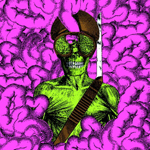
19. Thee Oh Sees Carrion Crawler/The Dreamer
In The Red
Each song rocks, and it’s short and catchy enough to listen back to back, and back. They have mastered a sound, exemplified here. Loud fun.
18. Keith Lowell Jensen Cats Made of Rabbits
Apprehensive Films
Possibly the local comic’s best work to date, if this album/DVD doesn’t have you rolling on the floor, check your pulse, you might be dead.
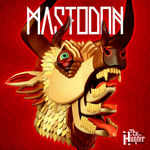
17. Mastodon The Hunter
Reprise
Mastodon ditches spacey prog metal for gnarly bruising metal/rock hybrid and makes us wonder why they haven’t tried it sooner.
16. Mike Colossal The Psychodelic Soundsations of Mike Colossal
Glory Hole Records
From dub to dusty breaks Mike earns the name Colossal.
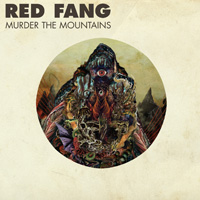
15. Red Fang Murder the Mountains
Relapse Records
Metal heads dose heavy riffs w/ stoner-core harmonies, crushing drums, subtly brilliant solos & bring serious balls back to rock ‘n’ roll.
14. The Generationals (live show) Sophia’s Thai Kitchen, Davis
July 16, 2011
The small porch in Davis provided the perfect environment to fall in love with every up-beat strum from The Generationals.
13. Cousin Fik Hacksaw Ben Thuggin
Sick-Wid-It Records
Hacksaw Ben Thuggin. Period. Fik is a rapper for real. From Halloween concepts, to catchy anthems, his words are precise and full of vigor.