Whenever and wherever Sacramento’s Screature take the stage, they bring a 4 a.m. world of dread with them, embodying completely a dark strain of rock music that first sparked in the underground nearly 40 years ago. They are the bony gait of Famine’s horse, Alice’s final rabbit-hole descent into Hades. They are the harbinger, the massacre and the holy ghost to gloat above all—play their music in a darkened bedroom, and things begin to crawl.
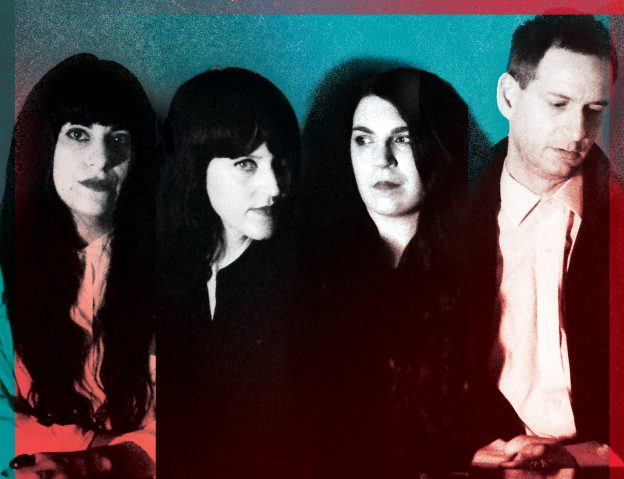
Formed seven years ago, partially out of a shared interest in cultish music and UFO literature, Screature has released two full-length works: their self-titled debut (2013) and Four Columns (2015). The combined effect when listened to both without interruption amounts to a monolithic, rising wail, a dance along the precipice of sanity. The lineup is so well integrated (Liz Mahoney’s foreboding wail, Chris Orr’s jagged guitar stabs, Sarah Scherer’s murky, bass-register organ and Miranda Vera’s unrelenting drumwork) that the result is a single ritualistic howl, each element overlaying the next. When combined with the right visuals, it’s hypnotic and uncanny. Just scope their video for the single “100 Lines” off of Four Columns, a disturbing transgression captured in reverse, confirming the feeling one gets zoning out to their music that time is being demolished. Whether we get the chance to unmake our evil—or merely run the risk of getting snared by it once again—is left up to question.
In the two years since their last aural/spiritual onslaught, Screature has used the live setting as a laboratory for their forthcoming release, Old Hand New Wave. In the throng of a dark venue, the power of shared presence cannot be denied, and their most powerful statements come to life here. I was lucky enough to catch them at Ace of Spades in late 2017 in a perfect trifecta of spectral aggression with Youth Code and Chelsea Wolfe (with whom Chris Orr recorded the track “Scrape” for her latest album). Although their recordings have become ever more sophisticated, Screature is first and foremost an event, in need of living conduits to spread its doom.
But if Screature’s brand of lightning can be bottled, it is under the aegis of producer Chris Woodhouse (Oh Sees, Ty Segall) who has worked with them in the past. On OHNW, he succeeds in adding a deeper sense of fury to their output.
Standout cuts like “Induction” and “North of Order” verge on industrial metal, and provoke compulsive re-listening and wild subjective imagery—a volcano erupting beneath a cemetery, say, or a colony of vampires succumbing to bacchanalian abandon before being incinerated by the sunrise. For me, the winner is the closing track, “Another Mask,” which comes charged with a maddening, insectile guitar drone that drags the listener closer to imminent possession. Though clearly a contemporary work, it could easily be a rediscovered classic from Joy Division’s Closer or an early Christian Death record. It leaves us with the troubling conviction that there is no such thing as finality, no clear delineation between descent and ascent, that one has screamed into the void only to be answered back, “Do what thou wilt.”
Below we share a brief encounter with two of the mad geniuses behind the curtain of Screature, Mahoney and Orr.
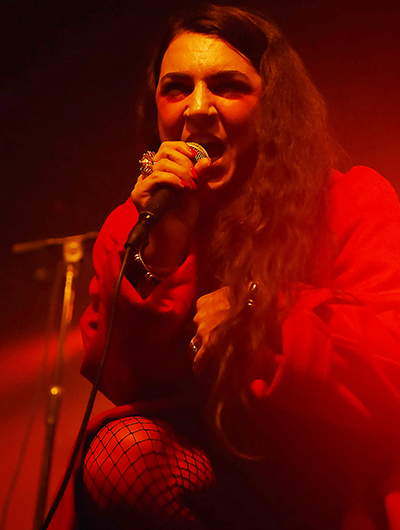
The first two singles off of Old Hand New Wave sound heavier, more doom-laden, more intense. Would you agree with that, and is there something that pushed you in this direction?
Chris Orr: I agree. This is the heaviest Screature has sounded. Part of that was Woodhouse’s heavy hand—the drums are doubled and effected, the organ’s got deeper teeth this time round. Both drums and organ are more present in the mix, which helps thicken it up. The guitars weigh a ton [with] feedback, wah, even my first guitar solo. Liz just brings the roof down on the whole affair. Her vocals are devastating on OHNW. Beware.
Liz Mahoney: I had just joined the O.T.O. (Ordo Templi Orientis) when we started writing this album, so some of the lyrics reference this experience. I was initiated the day before we started recording, so that was very intense for me. I think the impact bled into my performance on the album.
How would you describe the new album title, Old Hand New Wave?
CO: It’s 1984 again; the new wave looks alot like the old wave. The title is pulled from the Hypothetical Prophets song “Person to Person.” We’re all in need of love and affection.
LM: A mask on a mask on a mask on a mask …ad infinitum. And I’m not talking about how popular cosmetic surgery is.
What were your first encounters with dark/new wave/post-punk music? Would you say you’ve been steeped in these genres your whole life?
CO: We’re all well-steeped in the genres you mention, though not exclusively, and some of us more than others. Some steeping you spend your whole life trying to shake.
LM: I definitely encountered it before I knew the terms for it. I was 5 years old when there were new wave hits playing on the radio and in all the movies I loved, but to me they were just popular music!
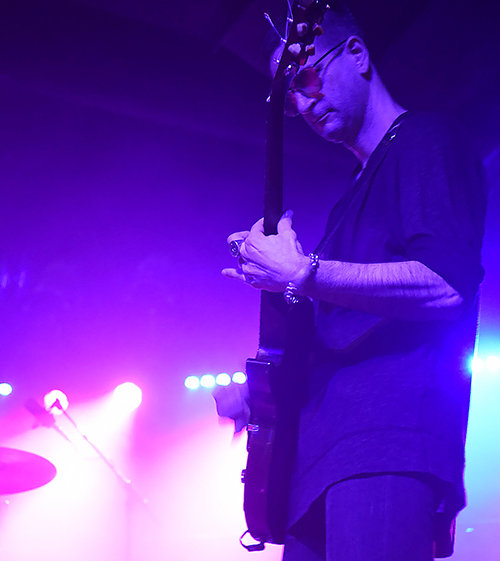
What drew the four of you together? Did you know each other before 2011? What were your interests when you started out?
CO: The women in our band have been friends since high school. Some of us are lovers, others are practically sisters. I’m a Louisiana transplant. But yes, all before 2011. When we started we were interested in overcoming creative blocks. Screature started as a book club/group therapy meeting once a week with drinks. We barely made it through Whitley Strieber’s Communion before we turned our focus on becoming a four-piece.
LM: I met Miranda when I was 11, Sarah when I was 13 and Christopher when I was 17. Miranda and I lived together as sisters from the first year we met until we graduated high school. We clocked a lot of hours at the Cattle Club and watching MTV. When we started, I had shifted my focus from running a live music venue, Fools Foundation, to wanting to perform.
What has been your experience performing with Chelsea Wolfe and Youth Code? What’s your method of trying out new songs live? Do you shape the songs by reading the crowd, or is there another way?
CO: Both bands seem to leave a bit of themselves on stage. The next night we witnessed them eager to get back up there and reclaim it, only to leave it behind again. That’s inspiring. I want to learn to live on stage.
LM: Such an amazing experience! We are so blessed to have such hardworking, magical people in our lives who support what we do. I am usually chomping at the bit to play a new song live, especially in the midst of still figuring it out.
You invite me over for a night of drinks, film-viewing and music listening: What is the lineup for our night in? How do you get across the ethos of Screature without using your music as reference?
CO: Hey pal, nice to see you. Tequila, soda, lemon? We’ve made one just for you. Yes, that’s Machine Gun Etiquette on the record player. Now sit on the floor, we’re watching Communion on mute!
LM: What he said!
Experience Screature live at the Submerge Mag 10 Year Anniversary Party on Saturday, Feb. 3, 2018, at Holy Diver (1517 21st St.). Also performing will be Horseneck and Destroy Boys. The show is free with a $10 suggested donation at the door, with a portion of the proceeds going to a cancer charity. All ages are welcome, doors open at 7:30 p.m. Old Hand New Wave comes out Jan. 19 on Ethel Scull Records. Learn more at Facebook.com/screaturesound or Screature.bandcamp.com.
**This interview first appeared in print on pages 22 – 23 of issue #257 (Jan. 15 – 29, 2018)**
Could G. Green Become Sacramento’s Most Loved Band?
G. Green was once the most unpopular band in Sacramento. Originally Andrew Henderson’s bedroom recordings moniker, his solo shows in Sacramento garnered anathema of clandestine ridicule and indifference. There was a time I loathed seeing the name listed on every Hub show and house party, and I wasn’t alone. It was fun to smear G. Green in 2009 and it was excruciating to see them on the verge of amateurish implosion in 2011. Most of you probably still assume G. Green is locked into a static identity as Midtown brats, drunk on youth, and too drunk to do much besides be obnoxiously loud. While we were laughing, when we stopped caring and stopped looking, G. Green quietly became a serviceable indie band, writing songs destined to shed the onus of snotnosed bush leaguers.
Before she became G. Green’s drummer, Liz Liles described the first G. Green show (a one-off lineup consisting of Henderson on guitar and promoter Rick Ele on drums) as horrible and a disservice to the former KDVS DJ’s sterling reputation.
“I thought ‘why is DJ Rick playing with this idiot,’” she said. “Me and whoever I was with, we watched one song and then went into the alley to smoke cigarettes.”
In the greenhorn years of the band, Henderson was the perpetual opener; the sort that would clear a venue, living room or DIY space except for his steadfast cheerleader, DJ Rick.
“I put him in front of audiences, and the awkwardness, the house slippers on his feet, and the most piercing moments of singing were initially a big turnoff to people,” Ele said. “But Andrew seemed totally impervious to disapproval.”
*****
They’re all laughing at you, aka the infamous Capital Bowl show
Mt. St. Mtn. founder and former Mayyors member Mark Kaiser put out G. Green’s first record, Crap Culture, in 2012, but it took time for him to become a backer. In gathering stories of infamous G. Green failures, Kaiser and Liles invoked the West Sacramento Capital Bowl show in 2008 without hesitation. In those days, bands would rent out the events room to play, and according to Kaiser, “trash.” The bill was geared toward trashing the place with Mayyors and Eat Skull (a notoriously self-destructive Portland band), while the G. Green solo set was the black sheep. Liles said she and her friends openly ridiculed the G. Green set. While Kaiser likened the clumsy solo performance as arriving “too late for that mid-’90s Olympia-wrought ‘any art is good art’ vibe.” Henderson was not going to be the next Calvin Johnson.
“Andrew was really young, and looked really drunk and really nervous,” Kaiser said. “He let loose, and I cringed. The show was fun, drunken chaos, all the bands on the bills were renowned for being a wasted mess, but this was excruciating.”
*****
Laughing: from ‘at’ to ‘with’
Liles might have mocked Henderson at first, but one evening he showed up at her Midtown home, then known as the Funcastle, expecting a Thee Oh Sees show. Liles had moved the show to another venue, but the encounter with Henderson sparked a quick friendship. At the time Liles was a—quote, unquote—drummer for experimental groups Sucks and Fatty Acid. Untrained and illiterate to tempo, she began telling Henderson she was G. Green’s new drummer.
Henderson obliged after booking a house show with Kurt Vile, Eat Skull and Ganglians. He had two months to put together an opening band; Liles was the first piece. The remaining guitar parts were filled out by Julian Elorduy (drummer for Mayyors in those days) and Dylan Craver. Two months proved enough and sustained the approval of scene-dad DJ Rick.
“I didn’t really know if the band would continue after that one show,” Henderson said. “Rick loved us and threw us on all these shows and put us on [Operation Restore Maximum Freedom]. Pretty much the reason Liz and I still play music together is because Rick threw us into the whirlwind of the Sacramento music scene at that time.”
Kaiser recalls being at the full lineup’s debut, despite purposely steering clear of solo sets since the bowling alley incident.
“The second time I saw Andrew play it was with this first incarnation of a live band and it was a world of difference,” he said. “It was sloppy and chaotic, but it was fun and there were lots of ‘whoa, if they keep doing that’ moments that had me intrigued.”
Henderson and Liles cherish the times with that early incarnation, but also knew it could never last. Elorduy quit the band after Liles broke up with him for Hella drummer Zach Hill, and was replaced by Brittney Gray on bass. Henderson and Craver were the best of friends and also prone to volatile feuds. Every show and practice was a fun, drunken gathering that flirted with implosion.
“We were so close as friends that none of it mattered if people liked us,” Henderson said. “We were just getting drunk and having fun. Me and Dylan were good friends and then we’d hate each other. He probably quit the band infinity times.”
Before the final nail was put in the original lineup, G. Green enlisted Andy Morin, long before his stint in Death Grips, to record their debut, Crap Culture. A shambolic and lo-fi collection of mad-dash punk songs, Crap Culture captured G. Green at the time—unruly and unpolished, but beneath the caterwaul existed nuggets of pop punk gold. Kaiser compared the record to Superchunk’s No Pocky For Kitty, lauding G. Green for maintaining their live energy on record.
“‘Pool Of Blood’ was the song that made me offer them a record,” he said. “That song was a sign they had something and were capable of growing past the kiddish fun-punk into something bigger.”
Crap Culture arrived late to the cultural trend of low-budget to no-budget albums, home-recorded on junkable equipment. It was recorded in 2010, but did not see release until August 2012. By then contemporaries like Wavves had ditched the intelligible scuzz for pop-punk polished for MTV. Also, by the release of Crap Culture on Mt. St. Mtn., G. Green featured a lineup far superior to the rag-tag group that winged it through the debut.
With replacements Simi Sohota on bass and Mike Morales on guitar, G. Green returned to the studio, paying Robby Moncrieff to record a follow-up at the Hangar. Besides being a friend of the band, Moncrieff was a popular choice having recorded Dirty Projector’s critically praised Bitte Orca and fellow Sacramento band Ganglians’ Still Living. Unfortunately Henderson said the band made the mistake of requesting Moncrieff “make it sound like Woodhouse,” meaning Chris Woodhouse, the Hangar engineer responsible for seminal linchpins like all eight Thee Oh Sees records and the A Frames.
Henderson said, “We didn’t use Robby as he should be used as an engineer. He did the best he could, but it’s not the way Robby works. There was no unifying theme with it. It was just a smathering of shit and it didn’t sound very good.”
The record was scrapped, except for two songs which became the “Funny Insurance” b/w “Sounds Famous” 7-inch. Liles corroborated their poor performance, attributing it less to Moncrieff, and more to the band for it sucking. They entered the studio with songs written by all the members with no vision for the band’s identity.
Liles said, “we’ve had really bad luck recording full records… until now.”

*****
New lineup, new lease…
On June 10, 2013 I drove my then girlfriend’s Altima to Davis to see Parquet Courts, a burgeoning Brooklyn band, and Fine Steps, a new project by Julian Elorduy. G. Green was also on the bill, so I planned to arrive late, still pegging G. Green as the perpetual opener. To my surprise Fine Steps was on when I arrived at the Davis Bike Collective. I caught their last two songs. I grew despondent realizing a full G. Green set stood in the path to Parquet Courts. Who agreed to this bat shit order of operation?
With no beer to drink and no cigarettes to smoke outside, I remained inside conceding that despite my efforts I’d been hoodwinked into a G. Green set. Now, I don’t recall particular songs from the set in that blazing, claustrophobic bike shop, but I do know that’s the night I stopped laughing at G. Green. The additions of Sohota and Morales gave them chops previously lacking in the dynamic. Liles had become a force, and Henderson’s once pubescent screech had caked enough nicotine on his vocal cords for a second lease on his balls dropping. There’s plenty to love about a band bent on belligerence, but when that same band backs it up with the skills to earn that abandon, they stop being local brats and graduate into a menace worthy of unleashing on the country at large.
This year on the porch of Kupros I confess to the founding members the Parquet Courts show is when I started believing in G. Green. Henderson states it was his birthday that night, while Liles mentions that Parquet Courts opened for them when they played Brooklyn’s storied 285 Kent venue. Both are unphased that I once detested their band. I was never the only one and I wasn’t the only convert either.
Liles said, “A lot of people probably haven’t been taking the time to see us lately because they saw us so many times three years ago and have decided there’s no way we’ve actually progressed.”
Henderson added, “There’s an image that probably still exists in a lot of people’s minds of these weird shitty kids that are drunk all the time and looking for the next party. We’re convincing people who’ve seen it from the beginning that we’re a great band now.”
Liles and Henderson turned 25 this year. Neither member wanted to be pigeonholed to perceptions developed when they were still teenagers. The upcoming Area Codes album was honed on tour, the band delegating a set it would play nightly until the songs were ingrained in their muscle memory. The decision to be professional and treat their live set with care translates to the album, which was recorded by Woodhouse, whose specialty is live tracking, room sound and mic placement. Even a late night of binging on spirits and karaoke at the Distillery couldn’t sandbag their comfort with the songs.
“We finally developed a sound that cut any bullshit,” Henderson said. “We didn’t really know how to make a band sound. In recording with Chris, he just documents what we’re doing.”
But is their scene-dad Rick Ele a proud papa?
“So many Chris Woodhouse productions have that unmistakable Woodhouse touch,” Ele said. “He becomes the fifth Beatle to so many bands, but in the case of Area Codes, I think he really just used his magic to maximize the G. Greenness of this record.”
Kaiser was equally impressed, keeping the band on his Mt. St. Mtn. roster for a second go-round, calling their current incarnation a “quick progression.”
“The new lineup came about and they tightened up both their live presence and song writing. I kept telling Andrew to just pony up the money and record with Woodhouse. He’s the wizard, he knows their sound and knows how to make them sound more like themselves. That’s what they did and this new recording is a huge step forward.”
The night at Kupros we drank enough short-n-talls of Coors Light and Jameson to carry the festivities to the former Funcastle, now also the home of Henderson. I apparently needed to try “tangler,” a moonshine-like infusion engineered by Liz’s boyfriend. Once there it was filmed and failed beer shotguns for the tour promo video, messy blueberry pancakes, and Guided By Voices’ Alien Lanes on the record player. As both made more of a mess than a mouthful in shotgunning the PBRs, I wondered how they ever got the stigma of a party band. Earlier that night Liles insisted they were misunderstood. “We’re not a party punk band, we’re a weird band,” she said. “The record only mentions pizza once!”
“We’re a straight up indie rock band now,” she said.
Most importantly are these last words from Ele, their cheerleader since day one. Watching a solo project from an awkward kid from Folsom become a band after making friends with the girl who laughed at his sets.
“Andrew’s always the heart and soul of the band as voice and chief songwriter, but through these lineup issues, Liz really stepped up to become the band’s leading co-star. They could change lineups 100 more times, and from now on, I’ll always think of Andrew and Liz as G. Green.”
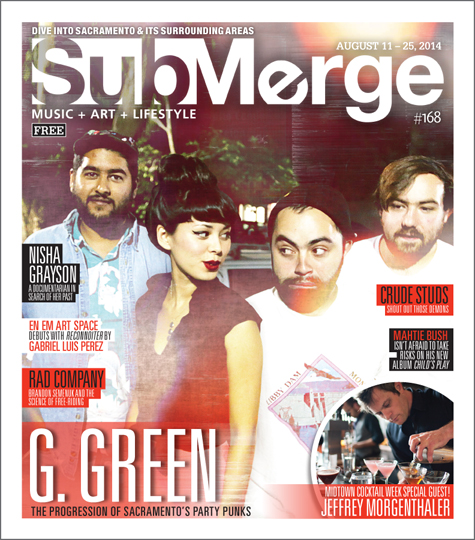
Celebrate the release of Area Codes Saturday, Aug. 30, 2014 at Witch Room (1815 19th St.) with G. Green, Rat Columns, Violent Change and more. The 18-and-over show starts at 8 p.m. and tickets are just $5. Check out
Facebook.com/ggreenband for more info.
Two Gallants, G. Green
Harlow’s, Sacramento • Dec. 14, 2013
Sometimes I read over my recent reviews of shows or restaurants, and think, “Criminy! Am I just a crotchety old curmudgeon now who hates everything?” How refreshing it is to realize that this is not the case! While most things have a tinge of suck imbued into them, or just plain suck outright, there are good bands, good dishes, good men, good women and good days. I can love as much as I can hate.
The Two Gallants show, opened up by locals G. Green, on Dec. 14, 2013, and booked by Brian McKenna of Abstract Entertainment for Harlow’s Nightclub, had me feeling the love big time.
I know Two Gallants well, and they’ve known one another even longer, having written songs together since the age of 12. I was clamoring for the chance to review their set, but honestly knew little of G. Green. I assumed (again, because I have dickish tendencies and little time for pre-show research or repeat trips to catalog a band’s progress) that G. Green would be a coterie of whiny yet privileged hipsters with no real musical merit, albeit plenty of cool, contrived clothing. They were in their infancy when I saw their show years back at the now-defunct Javalounge, and they’ve since come a long way, baby.
For indeed, when G. Green took the stage at Harlow’s, right off the bat, I was doing that super nerdy head-bobbing dance and smiling like an idiot. These dudes are no joke, but rather a rad post-punk band hailing from Sacramento that showed me who was boss!
{G.Green, Photo by Niki Kangas}
These SXSW veterans’ most current LP is called Crap Culture, and they are working on an album as we (figuratively) speak with Chris Woodhouse.
Although each band member belts it out from time to time, frontman Andrew Henderson supplies minimalist lead vocals and guitar, while Mike Morales plays lead guitar and Simi Sohata provides a thumping, fuzzy garage bass undercurrent.
And then, there’s Liz Liles— an unparalleled babe with floor-grazing chestnut locks, porcelain skin, and strawberry red lips— drumming up legit, badass pounding tempos, and getting all the things in the room throbbing.
Maybe G. Green isn’t a wildly original concept, but they damn straight will get the room oscillating between bouncing and rocking.
And then came something elusive and magical that is so rare in the music industry: a perfunctory set change, which was followed by the headliners’ set taking off, like one of those whiplash-inducing zero-to-sixty-in-two-seconds rollercoaster rides. Or maybe it just seemed that way, following shots of tequila.
Have you ever had your heart metaphorically ripped out of your chest, thrown on a greasy, dirty floor right before your eyes, and stomped on until it was nothing but a smear of blood-spattered muscle dying in a sick, pulsating decrescendo? Two Gallants’ singer, Adam Stephens, perfectly conveys that experience with every agonized cry desperately flung from the pit of his stomach into the mic.

{Two Gallants, Photo by Melissa Welliver}
But this ain’t your tragic teenage nephew’s go-to screamo group. This two-piece band creates a wall of sound that is emotionally charged, anguished Americana, with roots in blues, folk, country and garage. Drummer Tyson Vogel lends backup vocals and beats out raw, traveling cadences that give legs to Stephens’ rolling, melodic fingerpicking and driving electric guitar soundscapes.
Hailing from foggy San Francisco, this duo borrows its name from the title of one of the short stories in James Joyce’s Dubliners, “Two Gallants.” They have released four full-length albums, and have toured the world over. Their most recent album, The Bloom and the Blight, was born after a five-year hiatus to a multitude of hungry fans.
This was not my first rodeo; after seeing Two Gallants kill their 45 minutes set another time, they did not at all disappoint. Stephens’ Stevie Wonder-esque sway holds a shadow of the joy characterized by the bespectacled Grammy-winning soul and pop artist— Stephens instead appears to be pained by every shaking utterance. Nonetheless, it is a happy catharsis to relate to him as he aches along with your deepest secrets, teamed up with a harmonic, danceable delivery. They’ll alternatingly melt your face off, and then bring it down a notch (or several) with their dirge-like storytelling hymns. Bipolar, sure, but at least you know you’re alive.
To sum it all up, they fucking rocked.
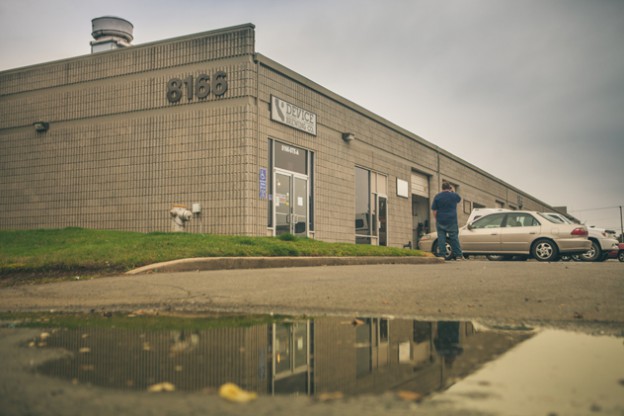
Submerge had been hearing rumors for a while about legendary Sacramento recording studio The Hangar closing after 20-some-odd years in its current downtown location, but until owner John Baccigaluppi blogged about it on Feb. 18, 2013 at Thehangarstudios.net/blog, we were holding out hope that they were untrue. “In March of 2013, we will record the last band in the space and move out, ending an over two-decade run of making records in the building,” wrote Baccigaluppi before going on to list some of the things he’s proud of, some of the things he’s bummed about and some funny “celeb type moments” that happened at The Hangar (cameos from Kanye West, Ian MacKaye and others).
We don’t have enough space in this issue to talk about how many amazing records have been recorded and/or mixed there (seriously, look into it, you’d be surprised), just know that there are a lot of them!
“So that’s it really after 20 something years here,” he wrote. “A big pile of recordings coming out of Sacto that hundreds of thousands, maybe millions of people have heard. But for me personally, it will always be more about the people and the small things we shared making these records.”
He pointed out that The Hangar as we know it will be moved into a house at the base of Mount Tamalpais overlooking the Pacific Ocean and Point Reyes, Calif., and will turn into a residential studio. Baccigaluppi also said that he and fellow engineer Chris Woodhouse are building a new studio a few blocks away from The Hangar’s current location in the historic General Produce Building.
“It’s gonna be badass!” he wrote. “Chris has some great ideas on a streamlined, analog-centric room where he and the rest of us can get rock bands up and rolling super quickly and get a great record done fast, which also means cheap. The building is really cool. It reminds me of what the Meatpacking District in NYC must have been like before it got super gentrified and trendy.”
So at least there is some good news coming out of this! Head to The Hangar’s blog to learn a lot more about the closing, as well as read some funny stories and also check out what a few musicians have to say about their memories of The Hangar.