Mux Mool’s Planet High School gets its point across without speaking
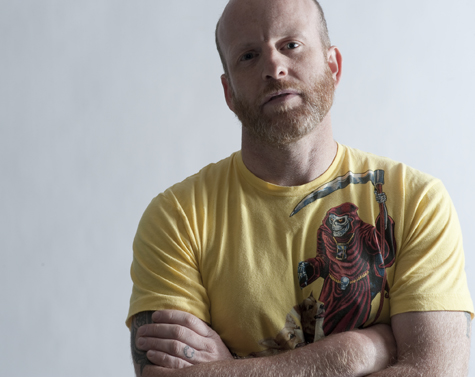
It may not be an easy task for a lyricist to pen a song that accurately depicts what he’s feeling at any given moment, but he has one important tool that an instrumental artist does not: words. Such was the dilemma electronic music auteur Mux Mool (aka Brian Lindgren) faced when he sat down to compose his latest album Planet High School, released Feb. 7, 2012, on Ghostly International.
“When you write songs without words, first of all, it’s hard to name the thing,” Lindgren said in a recent interview with Submerge. “It’s hard for people to tell what it’s about.”
Lindgren’s album, in this case, addressed what he observed as a prolonged adolescence in modern culture–a culture where, amongst other annoyances, over-sharing the minutia of everyday life has become all too prevalent.
“It was just something I was feeling when it came time to write another album,” Lindgren explained. “That’s what I was feeling more than anything over the past year, or year and a half.”
Though he was expressing these feelings through song, he did mention that it didn’t really change the way he worked all that much.
“It influenced how I felt, which may have influenced where I was grabbing things from, but it wasn’t like, “Oh, this is a high school gym class, this is a march song, this is a this,” he said. “It didn’t change it in that way.”
Though he acknowledged the lack of lyrics in his songs may make such concepts difficult for listeners to latch on to right away, their effect can certainly be felt through the album to those who are paying attention. Planet High School sheds the ethereality inherent in a lot of electronic music for something far earthier. The opening track, “Brothers,” seems to have a gin-and-juice-soaked swagger to its electro groove while the album’s first single, “Palace Chalice,” rattles with a sort of island beat. The overall feel of the album is one that is brash, headstrong, and perhaps a bit petulant, but that may not be surprising if you’d ever spoke to Lindgren, who, quite refreshingly, has no problem speaking his mind.
In the following interview, Lindgren, who will make an appearance at this year’s Sacramento Electronic Music Festival, divulged details about his creative process while offering pointed social commentary and voicing his opinions on experiencing electronic music in the live setting.
I was checking out the “Cash for Gold” video, and I thought it was a really neat clip. Did you have a lot to do with the concept of it?
The reason why I think I’ve hesitated on music videos for so long was because I never wanted to do a music video with me looking really cool with really cool things–anything flashy or anything like that. I actually wrote the story to the music video–the screenplay and everything was based on. It was just about being yourself and sticking it to your boss.
Do you think cinematically when you write your music?
I just think I think cinematically story-wise. I think narratively as opposed to a random collection of things.
The album does have a bit of a funk feel to it. Is that indicative of the music you were listening to while you were creating it?
No, it just was funky. I was definitely not listening to any more or less funk than I was in the past year.
So your funk intake has remained consistent throughout your entire music career?
Yes, it’s been almost entirely the same.
The album just came out in February, but are you already looking at what’s next? Are you the kind of artist who’s constantly writing?
Yeah, it’s an ongoing process. It’s not really done in blocks. You just have to work when you feel like working, which is not always. Some people like to post that they work every single day and nonstop and all they do is work between flights and, “Oh my God, I’m on my way to a show and I’m working on a song,” and I don’t buy it for a second. Everybody has a limit where they’re like, “I don’t want to work on music. In fact, I don’t want to listen to music, and I don’t want to talk about music.” Everybody has that. I definitely have that. I definitely work quite a bit, every single day, but with these songs it was all in the moment when I started making them at least.
Is that “in the moment” process something you utilized just for Planet High School, or was that also the case with your previous album?
With the last album, the record label wasn’t sure what I was going to do career-wise, so they wanted as many songs as they could get. At the time, they wanted to grab everything, so Skulltaste had less focus in terms of an album, because I think maybe about 12, 13 of those songs could have been an album and seven of those were songs they just grabbed.
When you commented on people bragging about how they’re constantly working, it occurred to me that that may play into the idea of prolonged adolescence–sort of like the kid who’s too eager to answer questions in class.
There are some high-school-type social elements even among professional musicians… To me, there are these dudes who want to post, “Going into the studio!” every day, and it’s like, “Well, you’re a professional musician. That’s just your job.” It’s not like if you’re a janitor you’d post “Scrubbing toilets!” and everyone’s like, “Oh, dude, that’s dope. You’re scrubbing toilets.” It’s not all brag-able. It really isn’t.
Plus, all they seem to talk about is how much they’re working. To me, it seems like real-life experiences are the things that should inspire you to write songs. If your entire life experience is sitting in the studio behind a computer, it’s like, what is a computer song inspired by other computer songs? There’s just no feeling there.
When you’re out on the road, do those experiences fuel what you’re writing?
Yeah, because you’re seeing stuff, and you’re away from home. I saw this thing on Reddit the other day that I thought was really funny, because it was like, “Bus window is a first year philosophy class,” and it’s kind of true. Because as soon as you sit there and you’re by yourself, and you have nothing to do but look out the window and think about stuff, you start thinking some basic philosophical stuff. But when you do that forever, you do that for three years, and that’s every single day, you’re thinking about a lot of stuff for a lot of time.
Before you mentioned you wrote the story for your video. Do you often write stories and do those inform your songwriting?
I think the reason why I wanted to put the message behind the video, of just being yourself at all costs, it’s just more or less what I’ve had to go through in the past couple years, which is just being able to do music for a living, which is not always easy. It’s not always easy to convince people that it’s a viable career, but being myself has always been worth it, because that’s the message I’ve always agreed with.
Is it weird for you to hear yourself say that you’re a professional musician?
I don’t really tell people that. People I meet, I don’t really say that, because everybody’s a fucking DJ. Everybody is.
I’m the same way about telling people I write. I mean, I do, and I get paid for it, but the reaction is always weird.
Right, because they’re like, “Yeah, of course you are, dude.” And you’re like, “No really. I make money at it. It’s a job.” And they’re like, “Uh huh.”
Either that, or they think it’s more interesting than it actually is.
Oh yeah and that, too. That’s the other side of that. That’s when you play shows and people come up to you like, “Oh my God, that was so incredible,” and you’re like, “Calm down. I didn’t just cure cancer. I didn’t give your mom heart surgery or anything. I played with my computer in front of you. I’m glad you’re impressed, but let’s be realistic.”
You mention playing on your computer in front of people. How is it for you to connect with the audience? Do you sometimes have to be more physical to get people involved?
For me the show isn’t about what I’m doing physically. There are a lot of people who go out there with their sets pre-programmed, they press play, they tweak on filters for the next hour and a half and they dance around and throw their hands up during the exciting part of the song. They get a lot of credit, and they get really far that way, and I think that’s a fucking joke. I’m not a clown. I’m not up there to be a clown and choreograph the songs to whatever shitty dance I’m doing. I’m trying to create the mood, but I think about it in a more European style, which means the mood should be created by the songs I’m playing and the order I’m choosing to play them in and how those things are working. It’s definitely more of a listening experience. I don’t dance. I don’t jump. I don’t even make funny faces. At least, I try not to.
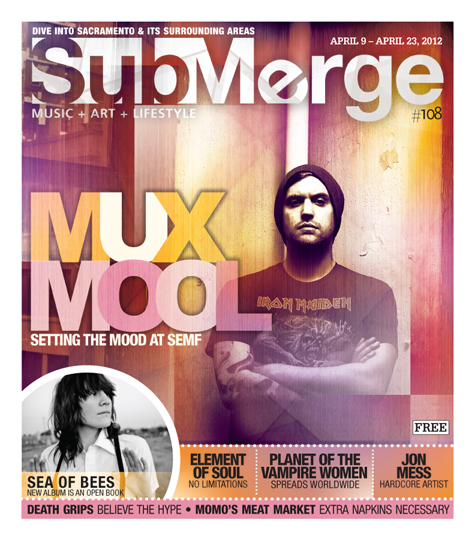
Mux Mool will be featured on day 2 (Friday, May 4) of the Sacramento Electronic Music Festival, which will take place at Harlow’s. The festival runs from May 3—5, 2012. For more information and to get a glimpse of the full lineup, go to http://sacelectronicmusicfest.com/
Juan MacLean Adds a Very Human Touch to Electronic Music
“You know what’s weird is a name came up on my phone. You must be calling from a landline,” said Juan MacLean from his tour bus. When Submerge contacted him for our interview, we did in fact call from a landline. It was a quirky way to start the interview, but set the tone for speaking with a man whose career in music is flavored with contradictions, and we mean that in a good way.
MacLean, or The Juan MacLean or just John MacLean, began his career in music as a founding member of the ‘90s dance punk band Six Finger Satellites, which was signed to the influential indie label Sub Pop. After he parted ways with his band, MacLean eventually reinvented himself as a solo electronica artist. With help from LCD Soundsystem’s James Murphy, MacLean has released a few recordings under The Juan MacLean moniker for another influential indie label, Murphy’s DFA Records. MacLean’s most recent album of original material, The Future Will Come, was released in 2009 and features another LCD alum, Nancy Whang, on vocals.
When he’s not performing his own music, MacLean can also be found touring the world as a DJ. When we caught up with MacLean, he was on the road with Simian Mobile Disco and had just performed dates in Canada. In 2010, he released his first mix album, DJ-Kicks, a collection of modern house music. MacLean said that the process for cultivating tracks for the mix wasn’t as arduous as creating his own music, a process he described as “torture,” but it certainly had its challenges.
“I did spend a lot of time thinking about it, which might not seem like working,” he explained. “Because of the Internet, you can really start chasing your tail, because at some point you realize that you’re never going to have tracks that people can’t just get within 30 seconds, because everything is out there and everyone knows everything. So playing this game of having the most obscure tracks is pretty much pointless at this stage of the game.”
Instead of trying to find tracks off the beaten path, he took a different approach to putting together DJ-Kicks. He didn’t attempt to wow listeners with rare songs, but rather allowed the craft of actually making the mix take center stage.
“My answer to that was first of all to use all vinyl and mix it in the classic way,” MacLean said. “Making a mix live with vinyl–I think it always does impart this human feel to it…”
It’s this inherent humanity that MacLean feels is missing from modern music. Interesting, considering he has made a name for himself in the world of dance and electronica–two traditionally mechanical genres. He explained that the little imperfections and “constantly correcting the mix in the middle of the mix” creates “a more friendly, human feel to the actual mixing.” He likened the experience to listening to old Rolling Stones or Led Zeppelin albums, “where everything sounds kind of off.” As for the auto-tuned, pitch-corrected and quantized music of today, MacLean added, “They don’t sound like human beings anymore.”
In the following interview, MacLean also shared his opinions on the difference between the dance music cultures in the States and overseas.
How is the tour with Simian Mobile Disco going?
Yeah, it’s actually been really good. Even in places like Denver on a Monday night it’s been insane.
Is Denver just not a happening town?
Yeah, it’s usually really bad for all of us. It’s just one of those places for dance music, it’s just really bad. It was crazy. It was packed. I think they were on a lot of drugs.
That helps, I guess.
It does.
You’re on the road a lot. You must have a pretty good idea of what kind of crowd you’re going to get from place to place, but do you get surprises like that night in Denver often?
For sure. It’s mainly in the United States where there are the most wild cards, because most other places in the world, dance music culture is a little more ingrained and established. You really know what you’re getting when you get there–in a good way. In the United States, it’s a battle. It’s just a relatively new thing here.
So it’s just not as ingrained in the culture here as it is in Europe?
Well, there are a few different elements to it. In the United States, traditionally, people who are into live music–rock or indie rock–are not interested in seeing dance music or a DJ in any way. The two things are incredibly divided. I think it’s fair for DFA to take credit for being a big part of bringing indie rock audiences to the dance music world. Now there is a lot of crossover, and it’s not unusual to see rock music and dance music at the same time, or see a band one night and a DJ the next night. In Europe, that’s just the way it’s always been. They don’t understand that kind of fragmentation–being restricted to one thing.
It’s funny because I grew up listening to alternative rock in the ‘90s, and you see clips of live shows back then and people are just jumping up and down and getting into the music, and then when it began to segue into indie rock, the crowds got very still and stagnant. They don’t move at all. You think that’s part of the reason why it’s hard to get the indie kids to come out and dance?
I spent the ‘90s playing in an indie rock band signed to Sub Pop. I just got used to playing a sold out show and looking out and seeing a room full of people with their arms folded. It was also a very male-dominated thing. The audiences were like 80 percent male. Especially in American culture, doing much of anything while music is playing would be considered really gay or something. We live in a very homophobic society, no matter how open-minded people in the indie rock world think they are, when it comes to indicators like that, I think it’s still a really homophobic batch of people. Dance music seems to be a bit more female-driven, in a practical way. If you’re trying to get a room full of people who aren’t dancing yet, girls are always going to be the first ones to dance, because guys aren’t going to be the first ones out there dancing. I think it’s because they’re afraid of being perceived as gay–unless it’s at a gay night, which are always my favorite gigs to do in the United States.
Just because the crowd is the most receptive?
At gay nights, nobody cares about being cool, about being cool in front of other people. It’s just totally removed. It tends to be just people having fun.
I was reading one of the reviews of your live shows from your current tour and the writer was quick to point out that you use mostly vinyl on stage. I thought it was interesting, because the laptop is the instrument of choice among DJs now.
I think people are starting to take notice again, especially in the United States. They’re just not used to seeing people use vinyl. I think when you see someone up there, even if you’re not doing much and just hanging out and listening, which is fine, to watch someone mixing vinyl or to watch someone looking for the next record play, and putting it on and getting the mix right, it just makes the DJ… For one thing, you have to move. You have to move around a lot, you have to always be doing something. It’s even more interesting just to look at than someone looking at a laptop screen. I think there’s a psychological thing now, when they see someone looking at a laptop screen, that image is what they associate with the world of work or down time looking at Facebook or something. I think there’s a psychological process that is off-putting to people, and that’s not even to disparage people DJing with laptops. I have friends who are amazing using a laptop. I’m not. I just can’t do it. But there are also a lot of people who are abusing how easy it is to DJ with a laptop. I think that’s where the trouble comes in.
Does that bum you out a little bit? I guess it could be relative, but I know photographers who really like digital cameras, but they’re bummed that they make it easy for anyone to think they’re a photographer.
It is very analogous to a bunch of fields. Also graphic design–everyone thinks they’re a graphic designer now just because they have Photoshop and Illustrator. It’s actually been a big conversation on this tour with Simian Mobile Disco, because in America, it’s much more prevalent than it is elsewhere in the world. I think you can say the same thing in any of these fields, which is now we have an abundance of people who are not so good or mediocre at doing all of these things, but it does make it even easier for those who are professionals and have put a lot of time and effort into honing their crafts and have real talent, it makes it easier for them to stand out when people see it.
For the DJ-Kicks collection, you made a collection of modern house music. Dubstep has become really popular in dance clubs recently. Was this mix sort of a statement that house is still alive and well?
Well, from the beginning for me, it’s always been an influence. It’s comparable where for James Murphy in LCD Soundsystem, he’s always really been into disco, but LCD Soundsystem songs often don’t sound very disco. It was just always something I was into, especially early Chicago house tracks–some of them were things that I’ve ripped off for years and years. When it came time to do a mix, it was just the most logical thing for me.
You said these are things that you’ve been ripping off for years, is this your way of paying it back?
Yeah, in a way. This is where I’ve been coming from forever, and also I think in the hipster world, people have been into disco for so long, for me, it got really old and tiring. I thought if there was some way to expose people to what came after disco, then maybe that would be a good thing.
Juan MacLean will perform a DJ set at Mix Downtown in Sacramento on April 7, 2011. This will be opening night of a new monthly party Lights Down Low, featuring resident DJs Shaun Slaughter, Adam J and Alx-T. To RSVP for free admission (before 11 p.m.) go to Ldlsac.tumblr.com
Daedelus rides the always tumultuous wave of electronic music
The dandy garb of Alfred Darlington suggests he’s a man lost in the past. His digital instrument, the Monome is a brilliant future trapped in the neon glow of a push-button box. Far from an eye-grabbing gimmick, Darlington is expressing himself beyond the DJ booth of electronic music, which in his opinion will combat banality and the demise of electronic genres of the past.
Darlington is resistant to the label of elder statesmen, but with over a decade of experience in electronic music, he’s seen enough sub-genres come and go to speak eloquently on what it takes to sustain. To him, it’s a presence of personality, which is a glaring separation between the Los Angeles beat music he helped cultivate at Low End Theory and with dub-step. “When [dub-step is] good the bass is really pushing air on your organs, and yet it isn’t about the person expressing it,” he said. “There’s very little energy on stage. It’s usually a very controlled amount of chaos that I think will limit that scene, much like what happened to drum ‘n’ bass. There’s amazing parts of the sound, but personality is hard to come by. Whereas this beat thing, people are really willing to, for lack of a better term, let their freak flag fly–that’s a terrible phrase. But there’s something to it.”
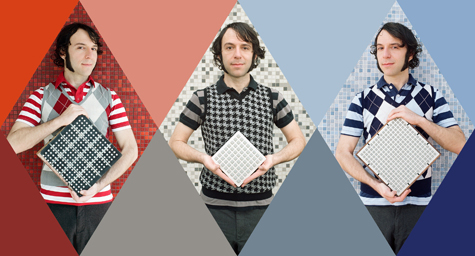
On stage Darlington is Daedelus. He began DJing for Dublab.com in 1999 and by the early Aughts was releasing albums on Plug Research, Mush and Ninja Tune. Much like the mythological Greek character Daedalus, Arlington is a tinkerer and lover of invention. His experimental music caught the attention of Brian Crabtree and Peter Siegerstrong, two developers of the Monome box, which is a sampler imbued with the freedom of improvisation. Through the use of the Monome, Darlington is fossilizing the notion that live electronic music must be static and built on pre-existing recordings. His weapon of choice was our first topic, as I attempted to understand its power.
How did you get connected with Crabtree and Siegerstrong to obtain a prototype of the Monome?
It was really quite accidental; a lot of my career has been a series of happy happenstance accidents. They invited me to play a gig a long time ago when they were undergrads in San Diego. They showed me the prototype, and it fulfilled all my wildest dreams for sample manipulation. Then there was a lot of begging, pleading, bribing and coercing until I got the device in my possession.
It’s funny to think we live in such a wonderful age of invention for young music makers. All the buttons we want to press are out there on some device you can obtain. When I was coming up in the early Aughts this wasn’t possible. Either you got an MPC and did all the weird things like use zip discs to load samples, enduring painful breaks while you waited for the sample to load–five minutes of waiting around. Or you would use the computer and get computer face with the blue screen projected on your eyes and you’d be dead to the world in your bedroom.
Is it a device that made sense immediately? Or did it take hours of fiddling to even get a basic feel for the Monome? Because it looks like a complex piece of machinery, given all the buttons.
There was some stuff to the guts that were complicated initially. What’s cool about it is it’s a very open platform. We’ve added a lot of functionality and play validity, I guess. But the device itself never needed to change because it’s button matrix. The initial idea of sample manipulation was there and it gets more refined as people engage it as an instrument.
It’s funny because at first my imagination tricked me into thinking I could manipulate samples on this, but I’d still need a keyboard to play them. That’s not the case. The potential energy of the instrument was great enough that it’s continued to move forward.
Do you still get a lot of people who are moths to your button machine? Or have they gotten used to its presence and are dancing again?
In 2010 there’s been a sea change. A general shift has occurred and people are used to instruments on stage again. It’s OK. There’s still some of the staring types, but not as many. I think people are kind of getting the idea that electronic music can be live, and it isn’t a matter of life and death that they just stand there.
Have you been following the Anti-Rave Act that is currently passing through legislature?
Yeah, I played at EDC [Electric Daisy Carnival], which is one of the fermentors for the recent spat of anti-rave talk. For a show that was markedly safe with over 200,000 people over two days, which for a non-festival is the single biggest event in America in the past couple years, there was a death of an underage kid there. That began this moral wrestling because it was partially the city of Los Angeles’ fault. There was a lot of controversy, since they were supposed to be carding.
It’s funny because at any given moment people are living their lives outside of a controlled situation, such as a rave or event. I’m sure there are, unfortunately, multiple deaths of teenagers from drinking or drugs on any given night, but they are not all concentrated in one space. With EDC especially, there were paramedics on hand a lot of people being helped and saved, but it’s easy to point a finger.
It’s always been this way. As much as I love the attention given to the scene and the opportunity for young artists to play in front of large audiences, every time the electronic music scene goes underground it tends to bear more fruit. I guess that’s a small piece of solace I’m trying to derive from this negative attention.
How did you feel when you read the phrase “pre-recorded music” as the musical format that this act intends to criminalize? I’m still baffled as to how this definition could be monitored and policed.
At sporting events I’m sure they’re playing pre-recorded music for sleazy cheerleaders. I’m sure people are dying on the field and off, and yet I don’t see them banning those games.
I’ve read that you’ve become an elder in the L.A. music scene, someone who’s even sought out for advice. That has to be a strange transition considering in your younger days. You were treated somewhat like an outsider.
It’s one of those things where when I was growing up I was really enamored for a lot of the new sounds, and for the drum ‘n’ bass scene in general, but it wasn’t for me in the end. It’s a gift that I wasn’t allowed in, because there’s not a lot of those people around right now. Sounds change and being forced to be on my own was beneficial at that time.
By propagating a sound forward there are a lot of likeminded people that have cropped up. I don’t take any responsibility for their music, but I do feel wonderfully inclined toward people like Flying Lotus and Baths. These are people whose weirdo energies can all be combined to make a sort of Power Ranger of Doom.
I don’t know about the elder statesmen thing. I don’t think a lot of what I’ve gone through is represented by what we’re currently in. I had the wonderful benefit of being around when Myspace was influential for instance. I got featured on Myspace and it seemed to make all the difference in the world. In a single day I had 150,000 listens on my tracks. These huge waves are just not there anymore. Facebook doesn’t feature musicians in the same way. In a lot of ways those experiences can’t be propagated. I think the idea of not being bitter is the biggest lesson I’ve learned.
Can we expect dandy garb during your Sacramento performance?
I might have a bit of a tan from a large Southeast Asia tour, so I won’t look appropriately Victorian dandy as far as paleness goes. There are two aspects of it. I like the Victorian dandies and presenting it out of sorts in California. Also by being dressed up on stage, it frees people from their banality, hopefully. They don’t have to worry about someone wearing stupid Kanye West slatted shades and bouncing up and down ridiculously. It hopefully allows people to get into a different headspace.
Your next record on Ninja Tune will be called Bespoke. How far along are you?
It’s done. It’s just artwork that is getting completed. I’m getting ready to begin a big 2011 push for the record.
I’m picking up on a correlation between your retro-fitted clothes and customizing one’s style playing a role in the concept of the record.
It’s definitely bringing it all home. All of these concepts I’ve been propagating for a while now, it’s time to bring them all back. I wanted to do a record that was about combinations. I have a lot of guest vocalists. In a very altruistic way I want the record to be about creating your own reality, customizing your environment to your needs, rather than letting it be banal. I think banality is our worst enemy. Boredom is our worst enemy–the kind of thing that causes people to become punks and other unfortunate subcultures. There’s nothing wrong with being a punk; trust me, I spent my time, but I’m not a big fan of nihilism. We create our own structures and for me it begins with bespoke clothing. People used to hand-make everything for instance, now nothing is made by one person, except for music and the arts. Why not embrace that, push it forward, as opposed to having it be a secret?
See Daedelus and his fascinating Monome as part of the Sacramento Electronic Music Festival on Thursday Jan. 27, 2011 at Townhouse.