I can’t lie. I like butts. But really, who doesn’t like butts…or booties, or whatever you like calling them. I’m pretty sure if you could quit your job and just stare at butts all day, and still be able to pay rent and stuff, you probably would. I guess it’s for this reason that songs about butts do so well and/or are so memorable. They touch upon a deep-seated vestige of our evolution that dates back to when our ancestors didn’t have Netflix streaming accounts and their only entertainment—other than beating up one another—was staring at and commenting on nice butts.
Back in ancient times, in 1978, just two years after I was born, Queen released the song “Fat Bottomed Girls” on their album Jazz. “You make the rockin’ world go round,” legendary lead singer Freddie Mercury intoned in this classic rock radio staple. And he was right, of course, but I’d argue that it’s not just the “rockin’” world, but the world as a whole that relies on big booties.
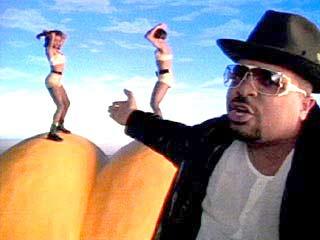
Later, in 1992, a little-known rapper from Seattle, Sir Mix-A-Lot, released “Baby Got Back.” “My anaconda (he means his penis) don’t want none unless you got buns, hun.” A pretty bold statement. Here, Sir Mix is thumbing his nose at the supermodel culture that was so predominant at the time. Cosmo, as he later said in the song, had nothing to do with his selection process when looking for a potential mate. Still, technically doesn’t every woman—and human for that matter—have buns? You may have big, juicy buns or saggy, skinny buns, but you certainly got them. It’s semantics, sure, but I’m just saying.
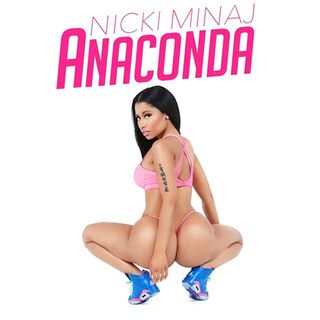
“Baby Got Back” may have been Sir Mix-A-Lot’s only legitimate hit, but its influence over pop culture for the past 22 years has been far-reaching. Just go to any bar’s karaoke night on any given week in any given city in America, and you’ll be sure to witness two drunk friends belting out a sloppy-drunk version of the song. Besides that, though, Sir Mix-A-Lot’s anthem has recently been re-imagined as Nicki Minaj’s “Anaconda,” which samples “Baby Got Back” to the point where it’s almost the same exact song except with a few instances of Minaj warbling some lyrics over it. Not surprisingly, “Anaconda” is currently the No. 3 song in the country, according to the Billboard Hot 100.
However, Minaj’s song isn’t even the top song in the country glorifying butts. That honor belongs to 20-year-old Meghan Trainor and her mega-hit “All About That Bass,” which isn’t only a wildly successful single, but features a neat-o video with sassy dancing and was dubbed a “body image anthem” in the San Antonio Express-News. Trainor, as she states in the song, “ain’t no size 2,” but I definitely wouldn’t go as far as to call her chunky. She does defy the stick-figure, pop-tart stereotype, though, and, if her single is any indication, is damn proud of it. As well she should be, I suppose. We should all take pride in being who we are, though most of us rarely do. Funny side note: Trainor wasn’t even born when “Baby Got Back” debuted. Hope you feel as old as I do.
It’s not too difficult to understand why the song is so darn popular. It’s catchy as hell. It’s a pop song, a doo-wop song and a rap song all rolled into one. It’s almost as if it was genetically engineered in a lab to be perfect for the radio.
“All About That Bass” doesn’t just worm its way into your brain and burrow in there for days after you hear it, but it is also uplifting. There are positive messages in there such as “Every inch of you is perfect, from the bottom to the top.” You know, some real feel-good shit.

But—and maybe I’m thinking a little too hard on this one—there’s some dark stuff in there. Trainor sings, “I’m bringing booty back (which I realize is a bit of a pun, but, to my knowledge, booty never really went out of style)/Go ahead and tell them skinny bitches that.” I mean, if it’s supposed to be a song about female empowerment or whatever, I’m not sure why you throw a “bitches” in there. Might as well drop a few C-bombs while you’re at it. And if it’s a song about all your inches being perfect, from the bottom to the top, then what’s with the skinny shaming? I mean, if you’re so secure with your body, it doesn’t seem like you’d need to insult others for theirs. Elsewhere, Trainor sings that she was told by her “mama” not to worry about her size, because “boys like a little more booty to hold at night.” I mean, that’s true (at least it is for me), but I’m not sure it’s a good message to say that the only reason you want to have junk in your trunk is because dumb, stinky boys like me like it. You should do you, you know?
Jack Antonoff of Fun. sounds off on an important time for his band and a key moment in American history
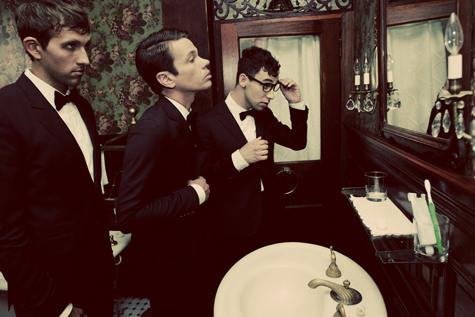
Fun. stands at a difficult crossroads for any band. Their hard work over the past four years is starting to pay off in bigger success and more recognition. Some Nights, the band’s sophomore album, was released by Fueled by Ramen on Feb. 21, 2012. Powered by the hit single “We Are Young” (featuring space-age hip-hop chanteuse Janelle Monae), the album topped Billboard’s rock and alternative charts and peaked at No. 3 on its Top 200. Submerge spoke to Fun.’s Jack Antonoff before he and his band were set to head out on a spring headlining North American tour through early May, of which many of those dates are already sold out. Antonoff sees the tour as a big step forward for Fun.
“I don’t know if it’s just the tour or a lot of things that are culminating for us now,” Antonoff says. “For better or for worse, we’re definitely having a moment.”
This has left Fun. having to deal with the sometimes cumbersome burden of increasing popularity, though it’s not a burden they seem to shy away from shouldering. However, Antonoff acknowledges, “It’s not a very simple thing. There are a lot of angles to it.” He expresses a desire to keep the best interests of those fans who have been with Fun. since the beginning close to heart.
“One thing that constantly crosses our minds is that the fans who have been coming to our shows and supporting us for the past three years never feel alienated,” Antonoff says. “With the song being played on the radio and all of the TV stuff happening and the band becoming more popular, that can be weird for some of the people who have been here since the beginning.”
Fun. has made headway into the late-night talk show circuit, appearing on Conan, but the band has also gotten the Glee treatment recently. “We Are Young” was covered by the students of the fictional William McKinley High School on a recent episode of the popular TV program.
“We thought they did it incredible justice,” Antonoff says. “With a song like ‘We Are Young,’ it could have been placed in a really cheesy scenario, but they put it in a really poignant moment, in a real culmination and an emotional moment in the show. It was great to see the way it played out.”
“We Are Young,” as with many of the songs on Some Nights, would seem a perfect fit for a show like Glee. Soaring, sing-along-worthy, energetic pop wrought with emotion is the order of the day. The album has the feel of a mini-rock opera in which Fun.’s singer Nate Ruess seems to be giving a tactful nod to the great frontmen of the past (Freddie Mercury comes to mind). However, much has been made of Ruess’ growing infatuation with hip-hop as a major impetus behind the album. This was probably compacted by the band’s hiring of Jeff Bhasker, who has worked with artists such as Birdman and Kanye West in the past. The hip-hop influence can certainly be heard in the layers of production and catchy beats, but Antonoff says that those who are familiar with the band won’t have to readjust to a new and radically different sound.
“I think hip-hop gets talked about a lot because it was one of the more recent influences, but huge classic rock music and theater and classic pop are the influences that the band was built on,” he explains. “Those don’t go anywhere.”
In the following interview, Antonoff talks a bit about working with Bhasker and touches on an issue he and the band take very much to heart–gay civil rights.
You were picked to be on Glee, and I was wondering how that came about and what your initial reaction was to that.
With Glee, they just called us and asked us if they could use the song. There wasn’t really too much more to it.
We were really excited about it, because Glee is a really positive, really cool show, in a time in America when you don’t get a lot of that. There are very few sources in the media on the mainstream level that are telling the stories and giving the voice to any sort of underdog–particularly in Glee with the gay community. If you could imagine being a young gay kid growing up in Middle America, a show like Glee may be your first opportunity to come to realize that you’re completely normal. We were really proud of it.
Listening to the song, it seems like it would be tailor-made for that kind of thing–a show about young people and it has such a big sound to it. I saw a clip on MTV.com where you mentioned that “We Are Young” was like the bull’s-eye of Some Nights. Was that one of the first songs you wrote for the album?
I think it was the second or the third, but it was the first song we worked on in the studio. It was the first song that we realized that would dictate a lot of the album.
So after that song came together, did you find the rest of them clicking into place? Did you start tailoring the rest of the songs so they’d fit in that vein?
I don’t know if songwriting is ever a problem, it’s more about production and feeling and where to take them on that level. After that, it became very clear the parameters of the album, and the job of fitting everything else into that–because you want an album to have a sound, but you also want it to be extremely diverse and fascinating, so you really have to set a framework of where you can go with what that album is. To have a centerpiece is really an invaluable tool.
How was it working with Jeff? What did he add to the album?
Jeff was amazing. He added this whole element that we never would have come across on our own, which, at the end of the day, is what you hope for in a producer. On a very specific level…but more importantly on a non-specific level, it was his attitude, his excitement, his passion for the music. Not that we don’t have it, because we have a great deal of that, but he had a different kind of it. It’s his special brand of it, which is almost physical and intense, which really rubbed off on us. It made us more excited and more willing to make an album that was going to have a more physical and more immediate reaction on that kind of level…
Everything is always going to be our vision, and his job is to guide that vision. He was the element in the studio that made a lot of those dreams come true.
I saw that you guys are working with Revel and Riot on this spring tour, and I was wondering how you got involved with that organization and if you’d like to talk about that a little bit.
We’re really excited to be doing that. Gay rights mean a lot to us, and more importantly they should mean a lot to everyone, but unfortunately in 2012, a lot of people are really apathetic about it, or even worse and have some bizarre opinions about it. It’s a human rights issue. We all know where it’s headed, and we all have the opportunity to help make it right, or be silent and be a part of holding it back and denying people their basic rights.
One of the biggest problems with the issue is a lot of people don’t see it as their problems. They don’t say anything, they don’t speak up. They quietly support and therefore don’t really support at all. As a band of three straight guys, we feel it’s vital to use whatever platform we have to make a statement about this and help educate and be very clear about where we’re coming from. We’re the kind of people, and our shows are the kind of shows, where none of that bullshit would ever be tolerated–no homophobia, or non-acceptance of any kind of person. More importantly than that, we urge our fan base to really take a good hard look at how they personally are or aren’t helping the issue.
We live in a huge moment when it comes to gay rights, where it’s going to tip one way or the other. It’s getting to the point where we’re all on the hook, whether we’re doing nothing or we’re doing everything. Whatever we’re doing is some sort of statement.
Maryland just passed a bill allowing gay marriages. It seems to be tipping in a positive direction. Do you see that continuing or are you skeptical about the climate in the future?
What makes me skeptical is that–I think about African American civil rights–people were treated a certain way, because that’s all anyone knew. So when that changed, people were reeducated, and as generations moved on and things changed, it became more of a level playing field. What’s different with gay rights is that the Bible, which a lot of people think is really great, says it’s a sin to be gay, and I don’t see the Bible going anywhere. That creates a different scenario. What I see is a lot of great legislative change. I see gay marriage becoming legal in more and more countries… In a perfect world it would go straight federal and that anything that’s separate or unequal would be completely abolished. But even if that were to happen, you’d still have a large portion of people who’ll have a problem with homosexuality based on religion. I think that it’s going to be an ongoing issue in the sense that it’s always going to be something we’ll have to consider, and it will always be a fight. Hopefully it will end up as benign as the way religious people feel about the rest of us, that we’re going to hell and who cares. In the current climate, unfortunately a lot of people who have the Bible on their side are also the same people who are voting and making laws and more importantly stopping laws that could really help another human being. I do see it changing in the future, but I just think it will be a strange road for it to get there.
Fun. will play a sold out show at the University Union Ballroom at Sacramento State on March 26, 2012. Learn more about Fun. through the band’s website http://Ournameisfun.com. If you’d like to know more about Revel and Riot, go to http://Revelandriot.com