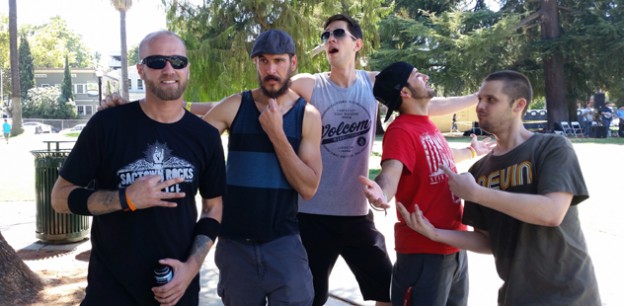
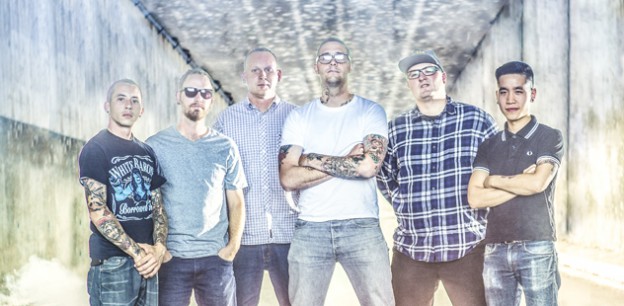
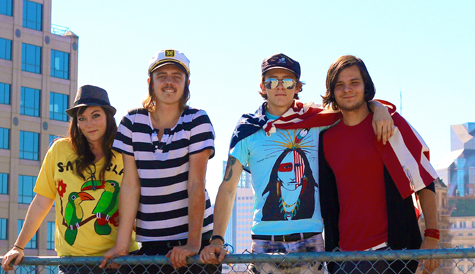
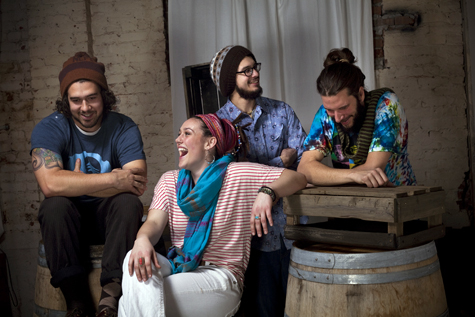
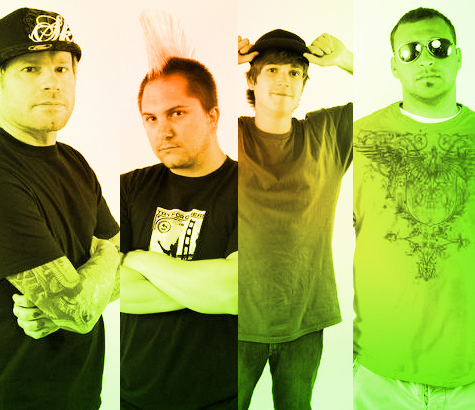
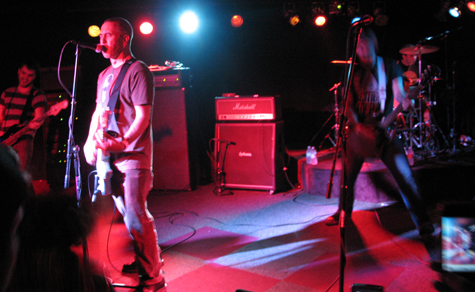
For many local musicians, the all-too-rare “album release show” is likely the highlight of their year—hell, maybe even their entire gigging career. To have not only written an entire album’s worth of material, but then to have gotten it recorded, mixed, mastered and printed/pressed, and then on top of all that to plan, promote and play an album release show at a local venue takes a lot of work, and that’s a major understatement. So, in the spirit of supporting hardworking, dedicated local musicians, check out these five upcoming album release shows featuring Sacramento artists. Get out there and show them some love!
Local Americana/folk duo According to Bazooka are celebrating the release of their new album Where We Are Now on Thursday, Oct. 26, 2017, at Fox and Goose. Richard Urbino (vocals, guitar) and René Martucci (vocals, accordion) will be joined on stage for this gig by Jamie Knapp (vocals, upright bass). The record was produced by David Houston and recorded at Moon Studios in Sacramento. The release show is free, 21-plus, and starts at 7 p.m. Physical CDs available for $15, or download it from CD Baby for just $10. Visit Accordingtobazooka.com for more info.
Sacramento’s gritty rockers The Ghost Town Rebellion are returning with the long-awaited release of their second full-length album, Silver and Gold. Half of the record was done with Joe Johnston at the famed Pus Cavern Recording Studio, and half was done by the band themselves at their own studio. To celebrate, they’re throwing a free 21-plus show (and costume party!) on Saturday, Oct. 28, 2017, at Shady Lady. The party kicks off at 9:30 p.m. sharp with an opening set from Jacob Paul and the Heartbeat. You can pick up a limited edition CD at the show for just $10. Visit Theghosttownrebellionofficial.com to learn more about the band and to check out their sound.
With roots in both the Bay Area and the greater Sacramento area, Americana/indie/folk duo Misner & Smith have made quite an impact in recent years with constant touring and five albums under their belts. Their latest offering, Headwaters, is their first cover album, comprised of tracks from artists that inspire them, from Neil Young, to The Band, to Dr. Dog. The duo—Sam Misner (guitar, vocals) and Megan Smith (upright bass, mandolin, vocals)—have a Sacramento release show planned for Sunday, Oct. 29, 2017, at Capital Stage at 7 p.m., where they will be joined by collaborator Josh Yenne (electric guitar, pedal steel). Tickets are $30 for the general public, $25 for Capital Stage subscribers. Learn more at Misnerandsmith.com or Capstage.org.
If you picked up our last issue, then you’re likely already familiar with local folk/rock/blues artist Blue Oaks, who were featured as one of our cover stories. If you missed our interview with Blue Oaks’ founder/creative force Brendan Stone, hit up our story (click here) to give it a read. Blue Oaks’ album release show for To Be Kind is Sin is set for Monday, Oct. 30, 2017, at the CLARA Auditorium. They’ll be playing the new album in its entirety, and there will be plenty of “sinful festivities,” including tarot card readings, Seven Deadly Sins-inspired libations, and Roderick Carpio playing phonograph grooves. Doors open at 7 p.m., 21-plus only, $5 suggested donation, black and blue clothing encouraged. Visit Blueoaksmusic.com for more info.
Easily one of the most hyped-up local artists right now is hip-hop/indie groovers Hobo Johnson and the LoveMakers. In the last year or so, Hobo’s had several videos go viral on Facebook, landed a Submerge cover story, got written up in The Sacramento Bee and SN&R, won multiple SAMMIE awards, played Concerts in the Park to thousands of fans, and that’s just the beginning. Now he’s throwing an album release show at Harlow’s on Thursday, Nov. 9, 2017, that will feature other local heavy hitters JMSEY (aka James Cavern), The Philharmonik and Jordan Moore. The show will be all-ages with a $10 cover. Doors open at 5:30 p.m. Visit Facebook.com/hobojohnson94Corolla or Harlows.com for more info.
If you or someone you know has an album release show coming up, or any other event you think we should know about, get it on our radar! Email us the details to info@submergemag.com.
**This article first appeared in print on page 8 of issue #251 (Oct. 23 – Nov. 6, 2017)**
It’s been a long road, but Riotmaker’s Jeffry Valerio has put his demons in the rearview mirror
While some local bands seem to have everything handed to them on a silver platter, perseverance and endurance has helped Jeffry Valerio, frontman for Riotmaker, get through the hardest of times. The once fearless and seemingly invincible leader of Sacramento’s biggest reggae/rock band, Shakedown, found out he was anything but in 2005 when the band ousted him after serious bouts of hardcore drinking and drugs. The band seemed destined for great things and were one of the few local headliners that had hardcore fans until their untimely demise three years later.
Said Valerio of that period during a recent telephone interview, “After leaving Shakedown, I was out of the music scene for about five years. Shakedown was a very big deal to me and was my whole world. I drank a lot and did a lot drugs and really messed things up for the band and myself. We missed a lot of opportunities because we partied so much and I also put partying before making the band work. During the last year, we had a lot of differences and there were some shows I wouldn’t even remember. Consequently, I ended up getting kicked out of my own band and later stopped drinking to be with my wife and daughter and become a family man.
“Things were really bad and I stepped away from music,” Valerio said as if apologetic and thoroughly disgusted with himself. “To make matters worse, my wife and I separated shortly thereafter and now I have full custody of my daughter who is now 10 years old. Eventually, I started to work on my career outside of music and I worked my way up through the ranks of TGI Fridays and became a regional trainer and, at the same time, became a real drunkard. Eventually in November 2008, I decided I couldn’t do it anymore and put myself into rehab in Auburn.”
However, not all things were destined to go south in Valerio’s world as things started looking up. “Eventually, I moved in with a girl shortly after my stint at rehab and met two guys—one was my current guitarist Mat Venable who eventually married my roommate. We wrote and recorded for almost two and a half years and finally had some Riotmaker demos,” Valerio said.
After much heartache and deliberation, the band found itself finally doing its first show.
“On Feb. 23, 2013, we booked our first show at Marilyn’s on K,” the frontman reminisced. “Almost everyone of the Shakedown members showed up and supported, which made me feel wonderful. The very next day we got offered a show at Ace of Spades. Unfortunately, we didn’t understand when we were booked we were supposed to sell tickets, which we gave away to everyone for free. We showed up at the venue during sound check and the acting house manager, Thomas, almost didn’t let us play. Thankfully, Eric Rushing [talent buyer of Ace of Spades and The Boardwalk] knew I was sincere and merely laughed it off since he already knew me and realized I had been out of the scene for so long I didn’t know that was how the club worked.”
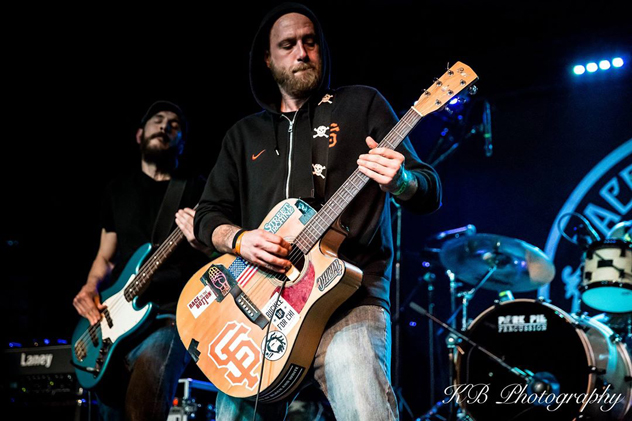
In just a few short days however, Valerio’s reggae/rock band, Riotmaker, will take the stage at The Boardwalk as part of a two-day festival dubbed Soundcheck: REVIVAL, put together by the fine folks at SacShows Presents. Once more, the band was responsible for hand-picking all of the multi-talented opening and supporting acts such as MDSO, Heat of Damage, Brodi Nicholas and others.
The show also is a momentous occasion for the band as it marks the release of Riotmaker’s official debut album. Their nine-song platter, recorded by the able hands of Joe Johnston at The Pus Cavern, is appropriately called Welcome to Calirock and features Hennessy, aka Jeffrey Harris (also in the Beatknocks hip-hop duo) on the reggae ditty “Everything Is Out” and Melissa McGregor from Once an Empire, whom the band met at Sacramento’s annual Concerts in the Park event, on “Ritalin Kid.” Valerio found great inspiration for the latter song from one local musician who’s made considerable waves in the Sacramento scene.
“The song ‘Ritalin Kid’ was written about Young Aundee when he was in a band called The Secret Six,” Valerio said. “He and I wrote a song together years ago and lifted a bit of lyrics to make this one.”
Currently, Riotmaker is a solid five-piece group with guests coming and going as needed for live shows. Valerio fronts the group, singing and playing acoustic guitar; Venable plays lead guitar, Scott Kennedy holds down rhythm guitar, Ben Lerch rocks the drums and bassist Justin Maddux handles the low-end frequencies.
The band’s name also has a story of its own that Valerio is quick to point out. “Mat and I would take breaks from writing and would listen to a lot of Avenged Sevenfold, Tech N9ne and more. There was one particular song that we loved called ‘Riot Maker’ by Tech N9ne and it just worked,” he said.
One of the band’s favorite Riotmaker songs to play live is a tune called “Girl Around the Way,” which is a tale about one of Valerio’s past loves, a woman who broke his heart and eventually led him to write the song. “This song was on our first, rather crude release and was written about her and our chance meeting. We made 1,000 copies of our first CD featuring the song and have since sold out of them but I still keep a handful with me as keepsakes.” he said.
Perhaps the album’s strongest cut is the groove-laden “The Busted Crown,” which is also the most personal. “I started writing the song during the end of Shakedown solo but then it got better and better when I added a full band.”
And while some would say the band is still in its infancy, Riotmaker has already supported some major national acts thanks to Valerio’s many connections and staying rooted in the scene while not actively playing. “We’ve played with Tesla, MC Rut, Oleander, Rome from Sublime with Rome, The Slackers, Fishbone, Yellowman, Authority Zero, and more,” he said.
Not a man to jinx any opportunities, Valerio is quick to point out that this album will be self-released, though they do have some outside interest.
“We’re going to have compact discs made first and most likely have vinyl later. I know all bands say they have interest and stuff, but we’re just gonna keep quiet until we know certain things come together,” Valerio said. “Right now we’re in a really good situation. We usually fund everything from our shows, but we had a backer that gave us $5000 for our recording. We were going to do the album ourselves and then Thomas Flowers [singer for Oleander] ended up recording ‘Are You There?’ with us and inspired us to record a full album. This same anonymous backer, an acquaintance from high school days, also gave us another $10,000 for a touring vehicle as well.”
The band’s album will be available through the band’s shows and, ultimately, at CD Baby so they can take advantage of digital and physical distribution opportunities (as well as synch licensing).
“We want to tour and eventually add some horns and a multi-instrumentalist who can play keys, percussion, and more,” said the enthusiastic bandleader. “We have our CD release and then will be playing the Unity Festival Arizona at Lake Havasu with headliners Fishbone and Anuhea on Saturday, March 14. The day after we just got added to a bill with Common Kings and New Kingston at Ace of Spades. We are also playing on April 18 at The Powerhouse Pub in Folsom with Once An Empire. Of course, we’ll be at Concerts in the Park in May and a plan to have a full U.S. Tour in June/July if all goes well.”
It’s a new day for Valerio and his band and he’s proof positive that things can turn around in time.
“With Riotmaker, it really is about the music and being with each other and hanging out,” he said. “We’re not setting out to be famous, rich rock stars. There is no animosity since the other guys are into playing just to play. We simply want to have a good time and we’re gonna tour as much as possible.”
Added Valerio in closing, “And while I don’t like the business part of music, Facebook and other social media have done wonders for us. I’m a social media whore and started the page back in 2008. Shortly after I started blasting it Riotmaker out there it got over 1000 likes in the first year.”
With nearly 8,000 likes on Facebook alone, one can only assume it’s only up from here.
Well done.
Riotmaker play Friday, Feb. 20, 2015 at The Boardwalk in Orangevale (9426 Greenback Lane) with A Mile Till Dawn, MDSO, Brodi Nicholas, Heat of Damage, and Bennett Hannon (of Kayasun). The show starts at 7 p.m. All ages are welcome. Tickets are $10 and can be purchased through Theboardwalkpresents.com.
Rebel Punk’s debut album, Love/Hate, is scientifically proven to make you more badass
“Rebel Punk isn’t punk,” clarified drummer John Quesada. “It’s kind of how The Killers aren’t killers.” Rebel Punk is an El Dorado Hills band with roots all over the world, who play good ol’ rock ‘n’ roll. No crazy dramatics here, the lyrics are clean and all sounds are the cries of guitars, drums and bass only. Simple rock ‘n’ roll from experienced musicians who can rely on their honed skills with instruments.
The band will release their first album, Love/Hate, at the end of the month at Blue Lamp.
“We first started out as a cover band. We would be working on everything from Johnny Cash songs to The Clash,” said Quesada. One practice session, however, founding member and vocalist/guitarist George Palacios showed up with some original material. Eventually the band found itself cranking out so much original content that they struggled to narrow it down to the 12-song track list that would become Love/Hate.
The band reminded me of Social Distortion with a hint of The Clash. They encompass a sort of badassery that is expressed with class and cleanliness. Love/Hate blends the classic rock that you imagined was played in garages throughout the ‘70s, tinged with an attitude that would get these tunes blasting through the speakers of a dude flying down the 101 on his Harley. The band says they are “High octane rock ‘n’ roll,” after all.
Rebel Punk consists of a bunch of really hardworking dudes. For instance, Craig Dieterich plays bass and backing vocals but is a construction superintendent by day. Matt Vijeh does guitars and backing vocals but also works as a garbage man (the garbage man, according to him). When Quesada isn’t holding it down on drums, he can be found cruising down California’s freeways as a big bad truck driver. Cue the Sons of Anarchy opening song.
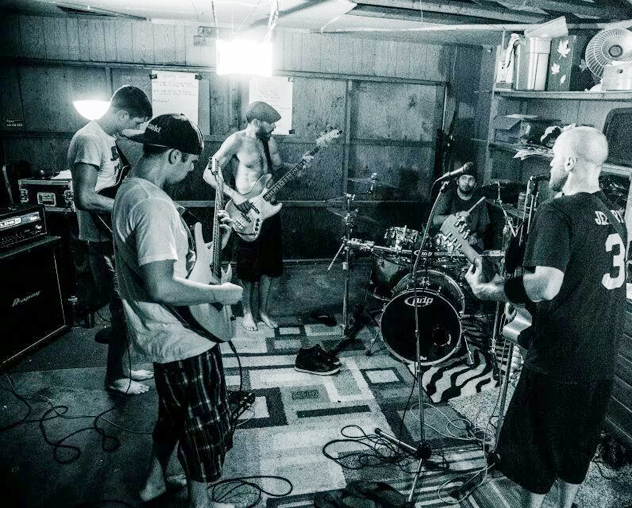
The band regularly shreds in a garage in EDH, where they have shockingly only had the police called on them twice. “When they showed up, they said, ‘We followed the kickass music to this garage. Rock on, but ya gotta stop by 9 p.m.’” Quesada fondly reminisced. “Then the cop cracked a beer and threw up some devil horns while we played our next song.” Keep it brutal, EDH.
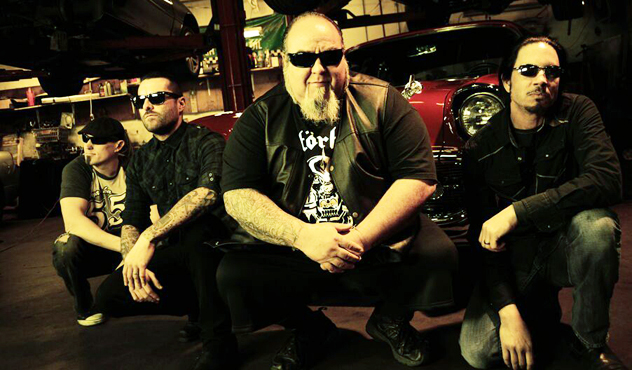
Before every live performance, the group sticks to a strict regimen of pre-show rituals, mostly consisting of shots, “typically Jäger for Craig, Patron for Cack [Quesada’s nickname], Jack for George, and cold Tanqueray for Matt. Cack usually screams for a few more shots during the set,” the band said via email. You can find Rebel Punk playing everything from indoor venues with two-hour sets to large outdoor events including food truck parties, marathons and charity events. They also played Pat Walsh’s anniversary radio show on 93.1 KFBK. They are even looking forward to finally breaking through and possibly playing the Sacramento Concert in the Park series.
The new album was written from 2010 to 2014, and recorded at the superior Pus Cavern with Joe Johnston. Pus Cavern is the local alt-music recording Mecca where everyone from Cake to A Lot Like Birds to The Brodys has laid down tracks. Most of the material was written by Palacios. Originally hailing from Spain, he penned the songs to reflect his relationship with American culture and assimilating to it. Palacios expresses his disparity with some aspects of our culture, as well as his love for it (hence the album title Love/Hate). The song “Down in the USA” is easily the tune that most reflects the feel of the album as a whole. It is about Palacios coming to the United States on vacation from Spain, meeting his now-wife and deciding to stay in the States to be with her.
The album naturally progresses from tamer jams in the beginning and starts to loosen into controlled chaos in the end. The drums become more heavy-handed and quicker, the vocals are a tad more demanding and embracing of said chaos.
The second to last track off of the album, “What I’m Looking For,” starts with an Elvis Presley-type entrance before osculating into guitar riffs that would make Brody Dalle swoon. Track five, “Breaking Down the Walls,” is a perfect example of this band’s seamless rock ‘n’ roll style. It focuses on the relationship between the guitar and vocals and rolls smoothly binded together until the end of the tune. The band’s influences, which include Social Distortion, Metallica and The Ramones, ring true in their music. Stylistically and lyrically, they have the attitude and they certainly have the guitar playing to back it up.
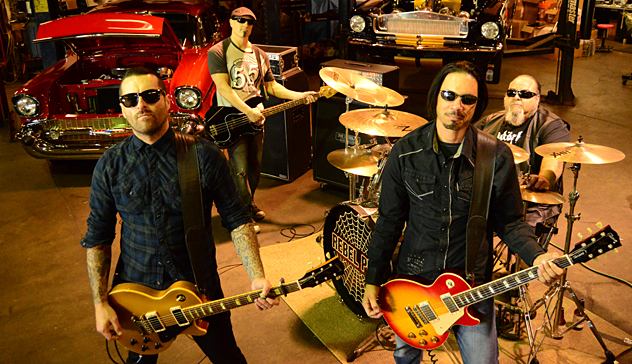
On the night of their CD release at Blue Lamp, Rebel Punk will release their first ever music video. A1 automotives was more than happy to let them film their video amongst his hot rod collection, some with paint jobs that surpassed more than $35,000.
“It was so fun, yet tedious,” said Quesada. “We had to redo our song at least 50 times to make sure we got the right shot. The folks over at MC2 productions produced the video by rigging the garage with tons of Go-Pro cameras. It was cool because we even strapped one to the back of a hot-rod, and we all loaded in the car and let the camera tape us speeding off into a cloud of dust.” The video will be released at Rebel Punk’s album release show on Jan. 31 at Blue Lamp, where their 12-song lineup will keep that rock rollin’ all night long.
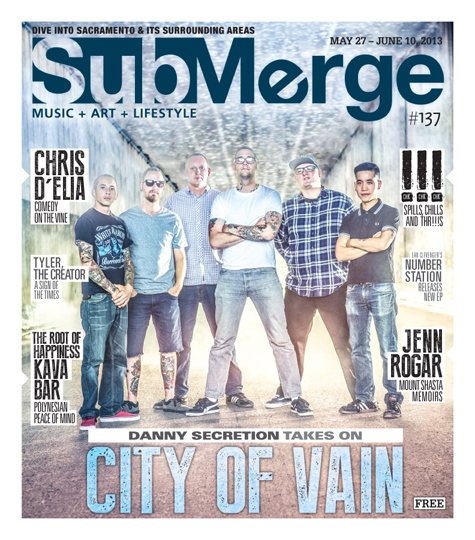
If Sacramento’s City of Vain looks like they’re having the times of their lives, that’s because they are
Words by Danny Secretion • Photos by Nicholas Wray
At the risk of sounding like one of those guys who hasn’t been to a local show since 1989, regales in days of yore and constantly reminds “the kids” about how shows were better back in the day at some venue that closed during the Reagan administration, I’ve seen a lot of bands from our local punk scene. Some good. Some not so good. When a band leaves you in such awe of what they present with both their live show and their music that it inspires you to the point of doing something you’ve never dreamed of doing (say, write your very first article for a magazine), that band is beyond good. That band is great. The band I speak of is City of Vain.
In late 2011, I started to see flyers (not just Facebook posts) that had a grainy image of a handgun along with the band’s name all over town. I took notice of the buzz they were creating at venues like The Press Club and Blue Lamp and decided to see what they were all about. I remember coming home that night and excitedly telling my wife about this amazing band that completely blew me away.
Since then, City of Vain has played and toured with some of the hardest working bands in punk rock, co-headlined a successful all-locals show at Ace of Spades and played in front of 6000-plus people at the 2012 Concerts in the Park. An added bonus for me is that its band members also happen to be some of the most gracious and down-to-earth musicians I have ever encountered. I’m honored to call them colleagues. I’m humbled to call them friends. Fast forward to Spring 2013, the band is adding the finishing touches to Shaking Hands With Yourself, the seven-song follow up to 2011’s American Nightmare recorded at the legendary Pus Cavern studios with master engineer Joe Johnston at the helm. I had the opportunity to sit down with Steve Ross, Minh Quan, and Newell Dunn, who along with Drew Boyce, Mario Maynor and Andy Simpson make up City of Vain.
Just spending two hours with half of this band left me feeling rejuvenated and hopeful. The gratitude I have for them is immeasurable. Before this interview, I was fortunate enough to listen to rough mixes in Steve’s car. Set list standards like “New Helvetia,” “To You My Friends” and “Stuck Here With You” are delivered with all the power and glory of their live performances. Newer songs like “Moving Up Moving Forward,” “Out on an Island,” “Lessons in Social Class” and “Backs Against the Wall” will more than satisfy those of us who have been listening to this band for nearly two years. Fans of The Clash, Rancid, Bouncing Souls or The Specials who have yet to see this band perform live should hang their heads in shame. Your penance is to pick up two copies of Shaking Hands With Yourself and get your ass out to a show.
Your band consists of musicians from a variety of groups. What was it about this band that you wanted to do differently from your past music projects?
Newell Dunn: For me it was enjoyment. I wanted to have fun. After my last band, I had a long hiatus, so I was itching to play.
Steve Ross: I’m with Newell on that. I’d gone through relationships, had children and I realized I hadn’t done this [play music] in a while and that was my life’s blood before all that.
So did you approach music differently this time around than you did when you were younger?
SR: I appreciate it more!
ND: I appreciate that I get to play music again. I’m still playing music.
SR: I feel like to be able to get up there and for people to give you 30 minutes of their time regardless of where you’re at and who they are, to sit there and even sit through a song is still a privilege to me.
How did the different facets of our local music scene (the hardcore scene, the street punk scene, the pop-punk scene) react to you initially?
ND: I’ve played in hardcore bands and street punk bands before, and everyone I knew in this town from the hardcore scene were like, “You’re doing that? It’s so outside what you’ve done before.” But they all liked it. It was all positive. As far as the street punk scene, I played an early demo for Kenny Beasley [of Pressure Point] way before we even played a show, and he really liked it.
SR: Kenny is one of the most supportive people. He’s an icon that we hold dear. I’m blown away that he’s interested in what we’re doing.
ND: There’s a wide range of people who come to our shows. I’ve seen metal heads, hardcore kids, punks, people you look at and say, “normal.”
SR: I don’t think we ever stopped to think about who was coming to the shows. We were just extremely fortunate. Our first show was one of our best-attended shows, and we were just surrounded by good friends who were excited to see us up there and were intrigued because they hadn’t heard it. To this day, that show is ingrained in my mind as one of my most favorite times ever playing.
Because of the message you send through your music and live performances, I’m not alone in saying City of Vain is one of the must-see bands in Sacramento. Did you ever feel like you were on to something special and unique when you started playing bigger shows?
Minh Quan: I felt so, but it wasn’t because of the size of the show. We could play for one person or 1000 people, but for me it’s that I love playing the music and I’m up on stage with five of my best friends.
SR: When we go up there, we go up there as a unit. I make it a point to outwardly exude the fact that we are a family. You’re watching friends that hang out outside of this. We go out to shows together, because that’s just what we would do even if we weren’t in a band. If it looks like we’re having fun onstage, it’s because we’re genuinely are having fun.
ND: Having so much fun! I love it!
You’ve toured with bands that aren’t even from the same time zone as us. What’s your reasoning for touring with bands from across the Atlantic?
SR: Mike Bolado from the band Old Glory has done more for us than we’ve done for us. He’s quite possibly the seventh member of our band. He sees something in us that we often don’t even get, but he’s willing to go out there and book all these tours; he’s forged these relationships overseas with these bands. It’s honestly the best vacation you could ever spend going out with somebody from another country who is just as intrigued in your culture as you would be going over there.
Explain your experience in touring with this band. What are some of the more challenging aspects
of touring?
SR: 11 people in a van.
ND: Who is going to stay sober to drive.
MQ: Sitting between two huge guys, being wedged between Drew and Mike Bolado in the heat of the summer with a barely functioning A/C in Arizona. But it’s my high school dream to be in a band like this, to be able to tour and make good music and be with five other guys who are just as passionate as me. Honestly, the hardest thing about tour is jobs. Every time I would come back to a new job in a new place.
What’s something you think our local music scene has over other scenes you’ve experienced through touring?
ND: Passion. Heart.
SR: When we go out, we let it be known that Sacramento is where we’re from. We may malign our city sometimes, but we’re definitely proud to be from here. There’s an inherent amount of respect we get from people in other cities because of some of the bands that have come out of here.
What’s something you think needs to improve with the local music scene?
ND: Venue accessibility and more all-ages venues. When some of these bigger bands come through, I think some of these local venues need to step up to the plate and say, “We want to do this show, but we need to put some locals on.” Sacramento has its own amazing music scene that needs to be exposed to these bigger bands.
SR: You look at a promoter like Sean Hills [Punch and Pie Productions], who really has his ear to the ground experiencing what this city has to offer. He brings touring bands in and makes it a point to put them with quality bands from Sacramento. It boosts the Sacramento bands’ reputations and gives them an opportunity to roll out the red carpet for the touring bands, and in return have those bands reciprocate when our bands come through their towns.
Let’s talk about the new music. Your past music has been heavy on melody, positivity and accessibility without losing any musical aggression. What can people expect from new City of Vain?
MQ: More of the same…it’s just better. We put in more time and a greater effort. I think Steve’s songwriting is even better than before.
How did the musicianship of your band members inspire your songwriting for this album?
SR: This record was written after the decision to bring in Minh full-time. I’m extremely privileged to be in a band where everyone has the ability to contribute to make the songs better. As a songwriter, I can listen to other styles of music and hear something that intrigues me and then incorporate that into our songs because we have the keyboard, the two different guitar styles and that backbone of a strong rhythm section. It doesn’t take long for a song to take shape when everyone is open to collaborate.
How did the songwriting for the new album influence your musicianship?
MQ: Keyboards aren’t traditionally in punk rock. I had to do my research to figure out what’s right to play in the music. It’s definitely influenced the way I play a lot.
ND: It’s pushed me to play better because I enjoy it more. I’m able to “let go” and “have fun.” With Steve’s songwriting, we have a solid foundation from the get-go. I believe in this music like it’s my first band.
What style of music inspired this album?
SR: We all have our staples that we go to. The Clash is obviously a huge influence for me. The Specials were my favorite band from junior high to this day. That goes back to having keyboards in this band which links us to having the ability to do things like that in this band.
Tell me about two of the new songs, “Lessons in Social Class” and “Backs Against the Wall.”
SR: It’s all stuff that’s important to me that I wouldn’t hesitate to have a conversation with someone about. The goal is to provoke thought, not to propagate or profess any sort of stance or make people choose. There’s two sides to every story and if you’re intelligent enough to question something and make an educated decision, that’s what this country is supposed to be about. It’s not about hating or dismissing someone because they don’t agree with you, but really celebrating that fact. Also, telling both extremes to fuck off. You guys are on opposite ends of the spectrum, but you’ve gone so far one way or the other that you’ve forgotten the rest of us right here.
If this new music doesn’t get over with your fan base, what will keep you positive?
SR: We love doing what we do. There’s always going to be the critics, but I won’t lose any sleep over it.
If this new music takes off and sends this band to the next level, what will keep you grounded?
ND: Each other. We feed off each other as a group.
SR: We built this band on honesty and being genuine. To do an about-face would just be suicide. None of us would let the other person do that. This is about the six of us and the people who really enjoy this music.
It’s a safe assessment to say that 50 percent of the audience of any local punk show consists of your colleagues; many of them younger musicians in their first bands. What I’m trying to say is…Do you have any words of advice for the kids?
ND: Keep going! If you love it and you’re passionate, keep going.
MQ: Keep doing what you love.
ND: That’s the biggest paycheck right there.
SR: Learn from every experience you have. If you’re not having fun, you need to take a step back and not be afraid of having that open line of communication.
What about words of advice for musicians in their twenties, thirties, forties or beyond who are struggling with finding the joy that you have in playing music?
MQ: If they’re in their fifties and playing Eagles cover songs, they can go fuck off [much laughter].
OK, favorite song on the new album?
ND: “Backs Against the Wall.”
MQ: My favorite song on the record is “Lessons In Social Class,” but my favorite song to play live is “Stuck Here With You.”
SR: It’s tough for me because I’m critical of them all. I think lyrically I base it on that. I’m most proud of the lyrics on “Stuck Here With You” and “Backs Against the Wall.”
City of Vain’s release show for Shaking Hands With Yourself is on Thursday, June 13, 2013 at The Press Club. Crashed Out, Old Glory and Union Hearts will also perform. For more information on City of Vain, look them up on Reverbnation or on Facebook.

Musical Charis’ band members discuss their penchant for collaboration and their mission to bring “real gold” back to the music scene
Two of the core members of local indie pop band Musical Charis are in separate rooms of the same apartment engaged in the same conversation. I am on the other end of the line. We’re speaking together on a conference call. It is a new experience for all of us.
I am talking to Blake Abbey and Jessica Brune, the band’s vocalists, and guitarist and keyboardist, respectively, about their upcoming Oct. 11, 2012 release of FOOL$ GOLD on JMB Records. Despite being miles away, I feel like I am dealing with a family.
They soon will be, I later find out. In addition to being band mates, they are engaged and live in the same apartment, along with the band’s bassist Colin Vieira, guitarist Bradley Abbey (Blake’s brother) and a bunny rabbit. It’s the apartment they are in now as they field my questions. Like family, they are talking over each other, and to make matters worse the reception is lousy. Despite the hiccups, we manage to carry out an engaging conversation as they fill me in on the album, touring and their musical values.
“It seems like a lot of things in music and art, fashion, and pop culture, a lot of it is like fool’s gold,” Abbey says, explaining how they came up with the album title. “It’s just shiny and bright, people want to hold it and touch it, but it doesn’t have the same value as gold.
“But the more that we grow in character and as a band, I think the closer we get to realizing how hard it is, how deep you have to dig for gold and the value of it when you get it,” he says.
Abbey, Brune, Bradley and Vieira spent about a week total, split before and after this year’s lengthy spring tour, recording with music engineer Joe Johnston at Pus Cavern. Now they have an album they hope will stand out against the bounty of overproduced, unoriginal material put forth in the music industry.
It was a collaborative process, a coast-to-coast exchange, Brune suggests. Others, including Jarrod Affonso on drums, Brian Brown on the keys and Shawn King, contributed. “Sunlight Stalker,” the last track on the album, was a joint effort between musician Chris King in Florida and Musical Charis. In a Postal Service-like exchange, King wrote the music, and the band wrote lyrics to accompany it.
The result was an album that Abbey says is quite unique, an attempt to produce “real gold.”
“I don’t think this CD is epic, but I think it’s one-of-a-kind, I haven’t heard anything like it,” he says.
Their fourth release following their 2011 album Ace of Space, FOOL$ GOLD is seven tracks of soothing indie pop and lush harmonies with progressive underpinnings.
It is somewhat more technical sonically than their previous albums, Abbey explains, and the rhythms are more intricate, adds Brune.
Since their formation in 2008, following the Abbey brothers’ and Vieira’s relocation from Florida to Sacramento, Musical Charis has been recognized for their folk appeal. In fact, they have been told on several occasions that they are living in the wrong generation. Brune and Abbey don’t dispute this.
“I think that musically we would be received better 30 years ago. Old people love our music, the folk stuff that we do,” Abbey says. “It’s dubstep nation now, dubstep is taking over the world.”
Whatever they have done musically, it seems to be working. They were nominated for Sammies in 2010 and 2012, for Best Album of the Year and Best Indie Band of the Year, respectively, and in 2011 they won the Best Indie Band of the Year Award.
While this album strays somewhat from that folk sound, Abbey and Brune agree that it is one they will likely revisit in the future. After all, it’s easy to switch up musical directions, Brune says, like whipping up a new batch of cupcakes.
“Some people might not like [the new album],” Abbey says. “But it was fun for me, which is the most important thing.”
If you want to produce something relevant in the art world, or bring back ‘the real gold,’ then you have to get your priorities straight, the way Brune and Blake see it.
Which simply means, “Do it because you love it,” Brune says, even if it means collecting pennies.
The drive, patience and desire all have to be there to move a band beyond the five-year mark, they say.
“The real dream is just living it,” Abbey adds.
The fourth track of the album, “The Gift,” is an ode to friends back in Kansas who are doing just this–living the “rock n’ roll” lifestyle of loving, having fun, being broke and not caring. It’s a fancy-free philosophy the members of Musical Charis put into practice as well.
They primarily work for themselves, sometimes working “under the table,” to make ends meet.
The same love of music inspired the band mates to open the Musical Charis Music School in 2009 in the building next to the Colonial Theatre. It started by just spotting the vacant building and asking the question, “What if?”
To this day, they teach music lessons out of Beatnik Studios, mentoring youth in playing guitar, piano, singing, songwriting and performing. Sometimes they will let their students open for the band.
Those who haven’t seen a Musical Charis show should know that no two performances are alike, partly because they are just as willing to share the stage with anyone who wants stage time. Thus they have become known for their high-energy, unpredictable performances.
“We never plan anything,” Brune says. “We’re not like, ‘Oh, it would be so epic if we did this and that.’ We just kind of roll with it and have fun.”
During a show, the stage is treated as a shared space. The band rotates auxiliary drummers and guitarists onstage or invites other bands to join in. Brune may take Abbey’s guitar mid-song, or Abbey might get on the drums. In any given performance, there might be a trumpet, saxophone, accordion, harmonica, congas or xylophone thrown in the mix. Additionally, just about anyone (with exception of belligerent drunks) from the audience is invited to come up and play an instrument.
“We consciously try to make it about everyone,” Abbey says. “It sucks being in a band playing the same show every night, especially in a small town.”
“I want people to go to [our] shows and be like, ‘We’re going to go have fun tonight and we’ll get to play an instrument,’” he says.
The invitation to participate is an intentional attempt to encourage local community-building, they explain, though they never force their audience members to participate.
So during any given show, 12 bodies might end up on stage. On one occasion an audience member was so engrossed in performing he fell off the back of the stage, Brune recalls.
“Sometimes it’s a train wreck, but [it’s] a beautiful train wreck,” Abbey says.
It’s worth mentioning that this band plays a lot of shows, as many as 150 per year. This includes a 65-day national spring tour they plan annually, in addition to smaller tours throughout the year.
Playing so many shows and tours, including SxSW, it’s no surprise that the band has grown a distaste for the predictable party-goers looking to get blitzed. It’s a common pattern the band has noticed, and it inspired one of the tracks on the album. Against a dreamy, circus-y tune, “Fortune Teller” takes a stab at the molly kids, who equate their live music experience with popping pills.
“It became about a culture of just partying, waking up the next day and starting all over,” Brune says.
No doubt they’ll run into more of that during their West Coast tour following the Oct. 11, 2012 album release at the Townhouse Lounge.
Pill poppers aside, right now the four are contemplating house sitters to look out for the apartment and the rabbit while they are gone. The last tour they went on, their turtle died.
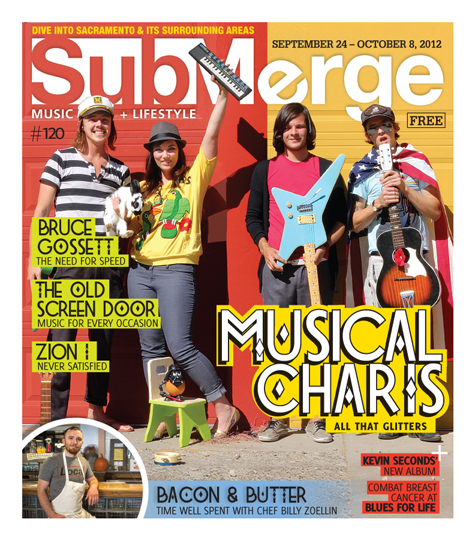
Hop on stage and have a blast at The Townhouse Lounge on Oct. 11, 2012 at 9 p.m. when Musical Charis celebrate the release of FOOL$ GOLD. Also performing will be Autumn Sky, Hey Zeus and James Cavern… And maybe you? Pre-order your copy of the album at http://musicalcharis.com/, and if you’d like to babysit a rabbit, drop them a line.
Jesi Naomi finishes up her first album with The Trippers
For Jesi Naomi, energy is everything. If you focus your energy on the things you desire, and release that energy out into the world, you will attract the things you want in life.
So once she had her mind set on playing music back in 2009, she took some advice from her aunt. She began telling everyone she knew that she was going to become a musician.
Next thing you know, the singer/songwriter was singing ballads at Capitol Garage. Then she met local indie band Bell Boys at Fox and Goose downtown during an open mic night, and they helped her learn the tricks of self-promotion. Later she met local jam band ZuhG, of which she is now a member.
When Naomi is playing solo, ZuhG members JR Halliday, Bryan Nichols and Kevin Martinez comprise her backup band, altogether as Jesi Naomi and the Trippers. In March she will go on a two-month “For the Love of Music” tour, performing both in ZuhG and as a solo artist.
Two years into the music scene, the 24-year-old is now preparing for Jesi Naomi and the Trippers’ debut album, Earplay, to be released in January.
Earplay is seven tracks of blues and soul combined with psychedelic nuances and djembe, saxophone and ukulele thrown into the mix. It was recorded in the span of around three months by Joe Johnston at Pus Cavern.
The album opens with “Kosen Rufu,” which is the title of both the intro and outro tracks. It is also a guiding theme of the album. Broadly defined, it is world peace through individual happiness, a concept stemming from Buddhism. As a practicing Nichiren Buddhist, this concept is paramount for Naomi.
“[Kosen Rufu] is world peace by making each person have their individual peace,” she explains.
Certainly this applies to the song “Change Train,” which Naomi wrote for her mother, who was an alcoholic.
Her mother’s attention was constantly split between her children and the bottle, and Naomi remembers thinking, “If I write this song, I want her to find her change train. If I sing this song as many times as I can, she’ll get better.”
A year later, after performing the song show after show, her mom told her she had gone sober.
Though school had never been Naomi’s thing, it is what brought the Chico, Calif., native here to Sacramento. Naomi thought she was going to make music videos for a living. She was enrolled at Sacramento State as a media/marketing major.
Yet reading, comprehension, spelling, memorizing was the sort of thing she felt detached from. Whenever she hit a burn out point, she would think to herself, “Forget this. I’m gonna go paint.” Up to this point, painting had been her artistic release.
But somewhere along the way she discovered the pianos in the music rooms at school. Then a guy by the name of Richard Martin started listening in on her practicing piano and pushed her to learn scales.
“That’s where it all started,” she remembers. “I just needed a little direction.”
That Christmas her younger brother taught her how to play the guitar, something she thought she would never be able to do, mostly because the thought of memorization intimidated her. But memory is just a muscle, she can now say with confidence, and what’s more important than memorization is feeling the music. And she has come to realize that she’s got music coursing through her veins.
“Music is in my blood,” she says earnestly.
You could say Naomi is following in her father’s footsteps. He played drums in a band called Pole Cats back in the day and went on tour when she was still in her mother’s belly. Though he’s no longer in a band, he played drums on the track “Hold Me Nice” on Earplay. It is the first song Naomi ever wrote, back when she was learning how to play piano.
She often catches people by surprise when she reminds them that it’s only been two years since she started playing music.
“There’s no better way to learn than to just get thrown into the deep end and hope to swim,” she laughs.
Yet when she is performing it is as though she’s been a musician on a stage all her life, as though that is where she is meant to be. She wields a sense of confidence and power that is hard to come by in a performer.
Offstage Naomi is warm and easygoing. Sitting in the practice space behind the ZuhG Life store, she sips on Earl Grey tea and speaks effortlessly about her music in a conversation that lasts a good 45 minutes. She wears an enchanting smile on her face and responds coolly in a bluesy tone.
Make no mistake that this is a woman with self-respect.
In a way, Naomi says, women have it easier in the music world because they are more marketable. The notion is that they just have to look good.
“That in turn makes it harder for a woman to really put out her true soul,” she says.
“I’m not going to go up there and wear some skanky outfit and not know what I’m singing,” she continues. “I want the music to shine, that’s pure beauty to me.”
Still, she’s been approached by the occasional creep for the wrong reasons.
There was one, she recalls, who made himself out to be the big-time producer who would get her work noticed.
“I thought I was going in to make a demo tape, [but] it wasn’t like that,” she says. “Thank God my mom raised me to know about those kinds of things.”
She went her separate way, with her mind in one place. It’s all for the love of music.
And despite the few exceptions, Naomi says she’s received a wealth of support from her male colleagues.
“I feel like I get a lot of respect being a [female musician], especially if I respect myself,” she says.
If that is the energy Naomi puts out into the universe, certainly that’s what she’ll receive.

Jesi Naomi and the Trippers will be putting forth positive energy at Marilyn’s on K Jan. 7, 2012 when they celebrate the release of Earplay, a seven-song EP. There will be a $10 cover, which will include a copy of the CD. Also playing will be Brad Relf, The Bell Boys, James Cavern and Monkey Flower. Show starts at 8 p.m.
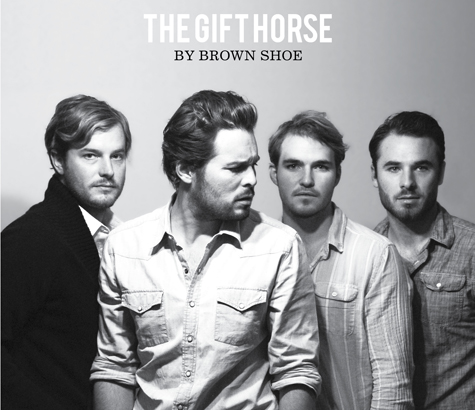
Folsom band Brown Shoe has released one hell of a record in The Gift Horse. Comprising four brothers–Aaron, Bryson, Ryan and Landon Baggaley as well as Chandler Clemons (who the band claims might as well be a brother), Brown Shoe isn’t new to creating sprawling, epic albums. The Gift Horse is their fourth offering and third recorded with Joe Johnston at Pus Cavern Studios in Sacramento. As cliché as it is to say, there really is a little something for everyone on this album, from California sun-tinged indie pop and whisper-quiet singer/songwriter moments to blistering dynamic swells and sing-along worthy choruses. If you dig bands like Bon Iver, Band of Horses, Kings of Leon, Fleet Foxes, Explosions in the Sky, Sigur Ros and others of that ilk, you’re going to feel right at home listening to The Gift Horse. Learn more at Brownshoemusic.com or at Facebook.com/BrownShoeMusic
Arden Park Roots are at home on the road
The road is fuckin’ rough. Ask any DIY touring musicians and they’ll likely confirm this. Long drives, sketchy venues, snakey promoters trying to screw you out of gas money, pissing in water bottles while driving the van and then the van breaks down–it’s not a glamorous life by any means, and Sacramento’s reggae/rock group Arden Park Roots know this from first-hand experience. The local foursome, consisting of vocalist/guitarist Tyler Campbell, lead guitarist Nick Ledoux (aka “El Guapo”), bassist Spencer Murphy and drummer Jonny Snickerpippitz, have become road warriors, logging thousands of miles over the past couple years both in support of their self-released 2008 full-length album The Hard Way and as their alter-ego Sublime tribute band, The Livin’s Easy.
On one recent tour, the guys had a couple days off between Colorado and Arizona and decided to do some sightseeing. During a recent interview with Submerge, Jonny remembers, “We were like, ‘You know what? The Grand Canyon is right over there,’ so we started busting over that way.” Not long after, their vehicle overheated, forcing the guys to pull over to allow it to cool. Jonny, not being the type of guy who’ll just sit and wait for a vehicle to cool down, decided to charge up a mountain on the side of the highway. A little side-of-the-road hike, if you will. “There was just this huge mountain next to us,” says Jonny. “I was like, ‘This is kind of cool,’ so I started running up it and all of a sudden I heard, ‘Dude, Jonny, stop! You’re up too far.’” Meanwhile, Campbell and the rest of the crew were down below, looking up at Jonny climbing a mountain, laughing at him while filming his shenanigans on their cell phones. It was about this time when things went downhill fast for Jonny, literally.
“I looked back down and thought, ‘Hey, I’m going to dazzle the guys and just run all the way down,’” he remembers. “I missed about the last 20 feet and just shattered my ankle. I crawled up onto the highway, rolled onto my back and my foot flopped one way, rolled over the other way and my ankle flopped back, it was obviously offset.”
Ouch! A drummer with a broken ankle would have abruptly ended the tour for most bands, but not APR. They got Jonny to a hospital that night, where they reset his foot and told him he’d need reconstructive surgery. The timeline for the next couple days went a little something like this: Monday night, Jonny checked in, Tuesday he had surgery, Thursday evening he was released and Thursday night he played a “painful” gig. What a savage!
Jonny and Tyler Campbell stress how cool the venue in Flagstaff, Ariz., was with the whole situation. Campbell remembers rushing there first thing Tuesday morning after crashing in a hotel the night before (Jonny was in a hospital bed of course) and explaining to them what happened. “They were like, ‘Dude, it’s cool. You guys can stay in our apartment while you’re here.’ So they housed us for three whole nights. Meanwhile, I’m showing them the video on my cell phone,” Campbell says with a good laugh, “So they knew it was legit.” The understanding staff from the venue even called up a bunch of local musicians to come in and jam on APR’s equipment that night. Campbell remembers the good vibes well. “So the night we actually played, it was this big musician forum and a really cool, touching, ‘town come together’ type of night.” Luckily, that was the last scheduled night on the tour, so APR headed home with both Jonny’s ankle and their spirits elevated.
Turns out, APR is used to this kind of warm and welcoming reception when on the road. As our conversation turns toward which random markets around the country they do well in, it suddenly becomes clear why these guys love touring so much.
“The Midwest man, they just like fucking California bands and they love reggae music,” Campbell says. “Rapid City, S.D., is our best town on the road, I don’t know why.” Jonny interrupts with, “We sell out every time. We usually play there two nights in a row.”
If this is not enough proof that APR is the ultimate party band, said venue in Rapid City quite literally ran out of liquor by the end of the night after APR had played their three-hour set (half originals, half Sublime tribute). “They had nothing,” jokes Campbell. “Literally by the end of the night they ran out of liquor. They were like, ‘Do you want a Corona, because that’s all we have.’” The two also point to Durango, Colo., as another one of their favorite random towns to play. There’s a neat old theater that has been pimped out with a top-notch sound system complete with four audio guys to assist APR in sounding as good as possible. But the steakhouse down the street where they get treated to five-course meals is just as big of a draw.
“That’s why we spend so much time in the Midwest,” says Campbell. ”They fucking feed us, they house us and they fill up the clubs. A nice meal out on the road is heaven.”
Currently Arden Park Roots are home, eagerly awaiting the release of their second full-length album, No Regrets in the Garden of Weeden, which was recorded over the winter at Pus Cavern just before the group left on the infamous ankle-shattering tour. No Regrets…, which is a huge leap forward for the band as far as diversity in sound goes, will be released on July 9, 2010 at Harlow’s. Fourteen songs made the final cut, with a good number of tracks getting the axe, not because they were B-side material, but because APR was confident they already had enough songs for it to be a solid album with “no skippers,” as Campbell puts it. That extra material will be used for the band’s third album, which the two agree is already about halfway done. One track from No Regrets… that kept coming up during our conversation was “What You Got to Lose,” which, with its haunting vocal melodies and hybrid electronic/dub/reggae-rock vibe, is Campbell’s favorite.
“I can listen to that song and not think about myself,” he says. “Which is weird because every song I hear of myself, I just analyze my performance. With this song I can just sit back and listen to it and go, ‘Now that’s a good fucking song.’”
“What You Got to Lose” is a perfect example of just how much APR branched out on No Regrets…. While in the studio, the band left no idea unexplored; they experimented with new instruments, layered sounds and most importantly they learned that one of the most important aspects of making an album is allowing the engineer to do his job, to give him the time and space necessary to do what he does best. “We didn’t have a blank check,” says Campbell, “But we had a budget that was comfortable. We were able to go in and not worry about time.” For that reason, Pus Cavern’s Joe Johnston was able to take his time when engineering the record–and it really shows in the final product. No Regrets… is polished but not over-produced; it’s a leap forward for APR, no doubt, but not so much that it leaves their old fans behind. They still rock, they can still bring the party; they just do it with a little more class. “When it comes to vocals,” Jonny says of Campbell’s performances on No Regrets…, “You can tell we’ve been out on the road quite a bit between the first and second albums. He can do more stuff now. He’s got a gorgeous voice, man. You can hear stuff that he does differently, more maturely.”
As Jonny’s foot slowly heals (he was still on crutches at the time of our interview), the group is realizing that this downtime in between releasing No Regrets… and hitting the road again isn’t such a bad thing. Campbell sums it up best when he says, “On the bright side, with this ankle injury we’ve had some time to recollect ourselves and really get hungry again.” With a new album and an insatiable appetite to hit the road again, Arden Park Roots are looking forward to finishing 2010 on a high note doing what they do best: working hard. “You can’t expect opportunities to be handed to you,” says Campbell, “You’ve got to cover your own ass.”

Arden Park Roots will celebrate the release of No Regrets in the Garden of Weeden on July 9 at Harlow’s and yes, Jonny Snickerpippitz will be healed enough to play. The album will be available through all digital outlets, at all Dimple locations and at shows.
Youth Brigade (Jan. 29, 2010)
Local rock ‘n’ roll club with rich history is brought back to life, again
“John, don’t let the club burn down.” That’s one sentence that Sacramento-area resident John Webb will not soon forget, especially as the seminal club he watched burn more than 30 years ago prepares to be resurrected yet again.
It was a late night on May 27, 1977 and Webb was closing up shop at the Shire Road Pub in Fair Oaks, a rock ‘n’ roll club that he and some high school friends had opened four years prior. The club’s owner, Gerald Sterchi, was on a motor home trip to Canada and had left Webb in charge. It was a Friday night, one of the venue’s busiest. The band had finished up and the crowd of drunken patrons had cleared. Webb went about his normal closing routine: He cruised through the club, checked all the bathrooms, walked into the band room and made sure everybody was out. Everything looked perfectly fine, just like at the end of every other night, so he hopped in his car and made the long drive back to his home in Folsom.
Webb had just gotten home at about 3 a.m. when the phone rang. He answered, only to hear someone from the fire department speak the dreaded words, “The club’s on fire!” Webb jumped back in his car in disbelief and raced back down to the club. He was driving so fast, in fact, that he got pulled over by the Folsom police. The officer let him go, of course, once he heard Webb yell, “My club’s on fire, my club’s on fire!” But by the time he got back to the bar, it was too late. “I couldn’t do anything but watch it burn down,” Webb said. “They were fighting it, but it was pretty well gone. It pretty much totaled the place.” The club he had helped build with his own two hands burned down right in front of him. “It was devastating. Especially since I was told not to ‘let the club burn down.’ Honest to god, that’s what [Sterchi] said to me before he left,” Webb remembered with a good chuckle.
After the smoke cleared, Webb and his associates learned the official story from the fire department. A smoldering cigarette left behind on the couch in the band room had started the blaze. It was indeed a tragedy; Sacramento had lost one of its most happening rock ‘n’ roll clubs. It was the place where 1960’s pop band The Beau Brummels, after having been broken up for eight years, recorded their Live! album; the place where Webb snuck beers to a then-19-year-old local guitar shredder named Craig Chaquiço, who later went on to play in Jefferson Starship; the place where Webb had booked a “little-known band out of the Bay Area for $500 for two nights” called Pablo Cruise, who later went on to have huge commercial success with songs like “Whatcha Gonna Do?” and “Love Will Find a Way,” both of which charted in the Top 10 in 1977 and 1978, respectively. “It’s hard to describe the time that we had there,” Webb remembers of those years spent at the club. “It was a really magical time.”
Fast-forward about five years to 1982. Webb, who obviously was out of a job after the club burned down, had started his own talent agency called Star Attraction and was booking all of the hottest local bands in nightclubs all over Sacramento and Stockton, even Reno, Nev. Sterchi, meanwhile, was dead-set on re-opening Shire Road Pub and ultimately did so in a building on the corner of Auburn and Garfield that had previously housed a bar called Froma’s.
“Geri came to me and he wanted Star Attraction to book the club, so I did that for a few months,” Webb remembers. “Then, he said, ‘John, I’d like for you to come back and run the club for me.'” So Webb did just that—he went back to the club and ran it for Geri and his wife, Karen, just like he had all those years ago at the original Fair Oaks location. He stayed there and managed the place until 1987, when he retired from the entertainment industry.
This new incarnation of the Shire Road Pub also served the Sacramento rock community well, but the music scene was drastically different than when the original club was around. “The rock scene was going largely toward VJs and DJs and getting away from the live music, and music was just changing,” Webb says. “It was going more toward hip-hop and the whole live music scene was slowly dying. We had had about 25 years’ worth of a run and we thought that was pretty darn good for a rock club.”
The Shire Road Pub version 2.0 eventually closed its doors in 1994 and soon after became a strip club called The Body Shop. Don’t think of it as inferior to its predecessor just because it didn’t go out in a blaze of glory; there were some noteworthy bands that played there too. Take, for instance, the hard rock band now known around the world as Tesla, who still called themselves City Kidd when they played the pub; or Steel Breeze, a band from Sacramento whose 1982 single “You Don’t Want Me Anymore,” out on their self-titled RCA Records debut, made it to the Top 20 on the charts. It was a hot spot for up-and-coming local bands like Target and 58 Fury, which featured longtime local musicians Darin Wood and Joe Johnston (who now runs the popular recording studio Pus Cavern). “I remember playing four sets of mostly covers on Sunday and Monday nights,” Wood recalled of the Shire Road Pub. “Kenny Nicholson, the house sound guy at the time, would tell me, ‘You got to talk more in between songs, say some shit. I don’t care if you read the newspaper, just say some shit!'”
George Gosling, a music buff who helped run an artist management company at the time called Pyramid Productions, remembers showcasing bands at the club’s second location. “I did a U.S. debut of a Canadian band that I managed called Stonebolt,” Gosling recalled. They were from Vancouver, had a record deal with a subsidiary label of Casablanca. We did a big party on the opening night and many of my family members, friends and associates were there.” Stonebolt, just one week later, went on to Hollywood to showcase for Billboard, Cashbox, Record World, Variety and the entire Casablanca staff. Yes, the Shire Road Pub was surely a special place that many Sacramento rock ‘n’ rollers remember fondly and miss dearly.

Tom Kimble, owner of the Kennel Club (aka Doghouse Saloon), also on Auburn Boulevard, is definitely one of those guys. When Kimble got word that The Body Shop was closing down last year, he made some calls and was in contact with the building’s owner the next day. He told him about this great idea he’d had to turn it back into the rock ‘n’ roll club that everybody remembers, only this time a little different: the club would be an all-ages venue, with no alcohol available. It took a few visits to persuade the owner, but eventually he saw Kimble’s dream.
“It was important to me,” Kimble said of bringing back the rock club in the same building. “When I walked in there I still pictured what it used to look like.” According to Kimble, the Shire Road Pub was the place to be. “I used to go there all the time,” he remembered. “You couldn’t get in that place on the weekends, it was really happening. If we couldn’t get in, we’d wait. It was always packed, and very loud.”
And so with the owner of the building’s permission, Kimble got to work on the new Shire Road Club (the word Pub got changed to Club since they aren’t serving alcohol). “I can’t put it back exactly the way it looked,” Kimble said of re-piecing together one of his favorite extinct rock clubs, “But I can get it close.” Kimble and a small group of friends and helpers are still trucking along; even as of press time for this issue they were laying carpet, painting walls (local graffiti artists are scheduled to customize the inside of the venue with rock-themed art), setting up stage lighting and basically working their asses off to get everything set up for their first official show on Jan. 15, 2010. It’s hard work that these guys seem more than willing to do for the area’s live music fans, especially the younger ones that so often can’t enjoy a show because it’s at a bar.
Making sure the new Shire Road Club is an all-ages venue was very important to Kimble throughout the lengthy, tiring feat of remodeling and re-opening a venue. He’s spent many years dealing with drunken band members and angry patrons at his bar/venue the Kennel Club, and he’s quick to point out how old that gets. He’s not worried about dealing with hordes of punk rock kids, though, who are typically stereotyped as “bad kids.” He’s got a different outlook on that whole crowd.
“Just because a kid wears a leather jacket with spikes on it, he’s not a bad kid, that’s just what he’s wearing.” Kimble says, “I want to have an all-ages venue where they can enjoy the music that they know and the music that they wrote. Let them express themselves. It isn’t about me dude, nobody gives a shit about the club owner, it’s about the kids. If the kids are happy and they have a place to go, I think I’ve accomplished what I wanted to do.”
Our Hometown Disaster delivers the goods on full-length debut
Local punk outfit Our Hometown Disaster wants you to know that they aren’t fucking around on their full-length debut, The Good Life, out Oct. 10, 2009. “We’re not pussies, we’re not fakes, we’re real guys with real experiences and that comes out in the music we write,” vocalist Brad Edison recently told Submerge. “We put heart into writing our music; we have well thought out and provocative lyrics that actually mean something to us. We are proud of our music; we couldn’t respect ourselves if we weren’t.”
While somewhat new to the scene with this line-up, all of Our Hometown Disaster’s members, including Ted Rauenhorst (guitar, backing vocals), Clint Cargill (guitar, backing vocals), Jeremy Roberts (drums), Brian Lee (bass, backing vocals) and Edison (vocals), have been in well-established Sacramento bands over the years. The note-worthy list of past groups includes Losing All Pride, Drowning Adam, A Borrowed Life, The Revelry, Five Victims Four Graves, Hoods and Vomit. With a résumé like that, you’d expect Our Hometown Disaster to hit the ground running. And they have. They’ve got a new full-length record, The Good Life, set to be released on Oct. 10 at the Boardwalk, a tight sound and big plans for the future.
Submerge recently caught up with some of the guys to cover the basics.
How did Our Hometown Disaster form?
Ted Rauenhorst: It all started with Clint and I around July ’08. We both missed playing punk rock and decided to get together and start a side project just for shits. We started writing and really enjoyed it and started looking for members about a month later. Long story short, we found some kick ass dudes that we really meshed well with and really got going on it. All of our other bands were not doing too well and all pretty much fell apart at the same time. We liked what we started doing a lot and decided to take the band seriously. We played our first show with Authority Zero in February ’09 and knew right then we really wanted to do this band full-time, and here we are.
I got a good laugh out of your Myspace page where it says, “Their goal is to prove that Sacramento’s punk roots are still firmly planted in a land where pussy emo and cock rock are running rampant!” Can you elaborate on that?
Brad Edison: The fact is there is a massive abundance of shitty music. Brian and I were talking a while ago about the fact that we still listen to the same CDs we bought when we were kids. Only every once in a while can we welcome a new CD to the list of quality music.
How does the songwriting process work in OHD? Is there one main songwriter, or is it collaborative?
TR: It’s pretty collaborative. Clint, Brian or myself will come up with a riff or even a full song, and we all get together and throw ideas around. Brad and Brian write the lyrics for the most part. We all like to give input in everything we do.
BE: For lyrics, usually Brian and I take an idea from an experience in our life or one of the other guys and just build on that while listening to the riff over and over and over. Sometimes it’s fairly quick and sometimes it takes a while and a lot of different settings. Some of my favorite lines have come to me while I’m driving or in the middle of the night. And sometimes there are parts that get changed even after all that because I won’t sing something that doesn’t convey the message I want the way I want to convey it.
What does a typical OHD practice look like?
Brian Lee: We all show up late and pissed off from work. We make fun of each other the whole time and run through the set and then work on something new. We got the next two albums written already, but we’re still working on our set because this OHD thing is so new to us all being from metal, punk, rock and hardcore bands. The next shit is amazing.
The Good Life sounds great! When and where was it recorded?
TR: We recorded it a few months back at Pus Cavern.
Nice. How was it working with Joe Johnston?
BL: He doesn’t let shit slide and really pushed us to do the best we could. It was awesome and we are stoked!
BE: Definitely. Joe is a great guy, smart and easy to work with. He knows what he’s doing. The proof is in the pudding; the CD sounds amazing.
What’s the plan for releasing The Good Life? Any label interest? Do you even care about record labels anymore? Or are you going the DIY route?
BL: Labels are what they are. We are old school “work hard for what you want” kind of guys. Smaller labels are cool, because they have the same goal as we do: play hard.
TR: We are just going to put it out ourselves for now. We are talking with a few labels and are looking for someone to put it out. We want to be patient and wait for the right label to come along. We don’t want to jump on the first offer and get screwed. Some of us have had that happen and don’t want to have it happen again.
Any touring plans?
BL: We got some shit going on.
TR: We are planning on going out a lot early next year. We have so much we want to do. It’s hard to say right now where we are going to be going.
I’m sure most of you have done the DIY tour thing before. Do you think touring is important in an age where bands break overnight via the Internet?
BL: The Internet is rad; you can see bands or boobs or whatever you want. Emo pop kids love to be sad and take pictures of themselves all day and will find bands that will do the same. We want to appeal to the skaters and motocross kids that are out and about that actually have CDs rolling around their trucks and loan out to their friends. It’s a totally different crowd. Go out and live fast. How rad can you get staying in your room listening to some losers that dress up for the Internet?