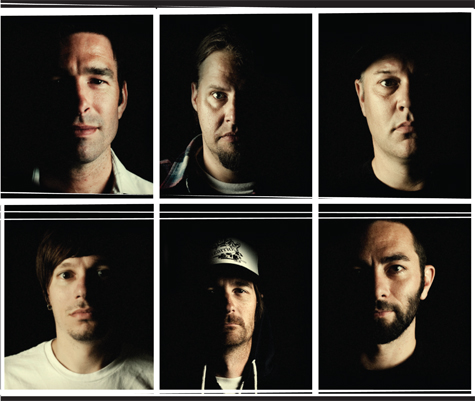
Grady Avenell Returns for first new Will Haven album in years
A calming flow of synthesizer builds gradually, luring in all curious listeners. And for the moment, everything’s serene–but secretly there are other intentions. The role of the antagonist for this song’s tale has become apparent and all are vulnerable; no one is safe. Unexpectedly, the once soothing hum is quickly ambushed by the constant, albeit macabre, pulse of keys chiming steadily like an old grandfather clock at a slightly higher pitch. The sound instantly signals the mood has now changed and there’s no turning back. Melodic guitar suddenly strolls by, equally not to be trusted as the composition is then met by shrieks grave enough to raise the hairs on one’s arms and neck. The screams forever burn images of neck veins into your psyche, and then the music fades. For now, you’ve survived this six-minute dark opus written by one of Sacramento’s most respected longtime metal veterans, Will Haven.
What should have been the perfect theme song to Wes Craven’s A Nightmare on Elm Street had it been written 20 years ago, the track (“Lost” off of Will Haven’s newest full-length album, Voir Dire, translated as “Speak the truth”) is only a snippet of what’s to come from this band in the future. With original vocalist Grady Avenell back at the mic, the addition of keyboard and synthesizer courtesy of Adrien Contreras and a new bass player who happens to be the percussionist for a little band called Slipknot, Will Haven is back on the scene and in full force.
“This record is the starting point to what we can do,” explained Jeff Irwin, guitarist and founding member of Will Haven, at their practice space off of Marconi Avenue. “To me, this album is definitely deeper. When I listen to our old records, I see the skeleton of what we’re becoming. We’re getting older and we’re taking our time now. Before, we put out a record just because we knew we were going to go on tour, but now, recording days have slowed down, we don’t play as many shows and that energy is put into the music and we feel we have a deeper passion for it.”
According to Irwin, throughout what most might see as a four-year stint of silence since the band’s release of new material, the guys of Will Haven have never stopped playing music completely. Whether they were playing in alternate side project bands to fill their musical voids, or deciding to come together to play music in support of a close friend in a coma, Irwin credits the return of original vocalist Grady Avenell for ultimately fueling Will Haven’s passion to once again begin writing and rekindling the family vibe the band was built on.
“We played some of the Chi benefits and I just got the itch to do it again,” Avenell said of the shows developed to support Deftones bassist Chi Cheng, currently in a minimally conscious state after a 2008 car accident. “We talked about it and went forward from there. I’m excited. It’s been almost 10 years since I’ve put an album out and here we have an album coming out. I’m just looking forward to playing some shows and having a good time.”
Formed in ‘95 right after high school, Will Haven have since paved a hard road releasing countless albums and EPs, touring the world with the likes of Deftones, Earth Crisis and Slipknot, where they would find a new member to welcome into their family unit of pure metal: Chris Fehn, percussionist for Slipknot turned bassist for Will Haven.
“He’s been in the band since this record. We toured with Slipknot in 2000 and we just became good friends with him and we’ve been close ever since,” explained Irwin. “He’s really passionate about music, he’s not in it for anything else and that’s hard to find nowadays. With him, he’s like, ‘I don’t give a fuck who you guys are. I love the music. I love you guys. I just want to play.’ And that’s exactly what we want, someone who has passion, loves the band and is here for the right reasons.”
However, touring with world renowned bands such as Slipknot or Deftones kept the band grounded. And instead of rolling up to venues with tour buses and crews of roadies, Will Haven took the more punk rock approach, pulling up in an old van with one goal in mind–to share their music with a crowd of thousands.
“When we did tours like that, I think that made the band what it is. We’d go on tours with Deftones or Slipknot and there’d be thousands of people there, but for us, it would be almost like a punk rock show because they’re in buses and have crews, and we pull up in this crappy, little van and our goal is to try and kill everybody. We aren’t there to sell tickets. We’re there to show people that this opening band just kicked your ass even more than the headliner did. I think that’s what drove us and what kept us grounded; we’ve put in our work,” Irwin said.
With the band’s average age being in the mid-30s, Will Haven recall the days when self-promotion was solely up to the musicians. A time prior to social networks like MySpace or Facebook, where one didn’t just Google a band and decide whether or not they’re worthy, but actually visit a music store, purchase an album and research them at their own discretion. A time when tacking flyers to poles and actually speaking to people in person was prevalent–which later turned into inviting fans personally out to shows. Those days, go figure, are now gone. To the members of Will Haven, this has become a lost art form and they blame the ever-evolving monster that is social networking.
“Before, it was all about the music,” says Irwin. “We started before Myspace, and we’re kind of new to the whole Internet thing, but when we started, you made a demo tape and gave it to a record label and see what happens from there. At our age right now we’ve seen the decline of the ‘rockstar days.’ The labels and getting signed for a crap load of money doesn’t happen anymore. In the late ‘90s it just seemed like that took a shit. It’s a whole different world. So, we got to see the height of [the music industry] and we saw the crash of it, too.”
With more than 10 years of music behind them and an unwritten future ahead, the guys of Will Haven have become a well-respected entity within Sacramento’s tight-knit music scene. Whenever their name is mentioned, conversations of praise and an air of respect are present. Irwin said the band’s local popularity stems from the guys choosing to be true to themselves and to their music, but other local musicians say Will Haven have earned respect because they’ve always kept it real.
“These guys have been grinding it out since ’95, always doing their own thing,” explained Jesse Mitchell of Red Tape/Kill the Precedent and longtime friend of Will Haven. “Since the beginning, they have been following their own path, but still staying true and recognizing Sacto as being home base. We as fellow Sacto musicians respect what they have achieved, not just locally, but worldwide. They have always been good friends with my bands and are cute as buttons to boot. Will Haven will be sonically slapping your face for years to come.”

Will Haven’s Voir Dire will be released Oct. 11 on Bieler Bros. Records.
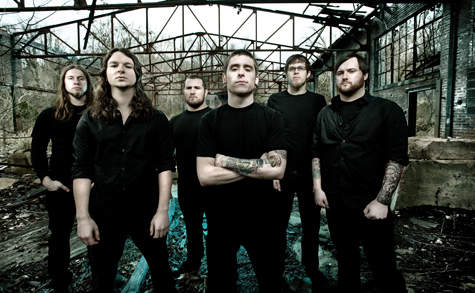
Whitechapel is a metal band on the rise
It was an unseasonably warm February evening in the Northeast as Knoxville, Tenn. deathcore goliath Whitechapel prepared for its show at The Starland Ballroom in New Jersey. For his part, Whitechapel guitarist Alex Wade was preparing to slay the Garden State’s metal faithful in his usual manner. No, not bathing in the blood of virgins or devouring souls of the innocent–though considering Whitechapel’s aural assault, you wouldn’t be completely off base for thinking so–instead, Wade was taking a page out of the Zombieland survival handbook and limbering up.
“I definitely like to stretch,” Wade says. “I’m not that old. I’m 24, but not only is it a good habit to get into, but it definitely saves my body for when I get older. I like to stretch, warm up, get the blood pumping, because you can’t just go up on stage and just start going crazy and head banging and running all over the place. It puts a hard toll on your body.”
For Wade, the type of music he plays necessitates his desire to keep in sound physical condition.
“If you’re a band like Muse or something like that, you can stand up there and chill while the lights move around and stuff like that,” he explains. “When you play loud and aggressive music, you have to put on a stage performance that portrays the music as well, so you’ve got to be moving around and jumping all over the place and fucking cussing and spitting and all that crazy shit.”
It’s clear that Wade has a good head on his shoulders; he certainly needs it, considering Whitechapel’s fast rise through the metal ranks. Having just formed in 2006, the band already has three albums under its belt, each one more successful than its predecessor. A couple years after its inception, Whitechapel was already drawing a bidding war from interested labels and soon landed with venerable Metal Blade Records, which has been home to Slayer, King Diamond and Cannibal Corpse (and, strangely enough, Goo Goo Dolls).
Whitechapel’s most recent album, A New Era of Corruption, was released in June 2010 and has propelled the band to its greatest heights to date. As a result, the band finds itself headlining a juggernaut-sized tour (The Welcome to Hell Tour) that includes some of the modern American metal scene’s most intriguing and brutal bands, such as The Acacia Strain, Veil of Maya, Chelsea Grin and I Declare War. Wade says Whitechapel is excited to front a group of such heavy hitting bands, singling out The Acacia Strain as a group that really gets him and his band mates amped up to play.
“There’s something about that band that people just turn into animals and rip each other apart,” Wade says. “It definitely makes us want to up the ante and make our show that much better, because they’re putting on amazing shows as well.”
Wade took the time to speak with Submerge just about an hour before doors opened at the Starland. In the following interview, we discussed the stratification of metal genres and the band’s Sacramento ties as well as staying on top of the business of being a band on the rise.
Your most recent album, which came out last year, charted pretty high…
Yeah, we broke into the top 50 of the Billboard 200.
That’s high for a pop band, let alone a metal band.
Yeah, exactly. It’s crazy that you see bands like us breaking into the Top 50 in Billboard. Probably five years ago, bands that heavy weren’t getting into those slots unless you were like Slipknot or something, but obviously they’re on a whole other level.
Why do you think that is? Do you see a shift in fans in general or just the climate toward heavy music?
I don’t know man. The music business, and what’s cool and what’s not, all kinds of genres are fading in and out. This whole deathcore thing or whatever you want to call it has been getting big for the past three years or so, and just recently this dubstep thing has been getting really big. People have been going crazy over it, but to me, isn’t that just techno? That’s been around forever. Why is it just now getting big? I guess a lot of people feel the same way about metal. Metal has been around forever. Why is it just now getting big? I can’t really answer that question, but we’re glad it is, because our shows and CD sales are obviously reflecting it.
You mentioned the deathcore genre, and I think more than any other kind of music, metal is broken down to such specific subgenres…
Totally. There’s a difference between black metal and blackened death metal. Like, black metal is Emperor and blackened death metal is Behemoth. If you know metal, you know the difference. Obviously, Behemoth has more death metal influence. It’s heavier and not as shrill as true black metal, but it’s really funny how metal has its mini subgenres, and no other kind of music has that.
Your band’s lineup has three guitar players. When you get into the studio, how does it work out with you guys? Do you all trade off a lot of riffs when you get ready to write?
All three of us collaboratively write for the album. I’ll give credit where credit is due: Ben [Savage], our lead guitar player, definitely writes the most. We all have different things going on. I manage bands on the side and work for the company that manages us. I work for them managing smaller bands. I manage I Declare War, who are on the tour with us. Ben puts in the most effort and writes the most stuff, but Zach [Householder] and I do contribute. I would definitely say it’s a collaborative effort, though. It’s not just one or two people.
How did you get into managing bands?
I’ve always been kind of like the brains behind Whitechapel. Everybody says there’s a brains and a brawn to everything, and I would say I’m the brains. I managed Whitechapel up until the time when we decided, like, “Hey, this is getting to a level where I can’t really do much for us anymore. We need to hire somebody who’s going to take us to the next level.” I’ve always had my hand in developing bands and stuff like that. Our manager, Shawn Carrano, who works with Artery Foundation, which is located in Sacramento, I’ve always expressed to him that I like the music business. I like watching bands develop and grow. He was like, “I think you’d be a good manager. You did a good job with Whitechapel before I took over. Would you be interested in taking on some of our smaller bands? I’ll still help you with stuff, but you can handle the bulk of the material.” I knew I Declare War, because we’d met them on tour, and I knew they were looking for a record deal. Artery Recordings had just started, and I showed I Declare War to them and they were like, “Ask them if they want to be signed,” so we got them signed. I kind of took over the band, and it’s been great ever since.
Since you mentioned your Sacramento connection through Artery, I saw that Chino Moreno from Deftones had a guest appearance on A New Era of Corruption. Did you hook up with him through Artery?
Yeah, Shawn had been friends with Deftones and Chino for like 10 years or something like that. Our manager used to manage Chino’s side project Team Sleep. He’s gotten Chino guest appearances on the Norma Jean record and the one on the Dance Gavin Dance record. He’s always helped Chino out with that–getting guest appearances with young, hot bands. It helps out the band to have a big name on the record, and maybe it will help out Chino because it shows him to a younger crowd who hasn’t grown up listening to Deftones like I have. He hit up Chino and said, “My biggest band is heading into the studio to record. They’re all Deftones fans and they have this part on one song that they’d love for you to do.” He checked it out and liked it a lot and decided to do it, and that’s about it.
So you had Chino in mind from the beginning?
Yeah, totally. It was a riff that I had written, and I’m a huge Deftones fan. It definitely has a huge Deftones vibe to it. Stephen Carpenter is one of my main influences playing guitar. I was like, “Dude, if Shawn can hook up Chino as guest on that riff, it would be so sick.” And it actually came together, so I was really stoked on that.
I read a quote from Phil Bozeman [vocals] where he mentioned that you guys were trying to have more of a verse-chorus structure on your latest album. Was that something you’d all gotten together to discuss?
Oh totally, that was the whole point of A New Era… When it’s just riffing the whole time–when it’s just riff, riff, riff, riff, riff–there’s nothing that people can catch on to. There’s no hooks. There’s nothing catchy about it. But when you try to implement verses and choruses–you know, we’re not trying to be radio rock, where we have three parts to one song and just repeat them over and over again–but when you bring parts back that definitely gives the fans something to latch on to.
Before you mentioned you were amazed to be a part of a band that has reached this level of success, and it happened for you pretty fast. Within a couple of years after you formed, you were signed to Metal Blade, which is a really well established metal label. Have you had a chance to take stock of the whole situation?
It’s one of those things that the band has progressed so fast. If you’re outside of the band, it looks fast, but if you’re inside the band, it feels like it’s been forever. The life of a musician is repetitive. People have been like, “Things have changed so much for you in the past four years,” and I’m like, “Really?” Aside from the fact that we get paid more and we do bigger tours, it doesn’t feel all that much different from when we first started touring.
Dark Child
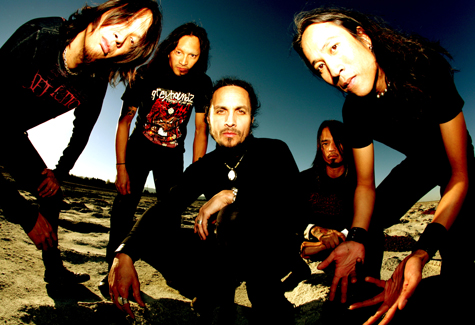
Tragedy has shortened the careers of many rock ‘n’ roll musicians. In 1990, it would seem like Bay Area thrash band Death Angel would have to be added to that list. The young group, signed to a label before its members had even turned 20 years old, saw their burgeoning careers hit what seemed to be a dead end when their tour bus crashed in the Arizona desert. The accident left drummer Andy Galeon critically injured, and the members of Death Angel moved on in a different incarnation as The Organization.
But that wasn’t the end of the story. Tragic circumstances caused Death Angel to reunite over a decade later when the band’s good friend, Testament’s Chuck Billy, was diagnosed with a rare form of cancer in 2001. However, as lead guitarist Rob Cavestany explains, the reunion was entered into with a bit of trepidation.
“It was a big enough decision for us to reunite even for that, because we were so adamant against coming back and being one of those bands that comes back together for the wrong reasons and ruins the cool history that we left behind,” he says.
After a successful performance at the benefit for Chuck Billy, Death Angel seemed to pick up the same unstoppable momentum the group had heading into that fateful day in 1990.
“Our intent was just to do a few shows, and then it led to a few tours, and then that was going to be it, call it quits before we pushed it too far,” Cavestany says. “But we just kept going to the next level. Finally, as we were just jamming and jamming together, we started coming up with new riffs and parts, just by messing around, and all of the sudden, no one was saying anything, but we were realizing that we were starting to make new music, and we were like, ‘Uh-oh. This is happening.'”
Death Angel released its second album since reuniting, Killing Season, last year. In the following interview, Cavestany reveals how his band got to the point it’s at now.
You were young in the ’80s when you started Death Angel. In a way, you became adults in the Bay Area thrash scene. What was that like?
It was definitely different than the normal upbringing, I would imagine, but it was great. The scene was totally blossoming at the time, and we were right in the middle of it, just loving it, total excitement, just going to every show. It was totally running through your veins at that point in time.
I remember when I was a kid in New York in fourth or fifth grade; I was listening to your band and Exodus. Obviously, that was before the Internet took hold. Were you surprised how far the thrash scene reached?
Absolutely, because it was such an underground thing at first. Quite frankly, we were very proud of it being underground, because we were hardcore into the scene of it, and the underground vibe. It would seem like selling out for the thing to become so huge, but inevitably, it was such good music”¦it struck a nerve all across the world. In the end, now, I’m not really surprised about it.
When did you first realize that it wasn’t an underground thing any more?
I think when Metallica started to break ground, and then there was the Clash of the Titans tour, with Megadeth, Anthrax, Slayer and Alice in Chains. That was huge for thrash. And at that point, it was evident that it was happening. Unfortunately, right at that time, we got in that bus accident that ended our band. We were supposed to be on the Clash of the Titans tour, but we got in the accident and they replaced us with Alice in Chains.
I read a quote of yours following the accident where you said, “In a way, it made perfect sense to have a major accident right now, it really fit the story line. We’ve been pushing so hard for eight years and just not getting that far, and getting so frustrated with not being where we should be after so long, it was time for something climactic to happen!” Do you think the Death Angel would have survived even if the accident hadn’t happened?
That’s a tough one, because you’re trying to speculate. You’d never really know, but you do your best to recreate the scenario and see. When I said that, I was trying to look for one weird, positive thing out of something that was really horrible for us. For us, at the time, true enough, we’d been going nonstop for eight years. I was only 21 at that point in time. From 13 to 21, going at something like that for eight years, seems like a very long time to you at that age. We were getting really burnt out by a lot of the crap that we were dealing with within the industry, and the people who had taken advantage of us in different situations, we were starting to see the light and become aware of the stuff that was going on around us. And when we were, we weren’t like the stuff that was going on. Also, just getting tired of the whole drill and the whole scene, in a way. We were looking to branch out and explore other things, other music, other people, other things in life. Things you miss out on—your friends, and a normal life for a kid.
As far as our band was going at that point, though, we were really climbing. We were headed for really big things. Right before the accident happened, we were supporting Act III on tour. All the shows were sold out. When we got into the accident, we were on our way back home where we had”¦a Friday night show in Oakland and a Saturday night show in San Francisco booked, and both shows were sold out in advance, so things were really happening for us. And then we were supposed to go on the Clash of the Titans tour with Metallica, Slayer and Anthrax. And after that, we were supposed to go out to Europe to support Judas Priest on their tour. Things were definitely going up for us, and things would have gotten a lot bigger, I would imagine, if we were able to do those tours and keep on going. As far as how long we would have stayed together, who knows. I like to look at it like we wouldn’t have stayed together. The pressure would have gotten to us. We would’ve ended up just imploding upon ourselves despite the success”¦because the way it was affecting us individually as human beings.
With that in mind, once again trying to put a positive spin on a negative situation, I tend to feel that it would’ve been the end of the band in other worse ways, and maybe we would have come to the point where we wouldn’t be able to be friends with each other any more if that had happened. Looking at that now, we are existing today, and I think we wouldn’t have had we kept on going back then. We would have come to a permanent end”¦ We were forced into a break from each other and a break from the whole scene. It gave us a fresh start.
Last year you released your latest album, Killing Season, and obviously you’re older now and in a lot different place, but the music is still thrash metal. What kind of place do you find yourself writing from now, especially since you’re a father?
It contributes in a way in that it adds hardcore fuel to the fire to work very hard, because now you’re working for more reasons than just to rock out and make a name for yourself. You’re working for the survival of somebody else to exist in this world. Music is our lives and our jobs and our careers. You spend all this time and effort doing it, so you just have that much more motivation to drive you to do the thing that you do, but as far as the concept and the lyric and the vibe for Death Angel’s music, it separates itself from that kind of family wholesomeness you experience at home, because it doesn’t crossover into the aggressive type of vibe you need to play this kind of metal. It works its way in as far as inspiration and motivation, but it doesn’t work its way literally into our lyrics or the feeling of the music we play. For me personally, I go into a different head space where I’m not even me, the family guy, I’m me, the dark child cruising through the rock world [laughs].
The deluge of e-mails continues.
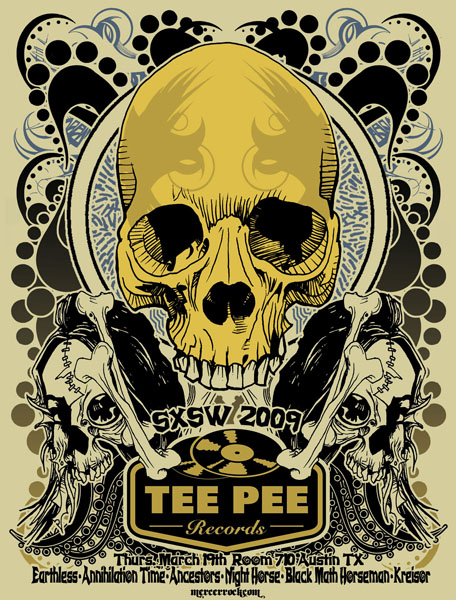
Tee Pee Records will be all over SXSW this year, and if you’re going, you should make a point to catch some of them. If you’re not going, or just need more convincing, the label has posted a FREE sampler of their bands for download online. Bands featured include J. Mascis’s metal band Witch, Earthless and Graveyard (their “Evil Ways” track is my favorite so far).
Fans of Sabbath-/Pentagram-inspired doom and psych-rock should take note. Also, anyone still rocking black light posters will probably want to download this, if they even have computers.
Check out Tee Pee bands at SXSW at the following times/locations:
Wednesday 3/18:
Tee Pee Records/MadeLoud.com Day Party at The Scoot Inn
Scoot Inn – 113 E 11th St
5pm Hopewell
4:30 Willem Maker (inside)
4pm Night Horse
3:30 Larkin Grimm (inside)
3pm Sleepy Sun
2:30 Silverghost (inside)
2pm Krista Muir
Thursday 3/19:
Gibson Guitars/Affliction Day Party at Maggie Mae’s:
Maggie Mae’s – 512 Trinity Street
1:25-1:55 Earthless
Roky Erikson Psychedelic Ice Cream Social at Threadgills World Headquarters:
Threadgills World Headquarters – 301 Riverside Drive
4PM The Warlocks
Full Metal Texas @ Emo’s Annex Noon – 6PM:
Emo’s – 600 Red River Street
RSVP AT:
www.FullMetalTexas.com
12:15PM Memphis May Fire
1:05PM Night Horse
1:55PM Black Math Horseman
2:45PM Kylesa
3:35PM Skeletonwitch
4:35PM Fact
5:15PM Greeley Estates
Tee Pee Records Official SXSW Showcase at Room 710:
Room 710 – 710 Red River Street
8PM Kreisor
9PM Black Math Horseman
10PM Night Horse
11PM Ancestors
12AM Annihilation Time
1AM Earthless
Friday 3/20:
Gibson Guitars Day Party at Maggie Mae’s:
Maggie Mae’s – Maggie Mae’s – 512 Trinity Street
1:30 PM The Warlocks
Action PR / Tee Pee / Scoot Inn Presents day party
Scoot Inn – 113 E 11th St
Outside-
5pm Peelander-Z
4pm Zoroaster
3pm Ancestors
2pm Easy Action
1pm Dixie Witch
The Smell Day Party at 501 Studios:
501 Studios – 501 North IH-35
5:15 PM Ancestors
AAM Day Party at Habana Calle 6:
709 – E 6th Street
4:45PM Earthless & J Mascis exclusive performance
Psychotropic Day Party at Spiderhouse:
Spiderhouse – 2908 Fruth Street
3:20PM Hopewell
6:40PM Earthless
7:30PM Black Math Horseman
Day Party at Guero’s:
Guero’s – 1412 S Congress Ave
6:45 Hopewell
Saturday 3/21:
Tee Pee Records/LA Record/Converse Day Party at Club 1808:
Club 1808 – 1808 E 12th Street
6:10PM Annihilation Time
5:20PM Year Long Disaster
4:30PM The Warlocks
3:40PM Night Horse
2:50PM Tweak Bird
2PM Black Math Horseman
High Times 2009 Doobie Awards at Red 7:
Red 7 – 611 E 7th Street
Earthless (set time TBA)
Live Music Capitol Day Party:
1PM Hopewell
SXSW Showcase at Beauty Bar:
Beauty Bar – 617 E 7th Street
10PM Hopewell
Viva Radio/American Apparell Showcase at Club Deville:
Club Deville – 900 Red River St
9PM – The Warlocks
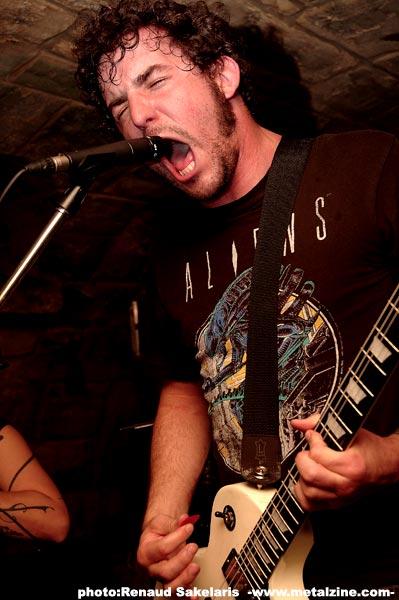
I recently interviewed Giant Squid’s Aaron Gregory. The interview will appear in issue #26 of Submerge (our one year anniversary!), which will be out Monday. This portion of the interview didn’t make it to the print version, because we’re limited by space, and I thought it would be more prudent to leave in all the nerdy bits about metal, the sea and comic books. You know, all that important stuff. This bit didn’t really fit in with all that, but I thought it was a funny story. Here, Gregory recounts the not-s0-fun time he and Giant Squid had opening for the Melvins at The Boardwalk last summer.
Giant Squid’s new album is due out Feb. 3, and it’s really good. It’s called The Ichthyologist and will be released by the band, limited to 1,000 copies. So get on that before it’s too late. [Photo by Renaud Sakelaris, courtesy of the Giant Squid Myspace page.]
I saw Giant Squid play last summer when you opened for the Melvins and Big Business at the Boardwalk”¦
Oh, I’m sorry about that, man. That was the worst show we’ve played in our life. Absolutely, the worst show Giant Squid has played to date.
ÂÂ
Why do you say that?
It was a fucking train wreck from the beginning. We got there, and it turns out that the Melvins and Big Business never, ever, ever have opening bands. Seems like the promoter forgot to read the contract that made that explicitly clear. The Melvins were pretty upset when we rolled in and said we were going to play. Then, of course, we were pretty upset because we came out for the gig. We were like, “Fucking A, open up for the Melvins, that sounds killer—and Big Business.” Luckily, the Melvins really manned up and let us do it. They were actually really gracious after a bit—after talking to the promoter and kind of chewing his ass out.
There was a big mix up with that, and we just didn’t feel wanted in some ways. It was a really last minute gig with our new drummer, too, so we didn’t have a lot of rehearsal, we didn’t have a lot of time to get our own fans out there. We pretty much learned about that gig until a week and a half before. On top of all that, we thought it would be a really good idea to try out all these brand new fucking songs we’d never played live, ever, that night.
ÂÂ
[Laughs] Yeah, I guess at that point, why not?
Yeah, yeah. They basically gave us five feet of stage space to set up and play. We couldn’t move a single piece of Melvins/Big Business gear, so that was a little difficult. All those things combined, I don’t know. It was a little bit of nerves, a little bit of frustration and anger. You saw it. We played. We choked through it, but we really fucked up a lot. Luckily it was all new songs, so people probably wouldn’t be able to tell too much. But it was bad. We’ve had some bad luck with Sacramento shows. Our show with Earth was bad like that. By the time we’d gotten up there, we were too tired and drunk, and everyone was falling asleep by that point too.
Remember when heavy metal was the devil’s music? Before Korn and Limp Bizkit got jocks involved, even before Poison and Guns N’ Roses started getting chicks hooked on screaming riffs, metal was solely the domain of misanthropic losers who had a boner for Satan. Now, with the rise of the Guitar Hero / Rock Band phenomenon, the once lonely dark forests of the metal realm are now erupting in five-alarm bonfires. I mean, even Christians like the dudes in Underoath have joined the party in greater numbers. Christians! As a lifelong metal fan (I like other forms of music too, obviously, but I’ve been into metal for as long as I remember), I see this as a mixed blessing: While I miss the rebelliousness of metal’s past, I’m happy I no longer have to face public scrutiny if I’m driving around and wailing along to Iron Maiden’s “Fear of the Dark” with the windows down.
This wasn’t always the case. If you were alive in the ’80s, you may recall that every news source / church group / parent / what-have-you were railing against the evils of heavy metal. On Oct. 16, 1984, a 19-year-old by the name of John McCollum shot himself while listening to Ozzy Osbourne’s “Suicide Solution.” In January 2006, McCollum’s parents took Osbourne to court, claiming that his song was to blame. The claim was dismissed, but the bug was planted. Bands like AC/DC, Black Sabbath, Judas Priest and even poseurs like Mötley Crüe came under fire for corrupting young minds and coercing with the Dark Lord. I even came under fire in my own family, while I was just in fourth grade, as a cousin berated me for my love of metal. She told me it was the music of the devil and if I kept listening to it, I’d rot in the festering pools of hell (something like that); and I think it made me cry like a bitch.
It’s not like that any more. Metal—though forced to sit at the weird relatives table—has become an accepted member of the musical family. No longer is it harmful to your body, mind or soul. It was simply misunderstood… OR WAS IT?
A recent study led by Dr. Michael Miller, from the University of Maryland Medical Center in Baltimore, concluded that listening to “joyful” music is healthy for a person’s heart. Meanwhile, listening to “heavy metal” causes anxiety.
According to an article on Telegraph.co.uk., results of tests performed on 10 healthy, nonsmoking volunteers showed “Stressful or disturbing music “¦ narrows the arteries and may be bad for the heart.” Joyful music—like John Denver—caused subjects’ arteries to open 26 percent wider, while music that made them “anxious” caused their arteries to narrow by 6 percent.
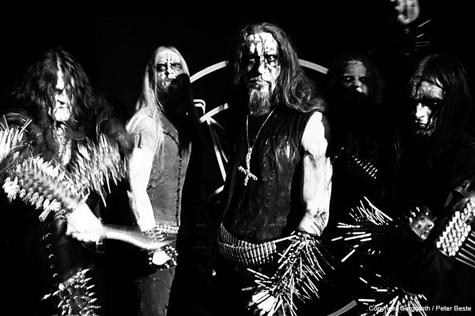
This may very well be true. The music I love may be killing me. But then again, so are the beer, whiskey, red meat and pollution. I’m pretty sure the dudes in Gorgoroth couldn’t care less about my health anyway, and I’m glad they couldn’t. Unhealthy things are just more fun. My arteries are just going to have to get tougher, because I don’t think John Denver is going to work his way onto my Shuffle anytime soon.
By James Barone