The first time I saw Andrew Bird live onstage was at the debut Wanderlust Festival up in Squaw Valley, 2009. He’d flown in for the gig from Detroit or Milwaukee, or some damned place, and the airline had lost his luggage, which of course included all of his gear aside from the trusty violin. Borrowing a loop pedal from another band, he proceeded to put on a virtuosic display of contemplative musical brilliance, bowing, plucking, lilting and whistling his way to the ultimate sonic setting amid a backdrop of cascading summertime peaks and valleys. It was at that moment I concluded that Andrew Bird was, in fact, a wizard.
And the contents of his lengthy discography will attest to as much. Be it the amalgamated beauty of Weather Systems or the poetic instrumental scores of his latest endeavor, the Echolocations series, Andrew Wegman Bird has a musicality flowing through him that few contemporary artists of any ilk can match. In 2015, Bird released Echolocations: Canyon, the first of five instrumental, improvisational, location-based recording sessions, with River, the second in the series, and City, Lake and Forest planned to follow. And where Canyon found Bird in Coyote Gulch, Utah, River, released Oct. 6 on Wegawam Music, now finds him literally wading in the quasi-trickle of the Los Angeles River. But madness to some is method to others, and in the case of Andrew Bird, it’s yet another wondrous waving of his wizardly wand.
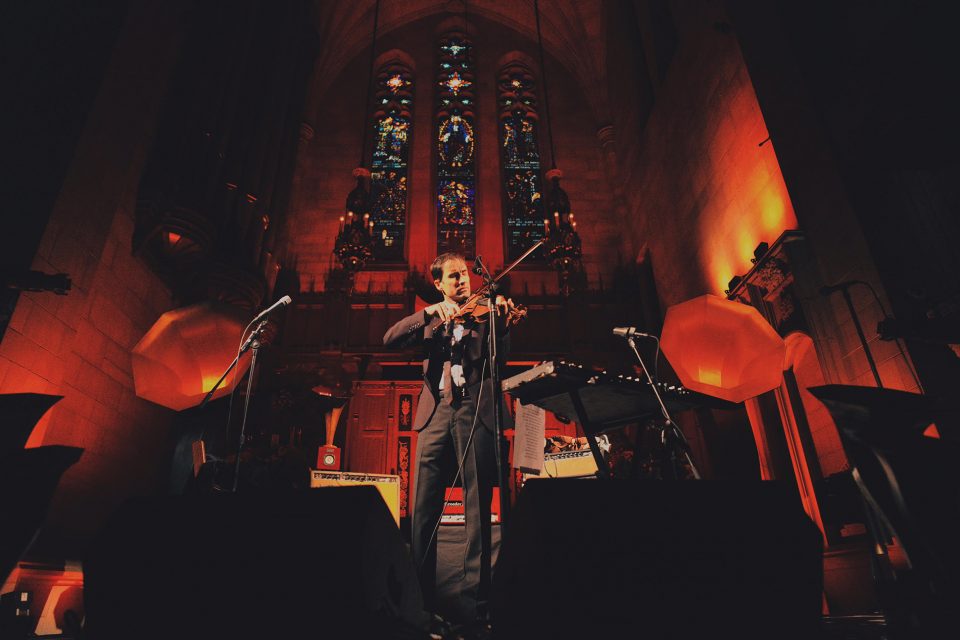
Photo by Jesse Lirolasm
As a classically trained musician, do you have to consciously tell that part of your mind to back off when improvising? Where does it separate?
I never let that classical mindset get a foothold. I learned classical music by sheer exposure; I was not a particularly model student. I was always coming from the intuitive approach. I barely learned to read music, and once I did, I didn’t need to because my ear could learn it faster than I could sight read. I was playing in bands from 18, 19 [years old]; playing in punk bands, ska bands; playing Irish music where you have to break up the phrase and be your own drummer. So it was never such a stretch for me.
The new record is beautiful, and I’m fascinated by your choosing the L.A. River under the Hyperion Bridge of all things. It’s something I’ve always kind of thought of as environmentally gross. And now you’ve set this score to it. What was it that drew you to strike that type of juxtaposition?
It was somewhat a matter of proximity and convenience … I ride my bike down there a lot. I was noticing that the river has actually gotten a lot nicer and cleaner; there are tons of unusual birds down there, and it’s not the post-apocalyptic nightmare that it’s known to be.
So it’s not the Terminator 2 motorcycle scene.
It still has a faint smell of ammonia, but other than that the water is actually pretty clean. There’s fish and all these wetlands they put in there. But it is a very odd mix of urban and imposed natural environment. What was interesting to me was the architecture of those two bridges at slightly different angles right next to each other. They have these arches, these ellipses that are somewhat random, and the randomness of nature tends to be good for acoustics. Symmetry—two hard flat walls opposite each other—creates this unnatural, kind of springy sound. But there’s these soaring arches, and I’m standing ankle deep in the water, and even the sound of traffic becomes kind of serene.
What did you notice that was similar and/or different from Canyon, in terms of the cerebral atmosphere?
There’s all sorts of unconscious inferences going on, but I can probably piece it together acoustically. The canyon was more or less silent except for the slight rushing of water, and the walls were incredibly high and sort of leaning in, almost cathedral-like. The first thing I had [to find out] was which note gave me the most, and that was C sharp. So I kept playing that note and letting it ring, and that became the tonal center of a lot of the recordings. In the L.A. River, there’s a lot of white noise. So [I was] fighting to find what frequencies were getting around that white noise. The real challenge is to stop playing for a minute and let the notes ring out until they’re done, and that determines phrasing, in the temporal sense. But I’m not really thinking so technically; it’s only in retrospect when I’m doing an analyses of it.
Your music has the quality of lending itself to the natural world. Has that always been a part of your day-to-day experience, your observing of nature? Is it part of who you are?
You might be able to say that. Where I really made the connection between my music and nature was when I moved out to Western Illinois to fix up this barn to live and make music for a few years. It was getting out from under the urban canopy in Chicago and being able to see the horizon, and being able to see a storm come through the valley and pass over you and move on. I’d be making these loops looking out the window and seeing a tree blowing in the wind, and noticing that not only can the environment affect what I decide to play, but I can affect through music the way the environment looks to me … rare moments that kind of make time slow down. And I was interested in that. How can I change the way I perceive time through music?
Are You Serious has a pop streak to it, whereas the Echolocations series has no pop at all. Is that kind of a counterbalance for you? Does it even out your songwriting?
It’s a constant challenge, the restraint that’s required to write. Because everything’s in service of the song when you’re making records like Are You Serious. I could cut loose and play a violin solo on “Capsized,” but maybe I shouldn’t. You make these decisions, and they’re usually good decisions to let it be incredibly simple. But I find it infinitely challenging trying to write those three-and-a-half-minute songs that get everybody singing.
But you don’t want to feel repressive, [so] I invent these projects in between those pop records. Almost every time I learn something. Weather Systems was one of those. It wasn’t intended to be a commercial release, really. I find when I’m in that mode of learning and experimenting, I do some of my best work. But if I was always in that mode, I don’t know if it would be as potent. One succeeds because it’s the counterbalance to the other.
Weather Systems is still my favorite Andrew Bird record. Sonically and compositionally, this latest piece has a lot of similarities. Maybe it’s not a coincidence that your experience with nature at the time is reflecting in what you’re doing now.
I have a tremendous amount of trouble in the studio trying to capture my voice. If I’m in a small room with headphones on it’s over. I can’t do it. And maybe that’s what drove me outside. When you’re playing a festival and you can see miles away, your voice shoots up an octave and you’re trying to fill the vast negative space out there with your sound; it pulls all this primal stuff out of you. And when I started playing in the barn with these high-vaulted ceilings [and] a sense of optimism I just played differently. I sing differently. And I thought, “Let’s just take the roof off and see what happens.”
See Andrew Bird live at the Mondavi Center (in Jackson Hall) on the campus of UC Davis on Oct. 22, 2017, at 7 p.m. Tickets can be purchased through Mondaviarts.org. Special note: $1 from each ticket sold will go to benefit Everytown for Gun Safety (Everytown.org).
**This piece first appeared in print on pages 26 – 27 of issue #250 (Oct. 9 – 23, 2017)**
With the windows blacked out in her Washington, D.C., office for the second straight day, Jodi Cobb was hunkered down at her computer, editing photos as one last snowstorm had its way with the city outside.
To get the color and composition just right, Cobb likes to eliminate all outside light. The storm was underperforming, but it was enough to warrant sustained screen time in her personal cave.
“You can tell I haven’t been talking to people very much,” she said, noticeably acclimating to the back and forth of our phone conversation. “You’re the first person I’ve spoken to today. Maybe yesterday, too.”
Cobb was one of the first female photographers on staff at National Geographic, where she worked for about four decades. The magazine has only had four female staff photographers in its 125-plus year history. She’s currently two years into the editing process of a book project that will feature the best of her work from over the years.
Cobb will give a presentation called Stranger in a Strange Land, at the Mondavi Center in Davis on April 26, 2017. Similar to the book she’s currently working on, the talk is billed as a “whirlwind retrospective” of her 40-year career, which she spent exploring and photographing societies largely hidden from rest of the world.
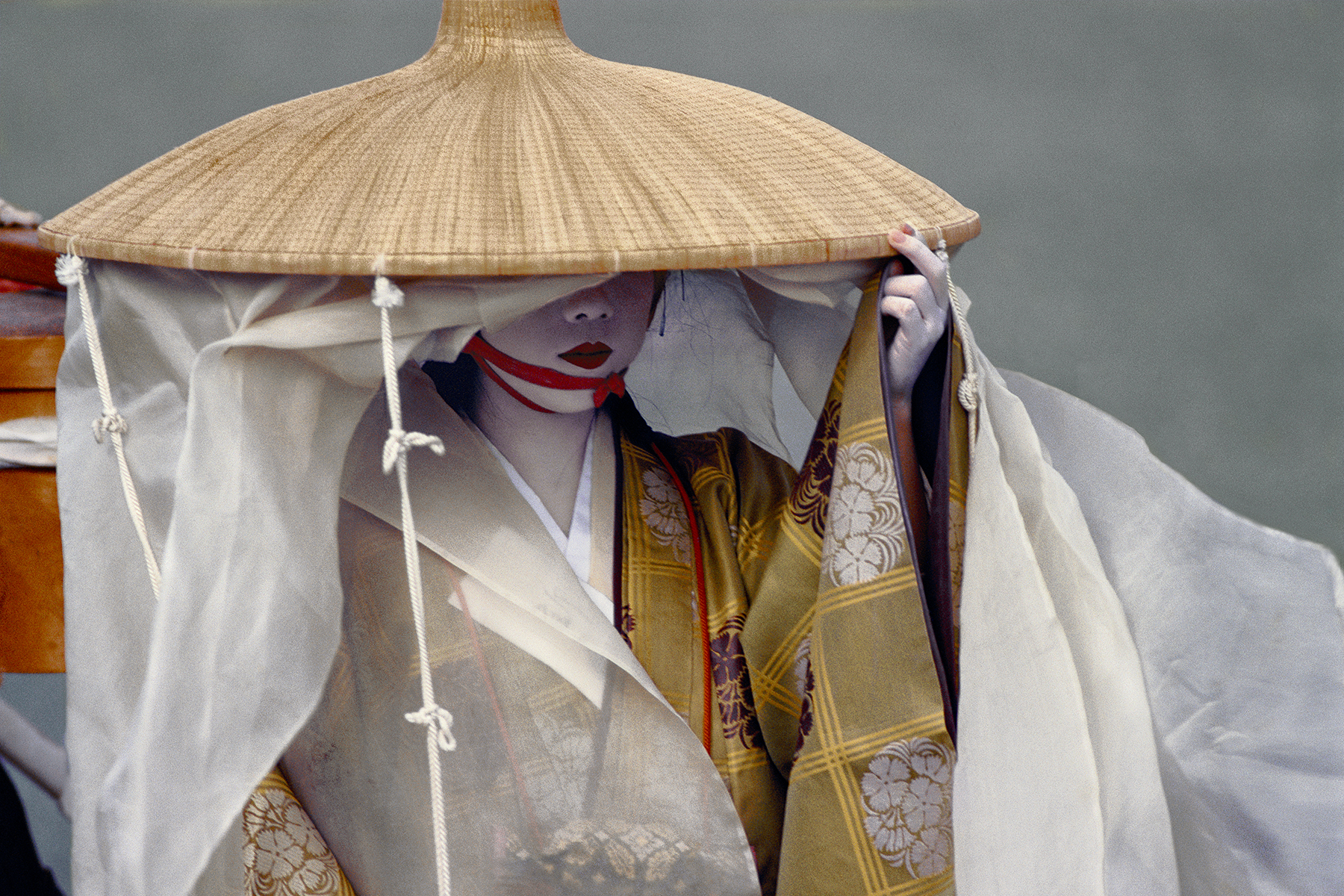
Dance of the Ages, Kyoto, 1993 | Photo by Jodi Cobb
Hidden Places
Cobb’s stories are immersive. She trims away at the outwardly visible trappings of a culture and offers up intimate glimpses of the people who make it up.
“I’m less interested in photography as a form of self-expression,” she said. “I’ve always wanted to be sort of an interpreter of the human condition.”
Cobb attributes this to her childhood growing up as an American abroad in Iran, even if she didn’t know it was shaping her at the time.
“My childhood was spent trying to understand a culture that was very foreign to me,” she said. “My talk is called Stranger in a Strange Land because that’s how I’ve felt my entire life.”
When her family moved back to the United States as she entered high school, she realized she was constantly recounting stories from her childhood spent abroad. That led her to journalism school at the University of Missouri, where she didn’t take a photography class until her final semester. She took a liking to the class, so her dad bought her a Nikon as a graduation gift. In short order, she returned to school for a master’s in photography.
As she took her first jobs out of college, Cobb dreamed of landing somewhere like Rolling Stone, which was young and culturally tuned in to her generation. National Geographic—which she respected, but described as being somewhat stodgy at the time—later assigned her a trial job in the Owens Valley of California. Her task was to capture seven photos that would be featured in someone else’s piece, but she ended up with a 30-page spread. And like that, her sprawling career was in motion.

Saudi Woman | Photo by Jodi Cobb
Going Places
Cobb has photographed everything from geishas in Japan to Bedouin women in Saudi Arabia, as well as documented the tragedy of human trafficking in one of National Geographic’s most popular online pieces ever, “21st Century Slaves,” a story that was published before human trafficking began receiving the widespread attention it does today.
Over time, Cobb found that she was particularly drawn to global social issues and cultural traditions, particularly those pertaining to women. She’s fascinated by the ways in which isolated cultures form their customs, and the ways in which we process them from the outside.
For example, the large disk-like lip plates worn by the Mursi women in Ethiopia are believed to be a tradition that has carried on since the days of slavery, when women were deliberately disfigured so as to be less attractive to slave traders. The lip plates persist, even though the reasons for the tradition have largely waned.
Cobb is particularly struck by how many cultural traditions seem to maim, bind or inhibit the movement of women in particular, citing Mursi lip plates and foot binding in China as just two examples.
“It’s only recently that there’s been this amazing cross-fertilization of cultures,” Cobb said.
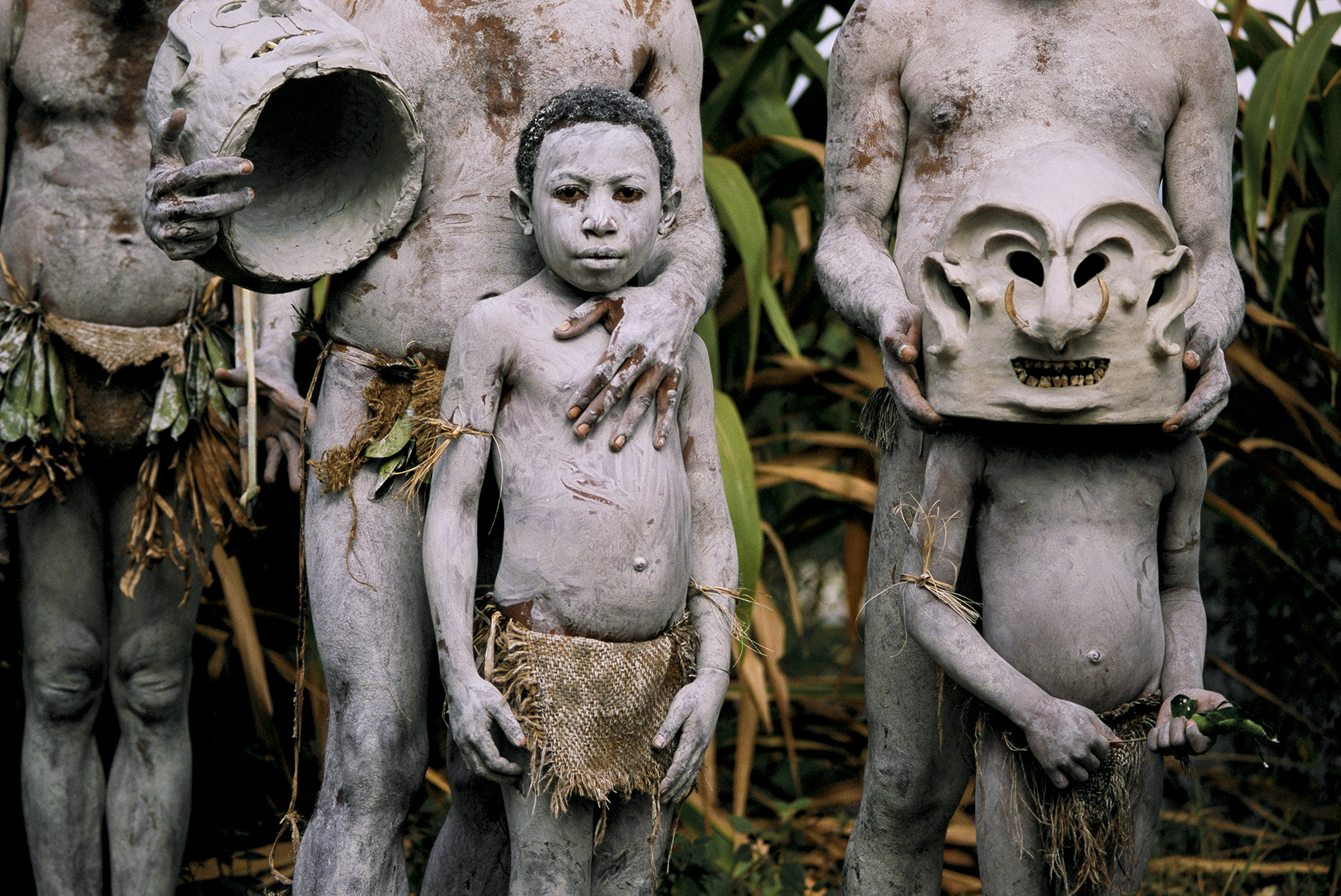
Mud Boys, Papua New Guinea, 1998 | Photo by Jodi Cobb
A Shared Language
“A good photograph is universal,” Cobb said. “The basic human instincts and passions and desires and wants and needs are the same all over the world. It startles me how alike people are.”
Her career has sent her to more than 65 countries and yielded 30 feature stories in National Geographic. She estimates that an average story, before things went digital, required about 1,000 rolls of film.
The process in the early years was to number every roll and then divide them into two packages, one with the odd numbers and one with the evens, before mailing them across the world to the National Geographic office. That way, if one shipment was to get lost or damaged, or if the plane were to go down, the surviving package would still contain a decent representation of the trip from start to finish.
That massive archive of National Geographic photos is what Cobb is currently navigating in her blacked-out apartment. Slides, transparencies, black-and-whites and more.
“I could swear I’d never been to some of these places until I saw the actual evidence!” she said of the archives. “Tastes have changed so much in photography. Some of the things not chosen at the time are now sort of fresh and interesting. Some that got picked have a dated feel.”
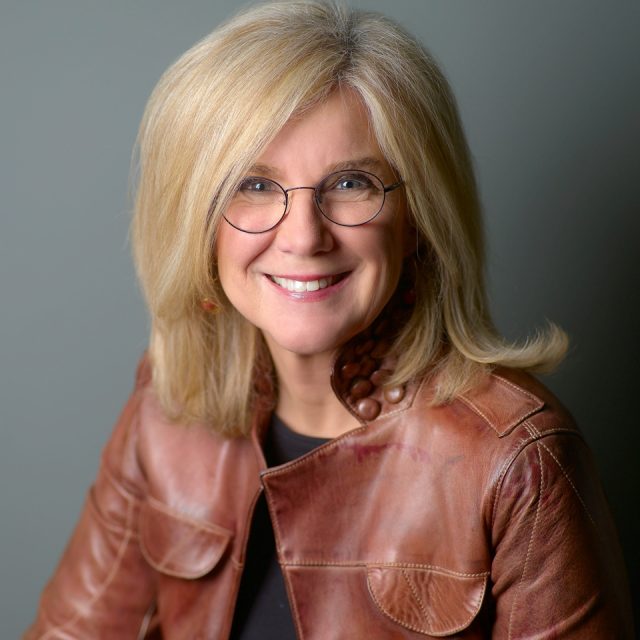
Portrait of Jodi Cobb by Rebecca Hale
Everybody’s a Photographer
Now, of course, everything is digital. Cobb herself made the transition years ago, although she says she was one of the last to switch.
“Mainly because nobody told me how much easier it was,” she said. “I saved one of my cameras from every iteration. I used Nikons my whole life, since my dad gave me one for college graduation.”
Not only has digital replaced film, but it’s also blown up the whole industry, with quality cameras now readily available on cell phones and social networks that can deliver images to the world instantaneously. It’s a far cry from mailing out the odds and evens in separate packages.
“People are telling their own stories rather than having an outsider come in,” she said simply, neither enthusiastic nor bitter about it. “What we need now is curation. All of these pictures are out there, but what’s good? And what’s real?”
Cobb’s presentation at Mondavi Center is a chance for an audience to explore four decades of world culture and human history through her lens, from long trips to corners of the world shrouded in mystery through the pitch-black editing room to the pages of National Geographic.
Jodi Cobb will present a retrospective of her work, Stranger in a Strange Land, and participate in a moderated Q&A session following her presentation on April 26, 2016, at the Mondavi Center’s Jackson Hall, located on the UC Davis campus. Tickets for the 8 p.m. presentation range from $12–$45 and can be purchased online at Mondaviarts.org.
Shane Koyczan takes poetry to a new level with his world-renowned spoken word performances. He skillfully and rhythmically addresses important social topics, such as bullying, depression, family issues and other personal and political problems, in a relatable and forward-thinking way. Koyczan will be performing three shows in the Vanderhoef Studio Theatre at the Mondavi Center at UC Davis on March 16, 17 and 18. Koyczan’s achievements include a powerful and inspirational viral video project about bullying called “To This Day” (which has over 20 million YouTube views, to date), four published books, a TED Talk, championship wins at the National Slam Poetry Championship and the Canadian Spoken Word Olympics, a highly lauded appearance at the opening ceremony for the 2010 Winter Olympics and more. You can expect his performances to be honest, compassionate and sprinkled with humor. A strong and thought-provoking anti-bullying message will be evident, as Koyczan first brings attention to these serious issues, and then suggests possible solutions for violence and bullying in schools and other social situations. The shows starts at 8 p.m. (all three evenings), and all ages are welcome to attend. Tickets are available online at Mondaviarts.org, and UC Davis students and staff may be eligible for discounted ticket prices.
Every Friday across America, those looking for coverage of the latest developments and discoveries in science turn to a decidedly less-than-cutting edge device: the radio. Now in its 25th year, Science Friday is a weekly call-in show covering science and technology heard by 1.5 million public radio listeners every week, with hundreds of thousands more tuning in via podcast.
Hosted by the inimitable Ira Flatow, Science Friday’s roster of past guests reads like a who’s who of modern mainstream science: Elon Musk, Neil Degrasse Tyson, Jane Goodall. The show is produced by Public Radio International and broadcast on more than 370 public radio stations across the United States, including Sacramento’s Capital Public Radio, which is partnering with the Mondavi Center to bring Flatow and Science Friday to the UC Davis campus Sept. 24, 2016 for a live taping of Science Friday.
Flatow has been the host of Science Friday since the program’s inception in 1991. Before that, he was the host of the Emmy-winning PBS show Newton’s Apple and a science reporter for CBS This Morning and NPR’s All Things Considered. But Flatow does more than just lend his instantly recognizable voice to the show; as founder and president of the Science Friday Initiative—the nonprofit behind both the radio show and it’s growing online presence—he’s also the driving force behind Science Friday’s long-term mission of increasing the public’s access to science and scientific information. Among other things, this means he gets to pick the locations for the handful of yearly tapings of Science Friday outside of the show’s usual New York City studio.
“About four times a year, we go on the road,” Flatow said by phone from New York, about the show’s upcoming event in Davis. “It’s very difficult to decide, a lot of people want us to come visit them so it’s a tough choice sometimes.”
During the course of a 30-minute question-and-answer session, Flatow still sounds genuinely excited about getting behind the microphone every week, even as Science Friday prepares to celebrate the program’s silver anniversary. Especially when it comes to taking Science Friday to new audiences through social media and podcasting, Flatow exudes an infectious curiosity for science and technology which has helped make the show into an institution.
Have you been out to Davis before?
We have. A few years ago we did the program from UC Davis and we took a tour of the campus and the special gardens they have there. California being such a special place, with so many natural events taking place, we thought it was time for another visit.
How is Science Friday different when you’re doing it from the road?
Our show on a normal week is from a studio where we do it all live. When we go on the road, we will pre-tape our show with a local audience of people coming in to view it live and we add extra, added attractions. We’ll do something where the audience participates and we’ll do about a 90-minute, live-audience program with audience participation. Then we’ll take the best part of that 90 minutes, cut it down and we’ll make that one hour of our Friday show. For the second hour, we’ll go to KQED in San Francisco and do a live radio show like we normally do every Friday, just from San Francisco instead of New York for that other hour.
I would imagine that having the live audience makes the show a little more interesting to put together.
It’s like old-time radio. Radio is certainly not done very much in front of a live audience anymore. It’s got elements of a stage production. It’s a feeling … as someone who’s been in front of audiences, having worked in lots of television and in radio and on stage, when we have an audience live, it’s such a different kind of vibe in the room. You always hear actors talking about doing theater and how much they can feel the audience there with them, and that’s very much true when I’m sitting on stage with my guests and there’s 1000 people out there. You can feel them there, they laugh, they react, they applaud. So I really love that feeling of being with the live crowd. It’s very organic.
You’ve been doing Science Friday for 25 years. What’s changed over the years?
When we first started 25 years ago, first of all, there was really no internet. I mean, there was an internet but there was no world wide web, there was no web browsing or anything like that. In fact, we did a show in 1993 called “What’s This Thing Called the Internet?” and we actually broadcast it on the internet. We did the program from New York and sent it out to Xerox PARC in Palo Alto. They digitized and sent it out on the internet for those few people in laboratories that could listen to it in those days.
We were the first show to podcast on public radio. We were basically the first national show to ever be carried on the internet. We’re a science show, so we figure that because we report on cutting-edge news, we should do cutting-edge things. Whenever there’s an opportunity to do something new, like social media, we do that. We also were in a virtual reality called Second Life. I’m not sure if you’re familiar with that?
Definitely.
We had a whole presence in Second Life. We broadcast a show in Second Life, and we had all these avatars that would come in their garb and sit in a circular, made-up virtual reality place in Second Life and actually ask questions. Then we moved to Facebook; we have Twitter. We have, if not the largest, one of the largest social media communities of any public radio show.
Has that been a challenge for you, to stay on the leading edge of all these new social media technologies?
Well I have a staff that does that now [laughs]. But in the early days, I helped write HTML code for our website. So did our director, Charles Bergquist; he actually created our first, very crude website. But now we have dedicated people working on it. We have a couple of social media people who are Tweeting and Facebooking and keeping our social media efforts going all day long. If you join up and follow us on Twitter or Facebook, you’ll see new things happening almost every minute, new content.
Is it hard, especially on social media, to distill some of the complicated subject matter that you cover on Science Friday?
It’s a challenge, but I’ve been in this business of science reporting for over 40 years. And I’ve worked at all the media: I’ve worked in radio, TV, and online. It is a challenge, and I enjoy the challenge, of finding ways to describe in layman’s terms some of the complex ideas that we deal with sometimes. And It’s really a lot of fun to do that, to find a way to do that, finding ways to do that and finding experts who are skilled in boiling down concepts. What’s very surprising, we have social media running while we’re on the air—we’re Tweeting at the same time the program is going—and sometimes we think that some topic we take, maybe it’s physics, maybe it’s quantum mechanics, we think that we’re getting too much into the weeds on some of these things and getting into so much detail. But it’s amazing to see the spike in the audience. You can literally, in real-time, see the spike in the social media audience that’s eating this stuff up. They love that kind of detail. They love to hear about how the world works and the more detail we can give them, the more they love it. We realize that not everybody is a geek and not everybody is into social media as much as some of these people, so we try to find a balance.
Do you find that, in general, people are more interested in or knowledgeable about science now than they were maybe 30 years ago?
That’s a good question. I think it’s a myth that the public doesn’t like science. I think it’s true that they don’t understand how science really works, they don’t understand the process. They don’t understand that science is a method that’s built on failure, that there are more failures than there are successes … They’ve probably never seen a scientist their whole life, never met one. They don’t know what scientists are like. They have an idea that science is this giant book of facts that sits on your desk and that you look it up and get an answer to it, when actually it’s a process; it changes all the time, what we know, and knowledge is obsolete after a while.
So, they’re not quite sure how science works and what scientists do, but they love to talk about it. They love to hear about it. When you can give it to them in a way that they understand it, and understand the implications of it, they love to discuss it. Because really, science is talking about the big issues in our lives. Science is talking about the same things that theologians and philosophers have been talking about for centuries and that is where did we come from and where are we going? And science has a way of using data, experimentation and critical thinking to answer those questions.
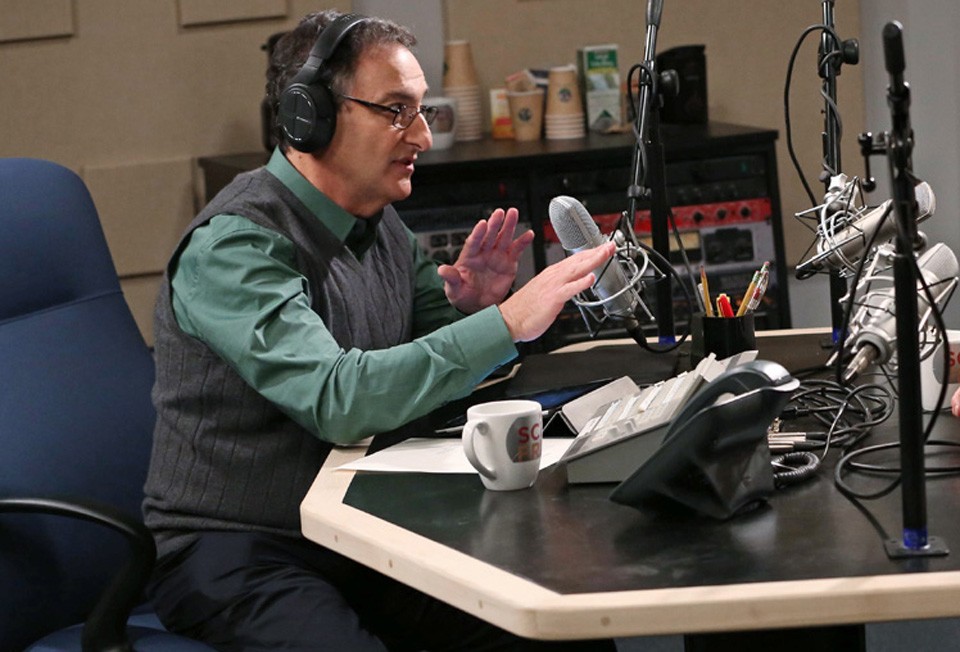
Photo by Michael Yarish
Be part of a live taping of Science Friday hosted by Ira Flatow Sept. 24, 2016 at 8 p.m. at the Mondavi Center, located at 1 Shields Ave. in Davis on the UC Davis campus. Tickets range from $12.50–$55 and can be purchased online at Mondaviarts.org. Learn more about Science Friday and the Science Friday Initiative at Sciencefriday.com.
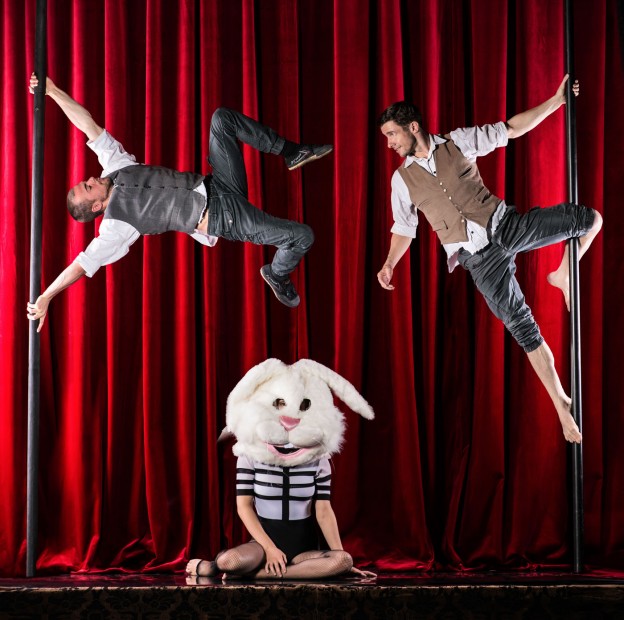
Those who’ve revelled in the spectacle that is Cirque Du Soleil should find ample reward in Circa, born more than 10 years ago in Australia, which incorporates difficult yet compelling circus acts like trapeze and Chinese pole exercises with reckless aplomb. And while the music is not your standard show fare—expect electronica, cheeky ballads and even show tunes—the odd musical choices don’t seem so strange when paired with talented performers and acrobatic feats. Those who get depressed watching others literally fold their bodies in half and contort into forms never imaginable in this lifetime should realize these exhibitionists have worked for countless years to hone their skills. Surfing the Internet and staring blankly at the clock at your mundane job doesn’t count, OK? We love our readers but want to be realistic. Not even our talented editor or our classless freelancers could do what the Aussies can. Experience a once-in-a-lifetime thrill and make plans well in advance as these dates are expected to sell capacity numbers. Odds are most have never seen some of the many tricks they’ll see and, more importantly, everyone has a chance to show their partner a good time that both parties will enjoy. Winner winner … Vegemite sandwich dinner. Go to Mondaviarts.org for tickets.
Arguably Berlin’s greatest export, organist Cameron Carpenter is on a U.S. tour with his International Touring Organ. The fully mobile and $1.2 million dollar instrument is quite an amazing beast that somehow captures the spirit and essence of a stationary pipe organ yet has more bells and whistles than should be allowed. On this special occasion, the 34-year-old Carpenter will be playing a bunch of his own works—all of which he chooses and are never divulged beforehand—along with a special improvisational work to accompany The Cabinet of Dr. Caligari. For the uninitiated, Cameron is anything but a conventional player and dons a mohawk, wears fancy stage garb and plays music from memory with a gusto and fervor unheard of in today’s classical world. Check out his wonderful take on Leonard Bernstein’s “Candide” on YouTube if you need further coercing. Carpenter’s show will leave both newcomers and classical aficionados alike yearning for more. Grandiose events like this don’t come along often so be sure to send a special “thank you” message to Mondavi Center’s talent buyer after the show. Get tickets now at Mondaviarts.org and impress your peers who never do anything but stare at their phones at no-cover-charge bars.
Soul Sister
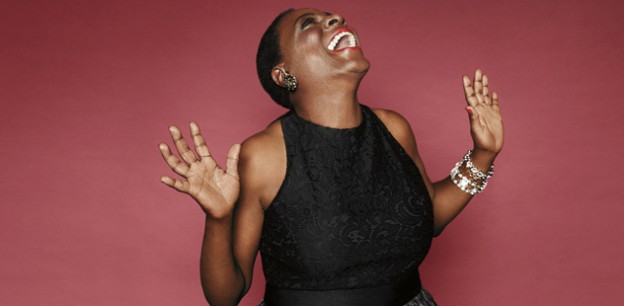
Sharon Jones is not just a soul sister. She is the soul sister of this generation. That’s it. Period. End of story. In fact I dare you to filter through the last 20 years of genuine soul music and find any woman who even comes close to matching the quantity and quality of Jones’ musical output. Then again, that’d just be a waste of your time.
And now the one and only Miss Sharon Jones—“the star of the show with the magnetic je ne sai quoi”—is once again using that very soul to push through a second trying battle with cancer. Indeed, the pancreatic cancer Jones fought and defeated through 2013 and ‘14 has returned, as she just recently announced at the 40th Annual Toronto Film Festival. But if you think for one second that’s going to stop Jones and her long time band the Dap-Kings from doing the boogaloo on their looming West Coast swing, better think again.
“It feels great to get up [onstage] knowing the chemo is in me and still having that energy. I can sing and I feel good and my fans are supporting me,” tells a confident Jones. Afterall, this is the same woman who spent years working as a corrections officer at New York City’s notorious Rikers Island jail complex, as well as an armored car guard. She doesn’t take shit from anyone, let alone cancer.
Even with an uphill battle staring her in the face, Jones has a lot to be thankful for, and she knows it. The Dap-Kings, are still the tip-tops of backing groups in contemporary soul. If you’ve ever seen them live, then you know what I’m talking about, and Jones is proud to tell it.
“This weekend past, Binky played [guitar] by himself. We always have two guitars. But Joe [Crispiano] twisted his ankle and couldn’t walk, so Binky just played the show by himself. That’s how tight we are.”
It’s not just live performances, though, that Jones can appreciate. The entire Daptone Records crew, along with The Dap-Kings themselves, is a big family, and that doesn’t go unnoticed in trying times.
“I’m grateful that I have the band to lean on,” says Jones. “I don’t have time to dwell on how I feel. The only thing I can say right now [in regards to how] the chemo is changing me is my hands; it’s really darkening my skin. But other than that I’m OK, and they’re behind me.”
Jones also happens to be a woman of great faith. Born in South Carolina, she was raised a Baptist, then began attending Pentecostal services upon moving to Brooklyn as a teen. And despite her struggles with health in recent years, that lifetime of faith has not wavered—on the contrary, really. When Jones speaks of her faith, it’s easy to derive where she summons the might of soul which overflows nightly onstage.
“I keep my faith because I always believe God is watching,” she says. “He has the doctors; he’s watching over them, he’s watching over everything. I believe he brought me this far—all this work, everything that’s happened to me—I claim that as my blessing. And so my faith hasn’t changed. My faith is gonna take care of me and see me through this, too. And you gotta believe in yourself. You gotta believe that what you pray for is gonna be accepted. I’m gonna continue to go on. No matter what’s up or down, I’m gonna deal with it.”
That same fortitude is what made Jones the subject of two-time Academy Award-winning documentarian Barbara Kopple’s most recent film, Miss Sharon Jones!, which debuted at that same Toronto Film Festival where Jones announced the return of her cancer. The film itself showcases Jones’ first battle with the disease and her continued touring throughout, and will see its U.S. premiere on Nov. 12, 2015, in New York City. Jones herself was very pleased with the final product.
“Working with them wasn’t a matter of working with them, it was just a matter of them following me around,” explains Jones. “They followed me on and off from June of ‘13 to January of ‘15.
“It’s amazing to take all that footage and bring it down to an hour and a half and tell a story. It turned out great: I cried, I laughed.”
While you’d never guess it watching her shake and shimmy through a 20-song set, Jones will turn 60 next year. But age, as with so many other things, can be a matter of perspective.
“I don’t think about age too much,” she laughs. “I start looking in the mirror, though, and I can see it creepin’ up on me. I think going through the sickness with the chemo the last couple years, that ages you a lot. I can see it put a lot of stress on me; lot of mileage on the body. But hey, 60 is just another [number]. I pray I get to see 65. I wanna reach for that.”
Any fan will second that notion, and add another 20 years atop the wish list. With an 11-song Christmas album set to drop in late-October (It’s a Holiday Soul Party), and another prospective full-length come 2016, a healthy Sharon Jones is righteously poised to add additional layers to her already bountiful discography of LPs and 45s. And one can only imagine that at this point Jones is something of a marvel to her doctors, who can’t have too many other patients that fill the role of soul queen on a nightly basis during pancreatic cancer treatment.
“They just tell me to be careful and go [with] how I feel,” she says. “It’s up to you how you feel mentally. The chemo is going to take over but that’s still a couple months ahead. The gigs gotta be paced out so I don’t overexert, but I’m quite sure everything’s gonna work.”
And with that we begin to wait for the next show, hoping for another and another and another as time goes by. But when you see Sharon at the Mondavi Center, or up at the Cascade in Redding, or anywhere else, remind yourself that this is not the path every person chooses to take when faced with a challenge. This is the path of a true entertainer. A true soul sister. Take note and appreciate. Because it doesn’t happen everyday.
“I have faith,” says Jones. “That’s all I can tell anyone. Those dates are there, and I’m gonna be there.”
You’ll have two chances to see this remarkable lady (and her remarkable backing band) in action in the Sacramento area. Sharon Jones and the Dap-Kings will rock the Mondavi Center in Davis on Oct. 30, 2015. Tickets start at $27 ($20 for students, $13.50 for under 18) and can be purchased through Mondaviarts.org. If you’re up for a bit of a drive, you could also head up to Redding on Nov. 1, 2015 to catch Sharon Jones at the Cascade Theatre. Go to Cascadetheatre.org for more details.
It’s no great secret that there are many great chefs and restaurants in the Sacramento valley and its neighboring cities. The same can be said for our amazing selection of wines that are produced, bottled and consumed within less than a 100-mile radius. This Friday event will highlight over 40 local breweries, wineries and eateries at the lovely Good Life Garden. For only $40, you will be treated to complimentary tastings and libations, as well as helping to support Chicano and Latino students in the Departments of Viticulture & Enology and Food Science & Technology at UC Davis through the Broadening Horizons program. It all takes place starting at 4 p.m. and folks will be entertained by the High Octane Latin Jazz Band while they take pictures of their food and selfies in front of local chefs and wine moguls. If you are feeling adventurous, you can venture over for the free performance by Los Hot Boxers at the Corin Courtyard and drink even more (those drinks, however, aren’t free). And if you really want to party like it’s 2015, buy a ticket for Los Lobos and Alejandro Escovedo at the Mondavi Center’s breathtaking Jackson Hall where every seat in the house is a winner. Go to Robertmondaviinstitute.ucdavis.edu and click the “Events” tab to get more info.
“I was born. When I was 23 I started telling jokes. Then I started going on television and doing films. That’s still what I am doing. The end.” Comedian, actor, writer and producer Steven Wright keeps his official bio short and sweet, much like a lot of his jokes. Known for his deadpan delivery and wry, observational humor, Wright is a walking encyclopedia of hilarious one-liners that’ll make even the grumpiest of grumps lighten up and laugh. Jokes like: “I went to a place to eat. It said ‘breakfast at any time.’ So I ordered French Toast during the Renaissance”; “I stayed up one night playing poker with Tarot cards. I got a full house and four people died”; and, “I spilled spot remover on my dog and now he’s gone,” are perfect examples of Wright’s signature style of comedic delivery. Regional fans will be excited to learn that Wright is bringing his show to UC Davis’ Mondavi Center for one night only on Thursday, Sept. 17 at 8 p.m. We highly advise getting tickets immediately at Mondaviarts.org or at the box office, as it will surely sell out. Tickets range from $20 to $40. Learn more at Stevenwright.com
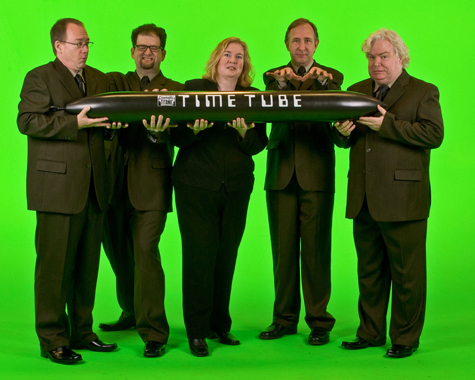
On Friday, Nov. 4, Mondavi Center in Davis will host Mystery Science Theatre 3000 live on stage. Cinematic Titanic is a movie-riffing show that features the original creators of the Peabody Award-winning cult-classic series MST3K, continuing the tradition of riffing “the unfathomable,” “the horribly great” and the just plain “cheesy” movies from the past. The crew will riff away on the 1972 film Doomsday Machine, a movie that is sure to be much more fun to watch with Cinematic Titantic’s twists. Show starts at 8 p.m. and tickets are available online at Mondaviarts.org