Full-disclosure: I hate superhero movies, so I brought my seven year old son Orson along for an expert opinion on the matter. Yes, the film is PG-13. Yes, 7 is much less than 13, but maybe it’s important in an era of pussy-grabbing presidents to take our young sons along to films that celebrate the fairer sex.
On the way to the theater, he kept telling me how excited he was to tell his friends that he was seeing his first horror movie—PG-13 movies are horror movies when you’re in second grade, and I wasn’t gonna yuck his yum, so I played along. In exchange for letting him believe he was seeing a horror movie (on a school night no less), I gave him a rundown on Hollywood’s sexism (I’m still paying off my enormously expensive education in rhetoric and film, and one day I’ll pay for his too, so I see talks like this as a buy-one-get-one-free deal), and while my parenting may be questionable enough to take my 7-year-old to a PG-13 movie and letting him believe it’s a horror movie, he’s gonna know what the fuck the Bechdel test is.
For those of you whose parents made better choices, here are the rules of the Bechdel test: the movie has to have at least two women in it, they must talk to each other and it must be about something besides a man. I’m always amazed at how ridiculously few movies even come close to passing it.

So let me start by saying that despite its relatively few critical and structural problems, this is the best superhero film I’ve seen in years. The film opens with a nod to those watching for reasons of sexual politics; the first 20 minutes are spent without a male character on the screen. It’s a complete Bechdel reversal, and a powerful statement about the intentions of the filmmakers (albeit written by two men, but directed by Patty Jenkins, best known for writing and directing the disturbingly beautiful Monster).
The film is just as nimble about fighting film conventions as it is about, um, fighting. We’re treated to scene after scene of women absolutely destroying their male counterparts in hand-to-hand combat. Shane Black once described an ass-kicking in one of his movies as being “like a sledge-hammer hitting an egg,” and that’s exactly what this is; total badassery. Part of this gender-reversal is due to the story’s roots in Greek mythology, but it has no doubt been polished by Jenkins. Women are posited as brave, virtuous and clear-minded and men are bumbling, handsome, over-sexualized and mostly dangerous to the mission.
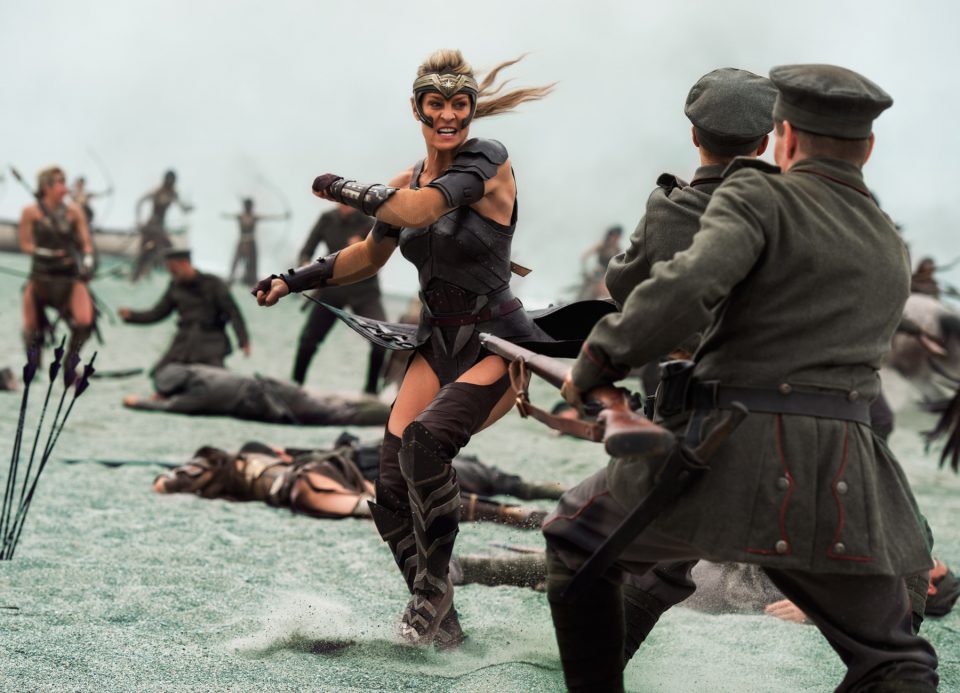
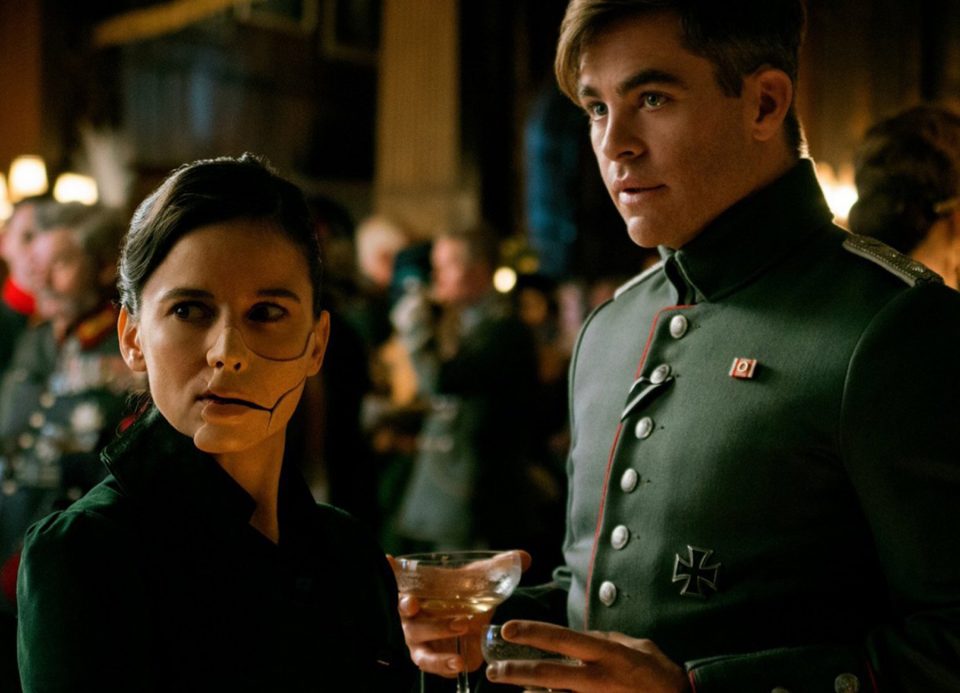
The ethos of the film is the same stuff that makes up the rest of the superhero universe (both DC and Marvel) which pits pure virtue against ultimate evil with the fate of the world hanging in the balance, but Wonder Woman complicates the simplicity of the good/evil binary with the titular character’s naiveté. She just doesn’t get why men (and she doesn’t mean mankind, she means dudes) would let themselves be manipulated by the power structure to the point of taking each other’s lives. It’s goofy at times, but it comes off as a mostly refreshing take on an anti-war movie, which is what this film is. In fact, I’d argue that more than a film highlighting feminism, this is at heart, a film that is fiercely anti-war and aggressively soft-hearted. But that’s where it ultimately falls just short. Can you have an anti-war film that accomplishes its goals by killing a whole army (literally) of WWI-era Germans? This film tries, but in the end, the logic feels cheap, and the film doesn’t make a compelling argument as to why Wonder Woman can kill in the name of condemning murder.
The film ends with a surprising twist, a third-act villain and a totally insane fight scene (Orson was alternatively covering his eyes and jumping out of his seat) and while you probably already know that Wonder Woman wins, it’s refreshing that what did it for her wasn’t her incredible brawn, or even her superior intellect, but an adherence to her virtues. As the film closes, we’re left believing in the power of love. For the record, Orson didn’t approve of the ending, but being a horror movie and all, he probably expected something different.
4.5 stars out of 5
After watching the trailer for Gold, I couldn’t wait to get to the theater. Matthew McConaughey and Edgar Ramirez seemed to have palpable on-screen chemistry, the film was directed by Stephen Gaghan (Traffic and Syriana) and written by John Zinman and Patrick Massett (known for their incredible work on Friday Night Lights)—what could go wrong?
But I couldn’t find anyone to go with me. All of my regular movie partners inexplicably said it looked terrible. “It has a lower Rotten Tomatoes score than Donald Trump’s approval rating,” one friend told me. It’s hilarious that we as a society are literally working Trump into every conversation (and I guess I’m perpetuating it now), but I knew exactly what that meant: I shouldn’t be expecting much. Low ratings. Sad.
Still I decided to Make the Movie going Experience Great (Again?) and go it alone to a film appropriately named after our new president’s favorite color. I looked around at the four other people in the theater (though it looked like a million-and-a-half people) and sat down for the ride.
The film follows slimeball conman Kenny Wells (a very bald and pudgy Matthew McConaughey, who wears a distractingly awful set of teeth) as he swindles his way into millions—or maybe billions—and then loses it all. Or does he?
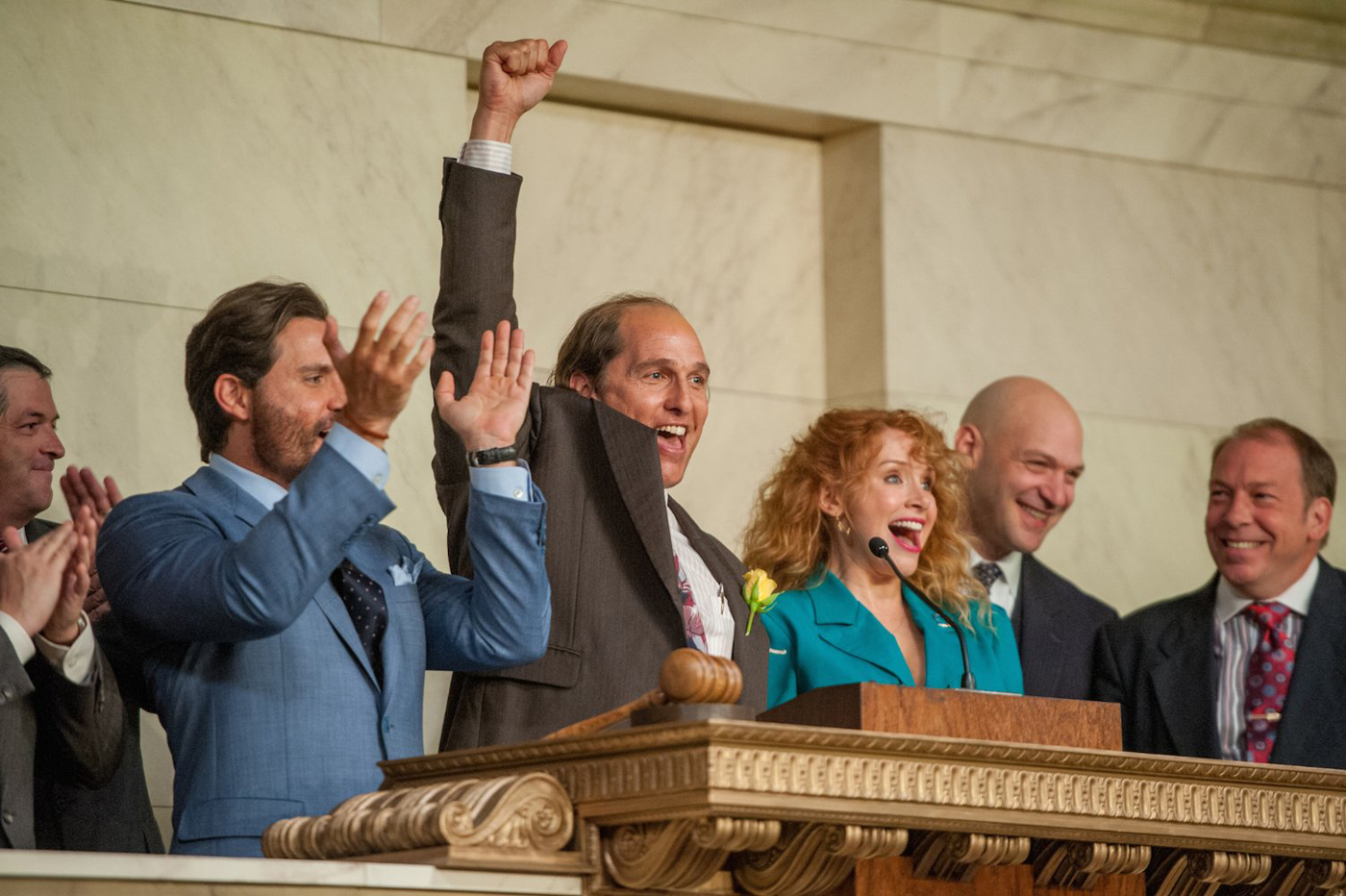
The problem with this film is that the script angles McConaughey into the kind of character no one would ever want to see succeed, and kudos to McConaughey, because his character is absolutely deplorable. So vile, in fact, that when he tastes success, it kind of feels nauseating (as a sidenote, and referencing the above, maybe this was the wrong time to make such a film—just sayin’). He cheats on his girlfriend, pawns her jewelry, swindles his business partners, lies to investors and spends an overwhelming portion of the film drunk (ahem, not that there’s anything wrong with that). The real bummer comes at the midpoint reversal, when Wells loses everything. We’re supposed to feel awful for him, and it’s just plain hard to do. What’s worse is the dizzying number of times McConaughey’s character goes from rags to riches.
After inheriting his father’s mining company, Wells squanders it, until a dream leads him to a prospect in Indonesia led by geologist friend Michael Acosta. While there, he’s worse off than when he started. Out of money, sick and low on hope, Acosta wakes Wells out of his malarial haze to announce that they’ve found gold. Not just some gold, but a lot of gold.
Acosta stays behind in Indonesia while Wells heads back to the States to take meetings on Wall Street. What follows is a second act that’s almost entirely a montage of money and bad behavior. As the money is pouring in, the film doesn’t orient itself well enough to make any of this more than just watchable. Is it a cautionary tale? Satire? A character piece? An allegory for the Trump phenomenon? Apart from being beautifully shot and incredibly well-acted, this film doesn’t do enough in the first half, so when the midpoint reversal comes, casting doubt over all of the glory, we feel less like our hero was robbed and more like a wrong was righted. This complicates the second half of the film, which follows Wells and Acosta as they struggle to get back what was never really theirs.
The film does end with a wild twist that’s actually a satisfying payoff of something that was planted much earlier, but by that time the murkiness and moral ambiguity of the rest of the film has already unravelled it beyond repair.
In all, no one is in the mood to watch a flabby white dude with a combover as he fumbles from one tone-deaf bad decision to another. Sad.
{2 Out of 5 Stars}
The Words
Rated PG-13
Writing can be a selfish practice. Writing about writing is probably even more so. In The Words, actor-turned-writer/director Brian Klugman and co-writer/director Lee Sternthal, both in their debuts as feature filmmakers, delve deep into what makes a writer tick. It’s a story within a story within a story–sort of the nesting doll equivalent of storytelling. But unlike those placid-faced novelties, The Words bears a much more troubled countenance.
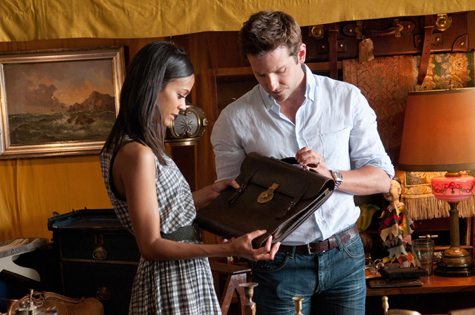
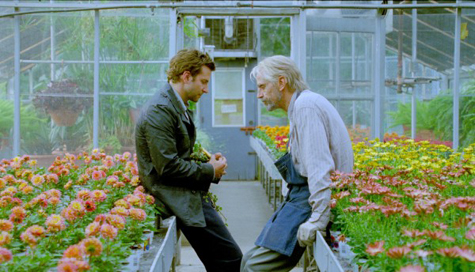
The film opens with writer Clay Hammond (Dennis Quaid) reading from his latest novel, which bears the same name as the movie, in front of a packed auditorium. This could be wishful thinking on the parts of Klugman and Sternthal, perhaps imagining that The Words would be similarly well received by real life audiences. Hammond’s story introduces us to Rory and Dora Jansen (Bradley Cooper and Zoe Saldana, respectively). Rory is a writer, too, and he’s on his way to pick up an award for his first novel, The Window Tears. However, as he and his wife pile into a limo on their way to the reception, there’s an old man (Jeremy Irons) lurking in the rain.
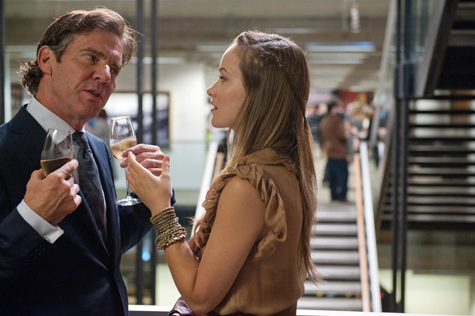
The Window Tears is a critical and commercial smash hit. The big break Rory, a struggling yet not-quite-starving artist, has always dreamed of. Unfortunately, he has a secret. While on vacation in Paris, Rory and Dora find a brief case in an antique store. Once they’re home, Rory discovers that it contains a tattered, old manuscript of a long-lost novel by an anonymous writer that was never published. Rory ends up getting the book published as his own, and the old man, whose name we never learn, reveals himself to Rory as The Window Tears’ author.
Meanwhile in Hammond’s world, he encounters a beautiful graduate student, Daniella (Olivia Wilde), during an intermission between chapters. He’s as taken with her as she is with his writing, but there’s something undeniably mysterious about her and her connection to what’s going on.
Back in the world of Hammond’s novel, the old man recounts to Rory the story behind The Window Tears, which is the kind of sprawling, tragic romance that novels are literally made of, and we are introduced to another set of characters, the old man as a young man (Ben Barnes) and his wife Celia (Nora Arnezeder).
To Klugman’s and Sternthal’s credits, the three layers of the story are clearly defined. The Words never falls into chaos, but the connection between the three couples isn’t drawn in an obvious way. In each case, we have a writer at different stages: the young man, just discovering his talents; Rory at the beginning of his career; and Hammond, middle-aged, confident and established. Irons as the old man, looking worn and grizzled, perhaps serves as the specter of death both in terms of being toward the end of his life, and also in literary terms since after he penned the novel Rory eventually stole, the old man never wrote again.
Though the male characters could be seen as archetypal forms, the female roles feel shallow. Saldana and Arnezeder are strong, painting endearing and sympathetic portraits of supportive wives, but they really don’t have much to work with. Wilde’s Daniella is presented as the most interesting. She’s guileful and captivating, shown off beautifully in expressive and intimate close-ups. But in the end, Daniella comes off written in as little more than a plot device.
Unlike nesting dolls, the storylines contained within The Words don’t fit together very neatly. As Hammonds tells Daniella, the worlds of reality and fiction may get very close to one another, but they never touch. And so, the frayed threads of these three stories are never tied together in a neat bow. However, The Words is still a literate, neatly executed and at times thought-provoking romance worthy of over-intellectualized discussion over coffee after it’s ended.
The Hunger Games
PG-13
Words by Mandy Johnston
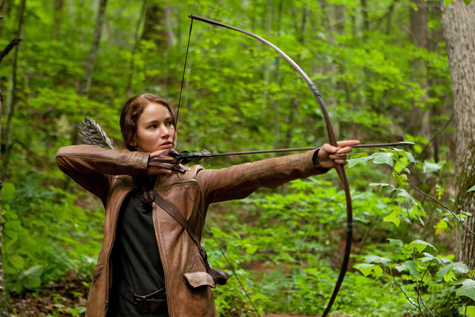
The Hunger Games, the adaptation of the first book in the wildly successful trilogy by Suzanne Collins, centers on Katniss Everdeen (Jennifer Lawrence), a tough, bow-hunting coal miner’s daughter in a not-so-distant futuristic dystopian society wherein the country is now known as Panem and has been divvied up into 12 districts, ruled by a president at the Capitol. Each year, to remind residents of the implications of an attempted uprising against the government years ago, each district must submit one young male and female as “tributes” to the Hunger Games, where they will fight to the death until only one remains.
I can’t recall a movie that had me so emotionally invested within the first 10 minutes. Lawrence skillfully conveys the strength, courage and heart of a 16-year-old chosen to kill or be killed for the elites’ entertainment and a false promise of honor. Elements of Ree, the character she embodied in 2010’s Winter’s Bone, show themselves here and there, but lend such depth and emotion as a steadfast character with a commitment to her fellow tributes–at least, the ones who aren’t out to kill her first.
Early into the games, President Snow (Donald Sutherland) explains to Head Gamemaker Seneca Crane (Wes Bentley), in only the way a benevolent tyrant can, why the games must have a “winner.” Otherwise, he poses, why wouldn’t they just round up 24 kids and execute them every year to remind the poor fuckers not to attempt an uprising again? “Hope,” he says. Everybody needs hope. Fear is dangerous, he offers; but too much hope is much more so.
There is realism to this futuristic movie that makes the balancing between fear and hope almost palpable. Settings are downright recognizable–unnervingly so in the live studio audience fawning over Caesar Flickerman’s (Stanley Tucci) Seacrestian hosting of the games from his comfortable seat. Everdeen and her male counterpart Peeta Mellark’s (Josh Hutcherson) support team at the Capitol, including former District 12 winner and their drunk mentor Haymitch Abernathy (Woody Harrelson), wildly fashionable PR pro Effie Trinket (Elizabeth Banks) and Cinna (Lenny Kravitz), their stylist who quickly becomes Everdeen’s number-one supporter, all too reveal moments of hope for Everdeen’s triumph while fearing the implications that might bring.
Would this be a YA novel adaptation without a little romance? It is what the audience wants, right? But there is no superfluous or cheesy romance here. A romance cultivated and created for survival has none of those groan-inducing elements. There is but a smidgen of drama between Everdeen, Mellark and Everdeen’s guy pal back home Gale Hawthorne (Liam Hemsworth) to add depth to an already heavy story, but this is not the doomed young-love triangle the Lionsgate media juggernaut is parading all over town.
Come to think of it, there is nothing cheesy about this movie. From the costumes to the scenery, the music to the dialogue, the movie itself is good, save for a few blips in the storyline. But at the end, as I sat wondering just how many in our packed theater read the books prior to seeing the movie, I had to ask myself: how many of us knew what we were in for and flocked to the theaters anyway? In the highly charged scene where all 24 “tributes” are standing on their pedestals, waiting through the unbelievably tenuous countdown from 50 until the “Games” are on, the realization comes: holy fucking shit I’m about to watch kids fight to the death. And you do. In all its blurry, gritty, heinous glory, masses across the country are treated to brief, visceral scenes of preteens murdered at the hands of bigger, stronger, trained teenage killers from the wealthier districts whose wards never lose. Whether you read the books or not, you knew it was coming, from the second Everdeen volunteered 10 minutes into the movie. Did anyone else have a growing sickening pit in their stomach like me, or have we just become desensitized to the thoughts and images of 10-year-olds shot through the heart with sharpened spears?
My hope is that more than a few moviegoers will question just how close to home this spectator sport parable is playing out while we jockey for seats and oversized popcorn at our local Cineplex. My fear is for this culture that will pack into theaters and shatter box office records previously set by pirates and vampires to watch a movie that is, in essence, kids killing each other.
The Adjustment Bureau
Is there a greater power steering this crazy ship called life? If there is, most times it seems like He/She is asleep at the wheel, or at the very least well above the legal limit. And if destiny does rule all, then what about free choice? Did I order that Big Mac because I chose to do so, or was my desire to nosh on said treat at 2 a.m. just a cruel machination of Fate? Common questions of life and humankind’s place in the world are tackled in the George Nolfi film The Adjustment Bureau, based on a short story by science fiction master Philip K. Dick.
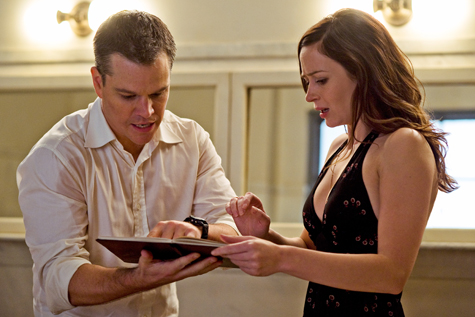
The audience is thrust into a New York State Senate race with Matt Damon playing David Norris, a sort of maverick (for lack of a better term) democrat congressman from Brooklyn. He’s young, brash and shoots from the hip, but for real and not in the bullshit way politicians usually do. At 24, he became the youngest congressman in U.S. history, and now he stands ready to fight the good fight in the Senate. However, his bravado works against him, and when a New York City tabloid runs a picture from an old prank he pulled in college, Norris’ double-digit lead takes a nosedive on Election Night. He ends up getting trounced.
But, all is not lost for young Norris. As he readies his conciliatory speech in a men’s room at a fancy New York City hotel, he encounters Elise Sellas (Emily Blunt), a beautiful and impulsive dancer who captures Norris’ heart as if she was fated to do so. What seems like a simple love story becomes more complicated, however, as a clandestine agency seems to be tracking Norris’ every move. When one of the agents makes a critical misstep, Norris steals a peek behind a curtain “he wasn’t supposed to know existed.” The agency works for a Chairman–what humans understand as God or one of its many incarnations–and makes sure His plans are followed through. Now that Norris knows this, he can go about his life, but he can never tell anyone or he’ll have his mind erased–oh yeah, and this plan doesn’t include Sellas, so he better put it back in his pants.
Norris just can’t shake that mysterious woman from his mind, however. What follows is a sort of sci-fi/fantasy-tinged romance as our two lovers try to overcome the many obstacles fate puts in their way to be with one another. It’s really a sweet story at its heart, but The Adjustment Bureau seems to suffer from an identity crisis.
The Adjustment Bureau does a great job setting the scene. Cameos from New York City Mayor Mike Bloomberg and The Daily Show host Jon Stewart create a solid, real world foundation for what becomes an otherworldly story. A smart move, considering Nolfi and company are asking a lot in the way of suspending your disbelief. Using doors, the agents can seemingly fold space and travel very quickly. They can also manipulate people’s reasoning and alter the course of events if they deviate too far from the plan. This is all well and good, but the script seems to linger too much on explaining these tricks of the trade (without really explaining them) and cataloging the agents’ limitations, which only dilutes the plot’s central focus, the serendipitous romance between Norris and Sellas. When Blunt and Damon are charged with intimate scenes, they flourish, but much like their stop and start courtship, the film often interrupts this budding relationship with more vaguely worded exposition about plans and agent strategizing.
What we have here is a sort of Frankenstein’s monster that harks back to films like the romantic comedy Serendipity, quirky sci-fi romance Eternal Sunshine of the Spotless Mind and the philosophy-drenched action film The Matrix. But The Adjustment Bureau isn’t as successful as any of those mentioned. It is, however, a light-hearted film that’s perhaps trying too hard to make a point. You can’t really blame it for trying.