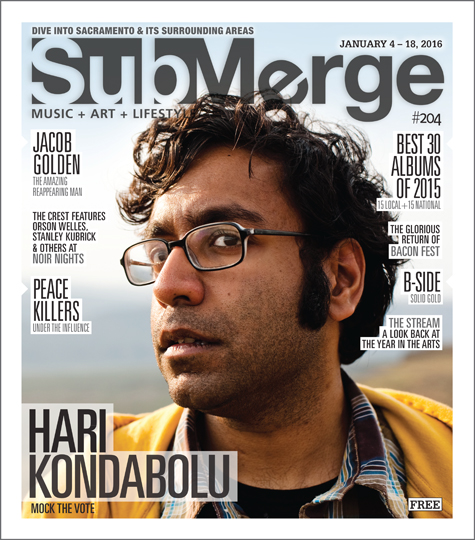
In most circumstances, political dysfunction lends itself beautifully to the joke-writing comedian. It’s a plucking ground for material that elicits strong feelings among a large audience, so it’s ripe for comedic dissection. But for Hari Kondabolu, in this particular moment, it’s almost too much to keep up with.
He’s recording his second live album less than a month from now in Portland and would like to incorporate the election heavily into his set, but as he irons out his material and prepares it for the road, that cast of characters just keeps on making headlines. From Donald Trump riffing jovially about Mexicans and Muslims to Jeb Bush watching his pile of money disappear alongside his poll numbers, the whole thing is still so fluid.
“This election is bringing things to the surface constantly because of the extremes,” Kondabolu told me by phone. “By the time [the album] gets released, hopefully in the spring, I don’t know who’s going to be relevant still. I want to write stuff that’s not going to disappear with the election cycle while still covering the now.”
The clown car remains full, and it’s hard to know exactly where it’s headed. Kondabolu is doing a short tour leading up to the album recording so he can feel things out in front of a few live audiences before he presses record. Two of those shows will be at the Sacramento Comedy Spot on Jan. 23, 2016.
“I’m hoping by Sacramento I’ll just be running the set,” he said. “If I recorded it in Sacramento, it would still be a solid album. I want to give them a great show that has a few moments that are flexible. I think that’s kind of fun.”
While the election itself will surely be a part of Kondabolu’s act, his real interest is in the broad issues that surround the political jockeying.
“Politics is like the game,” he said. “It’s the sport. The things I care about are the bigger issues like racism, immigration, homophobia, sexism, transphobia.”
Immediately prior to becoming a full-time comedian, Kondabolu was an organizer for immigrant rights in Seattle. He played open mics and clubs at night because he enjoyed it, but organizing was the primary recipient of his energy. It was his job.
But over time, Kondabolu’s comedy caught momentum in Seattle. He went from an “unknown open miker to the hottest comic in the city,” according to a 2007 Seattle Times article. He was invited to perform at HBO’s prestigious U.S. Comedy Arts Festival and appeared on Jimmy Kimmel Live! shortly thereafter. With that head of steam, he’s been a rising comic ever since, with a following far beyond his starting point in the Pacific Northwest.
But in spite of his pivot to comedy, Kondabolu the immigrant rights organizer is still very much the man on stage.
“I’m doing an elevated version of myself,” he said. “I’m a very political person and I can’t not view the world that way. My lens is a politicized, radicalized lens.”
And yet, social change is not Kondabolu’s priority. He’s here to make people laugh, and he does so by picking apart the things he knows and cares about. If people are forced to think about something important in the process, he’s cool with that. But it’ll never be the impetus for writing the joke.
“It’s dangerous to have that mindset while you’re writing,” he said. “There’s an ego that comes with being a performer. If you add that self-importance to it, it’s going to affect the quality of work and it won’t let you write from an honest place.”
I asked him what satisfies him most on a purely human level: Pushing for social change or making people laugh? His answer was swift and clear. He wants to make people laugh.
“I’ve had audiences that weren’t laughing, but they’d come up to me after and say how important the work is that I do,” he said. “That doesn’t make me feel good! I’m a comedian and I love and respect the art form. I could have become a lecturer or done something else!”
My first exposure to Kondabolu’s comedy was a YouTube video tweeted by journalist Jay Caspian Kang, whom I learned during my interview was a classmate of Kondabolu at Bowdoin College in Maine.
The video was a two-and-a-half minute clip about people who threaten to move to Canada in the wake of unfavorable political situations.
“Man, if a Republican president wins, I’m moving to Canada,” Kondabolu says before pausing. “You’re not fucking moving to Canada! I’ve heard this shit before. I hate to break this to you, but Canada doesn’t have a special visa for American liberal cowards. That’s not how the immigration system works. What, you think you’re gonna get in on refugee status?” And so on.
I saw that video about a year ago and followed Kondabolu on Twitter that day. Over the ensuing year, the issue of political correctness edged its way to the front of national conversation, mostly as it relates to over-sensitivity in college students.
A recent cover story in The Atlantic carried the following subject line: “In the name of emotional well-being, college students are increasingly demanding protection from words and ideas they don’t like. Here’s why that’s disastrous for education—and mental health.”
An accompanying article explored why some prominent comics are choosing not to play college campuses for that very reason. The article describes the annual National Association for Campus Activities convention, in which comedians gather to audition for lucrative college gigs. Playing it safe is the name of the game, because NACA is looking for comics whose sets won’t “trigger or upset or mildly trouble a single student.”
As a former organizer whose politics are weaved into in the DNA of his comedy, what does Kondabolu think of comics like Bill Maher and Jerry Seinfeld avoiding college campuses because the kids allegedly can’t take a joke?
“That’s what old people sound like,” he said. “Your job is to reach people. If you’re not able to make [young people] laugh and find things that can have them thinking, why are you relevant?”
Kondabolu contrasted those established comedians with the late George Carlin, who he said remained culturally interesting and challenging across demographics all the way up to his death. He says it’s lazy to simply write off a whole generation as sensitive babies.
When Kondabolu plays colleges, he’s typically invited through a back door by a professor or a social/political student group rather than the folks in charge of campus activities. He also resists folks who have held him up as an example of how political correctness can coexist with stand-up comedy.
“I’m not politically correct,” he said. “Maybe you’re not offended because you agree with me, but that doesn’t mean I’m not offensive. People walk out of my shows and they’re not walking out because I’m ‘politically correct.’”
Kondabolu, who grew up in New York the son of Indian immigrants, says that what some people like to call political correctness might really just be “well thought out progressive opinions.”
Donald Trump has built a massive lead over his fellow Republican candidates by denouncing that very political correctness. Meanwhile, Kondabolu continues to write jokes and refine his act with one eye on the screen as his album-recording show inches closer. Let’s see if anything fun happens between now and his sets in Sacramento.
Catch Hari Kondabolu Jan. 23, 2016 at the Sacramento Comedy Spot, located at 1050 20th St. Shows are at 8 p.m. and 10 p.m. and tickets are $15. For tickets and more info, check out Saccomedyspot.com.
To Err is Human
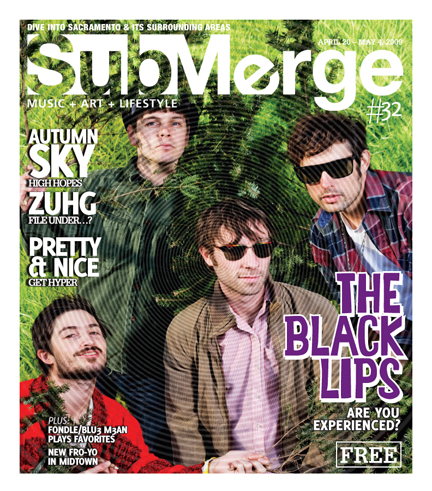
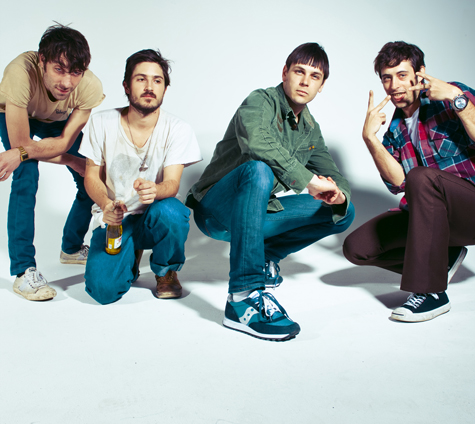
The Black Lips are a band with dirt under their fingernails—amongst other things. Hailing from Atlanta, Ga., the group has become as known for its music as it has for its penchant for nudity, homoeroticism and bodily fluids. But what’s rock ‘n’ roll if it’s not offensive?
No strangers to controversy, The Black Lips have already had an interesting 2009, even by their standards. In January, while the band was touring through India, their onstage hedonism raised the ire of concert promoters during a show in Chennai. The audience cheered as pants were dropped and lips were locked, but conservative Indian authorities were not as amused. After nearly losing their passports, The Black Lips fled the country in order to avoid persecution.
“It’s a tough country to play,” opines Jared Swilley, The Black Lips’ bassist/vocalist. “It’s not really primed for punk bands to go there; it’s just not really ready.”
The debacle in Chennai occurred a short time before the release of the band’s fifth studio album, 200 Million Thousand (Vice). Its 15 reverb-drenched tracks conjure an uneasy feeling of nostalgia: though songs such as “Starting Over” and “Old Man” borrow from the idyllic sounds of early rock ‘n’ roll and doo-wop, there is a sinister undercurrent, whether it’s the grotesque imagery of lyrics of the former such as, “My wounds won’t stop oozing“; or the funeral march-like verses of the latter that segue into an eerily dulcet chorus. 200 Million Thousand carries a blend of familiarity and creepiness that may be found in an old, water-damaged sepia-toned photo album.
Submerge spoke with Swilley as he and the band were “just cruisin’ the highway” between Costa Mesa and San Diego. Swilley voiced his opinions on topics ranging from digital recordings to his bizarre relationship with Berlin-based garage rocker King Khan, to fearful Americans. Be careful, because this might get messy.
You’ve had a pretty busy year so far. I wanted to talk about the new album a bit. It just came out in February. I read that it was recorded to vinyl first and then to CD. Why did you take that approach?
Vinyl always sounds the best. CDs are cheap, and they’re poor quality. It affects the music, because we record everything in analog. It’s a warmer sound. We had a lacquer made first and then mastered it to CD off of that. It’s just more human—just realer. Digital bytes and ones-and-zeros”¦it’s too robotic.
For your music in particular, it does seem to have a throwback element.
That’s always how I’ve liked music. All my favorite records—I mean, I think the apex of recording techniques in production was reached in the early ’60s. They had all the best machines. They were putting the mics in all the right places and using the right reverb and echo. It just sounded really good. Even if you’re not doing that kind of music, I think that way of recording is the best. When they started letting the robots take over, it just lost that emotion. I love hearing the little mistakes. I love hearing the pops and clicks. There’s something that’s so soulless about recording onto something like ProTools or Auto-Tuneing a voice and punching in. When you do it the way that we do it, you all have to do it the same way. You all have to get a good take. If there’s a fuckup, you either leave it in or do it again. It’s more passionate and realer. All that other stuff is fake. Someone could invent a robot to make music, but it couldn’t recreate what a human being does. I like even all those old Sun records. They were recording everything under one microphone with a full band and doing everything live. If the drums were too loud, they’d just move the drums further away from the mic, instead of just adding more microphones. I love that minimalist approach.
I’d also read that you’d sampled the first-ever recording for a song on the record.
Yeah, this guy, I forgot what his name was”¦ Edouard-Leon Scott de Martinville. Thomas Edison tried to take credit for the first recording, and that’s very typical for Americans to try to steal someone else’s thunder, but it was actually a Frenchy who did it. We took the oldest-known recording and mixed it with ours so it’s kind of like a séance, like communicating with the dead.
I thought that song was very haunting. Was it the Edison thing that made you want to sample it, or was it something you heard that you thought fit well with the song?
Just because it was spooky, and it was public domain. But it sounded cool. It just worked. Cole [Alexander, vocals/guitar] really wanted to do that. It was exciting, because we turned on the news that day and instead of talking about Obama’s dog or what Michelle is wearing, they were talking about the first-ever recording.
You were working on an EP with King Khan & BBQ Show under the name The Almighty Defenders. Do you know when that’s coming out?
I’m waiting for those motherfuckers to call me. We’re supposed to figure out what label to put it on. They need to give me a call so we can figure out what we’re going to do. We played one show as the Almighty Defenders in Berlin. We’re doing a show in June in Toronto, and hopefully some more in the fall. It’s kind of gospel-influenced, but it’s more evil gospel. It doesn’t have anything to do with God, unless we’re talking about beating him up.
Do you think you could take Him in a fight?
Yeah. Have you ever tried to punch a shadow or an imaginary thought?
I read the blog post you’d written about meeting King Khan. How much of that was reality and how much legend?
It was actually way rougher in real life. We hated him when we first met him. We thought he was the worst. He hitchhiked to our show and immediately introduced himself and went back stage and just sat down. He helped himself to a bunch of our food and beer. It was one of those things where he just decided he was going to be friends with us, but we really didn’t like him. It was our first time in Germany, and I was like, who the fuck is this guy? He just kept saying embarrassing things, and he peed on our merch. He peed in this bottle and started spraying it on these German kids”¦He was breaking bottles around the stage and I fell on it and cut my hand, and he drank my blood”¦ It was a mess. After the show, he came over to our place and started making omelets all night and talking really loud.
Were the omelets any good?
I didn’t eat it. I was just trying to lay down and just telling him to shut up. I couldn’t stand him. And now we’re best friends.
So you guys are actually kindred spirits in many ways.
One time, he sat me down—and I was checking our Myspace at his house—and he made me put him in the list of band members. He’s not very modest.
You mentioned him urinating on the merch and stuff like that. Given antics your band sometimes engages in on stage, was that sort of a taste of your own medicine?
I guess there was a little bit of karma. But I think that’s disgusting, you know? It’s not good for anyone. It was his interpretation of what he thought we would like, but we didn’t like it.
You recorded that EP after the incident in India. Did any of that play into the songs you were writing?
Kind of. It was an outlet for us, because it was a really stressful situation. It was a major bummer. It was kind of our release to get over that. It was therapeutic. It was good medicine, and we’d been wanting to record songs like that for a long time.
A few years ago, you played a show in Palestine, on the street pretty much, for Palestinian kids. What was that experience like?
It was weird. I was nervous to go. The day before that, the guy who was filming us while we were there was shot by the Israeli police with a rubber bullet. He was filming a Palestinian protest and he got tear-gassed and got a bullet in his gut. I was nervous to go, because we were in front of a mosque, and I thought people weren’t going to like a bunch of Americans setting up and playing some rock ‘n’ roll music there, but the kids really liked it. The kids were happy and dancing. Their parents invited us to this shop near there and made us tea and gave us a picture of Saddam Hussein shaking hands with Yasser Arafat. It was pretty cool. I was nervous too, because in Gaza at the time we were there, that’s when they were having the civil war between Hamas and Fatah. But it turned out good. I was happy with it. You get these misconceptions in the media that it’s this crazy place where all the Muslims want to kill us; I didn’t see any of that at all. I didn’t see any anger at all.
The Black Lips seem to venture places where other bands maybe fear to tread. Does that open your eyes up to a lot of things?
Yeah, you definitely see a different side of it. You get away with a lot traveling as musicians, because people know you’re not an average tourist or some weirdo with a fanny pack. You definitely get to see a different side of it. Americans are afraid of way too much shit. Most Americans are cowards. A lot of people think French people are mean and really hate us and stuff like that. I love France. They were always really nice to us, and the girls rule. Just things like that. My mom will say things like, “I don’t like French people,” but it’s like what does she know? When has she ever been to France?