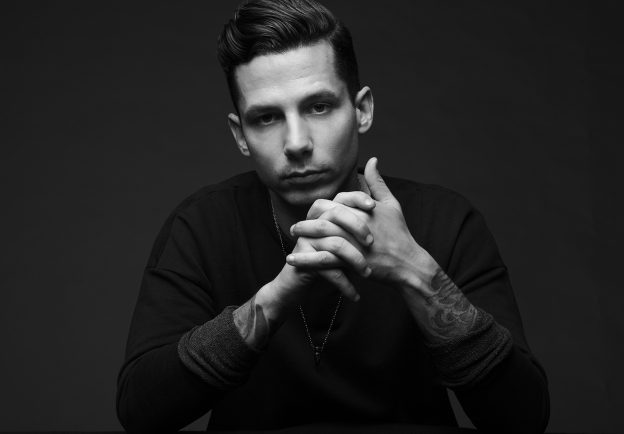
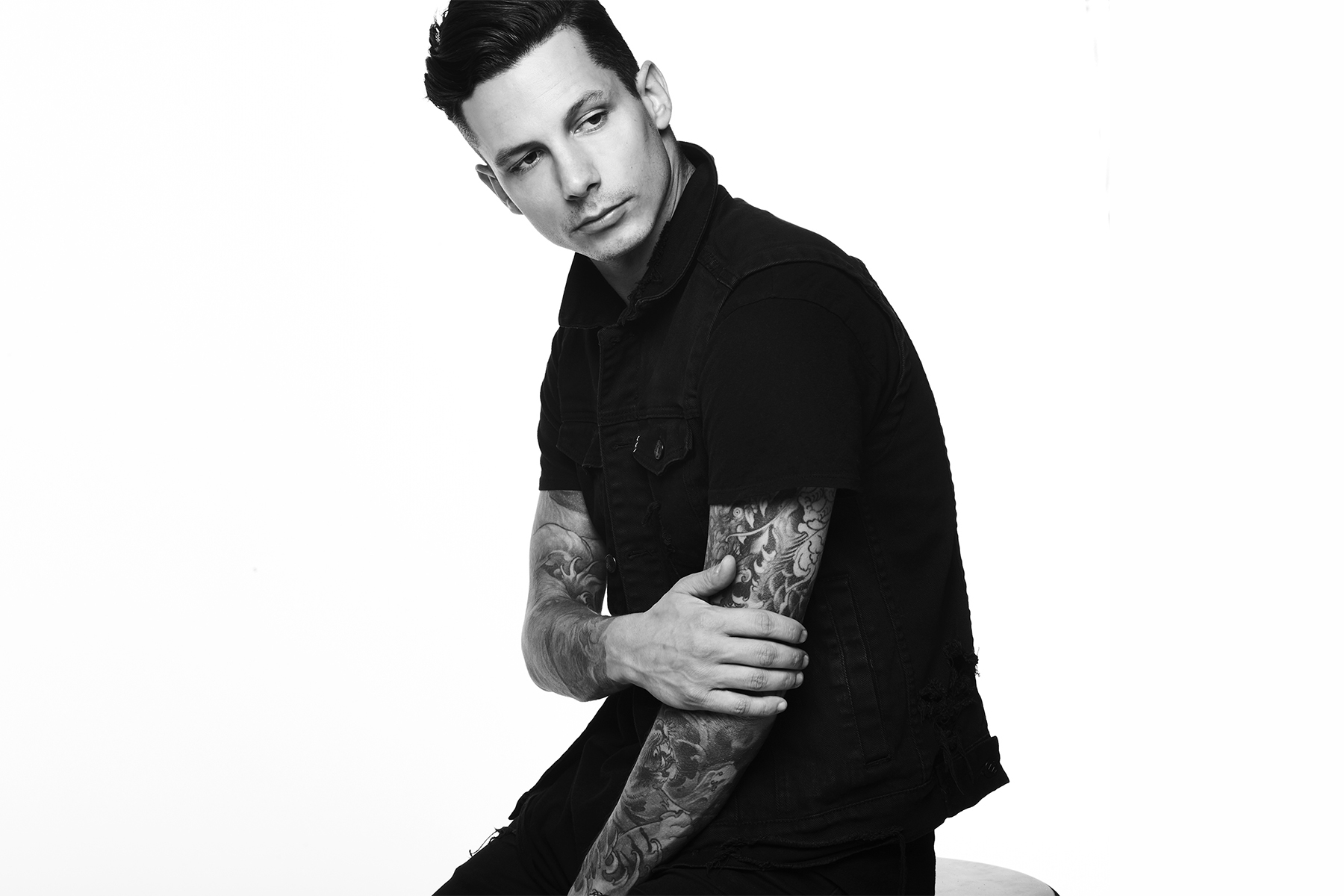
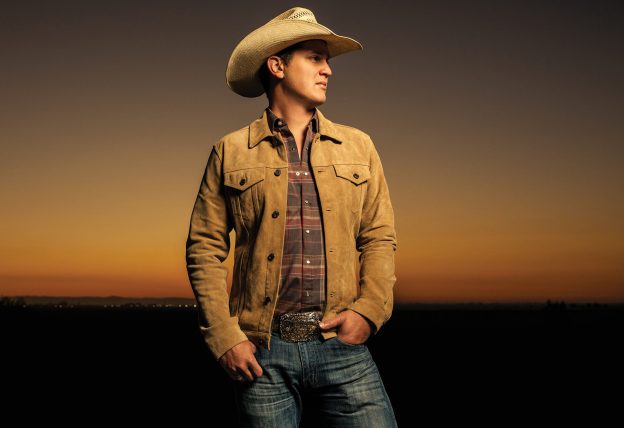
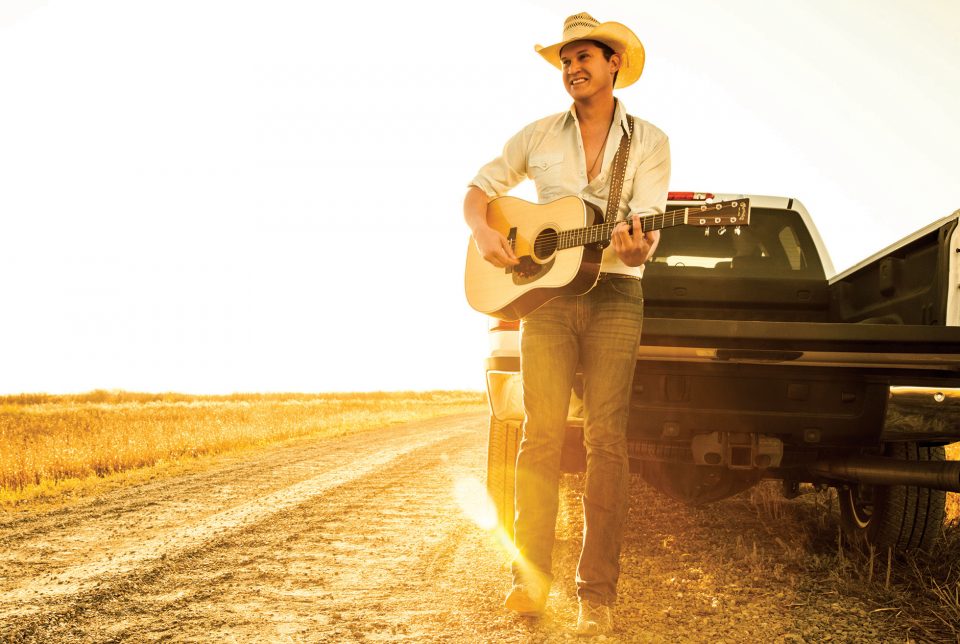
Devin Dawson has had a charmed career in music thus far. Back in December 2014, Dawson was attending Belmont College in Nashville when he and fellow student Louisa Wendorff posted their mashup of Taylor Swift’s “Blank Space” and “Style” on YouTube. It featured the two artists standing back to back near the bend in a tree-lined road. Simple and beautifully harmonic, Dawson and Wendorff easily made these songs seem like their own. The video quickly began turning heads, including Taylor Swift herself, who tweeted out the link to her followers just four days later.
“We just did it because we were having fun, and we had something special that we wanted to share,” Dawson said of the video, which now has well over 35 million views. “We didn’t expect any of that. I’m thankful for her and the way she puts up new artists and sticks her neck out for things she believes in. I’m grateful to have been one of those things. It gave me the confidence to keep stepping forward as an artist.”
Though Dawson came into his own as a student in Nashville, where many country artists go to pursue their careers in music, his roots are in the Sacramento area. Hailing from Orangevale, Dawson attended Casa Roble High School and was part of the metal band Shadow of the Colossus for a few years before he hit his early twenties and decided on a new course.
“I wasn’t as fulfilled with that music or that genre,” Dawson said. “It was fun. I loved it, and I wouldn’t change it for the world. I started to write other songs that took over my heart.”
As it turns out, following his heart has worked out rather well for Dawson. His debut album, Dark Horse, was released in January 2018 on Warner Music Nashville. He’s also graced the hallowed stage of the Grand Ole Opry and now finds himself on the road with country music legends Tim McGraw and Faith Hill.
When Submerge caught up to Dawson, he and his bandmates (Kip Allen on drums, guitarists Austin Taylor Smith and Nick DiMaria and bassist Sam Rodberg, all of whom appear on Dark Horse) were nearing Seattle for a half-day off. We asked him about his burgeoning career, its fortuitous start and about how he and his band’s raw, intimate sound plays in large arenas. But first, of course, we had to get a little nerdy …
Your metal band, Shadow of the Colossus, was that name taken from the video game?
Yeah man, props to you. We would always play that as kids, and we said, “That’s a really metal band name. We should change our names to that.” So we just did.
It’s strange because it’s such a peaceful game.
It is, but it’s also kind of Middle Earth. The subject matter is pretty metal.
Where did you meet the other guys in the band?
We met in college. We all went to Belmont University together. Pretty much most of us met on the first day. A lot of us were in the same dorm together freshman year. We’ve just been jamming ever since.
Belmont College is where you met your bandmates, and it’s also where you met Louisa, with whom you shot that YouTube video that sort of propelled your career forward. Was it an artsy campus?
It’s a really small school. It’s kind of landlocked in a way. It’s a gorgeous campus. There are old historic buildings, and then there’s new buildings. It’s small compared to Vanderbilt, which is out there, too, and it’s a huge, huge campus, which really didn’t appeal to me. Belmont is mostly known as a business school, but they also offer performance, composition, songwriting, which is what I did. I think it’s more about the community of people you meet there, who are just as crazy as you are to be pursuing music for a living. It’s just the kind of incubation period of four years of getting to do it, or the excuse to do it, whatever that means. I met so many of my crew at Belmont, and I had so many opportunities through that school. It’s easier to get integrated into the community in Nashville when you’re going to school as opposed to being somebody who’s moving there and going to bars and meeting people on the street. It’s not as easy to get integrated that way. People aren’t going to want to take you to coffee if you’re just some random person, but if you say, like, “Hey, I’m a student, and I heard you speak the other day. I want to take you to coffee,” they’re like, “Yeah, let’s do it.”
I read in a People Magazine article about you that when you moved to Nashville, you were hoping to focus on songwriting for other artists. Was the mashup video you posted with Louisa the big turning point for you?
Yeah, I’m still writing and that’s still the main focus of mine. I write music every day, but there was this other part of me that wanted to be on stage and share my story and help people through that, but I wanted it to be on my own terms. I had so many people pushing me to do it, but I was like, “Nah, I’m going to keep writing songs and see what happens.” But like I said, the video gave me confidence to say like, OK, somebody likes what I’m doing as an artist in one way or another, so maybe I should pursue this full time. And it gave me the opportunity to say what I wanted to do. I had all these options and opportunities coming from it, and it was like, I can take a jump start in any direction I wanted to go and it was more about figuring out what that was. For me, it was the perfect time to capitalize on the songs I’d written about myself and for myself.
OK, that was the question I was going to ask. I was wondering if the songs on your debut were written generally enough so other people could sing them or if they were more specific about your life and the things you had going on.
Nothing I have on my album was written before the Taylor Swift thing. I tend to skew a little more selfish with my songwriting, just to tell my story. I’m just telling my truth, so at the end of the day, it’s going to be a little more selfish, but I want to tell it in a way that other people can relate to it and put their own story into it. I don’t want to make it so specific to me that someone isn’t going to want to listen to it or sing along, but I’m not going to write something that’s not true. I think it’s important for an artist to play a character sometimes. Not every song has to be exactly about your life, but the ones that are need to be relatable, because a lot of our lives are overlapping. A lot of the things that have happened to me have happened to other people. I think that’s what music is about is realizing that you’re not alone—whether it’s happiness or peril or whatever it is. There’s a song on my album called “Dark Horse,” which is the title track. It’s my story. It’s the things that I believe in, the things that I struggle with. That was a strictly selfish song to tell people who I was, but it’s become this relatable anthem for a lot of different people, when that wasn’t necessarily my goal … It helped me to realize I wasn’t the only one like that, and neither were everyone else. That’s a beautiful thing.
You’re on the road with Faith Hill and Tim McGraw, two of the biggest names in country music. The past couple of years must have been a pretty wild ride so far.
Yeah, dude, it’s freaking awesome. We got to play a couple of shows with them last summer, like four or five … but this summer we’re doing pretty much the whole thing. It’s pretty cool because we already made that introduction, and they’ve become fans of what I do, and they asked us back out. I hung out more with Faith last time, but this time I’ve gotten a little closer with Tim. We’re like playing football, which is crazy. Like you said, they’re superstars. They’re people I grew up listening to … To have that support, again, it keeps giving me this confidence in some way or another I’m doing something right and I should keep going. It’s fucking fun. It’s a blast to be on tour with them. It really is a dream come true.
You’re playing arenas like Golden 1 Center on the tour. Is it daunting to play in such a large space?
I don’t know man, I think I get more nervous with friends and family and intimate smaller things. When I look out, I can’t really see much [laughs], but you definitely feel the energy of that many people. It’s been cool to flex that muscle and get more used to entertaining a crowd that size and what they react to. I think my first reaction was to play louder and be crazier, but the things that make more of an impact in a room like that are the things that are more intimate. When you tell a story to 20,000 people, they don’t expect that. They expect the jumping and screaming, but when you tick it back and make them lean in a little bit, I think that’s become, for me, the more powerful moment.
Check out Devin Dawson live at Golden 1 Center in Sacramento supporting Tim McGraw and Faith Hill on July 22, 2018. Tickets start at $50 and can be purchased through Golden1center.com. For more on Devin Dawson, go to Devindawsonmusic.com. You’ll also be able to catch Dawson live at the Homestead festival at Quarry Park Amphitheater in Rocklin on Aug. 18, 2018. Tickets for Homestead are available at Homesteadca.com.
**This piece first appeared in print on pages 12 – 13 of issue #270 (July 18 – Aug. 1, 2018)**
For most of us, our names are something personal, something representative of our identities. For musicians, names can mean a whole different thing. A name can suddenly become a team, or at the very least, a co-writer; Bernie Taupin and Elton John both serving as Elton John, for instance.
Such is the case for Brandi Carlile. Carlile came into Billboard-chart prominence with her breakthrough 2007 album, which currently boasts roughly 35 million plays on Spotify. The album’s title track starts as a soft, dreamy ballad before downshifting into a gritty pop-rock gear as Carlile’s voice rips and arcs over octaves with a thunderous delivery. Perhaps her name sounds more familiar from the plethora of hits stemming from her follow-up records, like the heavy-hitting The Firewatcher’s Daughter, with its charming opener “Wherever Your Heart Is.”
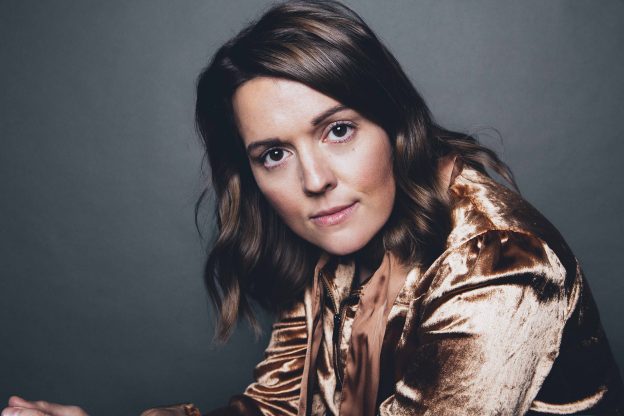
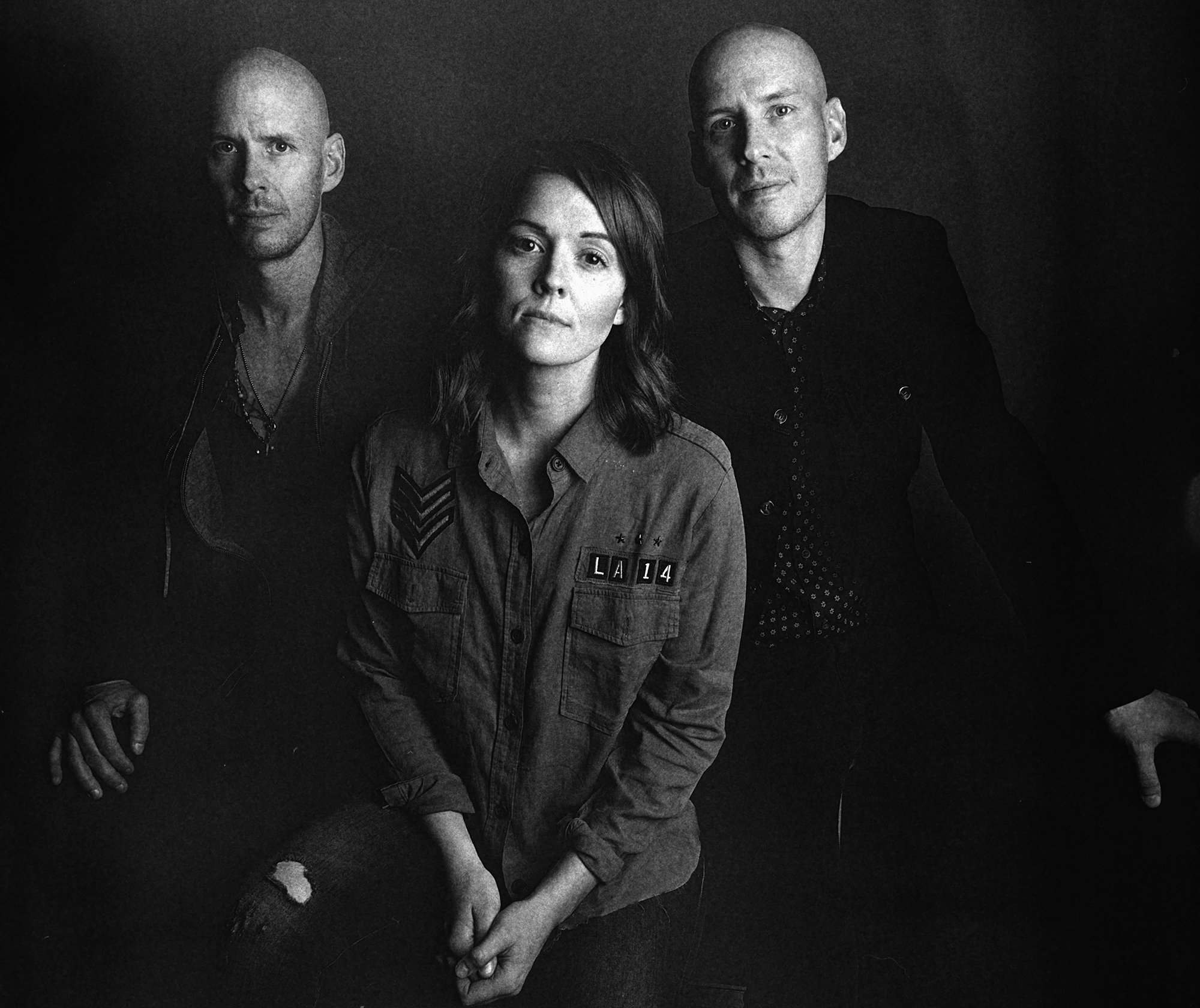
But here’s the thing: Brandi Carlile is not a solo artist, but in fact a three-piece band, consisting of Carlile herself, along with Tim and Phil Hanseroth, who are often referred to as “the twins.”
“We joke around about it being the family name all the time,” said Carlile.
Carlile herself grew up in a rural area outside of Seattle in a family steeped in love of country music. Her grandpa and grandma Carlile lived in an RV and followed bluegrass festivals around, while her mother’s side was fond of classic country-western. It didn’t take long for Carlile to develop her own affinity for it. Carlile eventually moved to Seattle and began playing around the city, where she met the twins. The three formed a band, but chose to stay under the name Brandi Carlile, which can at times still be tricky.
“It really isn’t [solo], it’s misleading,” said Carlile. “It causes me problems emotionally in my personal life, because it dilutes who I am. It makes the name that my parents gave me not me anymore; it makes it an organization. I have to check myself all the time with what I really want and what I really believe.”
Carlile and the twins have shared writing responsibilities since the start (“The Story” was written by Phil Hanseroth), and for Carlile’s newly announced upcoming album, By the Way, I Forgive You, the trio has homed in even further on their connection not only as collaborators, but family (Tim is married to Carlile’s sister).
“Over the years so much has changed. We’re all basically living in the same space, raising kids within each other’s families,” said Carlile. “As soon as someone brings a song to the table, we know exactly what it’s about, so we can add to what each other is saying without any guardedness. Because, I know what Tim is talking about; I was there, I saw it happen to him, and offering my perspective on it only helps, and vice versa.”
The album’s recently released first single “The Joke” debuted as a live video shot at RCA’s Studio A in Nashville, with Carlile flanked by the twins and backed by a modest string section, drums and keys, all flawlessly swelling as Carlile bellows choruses that give listeners the sort of rush of reaching a mountain peak. The polished piece starts with the line, “You’re feeling nervous, aren’t you, boy? With your quiet voice and impeccable style.” The verse serves as an offering for those unheard—particularly young boys.
“I think when we get into a frame of thinking that boys are men, are born privileged and starting out already ahead of everyone else, that can be really toxic,” said Carlile. “There are so many different kinds of boys—they can be trans, they can be gay, they can have an ethnicity that’s unacceptable to their peers in the place that they live. There are so many things that can make growing up difficult in general.”
The song extends to a greater political message, an anthem for those who need it most during our currently polarizing political climate.
“I don’t mean to be a reductionist about it, but the election really shook me to the core about how susceptible I was to complacency, how many things I didn’t realize about the country I was raised in,” Carlile said. “It just made me realize how many people feel disenfranchised, unloved, unrepresented and illegal in the place that I’m so proud of, the U.S.
BRANDI CARLILE
“One of the things that the election did is that it woke up a lot of people in all walks of life, and it galvanized us so everyone now has this sense of activism. I feel like ‘The Joke’ is a bit of an uplifting song for people, so we can feel powerful simply because we’re born with certain unalienable talents and rights.”
This sentiment is strong, and is made even stronger by the team surrounding By the Way, I Forgive You. The album was produced by Dave Cobb and Shooter Jennings, with string arrangements by the late Paul Buckmaster and cover art by Scott Avett of The Avett Brothers. The tone of the album is political, but also emotional. The songs for the most part explore the relationships within Carlile’s life, with her greater family and her role as a mother.
“It gives you a heightened sense of awareness of what family really is, chosen and natural,” Carlile said. “I think children are just a clearer lens. Whatever you feel, whether you feel a sudden sense of gratitude, of regret or remorse, bitterness, rejection, [having children] just heightens that awareness and really forces you to deal with it. I think that’s what this album is really about: finding a place of acceptance for the things in life that are really hard, and not complacency, but acceptance of [those things], that you can still be you and be heard, and you can find—I don’t mean to sound trite or cheesy—you can find forgiveness for yourself because that’s what makes you not have cancer, live happier.”
For Carlile, in the midst of that understanding comes even the simple things, like embracing her collaborators and all that Carlile means, while finding space for herself under her own name.
“I have to be reminded by people I love that there’s still a me that’s separate from everything else, even though we use my name to represent it,” Carlile said. “That’s a difficult thing to understand, and I’m really lucky I’m getting a handle on it when I’m young, so I don’t confuse Brandi Carlile as an organization from Brandi Carlile as a person, because I really am pretty simple.”
You’ll have two chances to see Brandi Carlile live in the Sacramento area: On Dec. 16, Brandi Carlile will play Jackson Hall at the Mondavi Center for the Arts on the campus of UC Davis. Showtime is 8 p.m., and tickets can be purchased through Mondaviarts.org. The next night (Dec. 17), check out Carlile and the twins at the Veterans Memorial Auditorium (255 S. Auburn St., Grass Valley). This show also begins at 8 p.m., and tickets are available through Thecenterforthearts.org. Singer-songwriter Savannah Conley will provide opening sets for both shows.
**This piece first appeared in print on pages 14 – 15 of issue #254 (Dec. 4 – 18, 2017)**
Jon Pardi has been touring pretty much nonstop since well before his first album dropped in 2014. He was in Delaware when I caught up with him by phone in mid-July, about to headline two shows during a short break in his tour in support of Dierks Bentley.
“We never stop touring,” said Pardi. “I’ve been on tour since 2012, on the same schedule with an album and without an album.”
With a chuckle, he adds that the endless grind is “almost a problem,” but one he’s more than happy to navigate because it comes with the territory of living out a dream he’s had since he was a child growing up in Dixon and singing along to his family’s George Strait albums.
Pardi played in a local country band called Northern Comfort during the years prior to his move to Nashville. The band was based in Chico, with some members rooted in Dixon and Winters, where they would routinely jam-pack local bars on weekends throughout the mid-2000s.
Northern Comfort delivered a mix of crowd-favorite covers and a collection of raw, original country tunes that put Pardi’s promise as a songwriter abundantly on display. Songs like “Changes,” “One More Time” and “DUI” were just as popular as the covers by the time the band’s CD had made the rounds and they’d become a staple on the scene. (You can hear those songs and more if you’re willing to pick through the boneyard of the old Northern Comfort MySpace page).
Northern Comfort dissolved in the late aughts as some members finished college and began scattering into various careers and starting families. Pardi did the same, but the profession that awaited him was in Nashville. His college training for his profession, to continue this analogy, was his time spent writing and performing with Northern Comfort.
The music industry in Nashville is pretty cleanly divided between fan-facing performers and behind-the-scenes songwriters who architect the radio hits. Both scenes are vibrant and competitive, which makes it all the more impressive that Pardi managed to score writing credit on the bulk of the songs on both of his first two albums.
He did so while also touring with the biggest names in the industry, from childhood heroes like Alan Jackson to newer stars like Luke Bryan and Dierks Bentley, for whom he’ll open when he plays Toyota Amphitheatre outside Sacramento on Aug. 19, 2017.
Pardi’s music leans away from a new-age country vibe that has edged its way into modern radio—a sound that often prioritizes club-style beats over fiddles and steel guitars. That’s not by accident.
“There’s a growing audience for throwback,” Pardi says in his bio. “People want to hear somebody who really enjoyed the ‘90s country music era and brings that to 2016 country. A lot of this record is bringing an old-school flare back to a mainstream sound.”
The opening lyrics on his second album, California Sunrise, start with this: “When I first got to Nashville town they called me and sat me down and told me all about the ins and outs of writing songs. Said write about the things you know about, if there’s anything that you don’t know about, just stick around and you’ll find out before too long.”
In our conversation, we talked about everything from that arrival in Nashville and his early days playing locally, to what goes into writing and recording a modern-day country album.
How did things wind down with Northern Comfort before you left to Nashville?
The band was mainly a learning point, kind of like studying and writing music in the moment. Everyone went on with their lives and did their thing. People graduated college and wanted to go be teachers and do things they went to school for. Then there’s me who didn’t want to do any of that. But I had a lot of fun in that band and we did a lot of cool stuff.
Where did you cut your teeth in those early days?
I played in Dixon and Winters a lot; Dixon May Fair, The Wrangler, the Elk Grove area and Chico. We were based out of Chico.
Your bio says that it’s “contemporary-cool to inject country songs with programmed drums, rap phrasing and poppy melodies,” and boasts that you won’t find that on a Jon Pardi record.
L.A.-style writing has really moved into Nashville, where it’s all built on [programmed] tracks. There are a lot of others that are way into that, but we used just one drum track on the record. We had the drummer make the loops. But it’s all just preference of what you want. I still think I’m one of the few artists that has fiddle on their songs, or a steel. I’m just more of a new-traditional sound.
Wikipedia says you play “neotraditional country.” How would you describe that?
It’s a new way of presenting traditional country. I could play a show with Florida Georgia Line and a show with Alan Jackson.
Was there any hesitance in Nashville about you coming from California?
Nashville’s wide open! People come from everywhere. Everybody lets you do yourself. As soon as they start listening, they see the hard-working people and the farmers and realize it’s not just actors and surfers out in California. Nashville’s a fun town.
How and when did the #PardiAnimals hashtag on Twitter and Instagram get going?
I came up with the name. I didn’t even have fans yet, but sometimes you want a cool fanbase name. That’s the way to do it. I like thinking about fun stuff like that sometimes.
Has your rise in Nashville felt fast or slow?
We made the first record and had a top-10 gold [single] with Write You a Song. I built a fanbase off that first record. They played it on the radio and we toured around the country. We made the second record and wanted to get some number ones. Once we put California Sunrise out, we let everybody know that we’re still here. “Head Over Boots” [which reached No. 1 on the Billboard Country Airplay charts] was my first single off that.
Are you making plans for the next album?
It’s not like the old days where rock ‘n’ roll bands take two months off and shack up in a studio somewhere. It’s all pre-production. I’m going to go in and record six songs and we’ll work on them until we record more songs. The guys are excited because they’re playing pretty traditional country music.
So what will the writing and recording process look like for the next album?
Just have 16 songs by the time you’re done and then move it down to 12. Brooks & Dunn wrote “Boot Scootin’ Boogie,” but they also recorded outside songs. You hear a song and make it sound like you wrote it. Once [songwriters] know you’ll cut songs, the town comes around you. I’m always writing, too, but my goal is the best song wins. It could be as simple as writing a title. Just keep writing titles. All it takes is just writing it down, and then starting the hook.
Jon Pardi returns to Northern California on Aug. 19, 2017, opening for country superstar Dierks Bentley and Cole Swindell at the Toyota Amphitheatre in Wheatland. The show kicks off at 7 p.m. with tickets starting at $32.25 and available now at Livenation.com.
**This interview first appeared in print on pages 12 – 13 of issue #245 (July 31 – Aug. 14, 2017)**
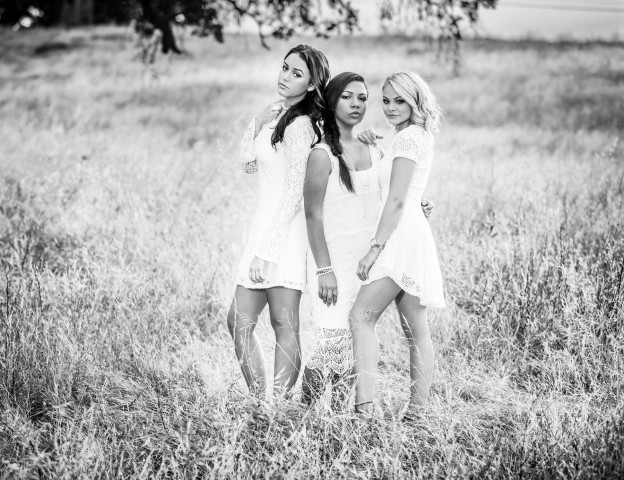
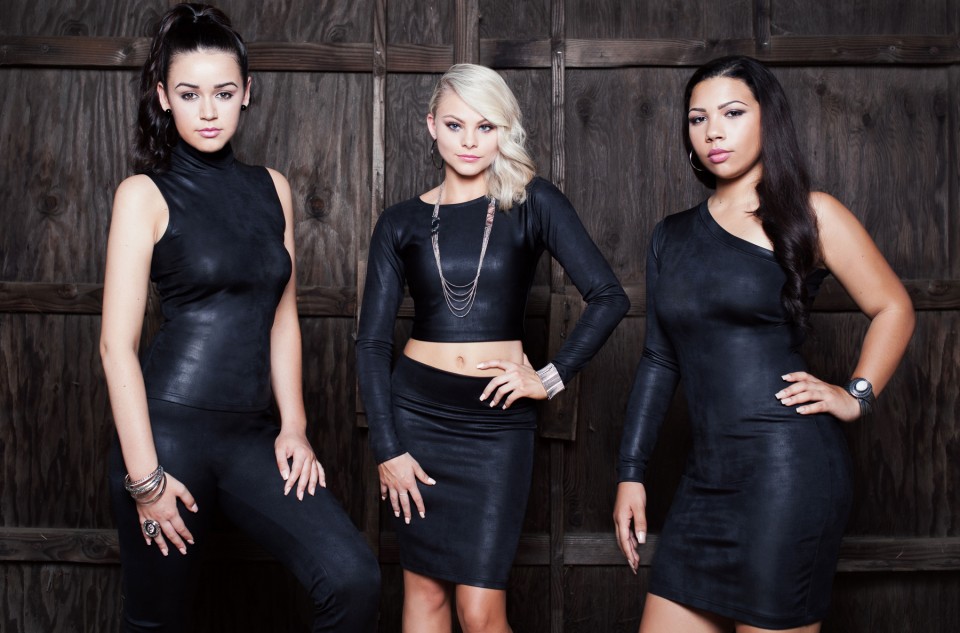
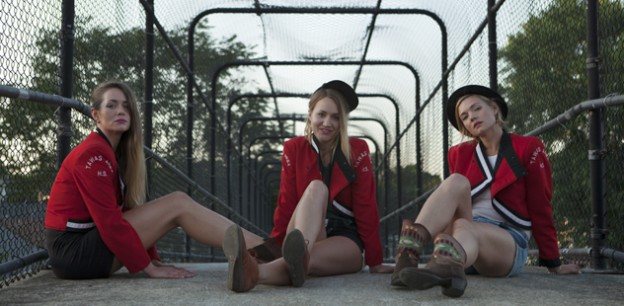
“We all kind of sound alike …” one of the young women of the pop/country trio Auburn Road admitted during our interview, as this interviewer, sheepishly, had difficulty differentiating their voices over the phone. That’s one possible reason why their voices soar to such great heights when they sing together.
Paxton Martin, Alicia Paulson and Kristen Brown are more sisters than friends. The three practically grew up together in the surrounding Sacramento area (Elk Grove and Roseville), both literally and vocally.
“Me and Kristen didn’t know, but we actually grew up together when we were like 4 years old,” Paulson recollected in a recent interview with Submerge. “We had a friend in common, and we would always go to her house together and go to the parties together, and we didn’t even know. Our parents didn’t even figure it out until we were older and we were like, ‘Oh! Hey!’ All of our families are really close.”
By age 7 or 8, Paulson says, the trio was enrolled in music classes at the same singing studio. They cut their teeth performing as part of a larger group called Pop Academy.
“We got to do a lot of fun things through there and get comfortable with performing,” Paulson said. “We got to go to Disneyland to perform. It was a great opportunity.”
The trio’s bond carried on into their teen years. In fact, two of the girls (Paulson and Brown) just graduated high school this spring. Martin is scheduled to do the same later this year in December. (“I’m actually graduating early,” she said with a hint of pride.) However, it was about two years ago, according to Brown, that Auburn Road really started to come to fruition.
One catalyst for the group’s formation was meeting manager Michael Anderson, who Brown said the girls met in 2013 through a choreographer they were working with at the time.
“He’s done everything for us. He’s done everything on the album and made all the decisions on the album,” Brown said, referring to Fancy, Auburn Road’s debut EP, which was released on Jan. 16, 2016. “He went down to Nashville when they recorded the music for us.”
Though the girls recorded their vocals separately from the music, Brown, Martin and Paulson had serious country music clout behind them in the studio. From the crisp snap of the opening drum hits on Fancy’s opening track, the EP’s title song, it’s clear that this album isn’t just a hastily cobbled together demo, but a polished, professional product, aimed at catapulting three talented young people toward a bright and promising career.
Backing Auburn Road on Fancy are members of Jason Aldean’s band, bassist Tully Kennedy, guitarist Kurt Allison and drummer Rich Redmond, who give these catchy and memorable pop/country songs serious punch, and a bit of a rock ‘n’ roll edge.
“When we were writing music for the album, we knew that we needed a band,” Brown said about enlisting help from these seasoned pros. “After a lot of praying, we got really lucky. We had a couple contacts in common who hooked us up with them.”
But it’s the voices of Auburn Road that are really upfront, as showcased in the stirring power ballad “Love of My Own,” which seems perfectly suited to raising your cigarette lighter at an outdoor concert to.
Photo by Lavenda Memory
It’s the melding of the trio’s voices that are the real hook here (as well as some kick-ass guitar solos), but that shouldn’t be much of a surprise. Though Brown, Martin and Paulson are young, they’re no strangers to singing with one another. Since they started at such a young age, they could almost be considered veterans in their own right.
“I think it really helps that we grew up together, singing together,” Paulson said of Auburn Road’s striking vocal harmonies. “I think it’s harder when you’re at this age, and you’re put together as a group and you don’t know each other. We always seem to be on the same page, so it’s really nice, especially when it comes to our harmonies, because we can read each other’s minds.”
Though their vocal performance may border on intuitive at this point, the members of Auburn Road are eager to learn and grow as musicians. When Submerge contacted Paulson for our interview, she was on her way home from drum practice. Brown and Martin also reported that they were learning to play bass and piano, respectively.
“We’re all trying to learn instruments right now.” Paulson said. “We’re not onstage performing with them quite yet, but eventually we’ll throw a couple of things in there into the show. It’s not necessarily what we do, but we would like to be able to play a little bit.”
“Right now we’re in search of a band in Sacramento,” Martin added. “It’s really hard to find a younger band in Sacramento, and that’s what we’re looking for right now. Right now, we’re performing with backing tracks, which is fine. It works out OK … for now …”
Auburn Road just recently had another dose of music industry education when they spent time during the Independence Day holiday week in Nashville. Submerge spoke to the group prior to their trip to Music City, and they were looking forward to sinking their teeth into the vibrant scene there.
“We have a bunch of meetings set up, a photoshoot in the works, a couple of writing sessions,” Martin said. “We’re just going out there to network and meet people and get a sense of the music business out there.
“We’re still young in life and in music,” she later went on to say. “Just to be around people who know so much and can show you different things with writing and how to take a song from one perspective and do it in another, so I think we just want to learn. We want to be great artists, and in order to do that, we need to learn from great people.”
With high school almost behind all of them, the trio has its sight set on a career in music. Fancy is an emphatic first step forward toward that goal.
“Our main concern right now is music,” Martin said. “One of our main goals is to live in Nashville and be able to do our music there. Our goal as a group is to tour and hopefully win a Grammy one day and travel the world singing for a bunch of different people.”
While a Grammy may still be a little ways away, local fans can check out Auburn Road at the upcoming Country Fest at the beautiful Quarry Park amphitheatre in Rocklin, where they’ll be sharing the stage with American Idol finalist Kree Harrison and JT Hodges. When asked if it felt surreal to have had so much success and to be performing with people they admire at such a young age, Paulson answered with unflinching confidence.
“It’s a little taste of the future for us.”
Country Fest, featuring Auburn Road, JT Hodges and Kree Harrison will take place July 23, 2016 at Quarry Park in Rocklin. Tickets start at $25 and can be purchased through Rocklin.ca.us (just click “Special Events”). Auburn Road’s Fancy is available online through iTunes, CD Baby and Amazon. You can also purchase the EP locally at Dimple Records. For more on the band, go to Auburnroadmusic.com.
For as much love as California generally gets across mainstream America’s storied music anthology—see Wikipedia’s long list of songs about the Golden State—it still seems to be surprisingly underrepresented in one genre that is so familiar here: Country.
Try and name at least four famous country singers (past or present) that you know for a fact are from California, or that at least sing and write songs portraying California. If you’re a real hardcore fan, you might have come up with Gary Allan (La Mirada), Jon Pardi (Dixon) and the Haggard family (Oildale and Bakersfield), or perhaps a few other old-timers sprinkled in the mix. Shoot, maybe you even know about Brett Young of the Orange County area, who’s fairly new on the country music circuit himself and branding his sound as California country.
Still, though, we’re clearly missing a few too many ambassadors in a state where a lot of folks—especially up here in Nor Cal—identify as country girls or boys at heart. Until now, that is.
While Jon Pardi might have Solano County covered in the California country world, a fresh voice has recently risen in Nashville, hailing from Yuba City—just a stone’s throw away from Sacramento.
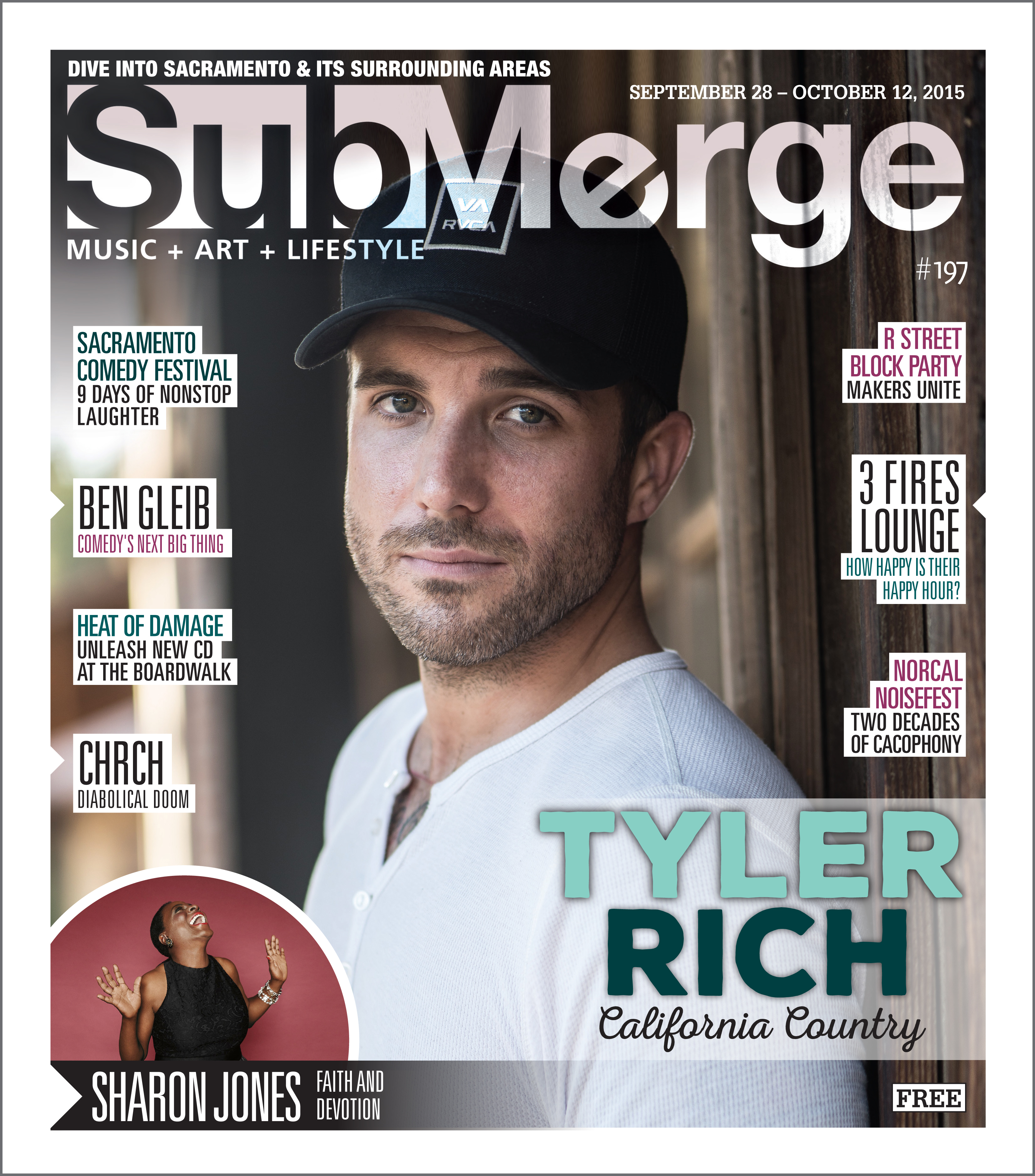
Tyler Rich, who released his first four-track EP in August to chart-topping success on iTunes, is the latest country music offering with California roots and a soft spot for his hometown stomping grounds. After making a life-changing move across the nation to Music City this past April, Rich says his career has been snowballing with unimaginable good fortune, with everything falling into place just the right way.
It was only a few weeks ago that Rich was added on as an opener for country music superstar Dustin Lynch’s national “Hell of a Night” tour, which is set to kick off Nov. 14, 2015, and extend through early the part of 2016 (more dates to be announced soon). He’s also opening for Pardi at an Ace of Spades show on Oct. 10, 2015, and plans to be making media appearances in the area on and off during the last few weeks leading up to this fall’s performance run.
We were able to catch Rich on the phone late one night and ended up talking about everything from his latest EP to his newfound success in Nashville, how social media has helped him breakthrough in a cutthroat industry and, of course, what it was like growing up country in California.
Seeing how things have been going really well for you out there in Nashville, why do you think you’ve been so successful as a breakout artist? What’s your secret?
My social media helped out a lot … from Instagram to Snapchat to Twitter and Facebook. As it was growing, I started getting booked for bigger shows. When people see that—the growing online presence—they see it, I guess, as a good thing to trust. Dustin Lynch actually discovered me a few months ago on Instagram; then he sent me to some meetings … I mean, I guess if it wasn’t for Instagram, he wouldn’t have ever found me. And I would probably still be hanging out and doing nothing.
Do you think artists that are trying to break out need to be on their social media game?
Oh, I don’t think so. I know so. I mean, I’ve sat in meetings where … I stress it to my friends in the industry like so much. One of my really good friends in Sacramento—James Cavern—he and I talk about the social media game all the time. We just talk about how important it is, because it really is … I’ve been in meetings in Nashville now where I hear publishers, managers, booking agents and other artists talking about, “Oh hey, have you checked this person out?” And they’re like, “Yeah, his stats suck. What’s next?” They move on. I swear to God, it’s within seconds. “His stats are horrible. Who else do you got?”
Kind of like ESPN analysts commenting on potential draft picks.
No, that’s what it is. And if you’re super, super, super talented and you don’t have that presence—or you’re not building—then you can have a career as a songwriter. Or luckily break through somehow independently. But I don’t know, man. It’s just crazy. Mine has grown dramatically in the past four months … It’s crazy. You get in the mentality of like, “I’ve got 38K followers. This is awesome!” But then when you actually think about it: that is 38K humans. 38K people with a story, with a life, with a job, with a family. Those are 38K individual souls that hit follow, for some reason. I don’t know why, but thank you.
I know you have a new song out called “California Grown” that’s been getting some radio play recently. Can you talk about that song a little bit?
Yeah, “Cali Grown” is actually the only song in probably a year and a half that I’ve written by myself, 100 percent. Everything else is always like co-writes and collaborations with different producers and different songwriters. And [for] “Cali Grown,” I was sitting at my house in L.A., and I had just released my single “Radio.” I don’t remember who I was talking to, but I was talking to somebody. And they were like, “Yeah, you’re from California and you seem country. It just doesn’t make any sense.” There’s a line in the song: “California is just palm trees, beaches and celebrities.” And that’s just the mentality that everybody has—and rightfully so, because that’s how it’s portrayed in pop culture. But I was saying, “People don’t understand what California really is.” I mean, I’ve driven up and down California from Sacramento to L.A. at least a hundred times. And each time it’s equally boring because you’re just driving through farms—there’s no cell service, there’s nothing. And when you turn on the radio—I was driving through the Bakersfield area—the only radio stations that were coming in were Spanish stations and country stations. And that’s when I got the idea for that second verse, talking about Bakersfield and all that. But I don’t know, it was one of fastest songs I’d ever written—it came out in about a half an hour.
I wanted to ask about your new EP, Valerie. Can you tell me what’s behind that name? Just curious.
You know, I’ve done a lot of interviews in the past like month since the CD came out, and you’re the first person to actually ask me what it is. So I’ve been waiting for this question … When I was in my early 20s, I had a guitar get broken on a flight. And United Airlines offered me a $100 travel voucher for my broken guitar. I had some shows coming up, and this was before GoFundMe or Kickstarter or anything like that was even alive; none of those companies existed … My guitar was broken, I had shows coming up that week, I had no money and I needed a guitar. So I posted online on MySpace. I was like, “Hey, you know, my guitar broke,” with a picture of it in two pieces. I was like, “I’m accepting donations from my fans. A dollar, 50 cents, five dollars, you know, whatever you can spare. I appreciate it.” And then my family and everybody started donating. I put my address, people would send checks; I used Paypal for automatic transfers and stuff. Then there was a fan of mine from the East Coast I had never met before. And I got a letter in the mail that was like a page long about how much she loved my music, and how much she wished I’d come to the East Coast and tour, and apologizing, saying that she wished it was more, and that she couldn’t send me a check sooner and had to wait until she got paid, and that she was going to try to send more the next time she got paid. She was like a 16-year-old girl in high school named Valerie, and she sent me a hundred bucks. And the guitar I went and bought the next day, I named Valerie. And it is the same Taylor acoustic that I still have. I mean, I’ve got a few now. But that guitar, Valerie, is the one I wrote all those songs on that CD with and the one I recorded the guitar with on that CD. And since it’s an acoustic—well, it’s produced a little bit—but since it’s ultimately an acoustic CD, I figured it kind of fit perfectly to call it Valerie.
That’s a helluva story.
Yeah. But the sad part, though, is that I have no idea who she is now.
So what was it like growing up in Yuba City? Was it what people would typically call country?
Yuba City is very, very country—especially the little towns outside of Yuba City, like Sutter and all that. It’s very Varsity Blues out there, if you know that reference. Football is everything, everybody’s got the big trucks. I mean, Yuba City technically is a big town; it’s a big farming city. I think there’s like 80,000 residents, but you see the same 1,000 people every day. I don’t know where all the other 79,000 are hiding. But it was like growing up in a small, country farming town that had the necessities you needed. It was like a little big town, which is a country band, and kind of cheesy to say. But that’s kind of what it is.
How often would you come down to Sacramento back when you were living there?
Musically?
Socially and musically, I guess.
Well, I mean, in high school we used to—as soon as we could drive—we’d come down to Sacramento to go to shows all the time. Punk rock shows, and just anything we could see at the Boardwalk or Arco Arena or Memorial Auditorium or anything like that. And we’d drive up to Chico and watch shows all the time, too. On Saturdays and Sundays, we’d take trips to Arden—just about an hour from each city—and just go to the mall. We’d go to Guitar Center, and we would call going to Guitar Center going to church. Like, “What’d you guys do?” “Oh, I went to church!” You know? And all the guys would start playing music with all my buddies. We’d go and sit at Guitar Center for like five hours and just play guitars … Yeah, so I mean, it was cool living in a tiny town outside of a big town like Sacramento.
Right on. Anything else you wanted to mention?
This Jon Pardi show is gonna be a freakin’ party. Come out to the Jon Pardi show on Oct. 10 to see what Nor Cal is offering country in the entertainment world. ‘Cause we’re the only two representing it in Nashville right now. So we’d love to see everybody there.
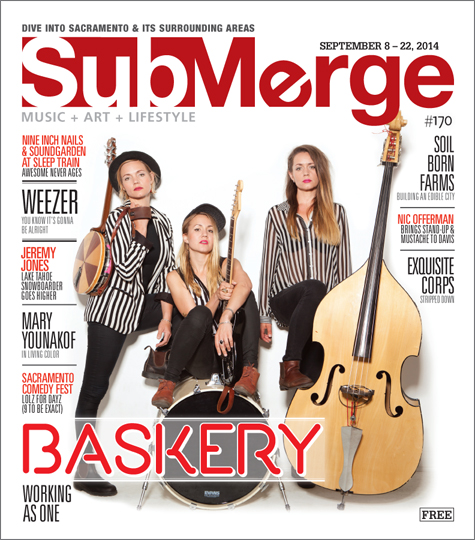
Baskery proves the family who jams together, stays together
There’s a certain power that comes from a family band. There’s a strength to their presence on stage; the perfectly parallel harmonies and eerily cohesive movement through songs projects a resonant connection that feels nearly palpable to an audience. It can’t be easy to share that much, but it certainly helps the music and has the benefit of being a bond that started forming long before it was a focus. Such is the case for Greta, Stella and Sunniva Bondesson, a Swedish three-piece alt-country group by the name of Baskery.
“It’s so hard to find a starting point of the band, because some of the songs that we play up to this day are songs I wrote in high school,” said Sunniva Bondesson, the youngest sister in Baskery. “It’s hard in the sense that you can’t see an end or beginning of things.”
The three sisters have been singing together since their childhood and came together first through the group the Slaptones, formed along with their father, drummer Janåke Bondesson.
After a few years, Janåke decided it was time to leave the band and that the sisters should find their own focus as musicians without his influence. This led to the formation of Baskery.
“We [Slaptones] were pretty successful but we didn’t want to play rockabilly and cover songs, so we started Baskery as a new challenge,” Bondesson said. “We call it our first real band because Slaptones was more of our fun project, we didn’t get that serious. We made two records and it was great fun, but we felt we needed another concept for writing the kind of songs we wanted.”
The name Baskery came about from wanting to acknowledge their roots, which lie in the small village their father is from. The town is nicknamed “Baskeri” in Finnish, but the sisters decided to change the spelling to have a more international sound.
The name’s versatility coincidentally reflects the music itself. There’s a sweet melodious harmony factor that lends itself to bluegrass influence, with a more rapid kick that’s reminiscent of punk tempo, plus instrumentation and a sort of group effort that comes from the communal feel of country music. Maybe their hyper breed of sound partly stems from the fact their influences are less music-based and more found through common past experience.
“It’s not so much music, it’s more movies, books, stories that you come across in your regular lives,” Bondesson said. “We have the pleasure of sharing lots of influences since we’re sisters. We have the same references because we grew up in the same house at the same time, but it’s not a lot about music. As kids we sang a lot of classical tunes, folk tunes, and our dad played blues and folk and country and rock, so we had all kinds of influences, that’s why it’s so hard to tell. We’re infused with so many different genres.”
The idea of working with siblings might make a few people uneasy. Working in groups is hard enough. Luckily, it’s something that comes easily for the Bondesson sisters. They’ve found a way to separate their work from their family dynamic.
“We’re pretty blessed in that sense that it doesn’t really influence our structure as a band,” Bondesson said. “When we work together we have a different hierarchy, the songs and the music itself is kind of the ruler. I always kind of curve myself under the power of the music. Even if we had had a fight or something it would never show on stage because that something else comes in and takes over. Also how we’re structured there are certain roles in the family of course and being three sisters, but we don’t have these structures in the band. We have different positions and they happen pretty organically.”
As far as the work itself, everyone naturally takes on flexible responsibilities, with an ebb and flow of who is taking a leadership role. The positioning is constantly shifting, from stage presence to songwriting to business logistics.
“We try to look at it as a democracy,” Bondesson said. “The work share is happening very naturally, we don’t really talk about it, and some days you decided you do more and some less, we don’t really complain a lot about that.”
The three sisters have been living together for the last several months in Nashville, coming together in one home for the first time in a decade. A city as musically established as Nashville can be an incredibly hard market to enter, but so far Baskery has received a good amount of intrigue from listeners.
“People are kind of overfed with music there,” Bondesson said. “We have the pleasure of being different and we peak out, because we don’t make the traditional country music, or we don’t fit anywhere, so people have already started talking about us.”
During this time they’ve been working on new material, working toward releasing a new album here in the United States, touring consistently and playing countless festivals, including the upcoming American River Music Festival. It’s been a blessing for Baskery to help connect to the North American audience through festival appearances, as well as find a community by crossing paths with other artists performing, and learning from their shows.
“Festivals are essential for any band to build their new audience and earn recognition,” Bondesson said.
With little sense of the sisters’ true musical beginning and no end in sight, what’s left is the present, which Baskery has devoted to working as one.
“That’s something you refine a lot when you have time to really only work with music,” Bondesson said. “We’re on the road two thirds of the year, and we’re constantly together; sometimes we have a little time off too, but mostly we’re on the road, and living together now. It’s definitely making the unit stronger. We have found this common way to express ourselves. I think our sound is more refined than ever. It’s definitely an advantage to do this, and I’d recommend other bands if they can to get more time to live together and get the music, make it a part of everything you do.”
This year’s American River Festival takes place Sept. 12 through 14, 2014 at Henningsen Lotus Park in Lotus, California. Sharing the main stage with Baskery (who perform on Sept. 14 at 12:15 p.m.) will be Bastard Sons of Johnny Cash, Whitewater Ramble, The Bills, Tommy Malone of the Subdues and more. For a full schedule and camping particulars, go to Americanrivermusic.org. Baskery will also perform the night before their main stage performance, Sept. 13, at the Sierra Nevada House at 8 p.m.
With SXSW on the horizon, my inbox is filling up with e-mails about who will be playing there. It’s a double-edged sword: I’ve checked out a lot of stuff I wouldn’t have heard normally, but since I won’t be attending the festival this year, I won’t have the opportunity to be so wasted that I’ll forget whether or not I’ve seen them perform. It’s upsetting.
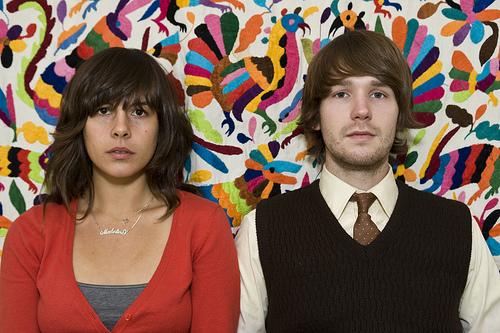
That being said, if I were going, Madi Diaz is one of those acts I would do my best to sober up for. She’s from Lancaster, which is in the butter-churning heart of Pennsylvania Amish country. Now, the fresh-faced 22-year-old (pictured above with partner in crime Kyle Ryan) is based out of Nashville, and her songs veer toward the sunnier indie rock, country and folk. Maybe it will remind you that there are warmer days ahead. Her new EP, Ten Gun Salute, has been self-released and can be purchased digitally on her Myspace page (“Heavy Heart” and the title track are especially nice).
If you’ll be in Austin this year, here’s where you can find her:
Wed, March 18
6 p.m. @ Sheraton Hotel (701 E. 11th)
Thurs, March 19
11 p.m. @ Hi-Lo (301 W. 6th)
Fri, March 20
12:30 – 12:45 p.m. @ Four Seasons / BMI Breakfast
2:00 – 2:20 p.m. @ Tap Room at Six Lounge (117 W. 4th)
9:15 p.m. @ Driskill Hotel, Victorian Room (the main gig)
If you’re considering a vacation to Amish country, I suggest eating at Good ‘N Plenty, a family style restaurant where you can quite literally eat yourself to death. Just save room for the shoo fly pie.