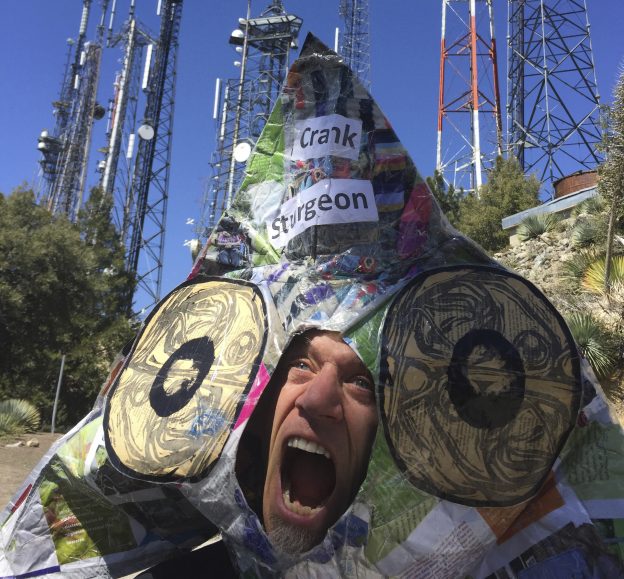
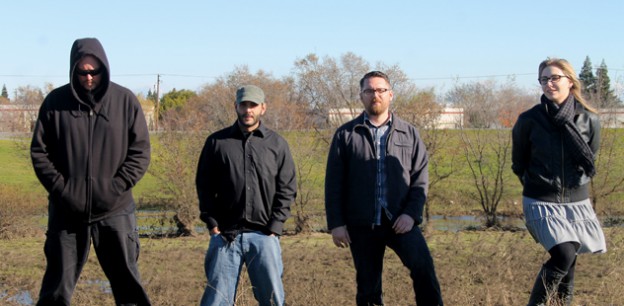
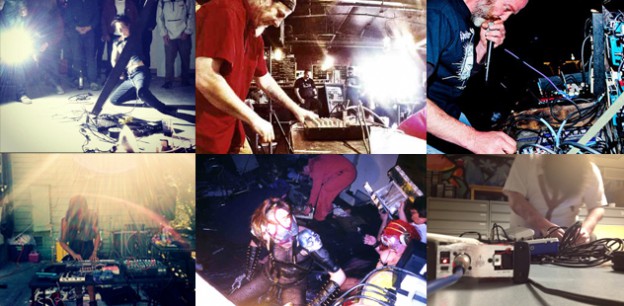
It’s a warm night in Roanoke, Virginia, and a man wearing a ghillie suit is shuffling down the street. His pants, taped around his legs, are bulging and leaking with water, while the trash bag hat he’s wearing is newly inflated with air from the gas station down the street. Suddenly, a police car’s light illuminates him, as well as the small crowd gathered around him. The cop is confused (as likely you are, too), “Don’t worry,” the man tells him. “It’s an art thing.”
This is the mad, loveable genius of Crank Sturgeon.
The piscine-themed noise/performance/visual artist that calls himself Crank Sturgeon (Crank, for short) first started operating sometime around 1992. As the man himself puts it in his painstakingly kept, 20,000 word-long autobiography on his website, the genesis of this alter-ego “was something of a crazy little breech-birth, an odd fingerling formed and seduced out of its primordial goo.” It was the combination of the idea of a never-stopping, always-cranking coffee with the, well, oddness, of a sturgeon. From that point on, he’s been traveling the world, rubbing bespoke contact mics over every surface he can for audiences both large and small.
As for his musical style, it varies wildly. On many tracks, his sound samples are harsh and metallic. On others, vocal tracks are layered over and over, while still others involve string instrumentation. Because he’s been active for so long, his discography is huge, with more than 250 titles listed on his website, and that doesn’t even include his online releases, or physical releases that have escaped him. When it comes to Crank’s process, painstaking curation is the rule, rather than the exception.
“The one thing that’s ingrained into our heads in art school is document, document, document,” Crank said of his extensive record-keeping, “I have notebooks filled with tons of sketches, and recordings that nobody gets to hear because much of it’s terrible. Filing cabinets full of cassette recordings, DAT tapes and CDs. It’s vital, like this is your friggin’ history!”
The latest of this long history is Marsh Annoys, which released on label Love Earth Music in May 2018. The album’s sound, to quote Crank, is “brutal,” partially in respect to +DOG+, the label’s premiere noise act and the personal project of its owner, Steve Davis.
“He’s really the harsh-head of harsh-heads,” Crank said. “When I listen to it, I’m like, ‘Ho, ho, ho, man,’ 47 minutes later. It’s a little punishing. A wild ride.”
The fact that you can buy this record (physical only) online makes it one of the more easily accessible items of his discography. Most of the titles on his page are—outside of the perennially mixed bag that is the Discogs marketplace—unavailable to anyone who becomes newly interested. Much of the rest is either not online and unlisted, or scattered about on various labels’ streaming sites, all of which are very much worth a listen. While many noise musicians have a relatively high output (see Merzbow’s more than 400 albums), one of the most impressive things is the sheer amount of work he puts into not only his music, but his visual art, too.
It isn’t just his goofy, fish-head-like hat he wears to shows. Many of Crank’s performances either start with some performance art component, or take place in and around his already constructed installations. For some, he even takes some time off between/during tours to set up more permanent pieces. One of my personal favorites that can be found online is his “Hoboplane,” a giant, swinging airplane made out of hobo signs. A photo of the occasion depicts him adjusting in-flight goggles and smiling wildly, and on another, the front panel of his would-be flying machine urges audience members to throw pocket change at him.
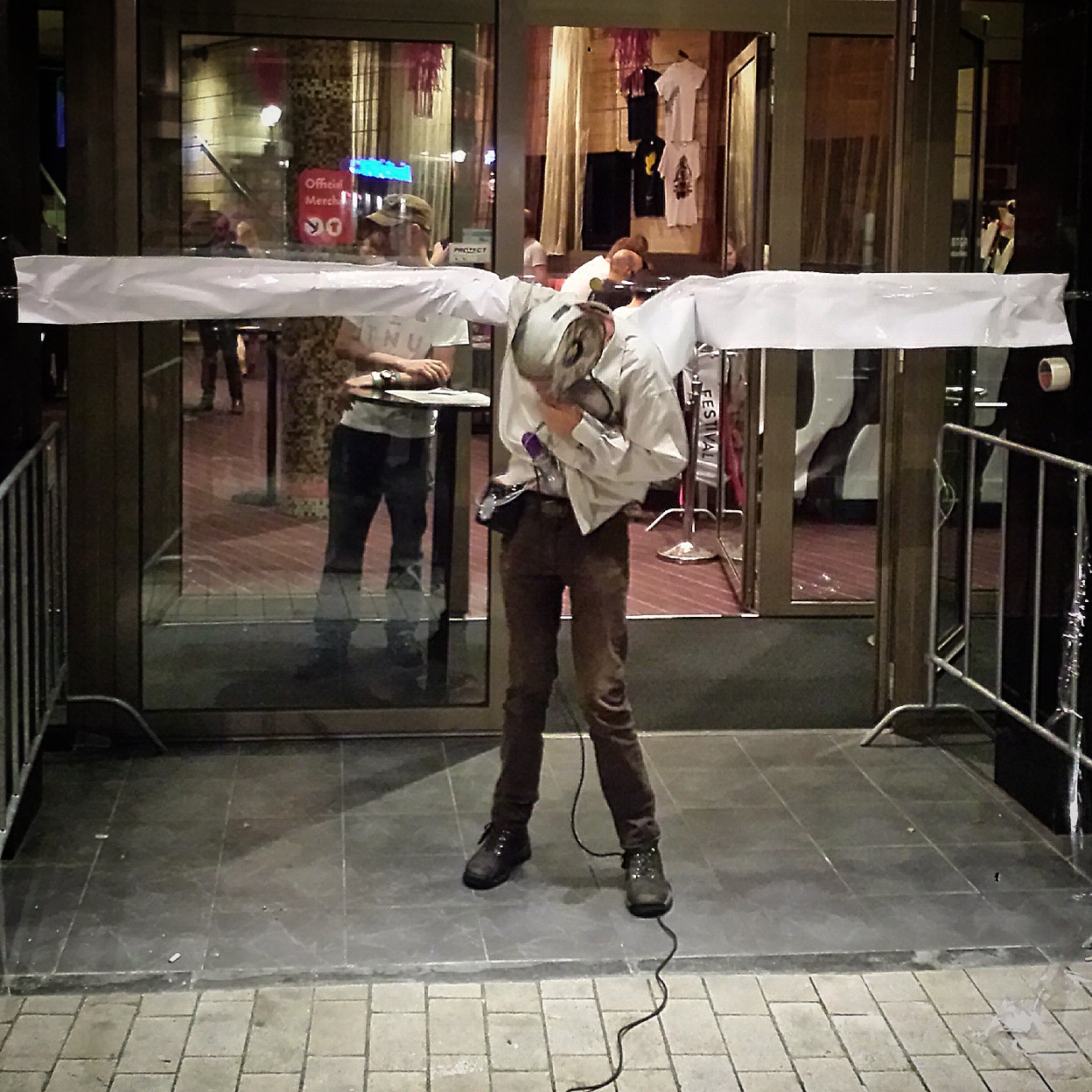
“A lot of my stuff is from found objects, which really fits into the touring schedule,” Crank joked. “Sometimes I want to just chill and work with my hands, not have to worry about bus or train schedules. It’s where all those drawings in my sketchbooks can manifest themselves. Doing work in galleries is fun because you don’t have to deal with sound equipment—but then you have to deal with art patrons!”
He’s also got quite the YouTube presence, too. While activity on his channel has dropped off a bit, he still has more than 250 videos, which range from harsh minute-long noise samples with a silent-film background, to stop motion animation, to videos of Crank biking with a bag over his head.
What became abundantly clear talking with Crank was that, while these disparate projects might seem scattered, the live shows are where this creative energy comes together and becomes more than the sum of its parts. Remember: It’s not just a man walking down the street with flooded pants; it’s a man with flooded pants who just performed a noise set. For Crank, it’s the thrill of trying and (sometimes) failing, over and over again, the process, that is the art project itself.
“Someone once said to me, ‘It’s great to see you doing your thing, because it feels like I’m watching something be created,’” Crank said. “And that hit me in the heart—like that’s it! It’s the experimentation. I’m floating around and navigating the waters of an archipelago I’m trying to create.”
So how did Crank come to have one of the most impressive oeuvres of any noise musician, at least in terms of raw artistic output? In his earliest surreal histories, he remarks that his pre-Crank days were filled with a “bunch of art school nude ballets (with chainsaws).” Originally from Maine, Crank actually went to the prestigious Massachusetts College of Arts and Design, where he was a part of their Studio for Interrelated Media. While he was originally a visual artist and didn’t have much of a background in music besides the occasional punk group (he’s still working on his guitar), he knew that he wanted to incorporate audio into his shows.
“I was sick of being in punk bands, and I knew I wanted to do something noisier, but I didn’t want to tell other people what to do” Crank said. “I just didn’t have the vocabulary yet. When I got to MassArt, I was like ‘ah,’ this is Japanese noise, this is John Cage, this is [Kurt] Schwitters. Studio for Interrelated Media was really the goldmine of inspiration, although at the time I was more into running around naked.”
The latter two are just a few of the many more “classically” avant-garde influences he mentioned throughout our talk. Like Merzbow, who takes his name from Dada-reject Schwitters’ art project Merzbau, Crank has drank long and deep from his predecessors in the avant-garde. Visually, his goofy fish mask is a throwback to costumed greats like The Residents, as well as a childhood passion of “just going out into the woods and wishing I was a crocodilian superhero.” Similar to Schwitter’s concept of “Merz”—a fantasia on German “kommerz” (commerce)—Crank has Huso, an “entity that shall not be named” that embodies his aesthetics and artistic animus. True to form, it’s just a pun off of the latin name for the beluga sturgeon, otherwise known as Huso huso.
One of his largest theoretical influences is Allan Kaprow, an American artist whose “Happenings,” or performance art spectacles, redefined the way people thought of art as more than just a finished product, but as an experience itself. More than anything, this is what I felt clarified Crank’s intentions, and is why any profile of him can’t just talk about the music, or art, or videos, or even the array of home-made microphones he sells. Because, for Crank, all these different things are really all part of the same thing, under the same umbrella.
In a show in 2015, one of his audience members asked him “what it all meant,” an obvious joke to which he responded with some ironic pretentiousness about “dialectics.” But talking with Crank, one gets the sense, at least a little, of what it really is all about. He said that, now and as a kid, one of his biggest influences was Wile E. Coyote, and the idea of zany planning, experimentation and setbacks.
“Wile E. Coyote is a being of persistent failure,” Crank said. “Not trying to fail on purpose, but the idea of self-overcoming, self-immolation. Sometimes you can use a banana as a soundboard, and sometimes you get electrocuted. Kaprow said art is child’s play, so I guess you could say I’m playing around. It’s how I let myself be me.”
You can catch Crank Sturgeon, as well as a bunch of other artists, at NorCal Noisefest on Oct. 5–7. Three-day passes are on sale for $50 at Norcalnoisefest22.brownpapertickets.com.
**This piece first appeared in print on pages 16 – 17 of issue #275 (Sept. 26 – Oct. 10, 2018)**
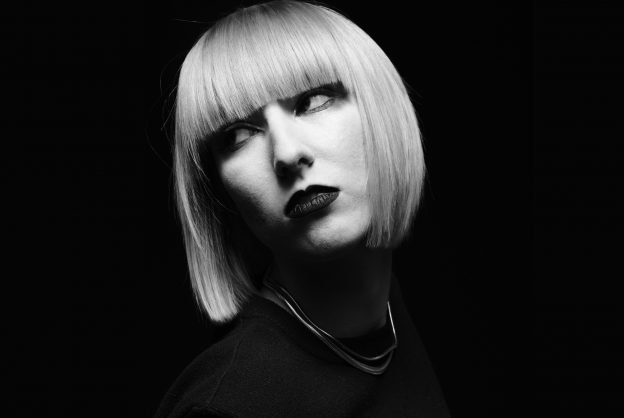
She glowers at the controls of a mixer in a dimly lit music venue, microphone poised like a dagger in her hands over a faintly spreading smile. Dressed in garters and a quicksilver bob-cut, for a moment she becomes a mannequin, and in the void of motion, the roar of smoldering static in the burrow-like room becomes even more oppressive. Then she lets loose a scream into the ether, equal parts triumph and agony, soaring over the wall of noise from nearby speakers like a cannon bursting over the din of a battle, or, more aptly, a banshee spiraling upward from the bottomless pit. One moment she descends from the stage toward a carefully displayed pack of ice, chainsaw in hand. In the next, she gleefully slaughters it, producing a fresh eruption of audio abrasion while the general ambient threat level soars. Her true name is Kylie Jackson, but tonight she is Ustam, her chosen nom de guerre for her noise shows and appearances at Norcal Noisefest. On other nights, she spins vinyl as Lady Grey, plundering decades of darkwave, goth-rock and other sinister synth releases for her DJ night at B-Side, dubbed Catch the Wave.
Elsewhere, Jackson’s paintings and assorted installations (some of which were displayed at this year’s Art Street) stand as sigils of her favored aesthetic, abstract portents of inky monochrome eliciting a Rorschachian response. Over the harsh X-ray afterglow or billows of darkling spindrift, the mind works overtime to fill in the resultant void of color. One’s secret fears and latent hallucinatory input are drawn forth like water from a well to collaborate in the message being forged on canvas.
But what do these stark stylings mean to the artist herself? In a word, as she tells me, “happiness.”
Jackson’s mission to keep alive a spirit of late 1970s/early 1980s industrial experimentalism is fueled by a tireless joy for creative toil, a fiery enthusiasm for the coldest of aesthetics. As industrious as her music, melding the harsh and sleek, moving from one of her crafts to the next with bracing speed, this dive-bar art-star/gallery exemplar continues to spread her brand of elegant madness throughout the environs.
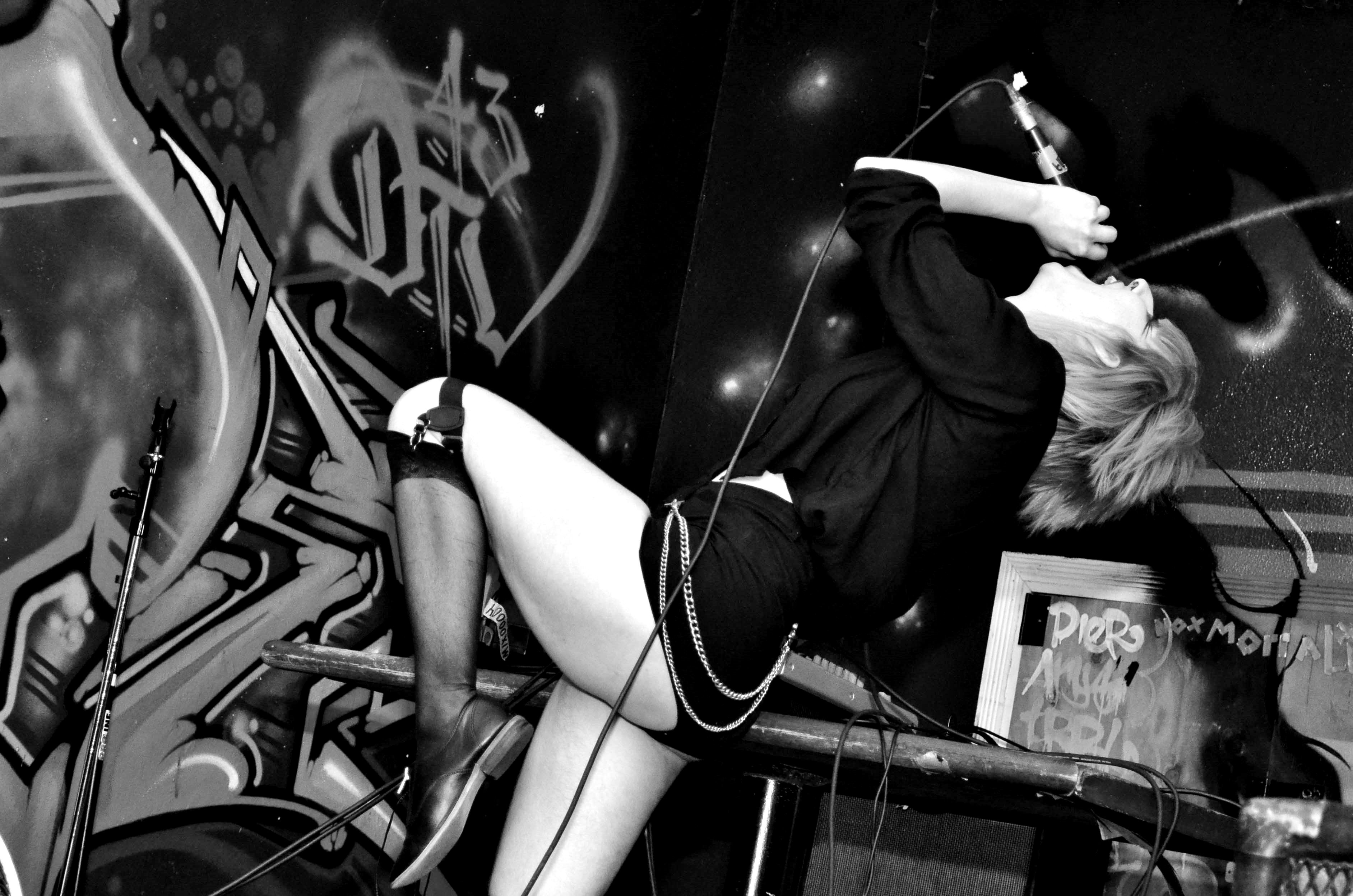
Ustam | Photo by Denise Chelini
Where does the name Ustam come from?
I thought I saw something with the word “Ustam” on it or something close to it that my mind ended up deciphering while I was walking around in New York, and I wrote it down before I could forget. I thought it would be an awesome name for my solo project, and it sounded like another language so I looked it up and it’s the singular possessive form of the Turkish work “usta,” which means “master,” and I do play up the dominating factor when I do perform as Ustam and tend to wear leather and maintain a strong demeanor. I’m more confident now to “match” myself to my art, and I think that enhances it, in a way, not only for others but for me, too, to be the whole package deal. You are your art even when your art isn’t present.
What goes into your performance, idea-wise? What’s your approach?
Throughout my noise career, I’ve used my screaming vocals as a staple, and I like it because it gives an element of fear, and I like to scare people because it’s fun. I’d rather scare someone than bore someone. I’m super inspired by Pharmakon—she’s on Sacred Bones Records. She got me into screaming; I’ll scream along to her in my car. I thought, if this little lady can do it, I can, too. I wanted to be a vocalist, but I’ve always been super self-conscious about my voice and the way it sounds, so I figured, what better way to mask it than through screaming? It gives me a little more confidence to be up front on the stage. It’s just being on stage that I really enjoy. Noise is awesome, scaring people is awesome, and everything industrial from the ‘70s through ‘80s to now has inspired that. I want to keep that spirit alive. As a person of the younger generation, I didn’t have the chance to see these awesome acts live before, so I think that performing in these genres helps keeps that spirit alive—keeping it alive for the younger people who never saw SPK [Australian industrial/noise band] live. Many of these industrial acts weren’t even documented in the first place.
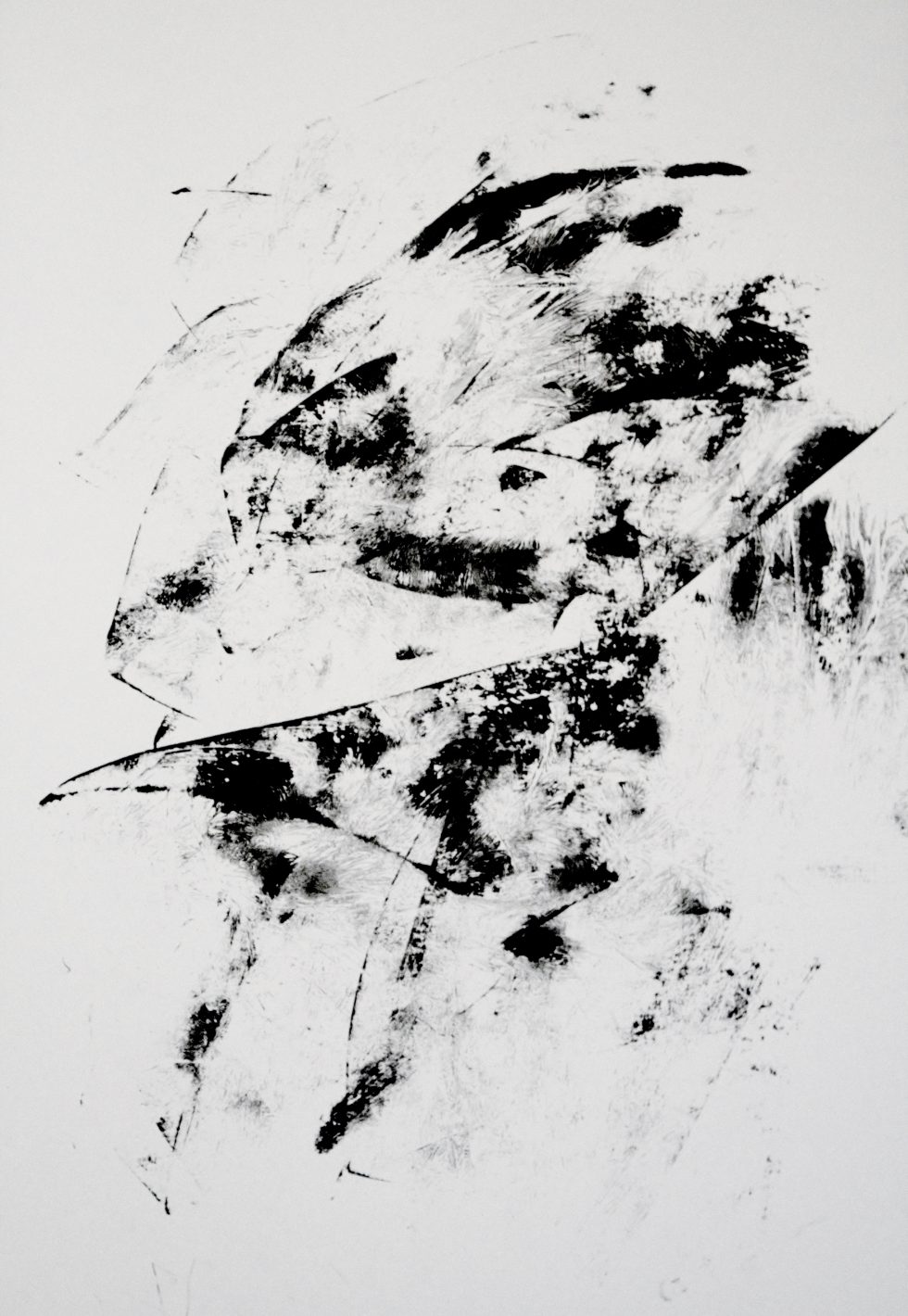
“Surviving The Plague” | Ink on Paper
How would you describe your visual art?
I primarily stick to ink and ink-based works. It’s super abstract. Nothing is supposed to look like anything, but everything ends up looking like something—like a Rorschach. That’s exactly how I like to present it to people, some people will ask, “What does this mean? What is this about?” You have to find out for yourself. I know what it looks like to me, but I’m not going to tell you because then that’s all you’ll see. If you go in blank, you’ll pick it out for yourself. Sometimes people will buy a piece of mine and hang it a different way—and that’s awesome, because that’s how they see it. Once it’s in your hands, it’s your story, your piece.
Do you see your audio and visual practices as part of a unified genre?
All of those industrial acts from the late ‘70s and early ‘80s have the same type of feel and vibe.
If you look at the album art for noise/experimental artists, you’ll see that it’s all fairly similar. So in that vein, I like to keep the bleak, Xerox art aesthetic, and that monochromatic style in my visual art.
If you’re into the aesthetic, and the noise, you’ll have an amazing, positive experience, but if you’re not into it, you’ll have a completely negative experience. And I don’t want there to be an in-between. I want you to either love it or hate it. You have to be on either end of an extreme. If I end up somewhere in the middle, then I feel like I’ve done something wrong.
What would be the ideal venue if you could run one?
There’d be a lot of neon—not in the obnoxious way, but in the mall sort of situation, like the under lighting. There’d be just a lot of different rooms—a big room, a hall, all these things, each room would be different. Have you seen Suspiria [1977 horror film by Italian director Dario Argento], where each room is themed? I like the super ‘80s aesthetics as well as super modern, contemporary look of just black and white, super clean, super sleek. It would have to have both of those elements. Band-wise, I would have a bunch of people from the ‘80s, along with people who are new in that vein. People from Europe. I would totally bring [in] She Past Away or Lust for Youth. The fantasy part would be that I had enough money to pay them, even if people who didn’t know about them didn’t come to the show.
What feeling does the music create for you, and what feeling do you want to inspire in others?
I feel happiness. Even if it’s something of the darker nature, I feel happy. Even if it’s a dark subject, even if it’s literally black and white. If I’m walking around in a museum, and I see just one piece on white canvas with some black paint, that’s probably the piece that’ll draw me in the most. Even if it’s the most simple, most easy to do, I don’t care. Something about sleek, modern black and white contemporary art just makes me so happy and overjoyed. But I’m very happy creating my own version of it, and I’m having a fun time with it. This is what I want to do forever—there’s no end in sight.
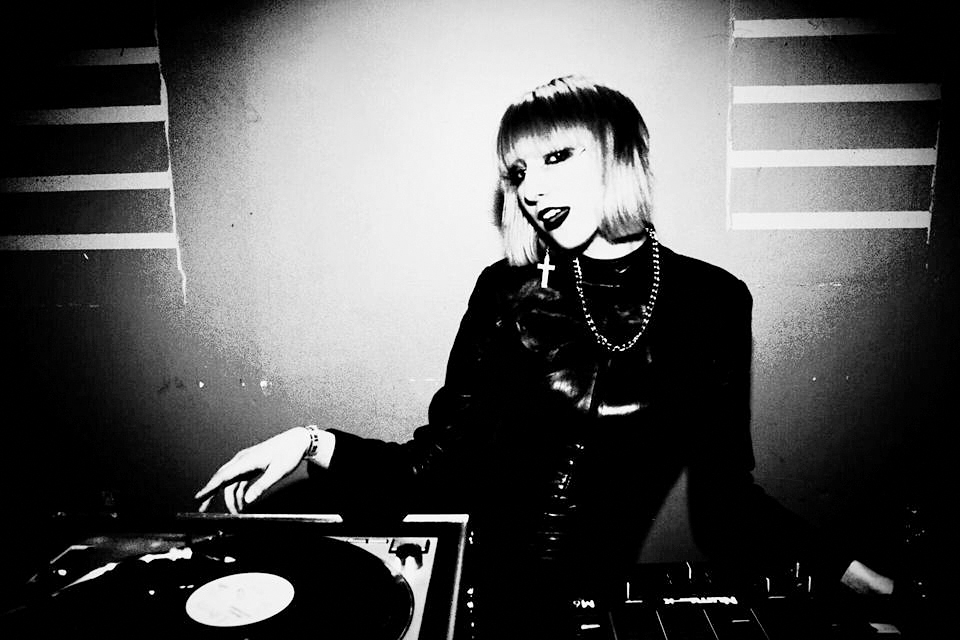
DJ Lady Grey | Photo by William Begay
You can catch Kylie Jackson’s next DJ night as Lady Grey at B-Side on Oct. 21 from 9 p.m. to closing. Jackson (as Ustam) will be one of more than 50 artists performing at this year’s Norcal Noisefest XXI, which will take place at Luna’s Cafe (1414 16th St., Sacramento) and Cafe Colonial/The Colony (3520 Stockton Blvd., Sacramento) from Oct. 6–8, 2017. For more info, go to Norcalnoisefest.com, where you can also purchase advance tickets.
**This piece first appeared in print on pages 20 – 21 of issue #249 (Sept. 25 – Oct. 9, 2017)**
Auditory adventures await, if you so choose. Every year experimental musicians from all over the nation (and even the world!) descend upon Sacramento for the annual Norcal Noisefest. Sometimes loud, sometimes quiet, often weird, Noisefest is not for the faint of heart. If you consider yourself an adventurous consumer of music and art, consider hitting up Luna’s Cafe on Sept. 30 or Cafe Colonial on Oct. 1 and 2 to partake in the 20th annual celebration of “sound art.” Groups like Uberkunst, Instagon, Big City Orchestra, Liver Cancer, Dental Work, Lords of Outland, Xome and so many others are eager to expand your mind. Tickets are just $10 per day, all ages are welcome and weekend passes are available at Norcalnoisefest.com, where you will also find a plethora of information on this year’s events, as well as a history of the festival and recordings from past shows. This year there are even two satellite shows, Sept. 29 at The Luggage Store Gallery in San Francisco, and Oct. 3 back at Luna’s for a post-fest decompression gig. The all too common verse/chorus/verse song structure can be damned, and the “millennial whoop” can go to straight to hell, because the Norcal Noisefest is back to remind us that music can and should be off-center, avant-garde and interesting. Long live the noise!
Of all the cities in the world, what makes Sacramento unique? Is it the general feel of creativity and communal support? Absolutely. Sacramento doesn’t produce a public, but rather, fosters individuals. What’s so great about that, you may ask? Consider NorCal NoiseFest, an event that started as a two-day, jam-sesh-esque gathering back in 1995, but has now evolved into a three-day festival attracting musicians and noisemakers from all over the country. The first day of the event (Oct. 3, 2014) will be hosted at Luna’s Cafe from 7 p.m. to midnight, and requires only a $10 cash cover from attendees. Days two and three (Oct. 4 to 5, 2014) begin at 2 p.m. and will be hosted at Witch Room with the same cover fee. Norcalnoisefest.com has tons of information on performing bands, the festival history, and much more. Come explore new, up-and-coming sounds inspiring the experimental force behind modern music.
(waning) taps into Northern California folklore on their latest album The Funeral Mountains
A canopy of branches and leaves rustle softly; they whisper, almost in cadence, with the squeaks and chirps of Mother Nature’s most cherished creatures. Beyond these sounds, found deep within the sacred forest of the eastern Sierra Nevadas, dwells one woman with mystical powers and abilities. She belongs to an elder sisterhood of 4,000-year-old trees and possesses the gift to transform from human to the form of her ancient sisters—a shape-shifter. Sometime in the 1800s, one silver miner met eyes with this mysterious woman and was promised wealth and wisdom, but at a price. The miner, although enticed by the woman’s proposition, was unaware of the ulterior motives at large, wealth and wisdom for the lifelong promise to live alongside the woman as a tree forever. The choice was ultimately his and the story further unfolds within the latest, six-track album, The Funeral Mountains, from psychedelic doom metal band (waning).
Buriedinhell Records, based in Sacramento and operated by Kenneth Hoffman of local grind and punk bands like Knifethruhead and Cura Cochino, released (waning)’s first concept album in early January. The main idea behind The Funeral Mountains was not only inspired by native myths, California history and fairy tales, but sprung straight from the childhood dreams of keyboardist/vocalist Susan Hunt.
“One of the first things I can remember is having a dream that I was turning into a tree,” Hunt says over a pint at the Hideaway Bar and Grill. “I still remember that dream and it’s been a while. It was frightening.”
Frightening enough to inspire an album full of the band’s signature ambient tones and psychedelic spells, all compressed with an auditory heaviness arranged with the intent to inspire mood within a room full of listeners.
“Mood is really what dictates a lot of our music,” vocalist/guitarist Jim Willig explains. “We used to call ourselves doom a lot, and we do have a lot of slow songs, but the psychedelic or ambient element of the music is pervasive. There’s always been a hazy, trippy sort of vibe that we have cultivated, but we try and maintain the mood.”
Conceptualized in 2007, (waning) emerged when Willig nudged a reluctant Hunt to jump on a neglected keyboard she owned since youth. Hunt, with no formal training, was eventually convinced by Willig to give keys a chance in the form of “textural, weird sounds” with him on guitar at a noise fest in Eugene, Ore. As years progressed, so did the band’s song structures and a need to add more depth and opportunity for endless musical possibilities with the addition of percussion and bass guitar.
“I was not confident enough to play with real musicians because I’m not studied and I just sort of learned by the seat of my pants,” Hunt admits. “Then Jim bugged me into doing it. It’s taken a long time to gain some confidence and sort of move beyond that to contribute to a full band and challenge myself more.”
Now comfortable with her black and white keys, Hunt says the band is better than when it started and credits bassist/vocalist Ian Black and drummer Benjamin Carpineta. Black, a fan of (waning) before talks of joining surfaced during a Portishead concert, admits the slower, long-form style (waning) is known for was unlike any genre he’s ever experienced.
“Pretty much everything I’ve ever done before has been really up tempo, fast and aggressive,” Black says. “I was in an industrial band for 11 years and before that, I was in a couple punk bands [and] an ’80s-style hair metal band when I was 17.”
He adds, “This band’s music has always been really intense and powerful with a lot of beautiful aspects. It all works together and I haven’t been a part of any other band that has given me the same kind of feeling.”
In fact, feelings, moods and emotions are all sensations (waning) attempts to ignite during its live performances, which is what initially sparked the model for the band.
“I’ve wanted a band where if people close their eyes they don’t imagine people playing instruments, they imagine something else,” Willig says. “That’s why I talk about mood a lot and vastness. Transporting, that’s what we want to do.”
Sacramento loves noise—proven with an 18-season running event in the annual Norcal Noisefest. A mecca for all doom, noise, trance and experimentation, Noisefest hosts a mixed bag of genres, ranging from the more raucous sounds from bands such as Liver Cancer, to the more doom-oriented sounds (waning) emitted in 2007. Ultimately, the noise scene is where (waning) found its home—an odd and at times, raucous environment that allowed the band to express its creativity and gain inspiration for new techniques amid like-minded musicians.
“I’d say when we first started out we were really involved with the noise scene. Now, we’re primarily a part of the metal scene, which is almost an outgrowth of the punk or crust mentality. So, a lot of house shows, a bit more underground with a lot of people in their 30s and 40s,” Willig explains of the band’s new audience.
(waning), a band for the aged crusty at heart, who traded anarcho-punk for the contemporary doom metal scene.
Visit Waning.bandcamp.com to listen to their new album, The Funeral Mountains, and catch a live performance on Saturday, March 1, 2014 at the Café Colonial (3520 Stockton Boulevard) with The Body, Amarok and Plague Widow. The show starts at 8 p.m. and costs $10.
The Virgin’s Guide to NorCal NoiseFest 2013
Written by a NoiseFest Virgin
For the 17th year in a row, Sacramento is hosting NorCal NoiseFest. One of the oldest and most established “noise” festivals out there, it is a yearly gathering of performing artists from around the country who base their entire acts around creating noise. There is no false advertising here; we are talking about noise, as in sound intentionally void of rhythm, melody and structure. Dissonance and chaos are sought.
This year’s festival will feature 40 artists, spanning three days and four locations.
Let me just get this out of the way now. I’ve lived in Sacramento for 25 years straight, and I have never been to a NoiseFest. For shame!
Anyway, to gain a better understanding of NoiseFest, I not only reviewed countless videos and tracks by the artists performing in this year’s lineup, but I also spoke with the only two people in town who have performed NoiseFest every year since its birth in 1995, Lob of Instagon and William Burg of Uberkunst. They have also been highly involved members of the Secret Masters of Noise (those who make NoiseFest happen each year) since the early ‘00s.
In sum, think of NorCal NoiseFest as the “outsider experience,” Lob explains. The presentation is meant to be unique, abrasive and unpleasant.
This embrace of noise is not a new idea. Here is a snippet of history to prove it: in 1913 the Italian artist Luigi Russolo wrote the Futurist manifesto “L’arte dei Rumori” or “The Art of Noises.” In it, he argued that because humans’ lives were becoming inundated with machinery, music should incorporate such sounds into composition. You might consider Russolo the founding father of noise music, 100 years ahead of his time. Apropos, this year’s NoiseFest is marking the celebration of a “century of noise.”
Rest assured, NoiseFest doesn’t cater to any one crowd. Sure, noise doesn’t have mass appeal—lots of people haven’t trained their ears for it. Yet there are pockets of noise enthusiasts out there, young and old,
Burg confirms.
Compare noise to eating pancreas, he suggests. The masses will gag at the mere thought, opting for a McDonald’s cheeseburger, just as they will choose to listen to “music” instead of “noise.” Yet there are some who will gladly dig into a plateful of pancreas over a fistful of fries any day.
As he so poetically elaborates, like a mountain man leads the way into the wilderness, the noisemaker blazes a path for other musicians to follow, sometimes decades later.
“Somebody had to go there first, and they generally had to go alone,” he adds.
Consider NorCal NoiseFest the once-a-year gathering of those mountain men and women.
Female-Led Performances
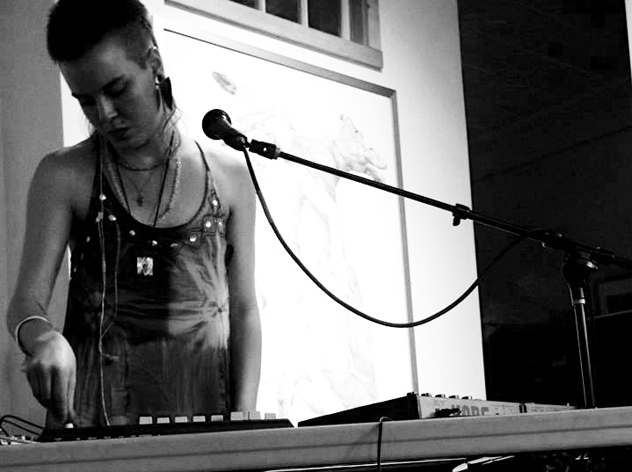
W00dy
is a solo performer hailing from Boston, Mass. She excels at vocal manipulation, particularly stretching and contorting her voice, layering and looping fragments over subtle tones. Her performance may leave you feeling airy, and at other times feeling like you are swallowed in a spiral or a maze. You may be tempted to think she is channeling Bjork at times, minus the music. This will be her first time playing NorCal NoiseFest. Catch her performance on Friday, October 4, 2013 at 10:30 p.m. at Luna’s Cafe.
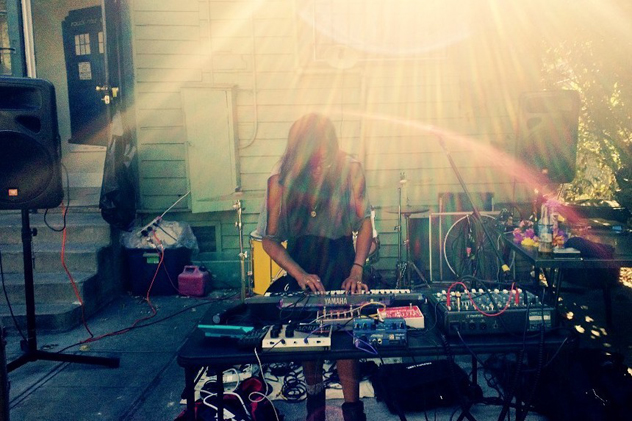
Beast Nest
is the solo project of Sharmi Basu, a Mills College student who is pursuing her master’s in electronic music. Her sound will creep up on you, gently guiding you to another dimension through a blanket of feedback. Fluttering R2D2-like beeps, whizzes, zaps and dial tones will simultaneously emerge, crossed by ethereal notes tracing scratchy hums. According to Lob, “Basu has delivered some of the most psychedelic ambient performances that NoiseFest has had in the past.” Beast Nest performs Thursday, October 3, 2013 at 10 p.m. at Naked Lounge.
Name Game
Music festivals are hard. When you have a lineup of 40 to choose from, how are you possibly supposed to narrow down your options? For those who just can’t make up their minds, try this: just check out the bands with the, uh, most unusual names. Never mind that several of these names suggest pain.
1. Amphibious Gestures
2. Stress Orphan
3. Randy McKean’s Wild Horsey Ride
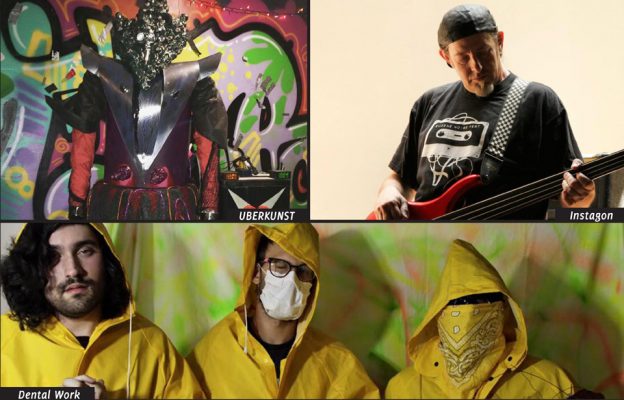
4. Dental Work
5. Pulsating Cyst
6. Endometrium Cuntplow
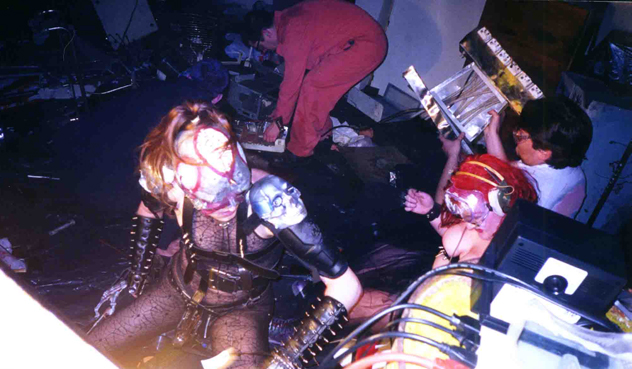
Uberkunst
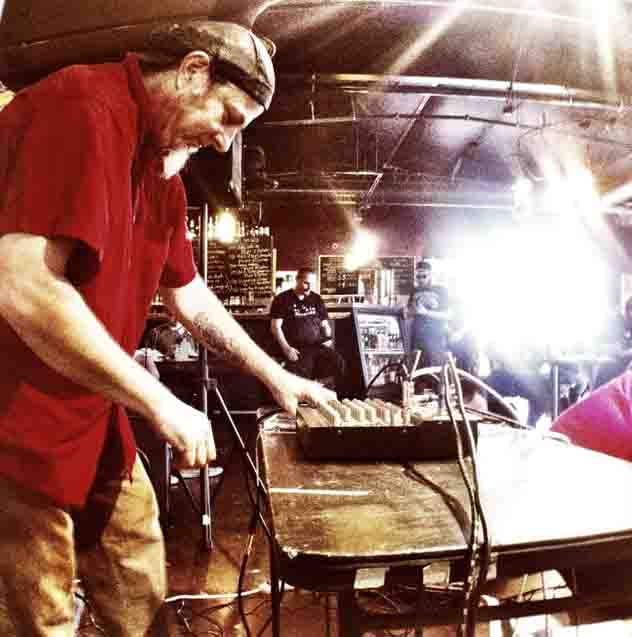
Instagon
17 Years and Counting
As mentioned before, there are only two acts that have performed NorCal NoiseFest every year since inception: Instagon and Uberkunst, both local. Uberkunst is Burg’s project, and “always a spectacle sacrifice to NIAD (noise instrument analog device),” Lob says. Uberkunst’s crew typically consists of 10-plus bodies. Previous performances have included power tools, masks, screaming, destruction, torture machines and spiky outfits with a Road Warrior aesthetic. Instagon, on the other hand, performs with a different ensemble for every single show, with Lob leading the way. When it comes to NoiseFest, Lob typically assembles a handful of performers who each feed their sounds into a mixer set while he selects which sounds to amplify and overlap. One year that meant nine people making noise with jewel cases and contact mics. Odd, provocative, conceptual noise guaranteed. Uberkunst performs at Sol Collective at 10:30 p.m. Saturday, October 5, 2013 and Instagon plays at Bows and Arrows at 3:30 p.m. on Sunday, October 6, 2013.
Who Will Burn the Most Miles To Get Here
1. Thirteen Hurts from Pleasant View, Colo.
2. Dental Work from Traverse City, Mich.
3. Stress Orphan from Washington, D.C.
4. Blipvert from New York, N.Y.
5. W00DY from Boston, Mass.
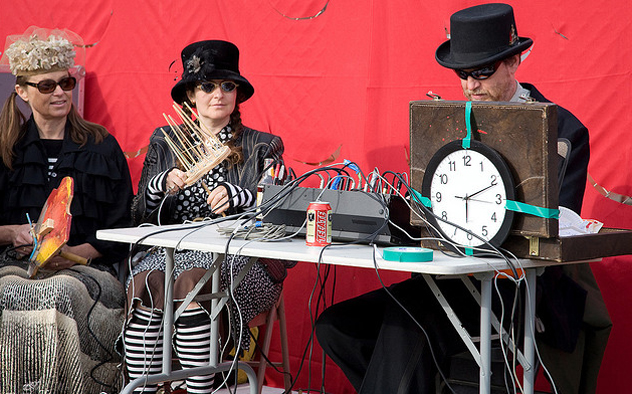
Crank Ensemble
Sights to Behold
Coat hanger hooks, rubber bands, wires, chop sticks, popsicle sticks, broom straws… What more do you need? Not much, if you are making handmade cranks to play in the Crank Ensemble. These instruments are literally works of art that are then used to create noise music. Mastermind Larnie Fox orchestrates the rigid clicks and pops simultaneously into a steady progression—think clock music. You will want to see these guys up close on Sunday, October 6, 2013 at Bows and Arrows, starting at 2:30 p.m. Meanwhile, Michael Amason is known for his ongoing “Noise Tattoo” project, where he tattoos himself through an amp stack. According to Lob, “You will hear every needle mark!” Catch him at 3 p.m. on Saturday, October 5, 2013 at Sol Collective.
Acts You Will NOT Want to Stand As Close As Possible To
1. Uberkunst
2. Overdose the Katatonic
3. +DOG+
4. Striations
5. Pulsating Cyst
Acts You Will Want to Stand As Close As Possible To
1. Endometrium Cuntplow
2. Michael Amason
3. Dental Work
4. Eurostache
5. Jeff Boynton
6. Nux Vomica
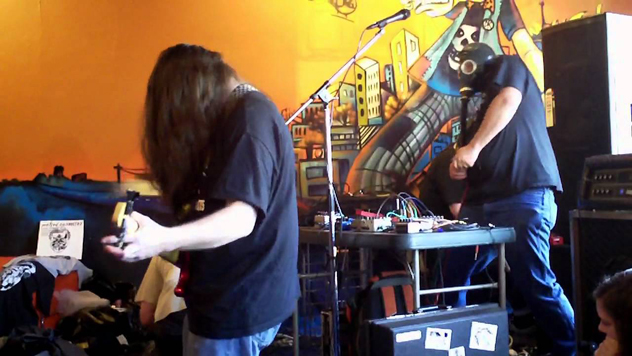
+DOG+
Bring Earplugs
If you plan to watch Los Angeles act +DOG+, the last performance at Luna’s Café on Friday starting at 11:30 p.m., keep these things in mind. Static noise. You may feel like your head is under a nail gun, beneath the blade of a chopper or pressed against the blare of a dial-up connection. Your eye might start to twitch. Or maybe that’s just the caffeine. Likewise, if you check out /The Nothing at 5 p.m. at Sol Collective on Saturday, know what you’re getting into. You will feel like you stepped into an insane asylum, or someone’s nightmare. It will sound tortuous. You might think it’s a perfect way to scare away every child for Halloween this year. Thought I can’t confirm it, Lob also suggests earplugs for Blue Sabbath Black Cheer (11 p.m. Saturday at Sol Collective) Thirteen Hurts (7:30 p.m. Saturday at Sol Collective), and M22 (9:30 p.m. on Friday at Luna’s Café). I’d take his word for it.
6 Bands Not To Miss And Why (Lob’s Picks)

Faults
1. Faults: A local Sacramento noise/jazz trio featuring L.H.Shimanek, Kevin Corcoran and Chad Stockdale reunited, they have not played live in more than five years. They may not play out again. Do not miss it.
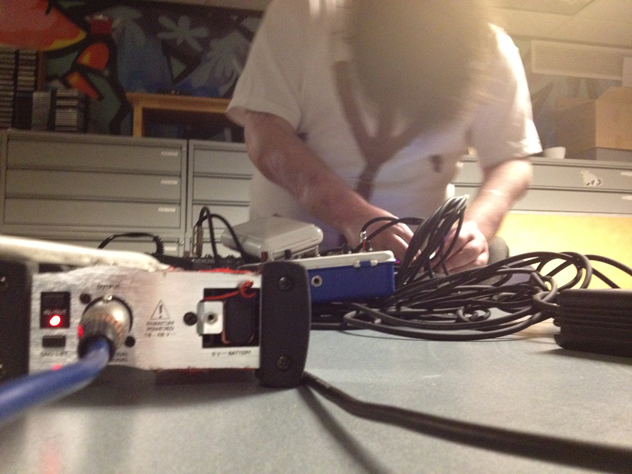
Overdose The Katatonic
2. Overdose The Katatonic: In Lob’s words, “There is only one Jim Trash, and we have him for the weekend. Sonic brutality unleashed in a coffee house; sometimes he throws out toys!”
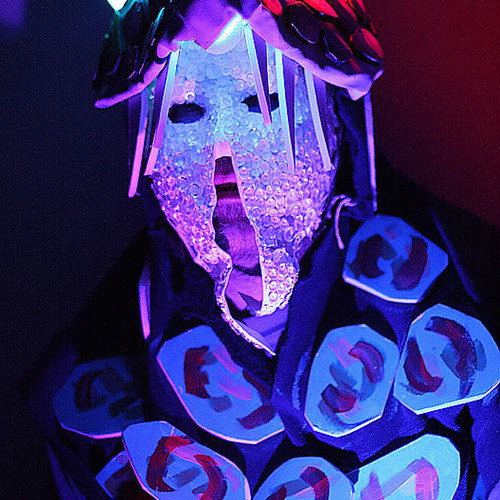
Amphibious Gestures
3. Amphibious Gestures: Lob says it best: “Space aliens from the sea with super sonic audio waves to invade your ears and mind. You think I’m kidding, but…”

Pedestrian Deposit
4. Pedestrian Deposit: These guys have been on a U.S. tour recently and “SLAYING crowds everywhere,” according to Lob. Need proof? Check out the social media trails.
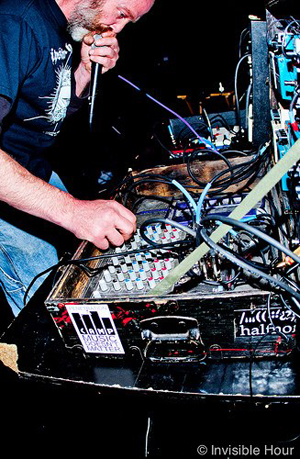
Blue Sabbath Black Cheer
5. Blue Sabbath Black Cheer: Lob calls them a “tribal rush of power and madness” consisting of percussion and electronics. They don’t get out here much, but when they do, they are said to leave a massive impression.
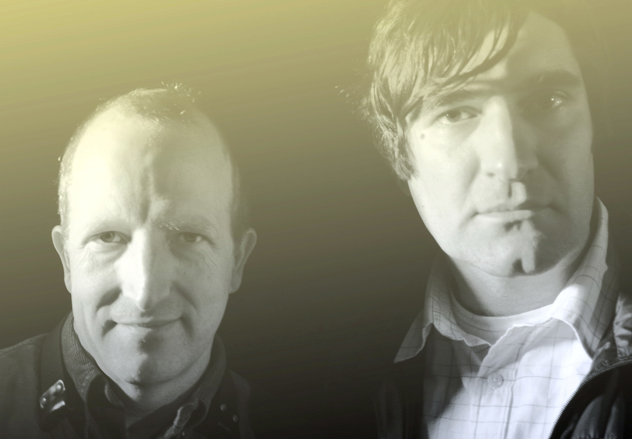
Randy McKean’s Wild Horsey Ride
6. Randy McKean’s Wild Horsey Ride: This is a duo featuring saxophonist Randy McKean and electronics artist Wes Steed. McKean produces sound and Steed captures it via live analog processing, and they play together with the sounds generated. Supposedly it is nothing short of amazing.
Norcal Noisefest takes place Oct. 3 through Oct. 6, 2013. For a complete list of events, go to Norcalnoisefest.com.

It’s that time again Sacramento, bust out your ear plugs because NorCal NoiseFest is turning 16! The annual Sacramento event which spotlights the sound-art genres of noise and experimental will take place from Oct. 5 through 7, 2012 at multiple venues. Friday, Oct. 5 will be at Luna’s Cafe (1414 16th Street) starting at 7 p.m.; Saturday, Oct. 6 will be at Sol Collective (2574 21st Street) starting at 3:30 p.m.; and Sunday, Oct. 7 will be at Bows and Arrows (1815 19th Street) starting at noon. If you’re looking to get tickets your best bet is definitely the all-weekend pass, which is $40 and includes access to all shows, a T-shirt, a compilation CD, a button and Sunday brunch at Bows! Individual show tickets are $10 at the door with free earplugs. Visit http://norcalnoisefest.brownpapertickets.com/ to purchase online, or hit up Phono Select or Midikat Boutique to purchase in person. More details can be found at http://norcalnoisefest.com/.