Flaws. They aren’t what define us but they’re very much a part of our story while growing up. This has been a central theme for HBO’s comedy, Girls, throughout its six-season run. With its finale Sunday, the show has provided growth, not only for its characters, but specifically the show’s creator, Lena Dunham.
The series has been skewered for its imperfections, but I’ve continued watching week to week because its characters’ flaws are what make it so relatable and relevant.
For those unfamiliar with the show, it’s centered around four privileged millennial women trying to navigate life in New York City. On the surface the show’s premise naturally reminds people of the more glamorous and fashion forward Sex and the City. Although there are plot points and dramas that are certainly far-fetched, the girls definitely don’t go through life as elegantly as Carrie Bradshaw and her squad. Sex and the City is for my mom’s generation, while Girls is for mine.
Dunham could have used this platform to convey how diversity is a wider problem within Hollywood and should be further addressed, but I don’t fault her for writing a story based on her own reality. At least she recognizes the diversity dilemma. On a January episode of NPR’s podcast Sooo Many White Guys, for example, she stated, “Jenni [Konner] and I are not going to make another show with four white girls on the poster.” Further adding she understands representation matters.
Hannah Horvath (Lena Dunham) the self-proclaimed voice of a generation; Marnie Michaels (Allison Williams) the manipulative type-A; Jessa Johannson (Jemima Kirke) the toxic, free spirit; and Shoshanna Shapiro (Zosia Mamet) the innocent basic are inherently annoying. They bitch and moan over first-world problems, have no concern for the political or global climate of the present, and are people I would genuinely avoid at all costs. But this isn’t why I relate to them.
With each personality I saw the dark emotional anxieties and pressures of being in your twenties and the uncontrollable impulses we have at an age where living in the moment is like a ticking time bomb. Throughout the series, every one of the girls exposes insecurities we all share like loneliness and the recurring realization that we aren’t perfect.
Girls’ portrayal of sex also kept the show exceedingly honest. I’ve never seen a show be so open about how awkward sex is. Because sex on screen is so saturated with beautiful people, it often leads normal looking folks to feel ashamed to be a part of it. But Dunham changed that with her character’s relatable, imperfect body (watch her first inept scenes with Adam (Adam Driver) in season one, and her latest blundering experience of coitus with Paul-Louis (Riz Ahmed) on a twin bunk bed this season).
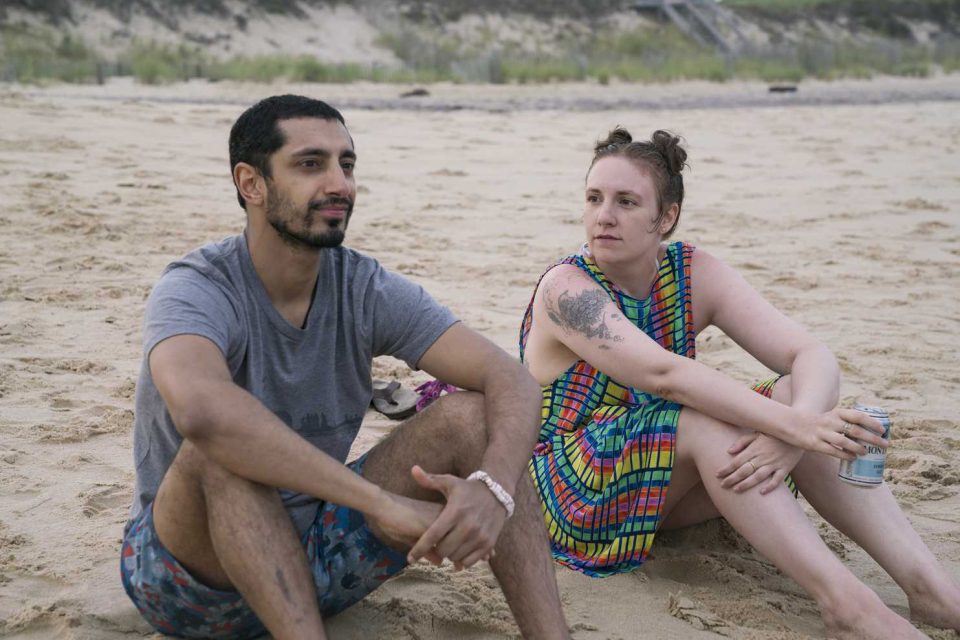
This brings me to Hannah and the finale of the show. For Hannah, she’s moved out of the city for the purpose of getting a new perspective and peace of mind. She’s bounced in and around job opportunities. None have really worked out for her. Neither have relationships.
She runs away from boys, her friends and those unfortunate jobs by moving to upstate New York. Little did she know running away didn’t mean running away from things she needed to confront.
In the finale aptly titled “Latching,” Hannah is yet again at a spot where she doesn’t want to face the reality of being an adult. Except this time, she has a baby that is a product of her earlier season fling with surf instructor, Paul-Louis.
The episode opens with Marnie forcing Hannah to allow her to be co-parent to her new baby boy. Because of her obvious stress and uncertainties, Hannah often alternates between demanding Marnie to distance herself from helping with the child, to almost always expecting Marnie to be there when the baby begins to be a difficult burden.
This is how Hannah behaves toward all things in her life—always frustrated with the personal advice from others, yet too stubborn to be able to face the realities of problems head on, and would much rather blame people for her mistakes and hardships while also putting guilt onto them to be there for her.
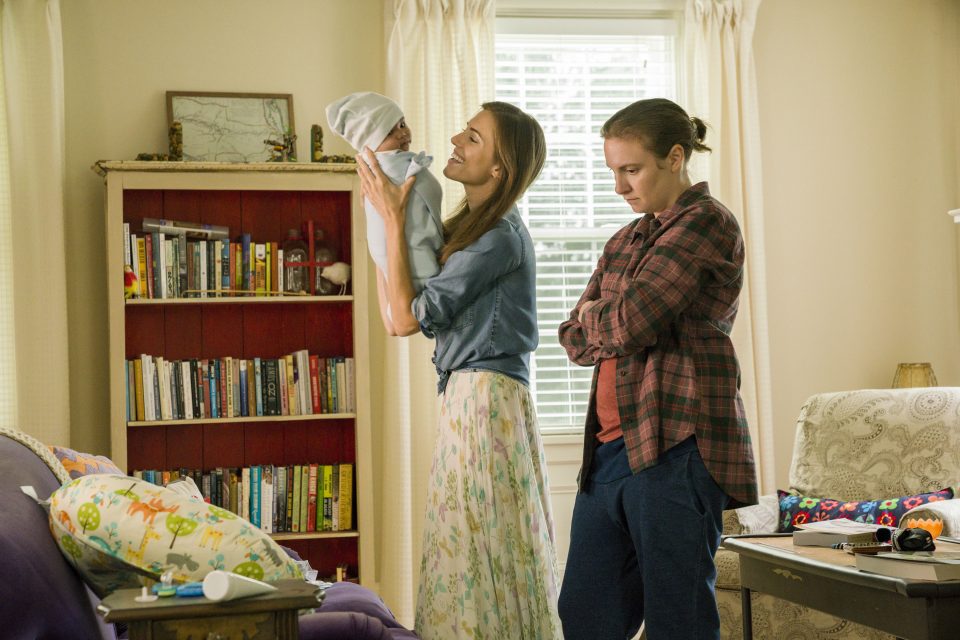
Later in the episode, a sobering reality hits when Hannah’s mother visits and articulates in an argument about parenting, “Your baby is not a temp job!” Which refers to Hannah’s erratic behavior with jobs and relationships in the past six seasons. This mother-daughter exchange is so relatable, because often parents, regardless of arguments, support and attempt to keep their children as grounded in reality as they can.
The episode is a major turning point for the character. Hannah can’t make it all about her anymore and comes to the realization that her baby is the center now.
Through its ridiculous trivial relationships, and absurd moments, being in your twenties is truly the time to endure all these experiences of excitement, heartache, disappointment, anxiety and fear. I think Girls was a constant reminder that just because something bad or good happens, that doesn’t make it the end of the world or the last page in the fairy tale. Life keeps going, and learning to breathe and roll with the frustrations of not being the center of the universe will ultimately help you.
What this show and its finale meant for me is a reminder that we all have to grow up. Like Hannah, I’m trying to figure my life out, and like Hannah, it’s not graceful, but it reminds me that this moment in time is not only constantly confusing but also constantly exciting. I’ll miss tuning into Girls each week to watch fictional millennials gripe about their problems. I’m looking forward to seeing what Lena Dunham comes up with next.
Nightcrawler
Rated R
Writer/director Dan Gilroy impresses with his new psychological thriller, Nightcrawler. This film follows ruthless hustler/con-man/thief Louis Bloom (Jake Gyllenhaal) as he tries to make a name for himself in the heart of Los Angeles. Bloom spends the majority of his time as a recluse, secluded in his apartment, ironing the same shirt he wears every day and thinking of the next way he can “come up” in the world. The only problem is that his come ups generally involve stepping on the heads of others.
The first scene introduces us to the character (or lack thereof) Bloom possesses: he is a man who will hustle for money at any cost. He begins with petty thievery, stealing copper and manhole covers that he sells to construction sites and then, by chance, he finds his “calling.” Driving down the freeway late at night, Bloom comes across a fiery car crash and is compelled to stop. It is here that he meets freelance photojournalist Joe Loder (Bill Paxton) and becomes acquainted with the dangerous and parasitic world of “nightcrawling,” scaling the city in search of home invasions, crashes, murders and other destruction, all for that “perfect shot” to sell to local television news stations (think of it as a sort of sick version of paparazzi).
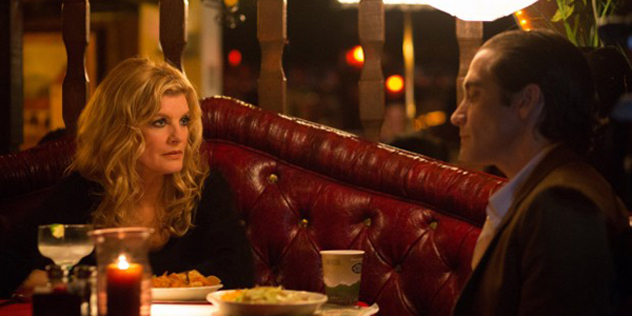
And so starts Bloom’s dive into the realm of crime journalism. He hustles a cheap camcorder and police scanner from a Venice Beach pawnshop and thus begins his new career. However, Bloom cannot do this job alone and so he takes in a down-on-his-luck kid named Rick (Riz Ahmed) and pays him $30 a night to listen to the scanner and direct him to the scene of the crimes with the GPS on his cellphone. Bloom films his first crime scene and sells his footage to local news station run by cutthroat veteran anchor Nina Romina (Rene Russo). Nina hands Bloom a check for $250, advises him to obtain a better camera and has him promise to always come to her first with his latest and most brutal footage (because it’s graphic crime that keeps the city on its toes and keeps the station’s ratings high).
With time, Bloom’s nightcrawlilng career begins to blossom (see what I did there?). He buys a better camera, a better car, a better scanner, is always the first at the scene and holds no kind of moral consciousness, willing to film a dying man while staring stoically into his eyes. It is this type of bloodthirsty footage that Romina yearns for so that her station stays on top and her job stays in place. Bloom and Romina begin to form a sort of sick symbiotic relationship, each playing into the carnal desires of the other.
The film shifts as we see Bloom’s sociopathic behavior develop and witness his slow progression into insanity. He begins to become obsessed with the bloodshed, the pain, and the anguish of others. For Bloom, life and all of reality become a game, and the people in it become puppets, mere pawns for him to maneuver and manipulate. He lacks compassion, respect, human decency and has no moral compass that distinguishes the right from the wrong. The need for and the addiction to the perfect shot, the perfect angle, becomes so great that Bloom will do anything to get his “fix” and fulfill his abominable desires.
Gyllenhaal completely masters the insanity, desperation and the sociopathic mien of his character, taking you along for the ride of a man with nothing to lose and everything to gain. This film will have you on the edge of your seat, gripping your chest and covering your eyes as you anticipate each new scene.
Nightcrawler has us ponder what the word “enough” really means and shows us what the human mind and body is capable of doing in order to satisfy a vulgar obsession. With extremely graphic imagery and foul language, this is a film that is not safe for children (or the weak of heart). However, this film is a must-see, nail-biting thriller. Run to your car, head to the nearest theater, and sit back to watch the madness that is Louis Bloom unfold. I trust that you will not be disappointed.
Trishna
Rated R
From an outside, idealistic perspective, India seems like the perfect place for romance. It has a rich and ancient culture, with a mythology as colorful as its people and costumes. In the cinema, the country has become known for ornate dramas and sweeping love stories full of song and dance. Trishna, the latest film from writer/director Michael Winterbottom (24 Hour Party People), has all the makings of a romantic epic. However, this is a rags to riches tale gone horribly wrong. It begins as a sort of Disney princess story, but it keeps the camera rolling to see if there really is such a thing as “happily ever after.” In this case, there isn’t.
The sprawling story of the title character (played by Slumdog Millionaire’s beautiful heroine Freida Pinto) begins in Trishna’s hometown in a rural village in Rajasthan, the largest state in India. She is a proper young woman of 19, the eldest daughter of a large family. She even addresses people as “sir.” Trishna’s life changes forever when she meets a handsome young man named Jay Singh (Riz Ahmed), the son of a wealthy hotel tycoon who is instantly taken by her.
It seems like just a chance meeting, but one day Trishna’s father, who struggles with alcoholism, falls asleep at the wheel and crashes his truck, full of cargo and Trishna in tow. The accident leaves both alive but injured. Trishna has a broken arm, but what’s worse is that her father is unable to work, leaving the already poor family in dire financial straits. Luckily Jay, unable to shake his feelings for Trishna, returns to her home and learns of her woeful story. He offers her a job at his father’s hotel in Jaipur, capitol of Rajasthan, where Jay finally expresses his desire for Trishna. But after their first night together, the shame she feels is too great and she immediately returns home.
It’s the stops and starts in their budding romance that creates wonderful conflict. Jay seems supportive of Trishna and appears to really want her to excel. He enrolls her in college classes in hotel management so she can possibly better her station, but as the film goes on, it seems that all of this generosity comes with strings attached. As selflessness sours into selfishness, so does their story spiral into tragedy.
What’s really at work here is the anything’s possible ethos of modern day, cosmopolitan life butting heads with staunch tradition. Eventually Trishna and Jay meet again. After her abortion leads to exile from her family’s home, she begins working in a factory–the cushy life at the hotel in Jaipur seems miles away. Once again, Jay returns and brings her to Mumbai, where living together as an unmarried couple isn’t frowned upon. Love between the two really blossoms. They are free from antiquated ideas of class and propriety. Still, old values creep in: Trishna, for example, has always loved dancing, and the couple’s artistic friends urge her to pursue it further; however, Jay is resistant to his girlfriend dancing professionally, and in the end, much in the way she seems to follow Jay anywhere, Trishna cedes to his wishes.
Otherwise, things are fine until a family situation forces Jay to return to the hotel business. The couple leaves the liberal city behind once again for Rajasthan. There, steeped in old traditions, Jay becomes more like a lustful sultan than a loving boyfriend. After reading the Kama Sutra, Jay asks Trishna in one of the film’s more poignant moments whether she is a maid, single woman or a concubine. She answers, “I don’t know.”
It’s this sort of inner struggle that’s so achingly portrayed via Winterbottom’s immediate style. Every shot drips intimacy as the film moves sporadically between joy and horror. Pinto’s face, often featured in close-up, displays heartbreaking fragility. Her wide-eyed character wants to see the best in people, and in herself, but that sort of idealism often leads her to make very questionable choices. You want her to succeed–perhaps because she seems doomed to fail. Unfortunately, fairy tale endings aren’t so easy to come by.
Trishna opens at the Crest Theatre on Aug. 3, 2012 and will run through Aug. 9. Go to http://thecrest.com/ for showtimes.