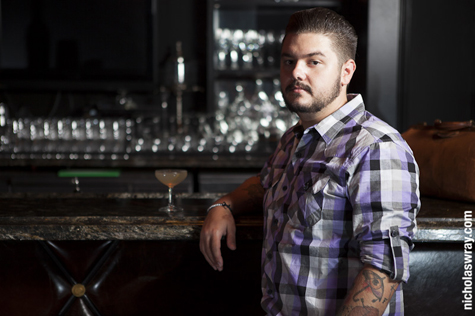
Bartender Andrew Calisterio on why Sacramento should be proud to be a “cow town”
Words by Anthony Giannotti
Sacramento has been labeled by many in larger metropolitan areas in California as a “cow town.” While this may or may not be true on many levels, the fact that we are surrounded by some of the best and richest farmland in the country is undeniable. Andrew Calisterio, bartender at Grange Restaurant and Bar, thinks we should embrace this “cow town” label.
“I grew up in rural Elk Grove before the whole tract home thing,” he says. “We had cows in my back yard. My family always had a garden and fresh food. Farm to table has always been a part of my life.” Growing up with a garden has definitely helped him know exactly what to do with the amazing produce we have around here. Calisterio continues, “We have tons of fresh ingredients. Look at all the citrus here. Don’t just put it on the side of the glass to make it look pretty, put booze in it and shake it up!”
Not only has Calisterio devoted his life to Sacramento and the fine local produce, but he is a big advocate of knowing what to do with it. He is one of the founding members of the Sacramento chapter of the U.S. Bartenders’ Guild–a national organization “of beverage service professionals dedicated to the continued refinement of [their] craft,” according to a mission statement on the USBG website. Calisterio makes no illusions of how important he thinks keeping up and furthering industry people’s knowledge is, “The education is what helps create and expand our creativity.”
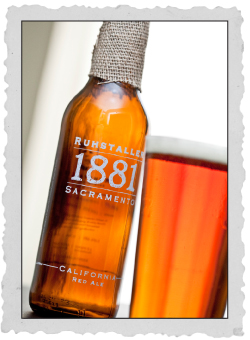
It’s not just cocktails and shakers for Calisterio. He is also one of the key members in the resurrection of the Sacramento brewery Ruhstaller. “Ruhstaller was a brewery in Sacramento 130 years ago, started by Captain Frank Ruhstaller. I get to sell a really good beer to people in the industry, my friends.”
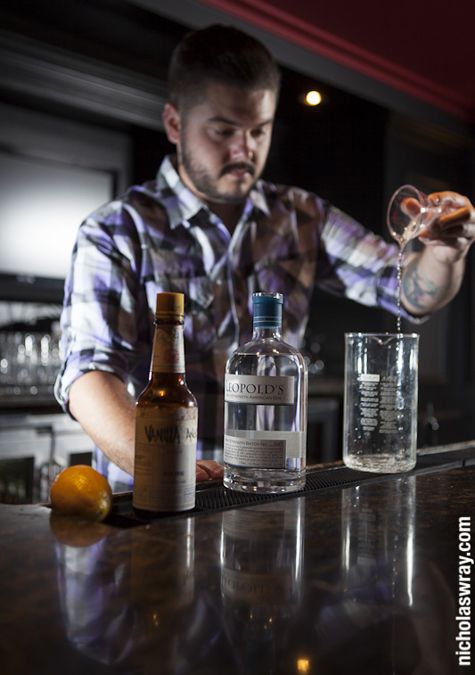
I got to catch up with the local advocate over a glass of whiskey, which of course he blended, to talk more about Sacramento and cocktails.
How did you start bartending?
I started this whole thing with coffee. I really enjoyed making things. I was 16 working at Starbucks. I liked making the things they had set for us, but I always wanted to make something different, something special. The guests wanted the same thing every single day, and to me that was just insane. I would try to work something in that was around what they liked, but pulling them toward something new or different. Eventually I got picked up by Java City, worked my way up the ladder there and came to a point where I could do anything I wanted with coffee. I really wanted to get into spirits. I’ve always been a fan of nice food and cocktails and experiencing flavors. I pride myself on having a good palate.
How did you start at Grange?
I went in applying for a bartending position, and they looked at me like I was crazy because I had no experience. So I asked what was available and they let me be a bus boy. There was no bar-back program there, so I would go behind the bar every chance I could to help, polish glassware, anything I could do to get in. I’d ask way too many questions and bother Ryan Seng, interrupt his conversations with guests to find out what he was doing and how he made that drink. I basically declared myself a bar-back position. One day a bartender didn’t show up. Since I knew how to make all the drinks–I even had two of my own drinks on the menu, and I was familiar with our wine list–I finally got to start bartending.
Grange is known for its affiliation with the slow food movement. Do you try to incorporate any of those principles into your cocktails?
Absolutely. I grew up in rural Elk Grove on four acres. I was in FFA [Future Farmers of America] as a kid, which ended up being beneficial for me when applying at Grange because I had this agricultural background. I knew the farmers that the food at Grange was coming from. When it came to building my cocktails, I wanted to represent the local Sacramento area.
You recently won a couple of cocktail contests. Can you tell us about that?
The big one was put on by Hangar One Vodka. It was a California-wide cocktail competition. I was already familiar with the brand because it is a farm to bottle spirit–right up my alley. A rep came in to ask me to join the competition but said they weren’t stopping in Sacramento. They were going to be in different major cities around California–Los Angeles, San Francisco, San Jose. I was a little offended that they weren’t going to be representing the capital city of California, where so much of California’s produce and agriculture comes from. So I came up with my cocktail and started networking, using social media to let my friends and peers know what I was working on and trying to represent Sacramento.
You are one of the co-founders of the Sacramento Bartenders’ Guild. What is that and what do you guys do?
As bartenders, we go visit other bars or bartenders that we respect and like to see what they are doing and learn from them. It started as this kind of informal gathering and eventually some of us decided to get together and make it formal and official. We wanted the education of bartending to be brought forward. It’s $100 a year, and if you go to just a couple meetings, you’ve already gotten your money back in products and education. We have tastings and training with brands that share their products but also teach us about spirits and what the differences are and help us learn how to use them to our best ability. We are using our connections to gather and share brands and ideas with our coworkers in town. Bar owners and workers get a chance to meet, so whether someone is looking for a job or needs a bartender, it’s just a great way to communicate. All of us are career bartenders, not just some guy who pours shots. We are trying to raise the bar around Sacramento. We have a great cocktail scene here; we just want to always see more out of it and let it shine.
So you think it’s important for bartenders to have extra education, to be able to do more than just give a shot or a beer?
Well even with that, there is a proper shot and a beer pairing, it has value. Sometimes you don’t want a cocktail. Sometimes you just want a shot or a beer. Dickel is a whiskey brand that has become really popular as a shot. Someone decided that that was a good shot to pair with a beer. And the beers aren’t Budweiser anymore. North Coast Company Blue Star is the inexpensive beer on tap now. So the bar is being raised even for just a shot and a beer. Having a vast knowledge of spirits and cocktail ingredients helps you to attract more guests and give them that experience they are looking for when they go out to eat or have a drink. I love when someone comes in and says “Make me something.” My next question is what do you usually like? And I will try to avoid that.
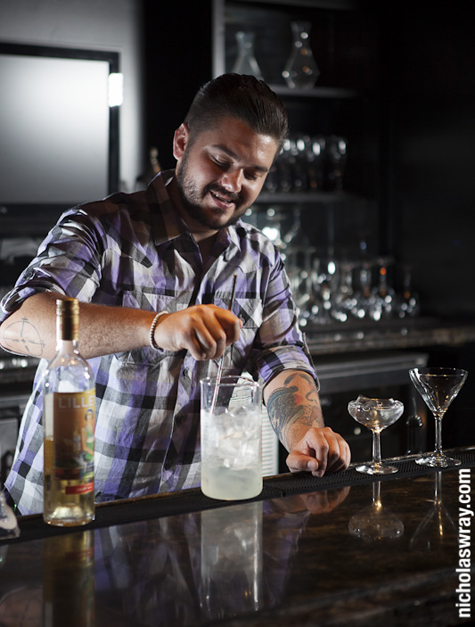
You’re not just a cocktail guy. You are also involved with Ruhstaller Beer…
I was brought on early with this company. I am honored to be able to help with the resurrection of the old Sacramento brand… They asked me to help build the brand because they know I am a social guy. I lug around kegs and talk to people and help with sales. I’m doing the same thing I do every day, but on the other side of the bar. I’m getting the bartenders to try this beer, telling them how good it is and then they buy it for their bars. The company has grown a lot and I help when I can, mostly with social networking or helping pour at events.
Do you ever try to combine your knowledge of beer and cocktails to make a beer cocktail?
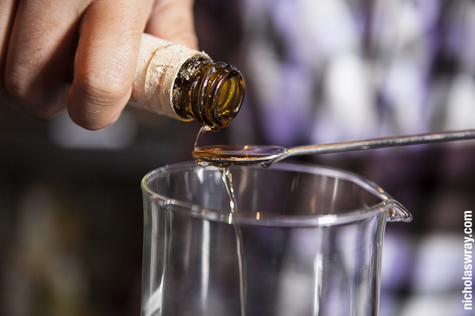
For beer week, we had a beer pairing dinner at Grange with some big names from Sacramento. I put together a cocktail that was in the fashion of a shot and a beer, with a twist. I took [Ruhstaller] 1881 and made syrup out of it and made an Old Fashioned using Woodford Reserve. I even used local Sacramento oranges in it. I served it with a shot of beer on the side to help represent the beer. Darell Corti [gourmand and co-owner of Corti Brothers] said it was the best aperitif he’d had in Sacramento. I was so happy, I couldn’t stop smiling. It was a great boost.
What’s involved in a great cocktail?
Balance, first and foremost. I try to balance where the flavors hit on your palate. I generally start with a great spirit or an end result flavor. Or I try to pick out flavors that will work well in the cocktail and pair with the food. Sometimes it’s hard when I really like a certain spirit that has so much great flavor on its own because I’d rather just drink it neat.
Midtown Cocktail Week is coming up. What sort of blowout is Grange doing this year?
Blowout is a good word. Last year was such a success that it was too busy to accommodate everyone in the hall. So this year we will be using the dining room. Grange’s dinner service will come to a screeching halt and be replaced with amazing cocktails and appetizers. The band The Silent Comedy will play. The theme this year is Sacramento, so a little politically driven. At Grange, we are doing the anti-prohibition act. We want people to come out and vote for the cocktails. We are also going to have hometown hero Jayson Wilde come back and guest bartend the event.
Is there anything you’d like to see out of the Sacramento food and cocktail scene?
Sacramento has had a lot of successful people start here and make names for themselves, but they always end up leaving. It’s great when they come back around and visit, but Sacramento needs some talent to stick around. If Sacramento is going to grow or be more successful, we need these people to stay and be a part of this city. I would like to see some of the people from Sacramento that have been successful elsewhere be successful in Sacramento. I enjoy other cities and traveling, but this is my home. I have a lot of friends and inspiration here. We are the capital city in the largest state.
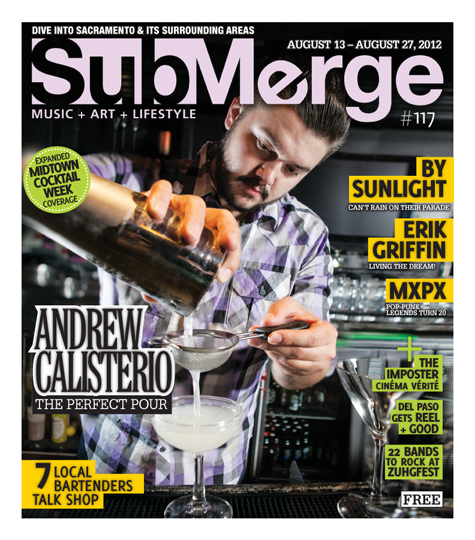
Midtown Cocktail Week will take place at various venues from Aug. 19 through 26, 2012. See what Andrew Calisterio comes up with at the “Repeal Prohibition – High Styled 1920’s Political Rally” event at Grange on Aug. 24, 2012. The event will run from 5 p.m. to midnight. To keep track of other Cocktail Week happenings, go to http://midtowncocktailweek.org/.