
If “cooking ramen” conjures memories of dunking plastic-y noodles into boiling water and flavoring it up with the mystery mixture contained within a foil packet, hey, you’re not alone. Let Sacramento Natural Foods Co-op help you step up your ramen game with their upcoming Ramen Workshop. Instructor Sawako Ama, born and raised in a Buddhist temple in southern Japan who also happens to be a dance artist, “will share the basic techniques and the best ingredients for perfect noodles and flavorful broth, and … discuss regional variations from Japan and how to customize your ramen,” according to the co-op’s website. Head over to Sacfood.coop/cookingschool and click “Class Calendar” to find a link to purchase tickets, which are $45 for co-op owners and $55 for the general public. The class will start at 6 p.m.—just in time for dinner!
Tag Archives: Sacramento Natural Foods Co-op
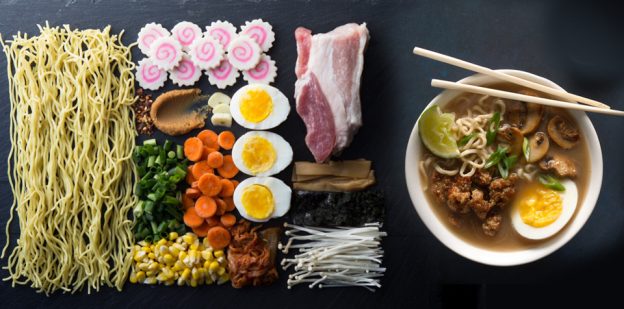
Learn to Make Your Own Ramen and Soup Stocks at Sacramento Natural Foods Co-op’s Ramen Workshop • Oct. 18, 2016
T-MINUS TURKEY DAY
The Ins and Outs of Nailing Thanksgiving in Sacramento
Regardless of its sordid connotation with American Indian displacement, it’s hard to deny that Thanksgiving is one of the most enjoyable holidays. It is a prime opportunity to slow down, contemplate and express gratitude, spend quality time with family and loved ones, show off your culinary skills and stuff your face.
Turkey Day has also come a long way from its Norman Rockwell-era canned green bean casseroles and cranberry sauces, stuffing from a box and overcooked frozen turkeys. These days, and in America’s Farm-to-Fork Capital, Sacramentans have a cornucopia of resources close at hand to make this year the best Thanksgiving ever. The list below is limited by word count constraints, and is by no means inclusive of the many other inspired local businesses, for which to be thankful.
FOR THE CHEF
This is the year: you’re going to prepare a feast for the record books. But your carefully concocted provisions are only as good as the ingredients with which they were prepared. Here are some places to stock up or learn something new, so you can bust out a meal that will put Suzy Homemaker herself to shame.
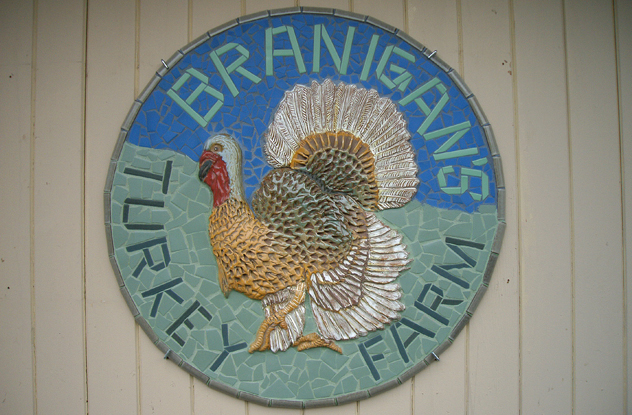
Branigan’s Turkey Farm
39621 Co Rd 24A, Woodland
Braniganturkey.com
In addition to the obvious fact that fresh, local food just tastes better, did you know that big business meat-packing companies use shady ingredients like saline to beef up weight so they can further profit from a cut of meat, while upping your sodium intake? And utilize low doses of arsenic, which is a poison, to make the color of the meat appear fresher? Play it safe, get a better tasting bird and keep your money within our local economy by supporting Branigan’s Turkey Farm. Family-owned and operated since 1942, their turkeys are available at stores throughout the area, or you can order from the farm directly.
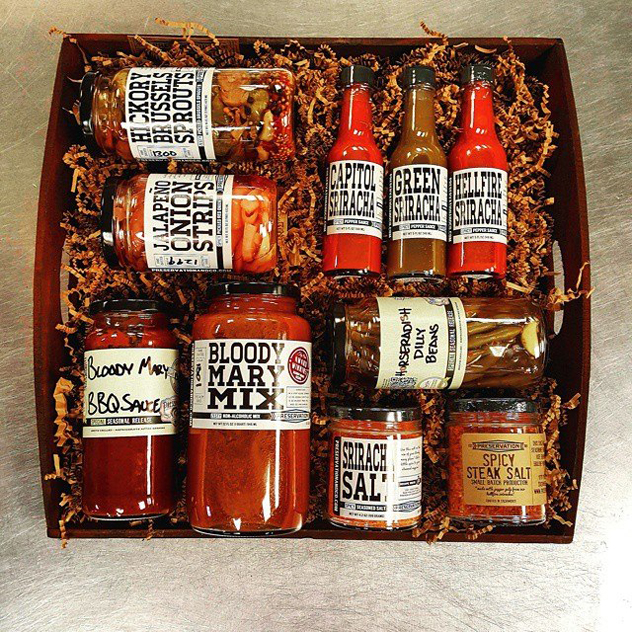
Preservation & Co.
1717 19th Street, Suite B, Sacramento
Preservationandco.com
Originally launched into the limelight with his award-winning Bloody Mary recipe, Jason Poole is no one-trick pony. His sauces, seasoned salts, pickled goods and cocktail mixes put the special in specialty. Preservation and Co. also carries other regionally made goods for spicing up your kitchen cupboard, offers cooking classes and sells cool aprons so you can look the part while giving your guests the performance of a lifetime.
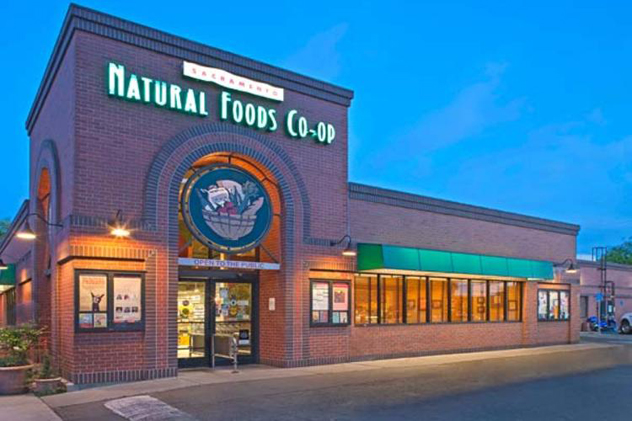
Sacramento Natural Foods Co-op
1900 Alhambra Boulevard, Sacramento
Sacfoodcoop.com
If you ain’t got time for shopping around all over the place and need a one-stop market to get everything you need for Thanksgiving, the Co-op is your go-to. Boasting the first 100 percent organic produce department in the nation, SNFC also has a no-GMO, all-natural food buying policy. The robust meat, cheese, wine, beer, bulk, grocery, deli and kitchenware sections cover all your bases, while natural medicines in the wellness section will help you digest after overeating. Additionally, fun and affordable cooking classes broaden your skillset in the kitchen.
FOR FRIENDSGIVING (OR THE LAZY)
Invited to a Friendsgiving potluck or a family Thanksgiving where you aren’t responsible for cooking the whole shebang? Show some manners and bring something fancy, but effortless. Or maybe you’re not interested in getting out of your pajamas, socializing, cooking or washing dishes, but still want to feast? That’s cool, we’ve got you covered.

Corti Brothers
5810 Folsom Boulevard, Sacramento
Cortibrothers.com
You can hardly call yourself a Sacramentan if you haven’t paid a visit to this local main staple. Famed for their beer, wine and specialty foods selection, Corti Brothers is a homegrown grocery store and deli in East Sacramento founded in 1947. Their aforementioned deli is killer, and makes for a great place to order a charcuterie or veggie tray that is far and away on another level than what you’d get at Safeway. Impress friends, family or yourself with your good taste, and shop Corti Brothers’ unique craft beer and artisan wine offerings.
Selland’s
5340 H Street, Sacramento
Sellands.com
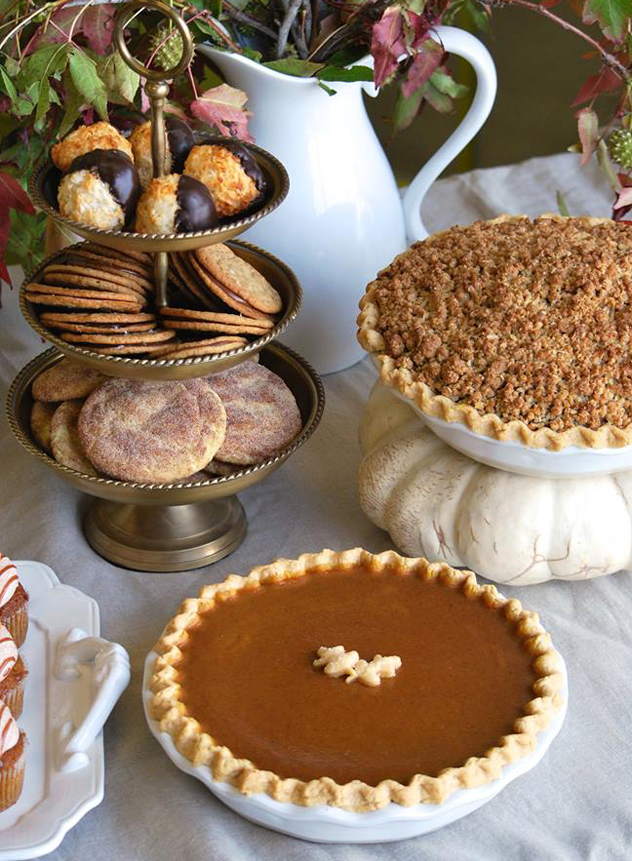
Selland’s is, in this writer’s opinion, Sacramento’s best place to get breakfast, lunch or dinner without going for broke. And—shut the front door—they have a full Turkey Day catering menu. You can sit on your ass while you piece together your perfect meal from the catering options menu, get off your ass and go pick it up, then go right back to sitting on your ass the whole holiday while you go in on the top-notch cuisine Selland’s serves up. Orders must be placed by the Friday before Thanksgiving at 3 p.m., and picked up by appointment the day prior. Bonus! Thanksgiving catering orders entitle you to 15 percent off all bottles of wine in Selland’s Wine Shop, too.
Ikeda’s
26295 Mace Boulevard, Davis
Ikedas.com
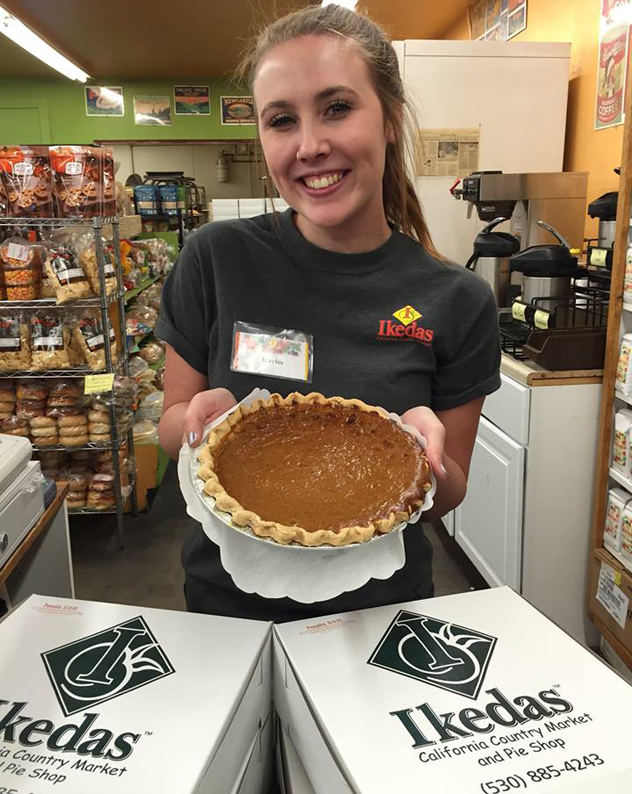
My best friend turned me on to Ikeda’s by appointing it our pre-hike meeting spot in Auburn this summer on our way to Stevens Creek Trail. I was so impressed with their pie selection—I mean, they have every kind of pie you can think of—that I made a mental note to stop at one of their regional locations prior to Thanksgiving. I like to cook on Thanksgiving, but I leave the baking to someone else. The expression “easy as pie” is a lie and must have been coined by some smug asshole. You can plan on Ikeda’s selection of well-executed pies getting picked over leading up to the holiday, but the good news is that they welcome you to call ahead early in the day, order your favorite, and they’ll bake and hold it for you.
BEST WAYS TO EARN THOSE EXTRA CALORIES
Turkey Day doesn’t have to mean your pants aren’t going to fit anymore. Pig out, guilt-free with these two annual events. In fact, research shows that aerobic exercise curbs appetite, so you’re less likely to overeat if you start your day by getting your juices flowing.
Run to Feed the Hungry
Register at Runtofeedthehungry.com
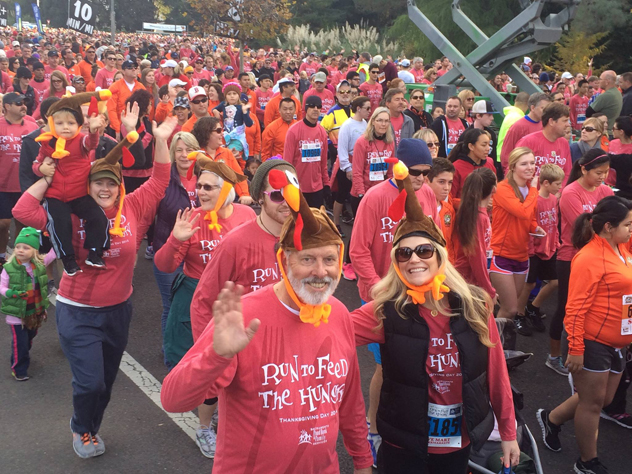
Entering its 22nd year, this annual fundraising event is now the largest Thanksgiving run of its kind in the country—around 30,000 people participate each year. Managed by and benefiting Sacramento Food Bank and Family Services, this 10K run or 5K run/walk will make you feel good spiritually as well as physically as you race through East Sacramento.
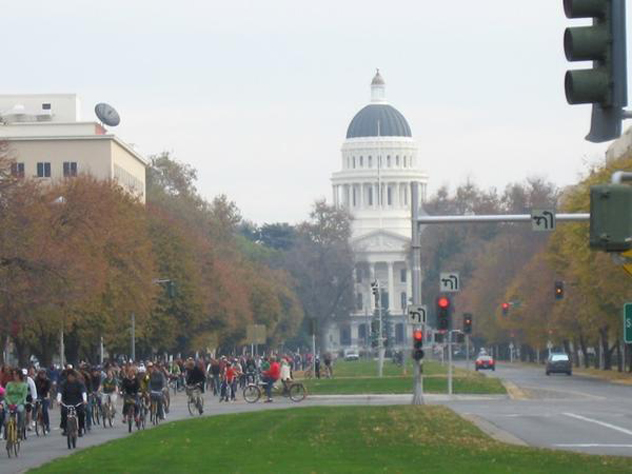
Sacramento Appetite Enhancement Thanksgiving Bike Ride
Friend “Sacramento Appetite Enhancement Thanksgiving Day Bike Ride” on Facebook
Celebrating its 28th year, the Appetite Enhancement Thanksgiving Day Bike Ride is as much a party as it is a workout. In fact, it’s usually wrapped up with many of its participants plunging into the confluence of the Sacramento and American rivers. Rad bikes, raffles, ciders from local brewer Two Rivers and more are part and parcel of this grassroots ride.
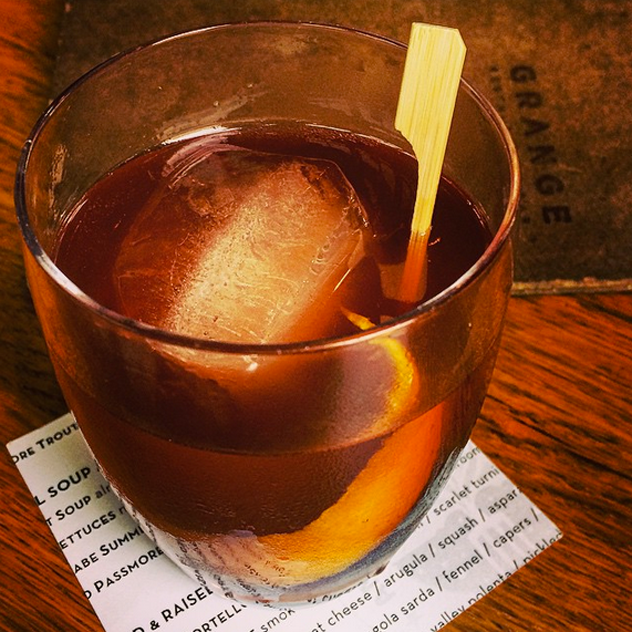
TIME TO DITCH THE FAMILY
OK, we love our families, but after a while, they get on our nerves. That’s why we all moved out. You’ve paid your dues, suffered through your dad telling the same damn story for the umpteenth time, lied through your teeth that you adored your grandma’s fruitcake and appeased your mom by watching the passage of oversized, inflatable banal that is the Macy’s Thanksgiving Day Parade. Now, it’s time for a drink. These few bars below are known for staying open on Thanksgiving. A lot of bars play it by ear each year, so we suggest asking your favorite haunts what they have planned for this Thanksgiving.

The Art and Science of Cheesemaking: Mozzarella
Mozzarella is to cheese what Budweiser is to beer. Mozz is king, the most popular cheese in America. In 2014 the USDA estimated that per-capita, mozzarella consumption was 11.5 pounds a year, beating out cheddar (coming in at 9.6 pounds) by just a few slices for the second year in a row. Most of that is of the store-bought, pre-shredded and, let’s face it, nearly tasteless variety. Mozzarella is undeniably best when fresh, and luckily for you, the Sacramento Natural Foods Co-op and Winters Cheese Company are partnering up for a class on Monday, Aug. 31 where you’ll learn how to make and stretch your very own fresh mozz at home. Get hands-on while learning the pasta filata, or “spun paste” tradition with instructor and cheesemaker Sacha Laurin. Each student will leave with their very own ball of fresh cheese to take home (perfect for caprese salads with summer heirloom tomatoes). Class starts at 6 p.m., and the fee is $49 (or $40 for Co-op owners). Learn more and sign up at Sacfoodcoop.com
Touch: Get Hands-On at the Preserving the Spring Harvest Class at Soil Born Farms • April 8
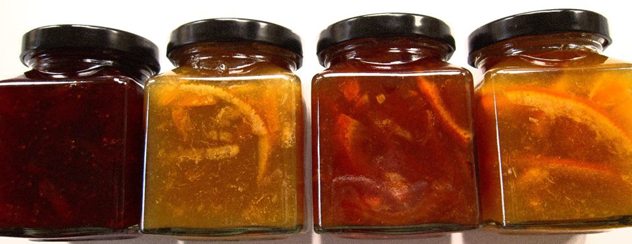
Earn your green thumb by participating in the “Preserving the Spring Harvest” class taught at the Soil Born Farms American River Ranch in Rancho Cordova. Per Soilborn.org, “There are so many delicious and healthy ways to preserve your garden’s bounty in the spring. From pickles to kraut, kimchi to chutney, this hands-on class will teach you what you need to know to turn your winter and spring veggies into homemade products that add variety to your pantry and make delicious gifts, too!” Janet McDonald of The Good Stuff fresh and organic grocery store will instruct this Sacramento Natural Foods Co-op- and Soil Born Farms-hosted event. You can purchase tickets and register for the event at Sacfoodcoop.com or by calling (916) 868-6399. You can also obtain more information by visiting the Soil Born Farms website at Soilborn.org. Tickets are $35 or $30 for co-op owners and the class lasts for three hours from 5:30 p.m. to 8:30 p.m.
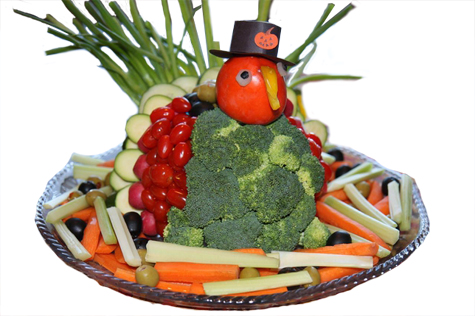
Thanksgiving Cooking Classes for Vegans, Vegetarians and Carnivores
Thanksgiving is easily the best holiday. The primary reason? The food. Sure, it’s great celebrating love and happiness with friends and family, but let’s be honest here: the food is incredible. But every holiday has its respective hiccups, and what should be a time to exchange praise and thanks can quickly turn into an ethical debate. Vegetarians, vegans and carnivores are constantly clashing, making the dinner table resemble a battle field. Best way to avoid this conflict? The Vegan (November 14, 6-8:30 p.m.), Vegetarian (November 18, 6:30-8:30 p.m.) and Turkey Essentials (November 19, 6-7:15 p.m.) cooking classes at the Sacramento Natural Foods Co-op! Sacfoodcoop.com describes a plethora of classes accommodating a variety of diets. Impress your family and friends by contributing dishes that complement the Turkey Day foods they love. Everyone will be waving their napkins like white flags!
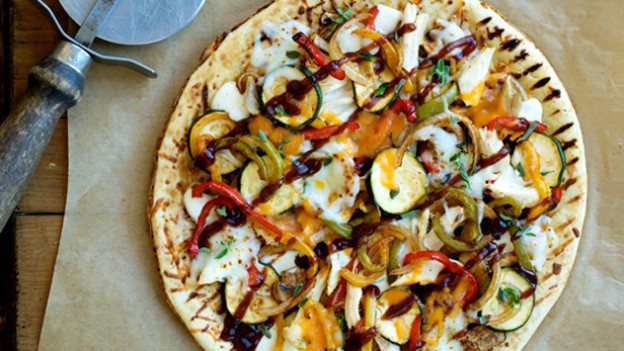
TASTE: It’s-a pizza pie at the Pizza Dough and Grilled Pizza Workshop • May 30, 2013
It’s all about the dough, baby, at the Pizza Dough and Grilled Pizza Workshop on Thursday, May 30, 2013 at the Sacramento Natural Foods Co-op (1900 Alhambra Boulevard). Whether you enjoy thin, pan or Chicago-style deep dish, the Pie Belle, aka Tracy DeVore, is back to demonstrate to the natural food-loving masses her tips on mastering the foundation of pizza. Starting from the building blocks of traditional New York-style thin crust, DeVore encourages participants to learn the basics, and then explore by putting their own individual twists when creating their own pie. Students will produce their very own dough to take home and will even create a rustic, thin crust during the workshop for sampling. For more information on this workshop and others like cooking with sea vegetables or cancer fighting foods, visit Sacfoodcoop.com
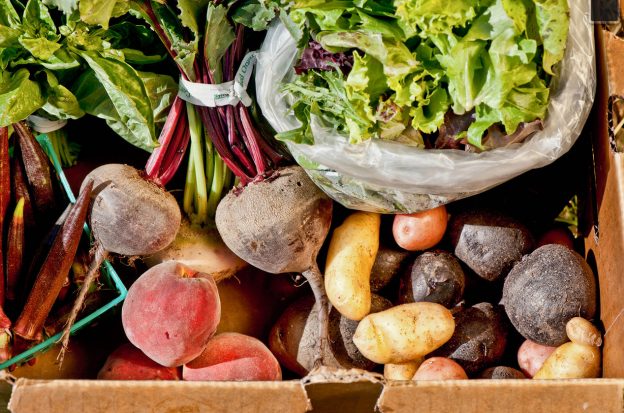
For the Birds • Feeding Crane Farms shows that humans could learn something from cranes
If people started eating a little more like cranes, nature and the economy might be a little better off for it.
This is what prompted the naming of Feeding Crane Farms, a small farming operation with a big vision that sits along a bird grove on the East Levee Corridor in Natomas.
“Cranes are a really wonderful example of what we’re doing with Feeding Crane Farms,” says general manager Shannin Stein. “Cranes eat locally, they eat seasonally.
“They will actually create habitats for small bugs where they live, they’ll tend to those areas and actually cultivate the bugs,” she adds.
Stein oversees Local Food Done Right, an umbrella company that owns both Feeding Crane Farms and Lulu’s Kitchen. The vision behind the two operations is to promote local, sustainable food production, from “farm to fork.”
She, alongside company owner and visionary Brian Shaad, farm manager Antonio Garza, and operations manager Dylan Keith, are part of a team of less than 10 keeping Lulu’s Kitchen and Feeding Crane Farms alive. Needless to say everyone wears a lot of hats, Stein says.
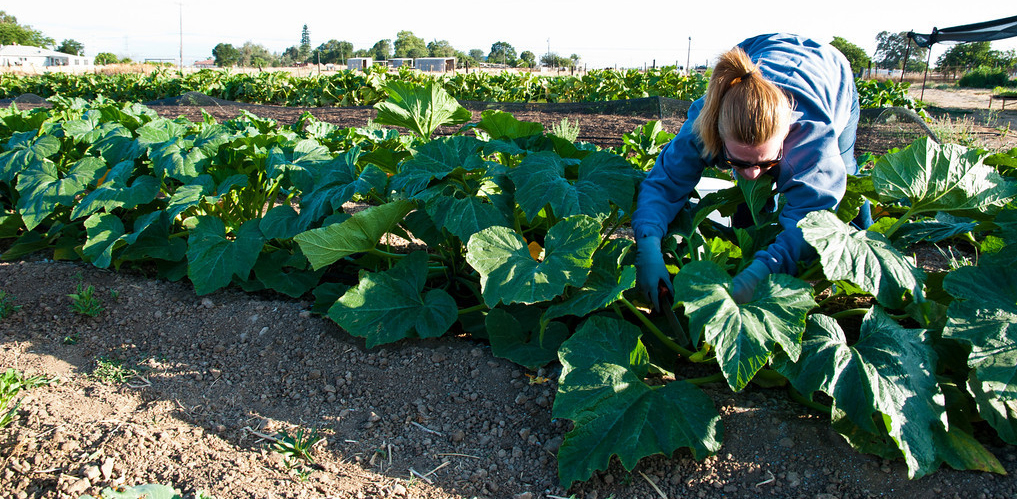
This is a very new operation. After prepping and plowing three-and-a-half acres, and adding all natural amendments like bloodmeal and oyster shell to the soil, the organic farm “broke ground” last September. They began selling crops to local restaurants and grocery stores early this year.
Beyond providing fresh produce for grocery stores, local restaurants and farmers’ markets in Oak Park, Natomas and Cesar Chavez Park, the small team has come up with some really innovative ideas along the way, like Farm to Fork dinners, where locals who already support farmers’ markets and buy organic can experience the talent of chefs in the community who are committed to using local, organic ingredients.
The company recently purchased Steel Magnolia, a commercial kitchen in Sacramento, which they are renaming Lulu’s Kitchen after Shaad’s grandmother, Mary Lou Cayocca. Lulu’s will be accessible to local producers who have recipes but don’t have access to a commercial kitchen or some of the logistics needed to get their products on grocery shelves, Stein says.
The team has its own products it is developing to sell, too. By the start of 2013, you can start looking out for things like arugula pasta, pepper pasta, handmade butternut squash ravioli, squash bread, arugula pesto, and roasted pepper chutney on store shelves. According to Stein, the recipes are being developed as you read.
They also plan to expand into two more properties along the East Levee Corridor, putting an additional 12 acres into production by January and quadrupling their production capacity.
And last but not least, if you’ve caught wind of the first annual Harvest Sunset Celebration, yes, they are planning that as well. But with all the events already happening this fall, they’ve decided to postpone it until the spring.
With so much going on, it’s hard to believe Stein has a moment to breathe, let alone talk through an interview. Yet Submerge somehow managed to catch up with her while she was on a drive through the Midwest.
You guys said you are along the East Levee in Natomas?
Yeah, we’re in North Natomas, and basically it’s called the East Levee Corridor. So it’s a levee bypass system that comes off the Sacramento River out in Yolo and Sutter counties.
Gotcha. There’s a fair bit of ag activity in that region, right?
Yes and no. A little bit further to the west of Sacramento, closer to I-5, there’s a lot of commercial rice production, there’s a lot of big ag. But along the East Levee Corridor, the majority of the land is fallow; it’s not in any form of production.
And so, you guys are trying to cultivate some of that land out there…
Our goal is to basically try and reinvigorate that entire East Levee Corridor, and to create a system and create farms that are duplicate-able. We want to be able to take what we’ve learned in starting our first small three-and-a-half-acre property and we want to be able to basically duplicate it on other properties along that corridor. Then we will create an actual, thriving agribusiness along that corridor to make that area two things: one, less susceptible to development, and two, to basically make Sacramento far more sustainable in regards to food production.
So what kind of stuff do you guys grow?
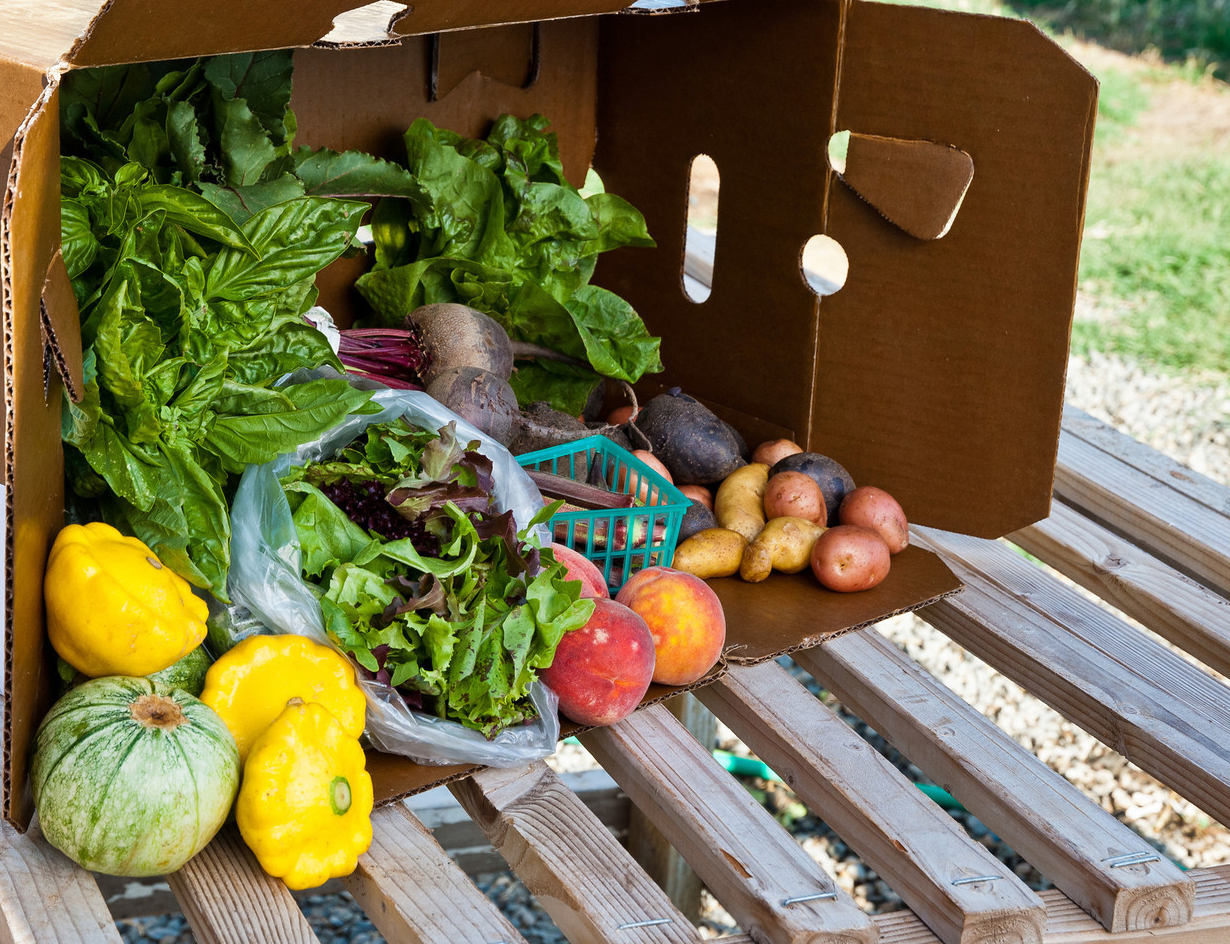
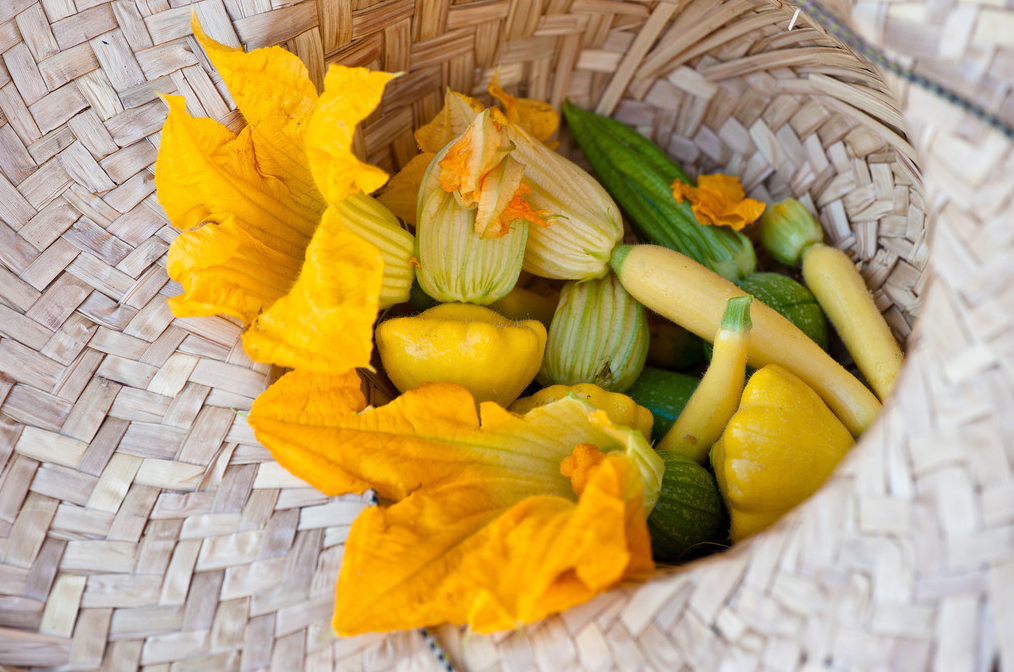
We have upward of about 30 different varieties of items in the ground at any given time. For this winter, we’ll have a full-crop harvest, we’re not going to take a break this winter. So we have salad mix, head lettuces, arugula. We did tomatoes this summer, eggplant, okra, lots of root vegetables, we grew beautiful beets and radishes, turnips. As Antonio, our farm manager, likes to refer to it, our main property right now is really kind of a salad bowl. There are carrots, onions. Amazingly for our harvest season, part of it has really been experimentation and learning what does well in the soil that we’re working with and getting a feel for crop rotation and our product demands by community.
What’s the plan with Steel Magnolia [now Lulu’s Kitchen], and why did you guys decide to buy it?
Well, as I mentioned, our motto is basically the same thing as our parent company, “local food done right.” And we really believe that “local food done right” doesn’t just mean growing the food locally, it means producing food locally… We want Lulu’s Kitchen to be an incubator kitchen for local producers to come work on their recipes [and] work on their processes. We have fully trained chefs on our team who can help mentor them… At the same time we want to help those producers navigate the often confusing and sticky system of working with the County Health Department and working with the city and learning how to do labeling so it’s FDA approved and how to get your ingredients improved, you know, all of that process. We want help small producers so it’s easier for them to go from concept to the shelf.
I thought I read something about you guys developing your own products to sell in stores, is that right?
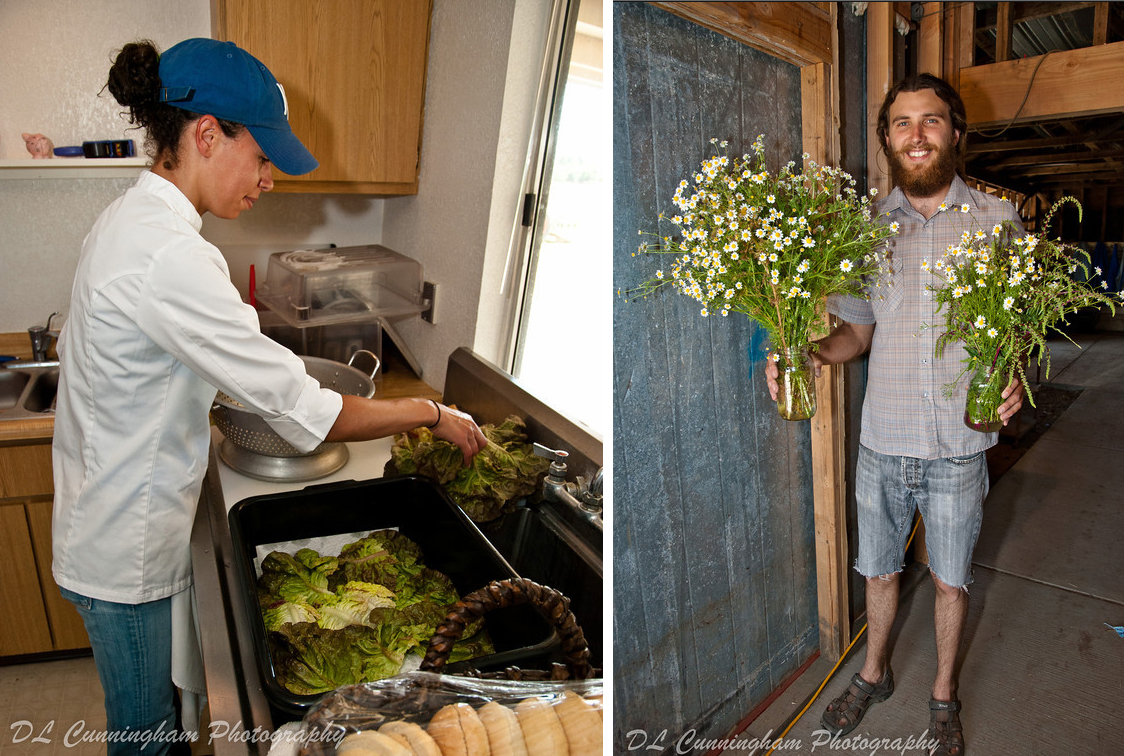
We will be, yeah. Absolutely. In fact, you can go to the GOOD market and you can try some of our value-added items. You’ll hear us talk a lot about [value-added items] with small farms in particular. Farming itself is not necessarily a lucrative business. It’s a cash-heavy investment business, there’s a lot of investments needed to really get a farm going and keep a farm operating. Small producers, small farmers really need to have the opportunity and the outlet for additional revenue streams, and so creating value-added products: jams, jellies, breads, sauces, pastas, things along those lines, where the primary ingredients are from your farm, is a great way to do that. So we have a ton of summer squash still out in the field, so one of the chefs on our team is making squash bread.
Now Farm to Fork Dinners, whose idea was that?
Well, actually, that was a joint discussion. It started out where once every two months or so, the farmers and myself, just kind of our core team, we were going to one of the restaurants for dinner and we provided food, because the farmers work their butts off, and they deserve the opportunity to enjoy the fruits of their labor occasionally. But in doing that, we also built these really beautiful relationships with the chefs we work with. They have given us fantastic feedback. It started out, actually, with Mama Kim, of Mama Kim Eats, who said almost immediately, “I want to do a brunch.” So we started out with a brunch at Mama Kim Eats, and she said, “I want to do a brunch and I want to focus specific dishes around your produce and your products.” And I was like, “That’s fantastic.” And so Farm to Fork was born. And now we work to do at least one Farm to Fork event each month with our partner restaurants to help bring in business for them on an off-shift. Like at Michelangelo’s, it was on a Sunday night, and we basically helped them triple their sales on a Sunday night.
Do you have an estimate of about how much you produce per season?
You know, we’re putting those numbers together, to be honest [laughs]. But what I can say is we have been able to sustain upward of about 20 to 25 restaurants, the Natural Foods Co-Op, Corti Brothers and three farmers’ markets for this entire season, so since January basically, off of three-and-a-half-acres. And that’s pretty amazing, to begin with.
To learn more about what Feeding Crane Farms and Lulu’s Kitchen have in store, follow Feeding Crane on Twitter @FeedingCrane or like it on Facebook.
Locally Filled Belly
Full Belly Farm
Road 43 – Guinda, Calif.
Crossbred stone fruit has been a high for foodies these days. Apriums, tomato plums, necterlums and the like have spurred interest and curiosity in Sacramento.
While perusing the produce section of the Sacramento Natural Foods Co-op last week, I had an eye out for new fruit mixtures like the plumarines I saw a few weeks prior.
Although there were no “new” fruits, a large presence of summer produce not yet saturating the farmers market scene prevailed. Long, thin, furry-skinned Armenian cucumber and various melons like Galia, Charentais and Ambrosia were prominently presented. Next to each, a little laminated card explained their local origin from “58 miles” away at Full Belly Farm in the Capay Valley.
Much like many an urbanite, relishing farmers market visits as actively connecting to my food source was as close to the farm as I got. The idea of farm forays was too rural for my metropolitan mindset; therefore, I’d never seen where local produce is grown or how it’s processed for shipping the short distance to Sacramento.
I had questions like, “What’s special about this farm?” and “Why is our Natural Foods Co-op featuring so much produce from this farm?”
Produce manager Kerri Williams cleared some confusion, explaining the Natural Foods Co-op’s organic produce, featured local farms, and relationship with Full Belly Farm.
With the largest 100 percent organic produce section in the United States, the Sacramento Natural Foods Co-op insures most of its produce is local–within 200 miles, Williams said. At least 80 percent of farms providing produce for Co-op shoppers are within those parameters, she said.
Full Belly Farm has held produce realty at the Natural Foods Co-op for “at least 25 years.” Certified organic in 1985, this farm was an organic staple at the Natural Foods Co-op for 13 years before the produce section made the switch from conventional to organic, Williams said.
Aside from obvious health benefits, my interest in organic produce is barely beyond skin-deep. Call me a superficial shopper, but the true-fruit smell and appearance of organic produce always attracts me. Since organic produce usually tastes better, fresher, more of earth-grown goodness, I definitely judge produce as I initially do books: by the cover.
Speaking of beauty, Williams said aside from featuring most of Full Belly Farm’s crop, “It’s also the most beautiful of area farms.”
Fifty-eight miles seemed like a world away and the Capay Valley was a place I’d never heard of. I needed to see this farm for myself and made the produce pilgrimage to Guinda, Calif.
As it is busy season for farming, I called and made an appointment to visit.
The hour-drive northwest from Midtown was interesting. After passing Woodland and Cache Creek Casino and coasting into the gorgeously narrow Capay Valley, I lost cellular reception minutes before turning right on Road 43 into Full Belly Farm.
It was mid-afternoon and the sun was splashing down the steep hills of the valley, pooling over the farm. Co-owner Judith Redmond greeted me as I walked into a thankfully shadowy barn-like structure. Circle-spectacled and wide-smiled, Redmond spoke warmly but informatively with me about various types of produce, while particularly hand-packing fragrant, multi-colored heirloom tomatoes into cushioned cardboard boxes.
To understand said mixed fruits, Redmond explained hybrid and crossbred produce.
Produce is hybrid to preserve a specific quality like color, low-fuzz skin, growing capacity in certain agricultural circumstances or shipping, Redmond said.
Local farmers grow tons of crossbreeds, and have for decades, practicing on-site agronomy to see what “flourishes in their geographical location.”
“Farmers are trying to take back their rightful place as stewards of plant-growing resources,” Redmond said.
Saving the items with the most desirable qualities, hybridizing is a seasons-long process. And hybrid produce are the end of the line genetically–their seeds won’t produce more with like characteristics, Redmond explained.
Although unpredictable, hybridization and cross-pollination can occur in nature, both agronomy practices can be accomplished in a scientific lab. Farmers can also manually cultivate hybrid produce and facilitate cross-pollination, but the process is expensive, drawn-out and unsuccessful, Redmond said.
Full Belly grows hybrid varieties of white sweet corn, slicer tomatoes and yellow watermelon, but Redmond said she also sees occasional cross-pollination in crops like white corn and decorative corn grown in a neighboring area of the farm.
When fruits are crossbred, the process includes taking two similar fruits and cross-polinating them. Stone fruits are often crossbred, Redmond said. Melons seem apt to crossbreeding as well, with honeylopes and Crenshaw melons available among others.
Although not specializing in crossbred produce, Full Belly is beyond beautiful with lush, green, cared-for crops receiving all the glory of the sun funneling down upon it.
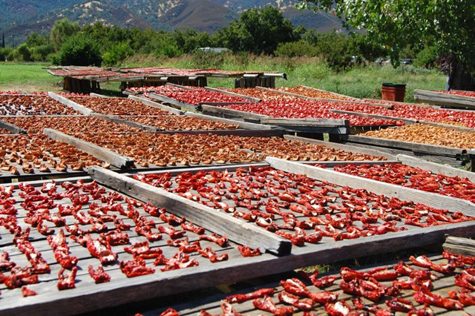
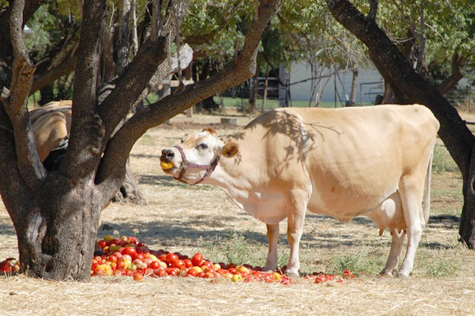
With permission, I walked the grounds freely and smiled as wide as Redmond in reaction to the nourishing colors, fragrances and favorable environmental factors. I saw happy cultivators, quaint structures, par-dried peaches and tomatoes actually drying in the sun and happy cows feasting on heirloom tomatoes (cows like tomatoes, I guess).
Summer’s sweet batch of produce has been cheered and devoured for months, but we’re just getting into the thick of it, equating the perfect time to shop, eat and learn about the power of local produce.
A great opportunity for a daycation, beautiful drive and farm-visiting experience is coming up on Oct. 2 and 3, 2010 for the 23rd annual Hoes Down Harvest Festival at Full Belly Farm. There’ll be workshops, music and food. Farms aren’t just for agricultural buffs and gardening grandmas; food-savvy urbanites can benefit too.