Take a look around Boiling Avenue, a hot pot restaurant located off of busy Howe Avenue, and you’ll see steamy windows, patrons’ glasses fogging up and a giant metal sign that reads, “Eat.” Though the Sacramento restaurant’s slogan is “mini fusion hot pot” the portions are anything but small, and each meal is like a simmering bowl of discoveries.
Typically a hot pot sits at the center of the dining table, surrounded by small plates that are filled with different ingredients for your stew. But at Boiling Avenue, you get to have a boiling pot all to yourself.
The menu is heavily loaded with various options that will make the picky eaters and vegetarians happy. First, you will need to decide your level of spice—depending upon how much you want to clear your sinuses you might want to start off with mild. At first, the menu might seem a little bit daunting just because each pot, such as the Korean kimchi or the sesame tonkotsu, can include well over a dozen ingredients. And if what is offered on the menu isn’t stuffed with enough options for your meal, you can add or substitute (only three per pot) 34 other delicious items such as sliced pork belly, stuffed fishball, quail eggs and even Spam.
Even the drink menu can take a while to read through. It’s easy to become awesomely overwhelmed with multiple tea flavors such as brown sugar milk and jasmine milk. Boiling Avenue offers the option to add your own boba or jelly. You can even choose how sweet you want your tea, ranging from 30 to 100 percent sweetness levels.
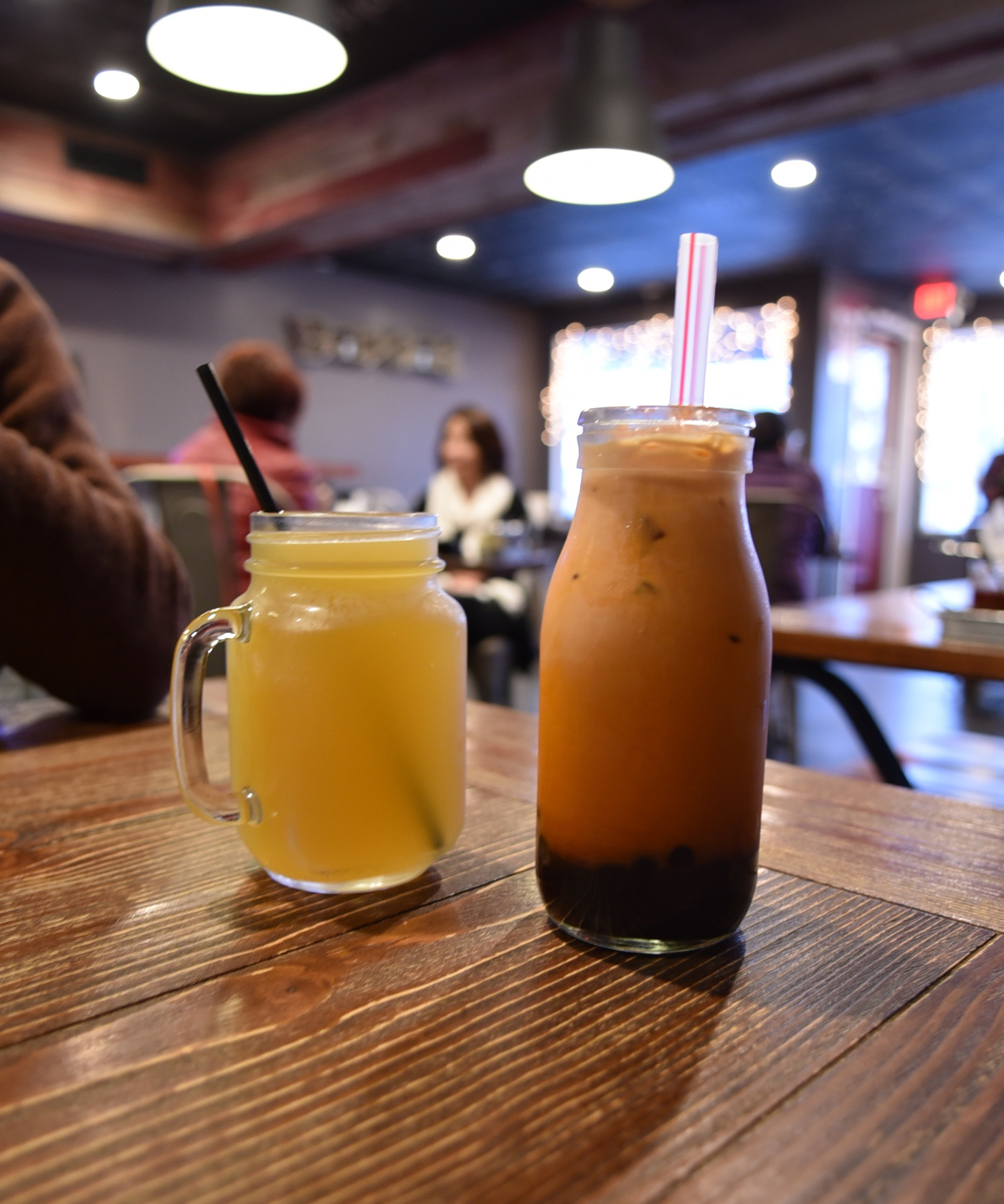
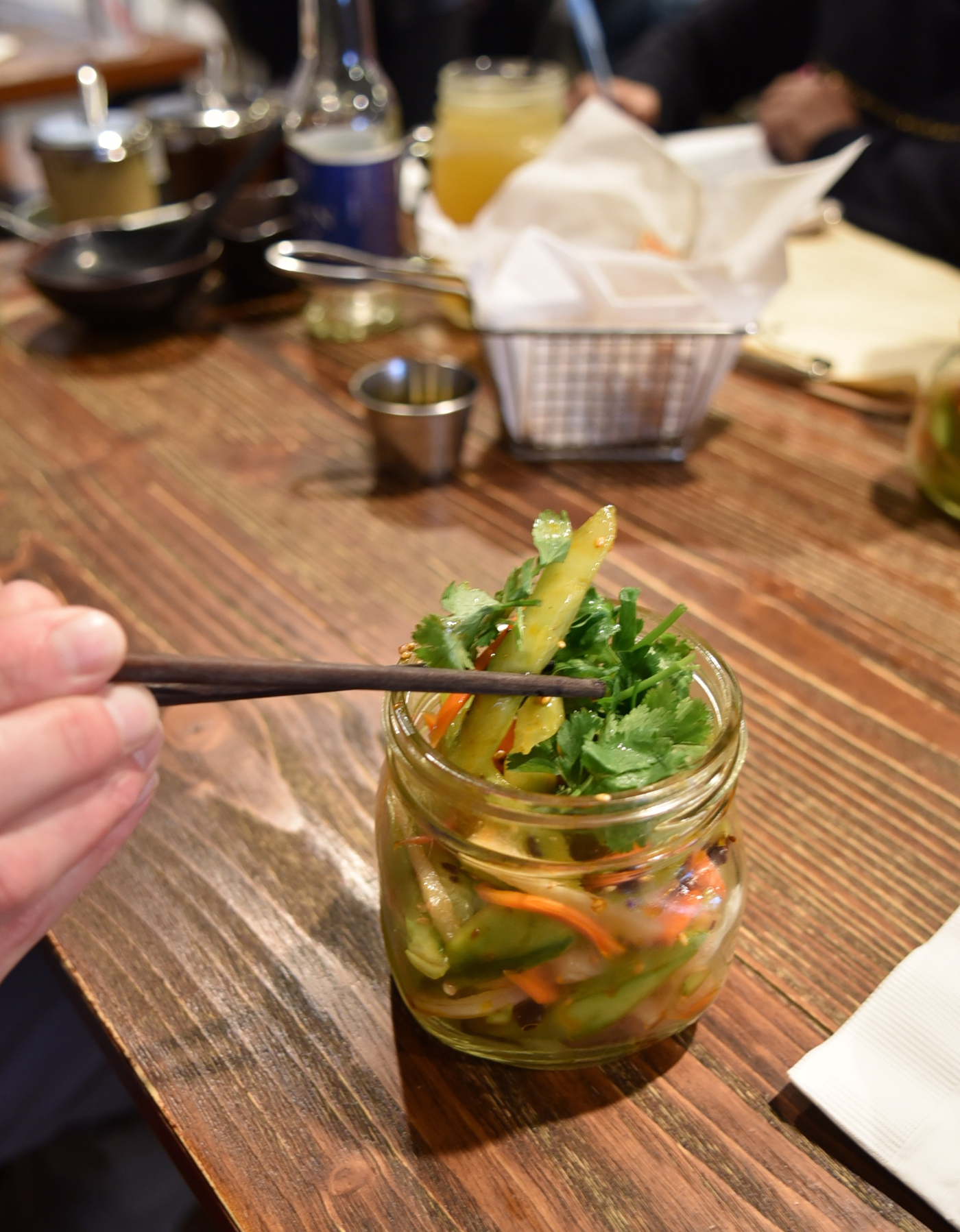
My picks for the evening were cucumber salad, pot stickers, the No. 8 curry flavor and kumquat lemon green tea. The cucumber salad was served in Mason jars and featured giant slices of cucumber that were surrounded by carrots, onions and cilantro. The pot stickers came served in a mini deep fryer basket, and they were slightly crispy on the outside with warm fillings on the inside. The kumquat lemon green tea was refreshing, with a tart aftertaste and a slight pulp texture.
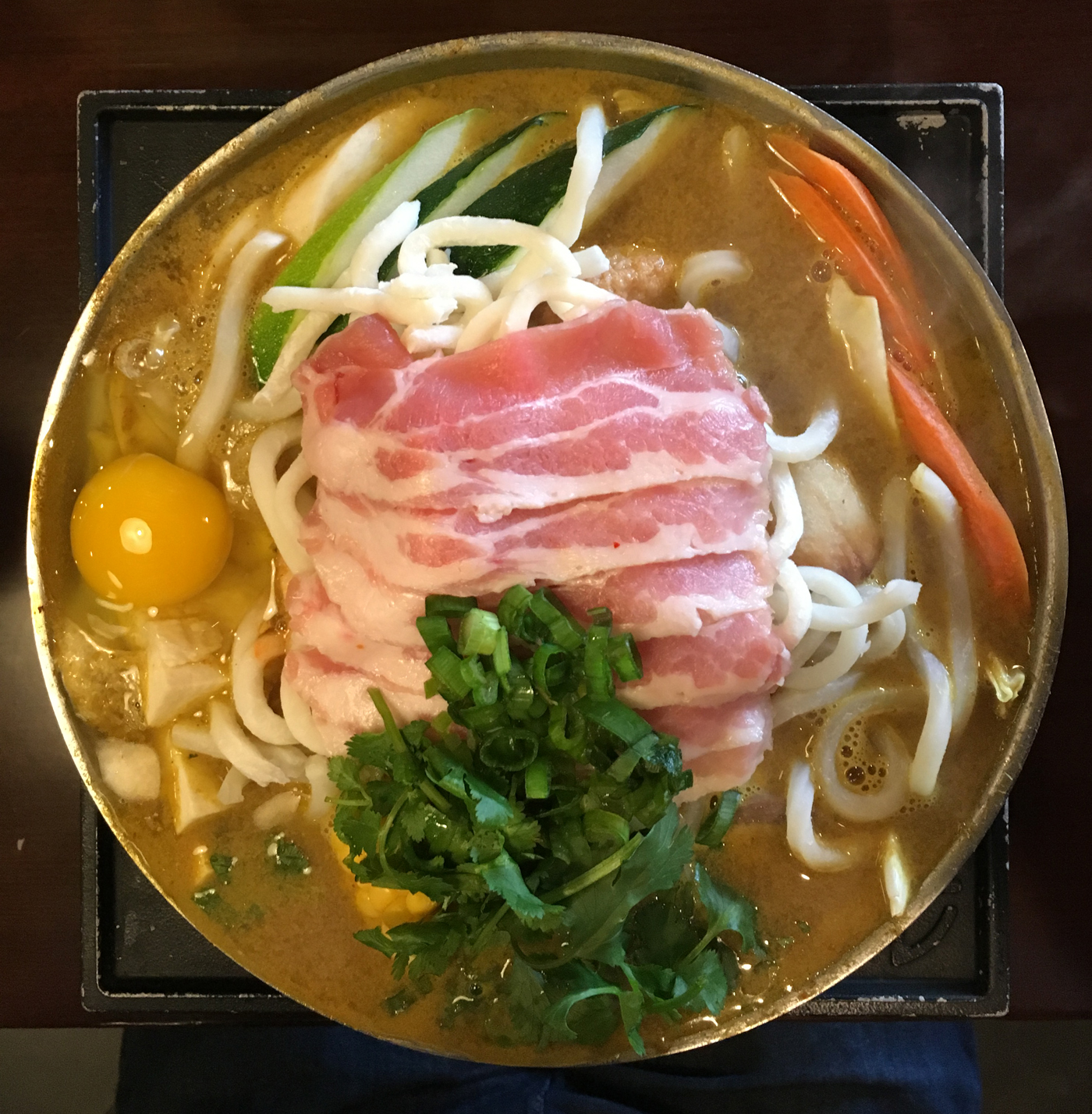
The curry flavor is served with sliced pork belly, stuffed fish ball, fish tofu cake, imitation crab sticks, konnyaku, cabbage, corn, tofu, enoki mushroom, king oyster mushrooms, potatoes, carrots, Korean rice cake, udon, green onion and cilantro. I decided to substitute the king oyster mushrooms with an egg. As a hot pot newbie, there were a few things on the menu that I’ve never heard of before, but that was the fun part—finding little surprises in my bubbling meal.
The hot pot was served on top of my very own mini square cooker. Upon arrival, it almost seemed too beautiful to eat, the fresh ingredients were all perfectly arranged in the steaming vessel with an array of colors from the yellow corn to the red, thin slices of pork to orange carrot wedges, all topped with green onion and cilantro. The pots were so stuffed with food, the broth seemed to be on the brink of overflowing. As I admired the work of art, the server lit the mini cooker for me and informed our table that our meals were only 80 percent cooked and we needed to wait about 10 minutes before eating. Even though my stomach grew wide after seeing the pretty strew placed in front of me, it was exciting to watch the broth simmer and slowly bubble more and more while filling my nose with fresh curry spices.
After patiently waiting for the stew to cook, I grabbed the chopsticks and started to dig in.
As I ventured into the boiling abyss, I found some pieces of food that I forgot were included inside, like the chewy Korean rice cakes and the crab stick. It was like a bowl of discoveries waiting to be eaten. Eventually, my chopsticks happened upon some potatoes that were soaking for a while on the bottom; they broke apart like steamy curry mashed potatoes. It’s rare to find a meal that gets better the longer it sits.
And if you magically aren’t full enough from the first round, you can request to get a refill of broth at no extra cost. Each fusion hot pot ranges from $12–$16, with almost the guarantee of leftovers.
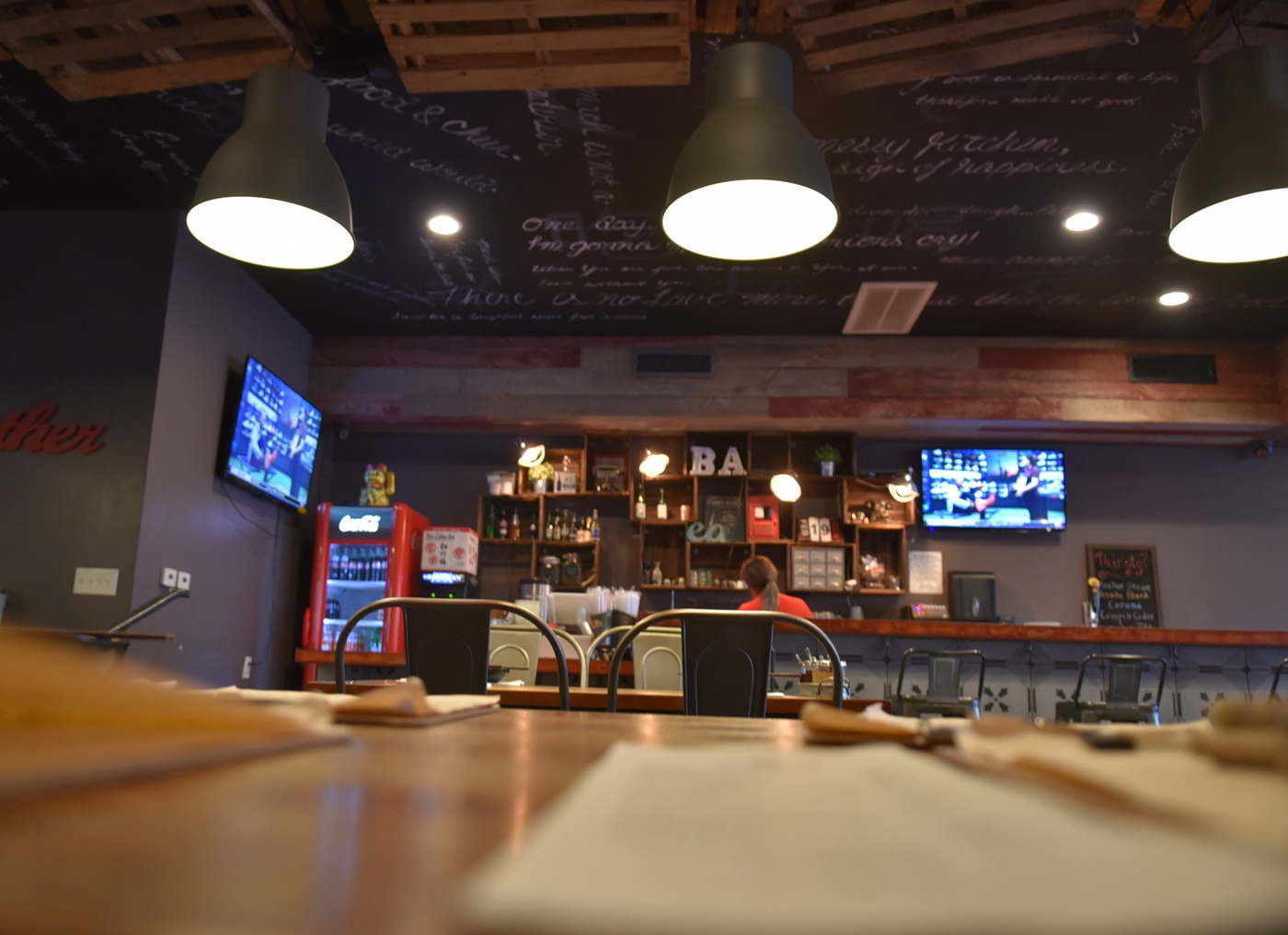
Boiling Avenue offers a meal that is more of an experience, where you can discover the curry soaked potatoes and the mushrooms you forgot on the bottom of your bowl. It forces dinner time to slow down a little and makes you appreciate your surrounding company and warm food. When you are finished with your food art, take a look above you and you can read food inspired quotes. To sum up the boiling experience, one of my favorite quotes read, “One cannot think well, love well, sleep well, if one has not dined well.”
Boiling Avenue is located at 943 Howe Ave. in Sacramento. For more info and to peruse their menu, go to Facebook.com/boilingave.
Agree to disagree. The willingness to concede with an eye roll and a subject change is what keeps most families together—well, that and unconditional love. But what happens when a family shares the same passion? What if instead of changing the subject, a family bands together to change their community?
Five restaurants and counting—within a year, tally seven. Not just any restaurants—arguably Sacramento’s very best dining destinations. A movement. Not just any movement—the local farm-to-fork movement, which has helped reshape the way Sacramento thinks about its identity and the health, environmental and economic impacts of our respective food choices. Social and political change happens. Our culinary landscape shapeshifts. We clean our plates and feel truly satisfied.
“Our family is in the restaurant business, but we are really a family business, making it more of a lifestyle. When it’s part of how you live, it becomes less of a job and more of a passion,” explains Randall Selland, who has been steadfastly at the helm of the farm-to-fork movement in the Sacramento area for nearly the whole of his decorated career. But let’s take a step back.
Once a commissioned stained glass artist, food became another outlet of artistic expression for Randall after meeting, marrying and having children with the lovely and talented Nancy Zimmer. The Kitchen, now a Sacramento institution, was the brainchild of a mother/daughter dream team: Nancy and Tamera. Soon, the whole family rallied behind their efforts to join the family business that echoed their innermost values and would grow to challenge our thinking about ingredients and cooking.
Randall and Nancy’s son, Josh Nelson, is now co-owner and CEO of Selland Group, and developed the logo for Sacramento’s brand identity as America’s Farm-to-Fork Capital. Their daughter, Tamera Baker, is co-owner and chief brand officer of the Selland Group. They collectively own and operate Selland’s Market-Café (Sacramento and El Dorado Hills locations), Ella, The Kitchen, and now, OBO’—a top-notch Italian establishment in East Sacramento.
OBO’ is named after Josh’s son, Owen; Tamera’s kids, Ella and Jackson nicknamed him Obo. The Selland family wanted to create an Italian restaurant and menu that draws inspiration from the simple, nourishing flavors and seasonal cooking traditions of rustic Italy, in a casual atmosphere that is accessible to all. Speaking of accessibility, you can’t beat the pricing for the quality of food that is being served up at OBO’.
Inspired by many trips to Italy over the years, chef owner Nancy Zimmer spiritedly developed the OBO’ menu. “While the menu is made up of Italian dishes, it also features many local flavors including dishes such as the market veg pasta, market veg pizza, market veg focaccia, market veg melt, market veg and fresh mozzarella sandwich and roasted market vegetables. We butcher our own meats and make our own pancetta in-house as well,” she says. “Our pastas and pizza dough are also made in-house. OBO’ desserts are made fresh daily by our in-house bakery and delivered each day to the restaurant. We also make our own Amaro, featured in the OBO’ Amaro Cocktail!” All of their restaurants, including OBO’, are well-stocked with weekly farmers market trips and locally sourced ingredients. They even collaborated with New Glory Brewery to create an OBO’ Lemon Saison.
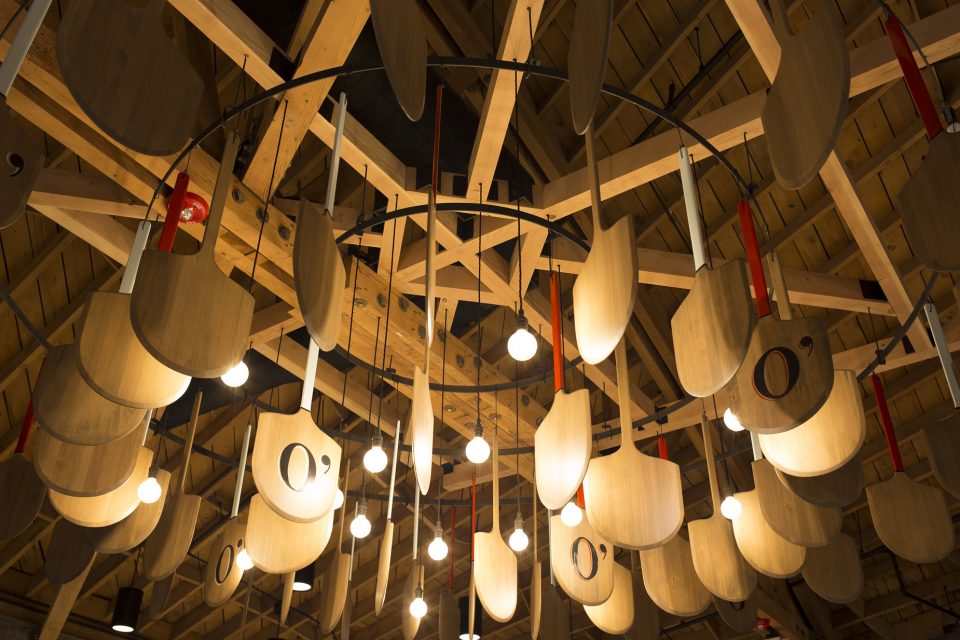
Tamera Baker led and managed the interior design process and creative direction for the brand identity. The design came from the inspiration of a midcentury Mediterranean, warm coastal feel. The bright and airy atmosphere echoes with conversation, a pizza paddle chandelier fills the center of the room, exposed brick and robin’s egg blue paint balance warm and cool tones. Inside OBO’, the vibe is casual, yet good design is in the details. Outside, an expansive patio circumnavigates the round building shape that once housed Andiamo and Good Eats. An eclectic staff is quick to help patrons—hot orders are taken on tablets by servers while a large deli case filled with a la carte side dishes beckons.
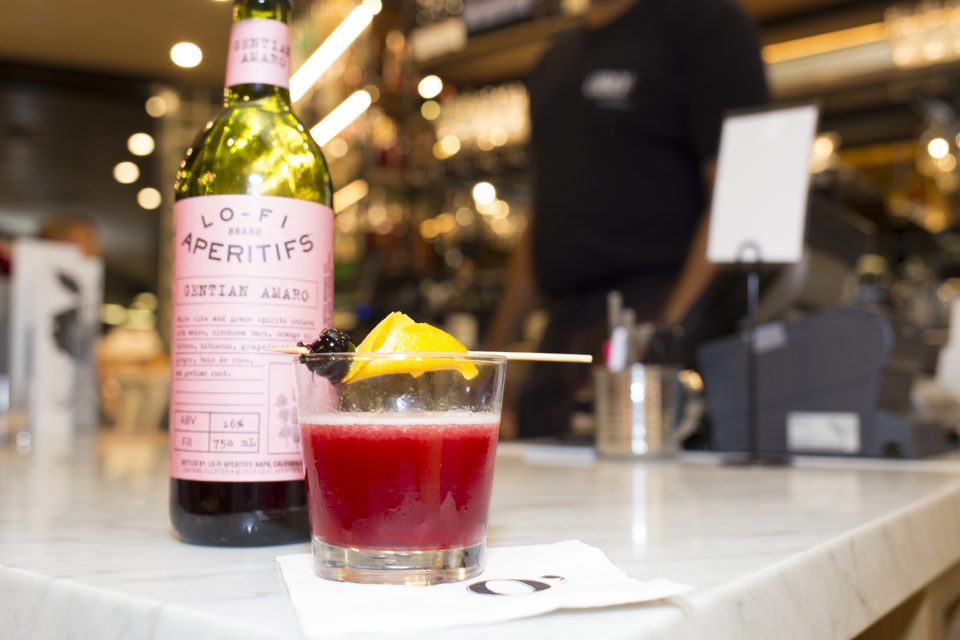
I went with my trusty team of foodie friends to maximize how many things I could try, because I pretty much wanted to try everything on the menu (guess I’ll have to return again and again!). We ordered a bottle of Meme Chianti, which was spicy sweet and affordably priced, and a Ferrari from the bar program. The ‘Rari is comprised of Campari, aged Luxardo black cherries and lemon zest, and is served chilled. It was a REALLY delicious cocktail. Soon enough, the plates started trickling out of the kitchen as they were ready.
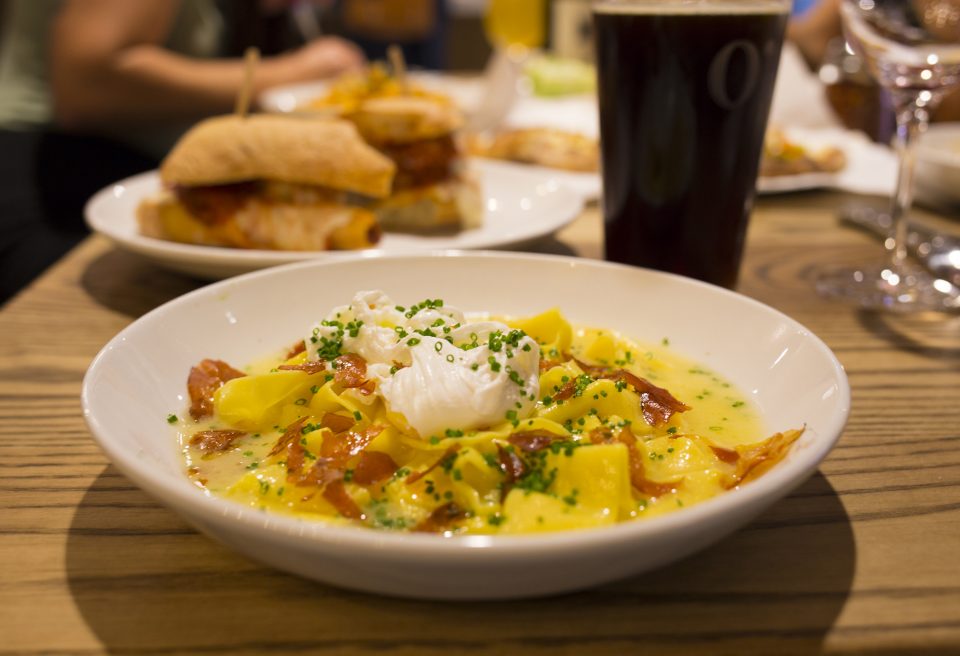
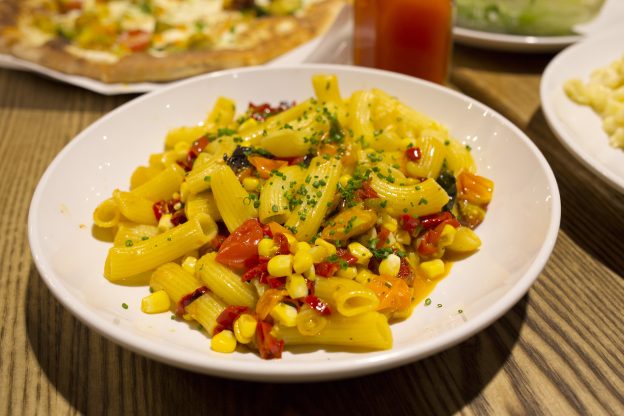
All of the housemade pasta is cooked perfectly al dente. The tagliatelle with poached egg was citrusy, creamy, tangy and a bit sour, mixed with prosciutto and chives. The mac and cheese was chewy, mealy with lots of bread crumbs, super sharp and creamy. My favorite dish of the evening, the rigatoni Bolognese, was loaded with beef and pork, covered in shredded parmesan and parsley and doused with a delightfully oozy, melty red sauce that was sweet, sharp, tart and savory. Vegans! They will also accommodate you upon request, and our vegan photographer, Evan, ordered vegan pasta which was a cornucopia of farmers market finds.
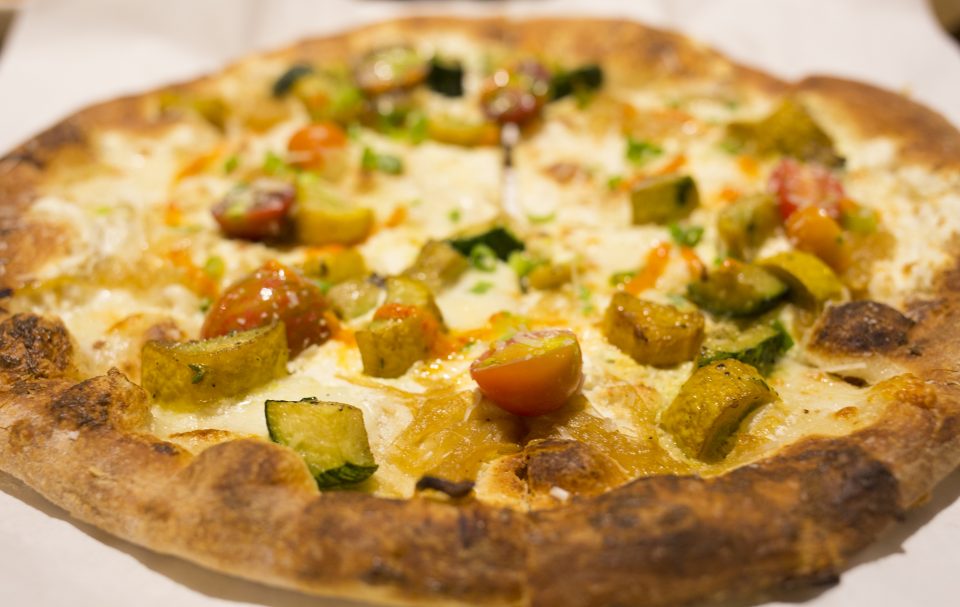
Oh, I’m not done yet. We also ordered a couple sides from the case. The romaine heart was a wedge salad topped with gorgonzola, green onion and a creamy lemon parmesan dressing. The texture and flavor were wonderful—crispy, fresh, pungent, earthy and sour. The chili broccoli, slightly steamed and bright green, was spicy, savory and crunchy. The market veg pizza, topped with ricotta, parmesan and mozzarella cheese and a tangy, sweet housemade marinara, was a vivid display of seasonal veggies that included green onion, chili, zucchini, caramelized onions, heirloom tomatoes, and summer squash—all atop a perfectly executed, buttery, thin crust. Wash that all down with the best meatball sandwich I’ve ever sunk my teeth into, and I walked out of that place happily stuffed. The best part of all is that each hot menu item costs only about $10.
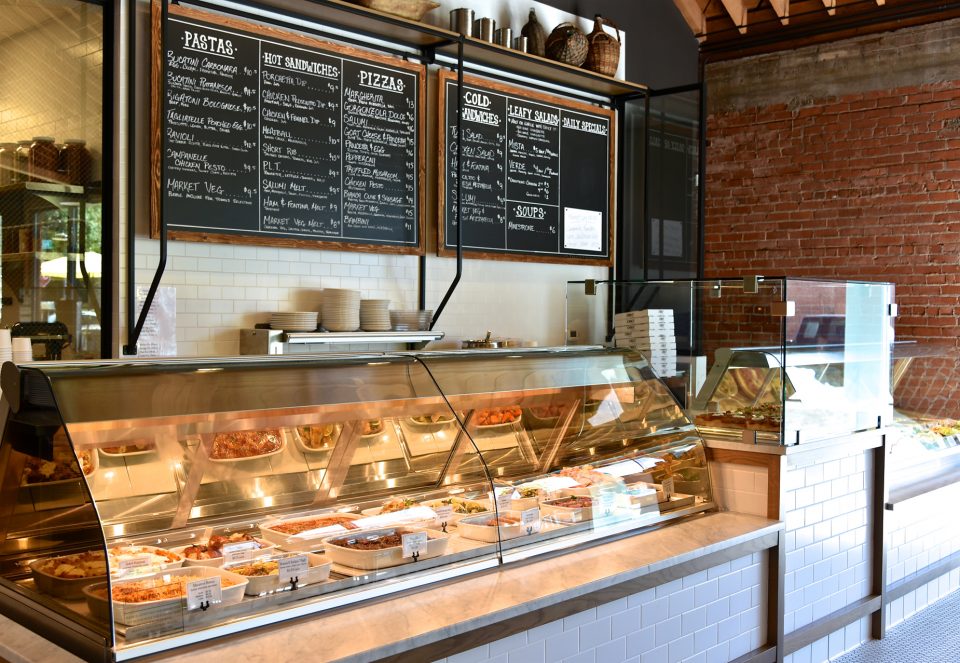
Photo courtesy of Selland Family Restaurants
The Selland Family is currently working on the development of a third Selland’s Market-Café located on Broadway in Sacramento, as well as at the new sports entertainment complex, The Golden 1 Center. Selland’s Market-Café on Broadway is tentatively scheduled to open early next year, in 2017. I’m pretty stoked on this, since their original location deep in East Sac is pretty far off my beaten path albeit always worth the trek.
Selland family values go beyond supporting local farmers. “A core value of the Selland family is the appreciation of our community and a desire to give back. We have focused much of our philanthropy on public schools in our neighborhood as well as food literacy education for children, including The School Garden at Phoebe Hearst Elementary School in East Sacramento and The Food Literacy Center, also in Sacramento,” says Sheryl Trapani, Marketing Director for Selland Family Restaurants.
She continues, “Randall Selland has been successful in lobbying local and state legislators on the benefits of locally grown organic food and sustainability. In 2008, he received an award from the nonprofit Pesticide Watch for being instrumental in overturning the law that made it illegal for restaurants to shop farmers markets in California. In 2015 Selland Family Restaurants received the Clean Air Award from Breathe California in the leadership category for the zero waste pilot program at our restaurants.”
What are the greatest joys in life? It’s a bit different for everyone, but I would wager that universally, among them, are: family, giving back to your community, and good food. In everything we tried at OBO’, you could taste joy in every bite.
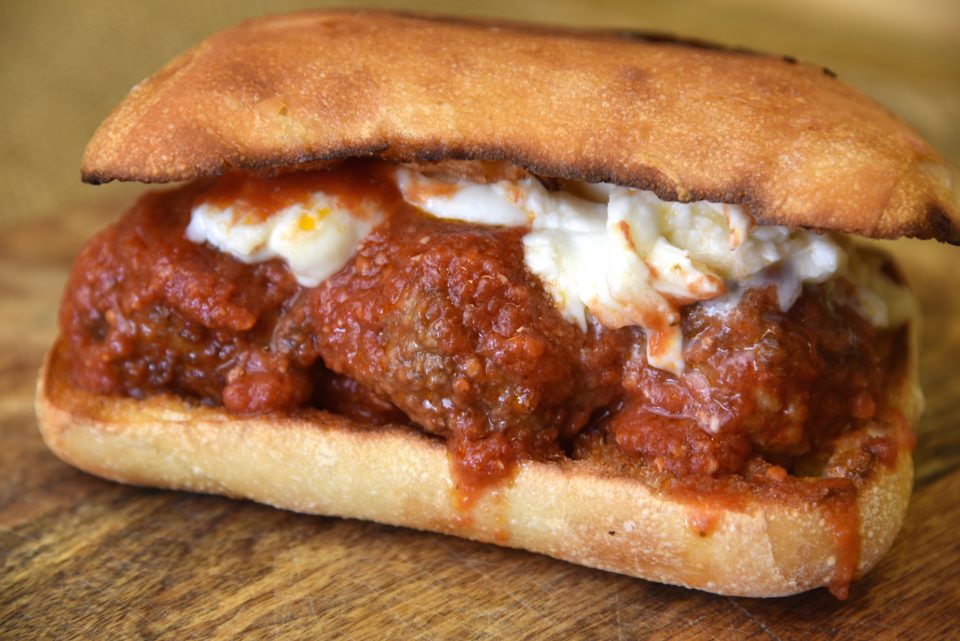
Photo courtesy of Selland Family Restaurants
OBO’ Italian Table and Bar is located at 3145 Folsom Blvd. in Sacramento. For more info, go to Oboitalian.com or Facebook.com/oboitalian.
Make Yourself at Home
Easy on I – 1725 I Street, Sacramento
If you spend enough time at neighborhood bar Easy on I, it will quickly start to become a place “where everybody knows your name.”
Owners Mark and Carol Hoyt know all the regulars, always welcome new patrons and are always caught laughing behind their bar. It’s obvious that Mark and Carol have a love for what they do, which is running one of the best watering holes on I Street. They make the bar and grill, on the corner of 18th and I, seem more like your local hang out spot. Easy on I is a casual, low-key bar and grill that is perfect for a Friday night or Wednesday afternoon. It’s full of everything you want at your local bar: good beers, comfortable atmosphere, awesome food and friendly people. It’s the kind of bar that you can grab a drink, a bite to eat, and meet someone new sitting on the bar stool next to you.
At first glance, Easy on I might not seem like a destination for gourmet food, but don’t underestimate the small bar. It’s a spot where you can always expect excellent service and quality food. They have a menu full of burgers, sandwiches and even barbecue. Being a regular myself at Easy on I, the food never fails to taste fresh and delicious. But my mission for the evening was happy hour and to see how much food and drink I could get for $25.
For a Monday night, this bar was not quiet. It was already full of thirsty and hungry people ready for happy hour.
Just by looking at Easy’s happy hour menu, I knew I was going to walk out the of the bar with a mini food baby. “The Happiest of Hours,” as the menu so proudly calls this joyful time, is Monday through Friday from 2–6 p.m., and options include sliders, stuffed peppers, wings, loaded fries and drink specials, all for under $6 each.
For a grand total of $25.25, I sipped on a porter from New Helvetia Brewing Company ($4.75); tried the Belgian-style beer from West Sacramento’s Jackrabbit Brewing Company ($4.75); devoured eight chicken wings ($5.75); stuffed my face with eight fried zucchini sticks ($4.50); and loaded my belly with loaded fries ($5.50). For this giant meal I needed some reinforcement to help grub down; it was more than enough to feed two people for dinner.
For this assignment, I chose to indulge in craft beers, although it was pretty tough to pass up the $1.25 Olympia happy hour special. Upon walking up to the bar, you can easily recognize a majority of the handles that are on tap, the local lineup includes Bike Dog, Oak Pak Brewery, Jackrabbit, New Helvetia and Two Rivers. All craft beers are priced at $4.75 during happy hour.
Both the New Helvetia and Jackrabbit offerings were refreshing but still satisfying for a chilly November night. Shortly after the beers were poured, the appetizers were served promptly.
First up, the chicken wings were smothered in spicy buffalo sauce, served with a side of ranch. You know food is going to be comforting when they also serve it with wet naps for the final finish.
As for the fried zucchini sticks, they were served warm and covered with a crispy batter that gives State Fair fried food a run for its money. The zucchini sticks actually made me crave them again the very next day.
The loaded fries were doused with blue cheese dressing, blue cheese crumbles, parmesan cheese and garlic. The creamy sauce and crispy fries are the perfect combination for any hungry belly.
Altogether this Happy Hour Hound was left satisfied and with my pocket still full of cash. Don’t miss out on a good happy hour deal and possibly your new favorite hang out spot. At Easy on I, you can always count on a delicious food experience that might turn you into a regular.
Coriander Vietnamese Restaurant
1899 Alhambra Boulevard • Sacramento
When an insatiable craving for Vietnamese cuisine strikes, many turn to Stockton Boulevard with its dozens of restaurants serving hearty bowls of pho, savory spring rolls and enough bánh mì to fill the bellies of any hungry customer with a taste for Southeast Asian flavors. Now, those who seek to broaden their palates with traditional herbs and spices should look no further than Midtown for their next fix of bánh bèo.
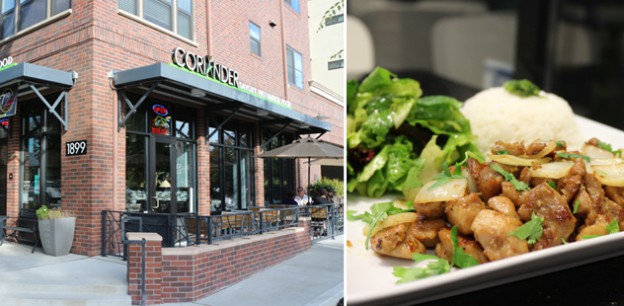
Coriander Vietnamese Restaurant (1899 Alhambra Boulevard) opened its doors across from the Sacramento Natural Foods Co-op in April with a simple mission: to introduce customary Vietnamese flavors to the state Capital. The eatery’s simple, one-page fixed menu focuses on a handful of familiar dishes in addition to its homemade touches like its noodles, which are prepared fresh daily.
Still, with a selection of restaurants serving up Vietnamese staples like beef or chicken pho, or any variation of spring rolls packaged in clear, chewy rice paper, co-owner of Coriander Kristi Ng felt a variety of Sacramento eateries lacked fresh ingredients, overall cleanliness and the true flavor profiles her culture embodies.
“Ninety percent of the dishes on the menu were made within our family. My favorite is the Bún bò Hu, which is the spicy beef noodle soup,” Ng says. “Hue is the city in central Vietnam, that’s where we’re from. It’s got a spicier flavor to it than other dishes. It’s packed with lemongrass flavor, which is very healthy, ginger and a bunch of herbs and dry and fresh spices.”
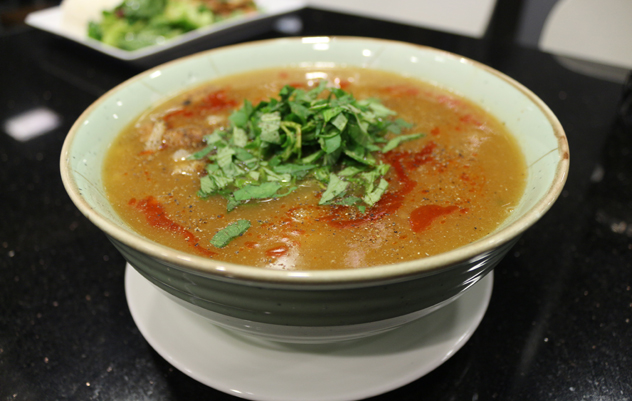
Ng co-owns Coriander with her husband Kevin. She wanted to open the restaurant in honor of her cultural heritage, but more so to pay homage to her mother Gai, who passed away 11 years ago. An 80-inch oil painting Ng custom-ordered from Vietnam hangs near the back of the restaurant. The image shows her mother on a beach, watching over customers who dine within her daughter’s eatery.
“To be honest, growing up I didn’t appreciate the food she made for us. As a kid, you tend to take it for granted,” Ng admits. “As I grew older and went to college, I missed my mom’s food. Through the years of traveling and trying to find my culture and identity I really wanted to do something to pay tribute to my culture and the food growing up.”

FLAVORS OF VIETNAM
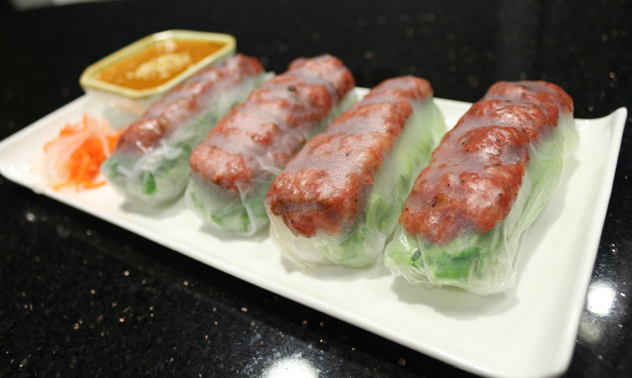
Whether in a spoonful of spicy broth or the textures of thinly sliced meats, Vietnamese dishes are peppered with essential herbs, spices and often times, roots. Ng shares the key components found in many dishes on Coriander’s menu.
“Lemongrass, ginger [and] we also use a lot of coriander,” she happily explains. Ng adds that the spice found in many entrées is credited to Thai chilies and habanero peppers. She often grows Vietnamese dragon peppers at home and uses them in personal meals, but says they’re not only seasonal, but highly spicy and not for customers with a sensitivity to heat. Looking for a palatable kick to clear the sinuses? Ng recommends the coriander fried rice: wok-fried jasmine rice, sausage, bacon, spam, seasonal veggies, garlic and habanero; priced at $8.50.
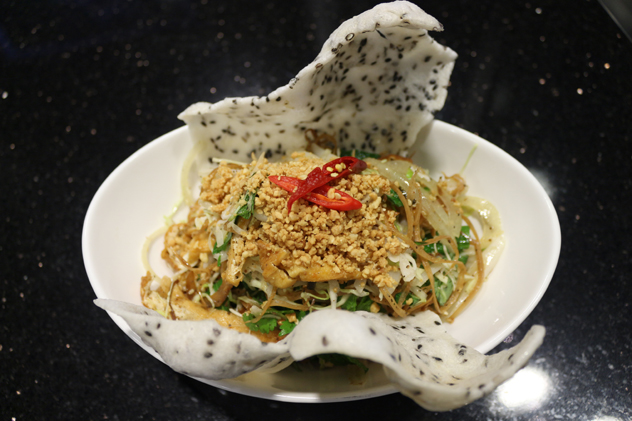
Coriander’s menu features a variety of meat-friendly dishes, but the cooks haven’t forgotten about Midtown’s vegans and vegetarians. Leaf eaters, look to the jackfruit lotus vegetarian salad found in the appetizers section: fried tofu slices, young jackfruit, lotus roots, banana blossom, onions and fresh herbs tossed in a tamarind sauce topped with peanuts; priced at $7.50. This colorful dish, earthy in flavor, is served between two wavy rice crackers speckled with black sesame seeds. Break off a piece of cracker and use it as the vessel to give this savory salad a try.
“With the ripe jack fruit, we would eat or would make smoothies out of it. The young jackfruit, in our culture, we do a lot of salads or stir-fries. With banana blossoms or lotus roots, too we do a lot of salads. Our salads are different from American salads, where you have a bunch of greens and a dressing,” Ng explains.
Another unique item on Coriander’s home-inspired menu is its chrysanthemum-jasmine iced tea, only $2.50. The floral beverage is refreshing and perfect for cooling off the palate between bites.
“I grew up drinking a lot of oolong tea as a family. So, I combined a little bit of ginger with jasmine and chrysanthemum flowers for this tea and my kids, love it,” Ng says.
HANDMADE SECRETS
Besides Ng, there are only two people at Coriander who know the recipe to the handmade noodles featured in the restaurant’s seafood banh canh: Ng’s husband Kevin and aunt Linh Nguyen, her mother’s youngest sister.
Soft handmade noodles, fresh crab, shrimp and fish cake culminate in a hearty seafood broth priced at $11.50. The peppery broth wraps the body in a warm, savory blanket and is topped with a bright-green hill of fresh coriander. The noodles, chewy in texture, radiate with the flavors of each seafood component.
“The noodles are a combination of rice and tapioca flour. In central Vietnam, tapioca flour is more commonly used. It’s more like a gummy bear texture, so it’s chewier,” Ng explains. “If I were to make that dish at home, it would be a lot chewier in texture, but because of the area we’re at in Midtown, we made it a little bit softer with half tapioca and half rice flour. At home, we would use 60 to 70 percent tapioca flour.”
GUILT-FREE EATING
In other cuisines, it’s easy to pack on the calories with fried options dipped with sweet sauces, or even fill up on carbs and starches only to leave the tummy in hunger pangs an hour later. With Vietnamese fare, Ng says it’s a well-balanced meal and a more health-conscious choice that incorporates the right amount of carbs, meats and vegetables.
“We pride ourselves with the ingredients we use and the way we cook them,” Ng says of Coriander’s menu. “There’s a lot of love that goes into each dish and it pretty much speaks to the basics of Vietnamese food. When you put it all together it’s just very healthy, yet very savory and delicious. It’s actually a pleasure and you feel good eating it because it’s light. That’s the key to Vietnamese food.”
If people started eating a little more like cranes, nature and the economy might be a little better off for it.
This is what prompted the naming of Feeding Crane Farms, a small farming operation with a big vision that sits along a bird grove on the East Levee Corridor in Natomas.
“Cranes are a really wonderful example of what we’re doing with Feeding Crane Farms,” says general manager Shannin Stein. “Cranes eat locally, they eat seasonally.
“They will actually create habitats for small bugs where they live, they’ll tend to those areas and actually cultivate the bugs,” she adds.
Stein oversees Local Food Done Right, an umbrella company that owns both Feeding Crane Farms and Lulu’s Kitchen. The vision behind the two operations is to promote local, sustainable food production, from “farm to fork.”
She, alongside company owner and visionary Brian Shaad, farm manager Antonio Garza, and operations manager Dylan Keith, are part of a team of less than 10 keeping Lulu’s Kitchen and Feeding Crane Farms alive. Needless to say everyone wears a lot of hats, Stein says.
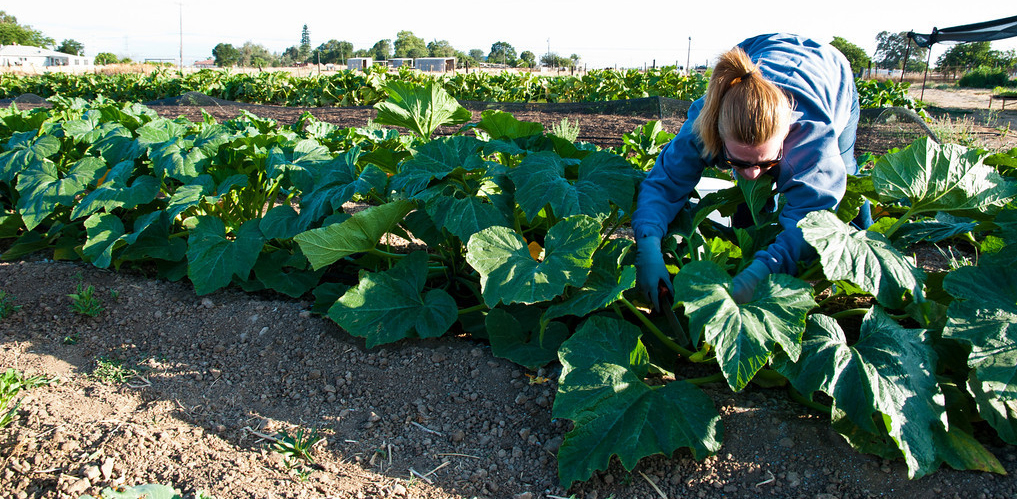
This is a very new operation. After prepping and plowing three-and-a-half acres, and adding all natural amendments like bloodmeal and oyster shell to the soil, the organic farm “broke ground” last September. They began selling crops to local restaurants and grocery stores early this year.
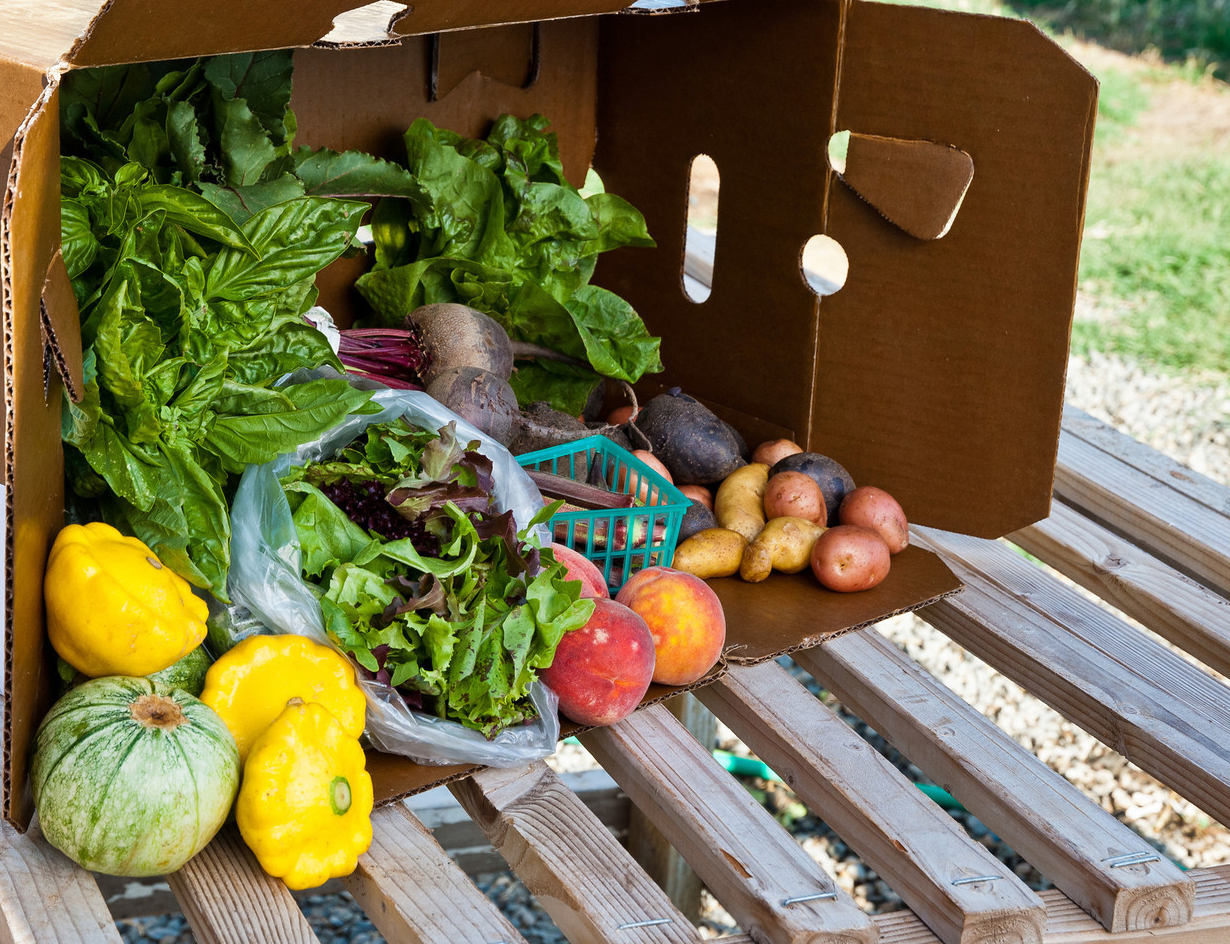
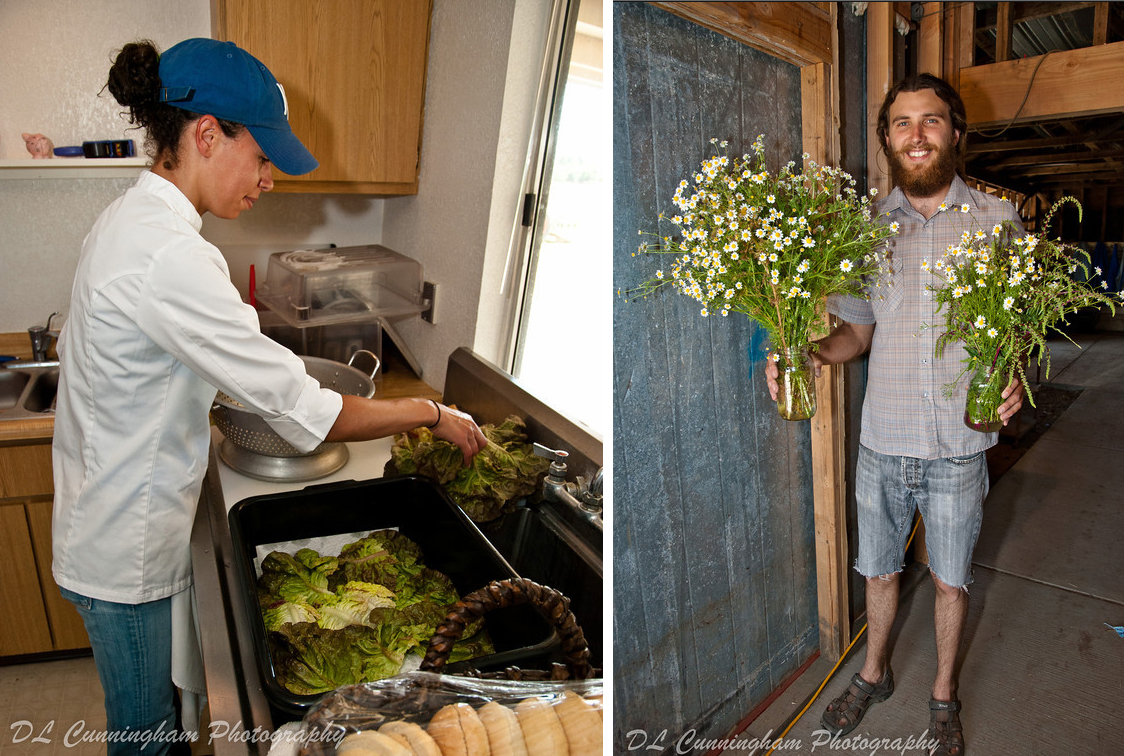
Beyond providing fresh produce for grocery stores, local restaurants and farmers’ markets in Oak Park, Natomas and Cesar Chavez Park, the small team has come up with some really innovative ideas along the way, like Farm to Fork dinners, where locals who already support farmers’ markets and buy organic can experience the talent of chefs in the community who are committed to using local, organic ingredients.
The company recently purchased Steel Magnolia, a commercial kitchen in Sacramento, which they are renaming Lulu’s Kitchen after Shaad’s grandmother, Mary Lou Cayocca. Lulu’s will be accessible to local producers who have recipes but don’t have access to a commercial kitchen or some of the logistics needed to get their products on grocery shelves, Stein says.
The team has its own products it is developing to sell, too. By the start of 2013, you can start looking out for things like arugula pasta, pepper pasta, handmade butternut squash ravioli, squash bread, arugula pesto, and roasted pepper chutney on store shelves. According to Stein, the recipes are being developed as you read.
They also plan to expand into two more properties along the East Levee Corridor, putting an additional 12 acres into production by January and quadrupling their production capacity.
And last but not least, if you’ve caught wind of the first annual Harvest Sunset Celebration, yes, they are planning that as well. But with all the events already happening this fall, they’ve decided to postpone it until the spring.
With so much going on, it’s hard to believe Stein has a moment to breathe, let alone talk through an interview. Yet Submerge somehow managed to catch up with her while she was on a drive through the Midwest.
You guys said you are along the East Levee in Natomas?
Yeah, we’re in North Natomas, and basically it’s called the East Levee Corridor. So it’s a levee bypass system that comes off the Sacramento River out in Yolo and Sutter counties.
Gotcha. There’s a fair bit of ag activity in that region, right?
Yes and no. A little bit further to the west of Sacramento, closer to I-5, there’s a lot of commercial rice production, there’s a lot of big ag. But along the East Levee Corridor, the majority of the land is fallow; it’s not in any form of production.
And so, you guys are trying to cultivate some of that land out there…
Our goal is to basically try and reinvigorate that entire East Levee Corridor, and to create a system and create farms that are duplicate-able. We want to be able to take what we’ve learned in starting our first small three-and-a-half-acre property and we want to be able to basically duplicate it on other properties along that corridor. Then we will create an actual, thriving agribusiness along that corridor to make that area two things: one, less susceptible to development, and two, to basically make Sacramento far more sustainable in regards to food production.
So what kind of stuff do you guys grow?
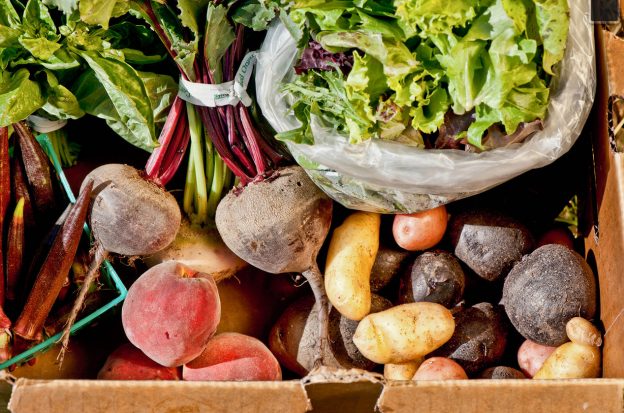
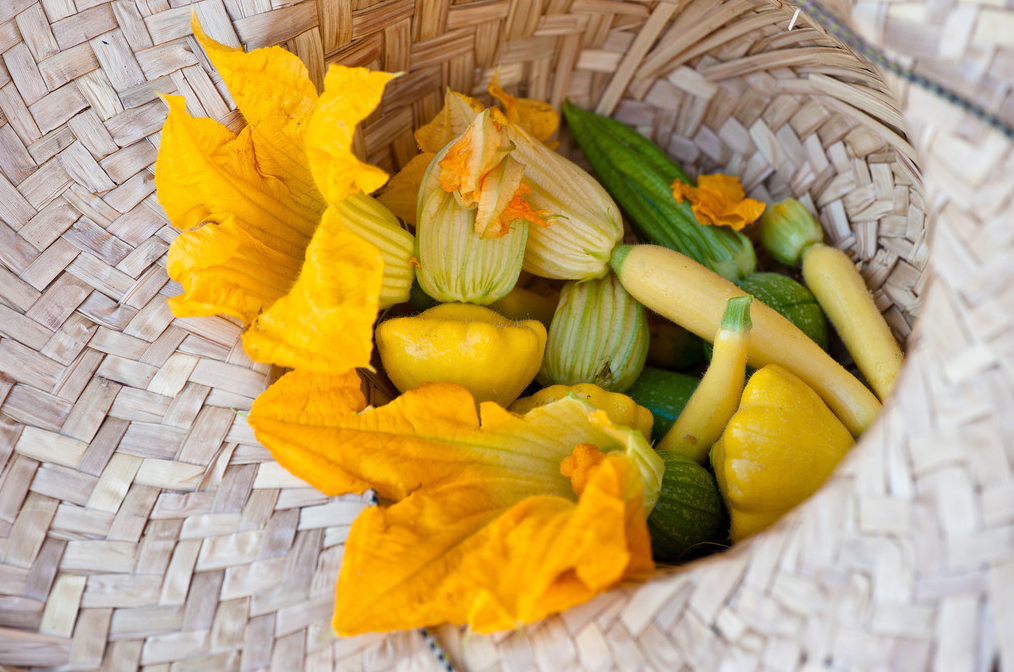
We have upward of about 30 different varieties of items in the ground at any given time. For this winter, we’ll have a full-crop harvest, we’re not going to take a break this winter. So we have salad mix, head lettuces, arugula. We did tomatoes this summer, eggplant, okra, lots of root vegetables, we grew beautiful beets and radishes, turnips. As Antonio, our farm manager, likes to refer to it, our main property right now is really kind of a salad bowl. There are carrots, onions. Amazingly for our harvest season, part of it has really been experimentation and learning what does well in the soil that we’re working with and getting a feel for crop rotation and our product demands by community.
What’s the plan with Steel Magnolia [now Lulu’s Kitchen], and why did you guys decide to buy it?
Well, as I mentioned, our motto is basically the same thing as our parent company, “local food done right.” And we really believe that “local food done right” doesn’t just mean growing the food locally, it means producing food locally… We want Lulu’s Kitchen to be an incubator kitchen for local producers to come work on their recipes [and] work on their processes. We have fully trained chefs on our team who can help mentor them… At the same time we want to help those producers navigate the often confusing and sticky system of working with the County Health Department and working with the city and learning how to do labeling so it’s FDA approved and how to get your ingredients improved, you know, all of that process. We want help small producers so it’s easier for them to go from concept to the shelf.
I thought I read something about you guys developing your own products to sell in stores, is that right?
We will be, yeah. Absolutely. In fact, you can go to the GOOD market and you can try some of our value-added items. You’ll hear us talk a lot about [value-added items] with small farms in particular. Farming itself is not necessarily a lucrative business. It’s a cash-heavy investment business, there’s a lot of investments needed to really get a farm going and keep a farm operating. Small producers, small farmers really need to have the opportunity and the outlet for additional revenue streams, and so creating value-added products: jams, jellies, breads, sauces, pastas, things along those lines, where the primary ingredients are from your farm, is a great way to do that. So we have a ton of summer squash still out in the field, so one of the chefs on our team is making squash bread.
Now Farm to Fork Dinners, whose idea was that?
Well, actually, that was a joint discussion. It started out where once every two months or so, the farmers and myself, just kind of our core team, we were going to one of the restaurants for dinner and we provided food, because the farmers work their butts off, and they deserve the opportunity to enjoy the fruits of their labor occasionally. But in doing that, we also built these really beautiful relationships with the chefs we work with. They have given us fantastic feedback. It started out, actually, with Mama Kim, of Mama Kim Eats, who said almost immediately, “I want to do a brunch.” So we started out with a brunch at Mama Kim Eats, and she said, “I want to do a brunch and I want to focus specific dishes around your produce and your products.” And I was like, “That’s fantastic.” And so Farm to Fork was born. And now we work to do at least one Farm to Fork event each month with our partner restaurants to help bring in business for them on an off-shift. Like at Michelangelo’s, it was on a Sunday night, and we basically helped them triple their sales on a Sunday night.
Do you have an estimate of about how much you produce per season?
You know, we’re putting those numbers together, to be honest [laughs]. But what I can say is we have been able to sustain upward of about 20 to 25 restaurants, the Natural Foods Co-Op, Corti Brothers and three farmers’ markets for this entire season, so since January basically, off of three-and-a-half-acres. And that’s pretty amazing, to begin with.
To learn more about what Feeding Crane Farms and Lulu’s Kitchen have in store, follow Feeding Crane on Twitter @FeedingCrane or like it on Facebook.
Spin Burger Bar
1020 16th Street – Sacramento
Words & Photos by Adam Saake
They say you are what you eat. Over the past year or so it has not gone unnoticed that Submerge’s “Refined Tastes” has dedicated much space to the almighty burger. It’s not that we favor burgers or establishments that serve them, it’s that Sacramento continues to turn out press-worthy product. And hell, we don’t mind eating them.
The newest addition comes from the closing of Bistro 33 that was located on the corner of 16th and K streets. The once-popular SRO-operated business wasn’t enjoying the success that the Haynes brothers originally envisioned, so they decided to close the doors and start from scratch. For months, white sheets of paper with black images of bicycles lined the windows and the logo read, “Spin Burger Bar.” The popularity of bicycle-themed restaurants is evident here in Sacramento and curiosity loomed as to what they would do differently.

For starters, Spin is a burger bar. Menus are glued to old 12-inch vinyl sleeves and the drinks menu slides out–very clever. Chalk paint covers most of the walls, and patrons are welcome to add their own artistic flair. Above the bar, bicycle wheels are mounted and strung together, and a crank at the opposite end keeps them spinning in perpetual motion. Venture to the back corner and you’ll find track bikes mounted on rollers for the purpose of Gold Sprints that they hold every Wednesday night at 9 p.m. for prizes, or daily if you just want to school your friends. Kudos for creativity–but how’s the burger?
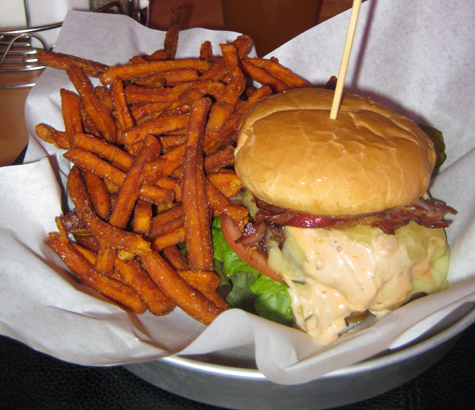
The Spin Burger is an 8-ounce, “specially blended” patty that you can build your own way. There are a staggering number of choices, from the cheeses to the toppings to the sauces, and a few are real conversation starters. Want some mac ‘n’ cheese on your burger? How about brie cheese or pomegranate ketchup? All the basics are there too: bacon, avocado, grilled onions, etc. The possibilities for putting together a really amazing burger are all there, but there’s also the potential of creating something like a Captain Crunch sandwich, so choose carefully. I went with cheddar and pastrami and played it safe with Spin’s special sauce, a thousand island of course. Techniques vary for putting away a burger of this size, but I prefer the cut-in-half, which never seems to fail. Except this time. I got about halfway through and the bottom piece of my bun completely fell apart, leaving half of my burger almost inedible. I tried to blame my cutting skills, but the first bite told the whole story. Forgive me for using a cliché food writing term, but the bun was spongy. If you get only two things right with your burger, it’s got to be the patty and bun. One out of two ain’t bad, because the patty was delicious as was the pastrami that was generously piled on. Hopefully it’s just a kink that needs to be worked out.

Fries are extra but it was totally worth it when I saw the heap that accompanied my burger. They also have sweet potato fries, which are my personal favorites. I came back for a second visit almost for that fact alone, but also decided to attack another burger on the menu that I learned is served on a more “standard” bun. The fresh-tasting, perfectly toasted bun is what contributes to making burgers like that of Formoli’s Bistro or The Golden Bear some of the tastiest in town. Spin has the ingredients to compete, and I tasted it when I tried the “Double D,” which featured two patties, two slices of American cheese, lettuce, tomato and Spin sauce. In fact, I made quick work of it and almost ordered another.
The service was great. The bartender Kate was pleasant and informative, and my food came out quickly. The beer selection includes local brew Monkey Knife Fight from Rubicon and each day of the week has a clever name like Fat Tuesday and Widmer Wednesday. During their happy hour, 3:30 to 7:00 p.m., enjoy $2 pints of that theme beer. Look out for an additional happy hour being added during Gold Sprints on Wednesdays. A word of advice: heavy cycling and copious drinking might lead to…well, watch from a distance.
Michelangelo’s
1725 I Street, Sacramento
Often, I mention the excitement, importance and necessity of the “culinary adventure.” This is when food lovers, foodies, venture to the edge of comfort to try something new at the risk of a terrible tasting outcome for the sake of discovering a sweet, juicy, raspberry-red ruby of delicious enlightenment.
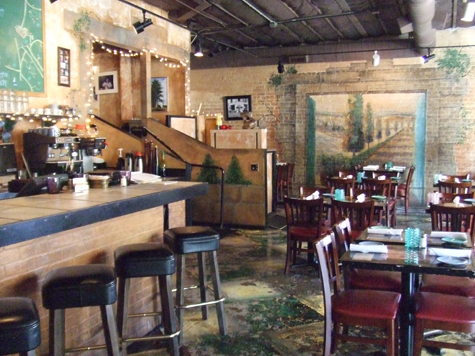
Always on the lookout for a worthy location to learn and try something new, I came across Michelangelo’s while walking around midtown several weeks back. The building appeared to be an art gallery, upon first impression. As I stood outside reading the small plates menu, a guy said, “Are you gonna come in? Or are you just gonna stand out here?”
That guy tried to convince me to go in and eat (even offered to buy me a drink) and told me about the local products and quality of atmosphere and eats found at Michelangelo’s. He turned out to be partial owner of Sampino’s Towne Foods and told me of the delicious sausage that his father made by hand that was served at Michelangelo’s, and how he enjoyed libations and sated his appetite most Thursdays at the restaurant, while being entertained by live music in the small, cozy restaurant.
I did turn down his invitation that Thursday, but I told him I’d come back a few weeks later, to see if I agreed with him firsthand.
I returned two weeks later, ready for food and music. But Michelangelo’s was abnormally closed for the day. Boo. But I wasn’t going to be swayed to change my food safari destination that easily, so I stopped in the next day for a late lunch.
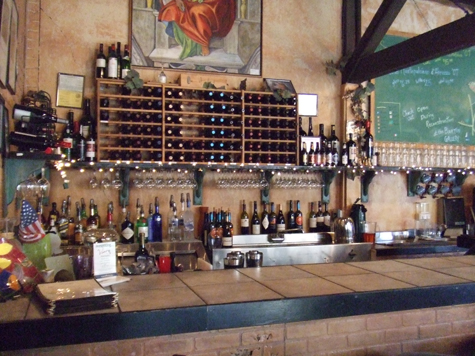
I decided to kick off my Friday afternoon lunch right, choosing a glass of red wine with the help of the genuine, friendly, personable and knowledgeable waitress/bartender, Lisa. The tart, sweet and only a bit dry Boroli Quattro Fratelli Barbera d’Alba 2005 was $8 a glass and tasted of raspberries and cherries. I was so enthralled with my Italian wine that I almost forewent the food. But, I’d picked a unique dish that deserved my attention.
I ordered the $12 red wine gnocchi from the lunch menu, intrigued by the combination of red wine, anchovy, seasoned ricotta and lemon zest. I’m a big fan of anchovies (although I’m always careful when and where I eat them) and was curious how their pungent, salty oceanic flavor would meld with red wine.
I discovered upon arrival of my plate of potato spoon-rolled pasta in a muted mauve sauce that the blend was delish—at first anyway. The wine lent itself to a sour/tart flavor that offset the salty-fishy-ness of the anchovies. Of course, my wine helped my palate along, highlighting the robust and melding flavors. The ricotta was appropriately peppered and salted. I’ve sugared or salted ricotta before, but never peppered. Lovely.
Flavor complexity is generally a good measure of quality. That means the seasonings and spices of a dish are so well melanged that you can’t distinguish one from another and each bite is a ominous flavor surprise. My dish was such.
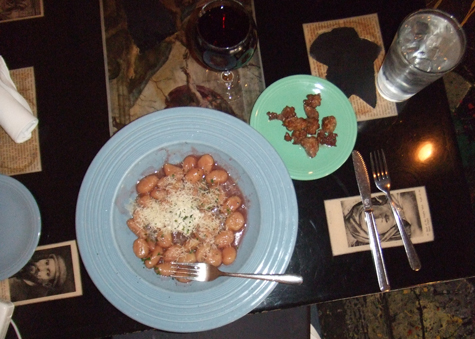
The only real flavor-texture problem was that the gnocchi was probably cooked a minute or two too long. It should be chewy, but more firm than chewy. The chewy-ness of the gnocchi and the sour fishy sauce did become difficult to stomach after the magical effects of the vino took hold of me (a bit too strongly) that fated Friday afternoon.
Recalling my conversation weeks back about the sausage, I couldn’t pass up ordering a side of it. The sausage was incredible, equally yummy hot or cold—not an easy or frequent accomplishment for sausage. A salty, smoke-y flavor popped at first, then a spicy herb flavor finished off the bite.
Honestly, portions were smaller than they should have been. The gnocchi probably $3 more than it should have. And for $5, I got maybe two or three ounces of sausage. That didn’t seem appropriate.
Michelangelo’s offers great Italian wines at what I thought to be a decent price. If you’re not in the mood for splurging on a complex flavor experience, you can get your cheaper thrills with glasses of vino. It’s certainly a shmancy place. You may or may not be disappointed, depending on the pretense of your visit to such a wine-derful place.
Thumbs up for romance or bromance. With close homies or with love interest.
Other circumstances don’t quite take hold of the enchanting quality of vino and vittles at Michelangelo’s.
By Josselin Basaldu
It’s so good to be here with you. Really, the pleasure is all mine. It’s hard to believe it’s been more than six months but not quite a year that I have been writing to you about local restaurants. I’m sure if you’ve followed throughout you could get a good idea where I live, because while I’m down to experiment and try new restaurants, I’m not as willing to explore the Sacramento’s outer regions. I feel I have tried almost every kind of food available in the six-mile region, and while it could be said I’m easy to please, I’m glad that for the most part I haven’t had to write a negative review. Congratulations to you, Sacramento restaurants. People don’t refer to this city as a dine-out town just because of the abundance of eating establishments.
This week, instead of spending money and then trying to convince you to try a spot out, I’m going to save a couple bucks and remind you of all the great restaurants I visited in the first volume of this column. Don’t worry; it’s not another “best of” list, but rather a refresher on what’s fresh—and, of course, what’s not.
In my time at the dinner table that is Sacramento, by far the one restaurant where I wish I could eat every day is Tamaya, located at 2131 J St. It is the best sushi in town, and they crush the competition across the board. One of my biggest peeves with sushi restaurants is that some places use the same sauce(s) on every roll to the point that everything starts to taste the same. That is not the case with Tamaya, which has an extensive menu and equally creative pairings of flavors. The prices match or beat any other sushi restaurant, and their quantities are ridiculous in the best way possible. I had a sushi spot I frequented regularly, but after one meal at Tamaya, I haven’t been back. Trust that.
From the uncooked to the slow-cooked, my most memorable review has to be my visit to Sandra Dee’s (601 15th St.). My Southern state experience doesn’t venture out of Austin, Texas, so you could say my BBQ palate is amateur at best, but Sandra Dee’s has turned me out. When friends come to town, it’s where I take them—and needless to say, they get turned out too. Their ribs literally fall off the bone, and their BBQ sauce is the perfect balance of sweet and spicy. Their Po’ Boy sandwiches are packed with flavor, their fried chicken is flawless and their seafood is everything I’ve mentioned and then some. I’ve been countless times since and have never had anything short of an incredible meal. Deciding what to eat is hard enough, but choosing a side order even more difficult when faced with options like mac and cheese, hush puppies, red beans and rice and more. As the saying goes, “It’s all good.”
I suppose from the slow-cooked, a good segue would be cooked on a spit? Opa! Opa! was the biggest surprise of all the spots I have reviewed. I’d driven by this place hundreds of times, but I couldn’t get past the decor from the outside. It looked like it could be a chain restaurant, but I couldn’t have been more off. There aren’t many affordable lunch/dinner spots that can boast a menu created by an in-house chef, but Opa! Opa! not only has an incredibly dense menu, it is also very unique from other Mediterranean restaurants. They definitely had fun with the menu: alongside Mediterranean mainstays like the beef and lamb or chicken gyro, they also offered up interesting dishes such as a Greek meatloaf (lamb) and pita pizzas. I still have flashbacks to my barbecued leg of lamb sandwich and the rich feta and goat cheese spread. Opa! Opa! is located at 5644 J St., don’t sleep!
With the good comes the bad. Coincidentally, the one bad review I gave is to a restaurant that is no longer open. My apologies to Fins. I didn’t know my words held so much weight in this town, but you honestly didn’t think that white linen tablecloths, high prices and red plastic baskets would be a winning formula, did you?