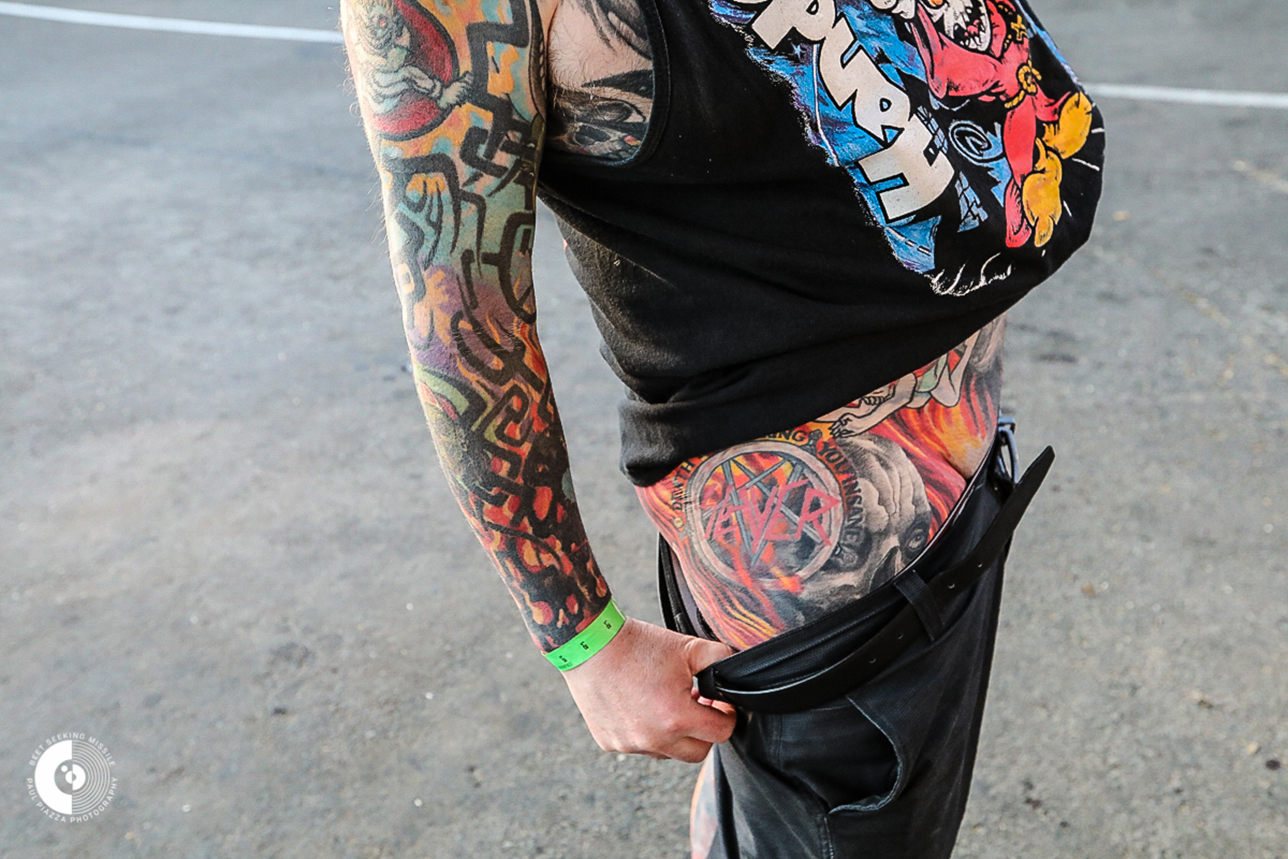
To understand the impact of Slayer’s music and fully comprehend the dedication of their fans, one merely needs to listen to how these enthusiasts of the band greet one another. “SLA-YER!!!” is never merely stated in lower case. It’s usually shouted, screamed or texted in all caps with exultant exclamation.
Sometimes it’s done a little more quietly or unexpectedly, but always with strong emphasis. I found this out when I recently wore a Slayer T-shirt to a Midtown gym for a workout. A mild-mannered looking gentleman of about 60 who was passing me in the hall noticed the shirt and quietly but emphatically turned and yelped a quick “SLAYER” while flashing the devil horns hand sign at me. I nodded affirmatively.
Over the years, Slayer has played many memorable shows in the Sacramento area. They first played at the Crest on the middle of a bill featuring Venom and Exodus in April of 1985. Later that summer, they had their first headlining show at the former Club Can’t Tell and since then have played many local shows at a variety of places. Over the years, they’ve played at a variety of different sized-rooms including the former El Dorado Saloon in Carmichael, the Memorial Auditorium, the Convention Center and Arco Arena. They have been on the road for over 35 years and have outlived more than a few venues and countless bands. Quite a ride for a band that used to tour in singer/bassist Tom Araya’s Camaro while towing a U-Haul.
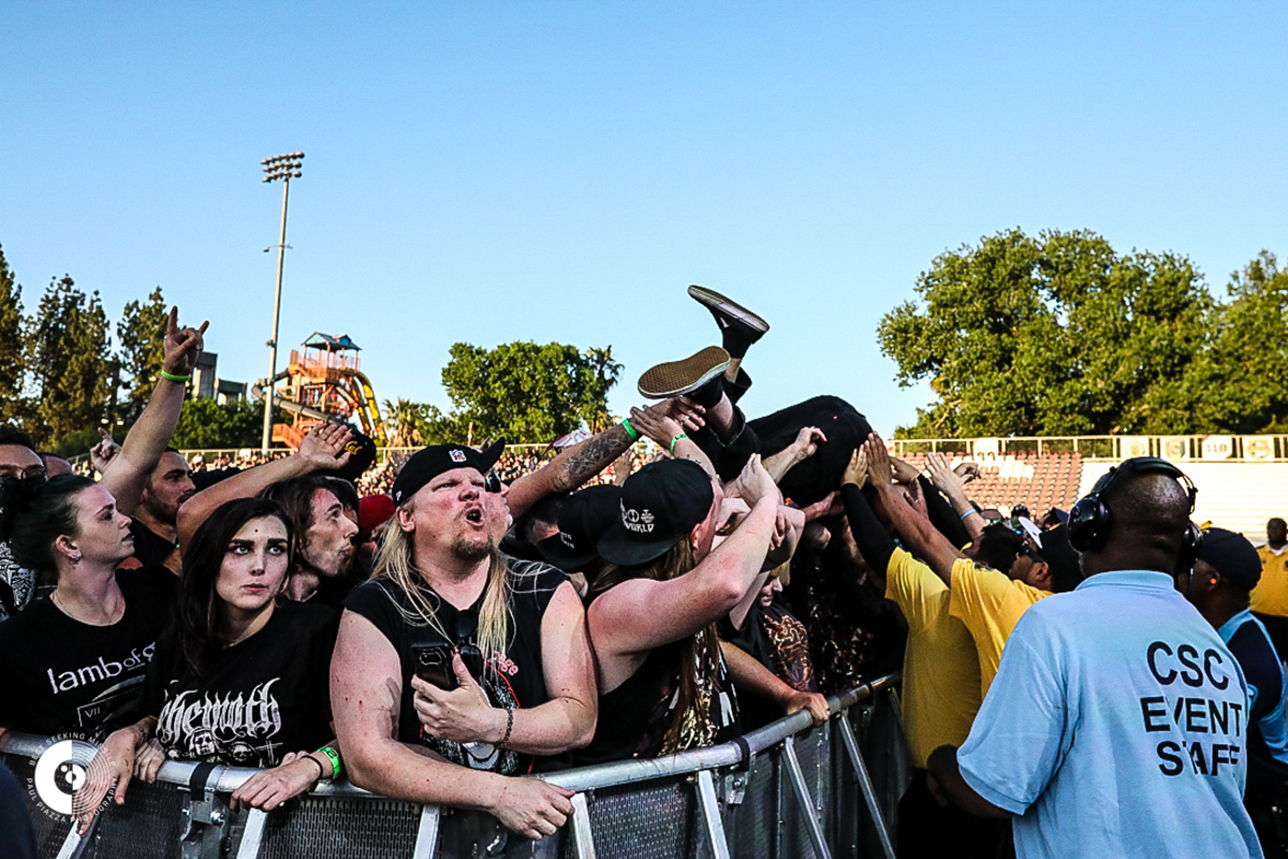
This year they decided to take one more lap before calling it quits. So it was fitting that Sacramento was on the list of farewell cities. On Mother’s Day, they played an outdoor show at Papa Murphy’s Park, on what is being billed as their Final World Tour. Many of the band’s longtime fans came from near and far to witness this event, as did a newer generation of eager thrash fans.
To make the day more memorable, the band brought along heavy luminaries Lamb of God, Anthrax, Behemoth and Testament.
Slayer began in 1981 when guitarist Kerry King started jamming with drummer Dave Lombardo in the drummer’s Los Angeles-area garage. King then met Jeff Hanneman in a parking lot after they both auditioned for a southern rock band. Later, they recruited Araya, who at the time was training to be a respiratory therapist. The rest, as they say, is history.
The band developed their menacing early thrash-metal style on their first two albums Show No Mercy and Hell Awaits while also experimenting with different looks that included makeup, upside down crosses and big spiked wristbands. By their third try, they had ditched the looks and unleashed an album called Reign in Blood on the world.
The scathing 28 minutes and 58 seconds of music on this record altered the landscape of metal permanently. It blurred the line between metal and hardcore punk and was played at breakneck speed. A young Rick Rubin produced the record and he suggested the band ditch the reverb on the guitars and vocals. The resulting sound was dry as a bone and as heavy as granite. Incredible guitar riffs and mind-blowing drumming wrapped around Araya’s brisk vocals that he would punctuate with occasional blood-curdling screams. It became the inspiration for countless bands and is considered one of the great metal albums of all time.
Twelve albums and one anthology entitled Soundtrack to the Apocalypse later, Slayer are considered by many to be one of the greatest metal acts ever. They are one of the legendary Big Four of thrash metal, which also includes Metallica, Megadeth and Anthrax. However, to most fans it really comes down to Slayer or Metallica.
Ask any true metal fan.
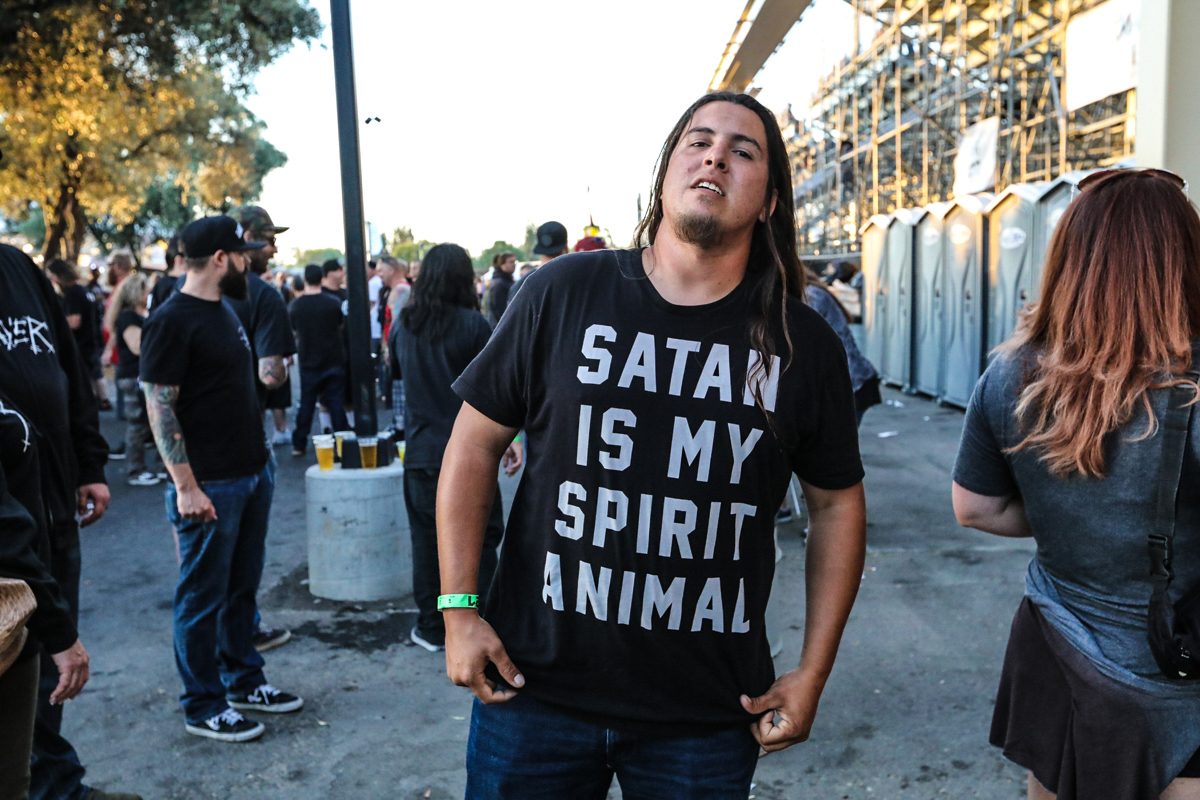
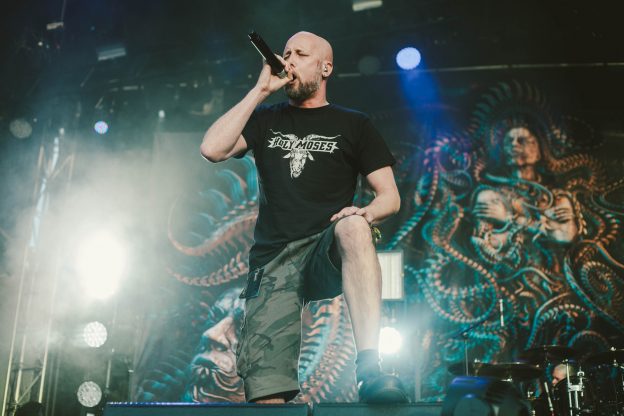
However, none of the openers were slouches at Papa Murphy’s Park. After an unexplained one-hour delay, things kicked off with the East Bay’s fantastic Testament, who gleefully shredded during their brief set. Next up was Behemoth from Poland, whose blackened death metal and makeup were a little ironic in the bright afternoon sun of this nearly perfect day. But they ignored that and drilled fans with songs from their popular album The Satanist. Naturally, everyone, including some fans who were painted up like them, ate it up.
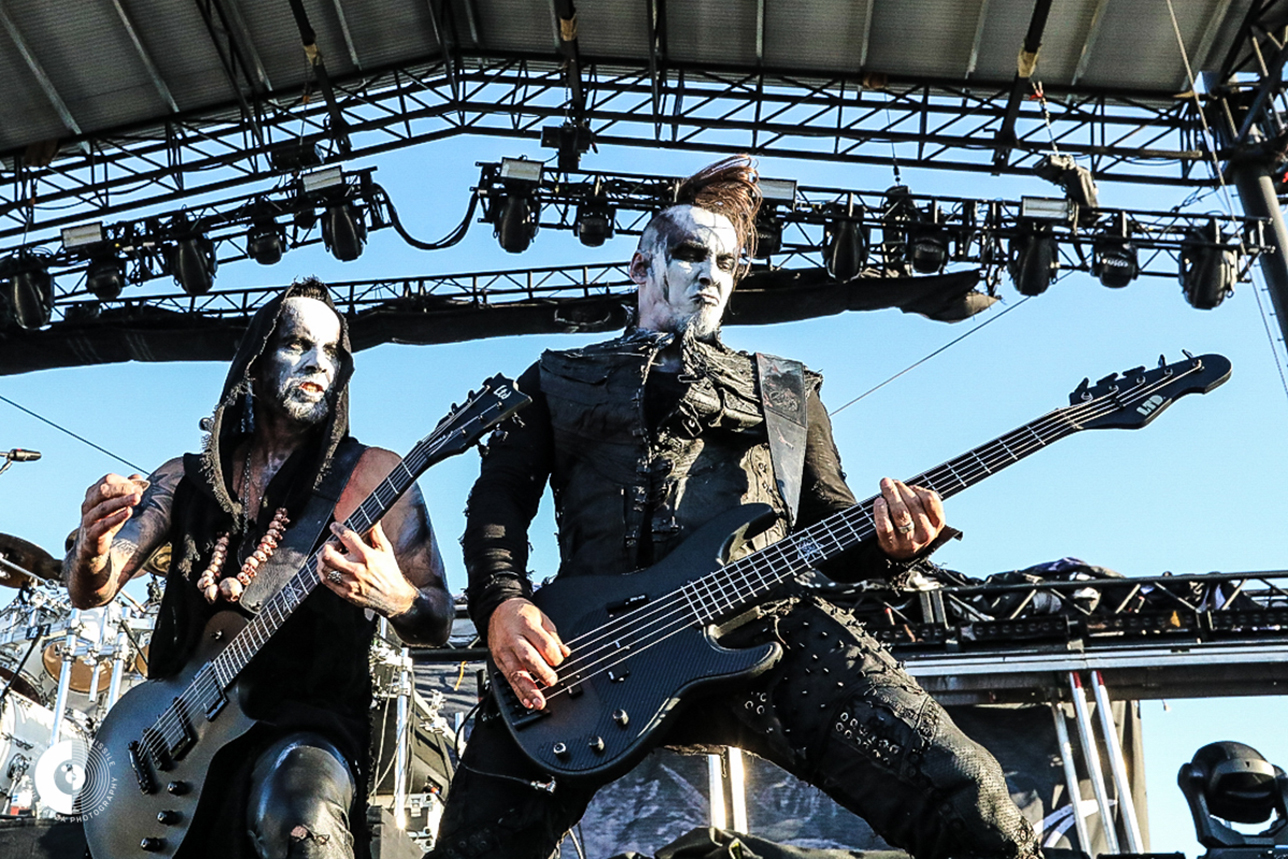
Behemoth
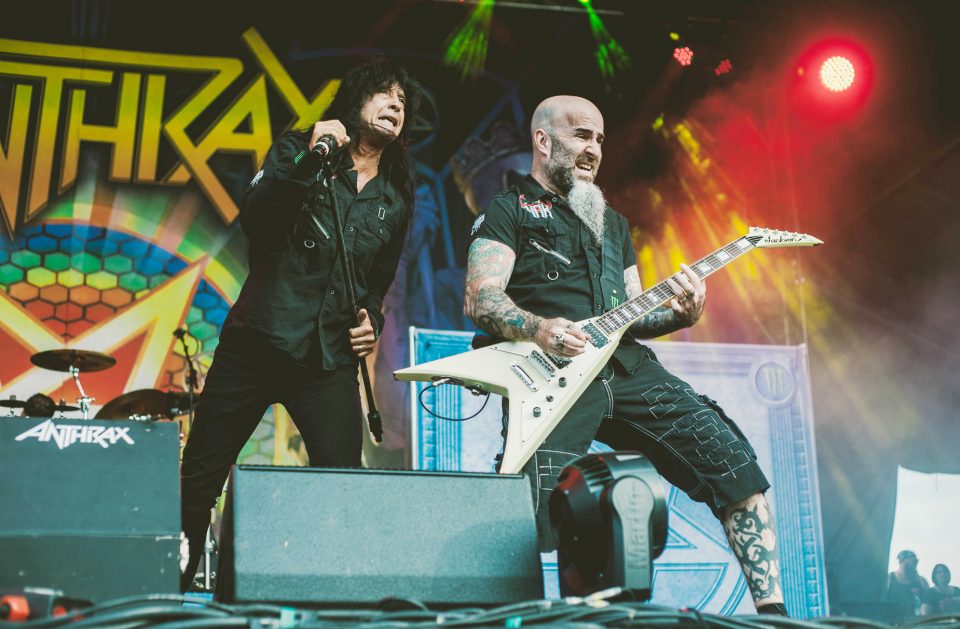
Next up was Anthrax, the East Coast legends who incited an early mosh with cuts from their best album Among the Living. After them were Lamb of God who hail from Virginia. Their drummer Chris Adler is considered one of the greats, and in recent years he has split time handling the same duties for Megadeth.
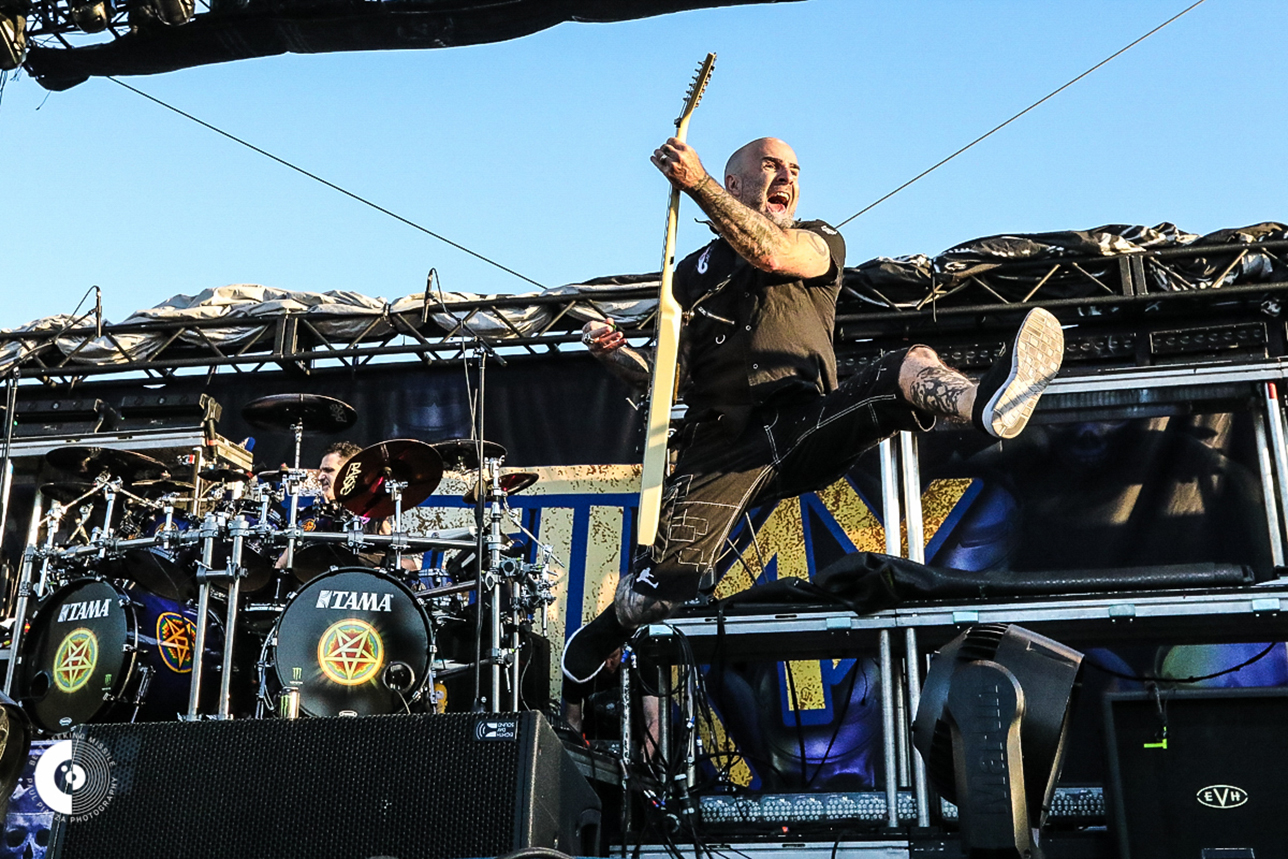
Anthrax
When darkness came, it was finally time for Slayer. Araya and King are the only two remaining members from the original four. Sadly, Hanneman passed away from liver failure in 2013. As the the one who brought the punk influences to the band and the songwriter of most of the band’s memorable material, he is sorely missed for both his talents and personality. The band wisely chose Gary Holt of Exodus to replace Hanneman. He is an extraordinary lead player and perhaps one of the most exuberant ambassadors in all of metal. He recently popped into Harlow’s to jam with John 5 of Rob Zombie’s band.
Lombardo has long been the threshold for all thrash metal drummers. He is considered the godfather of the double-bass. He and the band parted ways over personal differences in the early ’90s. Hanneman talked him into re-joining a decade later and after a couple of albums and quite a bit more touring, he finally left for good over a pay dispute in 2013. His replacement, Paul Bostaph, has done a solid job of filling his role and continues to do so. Lombardo recently played Ace of Spades with Dead Cross.
Together, the final version of Slayer are still a formidable bunch. King played the entire set at 1,000 miles per hour and looked fit and unstoppable at 53. Araya, the band’s eldest member at 56, has suffered a variety of health ailments, including a major back surgery that ended his days of head-banging while playing. He looked fit as well and possibly the happiest he’s been onstage since the band’s gleefully wicked early days.
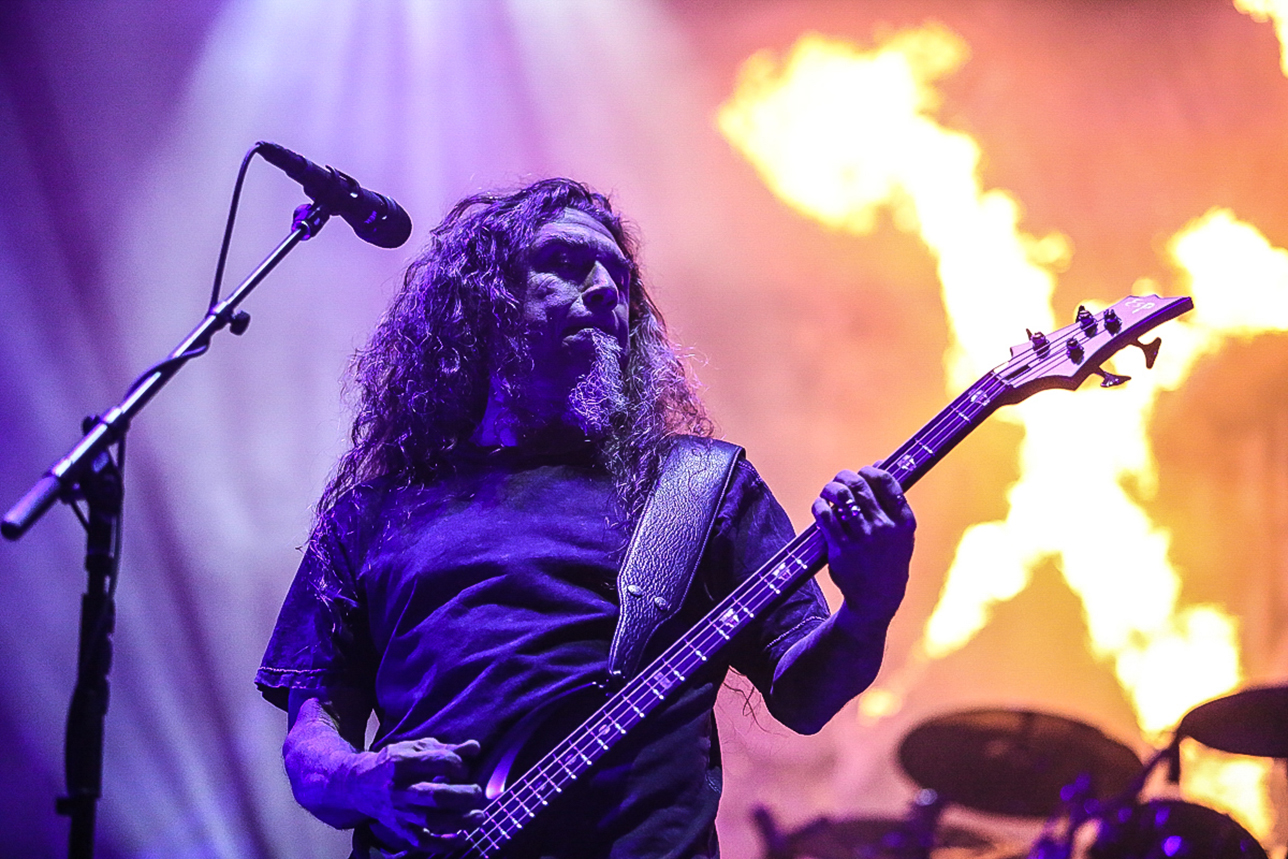
Slayer
Slayer brought lots of fire … literally. There was a constant barrage of flames from the rear of the stage as the band raged at the front. They also blazed through a rapid-fire 19-song set that included songs spanning most of their career. The sound was crisp and the night was cool and during it all, one could only wonder how this all went over in River Park, the neighborhood across the river, whose noise complaints led to the shut down of the Cal Expo Amphitheater at the same location many years ago.
Naturally, everyone in the soccer stadium couldn’t have cared less about any of this while raging along loudly to the lyrics of “Angel of Death,” as the band slammed it home during the finale: “Rancid Angel of Death…FLYING FREE!!”
Papa Murphy’s Park seemed to be a fine fit for Slayer’s finale. The bands, their fans and the thrash metal gods seemed to smile upon Sacramento on this glorious Mother’s Day afternoon and evening. And if you listened closely, over the breeze and the river, you’d probably have heard … ”SLA-YER!!!”
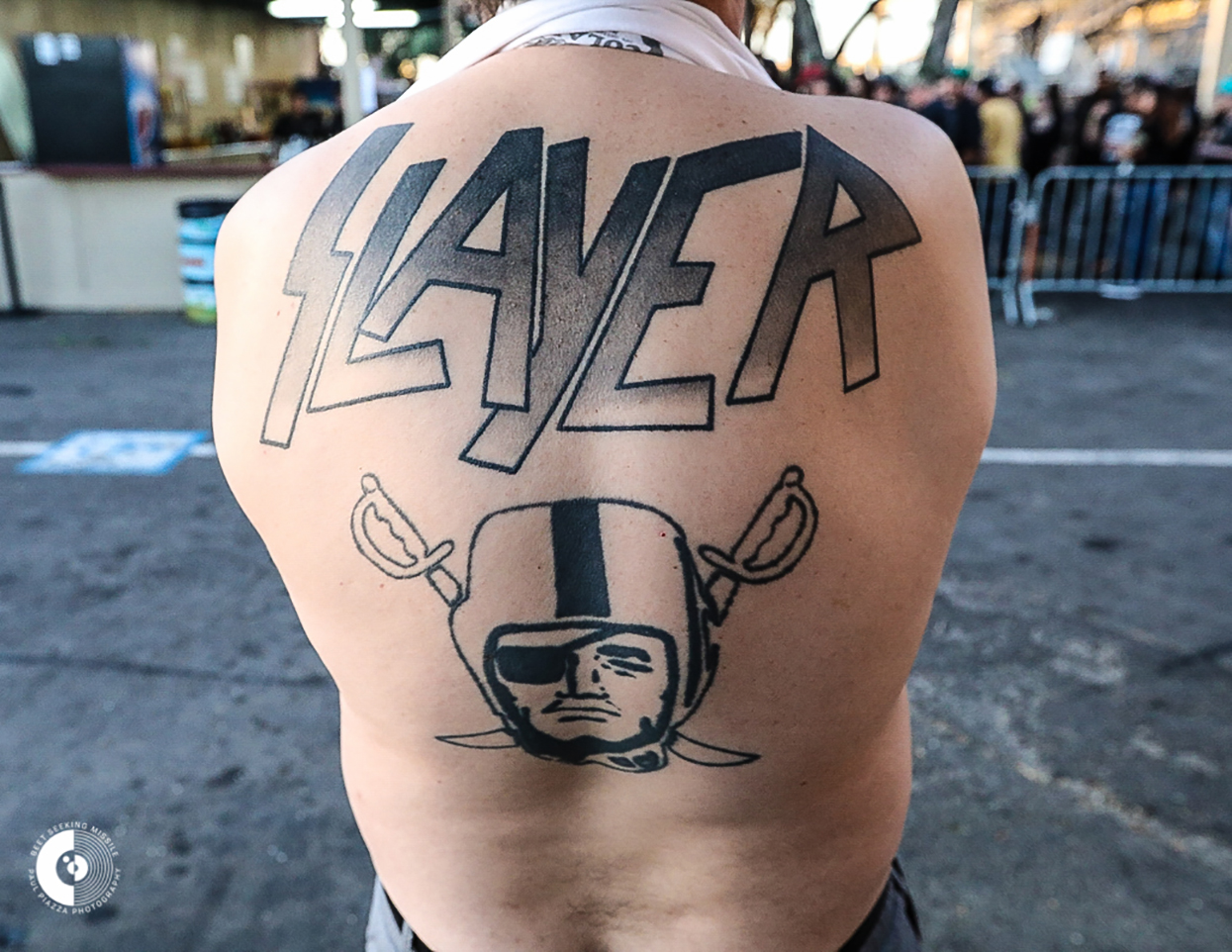
**This review first appeared in print on page 24 of issue #266 (May 21 – June 4, 2018)**
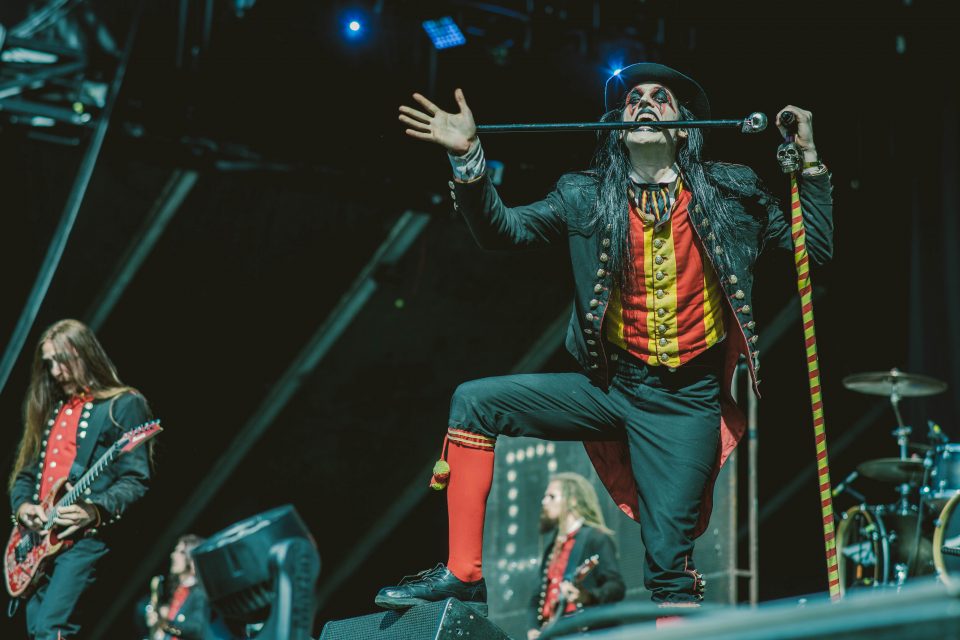
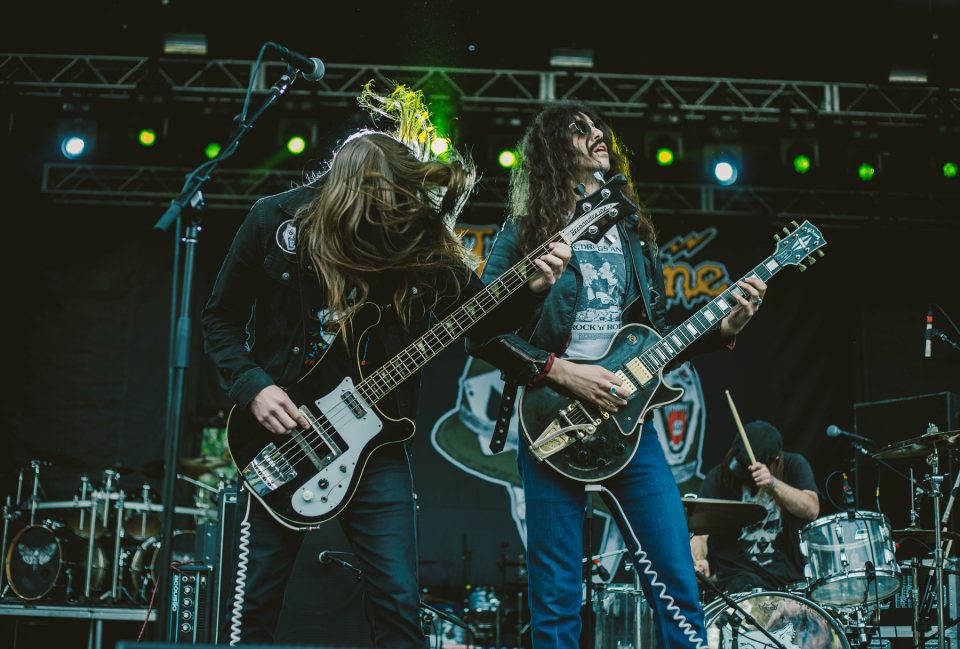
The fifth annual Monster Energy Aftershock Festival was one for the books! A sold-out crowd of 50,000 attended over two days, making it California’s biggest rock festival. With three stages, 35 bands, dozens of food options, live art, and tens of thousands of dollars raised for local charities, it’s no wonder why Aftershock is so popular. Check out our photo gallery from day one featuring bands like Tool, Slayer, Anthrax and more.
Avatar
The Shrine
Anthrax
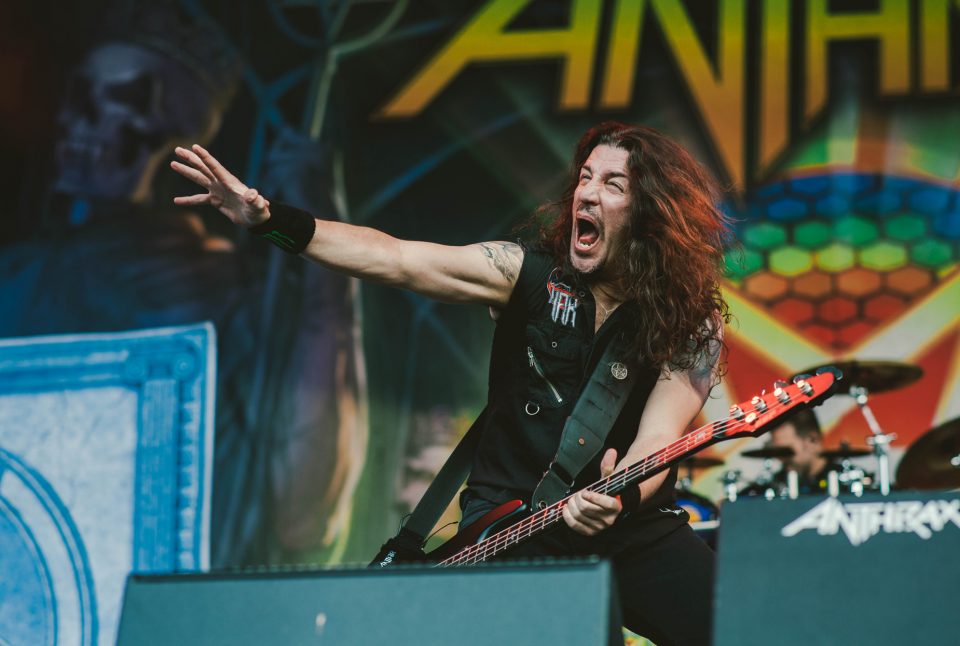
Anthrax
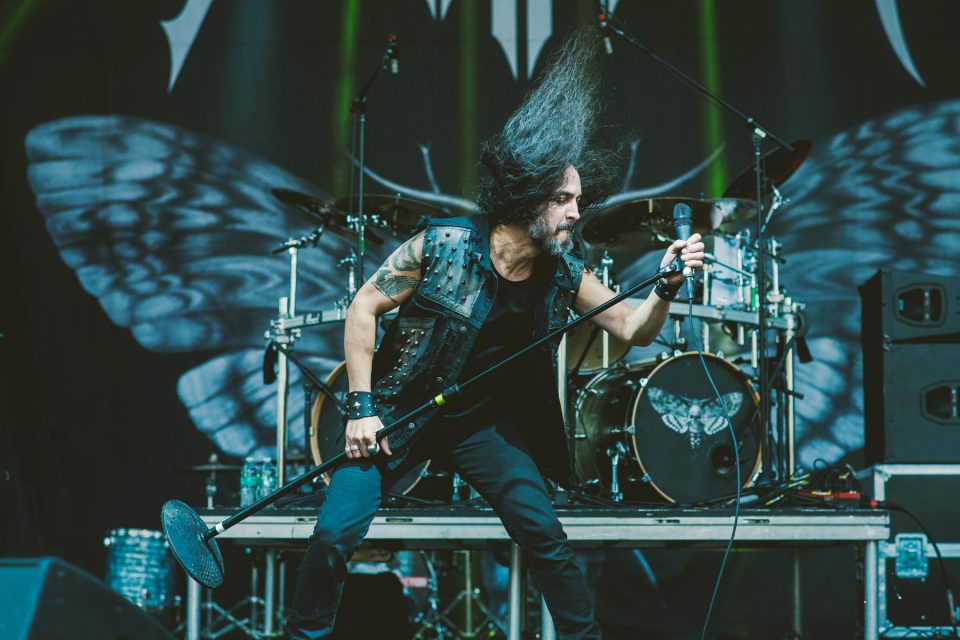
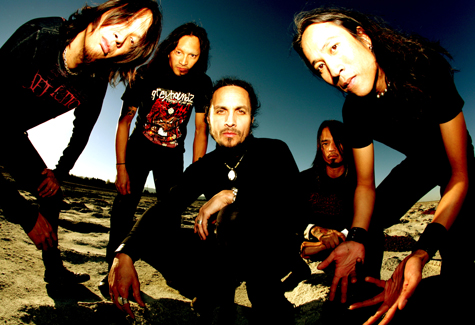
Death Angel
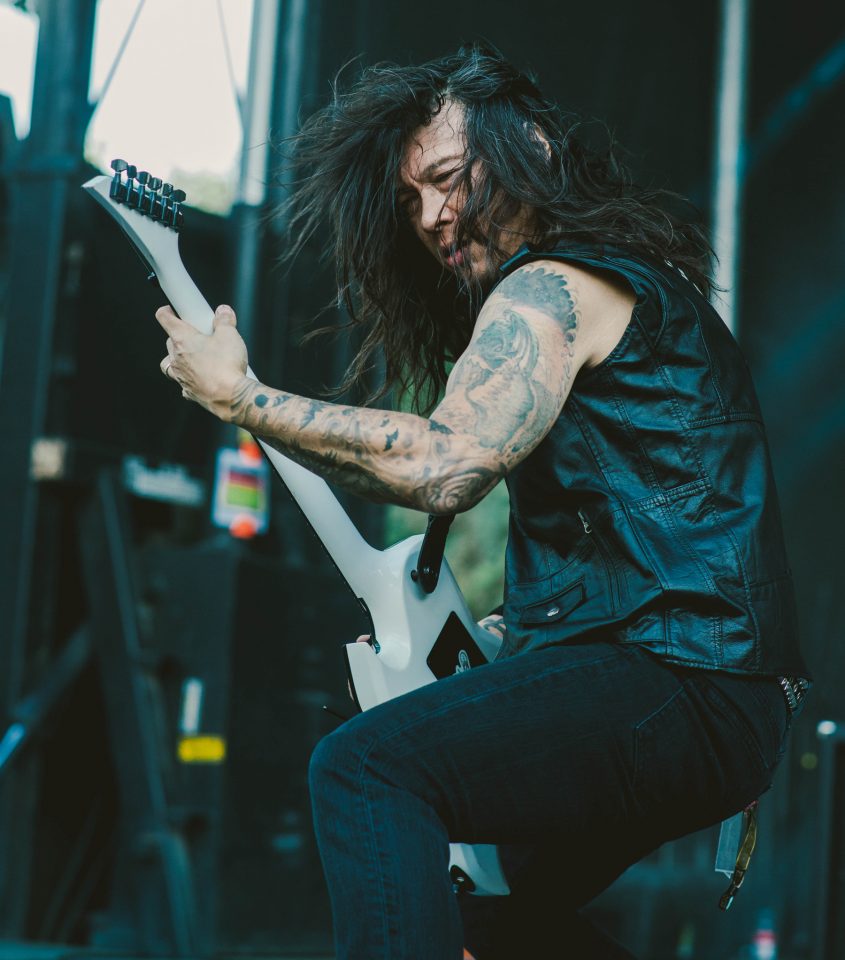
Death Angel
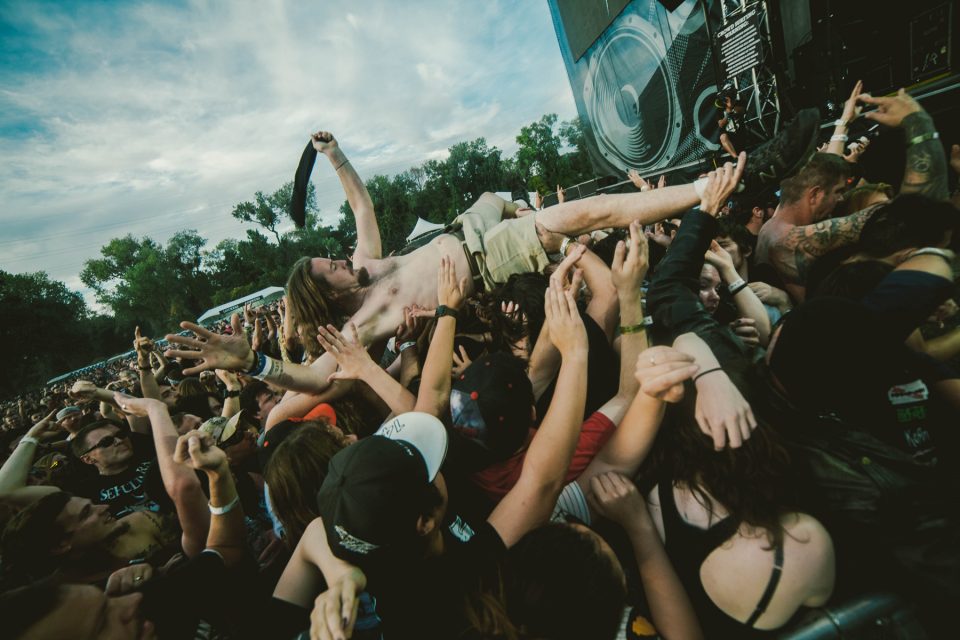
Aftershock 2016
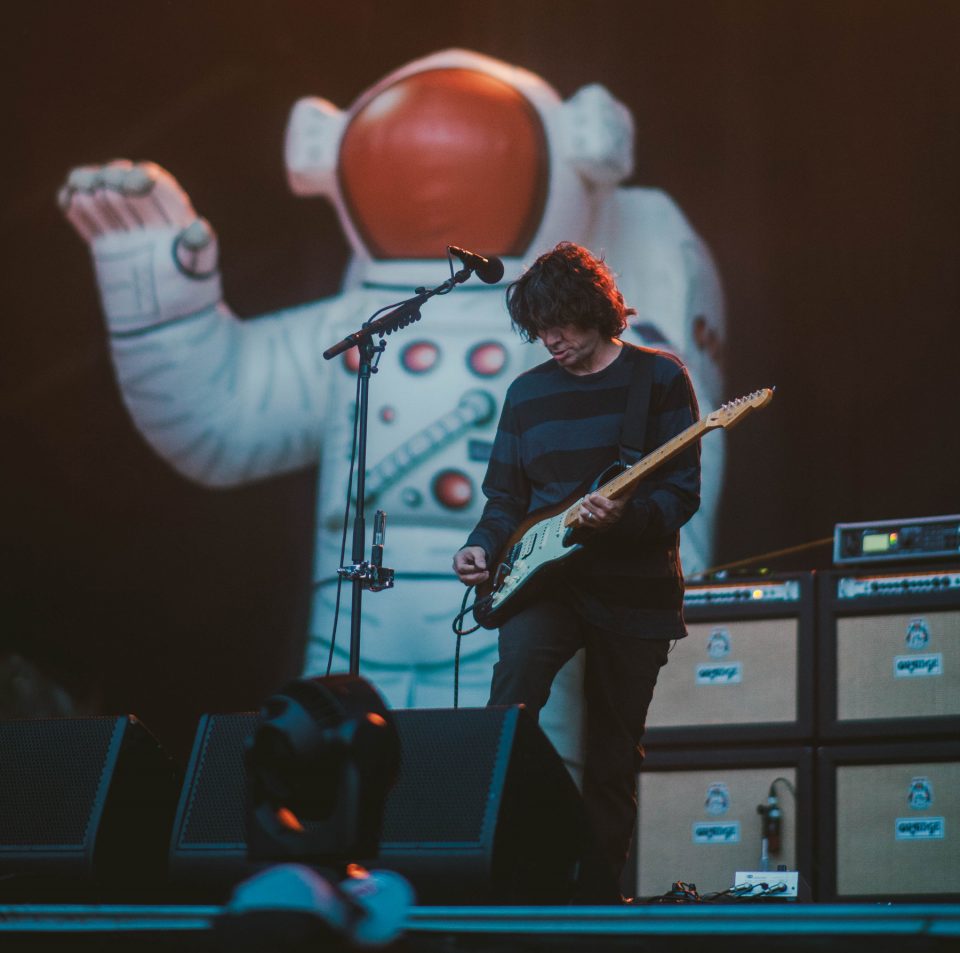
Primus
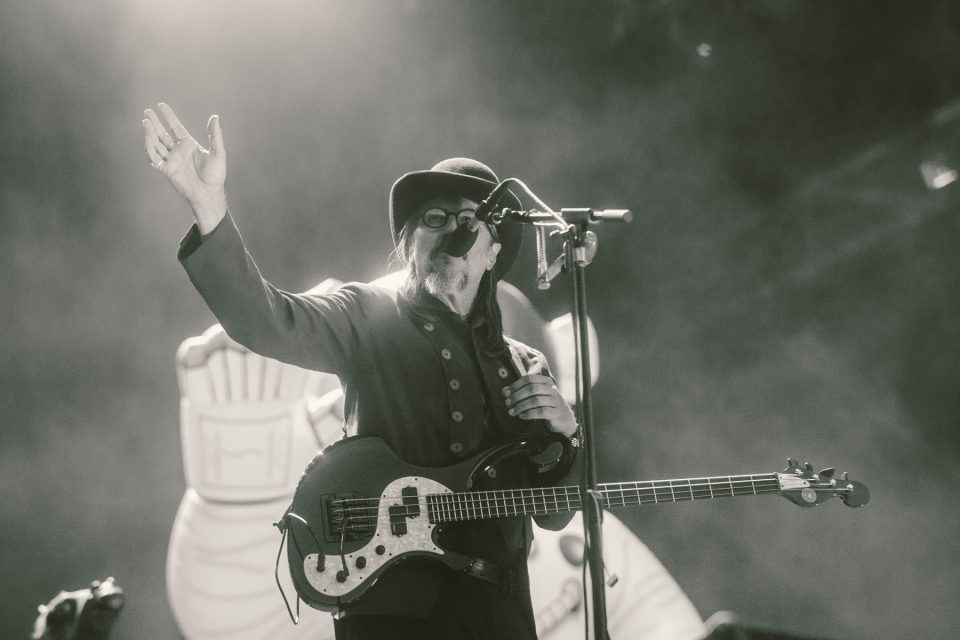
Primus
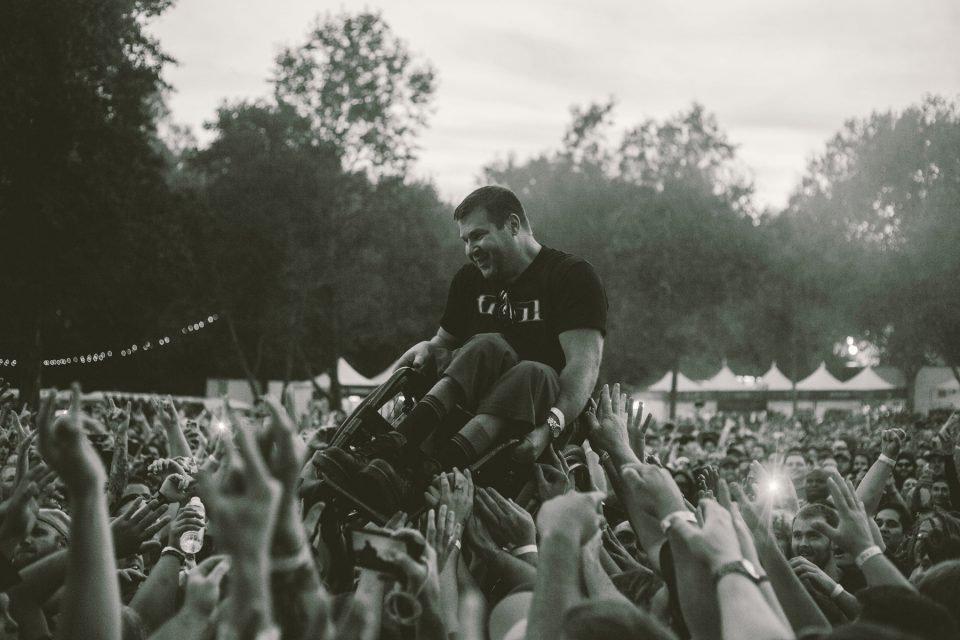
Aftershock 2016
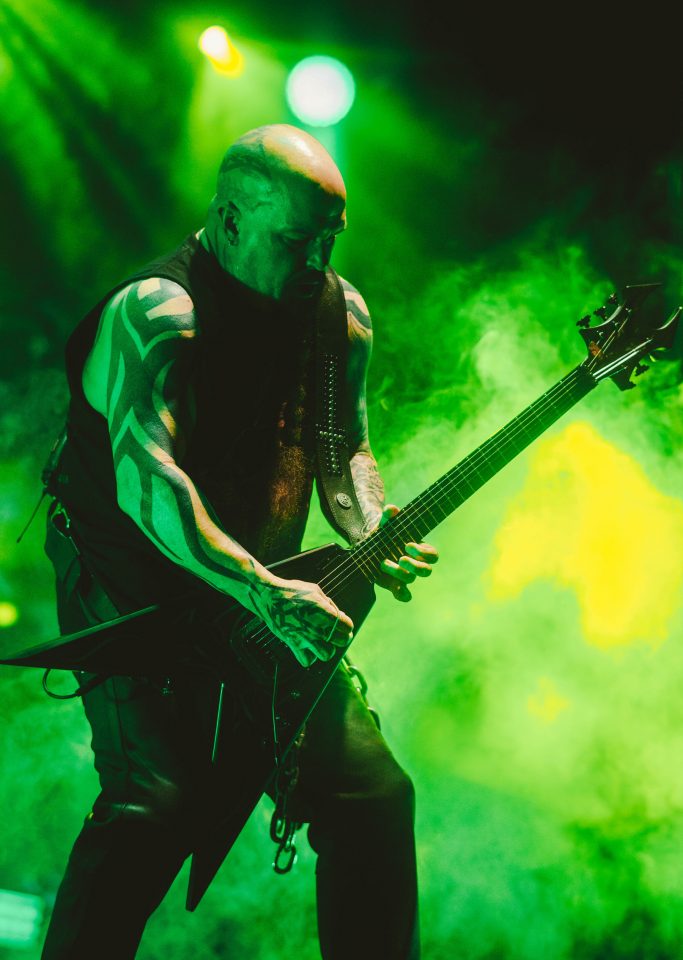
Slayer
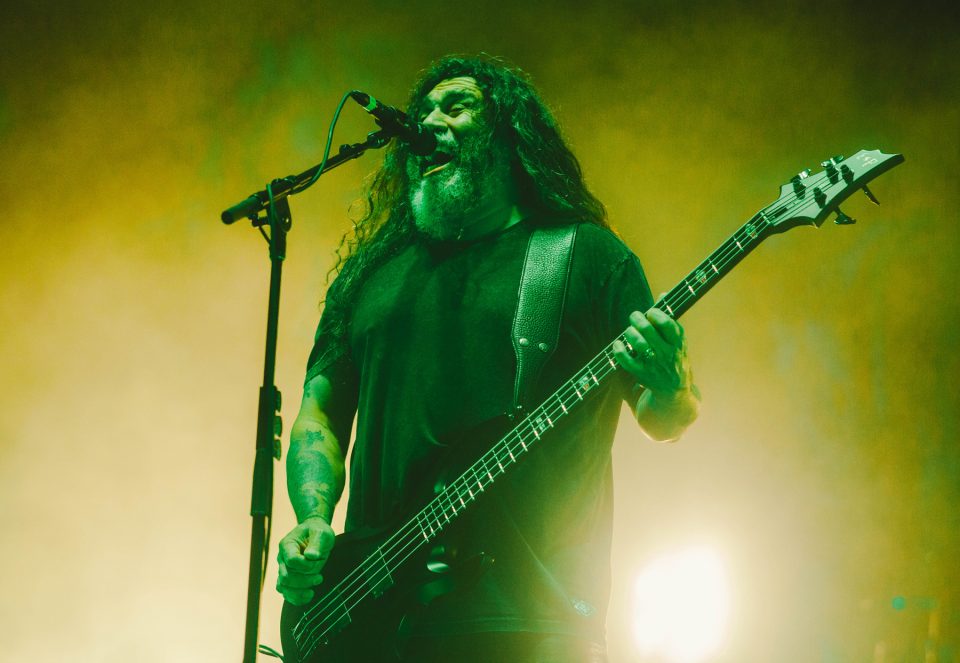
Slayer
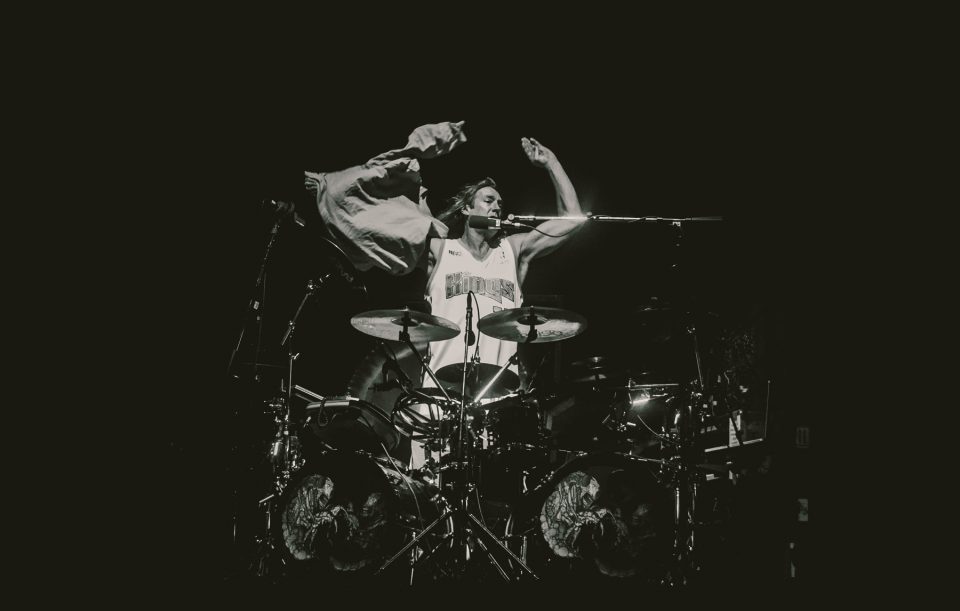
Tool
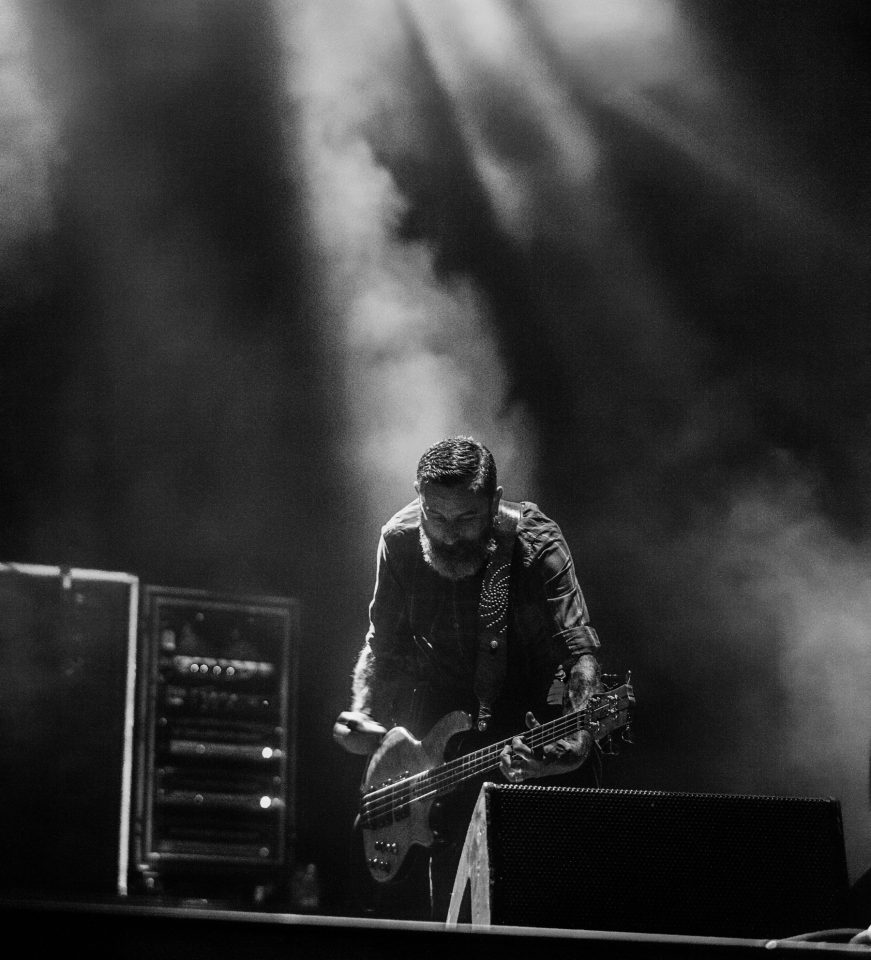
Tool
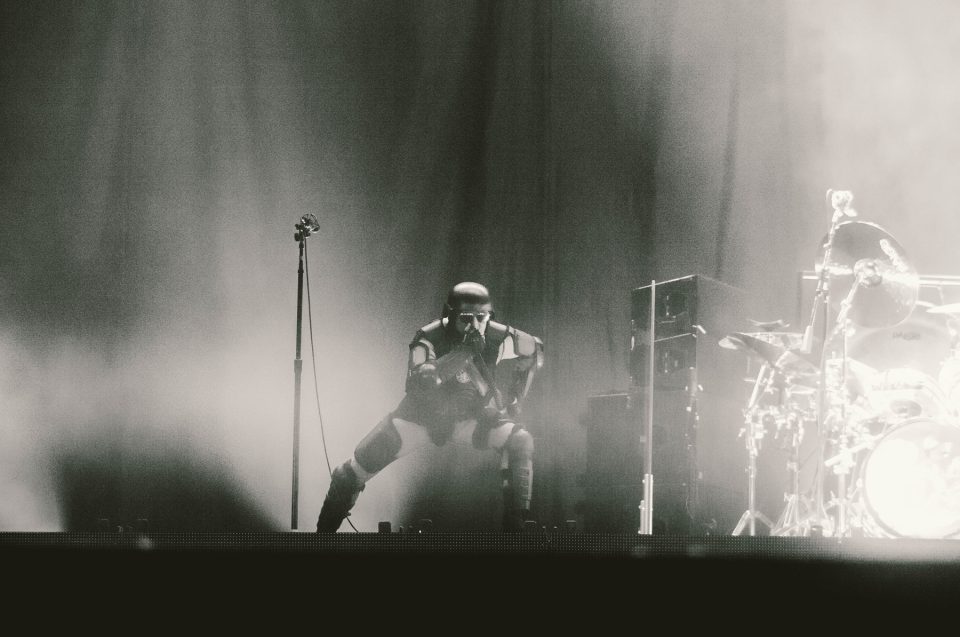
Tool
Slayer’s Dave Lombardo talks thrash
Words by Bobby S. Gulshan – Photo by Mark Seliger
I was 13 when Slayer released Seasons in the Abyss. At the time of its release, the United States was engaged in a war with Iraq. Around this time, I toyed around with the idea of becoming a writer. Grunge soon exploded on the scene, and the Seattle sound put the last nail in the coffin of glam metal. Meanwhile, seminal thrash metal records, such as Megadeth’s Rust in Peace and Anthrax’s Persistence of Time, fueled a burgeoning and bludgeoning style of metal called thrash.
In time, things change. We get older, and hopefully, wiser. People and places move in and out of our lives. Meanwhile, some things persist. I am still writing, we are still at war in Iraq and Slayer still retains its rightful place in the Pantheon of Metal Gods.
I had the chance to talk to Dave Lombardo, Slayer’s longtime drummer, and he too spoke of time. “We are wiser for sure, we understand each other more than before, the musicianship has improved. It’s just things you get as you mature,” he told me in describing the process of making their last record, World Painted Blood.
The first leg of the American Carnage Tour kicked off on Aug. 11, with Slayer joining Megadeth and Testament on the bill. Slayer will be performing Seasons… in its entirety while Megadeth will perform the whole of Rust in Peace. A bit of nostalgia, to be sure. A harkening back to what purists might call a Golden Age. But, as Lombardo tells it, “Metal always prevails; it’s always there. It may go underground for a while, but it’s like Tenacious D says, ‘You can’t destroy the metal.’”
Indeed, the tapes confirm it. World Painted Blood shows a return to form, while a renewed sense of creative vigor promises to keep fuel on the fire.
You guys are going out with Megadeth and Testament on the first leg of the American Carnage Tour, and will be joined by Anthrax on the second leg. What inspired this group of bands to get together?
A bunch of agents and managers got together and said, “Hey let’s put this together.” I don’t know how these things come up, we just get word, like, “there is a possibility of Slayer and Megadeth and Testament getting together,” and they ask us if we want to do it and we said, “Hey, why not?”
I want to talk a little about the latest record, World Painted Blood. It seems to me that the record picks up in some sense where Seasons in the Abyss left off, sort of a return to form, if you will. Was there something you did differently as a drummer when approaching this record?
I was in a whole different state of mind when I worked on this record. I had a different approach, a wiser approach and more song constructive ideas when it came to the structuring of the drums, so I think it’s just a very mature record.
I was looking at some videos you had done for Modern Drummer magazine and you mentioned a quote from Art Blakey, when he said he heard violins in his cymbals. In talking about World Painted Blood, did other music such as jazz or groovy sorts of things inspire the work?
Yes, definitely. It’s music but also the movement of the music, how its rhythm is composed. It’s so deep, I don’t know. I live and breathe rhythm and music, and it’s hard to pinpoint.
I also noticed you talked about changing the actual configuration and setup of your kit, eliminating some of the toms and coming in with a slightly smaller set. Did that new configuration provide new ideas in terms of what you do physically?
Absolutely, yeah. It had me think and approach the drums in a whole different way.
Maybe giving you some new ideas to do different things that you haven’t tried before?
Exactly. And it’s like the rolls that I do, the way they come out when you take away some of the toms. When you’re improvising like I am–I don’t write things out, whatever comes out at that moment, whatever inspires me at that moment is what gets recorded. When you take these pieces [of the kit] out, it sort of impacts that ability in a different way. And you are forced into performing something totally different than if you have the extra tom.
Gets you out of the box, so to speak.
Yeah, gets you out of that rut.
You said that World Painted Blood was a bit of a wiser record. I read somewhere that you said the record had a special sort of magic to it. What exactly do you think that is?
I don’t know, I can’t pinpoint it. I can only relate that there are these records that you buy and you listen to from beginning to end and enjoy every bit of music on there, and that can be of course mastery of your songwriting or your art. But sometimes you need more, you need chemistry between the musicians that are executing the hits and strumming the strings. And when you get that combination, plus good songwriting, it’s a magical record. They play off each other. They know how to play off each other, having done it so many years on stage and in the studio, you kind of work out this instinct when you’re playing, you know what the other guy is going to do.
A sense of anticipation.
Yeah, definitely.
I understand that this record was a different approach for the band, in general. You guys went into the studio to write, as opposed to having the material all written beforehand. Do you think that made a difference?
Absolutely. Usually we would have everything ready and go in and bang it out. No, we had to write some songs and we had to work on things for a while, which was good because it put us under a constructive pressure. It wasn’t negative or a deadline, just constructive.
And it probably fostered another level of communication between the four of you.
Yeah, because we didn’t have time to fuck around. We had to get the job done and that’s it. Ain’t no time to go whine or whatever because they aren’t using a piece of your music. Instead we thought, “Let’s just throw everything in the fuckin’ pot and make this album the best as we could possibly make it.” That was my approach, and I sensed that from the other musicians as well. The camaraderie during the recording was unlike any other record that we’ve had.
And how did working with Greg Fidelman affect that process?
He’s like a fifth member of the band. It was amazing.
What advice might you give to aspiring musicians out there?
Never give up. And even if you don’t achieve the status you dream of, it’s always fun to keep playing. You don’t ever need to stop playing, whether it’s jamming at your friend’s house or playing at the local bar. As long as I’m playing, that is happiness for me.
After the tour, what’s in the future?
After this we are touring, after that we are going to tour, and then after that a little more touring.
I sense a trend.
And put out another record. Not maybe, definitely put out another record.
The American Carnage Tour featuring Slayer, Megadeth and Testament will hit the ARCO Arena on Sept. 1, 2010. For more info and tickets, go to www.ticketmaster.com and search “American Carnage.”
Dark Child
Tragedy has shortened the careers of many rock ‘n’ roll musicians. In 1990, it would seem like Bay Area thrash band Death Angel would have to be added to that list. The young group, signed to a label before its members had even turned 20 years old, saw their burgeoning careers hit what seemed to be a dead end when their tour bus crashed in the Arizona desert. The accident left drummer Andy Galeon critically injured, and the members of Death Angel moved on in a different incarnation as The Organization.
But that wasn’t the end of the story. Tragic circumstances caused Death Angel to reunite over a decade later when the band’s good friend, Testament’s Chuck Billy, was diagnosed with a rare form of cancer in 2001. However, as lead guitarist Rob Cavestany explains, the reunion was entered into with a bit of trepidation.
“It was a big enough decision for us to reunite even for that, because we were so adamant against coming back and being one of those bands that comes back together for the wrong reasons and ruins the cool history that we left behind,” he says.
After a successful performance at the benefit for Chuck Billy, Death Angel seemed to pick up the same unstoppable momentum the group had heading into that fateful day in 1990.
“Our intent was just to do a few shows, and then it led to a few tours, and then that was going to be it, call it quits before we pushed it too far,” Cavestany says. “But we just kept going to the next level. Finally, as we were just jamming and jamming together, we started coming up with new riffs and parts, just by messing around, and all of the sudden, no one was saying anything, but we were realizing that we were starting to make new music, and we were like, ‘Uh-oh. This is happening.'”
Death Angel released its second album since reuniting, Killing Season, last year. In the following interview, Cavestany reveals how his band got to the point it’s at now.
You were young in the ’80s when you started Death Angel. In a way, you became adults in the Bay Area thrash scene. What was that like?
It was definitely different than the normal upbringing, I would imagine, but it was great. The scene was totally blossoming at the time, and we were right in the middle of it, just loving it, total excitement, just going to every show. It was totally running through your veins at that point in time.
I remember when I was a kid in New York in fourth or fifth grade; I was listening to your band and Exodus. Obviously, that was before the Internet took hold. Were you surprised how far the thrash scene reached?
Absolutely, because it was such an underground thing at first. Quite frankly, we were very proud of it being underground, because we were hardcore into the scene of it, and the underground vibe. It would seem like selling out for the thing to become so huge, but inevitably, it was such good music”¦it struck a nerve all across the world. In the end, now, I’m not really surprised about it.
When did you first realize that it wasn’t an underground thing any more?
I think when Metallica started to break ground, and then there was the Clash of the Titans tour, with Megadeth, Anthrax, Slayer and Alice in Chains. That was huge for thrash. And at that point, it was evident that it was happening. Unfortunately, right at that time, we got in that bus accident that ended our band. We were supposed to be on the Clash of the Titans tour, but we got in the accident and they replaced us with Alice in Chains.
I read a quote of yours following the accident where you said, “In a way, it made perfect sense to have a major accident right now, it really fit the story line. We’ve been pushing so hard for eight years and just not getting that far, and getting so frustrated with not being where we should be after so long, it was time for something climactic to happen!” Do you think the Death Angel would have survived even if the accident hadn’t happened?
That’s a tough one, because you’re trying to speculate. You’d never really know, but you do your best to recreate the scenario and see. When I said that, I was trying to look for one weird, positive thing out of something that was really horrible for us. For us, at the time, true enough, we’d been going nonstop for eight years. I was only 21 at that point in time. From 13 to 21, going at something like that for eight years, seems like a very long time to you at that age. We were getting really burnt out by a lot of the crap that we were dealing with within the industry, and the people who had taken advantage of us in different situations, we were starting to see the light and become aware of the stuff that was going on around us. And when we were, we weren’t like the stuff that was going on. Also, just getting tired of the whole drill and the whole scene, in a way. We were looking to branch out and explore other things, other music, other people, other things in life. Things you miss out on—your friends, and a normal life for a kid.
As far as our band was going at that point, though, we were really climbing. We were headed for really big things. Right before the accident happened, we were supporting Act III on tour. All the shows were sold out. When we got into the accident, we were on our way back home where we had”¦a Friday night show in Oakland and a Saturday night show in San Francisco booked, and both shows were sold out in advance, so things were really happening for us. And then we were supposed to go on the Clash of the Titans tour with Metallica, Slayer and Anthrax. And after that, we were supposed to go out to Europe to support Judas Priest on their tour. Things were definitely going up for us, and things would have gotten a lot bigger, I would imagine, if we were able to do those tours and keep on going. As far as how long we would have stayed together, who knows. I like to look at it like we wouldn’t have stayed together. The pressure would have gotten to us. We would’ve ended up just imploding upon ourselves despite the success”¦because the way it was affecting us individually as human beings.
With that in mind, once again trying to put a positive spin on a negative situation, I tend to feel that it would’ve been the end of the band in other worse ways, and maybe we would have come to the point where we wouldn’t be able to be friends with each other any more if that had happened. Looking at that now, we are existing today, and I think we wouldn’t have had we kept on going back then. We would have come to a permanent end”¦ We were forced into a break from each other and a break from the whole scene. It gave us a fresh start.
Last year you released your latest album, Killing Season, and obviously you’re older now and in a lot different place, but the music is still thrash metal. What kind of place do you find yourself writing from now, especially since you’re a father?
It contributes in a way in that it adds hardcore fuel to the fire to work very hard, because now you’re working for more reasons than just to rock out and make a name for yourself. You’re working for the survival of somebody else to exist in this world. Music is our lives and our jobs and our careers. You spend all this time and effort doing it, so you just have that much more motivation to drive you to do the thing that you do, but as far as the concept and the lyric and the vibe for Death Angel’s music, it separates itself from that kind of family wholesomeness you experience at home, because it doesn’t crossover into the aggressive type of vibe you need to play this kind of metal. It works its way in as far as inspiration and motivation, but it doesn’t work its way literally into our lyrics or the feeling of the music we play. For me personally, I go into a different head space where I’m not even me, the family guy, I’m me, the dark child cruising through the rock world [laughs].