After comedian Norm Macdonald made comments dismissive of the #MeToo movement, resulting in a canceled appearance on The Tonight Show and a botched apology on Howard Stern that insulted people with Down’s Syndrome, it appeared that Norm Macdonald Has a Show was an optimistic title. But a surreal Sept. 13 appearance on The View saw a subdued Macdonald own up to his mistakes by clarifying his intent and calling his comment “unforgivable.” Macdonald wrote an apology tweet that read in part, “I would never defend their actions. If my words sounded like I was minimizing the pain that their victims feel to this day, I am deeply sorry.”
The majority of the backlash appears to have subsided as of this writing, but he’s clearly lost some fans as a result of his remarks. Though Macdonald has been unabashedly offensive since he first appeared on Saturday Night Live’s “Weekend Update” desk in 1993, his shockingness never went beyond his material and performance.
I’ve been a fan of Norm Macdonald for decades, and he’s one of my favorite stand-up comedians. His sarcastic and dry delivery is like no other, and his material is a mixture of intelligent and absurd. His stand-up specials have been hilarious, and his late night talk show appearances are the infinitely rewatchable stuff of legend. Just look up “Norm Macdonald Moth Joke” or “Norm Macdonald Carrot Top” for just a sample of the laugh-filled rabbit hole you can fall into. His ability to tell a meandering story joke that ends with a shocking, simple, silly punchline is without parallel, but his off-the-cuff quips are equally amazing.
This was put to great use in Norm Macdonald Live, a series of YouTube podcasts that ran between 2014–2017 and was the prototype for what is now his Netflix series. NML was a laughably low budget affair that featured Macdonald and hapless, bumbling sidekick (and manager of The Comedy Store) Adam Eget interviewing celebrity guests and fellow comedians.
Macdonald would throw both silly questions and thoughtful philosophy at his guests in an engaging and hilarious manner that made it an unpredictable and rewarding experience. The show would often close with pre-written jokes that he and the guests would read that were often horrifyingly funny. One episode with Nick Swardson featured Macdonald reading a joke, “Jetblue Airlines ranked first in customer satisfaction among all North American airlines. But you know who ranked least in satisfaction? 9/11 Airlines. What a terrible name for an airline, it reminds me of that tragedy.” As his co-host chuckles (and Swardson hides his face) Macdonald adds, “I try to tell him not to laugh. I walked through blood and bones in the streets of Manhattan trying to find my brother.” He waits a beat and continues with a straight face, “He was in Northern Canada.”
So that’s the kind of joke that will determine whether you love or hate Norm MacDonald. The Netflix incarnation is a more tightly edited 30-minute version than the YouTube “prequel,” and the interviews don’t last as long or go as deep as a result, but it’s still got a nice homemade, anything-goes vibe to it. The guests often seem dumbstruck by crew members just walking by and fixing things and other screwups. In the first episode, they play a great trick on actor David Spade by making him think they cut to and return from a commercial and make him repeat the same story twice.
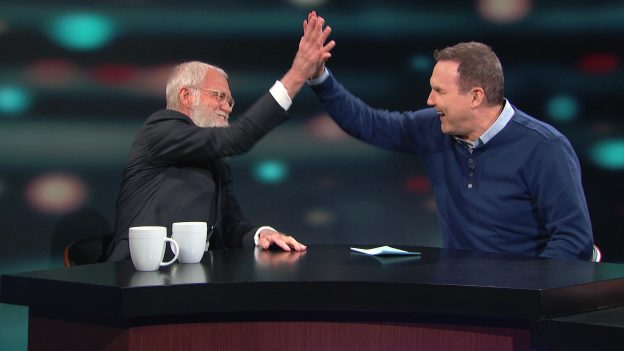
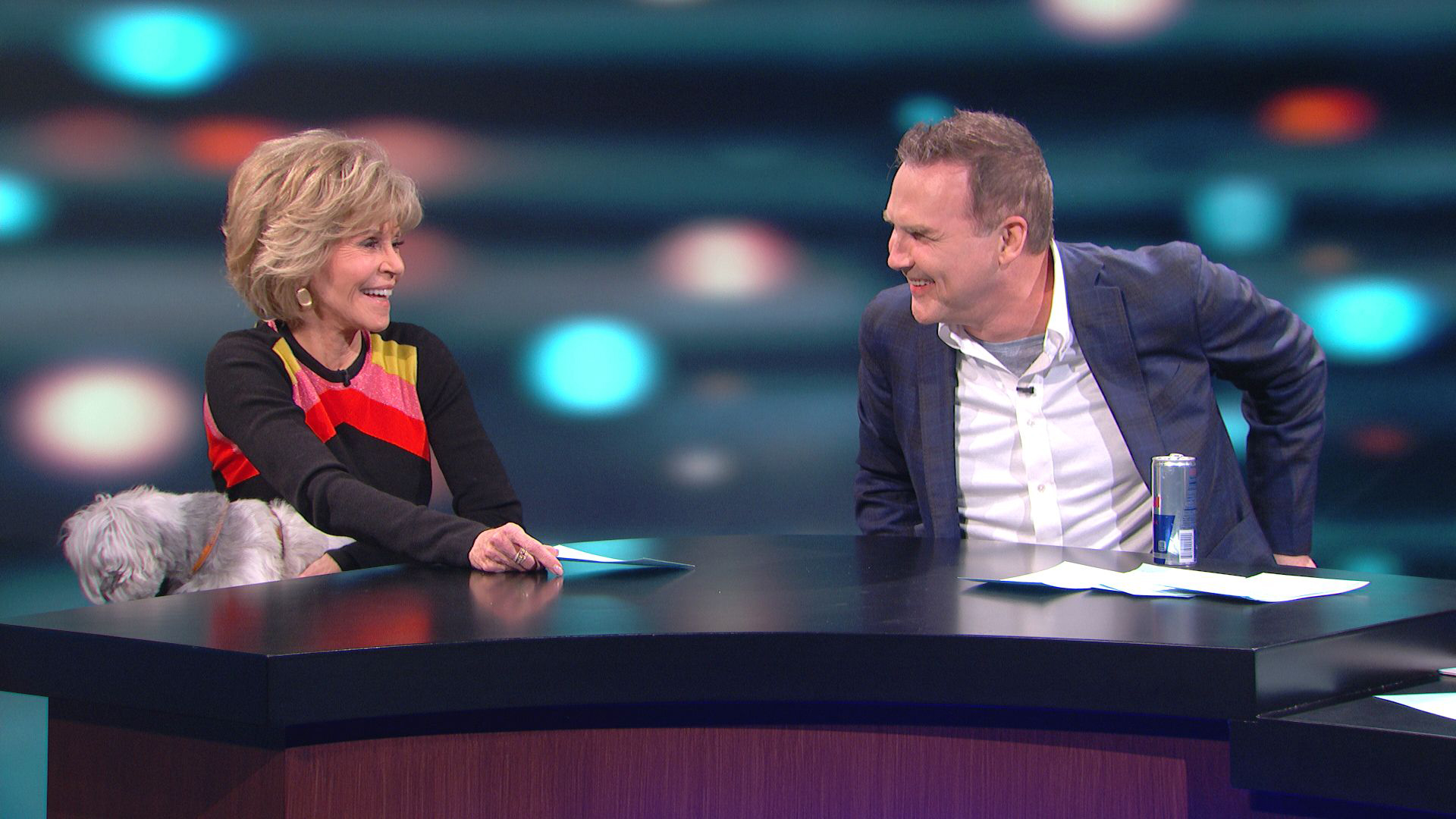
Standout episodes include a funny and surprisingly flirty interview with Jane Fonda in which they both seem taken with each other and ends with them kissing. Judge Judy ends up being a surprisingly fascinating guest, while Macdonald is dumbstruck that she apparently is quite a fan of his, citing some of his older jokes and family history. David Letterman, who co-produced the show and helped get it launched on the network, treats Macdonald as a peer, equally admiring and frustrated with him. Letterman says, “The Netflix people really love this show.” To which a baffled Macdonald replies incredulously, “This show?”
That being said, Norm Macdonald Has a Show is a really fucking weird, but really smart and funny show. His diehard base will eat it up, but the intentional rough draft nature of the show may attract few new fans. Fortunately, Macdonald went out of his way to avoid political and topical discussions, so the episodes will have a much longer shelf life than some of the other misfires on Netflix.
{4 out of 5 stars}
**This piece first appeared in print on page 9 of issue #275 (Sept. 26 – Oct. 10, 2018)**
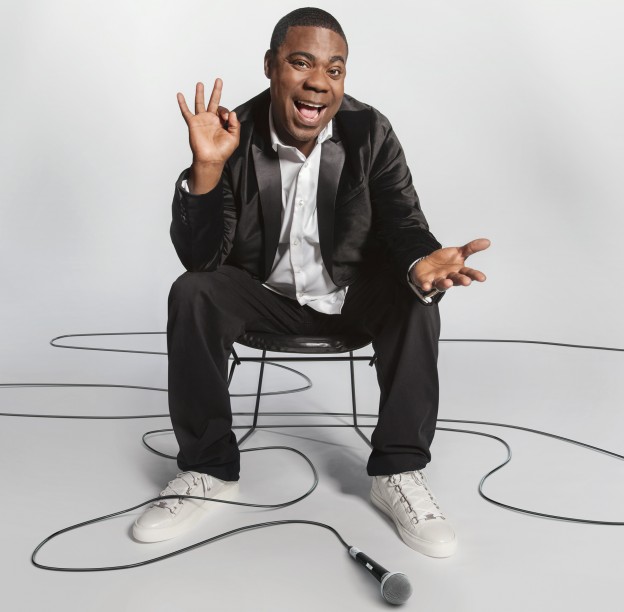
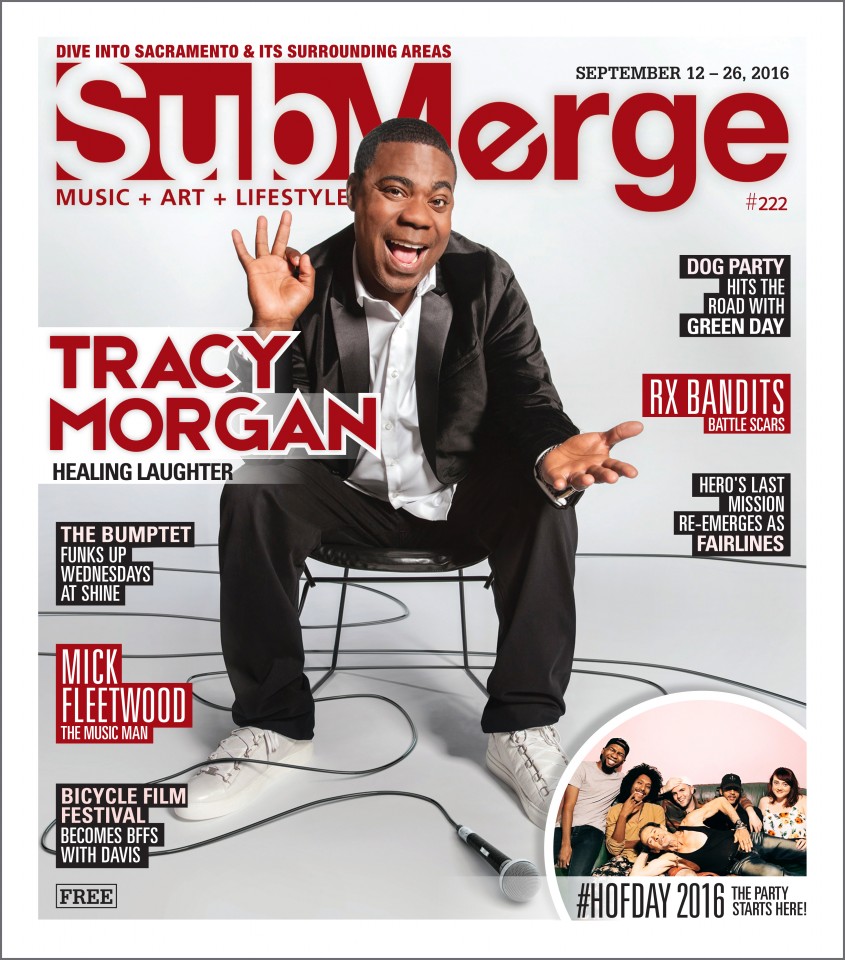
Tracy Morgan is back, and he’s not afraid to let you know. “Still pickin’ up the pieces, man!” he shouts into the phone while driving about New York City after a national television appearance, courtesy of The View. Those “pieces” he’s referring to were of course scattered on June 7, 2014, in a horrific auto accident on the New Jersey Turnpike involving a limousine and a Walmart truck. The incident ultimately left Morgan on death’s door, while taking the life of close friend James McNair. Now, more than two years later, the man you came to love as Brian Fellow on Saturday Night Live and Tracy Jordan on 30 Rock—or perhaps just as the outrageous stand-up comedian that he is—returns to the stage for a highly anticipated 22-date national tour. And as dumb luck would have it, his very first stop is right here in Sacramento at the Crest Theatre.
So what can you expect from Tracy Morgan and his rendezvous with the brick wall? Will he still be the same old “Tray-Bag” after going through such a traumatic, life-changing event? Well, if his personality over the phone is any indication, I would expect nothing less than the same loud, proud and hilarious man that brought you to tears as Spoonie Luv, or pushed the envelope with characters like Uncle Jemima and Dominican Lou. I will also say this: In all my years of interviewing bands, artists and actors of all types, I don’t think I’ve ever spoken with somebody more true to perceived form than Tracy Morgan. What I mean is that if you imagine in your head what it might be like to talk with T.M. on the phone for 15 or 20 minutes, it is in fact exactly as you imagined it. Charmingly brash with a New York accent so thick it’d make Method Man blush, you might even say he comes as advertised.
So you were on The View this morning. One of the longtime hallmarks of SNL is making fun of the daytime talk show medium—how’d that go for you?
It was great, man. I was hanging out with Walt [Barbara Walters] and Joy [Behar] and all the ladies, and just feeling the love from the audience. To spoof it, we get to do our favorite talk show hosts the way we see them, but when you’re there you’re free and doin’ your thing. And I always liked The View. To get to do Star Jones, that was one of the things that put me on the map. So I had a good time and got to thank her personally.
And there were no hard feelings.
Nah! It was funny! Like I said this morning, as long as we do these things in the spirit of comedy, like the Lucille Balls, the Richard Pryors, the George Carlins—so long as we do them in the spirit of those that came before, people will laugh, they won’t cry.
You just had your one-year wedding anniversary. Congratulations. What’s it been like when you reflect on a year gone by?
Thanks, man. My wife’s sittin’ beside me right now. What it is it’s like Chaka Khan says in the song, it’s just goin’ “through the fire.” That’s how you forge hard steel. Me and my wife are closer than ever now. “The fyyyyyyyah.” Remember that song?
Can you imagine the recovery process without your wife?
I wouldn’t have made it, wouldn’t have made it. My wife was always right there, man. We been together five-and-a-half years. My wife, my daughter, my son—they gave me motivation to keep doin’ it, keep goin’. I coulda gave up. Sure. Sure I coulda. We have our ups and downs like every couple, but I think [the accident] got us closer. When you go through something like that with somebody? It’s gotta make you closer.
Is it safe to say you’re an emotionally stronger person now?
Yeah but I had to go through things—like I said, goin’ through the fire. You know what that wreck did to me? It turned me into an emotional wreck, man. It scared the shit out of me. So yeah you gotta pick up the pieces … what you think this tour is made for? Still pickin’ up the pieces, man! My fans are picking up the pieces! You heard about it, you was kinda shattered. It’s not like I made you cry, [but] that connection is there that put me and you over this phone! So yeah I’m pickin’ up the pieces—we pickin’ up the pieces! And that goes for anybody. If I can inspire people to pick up the pieces in [their] life? I don’t care what happened—if your life has been shattered, at some point you gotta begin to pick up the pieces and put ‘em together! And that’s wassup.
You talk often about your relationship with the “comedy gods.” Could you expand on that?
Those who came before me, paying homage. Comedy in the spirit of Jackie Gleason. Watching Silver Streak. Watching The Jerk. Watching Lucille Ball. Watching The Honeymooners. Watching Moms Mabley. Studying, doing my own work, knowing who I’m doin’ it for, know who I’m representing. It is bigger than me. Making those out there who have nothing to laugh [about] laugh. Doing my part to make this a better world than the world it was before I got here.
You’re nominated for an Emmy for your return to hosting SNL last year, which is kind of a big deal. What would it mean to actually win?
It’s a big deal but it ain’t bigger than me walking away from that accident. It would be nice to win an award for your sense of humor after being on TV for 23 years—it would be nice. But when I look at footage of that accident … that was bad, know what I mean?
Obviously Saturday Night Live is still important to you, or you wouldn’t have gone back and hosted. Does it still make you laugh?
I had to start from where it started from. They inspired me to go get the world. [And] hell yes, hell yes. Isabel [Sanford] is hilarious. The Family Feud and all that? It’s hilarious. You got a great, brilliant cast out there. Young.
When you look at all that’s going on in the country from a political standpoint, from the Black Lives Matter movement to the election, how do you view the role of comedy, not just a stand-up, but as a black man?
Comedy’s got no color, man. I understand what’s going on in the world, I get that. But Richard Pryor wasn’t about that. He talked about the human condition. In my comedy audience, all lives matter. ‘Cause we leave all that shit outside when you pay for a ticket to come see Tray-Bag. ‘Cause what’s funny is funny. When you step onstage there’s something that blacks, whites, Puerto Ricans, Ecuadorians—everybody—can relate with: It’s called the truth. People don’t laugh at lies. Lies hurt. As long as I’m telling truth, as long as I’m doing it in the spirit of those that came before me, the comedy gods, I’m protected from all that nonsense.
How has the experience you’ve been through the past two years affected your routine as a comedian?
It’s changed. After you experience something like that, of course it’s gonna change. [But] the funny hasn’t. The funny never changed. God is not an Indian giver. The gift was funny, not material. It’s like Bruce Lee said in Enter the Dragon: It’s like a finger pointing away at the moon. Don’t focus on the finger, or you’ll miss all that other heavenly glory. I don’t focus on material. I focus on the funny. “From Hollis to Hollywood, but is he good?” When we do our comedy thing, everything wrong in this world we make right with it. We make repair with it with our sense of humor. ‘Cause if you don’t laugh about it you gonna cry about it. And all of us tired of cryin’. You don’t got a sense of humor you doomed. Eddie Murphy once told me, “Don’t take life so seriously. You’ll never get out alive.”
Check out Tracy Morgan live at the Crest Theatre on Sept. 22, 2016! Tickets start at $45 and can be purchased through Crestsacramento.com, where you can also check out the historic theater’s upcoming calendar of events.
Who would’ve thought moral mongering right-wingers, democrats and hard line feminists could ever agree on something? Right now, these three disparate sections of the American populace are firmly walking hand in uneasy hand in their disgust over those in Hollywood who have come to the defense of visionary director Roman Polanski. Throughout his career, Polanski has reached iconic status with films like Chinatown, Rosemary’s Baby and The Pianist, which won him an Oscar in 2003. His personal story is even more compelling than his professional one: He is a survivor of the Nazi concentration camps; his actress wife Sharon Tate was brutally murdered by the Manson Family; in 1977, he raped a 13-year-old girl. If you couldn’t guess, or didn’t already know, it’s that last bit that’s gotten people all worked up. Again.
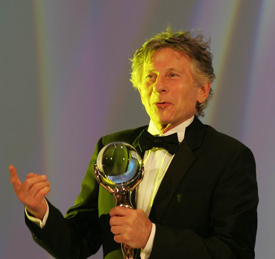
Over 30 years ago, Polanski began taking pictures of a young girl named Samantha Geimer, who was an aspiring actress. During a photo session, according to Geimer, Polanski plied her with champagne and Quaaludes, and when the drugs began to take hold, had sex with her despite her pleadings for him to stop. Polanski maintained his innocence in the matter and cooperated with authorities, but eventually plead to a lesser charge of unlawful sex with a minor. However, when his deal with the court seemed to go sour, he fled the United States and has been living on the lam ever since. That is until he arrived in Zurich, Switzerland, on Saturday, Sept. 26. Polanski was due to receive recognition for his life’s work at the Zurich Film Festival, but was instead taken into custody on his outstanding 1978 U.S. arrest warrant.
In the meantime, people have been taking sides. Many in the Hollywood and international film communities have come forward to rally around Polanski and demand his release. On The View, Whoopi Goldberg went as far as to say that what Polanski had done wasn’t “rape-rape”—whatever the fuck that means. Of course, all the outpouring of liberal support for the controversial director gave something else for right wing pundits to blather inanely about. But this time around, they’re sentiments were echoed in the cries of some of their most ardent foes. In her column for Salon, feminist writer Kate Harding bluntly wrote, “Roman Polanski raped a child. Let’s just start right there, because that’s the detail that tends to get neglected,” in reaction to those who defended Polanski’s actions on the grounds that he is a great artist and should be free to create.
Geimer on the other hand, now in her 40s and with her own family, has said that she has long ago forgave Polanski and doesn’t wish him to serve any more jail time or suffer any further hardship from the incident. And I would imagine that she’s not all too pleased about being forced to relive that fateful day. To be fair, Polanski was never before, nor has he ever been since, accused of such a crime.
Like Harding said, though, he did rape a child. And then he escaped prosecution for it. Neither of these actions paints the picture of a savory individual. Why have many in Hollywood been so quick to come to his defense? Do they wish to rape tweens with impunity? It doesn’t make much sense. In an article for Guardian.co.uk, writer Paul Harris points out that the same people who are defending Polanski were the first to throw Mel Gibson under a bus when he made anti-Semitic remarks when pulled over for drunk driving. Supreme douchebaggery, yes, but Gibson didn’t rape anyone, and though he may not have Polanski’s résumé, Braveheart and Mad Max, were both really good films. Is it because Gibson is a racist right-wing nutjob and Polanski is an artiste that he gets a free pass on this? It would seem that there is a bit of a double standard at work here. Some of my favorite directors (The Coen Brothers and Wes Anderson) have signed on as Polanski supporters. I understand why: he is a great director, but in this case, I’ll have to respectfully disagree with them. I think the art and the artist are two separate entities. It’s possible to celebrate one while looking critically at the other.
My favorite Polanski film is The Ninth Gate. I realize it’s not considered one of his greats, but I’m a sucker for demonology. It tells the story of Dean Corso (Johnny Depp), a rare book dealer who is trying to track down an unusual work of the occult that may or may not have been written by the Devil. Along the way, a beautiful and seductive woman who could be an angel or a demon helps Corso along his journey. She guides him down the dark path toward the essence of evil—a road that Polanski seems all too familiar with.