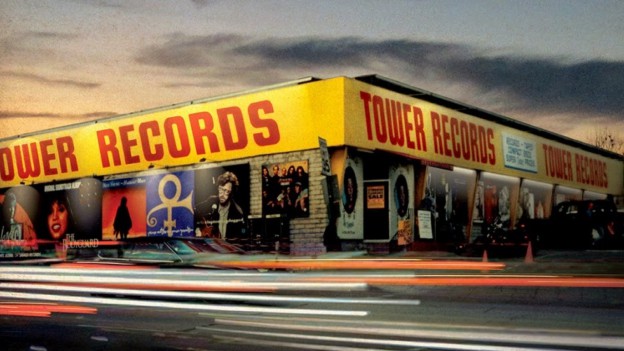
Editor’s note: It is with heavy hearts that we announce that Russell Solomon, founder of Tower Records, passed away last night (Mar. 4, 2018) at his home in Sacramento. The following interview with Russ took place in early 2015 and originally ran in issue #185 (April 13 – 27, 2015). RIP Russ! You will be missed!
No Music, No Life: Part 2
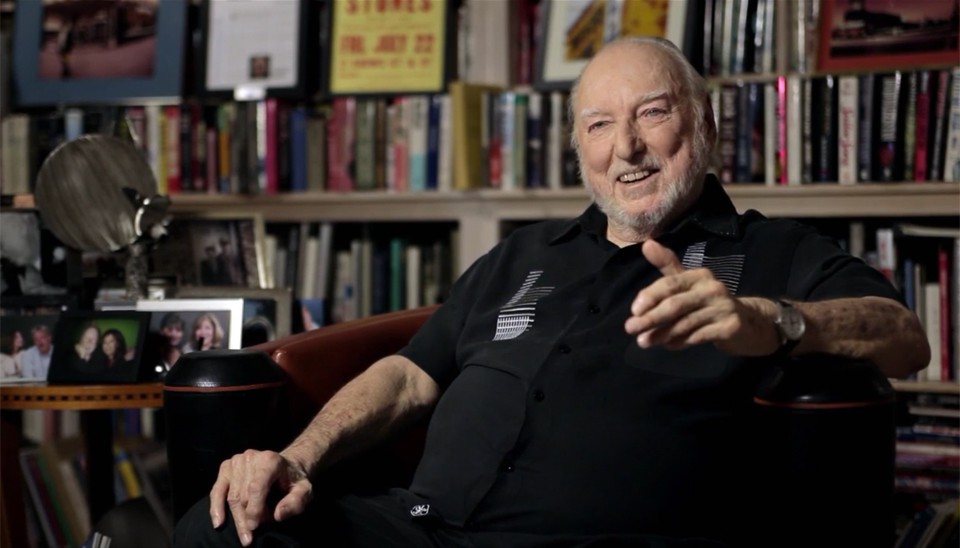
Russell Solomon, what a guy. As the founder of Tower Records, he’s been called the godfather of music retail, a visionary, a living legend. Even at nearly 90 years old, Solomon is still razor sharp, and he absolutely loves to talk about all things music, especially Tower, as evidenced by Submerge’s hour-and-a-half-long interview conducted recently in his Sacramento home, an excerpt of which can be read here. With a drink in hand (“It’s almost 5 p.m.!” he exclaimed as we sat down), a very humble and down-to-earth Solomon spoke with us about the new documentary All Things Must Pass: The Rise and Fall of Tower Records, how the company was like one big family, how he feels about Tower still going strong in Japan and a little bit about his life-long passion for photography.
When you were first starting a record shop, did you ever in a million years think that someone would want to make a documentary about you?
No, that’s the last thing I thought about, believe me. I thought about making a living, that was what I thought about. I thought they [filmmakers Colin Hanks and Sean Stuart] were nuts in the first place. It took them seven years and they got it together and figured out that they wanted to make a story out of it, and they managed to do it, I thought. From my viewpoint, you’re trying to cram literally 60-something years of experiences into 90 minutes. A lot gets left out, right?
So much great stuff probably hit the cutting room floor, as they say. At the end of the day, they are making a movie. It’s got to have a beginning, a middle and an end.
That’s right. More of a movie than a documentary, too, if you think about it. One of the things they didn’t have, which I didn’t really think about it until after it was all over, was they didn’t have a narrator. You know how most documentaries have a voice over?
Yup. But even without narration, this film gets moving! It’s got a heartbeat to it and it really gets pounding!
That’s a tribute to their editing.
It’s not your run-of-the-mill, slow-paced documentary about WWII or something, it really moves.
You know one of the things they told me, not sure if they told you or not, was they wanted to use the title “All Things Must Pass,” so they sent it to George Harrison’s wife, and she actually looked at it twice, they told me, and she loved it! She then gave permission to use it, although they didn’t really need permission to use the title.
More of a “can we have your blessing to use this” sort of thing?
She blessed it, yeah.
I’m curious, did watching the film for the first time make you emotional at all?
Patti [Russ’ wife] gets emotional. I just say, “Ah, I’ve been there.”
There is some pretty deep, personal stuff in some of those interviews, and the whole camaraderie of the Tower family comes through even though it’s a story of the rise and fall of the company.
That was the truth, that’s the way it was. As a consequence, they captured that. I told them up front, “Look, this company wasn’t me. This company was made up of all the people that worked for us.” It wasn’t even just that little group that was in the film. There were, and I didn’t know about this until late, in the American company from the time we started counting, which was probably in the late ‘70s, we had over 100,000 people that worked for the company!
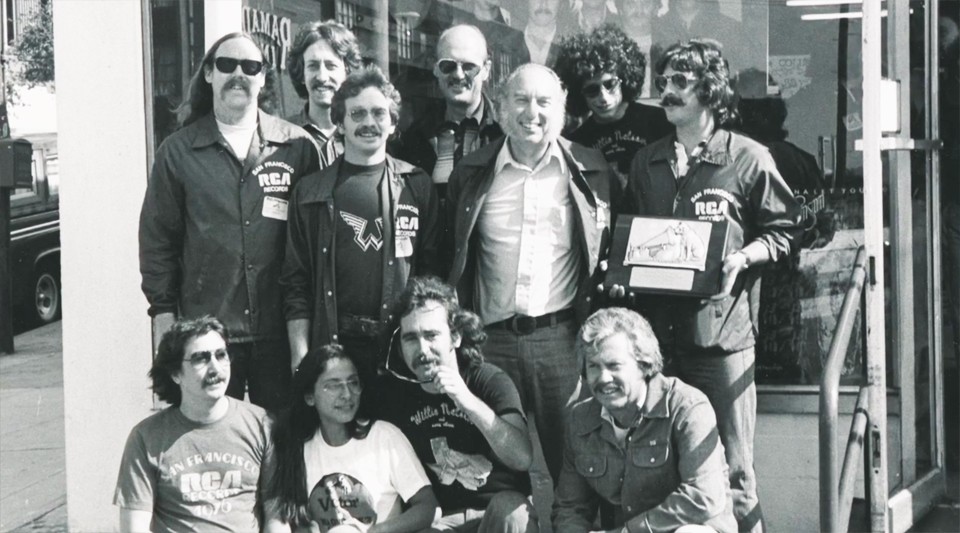
I love that the film shows how Tower employees went from clerks, to buyers, to assistant managers, to managers, to general managers, to vice presidents, etc. That family-type growth was important at Tower, wasn’t it?
Absolutely, yeah. All the managers came from clerk status.
In the movie Dave Grohl says something like, “Tower was the only place that would hire me with my fucking haircut.” He was this long-haired grungy looking kid but got a job at one of your stores. You guys attracted a lot of interesting characters to work for Tower, didn’t you?
It was true. The one thing we didn’t have was any kind of dress code. The only thing we insisted upon was that they wear shoes, but in Hawaii they didn’t wear shoes. What are you gonna do, you know?
The late and great Bud Martin wasn’t necessarily the face of the company as much as you were; he was more the money guy. Does it feel nice to be able to show how important he was to the company in this film?
Yeah. If I’d have just listened to him. The problem at the end with Bud was that the company got so big. Bud was a public accountant, as opposed to a CPA, and the company was handling so much damned money that we needed a CPA. It didn’t turn out to be the best thing to do, but, nonetheless it had to be done. Bud actually hired the CPA, which is the guy that ultimately replaced him. But he was getting sick, and, you know… He was a good guy. I miss him.
In creating Tower Records, you created more than a music store—they were hangout spots; people would link up at Tower.
It’s true, people liked to come to us. The clerks were like they were. If you looked at the other big stores, the Musiclands and Wherehouses and whathaveyou, they were pretty snobby. Why? I don’t know. I have a theory, now that I sit here and think about it. I have this idea, which is something you can’t tell bankers by the way, but the people in say a Musicland store or a Wherehouse store or whatever, they didn’t have any control over what was happening in that store, all the decisions were being made in their main office or whatever. But in our case it was just the opposite. We wanted the people in the store to run the store, it was their store. They could do what they wanted.
It’s kind of a good thing that the film took so long to make, because it’s really incredible that some of the interviews were done inside the Watt Avenue store after it had shut down. How did that work out?
That was at the beginning of filming the movie. The Watt store sort of stayed empty for a while after the liquidators emptied it of the merchandise, and all those racks were in there, and the sign was still there. When Sean and Colin first started the thing, they talked the landlord into letting us in and lighting it and so on. So we were able to do that in there.
Post-Tower, you opened up R5 Records in Sacramento in 2008, which was probably the worst year ever to open a store.
That was not my finest hour.
Do you think something like R5 would work now?
No, I don’t think so, except maybe in a market like New York. Obviously it works in Japan. Here’s the difference, the physical market is a combination of used and a little new in CDs and LPs, vinyl as they call it. So, what Tower was and what R5 was, was a new store. We didn’t carry used. We carried vinyl at the end at R5, and we carried a little vinyl in Tower at the end. The whole vinyl thing was just kind of starting back up, that’s back in 2004, 2005, it was just beginning to regenerate itself. But to replicate Tower and its “all new” kind of thing, which is what we were, that’s what R5 tried to do. As a result of that, it kind of failed. That and the economy falling apart. We had a perfect storm there. So your answer is no.
In this area we’ve got Dimple Records, Phono Select, Esoteric, Armadillo and others. There’s even a new little shop opening on R Street soon. Why do you think people are still running and opening these smaller record stores even today?
They have fun doing it! The trouble is that LPs are not going to grow to the strength they had before. One of the reasons is they can’t manufacture enough… There’s no production facilities to speak of, so it’s limited as to what they can put out. In the old days with LPs and for CDs, if they had a new release of a hot artist, they’d press a million copies and throw it out on the marketplace. If we didn’t sell it we’d send it back. Well that’s not the case today. So that limits the growth for LPs in retail for that reason. But I think there are always going to be collectors! That was the whole idea behind it was the collector, that was a big portion of the business.
Right, from your everyday average Joe collector, all the way on up to Elton John, who used to obsessively peruse your stores for records.
Just think of yourself as a young guy or a young girl who had a box full of their favorite songs on 45s. They were collectors, even though they only maybe had 30, 40, 50 records.
They were seeking out what they want, getting it, owning it, having it in their possession.
Exactly, and then sharing it with all of their friends and all that stuff.
And it happens so differently now…
If you want to read a story about collectors going to a point of absurdity, there’s a book called Do Not Sell At Any Price. It’s the background story of the freak 78 [rpm records] collectors, who collected old blues and original records that go back to the 1920s. These guys are digging around in garbage dumpsters. They’re obsessed, they know a lot about it, and they pay ridiculous prices for some of this stuff, ‘cause, you know, there’s only one copy left of Uncle George’s Jug Band or some damn thing [laughs].
People go to extraordinary lengths to collect. They are out there. Do you think that will essentially help these small little mom-and-pop record shops maintain?
Oh absolutely, that’s the fun part of it. The only thing that’s changed really is that there’s so much fewer people that are buying that stuff than there was in the past. I mean, the heyday of selling thousands of units or millions of units or something like that is gone in the physical world, because it’s changed so dramatically to streaming.
I think the release of this film will be a very big thing for Sacramento.
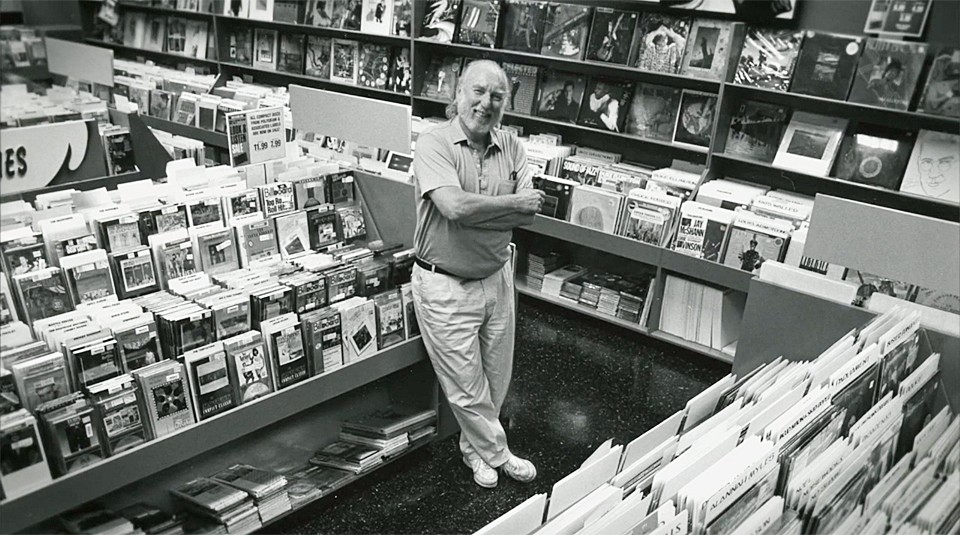
Yeah, I didn’t realize how much Tower meant to so many people. This isn’t in Sacramento, but Patti and I were in Palm Springs visiting some friends recently and we were sitting in a bar. The friends we were visiting, he always does this, which I would never do, he goes, “He’s the founder of Tower Records!” and points at me. And here’s these two old people sitting at the bar having a drink, they go, “Oh my God, Tower Records?” and then they carried on about how wonderful it was. I had no idea, really. Maybe I wasn’t thinking about it, how somehow or another we seemed to touch a lot of people through the years. You’ve got a lot of years involved, 1960 to 2006. Time to time I would actually run into people who would say, “I used to shop and listen to records in the booths at the drugstore.” I say, “Jesus, you have to be really old.”
In Japan there are over 80 Tower Records locations still to this day. How does it feel to see the Tower model working over there?
Very proud. Of course the thing that keeps it alive I think is the fact that they don’t have any financial problems, they’re owned by the telephone company essentially… So they don’t have to worry about debt or any of those mundane kind of problems, and they just keep it going. The nature of the Japanese market is that it’s the only market in the world that’s about 80 percent physical, compared to America which is 20 percent physical. So for some reason the physical world over there, physical records, are still going strong. I couldn’t be prouder. They are doing what we set up and they just kept it going, and like the Japanese always do, they improve on things.
Now that you’ve seen All Things Must Pass, do you think Colin, Sean and the whole team behind the film did you and your fellow Tower employees proud?
I would say so, yeah. I’m certainly proud of Colin and Sean, and their people that worked on it. I’m really pleased about the whole thing and I’m pleased with the way that they did it. As far as I’m concerned, it’s totally honest, and that’s what I wanted it to be. I wanted it to make plain the idea that this was a community project, it wasn’t just one guy.
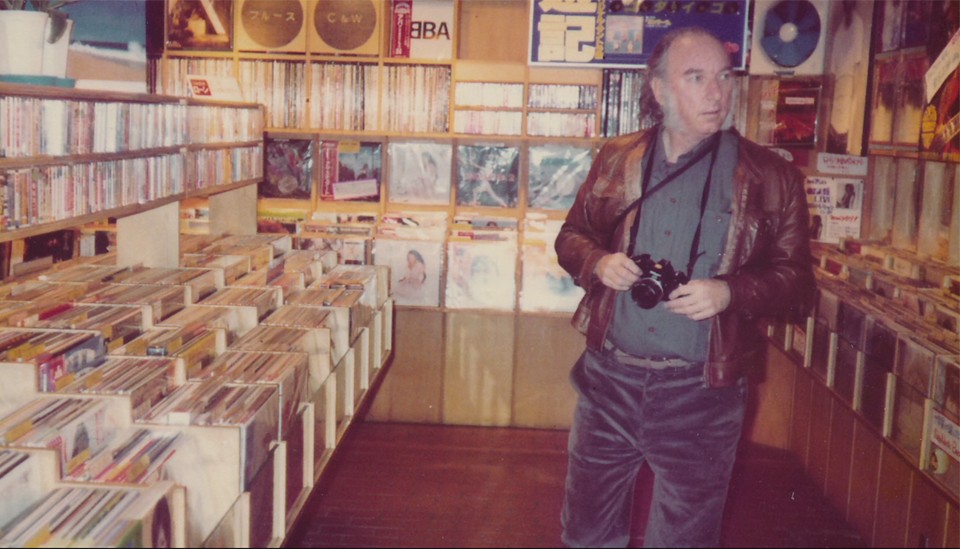
To wrap things up, I noticed in the film there are a couple old photos of you with a camera around your neck. How long have you been into photography?
Since I was about 15.
Were you mostly taking photos for business purposes, you know, research? Or was it more of an artsy approach?
It was more for fun. No matter where I went, I always had a camera to take pictures of the stores.
[Because he was being so humble, Patti interjected: “Did you know he had a gallery show? But didn’t you start in High School, Russ? Didn’t you do the pictures for the yearbook, but you never graduated, so you weren’t in it?”]
Russ Solomon: [laughs] It was really a dirty trick. I was the principal photographer for the McClatchy yearbook and because they kicked me out of school, they wouldn’t give me any credit. But the photographs were terrible, believe me, they were terrible. High school pictures, are you kidding me?
To keep up to date on what’s going on with the film, go to Towerrecordsmovie.com
Also, click here to check out our interview with Colin Hanks and Sean Stuart regarding All Things Must Pass.
**This interview first appeared in print in issue #185 (April 13 – 27, 2015)**
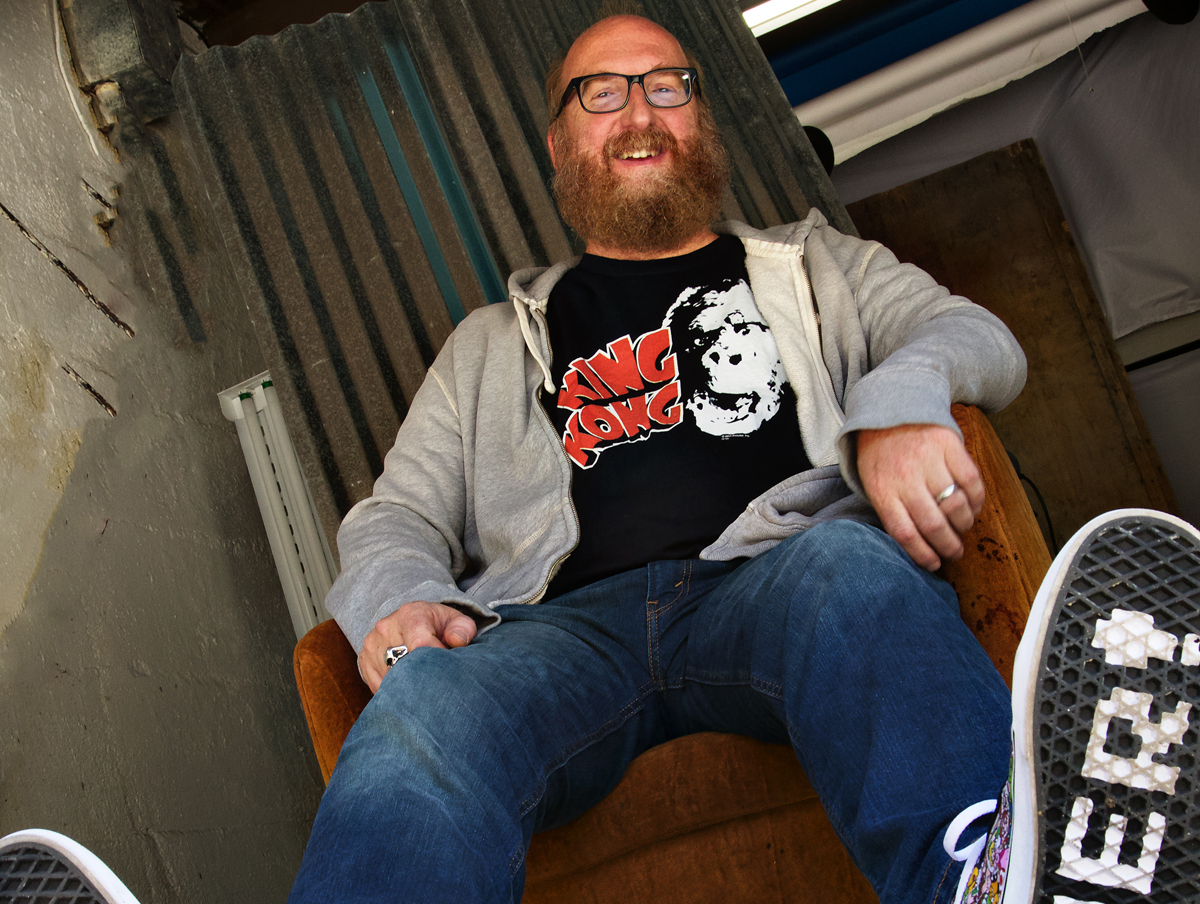
Six months before Brian Posehn turned 21, he rang Laughs Unlimited in Old Sacramento to ask how he should go about getting into stand-up comedy. They told him he needed to be of drinking age, so he spent the next half-year preparing a five-minute set. They suggested the open mic at the old Metro Bar and Grill next to The Crest.
“The week I turned 21 I went on stage my first time and completely destroyed,” Posehn told Submerge during a recent phone interview. “And then I went on the week after at the same open mic and tried all new material. I ate it so hard, but still loved it.”
Those Sacramento open mics laid the first bricks on a path toward a sprawling career that led Posehn at first to San Francisco and later to Los Angeles. If you don’t know him by name, it’s likely you recognize him, whether it be from The Sarah Silverman Program, Rob Zombie’s horror movies or one of the dozens of sitcoms and shows he’s guested on.
Posehn was raised in Sonoma, but moved to Sacramento when he was 17 to attend American River College and live with his grandpa. The initial plan was to become a rock journalist or a DJ, but his foray into stand-up comedy rerouted that course.
He’s written and acted for dozens of shows and movies, recorded comedy albums, written comic books, hosts a podcast and is currently authoring a book about his life and career.
On Jan. 5–7, he’ll circle back to Sacramento for a string of shows at the Punch Line.
“I usually wind up seeing people I haven’t seen in 20 years,” he said of the homecoming. “There are people I worked with at the Tower Records up in Citrus Heights that still live up here and I’ll hang out with some of those dudes.”
Posehn has also stacked the shows with some of his favorite locals, including Ngaio Bealum, a local comedian who writes a popular weed column for Sacramento News & Review and is active in the marijuana-legalization movement.
When did the stand-up comedy segue into an acting career?
In ‘94 I moved to L.A. with the intention of getting writing jobs. I didn’t move there to act at all. I wanted to write sketch comedy and late night stuff. It must be so frustrating to anybody who wants to act, but I just happened to do a set in L.A. and a casting woman saw me and brought me in the very next day to audition for my first sitcom and I got it. It was a show called Empty Nest that’s gone forever. That was the first thing I did and it was such a fluke.
When you got on board with Mr. Show, could you tell it was something special?
Absolutely. I knew David Cross first through San Francisco because he was coming up to the city a lot. Through David I met Bob [Odenkirk]. They were just writing these hilarious sketches and they’d go and perform them at night. By the time it turned into Mr. Show, I was such a fan of those two guys. The first four episodes of season one I acted in, but they wrote all of those by themselves. By the time I was hired as a writer I already knew it was going to be the ‘90s generation’s SCTV.
You were in episodes of Friends and Seinfeld. Which show is better?
Which one did I have a better experience with or which one makes me laugh? Well, actually, it would be the same! I had a better experience with Seinfeld—and the show is better. That said, I was happy to be a part of Friends and it did help at the time and got me other work. Just my sensibility was more Seinfeld made me laugh and still does.
When did the love for metal music start?
KISS was the first band that I obsessed over. I wasn’t just a casual fan of anything. Whether it’s movies or music or comic books. I would just get into something and completely obsess over it. In the late ‘70s I got into Van Halen and Black Sabbath and AC/DC and all of that stuff. I just sought out heavier and heavier music, and then in the early ‘80s, by the time I was in high school, bands like Iron Maiden and thrash metal was starting. I went from Iron Maiden to Metallica and here I am as a 50-year-old man still into the same music I’ve liked since I was a kid.
What album did you latch onto early that’s still just as strong?
Oh, there are a lot of them. If I had to pick, it’d probably Iron Maiden’s Number of the Beast and then Metallica’s Ride the Lighting. Those are the ones I loved the most.
How did the Rob Zombie connection happen?
I’ve known Chris Hardwick since he was like 19 I think. I met him at UCLA for a comic book thing. He was in the first Rob Zombie movie House of a Thousand Corpses and I was a little jealous so I said to Chris, “How the fuck?” He said, “Oh I know Rob. He’s a cool guy. You should meet him.” I was like, “All right! Let’s make that happen.” I went to a party at Rob’s and talked to him and he said, “You’re really funny on Everybody Loves Raymond,” and I’m like, “Rob Zombie watches Everybody Loves Raymond?” That was kind of funny to me. Something about picturing him in those boots just sitting around watching Raymond.
Through that we became friends and then he wrote me into The Devil’s Rejects. He asked, “Do you want to be a roadie and you get shot in the face?” I’m like, “Yeah man. Whatever you want me to do.” I was there for five days. I acted two days, got shot the third day and played dead the next two. It was a fun experience. 10 years later it’s still one of those things I’m most recognized for, among that group of horror fans and metalheads.
You performed at the Insane Clown Posse’s Gathering of the Juggalos. How was that?
I was working at Metalocalypse with a good buddy of mine, Brendon Small, the head writer of the show, and I got a text from my agent asking if I’ve ever heard of the Gathering of the Juggalos. I’m like, “Yeah, yeah I have.” He told me what the money was and I walked back into the writing room and said to Brendon, “Dude, I just got asked to do the Gathering of the Juggalos and the money is this.” He goes, “You gotta do it!” I probably would have done it for one-third of the money just for the experience.
It was crazy. Performing at four in the morning in a field out in the middle of nowhere to people wearing face paint and baggy clothing. There was blood on the stage because they had backyard wrestling before. We were being taken around in a golf cart by a clown. I think his name was Fartso the Clown or Yukko the Clown. You’d think it would have stuck with me.
Why do you keep your Twitter feed private?
I don’t go on there to share jokes with people because I got kind of burnt out on the whole thing. Sorry to get negative, but that’s just how I feel at this point. I feel like it’s important to advertise myself, but other than that I kind of hate what a time suck it is.
You’re a comedian, actor, writer, podcaster and more, while also closely associated with metal, nerd culture and horror movies. What drives you to so many pursuits and passions?
I’m super lucky that I’ve been able to carve a career out of doing all of these things that I love. There’s not one thing I do that I don’t want to do. I have fun at all of it—voiceovers, writing coming books, being in horror films, telling fart jokes into a microphone. Not that I just tell fart jokes, though. I never went “Hey I’m going to move to L.A. and do 20 different things.” I just moved here to make a living and that’s the way I still look at it.
Catch Brian Posehn live Jan. 5–7, 2017, at Punch Line Sacramento, located at 2100 Arden Way. Shows start at 8 p.m. all three nights, with additional 10 p.m. shows on Friday and Saturday. For tickets and more info check out Punchlinesac.com
**This interview first appeared in print in issue #229 (December 19, 2016 – January 2, 2017).
The Art of Being Fluid
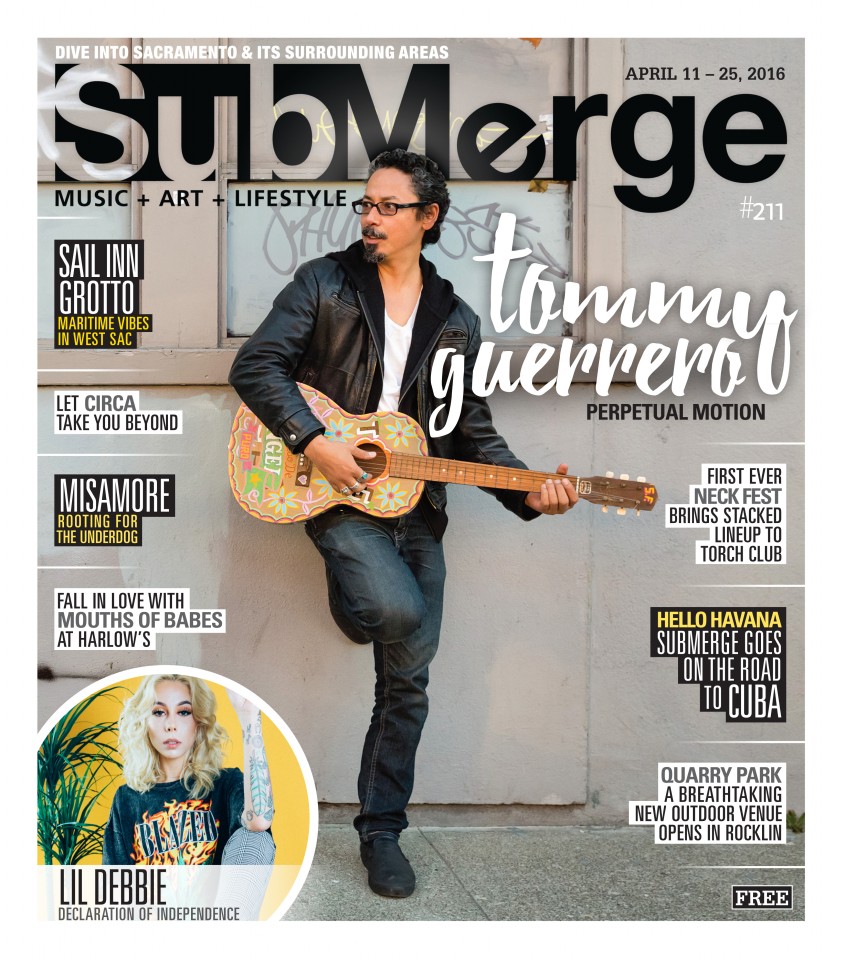
While skateboarders across the world might regard him as a living legend, San Francisco native Tommy Guerrero doesn’t want that label for himself just yet.
“I hate that the term is thrown around so loosely,” he says over the phone. “And secondly, it’s usually used when people pass on. It’s like, ‘Fuck, I’m still here!’”
Instead, Guerrero—now a 49-year-old father of one—prefers to keep rolling with what he’s always known best: skating and music.
During his tenure as a professional rider and competitor for Powell Peralta’s Bones Brigade skate team in the ‘80s, Guerrero says he would always make time to come home and play his bass “for hours on end.” Although Guerrero currently serves as an art director for Krooked skateboards, as well as a member (but mostly an ambassador, he says) of the Converse CONS pro skate team, he’s also grown into a multi-instrumentalist who plays guitar, keys and percussion, in addition to bass.
Music, he explains, was a childhood passion that he began taking seriously as early as 1978, when the Ramones came and put on a show in front of San Francisco’s City Hall.
“It changed my life,” Guerrero says. “Being a skateboarder was already kind of an outlaw, rebel thing to do. And the punk ethos went hand-in-hand with skating … So me and my brother instantly were just enamored.”
Skating by day and rehearsing by night, Guerrero ended up forming a few different punk bands throughout the ‘80s—Free Beer perhaps being the most well-known. As a new decade trickled in, however, Guerrero says his band-playing days slowly came to an end while his skating career soldiered on. But that didn’t mean he was done with music.
Investing in a drum machine and a 4-track recorder—the very first Portastudio, as he recalls—Guerrero continued recording his own tunes, until eventually he got featured on a jazz compilation album in 1995.
Around the same time, Guerrero also provided the soundtrack for a skate video in promotion of a clothing company he had started called Forties, which caught the attention of Galaxia and Mo’ Wax Records. Guerrero produced three projects under those two labels at first, and then a slew of others throughout the 2000s and 2010s—he now has 11 albums in the bank, according to his website.
His latest release, 2015’s Perpetual, is an extension of sorts to the album prior, No Man’s Land, which he characterizes as a “break-beat spaghetti-western noir.” Both albums stem from desert rock and world music influences, including Tinariwen, Bombino, Gabor Szabo and John Zorn, among others.
Now, about six months after Perpetual dropped, Guerrero is embarking on a very brief tour up north to Oregon and back down again to San Francisco: a “run,” he calls it.
“This is just to go and play some music,” he says, “just to go do something, really.”
Before he stops off at the Shady Lady Saloon later this month with drummer Chuck Treece and bassist Josh Lippi, Submerge was able to chat with Guerrero about music, skateboarding and his surprising ties to Sacramento.

Photo by Claudine Gossett
Would you consider your music to be tailored toward skateboarders, or that specific culture at all? Or is it just music for a general audience?
Music is for anyone, just as anything is. And I really can’t stand the way people need to pigeonhole you so they can market you in a specific way. That’s what so many people try to do in the music world … which I don’t agree with. It’s either art, or not. And it’s either good or bad, you know, depending on your taste … And, you know, I get a lot of support from the skate and art and surf community, which is great. I love it, that’s my family. But I would hate to be limited to such things, because I’ve met people anywhere from, literally, 5 [years old] to 65 who dig my music. It’s for everyone and anyone.
Would you say that your musical style is along the same lines as your skateboarding style? Your music, to me, has somewhat of a laid-back, free-form feel to it. And your skate style also seems very free and loose, but fast-paced at the same time.
I think the correlation is more about being in the moment. The thing about street skating … everything is in the moment. It’s very off-the-cuff; you’re improvising as you go down. You see a curb, you hit it. You see a stairwell, you see a driveway, you see a bench. Whatever it is, you’re hitting it along the way. And none of this is pre-planned. So music is kind of like that for me … I just want everything to be fluid and seemingly organic and seemingly natural—not forced. And that’s kind of how I approach everything. But I think that’s kind of the thread within skating.
I’m curious to know if you ever wish you were as well-known or famous for your musical prowess as opposed to your skateboarding career.
No. I identify myself, if I have to, as a skateboarder. And that’s just fine. The music thing for me—I’m not looking for accolades from that world. I don’t even really orbit in that world or have anything to do with the music industry. I’m removed from it, which is fine.
Is there anything you wish you could change about the music industry as a whole? Other than the blanket labeling and branding, I mean.
My only thing, truly, with the business end of music is that it would be nice if the people who are trying to run the industry would understand that without the artists, there is no art. So by not paying them what they deserve for their art, or their product or whatever people want to call it, it’s doing a huge disservice to the community. Even [for] people who have my music and dig it. You know, I’ve had people tell me, “Oh, I love your stuff. I just downloaded it from blah blah blah.” And it’s like, “Cool. I’m glad you dig it. It would be nice if you supported me financially.” Just because of the cost of making a record … The cost of me recording, the mixing, the mastering, the art and design and then the final production of the CD or vinyl and/or a digital release [is high]. There’s lawyer fees, publishing fees—it all adds up. I mean, I can’t get away with making a record for less than $10,000 … It’s always difficult to get people to understand that in this day and age, with technology being what it is. Everyone just thinks that music comes out of the ether into their computer somehow, or into their phone. And they don’t even think about the creation of it … So that’s just my thing—trying to get people to be aware of supporting these artists.
I wanted to ask about Sacramento a little bit. Why was Sacramento included on this run? And also, what are some memories you have of Sacramento, if any?
Well, of course I’ve been to Sacramento—many, many, many times. But the idea as we’re coming back [to California]—because we’re gonna hit Bend [Oregon] first, then Portland and then Medford—was to have sort of a stopping point. And since Josh is from Sacramento … why not just play [there]? I’ve never properly played a gig in Sac, and I thought it would be fun. And I know so many skaters there—just so many people—that it just made sense. I grew up in San Francisco, and so we knew a lot of skaters from Sac. We’d actually go up there and skate all the time.
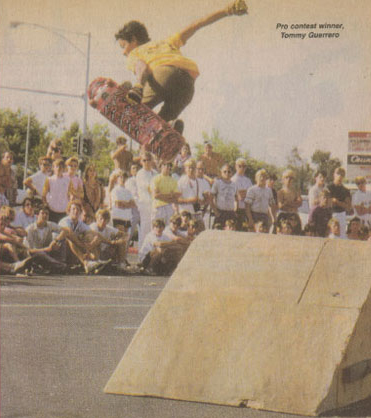
{Photo courtesy of Thrasher Magazine, July 1985}
Wow, really? Any specific spots you’d skate back then?
Not specifically. There were some curbs, some banks. I forget the names of them. But in 1985, Sacramento held a street-style skate contest … I think it was my third street contest ever. And I turned pro there. And that was sort of the launching pad to everything I do with skateboarding. So I turned pro in ’85 in the Tower Records parking lot [off of Watt Avenue]. And what’s interesting is that they just did the Tower documentary … So that was super cool to be part of that, kind of coming full circle. I have a photo of me in 1985 standing in Tower Records next to a stack of Thrasher magazines.
That’s amazing! So you’re saying that contest in Sac was the turning point in your skate career?
Yeah, it was. Because I won the contest and turned pro. And then the next year my [Powell Peralta] board came out and everything happened. So yeah, I know a lot of cats up in Sac, all the old skaters.
See Tommy Guerrero live when he and his band play the Shady Lady Saloon on April 22, 2016. Soak up good vibes, great drinks and copious amounts of old school skater cred. Shady Lady is located at 1409 R Street in Sacramento. For more info, go to Shadyladybar.com.
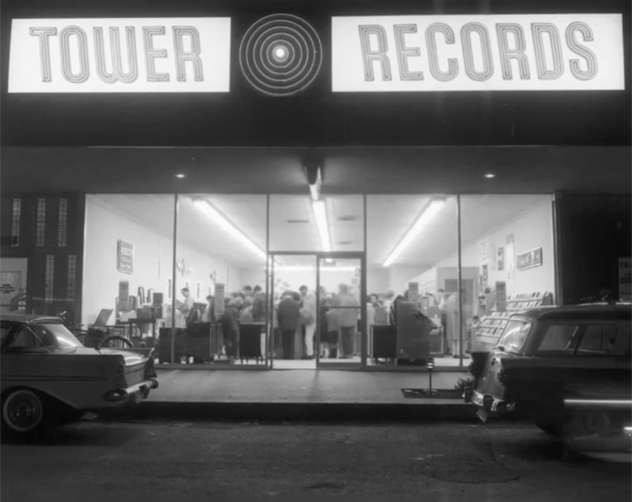
I’m pretty sure we all had our own Tower Records. Growing up, mine was in the East Bay suburb of Concord off Willow Pass Road. Later, it was on Main Street just up the way in Chico.
Where was yours?
Suffice to say that no matter where your Tower was, it hasn’t been there in a good long while. Having officially closed their doors in 2006, the once-mighty, Sacramento-bred chain exists now only in skeletal remains: faded price-tags on used LPs and building signage left behind in apparent tribute. That doesn’t mean we’ve forgotten about Tower, or any of its record store brethren that also entered into eternal slumber over the past decade. No, we remember, and fortunately so do Colin Hanks and Sean Stuart, director and producer, respectively, of All Things Must Pass, the first documentary chronicling the rise and fall of Tower Records.
Both natives of Sacramento and best friends since age 12, Hanks’ and Stuart’s Tower was on Broadway, an “ambitious bike ride” from their East Sac boyhood homes. In those formative years each fostered their own love of all-things music, with experiences now reflected upon with nostalgic fondness, from buying Tom Petty tickets at Tower in 1990, to frequenting The Beat at its Folsom Boulevard location. And it’s because of those experiences that we now have a lively, entertaining and heartfelt film to tell the tale of America’s—or perhaps the world’s—greatest record store empire. All Things Must Pass draws upon countless hours of interviews and archival footage to spin a yarn that feels both familiar and fresh, starting with Tower’s humble, pharmaceutical beginnings in the 1940s, and ending with its spectacular crash in the early part of the 21st century. Featured prominently alongside Tower’s founding father Russ Solomon (a gregarious, almost mythical figure) are his many valued and beloved Tower compatriots, as well as the likes of Elton John, David Geffen, Dave Grohl and Bruce Springsteen. The end result is one of heavy sentimentality that will likely leave you reminiscing about the good ol’ days, but at the same time you’ll be smiling by way of a Japanese twist.
Colin Hanks, Sean Stuart and Russ Solomon were good enough to speak with Submerge in anticipation of All Things Must Pass screenings at the Sacramento International Film Festival at The Tower Theater on April 25 and 26, 2015. Keep an eye out at Towerrecordsmovie.com for announcements of future screenings and to learn more about the film.
How was it that you became interested in telling Tower’s story? What made you want to take this on?
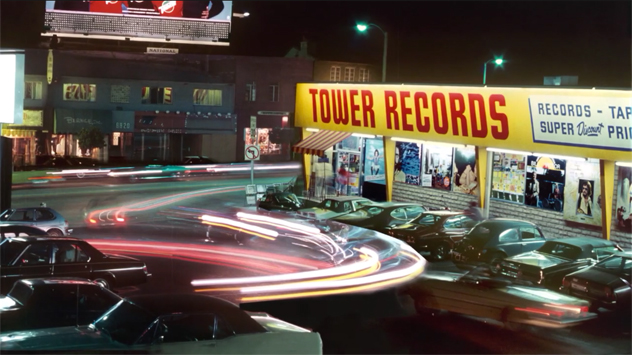
Colin Hanks: As the stores were closing in 2006, an old family friend of mine from Sacramento, named Nancy Comstock, was in New York on business and I took her out to dinner for her birthday. She had walked by the Tower on Lincoln Center on the way over, and the beginning of the dinner conversation was just what a bummer it was that Tower was closing. And I had known that Tower was a Sacramento company… I had my own personal connection to the store, buying concert tickets and CDs and cassette singles and stuff like that. And at the end of the conversation, sort of in passing almost as an aside to herself, Nancy said, “And to think it all started in that little drugstore next to the Tower Theater.” And I said, “Excuse me, what?” I had not heard about that. I didn’t know how Russ started selling used 78s in ‘41. That was as close to a light-bulb moment as I’ve ever had. I said, “OK, that’s a documentary.” If Russ’ journey starts there, 1941 classic Americana, soda fountain drugstore roots, and it ends in 2006 with him shuttering 180 stores across the world, that’s quite a journey. And then once I did a bunch of research and saw that no one else had really tackled that as a stand-alone feature, I sort of naively said, “I want to make a documentary about Tower Records.”
Sean Stuart: Colin sat me down in the fall of 2007 and basically said, “Hey, I had dinner with a friend, we were talking about Tower Records, and she told me that this thing started in the back shelves of a pharmacy,” and then went on to give me a five-minute pitch. And by the end of it I was just like, “This is a no-brainer.” Regardless of the fact that we get to jump into something that has civic pride for us—a company that we know very well that came from our hometown—beyond that this is a story that I think will resonate with everyone. It’s music. It’s how we consume music. It’s the erosion of brick and mortar in our culture. It just felt like something interesting and compelling.
Russ Solomon comes off as such an engaging and larger-than-life personality in the film. What was it like working with him, and did you get a chance to interact beyond the interviews?
SS: Oh yeah, a ton—there’s no way you can’t. Colin and I have spent a lot of time with Russ over the past six, seven years. Interviewing, but even more than that. Honestly more of a friendship level. Patti [Drosins, Russ’ wife] and Russ to me at this point are a little bit like hanging out with family. God, I pray that I’ll live to be 90 years old someday and be as quick as he is. I don’t know a lot of 90-year-olds, but the guy, I mean literally, his memory is a steel trap. We’ll be sitting there and you’ll say one little thing and he’ll go into a five-minute story about something that’s more impressive than anything I can muster up at the wise old age of 37. He is an impressive, impressive man. We learned so much from him. There were times when we’d be sitting there just talking with him, no cameras, nothing rolling, and it was like graduate business school. Life Lessons 101 on how to run life and how to treat people. It was just really unique and a wonderful experience.
CH: We approached him in 2008. I didn’t know him, but I knew of him by that stage. So we sat down and met with him and instantly I was at ease. I didn’t know what he was going to say, and I found him to be the pleasant, jovial man that he is. I mean within two seconds of sitting down with him I said, “OK this guy’s a total cut-up.” He’s a great character. At that point he had also insisted that it wasn’t just his story; that it was really the story of all the people that helped build the store from the ground level.
What are your personal views regarding the downfall of record stores? Do you think Tower was unique in how quickly it went from riches to rags, or is this a story that relates to the record industry in general?
CH: Let me narrow this a little bit. The film is not meant to be a documentary about the fall of the music industry. It is meant to explain and debunk the myth that the Internet killed Tower Records. Now, Tower is a good example of the first sort of casualty, if you will, of the death of the music industry. But I’m in no way saying that record stores have died. Because they haven’t. But what I am saying is that record stores as we knew them—in 1999—are dead.
So what I really wanted to do was to explain to people what happened to Tower, and why Tower went. Specifically talking about Tower, it is, quite frankly, gross over-expansion into markets and countries they had no right being in. In countries whose economic structure and population would have never supported such large-scale stores. And also the company’s own mismanagement once the banks took over. They could have maybe closed a bunch of stores and kept a couple open…close all the ones in the suburbs, keep Sunset, keep San Francisco, keep New York—but they didn’t do that.
In regards to the music industry on the whole, we examine certain things the industry did that didn’t help anyone. The biggest issue being [that] they lost an entire generation of kids when they stopped selling singles. We wanted to, in a larger context, be able to explain these certain things that helped set things in motion, so when you get to 1999 and 2000, the train has already left the station.
SS: As the title says, “all things must pass.” I think that we as human beings open the door for new technologies and new ways to consume [the] old. It’s the same way the printing press went. It’s an inevitable thing in a lot of ways. And I think the movie really does explore one business that happens to mirror its industry’s demise. But I think that there’s a lot of good to be seen in how we consume music now…you embrace it, and at times try to fix it.
The archival footage and photography that runs throughout the film is fabulous. How’d you go about the process of unearthing all that?
CH: Russ donated all of his personal collection of memorabilia to the Sacramento Historical Alliance, and we had access to his archives. All the people we spoke to in the film also gave us their own photographs, their own home movies; we licensed some footage; we paid for and digitized some footage; we were sort of de facto treasure hunters for about five years. The footage of Elton John [shopping for records at the Sunset Tower in the ‘70s] has really popped in a lot of people’s minds as this great find, and the guy who owns that footage did not shoot it. The guy who owns that found it in a dumpster 20 years ago and now it’s his.
SS: Part of the biggest battle of [making this film was that] you can go get interviews, but now what brings those interviews to life? Because no one wants to stare at talking heads for 100 minutes. You really have to be able to paint the picture to go with it.
How were you able to pare the film down to 98 minutes? Felt like it could have easily been three hours.
SS: It could have been a mini-series. [But] it’s kind of one of those things that presents itself. You end up starting on this documentary process, and you shape it and mold it and eventually it starts to show you what its personality is, and you end up kind of backing into whatever it needs to be. You don’t wanna force it, and at times you realize you’re getting too precious on certain things that you need to let go of.
Can you speak to the challenges of putting together a documentary in comparison to a feature film?
CH: Well they’re different disciplines under the same banner… I’m much more used to being able to tell a story with a beginning, a middle and an end: here it is, this is what the film’s gonna be, I need 22 days to shoot it, boom, done. This was hard. It changed, it evolved over time. We took five years to shoot this thing…it’s just different. But at the end of the day, we’re still storytellers, and I wanted to make sure that this story was accessible to everyone. It’s not just a film for music fanatics, it’s not just a film for people who only shopped at Tower Records. It’s most definitely for those people, but there’s also a human connection, a family story that we’re telling, both literally and metaphorically, and so I wanted to make the most personal film that I could.
SS: I feel like there are music docs that if you really lived an era, that they move you like nothing else. And I think that’s one of the things that’s interesting about our documentary—it doesn’t really have an era associated [with] it. It spanned five decades, and it’s got such a deep, emotional human story, that you don’t even have to love music to understand. If you’ve ever banded together with other human beings to create something that either succeeded or failed, this movie has something for you. It doesn’t pigeonhole anyone, it’s not speaking to one subject. You may only pick it up because of the music, but once you’re there it’s such a broad story with so much heart, it really speaks to anyone and everyone who watches it.
Lastly, I’ve got to believe the reaction from your screenings thus far has been extremely positive. What are you feeling from people?
SS: I’m feeling like this is truly one of the most beloved companies of the last few decades. It really is something that people bemoan the loss of, and people really have a strong relationship to it. It’s been a great experience to see people connect to this movie…everywhere we go people always have their own story about Tower Records they want to tell us. It’s been pretty special watching it unfold.
[Editor’s note: We here at Submerge were devastated to hear of Daniel’s passing on April 8, 2017. His impact on Sacramento’s music and art communities will never be forgotten. Rest easy, old friend.]
The P and 21st block is a sleepy pocket in Midtown. Tucked away from the white noise of the freeways, littered with parking lots and office buildings and a tattoo parlor, it’s low-profile–unless it happens to be a dance night at Press Club or The Townhouse.
Both clubs are infamous alternatives to the posh world of dress codes and bottle service. At Townhouse, or Toho as some call it, the beer’s cheap, the drinks are stiff, the tagged-up bathrooms are claustrophobic and the entire interior is low-lit to obscure seedy behavior. It’s the only spot in town suitable for a dubstep and bass night called Grimey. Being coined by a local DJ who goes by Whores is just another notch in its anti-glamour esteem.
On his birth certificate, Whores is Daniel Osterhoff. He’s Dan to those who knew him before he was Whores. We met at his apartment on the north side of Midtown a few hours prior to Grimey. He does not live in a high-rise loft or a gutted warehouse that doubles as a skate park. He lives like the rest of us, in a modest complex with carpeted floors and enough space to stretch. Two fellow DJs, one of which was Jubilee just flown in from Miami, and Grimey resident photographer Eric Two Percent were hanging out. The walls were like those you’d find at any graf-writer/graphic designer’s abode; dozens of pieces from abstract to lowbrow with the exception being a giant rusted-red W mounted on the wall.
“Russell Solomon of Tower told me the letters were lying around on the roof of Tower Cafe,” Whores said. “So one night I climbed up there and took the W.”
While grabbing me a Red Bull from the fridge he apologized for the hair on the kitchen floor. A stylist friend that was hanging out had sharpened Whores’ close-cut before my arrival.
We stepped outside for a cigarette and chopped it up. It was not long before James Blake’s controversial quotes to the Boston Phoenix that caused a stir in dubstep were discussed. An uber-popular British electro-soul and dubstep artist, Blake railed the genre’s burgeoning “frat-boy market,” which is being labeled “bro-step.” His rant was widely publicized for statements like, “It’s a million miles away from where dubstep started,” and “It’s been influenced so much by electro and rave, into who can make the dirtiest, filthiest bass sound, almost like a pissing competition, and that’s not really necessary. And I just think that largely that is not going to appeal to women.” Periodically throughout the night, Whores and his fellow DJs coolly reminded me that it’s neither their taste nor in step with the identity of Grimey.
The success of the night is owed to the attention to taste, which can be misperceived as snobbery, but should not be construed as such. Even when resident DJ Jay Two approached Whores with the idea of a dubstep night, Whores was interested but hesitant due to a feeling that dubstep had reached its high water mark.
An attendee of Grimey is not given the opportunity to gripe “not this damn song again,” because its resident DJs (Whores, Jay Two and Crescendo) are intent on remaining ahead of the curve by playing records acquired on advance or playing the newest tracks they think need to be heard. It’s a dedication to the cutting edge that is scarce in the local clubs that rely on Top 40 or are just held down by stubborn old dogs disinterested in new tricks.
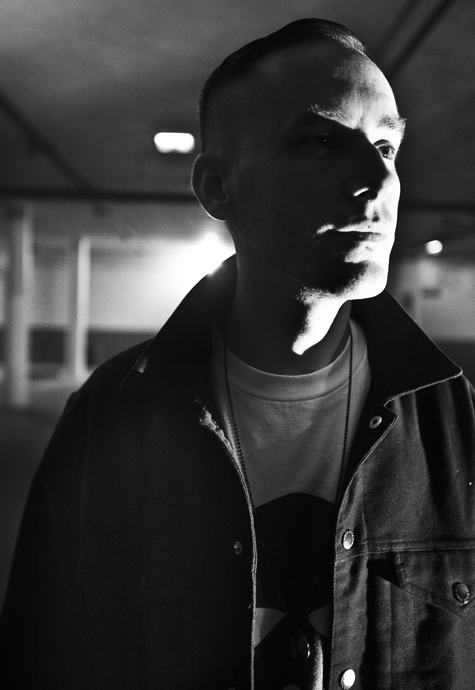
“I just hold steady with playing what I think people would like,” Whores said. “I’ve attended a lot of different dance nights everywhere from New York to Los Angeles, Seattle, Portland, San Francisco and Oakland. From the most underground to the most mainstream clubs, and I’ve taken little elements from each. But once you get the word out there, the word kind of does it itself.”
Much like fellow local veteran DJ, Shaun Slaughter, Whores is well traveled. He started DJing in 1997 as part of 916 Junglist before moving away in 2000 to Portland. Each move, he connected with different crews in Portland and Seattle before moving back to Sacramento in 2005. “Most people don’t know that about me,” he said. “They just think I came on the scene or think I’m from Portland, but I’m born and raised in Northern California.”
I reconvened with Whores outside of the Townhouse around 9:30 p.m. He was talking with Matt B of Bass Science, who had arrived in a rental from Tahoe. Whores was quick to share his knowledge on Bass Science, practically orating a short bio. “He started the whole glitch hop scene basically,” Whores said. “When Glitch Mob was starting out and Lazer Sword, he was right there. This guy’s got quite a big history in the newer EDM alternative craze.”
All professions have a language and despite my familiarity with Grimey and its music, talking to the actual artists involved meant brief interruptions to ask if they were saying “IDM” (intelligent dance music) funny, only to learn that EDM translates to electronic dance music–the domain in which the sub-genres operate. The confusion then sparked the two DJs into weighing the blurring sciences between EDM and IDM. “Some of it is [IDM] though nowadays,” Whores said. “Some of the juke stuff. Machinedrum’s new album.”
“The Lazer Sword,” Matt B added. “It’s intelligent footwork basically.”
“EDM is basically a very blanketed term,” Whores continued. “Nowadays everybody plays a little bit of everything because people’s attention spans are about this small [makes his index and thumb nearly touch]. So if you play one genre of music, you’re pretty much pigeonholing yourself and boring the shit out of the crowd.”
Whores stepped into the booth at 10 p.m. The bar was filling out and overflowing onto the dance floor with more than just gangly dudes having acid flashbacks from the Jungle club days. Whether it’s the Whores hype, the distancing from “bro-step” and “filthy bass” or just a misnomer, Grimey is never short on female attendees. By 10:30 p.m. the dance floor was gaining steam with a few girls entertaining each other, but come 11 p.m. to 2 a.m. the floor was a grinding, thrusting hot box of sweaty bodies–sweet, sweet uninhibited decadence.
Whores neither bores the crowd nor himself when he DJs. He keeps a folder of over 10,000 tracks on his computer at all times and does not practice a strict set. “It’s a lot more fun freestyling sets,” he said. “Sometimes when I record the sets and go back to listen to them, it’s like, ‘Man, that mix really worked.’ Others it really didn’t work, but what it comes down to is if you’re a professional, you can treat it like a jazz musician and play out of it. It’s all what you do with an error. Some DJs don’t know how to bounce back, they flop or they panic and that shows. That’s the difference between me and some DJ who took it up two years ago.”
Back outside we resumed our interview session in hopes of a quieter haven, but Grimey is the dance night with just as many attendees milling about the roped-off outdoor smoking section and back parking lot as there will be jammed into the dank of The Toho.
Whores clearly enjoys the popularity of Grimey, but he lamented that its success led to the compromise of his HUMP night on Wednesdays opposite Grimey. Originally called Warpaint Wednesdays with Terra Lopez, Whores came on to assist with the DJing and teach her techniques. Once Lopez began Sister Crayon, she forked over the night to Whores who renamed it HUMP.
“It used to be a popular night,” he said. “When Grimey came around it took the spotlight. I’ve been bringing around a lot of relative and instrumental electronic artists and musicians to try to bring it back.”
It was none of my business, but Whores willingly broke down the financial losses he’s incurred in the past two months that’s led to HUMP’s demise. DJs that are not conveniently touring the West Coast are flown into Sacramento and given hotel accommodations on Whores’ dollar. If no one shows, it means he bites the bullet.
San Francisco electronic artist EPROM and Frite Nite’s Salva, two rising beacons in the West Coast, are booked for HUMP at the Press Club this week. After that it’s the anniversary party with locals only in November, including Dusty Brown’s Little Foxes project, which is quite possibly also HUMP’s night of eulogy.
With Fuck Fridays dissolved, the Toho was in need of a new Friday night event, and Shaun Slaughter was back on the market for work. Rather than compete for the local crown, Whores and Slaughter teamed up to create Heater, an exclusive once-a-month party that combines glitter and gutter. “It’s more like HUMP with an open format,” Whores said. “We can play anything from house to electro to Baltimore to indie to dubstep and bass n’ breaks, whatever. It’s just straight party.”
The party debuted last month with the two DJs performing separately, and then trading off tracks for the last hour. “There’s always been an odd tension between us, but we’ve always been super-friendly with each other. I’ve been super-supportive of his nights and he’s been super-supportive of mine. The odd tension was because it’s a small town and he’s held the crown for quite a while. I think we’d really benefit if we did more stuff together, which is why we’re only doing it as a monthly.”
Our vibrations are in good hands with the Grimey residents. It’s a rare event where making requests is the greatest faux pas. “I don’t think it’s common knowledge that people know it’s rude,” he said. “Believe it or not, I have one job and one job only and that’s keep the vibe going. As soon as I stop to talk to someone and they go into detail about what they want to hear and why they want to hear it, all of a sudden they take me out of the groove I’m in, which takes away from the vibe. The next mix I do will be less involved and the crowd will notice, believe it or not. They won’t necessarily think about it like, ‘That mix sucked,’ but just have a moment to consider going out for a smoke.” Put your trust in Whores, kids.
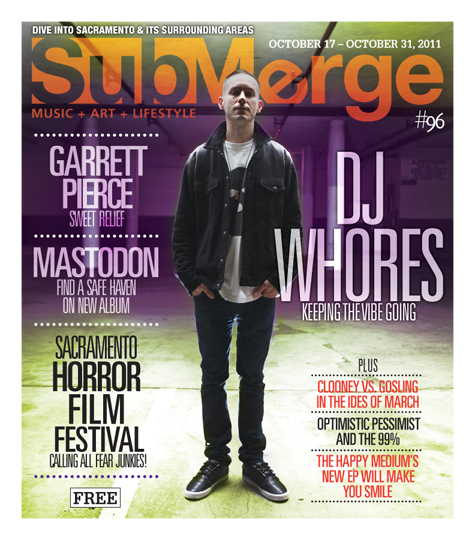
Grimey gets down at the Townhouse every other Tuesday night at 9 p.m. ($10 cover). DJ Whores and Shaun Slaughter’s Heater happens one Friday per month, also at the Townhouse. It’s free to get in before 10 p.m. with an RSVP. You can also catch DJ Whores at the Golden Bear on Saturday nights.