I’ve known comedian JR De Guzman for about seven years now, so it was both weird and fun to interview him for this article. I’ve seen him evolve from a quiet kid who’d pop into an open mic, to the seasoned pro rocking a full house at Sacramento Memorial Auditorium last year, to performing his own 15-minute special as part of Netflix’s The Comedy Lineup. In a world where success of this sort is hard to come by, it’s refreshing to see De Guzman do so well.
De Guzman writes some damn funny jokes, and adding a guitar to his performance arsenal has created a magic blend of musical comedy that has proven to be an entertaining formula. In 2015, a 15-minute clip of his performance at the Crest Theatre was uploaded to YouTube, and quickly became a viral sensation, garnering more than 250,000 views to date thanks to some love from folks on Reddit. He went on to win the 2016 StandUp NBC Award (won by local comic Kiry Shabazz a year later, giving Sacramento back-to-back victories in the competition).
De Guzman’s comedy album Dual Citizen was released by 800 Pound Gorilla Records in February 2017, and it debuted No. 1 on both the Billboard and iTunes comedy charts. With the debut of his Netflix special, it seems as if there’s no limit for this talented comic.
Well, the limit may be in his ability to come up with a good name for his pug, which he not-so-cleverly dubbed Pugsy. Despite his hacky approach to naming canines, his on-stage comedy is funny where it counts.
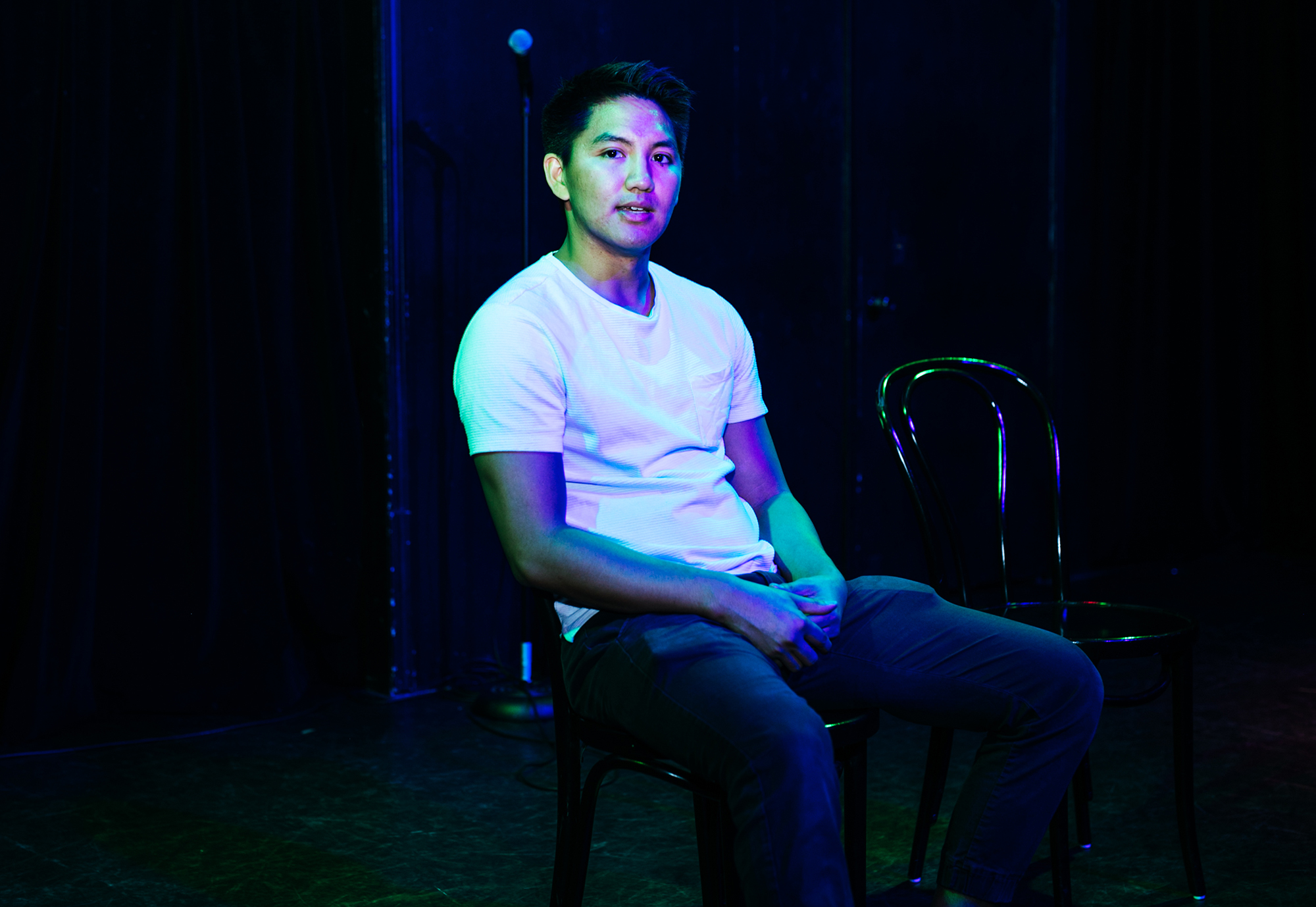
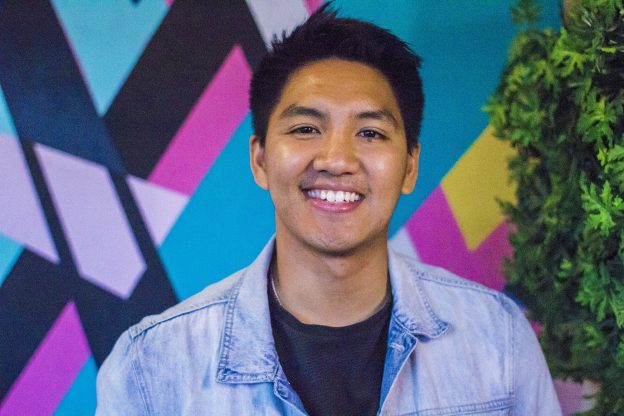
Photo by Tim Cruz
Was music a part of your comedy when you first started?
I did stand-up without music for about a year. I was still at UC Davis, and I took a comedy class that had you do everything. I took any class related to comedy. I went to a theater class that taught sketch comedy, improv comedy, stand-up and musical comedy. When I did the musical comedy thing, I did that song on my act. It was a song about the phrase “No Homo.” I don’t do it anymore; I did it for about a year, but it was the first comedy song I wrote and it was for a class assignment, and I started closing with it in my act.
Was it a song where you’re saying “No Homo,” but everything you’re saying is contrary to that?
No, that would have been a better song. It was making fun of rappers for using that phrase. It was like how all of the dance songs of the time were just commands that were easy to shout out.
Who were your earliest influences?
The first two were Dave Chappelle and Zach Galifianakis. I almost feel that today what I do is just a weird mix of what I like best of them.
I hear comedians talk about “Guitar Comics” as if that’s some less than acceptable or pure form of stand-up comedy, derisively.
You sure it’s not the most respected one [laughs]?
Well it’s interesting that some of the most respected comedians in history use music. You’ve got Steve Martin, Bo Burnham and Adam Sandler’s new Netflix special is amazing. Do you just take the criticism in stride, or does it bug you?
I was hanging out with another musical comedian yesterday and talking about this. Even the words “Guitar Comedian” sounds so bad.
Yeah, it’s almost like “Prop Comic.”
There’s a stigma behind it. I don’t even want to say it. I just say that I do musical stand-up, then they go, “Oh yeah, you’re a ‘Guitar Comic.’” There was a comic right in the beginning, when I first started doing the guitar, he pulled me aside and said, “You know, man. That guitar is cool, but it’s kind of a crutch. You’ll get over it. You’ll get past it. Once you drop it, I think you’ll be an amazing comedian.” I never forgot that. I remember being so heartbroken, thinking I had to stop doing it. I was so new and he was headlining shows and really looked up to him. But it stuck with me.
Then maybe three years in, at a time when I wasn’t sure where my stand-up was going, doing shows for no money, and my brothers had careers in dentistry, so I had to decide if I was going to keep doing it or not. That’s when the YouTube video of me performing at the Crest started getting some hits. If I started conforming my act to “The Hack Police” or whatever you call them, then a lot of stuff would have never happened for me. All of the things that have strengthened me on this journey have been the things where I have committed to what I am, what I do and what I like. There were a lot of people that I looked up to that said heartbreaking things when I was starting out. I just thought that people I like don’t like my shit. But I knew that it was something kind of different and it was true to me at the end of the day.
Comedians are less than a half a percent of your audience. It’s a gift you have, and it’s stupid to tie an arm behind your back just because they can’t play the guitar.
I think at the end of the day, if it’s good, it’s good.
Tell me about that YouTube video that became a viral hit.
I was in a weird place and did a stand-up tour of Asia. When I was traveling there were no more “Hack Police.” In Asia and Europe, they love musical comedy, they love character comedy and they love everything. I saw some of the best stand-up out there, because there were no rules. I saw this really unique Mitch Hedberg-style stuff from an Asian guy in Singapore. So that encouraged me to do musical comedy even harder.
When I got back I’d do these Tribble Runs [a string of comedy shows over a long distance] where I’d get like $300, but after buying food and gas, I’d end up not making any money. I had no money left on the way home. I had to be one of those guys at the gas station with a made up story, but it was real to me. I ended up exchanging my comedy CD with someone for $20. It was a really shitty CD, but now I have a less shitty one out.
I put together 15 minutes to perform at the Crest Theatre to tape and give to agents and managers to get into to the college circuit. My friend saw it when it had 30 views, and he posted it to Reddit, and that’s where it went really big to 30,000 the next day. It’s since got over 200,000. But it gave me a good tape that gave me an agent and manager.
You’ve got some funny little jokes as asides in addition to your songs. When you’re approaching this how do you divide your comedy writing between the music and the jokes?
When I started out, I just wrote jokes, but songs helped me stretch to 30 minutes so I could start making money. Even now when I start writing, I just do a ton of joke writing; out of 100 maybe one is good. But I try to write a good song for each good joke. I don’t think I could ever be a pure musical act, though.
Tell me about performing at Sacramento Memorial Auditorium opening for Nick Offerman.
They gave my tape to Nick Offerman and they picked mine. Luke Soin [Sacramento-based comedian] taped my set. The show was so amazing with that energy. It’s something I’ve never felt at any other show. It was such a drug. It was the perfect show. I would do it every night if I could. There’s a sense when you’re opening for someone that you really have to prove it. That’s the tape that I submitted to Netflix, and that’s how I got my special.
My favorite moment of that performance was when you just killed it, then walked off the stage to a near ovation, then Nick Offerman walked out on the stage with a guitar, and you could just see the look on his face was like, “Goddamnit!” He had so much respect.
He said, “What a fine young gentleman. I’m sad to have to follow him!” It was really cool. For all the times comedians gave me shit, that made up for it.
So the Netflix special came out about two months ago. What does it feel like a few hours before it’s coming on?
I got to see it a week before it dropped, but after watching it I just got more nervous. I wondered how the rest of the world was going to see it. I wasn’t really thinking about it that much an hour before it dropped, because it was my girlfriend Chelsea’s birthday. The best thing is hearing that “Da-doom” Netflix sound before it starts. Once people started responding to it on social media it really felt real. I was so nervous because it’s the biggest platform I’ve been on so far.
People were messaging me from Facebook, Instagram and Twitter and saying really nice things. Somebody from Brazil was like, “I’m in med school and watching comedy is what gets me through it, and this is one of the hardest times I’ve laughed in a long time.” It was so encouraging. As much as you need to do it with intrinsic motivation, that stuff really validates what you do.
I remember setting a goal during the Netflix taping to be a positive light in comedy for people. I’m not very political, but I kind of want to be a break from all the shittiness of what the news is portraying. This can just be a reminder to be silly. So to hear that from people is cool.
JR De Guzman will be returning to Sacramento’s Crest Theatre (1013 K St.) on Wednesday, Nov. 28 with Jimmy Earll, Diego Curiel and former Submerge cover model Lance Woods. Tickets start at $20, and doors open at 7 p.m.
**This piece first appeared in print on pages 16 – 17 of issue #278 (Nov. 7 – 21, 2018)**
The first time I saw Andrew Bird live onstage was at the debut Wanderlust Festival up in Squaw Valley, 2009. He’d flown in for the gig from Detroit or Milwaukee, or some damned place, and the airline had lost his luggage, which of course included all of his gear aside from the trusty violin. Borrowing a loop pedal from another band, he proceeded to put on a virtuosic display of contemplative musical brilliance, bowing, plucking, lilting and whistling his way to the ultimate sonic setting amid a backdrop of cascading summertime peaks and valleys. It was at that moment I concluded that Andrew Bird was, in fact, a wizard.
And the contents of his lengthy discography will attest to as much. Be it the amalgamated beauty of Weather Systems or the poetic instrumental scores of his latest endeavor, the Echolocations series, Andrew Wegman Bird has a musicality flowing through him that few contemporary artists of any ilk can match. In 2015, Bird released Echolocations: Canyon, the first of five instrumental, improvisational, location-based recording sessions, with River, the second in the series, and City, Lake and Forest planned to follow. And where Canyon found Bird in Coyote Gulch, Utah, River, released Oct. 6 on Wegawam Music, now finds him literally wading in the quasi-trickle of the Los Angeles River. But madness to some is method to others, and in the case of Andrew Bird, it’s yet another wondrous waving of his wizardly wand.
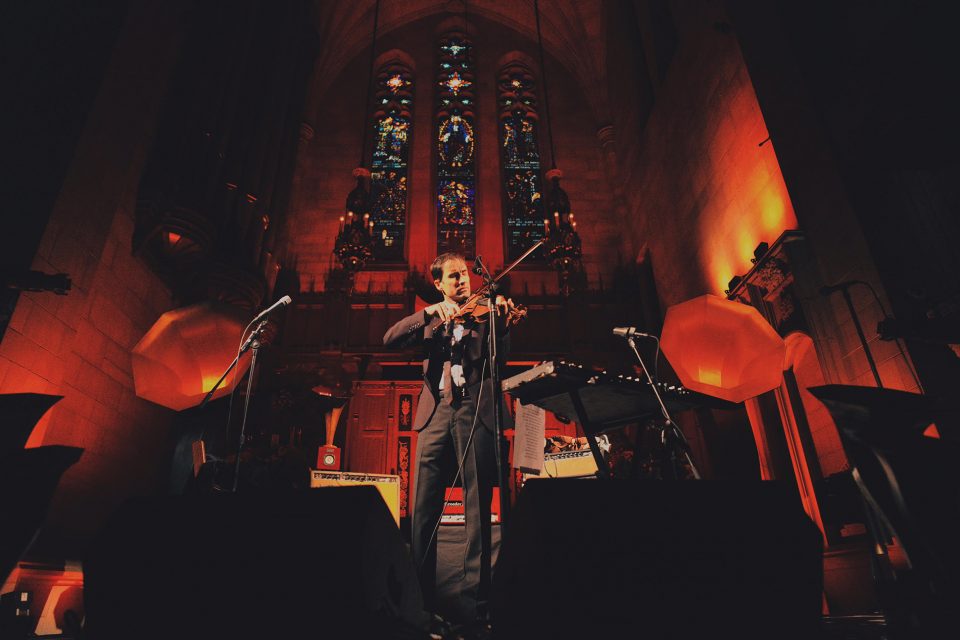
Photo by Jesse Lirolasm
As a classically trained musician, do you have to consciously tell that part of your mind to back off when improvising? Where does it separate?
I never let that classical mindset get a foothold. I learned classical music by sheer exposure; I was not a particularly model student. I was always coming from the intuitive approach. I barely learned to read music, and once I did, I didn’t need to because my ear could learn it faster than I could sight read. I was playing in bands from 18, 19 [years old]; playing in punk bands, ska bands; playing Irish music where you have to break up the phrase and be your own drummer. So it was never such a stretch for me.
The new record is beautiful, and I’m fascinated by your choosing the L.A. River under the Hyperion Bridge of all things. It’s something I’ve always kind of thought of as environmentally gross. And now you’ve set this score to it. What was it that drew you to strike that type of juxtaposition?
It was somewhat a matter of proximity and convenience … I ride my bike down there a lot. I was noticing that the river has actually gotten a lot nicer and cleaner; there are tons of unusual birds down there, and it’s not the post-apocalyptic nightmare that it’s known to be.
So it’s not the Terminator 2 motorcycle scene.
It still has a faint smell of ammonia, but other than that the water is actually pretty clean. There’s fish and all these wetlands they put in there. But it is a very odd mix of urban and imposed natural environment. What was interesting to me was the architecture of those two bridges at slightly different angles right next to each other. They have these arches, these ellipses that are somewhat random, and the randomness of nature tends to be good for acoustics. Symmetry—two hard flat walls opposite each other—creates this unnatural, kind of springy sound. But there’s these soaring arches, and I’m standing ankle deep in the water, and even the sound of traffic becomes kind of serene.
What did you notice that was similar and/or different from Canyon, in terms of the cerebral atmosphere?
There’s all sorts of unconscious inferences going on, but I can probably piece it together acoustically. The canyon was more or less silent except for the slight rushing of water, and the walls were incredibly high and sort of leaning in, almost cathedral-like. The first thing I had [to find out] was which note gave me the most, and that was C sharp. So I kept playing that note and letting it ring, and that became the tonal center of a lot of the recordings. In the L.A. River, there’s a lot of white noise. So [I was] fighting to find what frequencies were getting around that white noise. The real challenge is to stop playing for a minute and let the notes ring out until they’re done, and that determines phrasing, in the temporal sense. But I’m not really thinking so technically; it’s only in retrospect when I’m doing an analyses of it.
Your music has the quality of lending itself to the natural world. Has that always been a part of your day-to-day experience, your observing of nature? Is it part of who you are?
You might be able to say that. Where I really made the connection between my music and nature was when I moved out to Western Illinois to fix up this barn to live and make music for a few years. It was getting out from under the urban canopy in Chicago and being able to see the horizon, and being able to see a storm come through the valley and pass over you and move on. I’d be making these loops looking out the window and seeing a tree blowing in the wind, and noticing that not only can the environment affect what I decide to play, but I can affect through music the way the environment looks to me … rare moments that kind of make time slow down. And I was interested in that. How can I change the way I perceive time through music?
Are You Serious has a pop streak to it, whereas the Echolocations series has no pop at all. Is that kind of a counterbalance for you? Does it even out your songwriting?
It’s a constant challenge, the restraint that’s required to write. Because everything’s in service of the song when you’re making records like Are You Serious. I could cut loose and play a violin solo on “Capsized,” but maybe I shouldn’t. You make these decisions, and they’re usually good decisions to let it be incredibly simple. But I find it infinitely challenging trying to write those three-and-a-half-minute songs that get everybody singing.
But you don’t want to feel repressive, [so] I invent these projects in between those pop records. Almost every time I learn something. Weather Systems was one of those. It wasn’t intended to be a commercial release, really. I find when I’m in that mode of learning and experimenting, I do some of my best work. But if I was always in that mode, I don’t know if it would be as potent. One succeeds because it’s the counterbalance to the other.
Weather Systems is still my favorite Andrew Bird record. Sonically and compositionally, this latest piece has a lot of similarities. Maybe it’s not a coincidence that your experience with nature at the time is reflecting in what you’re doing now.
I have a tremendous amount of trouble in the studio trying to capture my voice. If I’m in a small room with headphones on it’s over. I can’t do it. And maybe that’s what drove me outside. When you’re playing a festival and you can see miles away, your voice shoots up an octave and you’re trying to fill the vast negative space out there with your sound; it pulls all this primal stuff out of you. And when I started playing in the barn with these high-vaulted ceilings [and] a sense of optimism I just played differently. I sing differently. And I thought, “Let’s just take the roof off and see what happens.”
See Andrew Bird live at the Mondavi Center (in Jackson Hall) on the campus of UC Davis on Oct. 22, 2017, at 7 p.m. Tickets can be purchased through Mondaviarts.org. Special note: $1 from each ticket sold will go to benefit Everytown for Gun Safety (Everytown.org).
**This piece first appeared in print on pages 26 – 27 of issue #250 (Oct. 9 – 23, 2017)**
With the windows blacked out in her Washington, D.C., office for the second straight day, Jodi Cobb was hunkered down at her computer, editing photos as one last snowstorm had its way with the city outside.
To get the color and composition just right, Cobb likes to eliminate all outside light. The storm was underperforming, but it was enough to warrant sustained screen time in her personal cave.
“You can tell I haven’t been talking to people very much,” she said, noticeably acclimating to the back and forth of our phone conversation. “You’re the first person I’ve spoken to today. Maybe yesterday, too.”
Cobb was one of the first female photographers on staff at National Geographic, where she worked for about four decades. The magazine has only had four female staff photographers in its 125-plus year history. She’s currently two years into the editing process of a book project that will feature the best of her work from over the years.
Cobb will give a presentation called Stranger in a Strange Land, at the Mondavi Center in Davis on April 26, 2017. Similar to the book she’s currently working on, the talk is billed as a “whirlwind retrospective” of her 40-year career, which she spent exploring and photographing societies largely hidden from rest of the world.
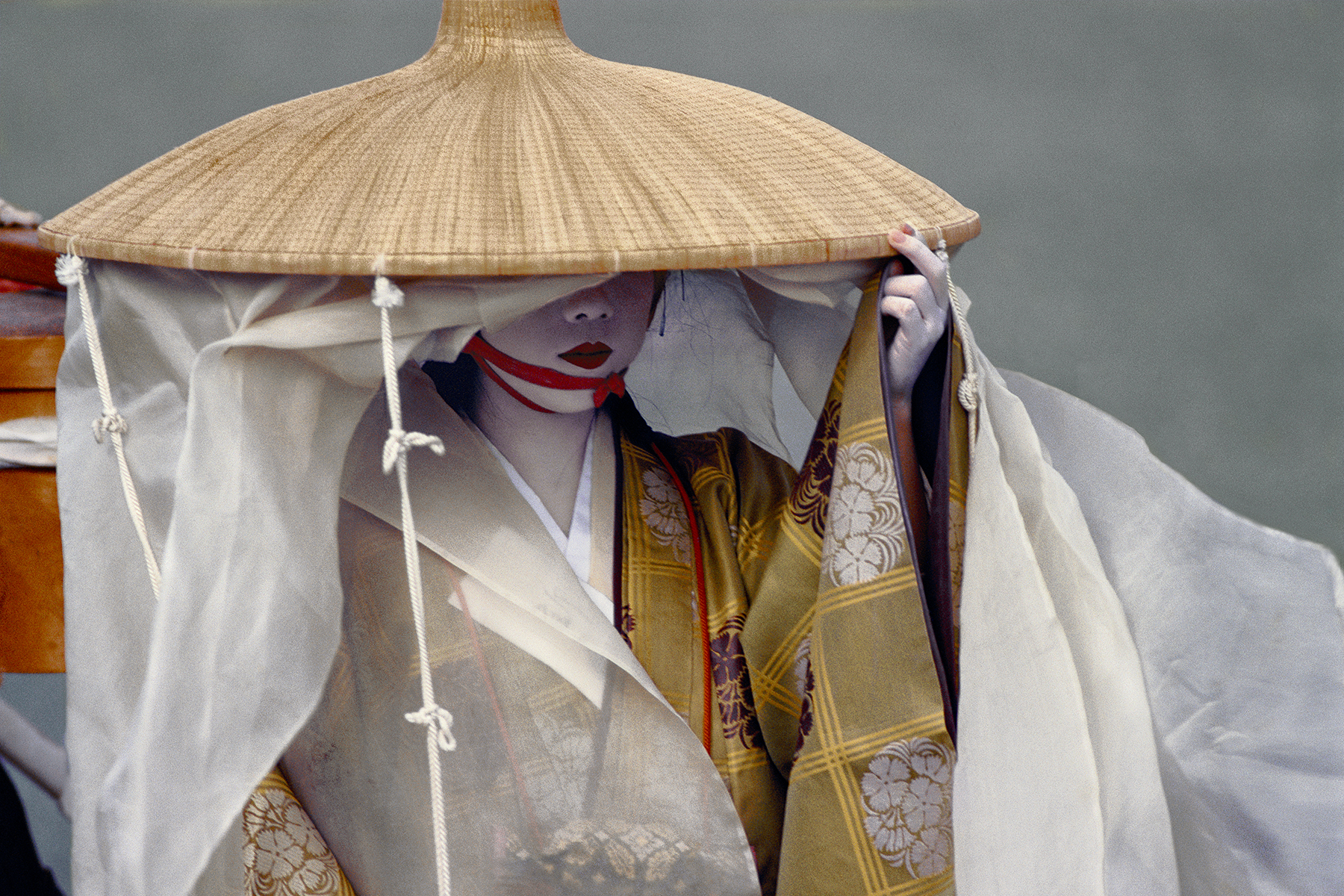
Dance of the Ages, Kyoto, 1993 | Photo by Jodi Cobb
Hidden Places
Cobb’s stories are immersive. She trims away at the outwardly visible trappings of a culture and offers up intimate glimpses of the people who make it up.
“I’m less interested in photography as a form of self-expression,” she said. “I’ve always wanted to be sort of an interpreter of the human condition.”
Cobb attributes this to her childhood growing up as an American abroad in Iran, even if she didn’t know it was shaping her at the time.
“My childhood was spent trying to understand a culture that was very foreign to me,” she said. “My talk is called Stranger in a Strange Land because that’s how I’ve felt my entire life.”
When her family moved back to the United States as she entered high school, she realized she was constantly recounting stories from her childhood spent abroad. That led her to journalism school at the University of Missouri, where she didn’t take a photography class until her final semester. She took a liking to the class, so her dad bought her a Nikon as a graduation gift. In short order, she returned to school for a master’s in photography.
As she took her first jobs out of college, Cobb dreamed of landing somewhere like Rolling Stone, which was young and culturally tuned in to her generation. National Geographic—which she respected, but described as being somewhat stodgy at the time—later assigned her a trial job in the Owens Valley of California. Her task was to capture seven photos that would be featured in someone else’s piece, but she ended up with a 30-page spread. And like that, her sprawling career was in motion.

Saudi Woman | Photo by Jodi Cobb
Going Places
Cobb has photographed everything from geishas in Japan to Bedouin women in Saudi Arabia, as well as documented the tragedy of human trafficking in one of National Geographic’s most popular online pieces ever, “21st Century Slaves,” a story that was published before human trafficking began receiving the widespread attention it does today.
Over time, Cobb found that she was particularly drawn to global social issues and cultural traditions, particularly those pertaining to women. She’s fascinated by the ways in which isolated cultures form their customs, and the ways in which we process them from the outside.
For example, the large disk-like lip plates worn by the Mursi women in Ethiopia are believed to be a tradition that has carried on since the days of slavery, when women were deliberately disfigured so as to be less attractive to slave traders. The lip plates persist, even though the reasons for the tradition have largely waned.
Cobb is particularly struck by how many cultural traditions seem to maim, bind or inhibit the movement of women in particular, citing Mursi lip plates and foot binding in China as just two examples.
“It’s only recently that there’s been this amazing cross-fertilization of cultures,” Cobb said.
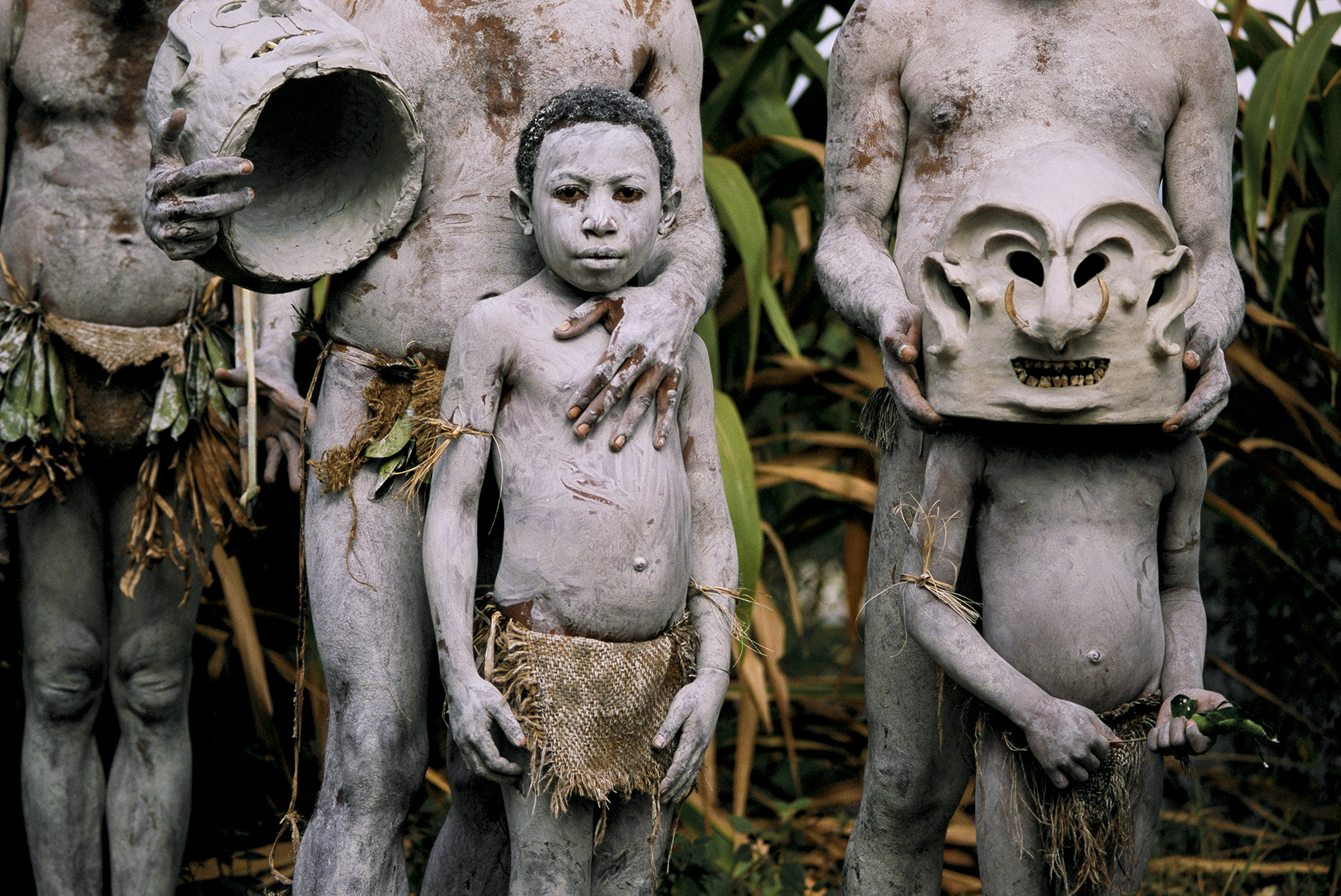
Mud Boys, Papua New Guinea, 1998 | Photo by Jodi Cobb
A Shared Language
“A good photograph is universal,” Cobb said. “The basic human instincts and passions and desires and wants and needs are the same all over the world. It startles me how alike people are.”
Her career has sent her to more than 65 countries and yielded 30 feature stories in National Geographic. She estimates that an average story, before things went digital, required about 1,000 rolls of film.
The process in the early years was to number every roll and then divide them into two packages, one with the odd numbers and one with the evens, before mailing them across the world to the National Geographic office. That way, if one shipment was to get lost or damaged, or if the plane were to go down, the surviving package would still contain a decent representation of the trip from start to finish.
That massive archive of National Geographic photos is what Cobb is currently navigating in her blacked-out apartment. Slides, transparencies, black-and-whites and more.
“I could swear I’d never been to some of these places until I saw the actual evidence!” she said of the archives. “Tastes have changed so much in photography. Some of the things not chosen at the time are now sort of fresh and interesting. Some that got picked have a dated feel.”
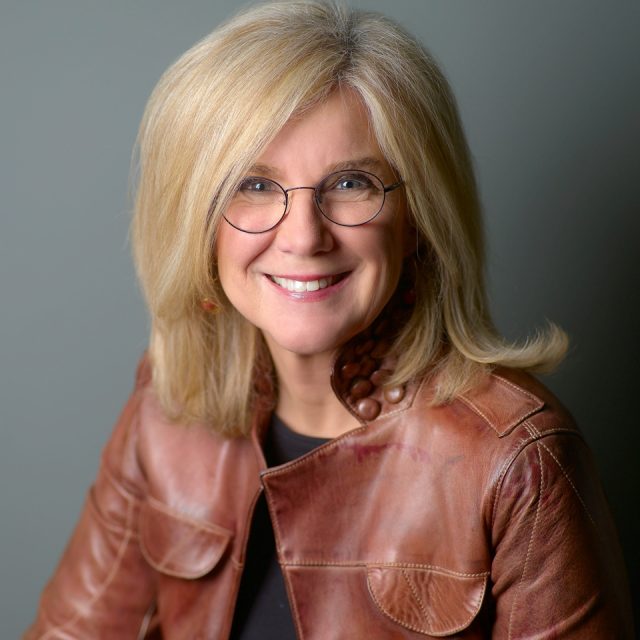
Portrait of Jodi Cobb by Rebecca Hale
Everybody’s a Photographer
Now, of course, everything is digital. Cobb herself made the transition years ago, although she says she was one of the last to switch.
“Mainly because nobody told me how much easier it was,” she said. “I saved one of my cameras from every iteration. I used Nikons my whole life, since my dad gave me one for college graduation.”
Not only has digital replaced film, but it’s also blown up the whole industry, with quality cameras now readily available on cell phones and social networks that can deliver images to the world instantaneously. It’s a far cry from mailing out the odds and evens in separate packages.
“People are telling their own stories rather than having an outsider come in,” she said simply, neither enthusiastic nor bitter about it. “What we need now is curation. All of these pictures are out there, but what’s good? And what’s real?”
Cobb’s presentation at Mondavi Center is a chance for an audience to explore four decades of world culture and human history through her lens, from long trips to corners of the world shrouded in mystery through the pitch-black editing room to the pages of National Geographic.
Jodi Cobb will present a retrospective of her work, Stranger in a Strange Land, and participate in a moderated Q&A session following her presentation on April 26, 2016, at the Mondavi Center’s Jackson Hall, located on the UC Davis campus. Tickets for the 8 p.m. presentation range from $12–$45 and can be purchased online at Mondaviarts.org.
A new museum of art at UC Davis that’s been decades in the making is finally ready to be unveiled to the masses. The Jan Shrem and Maria Manetti Shrem Museum of Art is set to open its doors to the public for the very first time on Sunday, Nov. 13, 2016, during a free, all-day celebration that will include a street fair, ribbon cutting, grand opening and much more.
“Born of a distinctive legacy, the Manetti Shrem Museum is committed to the interdisciplinary experimentation that makes UC Davis a leading university,” Founding Director Rachel Teagle wrote on the museum’s website. “The museum’s dedication to impactful education is evident in every aspect, from programming to architecture.”
The new museum will provide approximately 40,000 square feet of contemporary space for galleries, seminars, research and public gatherings. It will also house the university’s fine art collection, which includes more than 4,000 works, including some from past art department faculty like William T. Wiley, Roy De Forest, Robert Arneson and Wayne Thiebaud. The museum’s biggest donors, without whom none of this would be possible, were the late-great Margrit Mondavi, who donated $2 million towards the project, and Jan Shrem and Maria Manetti Shrem, who donated an incredible $10 million to name the building.
Jan got his fortune by building an international book publishing firm, and also founded a successful winery in Napa, and Maria helped bring such brands as Gucci and Fendi to American department stores. In a video profile on the two produced by UC Davis, Maria said, “I am very proud that I became a successful businesswoman, so I can give back. I believe that we have three phases in life. The first one-third of life is dedicated to study, the second dedicated to hard work, and the third to give back, and I am in that phase.”
Learn more about the new museum and the opening exhibits on their website, or at Facebook.com/manettishrem. The grand opening celebration on Nov. 13 will run from 10 a.m. to 5 p.m. and is open to all ages.
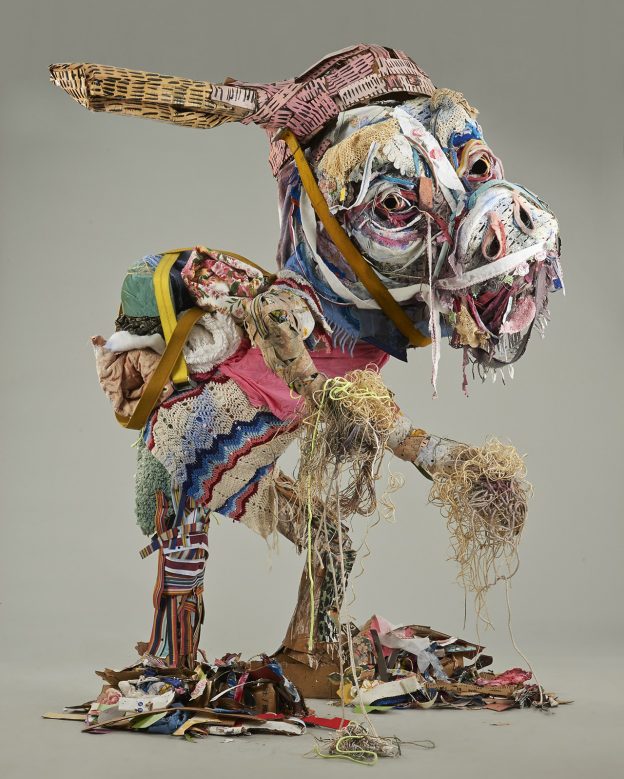
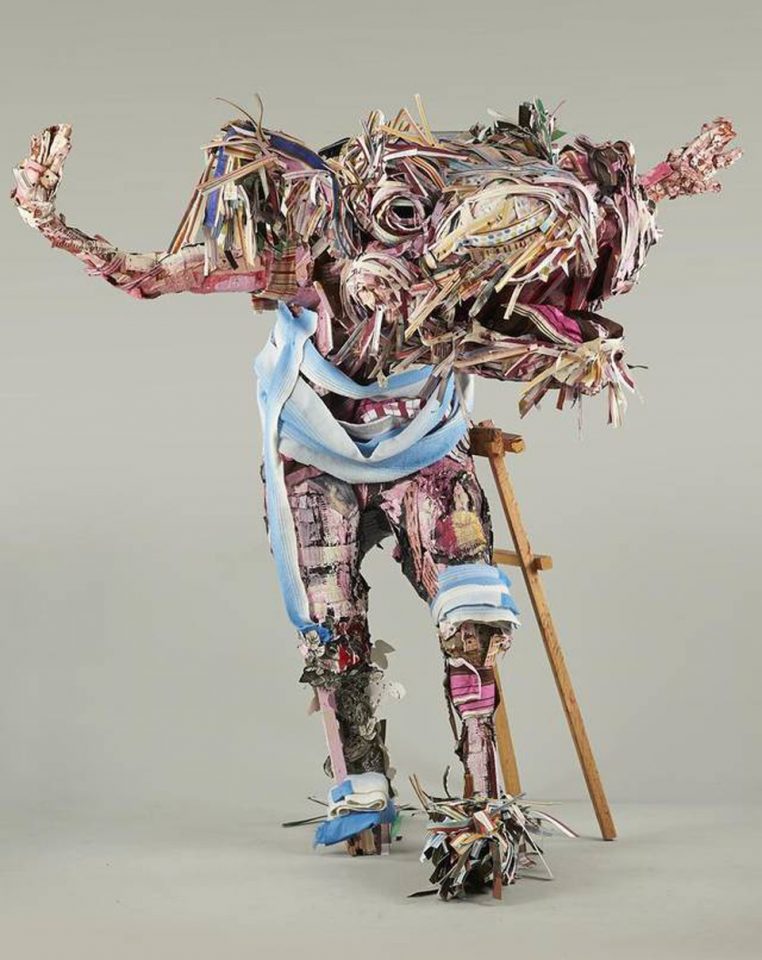
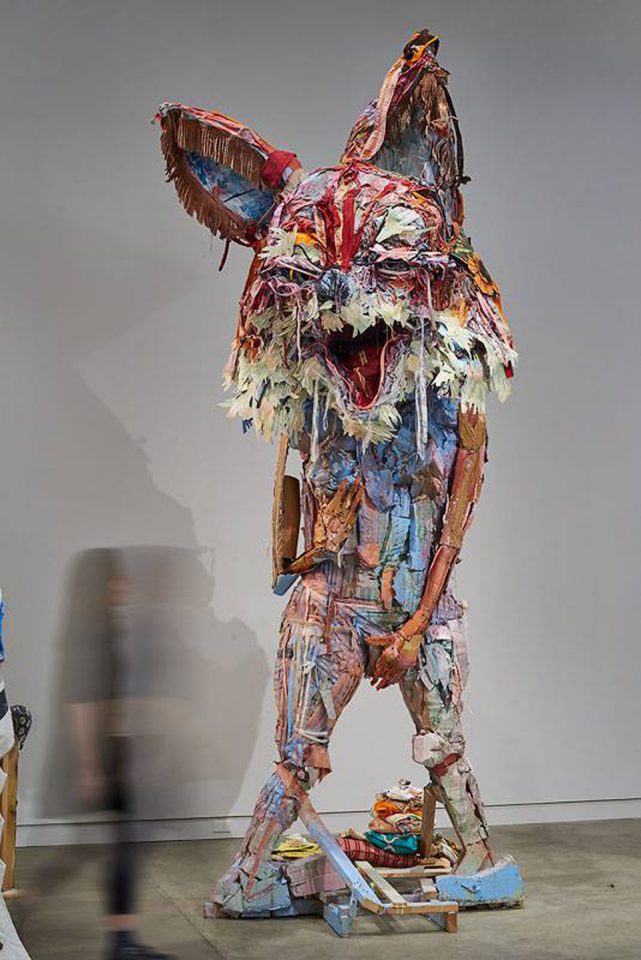
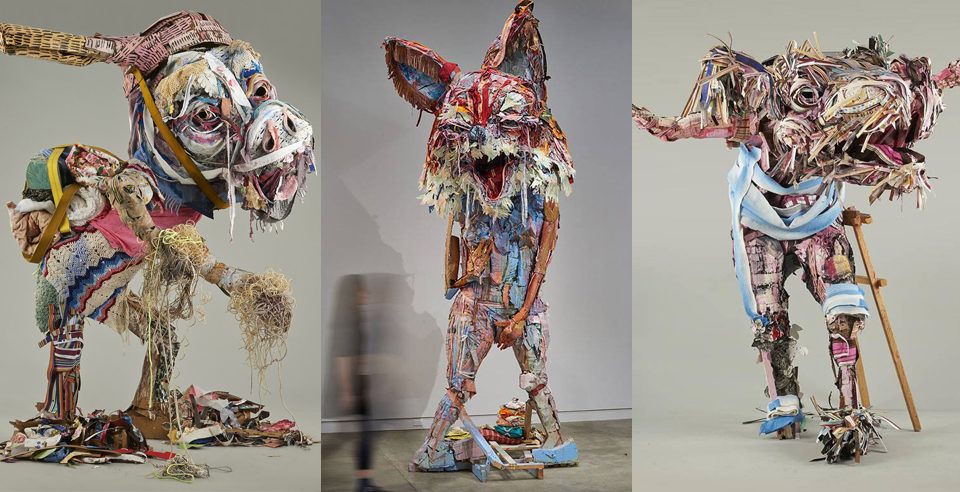
(This is Not a) Love Song is a new body of work by Sacramento artist Elisabeth Higgins O’Connor at Verge Center for the Arts. Sitting on a folding chair in the literal shadow of her sculptures, without the buzz and hum of the crowd from the opening reception, was surreal. It brings to mind the idea of sitting in a workshop of Disney animatronics, after-hours; skin peeled back to reveal the elaborate patchwork underneath.
Higgins O’Connor creates large-scale, fantastical works, joining massive animal heads with bodies resembling that of a human. They are constructed with discarded domestic textiles and wood framing. Imagine a tornado ripping apart a house, and the entire contents reassembling themselves loosely in the form of these hulking, enormous fantasy structures. Their postures almost seem vulnerable or self-conscious.
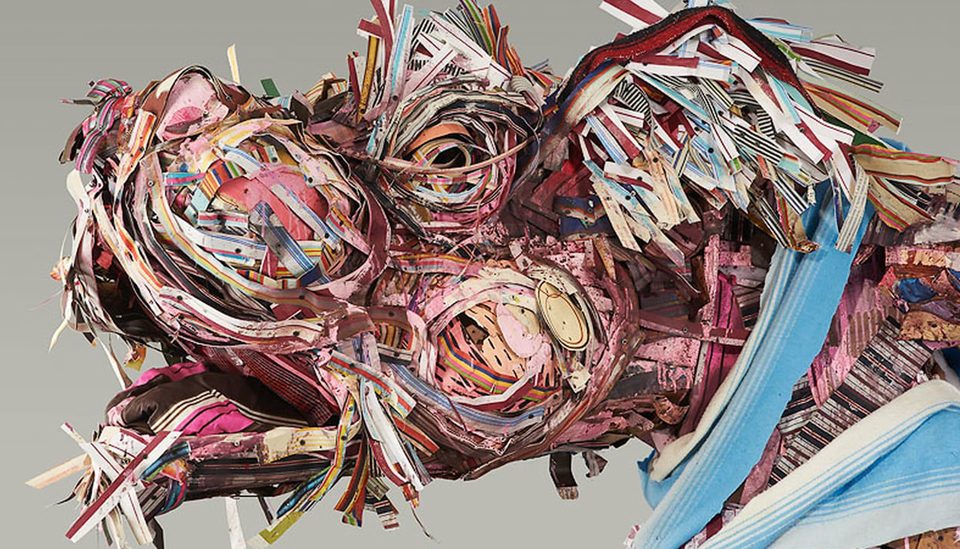
The artist makes no attempt to craft a slick or seamless sculpture, and in turn puts their inner workings on display. Bedsheets cut into thousands of pieces—hardened and dissected—form the skin of one. Colored cardboard tacked like shingling onto the exterior of another. It’s the sheer amount of hand carved materials painstakingly arranged that make the viewer step back in awe.
The opening reception on Sept. 8 was a chance for the public to walk amongst Higgins O’Connor’s massive-scale, animal-like creatures, in a show with fellow UC Davis alumni Mathew Zefeldt, with his work titled Windows. Both of these are on display until Oct. 16, so make your way over to Verge before it’s gone. This show is the last of four shows celebrating the partnership between Verge Center for the Arts and the Manetti Shrem Museum of Art at UC Davis, which will open on Nov. 13, 2016.
On Tuesday, Submerge had a chance to sit down with the artist and ask some silly questions.
What do you feel like influenced your current body of work?
I’m interested in animals as a storytelling device. I’m interested in the democracy of materials, you know, everything in here is free or off Craigslist or from the thrift store, or like, the cardboard is from the Co-op. All of the paint is the reject paint from Home Depot, so there’s a language of things that have been left behind, or things that are free, materials that anyone can use. I’m not using anything fancy, really, not anything that you’d have to go to an art supply store for. And so I’m interested in that, even though it might not look that way, but I’m interested in those materials that are languishing or at a thrift store. My favorite thrift store here is that Thrift Town.
On Del Paso?
Yeah that’s the best Thrift Town, for me. And the bedding section’s always really orderly. So it’s things like that, like fabrics that are out of step, or things that don’t fit into a domestic setting anymore. I’m interested in domestic objects that once provided comfort that are no longer providing comfort.
I think that the common thread throughout the work has been the domestic textiles, like the blankets and pillows and bedsheets, because they’re loaded with content, for me, and it’s cheap, or relatively free, and I can paint with it, so I’m not buying really expensive acrylic paint or oil paint, but I can make a big red swathe without buying a $20 tube of paint
In your childhood, were you interested in animals that take on human form?
I think I’ve always been interested in animals, not to have them as pets necessarily, but they drive a narrative, and often times, morality tales or fables. Sometimes they’re thousands of years old, and they’ve been passed on through tradition or oral tradition; animals are often used to point out human foibles or society’s ills.
I think as a kid I was denied stuffed animals because I had a lot of allergies and asthma, I think about that a lot. I don’t think I’ve really told too many people that, but I was very jealous of kids that had lots of stuffed animals, and I kind of wonder about that; was that a seed that was planted, like, maybe I’ll make my own eventually.
When did you discover a need to create or draw, was it at a young age?
I don’t really remember, I think one of my earliest memories is drawing, and saying that I’m an artist, like in kindergarten or before kindergarten, and I don’t know exactly how that came about, but I always identified as an artist, even as a really little kid. And I was supported by my parents. My parents weren’t well-to-do, but they supported whatever we wanted to do … They never discounted any of our pursuits.
Do you have gestures in mind for your sculptures before you start them?
The three newest ones, yes, because they started from drawings, but for the older ones I don’t.
They’re intentionally clumsy. Coming from that ceramic background, my work was really tight.
I’m building them intentionally kind of clunky and awkward. Like, there are elements where they’re extremely elegant, like around the eyes and the mouth, there’s this precision of like very dainty things like a lot of that face is put together with quilting pins, and cut out really fragile paper and bedsheet bits, and then there are moments where it’s devolving into complete awkwardness and clumsiness. I think something about incorporating both ends of that spectrum in the piece are interesting to me.
I’m not trying to hide how they are made, and I’m not trying to be a magician and have it look extremely tight all the way through.
Was there a time when you feel like you wanted to move away from things being really tight to being more organic or loosely structured, or chaotic? Was it a gradual shift?
Yeah, I think in the ‘90s I was very well known for bodies of work that were very tight ceramic work and they were kind of doll-like, you know with human bodies and animal heads, but porcelain, and very tight.
And then 9/11 happened and the art market sort of fell apart temporarily. I was teaching at Cal State Long Beach, and something about, there was this break, there was this moment in time, there was this line in the sand where the world was rigid, and then 9/11 happened, and then the world was breakable. So something about that affected the work and me, so I think the language of destruction, the language of war-torn landscape. I think the work is born out of a lot of righteous anger with the system.
I think I still find it mind-boggling that those buildings came down, you know, nothing is permanent, and ceramics are so permanent. We don’t even know how long ceramics can last. Fired clay doesn’t degrade, so there’s something really heroic about that, and I wasn’t interested in that anymore. I was interested in fragility, and I was interested in ephemera and interested in things not lasting forever, and things falling apart, and being put together, and things falling apart, and still being put back together. That notion of patching, and things falling and taking care of something, and it still falls apart but you still put it back together.
Are there any artists that are inspiring you right now?
I really like David Altmejd’s work. He’s a figurative artist; very strange figurative work that’s very, very, large scale, like the heroic male, but he’s using wigs and glass eyes, and the bodies have the cavities and caverns in them where they’re part landscape, they’re really fantastic. He’s a huge influence.
And I also love the work of Joyce Pensato, who’s a painter who makes these rather expressionistic, super large-scale portraits of cartoon characters, like Homer Simpson, or Mickey Mouse, or Donald Duck, but they look like they’ve been made with a giant paint sprayer. They’re very large scale. Sometimes she’s invited into these spaces where she’s painting or drawing on the wall, and it’s just like, splattered everywhere, it looks like a slasher movie mixed with Donald Duck’s face! It’s usually just black and white and charcoal, or black and white paint. There’s some amazing images of her studios over the years, with paint everywhere, just kind of that wonderful looseness, to be able to have that much freedom, and not have to worry about getting paint all over the floor, or ruining someone’s studio if you’re renting a space or even at home.
That’s been holding me back, because for the past number of years I’ve been like a visiting artist at places or I will be installing work for over a month in a space, but you know, being in a place like this or in a place with black polished marble floors, or the space in Seattle, once the work got to the site there was still a lot of things I had to do, but it had a heritage terrazzo floor, so I couldn’t like drip paint or anything in there. So thats been a hindrance, so it was really wonderful, to make, for the two months I was in Seattle, it was a metal fabrication building it was just filthy, but it was huge, and my space was huge, and I just had the ability to drip paint and splatter paint, and the landlord was fine with it, and because the place was so filthy from all this black dust from metal grinding, and industry over years, the paint actually made it cleaner, because the paint would just fall on the floor and pool up and dry up, and when you’d peel it up, because it was so dirty it would just peel up like a Biore strip off the floor, so I actually cleaned it up with my process.
Is there another body of work you’re going to be working on in the immediate future?
Immediate future, not right this second. The three (largest) pieces are going back to the Vancouver Art Center.
I have an installation that will be at the Contemporary Jewish Museum in San Francisco next fall. It’s a show that’s based on Jewish fables, so I’ve been invited to create some work as a response to the story of the golem. That’s the next body of work that I’m going to spend time on.
Time is running out to see Elisabeth Higgins O’Connor’s (This is Not a) Love Song at Verge Center for the Arts, located at 625 S St. in Sacramento. Her exhibit is being shown alongside Windows by Mathew Zefeldt until Oct. 16.
Every Friday across America, those looking for coverage of the latest developments and discoveries in science turn to a decidedly less-than-cutting edge device: the radio. Now in its 25th year, Science Friday is a weekly call-in show covering science and technology heard by 1.5 million public radio listeners every week, with hundreds of thousands more tuning in via podcast.
Hosted by the inimitable Ira Flatow, Science Friday’s roster of past guests reads like a who’s who of modern mainstream science: Elon Musk, Neil Degrasse Tyson, Jane Goodall. The show is produced by Public Radio International and broadcast on more than 370 public radio stations across the United States, including Sacramento’s Capital Public Radio, which is partnering with the Mondavi Center to bring Flatow and Science Friday to the UC Davis campus Sept. 24, 2016 for a live taping of Science Friday.
Flatow has been the host of Science Friday since the program’s inception in 1991. Before that, he was the host of the Emmy-winning PBS show Newton’s Apple and a science reporter for CBS This Morning and NPR’s All Things Considered. But Flatow does more than just lend his instantly recognizable voice to the show; as founder and president of the Science Friday Initiative—the nonprofit behind both the radio show and it’s growing online presence—he’s also the driving force behind Science Friday’s long-term mission of increasing the public’s access to science and scientific information. Among other things, this means he gets to pick the locations for the handful of yearly tapings of Science Friday outside of the show’s usual New York City studio.
“About four times a year, we go on the road,” Flatow said by phone from New York, about the show’s upcoming event in Davis. “It’s very difficult to decide, a lot of people want us to come visit them so it’s a tough choice sometimes.”
During the course of a 30-minute question-and-answer session, Flatow still sounds genuinely excited about getting behind the microphone every week, even as Science Friday prepares to celebrate the program’s silver anniversary. Especially when it comes to taking Science Friday to new audiences through social media and podcasting, Flatow exudes an infectious curiosity for science and technology which has helped make the show into an institution.
Have you been out to Davis before?
We have. A few years ago we did the program from UC Davis and we took a tour of the campus and the special gardens they have there. California being such a special place, with so many natural events taking place, we thought it was time for another visit.
How is Science Friday different when you’re doing it from the road?
Our show on a normal week is from a studio where we do it all live. When we go on the road, we will pre-tape our show with a local audience of people coming in to view it live and we add extra, added attractions. We’ll do something where the audience participates and we’ll do about a 90-minute, live-audience program with audience participation. Then we’ll take the best part of that 90 minutes, cut it down and we’ll make that one hour of our Friday show. For the second hour, we’ll go to KQED in San Francisco and do a live radio show like we normally do every Friday, just from San Francisco instead of New York for that other hour.
I would imagine that having the live audience makes the show a little more interesting to put together.
It’s like old-time radio. Radio is certainly not done very much in front of a live audience anymore. It’s got elements of a stage production. It’s a feeling … as someone who’s been in front of audiences, having worked in lots of television and in radio and on stage, when we have an audience live, it’s such a different kind of vibe in the room. You always hear actors talking about doing theater and how much they can feel the audience there with them, and that’s very much true when I’m sitting on stage with my guests and there’s 1000 people out there. You can feel them there, they laugh, they react, they applaud. So I really love that feeling of being with the live crowd. It’s very organic.
You’ve been doing Science Friday for 25 years. What’s changed over the years?
When we first started 25 years ago, first of all, there was really no internet. I mean, there was an internet but there was no world wide web, there was no web browsing or anything like that. In fact, we did a show in 1993 called “What’s This Thing Called the Internet?” and we actually broadcast it on the internet. We did the program from New York and sent it out to Xerox PARC in Palo Alto. They digitized and sent it out on the internet for those few people in laboratories that could listen to it in those days.
We were the first show to podcast on public radio. We were basically the first national show to ever be carried on the internet. We’re a science show, so we figure that because we report on cutting-edge news, we should do cutting-edge things. Whenever there’s an opportunity to do something new, like social media, we do that. We also were in a virtual reality called Second Life. I’m not sure if you’re familiar with that?
Definitely.
We had a whole presence in Second Life. We broadcast a show in Second Life, and we had all these avatars that would come in their garb and sit in a circular, made-up virtual reality place in Second Life and actually ask questions. Then we moved to Facebook; we have Twitter. We have, if not the largest, one of the largest social media communities of any public radio show.
Has that been a challenge for you, to stay on the leading edge of all these new social media technologies?
Well I have a staff that does that now [laughs]. But in the early days, I helped write HTML code for our website. So did our director, Charles Bergquist; he actually created our first, very crude website. But now we have dedicated people working on it. We have a couple of social media people who are Tweeting and Facebooking and keeping our social media efforts going all day long. If you join up and follow us on Twitter or Facebook, you’ll see new things happening almost every minute, new content.
Is it hard, especially on social media, to distill some of the complicated subject matter that you cover on Science Friday?
It’s a challenge, but I’ve been in this business of science reporting for over 40 years. And I’ve worked at all the media: I’ve worked in radio, TV, and online. It is a challenge, and I enjoy the challenge, of finding ways to describe in layman’s terms some of the complex ideas that we deal with sometimes. And It’s really a lot of fun to do that, to find a way to do that, finding ways to do that and finding experts who are skilled in boiling down concepts. What’s very surprising, we have social media running while we’re on the air—we’re Tweeting at the same time the program is going—and sometimes we think that some topic we take, maybe it’s physics, maybe it’s quantum mechanics, we think that we’re getting too much into the weeds on some of these things and getting into so much detail. But it’s amazing to see the spike in the audience. You can literally, in real-time, see the spike in the social media audience that’s eating this stuff up. They love that kind of detail. They love to hear about how the world works and the more detail we can give them, the more they love it. We realize that not everybody is a geek and not everybody is into social media as much as some of these people, so we try to find a balance.
Do you find that, in general, people are more interested in or knowledgeable about science now than they were maybe 30 years ago?
That’s a good question. I think it’s a myth that the public doesn’t like science. I think it’s true that they don’t understand how science really works, they don’t understand the process. They don’t understand that science is a method that’s built on failure, that there are more failures than there are successes … They’ve probably never seen a scientist their whole life, never met one. They don’t know what scientists are like. They have an idea that science is this giant book of facts that sits on your desk and that you look it up and get an answer to it, when actually it’s a process; it changes all the time, what we know, and knowledge is obsolete after a while.
So, they’re not quite sure how science works and what scientists do, but they love to talk about it. They love to hear about it. When you can give it to them in a way that they understand it, and understand the implications of it, they love to discuss it. Because really, science is talking about the big issues in our lives. Science is talking about the same things that theologians and philosophers have been talking about for centuries and that is where did we come from and where are we going? And science has a way of using data, experimentation and critical thinking to answer those questions.
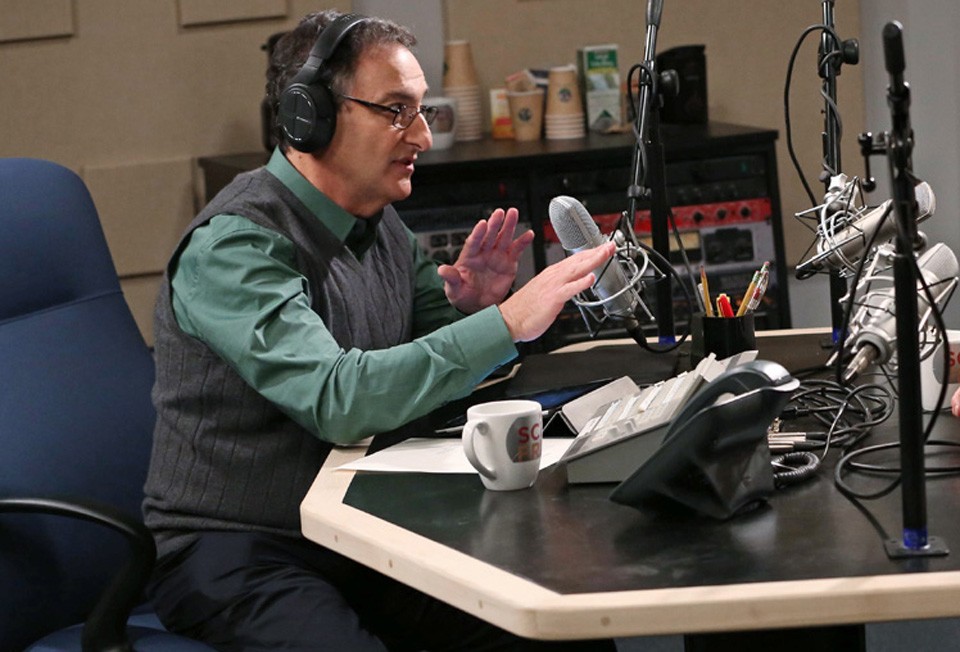
Photo by Michael Yarish
Be part of a live taping of Science Friday hosted by Ira Flatow Sept. 24, 2016 at 8 p.m. at the Mondavi Center, located at 1 Shields Ave. in Davis on the UC Davis campus. Tickets range from $12.50–$55 and can be purchased online at Mondaviarts.org. Learn more about Science Friday and the Science Friday Initiative at Sciencefriday.com.
A brand new free-form, community-based radio station set to hit the airwaves in Fall 2016 is looking for help to cover costs associated with broadcast expenses. KUTZ-FM, which will eventually be at 106.9 FM on the dial, was started by a group of KDVS (90.3 FM) UC Davis alumni along with local artists and community members who share a vision to “broadcast diverse music and public interest programming focused on content which is currently unavailable through other local media outlets,” according to a press release submitted to Submerge. The KUTZ team (who all volunteer their time, as the station is a non-profit organization) is looking to raise a modest $7,500 between July 18 and Aug. 31, 2016 of this year to cover transmitter and other equipment expenses, as well as various other costs associated with getting any organization off the ground. “KUTZ-FM is part of a grassroots movement that seeks to differentiate itself from the generic commercial programming that predominates our airwaves today,” they wrote, going on to say, “It supports the return to a more personable and community focused experience.” If this sounds like something you’d like to support (and it should be!) then visit Kutzfm.org and donate today.
When I was a kid, back in the ‘80s and on into the ‘90s, the movies I saturated myself with tended to utilize the tried-and-true plot device of the odd couple. Whether I was watching The Adventures of Milo and Otis, E.T., Who Framed Roger Rabbit or The Fox and the Hound, the theme was always the same: opposites attract. This formula, while cliché at times, has a tendency to warm those heart cockles.
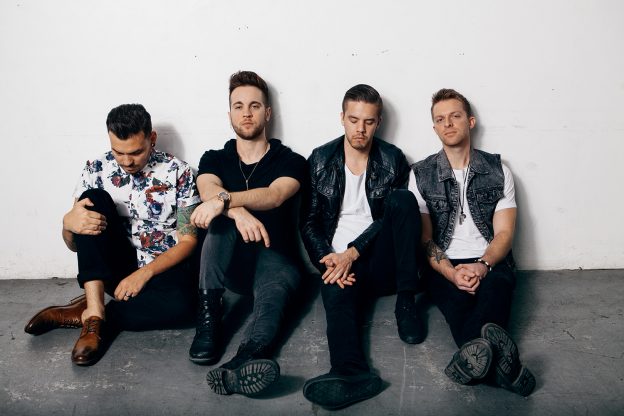
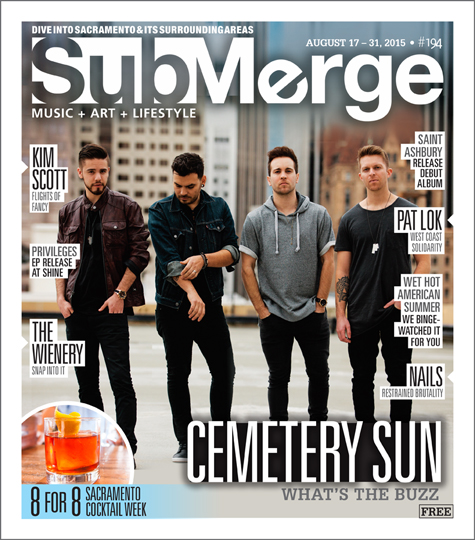
In the case of Sacramento-based project Cemetery Sun—who, according to the band’s bio, draw Influence from alternative rock, pop and R&B—key members Josh Doty, singer and songwriter, and Elliot Polokoff, guitarist and producer, fit the profile of an odd pair.
While both Doty and Polokoff have similar backgrounds as fans growing up in the local Sacramento music scene—despite Polokoff growing up in Walnut Creek—their paths to joining forces vastly differ. Whereas Doty experienced national recognition and success while still putting the finishing touches on his high school diploma, Polokoff was chipping away at a tech career, landing jobs at Google and Twitter in their marketing departments.
However, their mutual love of music and admiration for each other’s individual talent became the deciding factor in joining forces. At the time when Polokoff first became aware of Doty, he was spending his time working behind the scenes at a recording studio.
“I was producing a lot of bands working at The Panda Studios in Fremont, which is a pretty well-known studio,” recalls Polokoff. “I was looking for new bands to record and dabbling in my own material, and Josh’s name came across my radar … The short version [of how we met] I like to tell people is that I first recorded them and they had so much energy and we vibed together and I realized I wanted to join a band with Josh.”
According to his LinkedIn account, Polokoff boasts a B.A. in economics from U.C. Davis, was a Financial Advice intern for Merrill Lynch, and eventually found his way to marketing positions for Google and currently works as an Account Manager of Mid-Market Sales for Twitter.
Needless to say, the man keeps busy.
“I differ from the other guys [in the band] in that I had a different background,” says Polokoff. “Not only was I really into music, but I was really passionate about technology. So, aside from being in a band with Josh and pursuing Cemetery Sun, I also work in the tech field and work with great companies like Google and Twitter, and that definitely helps big time with us, because we are able to use a lot of the marketing knowledge that I have learned working for companies like that, and actually use that for our band.”
Doty, on the other hand, assumed the role of the teenage superstar. Unfortunately, the moment the band Ten After Two experienced during Doty’s tenure didn’t last, despite seeming poised to break into that oh-so-lucrative screamo/emo/metalcore music genre the teens just couldn’t seem to get enough of at the time. Armed with the skinniest of jeans, hairstyles reminiscent of a Mötley Crüe/Flock of Seagulls lovechild and enough eyeliner to … well, you get the picture. Doty sees the experience as having been educational.
“I fell flat on my face is what happened,” laughs Doty, “I think that’s the best way to describe it. Ten After Two was a ‘buzz band.’ Don’t get me wrong, a very talented group of guys, and luckily some of them are still making music, and hopefully they’ll be coming up here shortly. But that experience of being in high school, playing ‘battle of the bands’ type things, and then all of a sudden our song is getting a lot of publicity on fucking Myspace—I can’t believe I’m saying that. People were looking at us on there and blowing us up. Artery Foundation in Sacramento got a hold of us, and we were finishing up an EP. We were selling out shows everywhere, which was pretty unexpected; they ended up pitching us to Rise Records. I thought that was the best thing ever at 17, 18 years old. I was like, ‘holy shit’ … It was a mad ego boost for kids who did not need it. And then Rise was completely different than I thought.
“I thought once you sign, you had made it, you know? That’s the lie I feel is sold to so many artists, especially being younger,” Doty continues. “Looking back on that now, I take a completely different approach. I like the mindset of doing it yourself a lot more, and if I hadn’t gone through Ten After Two, and gone through the struggles we went through and quitting the band like I did because we were financially unstable, we were kids. I just couldn’t handle it; I just wasn’t ready to handle it. So, if hadn’t had gone through all of that, then I wouldn’t be able to handle what we are going through right now.”
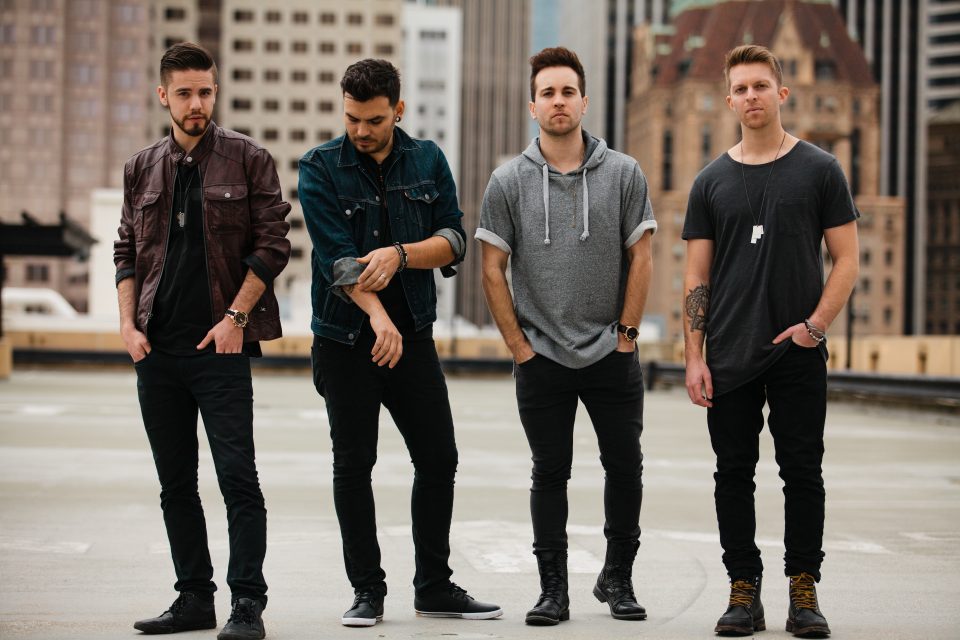
While Doty, as well as the other members of the band—Austen Butler (drums) and Jesse Mancillas (lead guitar)—each play key roles in Cemetery Sun, it’s hard not to recognize the X factor that is Elliot Polokoff. Whether it is his role as a producer, his contributions as a guitarist, or simply his expertise in marketing slipping through and helping the group reach a larger audience, he brings a lot to the project. Most of all, it is hard not to be impressed that he does that all while balancing a completely separate career in technology. Most of us would struggle to succeed in just one of those things.
“I think it takes a certain type of personality to do both, and it’s not for everyone,” Polokoff explains. “I say that pretty firmly, in that I’ll be doing work and doing assignments during the day, and then I’ll get a call from our management or I will get a call from our PR agency, and I will have to step out and take the call and it’s just about being able to separate your mind and switch to different things. But if you are as passionate about music and you’re as passionate about Cemetery Sun as I am, there is no reason that it won’t keep working the way it has.”
An East Bay resident growing up, Polokoff feels right at home amidst a group of locals, building a local scene while perfecting their sound and preparing to take the next step to reaching a much larger audience over the next few years. The reason for this may have something to do with where he spent much of his teenage years.
“I grew up in Walnut Creek, but believe it or not I have been a part of the Sacramento music scene for well over—man, this is going to make me sound old—between six and eight years,” Polokoff says. “When I was in high school, even in late middle school, I started going out to places like the Roseville Underground to check out bands like A Skylit Drive when they first started playing local shows, and Dance Gavin Dance … During that wave of the hard rock and screamo and emo scene in the mid-2000s, the Sacramento music scene just exploded. It was way better than anything we had up here (in Walnut Creek), it was better than San Francisco.”
Polokoff sees a rising tide on its way to town, and it seems he’s waxed his board and donned his wetsuit, ready to paddle out and ride when the time is right.
“The way I view it is, [Sacramento is] going through multiple ebbs and flows,” Polokoff explains. “I would say that right now is a period of really cool transition where people have been inundated with the metal sound … people are starting to look for something else. I think that’s why we, and a couple of other bands who like us, are a little bit different have been able to thrive in the last year, because we have been able to have luck with fans who are people that are ready for something new.”
If you’re ready for something new, check out Cemetery Sun at The Boardwalk in Orangevale on Sept. 5, 2015 for their EP release show. Also performing will be Once an Empire, If You Leave, Lost Things, A Foreign Affair and Altessa. Tickets are $10. Check out Theboardwalkpresents.com for more info. This is an all-ages show.
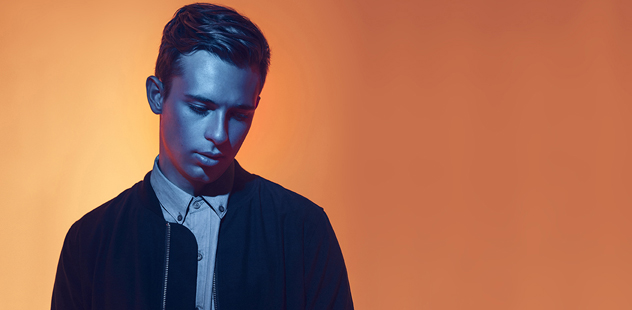
Fresh off a headlining gig at last year’s massive SnowGlobe Festival in South Lake Tahoe, Australian-based electronic musician and producer Flume is heading back to Northern California for a show at UC Davis’ ARC pavilion on Tuesday, May 19, 2015. Flume, born Harley Streten, makes atmospheric dance music and has toured/collaborated with the likes of Disclosure, Chet Faker, Ghostface Killah, Killer Mike and tons of others. This epic dance party will also feature sets from Haitian-born, Montreal-raised electronic musician, producer and DJ Kaytranada, as well as the English electronic music duo from London, AlunaGeorge. After this show, Flume goes on to play pretty much all of the biggest festivals in the world throughout the year (Sasquatch, Electric Daisy Carnival, FYF, etc), so don’t miss your chance to see this world-class DJ rock little ol’ Davis! A limited amount of tickets ($55 for upper level, $70 for lower level) are available at http://www.axs.com.
UC Davis alum Michael Ramstead finds himself in elite company in Elliott Fouts Gallery’s upcoming exhibit
UC Davis has consistently hired and/or trained some of the top American artists of the last half century.
Its proximity to the Bay Area and Greater Sacramento Area, both brimming with million-plus populations, galleries, museums, local artists and global visitors, allows the public to experience the art that has come out of this relatively small but renowned art department.
Elliott Fouts Gallery on P Street in Sacramento is taking advantage of the talent with its show An Eclectic Grouping, featuring select faculty and alumni. Among the renowned are professors emeriti and Bay Area Figurative Movement artists Roland Petersen, Manuel Neri and Wayne Thiebaud. Alumni—many of whom studied under the aforementioned—include Peter VandenBerge, whose sculptures have shown at the Crocker Museum, SFMOMA and the Smithsonian Institute; his daughter and sculptor Camille; sculptors Tony Natsoulas and Rene Martucci; and painter Vonn Sumner.
When 27-year-old Michael Ramstead received a request to join the show and round out this list, he didn’t realize he’d be the youngest of the group.
“That’s actually quite an honor, and I really appreciate the gallery reaching out to me and inviting me to show alongside these accomplished artists,” he says.
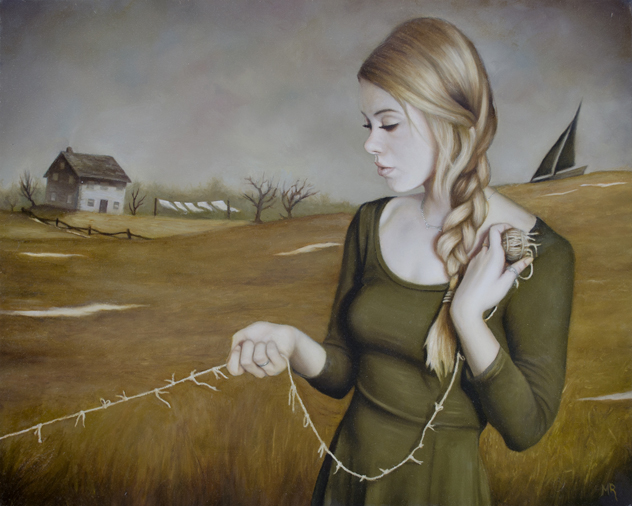
{Ariadne}
The invite isn’t really a stretch once Ramstead’s work is placed with the others. The Long Beach, California resident and 2010 graduate of the UC Davis Art Studio focuses on pop surrealism, portraiture and lowbrow illustrations that reflect his generation just as the Figurative masters reflected theirs in the ‘50s and ‘60s.
Ramstead fell in love with painting in his senior year of high school when he was exposed to more illustrative artists at that time.
“Usually you think of modern art as more interpretive and weird,” he says. “I’ve been more influenced with cartoons and video games and seeing fine artists use those as inspiration…it’s a more illustrative style than I’ve ever seen. I’m really glad this type of art has become more popular over the years.”
Some of these artists included Mark Ryden, James Jean, Alex Gross, Shaun Tan and photographers/installation artists Nicholas Kahn and Richard Selesnick.
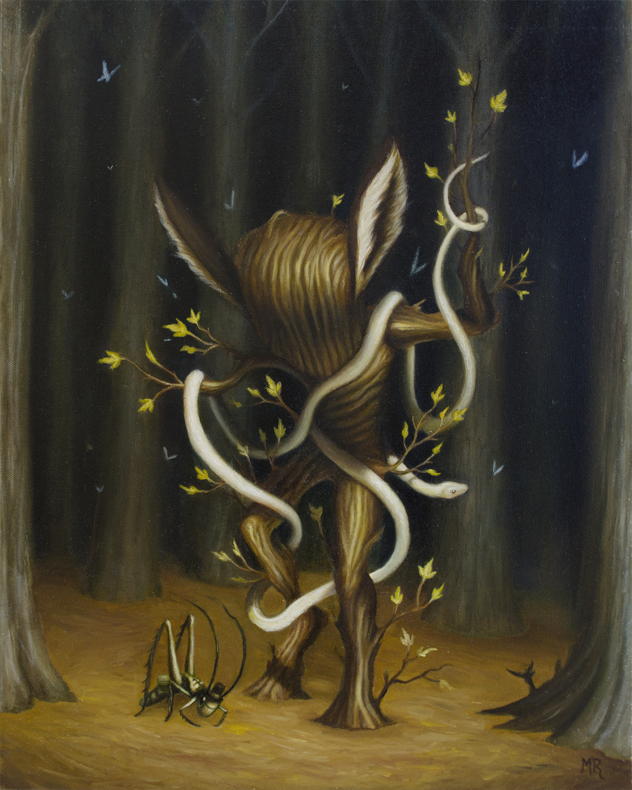
{Woodenboy and the Serpent}
Ramstead says he wants his fine art—the oil paintings—to reflect more of his skill and himself as an artist, while his illustrations are more of a quick expression of his feelings.
“I take in a lot of pop culture, movies and music and they mean a lot to me, and these illustrations are a fast way to get that out,” he says. “It’s still me, but it’s a quick way of saying, ‘hey I like this.’”
Examples of the illustrations are definitely more prominent across Ramstead’s social media, as he’s another in a quickly growing line of young artists who has embraced platforms like Instagram, Tumblr and Twitter to share and sell art.
His influences and thus his connection to his fans have become better established through these means. So basically, if you’re feverishly texting your friends about Wes Anderson, Taylor Swift, ‘90s cartoons, podcasts, manga and anything else pop culture, Ramstead is doing the same, but also expressing his thoughts about it all in intricate sketches and humorous caricatures.
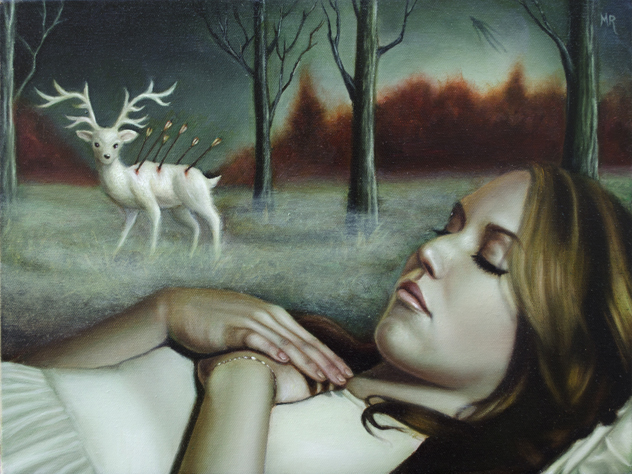
{The White Hart}
“One thing that got me into drawing was horror movies,” he explains. “I did a challenge for myself and watched a horror movie every day in the month of October and did an illustration based off of it. I became a fan of the more cartoon-y ones.”
These, and some very sweet illustrations in the same vein but with romance movies, can be found on Ramstead’s website (Michaelramstead.com) and social media pages.
“I’ve been able to connect with people like directors and singers who say they like my interpretation and it’s really cool to see that,” he says. “There are a lot of galleries right now that are focusing on pop culture art as well.”
For example, Ramstead has painted scenes from movies like True Grit and Rushmore for showings at Spoke Art Gallery in San Francisco.
His lifelike fine art also has a similar but more intricate inspiration.
“For a while the inspiration for the paintings has been different stories based on the paranormal, folklore, Greek mythology, horror movies and horror stories,” he says, which is noticeable in most of the paintings but not always in the foreground. Sometimes a portrait of a young woman looking scared or disturbed at the viewer might have a creature’s shadow or skeleton lurking in the background.
“Mythology is pulling ahead as a major influence right now. But I’m trying to put it in a specific era or time period that stylistically I’ve always been drawn to.”
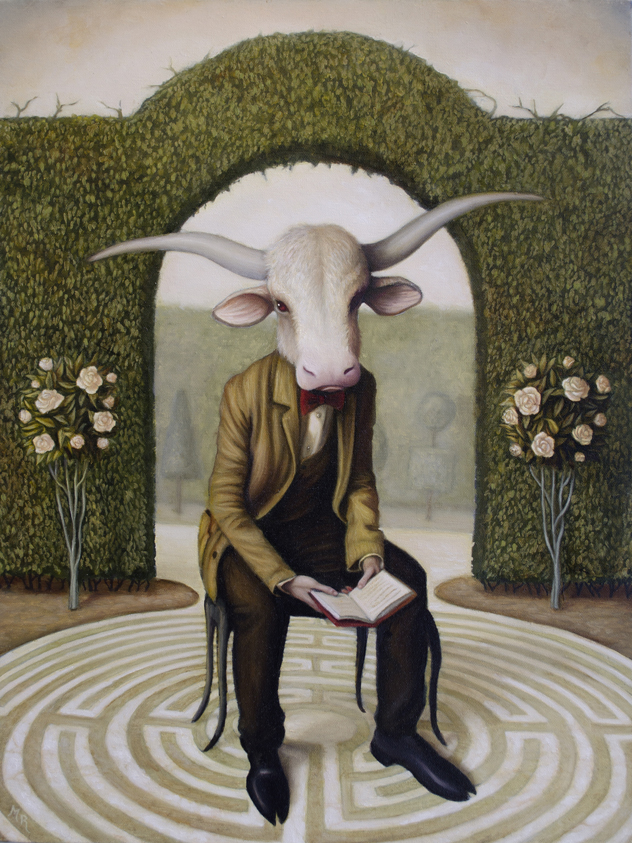
{The Minotaur}
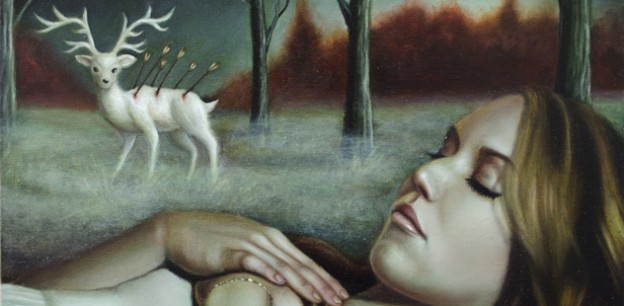
The paintings he is referring to include Ariadne, Chione, Centaur and others, that portray women or bodies that look contemporary but match the myth in subtle scenic ways.
Many of his paintings portray women. Part of that, he says, is aesthetics—because he finds women beautiful—but the other part he thinks may be more psychological as he has always been drawn toward heroines in stories.
For the Elliott Fouts Gallery show, which runs Feb. 7 to March 5, 2015, Ramstead has three paintings: Lamplight, Phone Call and The White Hart, all of which portray women.
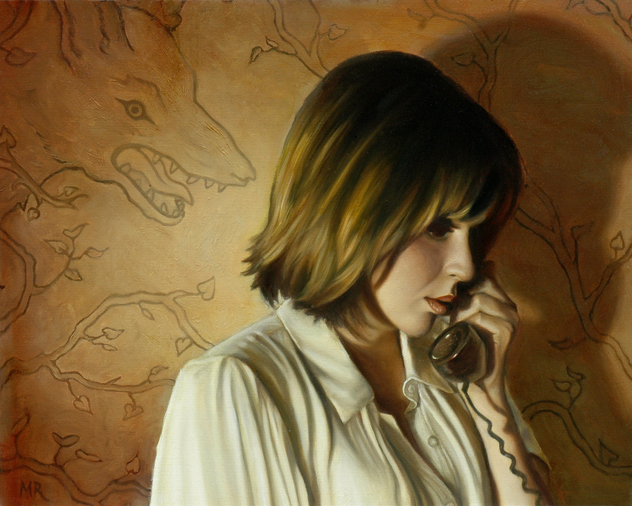
{Phone Call}
“These three paintings came out of a time when I was shifting the focus of my work from a more fantastical and cartoonish style and subject matter to more realistic portraiture,” he says. “I was consistently impressed by artists who were able to capture the human form so well and that’s the challenge I set my sights on.”
Ramstead adds that this style allowed him to hone his technical abilities. He wanted to hold on to his more fantastical elements, but also ground his figures in the real world to a certain extent.
“In these, mood is more important than any one specific narrative, though I hope there’s enough there for people to be able to create a story of their own in their minds,” he says.
Take a look for yourself starting Feb. 7 at the gallery on 1831 P Street.
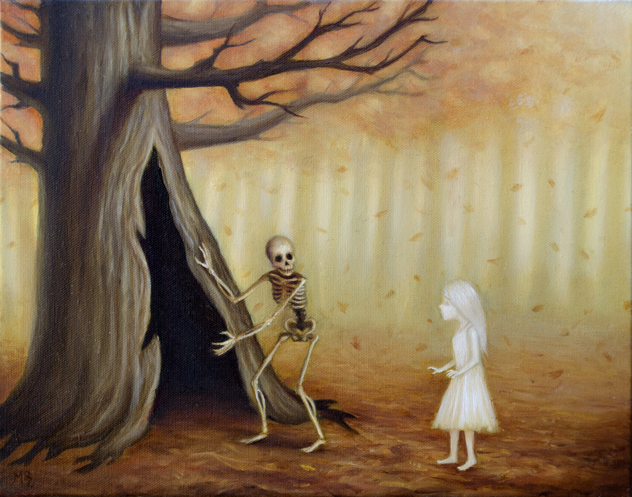
{The Way Down}
Elliott Fouts Gallery’s hours of operation are Tuesday through Friday, 11 a.m. to 6 p.m., and Saturday and Sunday, 11 a.m. to 4 p.m. The gallery is closed on Mondays. For more information on this and other exhibits, go to Efgallery.com.