Physics is hard. Quantum physics is even more difficult. Quantum physics is the study of the extremely small and the weird things that seem to happen when things get that tiny. The field has many theories to explain how the universe works at the sub-atomic level, but not all have been tested.
Part of the problem with physics is that physicists want to measure everything. For a long time, they happily occupied themselves with that, until Niels Bohr came along and crushed all the bean counters. To solve a problem in quantum physics, Niels theorized that not all things can be measured with certainty; so, for those un-measurable things, there can only be probabilities that the measurement will come out a certain way.
If that sounds confusing as hell, it’s because it is. Hugh Everett also thought Niels Bohr’s idea lacked a certain amount of panache, so he came up with his own in 1957. As an alternative to Bohr’s theory, Everett hypothesized that when an event has different possible outcomes, the universe branches and each outcome plays out in a parallel universe. Those different universes are all part of the one multiverse, which grows with each new possibility.
It’s called the Many-Worlds Interpretation and I can see your eyes starting to glaze over already, so I will cut to the chase. Every time you make a decision, the you in the universe next door goes another route and suffers the consequences/reaps the rewards of that move. That means that in one universe, the perfect version of you is handling shit like a pro, while in another, the worst possible version of you is on the loose, fucking everything up.
So which one are you? Are you the good one or the rotten, no good, worthless son of a bitch version of yourself in this universe? If you are the asshole, you can at least take solace in knowing that you aren’t alone. This world certainly has its share of shitheads who seem to have drawn the multi-dimensional short stick.
Take Donald Trump, for example. Seriously, do any other universes out there need another Donald Trump? Sure, he is wealthy and famous, but does that really change the fact that he is a complete and total douchebag? What does he have to offer to this world besides a shitty attitude, a bad haircut and gold-covered everything? Our Donald Trump is a blathering, mindless, self-promoting orangutan and he got that way through the decisions he’s made.
I bet the best Donald Trump in the multiverse is also rich, except that it’s because he is a doctor, a veterinarian, an entomologist and a retired soldier. He probably runs a homeless shelter that offers free vet care and healthcare for veterans. I bet he also invented a cure for malaria and a cheap portable water purification system for use in third world countries and during disasters and he gives both away for free! I’m sure he has a lush head of red hair and is married to a woman of modest looks and means. He’s probably declined requests to run for president more times than he can remember because he simply detests the spotlight.
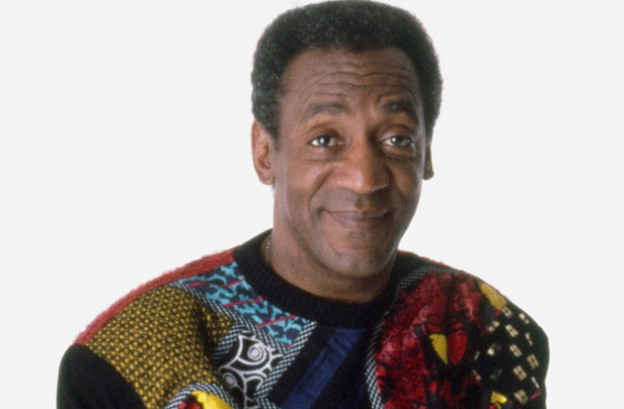
Speaking of the spotlight-weary, I used to think we had the best possible Bill Cosby in the multiverse when I was growing up. The Cosby Show was the shit, his stand-up had me dying and Fat Albert was my jam. Hell, I even liked Jell-O Pudding Pops. Now I find out Bill Cosby has been spending the last few decades dipping his pudding pop into women he’s drugged! He continues to deny it, but the allegations are piling up. Methinks our Bill ain’t the best.
The best Bill Cosby in the multiverse would be largely the same I bet, only without all the rapey bits. He’d still be funny as hell, but he wouldn’t roofie women that catch his eye. In fact, he probably uses his influence to help women with their careers. He’s been monogamous with his wife, Clair Huxtable since the early 80’s and they have five lovely children named, Sondra, Denise, Theo, Vanessa and Rudy.
Our versions of Donald Trump and Bill Cosby are deeply flawed, but they don’t have to be. In a different universe they may both be upstanding members of the community and pillars of their respective societies. We can thank quantum physics and Hugh Everett’s Many-Worlds Interpretation for giving us hope that better versions of these awful people exist, even if it’s in universes running parallel to our own. Maybe someday physicists will find a way to peer into these other universes so that we can see these great versions of terrible people. Or maybe our Donald Trump and Bill Cosby can save us the time and money and just stop being assholes.
-Bocephus Chigger
bocephus@submergemag.com
Felipe Esparza tickles the charity bone
Words by Adam Saake
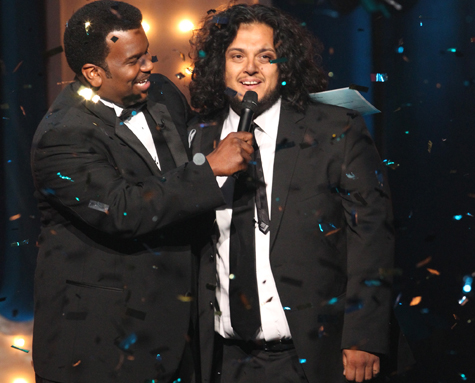
Most of the time you get 20 minutes. Maybe. Celebrities are busy people with complicated agendas that their publicists keep moving like a well-oiled machine. This was not the case with this past season’s winner of Last Comic Standing, Felipe Esparza. On the dot, I ran out of questions at the 20-minute mark and began to end our interview.
“You could ask me what I’m going to do with the money,” said Esparza, offering me more for us to talk about while also pointing out that I had forgotten to ask an obvious question.
Esparza was calling from Los Angeles, where he lives and where Last Comic Standing had been filmed. Esparza beat out Tommy Johnagin and Roy Wood, Jr. in the top three to become season seven’s winner and the lucky recipient of $250,000. It’s easy for me to fantasize about what I’d do with that much money (I’d piss it away on a cellar full of first growth Bordeaux and a safari to Italy to track down Monica Bellucci), but after hearing Esparza tell me a story about Paul Rodriguez’s Ferrari I wasn’t quite sure what he was going to do with it all.
“I’m going to donate it,” says Esparza proudly. “Not all of it. Some of it.”
One of the charities rehabilitates gang bangers and outcasts and helps them find jobs, another is an alcohol treatment center and the third is really a big middle finger to the World Wide Web of Esparza-haters.
“There’s been a lot people talking bad about me on the Internet. Saying, why do I talk like this, ‘I don’t understand his accent,’” says Esparza. “Well I got something for them, too. I’m donating money to a speech impairment school in my neighborhood.”
Esparza jokes about being a deadbeat dad, being the last on his block to screw the neighborhood slut and even throws in jokes that are borderline corny.
“The guy who wrote the song, ‘The Hokey Pokey’ passed away,” starts Esparza. “During his funeral they couldn’t close his casket because every time they put his left foot in, he put his right foot out.”
OK, that’s just plain corny. But something about him and his unique brand of esoteric one-liners won over the judges and the voters during those 10 weeks of competition. When I asked Esparza if winning was a big break, he wasn’t so quick to rattle off movie deals and HBO specials he’s got lined up. He’s still on the grind like a lot of comedians, and what comes next is new territory.
“I never made it that far,” jokes Espraza.
Did you have to audition for Last Comic Standing?
For Last Comic Standing I had to audition. I didn’t wait in line this year so someone must have put in a good word for me this time.
So you’ve auditioned in the past?
Yeah, and I sucked.
I didn’t see you, because you weren’t on those shows.
No, you never noticed me.
You touch yourself in this very strange way while you’re on stage. Almost like you’re trying to pinch your own nipple. Is this a weird tick you’ve developed along the way?
I think every comedian looks for something to hold on to. Some comedians, they lean on the microphone stand. Some comics sit down and others just stand still. I just walk around. I used to wear big coats, and I always closed it over me and tried to hide, because I was so scared of being on stage. And I was just trying to cover myself up like if I had a cape. And little by little I stopped holding my coat and pushing it over me. Because it looks weird. Then I just forgot about it, and now I pretend to hold a coat or something. It’s a habit I guess, I can’t get rid of it.
Normally your delivery is very laid-back and the timed structure of the show seems like it might have been a challenge for you. Did you have to adapt?
I had to adapt, because I only had two-and-a-half or three minutes to wrap it up. We had to submit three minutes of material, no more, no less. I tried to go for the strongest jokes. I have a lot of one-liners, so it was hard for me to do a story because I don’t have so many long jokes. The only long joke I have is [whispers], “I want cereal.” That took a big chance, that one and the last joke I did at the finale, “Now I know you can keep a secret.” There was a risk I took. I did those jokes at the end, because if I had done those jokes at the beginning, I probably would have lost my timing. It was hard to come up with fast jokes. Then the audience. The audience would clap at everything that Tommy and I were saying. They will applause break “hello.” I had to time the audience. I would do the setup and they’d laugh at the setup. Whoa, hold on. The joke’s not even there yet. Like, I said this joke; I said, “The restaurant that’s parked in front of my house…” That got a big ass applause break. And then the punch line was, “…got robbed after I paid.” Some of the comics, I don’t know if they were used to the crowd cheering for them so loud. It was bothering their timing a lot. Me, I was just riding the flow.
Were you writing new material along the way to pepper in with some of the older bits?
A lot of the jokes that I said in the beginning of the competition were new bits. Like the one about the new law in Arizona. I say, “That law sounds scary, but if I get deported I’m going to say the same thing I say when I get kicked out of a club. ‘But sir, I was already in there. My friends are all in there. They’re still holding my credit card.’” That was a new joke; it was only like a month old. “I want cereal” was like a year old.
Were you always a jackass growing up, or did you make your way into comedy through other channels?
Ever since my friend Jackie Escalara invited me over to his house. See, I lived in the housing projects but across the street, not even 100 feet away, was a regular neighborhood. Across the street in a regular house was my friend, Jackie Escalara. He introduced me to Bill Cosby on a little Fisher-Price record player. I listened to that whole bit, about “me and my brother Russell.” The one where Bill Cosby is talking about him and his brother fighting all night. And from then on, I said, man this is funny. I memorized the album. It’s weird how when you’re a kid, when you really love something, you remember it–unlike math and English. You forget that shit when you get home. I wanted to be a comedian from then on.

Were there any Latino comedians who influenced your style and that you looked up to?
I think I like Paul Rodriguez and George Carlin the best. And Richard Pryor. I think my top three are Paul Rodriguez first, Rodney Dangerfield second and George Carlin third. If those three guys had a baby, it would be me looking like Mitch Hedburg but speaking Spanish.
I don’t want to think about the three of them having a baby, at all.
I know huh? It would be crazy. Drinking wine like George Carlin, riding in a Nova with hubcaps and smoking crack in the back! I love Paul Rodriguez because he has different material all the time, and he’s always talking shit about somebody. It’s hilarious. Like I remember Carlos Mencia was on stage preaching. Like he always does now, preaching about how much money he made. He was saying he made a million dollars. But, when we were in the parking lot–there were a bunch of comedians hanging out in our group, and Paul Rodriguez has a Ferrari man. A Ferrari Testarossa. One with a clear fiberglass and you can see the engine in the back. He revs that shit up! I mean loud! He looks at Carlos Mencia and says, “Hey Carlos, next year maybe you should make three million dollars!” And takes off on Sunset.
What are you going to do next? Where are you headed?
I want to continue. I’m going to do the 65-city tour first and foremost with the other four comics. Mike Destefano, Mike Hugh, Roy Woods Jr. and Tommy Johnagin. Four of the strongest comics I ever had to compete with in my life, in comedy. I have a movie that I did with Paul Rodriguez called I Am Not Like That No More, and we’re going to shop that around. And also I’m going to be honored by the city of Los Angeles for being a local hero.
Who did you rescue?
Nobody.
Are you getting a Purple Heart?
[Laughs] You’re the first person to ask me a funny question. That’s funny.
Felipe Esparza will perform at The Crest Theatre on Sept. 9. Tickets start at $25. For more on the show and Felipe Esparza, go to www.felipesworld.com.
Dane Cook’s Art of Hustle
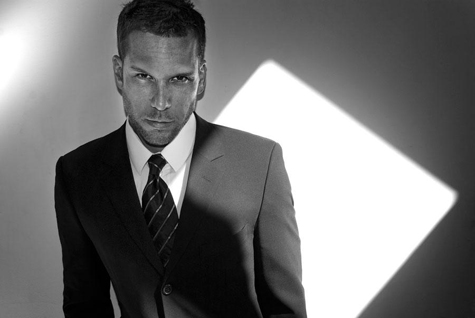
Dane Cook has reached the kind of stardom usually reserved for rock stars. It’s a height that most stand-up comedians never achieve, though not for lack of trying. However, it’s the sort of success that hasn’t come without its pitfalls.
Though Cook’s name has become ubiquitous in comedy circles, it wasn’t that long ago that he was a comic like many others, trying to figure out the best way to reach people. In the late ’90s, he began using the Internet as a tool to spread the word, and as it turned out, that word spread like wildfire.
“I really looked at it as a way to create a grassroots following,” Cook says about his first forays into using the Internet as a promotional tool. “You’re talking about 1998 that I started spending a lot more time on the computer. At that time, I was watching a lot of documentary stuff on bands in the ’70s and how certain bands took over. What I was really learning from it was the hustle factor of, like, getting flyers and what it means to paper the town”¦ The next thing you know, I’m sitting online, saying, ‘OK, if I create a Web site and add links to my comedy, maybe I can start reaching out to people.'”
Back then, the use of newfangled gadgetry as opposed to pounding the pavement may have made purists sneer with disdain. However, “Maintaining purity”—whatever that means—is not one of Cook’s main concerns. What he cares most about is putting his content in the hands of those who want it.
“I don’t really know what purist means,” Cook says. “I think it’s like the language of our country; it’s ever evolving. People say, ‘Oh, the way we speak now isn’t as articulate [as it used to be],’ but you know, the language we spoke when we first landed on Plymouth Rock was an abridged version of Old English. It’s an ever-changing thing.”
Those familiar with Cook’s work know that he’s taken the same non-traditionalist slant to his stand-up. Manic, absurd, perhaps downright goofy—Cook has run the gamut with his comedy, never lingering on a particular style. This is something the comedian takes great pride in.
“I talk to comedy—quote, unquote—purists, and I say that I don’t know what pure comedy is,” Cook explains. “Are you talking about standing still and delivering one line? Because Jack Benny may have done it one way—some guy holds a violin and the next guy does slapstick. I always seem to find the other side of whatever the purist’s conversation is.”
Maybe it’s his willingness not to take the traditional route most comedians have taken, or perhaps it’s the level of fame he’s acquired, but Cook has become a controversial figure not only amongst stand-up fans, but also amongst his fellow comics. Nevertheless, he’s still packing arenas all across the country. The latest leg of his world tour, Isolated Incident Global Thermo Comedy Tour has just kicked off in Las Vegas. The tour is in support of his most recent comedy album, Isolated Incident, his fifth, which was released in May 2009. Cook says he wanted the album, which he calls “a bit of an homage to Steve Martin’s Wild and Crazy Guy,” to be a sort of push and pull between dark and light.
“I wanted it to be like, track one would be maybe something about my family, vulnerability, something really sweet, and then I wanted it to go to something really dark and vulgar, maybe sexual, and then I wanted it to go back to something about my pop,” Cook says, though he adds that the final product was a bit different than he had originally intended. Still the ups and downs of his rise to fame and the tumult of his personal life shine through Isolated Incident.
“I found that was my life for three years: dark, light,” he says. “Success: I’m on Letterman. The next day, boom, cancer, my mom just got sicker. Or, ‘I’m in Time Magazine, 100 most influential, how great is that? Who would’ve thought I would ever be in that.’ And the next day, it’s like, ‘These people are starting a rumor about you. They’re saying that you steal.’ How do you deal with the constant blow by blow? And that’s really what I wanted the whole album to have. I wanted it to make you laugh, but I wanted it to be light and heavy.”
The remainder of the tour will take Cook out on the road until a New Year’s Eve show in his hometown of Boston, where he will celebrate his 20th year of stand-up. Hate if you want to, but don’t be surprised if Cook keeps laughing anyway.
I watched the Isolated Incident special that aired on Comedy Central on Youtube. Someone had posted it up there. Coming up on the Internet, now that you’re established, does that sort of thing bother you at all?
It’s just another channel airing your content. It’s another way for people to discover you and have an opinion. This is the tricky—there’s a lot of layers to this conversation, because there’s money involved. The question becomes, OK, is it financially hurting artists? I don’t think that there is a right way, or just one manageable way, to have this conversation, because someone on the other side is going to say it’s hurting the artists, but at the same time, I’ve seen a lot of independent artists who may have not had the airtime, so to speak, if they didn’t have such a strong Internet crowd passing their stuff around. There’s value in all of it. The key really becomes, “What do I want from it?” If that’s the question that you’re asking, I’d rather have fans enjoy something than keep it to myself and feel that it’s only for sale”¦ Someone from a highly regarded band might say, “Oh, I’m losing millions of dollars.” And I understand that, but I think that it’s a great source for passing around material”¦ This is the way people share content. When you were a kid, you gave a cassette to your friend and you’d say, “Listen to this. It’s called Guns N’ Roses. There’s a song on there called ‘Mr. Brownstone,’ and I think it’s about drugs,” and 10 people are listening to it. The next thing you know, Guns N’ Roses is the biggest band in the nation. Maybe that ripple effect is from a couple of kids passing around a cassette.
Your latest comedy album, Isolated Incident, certainly seemed like a different side of you. You had to deal with the death of your parents a little while back”¦
A lot of my comedy over the years was outward, in: observational or absurdist or something physical that I saw that I could recreate and share. Isolated”¦ was the first time I was impacted so deeply in my heart by tragedy, that I realized, “OK, I’m not going to go around it, because then I’m a phony.” I’ve never had anything that heavy happen to me, to that extent. I had my dark periods when I was a kid—some family stuff like anybody that was pretty brutal—but for the most part, my comedy was about joy. There was a lightness, and even the twisted dark shit in there was almost from an optimistic slant. So, here it is; I experience these two years of hardcore, traumatic situations with my family, and I realized as it informed my stand-up that a lot of people had been through cancer and a lot of people had been through these backlash moments in their lives. I thought I would approach that, and this might be a great chance also to put the camera down in one place, confine myself to a smaller stage—less about movement and more about language—and let that camera, with its stillness, look right at my eyes. I can’t move around too much, because, you know, the eyes are the window to the soul, and I wanted people to see that pain and how I came above it and found humor even in the darkest spots”¦ This was an isolated incident in my life. You’ll never again lose both your folks to cancer; you’ll never again have your star rise as high as it did and also have the backlash and the innuendo. No matter how many times the roller coaster ride will go up and down during the course of a career, it will never happen for the first time again”¦ It informed my comedy, and I feel really fortunate that when I read the e-mails after it [the Isolated Incident special for Comedy Central] aired, a lot of those kids who were coming drunk to my college shows 15 years ago were saying things like, “Hey, I felt like you were talking to me 15 years ago, and I feel like you’re talking to me now.” It sounds weird to say now, coming up on 20 years [of performing stand-up comedy] that I feel like I’ve grown up with a generation of fans, and it’s probably the last great gift that my mom and dad could’ve given me in an impossible time to say that, “You know what, Dane? It’s OK to change and to mature a bit.” I can still be silly or off-the-wall and vulgar; I can still be pensive. I can still bring all those things to my stand-up, but I never brought vulnerability. It’s a good place to be.
The one bit I liked from the special was when you were talking about finding your mom’s number in your cell phone’s address book, which is such a uniquely modern dilemma. How did you go from that moment to eventually be able to find the humor in it and turn it into a joke for your act?
For a situation like that, it really came to me so simply. I had my mom and my dad’s number in my book there, a year after I lost them both, and it was this weird moment that I was looking down at the phone and I was”¦just having this conversation with myself: Is it OK to delete them? Those numbers”¦there’s nobody there anymore”¦ It just occurred to me, “What if I called it? What could happen?” And suddenly I’m laughing to myself over this silly little conversation that I’m having with myself, and then of course, like most things that I think of that I think are funny, I say to myself, “I bet a lot of people might understand this.” I bet there are a lot of people who have lost somebody special and don’t know what to do in that moment, and it’s hard and heavy and sad.
It’s such a simple joke. I remember somebody saying to me, “It could have gone so many different directions. Why didn’t you build on it this way or that way?” It was almost like this person was saying that they were let down by an opportunity to turn this into an extravagant bit. And I was like, no, that’s the simple beauty of it. It’s just a moment we all have, and what if she answered? That’s what I said to myself, and that’s what made me laugh and feel lighter, and that’s what people—most people—appreciate about that joke. It’s a timeless joke, if I can toot my own horn. A hundred years from now, somebody’s going to hear that, and whatever form of communication we’re using, we’re always going to lose somebody, and there’s always going to be somebody’s time to let go.
You mentioned the backlash against you, and not only did you have to hear it from fans, but also from your peers. How does it feel to get that sort of backlash from your peers? Does that affect the way you go about your business?
It’s a little bit of a mixed bag. There’s a lot of innuendo, and there’s a lot of stuff that people put up on the bathroom wall that’s just myth. Haters are vocal; we all know that. The people who blog negativity aren’t sitting there in their three-piece suits with a smile on their face, enjoying their lovely lives. People who are relatively happy don’t carry an axe around waiting to bury it in somebody’s back. But that goes with the industry. I understand that that’s the dog eat dog mentality, and also from my peers, comedians are some of the most fragile and fascinating people I know—and very competitive”¦ So you look at a guy like me, who shot to this new level—or new, old level, not since like a Steve Martin or Dice—and you realize these are the guys who are going to try to take my legs out from under me. They’re going to be the ones who are going to say a lot of shit, and you know what? I’m not going to fight back”¦ History will unfold the way it’s supposed to, and I will continue to keep on doing what I do, which is listen to the fans. On the other side of that, I’ll say that when you do talk about my peers, the people who I could talk about with you are wonderful and reach out to me. Chris Rock has called me and said some of the most incredible things, and I admire him. I had lunch with Steve Martin, my hero, about three weeks ago. I’ve sat with Bill Cosby and talked for 45 minutes”¦and he said some incredible things about my stand-up, and I could go on. So, my peers, the ones who I admire, have reached out, and they’ve been very supportive. Eddie Murphy sat next to me at my Good Luck Chuck premier. I don’t know Eddie Murphy; I’d never met him. He just showed up at my movie, and in the darkness of my movie, about 10 feet away from me on the other side of the aisle, I heard [imitates Eddie Murphy’s laugh]”¦ I heard fucking Eddie Murphy laughing at me. So if you want to talk about people who are talking crap about me, or how I feel about that, bro, I heard Eddie Murphy laughing at me. Whoever these minions are who want to picket me or be envious, let them. If that’s what got me to where I’m getting, that I can sit next to Eddie Murphy or Chris Rock or have lunch with Steve Martin or Bill Cosby, I’ll take the hits.