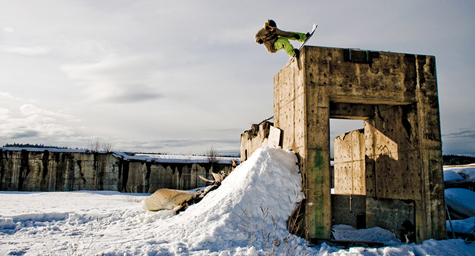
Snowboard Film The Art of Flight Documents The Sport Like Never Before
For the action sports junkie, the recent release of the snowboard film The Art of Flight was something to freak out about. From Red Bull Media House, in association with Brain Farm Digital Cinema, the film follows superstar snowboarder Travis Rice and a heavy-hitting crew of equally talented associates including Mark Landvik, John Jackson, Scotty Lago, Nicolas Müller, Jeremy Jones and others around the world over a two-year period. It’s easily the most hyped film in the genre ever, boasting a massive budget (undisclosed, but easily into the millions) and insane camera technology capturing the world’s best riders conquering the most extreme terrain on the planet. It’s true: The Art of Flight is for snowboarding’s core fans, the guys and girls who call in sick to work on powder days and dream of chartered heli-ski trips in Alaska. But it’s also for anyone who enjoys beautiful cinematography, serene shots of awe-inspiring and otherworldly landscapes and a glimpse at some wildlife as well. Basically, it’s the gnarliest snowboarding ever mixed with shots that would make producers at Discovery Channel or National Geographic say, “I want that.”
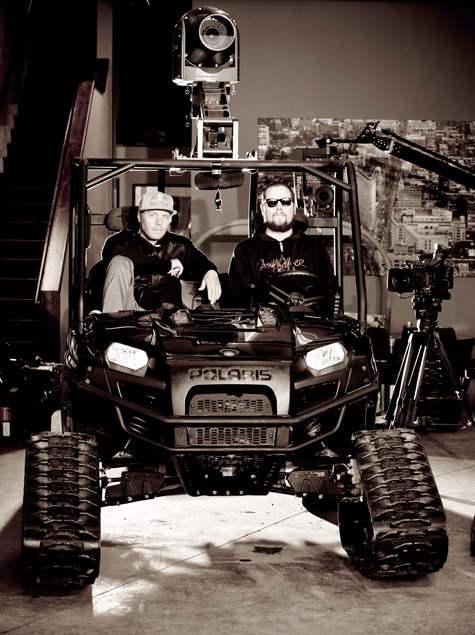
Travis Rice with film-maker Curtis Morgan | Photo: Stan Evans/Red Bull Content Pool
A quick search on YouTube for The Art of Flight’s official trailer will reveal that it’s been viewed upwards of 4 million times. Clearly, the film is catching the attention of the masses. Much of that is due to the unique, ultra-high-definition look of the film achieved by using state-of-the-art digital cinema and film equipment that producer/director Curt Morgan and his team at Brain Farm brought to the table. During the two-year filming project, which took them to places such as Chile, Alaska, Canada, Patagonia, Romania, Wyoming, Austria and others, the team used their Cineflex V14 and Phantom HD Gold cameras, among a bevy of others, to capture the sport of snowboarding in a manner previously unseen. The Cineflex, which can be mounted on a helicopter, snowmobile, ATV (pictured above), etc., relies on a highly accurate gyro-stabilization system (also used by the military and police) to provide amazing accuracy, sharpness and stability. The Cineflex has so much power, in fact, its use is controlled by International Traffic in Arms Regulations, which required that Brain Farm register it with the State Department. How gangster is that? The Phantom rig, on the other hand, is how they get mind-numbingly slow motion shots, as the camera is able to select any frame rate from 1 to 1,000 frames per second in increments of one frame per second at full HD resolution. In less nerdy terms, you can take a four-second clip of action and slow it down so much it’ll take four minutes to get through it. It’s simply stunning to see the level of tricks these riders are doing in such detail, slowed down and in full HD. It’s stunning to see anything in that much detail, as a matter of fact, and marketers all over are taking notice. Brain Farm’s impressive arsenal of equipment and overall knack for badass filmmaking has landed them some big-time gigs working on projects for companies like Visa and Suburu, even the U.S. Marines.
In 2008, Brain Farm and Travis Rice collaborated on what was up until now the greatest snowboarding movie ever called That’s It, That’s All. You may recall that we covered TITA right here in the pages of Submerge (“Out With the Old,” issue no. 20). All those years ago we asked Travis Rice, “You are all about progression, you have pushed the sport in new ways your whole career. After That’s It, That’s All, what the hell could be next for Travis Rice?” His response? “Oh, it’s in the works, man. In 2010 we’re going to shit all over this project. No, ever since we basically had our first premiere of this film we’ve been working on a new project. I guess That’s It, That’s All isn’t exactly the greatest title for following it up.” While Rice was off by one year, he was indeed correct in saying that The Art of Flight would shit all over TITA, because it surely has. With the level of riding being leaps and bounds better than what’s found in TITA, the over-the-top and insanely expensive equipment upgrades used to capture it and another bangin’ soundtrack, The Art of Flight is on track to become the greatest action sports movie of all time. That is, until Brain Farm makes their next one.
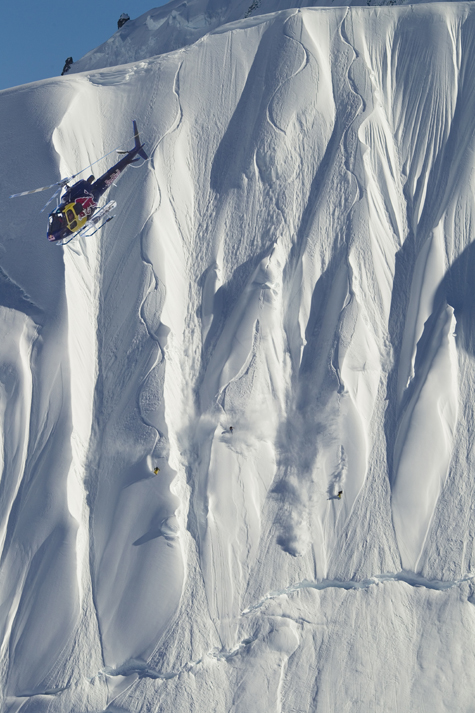
John Jackson, Travis Rice and Mark Landvik in action in Alaska | Photo: ©Scott Serfas/Red Bull Content Pool
The Art of Flight’s world premiere was Sept. 7 in New York City. The film is now available through iTunes and select retail locations. Northern Californians have a few opportunities to catch the film and meet Travis Rice and others on the following dates: Sept. 18 at the Resort at Squaw Creek in Olympic Village, Calif.; Sept. 19 at MontBleu Resort in South Lake Tahoe, Nev.; Sept. 20 at Crest Theatre in Sacramento, Calif.; and Nov. 3 at the Palace of Fine Arts in San Francisco. To view the film’s two official trailers and to purchase tickets to any of the screenings, visit Artofflightmovie.com.
In celebration of the many upcoming Northern California screenings of The Art of Flight, Submerge recently caught up with two-time Rider of the Year John Jackson via telephone as the dreadlocked snow celeb cruised a sparkling gold Sebring convertible from Los Angeles to Tahoe. Read on to learn about his month spent filming for The Art of Flight with Travis Rice and the Brain Farm crew in Alaska.
Tell me about your decision to film with Rice and crew last year in Alaska. Was it a no-brainer?
I’m so glad I went on this trip. I was kind of up and down with it. Like, obviously I wanted to film with those guys. That was my main goal even though at the time it wasn’t really the main goal of all my other sponsors. It’s a tough thing, because for me that was what I wanted to do and what I think was the most valuable. But, you know, you’ve got to keep the sponsors happy. It was something where I had to decide, “Man, I’m just going to do this.” And Alaska is such a gamble. You can go up there and get nothing, you know, get shut down with weather the whole time but still have to pay all your minimums.
So you decide to go and meet up with the crew. What was your next move?
So, the game plan was, and all this really weighed a lot on my decision. I’m like, man, going out with Travis Rice, Mark Landvik and the whole Brain Farm crew to a new mountain range that not too many people have explored, it’s called the Tordrillo Mountain Range, just the whole idea behind this trip was right up my alley. We were taking this floatplane, a beaver plane, landing on the glacier and going out to this unexplored mountain range totally off the grid. That’s just what I love to do.
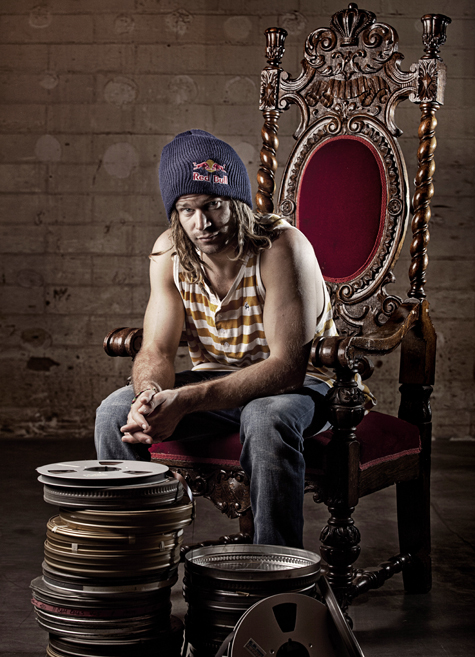
John Jackson / Photo: ©Nicholas Schrunk/Red Bull Content Pool
The Tordrillo range is 60 or 70 miles from any big city, so you’re way out there, right?
Yeah, it’s west of Anchorage. You’re off the grid. When we first got out there, there were no phones, no Internet, no nothing. You’re just like cabin fever out there with your crew. But it’s cool. I love trips like that because you really bond with everyone you’re with. It becomes kind of like family for that month, and it’s really sad leaving after it’s over. But it was just the trip of a lifetime. It wasn’t my expectation, but it was my, “In a perfect world” situation. I’ve never got Alaska good like that, and seeing these new lines and new features and first descents, it was like Willy Wonka land up there, just freaking huge pillow lines and spine runs and anything you can imagine. I like the idea of being camped out away from everyone in this lodge.
I read there was satellite access and private baths and cozy beds and shit?
Yeah [laughs], it’s not necessarily roughnecking it up there. But it was so fun, I’d load up the shotgun with a bunch of slugs and go down river and try and go fly fish any broken spots of the river I could. Kept the slugs for the grizzlies. We saw a lot of grizzlies.
You guys were set up pretty nice as far as living situation goes! So you head out in the heli or beaver plane on good days and at the end of the day you’re coming back to the warm lodge, right?
Yeah. A lot of times out there, especially in the beginning of the trip, the weather had a tendency to clear in the afternoon so you had to be careful. You couldn’t wake up and be like, “Aw, another shitty day, let’s make Bloody Marys,” you know, because it would totally clear. And there’s nothing worse than having a good opportunity and messing it up because of something stupid like being all drunk or something.
You’ve spent time in Alaska filming before, mainly in Valdez. How does the Tordrillo range compare?
I guess the terrain has more variety. Valdez to me is more like big, consistent lines that are some heavy big-mountain riding. I think that Tordrillo has a little bit more variety to it. You can build jumps, a lot of spines, a lot of pillow lines. Pillow lines are awesome!
I look at you and Travis Rice as the ultimate backcountry-meets-freestyle ambassadors. What did you learn from Rice during this filming project and do you think he learned anything from you?
You learn so much watching other people ride, and it’s rad to watch Trav. There’s all kinds of different ways to ride a line, or scrub speed, or control yourself at a critical point. So yeah, I definitely critique everything I watch of him, and yeah he said some similar stuff to me. I think you do that with everyone. You totally gain knowledge from watching someone ride, that’s why it’s fun to ride with other people. But you do it with yourself too, everything you hit you kind of relate that to something you’ve hit in the past and be like, “OK I remember I needed this much speed,” it’s all experience and that’s just kind of how it goes.

John Jackson in action at Alyeska Resort, Alaska Photo: ©Scott Serfas/Red Bull Content Pool
I read somewhere that one of your favorite parts of filming The Art of Flight was shooting a propane tank with a .50 cal! Must have been a pretty big boom.
That was pretty cool being up in Alaska, you know, guns are your friend. They had it all planned out. We had like three propane tanks or something. We’d shoot it with the .50 cal, and we got the craziest shot of one of them. So you shoot it with the .50 cal, it’ll pierce the thing and make it like a rocket ship and then immediately after you have someone set up with a twelve gauge with flares. Immediately after you shoot the .50 cal, the flare goes off and then it explodes. We got one shot where you see the propane tank in there air like a freakin’…you ever take Piccolo Petes fireworks and crimp the end of them with some vice grips? I used to do this when I was young, and then I’d light them up and they turn into like a rocket.
So this was a giant version of that, basically?
Yeah, totally! Just like rocketing and you never know which way it’s going to go. But this one in particular, we got all slow motion with the Phantom HD so it’s all up in the air doing circles and then here comes the flare and bam, just explodes the thing!
I bet that will make the final cut in some form or another.
I’m sure, yeah. They’re going to have a lot of good wildlife shots, obviously a lot of good scenery, mental snowboarding and just some crazy activities.
What do you mean by “mental snowboarding?” Do you mean scoping out your runs and looking at topographic maps and stuff?
I mean it in every which way, yeah. A lot of planning and just things that shouldn’t have been done, you know, like, “that shit was mental!”
CLICK HERE to read an extended version of this Q&A where John Jackson talks about an unnamed upcoming film project with Red Bull, rehabbing his injured knee, his new “resort” home north of Truckee, Calif. and much more.
Our current issue (No. 93) features an exclusive interview with two-time snowboarder of the year John Jackson in celebration of the many upcoming Northern California screenings of the groundbreaking film The Art of Flight, in which he is featured. The following questions were selected from our hour-long talk with one of the hottest snowboarders in the world. Space constraints didn’t allow for all of it to make it to the magazine. Read on to learn about an unnamed film project with Red Bull that Jackson dreamt up, what he is doing to rehab his injured knee, what he knows about Travis Rice’s upcoming contest called Supernatural, and his new “resort” home north of Truckee, Calif.
You and Travis Rice go way back, right? You used to compete in the same comps and stuff?
Yeah, I think I remember the first time I met Rice. We were both super young competing in the USSA regional or something, I think it was at Mammoth. [Laughs] We were both competing in the half-pipe contest.
That’s funny how all these years later and you guys are collaborating on probably the most highly anticipated action sports film ever.
It’s pretty crazy. I know man, it’s such a heartbreaker that I was hurt this year, but I’m just really stoked I went on that trip with them last year at least. And there’s a lot of opportunity in the future…
When did you hurt your knee?
My knee injury happened in December of 2010. I was going to film a good two-and-a-half months with them [Brain Farm] this season, the 2011 season. Then I hurt my knee doing something stupid just messing around. It’s always stupid things.
Were you even snowboarding or were you doing something else?
It was snowboarding, but it was messing around on a blizzard day in an icy park, just playing around. It was windy, couldn’t see well. I overshot this jump and landed flat. I land flat so often, you know, my knees have always been really strong. It was just the way I landed, so square on my board, I just felt it pop. It was so weird. It’s my right knee, so my back leg, the one taking most of the pressure…
That must have been pretty rough. You seem like a guy who knows how to keep his head up, though. How did you keep a positive outlook through all of that?
I kind of new something extreme was wrong. I was trying to be positive, like, “OK, it might be good, it might be good.” I gave it some time, I went down south, got an MRI and as soon as the doctor told me the news I went straight to the bar at like 2 o’clock in the afternoon. I had to get that out of the way, that was the one time I did that. Then I was like, “Alright, I’m getting better and it’s going to be all good. Shit happens.” And then you just got to look at it positive. It’s all about the rehab, and I’ve been working on it like a motherfucker, so I feel like my body is going to be stronger than it ever has been when it comes back.
How is your physical therapy going? What sort of exercises and routines do your therapists have you doing to strengthen your knee?
Man, I’ve been pretty militant with it. All kinds of stuff. I’ve been going to therapy for in between five to six hours a day like three to four times a week, sometimes five times a week. Not all of that is heavy workout, you know, I spend a lot of time stretching, a lot of time working the muscles out on the foam roller or with my therapist…
Los Angeles is where all your therapists and doctors are?
Yeah, I have therapists in Truckee as well. But I really like coming down here. I just went to Red Bull and worked with their trainers today for the first time, and they’ve got such a good program, like all technical, you know? They’re taking blood like every 12 minutes on the bike and figuring out your lactate and judging your heart rate and just figuring out what kind of machine, or, basically what kind of engine is under the hood of your body.
What a trip!
It’s so trippy. It’s nuts.
If I would guess any company would have a program like that, it would be Red Bull. They take good care of their athletes, huh?
They are out of control. I’m so stoked and fortunate to be a part of it. They just have every resource imaginable. They take care of their investments and look at it like it’s not just an investment, it’s good relationships.
It sounds like the knee strength is coming back. So come this January you’ll be ready to be filming again?
They say I’m still a little vulnerable at that point, because I didn’t get surgery until March 1. I was just really trying to do a lot of therapy in between, and I spent January in Jackson Hole hanging out with the crew. Most of January, you know, so I could chill with them. I wanted to jump my sled off some shit. I had to do something.
Do you have any cool trips or projects lined up for this coming year that you can talk about?
Yeah, I’m going to film with, you know, a “company” project. Then I wrote up this project for Red Bull, an idea I’ve had for a while, and I presented it to them. I’m pretty sure it just got the green light. So it’s kind of cool.
Oh, really? What can you tell me about it?
I want to make a really, really passionate project that kind of combines surf aspects and snowboard aspects and has a lot of different views of expertise on the sports. Basically what I’m trying to do is get some sort of bus or van or something, trick it all out, make it run off veggie, or propane or something clean. Then I want to drive from Alaska to Chile, or Argentina. Start in April, have a bunch of heli trips lined up and there will be key characters involved. Hopefully a surfer will be on for the long haul, but I’ve been talking to a lot of people who are going to come in and out. Rice, Ian Walsh the big wave surfer. It’s kind of cool, because it’s more of just this journey that’s going to show, you know…Fuck, I don’t know how much I should be talking about this…
It sounds like there is an amazing film in the works then?
Yeah, it’s going to start I think next April. Basically it’s really going to show what’s behind everything and the personalities of the people and how kids can relate. Not all kids can relate to a professional snowboarder, the tricks they do and whatnot. Snowboard videos these days, besides The Art of Flight, a lot of them are almost like snowboard porn, you know, just gnarly trick after gnarly trick. So for this I want to be, like, the surfers are going to be in the heli coming up on this peak going, “Holy shit, are we really going to land there?” You’ll see the excitement from a different point of view, you know? Same thing with like, I want to bring my brother [Eric Jackson, also a professional snowboarder] in on this trip. You’re going to have us going down to these huge waves and being like, “Should we paddle out? Lets do it!” and maybe getting worked, but having so much fun, you know?
That’s cool to put each other in a different element.
Yeah, it’s cool. I want to focus on a couple different things with it, like the science of the seasonal change, get kind of National Geographic on it. And I want to do a lot of giving back, too, helping people out along the way. Line up orphanages to go work with, or schools, and have tons of products to give away. We’ll ship stuff down for different points we stop and just stoke kids out, you know, get a following going. We’ve got a few pretty cool ideas of filming it, which could be interesting. It could be a fun project.
So that’s kind of your baby? Your brainchild, if you will? How long have you been thinking about this?
I love road trips, I love traveling and I love people. I love everything about it, I love to explore. I have so much passion for it. So I’ve been thinking about it for a good year. And I wrote up this whole story, just kind of ideas and they’re [Red Bull] backing it. So hopefully it goes through and it’s good. I mean I don’t have time to really get all the…I want to get hopefully the gnarliest shots I can get, because that’s really my baby is pushing my snowboarding. With limited time it’s hard, you know, that’s why these guys [Brain Farm] take two years to film their project. You’ve got to budget in bad weather and bad snow and it just doesn’t go as planned all the time. Either way, it’ll be a really good eye opener I think for a lot of different things. It will have a lot of emotion involved in it.
Sounds unique, like a cool change of pace.
Yeah, exactly, trying to do something totally unique. And then hopefully I’m going to have, you know, some snowboard porn to go in there too.
Switching gears a bit, someone from Red Bull Media House told us that Travis Rice is up at Baldface Lodge in Canada building for his Supernatural contest that will happen there this winter. What do you know about that?
Basically this is his idea of a contest, saying “fuck you” to building jumps and the idea of having a set path to go on. It’s all done in the backcountry. He picks out an epic face, and there will be a window of time when you wait for good snow, good weather, then you go shred natural terrain. That’s why it’s called Supernatural. And what he’s doing, though, he’s like building stuff right now. He’s drawn up a bunch of plans. They’re actually building structures out there on this mountain face, so that when it snows, it builds up, you know? It’s going to be nuts! It would blow your mind if you saw the drawings that he was working on!
Have you seen any of The Art of Flight besides the two trailers that are out? Or are you looking forward to seeing the full film as much as the rest of the world?
Nah, you’re seeing as much as I have. This is so fresh. And for me, because I was hurt all year, I almost like forgot I went to Alaska with all those guys. So I’m remembering that trip and definitely still wish I could have filmed with those guys this year, but there’s nothing you can do about it now.
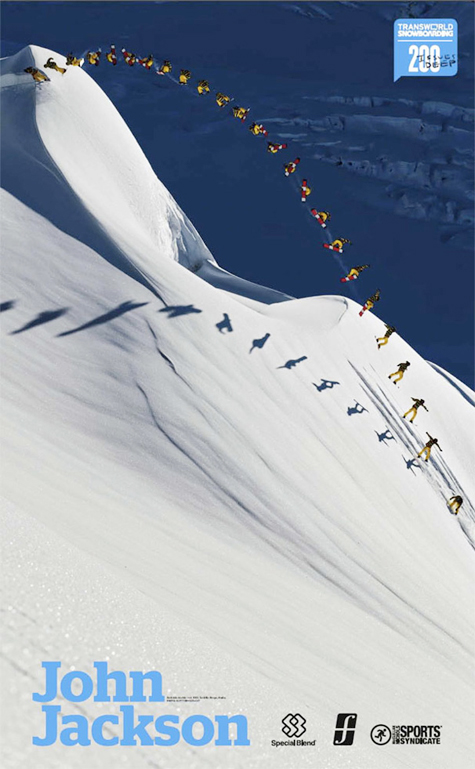
Still looks like you got some good footage though, like for example that huge gap that Rice hit on the cover of Transworld Snowboarding’s 200th issue! And you got the inside poster foldout shot on that gap, too. That was during that trip, right?
Yeah, that was during that trip.
Tell me about that gap. Was that something you scoped out for a long time?
Yeah, we saw it from the heli. We were like, “There could be a jump over there,” and we kind of overlooked it. Then coming back we were like, “Oh, that actually could be something.” Then you know, we’d go down and check it. And toward the end of the trip, after we’d gotten quite a few big lines, we’d be like, “We need to find some jumps.” So there was two jumps right next to each other, actually. That was like the thing that I wanted to hit. And Trav wanted to hit this one next door that was like off this face into just a perfect flat gully, into the widest landing you could imagine. You could put like three jumps on it. There wasn’t any set way to go. But anyways, the guide didn’t want us to hit it, because there was a cornice above and if the slope ripped or it slid… and it was over a crevice as well.
Yeah, the crevice below you in the photo looks pretty huge.
Yeah both jumps were over crevices, but the other one had a cornice above it too, so if something slides and you’re building a jump, there’s nowhere to go. Everyone’s dead.
Talk about a nightmare, you’d have nowhere to go!
You’ll get pushed right into the crevice and then buried on top of it. And then you’re in there with the fossils.
So the guide was like, “No way!” to the gap with the obstacles overhead?
We kind of talked him into it. He was like, “We’ll go out and drop some charges on the cornice and see if anything slides.” They dropped the first charge, explosion, little piece falls off, nothing slides. Then they’re going to the next cornice and just the vibration and the sound from the heli and the wind as it approached dropped the cornice and the whole face slid down to the rocks and filled in the entire thing. Our guide was like, “I told you so. Hell no.” So we went and hit the other one and it was so rad. It definitely took a little mountain manipulation, shape shifting, getting the run-in dialed in.
How long does it usually take to get these huge gaps and jumps set up?
It depends on the feature. It can take days. This one wasn’t too bad. We actually cleared it up, fixed it up, built it and then it snowed and we had to re-do the whole thing. But it was such a good day when we hit that. We didn’t have much time to hit it, so we were kind of under pressure at the end of the day. We hit it in the afternoon, rode some great lines in the morning. That’s another point I forgot to bring up, which actually works in our favor, how the days sometimes clear up in the afternoon, because the sun is so high, it’ll bake snow on the points that get sun when it’s high noon. Those facing slopes will be just totally screwed, so you have to hit north-facing slopes, which only get sun in the evenings and first morning, otherwise everything is baked. So we’d have to strategize kind of what we were going to hit and only get the north-facing stuff.
So those shots were later in the day?
Yeah, that was evening. That was the last part of the day. And then Trav went up and did the back flip that was in first teaser.
That gap looks sick, though. I can see how it was on your hit-list.
Yeah, there are certain things that are really valuable…and you’re like, “Oh man, we got to take the time and hit this thing proper,” and sometimes you’ve got to just go for it and you don’t have all the time in the world. You’re always under the gun. It was awesome though. That was a good day hitting that thing. You’re going over just a straight black hole in the air.
Well and doing a double-inverted trick over the gap you get to see that black emptiness twice!
[Laughs] Yeah!
Tell me about this goal of yours to do a back flip on a snowmobile. Because there’s a crazy shot of you in The Art of Flight’s trailer where you are like upside down 30 feet in the air, bailing from a snowmobile…
I just love snowmobiling. I’m not like, “I’ve got to do this!” But yeah I was feeling confident in it. I had a blown knee, and I had to do something, so I Googled it a bunch of times and figured I had it. I still feel like I got it. I just need to make some adjustments.
So that shot in the trailer where you’re bailing, you’re hurt right there?
Yeah that was when I had a blown knee [laughs].
Was the landing soft?
It was pretty powder-y, but this was after those guys had sessioned the shit out of it. I’m not going to track up anything fresh. I don’t know. I went way, way too big. If I would’ve committed, the thing probably would have come around, but my sled landed dead flat.It was so weird being that high in the air without my snowboard on… just full-on freestyle walking. It was all like, you learn how to act on instinct. You just do it. I don’t know, it’s just programmed. I pushed my sled away, I was so high up and my sled was doing a back flip and obviously I wanted to watch out for my head, so I tucked into like a front flip off of it, then opened up and landed pretty good on my feet. It was pretty insane, yeah, but my sled was all good, I wanted to try it again. Everyone was like, “Please don’t.” Like our photographer, Danny Zapalac, who is so funny, that guy is awesome, I love that guy. He’s got a really good heart. He was like, “Dude, please don’t ever scare me like that again. Please.”
Wasn’t Curt [Morgan, director/producer] and everyone like, “Yeah, you got this!” and egging you on?
Well, Curt always wants to see something gnarly. I was planning on doing it. I Googled it for like three days before that, you know?
I read somewhere you make music? What sort of stuff are you into?
Yeah I love, love music, man. Music is the best high; it’s just so fun, man. I’ve been playing a lot of guitar. I got my brother into guitar, and he’s getting really good really quick. And I’ve been jamming the bongo a lot and the djembe. It’s fun. We travel around with all our stuff. We’re tapping into more banjos and mandolins and just getting a good mix. My two sisters play too, so having like a family band is awesome. We’re not that good or anything, but it’s just fun. I love making music.
Do you write your own songs and shit? Or just covers of stuff?
I do a lot of like just, mumbling, you know. I love to just freestyle it and just make up songs as I go. But I have been starting to write a couple things and eventually I will more. When you don’t have much time, anytime I can play I just want to jam, you know, and not be in the homework stage trying to learn something. But I should. I need to do that.
You just bought a house out in the cuts, right? What made you decide to purchase where you did? Where is it, like north of Truckee somewhere, right?
It feels like it’s in the cuts, but it’s really close to everything, so it’s the best of both worlds. It’s in Verdi, right outside Reno, between Truckee and Reno. Right on the border, you know, fuck Cali I’m getting in Nevada. I’m going to buy guns and shit…
So your address is technically Nevada?
It’s Nevada, all the way. I’d been looking at buying a place for a long time, and I just really wanted to get into Nevada and out of Cali. I’m right on the border, still got everything I love around me, all my friends. Right there on the Truckee river… Oh man, if you ever come that way you got to come to my house, and we’ll fish. There’s awesome fishing right there.
Sounds like a resort getaway!
It’s crazy. There’s a tennis court and b-ball hoop and I don’t even do that shit. I’ve been asked recently if I play tennis. It’s so weird. I’ll be in the airport, and I don’t know if it’s just because I wear crazy gear and have dreads or something, but people are like, “Do you play tennis?” and I’m like, “No, but I have a tennis court” [laughs].
Well congrats on the home purchase. When did you buy it?
Thanks, man. I’m so blessed. It’s like the perfect bill that just fell into my lap. I bought it at the beginning of this year, and I really haven’t spent much time there at all.
Do you have roommates? Are any of them in the same line of work as you?
Yeah I’ve got like three roommates. One of them is Daniel Ek, he rides for Forum too. He’s awesome, love that kid. He has a really good heart. For instance, there’s a bar downstairs in the house that was completely empty. I went down to get surgery and when I came home he had left to go back to Norway. I go downstairs and the bar is just completely dialed, like with 25 bottles! Danny Boy just styled it out. It was all like Red Bulls in the bottom, so styled, I just started laughing.
Most of the time roommates drink all your booze, not stock you up!
Yeah that’ll happen, too. Usually with the Coors Lights.
Catch John Jackson and Travis Rice in The Art of Flight along with other heavy-hitters like Mark Landvik, Nicolas Muller, Scotty Lago, Jeremy Jones and more! Visit Artofflightmovie.com for more details and to view the film’s two official trailers. Follow John Jackson on Twiiter @johnjamun.
Big-mountain snowboarding legend Jeremy Jones leaves snowmobiles and helicopters behind, opts to hike his lines instead
Truckee, Calif.-based professional snowboarder Jeremy Jones is changing the way the world looks at big-mountain riding. For years, Jones had been riding and filming in zones that can only be accessed via helicopters and snowmobiles, but all that changed when he decided to leave the motorized help behind (for the most part–there were some plane trips involved). He opted instead to venture into the mountains on foot in search of untouched terrain for his newest movie, Deeper, in conjunction with O’Neill and Teton Gravity Research. The documentary-esque film puts viewers in the athletes’ boots as Jones and a crew of the world’s top freeriders, including Travis Rice, Xavier De Le Rue, Josh Dirksen, Ryland Bell, Jonaven Moore, Forest Shearer and more, venture into the unknown in locations like Alaska, Antarctica, Europe, Utah and right here in California’s Sierra Nevadas. These men (more like machines) endure a multitude of extremes, including all-night hikes up their chosen lines, sleeping on top of peaks to hit said run at first light, camping on a glacier 65 miles from civilization for weeks on end, 20-below temperatures, 10-day snow storms and 20 mile days. “I’ve been snowboarding 25 years, and I don’t think that I’ve ever learned more and evolved more in a two-year period than these last two years,” Jones recently shared with Submerge from his home. “And it’s years 24 and 25! That pretty much sums up why snowboarding is such an amazing sport.”
Most of the evolution Jones speaks of came in his mountaineering skills; to simply call Jones a snowboarder would be a crime. The sheer magnitude of hiking, climbing and camping he is doing is on a whole other level than any other snowboarder or skier has ever achieved. Deeper was shot over two years and Jones says the progression, learning curve and overall dedication from the crew was drastically different from year one to year two. “For example, an early wake-up on the first year would be 5:30 a.m.,” Jones said of their morning hike start-times. “The second year was 2:30 a.m., you know, just realizing what it really takes to get the big lines.”
In the following interview, Jones chats with us about Deeper, hints at his plans for filming with Travis Rice this year as well as his rumored follow-ups to the film, and he even offers up advice for those looking to get out and explore the backcountry in the Lake Tahoe region.
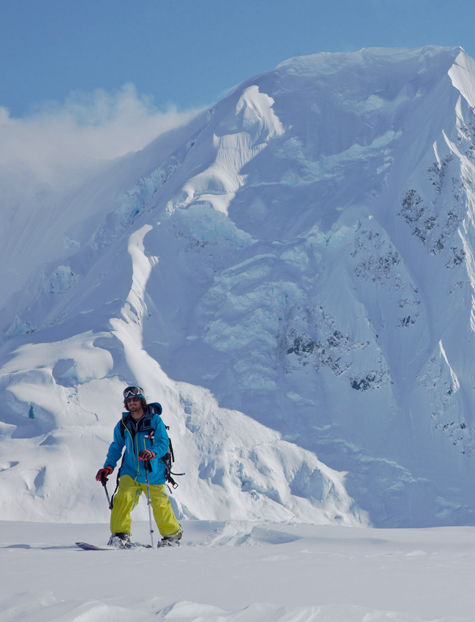
One of the first questions that came to mind when I watched Deeper was how many times you said, “I’ve never done anything like this before,” during the filming of this movie. That is pretty much what this movie is all about, isn’t it? The trek into the unknown…
Yeah, and I came up with that line, “A snowboard adventure into the unknown,” because every day, every trip, we were like, “Well let’s go see what we’re going to find out there and figure out how to do it.” It seemed like right up ‘til the end I was doing stuff I’d never done before. It was classic, because the last Deeper trip was in the High Sierra, and it was kind of a wind-down trip. We had a cameraman with us, but we were just like, “We’ll see how it is,” which is how a lot of these trips are. But it was funny because we were back home in spring, a pretty mellow deal compared to what we’d been dealing with, and right up until the last morning of filming I’m like doing stuff I’d never done before. It was endless the amount of times I said, “Never done that before!” What changed going into the mountains two years ago from how we go into the mountains now, it’s so drastic.
Fifteen years filming, 45-plus movie parts and you end up in a tent waiting out a 10-day storm on a glacier in Alaska 60-plus miles from any “town.” How rough was that? Had you ever been through anything like that before?
Well, it’s funny because I’ve been going to Alaska for five to eight weeks a year for 16 years and I had never seen a storm last that long and be that intense for that long. I was with Tom Burt also, who’s done even more time in Alaska, and we were just like, “There’s just no way it’s going to keep going. It’s got to end sometime.”
So every day you tell yourself, “It’s got to end sometime,” but at what point did you start asking yourself if you were crazy?
You know, day eight, day nine, day 10, you start going, “Was this a good idea? Is this feasible? Maybe we shouldn’t be doing this.” Then out of nowhere… It’s amazing, for how much weather forecasting that we have, it still comes down to, “Wake up and see.” In Cali, it’s way easier to predict… Then on day 12 we wake up, and it’s perfectly clear and then it’s on and after your first run you forget about the last 12 days.
On trips like that one where you’ve sort of rounded up a select crew and talked them into something so extreme: camping on a glacier, hiking massive faces, etc., do you feel responsible for them the whole time?
I don’t in the sense of like, if they get stuck in a tent for 10 days, then whatever, it’s part of the game. I do if someone ends up getting in a big avalanche or something, then for sure. But that trip, it’s funny because we went out thinking we were going to be out for five to 10 days, and then it turned into a 26-day trip. We realized once we got out there, “You know what, this is really hard.” It takes a whole day to move, there’s no going back into town for a storm and coming back out. We needed to live it.

When you’re standing on top of a line that you’ve been studying for weeks, maybe even months, and that you just hiked up with your own two feet, what’s going through your head right before you drop in?
It’s pretty much all joy. There’s total confidence, because at that point you’re standing on a line that you’ve looked at for so long and the fact that you were able to climb it, you’re super confident that the snow is safe. You know exactly where you’re going to go. Like the last line, “The Wall of Walls,” that I hit at the end of the second Alaska segment, I could look at that from my tent door. I had skinned underneath it. I had hiked and looked at it from every angle imaginable, I probably mind-surfed the thing a thousand times; when it was all said and done I probably stared at that thing for 40 hours. And then I’m on the top of pretty much the biggest line of my life, and it’s got full exposure and I don’t even need to look at a photo of this thing. I’m thinking, “I know every inch of this thing.”
In the Chamonix, France, segment there’s one line you guys end up stepping away from after multiple attempts, Aiguille Blanche de Peuterey. Is that something on your hit list still? When can fans expect to see you take that one down?
That thing is so rare to be in form, and we spent two weeks on it in prime season, made three attempts on it in a 10-year cycle. It hadn’t been that good in 10 years, and we came up short. And you know, those three attempts were full-on three-day attempts each of them; camping, hiking, all sorts of riffs going on getting to it. If the stars align perfectly and I’m back in Chamonix and the thing’s in form, then yeah, that thing will go down. I really have to plan a trip around it, because that stuff goes down at like middle to end of May. That one may not come back. It’s a very dirty line, there’s so much secondary exposure, and in general I really try and avoid that much secondary.
Switching gears a little, you’re big on sustainability and protecting the environment. Is it important to you to spread the message that splitboarding is a great way to get out and explore the backcountry without motorized help?
First and foremost that message is really important for people to realize that freeriding doesn’t require a huge wallet. There’s not a huge price tag. You know, 1 percent of snowboarders can afford to go to Alaska and go heli’ing.
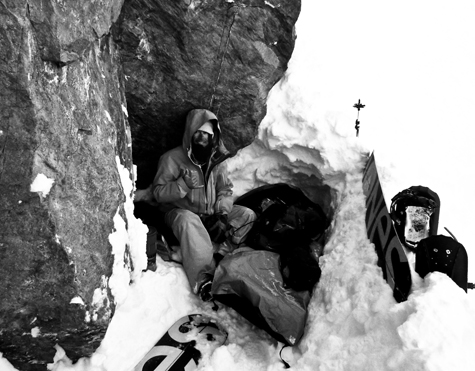
There’s a reason why we don’t ever really reference the environment in Deeper, because there’s a carbon footprint to that movie. It’s a lot smaller than other movies. It’s a sensitive subject, but the thing I can take away from Deeper is that people come out of it inspired, they want to get into the mountains, hopefully they get into the mountains and learn to love the mountains, and then they hopefully protect the mountains. That’s a really simple deal there; it’s also really powerful. That’s the thing, it’s more showing people, “Hey you can go freeride, it doesn’t matter how much money you have.”
Most of our readers are in the greater Sacramento area, so for someone who is new to splitboarding and/or backcountry riding and hiking, where would you suggest to start out? Are there intermediate spots?
Yeah, Mt. Rose! Or closer to you guys is ASI [Alpine Skills International], you know, Donner Summit. But the thing is, with this area, people need to realize that this is like one of the best places in the world. We get often times more snow than any place in the world, and we traditionally have the safest snow pack in the world, which is amazing. You need to get up to speed and stuff, but you can get up to speed a lot quicker in California than you can in say Colorado or Utah as far as like learning when the good days are.
Yeah, like the general rule in Cali is we have the “five red flags,” and one of the red flags is “90 percent of avalanches happen during or within 24 hours of a storm.” And with the 24 hour settlement rule, if you watch the Sierra Avalanche Center’s website with a daily forecast that goes live at 7 a.m. every morning, you’ll see it snow like 12 feet, then have one sunny day, and during that big storm the avalanche stability might be “extreme” or “high” or whatever, it’s dangerous. But just one day of sun and then you are dealing with low avalanche probabilities. Every day they issue a report if it’s low, moderate, considerable, high or extreme. Eighty percent of the time it’s low in California.
Which is just awesome for someone who is looking to get out and explore!
Yeah! The sled zones make up about 3 percent of the Sierra, so to really get out there you’ve got to do it on foot.
That’s such a crazy figure to me! The possibilities are endless for you now. When is the last time you hopped in a heli to hit a line?
It’s been two years.
When is the next time you see yourself hopping in a heli to hit a line?
I do have a trip with Travis Rice [for his newest project, Flight]. I’m still on the fence if I’m going to do it. But, you know, if special things like that come along…
It’s almost like you can’t say no to that.
I’m having a hard time saying no to it. But as far as like going back to my traditional program, those days are definitely over–as far as if I’m putting together on a trip, I’m not putting together heli trips. That’s a pretty unique opportunity in snowboarding, and it would take something like that. That’s something I’ve been very clear about is to never say, “I’m done with helis forever.” I’m sure the time will come, something like this Travis movie comes along, but it’s definitely not my focus.
I ride at Sierra-at-Tahoe and have heard a lot about the addition of Huckleberry Canyon to their ski boundaries a couple seasons back. You can access five gates from their main lift and they take tours and they’re educating people about backcountry skiing and riding and are incorporating it into the resort experience. Do you think more resorts should try and do something similar?
Absolutely, man! I’ve been lobbying hard to get some gates at Squaw. In this day and age for resorts to have closed boundaries seems criminal to me. It’s really cool; it’s a great trend. They’re even doing it on the East Coast now at a resort that I partially grew up riding, Sugarloaf [in Maine], they just doubled their acreage by opening up side-country. This peak right next to it that you have to hike to, it’s a perfect North facing aspect. It’s genius.
I read somewhere you’re doing two more films in the coming years, Further and Higher, as follow-ups to Deeper. Are those just ideas or what? What can you tell me about those projects?
They are solid ideas for sure. I’m still kind of digesting Deeper and seeing if the funding is out there and kind of kicking around and trying to figure out if I’m going to do this Travis Rice thing or not. But I’d like to think there’d be some more coming.
I’ll end with an easy one: Did you ever in your wildest dreams think snowboarding would take you this far?
I knew from an early age that I’d be living in the snow and snowboarding every day, and I always kind of had that pursuit to ride really good terrain. But no, when I started snowboarding there was no such thing as “pro snowboarders.” So no, I definitely have far surpassed my expectations. I feel very fortunate to be given the opportunity that I’ve had and also I realize how lucky I am and that’s why I take full advantage of it. There’s a lineup of people that would love this opportunity.
Grab a copy of Deeper at your local snowboard or ski shop or download it on iTunes. For more information or to view the trailer, visit www.tetongravity.com/deeper

Torstein Horgmo has pushed the envelope
On Saturday, June 5, in the dead of summer on a glacier in Norway, 23-year-old professional snowboarder Torstein Horgmo changed the sport forever when he landed the first-ever triple cork caught on film. That’s three off-axis rotations, or diagonal flips, if you will, completed in one huge-ass jump. Two days later, Horgmo uploaded a minute-long clip featuring the gravity-defying trick to his website (www.torstein.net) and to his Vimeo page, and within hours the video had gone viral, sending a shockwave through the industry that left jaws on the floor all around the world. The same day the video was uploaded, Snowboard-mag.com posted a link suggesting that the trick be called “the Cosmonaut,” because, “Homeboy looks like he’s in one of those anti-gravity planes.” The next day, Espn.go.com said, “Everyone knew it was just a matter of time, but how many guessed we’d see it this season? Or, for that matter, on the Internet first?” This brings up a good point: traditionally, riders and film producers save the biggest and best tricks for their video parts that premier in the fall, but Horgmo has embraced the power of the Internet. “I just wanted to put it on my website; I thought that would be cool,” Horgmo recently shared with Submerge. “It’s a little unusual, people usually put all their bangers in their video part, and I have it in my video part too. We had so many angles of the trick and after all that effort I kind of just wanted to get it out right away.”
He added, “I didn’t expect it to be that big. That was crazy.”
The video part Horgmo refers to is in The Storming, the newest offering from Tahoe-based snowboard film pioneers Standard Films. Horgmo’s part features multiple camera angles of the triple cork, so don’t fret if the one-minute clip available online now has left you hungry to see more. The highly anticipated film will see its Sacramento-area premier on Saturday, Oct. 16, 2010 when Ground Zero Board Shop will host a giant premier party at Barcode with live music, giveaways and more. In the following interview, Horgmo chats with Submerge about landing the now infamous triple cork (on a bum ankle, mind you!), what it’s been like working with Standard Films on The Storming and other flicks, a nearly career-ending injury he sustained a few years ago, as well as his thoughts on the current state of the snowboarding industry.

So we’ve just got to talk about this, I’m sure everyone in the world wants to talk to you about this: the triple cork! That trick is mind blowing. Tell me about it, how did it feel to ride away from it?
I was in a lot of pain, so once I landed I didn’t really have any pain anymore, you know? I just wanted to get it out of the way. I was so happy that the pain was just overwhelmed. Everyone that was there was super stoked; the vibe that was in the air was…I don’t know how to explain it. It was just a crazy day.
Had you tried it a lot before landing it?
It was just like one session during the day. The glacier was open, the lift was running and stuff, so we just kind of set up the jump and had that closed off. The jump was so high-speed we didn’t want people to get hurt coming in from the side or anything. We just started the session, and I was feeling the jump a lot, so I just kind of decided to go for it until I landed it. It was only a couple hours, you know, between setting up the jump, warming up with some mellow tricks, like I did a couple double corks, and I just wanted to get it out of the way after that. I think I gave it six tries, and then landed it on the seventh.
That’s a lot mellower than I had imagined. I was thinking it was this big hyped-up type of thing that took days to set up.
I didn’t want anybody to know about it. I just told the filmer that I wanted to try it, so we figured out the jump, figured it was going to be perfect for something like that to be tried on, you know? I just drove down with him, the main filmer, he’s a skier/filmer and had a skier crew on the jump and none of them knew I wanted to try it either until that day. I didn’t want any hype to get out there or whatever.
I want to talk about The Storming. Are you stoked on how your part turned out?
Yeah for sure. Out of the time I had on my hands with the season and what I had time to shoot, I’m super happy about how it came together. Luckily I ended up with a lot of shots that I wanted and a lot of sessions came together randomly so I got some stuff I didn’t plan, too. I’m really happy with how it came together; I’m super into being a part of how the shot order comes together and stuff, too, so luckily I got to work a little with Travis [Robb, filmer] in Squamish [British Columbia, Canada], that was fun too.
How do you like working with Standard Films?
This is the third film with them. I love working with those guys. I’ve learned so much over the last three years. Those guys are triple OGs in the backcountry. They just take me to all these sick spots and show me some amazing snowboarding. Just thinking about all the movies they’ve made and all the legendary riders who have filmed for Standard before. Being a part of the new generation over there has been sick.
What’s it like going back and forth between riding in contests and filming for video parts all year? Do they feed off each other or take from one another?
I think they definitely help each other out. If I’m out filming one week and just focusing on getting the stuff I want on all the spots properly, getting them just right, having long sessions with good friends, it’s a little bit mellower. Going from that into a contest maybe helps you not stress out too much on the contest scene and definitely helps your style a little bit too. Going from a contest week into filming again, the tricks you have in a contest like in a slope-style run, if you want those tricks in your video part, you’re definitely more prepared going into the backcountry with how those tricks are feeling, you know, and it helps decrease the amount of tries you spend getting a shot.
That’s interesting to hear that, because I feel like a lot of snowboarders are like “fuck the contests, I’m all about the free riding,” and some riders are the other way.
That’s right what you’re saying. They’re two completely different scenes. A lot of riders at contests, they just do contests and they have a different mentality. Some of the things they do and how they act, I can feed off that in both worlds–other stuff I’ll be avoiding. I still snowboard to progress myself. That’s always been the funnest part of snowboarding to me is learning new tricks, like when I was a kid and I would learn something new every time I snowboarded. Every time I was at a contest I pretty much learned a new trick and progressed myself. But, you know, I wouldn’t have started snowboarding or pushed to have made it to where I am today if it wasn’t for the inspiration I got from the snowboarding videos, too. It’s been a huge goal for me to be able to film video parts as well, so I just want to keep doing both.
I read somewhere that a few years ago you broke your back at a contest! What happened there?
It was just super shitty weather. I showed up a little late to a contest and didn’t have any practice time. The day of the practice was the day of the qualification. I was just coming out of the holidays. I was stressing a little bit about figuring out what I wanted to do on the run, and we only got minutes to ride on the course. It was foggy and windy. I couldn’t see shit. They almost considered blowing the whole thing over, calling it off, but they kept running the practice. They had four jumps in a row and on the fourth jump I got a gust of wind or something and all of a sudden had super speed and went way too far and overshot the jump. I landed on my butt and bounced around like crazy and that was it.
That must have been depressing for a young, up-and-coming athlete to all of a sudden be in that situation where you can’t perform. Did you think you’d be snowboarding again so quickly? Because you were back on your board in a matter of months, right?
Yeah, I just didn’t really think too much about it. I didn’t need surgery, I knew that. When I got back home to Norway I talked to athlete doctors, or specialists or whatever, and they told me that it was just going to take time but I was going to be fine. I was like, “There’s no way! I am coming back from this. I am going to be snowboarding again real fucking soon.” There was no way that was going to set me back. I think that helped a lot, thinking like that all the way through.
What’s your take on the current state of the snowboarding industry? With guys like Shaun White taking it so far into the mainstream, the sport has more spotlights on it now than ever. Do you think it’s a good thing for the sport?
That’s just naturally happening, and I’m trying to evolve myself with it, you know? I think it’s kind of exciting. There’s always some stuff that’s going to be shitty, but there’s a lot of good things coming out of it too. With more corporate stuff happening, there’s more money involved to put on bigger and better events, and we can see sick movies like Travis Rice’s movie That’s It, That’s All, I don’t think that would have happened if the sport wasn’t growing so fast.
How many riders do you think are out there trying to learn triple corks into a foam pit somewhere?
[Laughs] I don’t know, dude. I don’t really know how foam pits work.

Don’t miss the premier of The Storming feat. riding from Torstein Horgmo and a slew of other amazing snowboarders on Oct. 16, 2010 at Barcode. Doors open at 6 p.m. and tickets are $13 in advance (available at all Ground Zero locations) and $15 the day of. Admission comes with a free lift ticket to Sierra-at-Tahoe or Northstar-at-Tahoe. All ages are welcome.
Out With the Old
Photos by Tim Zimmerman
Forget everything you know about extreme sports films. Professional snowboarder Travis Rice’s highly anticipated new movie, That’s It, That’s All, is finally out and the industry will never be the same. For two years, producers Rice and Curt Morgan scoured the globe in search of perfect conditions visiting New Zealand; Japan; Germany; Canada; Valdez, Alaska; Jackson Hole, Wyo.; and Mammoth, Calif. The fruits of their labor is a truly groundbreaking film.
Both the level of riding and the level of production are unprecedented. The film was shot entirely in high definition using a dozen different types of cameras including, for the first time in a snowboard film, the Wescam 35mm to catch steady shots from on-board a snowmobile and the Cineflex HD to capture steady aerial shots from a helicopter. The result is an awe-inspiring Planet Earth-meets-epic snowboarding film. Submerge recently caught up with Rice from his Jackson, Wyo. home to chat about the new film.
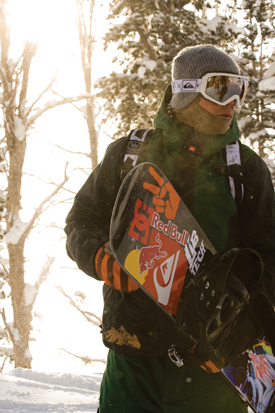
How have the premiers been going so far; you’ve had a bunch, right?
Yeah, we’ve had quite a few. We did a world premier down in Wanaka, New Zealand, and then did a tour through Australia and then we just finished our US Tour. Next Wednesday we’re heading over for a fucking death march through Europe.
I’ve read in a past interview that you still have videos of you and your friends filmed on shitty old VHS cameras riding in the back country when you were kids. It’s got to be a trip to watch That’s It, That’s All now that it is completed. Your films have obviously come a long way.
[Laughs] Yeah, I’m still excited about it and I’ve seen the movie God knows how many times, not to mention being in that editing room for about four months. Seeing people watch it though, they are genuinely stoked on it. I’m still hyped on the film.
Don’t you think you just made every other snowboard video dropping this year look like clown shoes?
[Laughs] Um, I mean I definitely don’t like to say it that way. We were definitely after our own thing for our own reasons. We weren’t necessarily out to shit on the competition. I guess simply put, in comparison, yeah. We kind of made the video comparing it to film entities other than snowboard films, so for us it wasn’t like, ‘Think about doing this or doing that.’
You used the same camera systems used to film Planet Earth, right?
Yeah, we used the same aerial systems that they used. It’s called Cineflex.

So that’s why you get that “floating camera” effect, right? Where it doesn’t feel like the camera is in the helicopter at all.
Totally, and that’s why we really wanted to do it that way. We used another system as well; it’s a little bit of an older system but more kind of what Hollywood uses called the Wescam 35mm. The real reason we wanted to do that is because, I mean, you see aerial shots a lot these days in films, but you always think that there’s some dude hanging out of the chopper trying to keep it steady. But with the Cineflex you can do it, and you’e still focused on the action and what’s going on. You don’t even think about the fact that you’re shooting from a helicopter.
You filmed for two years; there must have been tons and tons of footage. How do you sift through all that and decide what makes the cut and what doesn’t?
It was a long process, man. We had a little over 300 hours of raw footage at the end.
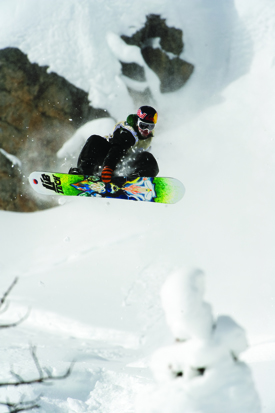
Organization is everything, if it just came down to editing, then you know, bada-bing bada-boom. Sitting and organizing the footage is probably the most tedious part. Curt Morgan, my partner, he started basically in the fall before our second season and kind of worked steadily throughout the winter. We even brought our studio up to Alaska with us for a month. We would shoot during the day and work all night. Then come springtime he pretty much sat down in front of a computer and didn’t leave for four months straight.
What happens with all the unused footage?
We’re doing a six part hour-long TV series. So a lot of it is going toward that.
When will that be ready?
Next fall.
I feel like anyone could watch That’s It, That’s All and enjoy it regardless of whether or not they had ever been snowboarding. Is that what you guys were going for?
That was kind of our big challenge that we put ourselves up to on this project was basically still making the movie for our peers, for the core snowboarder. But, at the same time trying to do it in a sense where a 50-year-old Texan could watch it who has never seen a snowboard and have it be compelling and interesting.
You can’t really appreciate things until you’ve tried them yourself, whether its skateboarding, golf, anything. Until you actually go out and try you don’t really grasp what’s its like or how challenging it really is.
Our big thing was trying to put the viewer in the shoes of the rider.
There is a scene in Alaska where you almost get caught in an enormous avalanche. What was going through your head as you had to “Wolverine” your way out?
Honestly, nothing. You don’t really have time to think about it or process it. It’s action, reaction, you know? It’s more after the fact you actually have time to think about it.
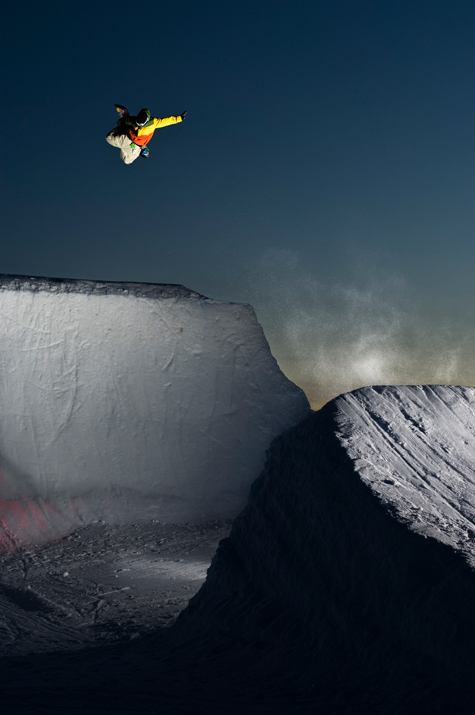
Did that happen often on that trip?
That’s pretty few and far between. That’s only really happened to me three times ever, and that one didn’t even really catch me. It’s definitely uncommon. But, you know, the danger is there, indeed.
There’s a section in the movie where some of your peers are praising you and talking all this great shit about you. What’s it like to hear them say things like, “Rice progresses the sport?”
Oh it’s epic. I couldn’t be happier about it. To be honest, with making this film it’s been a little difficult, especially in the editing process, because it is so focused on me. My buddy put it best when he said to me, ‘The only way this movie is going to be good is if you’re the only one who doesn’t like it.’
[Laughs] No, but I mean it’s definitely humbling.
You are all about progression, you have pushed the sport in new ways your whole career. After That’s It, That’s All, what the hell could be next for Travis Rice?
Oh, it’s in the works, man. In 2010 we’re going to shit all over this project [laughs]. No, ever since we basically had our first premier of this film we’ve been working on a new project. I guess That’s It, That’s All isn’t exactly the greatest title for following it up.