La Bombe
3020 H Street – Sacramento
Words by Adam Saake | Photos by Nicholas Wray
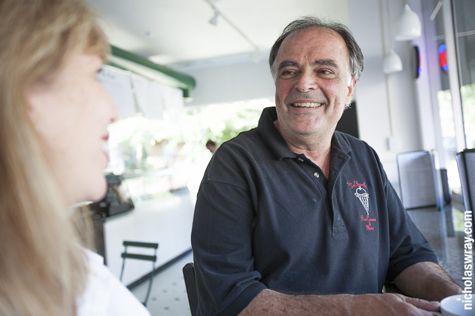
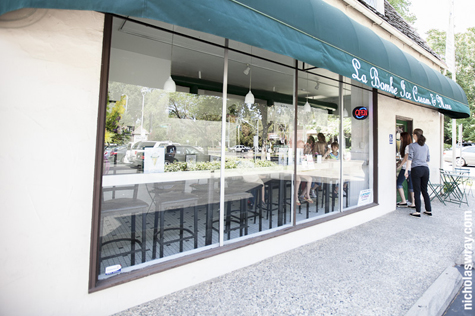
Veteran restaurateur Jennifer Dare Sparks, of the long-time Sacramento Spanish food establishment Aioli Bodega Espanola that’s been around nearly 20 years now, as well as the now defunct Habanero Cava Latina, Port Rouge and Barbarosa, has opened a new ice cream parlor in the heart of East Sacramento. On May 19, 2012 Dare Sparks and partner Bruce Strickley Jr. welcomed customers inside La Bombe, a small and attractively painted storefront in the McKinley Square shopping complex on the corner of H and Alhambra. Serving over twenty flavors of Gunther’s Ice Cream, espresso drinks and sandwiches, their real specialty is a unique frozen confection called bombes, or if you’re not into brevity, les bombe glacés.
Like Dare Sparks’ previous endeavors, bombes are borrowed from the European culinary experience. The typically French dessert is spherical and can be layered with ice cream, cake, waffle cone, fruit preserves or syrups. Besides the fact that they’re delicious, Dare Sparks didn’t have to travel across the ocean to make them just as you don’t have to to enjoy one.
“I’m interested in starting something that is unique to the American market by utilizing materials that we have locally like Gunther’s Ice Cream, and combining them and composing them into unique European items,” says Dare Sparks.
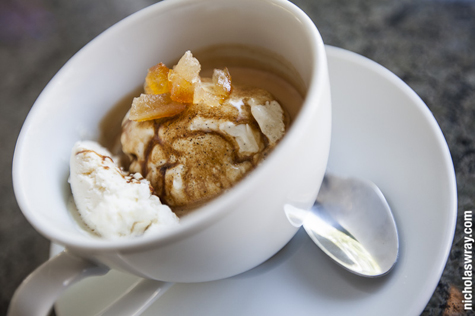
And she’s done just that. Her influence and points of reference come from when she studied at the Academy of Fine Arts in Venice, Italy, in the early ‘80s and when she later married an Algerian chef (Aioli co-founder Reda Bellarbi), now her ex-husband and business partner. Dare Sparks spent time in Paris and Algiers and speaks four languages including French, Italian and Spanish. Her passion for European lifestyle and cuisine shows through on the specialty dessert menu that includes Affogatto, vanilla ice cream topped with espresso and candied orange peels or the Granitta di Café con Panna, an Italian iced coffee with sweetened espresso topped with whipped cream. But the dessert she says is most unique to the shop is the frozen hazelnut fudge in a cup and topped with whipped cream, Gianduia con Panna.
“I don’t know anybody, anywhere who’s doing that in the United States,” says Dare Sparks. “I’ve only had that in Italy.”
The bombes at first seem a little curious, but once you bite into one your sensory memory will remind you that it’s ice cream and other sweet goodies you’ve already had before and most likely already love. What is also attractive about these desserts is the portion size. It’s roughly equal to a scoop of ice cream and a cone, so you’re not trying to wolf down a giant dome of ice cream in once sitting. It’s just right. Some notable creations were The Colonial Bombe, a combination of coconut, chocolate and banana ice creams with chocolate cookie wafers, dusted with cocoa and topped with toasted coconut or The French Bomb, which has chocolate ice cream, black raspberry sorbet and vanilla ice cream layered with chocolate cookie wafers, raspberry jam with raspberry syrup. And as La Bombe gets all settled in, you can expect bombes du jour as well as rotating creations changing on the menu.
It’s July and it’s hot, and foot traffic and families spilling over from McKinley will surely keeping the ice cream scoops a-scoopin’, but La Bombe isn’t only serving up sweets. They’ve got a very focused sandwich menu that is killing with the cold cuts.
“I’m hoping to get the word out,” says Dare Sparks. “Between what the chefs are doing with the simplicity of adding herbs to mayonnaise and quick pickling the cucumber and then we have a great rep; Steve Campanelli at Tony’s Fine Foods.”
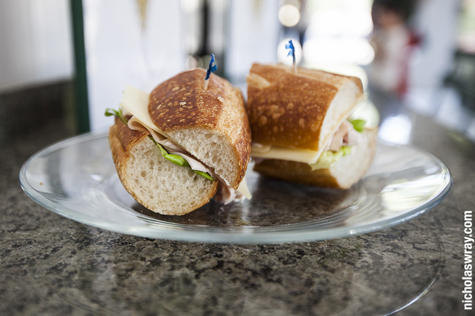
A great deli sandwich starts with two slices of quality bread, theirs being from Bella Bru. And then is closely followed by high quality meats; Tony’s Fine Foods has got it covered.
“I knew what I wanted. I wanted the purest flavors for our meats,” says Dare Sparks. “We’re trying to do something of a really high quality.”
Upon our visit we tried the Proscuiutto Cotto ham and Emmi Gruyere Swiss cheese sandwich on a baguette as well as the Deitz and Watson Rare London broil with white cheddar. Both were of exceptional quality–simple and delicious without being overcrowded or over complicated. It’s the perfect sandwich to pick up to go and hop across the street to watch the ducks in the park or pull up a chair at the bar that lines the bright front windows, perfect for people watching.
“We fell in love with this location and I said, ‘I’ve been working on this idea for five years.’ You know, when young people started saying, ‘It’s the bomb?’ And I like playing on words,” jokes Dare Sparks.
La Bombe is “the bomb” and it won’t take long before this place blows up.
The Eatery
2155 Town Center Plaza #E110 – West Sacramento
Words by Adam Saake | Photos by Nicholas Wray – http://nicholaswray.com/
It’s easy to forget how spread out Sacramento is in terms of our city’s layout. I’ve said this before, but dining isn’t just limited to our downtown and Midtown areas and in fact (although not for long) it doesn’t even make up a good chunk. The surrounding neighborhoods offer so many great options for cuisine that it really pays to venture out and see what you can find. An easy destination is West Sacramento, which is just over the river and home to such notables as The River Cats, Whitey’s Drive-In and “Tongue and Chic’s” most recent visit, The Eatery.
Owners Jess Milbourn, who is also head chef, and wife Monda Korich who holds down the front of the house, opened just shy of a year ago in August 2011.
“Business has been great,” says Milbourn, a tall and friendly-faced chef. “Ups and downs like anything else, but overall people seem to enjoy it.
And the packed house last Tuesday afternoon was proof that people are enjoying the food at The Eatery, an inconspicuous restaurant squished between other businesses in the West Sacramento shopping center, Town Center Plaza. West Sacramento is still developing its dining options, and The Eatery is one of the trailblazing restaurants serving food of a higher quality with local and seasonal in mind. That should be a given, considering that West Sacramento is home to some of the most fertile farm land on the West Coast. Milbourn, like a lot of Sacramento chefs and restaurants lately, has partnered directly with West Sacramento’s Humble Roots Organic Farm.
“We get a real one on one connection with the farmer and the land,” says Milbourn.
Both Korich and Milbourn had worked in the restaurant biz since they were teenagers and as Milbourn puts it, “We were of the mindset that we could do the same job we were doing for someone else for ourselves.” As residents of West Sacramento, they decided to keep their hunt for a space close to home and after looking at a few places in and around town, they eventually settled on their current location mainly out of financial necessity as well as the convenience of the space already being built out as a restaurant.
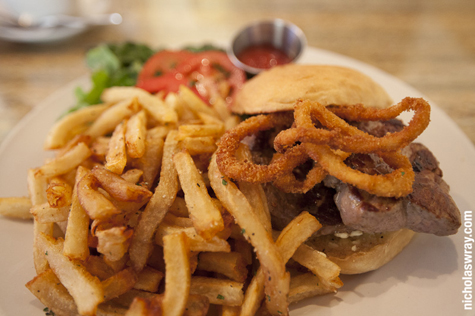
“The Eatery was our interpretation of what you might find as a true bistro in France, but in America,” explains Milbourn. “‘Mom and Pop,’ and serving simply prepared, high quality food in a casual setting with a beverage selection to match.”
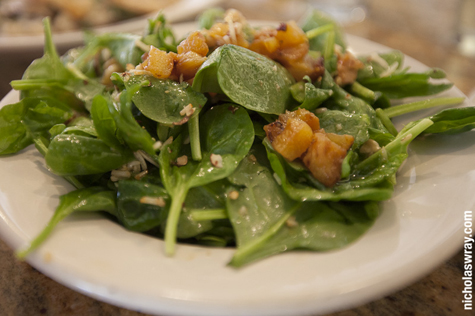
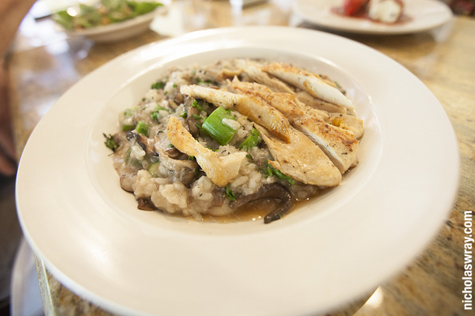
Simple is the key word here. The term “comfort food” is often thrown around in this business of eating, and I often wonder if the definition is a general one. Are the same dishes that make me feel at home, at my mother’s table, equal to the ones that bring you close to home? I don’t have the answer to that but I think it’s safe to say that it’s a feeling more than anything. I get that feeling by just looking at The Eatery’s menu. There are quite a few hearty, stick-to-your-ribs-type options like the risotto with asparagus and mushrooms. Meatloaf with mashed potatoes and gravy or rib eye steak with creamed spinach and scallop potatoes will surely tame your appetite. The gut buster of them all (I dared not attempt) were the disco fries ryan, a heap of French fries topped with bacon, melted cheddar cheese, chicken gravy and a sunnyside up egg. Yowzers! But, never fear all ye light eaters. Sautéed mussels with tomatoes, garlic, lemon, white wine and herbs may tickle your fancy. Sandwiches are also available and considering the source of the produce, salads are a must have at The Eatery. The spinach with grilled pineapple, chipotle cheddar and toasted almonds stuck out from the list and were fresh and cool; perfect for a hot summer day. Keep your eye out for fish specials that have included halibut with bacon consommé and cauliflower, and Passmore Ranch sturgeon pops up on this menu as well.
“We really love what we are doing and are amazed every day that we get a chance to make people happy with our restaurant,” adds Milbourn. “Ultimately, the eatery is for its patrons. We want our guests to have fun, eat and drink well, leave full and want to return.”
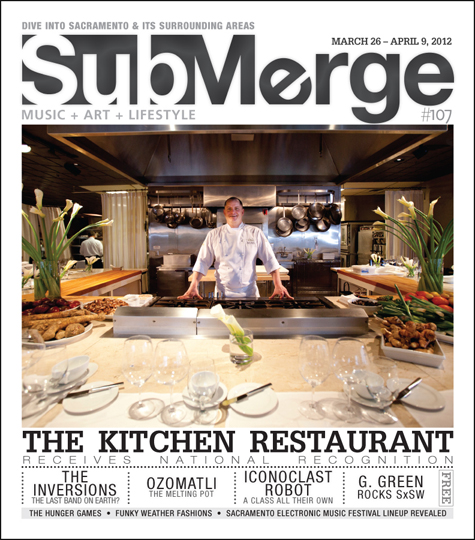
Sacramento Restaurant Receives National Recognition
The Kitchen Restaurant – 2225 Hurley Way, Sacramento
Words by Adam Saake – Photos by Nicholas Wray
Twenty-five years ago, the James Beard Foundation began honoring those in the food and beverage world who were working at a level of excellence. Beard was a highly regarded chef, author and personality whose career spanned over five decades. His passion for cuisine of all different cultures and styles is the spirit and backbone of the foundation’s scholarship program and awards process. Called the “Oscars of the food world” by Time Magazine, The James Beard Foundation Awards recognize cookbook writers and food journalists, TV personalities and photographers, chefs and restaurateurs. Some of the awards celebrate the new and most recent; but other more prestigious awards, like the Outstanding Restaurant Award, require years of consistent quality and service before even being considered. The James Beard website describes the Outstanding Restaurant award as, “A restaurant in the United States that serves as a national standard-bearer for consistent quality and excellence in food, atmosphere and service. Candidates must have been in operation for at least 10 or more consecutive years.” So when Sacramento’s own The Kitchen Restaurant was nominated as one of 20 of the nation’s most outstanding restaurants, the news brought surprise and shock to the Selland Family Restaurant Group.
“We were blown away by the whole thing,” says The Kitchen owner and Executive Chef Randall Selland. “If you look at the list of restaurants, it’s just phenomenal.”
The nomination alone is sort of like an award itself, considering the weight that a JBF Award carries. It came unsolicited as well, which means that JBF found them through the hundreds of restaurants all across the nation to be considered.
“We didn’t lobby for it, we didn’t know. It was more of a surprise to us than anything else,” says Selland. “It’s not the award part of it, it’s the recognition. I’m excited to no end that we got this nomination.”
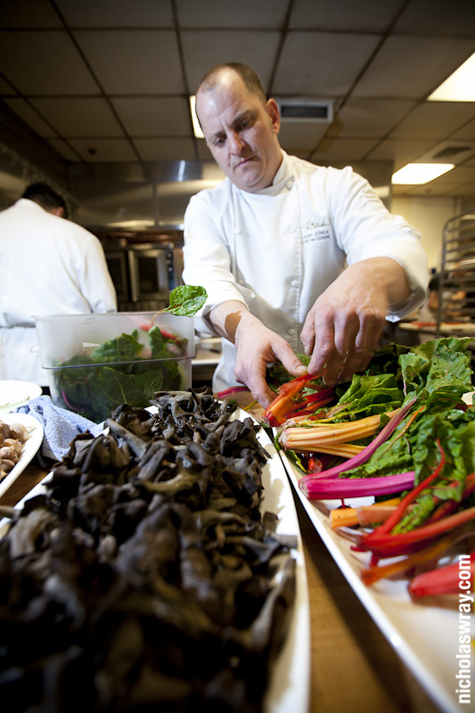
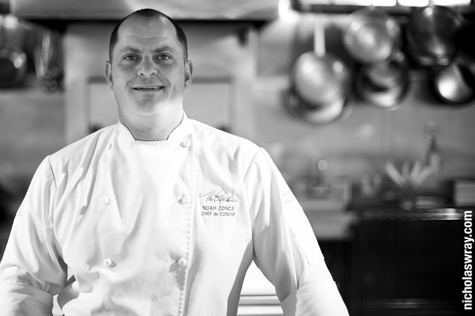
But it really is no surprise that The Kitchen be considered for this prestigious award. The kind of experience offered to guests during the one-seat-per-night dinners is truly of the highest caliber and is sought out and enjoyed by diners searching for the best. It is a spectacle; a show with a cast of characters who throughout the night take the stage to present their course like a ringmaster describing the perils of the lion tamer and trapeze artists. Watch as it all happens right before your eyes! The ringmaster is most certainly Chef de Cuisine, Noah Zonca. Zonca is a showman, a personality and most importantly a talent. When he talks to the crowd, he holds them in his hand, and when he personally addresses you, you feel important in the moment. He prepares visually dazzling courses right before your eyes, often bringing members of the crowd up to hold the pan as it flames up into the hood. He laces the night with humor, making guests feel warm and comfortable at the same time he commands his young staff, ensuring that each course is properly executed.
At the beginning of each dinner, doors open at 6:30 p.m. as a brand new group of elated guests spill into the main dining area. They’re immediately greeted by the impeccable Kitchen manager Eric Philbin, jackets carefully removed, purse hooks pointed out and seats shown. From the second they arrive, they’re pampered in a true professional fashion. The busy dining room fills with chatter, quiet laughter and the encouraged nosiness. One of the chefs stands main stage, preparing a sushi roll filled with yellow tail. “Come on up if you like,” he says to a group of bystanders. They step up into the kitchen and approach as he begins explaining the ingredients, their provenance and flavors. This is a show, but it’s transparent with no curtains. What you see is where it all happens and that is why The Kitchen has become a premier dining experience in not only Sacramento but in the country. It’s all about making the guest feel comfortable, giving them what they’ll enjoy and showing them a good time. And they do it well. Don’t like the first course? They’ll make you something else. Feeling like dessert first? Coming right up.
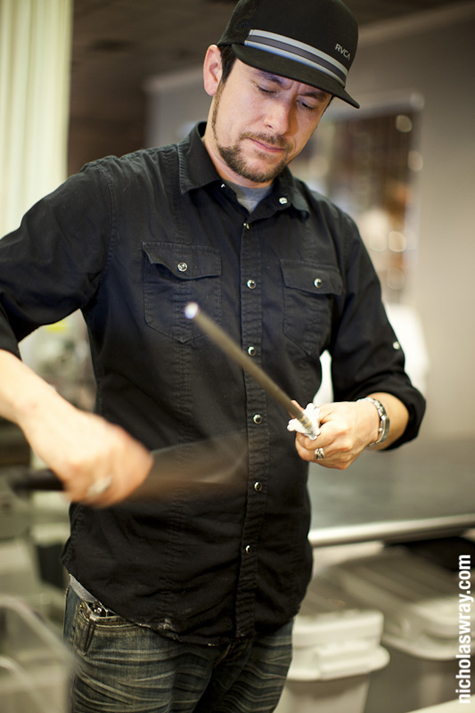
The main attraction is the food, of course, and Selland, Chef Nancy Zimmer and Zonca construct plates and flavors that are inspiring to look at and enjoy. With the colors and combinations of ingredients, conjuring styles of French technique woven with Thai and Japanese influences, their New American cuisine is the finest of dining in the most accessible way. This is how Selland prefers his plates to be.
“I get people to come in, and they feel a bit uncomfortable because they read the menu and they’re more meat and potatoes. Then they find out we’ll give them whatever they want and also, the menu reads a certain way but then when they get the food, the food’s always approachable,” says Selland.
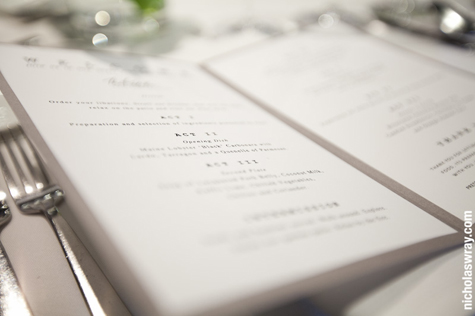
The opening dish for their March menu, called Act II, which followed Zonca’s in-depth description of what guests would be enjoying and how it would be prepared, was a show stopper right from the get-go. A Maine lobster “black” carbonara with crispy lardo, tarragon and a luscious quenelle of Parmesan–a dish whose mere remembrance of makes my mouth salivate. Each course that followed had some peppering of distant cuisines, something that Selland and Zimmer pride themselves on from their past travels to countries like Mexico and Turkey where they found big inspiration in small corners.
“We get more inspiration from the taco cart or the hero sandwich in Turkey, or the little mom and pop place somewhere,” says Selland.
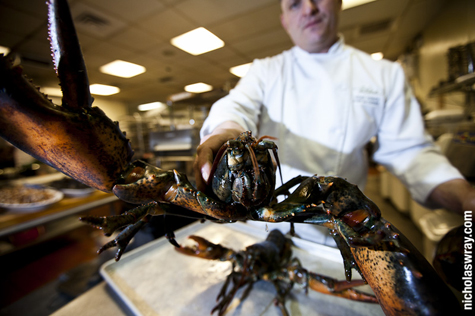
Act III, the second plate, certainly tasted of Thailand with a soup of lacquered pork belly, coconut milk, Kaffir lime, chilled vegetables, chilies and coriander. It reminded me of a light, more citrus-y curry broth with the coconut milk and Kaffir lime really shining through and playing nicely off the fatty pork belly. What followed was Intermission, hardly cookies and coffee, but an elaborate array of sashimi, sushi rolls, freshly ground wasabi root and other light appetizers. Guests meandered around the restaurant, snacking with their wooden chop sticks and poking their heads around the wine cellar and back of the kitchen.
Selland describes the early years of The Kitchen: the restaurant was based off of a concept and it was his and his wife’s side gig. He put every bit of free time into it, cooking at The Kitchen on his only day off during the week.
“When we started The Kitchen, it was a once a month deal, basically trying to drag people off the street, beg friends to go,” says Selland candidly.
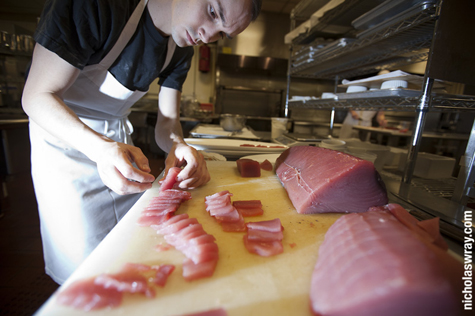
It slowly started to come to fruition and what started out as once month turned into once a week, then three times a week. The beginnings were simple; $35 a head and guests would bring their own wine. The original concept was a lot like how it is today, minus the price tag, which has gone up considerably over the years.
“The same thing we do now; it’s social interaction. You get to interact with the people cooking your food,” says Selland.
What is most endearing about The Kitchen is its uncompromising commitment to excellent service. Selland and Zimmer wanted to service the guests and make food for them that they would enjoy and walk away feeling good about. Not scratching their heads wondering what exactly they just ate or feeling like the reason they didn’t like their meal was because there was something wrong with them.
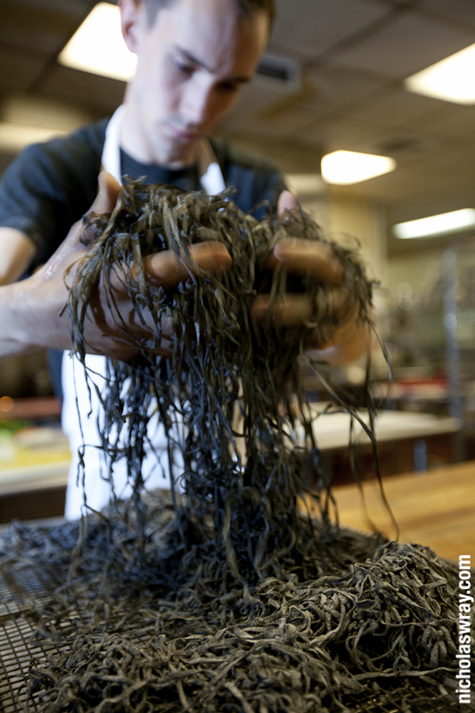
“We don’t care that you didn’t like it. I’ve been to restaurants where I’ve had the waiter say, ‘Well I’m sorry sir, but that’s how the chef cooks it.’ I don’t care about that,” says Selland with passion in his voice. “Here if I cook it perfect for someone and they don’t like it, my question to them is not, it’s supposed to be like this, it’s a matter of what did you not like about it and let me prepare something different for you that hopefully you will like.” As the last course approached–a grilled natural veal, perfectly pink that Zonca sliced himself–two, four, six cooks appeared one by one behind the line, mixing and changing places with plates and duties, Zonca calling out assignments of where to be, what time and dietary restraints. Each cook was listening, interpreting, reacting to each instruction. It’s a rare opportunity to see all the working parts of a kitchen all happening at once to bring you the plate that will sit before you. The drama that unfolds on a nightly basis at The Kitchen, a Sacramento destination restaurant that sits quietly behind an ivy-covered retaining wall, hidden, is what landed them a JBF Awards nomination.
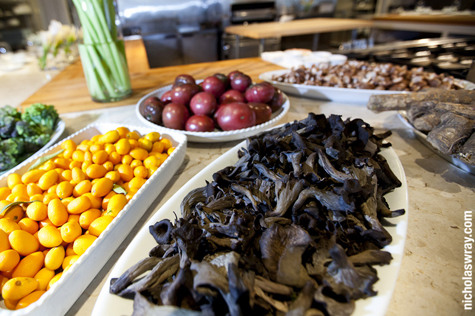
The finalists were narrowed down from 20 to five this past Monday, March 19, 2012 and The Kitchen did not make the cut. But there should be little disappointment, because the JBF nomination has only sparked more excitement for fans of The Kitchen and will certainly generate more excitement for those yet to experience an evening with Zonca and crew.
Pork Belly Grub Shack
4261 Truxel Road, Sacramento
Words & Photos by Adam Saake
I really miss Red Lotus. Chef Billy Ngo’s dim sum-inspired restaurant featured some of my favorite dishes that I often crave like the kung pao chicken wings, seafood soup and the pork belly buns. Ngo was onto something great that unfortunately ended prematurely, and after the closing of the restaurant in September 2011, I was sure there were still some great ideas up the young chef’s sleeve. Ngo had been scheming with two other local restaurant owners, Aimal Formoli and Suzanne Ricci of the popular East Sacramento spot Formoli’s Bistro, to host monthly Slow Beer Movement Dinners, where the two chefs collaborated on dishes that local beer buff Mark Neuhauser then paired with tasty suds. Some very memorable dishes came from these dinners including a squid ink pasta with baby octopi, hop-smoked chicken and of course, more pork belly dishes that the two chefs seemed to always include in their creations.
It was no surprise that after Formoli’s was finished getting settled in their new location a bit further down J Street and Ngo had his feet back on the ground, comfortable again behind the sushi counter at Kru, that the three would embark on their next food venture: Pork Belly Grub Shack. The Natomas restaurant opened in early November 2011 with an introductory menu, casual seating and décor and the same kind of friendly faces you might find at Kru or Formoli’s. It seems to say, “Welcome, come in and eat something good.”
The menu that consists of salads, burgers, sandwiches and other items like fries, tacos and fish and chips is just a start for Pork Belly. Natomas is still getting acquainted with them and vice versa.

“We’re just trying to feel out what people like and what kind of neighborhood this is so that we can adjust to what their needs are,” says Kim Vu of Pork Belly. “The neighborhood is definitely new to all of us.”
Vu is no stranger to Ngo’s restaurants, having worked at both Kru and Red Lotus, and she knows the importance of first impressions as well as changing to meet the needs of customers. But so far Vu says business has been great. “We definitely have good reviews and good feedback when people come in,” says Vu.
Pork Belly has a great balance of simple and tasty comfort food combined with Asian influences that make for a very approachable menu. Don’t let the name mislead you into thinking that there’s going to be heaps of pork belly on every plate. Many of the dishes like the Catfish Po-Boy ($7.50) on a French baguette with housemade slaw and tartar sauce or the Porkless bella Burger ($7.00), a portabella mushroom burger with jack cheese, tomatoes, greens and truffle oil, don’t have pork belly on them at all. The ones that do however, like the Asian Street Tacos ($1.75 each) with pork belly in corn tortillas with pickled carrots, daikon, cilantro, spicy teriyaki sauce and lemon pepper aioli, are absolute home runs and showcase the fatty cut of pork in all its glory.
Part of Natomas getting to know Pork Belly is, well, getting to know pork belly.
“This area, people don’t know what pork belly is. It’s a little different with the food scene in downtown. Everybody knows what it is, it’s on everybody’s menu,”
Often the best way to describe pork belly to someone is to let them know that bacon comes from this same cut of the pig. But pork belly isn’t bacon in that it’s not seasoned and cured. With pork belly, you see a thicker cut of meat with a delicious portion of fat that can be prepared in many different fashions and incorporated into many different styles of dishes. Chefs tend to really love working with pork belly and, in the past five years or so, there’s been more and more menus with dishes showcasing its range.
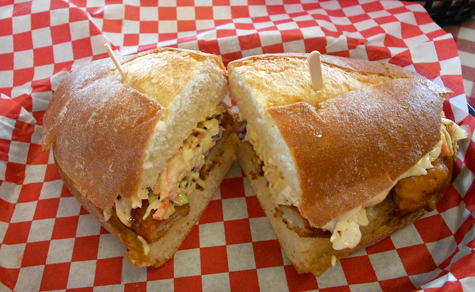
Chef Formoli’s touch makes its way into the burger selection, an area he’s proven to be quite proficient in. If you haven’t tried the much-raved about Whiskey Burger at Formoli’s Bistro, then I recommend you run, not walk, to eat one now. Pork Belly throws a little hip-hop homage into the mix with burgers like the Notorious P.I.G. or the Big Piggin’ (Pig Pimpin’? No?). But when I visited, these tempting burgers were trumped by a behemoth of a burger called none other than the Hot Mess. I had to order it. Not because its alluring name conjured memories of my romantic life’s past (I like classy broads), but because the sheer curiosity of what this “mess” might look and taste like was too much to bear. Two patties of beef with melted jack and cheddar, piled with sweet caramelized onions, a heavenly fried egg, barbecue sauce (oh my!) and roasted garlic aioli on sourdough. I had finally met my match. The Hot Mess is delicious in all its heart-stopping glory, but I recommend you might want to split yours with a friend.
Items I must return to try are too many to mention; but the banh mi is amongst the ranks, and certainly the French Pig with melted brie cheese, roasted tomatoes and truffle oil on sourdough is a must try. Specials rotate throughout the week and, knowing the chefs, inventive pork presentations will continue to be offered. And progressive still, there is talk of introducing a dinner menu along with a beer and wine list. As far as I’m concerned, pork belly needs these two components to seal the deal in my mouth.
“It goes hand and hand with this kind of food. The food is good in the winter time because it’s nice and heavy and it warms you up, and in the summertime it’s paired well with beer,” agrees Vu.
Pork Belly is already off to a great start, so whatever additions Ngo, Formoli and Ricci make, they will only be building and working toward a better version of what they have now. I recommend you make the trip to Natomas if you haven’t already; your belly will thank you.
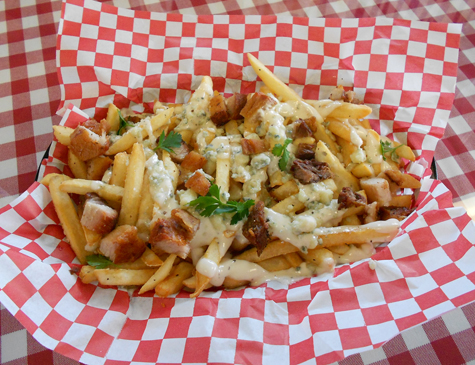
Submerge’s very own Adam Saake and his crew at Sacramento Electronic Music Festival, including Clay Nutting of Concerts for Charity, have really outdone themselves with this year’s lineup. The three-day festival will take place on May 3—5, 2012 at Harlow’s and Momo Lounge, and Submerge is proud to be the media sponsor again this year. If you remember anything about last year’s SEMF at Townhouse, you know it was the hottest ticket in town that weekend (there was a line down the block!), and this year will be no different with heavy hitters like Death Grips, Shlohmo, Mux Mool (pictured), Lorn, DJ Nobody, Salva, Dibiase, B. Bravo and Starship Connection confirmed. Also performing will be Giraffage, Raleigh Moncrief, Dusty Brown, Yalls, Doom Bird, Favors, Little Foxes, James & Evander, Dolor, Adoptahighway, Chachi Jones and more. It really is an incredible mix of national and local talent and you can get your three-day pass for a steal, just $30, at Harlows.com. Individual day tickets are $13 a pop. Learn more about SEMF at http://sacelectronicmusicfest.com/ and keep an eye out for coverage right here.
Track 7 Brewing Company sticks to its home brewing roots
Words & Photos by Adam Saake
All hail to the home brewer, the humble beginning of so many great beers we enjoy today. From an independent and environmentally conscious Sierra Nevada Brewing Company headed by Ken Grossman, who like many of today’s brewers started out with experimental 5-gallon batches, to home brewer Sam Calagione who grew the small Deleware brewery Dogfish Head into one of the most recognized and respected craft beer names in America. In short, great beer begins with a love of brewing and a passion to share it with those who love to drink it. Geoff Scott and Ryan Graham of Track 7 Brewing Company are among the ranks of home-brewers-turned-legit who share this same philosophy. Their recently opened brewery and taproom in the Land Park area, just over the Sutterville Pass, is sure to become an off the grid destination for beer drinkers and has already been established as a local watering hole for its surrounding neighbors.
Scott says that Track 7 has been open since the end of December and the space they occupy, an industrial warehouse with a rollup door, isn’t just a brewery.
“We got a special use permit from the city that allows us to manufacture and then have a tap room,” says Scott.
This mixed-use space creates something similar to what larger, more industrial-sized breweries attempt to accomplish in their accompanying restaurants or public view spaces. The difference is that Track 7’s space feels like you’re sitting and relaxing in the back yard of your friend’s house, except there are fermentation tanks off in the near distance making the delicious suds you’re savoring. The vibe is immediately neighborly. Couples cruise in with their dogs for a pint and groups of friends meet after a long day to unwind and chat with Geoff and his wife Rebecca, who greets guests from behind the bar and pours the day’s offerings from the orange and chrome taps.
Both Scott and Graham have been brewing beer for eight years. They started out by collecting their some-odd 15 batches of beer and having parties at their house where their friends would come over and enjoy the duo’s creations. But it wasn’t just their friends’ enjoyment and a collective skill for brewing good beer that motivated them to take the leap to brewery status.
“People said, your beer is really good, and at the same time our wives pretty much said, you have too much stuff at the house so you need to move it out. So it kind of worked out that way,” says Scott with a grin.
The transition from home brewing to having an actual brewery and operating on a larger scale wasn’t that difficult for the two in terms of process. Brewing was brewing. What did throw them for the loop was the assembly required to actually get started.
“One thing we struggled with was, the guy who built the brew house for us, he kind of just gave it to us and said here you go. We had to do all the piping underneath and it was like a giant puzzle trying to put it all together. We went off of one picture,” says Scott.
But the brewery did come together and the beer has been pumping out. Both Scott and Graham have different styles and tastes, which balances out their selections. Scott is more into IPAs and stouts like their Soulman Stout or Big 4 Strong Ale, where Graham gravitates more toward the Belgium style beers like their Alkali Wit that boasts flavors of coriander and orange. These beers, along with the rest of their concoctions, are all carried over from their days of brewing small batches and experimenting. Sometimes it works, sometimes it doesn’t.
“It’s interesting. Some beers like the Wit we probably tinkered around 25 plus times, and others like the Big 4 were born on the second or third try and that’s how they ended up,” explains Scott.
The four founders are dedicated to community and take pride in being a Sacramento brewery. Local artists like Skinner and Jesse Baggs have designed their bottle labels; their taproom table, a recovered railroad track and glass top, was also designed by a local artist. The name itself, Track 7, is derivative of railroad slang that refers to being out on the furthest track. Scott and Graham, two very down-to-earth guys, had a connection to this slang and felt it appropriate for their new venture. The beers they brew speak to their humble nature; thoughtfully crafted with balance and unique flavor. All eyes will be on Track 7 to see what they grow their new brewery into.
Track 7 Brewing Company’s taproom is located at 3747 West Pacific Avenue, Suite F, Sacramento. The brewery has a few events lined up for Sacramento Beer Week, including the release of a new beer Trainwreck Belgian IPA, which will be available at Track 7 starting Feb. 24, 2012. For more info on what they’ll be up to during Beer Week, go to Track7brewing.com.
Ruhstaller Beer Tastes of Sacramento’s Rich Beer History
Words by Adam Saake
J-E Paino, a Sacramento native by way of San Francisco, is the proprietor of Ruhstaller Beer, an up and coming Sacramento beer company whose name and history date back to the 1800s when Sacramento was a true Wild West beer town. While studying at UC Davis, Paino fell in the love with the rich and bountiful story of the Sacramento beer industry and how west of the Mississippi, we were home to the largest brewing facility–Buffalo Brewery where the present day Sacramento Bee is located–larger in fact than Anheuser-Busch in St. Louis, Mo. To add, Sacramento had numerous brewing facilities that were in full production, brewing and shipping out beer to thirsty Americans.
“Sacramento’s never done anything better than make beer,” says Paino. “We were made to make beer.”
That we were–and still are today. It all makes sense, really. Consider that Sacramento has dark, nutrient-rich Delta soil, two rivers intersecting the city, trains constantly whistling and crisscrossing the streets and, until a while back, acres and acres of hops and barley growing all throughout our surrounding areas. There’s farmland, transportation and the climate for key ingredients. This isn’t breaking news to your grandparents because they remember some of this stuff, but the younger generations haven’t been exposed to this very important piece of Sacramento’s history because there isn’t much record of it and the schools sure as hell aren’t assigning home brewing as class projects.
“And there’s absolutely no remnant of it. No one talks about it, you read history books–gone,” says Paino with fervor.
Paino seems to be on a personal mission to change that, and he’s doing it in the best way he sees fit; by making beer that pays homage to this time and place.
While Paino was a student at UC Davis, he began a project that consisted of researching the history of Sacramento. He realized that there was this lack of information and he kept coming up with the same results.
“They all went the same way,” says Paino. “John Sutter lands, some Indians, lots of flooding, tomatoes, cows and all of a sudden there’s a governor’s mansion built and we’re the capital of California.”
And hell! Throw in the trains and trees and that’s a great history, something that many of us pride ourselves on and more often than not becomes the talking point of what makes Sacramento what it is. But Paino kept poking his nose around and eventually he struck upon a different version of what Sacramento’s history once was.
“Somehow I stumbled on a book by Ed Carrol. He was doing his thesis at Sacramento State. He wrote about the history of Sacramento, the beer industry in Sacramento,” explains Paino.
The Sacramento History Foundation ended up publishing a portion of Carrol’s thesis, which Paino read and was inspired by.
“It was phenomenal,” exclaims Paino.
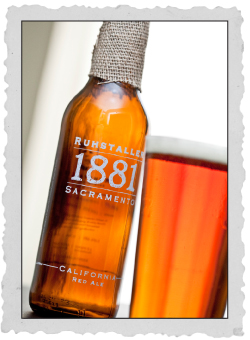
Photo by Carolyn Jaime
The figurehead that continued to pop up was a gentleman by the name of Captain Frank Ruhstaller. He left home with his brother to flee the constraints of family duties and commitment. According to Paino’s research, the brothers left Switzerland because they didn’t want to be priests like their father had envisioned; they were set on brewing beer. Frank bounced from his homeland to the East Coast of the United States and eventually ended up in Sacramento, where he was part of Buffalo Brewery. He eventually broke off from Buffalo and started his own craft brewery called Ruhstaller where his “flagship beer was called Gilt Edge Lager.” The focus was on premium beer and making it the beer of Sacramento.
From there, Paino’s direction moved toward actually making a beer. It all began with Charlie Bamforth, the guru of fermentation sciences at Sacramento State, who is responsible for more than a few brewers’ careers. To even begin to touch on his influence and/or career attributes, well, that’s an entirely different article. Paino came to Bamforth looking for guidance and Bamforth lent him some of his literature–some science and some history–and Paino read both. But Paino is no brewer and the history was more to his liking. “Well you’re going to have trouble making beer,” Bamforth said to Paino. He then recommended a few candidates, and suddenly Paino was on the path to turning his love of Sacramento beer history into an actual drinkable product.
One was a gentleman by the name of Peter Hoey and the other was a woman by the name of Lindsay Guerdrum, a star student of Bamforth, who at the time was being offered a position at New Belgium Brewing Company. Yes, the New Belgium as in Fat Tire. Paino wasn’t in the position to match that offer, nor was he going to hold her back.
“We said, we’re the little guy. You can always work for the little guy, you only get one shot working for the big guy,” says Paino.
So Hoey was the man for the job. He and Paino got along well in the first place, and so began production of Ruhstaller Beer. Paino’s philosophy was focused on keeping the product locally produced, something not too common in the Sacramento brewing community. And with this, the expression of place could speak for itself.
“Let’s go find the best ingredients we can, source them locally as possible and let’s go make a beer that isn’t just a one liner but it’s more sophisticated. It kind of has a nose and kind of has a beginning middle and end, and when you’re done with it you want to read the book over again,” says Paino.
Paino is passionately telling me all of this as he sits across from me at a high top table in the corner of a very crowded and noisy Grange Restaurant, tucked underneath the elegant and very boutique Citizen Hotel. He’s a clean-cut guy, tightly buttoned collared shirt tucked into his jeans and he’s sipping tea not beer. I later figured out that he knew he was going to talk my ear off for an hour about his beer and Sacramento’s beer history. He was sort of warming up like a vocalist might do before a concert. “He looks like the guy from Cash Cab but with darker features,” said a few bartenders at Grange, joking lightly when I asked what he looked like. Paino was just about the only guy I hadn’t met or spoken to that was involved with Ruhstsaller. I was already greatly familiar with their PR and social media aficionado, Andrew Calisterio, as well as the aforementioned brewer, Peter Hoey, who seems to have his fingers in every kettle around town these days. I tried to contact him for this story, and he seemed apologetic for being out of touch, being what he called “a moving target these days.” Hoey stopped consulting for Ruhstaller in November, he told Submerge in an email, but all of the recipes for their current lineup of beers are still his.
The current lineup consists of their 1881 California red ale, the Captain California Black IPA and the wet hopped beer, Hop Sac, which is a seasonal beer.
Rushstaller is still a fledgling beer company, having been in business for roughly two and a half years and actually making beer for nine months. Their product is solid but the future is wild like the history off which they feed. Their crudely spray-painted logo that dons their wooden mobile taps and kegs is indicative of the rustic vibe they seek to portray. Even the bottles that can be found on the shelves of Whole Foods, Nugget Market, Pangaea and Corti Brothers are draped in burlap, a material that Paino says “holds California together” and is “the working man’s fabric.” This is a beer that is meant to speak to the people. Listen up Sacramento, this is your beer.
Look out for Ruhstaller events during Sacramento Beer Week including collaborations with Grange and Charlie Bamforth, Magpie Catering, Mulvaney’s Building and Loan and the infamous Rex Bikes. For a full list of events, go to Sacramentobeerweek.com or Ruhstallerbeer.com/events
Juno’s Kitchen and Delicatessen
3675 J Street – Sacramento
Some chefs do it for the love, some do it for the fame and others do it because they don’t know what else they’d be doing if they weren’t in the kitchen. The latter describes Chef Mark Helms of Juno’s Kitchen and Delicatessen.
“This is what I do with my time. I can’t think of anything else to do. I have holes in my pants and a dirty hat; that’s me,” says Helms with a smile and a Lagunitas IPA in his hand.
His ball-cap-wearing, laidback persona is the perfect juxtaposition to the thoughtfully prepared, colorful and masterfully executed food that he serves at his newly opened East Sacramento restaurant. A nondescript location–tiny and dangerously unnoticeable, from which the likes of two recent ventures have come and gone (Babycakes and Urban Dawg), this wasn’t exactly his first choice.
“This is what came up. There’s not a lot of real estate that comes up to open a business in East Sacramento that already has a kitchen ready to go,” says Helms.
But as many Sacramento chefs have proven before, a lot can be done with a little space; and the line out the door and groups patiently waiting for tables is proof. Big flavors are born at Juno’s. And what’s even more impressive is that most of the bread served is baked fresh on site, too. The baguette and burger bun (I’ll come back to this) are from Acme Bread Company in Berkley, Calif., but the rest is house-made dough that is naturally leavened, using zero commercial yeast. Sandwiches like the smoked salmon with creme fraiche vinaigrette, onion, cornichons, tomato, watermelon radish and arugula; or the Cabernet salami with aioli, tomato, red onion, lemon, olive oil and balsamic vinegar, are taken to the next level between two slices of freshly baked bread.
The process of making naturally leavened bread, a very old practice, takes much patience and attention. If Helms was using commercial yeast, versus the wild, air-born yeast used in his bread, his wait time for the dough to rise would be a lot shorter. His product takes time, love and effort and you can taste it the moment you bite into it. It’s not every day you find a baker, let alone a chef, making bread in this fashion.
“I don’t know if there’s anyone between myself and San Francisco that makes bread this way,” says Helms.
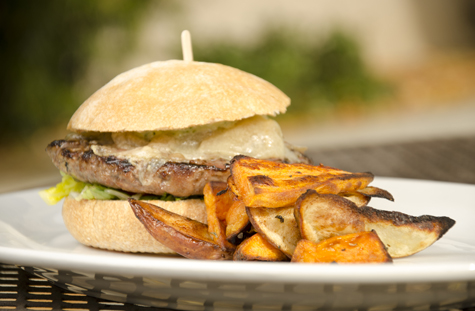
Fast food is championing some sort of product they call Angus burgers. But that ain’t no Angus burger, and the real deal is found at Juno’s. Once you taste this, you may never go back to eating burgers anywhere else. To begin, the Acme bun was an excellent choice–and as I’ve said before, is such a hugely important component in the construction of a perfect burger. The bun has a thin top layer of crunch that gives way to soft bread and is a perfect complement to the medium-rare patty that is juicy and loaded with flavor. Roasted garlic aioli, caramelized onions and Manchego cheese knock this burger entirely out of the park.

There really isn’t much that Helms doesn’t do well. Choosing what you want to eat off the menu becomes a process of elimination, and if there’s a daily special that catches your eye, you’d better enjoy it before it’s gone. His soup du jour was vegetarian minestrone on the day that Submerge paid Juno’s a visit. Minestrone can be somewhat uneventful, a comfort food that satisfies as long as it’s hot; but Helms’ version was nothing short of amazing. Tender lima beans and celery, leafy greens and a perfectly spiced and salted broth made me think differently about what minestrone can be.
If you’re ever faced with the dilemma of craving high quality fare, but your bank account is as empty as your stomach, then Juno’s is just the spot that Helms would like to welcome you to. It’s a neighborhood joint where locals walk to dine, devout customers from Helms’ first Pocket-area restaurant Ravenous travel to taste and fellow foodies and industry folk gather to feel comfortable and eat. Helms likes it to be just like it is.
“To be honest, I’ve worked in fine dining for years and years–I’m really not into it,” says Helms candidly. “I really like this, I really like what I’m doing here. I think this is down to earth, that there are all walks of life that come in here and that’s really cool.”
A Submerge guide to pumpkin libations
Words by Adam Saake – Photos by Nicholas Wray
Hey look! It’s fall. Oh, there it goes. Living in Sacramento, you know that fall makes a quick appearance yet there are so many ways to indulge. Having your checklist done early, your Halloween costume pre-ordered and a trip to Apple Hill in permanent marker on the calendar is a good start, but there are still a few things that fly by under the radar. Pumpkin beer is one of them and if you’re not quick to grab a six-pack off the end cap, you might miss out on some limited edition suds that can be quite delicious. What once seemed like a novelty has now become a tradition for some serious beer drinkers and the choices have multiplied. Ales, lagers and even ciders are popping up on the shelves and each offer unique takes on the flavors that this iconic orange squash has to offer.
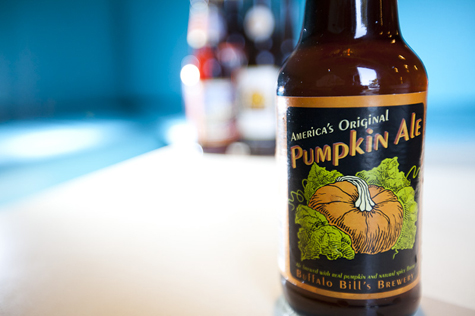
America’s Original Pumpkin Ale
Buffalo Bill’s Brewery, Hayward, Calif.
Buffalo Bill’s Brewery offers a quality pumpkin ale that is firmly centered on drinkability and not necessarily pumpkin overload. Not to say that pumpkin isn’t the focus here, but on a scale of Linus to Return to Oz, this is somewhere in the Silver Bend Pumpkin Patch. The first initial sips yield the pumpkin and then the luster slightly fades, but still very refreshing. Clocking in at a little over 5 percent alcohol and 11 IBUs (international bittering unit), even grandma might have one with you to celebrate the holidays.
The Hayward, Calif.-based brewery who are also known for their Alimony Ale and Orange Blossom Cream Ale have had their feet in the microbrew market since 1983. These guys definitely know what they’re doing with their pumpkin beer, so you’re safe to grab a six-pack and enjoy.

Blue Moon Harvest Pumpkin Ale
Blue Moon Brewing Co., Golden, Colo.
Surely the most recognizable name we’ll mention here in our Pumpkin Beer spotlight, and either you love it or you hate it. Blue Moon, a Miller/Coors product, hit the scene around 1995 at The Sandlot Brewery in Boulder, Colo. (then just owned by Coors) and it didn’t take long before it had made its way into many watering holes around the country.
Originally launched in 2006, the Harvest Pumpkin Ale has had a facelift this year and according to Miller/Coors has been “re-launched and reformulated this year.” What does that mean? Well instead of brewing the beer with just pumpkin and cloves, they add nutmeg and allspice as well. That and the label become a little less artsy and lot more branded. What you get is a quite enjoyable beer with a good body, smooth finish and great balance between the hops, pumpkin and spices. Coming in at 5.7 percent alcohol, Harvest Pumpkin Ale is a step up in intensity but not overpowering and certainly a beer you can enjoy more than one of.

Pumpkin Lager Beer
Lakefront Brewery Inc., Milwaukee, Wisc.
Located on the Milwaukee River in Milwaukee, Wisc.–pronounced mealy-walk-ay if you’re Alice Cooper–Lakefront Brewery has been crafting quality microbrews since 1987. The brewery itself is a huge tourist attraction to the point where sold-out brewery tours gave way to online ticket sales. Still independently owned and cranking out large volumes of beer, boasting over 20 different selections, Lakefront is testament to the little guy doing big things.
Their Pumpkin Lager Beer, apparently inspired by a Thomas Jefferson recipe that brewery owner Russ Klisch stumbled upon, is as close to pumpkin pie in a beer form that you might find. Pour one into a glass and you’ll immediately notice that the nose jumps out; heavy with pumpkin, cinnamon and clove aromas. The mouth feel echoes the nose; rich yet goes down easy and the use of Caramel and Munich malts lend to the texture and depth of this fun drinking beer. Slightly copper in color and 6 percent alcohol, you might spill a few family secrets after a few of these.
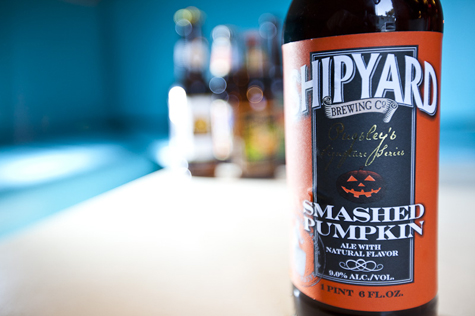
Pugsley’s Signature Series: Smashed Pumpkin Ale
Shipyard Brewing Co., Portland, Maine
Caution: double entendre approaching! Shipyard Brewing Company’s co-founder and Master Brewer Alan Pugsley has outdone himself with this Smashed Pumpkin Ale. Not only will you be “smashed” after a few of these, but your head will feel like Gallagher took his sledgehammer to it in the morning. Packed with so much spice, pumpkin, hops and malts and 9 percent alcohol, this pumpkin beer is truly a trick and a treat. Submerge asked local beer guru Mark Neuhauser of Pangaea Two Brews Cafe what he thought and he called it “very sweet…pumpkin pie in a bottle.” Pugsley uses three different malts including Pale Ale, Wheat and Light Munich along with two different kinds of hops; Willamette and Hallertau. The high alcohol gives it the backbone and bite, making this beer perfect for any of your spice filled holiday foods.
Of course, it’s no surprise that Shipyard would blow the stem off the pumpkin beer category. These guys are known for amazing craft beers that they’ve been perfecting since 1992. They’re Maine’s largest brewery that also makes Capt’n Eli’s Soda, a craft soda that comes in seven different flavors and are the 19th largest craft brewery in the country. All that from little ol’ Maine, go figure. On top of that, Pugsley is kind of a rock star in the East Coast microbrew world. Back in the ‘80s he bounced around and helped establish quite a number of breweries as well helped design and build breweries in the United Kingdom.
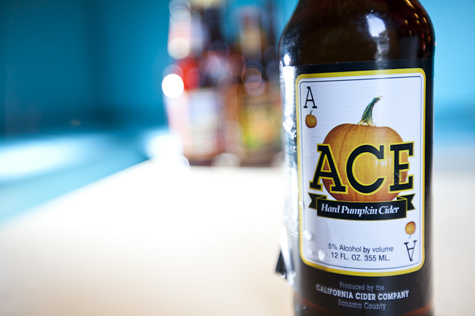
Hard Pumpkin Cider
Ace Cider: The California Cider Company, Sebastopol, Calif.
Alright, here’s your wild card. Ace Cider based out of Sebastopol, Calif., has been making cider for 15 years. Before there were really cider options, there was Ace and over the years they’ve stayed amongst the companies making really high quality, gluten free and delicious ciders. This year is the first year that the company has released their Hard Pumpkin Cider, an apple-based cider that is blended with pumpkin and allspice. Jeffrey House, owner and master cider maker, says that he made 10,000 gallons this year and it’s already all gone.
“People are racing to drink it,” says House.
With the popularity of the product, House says they’ll more than likely double or even triple production next year to meet the demand. The cider is quite a unique product that doesn’t scream pumpkin but merely suggests it. The allspice is subtle and you pick up the apple on the finish along with an interesting aftertaste reminiscent of pear candy. This cider is 5 percent alcohol and quite low in sugar content, 9 grams per 12-ounce bottle. If you’re really aiming for pumpkin, I’m not sure if this is for you but overall a tasty cider that fits in perfectly with their existing line.
These beers and ciders can be found at Total Wine, Whole Foods, Corti Bros and other select specialty markets. Call ahead because they are seasonal and will disappear quick.
Still thirsty for more pumpkin beer? Pangaea Two Brews Café has Dogfish Head’s Punkin Ale on draft. Pangaea was lucky enough to acquire three of the six kegs allocated to the entire Sacramento area, so get it while it’s here. Or, head over Alley Katz and try a Double Pumpkin Ale on draft from Sam Adams.
Sacramento Embraces Craft Cocktails
Words by Adam Saake – Photos by Nicolas Wray
With Midtown Cocktail Week just barely behind us, the craft cocktail resurgence seems to have hit Sacramento full-blown. The customer dialogue has changed from, “Well is fine” to “What gins do you have behind the bar?” And curiosity isn’t far behind. These more educated enjoyers of quality spirits want to know what it is, what’s in it, and where can I find it? Put down the Puckers and pick up the muddlers; freshness now reigns supreme. The usual suspects have been holding down the artform for some time; familiar names like Lounge on 20, Shady Lady and Ella come to mind. But now it’s tough to throw a rock and not hit a Collins glass with Green Chartreuse somewhere inside of it. The result is a plethora of interesting cocktails to be sampled, and everyone’s getting in on it.
Bartenders are stepping up to this challenge and becoming more educated themselves; many of them entering competitions locally and beyond to sharpen their skills and test their hands at speed or flair. Brands often endorse these competitions, encouraging bartenders to experiment with their spirits and create something interesting that may be marketable. Wowing the judges takes more than just making a tasty cocktail; technique and presentation is key and often-homemade garnishes or unique glassware help set the competition apart.

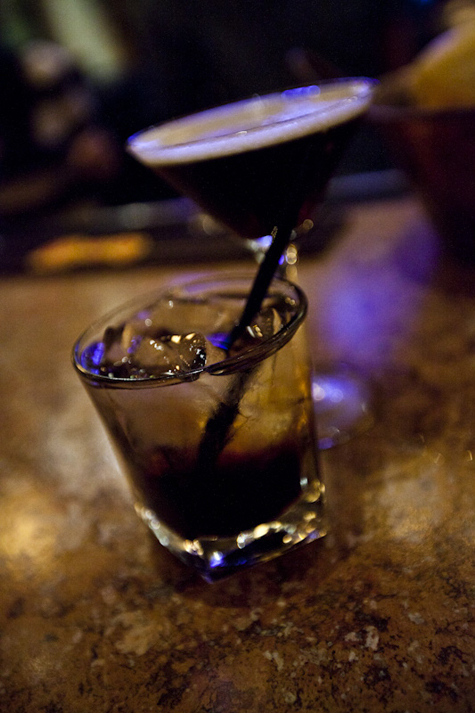
One such competition at Zocalo that happened recently challenged local bartenders to think creatively with the coffee and rum liqueur Kahlua. Chris Dooley of Ella, Travis Kavanaugh and Dominique Gonzales of Shady Lady and Amy Battaglia of The Golden Bear were among the chosen few to try out their cocktail recipes for a panel of judges. Dooley’s personality shone bright through his cocktail he named “The Veracruz,” after the Mexican state where Kahlua is produced. Made up of Kahlua, fresh espresso, bitters, Fernet Blanca, Bulleit bourbon and garnished with mint, orange, nutmeg and shaved chocolate, this stunning cocktail was a sight to behold.
“Well, Kahlua for me personally is a dessert, after-dinner cocktail. So everything in there screams ‘after dinner’; the digestif [Fernet], the espresso, the Kahlua, the chocolate,” said Dooley.
Dooley served it in a stemless martini glass that rested in another oval-shaped glass filled with frozen espresso beans to keep the drink chilled. The “Veracruz” landed Dooley in second place, but the experience of being able to toy around with Kahlua, a liqueur that bartenders rarely experiment with, was worth it.
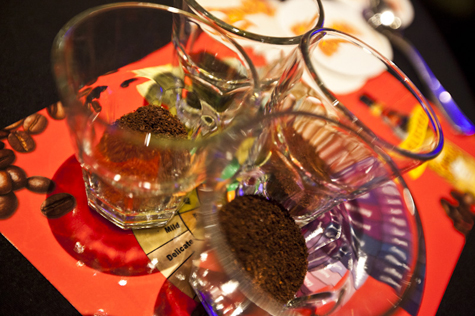
“I like to explore the diversity of it; to be able to try different applications,” Dooley expressed.
But in the end it wasn’t the Kahlua that threw Dooley for a loop.
“Anything I can add Fernet into is a challenge for me,” said Dooley.
First place was awarded to Midtown Cocktail Week’s “Rookie of the Year” Travis Kavanaugh of Shady Lady for an 11-ingredient cocktail that took 11 tries to get just right. He named it “Nuevo,” fittingly, and the judges might have scored it just that high on a scale of one to 10. Kavanaugh says that “for about a week, all I did was mess with Kahlua.” The result was a seemingly impossible blend of Kahlua, rye whiskey, Angostura bitters, orange bitters, maple syrup, Heering cherry liqueur, pineapple, egg white, nutmeg, orange zest and muddled coffee beans. Kavanaugh served his cocktail in a 5½ ounce coupe glass, which meant that all those ingredients had to be combined in very limited amounts to get the cocktail to fit just right. And although it took 11 tries and one week later to arrive at his final product, he enjoys the challenge of figuring out how to make it all work.
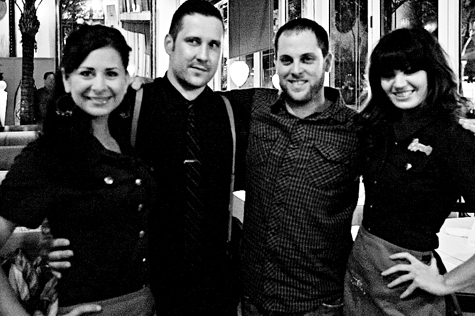
“I like competitions. Anytime I have something to mess with and break it down and just use it for a whole week, I think is really cool,” says Kavanaugh.
The time that is spent off the clock, at home or after hours, perfecting a syrup or portioning out the recipe just right, is what separates bartenders like Kavanaugh and Dooley from the rest. They aren’t alone. And bartenders who work at restaurants that may not be on the top of your craft cocktail destination list are starting to follow suit. Take, for example, Lucca bartender Chris Mansury, who is doing some very interesting things behind the bar.

Fascinating things have been done with the Bloody Mary in this town, including some amazing heirloom tomato Bloody Marys done by Chris Tucker at the now closed (sadly) L Wine Lounge. But, Mansury is taking it to a new level. His concoction is called the Hanoi Jane, which he says is a “Vietnamese-inspired version of the Bloody Mary using pho broth, Sriracha, garlic, basil and green onion.” If that isn’t enticing enough, he then salts the rim with a beef jerky salt he made and then garnishes it with basil, lime and jalapeno.
“I created it as a combination of two of my favorite hangover cures,” says Mansury.
Another interesting notable is Mansury’s Pear Basil Highball that he’s spiked with something called a shrub.
“A shrub is basically a syrup made of fruit, sugar and vinegar in equal parts,” says Mansury. “Shrubs derive from the Persian sherbert [sharbaat] which is widely regarded as the world’s original soft drink.”
Forget about pre-prohibition, Mansury is tapping into some old-school stuff here. His shrub is essentially simple syrup that’s a lot brighter with the addition of apple cider vinegar. He adds the classic combination of bourbon and ginger ale and the end product is a refreshing and balanced cocktail that screams end of summer, beginning of fall.
It goes beyond the simple “what do I have behind my bar,” and becomes a process of research and study that is fueled by passion (and maybe a few too many taste tests) where the goal is to make something handmade and unique; to discover a combination that works. The competitions are good inspiration, a way to stand out and crash course a particular spirit, but mostly it’s a love for blowing a customer’s mind when they try something they’ve never experienced before. Maybe it sounds a little geeky, but everything high-tech and cool that you own is the result of some guy or some gal sticking their nose way deep down the rabbit hole. Cocktails may not be high-tech per se, but the more out-there the ingredients and flavors get, the more challenging it becomes to make it all work together. Hence the term, “mixology.” Don’t expect to see beakers in the place of shakers, but the science of it all will be perfect for wetting that whistle.