Alison Sudol leads A Fine Frenzy quietly into the spotlight
Alison Sudol’s soft voice creaked from the ear of my phone, sounding positively under the weather.
“I got really, really sick,” says Sudol with a cough after I ask her how the nationwide tour she’s on has been going.
“A really weird cold knocked me out and I had to cancel a show, which is rough. But I’m better at least. Besides that, everything is great,” Sudol says optimistically.
She called from a hotel room in Hoboken, N.J., which is right outside of New York City, where the next evening Sudol and her four-piece band would be performing songs from their new album, Bomb in a Birdcage, the followup to their 2007 breakthrough album, One Cell in a Sea. Sudol is the voice behind the Los Angeles-based indie-folk outfit A Fine Frenzy. With a recent spot on The Late Late Show with Craig Ferguson and a video for the single “Blow Away” that made it to the top 20 countdown on VH1 along with rotation on MTVU, Sudol shows no signs of a sophomore slump. While writing Bomb in a Birdcage, she and the rest of the musicians let things happen naturally just as they had with their previous record. There was no calculated process; no planning of the next move.
“I don’t really know what’s going to happen next. I just know that every little step of the journey leads to a final product,” says Sudol.
A Fine Frenzy’s journey is a bit of a fairy tale. A Virgin Records executive came to her house, sat on her couch and listened to a showcase by Sudol and her band. A few weeks later they were working together. Not exactly the grueling path that most musicians take to get a record deal, but sometimes if you’re just that good, then it’s just that easy. At the age of 24, Sudol has already established herself as a remarkable singer/songwriter with the piano chops to match. Her playing is the perfect accompaniment to her soft voice that sounds marvelous in every part of her range, from the quiet whispers to her robust hooks that climb along the scales. Musically, she’s wise beyond her years and has probably taken a tip or two from artists like Rufus Wainwright and Brandi Carlile, with whom she’s already toured. Her songs are poignant and emotionally charged. Bloggers and critics use words like “whimsical” and “pixie” to describe Sudol, but she’s no Tinkerbell. On Bomb in a Birdcage, she and her band wanted to let their hair down a bit and show that they also have a raucous side. Even on tour, their sound continues to evolve with the addition of electric guitar, an instrument that has sparked a new fascination for Sudol.
“I played it yesterday for the first time,” she says with a hint of glee in her voice. “I didn’t want to put it down. It created a monster and now I’m obsessed. In a quiet way.”
Bomb in a Birdcage, which is still fresh in new release displays at record stores around the country, will quickly be accompanied by an even newer release of the seasonal variety. A Fine Frenzy will release Oh Blue Christmas on Nov. 3. This six-song EP will be available at Target and will feature songs from Charlie Brown’s Christmas as well as three originals that were written and rehearsed inside the Sudol’s house this past summer.
“We were writing at night and I would put the fire on and stuff. It wasn’t very summery,” says Sudol about the mood required to write Christmas songs in the summertime. “There was so much energy and because we were playing it all at once and the way it was going down, it felt like Christmas.”
Christmas comes early this year when A Fine Frenzy makes a stop here in Sacramento at The Boardwalk on Nov. 13. In the meantime, throw another log on the fire and snuggle up to A Fine Frenzy.
You just released your sophomore album Bomb in a Birdcage that’s been doing quite well. Did you ever imagine or was it ever a concern that your next album would equal if not surpass the first?
I think that as an artist and as a person, whatever you do at that moment you want it to be better than what you did before. You want to have learned from the whole process and you want to take all that knowledge and the growth that you’ve made”¦and make something better. It was different in a sense that I made the first one [One Cell in a Sea] essentially in a vacuum. The idea that people were going to hear it was a foreign concept. This time, knowing that people would hear it—people who had bought the first album—there was a likely chance that they would buy the second one just to check it out, even. Just knowing that there was a built-in audience and ears on it before it was even out.
But did you have the mentality that you had to gain the respect of new fans while still maintaining the respect of the old ones?
Oh, well of course! I mean you’ve got to put out something good. You can’t think too much on it and worry too much; it’s counterproductive. Because once you start getting into the realm of trying to please people—I don’t actually know what pleases people except for being honest in music and trying to make stuff that I like to hear. That’s really the only gauge that I can trust at the end of the day. I mean, you never know if people are going to respond to that or not. Hopefully, as long as one is putting out something that one believes in with a wholehearted effort you can’t really go wrong there, because at least you know at the end of the day that you did your best.
You’ve said yourself that you’ve stretched your wings quite a bit more on this record in terms of what you can do sonically. Looking back, do you think you stretched enough? Too much? Do you see your songwriting getting louder and more electric seeing as how you’ve already proven you can woo the crowd with the more tender songs?
Actually, no. I never know which way I’m going to go until it starts going there, you know? I actually want to be more folk-y in my next endeavor, and quieter again. For me, it’s sort of more like a pendulum. I’m really quiet for long enough, and then I want to be really loud. Then I’m really loud and I want to be quiet.
Was it difficult to get into the right mind frame of writing and recording Christmas songs when it was the dead of summer?
You know, you’d think so. There was no doubt about what season it was. It was summer. It was hot. My house has the ability to feel quite Christmas-y year round. I live in like a seven dwarfs cottage, pretty much.
You made an effort to set the mood?
Yeah, I mean it wasn’t really an effort for that particular thing. That’s just how I like to be.I’m sort of a Christmas-year-round kind of a girl. Once I started getting into writing Christmas songs, they just fit into each other. I wouldn’t say it’s easy, because it’s definitely hard to write a Christmas song that doesn’t turn into total cheeseville.
I feel like opinions on Christmas songs are quite polarized. Either people want to gag when they hear them or they become tremendously sentimental and can’t wait until December to play them. I think the Charlie Brown Christmas album is something we can all agree on; was that a conscious decision? Choosing those songs?
The three songs that I chose for this—that we chose, because we really discussed it a lot as a band—were “Blue Christmas,” “Winter Wonderland” and the Charlie Brown Christmas song [“Christmas Time is Here”]. Each of them didn’t feel like the typical Christmas song and yet really personified Christmas for all of us in their own way. The Charlie Brown Christmas song, the hardest thing on that really was that it was done perfectly. Perfect. So we were like, “Wait. How are we going to do this without messing it up? It’s kind of hard not to go downhill from there.” But our version is quite different. The whole album is very much its own thing. Somehow, I don’t know how it happened, but somehow “Blue Christmas” sounds cheerful and “Winter Wonderland” sounds creepy. We just tried to put our own spin on it and bring out something different in the songs and tried not to make them gag-worthy. In the other songs, we do use some Christmas tricks, and there are definitely sleigh bells on here, but we tried not to use the typical Christmas shtick unless we did it 100 percent and did it knowingly.
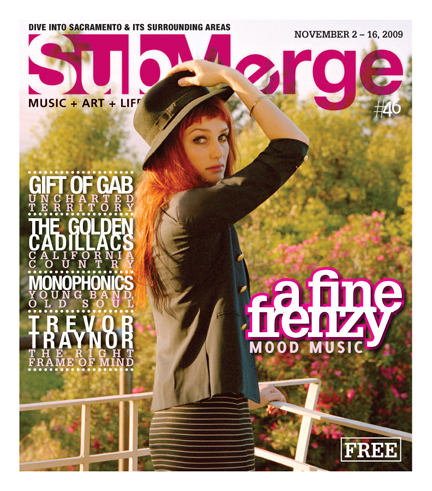
A Fine Frenzy will performed at The Boardwalk on Nov. 13. Oh Blue Christmas will be available exclusively at Target on Nov. 3.
Vienna Teng makes moves on tour and with her new album
A lo-fi drum track shuffles at a medium volume as Vienna Teng presses the record button on a looping station that rests on the top of a gorgeous, midnight black grand piano. A familiar face for Teng, Alex Wong, sits behind the piano and gazes up at her as she begins to sing a gorgeous choral melody that floats from her mouth, natural and calm. The song progresses, Wong’s piano chords stabbing through and finding their place next to Teng’s voice, which she layers with her own recorded loop. She adds to it, singing on top of herself at a higher octave and recording that to layer with herself again for the final refrain in which she hums low and deep. This is a lover’s hymn, an angelic track titled “The Last Snowfall.”
Alright, alright. I wasn’t there. I watched it on YouTube, but I wish I could have been. I, along with the rest of Sacramento, will have an opportunity to see Vienna Teng accompanied by Alex Wong when they grace our presence at Marilyn’s. Their Oct. 16 Sacramento stop will be one of many on a 40-plus date U.S. tour that will span almost 25 states. And that’s just here. Before their U.S. tour began, Teng, along with Wong’s opening act The Paper Umbrella completed a European tour as well. With constant touring, their nomadic lifestyle hasn’t quite lent itself to familiar linens.
“I counted the other day,” recalls Teng. “The most consecutive nights that I’ve spent in the same bed has been three nights all year.”
As much as Teng loves traveling, playing and meeting new people, the prospect of having some time off to focus on more ordinary things like home-cooked meals or tending her own vegetable garden are becoming more and more attractive. And when that time comes for Teng, that’s when she’s able to be creative again and find her muse that will help lead her to songs she’s proud of. Teng looks to her audience for that approval.
“If I have connected with that audience and they like what I do, then I feel like I’ve done something right because that’s the kind of music that I try to make. How do I know when I’ve made something good? When I’ve made something in such a way that the people who look for the same thing in music that I do respond to it,” says Teng.
Vienna Teng is a classically trained pianist who has heard all the comparisons. Tori Amos? Check. Fiona Apple? Check. The list goes on, and let’s be honest here; there are thousands of female singer/songwriters who play piano. Teng, a Brooklyn resident, sets herself apart with the depth and clarity of her piano melodies, mixed with the tender sound of her voice that she has the ability to take in just about any direction. Those are the facts. What’s most interesting about Teng is her interest in growth and progression. She’s not stuck in a suffocating piano-vocal world that she can’t escape from. She’s a musician above anything else, and with that comes the ability to maneuver in and out ideas on stage and in the studio. Take for example her cover of Radiohead’s “Idioteque.” Sure, it might seem too easy to cover one of our time’s most critically acclaimed bands for a little attention. Lord knows it’s been done, but if you mess it up, then there are some serious repercussions. Teng, accompanied by Wong on percussion, a violinist and a cello player tackle this song and do it so much justice that I’d almost rather listen to their rendition.
What is most important to Teng and Wong as they perform songs on stage that might have multiple tracks that are looped, one on top of the other like “Idioteque,” is that they are maintaining their musical integrity.
“I like being in a position where I can play acoustically if I have to, because you never know what situation you’re going to find yourself in,” says Teng. “Sometimes we’ll be playing a show and the power will go out and it’s always nice to have songs that you feel good about playing without any amplification. The way that I connected with music originally was always with acoustic live performances, and I don’t think that will ever leave.”
Teng began playing piano at a very early age—5 to be exact. She wrote her first piano piece at age 6 and from there she began writing pretty steadily and “fell in love with exploring the instrument.” Her classical training only fueled her fire for individuality and self-expression rather than structuring inside the confines of the interpretation of other composer’s music. She knew what she wanted. To make her own music.
“It became pretty clear that I wasn’t going to have a career as an interpreter of someone else’s music,” recalls Teng.
That love of her instrument and in the creative process has lead Teng to the point that she is at now with an extensive tour in motion and an amazing record finished and ready to show to the world. In the studio, Teng and Wong treated each track on Inland Territory as if it were its own album. One song needed two drum kits, another a string arrangement. Others were not as simple.
“There was one where Alex said, ‘I really think this song should be recorded in an old house on an old, slightly out of tune upright piano, and then we’ll have clarinets and bassoon on it.’ So we actually made that happen,” laughs Teng.
Teng was a student on this record more than anything; an apprentice who was looking to have her hand in every aspect of the creative process.
“From the beginning I wanted to know about everything,” says Teng.
And learn about everything she did. Teng was involved in just about everything that had to do with creating the album from finding and hiring the right musicians for certain songs to helping with the writing and arrangement of string and horn parts. Teng even assisted in engineering at one point. This interest in the whole process is what sets her apart from many artists who are doing similar things and makes us wonder what the next album will sound like after she’s mastered all the different facets. This is what keeps us interested in an artist like Vienna Teng; change and progression. If I were you, I’d keep my ears peeled for this one.
Keith Lowell Jensen takes off with a new stand-up CD
A comedian walks into a bar and says—well, he says lots of things, actually. The comedian is Keith Lowell Jensen and the bar is actually a juice bar: Luna’s Café, to be exact. Jensen’s new stand-up CD titled To the Moon was recorded live at Luna’s Café back in April of this year and features an hour of Jensen’s signature lowbrow, indie comedy. Jensen is typically known for his atheist, Christian-bashing humor that has grown in popularity due to the success of the Coexist? Comedy Tour that Jensen is a part of. The tour is a motley crew consisting of a Muslim, a Christian, a Hindu, a Jew, an atheist and a Buddhist. Jensen, along with fellow Coexist? comedian Tapan Trivedi, founded the tour after realizing their shared affinity for blasphemy.
To the Moon finds Jensen rocketing his material to new heights, touching upon anything from having a kid to the costumes in porn. Jensen gets introspective too, poking fun at his experience of attending continuation school as well as the constant confusion of whether or not he’s gay. But the most poignant moment on the CD is the closing track, a nine-minute story describing a childhood memory in which Jensen was duped by his older brother first into sitting in a pile of German Shepherd feces and then making his own deposit in a can, all to the dismay and laughter of his mother. What starts off sounding like a poop joke ends up being a window into the early developmental influences of a talented, comedic mind.
Standing at about 6 feet tall, with low maintenance attire and a unique voice that’s been described as “Muppet-like,” Keith Lowell Jensen is a true performer. He got his start in his early 20s when he was put on stage as an MC for the infamous Spike and Mike Festival of Animation, which reached the height of its popularity by showcasing shorts by such industry greats like Bill Plympton, John Kricfalusi, John Lasseter and Nick Park, just to name a handful.
“That to me is when I started doing stand-up.” says Jensen about his beginnings. “I could have said longer, because I was a ventriloquist in the fourth grade.”
From there his love of performing took him in the direction of sketch comedy, which would put his MC personality on the back burner. But for Jensen, being pulled away from stand-up to do sketch was all part of the process to becoming a better comedian. Biographies of other comedians that Jensen grew to love all had one thing in common: some kind of sketch comedy experience. Jensen wanted that experience too. So in 2001, Jensen formed the sketch comedy troupe I Can’t Believe It’s Not Comedy and focused his attention on writing, acting and directing.
“I just fell in love with it,” reminisces Jensen. “And not just performing it but when you write and direct something and someone else performs it; it’s a really satisfying feeling.”
ICBINC has performed all over Sacramento and also found its way up north to Seattle and down south to Los Angeles. The troupe, although currently on hiatus, is still in existence and all but one of the members is part of the original cast.
During the course of performing heavily with ICBINC, Jensen still found time for stand-up when he could.
“I did it once in a while to keep my chops up.” says Jensen.
Jensen made the jump back into stand-up when his friend and fellow comedian Brent Weinbach needed his help with booking a gig. One of the comedians on the bill, Tapan Trivedi, asked Jensen to share the bill with them and he agreed.
“I didn’t know what I wanted to talk about, it had been so long. So I did half the show on homophobia and half the show on religion.”
That night, his atheist comedy was born—and not long after, so was Coexist?. Trivedi and Jensen assembled four other comedians for the tour and what followed were gigs at some of the top comedy clubs on the West Coast including the Hollywood Improv and San Francisco’s Punchline. What also contributed to the success of Jensen’s atheist brand of humor was his use of YouTube as a means to broadcast his stand-up to a larger audience. Fan bases around the world have popped up, especially in Sweden, where his Swedish last name rings bells with the locals.
Since the conception of the Coexist? Comedy Tour, the past two and half years have been a learning process for Jensen, who has been extremely focused on his stand-up, always looking to improve upon his jokes and build upon the foundation that was formed from doing years of sketch.
“Sketch gave me a freedom in stand-up to play characters a little bit more, to change my voice when I’m giving the words of another person or in quotes within a joke. I think sketch certainly helped me with pacing,” he says.
For Jensen, the writing and performing process is ever changing and spontaneous. Some of the material on To the Moon was written the day it was recorded. Depending on how the crowd is that night, Jensen can add or subtract material at a whim.
“It’s just an interesting part of this art form; it’s so fluid and it’s such a back and forth with the audience. There are very few art forms where you put it in front of the audience and you go back and forth and you keep molding it and changing it according to how it sits with them,” says Jensen.
With a tour schedule that has brought him attention outside of Sacramento and the Internet at his disposal for promoting his stand-up, its seems that at this point in his career it would make sense for Keith Lowell Jensen to move to where there’s more work and a bigger market. But making the move to somewhere like Los Angeles just isn’t in the cards. In fact, being from Sacramento is part of his brand, says Jensen.
“It’s an unusual identity to be from somewhere like Sacramento, and to be proud of where you’re from and not feel the need to switch it up and go down to L.A. I don’t want to be an L.A. comic, I’m a Sacramento comic,” says Jensen.
Sacramento is lucky to have Jensen, who is more than qualified to be an ambassador for the River City. He’s practically a household name in the arts community, and for good reason. This past March saw the release of his documentary, Why Lie? I Need a Drink, a hilarious look at panhandling from a homeless and non-homeless perspective. The non-homeless perspective showcased Jensen in various costumes with a multitude of signs bearing clever phrases like, “Large bills OK, can make change.” It premiered at The Crest Theatre and had quite a successful run; look for a DVD release this September. And if a tour, a CD and a documentary weren’t enough, Jensen authored a book titled The Atheist Survival Guide: A Humorous Guide to Getting By in a God Fearing World that is slated for release in November.
Considering the breadth of his undertakings, it may seem like there’s no rest in sight for Jensen. However, he might have to take a break after all with the arrival of another important something—a baby girl due in October. With the success of all his other endeavors, fatherhood should be a walk in the park. Or should I say, a trip to the moon.
Dad’s Kitchen
2983 Freeport Blvd., Sacramento
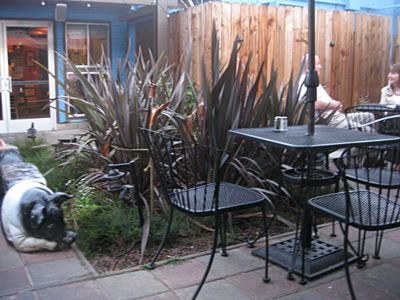
It was a picturesque summer evening. The sun had just gone down and a mild breeze moved about the quaint patio in the rear of Dad’s Kitchen. At the 8 o’clock hour, the 10 black tables that angled along large gray tiles were filled with couples and families, stuffed happily and enjoying the seclusion of what seemed like a backyard get together at an old friend’s house.
For owners Zac and Ali England, it seems like that’s the point. Dad’s is comfort food at its finest, offering patrons a home away from home where they can relax and enjoy some great cooking, a to-the-point alcohol selection and staff members that, if you were so inclined, could be your new best friends—or bandmates, for that matter, since members of the wait staff and kitchen also happen to be local musicians. In fact, when I arrived on a Tuesday night, an open mic night had just gotten under way. If you show up and realize you didn’t get the memo, don’t fret. An array of musical instruments including a guitar, banjo and mandolin are mounted on the wall and can be taken down for a pick or a strum. In fact, it’s encouraged.
Dad’s also carries offerings from Two Rivers Cider, a local brewery that embraces a classic approach to making hard apple cider, crafting it to be dry and crisp—reminiscent of a chardonnay. In addition to the apple, Two Rivers brews up seasonal ciders that will spark true romance in your mouth. Dad’s currently serves their blood orange cider that I’m convinced glows in the dark; the beverage is an electric shade of neon fuchsia. Naturally, I ordered one to start out the evening and my friend who accompanied me ordered a Monkey Knife Fight, an India pale ale that local brewery Rubicon produces. Tapping into the local community for alcohol as well as fresh produce and meats is an important facet of Dad’s that the restaurant proudly wears on its sleeve.
We clanked our glasses and set out on our culinary journey by ordering a starter of Dad’s infamous mac ‘n’ cheese, a menu staple that’s won a few awards for being the best in town. I found this out after I complimented chefs Beau and Mick on how their rendition of an American classic wasn’t too rich and was portioned just right for two. Bread crumbs and parmesan cheese were a nice topping and brought the dish to life, adding a crunch to the bite and sharpness to the aftertaste. Our vixen server, Anna, who is known for her high-kicking antics in the local burlesque troupe the Sizzling Sirens, suggested we spice it up a bit with a side of pepper plant sauce.

Dad’s menu is really an anomaly. If you are familiar with their sandwiches, you’d most likely think of Dad’s as an edgy, tattoo-friendly dive—especially with sandwiches that have names like “Bikini Kill,” “Angry Road Man” or my favorite, “Hot Blonde.” But if you come in for dinner and keep your ears peeled for the Blue Plate Special, you’ll more than likely be treated to one of the best meals in town. This particular evening’s was a lightly friend chicken breast with chunky mashed potatoes and a lemon gravy, summer veggies sautéed in olive oil with salt and pepper, and topped with curly fried onions that twisted like a redhead’s locks. The presentation was fantastic; my chicken fanned out amongst the tangy lemon gravy that perfectly complemented the tender white meat of the breast. A blast of color came from orange carrots, green and yellow squash and bell peppers—all of them fresh and crisp. My mashed potatoes were just like I like them: hearty and full of skins.
At the close of our meal, I leaned back in my seat, rubbing my belly like a crystal ball. It’s clear that there are many more trips to Dad’s Kitchen in my future.
Middle Class Rut
Cesar Chavez Park – Friday, June 19, 2009
Last Friday’s Concert in the Park Series at Cesar Chavez saw the triumphant return of Middle Class Rut, another long-awaited addition to the short list of bands that have found mainstream success beyond our county lines. This success is partly due to the overwhelming response to their 2008 single, “New Low,” that was played almost nonstop on the now-defunct KWOD 106.5. The stoner-friendly, alternative radio station was a huge proponent of the band. In fact, one year ago on the same exact stage, KWOD DJ Andy Hawk announced them before they hit the stage to a much smaller crowd.
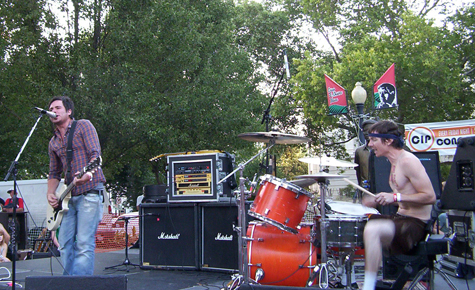
MC Rut, as they are referred to in short, consists of Zach Lopez on guitar and vocals and Sean Stockham on drums and back up vocals. That’s right, they’re a duo. But before you make up your mind based on all the preconceived notions of what a duo can and can’t do, hear me out. They aren’t the White Stripes and they sure as hell aren’t Hella. The energy that is harnessed by these two is stadium caliber, as was witnessed by a huge crowd at the Rock-am-Ring festival in Germany last June. Cesar Chavez Park isn’t exactly a stadium, but it isn’t The Press Club either, and I’ve seen the boys murder that tiny venue to a crowd of 20 on a Sunday night. The point? They’re a versatile band that owns any crowd, and Friday night was no different.
A chant of “MC Rut!” welcomed the two onto the stage; each of them casually settling in to their instruments. Lopez jabbed at his guitar like a child taunting a beehive, the feedback buzzing like angry bees. Stockham adjusted his well-worn orange drum kit and removed his shirt to reveal his “For Sale” tattoo that was inked across his chest in bold red letters. “What’s up, Sacramento?” said Lopez in a classic rock star moment. “How you guys doing?” A loving Sacramento crowd that was clearly there to support their hometown favorite answered back with an eruption of applause.
MC Rut opened their set with “Busy Being Born,” their most recent single that began with one of Stockham’s signature rim tap grooves that Lopez overlaid with slow melodic chords that scraped and dragged while he sang, “The days keep dragging on”¦“ Anticipation mounted until finally the chorus exploded wide open, Stockham punishing his cymbals on each downbeat. A cloud of dust from the stampeding mosh pit was carried toward the stage by a much-welcomed Delta breeze. This would continue for the whole length of their set that would only build in intensity as Lopez and Stockham galloped through song after well practiced song.
During what seemed like the crux of the set, a murder of crows flew overhead to the wafting soundtrack of Lopez’s guitar that melodramatically pulsed in synch with the beating of their wings. “Hold the person you love tight,” Lopez instructed the mesmerized crowd who were eating out of his hand at this point. “I like the way your shirt’s unbuttoned,” Stockham joked with Lopez. Their humor on stage is evidence alone that these two have been friends and bandmates for over a decade now. They seem to be enjoying every moment of their second chance at success after their previous band, Leisure, was signed to and then dropped from Dreamworks.
Before their final song, a white tank top was hucked onto the stage, landing at the feet of Lopez, who remarked that he’d rather they get some bras and panties. And, like clockwork, a black strapless bra made its way to the stage. Stockham was pleased and proceeded to strap the bra on himself with a little help from Lopez, who was all smiles at his bandmate’s cross-dressing showmanship. The familiar metallic percussion that opens “New Low” began, and at that point the whole crowd was in it. They sang every last word of the tune with fists pumping and heads nodding.
It’s Gotta Be the Shoes
In 2005, Nike dug their fingers deep into the world of skateboarding by releasing a signature shoe by Paul Rodriguez, poster boy for the Nike SB campaign. Four years later, after compiling a team of remarkable talent—Brian Anderson and Omar Salazar to name just two—the next in line was Stefan Janoski who joined the roster in 2005. A Sacramento resident who hails from the nearby city of Vacaville, Janoski is one of the nicest guys in skateboarding and when you see him on the board it’s immediately clear why Nike has chosen him for their next signature shoe release.
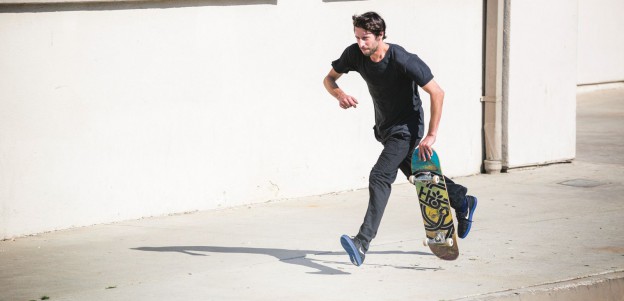
Janoski’s style is fluid, always landing tricks over the bolts whether he’s destroying handrails or whipping out his signature 360 flips. His stylized version of the trick captivated youths around the world when Transworld Skateboarding released a how-to video of Janoski explaining the basics of 360 flips. In charismatic fashion, he performed the stunt on the street, in the skate shop and even at the grocery store while picking up some Cocoa Puffs. In two years time, the video has had over 2 million views and has made him into a recognizable face in the skateboard community here in the U.S. and especially abroad. Celebrity isn’t the best adjective to describe Janoski, though. Genuine might be more appropriate as it best describes his infectious personality, his passion for skateboarding and his outlook on life.
Janoski was born to ride a skateboard and at 29—his 30th birthday lands in July—he’s skating better than ever. For him, age is just a number.
“I feel like I’m 17.” He says. “Thirty-three will come around and I’ll still be doing the same thing. That’s pretty cool.”
Pretty cool indeed considering the fact that skateboarding is centered on youth culture. The average age of the Nike SB team is 31 (its senior member Lance Mountain is 45). It seems that age and experience were deciding factors in the selection process, but then there’s that Paul Rodriguez guy. At 24, he’s the youngest skater on the team, and subsequently the first to receive a signature shoe. But that was then and Janoski is now and he’s excited for the release of his shoe in early May.
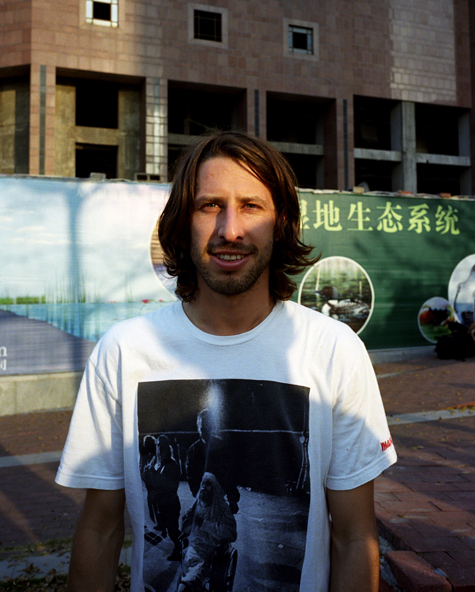
You have a shoe coming out for Nike pretty soon. Is that a really important landmark in your career or does it just feel like a natural progression for you?
I guess it’s sort of a landmark just because I’ve never had a shoe, and it’s pretty common nowadays for people to have a shoe. It’s kind of taken me a long time, just because I’ve never really been set at a company where I really wanted to get that deep and involved and stick around for that long. So usually I’ll talk about having a shoe with a company, and then I get cold feet and don’t really want to stay there.
You have commitment issues?
Yeah [laughs]. It’s pretty cool, though, that I’m finally getting a shoe and also that Nike is finally open to giving people shoes. They’ve always had Paul Rodriguez, who has a shoe, and he was the only one.
Why was it like that?
I’m not sure exactly. I think they were trying to make it a really big deal or”¦I think what they realized is that they have to expand more. There’s a lot skaters out there nowadays, so to really stay in skating they have to have more than one person representing. It’s pretty cool. I’m excited because it’s a shoe I really like.
When does the shoe come out?
They come out on May 8.
How much input did you have in the design and construction of your pro shoe?
A lot of input actually, I had total input. I don’t know if they expected me to get as involved as I did. At first they had samples and prototypes of other shoes already, but it wasn’t what I was going for. So then we started, me and this guy James, from scratch. I brought in a bunch of shoes and kept telling them what I wanted.
You’d bring in examples of other shoes that you liked or what?
I’d bring in a shoe and say that I like the toe on this shoe, and I like the lace hole on this shoe and the tongue on this one—put them all together. I think I had an old Vans a Sperry Topsider and a Converse All-Star. They wanted to use a cup sole at first, which is like a Dunk or a normal sneaker, but it just wasn’t really getting the shape that I wanted. It took a really long time, because we did other stuff first and so this shoe didn’t come around for a while. But then once the prototype came about, it was the best.
That’s surprising, because it seems like Nike would be more overbearing with the product that they are putting out.
I’m a little bit of”¦ If someone’s going to give me a shoe, I’m going to get like, “It’s my shoe!”
Oh, so you’re a bit of a diva?
I don’t know. I just really care. If I’m going to have it be mine, then I want it to really be mine. I don’t have a problem not having a shoe, if it’s not going to be what I want. It sucks to have something with your signature and then hate it. At first they fought it because Nike doesn’t really have this style of shoe. They have everything else and that’s the main reason I wanted it to look like that.
How does the pro shoe thing with Nike work? It looks like from the video footage I’ve seen you’re able to skate it for a while before it comes out. Is there like some sort of test run period?
They’ve been around. I’ve had them for a year, I think. I actually wear the sample size, which is a 9.

Sample size?
Every shoe’s prototype is made in a sample first, but all samples are a size 9. So I was able to wear my shoe way before they made a sample just for me. I’ve only skated in two pairs that weren’t samples.
How do they skate?
Actually, they are 10-times better than the sample. They’re so much more comfortable. They’re quality. Not only are they a cool shoe to wear, but they’re exactly what I want to skate in.
You live in Sacramento, but I know that you are originally from Vacaville. Most people I meet talk a load of shit about that place, but you put the city on your shoe! Are you getting some serious Vacaville love for that? Have they given you the key to the city or what?
No! I don’t know if Vacaville even knows about it. I probably know three people in Vacaville. Maybe five if you count my parents, so”¦yeah.
So, there are no strong ties to Vacaville then?
It’s a joke for me because people really have hometown pride and like to represent where they’re from. People from San Jose are like, “Yo, San Jose is the best! Fuck!” I don’t know, I think it makes it even funnier that I have a shoe with Nike and it says Vacaville. Vacaville is a place that you grow up in and you’re supposed to leave. It’s a big accomplishment to not be there anymore.
But depending on who you talk to, the same thing can be said about Sacramento. Why stay in Sacramento?
For me it’s a home base type of thing. I travel so much and Sacramento is so mellow, there’s no traffic and it’s so quiet. I can come here and just hide out and go skate with Brandon Biebel and those guys. It’s just a hibernation place for me now. I’m traveling constantly and waking up in a hotel in some city somewhere and going skating everyday. So when I come home, it’s hard to wake up early and say, “I’m going to go skating and eat shit all day.”
From what I’ve read, you’re not too into the competition circuit. In fact you don’t place all that well! Is it because you just don’t care all that much? Why do some skaters love it and others like you just not get into it?
I mean, I’ll enter a contest, but it’s hard for me to really care; to really go out there and try to put a run together and work really hard! Contests are an entirely different way of thinking about skating. To me, it’s a way to make money off skateboarding. People win a lot of money in contests but I don’t think that it really has anything to do with skateboarding. It’s a way for people who are consistent and really like it to go and be competitive and win some money and all that. But it’s the smallest percentage of anything that has to do with skateboarding. Most people started skateboarding for the exact opposite reasons. They weren’t competitive, they didn’t like sports and they just wanted to go out and have fun and not stress. I enter contests and if I win a little bit of money, yay! But if I totally fucking lose, then it’s like, “Oh well.” When I started, you didn’t train or practice skateboarding for a big match, you just went skating everyday. Some days, maybe you’re just sitting around on a red curb all day just bullshitting with your friends, you know?
How is the swine flu affecting skateboarding?
I don’t know. I had bacon yesterday. I think it’s a rumor! Isn’t it just on the East Coast? Whatever, it’s population control.

Dusty Brown w/ DJ Whores
Sunday, Jan. 25, 2009
The Press Club, Sacramento
Do you ever wonder if the musicians you love really understand how talented they are? Music is a powerful thing that has the ability to move and change us; it can conjure the good or the evil that resides deep within our souls. If these musicians that we wonder about really knew the power they possessed, I’d like to think that they would always choose to use it for good.
Call me naïve, but when I witness a performance like that of Dusty Brown, Sacramento’s shining gene pool of electronica soundscapes, it fills me with feelings of hope and unrestricted love. Their latest Club Pow performance at The Press Club is a testament to their musical abilities.
Dusty Brown are veterans of the Sacramento music scene with a half-dozen Sammies under their belt as well as a Hall of Fame induction after winning the award too many times. I’ve been there for a good portion of that ride, so I’ve seen all the tricks and heard all the songs and own all the CDs. Normally, Jessica Brown’s vocals break my heart into a million tiny pieces that are then reassembled by Dusty’s intricate drum programming and ethereal Moog keyboard lines. I am swooned; and when I think I can sink no deeper into the melody that engulfs me, along comes Zac Brown, who patiently places his affected guitar riffs in all the right cracks and crevices that the song might allow. They have a power over the audience—hypnotizing each and every one of us with our bobbing heads and glazed eyes.
However, tonight will be a little different. Tonight, Jess Gowrie, the drummer from the now-defunct rock group Red Host, will be playing for a few songs and Dusty informs me that he will even hop on the bass for a track. Dusty Brown unplugged? Er”¦kinda.

Across the dance floor, DJ Whores is perched above the crowd, which he is sizing up methodically, waiting to drop the needle and send us all into motion. The Press Club’s stage sucks you in and makes you part of the performance whether you have the courage or not. It’s an intimate setting that feels comfortably snug rather than claustrophobic. DJ Whores’ distinct style of dance floor bangers is the product of hard work—the work of digging for just the right song. His electro selection introduces everyone’s ears to abrasive bass lines that move back and forth along the kick and snare. He prepares us.
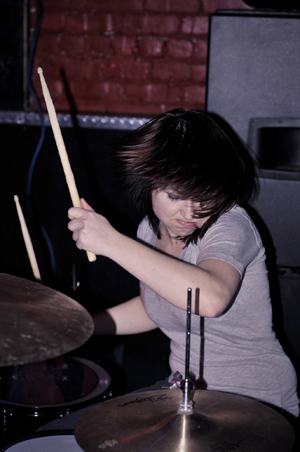
Dusty Brown’s set begins with a few crowd favorites that have the girls feeling giddy; the hoodies that have assembled in the front are moving back and forth like Apache rain dancers. I see Jess appear to my left. She gazes at the stage that will soon be hers. Jessica Brown rewards my patience with a fuzzy comment into the microphone, saying something to the effect of, “I think it’s time for Jess.” The song begins without Gowrie as she approaches her low-seated Rocket Shell drum set—readying herself—then yields to her quickly climaxing drum build. She explodes into the chorus of the song and turns an electronica track into a heavy, Moog-flavored rock song. She can’t be denied now. Gowrie powers through two songs with the rest of the band that are crash- and snare-heavy. She finishes the songs and returns to the bar where she paces back and forth, breathing heavily and making no eye contact. I take a deep breath too, exhausted by the powers of good music.
Travis Barker and DJ AM
The Park Ultra Lounge, Sacramento
Thursday, Jan. 22, 2009
Thursday night at The Park Ultra Lounge saw not one but two rare appearances. The first was the electrifying, genre-amalgamating duo that is comprised of Travis Barker from the late and arguably great Blink 182 on drums and celebrity heartthrob DJ AM a.k.a. Adam Goldstein on the wheels of steel. The second and quite possibly rarest was my own appearance. I don’t quite fit in at a place like The Park, and if it hadn’t been for one of my favorite drummers playing that night, I would have avoided it at all costs. Let’s just say I’ve got a skinny wallet, not a skinny girlfriend. But that’s a different article.
I arrived early and decided that, when in Rome, I would order a Vodka Red Bull as I was going be standing around for a while. Travis and AM didn’t go on until after midnight and I’d need wings. The performance room resembles a grown-up version of a high school dance minus the actual growing up. Beverages at the back, coat check around the side with a medium-size stage against the back wall. Long, ruffled white curtains drape down the walls, which serve as the perfect canvas for the blues, purples and greens that pulse and ripple—mimicking the dance floor.
Eddy Edul was the opening DJ and he was spinning a pretty standard mix of dance tracks, remixes and mash-ups. He’s pretty uneventful, but I give credit where credit is due; He does get all those little Parksters dancing.
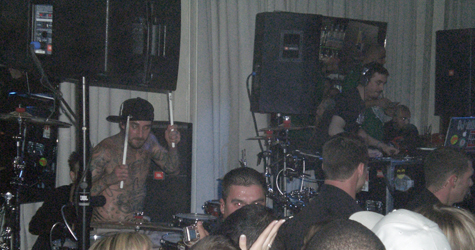
TRV$/DJAM, as they are referred to, went on a little past midnight. My coveted position to the left of the stage was in plain sight of Travis’s drum set that had a monogrammed bass drum head. Minutes before the show was to begin, I was quickly overpowered by a flock of perfumed Paris Hiltons who caused my forced migration to the back of the crowd. Sigh, so much for some decent pictures.
All the frustrations aside, Travis and AM are all that they are cracked up to be. AM seamlessly mixed a variety of music that ranges from Metallica to Foo Fighters to Paul Wall, who actually made a special guest performance that sent the crowd into hysterics: iPhones were out in full effect when he stepped onto the stage. They shot into the air like ostrich necks, poking out over the crowd for a picture of the always iced-out rapper. Travis played to the music, but not in a way that seemed like he was doing a cover or simply just playing on top. He unleashed thunderous drum rolls that spanned his whole kit and ended with explosive crash hits. He remixed the songs by adding 16th note high-hats that weren’t originally there, or by expanding a section and filling a dead space with a snare drum roll. The pace was nonstop as AM continued to throw song after song at Travis, who devoured each track one after the other.
I was surprised at how animated AM was during the show. I saw him dancing and waving his hands to the beat as well lip synching his favorite vocal lines to the crowd who sang right back. He was wearing one of those clever shirts that we all love that said “Whitey,” written in the Walt Disney font. Travis was his usual shirtless self, with a black sideways baseball cap that had some sort of cursive white font—the same font I saw on the hats and shirts of the rest of his entourage (Stars and Straps, surely) who were red-roped on the side of the stage.
Unfortunately, the crowd was more star-struck than enthusiastic. I didn’t see much dancing. The show was more of a really loud photo opportunity than anything else. They finished about an hour later to the eruption of applause from the crowd, sans encore. I left feeling alright about the evening despite all the non-musical sour notes.