Kupros Bistro
1217 21st Street – Sacramento, Calif.
Words & Photos by Adam Saake
Kupro is Esperantan for copper. If you’re like me, you’re asking yourself, “What the hell is Esperanto?” Esperanto, a language all its own, was developed in the late 1800s as a way to create a middle ground for the people of planet Earth to speak with one another. But it never caught on, and now only a small percentage of people in the world care enough to learn it. Kupros Bistro, a wonderful new gastro-pub located in Midtown, will hopefully not suffer the same fate. If we could draw a comparison, although, it would be that Esperanto is apparently very easy to learn as Kupros’s menu is very easy to love.
What was once a popular costume shop by the name of Cheap Thrills is now a completely remodeled two-story destination for food and libations. Playing off the traditional English pub, Kupros offers a comfort food menu with a touch of finesse. Move over, fish and chips; step aside, bangers and mash–ciao, linguine and clams, bon jour duck confit Rueben.
On my late afternoon visit, the lunch crowd had dispersed and I had the second-story patio all to myself. Inside, a multitude of tables all set and ready to go loomed like a ghost soiree waiting to be possessed. “Banquets,” said my server. Hopefully, because the amount of seating available seemed a little ambitious for what is essentially a pub. Outside, the patio overlooked the busy motorcade that is 21st Street, and umbrellas lined the banister, shading diners from the lingering summer rays and the wind-disturbed pollen and tree debris. Downstairs had booth seating and the U-shaped bar looked very inviting if you like getting friendly with the bartenders. Their draft beer selection had some keepers, including a Belgian-style saison from Lost Abbey and an English-style cider from Fox Barrel. And intentional or not, there was a humorous coupling of Stone’s Arrogant Bastard Ale and Flying Dog’s Raging Bitch.
For the appetizer, I tried the fried pickles ($5) with a house tartar sauce. It’s of note to mention that all Kupros sauces are house-made, all the way down to the ketchup. Four lightly battered and fried wedges of tangy dill pickles are served modestly in a cocktail glass with a napkin back to absorb the excess oil. The tartar is pretty standard, but this dish doesn’t need to reach for the stars; it’s meant as a salty treat to go smashingly with a frosty pint. This isn’t a dish you grow tired of quickly and this is in part to the batter. It isn’t layered on so thick that you have a hard time finding the pickle.
It’s important to order the burger from time to time, because so many places do it differently. You never know when you’re going to stumble upon a truly great rendition of an American classic. As far as Sacramento goes, Kupros’s natural Angus burger with beer cheese, house relish and “drive-thru” dressing ($13) ranks up there in my top three. Aside from a great patty of beef cooked right and a fresh bun, the beer cheese turns this burger from good to great. This fondue-like concoction is a combination of cheddar cheese, lager beer and shallots, which is then smothered over the patty to make for coagulated goodness. Add some grilled onions and you’re dynamite.

I’m a salty and sweet kind of guy, and although dessert at lunch is a little overkill, I just couldn‘t resist. Amongst other interesting treats, Kupros does a vanilla bean panna cotta with chocolate cookies ($8) that have a frosting center (essentially a beefed-up Oreo) made by one of the Kupros pastry chefs, Jodie Chavious. Panna cotta is a traditional Italian custard usually made with cream, milk, sugar and gelatin and the flavors vary from caramel to blackberry. Chef John Gurnee throws a little buttermilk in there to give it a nice tang. This desert is uncomplicated, rich and fun to look at too. Indulge.
The dinner menu has some items not available during the day, including a delicious potted rabbit that I tried on a previous visit that was literally served in a latch-top pot. The kitchen stops serving at 10 p.m., so get your orders in before the night sneaks up on you. Also, Kupros is closed on Mondays and the kitchen takes a little break from 2—3 p.m. so plan accordingly.
California’s Grape & Gourmet
Sacramento Convention Center
Wednesday, July 7, 2010
Words by Adam Saake
The 5 o’clock crowd filed into the Convention Center in downtown Sacramento for the annual Grape and Gourmet, an event that boasts, “The largest tasting of California gold medal winning wines under one roof.” With over 200 wineries present, serving 700 different wines that were California Sate Fair winners, along with 80 restaurants from the Sacramento region, I was, to say the least, feeling a little overwhelmed.
After I checked in with the Submerge crew, wine glass in hand and weird plastic cafeteria plate to accompany, we proceeded to the double doors that marked the entrance to a sea of foodie heaven. The first thought that came to mind is a funny little rumor that I heard while I was backpacking in Paris a while back. Supposedly, if you stopped to look at every piece of art in the Louvre for 10 seconds, it would take you over a week to see everything contained within its walls. There are variations on this, but you get the idea. Before me was row upon row of wineries and restaurants, poised and ready to fill my glass and occupy my plate. I took a deep breath and said myself, “Just relax, tiger. You love food and wine. Just pace yourself.”
I warmed up with a 2006 Frank Family cabernet sauvignon from the Napa Valley. This big red from a winery whose name and reputation precedes them showed heavy oak and spices and was very “jammy” with distinct notes of blackberries and dark cherry. As much as I wanted to finish my pour, my new motto these days was “sip and spit.” Remember, 700 wines. I was determined not to be blacked out by winery number eight. Lucky for me there was plenty of food to partake, and I quickly spotted the MIX table where they were passing out a delightful little tortilla chip with a cold mix of shrimp and avocado.
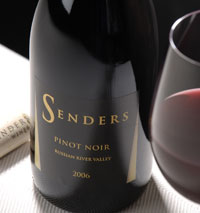 I was over the initial shock and now I was ready to get down to business. My good friend and rising sommelier-to-be Leon Moore had been roaming the event for a few hours, so when I linked up with him he had a list of gold stars to hit. Or should I say, gold medals. One of the first we hit was Senders, who produce wine from Carneros, Russian River Valley and the Napa Valley. Their 2007 Carneros Pinot Noir Reserve received the gold medal at the California State Fair and was awarded 94 points. Shiny alloys and essay scores aside, they make good wine that has shown well all across the board. Some may question the results of competitions like the one held at the State Fair, but owner and winemaker Craig Senders brought up a good point.
“As a person who enters wine in different contests, I would say there is some validity to the question of whether there’s some randomness to how awards are given,” said Senders. “One of the conclusions [the judges] reach is they know what they like and what they don’t like.”
Basically, if it’s good then it’s good no matter how it scores in one competition compared to the next. Senders went on to say that if a wine isn’t quality, it doesn’t matter how many times it’s judged–it isn’t going to show well consistently. For me, this only reaffirms another very important argument, which is the never-ending question of why you should drink a certain bottle of wine in the first place. You be the judge. If you like it, then drink it.
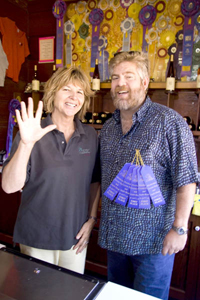 Moore pulled me aside and said, “Navarro Vineyards. The guy is pouring a late harvest gewürztraminer that isn’t on the table. Come on, I’ll get you a taste.” Turns out, the late harvest would be the icing on a very good cake. I tried all six wines on his table including a pinot noir and a chardonnay that were some of the best wines I had all day. Following the six, James Greaves reached into a red cooler behind the table and pulled from the ice what would be the best wine I drank that day. It was a sweet, complex white wine with a name that I can hardly pronounce. I had to know how they make it.
“Well first of all, we only make it in years where we have a natural botrytis condition,” explained Greaves.
Moore always says to me after a good bottle, “All that from rotting grape juice,” and apparently from diseased grapes as well. Botrytis, commonly referred to as the “noble rot,” is a fungus that deprives the grape of water and therefore concentrates the solids like sugar, fruit acids and minerals. What you get is a very sweet grape. The workers at Navarro then go through and hand-select these specific clusters from the vineyard. About one percent of the whole vineyard makes it into the bottle. You’re drinking pure, fungus-ridden love.
 For attendees of Grape and Gourmet like Shannon Harlan and Karen Chang of Sacramento, the draw is “lots of food and wine in the same place.” That’s the real advantage for both local businesses like Sacramento’s Babycakes or Handley Cellars from the Anderson Valley; a chance to see thousands of people all at once. The trick is to make them come to you the next time, so it’s all about the “wow factor.” This was being accomplished by wineries sometimes offering access to every varietal and blend in their library and by restaurants showcasing on-site cooking and prep of their appetizers being served. Placerville’s Sequoia teased my taste buds with a sautéed mushroom plate that was wafting through the crowd. Sandra Dee’s line for what looked like a solitary rib was 20 deep each time I walked by, and some wineries were plum out of juice by the time I made my way over to their booths. That could be a quantity thing, but if it was good, then word was spreading fast. Alex Szabo of Szabo Vineyards, a boutique winery located in the Sierra Foothills, was experiencing this firsthand.
“I just had 10 people come up before you, plus five of the judges and say, ‘We want your primitivo,’” said Szabo. “It’s amazing how word of mouth goes around.”
I finished the day off with a chocolate cupcake and a sip of port in the spirit of some well-deserved finale I had earned. I did as most who attended, I’m sure, and walked away with a deeper passion for California wines and Sacramento area cuisine. Salud.
Felipe Esparza tickles the charity bone
Words by Adam Saake
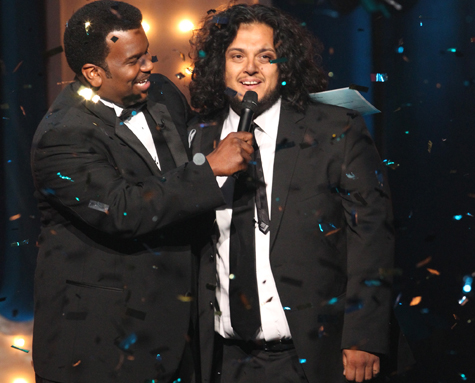
Most of the time you get 20 minutes. Maybe. Celebrities are busy people with complicated agendas that their publicists keep moving like a well-oiled machine. This was not the case with this past season’s winner of Last Comic Standing, Felipe Esparza. On the dot, I ran out of questions at the 20-minute mark and began to end our interview.
“You could ask me what I’m going to do with the money,” said Esparza, offering me more for us to talk about while also pointing out that I had forgotten to ask an obvious question.
Esparza was calling from Los Angeles, where he lives and where Last Comic Standing had been filmed. Esparza beat out Tommy Johnagin and Roy Wood, Jr. in the top three to become season seven’s winner and the lucky recipient of $250,000. It’s easy for me to fantasize about what I’d do with that much money (I’d piss it away on a cellar full of first growth Bordeaux and a safari to Italy to track down Monica Bellucci), but after hearing Esparza tell me a story about Paul Rodriguez’s Ferrari I wasn’t quite sure what he was going to do with it all.
“I’m going to donate it,” says Esparza proudly. “Not all of it. Some of it.”
One of the charities rehabilitates gang bangers and outcasts and helps them find jobs, another is an alcohol treatment center and the third is really a big middle finger to the World Wide Web of Esparza-haters.
“There’s been a lot people talking bad about me on the Internet. Saying, why do I talk like this, ‘I don’t understand his accent,’” says Esparza. “Well I got something for them, too. I’m donating money to a speech impairment school in my neighborhood.”
Esparza jokes about being a deadbeat dad, being the last on his block to screw the neighborhood slut and even throws in jokes that are borderline corny.
“The guy who wrote the song, ‘The Hokey Pokey’ passed away,” starts Esparza. “During his funeral they couldn’t close his casket because every time they put his left foot in, he put his right foot out.”
OK, that’s just plain corny. But something about him and his unique brand of esoteric one-liners won over the judges and the voters during those 10 weeks of competition. When I asked Esparza if winning was a big break, he wasn’t so quick to rattle off movie deals and HBO specials he’s got lined up. He’s still on the grind like a lot of comedians, and what comes next is new territory.
“I never made it that far,” jokes Espraza.
Did you have to audition for Last Comic Standing?
For Last Comic Standing I had to audition. I didn’t wait in line this year so someone must have put in a good word for me this time.
So you’ve auditioned in the past?
Yeah, and I sucked.
I didn’t see you, because you weren’t on those shows.
No, you never noticed me.
You touch yourself in this very strange way while you’re on stage. Almost like you’re trying to pinch your own nipple. Is this a weird tick you’ve developed along the way?
I think every comedian looks for something to hold on to. Some comedians, they lean on the microphone stand. Some comics sit down and others just stand still. I just walk around. I used to wear big coats, and I always closed it over me and tried to hide, because I was so scared of being on stage. And I was just trying to cover myself up like if I had a cape. And little by little I stopped holding my coat and pushing it over me. Because it looks weird. Then I just forgot about it, and now I pretend to hold a coat or something. It’s a habit I guess, I can’t get rid of it.
Normally your delivery is very laid-back and the timed structure of the show seems like it might have been a challenge for you. Did you have to adapt?
I had to adapt, because I only had two-and-a-half or three minutes to wrap it up. We had to submit three minutes of material, no more, no less. I tried to go for the strongest jokes. I have a lot of one-liners, so it was hard for me to do a story because I don’t have so many long jokes. The only long joke I have is [whispers], “I want cereal.” That took a big chance, that one and the last joke I did at the finale, “Now I know you can keep a secret.” There was a risk I took. I did those jokes at the end, because if I had done those jokes at the beginning, I probably would have lost my timing. It was hard to come up with fast jokes. Then the audience. The audience would clap at everything that Tommy and I were saying. They will applause break “hello.” I had to time the audience. I would do the setup and they’d laugh at the setup. Whoa, hold on. The joke’s not even there yet. Like, I said this joke; I said, “The restaurant that’s parked in front of my house…” That got a big ass applause break. And then the punch line was, “…got robbed after I paid.” Some of the comics, I don’t know if they were used to the crowd cheering for them so loud. It was bothering their timing a lot. Me, I was just riding the flow.
Were you writing new material along the way to pepper in with some of the older bits?
A lot of the jokes that I said in the beginning of the competition were new bits. Like the one about the new law in Arizona. I say, “That law sounds scary, but if I get deported I’m going to say the same thing I say when I get kicked out of a club. ‘But sir, I was already in there. My friends are all in there. They’re still holding my credit card.’” That was a new joke; it was only like a month old. “I want cereal” was like a year old.
Were you always a jackass growing up, or did you make your way into comedy through other channels?
Ever since my friend Jackie Escalara invited me over to his house. See, I lived in the housing projects but across the street, not even 100 feet away, was a regular neighborhood. Across the street in a regular house was my friend, Jackie Escalara. He introduced me to Bill Cosby on a little Fisher-Price record player. I listened to that whole bit, about “me and my brother Russell.” The one where Bill Cosby is talking about him and his brother fighting all night. And from then on, I said, man this is funny. I memorized the album. It’s weird how when you’re a kid, when you really love something, you remember it–unlike math and English. You forget that shit when you get home. I wanted to be a comedian from then on.

Were there any Latino comedians who influenced your style and that you looked up to?
I think I like Paul Rodriguez and George Carlin the best. And Richard Pryor. I think my top three are Paul Rodriguez first, Rodney Dangerfield second and George Carlin third. If those three guys had a baby, it would be me looking like Mitch Hedburg but speaking Spanish.
I don’t want to think about the three of them having a baby, at all.
I know huh? It would be crazy. Drinking wine like George Carlin, riding in a Nova with hubcaps and smoking crack in the back! I love Paul Rodriguez because he has different material all the time, and he’s always talking shit about somebody. It’s hilarious. Like I remember Carlos Mencia was on stage preaching. Like he always does now, preaching about how much money he made. He was saying he made a million dollars. But, when we were in the parking lot–there were a bunch of comedians hanging out in our group, and Paul Rodriguez has a Ferrari man. A Ferrari Testarossa. One with a clear fiberglass and you can see the engine in the back. He revs that shit up! I mean loud! He looks at Carlos Mencia and says, “Hey Carlos, next year maybe you should make three million dollars!” And takes off on Sunset.
What are you going to do next? Where are you headed?
I want to continue. I’m going to do the 65-city tour first and foremost with the other four comics. Mike Destefano, Mike Hugh, Roy Woods Jr. and Tommy Johnagin. Four of the strongest comics I ever had to compete with in my life, in comedy. I have a movie that I did with Paul Rodriguez called I Am Not Like That No More, and we’re going to shop that around. And also I’m going to be honored by the city of Los Angeles for being a local hero.
Who did you rescue?
Nobody.
Are you getting a Purple Heart?
[Laughs] You’re the first person to ask me a funny question. That’s funny.
Felipe Esparza will perform at The Crest Theatre on Sept. 9. Tickets start at $25. For more on the show and Felipe Esparza, go to www.felipesworld.com.
The Nibblers
Friday, Aug. 13, 2010 – The Torch Club – Sacramento
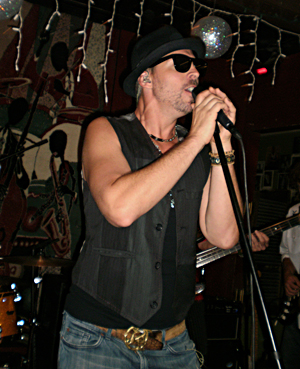
“Thank you for showing up early. It’s going to be a long night, and we can’t think of anything better than spending it with you,” announced Hans Eberbach, The Nibblers’ frontman.
A good 75 people were in the house at The Torch Club to hear the funk and soul grooves of The Nibblers, and it was only 9 o’clock (good thing I was on time!).
Eberbach is supremely cut out for his job, with a charismatic personality that was trumped only by his outfit. Donning a huge metal belt buckle that matched his chains that hung over his black tank top and vest, he peered out from behind a pair of black sunglasses as he approached the microphone to exhale his lyrics. Behind him, an eight-piece band was bangin’, strummin’ and blowin’.
A good funk tune is something of an aphrodisiac for the older crowd, apparently, because there were some love makers on the dance floor. The 35-to-60 crowd was out in full effect, and unlike the wallflower crowds seen all-too-often at dance and indie clubs, mom and dad can cut a rug. Not to say that I’m surprised, it’s just that I’m used to seeing young whippersnappers having a hard time walking from too many shots of Jameson, not from a recent hip replacement.
But I digress. The Nibblers are a solid band with members that have musical credentials as long as my arm. Jon Wood (guitar), Mike Palmer (bass) and Reggie Marks are of Mumbo Gumbo fame, and the very talented Ryan Robertson was sitting in on trumpet. All the elements to crush a set were in place, and the boys ran through a mix of originals and covers that you could tell were picked out very carefully. Songs like “Who’s Making Love to Your Old Lady” by the late Johnnie Taylor absolutely killed. One of my favorite covers of the night was a song called “Snatching It Back” by Clarence Carter. Eberbach smoothly and soulfully sang, “How can I get your love, when you keep on snatchin’ it back?” Great question.
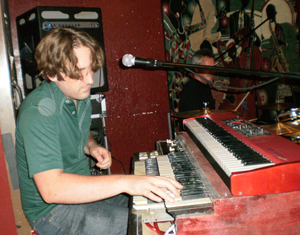
What really does it for me when I’m watching a funk/soul band like The Nibblers is the presence of the keys player. I don’t want to play favorites here, but damn, a solid keys player like Jeremy Spinger takes a good song, turns it upside down, shakes out all the contents of its pockets and leaves it red hot like an iron in the coals. I just want to shout like James Brown!
At the 11 o’clock hour it was standing room only with the head count up to a hefty 125. The boys took a well deserved break and then returned shortly after for a second set that they dared to have rival the first. James Brown covers set the tone and their list of originals was standout rather than filler. It’s clear these guys are real students of the genre and really take the time to weed through what seems like an endless pool of music that dominated the charts of the ‘60s and ‘70s. Their sets just feel good. It’s too much work at times to come to a show and have to be seriously concentrated on what’s going on. There’s a time and a place for that, but it feels nice to see a band like The Nibblers and the only thing to worry about is spilling your drink on the dance floor.
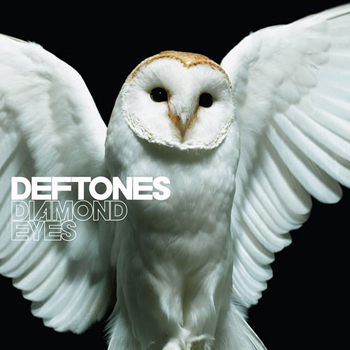
Deftones Diamond Eyes (Reprise)
Deftones fans are awesome. Each have their own strong opinions of which album is the best; swearing by some and oftentimes discrediting others. A vast majority like to save face by announcing that they only like the “old Deftones,” and then they’ll reference one of two songs they know off Adrenaline; “Bored” or maybe “7 Words.” That’s fine, I won’t hate on you. Love your old Deftones–I love it too. Others are more new school, and I hear a lot of, “It’s all about White Pony, man.” Again, I agree with you. I couldn’t live without songs like “Korea” or “Feiticeira.” The point that I’m trying to make here is that I can’t argue with you about your favorite record, because I love them all. Although, truth be told, the last three have taken me time to get to know–but ultimately I ended up dedicating hundreds of hours listening to them. So the million dollar question is, how does the new record, Diamond Eyes, measure up to the rest?
I regret to remind you that ex-bassist Chi Cheng is still in a coma after a car accident in November 2008, and the band decided to move forward without him. I’m sure this was an enormously tough decision, but a decision they all felt was the best for them as a band. In the end, Sergio Vega, a friend of theirs, stepped in and filled the role of bass player. This is extremely relevant to how Diamond Eyes turned out. An entirely different album titled Eros was in the works and would have been the band’s first record back with longtime friend and producer Terry Date. After Cheng’s accident, Eros was shelved and they began working on Diamond Eyes, which was written and recorded in the wake of all the emotion they were feeling at that time. What we get is a really fucking heavy record.
This album is already being compared to their second release, Around the Fur, due to the hardness of the record and the small amount of time that it took to write and record.
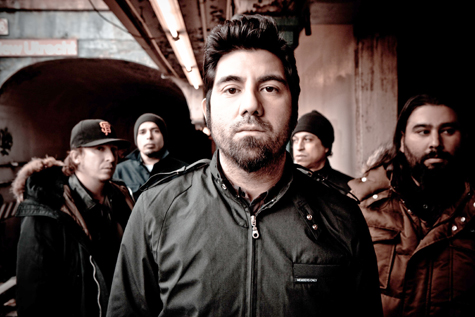
I’m going to go ahead and disagree with that. Diamond Eyes is more like a culmination of all the styles that the band has touched upon throughout the years. Take, for example, a song like “Sextape” where the band revisits that intergalactic, new frontier, blanket-star-gazing romanticism that they crafted so beautifully on Saturday Night Wrist, their previous record. With “Risk,” we hear Abe Cunningham’s drums sounding a lot like “Passenger” from White Pony. Cunningham is very reserved on this record, playing only what’s necessary and not overdoing his drum parts. If anybody shines on Diamond Eyes, it’s keyboardist Frank Delgado. Not to say that he didn’t before, but now he can’t be ignored and his talents as a true sound excavator are displayed so tastefully and importantly this time around. Especially on songs such as “CMND/CNTRL” where his croak-y synth-tones come slithering into the foreground as the song breathes to let him in. Deftones have always excelled at this subtlety; the art of opening the song up for a particular instrument to peek its head through.
After the first three songs, I was asking myself how I felt about the record so far. Before I could over-analyze, on came “You’ve Seen the Butcher.” This angry, impatient headbanger is the crux of the album and harks back to the days of Adrenaline with guitarist Stephen Carpenter’s “Bored”-like intro. The chorus almost has a classic rock feel to it with a very Zeppelin-esque melody that climbs and drops off. Moreno sings, “Don’t want to take it slow/I want to take you home.” At first it sounds typical of Moreno’s lyrics; sleazy but somehow romantic. But I read deeper. This could easily be speaking to Cheng’s progress in the hospital; slow. With other song titles like “Prince” and “This Place is Death,” it’s easy to imagine Cheng being the inspiration for a lot of the album.
One of my favorites on Diamond Eyes is actually one of the singles, “Rocket Skates.” The band rips on this song as Moreno belts one of his classic repeating choruses–“Guns/knives/razors.” I love it. My only complaint is that some of the songs sound a little too pieced together. Maybe this had to do with how quickly they put the record together, but I would have waited a while longer for them to spend some more time working on the verses. But all said and done, I foresee Diamond Eyes making its way into my top favorite records. And for the record, it’s all about Saturday Night Wrist.
HUMP (Apache Cleo, DJ Whores, Jonathan Francis)
The Press Club – Wednesday, March 24, 2010
When I used to hear the word “hump,” two things would come to mind. The first was those annoying dogs you don’t know that always want to mount your leg even though they’re neutered. Annoying. The second was being 13 and getting hot and heavy with my girlfriend Molly’s jean skirt while she was still wearing it. Awkward. Now, thanks to DJ Whores, HUMP conjures up a much happier memory for me. His Wednesday night slot at the Press Club is an oasis in the middle of the workweek.
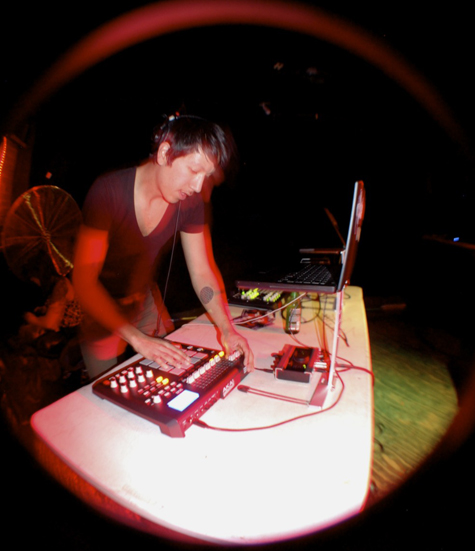
HUMP is a dance music night, for starters. It’s a night for the sweatmakers and the drinkers. DJ Jonathan Francis is towering over his laptop, face lit from the glow of his screen, and he’s busy selecting just the right tech-house and electro tracks. He likes variety, but tonight it’s funky bass lines cut with choppy vocal samples and noisy bridges with lots of cymbals. It’s hard not to move to this. The criticism is that it gets old after a while, but so does your grandma and you still love her. He throws on a Friendly Fires remix, and I’m sold.

DJ Whores steps up to the plate. It’s 11 p.m. and everybody is primed and ready for one of Sacramento’s best selectors. He opens up the sound, choosing big vocal house cuts with chewy bass lines and devastating kick drums. Whores’ track selection is like a binder full of hall of famers. You’re stoked on a Ted Williams and then he hits you with a Mickey Mantle. It’s tough to say that he’s “warming up” Apache Cleo, tonight’s headliners, because Sacramento shows up just to hear this guy spin on a regular basis. Tonight is no different and I hang on his every mix, watching his fader carefully, anticipating the change like a nervous prepubescent.
As per a typical Midtown crowd, the club starts filling up around 11:30 and all the nightowl regulars are starting to show their hoodie-shadowed faces. Whores is in full swing by now and the randoms attracted to the word “Club” on the marquis have filtered in, too. All the right players occupy the dance floor, and all the while the lights are spinning and the drinks are weighing in. The sub is rattling frames and feet are sashaying across the floor like cursors on a Ouija Board, their movements uncontrolled.

The stroke of midnight finds Apache Cleo poised and ready. The duo is an attractive, young couple, with cute matching his-and-her laptops, whose DJ merits are defined by their individual styles that sonically mesh. Usually they perform together, but due to issues with the airport on Cleo’s computer, they are unable to link up and will be performing separately. Apache makes his way up first, preparing for his intro cut. It’s a dark house break, dissident and not the friendliest dance floor groove. Cleo circles him, dancing behind him and snapping photos of his every move. She seems to lighten his mood a bit because the next track he mixes in is a funky, disco banger that changes the atmosphere entirely. This is his way of letting the dance floor know he still cares–but not for long. His next track is just as ominous as his opener. The rest of his set is equally as unpredictable, but still full of gems that separate him from the others. He finishes with a Blondie remix that seems to summon Cleo, who saunters to her laptop. Her opening track is a strange rock anthem that sounds as if Cookie Monster is the singer. Again, her set is scattered yet enjoyable, even though she seems to be suffering from some technical difficulties. By this point, a couple is damn near making babies on the dance floor as a Missy Elliot lyric rings out, “Doing it, and doing it, and doing it well.” That’s my cue. I’m all humped out.
Oakland’s Judgement Day Invites The Verdict
I shoveled the last of my Best Wurst bratwurst into my face and walked to the corner where a large crowd had gathered to watch a band that had set up shop on the sidewalk. This was SXSW, so it seemed like nothing out of the ordinary–until they started playing. Deep, guttural tones from a cello rang through the noisy crowd while blistering violin tones followed close behind. A drummer was hunched over an orange bucket and pounded out the rhythms–staying in line with the song’s changes. A white poster board sign with black marker writing rested behind a violin case that was ajar. “Judgement Day,” it read. Their bows flew from side to side as their heads violently thrashed, and all the while a flutter of photos captured the moment.
Every once in a while, a band comes along that redefines the way that we think about how music can be played. Our stereotypes are shattered, and we become intrigued by this strange anomaly for a brief period of time until our attention is stolen yet again by something else that sparks our interests. In short, we write it off as a novelty because it‘s not what we‘re accustomed to seeing or hearing. Judgement Day is not one of these novelty bands. Their music isn’t cute; it’s intelligent. They don’t just “get it done,” they fucking smash on their instruments like the best of them and the result is great music. Music that is brave in its attempt to create something innovative while still kicking so much ass. Oh yeah, and there’s no singer. It’s one thing to be a metal band with strings and no guitars, but then to also tackle the music world as an instrumental band is no easy undertaking. When you don’t have a vocalist, the ceiling for success is usually a whole lot lower than it is for a band with one, and critics don’t take kindly to reviews, as Anton Patzner, Judgement Day violinist, points out.
“It has been somewhat of a struggle to convince critics to write about us, because critics are writers and they like words,” he says.
As discouraging as the media’s reluctance might seem, it has only added fuel to their fire. In the face of all this, they say “bring it on.”
“I’m excited to tackle this challenge,” says Anton. “I want to do something totally different and I welcome the challenge of winning over an audience of press. We’re two brothers doing something completely different with completely different instruments, and I think it’s a great story.”
Anton, a classically trained violinist, and his brother Lewis Patzner, a classically trained cellist, are the founding members of Judgement Day. In the beginning, Anton was hitting the streets by himself, playing his violin and earning a little pocket change. This was working out all right until one day his mom said, “Anton, take Lewis out.” And he did and they made a lot of money.
“We kept doing it, and we realized that it was a pretty good response, so we decided to turn it into a band,” recalls Anton.
The “metal” part wasn’t necessarily the direction that the Patzner boys were aiming for at first. It was merely what worked.
“We were just playing hard and fast; because the harder and faster we played the more money we’d make,” says Anton.
“And the louder we played the more people could hear us,” adds Lewis.
Lewis’ early inspirations weren’t metal at all, but rather movie soundtracks. Scores like John Williams’ Star Wars as well as others by this highly influential composer were what got Lewis’ creative juices flowing. Later on, hardcore bands like Refused helped spice up the cello with a little edge. Judgement Day isn’t to be pigeonholed in the metal category, although, and a little sense of humor really punctuates this fact.
“When we play with metal bands, it’s these very masculine dudes and when they get excited about [our music], it makes you feel like a man, you know?” jokes Lewis.
Judgement Day seeks to appeal to a much broader audience than just metal fans. They aim to speak to music fans. Take their recent trip to Austin, Texas, for SXSW. Although littered with performances, exposure to industry hot shots and the wildfire heat of video and camera footage, it was the fans who made the trek like Muslims to Mecca that made it all worth it.
“I really felt like we reached a lot of music fans by what we were doing. And in the end, I think they’re almost as powerful as the music industry is,” says Anton.
With their new album, Peacocks/Pink Monsters, a work of art in and of itself, their message is loud and clear. The creative boundaries that were pushed during the studio sessions were a leap of faith brought about by disagreement. Each member of the band, including newly added drummer Jon Bush, had completely different ideas of how the record should sound. With the time ticking and not much progress being made, they decided to head into the studio. What followed was the birth of an album through improvisation and experimentation. A beautifully mixed record that seamlessly integrates the drums and showcases how this band can sound like a huge rock band to the point where the liner notes read, “There are no guitars on this record.”
During that same performance in Austin that I had the pleasure of witnessing, Anton put down his violin and addressed and the crowd.
“I think that this is a really exciting time for music that we’re going into right now,” he bellowed to the crowd. “More and more it’s a time when we don’t hear about the cool new bands from the radio or from MTV; more and more we hear about it from our friends. When we like something, we can share it with all of our friends by just clicking a button on our Facebook page or our Twitter,” continued Anton.
The crowd stood silent, listening to what this frizzy-haired violin player standing on a corner had to say.
“I think as music fans we have never had more of a voice then we have today. We have this great power. And when we do that, when we share, we give independent art a stronger voice than it’s ever had before,” concluded Anton to a now mesmerized audience.
Applause followed and the boys sparked up the band, shredding another track for their new fans.
Judgement Day will play Luigi’s Fungarden on April 25, 2010. Prepare to get your face melted in the most sophisticated manner possible.
Goodness Gracious Me is Leaving the Garage
Goodness Gracious Me practices near Sacramento City College in a tiny garage that barely houses Skyler Henry’s drumset, let alone the rest of the three-piece rock band’s equipment. Cables snake all around the floor and unfinished sheet rock hangs in the balance from the ceiling.
“It’s always kind of a work in progress,” explains Henry.
For this humble Sacramento band, this is all they need—and frankly, all they can afford. They’ve just finished a new record: a 12-song collection of rock ‘n’ roll tunes spiced with hints of Americana, grunge and classic rock. They didn’t have to mortgage their houses to get it done, but they did have to play a pretty steady stream of gigs in order to raise the funds. And even after that, they had to put the album on the shelf for six months before they could do anything with it because the dough dried up. The album, appropriately titled Waiting Room, was recorded at their friend Steve Robinson’s Shooting Range studio literally as it was being built. The surrounding raw materials, akin to their practice garage, must have felt comfortable, because they dialed in an album with all the right textures. With time on their side, it wasn’t hard to be patient and let the tracks develop as they should.
“We had the liberty to actually give it time. You can do live takes and get a lot of honesty out of it, but we wanted to experiment a little bit and take certain liberties to achieve the album,” says singer and guitarist Jeremy Greene.
The band’s genesis began in an audio engineering class where Henry and Greene met for the first time. Greene offered his guitar-playing talents to a recording session during class and Henry took notice.
“We ended up wrapping and going out and getting a couple of drinks afterwards,” remembers Greene. “Our voices paired well together and we decided to take it from there.”
Henry, who was pursuing the guitar at the time, wasn’t looking to play drums in a band. His crossing of paths with Greene changed his tune and he readily agreed to fill the shoes of drummer even though his experience was limited.
“I just kind of told Jeremy that I played drums,” laughs Henry. “I figured I would pick it up as we went along.”
So with Henry finding his way around the kit, and Greene one member stronger than he started out, the two embarked on the tiresome journey of auditioning bass players. After “a trial and fail process,” the two finally stumbled across bassist Sean Arrant on the World Wide Web. They wasted no time and quickly put out a small EP and then a couple months later played a 35-minute set with their new bass player. From there it was solidified—Goodness Gracious Me was whole and ready to move forward.
The boys in GGM have made their Sacramento rounds—they’ve played the Concert in the Park series and gigged with local favorites like Lite Brite, Prieta and Musical Charis. With the completion of the new record comes a new set of goals and new opportunities to pursue, though. First and foremost is getting the record out there.
“I’d just like to get it into as many hands as possible,” says Arrant.
A West Coast tour is also in the works and before that a CD release show at the Blue Lamp with the aforementioned Lite Brite and Musical Charis. Along the way, GGM will be distributing Waiting Room to college radio stations, an audience that the band feels will be very receptive to the sounds they’re creating.
By no means are the boys in GGM done with Sacramento. In fact, the way in which they speak of Sacramento and all the bands that make up the rich music scene is with true fanatical admiration.
“I find myself constantly surprised,” says Henry. “It’s easy to get into that mindset of, ‘I’ve pretty much seen everything there is to see in this town.’ I have to eat those words over and over again. There is some real talent in Sacramento.”
Goodness Gracious Me sits comfortably in the middle of all that talent. The band is most commonly labeled “garage rock,” and the boys themselves even say that their sound is unpolished. “There’s no polish, no glitz and no precision,” according to their band bio.
“The beats started off a little choppy, but we wanted to evolve from there and not get stuck in any specific genre,” says Greene.
That evolution is clear if you’ve ever seen them live, and the time that’s been spent on crafting their sound is even more apparent on their record. Their progress is in part due to their chemistry as a band. They are three levelheaded guys who enjoy making music with each other, accept their faults and are inspired and humbled by others rather than jealous. GGM breaks the status quo; no band beef.
“There’s not a lot of ego dispute,” says Greene. “If there’s something that we actually need to talk about, we’ll squash it in five or 10 minutes. There’s never been any real butting of heads.”
GGM’s sound will continue to evolve and the once unpolished garage band that played that first show three years ago will eventually buff out the blemishes. You’ll still get that grime that you know and love, but with greater focus and louder riffs. Don’t sleep on watching this band go from good to great.

Catch Goodness Gracious Me at their CD release show on April 3 at Blue Lamp. Also performing is Lite Brite and Musical Charis. Show starts at 9 p.m. and is 21+
Boomsnake’s Gabriel Rodriguez taps into the spirits
Gabriel Rodriguez was born to an abstract impressionist painter mother and an acupuncturist father. His childhood was filled with trips to avant garde art shows, and his father helped guide him spiritually. These experiences shaped him into a unique mind that gravitated toward music. He grew up in San Diego, Calif., where his guitar playing led him to many different bands, eventually to filling an open space in the pop rock outfit Say Anything, with whom he traveled the country for the first time. After his time in Say Anything came to a close, he played in and out of other bands until finally he put that energy into his own project, Boomsnake.
“I’ve always been a guitar player playing in bands—and no matter what it is, no matter how much I may end up hating the music or”¦how I love the music and wish I could still be with the band, I think that it all led me somewhere,” says Rodriguez.
Rodriguez began Boomsnake back in ’08, while calling Portland, Ore., his home. He would bounce between there, San Diego and New York, all the while writing and recording his music on a small tape machine inside his room. Those recordings would eventually become Give and Take. Shortly after came Vitamins, which was released on limited edition cassette. That’s right, cassette.
When recording the albums and playing shows, Rodriguez would have a rotating cast of musicians come in and add their own parts to the songs. Eventually they would take on a new life and become something else—something like a band.
“It’s been through this process,” explains Rodriguez. “Originally I was just doing everything myself.”
But the addition of band members is what led Rodriguez to re-record songs from his previous records. Set for release Jan. 12, Re/Visions +7 is an EP featuring seven previously recorded songs, redone to capture the growth they underwent on tour. Submerge caught up with Rodriguez to discuss his new EP, touring and becoming a shaman.
The tour that you’re on right now isn’t a supporting tour and isn’t supported by anyone, but rather is full of local bands opening for you. Do you appreciate this more, being able to connect with the local scene of each city a little more?
Definitely. That’s how we’ve always toured. We’ve never toured with another—the band started in 2008 and we toured for eight months, and it was always playing locals’ shows. We’d play basements with five bands, and there would only be seven members and they were all living in the house. It’s that collective community and that seems to be the case for lots of scenes these days. There are these small, Podunk towns, and there are only a handful of musicians.
Your newest release is a redux/revisioning of songs that you’ve already recorded and put out on two separate releases. What was the reason behind this decision? Were you guys not happy with the original recordings or had the songs evolved so much that they became new songs and it felt appropriate to release them on a separate record?
That’s much more what it was. The first two recordings were basically done all by me, and the second one of those was done in my room on a tape machine. It’s always been really minimal. You don’t need more than what you have. So when we started playing as a five-piece and we started getting all these members and it was like, whoa. These songs are actually—this is this person’s interpretation upon that bass part that might have already been there, but it’s how they’re playing it. It was changing. A lot of the percussion changed and I heard a lot more vocals. The songs changed so much that I didn’t want it to be only for the live experience. I wanted it to be on catalog so I could say, “OK, here’s where the band was at that time.”
As minimal as some of the sections in your songs can get, there are others where you accomplish a lot with just vocals, percussion and guitars.
Yeah, well I appreciate that. I’m actually working on a new record right now. I’m recording way too many songs. I bought one microphone, and I just have a little setup. As soon as I figure out how to do it that minimal, then I want to change it up.
Re/visions +7 isn’t even out yet, and it sounds like you’re already working on a new record? Where is the music headed?
Well, to be honest this is the first time I’ve talked to anybody about it except who’s in the band. The concept of the record thus far is, I hear lots of different voices that aren’t necessarily my own. You know, like singing. The concept is, Boo M. Snake is one of the first shamans to ever come—well, he was an African slave and came here, and he was trying to practice witchcraft and was eventually killed. The concept is, a shaman, someone who carries spirits with them at all times and has them on hand. What I’m going to try and do is all the vocals are going to be through the interpretation of six different perspectives—different essences of one person. And it relates, because I feel like too many times artists or musicians have a shtick or a spiel that works for a certain amount of time; but if you’re not constantly reinventing what it is you do, then you get really bored and stale. I wear seven masks every day. If I go to talk to my parents, I’m a nice young kid, and if I go to some punk rock show, I’m going to start a fight. So it’s trying to incorporate all those personifications of yourself into one sound. Instead of thinking, this is a song about my girlfriend breaking up with me—no, it’s a song about being all these different people at one time. Because you can’t be the same person every day, and if you are, God help you.
You mentioned West Africa. Your song “Sampled Demolition” definitely has that sound to it—that Ali Farka Toure sound—and others have a sort of tribal drum sound to them. Are you really influenced by that West African sound?
Culturally I am. Musically I really like Polynesian music and gamelan and kecak as well. Microtones and all that stuff really mess me up. I don’t know anything about music theory; I just know what I like. I hear something and I attach to it, and then I have to know everything about it. It becomes a slight obsession. Like, oh! So they used this and this was done here and at that time? West African music—I like it, but more just indigenous sounds. Truth to a certain people. Like, wow! They’ve been doing that for a hundred years? Not in the sense that I want to take it and westernize it and rip it off, but in a way where it touches me and I actually feel it. It speaks for a people and speaks for a time. So I guess from that sense. What I’m trying to do is hear all that and figure out, what is our time? What speaks to us?
What’s the music scene like in San Diego? Are you comfortable there?
I don’t. I don’t feel comfortable at all. This band was started in Portland, because I was living up there, and then I had to move back to San Diego because I was running out of money. My parents are from here, so I grew up here. I’m comfortable going to shows; I love going to shows in San Diego! It’s the best because I know all the venues. As far as playing shows in San Diego, San Diego is not that nice. It’s kind of harsh. I mean I have lots of friends here, and there are aspects of it that I love. But the music scene is kind of separatist. I feel that everyone is struggling, so they only stick with their friends, and everybody books shows with their friends and if you don’t know them then”¦I’ve never had a problem getting shows, because luckily some of the other guys in Boomsnake know a lot of people. I always feel like there’s some hierarchy that I’m not aware of when I’m playing shows. Not to say that there aren’t great people, I just don’t feel comfortable.
Boomsnake played with Sea of Bees at Old Ironsides on Jan. 20, 2010.
Friendly Fires start a burning groove with Samba and”¦R&B?
Friendly Fires are tapping into an energy that has turned entire cities into dance floors. The samba rhythms of Brazil have long been important to music culture, most notably having a monumental influence on jazz. But the boys from St. Albans, United Kingdom, aren’t hangin’ with the “Girl from Ipanema.” Friendly Fires have borrowed from this rich genre of music and have crafted a sound that is at first pop music with an electro edge but when explored exhibits complex polyrhythms and well thought out lyricism. A song like their new single “Kiss of Life” is a prime example of their efforts in full swing.
“On ‘Kiss of Life’ we based it around that kind of rhythm and a couple of samples,” says drummer Jack Savidge. “We got the feedback guitar and the samba group in to play with us. We kind of pushed it.”
The Mercury Prize nominated band released a few singles independently, including their hit “Paris” before they were signed to XL Recordings in 2008. Since becoming label mates with bands like Radiohead and The White Stripes, the pace has picked up a bit and a full-length, self-titled debut featuring the critically acclaimed “Jump in the Pool” and “Skeleton Boy” followed shortly. With all the sudden attention, other nominations for various awards started to come their way, which the band took with a grain of salt after the significant but not devastating loss of the coveted Mercury Prize.
“It genuinely doesn’t really mean that much,” explains Savidge. “I mean, if we’d won the Mercury Prize it would be a big thing for us. A lot of the others, it genuinely isn’t a big thing.”
Currently on tour with the painfully hip The xx, Friendly Fires will be crossing the Atlantic to finish off an extensive tour here in the States. The last time they were here was 2008, supporting Lykke Li and only coming as close as The Independent in San Francisco. This time around, they’re the main attraction.
“I think it will be good. It’s our first proper headline tour in the United States,” says Savidge.
You can catch them live at Sacramento State on Nov. 24 inside the University Ballroom, where dancing will no doubt ensue. Submerge caught up with drummer Jack Savidge as the band was preparing to play a show they helped organize called The Warehouse Project in Manchester.
You guys are almost at a point where you think it’s not going to happen for you, you start off recording songs in a garage, you make limited edition pressings of your music and then all of a sudden you’re on tour with Crystal Castles and then Interpol and after that signed to XL and are now label mates with Radiohead! Has the past couple years been a little overwhelming?
When we were recording the songs in the garage, there was never any fearing that, oh no things aren’t going well. Because as a band starting out, it’s always amazing to have a record of your music. That’s always been amazing for us. So, it wasn’t really like, “Oh no,” we’re just doing this thing and then all of a sudden it was a whirlwind. It seems to have grown kind of gradually. It’s kept on growing and growing and we’ve been touring pretty much relentlessly for the last couple of years. So I guess now we’re seeing the fruits of that. It’s always strange as a music fan, going into HMV and seeing your CD there and to read magazines that you’ve read since you were a teenager and read about yourself. Or seeing a TV program that you videoed as a teenager religiously and then you’re on them. It’s weird. We’re all sort of music obsessive, nerdy types. You can get really blasé about it because it just becomes another thing in the day that you’re going to do. Say, playing a big show or playing a festival. You do kind of get a sense of, look how far we’ve come. We’re doing these things that I dreamed of doing.
I watched your hi-tech Flip behind the scenes footage on the Web site, and it looks like the three of you genuinely get along really well. Is the songwriting process as agreeable?
Yeah, generally. There’s the occasional disagreement, but I think there have been a couple things that have been slight sticking points. Obviously it’s not all white and rosy. But it’s quite easy to, if there is a disagreement, it’s quite easy to just have a deep breath and then get on with it. The mood never gets too dark, even though there are differences of opinion. That’s important for a working relationship. Everyone has their opinions, but I suppose we spend so much time together that it’s either get on well with each other or just have a horrible time all the time. I think we’d rather just get along well with each other.
There’s a lot of emphasis on percussion in your songs. The new single “Kiss of Life” is a Brazilian rhythm, which I know is big inspiration for you guys. What is the layering process like? Do you have a percussive groove that leads the idea or do all the bells and whistles come later?
I’d say, usually beforehand. We generally work on songs from the bottom up. We get something that sounds—some kind of drums and bass groove that sounds good. You know, the mapping out of it all. What might be the verse, what might be the chorus. We tend to add a lot from there. Because of how we write, which is generally ideas go straight into the computer and then we can layer things up like that, rather than if we were working everything out in the mode of a live band. But we’d only be able to imagine half as many songs as there are hands able to play them at one time. As we work on the computer there’s a lot of room to put down loads of percussion and make something sound like a really big rhythm section before vocals get even thought about. We try to do as much to an instrumental track as we can and then usually it leads the way to adding vocals on top. I think it’s kind of helpful to him [Ed MacFarlane, vocalist] to have a vibe there and the percussion definitely helps that. It’s always an atmosphere thing—the percussion. You can get the impression of a lot of energy by building up those layers. That informs the rest of the song.
What is it about the Brazilian samba that interests you so much?
It’s just really exciting sounding music, because it’s so percussive and so intricate. It’s always going to sound really exciting. I think there’s a theme to that. It almost found us by accident, because look at “Jump in the Pool”: almost by accident that had a slight kind of a samba feel. Although that was never what we were actually aiming for, it just ended up like that. I guess it found us. Actually the stuff we’ve been doing recently, there hasn’t been an awful lot of songs that sound very Samba or anything.
What’s the new stuff starting to sound like?
It’s pretty varied, actually. We always want it to be varied. There’s one song that sounds a bit like R. Kelly or something.
Like “Trapped in the Closet?”
No [laughs]. More like “Vibe”-era R. Kelly; like Dangerous-era Michael Jackson. The sort of”¦ Is it new jack swing? I guess it’s new jack swing.
That ’90s R&B sound?
Yeah, yeah. But a bit more upbeat. I guess the ’90s were on Timbaland and stuff, who pushed it a bit more sparse and a bit slower and a bit weirder. But yeah, I think we’re vibing off the early ’90s stuff. There’s some quite groovy ones using a lot of”¦vaguely afro-y. But I don’t want to say that because everyone will think we’re going all Vampire Weekend or something. Actually, we’ve got three ballads on the go. We’ve never really had a very slow—I guess “Strobe” is quite slow; we’ve never really had very slow, lighters in the air songs. So maybe there’ll be a few of those on the next album.
I think what sets you guys apart from similar bands is the content in the lyrics. They’re not these hollow songs with a catchy hook. They have the hook but there’s an emotional edge to each song. Are the lyrics strictly Ed MacFarlane’s or does everybody contribute to the lyrical content?
Ed generally does all the lyrics. But we’ve done a couple of things all together like “On Board” we wrote together. Bits of “Jump in the Pool,” the chorus was a group effort. But Ed generally does it. I think it’s fair enough, because he’s the one who sings it night after night. He may as well believe in it.
It seems as though all these awards have overshadowed you guys, particularly your loss of the Mercury Prize. You joke on your Web site about not losing much sleep over these things, but it has to mean something to you to be nominated. Does it matter really? Or are you already jaded by awards?
I think genuinely, not in a kind of snotty way, but we’re generally not that bothered really. The first few times you’re nominated for an award, it’s really exciting. You get to dress up in some smart clothes and then go and have dinner and spot loads of famous people. Get really drunk on the wine that endlessly turns up at your table. After you’ve done it, you’ve kind of done it. I think for us the Mercury Prize was pretty special, because it’s one of those things that you grow up hearing about and you’re interested in. I remember when I was a teenager there being all this hype about it and who’s going to win; who your money is on. It’s a big talking point. About the others—it’s really nice to be nominated.

Friendly Fires will played alongside The xx at the University Union Ballroom on the campus of Sacramento State on Nov. 24, 2009.