Tag Archives: Dark Horse

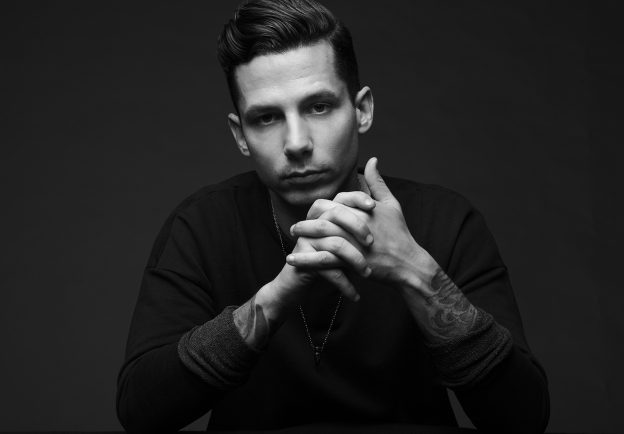
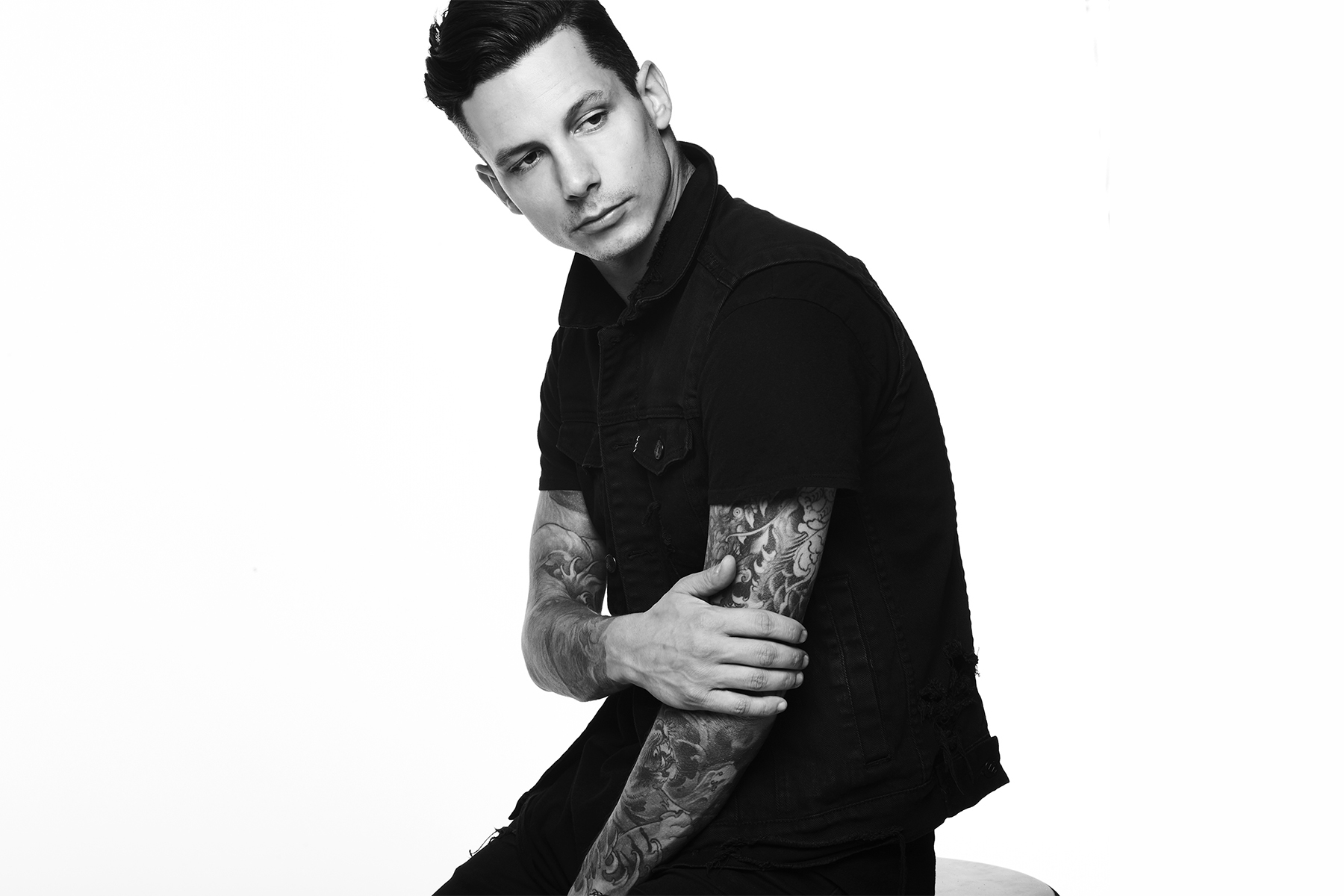
Devin Dawson

Style and Substance • Devin Dawson’s Rise from Internet Sensation to One of Country Music’s Stirring New Voices

Devin Dawson has had a charmed career in music thus far. Back in December 2014, Dawson was attending Belmont College in Nashville when he and fellow student Louisa Wendorff posted their mashup of Taylor Swift’s “Blank Space” and “Style” on YouTube. It featured the two artists standing back to back near the bend in a tree-lined road. Simple and beautifully harmonic, Dawson and Wendorff easily made these songs seem like their own. The video quickly began turning heads, including Taylor Swift herself, who tweeted out the link to her followers just four days later.

“We just did it because we were having fun, and we had something special that we wanted to share,” Dawson said of the video, which now has well over 35 million views. “We didn’t expect any of that. I’m thankful for her and the way she puts up new artists and sticks her neck out for things she believes in. I’m grateful to have been one of those things. It gave me the confidence to keep stepping forward as an artist.”

Though Dawson came into his own as a student in Nashville, where many country artists go to pursue their careers in music, his roots are in the Sacramento area. Hailing from Orangevale, Dawson attended Casa Roble High School and was part of the metal band Shadow of the Colossus for a few years before he hit his early twenties and decided on a new course.

“I wasn’t as fulfilled with that music or that genre,” Dawson said. “It was fun. I loved it, and I wouldn’t change it for the world. I started to write other songs that took over my heart.”

As it turns out, following his heart has worked out rather well for Dawson. His debut album, Dark Horse, was released in January 2018 on Warner Music Nashville. He’s also graced the hallowed stage of the Grand Ole Opry and now finds himself on the road with country music legends Tim McGraw and Faith Hill.

When Submerge caught up to Dawson, he and his bandmates (Kip Allen on drums, guitarists Austin Taylor Smith and Nick DiMaria and bassist Sam Rodberg, all of whom appear on Dark Horse) were nearing Seattle for a half-day off. We asked him about his burgeoning career, its fortuitous start and about how he and his band’s raw, intimate sound plays in large arenas. But first, of course, we had to get a little nerdy …
Your metal band, Shadow of the Colossus, was that name taken from the video game?
Yeah man, props to you. We would always play that as kids, and we said, “That’s a really metal band name. We should change our names to that.” So we just did.

It’s strange because it’s such a peaceful game.
It is, but it’s also kind of Middle Earth. The subject matter is pretty metal.

Where did you meet the other guys in the band?
We met in college. We all went to Belmont University together. Pretty much most of us met on the first day. A lot of us were in the same dorm together freshman year. We’ve just been jamming ever since.

Belmont College is where you met your bandmates, and it’s also where you met Louisa, with whom you shot that YouTube video that sort of propelled your career forward. Was it an artsy campus?
It’s a really small school. It’s kind of landlocked in a way. It’s a gorgeous campus. There are old historic buildings, and then there’s new buildings. It’s small compared to Vanderbilt, which is out there, too, and it’s a huge, huge campus, which really didn’t appeal to me. Belmont is mostly known as a business school, but they also offer performance, composition, songwriting, which is what I did. I think it’s more about the community of people you meet there, who are just as crazy as you are to be pursuing music for a living. It’s just the kind of incubation period of four years of getting to do it, or the excuse to do it, whatever that means. I met so many of my crew at Belmont, and I had so many opportunities through that school. It’s easier to get integrated into the community in Nashville when you’re going to school as opposed to being somebody who’s moving there and going to bars and meeting people on the street. It’s not as easy to get integrated that way. People aren’t going to want to take you to coffee if you’re just some random person, but if you say, like, “Hey, I’m a student, and I heard you speak the other day. I want to take you to coffee,” they’re like, “Yeah, let’s do it.”

I read in a People Magazine article about you that when you moved to Nashville, you were hoping to focus on songwriting for other artists. Was the mashup video you posted with Louisa the big turning point for you?
Yeah, I’m still writing and that’s still the main focus of mine. I write music every day, but there was this other part of me that wanted to be on stage and share my story and help people through that, but I wanted it to be on my own terms. I had so many people pushing me to do it, but I was like, “Nah, I’m going to keep writing songs and see what happens.” But like I said, the video gave me confidence to say like, OK, somebody likes what I’m doing as an artist in one way or another, so maybe I should pursue this full time. And it gave me the opportunity to say what I wanted to do. I had all these options and opportunities coming from it, and it was like, I can take a jump start in any direction I wanted to go and it was more about figuring out what that was. For me, it was the perfect time to capitalize on the songs I’d written about myself and for myself.

OK, that was the question I was going to ask. I was wondering if the songs on your debut were written generally enough so other people could sing them or if they were more specific about your life and the things you had going on.
Nothing I have on my album was written before the Taylor Swift thing. I tend to skew a little more selfish with my songwriting, just to tell my story. I’m just telling my truth, so at the end of the day, it’s going to be a little more selfish, but I want to tell it in a way that other people can relate to it and put their own story into it. I don’t want to make it so specific to me that someone isn’t going to want to listen to it or sing along, but I’m not going to write something that’s not true. I think it’s important for an artist to play a character sometimes. Not every song has to be exactly about your life, but the ones that are need to be relatable, because a lot of our lives are overlapping. A lot of the things that have happened to me have happened to other people. I think that’s what music is about is realizing that you’re not alone—whether it’s happiness or peril or whatever it is. There’s a song on my album called “Dark Horse,” which is the title track. It’s my story. It’s the things that I believe in, the things that I struggle with. That was a strictly selfish song to tell people who I was, but it’s become this relatable anthem for a lot of different people, when that wasn’t necessarily my goal … It helped me to realize I wasn’t the only one like that, and neither were everyone else. That’s a beautiful thing.

You’re on the road with Faith Hill and Tim McGraw, two of the biggest names in country music. The past couple of years must have been a pretty wild ride so far.
Yeah, dude, it’s freaking awesome. We got to play a couple of shows with them last summer, like four or five … but this summer we’re doing pretty much the whole thing. It’s pretty cool because we already made that introduction, and they’ve become fans of what I do, and they asked us back out. I hung out more with Faith last time, but this time I’ve gotten a little closer with Tim. We’re like playing football, which is crazy. Like you said, they’re superstars. They’re people I grew up listening to … To have that support, again, it keeps giving me this confidence in some way or another I’m doing something right and I should keep going. It’s fucking fun. It’s a blast to be on tour with them. It really is a dream come true.

You’re playing arenas like Golden 1 Center on the tour. Is it daunting to play in such a large space?
I don’t know man, I think I get more nervous with friends and family and intimate smaller things. When I look out, I can’t really see much [laughs], but you definitely feel the energy of that many people. It’s been cool to flex that muscle and get more used to entertaining a crowd that size and what they react to. I think my first reaction was to play louder and be crazier, but the things that make more of an impact in a room like that are the things that are more intimate. When you tell a story to 20,000 people, they don’t expect that. They expect the jumping and screaming, but when you tick it back and make them lean in a little bit, I think that’s become, for me, the more powerful moment.

Check out Devin Dawson live at Golden 1 Center in Sacramento supporting Tim McGraw and Faith Hill on July 22, 2018. Tickets start at $50 and can be purchased through Golden1center.com. For more on Devin Dawson, go to Devindawsonmusic.com. You’ll also be able to catch Dawson live at the Homestead festival at Quarry Park Amphitheater in Rocklin on Aug. 18, 2018. Tickets for Homestead are available at Homesteadca.com.

**This piece first appeared in print on pages 12 – 13 of issue #270 (July 18 – Aug. 1, 2018)**
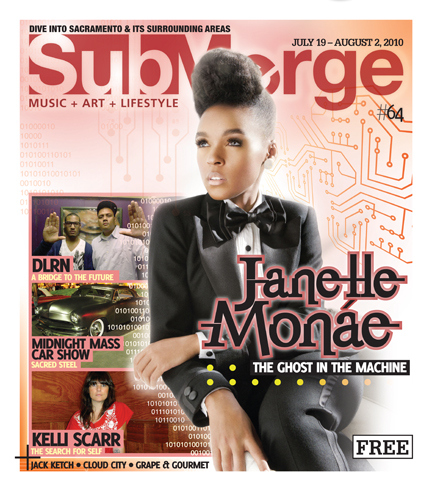
Matrix: Reloaded

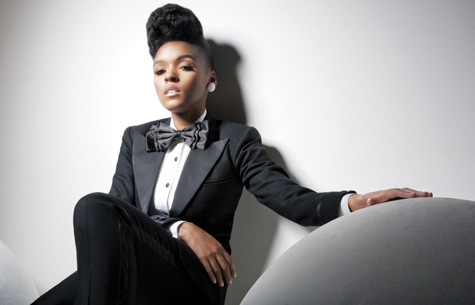
Janelle Monáe channels her inner robot on her full-length debut

Janelle Monáe is nothing if not polite. Is it her time spent in Atlanta, Ga., immersed in Southern hospitality, or excellent coaching on behalf of her publicity machine? In the end it doesn’t matter. She says all the right things and she’s a joy to speak with, as she talks in a modest, syrupy tone. She closed our brief interview by saying, “I don’t take your support for granted.” Along the way in her bourgeoning career, the rising star has gotten support from a wide variety of heavy hitters in the worlds of hip-hop, R&B, pop and even indie rock. Fall Out Boy’s Pete Wentz, Sean “Diddy” Combs and even Prince, the man himself, have all spoken words of praise in regards to Monáe, whose sound dips from the wells each of these artists and more draw from. For an artist who says she’s hoping to bridge gaps with her music, it would seem that she’s off to an excellent start. Written along with the Wondaland Arts Society, a collective of artists Monáe founded with Chuck Lightning and Nate “Rocket” Wonder, Monáe’s debut full-length album The ArchAndroid begins with a soaring orchestral intro before slamming into the sultry sci-fi funk of “Dance or Die,” featuring fringe hip-hop hero Saul Williams. Outkast’s Big Boi makes an appearance on “Tightrope” (a term that appears throughout this sprawling concept album based on the 1927 Fritz Lang film Metropolis). “Tightrope” is as typically radio-friendly as Monáe gets on her debut long-player, but still retains her flair for dramatic sounds and movements that never feel forced or overwrought. Indie dance rockers Of Montreal, who Monáe will set out on a co-headlining tour with this September, also make an appearance on The ArchAndroid, contributing–if not dominating–“Make the Bus,” a Beatles-esque space rock number.

It’s not just the diversity of collaborators that has been catching ears of music fans and bigwigs alike, but the breadth of styles Monáe effortlessly stitches together. “Come Alive (War of the Roses)” has the spit and snarl of ‘70s punk, and Monáe isn’t afraid (or incapable of) letting that music take her beautifully smooth voice down a bumpy, ugly road. Basically, The ArchAndroid should turn just about as many heads as it causes those who just don’t get it to scratch theirs.

Monáe has all the pieces in place to transcend the title of rising R&B star. Not only is she remarkably deft at genre bending, but she also has her sights set on making film and graphic novel components to accompany The ArchAndroid. Though she speaks openly about the writing of the album, she prefers to play details about these upcoming projects, and even her upcoming tour with Of Montreal, close to the vest.

“The element of surprise is very important to me,” she says.

Given the unlikely course of her career so far, more surprises are surely in store. However far she goes, it is our hope that Monáe maintains the graciousness that is becoming her signature.

“We started off working in a basement in Atlanta, Ga.,” she says of her and her collective’s modest beginnings. “To start the Wondaland Arts Society and to see that we creatively have been in control of everything is a huge deal, because artists want that, and we fought for that for a long time. We plan on opening up more doors for other artists, just in terms of having a different blueprint to look at for inspiration. We’re very thankful, and we’re very humbled. We’ll make mistakes, of course, but we will take risks so others may take risks.”

I’d read that The ArchAndroid album had been inspired by the movie Metropolis. What about that movie inspired you to write an album?
There was a quote at the beginning that said, “The mediator between the mind and the hands is the heart.” Immediately, I said, “That’s me.” I’m the heart. I want my music to be the heart, because it represents unity. It brings people together. That’s what I’m about, and that’s what this music is about. It’s creating music that bridges the gap between the haves and the have-nots, and the oppressed and the oppressor, the minority and the majority, and the androids and the humans. That’s what inspired me about that quote.

The connection we have now with technology is as great as it has ever been. Is that an aspect that played into your writing?
No. As an artist, I’m very thankful for technology. I’m thankful for sites like Myspace, Facebook and Twitter because I was able to talk directly to the people when I was putting out independent work in music. I am a lover of technology. I think it’s cool to have nanotechnology, which advances every two years and becomes smaller and faster. I do believe we will live in a world with more advanced androids, and I always pose the question, “How are we going to all get along together?” Are we going to fear them, or teach our kids to be fearful? Are we going to oppress them? Are we going to repeat history and try to enslave them? How are we all going to get along? I connect to the android, because the android represents the other. I feel like we’ve all felt like the other at one point in our lives.

The country seems to be very polarized, but like you were saying before, you like to express unity in your music. Listening to the album, there’s a lot of different genres represented. Does that universal sort of approach make you feel like an outsider?
No… There are a lot of other artists and people out there who are like myself in that they have a very diverse palette of music. We grew up in the iPod generation. I don’t think any of our iPods are just hip-hop or classical music. My iPod ranges from Jimi Hendrix to Judy Garland to Rachmaninoff. I’m able to digest all that in without feeling uncomfortable to listen to. My musical taste is very diverse, and I think all of our musical tastes are becoming that way because of the iPod.

It’s interesting to hear you say that, because The ArchAndroid definitely has an album feel. With iPods, a lot of people have that shuffle mentality, but on your album, the songs flow from one into the next. It wasn’t very single-driven. Was it important to you to preserve the album as an art form?
Sure, this is an “emotion picture,” and there’s an arc to the story. We wanted the listener to listen to The ArchAndroid from the beginning to the end and take in the transformative experience. The album will, I believe, transform you to become a more diverse music listener because of the range that’s in the album. But we also crafted together songs that can stand alone. They all depend on each other, but they all stand alone. You don’t have to know anything about the concept. We made sure the songs were just jamming by themselves.

Given that it is a concept album, did that lead to a lengthier writing process between you and the Wondaland Arts Society?
It was a balancing act. Everything is a tightrope. You have to pick and choose where the concept comes in. We created other outlets, like the graphic novels, for people who want to know more about the concept and Cindi [Mayweather, Monáe’s alter-ego in The ArchAndroid] and the android community and what comes next. We’re also going to have visuals with a very strong narrative that will play into the concept. We didn’t try to do anything different just for the sake of doing things differently. We didn’t try to make sure, politically, that things were correct either. We just kind of followed our hearts and did what felt good.

How would you categorize your working partnership with Wondaland Arts Society? Are you all on the same wavelength? I’m sure you all bring something different to the table when you sit down to create.
It’s a very diverse group, but at the same time, we’re all standing up for the same cause–individuality and helping us all to celebrate our differences. We’re all artists who run the label, from graphic novelists to screen writers, performance artists to musicians, visual artists, you name it. We really want to help preserve art. We love coming up with new ideas, and we have a strong belief that the imagination can inspire nations. Music is our weapon at this time. We plan on releasing more artists into the world, like Deep Cotton is up next. They’re going to come out with sweets very soon. We leave our egos at home. We can speak our own minds and voice our opinions, and no love is lost. We go with the best idea.

You mentioned the graphic novel component, and I’m a big fan of comic books. Is that something you’re having a close hand in? What books did you read that really inspire you for this album or just in general?
I co-wrote the graphic novel with Chuck Lightning. He’s my writing partner. The illustrations were done by Chad Weatherford. We loved Octavia Butler’s Wild Seed. That was a huge inspiration for me. Alfred Hitchcock was also a huge inspiration, just the way he wrote things out. We’re a fan of comic book companies like Dark Horse and DC, of course. We’re hoping to put out something just as quality-oriented.


It will be well worth the trip to head to San Francisco to see Janelle Monáe perform at the Outside Lands Festival on Aug. 15, 2010.