Words by Adam Saake
Photos by Leon Moore
Sparkling wine, or what is ubiquitously known as Champagne, is an American staple for celebration. Whether it be graduations, marriages, anniversaries, engagements or rap videos, popping some bubbly always seems appropriate. Hell, we even commemorate weekends by throwing a splash in our orange juice–bottomless for the lush. But what seems like a more appropriate moment of our whole year to toast and clink our glasses then New Year’s Eve? As we wind down 2010 and reflect upon the months gone by, Submerge offers you this guide to grocery store bubbles to help with those tough decisions. France or California? Cava or Prosecco? In the words of the late Biggie Smalls, “Sip Champagne when I’m thirsty.”
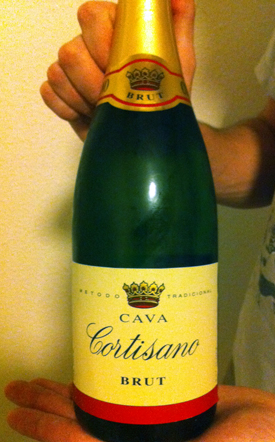
Cortisano
Cava Brut
Spain
($5.99 at Trader Joe’s)
Methode Champenois, is a very fun wine to pair with foods and festivities. Cortisano’s Brut Cava has a nice fruit expression, giving one the impression that the wine is sweet when it’s actually lower in sugar (see chart). Try to taste green apples at first and then a nice “bready” finish. Yum!
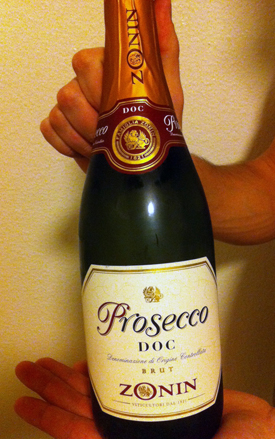
Zonin
Prosecco Brut Veneto
Italy
($5.99 at Trader Joe’s)
Prosecco is an Italian sparkling wine that is made from the Prosecco grape, or Glera as it’s more commonly known. Unlike sparkling wines made in the Methode Champenois, Prosecco is made in the Charmat method in which the secondary fermentation (where the bubbles come from) takes place in stainless steel tanks instead of in the bottle. Prosecco has grown in popularity lately because it’s a lot cheaper than Champagne, but what you’re getting is actually a really great wine for your buck. Like the Cava, the Zonin Prosecco has an upfront fruit expression but try and taste pears this time. Not as fine of a mousse but perfect for pasta or shellfish–a simple, drinkable wine.
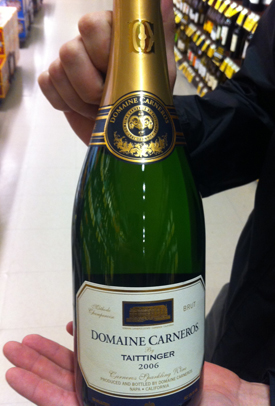
Domaine Carneros 2006 Taittinger
Sparkling Wine Brut
Napa, Calif.
($19.99 at Safeway)
In 1987, president of the French Champagne Taittinger (pronounced tay-ton-zjay) purchased 138 acres in the Carneros district of the Napa Valley. He was out to make world-class sparkling wine in the United States. With the help of Eileen Crane, CEO and founding winemaker, Domaine Carneros was born. This gorgeous sparkling wine, a blend of Chardonnay and Pinot Noir, is a much more accurate expression of French Champagne. Instead of being a fruit-forward wine, the nuances are in the background and it will benefit you to take it slow and really savor each sip. Plus, there is a lot finer of a mousse on this wine, so you won’t mind rolling it around in your mouth a bit. Now we’re having fun!
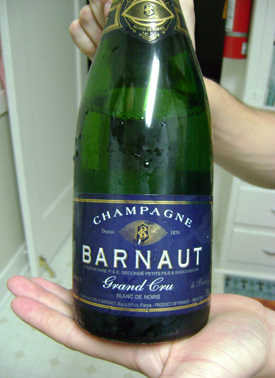
Barnaut
Grand Cru Champagne
Blanc de Noirs
France
($48 at Market at Pavilions)
This is something a little more special. When it comes to spending money on wine, it’s nice to know that you’re not just paying for a name. Barnaut is a small producer from the Bouzy region where the temperatures are very cold. Here, the caves in which the wine is aged are 15 meters below the ground, so aging happens very slowly. In order to label your wine Champagne, you have to follow some rules (AOC). One is that a portion of your harvest be held back each year and kept to age. So Barnaut blends multiple, patiently aged vintages into his wines, giving them a layered complexity. What you get is a fine mousse and a beautiful wine that is certainly meant to be slowly enjoyed with food and good company.
Non-vintage vs. Vintage
Often when you pick up a bottle of Champagne or sparkling wine, you won’t find a vintage, or the year in which the grapes were harvested. This is called non-vintage, and it basically means that it’s a blend of grapes from the past five years or so. This doesn’t mean that it’s bad wine. In fact, some producers blend multiple vintages to create wines with many layers to enjoy. When you find a bottle that does have a vintage, it shows that the producer has chosen just those grapes from that harvest to craft his or her wine. In that case, do a little research and find out what years and regions yielded good Chardonnay, Pinot Noir or Pinot Meunier grapes. Those are the three usually found in Champagne.
Brut, Extra Dry, Sec & Demi-Sec
These are important to look out for on the labels of sparkling wine, because they refer to the sweetness, or percentage of residual sugar that’s in the wine. Brut is less sweet, extra dry is sweeter and so on and so forth.
Brut: up to 15 percent, usually not that sweet
Extra Dry: 12—20 percent, sweet
Sec: 17—35 percent, sweeter
Demi-sec: 33—55 percent, sweetest
What’s the mousse, anyway?
Next time you’re at a tasting and someone says, “What a fine mousse,” you can be sure they aren’t talking wildlife. Mousse refers to the fineness of bubbles in your sparkling wine and can actually make or break your experience. Some wines that have less attention paid to detail might have an aggressive mousse that makes the wine tough to enjoy. But, get a bottle with fine, silky bubbles and it’s a symphony in your mouth.
Spumante and Frizzante
These are two terms that refer to how sparkling each wine will be, spumante meaning fully sparkling and frizzante meaning lightly sparkling. Choose wisely.
Q. What’s your go-to sparkling wine during the holidays?
Jonathan Klonecke
Former wine director, L Wine Bar/Wine Broker
For special occasions I like vintage Champagne because it presents an opportunity to reflect on the year the Champagne was vinified and to look ahead to the New Year. One producer in particular I’ve enjoyed of late is Maison Lilbert-Fils, who crafts arrestingly elegant Champagne from his tiny 4-hectare domaine in the village of Cramant. His current vintage is 2004, but try to find some 2002. For something more widely distributed I can recommend Charles Heidsieck, especially his Prestige Cuvée Blanc des Millénaires if someone else is buying.
For a crowd I’m fond of, I like the sparkling wines from the Burgundy region of France labeled as Crémant de Bourgogne. Not only are they fashioned from two of my favorite varietals, Pinot Noir and Chardonnay, but can be great values. Two I’ve enjoyed recently were Maison Parigot and Richard’s Blanc des Blancs and Louis Bouillot’s Perle d’Aurore Rosé Brut. Both can be found for under $30.
Chris Macias
Food and wine writer/Sacramento Bee
Gruet Blanc de Noirs. As much as I’d love to splurge on a bottle of Bollinger or Krug, after holiday shopping is done I’m thinking something more in the $20 and under range. It’s hard to beat this reliable domestic sparkler that hails–of all places–from New Mexico. But these high-altitude vineyards, about three hours south of Albuquerque, get a balance of sunny days and cool nights that produce quality fruit during its quick growing season. This fizz comes with plenty of flavor and texture, which will work either at the dinner table or popped at a holiday party. The best part: Gruet Blanc de Noirs is only about $15. Cheers to that!
Leon Moore
Server and wine director/Red Lotus
For the holidays, I always love a good Brut Rosé. Recently I stumbled upon a lovely Louis Bouillot Crémant de Bourgogne. You’ll feel like you are drinking a $100 bottle with this lovely sparkling, 100 percent Pinot Noir that’s only about $17! Strawberries in a cup, I say!