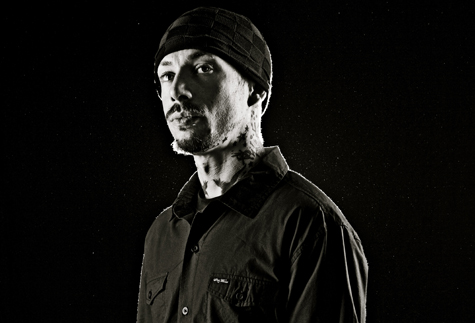
Indie MC Eligh battles back from the depths of addiction
If you hadn’t heard from Eligh in a while, it’s because he was on the verge of death. Dramatic? Yeah, but it’s true. Eligh was unwittingly killing himself.
By the time he reached his early 20s, Eligh (born Eli Nachowitz) was already a world-renowned MC, rocking shows across the globe. But he slowly began to slip into the shadows of his crew, the Living Legends, the group of likeminded artists that he eventually came to know as family. At shows, he slurred his words and wouldn’t make eye contact with the crowd. As his crewmembers, such as Grouch and Luckyiam, began to experience a certain Zen derived from independent hip-hop success, Eligh took to wandering the streets of Los Angeles in search of booze, weed, pills and, eventually, heroin.
Eligh, once a fiend for the hip-hop life and culture, deteriorated into a straight-up junkie, set to end his existence like Alice in Chains’ Layne Staley–talented, sick, destitute and alone.
But unlike many who find themselves walking the cracked path of heroin addiction, Eligh searched within himself to find a way out. He found safety in Narcotics Anonymous meetings, and with a sturdy dedication to recovery, Eligh in November released Grey Crow–his first solo album since 2003. The album, full of Eligh’s mindful production (which strays from hip-hop to new wave, ska and rock), has climbed steadily up the iTunes hip-hop charts. With his trademark rhymes (that sped-up baritone flow), a cast of Legends crewmates, plus help from other artists (K-Flay, Pigeon John, Brother Ali and Marty James), Grey Crow has become more than just an album. It’s Eligh’s welcome back, his rebirth and his awakening.
Let’s talk about your addiction to heroin. What was the extent?
I drank and smoked weed when I was a teenager, did all the hallucinogenic mushrooms, acid–all that shit. And then I started fucking with ecstasy. I think I was like 20. And then it just went downhill from there. [When I discovered] Vicodin, I found the one for me. Opiates were my downfall. I went from Vicodin to China White within a year.
What did that do to your relationships?
My family–my mom in particular–knew something was wrong. They knew I was fucked up, but they didn’t know that I moved to heroin. I didn’t tell anybody. But they could tell that something was very wrong with me. When I was going to see my mom in Arizona she would tell me I was jaundiced. My skin was yellow. I was skinny as fuck. I was dying.
My mom has serious back and neck issues, and she takes Vicodin as prescribed. She would come visit, and I would literally empty her bottle and fill it up with Excedrin and send her home.
And she caught me. She was so upset–a mixture of being worried and disbelief. That was like the last time my mom yelled at me like I was 7. And I was 23 at the time.
When you’re in your active addiction, I was thinking, “I’m not hurting anyone but me. I’m the one doing this to myself. What are you fucking worried about?”
That’s the self-centered thinking we have when we get caught up. Needless to say, when I got clean, people were just so happy and proud. Now, it’s not just a personal thing. I feel like I have more purpose than ever, especially considering the age of people listening to me. A lot of them have no idea about recovery. It’s an amazing thing.
I’ve been sober for about as long as you. But my drug was crystal.
Oh, really? So we’re on the opposite spectrum, but on the same level.
Yup, a similar, horrible, realm. I imagine you’re more creative now.
Creatively, getting clean just opened me up–took the fog away. I could really see what I was doing when I’m doing it–and doing shit when I’m high and going, “Ah, that’s tight,” and the next day when I wake up I’m like, “What the fuck was I thinking?”
But at the same time, when I listen to my old stuff, I remember exactly where I was, exactly what I felt, and it still makes sense, because it’s still me. I just had a mask over my face.
You must hold your breath a little bit when an album comes out, huh?
Oh, hell yeah. I’ve never been more anxious than this one, because this one’s very personal. It’s like that with every project. I’m standing on the tip of my toes waiting to hear what people think. But on this one it was extra. I wasn’t nervous. I was anxious. Since it was literally me and one other guy, officially, how well it does is up to everybody else. I don’t have a machine working behind me.
So what about Living Legends?
Those are all my brothers. We’ve known each other for 15 years. We lived together for a couple years, all of us, in one warehouse. Those types of experiences don’t ever go away. Everybody has grown up more. Everybody lives in different places–a few of us in Los Angeles; Grouch, in Maui; Murs, back in Arizona; Aesop, in Fresno; and Bicasso, up in the Bay.
Living Legends have always been a crew of guys who have their own personal careers and own solo endeavors. The hardest thing is getting us all together in one place to do an album. And that’s all in the back of our heads. All of us want to get together to make that happen. Is that going to happen? I don’t know. I’m going out with Grouch in December, and I’ll be doing a solo set for the first time without a hype man. It will be a whole new fear that I’ll be working through.
I was going to ask you about that.
Yeah, dude, I had planned to bring somebody with me, but Grouch said as far as room in the van, you probably shouldn’t bring anybody else. And I’m like, fuck it. I have a 30-minute set. I’m going to do this shit by myself.
You know, 10 years ago, when I was on some crazy drugs, I went to a Living Legends show, and you came off the stage and said, “What’s up,” to me. It sounds small, but when you recognized me as human–even though I didn’t feel that way–it helped me out.
Thank you, man. That’s awesome. I was probably in a fucked up state, too.
Yes, we were probably both high as shit.
Yup.

How the Grouch Stole Christmas Tour, featured The Grouch, Brother Ali, Eligh and Los Rakas in Sacramento on Tuesday, Dec. 14, 2010 at Tropicana (1696 Arden Way).
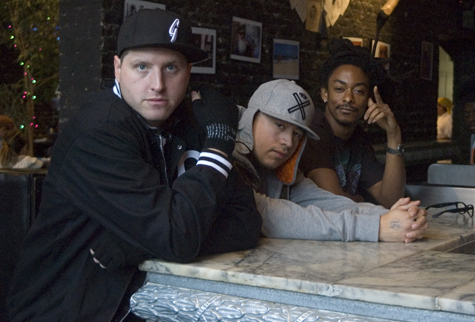
One Block Radius rises out of The Dump and embraces a new music model
For seven years, One Block Radius’ sound has come forth from one location in North Hollywood, The Dump. It’s difficult to imagine recording in such a claustrophobic trash heap littered with Monster Energy cans, discarded potato chip bags and Del Taco wrappers, but the beginnings of OBR trace back to original members Marty James and MDA living in their trashy workspace.
It is one of the least glamorous tales with an attachment to Hollywood that you will read. James and MDA no longer live in The Dump, but it has remained the group’s recording temple. “Right now it’s at a new level of stank its never reached before,” James said. “I think the dumpier it is, the harder I work.”
The philosophy is common for producers: stop showering and grow a questionable moustache, anything to keep people out of your workspace so you can create in isolation. James knows that a gaggle of groupies won’t try to hang out amid the junk food dregs and lingering stale stench. “There’s no room,” he said. “Me and two other people can sit in there if I move some boxes around. At the same time, I keep connections with other studios should a more established artist come through. You can’t really be asking E-40 or Sean Kingston to come through The Dump.”
Recently Marty produced music for Motown recording artist MoZella for her The Straits EP. James said she brought her guitar to The Dump and even though she clowned on it, she survived the stay. “There’s no frills,” he said. “It’s where men come to make records. There’s no foo-foo bougie shit in there. It’s just get down.” It’s a workspace he intends to always keep, even if it’s merely for nostalgia.
With third member Z-Man living in San Francisco, the group clocks ridiculous travel hours that include James producing a foundation for a song at The Dump, then taking it to Street Symphony studio in Fremont, Calif. James said he values those trips to the Bay as opportunities to sink into artist mode. Living in Los Angeles, he’s consumed with being in collaborator/writer/producer mode. “I’m from up that way so I click into my artist mode,” he said. “It snaps me out of the songwriter hustle I’m always in.”
Originally from Chico, Calif., Marty earned his stripes with trips to Vallejo, Calif. Only a teenager, he worked in Rated Z studio, while they were recording ’90s hip-hop group N2Deep—maybe you remember “Back to the Hotel?”
“I got in with those guys by sending packages to any address I could find,” James said.
N2Deep producer Johnny Z took James under his wing, loaning out his MPC in the studio and allowing James to take his SP1200 back to Chico. James spoke of this era in his life with great significance as the engineers and music clerks he met in Chico lacked the knowledge of hip-hop production he gained in Vallejo. “I’d be playing them Ice Cube songs, and they’d give me all kinds of wrong information,” he said. So wrong they invented (only in their minds) an instrument called a “synchronizer” to explain the tricks of the trade. “I was going to music stores asking people for synchronizers,” he said.
James moved to Vallejo, forming his own group, Scapegoat Wax. The group released a few underground records until he moved to L.A. in 2001 and began his conquest of the industry. One Block Radius dropped its debut Long Story Short in 2005. The exposure from the debut, a mixtape and the “You Got Me” single led to a major label signing to Mercury/Island/Def Jam—a short lived experience.
With the terrain of the industry drastically shifting, major labels are essentially lost without a paddle as to how to properly promote a record. Still relying on radio play and other archaic promotional tools, OBR never had a chance at national success. James has no ill will toward the dissolution of the contract. “We were doing pretty good on the charts,” he said. “When momentum started to slow down we put our album out. It came and went fast. We probably should have held off, but there was a lot of good that came out of it.”
James said it was a learning experience, that given his prior history, he should have known better. For him, it was easy to get caught up in the whirlwind and excitement of being signed after years of independent grinding. Major labels aren’t suffering from an abundance of clients, but understaffing. It’s inconceivable that a rep can manage more than three acts in a day, let alone 15, which does happen! It only took a few months of major label life to recognize that the contacts James had established on his own would be all he needs to build a career. “The greatest part about the industry now is music can travel,” he said. “The first album still has a word of mouth attached to it.”
James recently inked a deal with DAS Communications, which handles The Black Eyed Peas, to manage OBR. He said he’s acted as his own manager throughout most of his career, but saw this as an opportunity to focus more on working in the lab, while his management handles his Twitter, Myspace and Facebook accounts. Because that’s the direction of the industry; being accessible digitally and not just having music, but being a personality in those vehicles. “It’s a challenging time to be an artist,” he said. “I think what’s happening is, no one is getting rich anymore and so the people that really want to be in music are the ones that stay in it.”
James is optimistic for OBR in this new world of music. He sees it as a singles driven market that rarely involves a well-conceived album. He’s not entirely turned off to a record deal as he is still in talks with people, but he said securing a record deal is low on the group’s priority list. “A group like us who is still just buzzing, we need to drop multiple singles,” he said. “We’re too self-sufficient to bother with a deal unless we are looking for radio play. I’ve yet to see a deal that does something for the group that we’ve not already created ourselves.”
This has been the core plan. James continues to build his name as a writer and producer, rubbing elbows with industry elite, while OBR works in the wings crafting catchy singles like “You Got Me” and its latest, “Broke Ass Holiday.” The single is a positive song about being grateful for what you have. For a group that began in a place called The Dump to still speak positively after seven years of being relegated to that spot, speaks to a humble presence in its members.
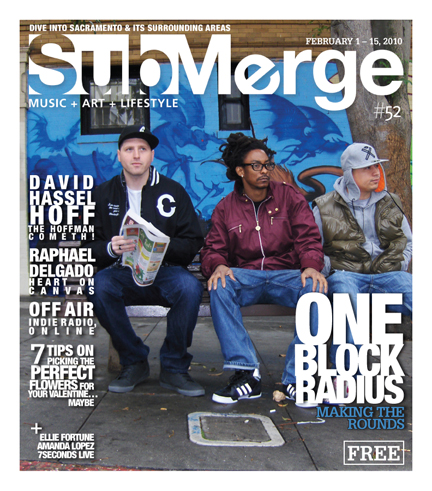
One Block Radius played The Blue Lamp on Feb. 10, 2010. First Place and The Freshmen also preformed.