I started hearing about Jeff Landi a decade or so ago, and it was always in the context of how surprising it was that someone so kind and humble was also so technically gifted.
I don’t need to tell you that there are scores of hateful photographers who sneer pretentiously from behind their expensive Canons. Landi’s photos are special because he’s different. While his work is technically impeccable, what stands out is the outright humanity of his photos. Browsing his work can be an emotional experience wrought with tenderness, pain, surprise, glee, dignity and, well, lots and lots of skateboarding.
Perhaps most surprisingly is how he manages to conjure such emotion in what can sometimes be a really dry genre. Even his photos without human subjects seem to exude a playfulness and compassion that are more than the sum of the objects depicted. His food photos, for example, are vibrant to the point of suggesting motion, and his action shots, while unquestionably portraying motion, evoke a kind of calm that lends itself to the compassion that seems to be the hallmark of his work. To meet the guy, it’s not a surprise. He’s just as full of energy as he is of kindness. Landi is a busy guy between traveling for work, being a dad, shooting personal and corporate photography and now with an upcoming show at Beatnik Studios. With all he has going on, I caught up with him at, of all places, a Sacramento Kings game at the Golden 1 Center to chat about it all.
Landi was able to juggle our interview and the game flawlessly, knowing player names, calling out the big plays and adding context for his unsavvy guest, which in hindsight is probably something photographers get really good at; balancing the action in front of them with the reason they’re there in the first place. We sat down, grabbed a coffee (we’re both dads out on a weeknight after all) and talked about his work over some Red Vines.
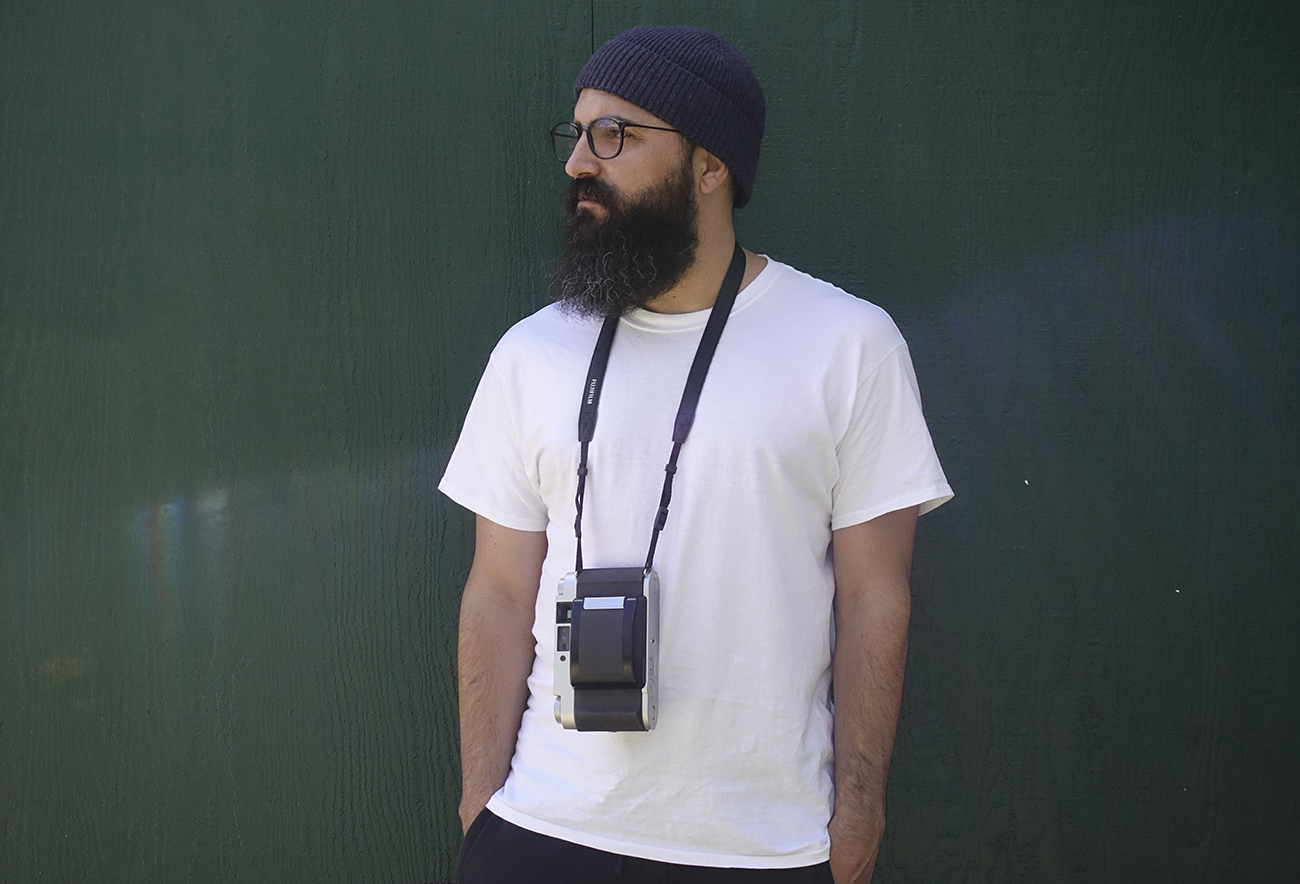
Photo of Jeff Landi by Dan Herrera
How’d you get started?
I think I was always sort of generally interested in photography and videography, but as kids we grew up skateboarding, and from 12 on, we always had video cameras, filming each other. I think as an extension of that, I started taking photos. As I got older, it started to interest me as a career. Initially I took a photo class at Sac State and I fucking hated it! I’m like, “There’s no way I could do this. I’m not interested and I don’t have an eye for it.” Maybe six months later, I had moved to San Francisco and thought I’d give it another crack. So I took a black and white class with an instructor at City College, and she had been working in New York as a printer for some well-known, older street photographers, and she just shared so much inspiring imagery with us—all of this old classic street photography and just brought actual prints and books of other artists, and that got me excited about photography again. I didn’t know what I wanted to do with it, and my photos were awful, but she inspired me. I also had a really good friend in that class who went on to do a lot with photography and video stuff, and we also had another friend who was just there using the dark room all the time, so we had a little crew and I had this teacher, and I wasn’t shooting any skateboarding at that point.
Really, so it was separate for you? You were skateboarding still, I assume?
Absolutely. I was goofing off and randomly taking a picture here and there, but I wasn’t proactively shooting anything. Actually, in that class I did one skateboarding photo and the teacher loved it. She said, “You found what you should be doing” … I looked [at it] recently and it’s not really a very good photo. It has meaning for me, but aesthetically, not so much.
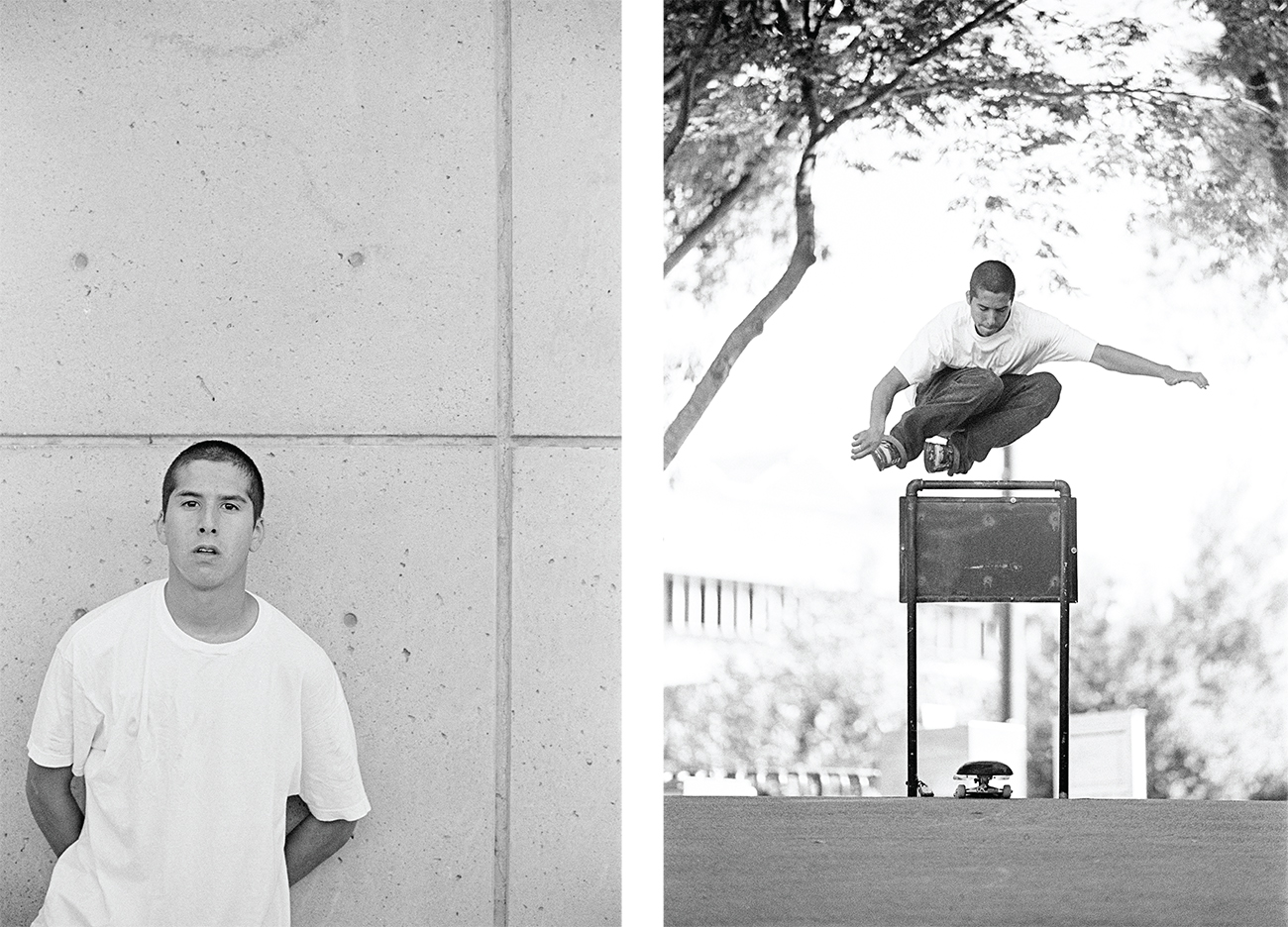
Photos by Jeff Landi | Omar Salazar | 2002
You’ve clearly grown.
Maybe. I think I’ve just shot a lot more. There’s a lot more opportunity for success when you shoot more.
What led you to doing it professionally?
From that class, I started shooting a lot of skateboarding, and got a gig. I started shooting photos for Heckler, if you remember them. Those guys were a huge influence. We all grew up skateboarding and I was just peripherally good, but I knew the Heckler dudes and hung out with some of their photographers. So I had a little experience with them and they hooked me up with film and they had a darkroom and ran my photos—graciously, I might add. Somewhere in there, my friend was working for another skateboarding company called Slap, which is a sister publication of Thrasher. I was fostering that relationship, and then went to San Francisco State and kept exploring photography, and I was already on my track photo-wise, but long story short, my last semester there, they gave me a project on Slap, just photographing for an article about Sacramento skateboarding, and it just took off from there. I graduated and got a retainer gig from them.
Let’s talk about the subject matter. I noticed that even what you call your “skateboard photos” don’t seem to be of tricks as much as they’re highlighting a bigger story. I’m thinking of the photo on your site of a guy doing a kickflip under a bridge with a scooter in the foreground.
Yeah, I just shot that. That’s only a few months old.
There’s another with a group of kids pushing their friends on a skateboard. It’s interesting to me, because those aren’t classic skateboarding photos. They’re humanity photos with skateboards in them.
Yeah, I have a couple things going on. I’m really attracted to action photos. It doesn’t really matter what sport it is, I love action photos. I also really love photography that involves people and tells a story. I try to have more depth to my images.
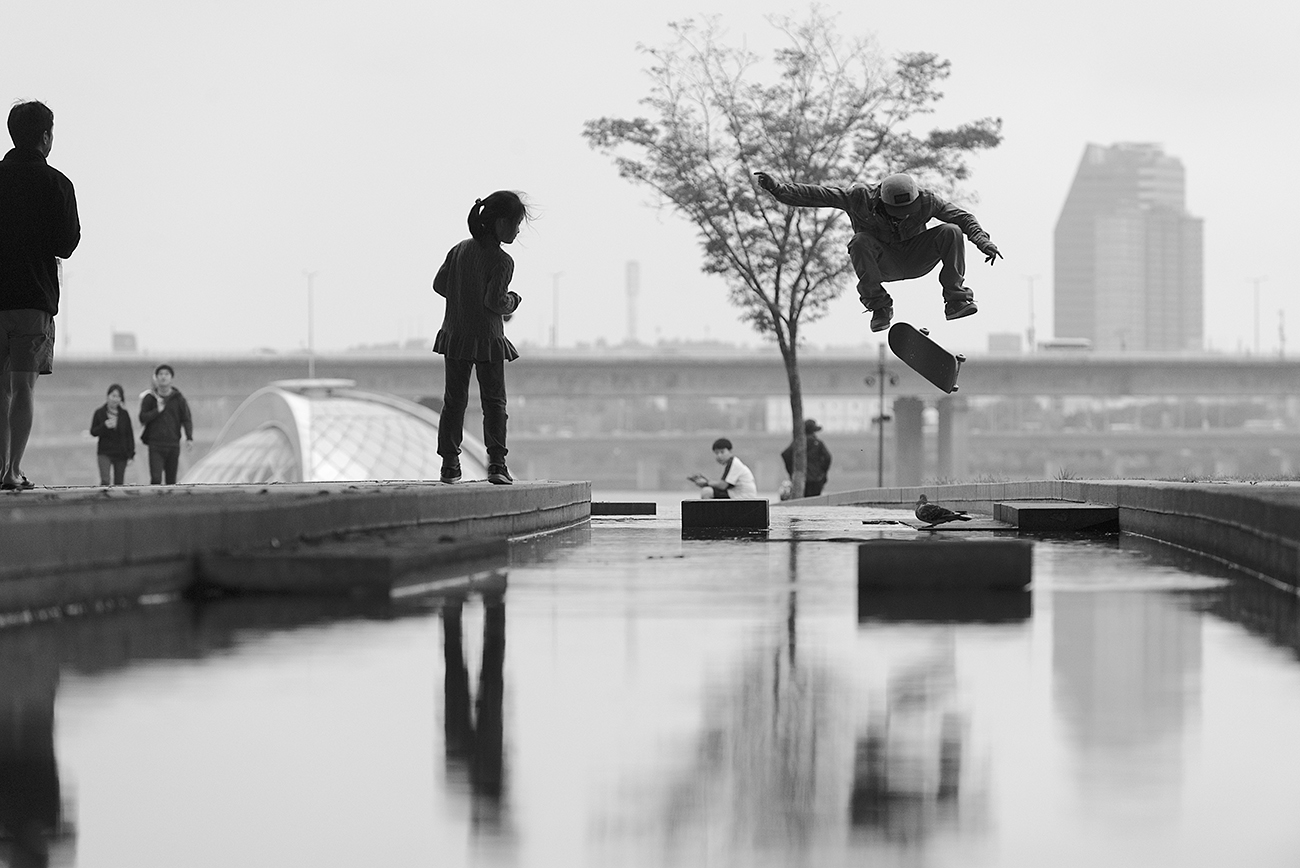
Yoshiaki Toeda | Varial Heelflip | Korea | 2014
It shows.
Well it’s hard. I mean, you write, so you know. Sometimes the work is just the work, but sometimes you get happy accidents. I love happy accidents. For example, my favorite photo these days is this black-and-white photo of this guy skateboarding and he’s going over water and there’s a little pigeon in the foreground. I wasn’t going to take that photo and my friend said, “Hey you should shoot this,” and so I was looking at it, and the girl looking over, the people, that bird, those are all happy accidents. I mean, I try to stage those things a lot, but it depends. I try to take pride in what I do and shoot things that I think are cool, and to be honest, I’m painfully insecure about it.
Really? Why?
I could rattle off 45 photographers who are better at what I do than me.
Does it keep you humble and hungry?
I don’t know. I just really try to take the picture of the photo that I see, as corny as that sounds.
No, that’s perfect! That’s what I was hoping you’d say, because it seems like there’s a lot of you in your photos.
I don’t know if that’s good or bad, because then you’re not documenting, you’re putting your spin on what’s there. But it’s through my eye, and I guess that’s where I get really insecure just going like, “I like it.” I always feel like I’m lacking for depth or artistry.
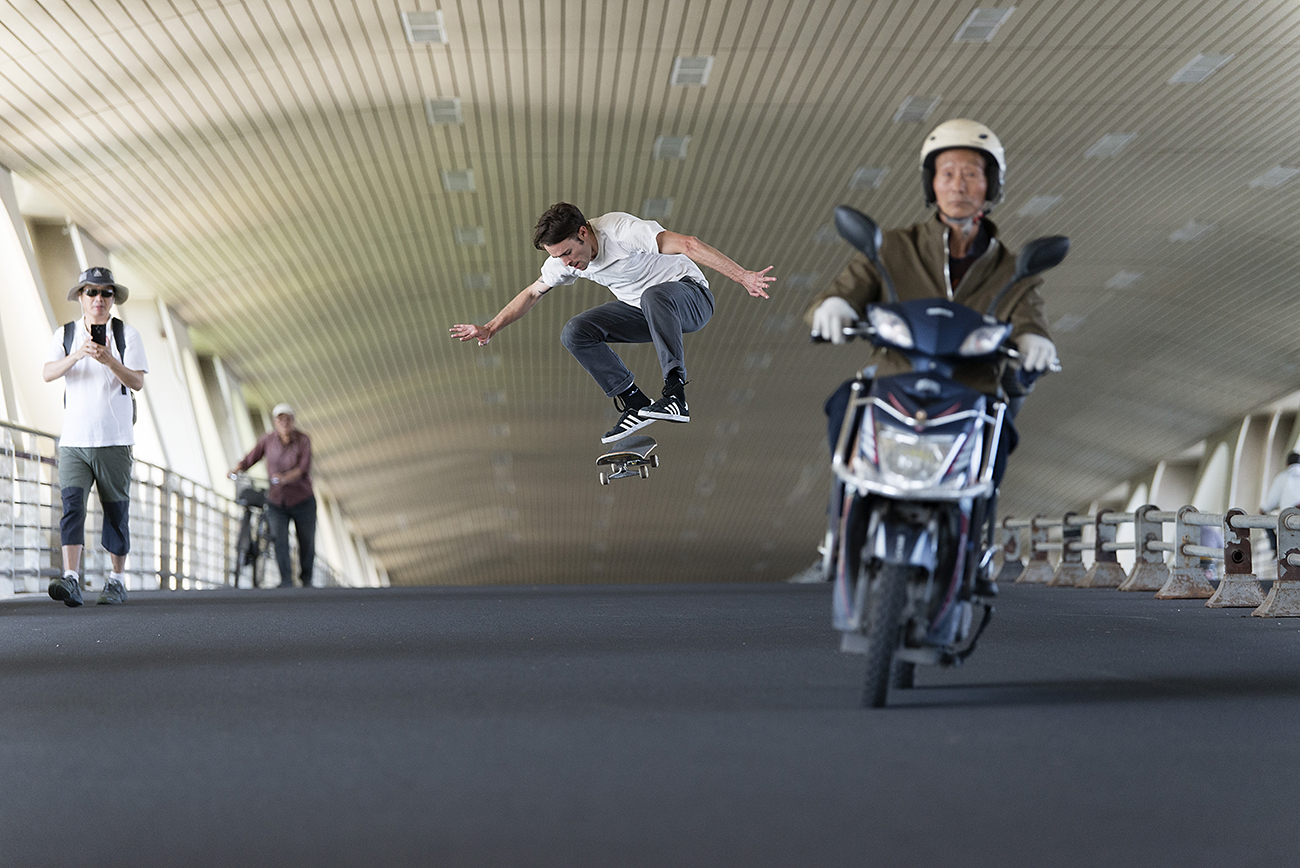
Photo by Jeff Landi | Nestor Judkins | Kickflip | Shanghai | 2017
Do you start out with an agenda more often than not?
Yeah. When I’m on a trip, it’s like a turn and burn thing where they need images constantly for social media, so you can’t wait for those things to happen. Like that photo under the bridge. I could have waited, but I staged it. We were watching something else and doing some more traditional things and then I asked him to push toward me and do a few kickflips and waited for the scooter. I mean, it’s all really happy accidents in the end, but you don’t know if the timing is going to work. Is that guy going to swerve at the right time, while looking at the camera? Also … is it all going to be aesthetically pleasing? I love all of that stuff, but what’s important is the skateboarding to me. The skateboarding has to be right, and if the skateboarding isn’t right, none of that other shit matters at all.
So in a way you’re kind of enhancing the happy accident?
That’s a good way to put it, yeah. I’m trying to tell a story and that story was happening before I got there. It was happening a little further down the bridge, and if I can curate that story a little bit, I’m into it. I’m not trying to fake a story. It’s something maybe that I’ve set up or already seen, but it’s something that’s real. I’m not telling a fairy tale. Everything I do is a frozen moment in time.
Let’s talk about the street photography show at Beatnik. It’s called Still in the Streets. How’d that come together?
Well, Wes [Davis], who is one of the owners, invited me to be a part of the show. He wants me to focus on my photos from the late 1990s to early 2000s. Work that I shot mostly here in Sacramento. It’ll be mostly skateboard-related images. I know that Wes wants me to show more lifestyle oriented stuff, but I’ll show action photography from that era and a little lifestyle and portrait stuff that’s kind of the backstory to the action stuff. It’s really about street skateboarding.
Given what you’ve said, is it weird to go back and look at those images critically?
No. Not really. Only a little in that I really only like large images and I get really particular. I’m not that particular when it comes to other people’s work, but with my own work, I want it to look a certain way, so it can be a little challenging. Mostly when I go back and look at it, I just wish I would have shot more. I don’t think I shot enough.
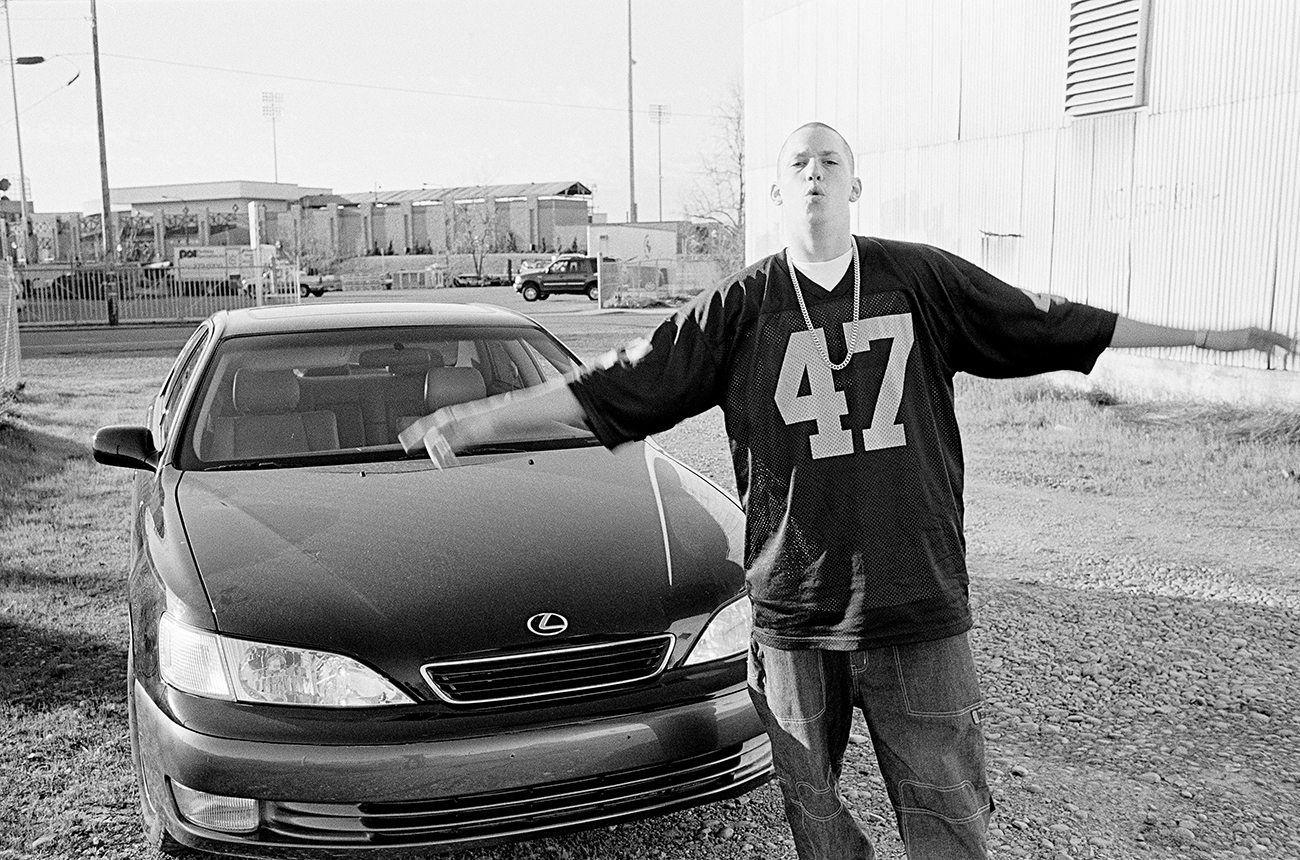
Photo by Jeff Landi | Brandon Biebel | 2002
Head down to Beatnik Studios (723 S St., Sacramento) on April 6 for the opening reception for Still in the Streets, which features photographs by Jeff Landi, Kent Lacin, Marion Post Wolcott, Richard Hughes and Alexis Wilson. The exhibit, which will run through May 21, highlights four generations of street photographers. The opening reception will run from 6–9 p.m. There will be a second artist reception on May 4, also from 6–9 p.m. For more information, go to Facebook.com/beatnikstudiossacramento or Beatnik-studios.com.
**This piece first appeared in print on pages 22 – 23 of issue #262 (March 26 – April 9, 2018)**
At Home with the Regulars
Where there once was a bar, hidden in a seemingly abandoned basement corridor of the downtown mall, there now exists a crater under construction. The Pre-Flite Lounge was a 40-year-old time capsule, a quaint bar untouched by time, that perhaps lingered because it was forgotten. The Pre-Flite Lounge was lukewarm domestic beer served in frosted mugs to offset the tap temperature. A heavy hand poured no-nonsense cocktails like whiskey-water, gin-tonic and vodka-soda. When the craft-craze of artisanal beer and cocktails swept through Sacramento, the Pre-Flite didn’t balk and no one seemed to mind. Former regulars look back and their memories are unified by signifiers like “unpretentious” and “classic.” Everyone remembers their first time and becomes protective of who they tell out of respect for the bar.
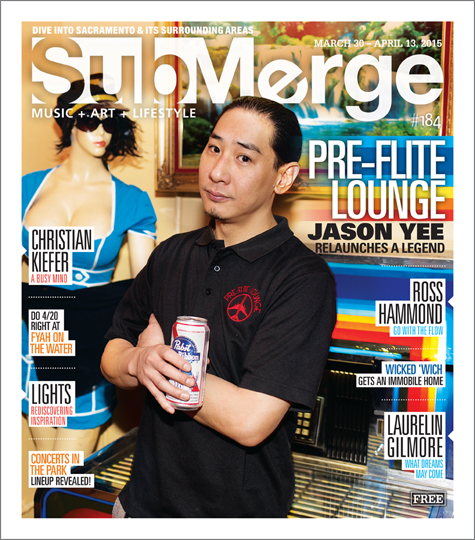
That was the legacy of the original before it was demolished last year to build a new cathedral for our NBA franchise we fought desperately to keep. And even though owner Jason Yee purchased the establishment in 2010, he remained committed to its continuation by opening a new home mere blocks away in Jazz Alley.
“My goal was to take over and run it another 20 or 30 years,” Yee said regarding his acquisition of the bar. There were no arena talks in 2010 threatening Pre-Flite, only the impending sale by Heather Parisi, owner since 1982. When she vetted Yee on the purchase, it was done the old fashioned way, he recalls. He ran a yogurt cafe in the mall called Yummy Yogurt. Upon learning about the chance to purchase, he regularly patroned the bar for a few months, expressing interest in conversation. One afternoon the bartender casually slipped him a napkin with a phone number on it.
“He kinda slid it over to me and said, ‘hey, the owner wants to talk to you.’”
Yee drove to Parisi’s home in Carmichael soon after. They talked for four hours over whiskey-waters about everything except the bar, mostly “her family, [my] family, and life” he said. Eventually she disclosed that while she had many suitors eager to purchase, she liked him and trusted his intentions with the bar. That vote of confidence only goes so far, though. Yee still had to earn the trust of the regulars.
“As soon as I was taking over, a lot of the regulars were concerned I would change everything up,” he said. “I had always loved the Pre-Flite, so I wanted to keep it the same.”
That desire to not disrupt the natural order is inherent in a Pre-Flite regular. I never became one myself, but I respected the sanctity. It was never about exclusivity, just that cryptic “don’t ruin the bar” mentality.
My guide one night in 2009 was a former writer for this magazine, Vincent Girimonte, who deemed me worthy of entering the hallowed ground of the original Pre-Flite Lounge. That night we rode our bikes to a section of L Street that felt deserted at 7 p.m. It struck me as almost impossible to stumble in without guidance. Entering Pre-Flite for the first time was like past-life deja vu or checking into the Hotel California. Everything felt unchanged since before you were born, from the carpeted floors and the wood-paneled walls to the neon-lit jukebox in the back corner.
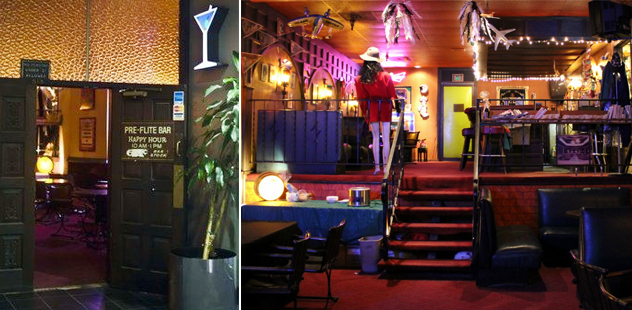
{Old Pre-Flite Lounge location}
You even wondered if the patrons bellied up to the bar had been there for a few hours or a few decades. With repeat visits you learned names, like Russ behind the bar, and which day there’s free bean dip. You meet the dogs, too: the Jack Russell Terrier Louie that trots around with disinterest in attention unless food is involved, and the large white sheep dog named Babs that can stand with its paws on the bar like any other regular.
My experience is not unique. There are many who considered Pre-Flite Lounge their home or home-away-from-home. As a regular only to be referred to as Kevin told me, “A lot of people have lived and died there.”
Kevin started coming in 2011 after Yee took over, learning of the bar through a newspaper article. He called the old location “the perfect man cave.” He goes to the new location as well. It’s here around 4 p.m. he brings up the historical hearsay of past owners. Legend has it Parisi was mentioned in the will of original owner, Larry Bowa. After he died, his girlfriend ran the bar for a year before she passed away as well. It was then discovered that Parisi was in the will to purchase Pre-Flite. Any further insight as to what her relationship to Bowa might have been was taken to another lifetime upon her passing in November 2013.
Pete is a regular who still frequents the new Pre-Flite as well. His first trip to Pre-Flite was in 2008, in need of a pint on the way to a Rivercats baseball game. To Pete it’s that classic, unpretentious quality that allowed Pre-Flite to remain undisrupted.
“It calms down the atmosphere,” he said. “People came in regardless of their background, took in the ambiance and everyone got on the same wavelength.”
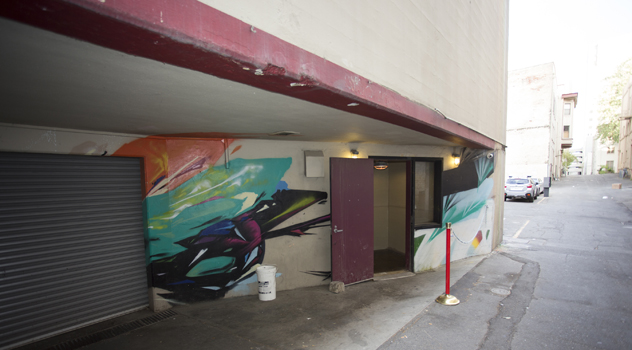
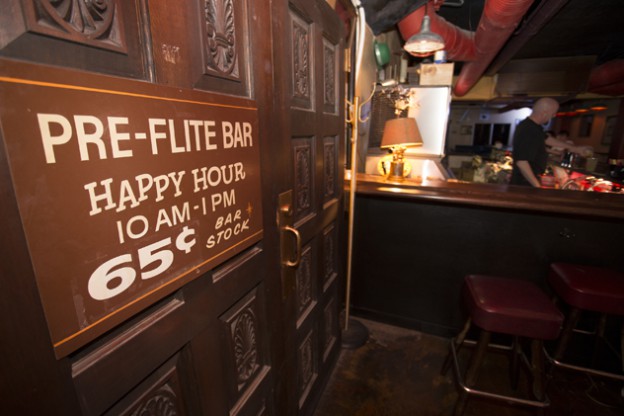
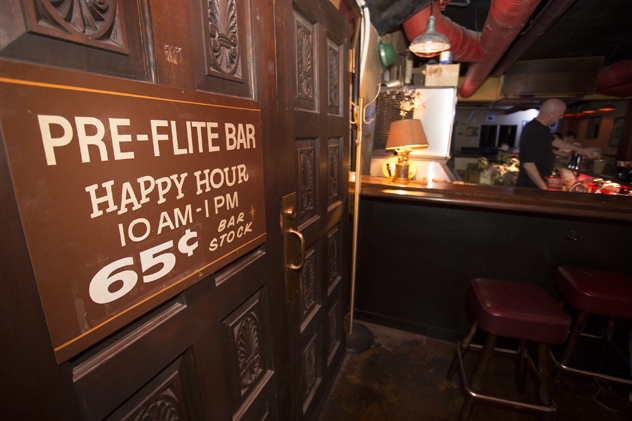
When Yee sought a new location, he pursued real estate much like the former—hidden and precarious. There is no signage, only a velvet rope to an open doorway in an alley. That door leads to a bank vault and within the vault are the faithful patrons of Pre-Flite Lounge 2.0 (as he calls it) carrying on the legacy. The jukebox is there, still functional and loaded with vintage tracks, some growing increasingly obscure with time. Yee salvaged the old doors with the outdated sign of “Happy Hour 10 a.m. – 1 p.m.: 65 cents.” Alice the comically busty mannequin is there as well. But like any new chapter, there are missing pieces that will fade into the history books.
“There’s stuff we have in storage we thought about bringing out,” Yee said. “But now that we’re here, we want our clients now and our friends to bring new stuff in to make it their own.”
The move has its growing pains. Bartender Bridget Lopez says Louie the terrier is uncomfortable with the cement floors and she tries to make him feel relaxed by bundling up sweaters on the floor. Some regulars like Larry and his dog Babs have yet to come by the new location. But, Pre-Flite 2.0 has neighbors like photographer Nicholas Wray, Omar Salazar’s skate collective Doom Sayers, and hundreds of industry servers and cooks in need of a secluded watering hole for a post-shift (or, more apropos) pre-shift drink. The afternoon I’m there interviewing regulars, Adam Pechal, local chef in flux, is there doing just that, raising awareness to his industry friends that a semi-hidden bar exists. His only complaint is that he no longer has storage space in the building from his former restaurant Thir13en.
“I wish it was here two years ago when I was in and out next door all the time,” he says. “I could pick up some catering equipment, stop in for quick beverage and move along with my day. I could have been drinking [Jason’s] booze instead of my booze.”
Epilogue:
Jazz Alley between 10th and 11th downtown has no folklore nor history to the coinage. There was no infamous juke joint or speakeasy where Charles Mingus or Duke Ellington once played, therefore earning the title. Jazz Alley is Jazz Alley by mandate of the city. We had no say, much like we are at the mercy of K Street becoming The Kay, knowing that only tourists call it that. As much as developers and city planners might think you can invent districts, invent history, you can’t. History is earned.
Pre-Flite Lounge 2.0 cannot salvage the crock naming of Jazz Alley, just like Pre-Flite Lounge 2.0 will never fully recapture the essence of the original. But regulars like Kevin, Pete and Pechal agree that the spiritual calm that made the original a haven is not lost entirely. Pre-Flite is not the first bar in Sacramento to move and maintain its mythos. This is not a city deeply concerned with the historical protection of olive toothpicks. But steadfast are its barflies, relaying the oral history to the stool adjacent.
Put professional skateboarder Omar Salazar on the phone for an interview, even while he’s in Australia on a Nike Skateboarding team trip, and you’ve got one of the nicest dudes you’ll ever meet; caring, witty and all around fun to talk to. Put Salazar on a skateboard, assuredly where he’d rather be than on the phone, and you’ve got a savage on wheels; a straight-up wild man that charges at his tricks with relentless speed, dedication and concentration. The 26-year-old skater from Sacramento has made quite a name for himself in the industry, especially within the last couple years with his part in Alien Workshop’s video Mind Field, making the March 2009 cover of Thrasher and the announcement from Nike that Salazar will have his own signature shoe. But all the success hasn’t come easily.
Salazar was raised by loving and supportive parents who fled to the States from their home country of Chile. Pursuing a career in skateboarding, though, was not exactly what they had in mind for their son in this so-called land of opportunity. “They were always like, ‘Hey look, you’re lucky you have opportunities here, you need to go to school and you need to work for a big company,” said Salazar of his parents outlook on his skating. I was always like, ËœYeah, but I don’t want to do that; I’m not good at that. This is what I want to do.”
Salazar remembers having to hide his skateboards and boxes of products that companies were sending him so his parents didn’t get suspicious. “I didn’t want to disappoint nobody, but I was never good in school,” he admitted. “I mean, I finished high school, but I was never good as far as book smarts goes, I’m better at street smarts.” Those early years also consisted of a lot of couch surfing, riling up change from said couches to hit up Del Taco, raiding Safeway’s sample tables and bombarding open house food platters. “Yeah, I’ve come a long way,” Salazar said with a laugh, looking back.
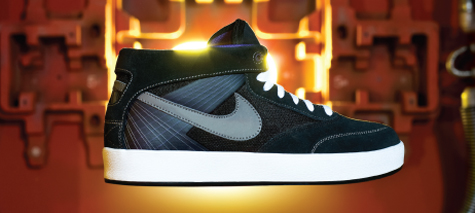
A long way is an understatement, as this month Nike will release Salazar’s first signature shoe, a career milestone for any athlete involved in any sport. Salazar will be the second Sacramento-area skater to get his own Nike shoe, as teammate and close friend Stefan Janoski did so just last year.
“In the beginning,” Salazar remembered, “Before Nike gave anyone shoes, Stefan and I, we’d had offers before in the past from other shoe companies, but I always stick with what I believe in. I believe I’m a loyal rider. That’s just the most important thing. So, I figured if I kept loyal with Nike and the people I work with, then something good was going to happen.”
Even after Nike told them years ago that Paul Rodriguez would be the only team skater to get his own signature shoe, Salazar stuck it out, all the while telling Janoski, “We’re going to get shoes, trust me.” Eventually they both got the phone call and for Salazar, it was sort of an ‘I told you so’ moment when they did.
“I don’t want to sound cliché or lame, but in a way I kind of manifested it because I knew it was going to happen,” said Salazar, not in a cocky manner, but a confident one. “Even before they offered me a shoe, I drew up a design and straight up put one in my room, one in my bathroom and one in my closet.” Salazar would be gone for months on skating trips and he’d come home having forgotten about his dream shoe designs, which re-invigorated him to skate harder, to keep going so that one day it would be a reality. “Like a year later after working hard and having fun skating and stuff, they hit me up and were like, ‘Hey, we want to give you a shoe after Stefan.'”
When it came time to actually visit Nike HQ in Portland, Ore., to meet the people who would be designing his shoe, Salazar was well prepared with his sketches, his favorite color schemes and other things that represented him and his personal style. “When I first started working on the shoes, they were like, ‘Shoot us your favorite colors, your favorite objects, your favorite things around the house, bring us photos of them.’ I didn’t know what the hell they were talking about,” said Salazar. Nike was essentially asking for pieces of Omar so that his shoe “could tell a story.” Turns out, Nike doesn’t just give signature shoes to anyone and when they do, they always have little stamps of the athlete’s personality and style on them. Take for instance Michael Jordan’s famous Air Jordan logo, jersey number, etc. found on his shoes. Salazar wanted a classic-looking silhouette, but with Nike’s new technology infused.
“I’m really into the ’50s and oldies, and I like old tin cans and old rockets and outer space and all that stuff,” said Salazar of some of his personal interests. Hence the reason his shoe features a cool little rocket ship on the sole. Salazar also pointed out that he likes to surprise people, so he told Nike he wanted to make the tongue of his shoe interchangeable. “I wanted to have fun with the shoe and I wanted it to be functional for people,” said Salazar. “Some people like to tie their shoes real tight and some people keep their shoes real loose. Some people like a thin tongue, some people like a real thick tongue,” he said. He also wanted Sacramento-area residents to connect with the color scheme, so he included purples and blacks to match our beloved Kings’ colors.
What really makes Salazar’s signature shoe stand out, though, is the inclusion of Nike’s Flywire technology, something new to the world of skateboarding shoes. Basically, shoes with Flywire are really light, yet really supportive—two attributes not normally associated with one another in the sporting shoes industry. In the past, more material meant more support, but in turn the shoe got heavier. But with Flywire, Nike took Kevlar and spun it into an embroidery-thin thread for reinforcement, and then they added Lycra in areas that needed power and stretch. According to Salazar, they feel great. “Nike’s technology enables the shoe to be lighter and support your foot more and lock it down really well,” he said of the shoe’s feel.
Sacramentans will be able to witness Salazar ripping up B Street Skatepark in his new shoes on Sunday, March 7, at the official shoe launch demo along with Nike teammates Paul Rodriguez, Stefan Janoski, Brian Anderson, Justin Brock, Grant Taylor, Daryl Angel, David Clark, Elissa Steamer and Brad Staba. Anyone who knows anything about skateboarding knows those are some heavy hitters and that this event is will not be to miss. As our conversation was coming to an end, Salazar closed with a bit of advice for the young skaters out there. “The one most influential person that told me how to get shit was John Cardiel, Sacramento’s best skateboarder ever. Whenever I was trying something, just trying for hours and hours, he’d yell out, ‘You’ve got to want it! You’ve got to want it!’ That stuck in my head forever, so if there’s any message I’d give anyone, it’s that.”
Catch Salazar and the Nike SB team on Sunday, March 7, 2010 at B Street Skatepark. Demo starts at 2 p.m.
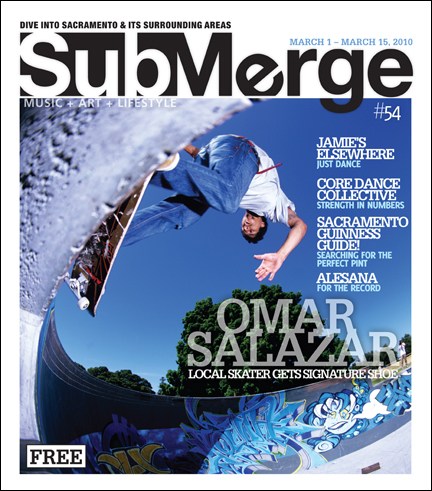
Cover photo by Jonathan Humphries