Spotlight Doesn’t Seem to Spoil Travie McCoy’s Flow
When a front person for a popular band decides to put out a solo album, it always feels like his or her band days are over. Travie McCoy of Gym Class Heroes, however, seems determined to refrain from pulling a Stefani and stay put with the group that made him a star.
“I don’t necessarily look at Lazarus as me going solo, per se. It was more of a side project put out on a bigger scale,” McCoy asserts from his home, lounging on his couch with his dogs, feeling lucky that he has a couple of weeks off to enjoy himself before heading back out on the road.
Lazarus, McCoy’s first “solo” album, was released in June 2010, and had all the elements of a star-making effort. A high-profile team of writers, producers and guest performers were recruited for the album, including T-Pain, Bruno Mars, The Smeezingtons and Cee-Lo Green. Still, even with all these fancy new toys at his disposal, McCoy says he still yearned to have his band around him.
“The performance part was the hard thing,” McCoy admits. “The writing and making the music is something that’s in me, regardless of if it’s with Gym Class Heroes or not. That was the easy part. The performance part was something to adjust to. Being on stage and not seeing the dudes that I’ve been playing with for years–I’ve been in this band for close to 12 years.”
However, his instincts as a performer eventually kicked in.
“Once you realize that you’re there to perform and make sure the people who paid good money for those tickets leave feeling like they were a part of something, an experience,” McCoy says, “you snap out of it. You realize you’re there to have fun too.”
The majority of the music on Lazarus would certainly seem to facilitate a good time. As McCoy’s collaborators on the project would suggest, the album certainly has a feel-good vibe (exemplified by the opening track “Dr. Feel Good,” which features Cee-Lo on the hook) and a glossy pop sheen. McCoy says he has great respect for multi-faceted artists such as Mars and T-Pain who are able to write, produce and perform, but he’s not so much enamored with the idea of being an all-in-one recording artist as he is with Gym Class Heroes’ band dynamic.
“I look up to guys like [Mars and T-Pain],” McCoy says. “I wish I had the time to do all that stuff, but at the same time, there’s this organic kind of bond musically that I have with my band… We all pitch our two cents in, and I think that’s what makes Gym Class Heroes special. You have four guys from four different backgrounds listening to all kinds of music. The common ground is Gym Class Heroes, and I wouldn’t trade that for anything.”
McCoy took the time to answer a few of our questions and, among other topics, talked about his life-changing experience working with MTV’s Staying Alive Foundation, a global grant-making organization that aims to “encourage, energize, and empower young people who are involved in HIV/AIDS awareness, education and prevention campaigns.” McCoy is an official ambassador of the foundation, and his travels to raise HIV/AIDS awareness in Philippines, India and South Africa were chronicled in the short documentary “The Unbeaten Track.” More info on MTV’s Staying Alive Foundation can be found at Staying-alive.org.
The album had a few guest appearances. How do you arrange the songs for the live setting?
Obviously, I can’t have Bruno come out every night, so we have tracks set up and whatnot. For the most part, though, when we play “Billionaire,” I can’t hear myself over the crowd. Every night, the crowd takes Bruno’s place. I’m lucky in that aspect. With the other songs, we usually just cover the ground ourselves, just me and the band.
“Billionaire” was a big hit for you. When you recorded that track, did you have an inkling that it was going to catch on the way it did?
I think it’s tough to guess what people are going to gravitate toward and relate to, or what’s going to become a hit record. It’s always up to the public, I guess, but with that song in particular, after we recorded “Billionaire,” we all looked at each other like, woah. There’s definitely something special about that song. It ended up being a smash, so I can’t really complain.
The track has a positive message. The title might suggest that it’s all about material wealth, but it’s not. I saw the documentary you did with MTV’s Staying Alive Foundation, where they sent you to South Africa, India and the Philippines. Did that have an effect on that song?
Oh for sure, and on life in general. It makes you see things in a new light. That trip changed my life in general as far as not taking things for granted. It definitely had an effect musically as well. As far as my lyrics go, I tend to write about my life for the most part–things that I see and how I feel about things. That trip had a huge effect on me, the people I met, the things I saw… I think it would affect anyone. It definitely made its way onto my record in many different ways.
I saw that you were taking in the local flavor as well on that trip, seeing local bands and things like that. Did the sounds you heard stick with you when you went into the studio as well?
Totally. “Billionaire” sort of has an island vibe, like a reggae feel. Other songs have percussive elements that I heard in Africa, even. It was sensory overload. Being there for a good cause, but also being privileged enough to check out the local music scenes.
You’re working on a new Gym Class Heroes record now. How is that going?
Yeah, we started working on the record a while ago. We’re deep in the process now. We’re looking to put it out by the end of the summer. We have about 30 demos–when I say demos, it can mean songs that are pretty much complete, partial songs, jams that we might pull certain ideas from. There’s a lot of material that we can pull from, but after this tour I have coming up is over and the smoke settles and we get back together and start working on the album again, it’s going to be awesome. We just had a week-and-a-half session in New Jersey, and we put it up on Ustream with the sound off so people could watch what we were doing. At the end of the session, we’d play an old Gym Class song, just as a gift to the viewers for hanging in and checking us out. That’s one thing about Gym Class Heroes as well that keeps our fans stoked is that we try to stay as close to our fans as possible, be it via the Internet or at shows. We have a really cool relationship with our fans.
I saw that last year you were arrested in Berlin for tagging the Berlin Wall. I guess if you’re going to get arrested, that’s a pretty cool way to do so. Was that something where you said to yourself, “When I get to Berlin, this is what I want to do?”
It wasn’t anything that was premeditated. I’ve been writing graffiti since I was 7 or 8 years old, so I just saw an opportunity and took it, and unfortunately, I got caught and paid the price. But it is what it is. It was funny, because the next day there were pictures of kids in front of the piece I did. I guess in a sense, I made my little mark. At the same time, it was no disrespect to my German fans. The Berlin Wall is a huge piece of history. I was told by someone that it wasn’t illegal. There’s graffiti all over it, so I had the mindset it was fine–until I got arrested [laughs].

Travie McCoy will play Ace of Spades on April 1. Also appearing will be Donnis, Black Cards (Pete Wentz of Fall Out Boy’s new band), XV and Bad Rabbits. Tickets can be purchased through McCoy’s official website, the aptly titled Traviemccoy.com or Aceofspadessac.com.
The Adjustment Bureau
Is there a greater power steering this crazy ship called life? If there is, most times it seems like He/She is asleep at the wheel, or at the very least well above the legal limit. And if destiny does rule all, then what about free choice? Did I order that Big Mac because I chose to do so, or was my desire to nosh on said treat at 2 a.m. just a cruel machination of Fate? Common questions of life and humankind’s place in the world are tackled in the George Nolfi film The Adjustment Bureau, based on a short story by science fiction master Philip K. Dick.
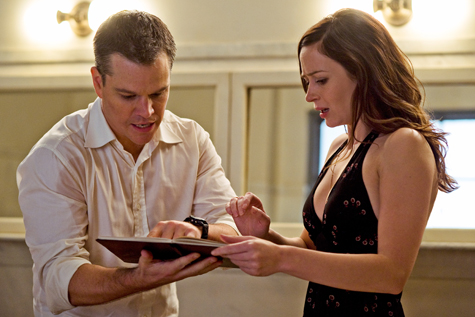
The audience is thrust into a New York State Senate race with Matt Damon playing David Norris, a sort of maverick (for lack of a better term) democrat congressman from Brooklyn. He’s young, brash and shoots from the hip, but for real and not in the bullshit way politicians usually do. At 24, he became the youngest congressman in U.S. history, and now he stands ready to fight the good fight in the Senate. However, his bravado works against him, and when a New York City tabloid runs a picture from an old prank he pulled in college, Norris’ double-digit lead takes a nosedive on Election Night. He ends up getting trounced.
But, all is not lost for young Norris. As he readies his conciliatory speech in a men’s room at a fancy New York City hotel, he encounters Elise Sellas (Emily Blunt), a beautiful and impulsive dancer who captures Norris’ heart as if she was fated to do so. What seems like a simple love story becomes more complicated, however, as a clandestine agency seems to be tracking Norris’ every move. When one of the agents makes a critical misstep, Norris steals a peek behind a curtain “he wasn’t supposed to know existed.” The agency works for a Chairman–what humans understand as God or one of its many incarnations–and makes sure His plans are followed through. Now that Norris knows this, he can go about his life, but he can never tell anyone or he’ll have his mind erased–oh yeah, and this plan doesn’t include Sellas, so he better put it back in his pants.
Norris just can’t shake that mysterious woman from his mind, however. What follows is a sort of sci-fi/fantasy-tinged romance as our two lovers try to overcome the many obstacles fate puts in their way to be with one another. It’s really a sweet story at its heart, but The Adjustment Bureau seems to suffer from an identity crisis.
The Adjustment Bureau does a great job setting the scene. Cameos from New York City Mayor Mike Bloomberg and The Daily Show host Jon Stewart create a solid, real world foundation for what becomes an otherworldly story. A smart move, considering Nolfi and company are asking a lot in the way of suspending your disbelief. Using doors, the agents can seemingly fold space and travel very quickly. They can also manipulate people’s reasoning and alter the course of events if they deviate too far from the plan. This is all well and good, but the script seems to linger too much on explaining these tricks of the trade (without really explaining them) and cataloging the agents’ limitations, which only dilutes the plot’s central focus, the serendipitous romance between Norris and Sellas. When Blunt and Damon are charged with intimate scenes, they flourish, but much like their stop and start courtship, the film often interrupts this budding relationship with more vaguely worded exposition about plans and agent strategizing.
What we have here is a sort of Frankenstein’s monster that harks back to films like the romantic comedy Serendipity, quirky sci-fi romance Eternal Sunshine of the Spotless Mind and the philosophy-drenched action film The Matrix. But The Adjustment Bureau isn’t as successful as any of those mentioned. It is, however, a light-hearted film that’s perhaps trying too hard to make a point. You can’t really blame it for trying.
Whitechapel is a metal band on the rise
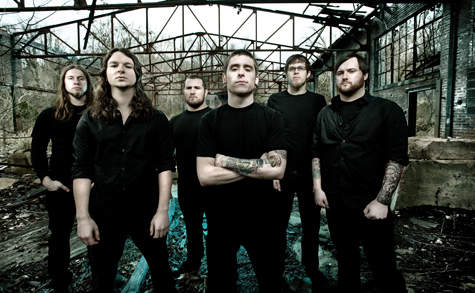
It was an unseasonably warm February evening in the Northeast as Knoxville, Tenn. deathcore goliath Whitechapel prepared for its show at The Starland Ballroom in New Jersey. For his part, Whitechapel guitarist Alex Wade was preparing to slay the Garden State’s metal faithful in his usual manner. No, not bathing in the blood of virgins or devouring souls of the innocent–though considering Whitechapel’s aural assault, you wouldn’t be completely off base for thinking so–instead, Wade was taking a page out of the Zombieland survival handbook and limbering up.
“I definitely like to stretch,” Wade says. “I’m not that old. I’m 24, but not only is it a good habit to get into, but it definitely saves my body for when I get older. I like to stretch, warm up, get the blood pumping, because you can’t just go up on stage and just start going crazy and head banging and running all over the place. It puts a hard toll on your body.”
For Wade, the type of music he plays necessitates his desire to keep in sound physical condition.
“If you’re a band like Muse or something like that, you can stand up there and chill while the lights move around and stuff like that,” he explains. “When you play loud and aggressive music, you have to put on a stage performance that portrays the music as well, so you’ve got to be moving around and jumping all over the place and fucking cussing and spitting and all that crazy shit.”
It’s clear that Wade has a good head on his shoulders; he certainly needs it, considering Whitechapel’s fast rise through the metal ranks. Having just formed in 2006, the band already has three albums under its belt, each one more successful than its predecessor. A couple years after its inception, Whitechapel was already drawing a bidding war from interested labels and soon landed with venerable Metal Blade Records, which has been home to Slayer, King Diamond and Cannibal Corpse (and, strangely enough, Goo Goo Dolls).
Whitechapel’s most recent album, A New Era of Corruption, was released in June 2010 and has propelled the band to its greatest heights to date. As a result, the band finds itself headlining a juggernaut-sized tour (The Welcome to Hell Tour) that includes some of the modern American metal scene’s most intriguing and brutal bands, such as The Acacia Strain, Veil of Maya, Chelsea Grin and I Declare War. Wade says Whitechapel is excited to front a group of such heavy hitting bands, singling out The Acacia Strain as a group that really gets him and his band mates amped up to play.
“There’s something about that band that people just turn into animals and rip each other apart,” Wade says. “It definitely makes us want to up the ante and make our show that much better, because they’re putting on amazing shows as well.”
Wade took the time to speak with Submerge just about an hour before doors opened at the Starland. In the following interview, we discussed the stratification of metal genres and the band’s Sacramento ties as well as staying on top of the business of being a band on the rise.
Your most recent album, which came out last year, charted pretty high…
Yeah, we broke into the top 50 of the Billboard 200.
That’s high for a pop band, let alone a metal band.
Yeah, exactly. It’s crazy that you see bands like us breaking into the Top 50 in Billboard. Probably five years ago, bands that heavy weren’t getting into those slots unless you were like Slipknot or something, but obviously they’re on a whole other level.
Why do you think that is? Do you see a shift in fans in general or just the climate toward heavy music?
I don’t know man. The music business, and what’s cool and what’s not, all kinds of genres are fading in and out. This whole deathcore thing or whatever you want to call it has been getting big for the past three years or so, and just recently this dubstep thing has been getting really big. People have been going crazy over it, but to me, isn’t that just techno? That’s been around forever. Why is it just now getting big? I guess a lot of people feel the same way about metal. Metal has been around forever. Why is it just now getting big? I can’t really answer that question, but we’re glad it is, because our shows and CD sales are obviously reflecting it.
You mentioned the deathcore genre, and I think more than any other kind of music, metal is broken down to such specific subgenres…
Totally. There’s a difference between black metal and blackened death metal. Like, black metal is Emperor and blackened death metal is Behemoth. If you know metal, you know the difference. Obviously, Behemoth has more death metal influence. It’s heavier and not as shrill as true black metal, but it’s really funny how metal has its mini subgenres, and no other kind of music has that.
Your band’s lineup has three guitar players. When you get into the studio, how does it work out with you guys? Do you all trade off a lot of riffs when you get ready to write?
All three of us collaboratively write for the album. I’ll give credit where credit is due: Ben [Savage], our lead guitar player, definitely writes the most. We all have different things going on. I manage bands on the side and work for the company that manages us. I work for them managing smaller bands. I manage I Declare War, who are on the tour with us. Ben puts in the most effort and writes the most stuff, but Zach [Householder] and I do contribute. I would definitely say it’s a collaborative effort, though. It’s not just one or two people.
How did you get into managing bands?
I’ve always been kind of like the brains behind Whitechapel. Everybody says there’s a brains and a brawn to everything, and I would say I’m the brains. I managed Whitechapel up until the time when we decided, like, “Hey, this is getting to a level where I can’t really do much for us anymore. We need to hire somebody who’s going to take us to the next level.” I’ve always had my hand in developing bands and stuff like that. Our manager, Shawn Carrano, who works with Artery Foundation, which is located in Sacramento, I’ve always expressed to him that I like the music business. I like watching bands develop and grow. He was like, “I think you’d be a good manager. You did a good job with Whitechapel before I took over. Would you be interested in taking on some of our smaller bands? I’ll still help you with stuff, but you can handle the bulk of the material.” I knew I Declare War, because we’d met them on tour, and I knew they were looking for a record deal. Artery Recordings had just started, and I showed I Declare War to them and they were like, “Ask them if they want to be signed,” so we got them signed. I kind of took over the band, and it’s been great ever since.
Since you mentioned your Sacramento connection through Artery, I saw that Chino Moreno from Deftones had a guest appearance on A New Era of Corruption. Did you hook up with him through Artery?
Yeah, Shawn had been friends with Deftones and Chino for like 10 years or something like that. Our manager used to manage Chino’s side project Team Sleep. He’s gotten Chino guest appearances on the Norma Jean record and the one on the Dance Gavin Dance record. He’s always helped Chino out with that–getting guest appearances with young, hot bands. It helps out the band to have a big name on the record, and maybe it will help out Chino because it shows him to a younger crowd who hasn’t grown up listening to Deftones like I have. He hit up Chino and said, “My biggest band is heading into the studio to record. They’re all Deftones fans and they have this part on one song that they’d love for you to do.” He checked it out and liked it a lot and decided to do it, and that’s about it.
So you had Chino in mind from the beginning?
Yeah, totally. It was a riff that I had written, and I’m a huge Deftones fan. It definitely has a huge Deftones vibe to it. Stephen Carpenter is one of my main influences playing guitar. I was like, “Dude, if Shawn can hook up Chino as guest on that riff, it would be so sick.” And it actually came together, so I was really stoked on that.
I read a quote from Phil Bozeman [vocals] where he mentioned that you guys were trying to have more of a verse-chorus structure on your latest album. Was that something you’d all gotten together to discuss?
Oh totally, that was the whole point of A New Era… When it’s just riffing the whole time–when it’s just riff, riff, riff, riff, riff–there’s nothing that people can catch on to. There’s no hooks. There’s nothing catchy about it. But when you try to implement verses and choruses–you know, we’re not trying to be radio rock, where we have three parts to one song and just repeat them over and over again–but when you bring parts back that definitely gives the fans something to latch on to.
Before you mentioned you were amazed to be a part of a band that has reached this level of success, and it happened for you pretty fast. Within a couple of years after you formed, you were signed to Metal Blade, which is a really well established metal label. Have you had a chance to take stock of the whole situation?
It’s one of those things that the band has progressed so fast. If you’re outside of the band, it looks fast, but if you’re inside the band, it feels like it’s been forever. The life of a musician is repetitive. People have been like, “Things have changed so much for you in the past four years,” and I’m like, “Really?” Aside from the fact that we get paid more and we do bigger tours, it doesn’t feel all that much different from when we first started touring.
Rocky Votolato prepares for another tour and looks toward writing a new album
It may not be “brain surgery,” but writing is certainly difficult work. Ask any working writer staring at a blank page for countless hours, and they’ll most likely tell you the same. In fact, it may certainly feel like brain surgery, because sometimes forming those words into sentences requires exhausting effort. Singer/songwriter Rocky Votolato has become rather familiar with the ardors of writing over the past decade. First working in bands such as Waxwing and now with his solo career, Votolato has shed blood on the page, crafting bullshit-free lyrics rife with personal meaning.
But Votolato doesn’t come off as overly emotional when you speak with him on the phone, nor does he seem to take himself too seriously. He’s pleasant, a regular working family man–married with two children, one of whom is about to graduate high school and head on to college, which he admitted was a little nerve-racking.
“She’s considering going to an art school–a college for art,” said the Seattle-based musician. “We’ve been looking into scholarships for that, so hopefully it will work out for her.”
Filling out financial aid paperwork is just another thing to add to Votolato’s full plate. In February 2010, he released his most recent full-length album, True Devotion, his first in almost three years. The time between 2007’s The Brag and Cuss and his most recent effort saw Votolato’s lifelong battle with anxiety and depression intensify. However, he was able to work through it. With a renewed sense of vigor, he released his latest album and has spent much of his time since on the road promoting it, playing hundreds of shows. With the distractions and tumult of life on the road, and a busy family life at home, it’s remarkable he’s able to find time to work on his craft at all–considering he, like many writers, prefers solitude while working.
“Writing is a solitary thing,” Votolato said. “If you can’t be alone, then you should never be a writer, because that’s what it’s all about. You have to be comfortable with yourself and your own mind.”
Though he does some writing while touring, Votolato said he prefers to do the bulk of his work at home where there are “creative resources” and he feels he can “fully devote time and attention to the craft of songwriting.” In order to achieve the level of solitude he requires to do his job, Votolato said that he relies on a strong sense of discipline, which is aided by the fact that he has a family.
“You have to be dedicated and disciplined,” he explained. “I get up at 8 every day, and I think the family gives you more structure than most musicians. But anyone who produces work regularly and does good work is usually working all the time and spending a lot of time doing it.”
In a recent conversation with Submerge, Votolato talked about preparing for his upcoming tour, which kicks off Feb. 18, 2011 in Portland. He also waxed eloquent about his writing process, of which he said he was “changing as an artist and figuring out more of what I want from the process of writing and what it takes to get something good out of it.” As it turned out, the plans for his upcoming tour were also in a state of flux.
You’re heading out on the road soon. What are you doing to prepare for this tour? Are you going out with a full band or will you be going out by yourself?
Well, right now that’s still undetermined, which is strange because it’s just a few weeks away, really. But I’m rehearsing and trying out people right now for a band I’m putting together. I haven’t found the right people. I’ve found the right guitar player, who is also going to sing backups, but he’s not available for this tour. He’s going to fly out to Chicago and meet me there, but he won’t be there for the Sacramento show. I’m looking for a drummer. So I could potentially have a drummer for the whole tour if I find the right guy, but I’m probably going to either do the shows for most of the tour as a duo with me and a drummer, or solo if I can’t find the right guy. Then the last eight shows of the tour, I’m going to have my guitar player come out and we’ll finish out the leg.
Is this normally how it comes together, or do you have it more prepared in advance?
I usually have it more prepared, but the thing is, I’ve been touring a lot, so it’s been difficult to figure out rehearsal times. It’s just been my schedule. I did close to 200 shows last year, so I was on tour all year, and I was just playing solo–not really with a band, and I’ve been doing it that way for the last couple of years. It’s kind of a new endeavor to try to find the right guys. Obviously, I’ve played with people in the past off and on, but this time, I’m looking for a more solid band to have go-to guys for hiring for shows and festivals. My vision is I’d like to have a band at some point–or at least have the option if I’d like to do a tour. I would like to do this tour with a band, but I just haven’t found the right guys yet.
You mention that you’re looking for the right guys; is there specific criteria you’re looking for?
It’s kind of like dating. When you meet the right person, you just know it. Music is like, once you start playing with someone, then you know how it feels on the musical side, but then there’s also the personality side, which you just have to be a really good fit. I’m just being really picky. I can go do shows by myself, and that’s fine with me. I’d rather have the right guys instead of dudes who are just filling in. I don’t want to play with just anybody.
You say you want to get together a regular band. Are you looking for guys you can go into the studio with for another record?
Yeah, that’s been the real struggle right now. Last week I tried out three different drummers and this week I’m going to practice with a bunch of dudes from Seattle. I’ve got a band potentially put together for the album, but some of the guys aren’t touring guys. They’re just really pro players here in Seattle, but they’re a little older and have families. It’s a hard mix to figure out exactly who is going to play on the album, but I’m already thinking forward about making another record, so I really want to get that worked out before I go back on tour.
Do you have more songs ready for a new album?
I’ve probably got half a record’s worth of stuff now, but we’ll see where it ends up. I like to keep it tentative at this point, because it’s so hard to know when it’ll be ready, but I’m definitely working toward it. I’m working on the songs now, and I still have another month to go before the tour, which I’m spending writing.
Before you said what you were looking for in the process of writing was changing. At this point, what do you think that is?
There’s this metaphor that this writing teacher talks about, and it’s basically like baking a cake is a good way to think of it. If you put ingredients in, the ingredients are the details of your life, like the eggs and the flour and whatever else you’re putting in there, and the heat is how you feel about those things in your life, and when you put those things together and put them in the oven then it makes the cake. That metaphor is a good way to describe how I’m trying to think about my writing process. The details of my life go into the soup and then it comes out on the other side where it’s not vague… I really see [my songs] as poems, and I want them to be good poems on their own first. At that point, I’m sure when I’m singing them that the lyrics will be good. That’s one thing that’s changed in the process. I’m really serious about wanting the writing itself to be good or better than anything I’ve done before.
For you it’s a twofold process. You write the words and the music. Does one drive you crazy more than the other?
They both equally drive me totally insane [laughs]. The writing does the writing. It does itself when it works. You just have to keep trying. Some days, I can write a piece of music and it just comes out, and, “Oh that took 10 minutes. That’s awesome.” The next day I’m playing guitar for four hours, and I still don’t have anything I like. It’s the same with the lyrics, or writing poems. I think the thing is to keep trying and keep the flow going and try to keep the internal critic from speaking up too much. [The voice that] says, “Oh, what is so and so going to say about that? Oh that sucks,” because I think we all have that going on too. I think that everyone who is trying to be a working artist is dealing with that. So it’s all about getting creative and finding ways to break through that. It’s a struggle, man. I’d be lying to you if I told you it’s easy for me. Just because I’ve been doing it for a living and have been doing it for 10 years, I don’t think it ever becomes easy. It’s a serious political act to be honest. So few people are.
Do you ever get squeamish about the details you reveal about your own life in songs?
No, only if I haven’t done a good enough job, I feel, as a writer. You can present anything in a way that’s creative and artistic if you do it with enough skill and craft and the right inspiration. Obviously, I feel like I’ve had some successes and some failures artistically, but they’re all successes in a certain sense because it’s a learning process… We’ll see where it ends up. I’m enjoying it. I’d rather be doing this than anything else. I know that.
See Rocky Votolato when he plays Harlow’s along with Laura Gibson on Feb. 21. Showtime is 7:30 p.m. and tickets cost $12.
Blue Valentine
Love, like any other volatile emotion, doesn’t always end well. What starts out with the best of intentions can come crashing down. The fragility of love is explored in Derek Cianfrance’s breakout film, Blue Valentine. Much like the emotion it delves deep into, the film itself gets messy.
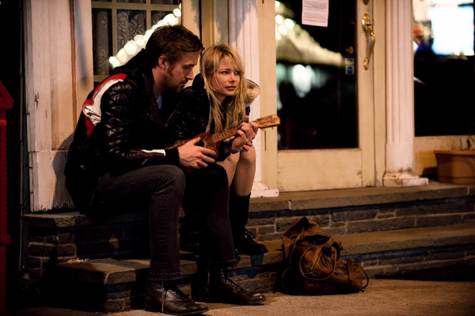
The story introduces us to Dean (Ryan Gosling) and Cindy (Michelle Williams). When we first meet them, they are married with a beautiful young daughter. Their marriage seems stuck in perpetual malaise. The two love their daughter, but their love for one another seems more one-sided: Dean is still effusive in his praise for his wife, but she appears less than thrilled with her complacent–though doting–husband. After Cindy finds the family dog on the side of a road, struck dead by a car, the story flashes back to when the couple first met. Dean, a young drifter and a Floridian native, lives in Brooklyn. He doesn’t have much education, but is hopeful, idealistic and cheerful. He gets a job with a moving company. When the job sends him to an old-age home in Pennsylvania to move in a tenant, he meets Cindy, who is there visiting her grandmother. The story flashes back and forth between the optimistic past and the harsh present.
Co-writer/director Cianfrance paints a very stark picture of an ideally romantic relationship gone awry. Wonderful cinematography from Andrij Parekh has an extreme intimacy that borders on perverse. Blue Valentine is as up close and personal as a film gets, for better or worse. An iconic scene from the past–as Dean awkwardly serenades Cindy with his goofy voice and ukulele–is vividly contrasted with Dean’s climactic doctor’s office freakout in the present. The viewer is in the story, and will often feel the need to escape. Even the film’s sex scenes are portrayed with such closeness that it’s impossible not to feel voyeuristic, even intrusive.
Blue Valentine also benefits from wonderful performances from its two leads. Gosling and Williams show that they are two of the finest young actors working in or out of Hollywood with such visceral and contemporary performances.
Unfortunately, there is a good deal of disconnect in Blue Valentine. The film lacks a bridge between the positivity of the past and then negativity of the present. We see how the lovers meet and fall in love–though even that feels as rushed and thrown together as their “shotgun” wedding–and the moment it comes crashing down; however, the middle is sorely missing.
Perhaps that’s what Cianfrance was trying to do. But in so doing, he makes cruel generalities. Is this how all relationships end, or just this one? He also perpetuates the stereotypical inconstancy of women with his casting of Cindy as the out-of-love wife who has grown cold and perhaps bored of her husband’s seemingly well-meaning romantic inclinations. In the past, Dean says to one of his coworkers, “I feel like men are more romantic than women. When we get married, we marry one girl. ‘Cause we’re resistant the whole way until we meet one girl and we think I’d be an idiot if I didn’t marry this girl. She’s so great. But it seems like girls get to a place where they just kind of pick the best option or something. I know girls that married they’re like, ‘Oh he’s got a good job.’ I mean they spend their whole life looking for Prince Charming and then they marry the guy who’s got a good job and is going to stick around.”
Dean might be to blame for this–perhaps it’s his drinking and smoking, his receding hairline and the squandering of his “potential”–but Cianfrance’s ire seems focused squarely on Cindy. Fair or not, it’s only natural that someone takes the blame when love goes to shit. Still, this “he said, he said” sort of argument holds Blue Valentine back from being a truly great film and diminishes its otherwise strong emotional impact.
The King’s Speech
In the days before radio (or wireless as it’s referred to in The King’s Speech), leaders really only had to look the part. Their words may have been read or simply handed down from some appointed underling. As technology became more prevalent in the day-to-day lives of common folk, however, those in charge were faced with the problem of how they would connect with a populace better equipped and hungry for improved communication with their officials–be they anointed by popular vote or by God. The King’s Speech takes place at the dawn of the modern age–the time between the two world wars that laid the groundwork for the information deluge we wade through in present day. While it would be tempting to shackle allegorical significance on The King’s Speech, the film is thankfully too simple and sublime to shoulder such a burden.
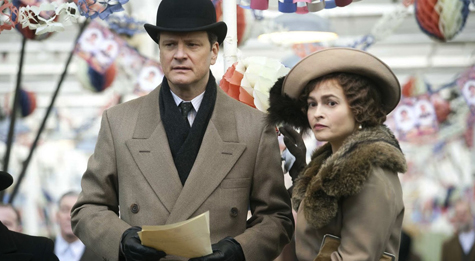
Colin Firth plays Prince Albert (Bertie to his close relatives), a British royal with a crippling speech impediment. Despite his lofty title, Albert is an otherwise ordinary man with a loving wife (Helena Bonham Carter as the Queen Mother Elizabeth) and two young daughters. He’s a good father and husband, but his public life is not so pleasant. He has the potential to be a proud, capable–perhaps even great–leader; but pressure from his overbearing father and older brother has rattled his confidence. After the death of his father, King George V, and his brother’s abandonment of the throne to marry an American divorcee, Albert is thrust into the role of King of England with World War II threatening on the horizon.
At the center of the film is Albert’s relationship with speech therapist Lionel Logue, a frustrated Australian actor played by Geoffrey Rush. Elizabeth seeks out Logue when all other therapists have failed her husband, and he is sick to death of trying to fix his speech impediment. Logue’s methods are controversial, and he doesn’t seem at all intimidated by his new patient’s fame. The two enter into an uneasy alliance that eventually blossoms into a lifelong friendship as Logue helps Albert, now the newly ordained King George VI, get through his coronation and the speech as Hitler invaded Poland (thrusting England into war with Germany), a speech that would define his rule.
Rush and Firth have already been nominated for Golden Globes (Best Supporting and Best Actor respectively), and it seems that both should be odds-on favorites to walk home with hardware at either that ceremony or the Academy Awards. They’re a joy to watch in such rich and nuanced roles. Rush provides excellent dry wit and Firth exhibits such depth as a man on the cusp of greatness but unsure if he’s ready to take that all-important first step. His Albert is quick to anger, but easy to relate to and feel sympathy for. Carter is also as charming as always and shines in a role that could be easily marginalized with Firth and Rush in top form.
What’s so nice about The King’s Speech is that it’s just a movie with good acting and a clever, uplifting script. There are no car chases, shootouts, wild sex scenes or flashy digital effects. The climax of the film–a speech, if you couldn’t already tell from the title–may not be the most thrilling conclusion, but it packs a serious emotional punch. It’s a movie you can take your parents to and ensure that everyone will leave smiling. Jolly good show!
Madhouse Disciples proof positive that hard work, and doing what you love, always pay off
Despite what you may have learned from watching the troglodytes on The Jersey Shore, working for a living hasn’t completely gone out of style. Most of you probably do it every day, schlepping from job to job, making ends meet–you know, basically working-class life in America. The members of the Sacramento-based punk band Madhouse Disciples do it too, but unlike many of us, in their off hours, they fucking rock.
Starting as a three-piece, the street rock/Oi! band formed in 2003. In that time, members have come and gone, but as of now Madhouse Disciples stands strong as a tight-knit four-piece ready, at long last, to release their debut full-length album. Mike Montero, Madhouse Disciples’ drummer, is the sole founding member of the group. But he says no matter how many personnel shakeups there may have been, he never felt the need to stray from the band he formed or playing the music he loves.
“We play street rock ‘n’ roll, Oi!,” Montero says. “That’s what I love, that’s what I’ve grown up on. The people who have came and gone in this band were also into that same thing. That’s one thing that all of our members have shared. And the name, I wouldn’t change it because I’ve been doing it since I was 16. It’s my baby.”
When the band parted ways with its vocalist in 2007, Montero turned to his cousin Brian Rawlins to fill in, even though he wasn’t the most obvious choice. Though Montero had fostered Rawlins’ acceptance into the Traditional Skinhead (read: working class, pro-union, anti-racism) subculture, and Rawlins was an avid punk show-goer, he had never sung before, at least not in front of a crowd.
“The only times I’d sang before that was in the shower or in front of family,” Rawlins admits. “So it was something I wasn’t very comfortable with.”
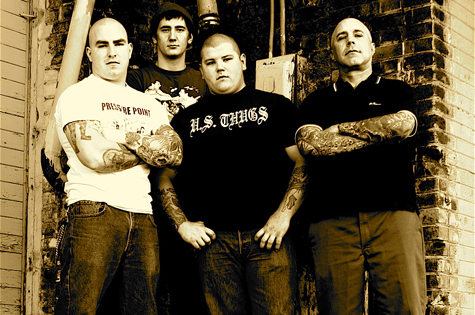
Rawlins came to join Madhouse Disciples under peculiar circumstances. Around the time the band’s singer had left the band, Rawlins was out on tour with venerable Sacramento punks Pressure Point, working as a roadie. One night in Elko, Nev., Mike Erickson, Pressure Point’s frontman, blindsided Rawlins with a severe ultimatum.
“Mike and some of the other guys were telling me that I had to do karaoke,” Rawlins recalls. “I was like, no, I’m not really comfortable doing that… Mike told me, ‘If you’re not going to do it, we’re leaving you here and you’ll have to find your own way back.’”
The threat of being abandoned in the middle of Nevada was all the motivation Rawlins needed. He nervously belted out a rendition of “Fortunate Son” by Creedence Clearwater Revival. However, his performance left enough of an impression on Erickson that he phoned Montero and told him he should consider Rawlins for Madhouse Disciples’ vacated vocalist position. Strangely enough, the thought had already crossed Montero’s mind.
“I already wanted to try Brian out because I’d known him forever and just thought it’d be fun, but then I heard he actually could sing,” Montero says. “Mike told me about that, and it just kind of clicked.”
With a solid group, the band went into the studio to record its first full-length album. Fittingly, Erickson served as producer. Montero says that financial concerns kept the LP from seeing the light of day, but in January, the band plans to finally release the record. Not only was he a first-time singer, but Rawlins also wrote lyrics for just about every song on the record–also a new experience for him. He did what any good writer would and just pulled from his own experiences.
“I write about things like working-class ethics, unity and anti-racism. I also write about things on a personal level that can also touch other people,” he says. “Coming from divorced parents, who also had a heavy drug abuse background, there’s stuff that I learned from that. It’s not a path I have to follow.”
At 12 tracks, the self-titled album is long on message, but also extremely entertaining–just good, honest rock ‘n’ roll with searing lead guitar work courtesy of guitarist Tony Courtney. Who said having a conscience and having a good time had to be mutually exclusive? In separate interviews, Montero and Rawlins broke down for us their experiences working on their debut record as well as living in the punk rock subculture.
Mike Montero
Did you have an inkling that Brian would be a good vocalist, or was it just because you had a good relationship and thought it would be fun to have him in the band?
One, because we were related and I knew he was a solid dude. Two, if you’ve ever met Brian or know anyone who’s met Brian, he’s got more energy than any human being alive. I thought if nothing else, he would have great stage presence. That was the basis for me wanting to try him out.
You recorded your first full-length album coming out soon. You worked with Mike Erickson from Pressure Point to record this album. I know you did a split with Pressure Point before, but what was it like going into the studio with him to record your own album?
Mike is a great producer. He has an amazing ear for music. We spent a lot of time in pre-production. We played those songs over and over, to the point we didn’t have to think about it any more. Mike was a big part of that. He kept us motivated and going in the right direction as far as being militant about practicing and getting so good with those songs that we could play them in our sleep. As far as recording goes, Mike was producer and Eric Broyhill was the engineer. We recorded it at the Pus Cavern. Eric and Mike have been working together for years, and those two together are a deadly combination when it comes to making music. They know what it should sound like as far as tones and everything. Once we got in there, we let those two figure out the tones we were going for. We gave them a small amount of what we wanted. We wanted to sound more like an old rock ‘n’ roll record, and they knew what amps would sound good, what guitar combinations and stuff like that. It went like clockwork, really. It came together like it was meant to be.
As a drummer, have you had to adapt to each new player coming in?
Not so much. With the kind of straight-forward rock ‘n’ roll stuff we play, the drums aren’t really supposed to be super flashy. There’s not a whole lot to change. The drums are just the backbone. It’s nothing real fancy.
You’re doing the CD release at a house show. Do you prefer those over shows at venues?
The venue to me isn’t really the point so much. I prefer to play all-ages shows, where the younger kids can get into it and have a good time. It’s a good positive outlook. You play bar shows, and often times there are a lot of people sitting at the bar who don’t care about the music. They just want to get drunk, and that’s fine. Whatever, that’s cool. You want to get drunk, get drunk. Typically punk and Oi! subculture has been a youth subculture. It has a lot to do with the younger kids. All-ages venues are more preferable. Our bass player [Dirty D] owns a house that has a great big shop in the back, and it’s totally DIY. We put a stage and a PA in there, and it’s a cool thing where this is our thing.
How did you get involved in the Oi! subculture?
It was a natural transition for me. I was a punk rocker. I had crazy hair and all that stuff. It got to the point where, “I can’t find a job if I look crazy.” I didn’t change any of my values in that sense. This is what I am. This is what I believe. I’m extremely anti-racist. I can’t stand that shit, and I’m extremely working class. It comes from my lower middle-class upbringing. I was taught that you work hard for what you get. That’s one of those values that I kept with me.
Your music is a lot of fun to listen to, but there’s also the message behind it that comes through very strong. Is the enjoyment or the message more important to you?
It’s a double-edged sword. In my opinion, in punk rock and Oi! music, the message is always more important than the music. It’s not like this new fucking pop bullshit that comes out that has no message or anything to it. There are definitely things that need to be said, and I think Oi! and punk music is where that stuff is said more than in the mainstream.
Brian Rawlins
Mike said he was already thinking of asking you before he heard from Mike from Pressure Point about it. Were you aware of that at all?
A little bit, but not so much. We kind of joked about it. When their split CD with Pressure Point came out, I was like, “Dude, you should let me sing in your band,” and my cousin said, “No dude. We already have a singer. Sorry. You suck at singing.” I’ve known him my whole life, so he’s brutally honest with me, but it’s all in good fun.
How did you feel when you got off that karaoke stage? Did it make you realize that you wouldn’t mind singing for a band?
No, I was terrified, to be completely honest. I was nervous and extremely embarrassed. With my friends, we have a saying that ball-busting is a sign of endearment, and I was preparing myself to get handed a bag full of endearment, I guess you could say.
How is it for you now? You’ve been with the band for a while. Are you comfortable singing in front of people?
It’s weird. I still get nervous, but that’s one of those things, I guess. It depends on the person. I still get the jitters. I prefer not to eat before a show, but that’s the same way I was with sports growing up–playing football. I didn’t eat before games, because I knew I was going to throw up.
Sports and punk rock seem like two different worlds.
Polar opposites.
How did you move from one to the other?
Well, as far as sports went, I started playing when I was 7. I played football all the way up until I graduated. I found myself not going to parties in high school, because I just didn’t find myself getting along with the “jocks.” It wasn’t because I had a beef with them or I hated them, but I just didn’t fit in with them. They could tell I was not one of their upper middle class brethren. I was from a poor family, so it was definitely one of those class differences.
You worked with Mike from Pressure Point on this record. Was he a big influence for you heading into the band?
Going to Pressure Point shows sucked me in pretty hard. Watching those guys play was amazing. Everything he said in between songs, and reading the lyrics, spoke to me on a different level. That’s when I realized it was something that mimicked my life already. It was an easy thing to take part in.
And now you’re working with him on this record, so that must be a big thrill for you.
For Mike to produce us was really awesome. It was fun. And he’s actually someone I respect, so when he suggested something, I wasn’t like, “Uh, I know what I’m doing.” It was really nice, because I could listen to his point of view and perspective and take a different look at things. He’s been doing Pressure Point for over 15 years, and it’s like, of course I’m going to listen to him with respect and admiration. Any advice that he had, I listened to with open ears.
Mike, your cousin, was saying that you spent a lot of time practicing the songs in pre-production, and that Erickson was a big reason for that.
Huge. Before we went into production, he said that he wanted us to be able to play them forwards and backwards–know them so well that we could go and hit it the first time and then work on any little things we wanted to do. You’ve got musicians like Tony in the band, who’s an amazing guitar player. It was fun. Practicing with these guys has always been fun. It’s never been like work.
Why Lie? I Need a Drink
What if that grimy looking guy who just asked you for change really wasn’t homeless at all? What if, at the end of the day, he hops in his BMW and shoots straight out to his home in the burbs, or his vacation home in Tahoe? Is it possible to make more money panhandling than you can by, say, cooking fries at McDonald’s or some other thankless, albeit honest, gig? It’s questions like these that are explored in Sacramento-based comedian Keith Lowell Jensen’s documentary, Why Lie? I Need a Drink, which is due out on DVD next month.
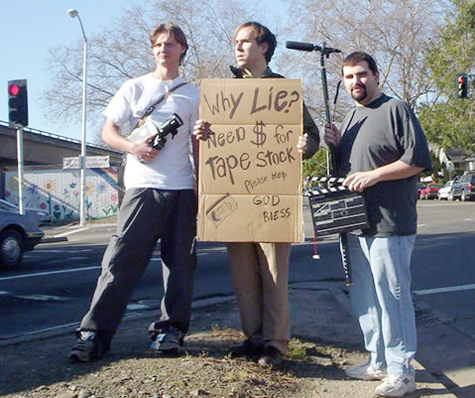
Known locally for his work with the I Can’t Believe It’s Not Comedy sketch troupe and also as part of the Coexist? Comedy Tour, Jensen gets the documentary off to a goofy start as he tries to discover if one can really make a good living from begging. He takes to the streets to get a first-person look at the world of panhandling, and at first his approach flirts with the absurd. He dons a variety of costumes from a banana suit to mime makeup and arms himself with an arsenal of wacky signs–always punctuated with a “God bless”–to see what combination will earn him the most money. The absurdity reaches its peak when a man dressed in swimmies and goggles and wielding a pool noodle chases a banana-clad Jensen around a freeway off-ramp.
In addition to begging the old fashioned way, Jensen also takes panhandling into the cyber age. He sets up a website where people can send him spare change, cold calls people whose numbers he finds on the Internet and even culls Yahoo chat rooms for those who may be sympathetic enough to dig through their pockets.
The humor sweetens what can be a bitter pill. Jensen and company, for all their shenanigans, present a well-rounded view of panhandlers and how we treat our homeless. Interviews with both the beggars and the people they encounter run the gamut of emotions. One young man vents a lot of anger and resentment toward beggars, saying he’d like to spit on them; while another, perhaps of similar age, speaks from his past experiences with life on the street and says that he always tries to give money to those who ask. The film simply presents these arguments without showing its hand one way or the other, and for that, it’s to be commended.

Things seem to hit home for Jensen when he decides to ditch the costumes and go out panhandling in his regular clothes. One scene in which Jensen is begging in front of a post office in Roseville around Christmas time is especially effective. Shot with a hidden camera, a postmaster attempts to chase Jensen from the area while he pleads and protests that he’s got every right to stand there because it’s federal property. Though it’s obvious that Jensen is not destitute, it’s easy to imagine such a scene playing out in any town in America. As it turned out, the spot by the post office was Jensen’s most lucrative location, netting him upwards of $30. Most times out, however, he hardly earned enough to buy a cup of coffee.
Why Lie? I Need a Drink may not be the most hard-hitting examination of homelessness in the United States, but it’s certainly a humane one. It paints an elegant and entertaining portrait of life on the streets, how the homeless are perceived and the murky legality that surrounds panhandling.
The film was shown in theaters around California, including the Crest in Sacramento, and even as far east as Albany, N.Y. On Nov. 4, 2010 the filmmakers will return to their hometown Crest Theatre for the Why Lie? I Need a Drink DVD release party. Admission is $15 and will include a copy of the DVD. Extras on home video release include a neat interview with Jensen conducted by local personality and horror host, Mr. Lobo, as well as a handful of deleted scenes.
For more information or to pre-order the DVD, go to www.whylieineedadrink.com.
New York’s Blonde Redhead reinvents itself as a matter of course
Some bands preach an ethos of doing something different on every album, and other bands actually follow thought. Blonde Redhead is certainly the latter. Following the group from the angular, grimy post-punk of its early years in the mid-‘90s to the dream pop that garnered the group its growing notoriety, it’s difficult to believe all this music–a catalog now eight albums deep–came from the same three individuals. For their latest release, Penny Sparkle, Blonde Redhead, comprised of twin brothers Simone and Amedeo Pace and vocalist Kazu Makino (Amedeo’s wife), reinvents itself again with 10 mood-altering, electronic-drenched tracks.
Doing something new may be its own reward, but it doesn’t always translate well with critics and fans. Metacritic.com, a site that summarizes reviews of movies, music and video games, rates Penny Sparkle, released Sept. 14, 2010 at just 68 out of 100 percent, whereas the band’s past three records notched well over 70 percent (their previous record, 2007’s 23, also Blonde Redhead’s biggest commercial success, raked in 83 percent). Metacritic.com user scores followed suit as listeners’ average score for the album tallied just 6.8 out of 10, whereas Penny Sparkle’s three most recent predecessors reaped scores over 8.
Statistics don’t always tell the full story, however. Simone Pace spoke with Submerge on a rare day off on the road. He sounded tired, but happy to “finally have a little privacy.”
“We’ve been on a bus with 10 people,” he said. “But today we’re in a hotel.”
Much like the constantly changing face of their music, Blonde Redhead is also mixing things up with their current North American tour. In addition to playing major markets–New York, Los Angeles, Houston and their one Northern California stop in San Francisco–the band has also played a few dates off the beaten path, such as Newport, Ky., and Carborro, N.C. The band also spent a good deal of time working on the visual component for these live performances, working with Jonah Strauss to design a lighting element for the shows.
“We wanted to do something special for these shows, because we’ve never had that. It’s always a pity, because it does make a big difference,” Simone said. “The idea was to do something that wasn’t like a rock show, but do something a little more arty.”
Simone said the look of the show is also evolving.
“Now we keep developing it,” Simone said. “Every night we talk about different concepts about how to make it not only a rock show, but a different experience altogether.”
The artistic approach to their live lighting is probably in reaction to the feel of Blonde Redhead’s new album. Rich with electronic flourishes and spacey vocals, Penny Sparkle is also surprisingly simple and direct. It’s the sort of album that either lends itself to being savored in its entirely or becoming severely misunderstood. Perhaps that’s why reaction to it has been lukewarm so far.
Penny Sparkle was produced by Van Rivers and The Subliminal Kid, the duo of Henrik von Sivers and Peder Mannerfelt that fostered the spooky-chic sound of Fever Ray’s 2009 eponymous full-length debut. Alan Moulder, who mixed 23, returned for Penny Sparkle; and Drew Brown, who has worked with Radiohead and Beck in the past, provided additional production work. The album was recorded in Stockholm and New York.
“This was a hard one to make,” Simone said of the process of making Penny Sparkle. “It was heavily produced… It was a lot of adjusting and organizing, which is all good. We hired them [Van Rivers and The Subliminal Kid, et al.] for that purpose. After the record was done, you had sort of a weird feeling, because it was such a strange and meticulous process.”
Meticulous would be putting it mildly. The band sequestered itself in Upstate New York to work on the record, then Makino went off alone to Stockholm to work with von Sivers and Mannefelt before returning to work with the rest of the band and Brown at the Magic Shop in New York City.
“There were a lot of people involved and sending files left and right,” Simone explained. “It’s interesting because I’ve never done this before. In the past, we just went into the studio.”
Simone said that puzzle-like way the band pieced the album together made it difficult for him to understand Penny Sparkle at first. Now, as the material has become more familiar, he’s warming up to it.
“My first reaction was I need to step back and listen to this thing and see how it feels, because I didn’t even understand it anymore,” Simone admitted. “What really helped was playing it live. Then you start to really have it make sense in your head. It becomes part of you more. Now, I enjoy it.”
Taking a little time to enjoy his own music isn’t anything new for Simone. He said that the only album of his that he really fell in love with was Blonde Redhead’s second album, La Mia Via Violenta.
“It’s the record that I listen to the most, and I sort of fell in love with it, which usually doesn’t happen with my own records,” Simone said of La Mia Violenta. “It hasn’t happened with any other record as much as that one, but I love this record [Penny Sparkle].”
He said that learning to love Penny Sparkle took time in order to understand the different visions at work in creating it.
“It’s not just me, it’s a lot of different things. It’s Amedeo and Kazu. It’s Henrik and Peder. It’s Drew, who engineered it and Alan mixed it. Everyone had their own visions that I have to digest and almost respect,” Simone said.
With the band approaching a run of two decades together, Simone said that trying to pave new roads for Blonde Redhead to travel has become more difficult, but it’s a task they must endeavor out of necessity.
“The first album, you have your whole life to do it, and every other album, you have one year, two years, three years,” he said. “It becomes hard to reinvent yourself in a way that’s genuine to what you’re doing–in a way that you believe is right. As you go along, it becomes harder, because there aren’t many options. We all feel like the most important thing is giving up who you were before and letting it be its own thing and not trying to redo what you’ve done in the past. It’s important to give something new to the listener.”
Simone said that the set list for the new tour sticks mainly to the new material, but also features songs from the band’s considerable past catalog. And while their music strives to be different from what came before, he said there are certainly common threads.
“You don’t want to try and match all the new songs, but it sort of happens,” Simone explained. “They start to become a family in a way. They become a family by becoming connected in some way. Your instrument becomes that connection. Old songs, new songs, but it’s all the same instrument.”
Trying something new is never easy, especially when those who come to see you play expect–or demand–you to be a certain way. However, those who are fans of the band should expect nothing if not the unexpected from a group that consistently pushes its own boundaries. If you’re looking for business as usual from Blonde Redhead, you’re probably missing the point.
Due Date
The buddy picture is a time-tested Hollywood staple. From the Lethal Weapon franchise to Tango and Cash, there’s a certain draw to watching two polar opposites thrust into an impossible situation not entirely of their own making who have to overcome not only their bizarre circumstances but the differences between them as well. Now Robert Downey, Jr. and Zach Galifianakis can add their names to the pantheon of big screen buddies. While their film Due Date may not have the bang of the aforementioned Gibson/Glover or Stallone/Russell combos, Downey and Galifianakis provide plenty of onscreen fireworks, especially if you’re into masturbating dogs (who isn’t?).
Told in a brisk 90-or-so-minutes, Due Date follows a few days in the life of Ethan Tremblay (Galifianakis) and Peter Highman (Downey). Highman (a great pun of a name) is a high-powered businessman with a temper to match, while Tremblay is a hopeful actor. Their paths cross in Atlanta: Highman, in town on business, is anxious to get back to Los Angeles to witness the birth of his first child; Tremblay, who traveled to Atlanta for his father’s funeral, is heading west to pursue his dream of finding fame and fortune in Hollywood. When an on-plane incident puts both characters on the no-fly list, Tremblay and Highman are stuck driving cross-country together. Enter wackiness.
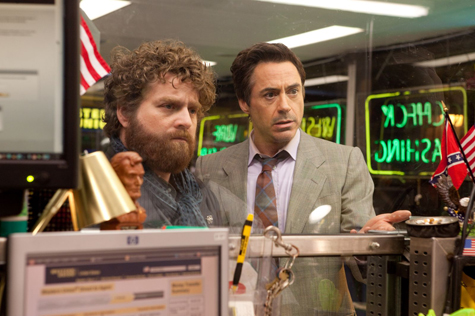
Due Date has a grocery list of cameos. Wu-tang Clan’s RZA plays an airport screener, Jamie Foxx appears as a big name football player and friend of Highman and Eastbound and Down’s Danny McBride is cast as an easily riled employee of a check cashing place; but make no mistake, this is Downey and Galifianakis’ vehicle, and unlike the characters they portray, both are capable behind the wheel. Downey is always a consummate pro. His Peter Highman isn’t a likable fellow. He loses his temper often and incessantly bullies the affable, though obnoxiously quirky Tremblay. He says awful things–often unapologetically–like questioning the legitimacy of McBride’s character’s tour in Iraq. Still, Downey manages to smooth out Highman’s rough edges just enough so that he’s someone worth pulling for. In his role, Galifianakis doesn’t stray too far from his cartoon-ish persona. He smokes weed, wears a perm, treats his French bulldog Sonny like a person and walks in an effeminate manner. Still, there’s more to Tremblay than just his quirks. In a scene in a rest stop bathroom, Galifianakis does a solid job turning on the water works while lamenting the death of Tremblay’s father. It’s just enough depth, but not so much that you have to struggle with too many feelings.
This isn’t new territory. It’s two guys who have no business being around one another stuck in a car, having madcap adventures as they careen across America. There are gunshots, car chases and plenty of slapstick. Sometimes there’s a reason films like this are formulaic–because it’s a formula that works.
Those who are coming to see Due Date on the strength of director Todd Phillips and Galifianakis’ work in last year’s The Hangover will not be disappointed. There are plenty instances of absurd and downright vile humor to appeal to viewers on a base and visceral level. However, Due Date’s nice surprises are its few poignant moments that aren’t overly saccharine and usually broken up by a butt crack gag. Here’s hoping fans of The Hangover are one year older, and also a little bit wiser.