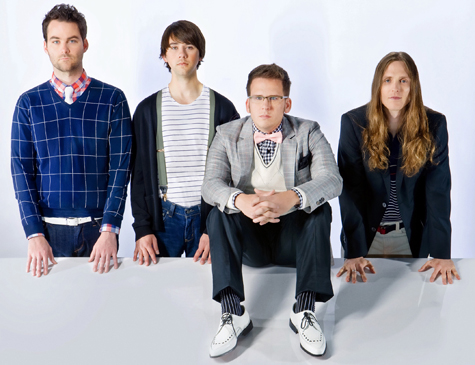
Ludo returns with a new album and an emboldened sense of confidence
There’s a saying in some parts of the country that goes, “If you don’t like the weather, wait five minutes,” of course referring to a bratty and unpredictable climate. In Northern California, given its multitude of microclimates, you could easily replace “wait five minutes” to “drive 20 miles.” None of that really has anything to do with Ludo, an alt-rock band originally hailing from St. Louis, Mo., but the sentiment behind that old adage sort of applies to the band’s latest album, Prepare the Preparations, released Sept. 7, 2010. If you don’t like one song, just skip to the next track.
You may have picked up from the album’s title that Ludo isn’t a band that takes itself too seriously, but that doesn’t mean you shouldn’t. Prepare the Preparation is musically restless with its antsy propensity for genre- and style-hopping. Take, for instance, the Danny Elfman-esque carnival bombast of opening track “Too Tired to Wink,” followed by the space-age speed riffs of “Cyborgs vs. Robots” and throw in a sea chantey (“Rotten Town”) and some folk-inspired rock (“Anything for You”) for good measure, and you’ve got what amounts to a pretty wild musical ride. However, what holds steady through Prepare the Preparations is Ludo’s solid musicianship. For all their quirks and perhaps goofiness, it’s impossible to deny the band knows what it’s doing.
“People want to push you a certain way and neglect the fact that you can really play your instruments better than a lot of the serious bands,” Ludo keyboardist Tim Convy told Submerge in a recent interview.
Ludo got its start in the first half of the ‘00s. The band’s previous album, You’re Awful, I Love You, released in 2008, was the first of the band’s multi-album deal with Island Records. Prepare the Preparations found Ludo working once again with co-producer Matt Wallace (with Mark McClusky), who was behind the board for You’re Awful… Prepare the Preparations was even recorded in the same studio, said Convy.
“If we had worked in a different place with different producers, that might have counteracted the confidence, because we were so comfortable with those people and places,” he said. “I think we got something good out of it.”
Confidence was a major key to Prepare the Preparations. With their sophomore effort for Island, Convy said the band was “just a little cockier.” It was this growing confidence that played into Prepare the Preparations’ myriad sounds.
“Before, we may have talked ourselves out of certain decisions because it was our first major label record, but now we were more confident with what Ludo would do,” Convy explained. “I think that’s part of the extreme eclectic sound of the record, because you try to think about it without limitations. I think going into the studio with that mindset is why it came out the way it did.”
A burgeoning sense of Ludo coming into its own wasn’t the only difference this time around. The band members no longer all living in the same general area played into the writing process. Whereas in the past Ludo’s chief songwriter, frontman Andrew Volpe, would come to the band with skeletons of songs for the other members to embellish upon, this time around, he presented the band with fully realized demos. For Convy, it took a bit of getting used to.
“When something’s that done, sometimes it’s hard to jump in, but at the same time, Andrew was open to everything that we brought in,” Convy said. “You didn’t have to wonder where he was going or what he heard in his head.”
Convy said that he believes the new process was “empowering” for Volpe.
“It’s nice to be in on the ground floor of the creative process, but at the same time, there was a lot less confusion, because he might hear chords and lyrics, and I might picture something totally different than he did,” Convy continued. “Whereas with this, we could both be on the same page of what the end product was supposed to be. I just had to learn to adjust the way I had input.”
Empowerment seems to be a recurring theme in Ludo’s career and music. The band’s sense of humor and inherent geekiness (Ludo takes its name from a character in Jim Henson’s 1986 film Labyrinth) has had the band taking some flack amongst snootier music connoisseurs. This may have been a cause for concern for Ludo earlier on, but it’s less of a bother now.
“It’s unfortunate,” Convy said. “It’s something that we used to let bother us, but we don’t anymore. People are going to say what they’re going to say, and we’ll just do what we do.”
Songs about robot battles and leprechauns are certainly imaginative, but may cause eyes to roll at many a hipster venue across the country. Nevertheless, Convy knows you can’t please everyone, and Ludo’s not going to bother to try.
“It’s part of what we do, and people are going to take it the wrong way,” he said. “Someone wrote a review and quoted lines from ‘Whipped Cream’ [the band’s tongue-in-cheek first single from Prepare the Preparations] and said, ‘You’re not going to pick up chicks like that.’ And we were like, ‘No fucking kidding. We’re making fun of people.’ We realize now that not everyone gets it, and almost take pride in the fact that not everyone’s going to get it.”
All you need to get is that Ludo makes fun music; and since geek has become chic, rocking out to a band like this is way cooler than gazing at your navel. Radiohead is so last decade anyway.
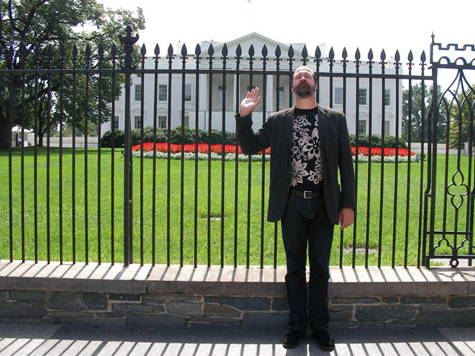
Krist Novoselic discusses politics in the digital age
For as long as Nirvana was in existence, bass player Krist Novoselic served as the tall, somewhat goofy counterpoint to frontman Kurt Cobain’s charismatic, acerbic personality. Whether it was taking a bass to the face while performing at the VMAs or crafting impossibly hook-y bass lines to accompany Cobain’s rousing wails and anthemic rock song structures, Novoselic remained a strong constant throughout the tumultuous and all-too-brief history of arguably the most important rock band of the past three decades. With just three studio albums–the last of which, In Utero, was released in 1993–Nirvana’s music continues to be held in high regard among fellow musicians and fans. Meanwhile, numerous posthumous releases have given Nirvana legs beyond its years, expanding the band’s fan base to a younger generation.
“I’m so proud of it–that it’s so enduring,” Novoselic says of his involvement in Nirvana. “I mean, God bless Kurt Cobain. He was such a visionary. That’s why the music has endured.”
Since Cobain’s death in 1994, fellow Nirvana alum Dave Grohl went on to form another wildly successful band, The Foo Fighters, and more recently returned to the drums in rock supergroup Them Crooked Vultures. But Novoselic took a different route. Though he released one album with the group Sweet 75, and the short-lived Eyes Adrift (with Sublime’s Bud Gaugh and Meat Puppets’ Curt Kirkwood), Novoselic’s main focus has been politics. Though he’s teased at a couple of runs for office–lieutenant governor of Washington in 2004, which he later decided against; and last year as county clerk of his home Wahkiakum County, Wash., which was done to protest a Washington state election law–Novoselic’s main work has involved youth legislation and voter reform. The bass player turned poltico will make an appearance at Sacramento State Sept. 23, 2010 to discuss these matters as well as constitutional issues. He discusses this upcoming event as well as his thoughts on where politics are heading in the following interview.
In the write-up I read about your appearance at Sacramento State, it said that you’re going to discuss the effects of social networking on politics.
Yeah, it’s like, I got started into politics in 1995, and people were excited that this bass player/celebrity was being active and what kind of impact that would have on youth culture and youth participation. People would bemoan how come more young people don’t attend party meetings, and why are groups like…the Elks club closing and why are all the members in their 80s? Association must be dead. But it’s like, oh no. Association is exploding. It’s just finding new forms…
Association should be voluntary. People are compelled to associate with other people. I want to hang out with people who are interesting and compelling, bring something useful to the party. I don’t want to hang out with draining people; you know what I mean? [Laughs] That’s what association is about. You shouldn’t be forced to do anything.
I know you’re active in Washington. Do you follow California politics closely?
I’ve been following Proposition 14 [also known as the Top Two Primaries Act, which would create a single primary ballot], and I work with a national group called FairVote: The Center for Voting and Democracy. We put out a paper for fixes to Prop. 14. Two of the major fixes are allowing write-in candidates and moving the primary from June to September, so you can have a shorter campaign season, but you could also have more voices as part of the election, so instead of the top two being determined in June, they’d be determined in September.
Another thing we recommend is an associational component, this “prefers party” business… There’s going to be a trial in Washington State in November regarding the constitutionality as applied. The U.S. Supreme Court has upheld it as spatially constitutional, but now that it’s been used in Washington, the court wants to see any harm. I was going to touch on that.
You know how I was just talking about draining people, and who you associate with? You know Oscar the Grouch, you remember him from Sesame Street? He can say that he prefers your party from his garbage can, even if we have nothing to do with him–on a ballot! I see what the intention is behind the Prop. 14 and the “prefers party.” You want to open up the system, and I’m glad that those partisan primaries are gone in California. They’ve really outlived their usefulness as a practical political reform. I just can’t see how you have people associating online, it’s going to be a matter of time before Republicans or Democrats take full advantage of this Internet and social networking association, or someone’s going to beat them to it, and there’s going to be a new party or parties. A top-two voting system allows that… because it’s a majority voting system.
There should be an honest ballot, where if you’re a Democrat or a Republican or whoever, you were chosen by those people. I reject the idea of party bosses. That’s old-fashioned. I say let the major parties nominate hacks and losers, and the voters will know this, and they’ll vote for the person who best represents them. The point is, let the parties nominate, and let the voters choose.
When I was reading your blog for Seattle Weekly, I thought it was neat that you were talking about the smaller elections, and not just the sexy elections, like president or whatever. It seems to be that people don’t turn out for the smaller elections. How should we get people motivated not to just come out for the big votes, but the more localized and primary elections as well?
Nothing captures the imagination like a presidential election. A lot of times, there’s no reason to vote. With gerrymandering and redistricting, the districts are skewed. The insiders have settled the election for one party or another before anyone got a ballot. When I was starting in politics in the ‘90s, it was like, let’s get out the vote for this Democrat in Seattle who wins with like 70 or 80 percent of the vote. It’s just like, rah rah, hey, let’s get out the vote. You’re asking people to get involved with the vote, and they get a ballot, but the race is uncontested or uncompetitive. It’s redundant–even with the top two. My nephew is 20 years old; he got a primary ballot and he was like, “You mean I have to vote again?” There’s only two people on the ballot. That’s how it works! You’ve got to do it. These people are going to make decisions on your behalf.
What do you foresee happening in November? Do you see a big shift coming in Washington D.C.?
I don’t know. A lot of it seems to be horse race press. It’s easy to fall into just following the horse race, but there’s good information. Somebody in Washington analyzed who was voting in the primary, and there were way more Republicans than Democrats.
I don’t know what’s going to happen. What do people want? You can go back to the Republicans if you want. They haven’t shown anything. I remember back to 1994. What were the big keystone reforms when the Republicans were in power? I don’t know. I didn’t vote for any major party in the primary. Where I had choices of third party or independent, I always voted for them, because we have the top two in Washington, so I get a second choice. I can vote my conscience.
When Nirvana ended, was there anything in particular that made you want to get involved with political matters?
It was just really compelling. I’m really interested in it–reading about the issues. I’m really into election reform–ranked choice voting, proportional voting. There was a time when I thought I was going to run for office, but it didn’t really fit with what I want to do, which is more of a transpartisan, transformational politics. I’m going to try to reflect that in my speech on Sept. 23. Politics are about people, and I think people should come together. It all started even before Nirvana, with punk rock music…I was part of this group that rejected mainstream music and mainstream values in a lot of ways. We found each other and communicated and associated. We had the same needs. We wanted this punk rock music and this punk rock culture, and we had similar values. That’s what people do. You just find groups. Now with the Internet, it is way more decentralized. This was back before the Internet when you would get a Xeroxed fanzine in the mail, or you’d find another fanzine–Maximum Rock ‘n’ Roll or whatever–in a record store. There was no coincidence that there was that anarchy “A” symbol. Anarchy isn’t about smashing windows or protesting some global ministerial meeting; it’s actually about being organized and people coming together voluntarily and making independent structures outside of the corporate or governmental spheres. It’s an enduring idea. It’s up to the individual or groups of individuals to make it work for them.
Since you’ve been working in politics, how much change have you seen in the electorate or how politicians reach out to the public, and do you think people are more engaged in politics than they were 15 years ago?
I’m still assessing it. The tools are developing where campaigns have their Facebook page and a Twitter. The key to a campaign is to find a successful balance of holding a message together, but also not really keeping a lid on things, because on the Internet things are more decentralized and tend to grow more organically, so you can’t really have this top-down structure. People want to feel like they’re a part of something.
Changing gears a bit, you write about music a lot on your blog also, and you mentioned Sleigh Bells and M.I.A. You said of Sleigh Bells, “‘A/B Machines’ allows me to gauge our progression into the 21st century. We’re definitely in a new musical era.” What did you mean by that?
Well, it’s not about guitars and drum sets anymore. This is all digital technology. The way the music is produced is really noisy and abrasive, sonically, and your ears have to be attuned to that. You have to break through…years ago, even a lot of people today, wouldn’t be able to listen to it, because they’d think their stereo was broken. Yet, all the technology has gone into noise reduction and crystal clear recording. It’s a different sensibility. It’s a different world now. People see things differently, they hear things differently. It’s not 1955 or 1985 or 1995. It’s 2010, and things are different. That’s the nature of things–they change. We can imagine that politics are going to change, and how are we going to do it. Political change is happening, but it’s happening slowly, which is probably a good thing. A huge change could destabilize things, and with the economy perhaps it’s not a time for instability. Music’s in the digital era; we need a democracy that speaks to what is going on in the world, in the country, with the technology and people social networking.
Do you think Nirvana would have faired well in the current musical climate?
Oh, that’s impossible to answer. We’re still fairing well. We’re a huge band.
Are you working on any music projects now?
I think soon, I’ve got this collaboration coming out with a lepidopterist… Did I pronounce that right [laughs]?
I’m not sure…
A butterfly expert, a naturalist. He’s reading a poem on wildlife and the natural world, and I’m playing acoustic guitar, so that should be out soon. Produced by Jack Endino [producer of Nirvana’s Bleach]. Grunge!
The other day, Submerge contributing editor/my personal life coach (it’s not a paying gig) Mandy Johnston had to stomach through yet another one of my woeful diatribes. You know, I have to tell you, being white and somewhat privileged in America just hasn’t been as easy as I’d heard it was going to be. I was bemoaning the death of the American Dream or some such ennui-laden bullshit. But it would appear that the American Dream is alive and well–just look at Antoine Dodson.
You should know who he is by now. Last month, his sister Kelly was the victim of sexual assault, perpetrated by “some idiot from out here in the projects,” in Hunstville, Ala. That wasn’t the big news, though. Sadly, rape has become all too commonplace in cities all across the United States. No, the story here was the news clip that reported the incident. In the segment (originally aired on WAFF 48, Huntsville’s NBC affiliate), reporter Elizabeth Gentle questioned the Dodson family about the trying incident the night before. A man–still at large–used a garbage can to climb into Kelly’s window and attempted to rape her. She fended him off, and the altercation caused enough of a ruckus to alert her brother Antoine, 24. The two were able to repel the attacker’s advances, and Kelly and Antoine emerged from the fracas more or less unscathed.
Still, the incident left everyone involved understandably frazzled. “Emotions were running high,” as the WAFF news anchorman put it. Interviewed at the scene, Antoine took the mic, went on a fantastic tirade and uttered, amongst other things, “Hide your kids, hide your wife, hide your husband, because they’re raping everyone out here.” I’ve seen the video about a billion times, especially if you include the brilliant Auto-Tuned remix version crafted by the Gregory Brothers. I laugh every time.
I realize rape is serious. It’s not funny. But it’s so rare you see something real on television. Here was a man who was angry, fed up and extremely charismatic. He didn’t care that the camera was on him. He didn’t have some safe, saccharine, calculated response to the incident. He just chased off a man who broke into his house and tried to rape his sister, and he was righteously pissed. His rattling, strangely poetic response skittered in a million directions and was delivered with such flair, you’d think it had to be scripted. He just had to be prepped by some producer, but he wasn’t. This wasn’t an aside from a famewhore Survivor contestant, or some contrived Real World confessional. This was the real world. This might have been your back yard.
But then there’s the dark side of this. Here we are having a hearty laugh at some underprivileged family’s misfortune. I can see how someone can get satisfaction from snickering at the Real Housewives of Wherever. They had everything handed to them, and they’re still wastes of life. The Dodson family is in the projects of Alabama, worried that another intruder might climb through their window–and maybe the next time they won’t be so lucky.
I’m happy it’s Antoine that’s having the last laugh. Once he became an instant celebrity, he did the smart thing. He hired a lawyer, started selling merchandise and set up a website with a PayPal account so people could donate to his family. The Gregory Brothers’ remix of the Dodson news interview made it on to iTunes, and the musicians split the proceeds 50-50 with the family. In the end, Antoine put together enough money to move his family out of the projects, according to an interview with ABC News.
So maybe I don’t have to feel so bad about breaking into cackles every time I see Antoine’s fiery rant.
Or maybe I should? In his Aug. 5 article for News One, writer Claudio E. Cabrera posed the question, “Is Antoine Dodson embarrassing to black people?” His conclusion read as follows: “Too many Blacks care about what other ethnic groups/races think of them. That has to stop. We have to realize that for every Black Antoine Dodson, there are plenty of Whites and Latinos who act just like him.”
The closest things I guess I can equate his sentiments to from my own experience are the “characters” on MTV’s Jersey Shore. As an Italian American from Staten Island, N.Y. I think they’re giving all of us a bad name. They’re just perpetuating every stereotype that we’re just a bunch of image-obsessed, gum-smacking, fake-tanning, brainless douchebags (I do, however, admit that when I chew gum, I sound akin to a cow chewing its cud). Perhaps Antoine Dodson maintains negative stereotypes of African Americans. But at least Antoine can say that he helped stop the rape of his sister and, in so doing, earned enough money to help his family’s situation. For lack of a better word, I’d say he’s a hero. The kids from the Jersey Shore haven’t done shit for humanity, except perhaps drink and tan so much that they’ve rendered themselves sterile. One can hope.
Nic Offer of !!! Talks About The Weather
Creative people come in all kinds. The creative environment that works for you may not work for me. Maybe you need seclusion, a familiar place, peace and quiet, or maybe you require a Scarface-size mountain of coke and a room full of half-dressed, semi-conscious admirers strewn about the floor to craft your magnum opus. Hey, whatever works, right? For their latest album, New York by way of Sacramento band !!! literally traversed the globe, committing its latest batch of songs to tape. Strange Weather, Isn’t It?, the band’s fourth album, was recorded in New York, Berlin and even right here at the Hangar in Sacramento. Frontman Nic Offer admits that though it may sound exciting this probably isn’t the most economic way to work.
“It’s not always the best way to do things, but it’s kind of the way we ended up,” he says. “We’re living in four or five different towns with the majority of people in New York. We can’t just make everyone come to New York, so we pick some place to meet up.”
Location-jumping in order to get work done isn’t new for the group. Offer says the band has met up to practice in a variety of different places, such as Seattle, even though no one in the band resides there.
Berlin, however far off it may seem from the River City or even the Big Apple, was not an entirely random choice. The band’s now-former bassist Tyler Pope called the German capital home. Even more so, Offer says that the decision to record in Berlin was a creative one. In !!!’s most recent bio, the frontman is quoted as saying “Everyone’s got a Berlin record in them, and I guess we just wanted to see what ours would sound like.” However, in our interview, he mentions that the remark was meant to be taken lightheartedly.
“It was really just a joke,” he says. “Anyone can just go there and do it. Everyone’s got a Sacramento record in them, you know?”
Jokes aside, Offer explains that recording in Berlin did have a certain draw to it.
“There’s just that whole mystique of a Berlin record,” he goes on to say. “It was just an experiment to see what we would make, to see if it would affect the record. It was just an experiment, which I think is important when you’re writing, to just try different things.”
If hopping continents to record the album weren’t enough, !!! also underwent a series of lineup changes around the time Strange Weather… was written and recorded. Pope exited while the album was being recorded; meanwhile, John Pugh and Justin Vandervolgen departed before writing began (compounding the tragic death of drummer Jerry Fuchs in November 2009). All of these changes mean a very different !!!, and it shows in the music. In the following interview, Offer talks about his creative process, recording Strange Weather…, hanging out in Berlin and his signature dance move.
Are you guys into a lot of the Krautrock stuff?
When we first started the band, it was right when we were getting into Can, and we heard how they would jam for 14 hours a day in some castle in Germany, and that just seemed completely unreal to us. Now, with the change of technology, we can jam for hours. We couldn’t afford to buy that much tape and hire somebody for that, but now with computers, you can jam as long as you can stay awake and not have to stop it. And there we were in Germany with the opportunity. It was like living the dream, to be there and have nothing else to do but jam.
It’s interesting to hear you say that you did a lot of jamming when writing this record, because the album is very tight. There is almost a pop-y feel to it. Did that come out of the jamming process?
There are songs on there that are from hour-long jams that we could have [written] a whole other song out of. It’s like we would jam, record it all, then make loops of the best bits, put them next to each other and listen to them together to see where people got the most excited. Lots of things we had to let go come back in later songs down the line or something. It’s a big process of narrowing down that got it down to something so pop.
Was there an inclination to make more sprawling songs? When did you feel it going in a tighter direction?
It was really a conversation I had with my friend Margo. She was complaining about how our songs were too long and jam-y. At the time, the conversation kind of hurt my feelings a bit, but I just kept hearing her voice in my head as we finished the record. If anything, you just want to make something your friends like. If your friends are listening to it, not just because they’re your friends, but because they like it, then that’s a really high compliment. That’s something we’re always shooting for. We’re shooting to make Margo happy.
So she’s sort of like a member of the band?
Yeah, she’s our executive producer.
Was that something you were feeling at all–that your songs were too long, and when she said it, it kind of backed up what you were thinking?
No, actually, that was the thing. When you get criticism, sometimes it’s like you kind of did already know it and didn’t admit it to yourself. You’ll hear it and say, “Actually, that is kind of right.” When you don’t agree with it, it’s good because it makes you work harder to get your point across. It’s like, “That’s not working for people. This is exciting me. How can I make what excites me work for other people?” It just makes you hone it better. That’s one of the really good things about criticism. My advice to any musician would be to learn how to take criticism and find someone who can criticize you well and that you trust. That’s important too, because some people just talk out of their ass, and you don’t need to listen to them. To have a really good friend who you know you can play something for and they’ll tell you the truth is really helpful as a songwriter.
When you were recording out in Berlin, did you spend a lot of time in the clubs?
We tried to as much as we could. You have to keep it together and not get too wasted so you can do something worthwhile the next day. We were going out as much as we could, really–or some of us would. Some of us went out more than others.
Did what you hear in the clubs play into what you were jamming on in the studio?
Yeah, for sure. It’s a really good way to work, when you’re working all day, and then you go out to the clubs and hear the kind of things that you were working on and how they’re working live, and how they’re affecting people. It makes you pay attention to things differently.
During the making of this record, you had a few band members leave–two before and one during–how did that affect how you guys worked?
It was kind of something we rolled with. It was an unlucky break when Justin left, because he produced the last record. He really played referee between a lot of our fights and really understood us. He was in the band, so he understood where we were coming from and where we needed to be pushed. He had a technical head that a lot of us didn’t, but we just brought in another producer. You try to use what you’re given to work with. We tried to use the advantages of having a fresh producer to get a different sound. That’s all you can do. You make the record from where you’re at instead of lamenting where you were.
Did you enjoy having someone outside the group, Eric Broucek, produce this album?
Yeah. Sometimes it was a bit difficult, and sometimes it felt like he was a little too outside the group and coming from a different perspective, but listening to the record now, after all the fights are done, I think he did some really good stuff on it.
Was there combat between you and Eric?
Yeah, but there’s push and pull between everyone. It’s like he just becomes a member of the band eventually. He’s just becomes another person to fight with [laughs].
Is the fighting an important part of your creative process?
Uh…yeah. I wish it wasn’t. I don’t want to say that it’s the ultimate creative tool and that all bands should fight each other to make a record, but I think if you can learn from the fighting and learn how to fight better so you’re not hurting each other’s feelings and saying what needs to be said. If you’re letting the record be made, and you’re not criticizing it, and you’re not saying what needs to be said, the things you’re afraid to say to your band mates, they’re going to read in the press anyway, so you might as well say them now. I do believe fighting can be a powerful creative tool.
Getting ready for this interview, I saw a lot of videos of you on YouTube just losing it on stage. Do you have a go-to dance move? I noticed the one where you have your arms down at your sides and you kind of shimmy, I guess.
Yeah, I’ll have a lot of people come up to me after the show and say that they can do my dance, and they’ll bust into that one. That seems to be the one that people have glommed onto the most. People from all over the place, unconnected, would call it “The Penguin.” That works for me. That’s cool.
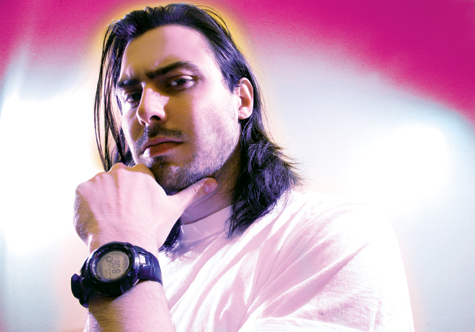
Andrew W.K. puts a tumultuous five years behind him
Hardships can be blessings in disguise. At least, that’s how Andrew W.K. sees it–maybe because he has little other choice. In 2001, W.K., born Andrew Wilkes-Krier in Stanford, Calif., burst on the scene and relased the best thing to happen to pop-metal since Mötley Crüe’s Dr. Feelgood. I Get Wet, W.K.’s debut album, catapulted the relatively unknown songwriter/party starter into the thick of pop culture’s collective unconscious. No doubt, anyone embarking on the road to stardom–for those lucky enough to achieve such a height–marks a strange and interesting journey. However, W.K’s path has seemed downright bizarre.
By 2006, W.K. stood ready to release his third full-length studio album, Close Calls With Brick Walls, but the magic carpet he was riding was practically pulled out from under him. Contract disputes caused the album to be widely released in Asia only with a vinyl-only release in the United States. With his career in limbo, W.K. managed to keep himself busy. He evolved.
“2005 to 2010 was the best of times and worst of times,” he says. “There was more confusion and complication with people I’ve worked with pretty much my whole professional career–personal issues, business issues, contractual issues that made things crazy.”
To add to the insanity, W.K. had to deflect constant accusation about his authenticity. Since the beginning of his career, questions circulated as to whether he was who he said he was or if he was just a corporate construct. Recently, W.K. decided to stop ignoring the controversy and faced it head on, which may have only stirred up more questions. In a September 2008 talk he gave at Madame JoJo’s in London, W.K. revealed secrets about his mysterious past. In something of a confession, he admitted that “Andrew W.K. was created by a large group of people.”
“On the one hand it may be a little scary to admit this to you all, that I may not be exactly who you thought I was, and that the guy who was, in fact, first hired as Andrew W.K. is a different person than the guy sitting here on the stage tonight,” he said (full video of the talk is available at www.rockfeedback.com). “I’m the next person who is playing Andrew W.K.”
Out of that craziness, however, W.K. broadened his horizons. He produced records for other artists such as Lee “Scratch” Perry; hit stages as a motivational speaker; and opened a night club/venue, Santos Party House, in New York City, where he now lives with wife/band mate Cherie Lily. W.K. even ventured into children’s television programming as host of Cartoon Network’s Destroy Build Destroy. Perhaps furthest removed from the high energy music he’s known for, in 2009, he released 55 Cadillac, a harrowing instrumental piano album for Thurston Moore of Sonic Youth’s Ecstatic Peace! label.
“These are all new areas that in 2005, I never thought I’d be able to do, but now I can look back and say everything happens for a reason,” he says. “Those hardships ended up being their own rewards.”
Andrew W.K and his fans were rewarded in March 2010 when Close Calls With Brick Walls saw a proper worldwide release. The mammoth 18-track album was released as a two-disc package with Mother of Mankind, a collection of B-sides, rarities and unreleased tracks.
“A lot of times I never imagined that these songs would be heard by anybody, so it was thrilling, a bit scary–in a good way–to get them out,” he says. “It was also really satisfying.”
With the uneasiness of the past five years behind him, W.K. is back to doing what he does best: rocking the fuck out and igniting fans worldwide with his undeniable enthusiasm. He says a new album is on the horizon for 2011, but in the meantime, you can check him out on this year’s Vans’ Warped Tour.
How is Warped Tour going for you? This isn’t your first time. Do you still enjoy the experience?
I enjoy it more now than ever before. The first time we got to do Warped Tour was in 2002. We did a handful of shows. We were doing Ozzfest that summer, but we were able to duck out and get a little taste of the Warped Tour. We loved it and were able to do the entire tour in 2003. To be invited back to do it again after seven years is a big surprise. I’m really able to appreciate the professionalism and efficiency and the hard work of everyone involved much more than ever before. I think the tour has just gotten better. Every year it improves.
Being gone for seven years, have you noticed the scene change since the last time you were on?
I don’t even know what the scene is other than a bunch of people–really young people, young people of all ages–coming out to enjoy a really memorable summer day with high energy music. As far as a scene or culture that goes beyond that, I don’t know if there is one or how to describe it. It doesn’t seem really appropriate to call it a punk scene, it doesn’t seem really appropriate to call it anything except high energy. It’s enthusiastic about life and friendly and open-minded and passionate vibes.
You have a party tent set up at this year’s Warped Tour…
It’s a big tent that allows me and anyone who wants to go in there to celebrate the day together and create some memories and have some fun. I’m there, my band is there. We’re all hanging out there not only to say thank you to the folks that are coming, but to get those experiences and memories under our own belts. Every day that I play or tour–not just Warped Tour, but in general, going around the world doing entertainment–I meet people all the time who either saw us for the first time at the Warped Tour or first heard about us there or had a friend that saw us there. It’s definitely a powerful opportunity to make an impact and meet people, and that’s what the party tent is all about.
Close Calls With Brick Walls finally got a full release here in the United States and United Kingdom. The album had limited release here and elsewhere in the past, but how did it feel for the album to finally be available in stores to a wider audience?
It just feels like relief on one hand. There’s nothing more that I can do for that record. It’s done. It’s had its time, and now we can move forward. It’s very satisfying now that everyone who’s ever wanted it can now have it more easily. Of course, anyone who’s ever wanted it from when it was first released in Asia could’ve had it by downloading it on the Internet. It just felt good to make an official worldwide version. We love playing the songs from that. It’s great to make sure people are aware that it’s there.
Now that the album is out, does that signify the end of your contract dispute? You’re free to release albums under the Andrew W.K. name again?
The main issues that we had been having have been resolved over the past six months. Over the past year, we’ve been piecing together, reassembling the plans we’d had in place since ’99. It’s not very interesting to me. I would imagine it to be kind of boring stuff. There are a lot of people that it takes to work in show business the way we want to work. I’m grateful for this entire team of people and everything they do. I don’t talk a lot about what we do behind the scenes, but I’m glad it’s all worked out.
There were a lot of allegations made about you, and you seemed to be pretty open with confronting them recently. Are you happy with the way you handled the situation?
I’ve been dealing with certain allegations, rumors and accusations since the first album came out. I’ve tried to handle them many different ways. The stuff that you saw more recently…I’ve tried a different approach to be more upfront. In the past, I ignored things entirely, and that did not help. It made people a lot more paranoid or curious as to why I would ignore these things and pretend they weren’t there. Certainly the approach of acknowledging the questions was a new one, and I think it does work better that way. Sometimes, you think you can ignore an issue and it’ll go away, and this one didn’t. Almost 10 years down the road into my career, it’s never fully been resolved. People will always have questions, so from now on my approach will be to answer them, or at least acknowledge them as best I can.
Do you think the mystery helped you in some way, like, by giving you some sort of rock star mystique?
It could be fun to some people in the audience, but most people seem pretty upset about it. That hasn’t been fun for me either. The people I work with don’t want to be in the limelight. When you’re in show business, everything is on display to a degree, because it’s a show. Most people don’t care about bankers or pharmaceutical company people, because they think those characters are boring–and they usually are. But because show business has this automatic excitement, they assume that everyone working in show business is exciting, but they’re usually not. And they’re usually not interested in being exciting. They’re just interested in the business…
What happened with us was that people began to accuse me of not being–not a real person–but not being who I said I was, or not being the way I said I was, and that’s just not true. That’s been the hardest part for me, the disappointment my fans have had or my friends have had, that feeling of being disillusioned and getting hung up on genuine concerns, but ones that have just been distracting them from the real point of this, which is that this is supposed to be very fun and exciting… I would prefer that it all go away, and that’s why I used to deal with it by ignoring it.
Now that you’re out on the Warped Tour, have you noticed that it’s starting to fade into the background?
Most people don’t know or care about what we’re talking about. A small percentage of people I meet are concerned with this… It can drain a lot of energy from me. I used to be way more stressed out about it, because it felt really bad when someone would say, “You’re a fake,” or “You’re not a real person,” or “You’re a paid actor.” That took a lot of energy away from me too, so now I just try to focus on what really matters with this stuff, and ignore the rest or just let it be on the side.
Are you going to make anything else like 55 Cadillac again?
Someday I’d like to make another instrumental album. That one will always be the way that one is, but the next one is going to be a rock album for sure. That one had a lot to do with the contracts I was in. It came at the right time. It made sense at that time. But thank you for asking about that. I want to make all kinds of albums, you know?
Janelle Monáe channels her inner robot on her full-length debut
Janelle Monáe is nothing if not polite. Is it her time spent in Atlanta, Ga., immersed in Southern hospitality, or excellent coaching on behalf of her publicity machine? In the end it doesn’t matter. She says all the right things and she’s a joy to speak with, as she talks in a modest, syrupy tone. She closed our brief interview by saying, “I don’t take your support for granted.” Along the way in her bourgeoning career, the rising star has gotten support from a wide variety of heavy hitters in the worlds of hip-hop, R&B, pop and even indie rock. Fall Out Boy’s Pete Wentz, Sean “Diddy” Combs and even Prince, the man himself, have all spoken words of praise in regards to Monáe, whose sound dips from the wells each of these artists and more draw from. For an artist who says she’s hoping to bridge gaps with her music, it would seem that she’s off to an excellent start. Written along with the Wondaland Arts Society, a collective of artists Monáe founded with Chuck Lightning and Nate “Rocket” Wonder, Monáe’s debut full-length album The ArchAndroid begins with a soaring orchestral intro before slamming into the sultry sci-fi funk of “Dance or Die,” featuring fringe hip-hop hero Saul Williams. Outkast’s Big Boi makes an appearance on “Tightrope” (a term that appears throughout this sprawling concept album based on the 1927 Fritz Lang film Metropolis). “Tightrope” is as typically radio-friendly as Monáe gets on her debut long-player, but still retains her flair for dramatic sounds and movements that never feel forced or overwrought. Indie dance rockers Of Montreal, who Monáe will set out on a co-headlining tour with this September, also make an appearance on The ArchAndroid, contributing–if not dominating–“Make the Bus,” a Beatles-esque space rock number.
It’s not just the diversity of collaborators that has been catching ears of music fans and bigwigs alike, but the breadth of styles Monáe effortlessly stitches together. “Come Alive (War of the Roses)” has the spit and snarl of ‘70s punk, and Monáe isn’t afraid (or incapable of) letting that music take her beautifully smooth voice down a bumpy, ugly road. Basically, The ArchAndroid should turn just about as many heads as it causes those who just don’t get it to scratch theirs.
Monáe has all the pieces in place to transcend the title of rising R&B star. Not only is she remarkably deft at genre bending, but she also has her sights set on making film and graphic novel components to accompany The ArchAndroid. Though she speaks openly about the writing of the album, she prefers to play details about these upcoming projects, and even her upcoming tour with Of Montreal, close to the vest.
“The element of surprise is very important to me,” she says.
Given the unlikely course of her career so far, more surprises are surely in store. However far she goes, it is our hope that Monáe maintains the graciousness that is becoming her signature.
“We started off working in a basement in Atlanta, Ga.,” she says of her and her collective’s modest beginnings. “To start the Wondaland Arts Society and to see that we creatively have been in control of everything is a huge deal, because artists want that, and we fought for that for a long time. We plan on opening up more doors for other artists, just in terms of having a different blueprint to look at for inspiration. We’re very thankful, and we’re very humbled. We’ll make mistakes, of course, but we will take risks so others may take risks.”
I’d read that The ArchAndroid album had been inspired by the movie Metropolis. What about that movie inspired you to write an album?
There was a quote at the beginning that said, “The mediator between the mind and the hands is the heart.” Immediately, I said, “That’s me.” I’m the heart. I want my music to be the heart, because it represents unity. It brings people together. That’s what I’m about, and that’s what this music is about. It’s creating music that bridges the gap between the haves and the have-nots, and the oppressed and the oppressor, the minority and the majority, and the androids and the humans. That’s what inspired me about that quote.
The connection we have now with technology is as great as it has ever been. Is that an aspect that played into your writing?
No. As an artist, I’m very thankful for technology. I’m thankful for sites like Myspace, Facebook and Twitter because I was able to talk directly to the people when I was putting out independent work in music. I am a lover of technology. I think it’s cool to have nanotechnology, which advances every two years and becomes smaller and faster. I do believe we will live in a world with more advanced androids, and I always pose the question, “How are we going to all get along together?” Are we going to fear them, or teach our kids to be fearful? Are we going to oppress them? Are we going to repeat history and try to enslave them? How are we all going to get along? I connect to the android, because the android represents the other. I feel like we’ve all felt like the other at one point in our lives.
The country seems to be very polarized, but like you were saying before, you like to express unity in your music. Listening to the album, there’s a lot of different genres represented. Does that universal sort of approach make you feel like an outsider?
No… There are a lot of other artists and people out there who are like myself in that they have a very diverse palette of music. We grew up in the iPod generation. I don’t think any of our iPods are just hip-hop or classical music. My iPod ranges from Jimi Hendrix to Judy Garland to Rachmaninoff. I’m able to digest all that in without feeling uncomfortable to listen to. My musical taste is very diverse, and I think all of our musical tastes are becoming that way because of the iPod.
It’s interesting to hear you say that, because The ArchAndroid definitely has an album feel. With iPods, a lot of people have that shuffle mentality, but on your album, the songs flow from one into the next. It wasn’t very single-driven. Was it important to you to preserve the album as an art form?
Sure, this is an “emotion picture,” and there’s an arc to the story. We wanted the listener to listen to The ArchAndroid from the beginning to the end and take in the transformative experience. The album will, I believe, transform you to become a more diverse music listener because of the range that’s in the album. But we also crafted together songs that can stand alone. They all depend on each other, but they all stand alone. You don’t have to know anything about the concept. We made sure the songs were just jamming by themselves.
Given that it is a concept album, did that lead to a lengthier writing process between you and the Wondaland Arts Society?
It was a balancing act. Everything is a tightrope. You have to pick and choose where the concept comes in. We created other outlets, like the graphic novels, for people who want to know more about the concept and Cindi [Mayweather, Monáe’s alter-ego in The ArchAndroid] and the android community and what comes next. We’re also going to have visuals with a very strong narrative that will play into the concept. We didn’t try to do anything different just for the sake of doing things differently. We didn’t try to make sure, politically, that things were correct either. We just kind of followed our hearts and did what felt good.
How would you categorize your working partnership with Wondaland Arts Society? Are you all on the same wavelength? I’m sure you all bring something different to the table when you sit down to create.
It’s a very diverse group, but at the same time, we’re all standing up for the same cause–individuality and helping us all to celebrate our differences. We’re all artists who run the label, from graphic novelists to screen writers, performance artists to musicians, visual artists, you name it. We really want to help preserve art. We love coming up with new ideas, and we have a strong belief that the imagination can inspire nations. Music is our weapon at this time. We plan on releasing more artists into the world, like Deep Cotton is up next. They’re going to come out with sweets very soon. We leave our egos at home. We can speak our own minds and voice our opinions, and no love is lost. We go with the best idea.
You mentioned the graphic novel component, and I’m a big fan of comic books. Is that something you’re having a close hand in? What books did you read that really inspire you for this album or just in general?
I co-wrote the graphic novel with Chuck Lightning. He’s my writing partner. The illustrations were done by Chad Weatherford. We loved Octavia Butler’s Wild Seed. That was a huge inspiration for me. Alfred Hitchcock was also a huge inspiration, just the way he wrote things out. We’re a fan of comic book companies like Dark Horse and DC, of course. We’re hoping to put out something just as quality-oriented.

It will be well worth the trip to head to San Francisco to see Janelle Monáe perform at the Outside Lands Festival on Aug. 15, 2010.
Kevin Seconds finds solace in music
Listening to Kevin Seconds speak about his music, you’d hardly believe he’s been in the game for more than 30 years. Serving as frontman for 7 Seconds, one of California’s most seminal hardcore punk bands, you’d think the years on the road, spitting bile at the young and the restless would make him a salty individual, but that’s just not the case.
“We’re from the era of hardcore punk rock,” he says of his early days touring with 7 Seconds. “We would go out for two or three months straight, come back home for a month and then go back on the road. We thought that was the way to do it. At that time it was.”
Of course, as time marches on, things change, even for musicians. Children, marriage and the other trappings of adulthood eventually claim most of us–not that that’s a bad thing. Even the most unruly and defiant among us aren’t immune. Seconds has managed to change with the passing of time and not lose his edge, though the music he’s spending most of his time making nowadays is a far cry from the brazen punk rock of his youth. He stands as a perfect example that it’s possible to grow up gracefully in the music business and still have a good time doing it. When Submerge contacted Seconds, he was happy to report that he’d just received a text message from his label, Asian Man Records, that his latest solo CD, Good Luck Buttons, had come in.
“I was pretty excited, actually. After all these years of having different records out, it’s still pretty exciting to get word that the new CD is done,” he says. “It’s definitely one of those little thrills you get–realizing that something you’ve been working on for two years has come to fruition.”
It would seem that Seconds’ continued enthusiasm for his music has bled into his songwriting this time around. Good Luck Buttons, out May 11, 2010 bears a much sunnier disposition than its most recent predecessor, 2008’s Rise Up, Insomniacs! Seconds said a lot of Good Luck Buttons was written while he was on the road for Rise Up…, which had a big effect on the finished product.
In our interview, Seconds talks about how real-world stress got him down, and how he was able to find solace and brighter days by focusing on his music.
You did a lot of solo touring for your last record. Did those experiences have a big effect on your writing of Good Luck Buttons?
Yeah, definitely. Living in Sacramento, and I’ve been here a long time, Sacramento always inspires my writing–at least my acoustic stuff, because I got started doing the solo stuff here in Sacramento, playing open mics and coffee houses and stuff like that. This time around, I got to go to Europe a couple of times and toured around the States, and [the songs on Good Luck Buttons] definitely have a travel feel to them–at least in the way that I wrote. I would pull over, resting somewhere, and jot down ideas for a song. The last record was a tense, stressful record, because all the things leading up to that record coming out–it took me forever to put out. I had crazy back problems; I was dealing with our business going under. All this stuff was happening. It was more like, “Let’s get this thing done so I can get it out and be happy again.” This new one is a little more free-spirited. I think it’s a happier record, at least. The road influenced it quite a bit.
There’s a sunny vibe to this record, listening to it all the way through. There’s almost a pop feel to it.
That’s cool. I love melody and harmony. Good pop–I love it…unless you’re talking about Britney Spears pop. I love good melodic pop music. Even when I try to do one kind of thing so I can establish myself doing this kind of thing. I listen to gospel music, I listen to metal–if it pops up in there, I guess it’s bound to happen. It’s not an accident if it’s in there. [Good Luck Buttons] is more up-tempo and not as mopey-sounding as the last record.
You were mentioning the problems you were having with the business. Was it difficult to balance all your music projects while running the True Love coffee house?
It was. My wife Allyson and I ran the first location starting in 2001, and we were open for almost four years at that location, and I did some shows, and 7 Seconds did a couple of little road trips, but I decided it was going to be a big deal and that I should really commit to this and be a business owner. That was a big switch for me, because I’ve been pretty irresponsible for most of my adult life. I’ve just been able to get in a van and go, you know, and not worry too much about paying rent and paying bills, but I learned a lot from it. It also brought stress in my life. I was having panic attacks every other day. This was the first time in all the years I’ve been on Earth where I’ve been responsible…
We closed on a high note, we were doing the best we’d ever done, but we had a horrible relationship with our landlord, and we couldn’t renegotiate with him because he was being such a prick. We said, “Instead of dealing with this, let’s shut it down for a while, and if we want to do it again, we’ll do it at another venue.”
In that time between the first and second True Love, I purposely filled up my calendar with as many shows and tours that I could. It was great getting back to something I knew and that I’d been doing since I was 16, but as you get older, it takes a lot out of everything. When I was 20, I could get in the van for three months straight, but now it’s like, I love these guys, but come on.
But I’m still good at touring, and I love traveling. When you go to other cities and other countries, your brain and your heart change. You can’t be the same person you were when you come back. You look at people differently, you look at food differently, you look at art and music and film differently. If I don’t have that, I feel like I’m working at half-power. At the same time, it was really gratifying being a part of and running a place that meant something to Sacramento. It was a little more than just a coffee house. It was a hub for the community. It was nice to give that to Sacramento. Allyson and I talk about it like, “Are we crazy enough to do it again one of these days?” We probably both are.
The title of the album comes from the song “No Good Eggs.” Was there a reason you picked a line from that song in particular?
Titles are really hard for me. I try to stay away from the most obvious things, or what I think are the most obvious things. Whenever I sing the line, and Allyson sings that with me live a lot, and I think just because of her harmonies, it really resonates with me. I’m not really sure if it has a meaning or if it’s a good title or not, but it just stuck out, and I liked it a lot. The last record, now that I look back on it, was such a downer, and it seems like I was trying to make it a downer. A lot of stuff was going on, I lost a lot of really close friends, Allyson and I were having problems, so I had to fill it up with a lot of negative stuff to get it out of my system. Good Luck Buttons seems like a harmless, meaningless title–no huge meaning, but I guess it just came down to thinking it sounded cool.
It definitely fits the songs. One song in particular that I really liked was “Sunday Afternoon Bicycle Polo.” Where did the lyrics for that one come from?
I had this space that I turned into a studio. I did my paintings there, and I also did some recordings there. It was over near 19th and X streets. I had it for a few months. In fact, a lot of the stuff on the last record was recorded at that little studio. One day, I was not having a good day. Nothing was coming together. I was bummed at myself for wasting time and not getting anything done. I looked out the window, and across the street was an overpass for the Capitol Freeway, and there are these big concrete patches of property. There were these kids out on the concrete playing bicycle polo, and I thought it was funny because they were these young, hip kids. At first, I was really annoyed by it, like, “Look at these fucking hipsters. Who do they think they are?” Then I realized, it made this thing change in me like, “Why are you being this old, cynical prick?” It’s kind of cool that they’re out there doing it. It’s nice and warm. What I always do with songs is that I’ll have an idea for a song, and then in the middle of it, it just changes. All of a sudden it became this love song about someone I know. She’s a great person, but she’s always on the outs. She’s always trying to be a part of something, but she can’t quite fit in…
In the bio you sent us, you were sheepish about 7 Seconds’ influence on younger bands. You made a joke where you apologized if your band had had any influence on younger bands. Is the influence you’ve had on youth culture difficult for you to admit?
It’s not difficult at all. For me, it’s more of an embarrassing thing when people say it. I still haven’t embraced the idea that we might be a bigger deal in some people’s minds than we are. I love that we are. I love that when we play, a lot of great bands will come up and say that they were influenced by us. Of course it’s very nice to hear, and we love it. But I’ve never been good with big compliments–when people come up to me and start calling me legendary, it’s like, “I’m still alive!” Call me legendary after I die.
It all comes from a good place. I know that. I don’t shit on it. I don’t ever want to be somebody who comes off standoffish or who doesn’t appreciate the fact that people have been so supportive of what me and my good buddies have done for the past 30 years… I have this tendency to be a little too self-deprecating at times, and my wife will be like, “Stop that!” It’s how I handle people giving me or my band compliments.

Chelsea Wolfe’s The Grime and the Glow dresses folk music in a black cloak
Ravens perched on bare branches, snow falling on tombstones, wooden shutters clattering against cloudy window panes in a strong gale–these are just some of the visuals The Grime and the Glow, the latest fulllength album from Sacramento songwriter Chelsea Wolfe, may conjure in the imagination of the listener. Songs such as “Cousins of the Antichrist,” on which Wolfe intones “All in vain” in a steady refrain as the song ends, reinforce descriptions of her music as dark or goth folk. Wolfe herself describes another selection from the album, “Halfsleeper,” as “a slow-motion painting of what it’s like to die in a car accident with your loved one.” Wolfe, however, admits that The Grime and the Glow isn’t necessarily all doom and gloom–not that she’d mind if it were. She says that songs “Advice & Vices” and “The Whys” are more playful lyrically than she’d normally write. Wolfe describes the latter as “a song making fun of myself for taking everything so seriously.” But these concessions aren’t in hopes of lightening the album’s dark mood.
“I don’t mind it getting too dire,” Wolfe says in a recent interview with Submerge.
From the album cover, to the videos made for the songs, to the music itself, The Grime and the Glow seems born from a single cohesive vision. Wolfe says that the theme for the album came to her once its title was in place. She says the title is taken from the introduction to the novel Death on the Installment Plan, by French author Louis-Ferdinand Celine. The darkly humorous novel had quite an effect on Wolfe, even though she wasn’t able to finish it.
“I…read most of [it], but had to stop because of the dark place it puts my head space,” she explains. “I didn’t really need to dig any deeper into understanding that much of the beauty in the world is crawling with worms beneath the surface.”
To get the dark and distant sound that permeates the album, Wolfe took a much more stripped down approach compared to that of her previous release, Soundtrack VHS/Gold. For that album, Wolfe says she went into a nice studio in order to create a “tapenoise- sounding” album, but she “eventually realized how illogical that was.”
“It’s a very different album,” Wolfe says of her previous effort. “I wanted to get an eight-track sounding record in a nice studio. Didn’t make any sense, but we did mix it down to tape.”
Wolfe says she wasn’t unhappy with the results, but instead with the lengthy recording process leading up to the release of Soundtrack VHS/Gold, which was released in an extremely limited run of about 50 CDs on Chicago-based indie label Jeune Été Records.
This time, Wolfe took a more “logical” approach to making an eight-track sounding album by using an actual eight-track machine. The Grime and the Glow was recorded by Wolfe on a Tascam 488, a handme- down from her musician father, that she says she’s recorded on for years. Wolfe says that doing the album herself, on a familiar machine, “made it sound exactly the strange and special fucked up way I wanted it to sound.”
Strange and fucked up are excellent adjectives for The Grime and the Glow. Though the mood is consistently dark, songs range from the wildly dissonant “Deep Talks,” which grates Wolfe’s bittersweet voice through layers of noise, to the aforementioned “Advice & Vices,” a catchy piece of dark pop that’s as tuneful as it is morose–and she sure doesn’t skimp on the reverb.
“I also like clean, straightforward vocals sometimes and will experiment with that someday,” Wolfe says, “But for these songs I wanted to capture my voice or the instruments, whatever, inside a certain soundbox, so when you have your headphones on listening to it you feel like you’re in a tiny, claustrophobic echoroom or a parking garage cathedral.”
Adding to the eerie, almost antique sound of the songs is the album’s format. The Grime and the Glow will be released some time in June–pushed back from the original May 18 release date–on limited edition vinyl by New York-based label Pendu Sound. Wolfe says that it was the label’s decision to release the album on vinyl, but it’s a decision she’s happy with.
“I don’t think this album would work as solely a CD release,” Wolfe says.
In addition to the music, Wolfe has also been busy working on visual companions to the songs. The Pendu Sound Web site for The Grime and the Glow features a series of four videos created for “Advice & Vices,” “Moses,” “The Whys” (featuring camera work by local horror filmmaker Jason Rudy) and “Bounce House Demons.” The videos for “Moses” and “Bounce House Demons” star Wolfe’s friend, writer Jessalyn Wakefield, whom Wolfe calls, “a perfect visual muse.” At the time of our interview, Wolfe also mentioned that she was working on a video for the song “Widow,” which will feature a “goth-glam girl lip-synching the song in a dark studio.”
“I like the element of darkness mixed with a bit of silliness,” she says.
This mix of music and film comes as no surprise as Wolfe states that movies had a big influence on her in the making of The Grime and the Glow.
“The Seventh Seal is my long-time favorite film,” says Wolfe, who also listed David Lynch’s Eraserhead and Jean Rollin’s French vampire movies as sources for inspiration. “The character of death in that film has forever been an influence in my creative life. Ingmar Bergman in general is a big inspiration for me. The portrayal of life in his films is so honest and desolate but rich at the same time. Another favorite is The American Astronaut (Cory McAbee), a dark space-western with hand-painted special effects and a pretty low budget that manages to get such a defined feel across, haunting but still silly, like so much of the folk art I love.”
In fact, Wolfe finds inspiration from most forms of art–but not so much with other music.
“Throughout my life and for this album I’ve been very inspired by authors, poets, painters and filmmakers, more so I’d say than any band or musician,” she explains. “In fact, for many years I wouldn’t allow myself to listen to music because I didn’t want to infuse anyone else’s sound into my own–I wanted to see what would happen without that influence.”
The Grime and the Glow is a solo project, but it was still a collaborative effort. Andrew Henderson of G.Green, Ian Bone from Darling Chemicalia and Ruven Reveles all made appearances on the album. Kevin Dockter, Drew Walker and Addison Quarles (collectively known as The Death) and Ben C. also played parts and have come together to form Wolfe’s band. Wolfe, Dockter, Walker, Quarles and C. will be heading into a proper studio in June to record a fivesong EP. Wolfe says her past experience working on Soundtrack VHS/Gold will inform her decisions on her upcoming trip to the studio.
“I’m much more focused, and I’m also giving this recording a deadline,” she says. “I’m going to try and finish up five songs in about a week and a half, which will mean lots of late nights and hard focus. This project will also be with my band mates–all five of the songs will have the same five people on them, which is a first for me. But I’m very excited about the challenge of finishing something on a fixed time limit.”
Until then, The Grime and the Glow should sate those with appetites for dark music, as long as they don’t mind the worms.

The Grime and the Glow is available for preorder through the Pendu Sound Web site. Go to pendusound.com/releases/psr-0040/. Those who pre-order the album will receive four free bonus songs for download.
I’m toeing a difficult line between gym rat and fat ass. I’ve gotten quite hooked on going to the gym, but I can’t stop myself from eating. In fact, I think I eat more now than ever. Is that a good thing? I keep hearing that you should eat more often, just in smaller portions, throughout the day. I guess I can vibe on that, but what’s the recommended daily portion of a cheese steak?
This time of year makes eating right more difficult. The winter holidays and Thanksgiving bear the brunt of most people’s gluttonous ire, but Easter is a silent killer. Its still heavily religious connotations have left it somewhat marginalized in the canon of major holidays (odd, considering we live in such a predominantly Christian nation), but nevertheless, the American Junk Food Machine proves that it can turn any occasion into a reason to gorge oneself on sweets—even a holiday commemorating the days a compassionate and well-meaning young spiritual leader gets tortured and killed and then rises as The Most Holy Zombie ever. (I’m paraphrasing.)
I get sweaty this time of year, because every supermarket/mega drug store/titanic department-store-conglomerate-thing’s checkout counter is lined with treats. Sure, this is nothing new. There’s a plethora of chocolate snacks readily available anywhere you pay for your milk, bread, batteries, auto supplies and what have you just about anywhere in the country: Hershey bars, myriad Reese’s chocolate/peanut butter hybrids, the entire Twix family of candied cookie things, every flavor of gum and breath mint imaginable, enough brightly packaged junk to give Willy Wonka a boner. But Easter time is different, because the shit you can get now is only available once a year. Halloween has candy corns and perhaps smaller versions of more familiar candies cloaked in spooky wrappers, but Easter has truly cornered the market on seasonal snacks.
I’m such a sucker for stuff that’s seasonal. Anchor Steam makes a Christmas beer that’s only available between November and January, and I crave it always. But if it was offered year-round, I probably wouldn’t like it nearly as much. The same holds true for Cadbury Crème Eggs, typing the very name of which causes me to drool a bit.

When I was younger, Peeps were the thing. Perhaps it was the cute shapes or more likely the fact that they were just sugary marshmallow gook covered in more sugar, but I couldn’t get enough of them. I found they were best enjoyed when stale, so when my parents presented me with my Easter basket, I’d nibble through the chocolate eggs and gnaw on one of those brick-like solid milk chocolate bunnies right away, but the Peeps required more time to properly savor. I’d slit the package, maybe eat one raw, but leave the rest to ferment and harden a few days. That sugar would form a thick crust, and the marshmallow gook would congeal a bit, giving the entire confection the consistency of those Styrofoam peanuts used in shipping packages.
But now I’m older and my tastes are more refined. Cadbury Crème Eggs are bar none the king of Easter candies. That accent over the “e” lets you know that this is one sophisticated snack. The foil wrapping can get hard to remove, depending on the room temperature of the store you’re buying them from (if you can find them”¦those things go fast), but digging small flecks of colored foil out of the egg’s buttery chocolate shell is part of the fun, I guess. So is the trail of crème mucous that sticks to my beard stubble as I devour one. I’m not sure what makes up the gooey, sweet slurry that fills one of these chocolate-covered sugar bombs. In fact, I’d rather not know. I like to think of it as equal parts bliss, heaven and ZOMG.
At least Easter dinner doesn’t carry the same amount of traditional grazing that its holiday brethren do. Maybe that’s because warmer days make bellying up to a dinner table for four hours seem less appealing. Also, there’s no shitty football games to veg out to afterward, so what’s the point? Still, if I keep ingesting Easter-themed treats at the same rate I have been the past few days, the only thing that’s going to be resurrected this holiday season is my post-Christmas gut.
Joanna Newsom
Have One on Me
Drag City
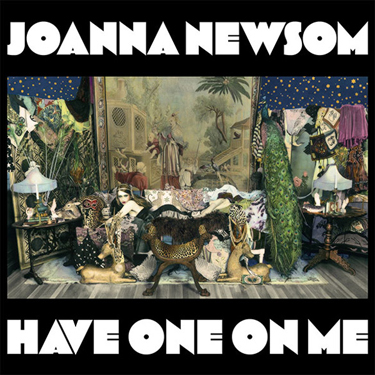
In an era when single-song downloads are dominating music sales, dropping a two-hour opus sprawled over three discs is probably the worst possible business decision. But if you’re holding your breath hoping Joanna Newsom is going to dumb it down so she can sell a few extra tracks on iTunes, you might as well exhale.
Have One on Me, the Nevada City singer/songwriter’s third album, isn’t just remarkable for its heft, but also for its craft. The album spreads 18 songs evenly over three discs with nary a chorus to be found. This is free verse poetry set to meandering, richly layered music, making this album an intimidating listen. However, those lucky (or brave) enough to immerse themselves in Have One on Me will be rewarded. Elegant string arrangements, spare percussion and Newsom’s virtuosity on her signature harp work in perfect concert with Newsom’s intimate vocal performance. Spend time with Have One on Me, and it will certainly spend time with you.
Newsom’s approach may be avant-garde, but her subject matter is familiar. Much of the landscape of the album is rooted in Northern California. The title track alludes to Irish-born dancer Lola Montez, for whom Mount Lola, the highest point in Nevada County is named; and “In California” references Milk Lake, also in Nevada County. In more general terms, subject matter treads the well-worn paths of love, God and death. But Newsom can paint even these commonplace themes in the freshest colors. In “Easy,” Newsom sings sweetly in an ode to a lover, “Honey, you please me/Even in your sleep,” before closing with the eerily endearing (or perhaps just plain eerie) lines “You must not fear/You must meet me, to see me/I am barely here/But Like a Bloody Mary/Seen in the mirror: Speak my name/And I appear.” “Ribbon Bows” struggles with questions of the divine. Newsom ponders, “God, No God. God, No God. Sweet appraising eye of the dog, blink once if god, twice if no god.”
Similarly, there are no easy answers on Have One on Me. Everything’s open for interpretation. Newsom’s lyrics sheet, wonderfully laid out in this beautifully constructed box set, has as many twists and turns as her music. It’s worth the extra digging to discover the roots of the songwriter’s more esoteric references—at the very least, Have One on Me could very well expand your vocabulary.
Sonically, the album shows a different side of Newsom. The pixie-led forest nymph found on her previous full-length Ys seems to have ditched the moonlit meadows for grittier environs. Songs such as “Soft as Chalk” and “Baby Birch” have more in common with Cat Power’s The Greatest than they do with pastoral poetry. And the change of tone has done Newsom well. There’s a directness and confidence in these tracks that provide real punch, ensuring that this lengthy album never becomes too wistful.
Not surprisingly, some of Have One on Me‘s most alluring moments occur when Newsom puts down the multi-instrumental arrangements and relies simply on her harp and voice. “’81″ is one such number on which Newsom makes measured, cascading rolls across her harp, singing in her alluring falsetto, “Meet me in the Garden of Eden/Bring a friend/We are going to have ourselves a time.“ Well, with an invitation like that, there doesn’t seem all that much to be intimidated by now, does there?