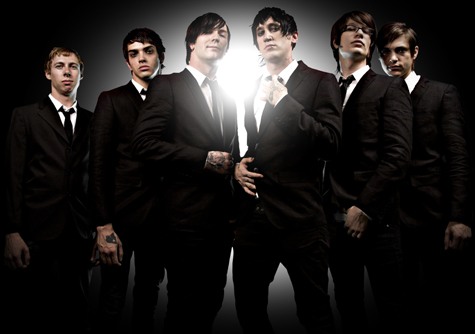
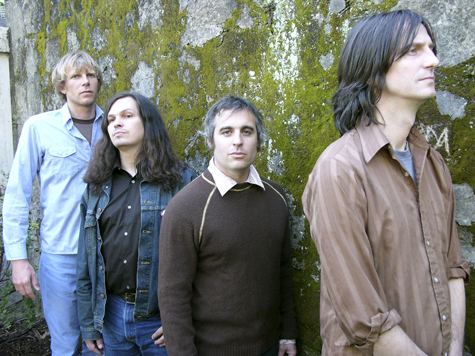
Alesana Authors Their Third Album in Four Years
Stimulating body and mind, Alesana creates a rare breed of heavy music that’s equal parts brain and brawn. Folding literary references, both ancient and modern, into their lyrics, the band sounds sort of like a book on tape set to three harmonized guitars and dueling clean/growled vocals.
Formed just over five years ago by two North Carolinians by way of Baltimore, Md.—guitarist/vocalist Shawn Milke and guitarist Patrick Thompson—Alesana already has quite a hefty musical output to their credit. Released Jan. 26, 2010 The Emptiness is already the band’s third album. Though they’ve been quick on the draw since releasing their first LP, On Frail Wings of Vanity and Wax, in 2006, Milke says he took his time getting Alesana off the ground.
“We moved down to North Carolina, because the music scene is way better down there than in Baltimore, especially for local music,” Milke says. “We moved down there and took our time. It took a really long time to get started, because we wanted to start off right. We were a full band for three-and-a-half months before we even played our first show.”
With downloading becoming the most prevalent way consumers buy music, Alesana’s almost album-a-year pace seems to buck the industry trend. However, Milke says that the band’s approach has worked quite well for them. While they may not have cracked the lofty Gold record mark, their sheer volume of material has earned them a measure of security in an unstable industry.
“In a climate, in an industry, where selling 100,000 records is such a big deal for longevity, we might not have sold 100,000 of one record yet, but we’ve put out enough records in a short time that we’ve sold well over 100,000 total,” Milke says. “Instead of selling a huge chunk of the same record, and a lot of kids getting bored and not even wanting to get your second record because they’re so tired of the old stuff, we constantly keep it fresh.”
To produce that much material in such a short time, it takes a strong creative team. Alesana has Milke and Thompson at the helm, sharing the songwriting duties. The two played together in a pop-punk band in Baltimore before they decided that they wanted to take their music in a heavier direction, prompting a change of scenery. Milke says that he and Thompson emulate one of their biggest influences, The Beatles, in terms of work ethic.
“We look to The Beatles as our inspiration,” Milke says. “Back in their day, they would put out four or five records a year. We’re one of those bands that doesn’t believe in hiding behind a record. Once we have the material ready to go, we bug the label that we want to put it out. We want to do another record.”
Alesana may be the hardest working band in metalcore, and they’re proving that on the road this late winter through early spring with a nationwide tour supporting The Emptiness. The tour will bring Alesana and their theatric live show to the Sacramento area with two dates at The Boardwalk in Orangevale on March 5 and 6. Milke says you should expect plenty of choreography.
The Emptiness comes with a 13-page story. Did the idea for the story come first, or vice-versa?
It’s weird. The idea to want to do a story came to me first. We’ve always based our records on short stories—other literature. Our first record is , our second record is famous fairy tales, so this time around, I knew I wanted to create my own story—or our own story. The idea to write a story came first, but the story and the lyrics and the music all came together in the same year. The record started being born in January of last year, and we finally finished recording it in August. It was over an eight-month period that everything was created.
Is that longer than usual for you guys?
It’s usually par for the course, but this time, a lot more time was spent within those eight months getting ready. It wasn’t like, “Oh we’ve got plenty of time, we can just wait.” We spent the better part of those eight months writing this record.
Why do you think that was? Did having your own story in mind affect your preparation?
In this industry right now, we’re lucky to be on our third record. A lot of bands have a one or two record lifespan, and then no one cares about them any more. Putting out a third record was a special feat for us to accomplish, so we wanted to make sure that we showed as much effort as we could, so we weren’t just a band trying to finish a record deal and throw the last record out there for legal reasons. We wanted people to know that this is our third record, but it’s also the one we’re most proud of and spent the most time on.
You mentioned that your previous albums had allusions to literature. The last song on The Emptiness is called “Annabel,” and since you’re Baltimore guys, is that a nod to Edgar Allen Poe?
Yeah, you’re absolutely right. When we decided we were going to write our short story, we tried to figure out what genre we wanted it to be in. I’m a huge fan of old romantic stories and horror stories from all generations. We found Edgar Allen Poe was the best for combining those two. He was really good at writing really creepy love poetry. “Annabel Lee” was always my favorite of his, because it was so eerie how he could write about a dead person and make it sound so beautiful. That’s why we named the female lead character in our story Annabel, to give thanks to Poe for inspiring our story.
Poe’s poems, and even his prose, have such great rhythm to them. Did his influence seep into the music as well?
They have a musical feel to read them. We’ve always been inspired by, like I said, Greek mythology and the Brothers Grimm and a few contemporary screenwriters and such. We just thought this time we’d go with one of the classics—one of the reasons that this type of prose exists to begin with”¦ We wanted to allude to Poe so people would be able to grab at that, but not make it completely obvious.
Was it more challenging to base something off of a story you’d written yourselves as opposed to an existing literary work?
I think it was definitely more challenging to write to other people’s work, because when it’s your own story, you can manipulate it any way you want. When you get to the bridge of the eighth chapter, and you’re like, “Wow, the story’s just not working for this part of the song,” you can sit there and say, “Well, let’s change the plot point a little bit.” If the story’s already written, you don’t really take those liberties”¦
On the other side of the coin, with the stories we based our past albums on, we’d always twist them a little bit. For example, the fairytale by the Brothers Grimm, “Hansel and Gretel,” we have this song called, “Sweetheart, You’re Sadly Mistaken.” What we did was change the ending; what if Hansel and Gretel ended with them escaping and killing the witch instead? We changed it up in our own weird way. We’ve taken some liberties in the past.
In your bio, you’re quoted as saying that The Emptiness is “an adventure like a Broadway play.” Do you take a lot of inspiration from musicals and/or rock operas?
I’m hugely inspired by rock operas and musicals. I have “Forget Regret” tattooed on my left hand, which is a line from Rent, which is one of the most inspiring pieces of anything ever put together in my lifetime. The Emptiness is something that we dream of taking to another level. I have dreams of making an independent film out of it, but time will tell if we can gain enough popularity with the story to develop any interest.
Were you a theater major in college or into theater in high school?
It’s interesting, because I was really gifted at sports all through high school. I played baseball and basketball. I even had a partial scholarship to Arizona State to play baseball, so even though I was super interested in music and theater and stuff like that, you know how high school cliques go. I couldn’t play baseball and be the guy in theater as well. So even though I had a strong interest in it and as much as I studied it and went to Broadway plays and local plays—and film is my life. I watch so many movies, it’s disgusting. That’s always been my passion and my inspiration, and once I hit a certain age, I realized that—once I wasn’t a dumb kid anymore. That’s when I started playing music.
So you started pursuing music pretty recently.
Yeah, I didn’t really start pursuing guitar full time until I was 17, in my senior year of high school. I was like, “You know what, this is my last year of high school, I might as well even try to learn the guitar.” From there, it kind of took off. I realized that came more naturally than anything.
Were you writing songs right away?
Yeah. My dad always teases me about that. He wishes I’d started earlier, because I’m pretty much self-taught everything: guitar, drums and piano—and vocals too. I never had any formal training in any of those areas, and it all came to me, like I was supposed to do it. I have a lot of really old material that I recorded on my own, and I’ll listen to it every once in a while just to laugh at it. I’ve been writing songs for a pretty long time now.
A lot of bands in your generation, such as yourselves, Thrice and Coheed and Cambria, seem to be putting out concept albums. Why do you think it has become so prevalent, especially in the genre of music you’re a part of?
I think when bands start to get lumped in with each other—and no band likes that. No band likes hearing, “Oh, you’re just like this band.” I think—even if it’s not a concept—but just creating a record that’s for a purpose, even in your own mind. Like, this isn’t just a collection of 10 or 11 songs, but you wrote these 10 or 11 songs with this reason in mind, it’s like you’re separating yourself from the crowd. By putting out a story or a concept record ourselves, people can go, “Oh, they’re not exactly like these other six bands, because they actually took the time to write a story and put together an entire Digipak with two booklets and artwork and crazy stuff going on.” Especially in such a heavily downloaded age of music, to offer extra things with a record definitely makes
a difference.
Alesana will play The Boardwalk in Orangevale on March 5 and 6, 2010.
I hate Sundays more than any other day. It’s not so much because it’s the end of the weekend and it signifies that oft-maligned Monday looms ever closer. I like Mondays. I like working. I’m sure that makes me somewhat of a freak; but believe me, that’s just one thing on a rather long list. No, I hate Sundays because they’re just so boring. No one ever wants to do anything. Stores close up early (if they’re open at all), people are inclined to laze about and couch surf and life feels pointless and mundane—even more so than usual. Over the course of my 33 years, I’ve found that drinking is a wonderful remedy for such situations.
When I lived in Chico, that Mecca of drinking your life away on the cheap just north on 99, I’d regularly sneak away to my favorite dimly lit bar for George Thorogood-style—drinkin’ alone, all by myself. The crowd on Sunday, in that small town, was usually sparse. Ho-hum. But once a month, they hosted a jazz night, which would bring the wannabe hipsters and music nerds out of the woodwork, making Sunday night drinking seem a lot less desperate, but also quite difficult for me to find a seat at the bar and causing my already glum mood to sink to ever more woeful depths.
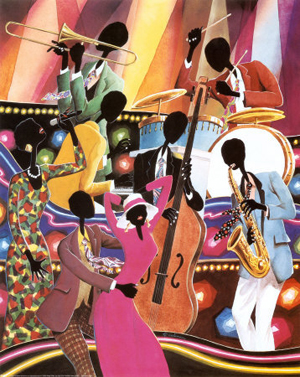
Of course, I’d always forget it was jazz night until I got there. Perhaps the self-medicating had something to do with that. I would roll my eyes and groan and try to flag down a bartender to serve me a pint. I hated jazz night. I thought at first it was the crowds that made me so grumpy, but after much lonesome introspection over some savory Guinness (see earlier in this issue), I realized that it wasn’t the crowds at all. It was the jazz.
As someone who writes often enough about music, it’s something of an embarrassment to me that I have little to no taste for jazz. Anytime I meet up with a likeminded individual, the topic of conversation will inevitably turn from whatever bullshit form of heathen music I’m currently obsessing over to the heady and sophisticated sounds of jazz. I assume that since I consider myself highly appreciative of music, that to others who feel the same way as I do, it would follow that I must also have a deep-rooted love for jazz, arguably the United States’ most enduring and revered contribution to the arts.
But I don’t. I don’t own any jazz albums. I couldn’t tell you the difference between Miles Davis and John Coltrane (though I’m pretty sure I know what Davis looks like because I used to see him in commercials). In fact, I’m only vaguely sure of what instruments they play. When I pass the point of no return in conversation about music, when someone drops the J-bomb, I do my best to smile and nod—and lie through my teeth.
“Oh yeah. He’s phenomenal,” I’ll say, but this only digs the hole deeper. There are only two possible outcomes: 1. I end up having to admit that I am unfamiliar with the piece of music or artist they’re referring to, or 2. I end up going back to this person’s house to listen to their collection of jazz records. Both of which make me equally uncomfortable.
I don’t know why the allure of jazz holds absolutely no sway over me. I love the saxophone and other brass instruments. In fact, I usually reserve my largest tips for buskers who play the horn. I have a fondness for great drummers and creative guitar players. The sight of a standup bass makes me giddy with excitement. But put those things together and my brain goes on holiday.
The problem isn’t that I think it’s boring. I just don’t understand it. All those notes played seemingly at random? It’s all very frustrating. I consider myself astute, yet I would rather listen to Lady Gaga than spend a weekend immersed in Coltrane’s catalog. I’m trying, though. Recently, the lady suggested that we go to a free concert for Black History Month. In addition to other forms of music, jazz was quite prevalent. They even played a little Coltrane (of course). It was a wonderful night filled with talented musicians, great singers and the added bonus of a few tidbits of musical history. The band consisted of a drummer who made his kit snap, crackle and pop; a saxophone soloist who ripped swooning riffs with ease; a competent pianist and bass man; and a guitarist who was a Maiden-level shredder (high praise coming from me).
I nodded, bopped and clapped in all the right places. I marveled at the skill of those involved, but much like a layman staring up at a Jackson Pollock, it all just seemed like one big mess.
Submerge Scours Sacramento to Find the Perfect Pint of Guinness
Budweiser claims to be the King of Beers. If you consider sales numbers alone, it’s difficult to dispute such a claim. With its billboards, pop culture-defining Super Bowl ads and presence at just about every bar, pub, tavern, concert and sporting event in the United States, there is no beer more ubiquitous. So we acquiesce; yes, Budweiser is truly the king of beers, but if that’s so, that makes Guinness the sagely old druid inhabiting the forests surrounding the kingdom. Sorry to blow your minds like that, but it’s totally true. Guinness is like Magic the Gathering, but better because you don’t have to be a nerd to drink it and it’ll give you a hearty buzz.
There is no beer on earth quite like a Guinness. Sure, there are far more adventurous and esoteric choices. In fact, right here in Sacramento, there are a plethora of homegrown brews that provide a wide breadth of flavors and brewing styles—all of which deserve your attention. But Guinness should always hold a special place at your beer-drinking table. Rich, creamy and delicious (and believe it or not, relatively low in calories and alcohol content), Guinness is readily available at most pubs, restaurants and supermarkets (or at the very least, any such establishments that are worth going to). It may have been your first foray from the world of dark beers. Anywhere you go, no matter what drinking establishment you may venture into, if the place serves Guinness, rest assured you can enjoy a quality adult beverage at a decent price.
Know this: as you watch your trusty barkeep serve you a pint of Guinness, you’re not just having a beer, but you’re partaking in a tradition that dates back centuries. In 2009, Guinness celebrated its 250th anniversary, making this noble Irish stout older than the United States. The story goes that in 1759, Arthur Guinness signed a 9,000-year lease for an unused brewery in Dublin, Ireland. The signing cost ran him around $100 and rent was settled at $66 annually. Arthur died in 1803, but Guinness is still brewed in that same brewery to this very day.
It’s easy to see why Guinness has stood the test of time. It’s truly a beautiful sight to behold: from the rolling cascade of a perfect pour, to its creamy head and its dark, rich color (considered dark ruby as opposed to black), Guinness looks like a work of art in a glass. But are all pints of Guinness created equal? There are rules that must be followed to build the perfect pint—a ritual, if you will: According to Guinness, a pint should take just under two minutes to pour. The pouring process is two-fold; first, a quick pour into a tilted, tulip-shaped pint glass (Imperial, please). This first phase should fill the glass about three-quarters of the way. The pint should then be left to settle before finishing with a slow pour that should result in the head forming a dome over the mouth of the glass.
With St. Patrick’s Day approaching, you may be asking yourself, “Are Sacramento pubs and taverns doing their part to uphold the Guinness tradition?” Fear not! We here at Submerge took it upon ourselves the arduous task of scouring the streets of Sacramento in search of the perfect pint. Don’t get stuck drinking green beer this St. Patrick’s Day—have some respect for yourself! Read on and discover the best place to gorge yourselves on sweet Guinness this March 17.



O’Mally’s (1109 2nd Street, Sacramento)
POUR 7.7
ATMOSPHERE 7
VALUE 7.7
TASTE 215
Our first destination on our epic journey. O’Mally’s scored favorably, but not exceptionally, in every category. $4.50 is a great price for a pint of Guinness, but it was served in a regular 16-ounce glass, thus leaving a small 4-ounce void in our souls.
de Vere’s (1521 L Street, Sacramento)
POUR 10
ATMOSPHERE 9
VALUE 6.3
TASTE 300
Though the spotty cell phone reception in the back room made it difficult for Submerge‘s advertising director Jonathan Carabba to tweet, “beers at de Vere’s” on his fancy-ass iPhone, de Vere’s atmosphere and pour were both of the highest quality. A knowledgeable bartender schooled us on the history of the pub. Hell, Guinness even issued de Vere’s its own branded tulip imperial pint glasses. However, at $6 per imperial pint, how are we supposed to enjoy our favorite stout and still pay said fancy-ass iPhone bills?
Streets of London (1804 J Street, Sacramento)
POUR 7.5
ATMOSPHERE 5.8
VALUE 10
TASTE 1,469
If you like seeing boobs and fights—and let’s be honest, who doesn’t?—then this is the place for you. In fact, two scrums broke out during our time there. But don’t let Streets of London’s rowdy interior fool you, those comely lasses behind the bar can serve up a killer pint. Our pours were excellent, and at just $5 for an imperial pint, we had plenty of money left to invite Guinness’ best friend Jameson to the party. Now, who wants a head butt?
Bonn Lair (3651 J Street, Sacramento)
POUR 5.3
ATMOSPHERE 9
VALUE 8
TASTE 835
This is a quaint and neighborhood-y place—pretty much Streets of London’s cozy antithesis. We loved the atmosphere, but unfortunately, atmosphere doesn’t get you drunk. We paid just $4 for our regular pint, which is a good enough deal that we won’t miss our extra 4 ounces; however, our pour left much to be desired. Our bartender shaved off our bubbles from over the mouth of the glass. We mourned the loss of our foam dome by ordering a second pint.
Gallagher’s (1201 K Street, Sacramento)
POUR 7.5
ATMOSPHERE 5.8
VALUE 10
TASTE 4,147
Our final stop on our long and harrowing quest. We almost didn’t find the place because you have to walk through a lobby to get there, but all in all, Gallagher’s wasn’t all that bad. The pub is a part of The Broiler Steakhouse, but on this night, our only meal came in a glass. The bartender gave us a quick and loveless pour, and it showed in a flimsy head, but with a value that rivaled Streets of London, Gallagher’s was a fitting if not somber ending to our journey.

THE WINNER!
As you can see, we took a very scientific approach in this guide to finding the most perfect pint of Guinness Sacramento has to offer. We attempted to factor in “Taste” into the scoring, but it became quickly apparent—as scores rose into the stratosphere—that Guinness is like sex: even when it’s bad, it’s still really fucking good. Strangely enough, the more we had, the better it tasted. Go figure! But enough with the buildup, who was crowned champion in this perfect pint face-off? Obviously, the winner is you for deciding to celebrate St. Patrick’s Day with such a fine beverage (also, Submerge for figuring out a way to write off two nights of solid drinking on our 2010 taxes). We congratulate you! Wherever you find yourself on March 17, order yourself a frothy pint of plain, and know that you’ve made the right choice. But, you know, drink responsibly.
Whether center-stage or behind the scenes, Sean Lennon continues on a remarkable music legacy
If your father was one of the most respected and beloved songwriters of all time, and your mother was one of the most polarizing figures in pop culture, anonymity would be difficult to come by. Still, Sean Lennon has managed to keep a relatively low profile–and that’s fine by him. The only son of John Lennon and Yoko Ono, Sean hasn’t flaunted the fame that was his birthright. Instead, though he’s followed in his parents’ footsteps, he’s taken an almost workman-like approach to his music career.
“I pretty much started off playing bass with Cibo Matto, and I came to music from that part of the game, which is being a player and someone who plays in someone else’s project, like a session musician,” Sean explains. “That certainly is as much, if not more, a part of who I am as a musician as being a frontman.”
When Submerge spoke to Sean over the phone from New York City, he was keeping himself busy as usual, putting together a mid-February show at the Brooklyn Academy of Music that will honor his mother’s music. Sean says that organizing an event of such magnitude is a new experience for him.
“I’m sort of in pre-production for this BAM show, which is kind of complex, because there are a lot of players involved,” he says. “I’ve never actually participated in organizing anything of this scope, so it’s been a lot of work, but it’s been a lot of fun as well… We have a lot of guest stars performing my mom’s songs, and she’s going to be performing with them, and I’m sort of music directing and producing.”
Sean was also busy with his own music. His latest project is the eerily titled Ghost of a Saber Toothed Tiger, a duo that consists of himself and girlfriend Charlotte Kemp Muhl. GOASTT is still in its nascent stages, but Sean says that he hopes to tour and have an LP out by this summer. Though the name may sound menacing, judging from the songs posted on the group’s Myspace page, GOASTT creates dreamy, incandescent pop soundscapes. He and Muhl are currently in rehearsal for a show at Union Pool in Brooklyn, which will take place Feb. 19, 2009. Sean says that rehearsing for both shows simultaneously has had its challenges.
“I’m rehearsing the BAM show at the same time, so it’s confusing to remember all the different sets–all the chord changes and stuff,” he says. “It’s interesting to have to think about two different projects in the same week.”
West Coast fans can catch Sean Lennon when he performs with GOASTT and also plays with his mother in the Plastic Ono Band at this year’s Noise Pop Festival in San Francisco. Sean co-produced the band’s latest album, Between My Head and the Sky, alongside his mother. The album was released in fall 2009 and received a very positive reception from critics. Sean worked with his mother on a record previously well over a decade ago. Rising was released when Sean was just 17 years old and led him to a worldwide tour with his mother. Though he says he was well aware of his mother’s capabilities going into the recording of Between My Head and the Sky, he found that Ono was still full of surprises.
“I was still surprised at how inspired she was and how prolific she was,” Sean says. “On the most prolific day, we did six songs. She came in with six song ideas, and we recorded them all in one day. The whole record was made in…seven days, recording wise, and then the rest was spent mixing. It was really fast. It was more like a jazz record than a pop or rock record, which are usually belabored.”
In the following interview, Sean Lennon discusses working with his mother, his girlfriend and the excitement of wearing many different hats.
Last year, you put out Between My Head and the Sky with your mother. I heard an interview with her on NPR where she said it was your idea to resurrect the Plastic Ono Band name for this album. Why did you decide to do that?
It was my mom’s band, and I felt it was her best band name. It was really just a matter of aesthetics. I didn’t realize how people would react. I think a lot of people were excited, but I wasn’t really trying to say I was resurrecting the original Plastic Ono Band, which was basically Ringo [Starr], Klaus Voormann and my dad and my mom. It was more that I just liked the sound of the name. I think it’s a cool-sounding band name, and it’s her band, so I figured since it was her band, she had the right to use it.
Was it something she was open to right away, or did you have to talk her into it?
No, no. She was fine with it. I think it was one of the three coolest band names of all time: The Velvet Underground, Spiders from Mars and the Plastic Ono Band. I don’t think any other band names are cooler than that.
From what I’ve heard of the album, it seems like there are a lot of different jumps stylistically, but would you say there’s a common bond between the songs?
I think so. For me, I’m the last person to be thrown off by mixing or shifting between what one would call musical genres, because I don’t even notice it. At this point in time, music is such a diverse landscape, I can’t imagine making a record that just sounds like one thing all the way through anymore. It almost seems like you’re upholding a tradition if you’re doing a jazz record, and it’s the same sound all the way through. It’s almost like a ritual. In this day and age, I feel like there’s so many different styles of music and there’s been so many fusions between different styles that there are no limitations to what you can do on one record. To me, when we were making the record, I wasn’t thinking in terms of genres, I was thinking what was appropriate for each lyric and moment.
Before you mentioned that you made the Rising record with your mother when you were 17. Now you’re a man in your 30s. Did being older affect the working relationship between you and your mother?
Yeah. I think I might be more professional. I have more experience. More tricks up my sleeve. I have more of a sense of what I like and don’t like. I’m probably more patient with myself and others, I think–I hope.
You’re playing a show later this month with your other project, Ghost of a Saber Tooth Tiger. How is that project going?
That project is going great. We just finished a 45, 7-inch. That’s going to be coming out soon. We’re going to be touring this summer, I think, and we’re going to try to finish the record by the summer. I hope we can. It’s hard, because I’m also running the label and have my hands in a lot of different things, so it’s hard to be sure. Sometimes I wish I could just focus on the band and nothing else. I’m trying to wear many hats and see how it works for me.
Can that get frustrating?
It’s never frustrating in itself, because it always feels really fun. It feels like I’m on a roller coaster while I’m juggling or something. It’s exciting, but it can be taxing physically. I can get really tired and not sleep that much because I have to do so much, but I’m sure everybody’s in that position at this point. One of the main things is doing all the visual artwork as well. It takes time drawing. For the label [Chimera Music], we do all the drawing in house, which basically means my kitchen has a drawing table. That in itself could be one job, you know? Trying to do that, design the merchandise and mix the songs and write the songs and perform the songs…no, it’s not frustrating, it’s really fun, but sometimes my body feels really taxed, mostly from not sleeping enough.
With GOASTT, you work with Charlotte Kemp Muhl, who’s your girlfriend. How is it working with your girlfriend on a record as opposed to working with your mother?
It’s totally different just because they’re completely different. There’s nothing similar about it. For me, the most exciting thing I’ve ever done was start this band [GOASTT]. I’ve been really having fun. It’s almost the first time that I’ve ever been proud of what I’m doing. Working with Charlotte has been the most inspiring time of my life.

Sean Lennon will perform twice at Noise Pop: Feb. 23, 2010 at Fox Theater in Oakland with The Plastic Ono Band and Feb. 24 at The Independent in San Francisco with GOASTT. For more information, check out www.noisepop.com“
Like most well- to highly educated people in the world, I like to think of myself as a smarty pants. I find that I often have to limit the flow of the font of information that will gush from my brain and out of my mouth so I don’t sound like an asshole in conversation. I’m very self-conscious about this. In fact, if you’re ever blessed enough to speak with me in person, and I begin a sentence with the words Well, actually”¦(the very inflection of which will make them sound as if they’re italicized) feel free to punch me in the face. I probably deserve it. However, one time a night, I open the dam keeping at bay all the useless knowledge gurgling in my ginormous skull, and that’s when I’m watching Jeopardy!. When that happens, watch out—here comes the flood.
I’m not arrogant enough to think I’m always the smartest person in the room, but when I’m watching the show alone, I’m certainly in the 99th percentile. And in the comfort of my own home, when I don’t have the pressure of buzzing in, forming my answer in the form of a question or competing against other brilliant men and women under the glare of studio lighting and the watchful eye of a nation with thousands of dollars on the line, I’m like a fucking sniper with my knowledge rifle. Nineteenth century American Literature for $1,000? No fucking problem! I know that shit. And I can’t believe none of these other morons do. Harvard my ass. Vassar ain’t got nothing on me.
My mother would always say, “I don’t know why you don’t go on the show.” I’m sure this is something most mothers say to their smarty pants sons and daughters. I’ve just never been one for the spotlight. Still, she persisted—not just with urging me to try out for Jeopardy!, but also other television quiz shows.
Alas, I’m a man with a face for print. My mother wouldn’t let up, though. I’m sure it’s because she really believes in her heart of hearts that her baby boy is bright enough to go toe to toe with any other nerd in the country; however, I think she’s probably also tired of the regular and pathetic requests for financial assistance in this difficult economy. Winning $50,000 on a game show would certainly keep such pleading at bay, long enough so she and my father could pile into the family truckster and haul ass down to Atlantic City, N.J., where they could make it rain nickels at the slot machines and gorge on crab legs at the buffet.
This past week, she informed me that Jeopardy! was offering their contestant tests on “the online.” I hemmed and hawed about it, but eventually, I signed up figuring that even though my cranium is heavy with facts, I had little or no chance of ever making it on the show.
Though I was resistant to the idea of trying out for the show, once I signed up, the delusions of grandeur were instantaneous. I saw my image beamed to homes across the world as I engaged in witty repartee with Alex Trebek and decimated my competition. Five-day champion? Without a doubt—Jeopardy! Tournament of Champions, here I come!
Then I took the test. It was composed of 50 questions on a wide range of topics—from literature to U.S. Presidents to pop culture—with an allowance of 15 seconds to answer each one. You did not have to phrase your response in the form of a question, and last- name only answers would be counted.
I’ve never been skull-fucked before, but I’d imagine it feels a lot like the Jeopardy! test. I think I got about 30 out of 50, and that’s being generous. I may never know. As I later found it, I’d be contacted sometime in the next 18 months in the event that I passed the test and they wanted to grant me an interview. In the meantime, I’ll be bandaging my bruised ego and slaying Ivy League grads from the comforts of my living room. An empty victory you may say; well, actually”¦
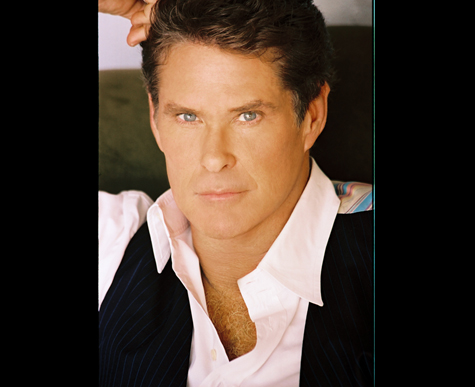
David Hasselhoff comes to Cache Creek to Retro Rock Your Valentine’s Day
Whether you’re a child of the ’70s and ’80s or a ’90s-born Internet troll, you’ve probably grown up with David Hasselhoff. It’s impossible to understate the footprint The Hoff has left on pop culture, not only in America, but worldwide thanks to his iconic starring roles in shows like Knight Rider and Baywatch. However, his notoriety rose to a different level with the growing influence of the Internet on pop culture and the copious memes and viral videos that populated the World Wide Web.
“Everybody knows me. Everybody does,” Hasselhoff says plainly during our interview. And it’s difficult to disprove that statement. Of course, his rampant fame (or infamy as the case may be) hasn’t come without its pitfalls.
“It’s a pretty wild experience going through life,” he says. “It can be a very positive and it can also be very intrusive and very gut-wrenchingly sad when it affects your daughters. It’s a double-edged sword.”
The darker aspects of his personal life have been laid bare for the world to see, but later this year, Hasselhoff and his family hope to set the record straight, so to speak, with an as-yet-untitled reality show on A&E.
“That’s just not who we are,” Hasselhoff says. “This is my chance and our chance to affect what’s going out to the public in a real way. Like my daughter said—they asked her what the show was going to be about with all the press I’ve gotten—and she said, ‘It’s to prove the tabloids wrong, basically.'”
More than that, Hasselhoff says the reality show, which will begin filming this month, will be a vehicle to help launch the singing careers of his two daughters Taylor-Ann, age 19, and Hayley, 17. In the meantime, The Hoff will be working on his own musical career. The Hofftastic World Tour 2010 kicks off Valentine’s Day at Cache Creek Casino Resort. The show is titled “Retro Rocking With the Hoff,” and will feature many of Hasselhoff’s favorite songs—both old and new—as well as surprises for many of his television fans.
He may be best known in the States for his work starring as Michael Knight or Mitch Buchannon, but overseas, his career as a singer is well entrenched. Hasselhoff says that this upcoming tour is something he’s wanted to do in America for a long time.
“It’s going to take a little bit of work to let people know what I do,” he says. “It’s going to be interesting and challenging, but most of all fun.”
In the following interview, Hasselhoff tells Submerge about his forthcoming reality show for A&E, the Valentine’s Day gig at Cache Creek and informs us that those who attend shouldn’t be surprised if they hear The Hoff channeling Karen O in his performance. Hofftastic indeed!
Is this your first major tour of the States?
Yeah, I toured the States years ago with my show to the fairs, and it was funny. They’d say, “David Hasselhoff?!” But by the end of the show they’d be up on their feet and storming the stage. My band, who is all from Canada and used to touring Germany, goes, “It’s so weird to see people mobbing you and mobbing your limousine, and they’re actually speaking English.”
Is it weird for you to play shows here when people aren’t as familiar with you performing music as they are in other parts of the world?
Well, we’ll find out. When I was in Vegas doing The Producers, Mel Brooks and I would go out afterward, we’d always walk by a lounge and they’d be like get up and sing, and he’d say, “Go on! Sing!” and the lounge would be packed all of a sudden. It was amazing, so I said, “I have to put a show together.” I think people are just coming to see the Knight Rider live, and I think if we deliver a good show—and I think we’ll deliver a great show. We’re excited about it. We sunk a lot of time, and blood, sweat and tears, and money and trying to figure out where to go. We put together 22 tracks and threw out 10 of them, so we have the best 12 left. It’s going to be the retro-rocking night with the Hoff that you’re never going to forget. And we’ve also got stuff in there that no one’s ever seen. We’ve got Baywatch outtakes, and I’ve got Knight Rider outtakes that no one’s ever seen, and they’re worth the price of admission if you’re a Knight Rider fan.
You talk about Knight Rider and Baywatch, and I grew up on those shows, so that’s what I’ll always associate you with, but there’s a new generation of people who are familiar with you because of your prominence on the Internet—with viral images and Web sites. When that first start popping up, what was your reaction to that?
I thought it was unbelievable how the whole world could be connected to each other by one word called “The Hoff.” It was unreal. I first got wind of it five years ago, when I came home from shooting a movie, and it was like two in the morning, and all of these fans were making up Hoff jokes—David Hasselhoff jokes—to get me to appear at a concert in Ireland called Oxygen. All these students from the universities up there were writing Hasselhoff jokes—and they were funny”¦ I kind of just went with it. When I was selling my book in Europe, they would turn out in legions, dressed up as David Hasselhoff or Michael Knight or Mitch Buchannon, and they were wearing David Hasselhoff T-shirts, so I took pictures of all the T-shirts, and then came back and called my license guy and said, “Follow all the bootleggers! They’re making all the money!” So we put out a line of shirts.
You definitely seemed to embrace it. You even named your book Don’t Hassle the Hoff“¦
Yeah, wherever I go now, it’s not even David Hasselhoff, it’s just The Hoff. I just think it’s funny. I just laugh and think how did this happen? I know how the whole thing started, too, because it started in Australia from secretaries. It became an Internet fun thing from secretaries sending pictures back and forth. They wrote me, “How do you feel about being a sex symbol at 50?”—that was seven years ago—and I went, “What are you talking about?” They wrote about this viral epidemic of secretaries e-mailing each other in Sydney, Australia. But it’s fine. If you take life seriously, you take life seriously and then it becomes serious. You have a serious life, but you really don’t want to have a serious life, you want to have some fun.
Do you have a favorite? I liked the infini-Hoff the best—it was like a perpetual image of you in the black Speedos.
[Laughs] I saw that! That was pretty funny. My favorite one got a million hits in Australia—it was called “Wax On, Wax Hoff,” where you could actually wax my chest. I found myself playing “Wax On, Wax Hoff,” trying to get the hair off my own body”¦ It’s almost as if I have a little box, and at night I put The Hoff to bed in the box. It’s a character—not created by me, but embraced by me.
I guess there’ll be another version of The Hoff coming up soon. You’re going to star in a reality show on A&E later this year. Was that something you’ve always wanted to do?
I never wanted to do a reality show, but I did something with a DJ in the United Kingdom, who came to live with me for two days, and part of the gag was to critique my daughters and let them know what it would take to make it on the radio in Europe. This gentleman was named Scott Mills, and he brought my record—”Jump in My Car”—to No. 3 and No. 1 in Scotland and Ireland, simply by playing it and believing in David Hasselhoff. I did his radio show several times, and we became friends. He went on a personal quest to get it on the charts, and he did. So, when he called and said he had an idea to come over, and I said if he could highlight my daughters, that would be great, and he did. I knew my daughters wanted to be singers since they were 7 years old, and this was their time, so I said, “OK, we’ve got to do this now.” So I put them in the studio, and they both worked really hard and had extensive vocal training, and we put out this song. It really worked well, and he loved it. I went, “Wow, this could work, but we really need to go to America.” Meanwhile, A&E had been calling me and they wanted to do something, and I kept turning them down. Everyone advised me that getting radio airplay and launching a record is almost impossible these days unless you have access to the media, and I went bing! I do. So I called A&E, and went, “What about The Hoffspring, or Hanging With the Hasselhoffs—something about me and my kids,” and they loved the idea. They came out and visited us and came by America’s Got Talent, and they realized that we were a loving, tight-knit family—not like what you see in the tabloids and all that garbage. It’s really about following my daughters’ music career and trying to help them through all the ups and downs, and see what happens.
You mentioned going into the studio with your daughters. Is that a difficult transition to go from being their dad to taking more of a business role?
I’ve been doing it for years with myself. I have a studio in the back. At first, they kind of—well, not rejected me”¦but I put them in the hands of people who are really professionals at this, and that’s what I’m supposed to do. If they’re recording in my studio, and we want to get something done, I’m absolutely hands-on. I coach them as I was coached, and they love it. They don’t know anything about recording yet, and they’re learning what it takes, but it’s very natural for us. They want me to be there.
The show at Cache Creek is a Valentine’s Day show, and before you mentioned a tribute to the Rat Pack, but what sort of music do you plan on performing?
I’m doing “Since I Fell for You,” “Feeling Good” and “What Kind of Fool Am I” as a tribute to Sammy Davis Jr. I’m doing the rock ‘n’ roll—”Jump in My Car.” I’m doing a tribute to all the guys I like: Kenny Loggins, The Rolling Stones, Mitch Ryder and the Detroit Wheels. I’m doing at tribute to the new stuff I’m listening to a lot, and that’s Enigma, Shiny Toy Guns and the Yeah Yeah Yeahs”¦ I’m just throwing in all the music I like. I’m going to do some of the Broadway songs from the shows I’ve been in.
Since this is going to be in our Valentine’s Day issue, what’s The Hoff’s idea of the perfect Valentine’s Day date?
If you’ve got someone you’re intimate with already, put the flower petals on the bed. Put the chocolate-covered strawberries by the nightstand. Light the candles. Be as romantic as you can and surprise them. It just seems to work every time, and everyone goes away smiling in the end.
Let David Hasselhoff Retro Rock your Valentine’s Day with his performance at Cache Creek on Sunday, Feb. 14. Tickets start at $45 and can be ordered online at Tickets.com or CacheCreek.com; by phone at (800) 225-2277; or in-person at the Cache Creek Casino Resort guest services desk.

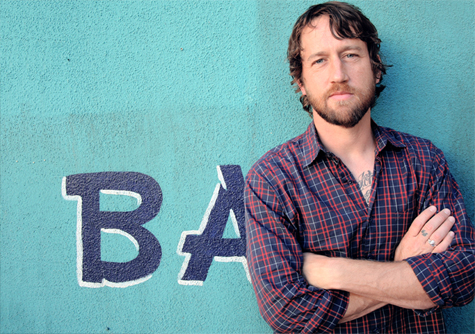
Chris Shiflett puts his time off from Foo Fighters to Good Use
Over the past decade, the Foo Fighters have risen to become one of the most prominent bands in rock ‘n’ roll, and guitarist Chris Shiflett has been a big part of that. Becoming a full-fledged Foo right before the end of the last millennium, Shiflett already had quite a resume as guitarist for No Use for a Name and also a member of Fat Mike’s punk rock cover band Me First and the Gimme Gimmes. In September 2008, Foo frontman Dave Grohl announced that his group would be taking an extended hiatus, a statement that has held true despite the release of a greatest hits comp at the end of 2009. The announcement didn’t seem to rattle Shiflett all that much. He just kept doing what he’s done the better part of his life: create music.
When Submerge spoke with Shiflett, he was just wrapping up recording for a new record he hopes to be finished tracking shortly. In the past, Shiflett has spent his time away from the Foo Fighters fronting another rock band called Jackson United, but the music he’s working on now will appear on a solo effort—well, sort of.
“I’m working on kind of a solo record, though it’s kind of silly to call it a solo record, because I’ve got a lot of other people playing on it,” Shiflett says. “It’s a solo record with a lot of my friends.”
Shiflett has no shortage of talented friends. One such friend is his old NUFAN cohort Tony Sly, with whom Shiflett will be touring the Western United States in February. Shiflett says that a show the two played together last year in Santa Barbara served as an impetus for the tour.
“We both have kids and wives, and we don’t really get to see each other so much anymore,” Shiflett says of reuniting with Sly on stage. “It was so much fun. We did a song together, and afterwards, we were hanging out, and we were like, ‘We should do a tour.’ So we started talking about it, and it just kind of came together. He’s actually got an album coming out in a week or so, I think. He’ll have product; I won’t.”
Shiflett may not have anything to hawk at his upcoming shows, but he will be trying out some of his new material. A departure from what his fans may expect, Shiflett’s solo record will feature “roots-y leanings.”
“It’s got more acoustic bass and keyboards and pedal steel and more instrumentation on it,” he explains. “It’s definitely not as rock ‘n’ roll as the Jackson United stuff, but it’s still me, and it’s still my songs, so I’m sure there’s a common thread there.”
It may sound like a serious downshift—both in sound and scope—from what Shiflett is used to, and it is. But it’s a challenge he seems pretty excited about. He says “it’s a trip” to go out on the road, on his own, to play a bunch of songs that many people may not have heard, but he acknowledges there’s also a certain amount of freedom involved as well.
“I like going out and doing the acoustic shows, because it’s so easy,” Shiflett says. “You just throw your acoustic guitar in your car, and there’s no corralling a bunch of people. It’s just fun. You kind of sink or swim on your own strengths and weaknesses. There’s nowhere to hide, which makes it pretty exciting to do that.”
In addition to playing new material, Shiflett says he will also throw some Jackson United songs and a few covers into the mix. And don’t be surprised if Shiflett and Sly play a song or two together.
How has it been playing music with Tony again? Do you revisit old stuff, or are you looking to do something new together?
It’s funny, because the song we ended up playing together, I just kind of surprised him. I said, “Hey, do you want to do that ‘Moonshiner’ song?” He used to bring an acoustic guitar on tour, so when we’d be on a long drive in a van, he’d play guitar and sing songs. It was a song that he used to sing. It’s an Uncle Tupelo version of some old standard. So I was like, “Do you want to sing that song with me?” and he came up and did it, so that took me right back to being in a van in the middle of nowhere with those guys. Me and Tony have known each other for a long time now, and he’s one of those guys that even if I don’t see him for a couple years, it just takes a few minutes”¦
You’re like fast friends all over again”¦
Yeah, he’s just a good, old friend of mine. We have a lot of love for each other.
Will he make a guest appearance on your own album?
You know that’s not a bad idea [laughs]. We haven’t talked about it, but maybe I’ll corral him into the studio when I have him down here.
You’ve played in bands like No Use for a Name and Foo Fighters, which are both on the louder side of rock music. Is the stuff you’re doing now something you’ve always had a penchant for?
Without a doubt. Of course I love loud rock ‘n’ roll music. That will always be my first love, but ever since I was a little kid, I was listening to Elvis and Johnny Cash and a little later on, I dug back into that older stuff—Willie Nelson and things like that. It’s always something I’ve been into and have had an appreciation for. It’s nice to take a break from screaming loud music and do something a little mellower. That’s the fun thing about doing these acoustic shows. I do some of the Jackson United songs, and they’re sort of a little closer to the way they sounded when I made them up in my bedroom, just sitting there strumming on an acoustic guitar.
Before you said you enjoyed just hopping in the car with your guitar and just going to a gig. Spending about 10 years with the Foo Fighters, and they’re a huge rock band, I’m sure that’s a lot of people and a lot of equipment. Is it refreshing for you to get on the road and do your own thing and not have to worry about all that?
Yeah, it’s just an easy thing. You just jump in your car, and it’s like a road trip with a couple of your friends. Touring with a band is great. Especially with the Foo Fighters, I’m not the one corralling people. We’ve got a guy that we pay to do that.
[Laughs] A corraller?
Yeah, we have a professional corraller [laughs]. It’s not very labor intensive for me, personally, but it’s still like a 50-person, 50-headed monster sort of thing. There is a kind of solitude in just getting out in your car and driving. The first show is in Seattle, so I’ll be driving all the way up to Seattle and then just heading down the coast. It’ll be nice. I’d like to say it’s a return to what it was like when I was younger, but I never really did this when I was younger. When I was driving to a gig in the car, that was like in the ’80s or early ’90s, and it was louder then.
Has this stripped down approach played into going into a more roots-y feel with your music?
Without a doubt. And that’s one of the things that I’ve really tried to do with this record that I’m recording—keep it sparse. When you’re doing a rock record, there’s a lot of doubling of everything, and all of a sudden, you’ve got 18 guitar tracks, and it’s become this unruly beast. I’ve really been trying to pare it down. Playing acoustic, it really makes you commit to parts. You really have to keep it simple—or at least I have to keep it simple, because I can’t go up there and play something really complicated and sing. It boils it down to the root of what the song is. I think it’s good for your songwriting.
Before you said that when you took the songs into the studio, they began changing. How did they change, keeping in mind that you said you were trying to keep them simple? Was there a conflict between the songs growing and your intent to keep them low-key?
For me, until I go in and actually record a song, I don’t commit to things until then. I don’t really work out the vocal melody exactly the way I want it to be until I get into the studio, and then you can’t hide from it. You can sort of hide live, you can fake it a little bit live, but when you get into the studio, you can’t fake it any more. That’s when you have to start making decisions.
You’ve been busy since the Foo Fighters went on hiatus. When the hiatus was announced, was that a welcome thing for you?
For sure. I think everyone was ready to take a break. We’d been pretty strong for a few years in a row without any real time off between records and tours and stuff. I didn’t think—I don’t know if anyone really thought—I sort of didn’t really believe that we’d take a hiatus. We sort of said that before, and then a couple months goes by and things start popping up, but we really have. Right now, there’s no real plan for anything, and I can’t imagine that we’re even going to start working on a new record until later into the year, because Dave’s doing the [Them Crooked] Vultures, and they’re going to be going for a while. It’s going to turn into a big, long break. “¦ It’s always good when we go out and do other things, that way when we go back to doing Foo Fighters, it’s fresh and everyone’s excited to do it. We’ve all got kids and stuff now, and I know for me, this last year being home has been unbelievable—just to be home with my kids. That’s one of the biggest upsides of doing what I do for a living. I don’t have to go to an office every day; I get to watch my kids grow up a lot. It’s been good. It’s been a healthy thing.
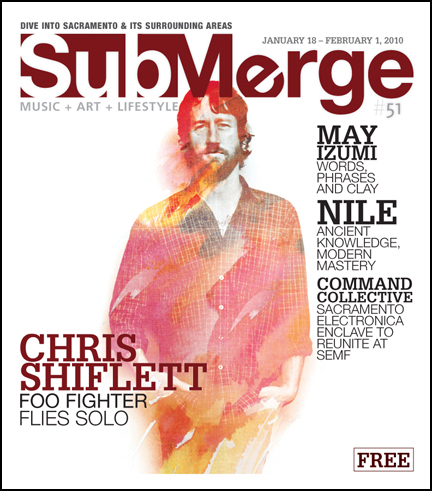
Chris Shiflett and Tony Sly will play The Boardwalk in Orangevale on Feb. 9.
Many years ago, when I was working at the comic book store, I tried to be as courteous to our customers as possible. Most of the time, I knew who would come in (and in most cases, when), but around the holidays, as you’d imagine, our clientele became more diverse. It was no longer just the regulars, who’d come in to get the same books at the same time every week. Now we had the girlfriends, the mothers and the random wanderers who were looking for that book with that guy who was from that movie. As an aside, whenever I was actually able to help someone who came in asking me if we had an item that fit that description, I felt as accomplished as Dian Fossey must have when she reached a peaceful accord with gorillas in the African wilderness.
So, like I was saying, I was a very courteous sales associate. And around the holidays, since I was meeting many new faces—many of whom may have never entered our store, or any store like it, before—I was extra accommodating. I was as cheerful and helpful as my natural misanthropy would allow. I would say, “Hello,” and, “How can I help you,” and as they were leaving, whether they purchased something or not, I would practically chirp, “Happy holidays.”
Always, “Happy holidays”—except this one time. I err toward the side of political correctness in most situations. It’s not that I don’t enjoy a little rabblerousing here and there, but I keep that among my friends and associates, and between the occasional loud-mouthed, overly opinionated fellow drunk and myself. In polite society, there’s simply no room for saying anything potentially inflammatory. No one wants to have to explain to a complete stranger that you misspoke or that you were just kidding—not because you sincerely want to apologize, but because if you were truly kidding, and you had to explain yourself, that means your joke just wasn’t funny. I don’t know about you, but I prefer to think that I’m fucking hilarious.
One day at the store, it was a particularly slow day—of which there were plenty—and I fell into a lackadaisical mood. A nice middle-aged woman came in with her son to do some shopping. I did my best impersonation of chipper James and greeted them warmly and then returned to reading some article about how to build an unbeatable combo deck for Magic: The Gathering while they perused our inventory. A short time later, the two came up to the counter with a few things they’d like to purchase. I wrung the woman up, counted her change and handed it back to her, and before I could stop myself, I gave her a warm and honest “Merry Christmas.”
Her eyes were daggers.
“We’re Jewish,” she scolded. In this case, the printed word does not do justice to the sound that spewed forth from this nice, middle-aged woman. It wasn’t so much a statement as it was a barbed and icy condemnation of my ignorance. I was stunned—probably slack-jawed. I didn’t know what to say. I stammered an apology as they shuffled out the door.
I felt pretty bad about it the rest of the day. How could I have been so insensitive, even by mistake? For whatever reason, it’s a meaningless episode of my life that has stuck with me. But my outlook on it has changed. In my ever-present need to justify everything I do, I’ve absolved myself of all responsibility. Did she really have the right to demonize me? In front of her child, no less? I could understand her being upset if I’d said, “Take your change, you worthless cunt,” or, “I hope your son grows up to be a piece of shit just like his mother,” but I didn’t. My only goal was to spread good will. If she had said to me, “Happy Chanukah,” or Kwanzaa or Yule or whatever people celebrate this time of year, I wouldn’t have said, “Go fuck yourself, I’m Catholic.” Mostly because I’m not. I was raised Catholic, but I don’t align myself with any religion. Maybe I will one day, but right now, I’m too busy being a godless degenerate. I suppose that frees me up to celebrate any end-of-year fest I choose, but let’s face it; Christmas is by far the coolest. Sorry.
Still, during the holiday season, when I’m overcome with the desire to hold open doors, stuff money in donation boxes or drive food down to the local food banks (as I hope all of you do, too) and someone smiles and says, “Thank you,” I return with, “Happy holidays,” which is what I wish for all of you. Thanks for reading us this year and see you in 2010″¦or The 10 as it has been dubbed here at Submerge HQ.
The Mother Hips Settle into a steady groove on their latest album
The rumors of The Mother Hips’ demise have been greatly exaggerated—and for quite some time now. In 2003, the venerable San Francisco-based psychedelic-tinged rock band went on a hiatus that lasted a year. But to hear people talk about it, you’d think they were gone for decades.
“There’s a common misconception that we took a bunch of time off, but it wasn’t really that long,” says The Mother Hips’ co-founder and co-songwriter Tim Blum. “We actually only skipped 75 shows that we would have normally played, but we’re definitely on a roll right now.”
Bluhm says the band decided to take a break due to its members’ frustration over touring, and also to “see what else was out there in life, and we wanted to see what would happen if we weren’t playing with the Mother Hips,” Bluhm says.
But like Bluhm says, The Mother Hips’ hiatus is a distant memory. In late October, the group released its second post-break studio album, Pacific Dust, on New York City-based indie label Camera Records. Bluhm credits the band’s productivity in part to the environs in which Pacific Dust was recorded; the band laid down the tracks for the album at Bluhm’s Mission Bells studio in San Francisco.
“The record went beautifully,” Bluhm says of recording Pacific Dust. “Owning a studio is a big part of that. Just having a studio with all the guys in the band feels really comfortable. They’ve been in there a lot, playing on other records that I’ve produced over the past three years. I always call on them to play parts on other people’s records, so all of the guys have spent a lot of time recording there”¦ It’s a dream come true.”
Bluhm also gives a big nod to the band’s current label for its support. The Mother Hips have had difficulty with record labels in the past, and these experiences are documented in seething detail on the fuzzed-out, bluesy rocker “Third Floor Story” from Pacific Dust. However, things are different at Camera Records. In fact, if it wasn’t for the label, The Mother Hips may not have decided to end their hiatus at all. Bluhm explains that when The Mother Hips took their break, there wasn’t a grand scheme involved.
“We didn’t know what was going to happen really,” Bluhm says. “We didn’t have an agreement. We decided that we needed some time off. We were just taking one step at a time, and we weren’t thinking about the future. The first six months that we got back together, it was just touch and go. We were just doing them one at a time and see how it went.”
It was Bluhm’s correspondence with Camera Records’ owner Jon Salter that got the ball rolling for the The Mother Hips’ reformation.
“To have those guys on our team is the best things we got going for us right now,” Bluhm says of the small label. “Their enthusiasm and their passion have a lot to do with why we stopped our hiatus and started playing again.
“We always talked about how there had to be some way [Salter] could help us out with our advancement,” he continues. “And he finally figured out that the best way to do that was to start a record label of his own.”
Submerge spoke with Bluhm from his Bay Area home, just “100 yards from the ocean,” before he was to indulge in a feast of fresh-caught Dungeness crab.
I saw on your Twitter account that you’ve been doing some crabbing recently. Is that a regular hobby of yours?
It hasn’t been. I’ve always enjoyed a little bit of abalone diving, and I’ve always enjoyed eating seafood. My buddy has a little boat that we take out to access surfing spots that you can’t walk into or drive into. He recently got some traps, and so we’ve been going out and getting crabs out in the Bay Area. This morning was really lucrative. Today, we woke up super early and found them, and we limited out. We got 20 large crabs.
Crab is my favorite seafood, I think.
Well it’s too bad we’re not doing this interview in person, because you could hang out afterwards and join us. We certainly have enough.
Thank you! How are you serving them?
We boiled them as soon as we caught them. They were all cooked by 11 this morning, and now they’re chilling in the fridge. We’re doing Vietnamese garlic noodles and crusty French bread and that’s it. Melted butter doesn’t even seem necessary if they’re really fresh like that, and they’re big and they’re sweet. Sometimes butter is really good, but it’s not really necessary.
Pacific Dust was recorded in your studio, but did you produce the album also?
I didn’t. The band produced it along with David Simon-Baker, who’s my studio partner and an extremely talented guy. We usually do stuff together, but on this project, since it was my band, it wasn’t appropriate for me to play the role of the producer. I wanted it to be like all the other records, where everyone [in The Mother Hips] is on a level playing field.
Why do you think it’s important to keep yourself separated from that process?
I’m not really sure. I’ve produced enough records to see that if”¦ I don’t know. It’s different. If you produce it yourself, then it isn’t really a producer. I think a producer has to be separate from the material, because otherwise”¦ It can still work fine, but I think a large part of the producer’s role is to have an objective perspective. It’s very difficult to produce yourself, because that’s sort of an oxymoron.
In a couple years, you’ll be looking at your 20th anniversary. Has the chemistry between you and Greg [Loiacono, guitarist], changed a lot over
the years?
It really hasn’t changed that much, interestingly enough. I think that the relationship between Greg’s songwriting and my songwriting has always stayed somewhat the same. We both write songs; we don’t collaborate that often, but we certainly help each other with songs and we always bounce ideas off of each other and value each other’s opinions. But it’s the same as it’s always been. Greg’s been getting more and more songs on the record as the records have progressed, but I’ve always written more songs that show up on the record than he has. That’s the way it started, and that’s the way it still is, but he’s stepped up more on the last few records, and I think that’s a good thing.
Do you think having two primary songwriters in a group intensifies the need for an outside person to be a producer?
I think it does. Typically, The Mother Hips have had producers here and there, but we’ve done a lot of the recording without a producer, but I think in the future, we’ve seen that having someone who can act as a producer is really important to the quality of the record. What David Simon-Baker brought to this project was a strong outside opinion—among a lot of other things. I think this record is better, because we listened to someone else who had a strong opinion and a really strong talent for understanding other people’s music. We haven’t really worked with producers much, but I think we should.
I wanted to talk about the title track from the album. I was wondering why you chose that song as the title track, or if you’d just had the title in mind already and then assigned the title to that song.
Yes, it was more like that than the other way around. The title had been kicking around for a while. I came up with it years ago, and I just liked it. Actually, my first studio was called Pacific Dust, when I first started recording stuff, and I always liked it. But when I switched spaces and I got partners, the name got lost, and I always wanted to bring it back. The record label suggested that we call the record Pacific Dust, and we just chewed on that for a while, and it just seemed appropriate. When I came up with the words for the title track, the song that became “Pacific Dust,” it just worked really well for the vibe that song has.
It seemed to be one of the more psychedelic tracks on the album, both musically and lyrically. Could you talk about the vibe of that song for a bit?
It’s definitely psychedelic. It was a song that wasn’t a song at all. We kind of came up with a couple of these riffs, and during sound checks over the last couple of years, we kind of messed around with that main chorus riff a couple of times, and it was really fun to play. It was really powerful, and we really liked it. We were in the recording sessions, and we ended up playing it. There were no words. It wasn’t really a song, we just put it down, and that’s what it came out as. It was definitely psychedelic, because we didn’t have a form, and it was very improvisational. But it sounded really good, so I decided I’d try to write some lyrics for it, and I just sang whatever came off the top of my head and kind of carved it out.
Is that indicative of how you like to work?
No. It’s actually the opposite of our typical way of working, but it was really cool, and it inspired us to do more stuff like that.
You’ve been a San Francisco-based band for a while now, but you started out up in Chico. Do you still consider yourself a Chico band in a way?
You know, Chico is my alma mater, and I spent a lot of my formative years there and I loved it, but I don’t feel like we’re a Chico band anymore. Maybe that’s the wrong answer, but Greg and I still love playing up there. We had a lot of good times up in Chico, but we had a lot of bad times up in Chico too. We were going through a hard time in our lives in Chico toward the end. It’s bittersweet when we go up there. It’s a beautiful town. Anyone who’s lived up there knows that. It just seems that things are cheaper and quieter, but honestly, my history with it keeps me away. As fond as my memories are of Chico, I also have some reasons to keep that chapter of my life in the past.
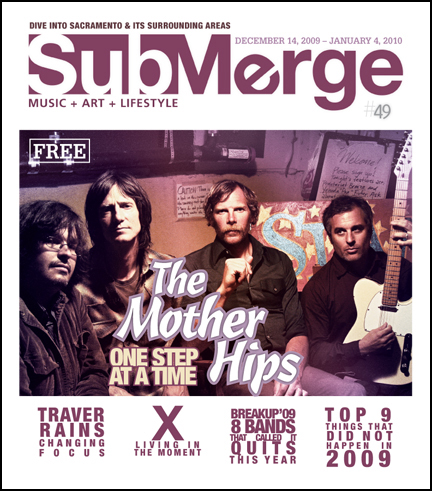
The Mother Hips played a New Year’s Eve [Dec 31, 2009] show at Marilyn’s on K.
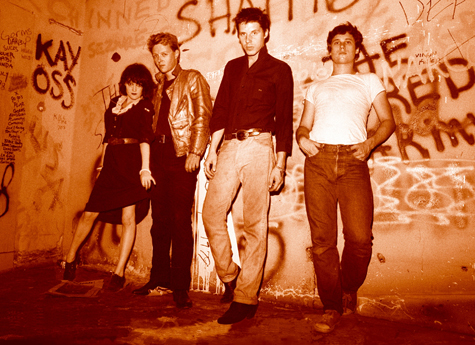
Exene Cervenka and X still as vital as ever
“My stove was broken, and someone came to fix it,” confides Exene Cervenka after an interruption in the middle of our interview. “They said it was never broken in the first place. They made it work, and I feel like an idiot now. Life is funny.”
It sure can be, and life has certainly been a strange trip for Cervenka. In 1976, she moved from Florida to Los Angeles, and barely a year later, she was well on her way to becoming a punk icon. Along with Billy Zoom, DJ Bonebrake and her one-time husband John Doe, she helped shape a musical movement that was often imitated but never quite duplicated.
Cervenka’s life hit a considerable bump in the road this June when she announced that she had been diagnosed with multiple sclerosis, an incurable disease that affects the brain and nervous system. She wrote on her Web site, “After some months of not feeling 100 percent healthy, I recently had some medical tests run and the prognosis is that I am suffering from multiple sclerosis. Apparently, it has been affecting me for quite some time.” Coincidentally, back in the 1990s, she and X had worked with Sweet Relief, a charity that “provides financial assistance to all types of career musicians who are struggling to make ends meet while facing illness, disability or age-related problems,” according to the organization’s official Web site. The charity was started to help musician Victoria Williams pay her medical bills when she was diagnosed with MS in 1992.
“The irony of this is not lost on any of us,” Cervenka went on to write in her June 2 statement.
Now months after the diagnosis, Cervenka reports, “I seem to be doing fine with it. I’m still working, and I’m still touring.” True to her word, she released a solo album, Somewhere Gone, in late October and has already played some dates in California in support of it. The album, a haunting collection of sparsely arranged folk tunes, is available through Bloodshot Records. Cervenka says she has more dates through the South and Southwest planned and is looking at heading further east in the spring.
“It does cut into my ability a little bit to tour and play shows,” she says of her condition. “Just because it’s a little bit harder physically than it used to be, but that could be my age as well. I still love touring very much, and I try to do it as much as possible.”
In addition to her solo work, she’s been busy with X. This Thanksgiving, the group headed back into the studio for the first time in quite a while to record a “digital 45″ of two Christmas songs (“Santa Claus Is Coming to Town” and “Jingle Bells”). The recording has spawned a handful of holiday shows, including one at Harlow’s on Dec. 29, because, as Cervenka puts it, “Sacramento deserves a good party.”
“We’re playing two nights in San Francisco, and one night in Sacramento, so it’s going to be three nights in a row of New Year’s Eve celebrating,” she says.
Sacramento punk fans—and music fans in general—would be remiss for not circling the date. It’s a sad fact that many of the bands from punk rock’s heyday are gone. However, you’d be a fool to say, “Punk is dead”—at least not as long as X is around. Cervenka acknowledges that the band has become a flag-bearer for the movement it helped shape. Perhaps it’s a lonely place, but as Cervenka puts it, “I’d rather be alive than dead.”
I wanted to first talk about your solo album, Somewhere Gone, that came out at the end of October. It had a really spare sound. Did you have those kinds of arrangements in mind when you wrote the songs?
Yes I did. I was writing a record that was lyrics-driven, and not about a band. The Original Sinners was a band that I tried out for a few years, but that was an artistic failure as far as I’m concerned. I shouldn’t have gone that route. I have X and the Knitters if I want to do rock ‘n’ roll and country and punk rock. So what I need, instead of a band like The Original Sinners, is my own solo career, and that was great, because I got to work with some pretty great people.
Why do you call The Original Sinners a failure?
Because the lineups kept changing”¦ It was just really hard to keep it together, because the people I was working with had other projects, and it wasn’t a priority. I wasn’t happy with the way the production worked. But I’m really happy with Somewhere Gone. It’s exactly what I wanted to make—the record I wanted to make.
This was your first solo album in a while. The last one was in the ’90s, right?
Yeah, that’s right. The early ’90s.
Were these songs you’d been kicking around for a while?
No, they were fairly recent songs, and I’ve written a lot of songs since then. I moved back to California from Missouri, and I’m working with different people now and writing songs here and getting ready to make another record.
What were you doing out in Missouri?
I was living there for a while, but I decided to move back to California, because the people I wanted to work with are here. My business is all here, and my friends are all here. I got pretty burned out with living out there [in Missouri]. It was pretty isolating and not very much fun.
What caused you to move out there?
I was searching for a small town somewhere. I thought it would make me happy. But it didn’t make me happy, so I came back.
I’m glad to hear that you’re still pressing on despite being diagnosed with MS. In the statement you released on your Web site about the diagnosis, you mentioned that you and X had worked with Sweet Relief, which helped Victoria Williams, who also was diagnosed with MS. Did that give you some insight to the disease?
Well, yeah, it did. I’ve known Victoria Williams a long time, and I remember when she was diagnosed. I’ve talked to her several times, and I’ve talked to Sweet Relief several times. I’m lucky, because right now I don’t need any assistance financially, but if I ever do, I will definitely go to them. They’re a good foundation.
Are you planning to do any charitable or awareness work for multiple sclerosis research in the future?
You know, if it comes up I will, but what I like to do more than that is play a lot of benefits for friends or people who have medical bills and stuff like that, rather than organizations. We do give money to Sweet Relief—X does—every time we play, but I like to see the money to be handed over to somebody and have them put it in their checking account and pay their bills. So those are the more personal benefits that I like to play, but Sweet Relief is an organization that we’ve been helping for a long time, and I don’t expect that to change.
In that light, have you been following the debate in this country over health care reform?
No. I’m waiting until it ends. I don’t need to know all the stories and the pitfalls and the fights and the arguments and the pettiness of the people in our government right now. If it comes true that there’s health care, that’s great, but if it doesn’t come true, that’s what I expect, and that’s fine too. Nothing’s going to be any different in this country, probably. But I don’t follow the news, I don’t read magazines, I don’t watch television—I don’t even have a television—all I want to know is the end result. I don’t want to know all the bullshit.
There’s definitely a lot of it floating around right now.
Yeah. I’m sure there is. I don’t want to know.
X is getting back together for some Christmas shows, and you even recorded some Christmas covers. Whose idea was that?
Billy.
Was that something you were all stoked on doing, or did it come with some trepidation?
It was something Billy always wanted to do. He wants to make a Christmas album, and so, right now, the best we could do is put two songs together, because right now a Christmas album is too much. But, yeah, we recorded two songs, and Billy produced them, and I think they sound great. People can get them if they want on the Internet, and we’re going to be playing them live.
How did that feel to get back in the studio with X?
It felt great. It went really well, and it made me want to do more. We’re talking about—as usual—writing some songs and putting them out, but we’ll see if we get closer to that.
Is that something you guys talk about often?
We talk about it all the time. We never do anything about it.
Why not?
We’re like a pretend band on some level. You know how some people have a name for a band and an idea for a band and some songs for a band, but they don’t have a band. Sometimes I feel like that—like I’m 19 and I’m just trying to start a band, because it’s like, “Why don’t we get into the studio and record some tunes?” But we will eventually. Maybe in five years or something. We’ll see.
I saw a quote from you in one of the bios that was sent to me. I think it was from 2008. You said, “I remember one night at the Masque, saying to myself at age 22, I just paused in the middle of my drinking and thought, ‘This is an amazing thing. You’re really lucky to be here right now.’ I realized in that moment how special it was.” Has that feeling remained the same over the years?
There’s two ways of looking at it. One is the feeling you have in the moment, which can’t be kept. It passes, right? You have a realization or an amazing moment, whether it’s an event that you’re at or a band that you’re watching, or your life and then you just realize that it is going to pass some day, so you just sit there for a second and think about how great it is. And then, you try to continue on in life to have those moments. Maybe the punk scene will never be transcended by something in my life as far as a new musical movement or something like that, but certainly new songs, new experiences, new people, new art can be achieved all the time. So those moments, yeah, I have those moments.

Hope you did not miss X at Harlow’s on Dec. 29. For more information on Sweet Relief, go to www.sweetrelief.org.