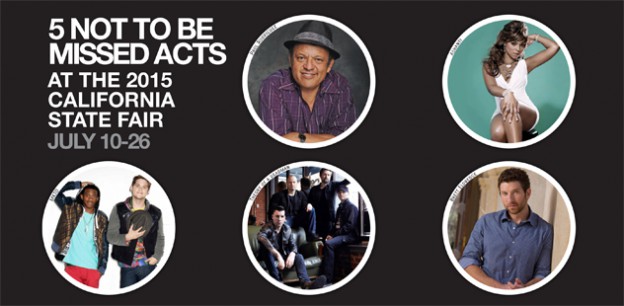
Deep-fried foods, horse racing, animal exhibits, carnival rides, wine and beer gardens … Yup! The California State Fair is right around the corner, running from July 10 to 26 at Cal Expo, bringing with it a plethora of not only the aforementioned things, but plenty of awesome live entertainment too. Here are Submerge’s five not-to-be-missed acts at this year’s State Fair. All shows are free with fair admission, but you can also purchase tickets to get closer to the stage. Visit Castatefair.org for show information and to purchase tickets.
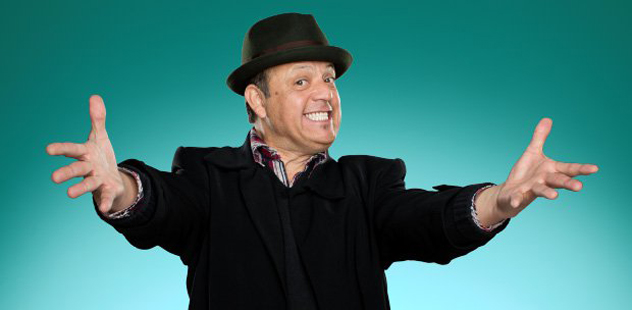
Paul Rodriguez on July 11:
Rodriguez is an actor and comedian who has been making people laugh for decades. He has been in over 45 films, was voted one of the most influential Hispanics in America and was honored with the Ruben Salazar award by the National Council of La Raza. Put on your laughing pants and come see Paul do what he does best. $12 Gold Circle seats.
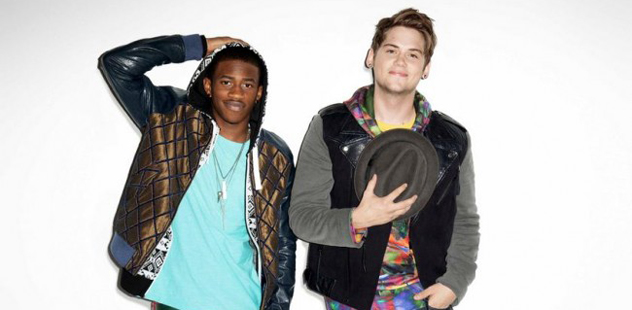
MKTO on July 13:
This hip-hop pop duo consists of Malcolm Kelley and Tony Oller, previous stars of Nickelodeon’s TV series, Gigantic. They describe their album as music for “misfit kids and total outcasts—just the kids we were in high school.” So, bring your dancing shoes (and ears, of course) to watch the awesome performance of MKTO. $16 Gold Circle seats.
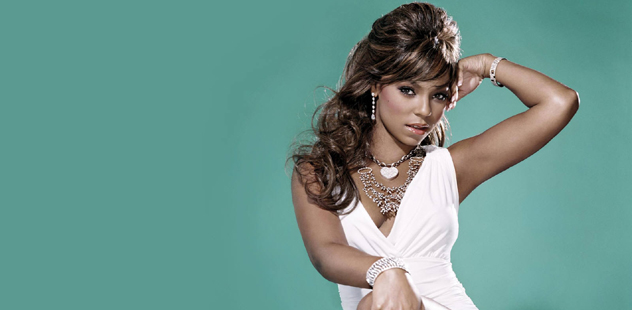
Ashanti on July 16:
Ashanti blessed the hip-hop/ R&B scene back in 2002 with her debut song, “Foolish.” From there, she put out instant hits, “Rock Wit U,” “Rain on Me” and her duet with Ja Rule, “Happy.” Come join her and feel good vibes and energy. $12 Gold Circle seats.
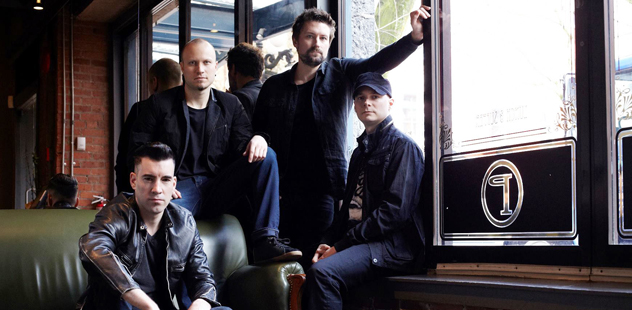
Theory of a Deadman on July 22:
Modern rock band, Theory of a Deadman burst onto the airwaves back in the 2000’s with their singles, “So Happy,” “Bad Girlfriend,” and “Make Up Your Mind.” Recently, they’ve blasted into new territory, completing their first ever country song, “Livin’ My Life Like a Country Song.” Come watch Theory of a Deadman as they display their amazing talent and make you realize why they’ve been a top contender on the Billboard charts. $16 Gold Circle seats.
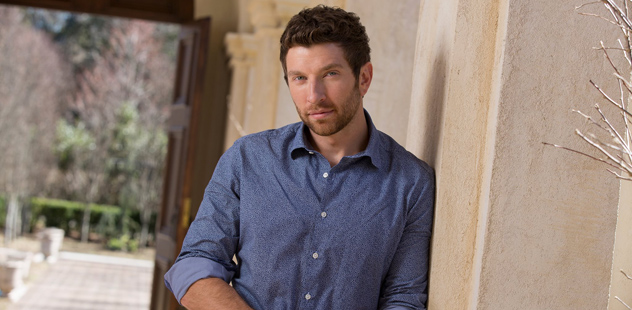
Brett Eldredge on July 26:
2014
Country Music Association Awards’ New Artist of the Year, Brett Eldredge graced our eardrums with his number one hit, “Don’t Ya” and “Beat of the Music.” He has been featured on The Tonight Show Starring Jimmy Fallon, LIVE! with Kelly and Michael and Late Night with Seth Meyers. Get your boogie on and enjoy the last night of the fair with Eldredge’s good looks and beautiful voice. $25 Gold Circle seats.
International Skateboarding star Joey Brezinski’s Manny Mania returns to Sacramento
Guangzhou, China, is a prime location for skateboarding. Everything is brand new, there is marble everywhere and the likelihood of getting kicked out for pushing around on a board is slim. That’s because security guards are too busy watching in awe. So says pro rider Joey Brezinski, anyway, who visited there recently.
“It is one of the best places I’ve ever skated in the world,” he says over the phone from his home in Venice, Calif.
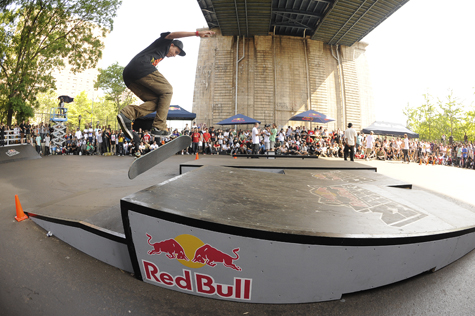
While the sight of Brezinski flipping tricks may be foreign in parts of China, skateboarding is catching on in many regions around the world. Whether he intended to or not, Brezinski has facilitated the process by coming up with a unique skate contest that, in its sixth year running, now spans five continents and 12 countries, attracting participants anywhere from the United States and Chile to Sweden, South Africa and the United Arab Emirates. Red Bull Manny Mania is a skating competition concentrated on the manual, one of the most basic, fundamental skating tricks around.
There are nine amateur qualifiers taking place in the United States alone. Sacramento will host a Manny Mania qualifier this month for the first time in three years, being the only qualifier taking place on the West Coast in 2012.
For those unfamiliar with skate-speak, a manual means that a skateboarder balances on one end of the board while the other end comes off the ground, moving forward all the while. In other words, it’s the skateboard version of a wheelie.
It may seem relatively straightforward, but it’s harder than it sounds.
“It’s a lot more technical,” Brezinski explains. “Instead of having to go big or find a gnarly ramp or handrail, I try to stay low to the ground and maneuver the board more.”

(Photo by Giovanni Reda/Red Bull Content Pool)
The competition demands creativity. Beyond performing the manual, competitors are expected to tie in a variety of other skate tricks into a smooth combo. A sequence might sound something like: a perfect nose manual to late flip on the high box. Again, to the non-skater this is gibberish. The bottom line is, this stuff gets complex.
To top it off, each round lasts eight minutes, during which the rider has to maintain fluidity. The rider who demonstrates the most consistency and control, in addition to the most tricks, wins.
“It’s a lot of balance and endurance, I like to say, because the contest is like running a marathon,” Brezinski explains. “You try to do as many tricks in eight minutes as you can, and it’s pretty exhausting.”
Thus skaters like Youness Amrani come forward–the 2009 Manny Mania championship winner–who, according to Brezinski, are taking things to the next level. One of the most memorable big stints Amrani pulled involved a kickflip manual backsmith, Brezinski says.
As the competition has gained popularity, more and more riders have come to the table to compete at both the professional and amateur level. Big names like Kenny Anderson, Danny Montoya, Daniel Castilo, Brandon Biebel, Jason Dill, Eric Koston and Stevie Williams have shown up in past years. The contest has also brought names like Sewa Kroetkov to light. He was relatively unknown in the skating world until he gave Brezinksi a run for his money in last year’s competition.
What started out as a skate contest in Venice, Brezinski’s hometown, has evolved into a worldwide competition. Brezinski, who made his name debuting in the film Hello JoJo for the French company Cliché Skateboards in 2006, approached Red Bull in 2007 with the idea of creating a manual skating contest. Red Bull was immediately on board, and the result was Manny Mania.
“It was something I always wanted to do,” Brezinski says of the competition.
In addition to the nine amateur qualifiers taking place in the United States, others are cropping up across the globe to draw new talent into the competition. Riders as young as 14 are entering the contest. Each nation’s finalist will compete in New York’s world final in August at Coleman Park; and the winner of the world final will return the next day to compete in the Manny Mania Pro Event.
Since its inception, winners have included Ronnie Creager and Eli Reed. Brezinski won the Venice competition in 2007, in addition to the pro final in 2008 and again last year.
Some years have proven more challenging than others. For instance, in 2009, Brezinski tore ligaments in his ankle prior to the competition while shooting the TransWorld skate video Right Foot Forward.
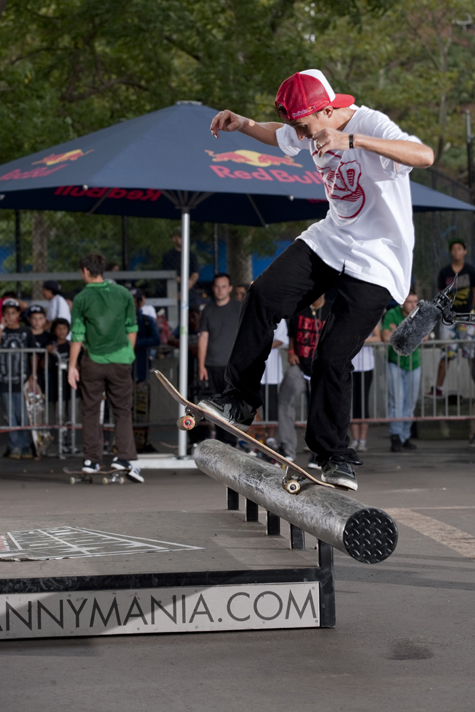
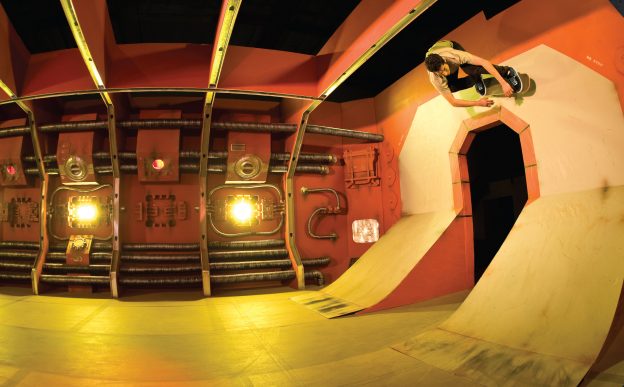
(Photo by Jody Morris/Red Bull Content Pool)
Last year he shot another video for the X Games Real Street contest. Aside from Manny Mania, Brezinski isn’t one to enter skate contests (it means more time spent traveling and less time skating the streets), but last year he made the exception to shoot the one minute of skate footage that, if it had been chosen, would have aired on NBC during the X Games.
“It was insane,” he recalls.
This year he is shooting yet another video, apparently, this time for Cliché. It’s for a sponsor he loves. Whereas other brands don’t provide him many travel opportunities, Cliché allows him to head to Europe every year for a visit. Still, anticipating this year’s competition, he vows to take it easier than he did in 2009.
Plus, he has energy to save for another big endeavor, namely his new business, Andale Bearings, which he just started with co-owner Paul Rodriguez earlier this year.
For Brezinski, the business world is new territory.
“Like skating, every day is a new trick,” he says.
Commanding a business with a mission to put the best bearings into skate wheels means fewer hours on the road and more hours at home in Venice. That leaves a couple hours a day at the skate park.
Yet, while exotic locations like Guangzhou will always have skating allure, Los Angeles remains one of his favorite spots to skate. Not only is it where the first Manny Mania went down, it’s also where he started out on a board at age 8 or 9.
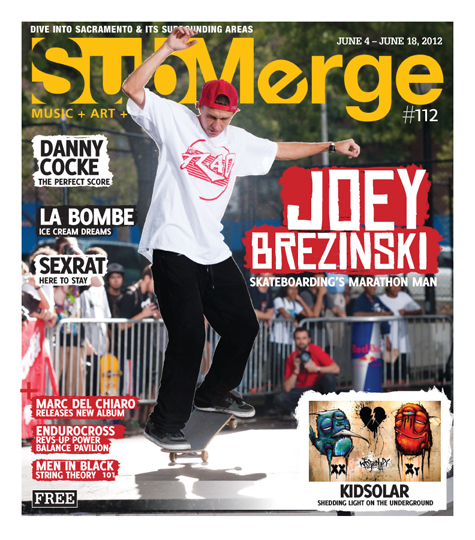
Red Bull Manny Mania’s only West Coast qualifier will take place in Sacramento on June 9, 2012 in front of the MARRS Building (1050 20th Street). The event is free and open to the public. Skaters can register ahead of time at FTC in Sacramento, PLA in Folsom or at the event starting at 3 p.m. Skating starts at 4 p.m. To keep abreast of all things Joey Brezinski, follow him on Twitter @joeybrezinski.
Felipe Esparza tickles the charity bone
Words by Adam Saake
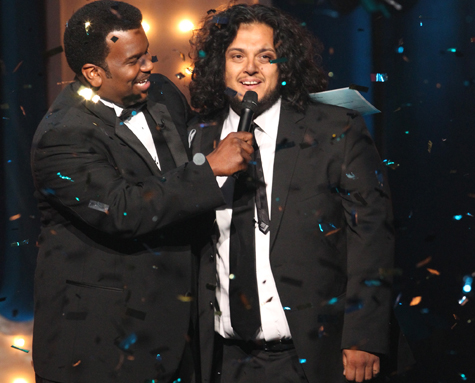
Most of the time you get 20 minutes. Maybe. Celebrities are busy people with complicated agendas that their publicists keep moving like a well-oiled machine. This was not the case with this past season’s winner of Last Comic Standing, Felipe Esparza. On the dot, I ran out of questions at the 20-minute mark and began to end our interview.
“You could ask me what I’m going to do with the money,” said Esparza, offering me more for us to talk about while also pointing out that I had forgotten to ask an obvious question.
Esparza was calling from Los Angeles, where he lives and where Last Comic Standing had been filmed. Esparza beat out Tommy Johnagin and Roy Wood, Jr. in the top three to become season seven’s winner and the lucky recipient of $250,000. It’s easy for me to fantasize about what I’d do with that much money (I’d piss it away on a cellar full of first growth Bordeaux and a safari to Italy to track down Monica Bellucci), but after hearing Esparza tell me a story about Paul Rodriguez’s Ferrari I wasn’t quite sure what he was going to do with it all.
“I’m going to donate it,” says Esparza proudly. “Not all of it. Some of it.”
One of the charities rehabilitates gang bangers and outcasts and helps them find jobs, another is an alcohol treatment center and the third is really a big middle finger to the World Wide Web of Esparza-haters.
“There’s been a lot people talking bad about me on the Internet. Saying, why do I talk like this, ‘I don’t understand his accent,’” says Esparza. “Well I got something for them, too. I’m donating money to a speech impairment school in my neighborhood.”
Esparza jokes about being a deadbeat dad, being the last on his block to screw the neighborhood slut and even throws in jokes that are borderline corny.
“The guy who wrote the song, ‘The Hokey Pokey’ passed away,” starts Esparza. “During his funeral they couldn’t close his casket because every time they put his left foot in, he put his right foot out.”
OK, that’s just plain corny. But something about him and his unique brand of esoteric one-liners won over the judges and the voters during those 10 weeks of competition. When I asked Esparza if winning was a big break, he wasn’t so quick to rattle off movie deals and HBO specials he’s got lined up. He’s still on the grind like a lot of comedians, and what comes next is new territory.
“I never made it that far,” jokes Espraza.
Did you have to audition for Last Comic Standing?
For Last Comic Standing I had to audition. I didn’t wait in line this year so someone must have put in a good word for me this time.
So you’ve auditioned in the past?
Yeah, and I sucked.
I didn’t see you, because you weren’t on those shows.
No, you never noticed me.
You touch yourself in this very strange way while you’re on stage. Almost like you’re trying to pinch your own nipple. Is this a weird tick you’ve developed along the way?
I think every comedian looks for something to hold on to. Some comedians, they lean on the microphone stand. Some comics sit down and others just stand still. I just walk around. I used to wear big coats, and I always closed it over me and tried to hide, because I was so scared of being on stage. And I was just trying to cover myself up like if I had a cape. And little by little I stopped holding my coat and pushing it over me. Because it looks weird. Then I just forgot about it, and now I pretend to hold a coat or something. It’s a habit I guess, I can’t get rid of it.
Normally your delivery is very laid-back and the timed structure of the show seems like it might have been a challenge for you. Did you have to adapt?
I had to adapt, because I only had two-and-a-half or three minutes to wrap it up. We had to submit three minutes of material, no more, no less. I tried to go for the strongest jokes. I have a lot of one-liners, so it was hard for me to do a story because I don’t have so many long jokes. The only long joke I have is [whispers], “I want cereal.” That took a big chance, that one and the last joke I did at the finale, “Now I know you can keep a secret.” There was a risk I took. I did those jokes at the end, because if I had done those jokes at the beginning, I probably would have lost my timing. It was hard to come up with fast jokes. Then the audience. The audience would clap at everything that Tommy and I were saying. They will applause break “hello.” I had to time the audience. I would do the setup and they’d laugh at the setup. Whoa, hold on. The joke’s not even there yet. Like, I said this joke; I said, “The restaurant that’s parked in front of my house…” That got a big ass applause break. And then the punch line was, “…got robbed after I paid.” Some of the comics, I don’t know if they were used to the crowd cheering for them so loud. It was bothering their timing a lot. Me, I was just riding the flow.
Were you writing new material along the way to pepper in with some of the older bits?
A lot of the jokes that I said in the beginning of the competition were new bits. Like the one about the new law in Arizona. I say, “That law sounds scary, but if I get deported I’m going to say the same thing I say when I get kicked out of a club. ‘But sir, I was already in there. My friends are all in there. They’re still holding my credit card.’” That was a new joke; it was only like a month old. “I want cereal” was like a year old.
Were you always a jackass growing up, or did you make your way into comedy through other channels?
Ever since my friend Jackie Escalara invited me over to his house. See, I lived in the housing projects but across the street, not even 100 feet away, was a regular neighborhood. Across the street in a regular house was my friend, Jackie Escalara. He introduced me to Bill Cosby on a little Fisher-Price record player. I listened to that whole bit, about “me and my brother Russell.” The one where Bill Cosby is talking about him and his brother fighting all night. And from then on, I said, man this is funny. I memorized the album. It’s weird how when you’re a kid, when you really love something, you remember it–unlike math and English. You forget that shit when you get home. I wanted to be a comedian from then on.

Were there any Latino comedians who influenced your style and that you looked up to?
I think I like Paul Rodriguez and George Carlin the best. And Richard Pryor. I think my top three are Paul Rodriguez first, Rodney Dangerfield second and George Carlin third. If those three guys had a baby, it would be me looking like Mitch Hedburg but speaking Spanish.
I don’t want to think about the three of them having a baby, at all.
I know huh? It would be crazy. Drinking wine like George Carlin, riding in a Nova with hubcaps and smoking crack in the back! I love Paul Rodriguez because he has different material all the time, and he’s always talking shit about somebody. It’s hilarious. Like I remember Carlos Mencia was on stage preaching. Like he always does now, preaching about how much money he made. He was saying he made a million dollars. But, when we were in the parking lot–there were a bunch of comedians hanging out in our group, and Paul Rodriguez has a Ferrari man. A Ferrari Testarossa. One with a clear fiberglass and you can see the engine in the back. He revs that shit up! I mean loud! He looks at Carlos Mencia and says, “Hey Carlos, next year maybe you should make three million dollars!” And takes off on Sunset.
What are you going to do next? Where are you headed?
I want to continue. I’m going to do the 65-city tour first and foremost with the other four comics. Mike Destefano, Mike Hugh, Roy Woods Jr. and Tommy Johnagin. Four of the strongest comics I ever had to compete with in my life, in comedy. I have a movie that I did with Paul Rodriguez called I Am Not Like That No More, and we’re going to shop that around. And also I’m going to be honored by the city of Los Angeles for being a local hero.
Who did you rescue?
Nobody.
Are you getting a Purple Heart?
[Laughs] You’re the first person to ask me a funny question. That’s funny.
Felipe Esparza will perform at The Crest Theatre on Sept. 9. Tickets start at $25. For more on the show and Felipe Esparza, go to www.felipesworld.com.
Put professional skateboarder Omar Salazar on the phone for an interview, even while he’s in Australia on a Nike Skateboarding team trip, and you’ve got one of the nicest dudes you’ll ever meet; caring, witty and all around fun to talk to. Put Salazar on a skateboard, assuredly where he’d rather be than on the phone, and you’ve got a savage on wheels; a straight-up wild man that charges at his tricks with relentless speed, dedication and concentration. The 26-year-old skater from Sacramento has made quite a name for himself in the industry, especially within the last couple years with his part in Alien Workshop’s video Mind Field, making the March 2009 cover of Thrasher and the announcement from Nike that Salazar will have his own signature shoe. But all the success hasn’t come easily.
Salazar was raised by loving and supportive parents who fled to the States from their home country of Chile. Pursuing a career in skateboarding, though, was not exactly what they had in mind for their son in this so-called land of opportunity. “They were always like, ‘Hey look, you’re lucky you have opportunities here, you need to go to school and you need to work for a big company,” said Salazar of his parents outlook on his skating. I was always like, ËœYeah, but I don’t want to do that; I’m not good at that. This is what I want to do.”
Salazar remembers having to hide his skateboards and boxes of products that companies were sending him so his parents didn’t get suspicious. “I didn’t want to disappoint nobody, but I was never good in school,” he admitted. “I mean, I finished high school, but I was never good as far as book smarts goes, I’m better at street smarts.” Those early years also consisted of a lot of couch surfing, riling up change from said couches to hit up Del Taco, raiding Safeway’s sample tables and bombarding open house food platters. “Yeah, I’ve come a long way,” Salazar said with a laugh, looking back.
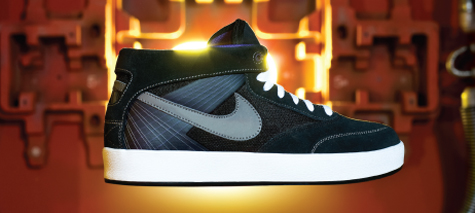
A long way is an understatement, as this month Nike will release Salazar’s first signature shoe, a career milestone for any athlete involved in any sport. Salazar will be the second Sacramento-area skater to get his own Nike shoe, as teammate and close friend Stefan Janoski did so just last year.
“In the beginning,” Salazar remembered, “Before Nike gave anyone shoes, Stefan and I, we’d had offers before in the past from other shoe companies, but I always stick with what I believe in. I believe I’m a loyal rider. That’s just the most important thing. So, I figured if I kept loyal with Nike and the people I work with, then something good was going to happen.”
Even after Nike told them years ago that Paul Rodriguez would be the only team skater to get his own signature shoe, Salazar stuck it out, all the while telling Janoski, “We’re going to get shoes, trust me.” Eventually they both got the phone call and for Salazar, it was sort of an ‘I told you so’ moment when they did.
“I don’t want to sound cliché or lame, but in a way I kind of manifested it because I knew it was going to happen,” said Salazar, not in a cocky manner, but a confident one. “Even before they offered me a shoe, I drew up a design and straight up put one in my room, one in my bathroom and one in my closet.” Salazar would be gone for months on skating trips and he’d come home having forgotten about his dream shoe designs, which re-invigorated him to skate harder, to keep going so that one day it would be a reality. “Like a year later after working hard and having fun skating and stuff, they hit me up and were like, ‘Hey, we want to give you a shoe after Stefan.'”
When it came time to actually visit Nike HQ in Portland, Ore., to meet the people who would be designing his shoe, Salazar was well prepared with his sketches, his favorite color schemes and other things that represented him and his personal style. “When I first started working on the shoes, they were like, ‘Shoot us your favorite colors, your favorite objects, your favorite things around the house, bring us photos of them.’ I didn’t know what the hell they were talking about,” said Salazar. Nike was essentially asking for pieces of Omar so that his shoe “could tell a story.” Turns out, Nike doesn’t just give signature shoes to anyone and when they do, they always have little stamps of the athlete’s personality and style on them. Take for instance Michael Jordan’s famous Air Jordan logo, jersey number, etc. found on his shoes. Salazar wanted a classic-looking silhouette, but with Nike’s new technology infused.
“I’m really into the ’50s and oldies, and I like old tin cans and old rockets and outer space and all that stuff,” said Salazar of some of his personal interests. Hence the reason his shoe features a cool little rocket ship on the sole. Salazar also pointed out that he likes to surprise people, so he told Nike he wanted to make the tongue of his shoe interchangeable. “I wanted to have fun with the shoe and I wanted it to be functional for people,” said Salazar. “Some people like to tie their shoes real tight and some people keep their shoes real loose. Some people like a thin tongue, some people like a real thick tongue,” he said. He also wanted Sacramento-area residents to connect with the color scheme, so he included purples and blacks to match our beloved Kings’ colors.
What really makes Salazar’s signature shoe stand out, though, is the inclusion of Nike’s Flywire technology, something new to the world of skateboarding shoes. Basically, shoes with Flywire are really light, yet really supportive—two attributes not normally associated with one another in the sporting shoes industry. In the past, more material meant more support, but in turn the shoe got heavier. But with Flywire, Nike took Kevlar and spun it into an embroidery-thin thread for reinforcement, and then they added Lycra in areas that needed power and stretch. According to Salazar, they feel great. “Nike’s technology enables the shoe to be lighter and support your foot more and lock it down really well,” he said of the shoe’s feel.
Sacramentans will be able to witness Salazar ripping up B Street Skatepark in his new shoes on Sunday, March 7, at the official shoe launch demo along with Nike teammates Paul Rodriguez, Stefan Janoski, Brian Anderson, Justin Brock, Grant Taylor, Daryl Angel, David Clark, Elissa Steamer and Brad Staba. Anyone who knows anything about skateboarding knows those are some heavy hitters and that this event is will not be to miss. As our conversation was coming to an end, Salazar closed with a bit of advice for the young skaters out there. “The one most influential person that told me how to get shit was John Cardiel, Sacramento’s best skateboarder ever. Whenever I was trying something, just trying for hours and hours, he’d yell out, ‘You’ve got to want it! You’ve got to want it!’ That stuck in my head forever, so if there’s any message I’d give anyone, it’s that.”
Catch Salazar and the Nike SB team on Sunday, March 7, 2010 at B Street Skatepark. Demo starts at 2 p.m.
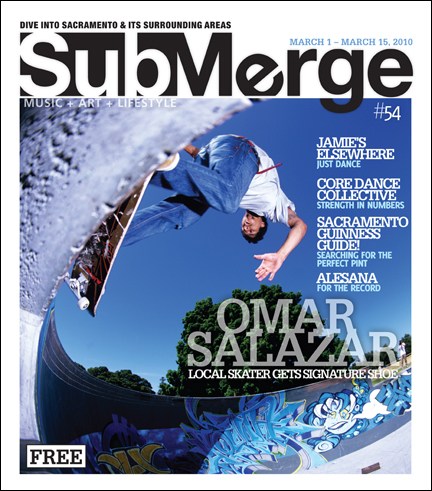
Cover photo by Jonathan Humphries
It’s Gotta Be the Shoes
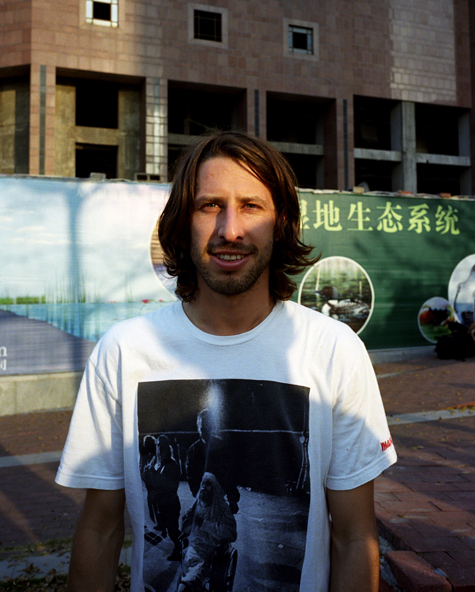
In 2005, Nike dug their fingers deep into the world of skateboarding by releasing a signature shoe by Paul Rodriguez, poster boy for the Nike SB campaign. Four years later, after compiling a team of remarkable talent—Brian Anderson and Omar Salazar to name just two—the next in line was Stefan Janoski who joined the roster in 2005. A Sacramento resident who hails from the nearby city of Vacaville, Janoski is one of the nicest guys in skateboarding and when you see him on the board it’s immediately clear why Nike has chosen him for their next signature shoe release.
Janoski’s style is fluid, always landing tricks over the bolts whether he’s destroying handrails or whipping out his signature 360 flips. His stylized version of the trick captivated youths around the world when Transworld Skateboarding released a how-to video of Janoski explaining the basics of 360 flips. In charismatic fashion, he performed the stunt on the street, in the skate shop and even at the grocery store while picking up some Cocoa Puffs. In two years time, the video has had over 2 million views and has made him into a recognizable face in the skateboard community here in the U.S. and especially abroad. Celebrity isn’t the best adjective to describe Janoski, though. Genuine might be more appropriate as it best describes his infectious personality, his passion for skateboarding and his outlook on life.
Janoski was born to ride a skateboard and at 29—his 30th birthday lands in July—he’s skating better than ever. For him, age is just a number.
“I feel like I’m 17.” He says. “Thirty-three will come around and I’ll still be doing the same thing. That’s pretty cool.”
Pretty cool indeed considering the fact that skateboarding is centered on youth culture. The average age of the Nike SB team is 31 (its senior member Lance Mountain is 45). It seems that age and experience were deciding factors in the selection process, but then there’s that Paul Rodriguez guy. At 24, he’s the youngest skater on the team, and subsequently the first to receive a signature shoe. But that was then and Janoski is now and he’s excited for the release of his shoe in early May.
You have a shoe coming out for Nike pretty soon. Is that a really important landmark in your career or does it just feel like a natural progression for you?
I guess it’s sort of a landmark just because I’ve never had a shoe, and it’s pretty common nowadays for people to have a shoe. It’s kind of taken me a long time, just because I’ve never really been set at a company where I really wanted to get that deep and involved and stick around for that long. So usually I’ll talk about having a shoe with a company, and then I get cold feet and don’t really want to stay there.
You have commitment issues?
Yeah [laughs]. It’s pretty cool, though, that I’m finally getting a shoe and also that Nike is finally open to giving people shoes. They’ve always had Paul Rodriguez, who has a shoe, and he was the only one.
Why was it like that?
I’m not sure exactly. I think they were trying to make it a really big deal or”¦I think what they realized is that they have to expand more. There’s a lot skaters out there nowadays, so to really stay in skating they have to have more than one person representing. It’s pretty cool. I’m excited because it’s a shoe I really like.
When does the shoe come out?
They come out on May 8.
How much input did you have in the design and construction of your pro shoe?
A lot of input actually, I had total input. I don’t know if they expected me to get as involved as I did. At first they had samples and prototypes of other shoes already, but it wasn’t what I was going for. So then we started, me and this guy James, from scratch. I brought in a bunch of shoes and kept telling them what I wanted.
You’d bring in examples of other shoes that you liked or what?
I’d bring in a shoe and say that I like the toe on this shoe, and I like the lace hole on this shoe and the tongue on this one—put them all together. I think I had an old Vans a Sperry Topsider and a Converse All-Star. They wanted to use a cup sole at first, which is like a Dunk or a normal sneaker, but it just wasn’t really getting the shape that I wanted. It took a really long time, because we did other stuff first and so this shoe didn’t come around for a while. But then once the prototype came about, it was the best.
That’s surprising, because it seems like Nike would be more overbearing with the product that they are putting out.
I’m a little bit of”¦ If someone’s going to give me a shoe, I’m going to get like, “It’s my shoe!”
Oh, so you’re a bit of a diva?
I don’t know. I just really care. If I’m going to have it be mine, then I want it to really be mine. I don’t have a problem not having a shoe, if it’s not going to be what I want. It sucks to have something with your signature and then hate it. At first they fought it because Nike doesn’t really have this style of shoe. They have everything else and that’s the main reason I wanted it to look like that.
How does the pro shoe thing with Nike work? It looks like from the video footage I’ve seen you’re able to skate it for a while before it comes out. Is there like some sort of test run period?
They’ve been around. I’ve had them for a year, I think. I actually wear the sample size, which is a 9.

Sample size?
Every shoe’s prototype is made in a sample first, but all samples are a size 9. So I was able to wear my shoe way before they made a sample just for me. I’ve only skated in two pairs that weren’t samples.
How do they skate?
Actually, they are 10-times better than the sample. They’re so much more comfortable. They’re quality. Not only are they a cool shoe to wear, but they’re exactly what I want to skate in.
You live in Sacramento, but I know that you are originally from Vacaville. Most people I meet talk a load of shit about that place, but you put the city on your shoe! Are you getting some serious Vacaville love for that? Have they given you the key to the city or what?
No! I don’t know if Vacaville even knows about it. I probably know three people in Vacaville. Maybe five if you count my parents, so”¦yeah.
So, there are no strong ties to Vacaville then?
It’s a joke for me because people really have hometown pride and like to represent where they’re from. People from San Jose are like, “Yo, San Jose is the best! Fuck!” I don’t know, I think it makes it even funnier that I have a shoe with Nike and it says Vacaville. Vacaville is a place that you grow up in and you’re supposed to leave. It’s a big accomplishment to not be there anymore.
But depending on who you talk to, the same thing can be said about Sacramento. Why stay in Sacramento?
For me it’s a home base type of thing. I travel so much and Sacramento is so mellow, there’s no traffic and it’s so quiet. I can come here and just hide out and go skate with Brandon Biebel and those guys. It’s just a hibernation place for me now. I’m traveling constantly and waking up in a hotel in some city somewhere and going skating everyday. So when I come home, it’s hard to wake up early and say, “I’m going to go skating and eat shit all day.”
From what I’ve read, you’re not too into the competition circuit. In fact you don’t place all that well! Is it because you just don’t care all that much? Why do some skaters love it and others like you just not get into it?
I mean, I’ll enter a contest, but it’s hard for me to really care; to really go out there and try to put a run together and work really hard! Contests are an entirely different way of thinking about skating. To me, it’s a way to make money off skateboarding. People win a lot of money in contests but I don’t think that it really has anything to do with skateboarding. It’s a way for people who are consistent and really like it to go and be competitive and win some money and all that. But it’s the smallest percentage of anything that has to do with skateboarding. Most people started skateboarding for the exact opposite reasons. They weren’t competitive, they didn’t like sports and they just wanted to go out and have fun and not stress. I enter contests and if I win a little bit of money, yay! But if I totally fucking lose, then it’s like, “Oh well.” When I started, you didn’t train or practice skateboarding for a big match, you just went skating everyday. Some days, maybe you’re just sitting around on a red curb all day just bullshitting with your friends, you know?
How is the swine flu affecting skateboarding?
I don’t know. I had bacon yesterday. I think it’s a rumor! Isn’t it just on the East Coast? Whatever, it’s population control.