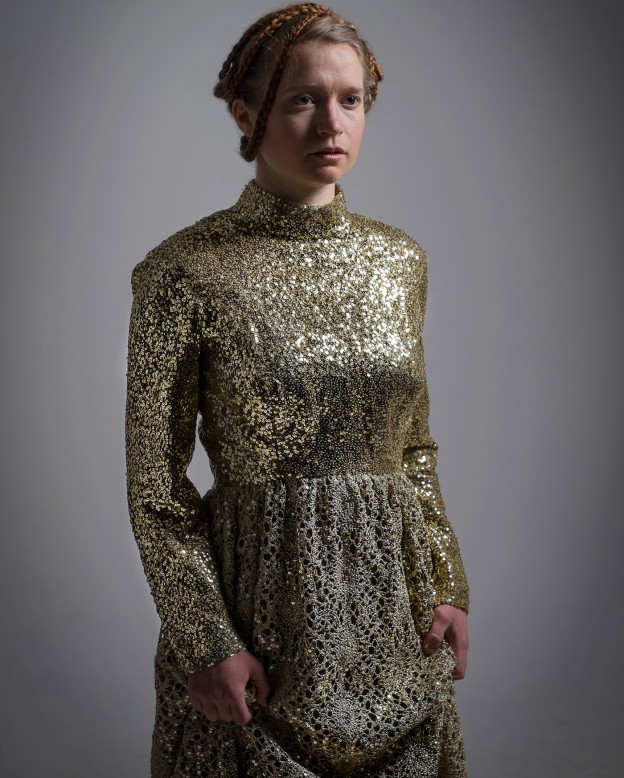
There is a quality to Molly Raney’s music that approaches an actual, workaday magic far nearer than most artists come close to. Songs such as “Fanatical Bird Dance” flit through the mind’s vision like a loosed sprite, exuberant after years of confinement. Others are shaped of a markedly different vapor, such as “Love Song for the 21st Century,” which evokes the forlorn plight of a single flame struggling to gain hold in a dripping glacial cavern. In between is the full spectrum of joy and despair, naiveté and jadedness, recklessness and refinement, that paints a portrayal of an artist willing to reveal the innermost.
One of the possible origin stories for the Olympia-based Davis native comes down to a girl and her doll, the “poppet” of her namesake. The word itself, old-world in origin, carries with it a slew of meanings: diminutive plaything; sweet little girl; an effigy used for conjuring and transference of power. Over the course of her seven years as Poppet, Raney has embodied all three concepts in her songwriting and uniquely emotive performance style, but in the past year, her role as conjurer and conduit have come strikingly to the forefront. The transition is most evident on last summer’s Desolation Lovesongs, a brief shot of two heart-wrenching original songs paired with two powerful covers of older works. A rendition of the traditional folk ballad “Silver Dagger” is a fittingly piercing work that may be among the most powerful versions recorded. After listening to this, it is clear that a new Poppet is arriving. Petite delights give way to ponderous travails, like a sun the size of the moon being replaced by a moon the size of the sun. While themes of joy and wonder will never be left behind, the palette has expanded for good.
It may not have been the most expected turn of events following her 2014 full-length debut, the effervescent The Blue Sky is Always Blue, but the change is fully organic; a period of troubled relationships, a dark winter spent in Berlin (during which she managed a 40-person choir) and a conscious decision to draw upon her years of classical training have set Raney on a clear trajectory; with several albums waiting in the wings and an upcoming tour on both coasts, she is also well equipped for the journey.
When we last met her in the summer of 2014, Poppet was rounding out an iteration of the musical project Pregnant, putting her solo career on hold and diving into the joys of collaboration. This summer, she’ll be touring with another performer, Nina Joly, a choreographer who recently appeared on The Late Show with David Letterman alongside indie rockers Foxygen. The journey kicks off here in Sacramento at the R Street Block Party on May 21, 2016.
We recently connected with Raney to talk about her artistic beginnings, the challenge of performing one’s deepest feelings, and how to find strength from the most disheartening moments. We learned that, however finite the human heart may seem, it is more than capable of creating something lasting.
Can you pinpoint the moment at which the concept of Poppet first appeared?
It was probably the summer of 2008 that I took a class to become a DJ at KDVS in Davis. I was thinking about my DJ name, and I always wanted it to be Poppet, which I took from this little pilgrim doll that I’ve had since I was 12. It’s very simple—it has no hair—for some reason I just felt an affinity for it. Several months later, when I was going to all these house shows in town, and seeing this really supportive community; all my friends were in bands or making music, and it opened up a new perspective. Up until that point, I just figured there was no way I could write music because it was so complicated, because the training that I was raised in was so intensive and imposing. Then one of my friends from the radio station made me a mix; one of the first tracks was “Walking the Cow” by Daniel Johnston. I was listening to that track, and all of a sudden, I had a song to write. I rushed to my computer and immediately started writing my first song as Poppet.
There seems to be a major change in your sound over the last couple of releases since your debut. Was there a conscious decision to switch styles?
It was a pretty conscious shift. When I first started writing music for Poppet, it was very much this childlike, playful, more simplistic persona. I was trying to get away from that intense classical background that I had. I wanted to do my own thing, far away from anything I’d been doing before. I’ve only very slowly come back around to appreciating and utilizing my training, because I was so fortunate in being able to do that. The other factor behind the shift is that I was in this relationship—the next album that’s being mastered is about its rise and fall. After it had all gone south, I received a letter from my ex. He basically told me that my persona was fake—Poppet was something that I was trying to be, that I wasn’t really. That was so offensive to me—Poppet really is this very inner, emotional, tumultuous part of myself that’s being projected on a massive spectrum, so to have someone tell me that it wasn’t true to myself was pretty harsh. But after that, my music did become less ironic and less funny—less fiddling around. It became very seriously trying to cope with my struggles.
Have you gotten a lot of feedback on the style change?
A lot of positive feedback. I haven’t run into anyone who was like, “Oh, I wish you would just go back to being really facetious.” [Laughs] The reactions I get are much stronger like, “Wow, that really hit me hard,” or “Wow, that really caused me to think about things I’ve been going through in my life,” “I relate to that,” “I was crying” or “I was afraid of you” [laughs]. I love those intense reactions. My number one goal is to make those deep, powerful emotional connections with people.
You are known for fairly elaborate costumes and idiosyncratic performance style. Does it often tie in with the song, or are they mostly expressions unto themselves?
They’re more expressions unto themselves, I’d say. It can go both ways—for instance, in the beginning of my show tonight, I’m wearing a very gaudy outfit that’s very ornate. But on the other hand, I’m concealing myself with a mask and singing about being a complete failure. I like having those two things go against each other. I would say “ornate” is a good descriptor for a lot of my music, as well. I really love the baroque era of classical music, and totally, gaudiness is part of that. When you think about baroque architecture, there’s all these swirls, and baroque music is so complex, filled with all these trills and ornaments, so I definitely associate with that strongly. I love the little ornaments.
What music has been formative for you recently?
I’ve always loved Kate Bush. The only bumper sticker I’ve ever had that I got recently is “Kate Bush ‘16.” My friend Briana Marela, I’ve been listening to her album, All Around Us. I just discovered a woman Briana toured with—Jenny Hval. She’s also pretty fascinating. I love St. Vincent—the past year or two I’ve been listening to her newest album, like hundreds of times. Her arrangements are almost perfect. Then the most recent Tune-Yards album, Nikki Nack. She’s [Merrill Garbus, Tune-Yards frontwoman] remarkable, because you can just hear her struggles so much. It’s so human and so relatable. Her album is dark, but there’s so much great energy in it at the same time.

Molly Raney and Nina Joly
Has working with Nina Joly changed your performances considerably?
The thing that Nina does, she just amplifies the emotional content of the songs by 50 percent. It’s crazy because I’m already quite emotional when I perform, but having some of the burden of the movement, or even a few musical elements taken off my shoulders just allows me to step into the content of the songs that much more. We’ve spent many, many hours practicing. In the past I haven’t been able to do that, so its going to be much more refined, and I’m hoping way more powerful.
One line that stood out on Desolation Lovesongs is “It’s the 21st Century, love is worthless.” What do you think of that statement?
In a way, Desolation Lovesongs is about looking at love in a very defeatist manner. Is a human heart truly infinite, or is it finite? Is love worthless, or is it worth the struggle?
I feel like we’re so bombarded with all this different information with the Internet, and it causes us to be more apathetic. I’m saying it as a half-joke; of course, I don’t really believe that love is worthless, though that line does recur in the next album, sort of the center of it.
However, I’m at a good place in my life now, so there’s the irony on sitting on all of this music with such a heavy content. Nevertheless, it’s still all a part of me.
Check out Poppet as part of the R Street Block Party and Makers Mart on May 21, 2016. WAL Public Market will be taking over R Street between 10th and 12th streets in Sacramento. There will be music, live art, local vendors, food, a kids zone and so much more. The event is free and lasts from 3–8 p.m. For more info, go to Walpublicmarket.com and click events, or check out Facebook.com/walpublicmarket.
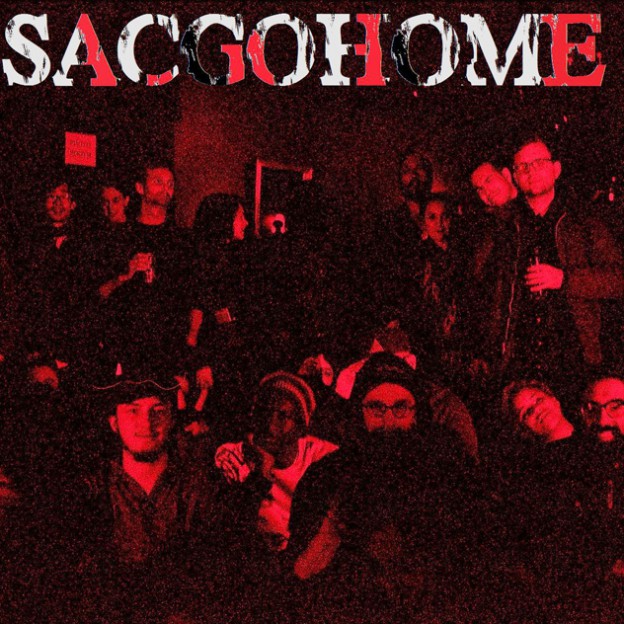
When the beloved and much too-short-lived Midtown venue Witch Room (ex-Bows and Arrows) shut down late last year, they sure did go out with a bang! “Sac Go Home Fest” was an epic, two-day, mostly local music free-for-all, and if you were there for any of it, you know how special the vibe in the room was. It was a little bit celebratory, a little bit mournful, with a shit ton of great music and craft beer to wash down the bitter feelings. If you weren’t there for some dumb reason, the next best thing would be to listen to sound guy Drew Walker’s live compilation album that he recorded during the fest. The comp, which is available for free right now online at Sacgohomefest.bandcamp.com, features 20 live recordings from locally tied bands like The Kelps, Lite Brite, Honyock, Pregnant, Appetite, Dog Party, Instagon, Musical Charis, PETS, DoofyDoo (Walker’s project) and a bunch of others. If you’re a local music nerd like us here at Submerge, looking down the list of tracks might give you a little ADD, as we really just wanted to listen to all the damn songs at the same damn time. “I really appreciate every band that took part,” Walker (who also plays in the rad local band Gentleman Surfer) recently wrote on Facebook. “This is definitely one of my favorite projects ever.” We’d like to thank Walker for putting this thing together, because years from now we’ll still be able to listen back to this live album recorded at Witch Room and remember the days the venue was alive and well. RIP, Witch, you’ll always be missed!
Pop alchemist Daniel Trudeau of Pregnant caps first decade with UK Tour and new album,Inconvenience
Whether by prophecy or design, Placerville’s Pregnant has managed to craft a body of work that lives up to its name. Its songs are open-ended pop symphonies captured in utero, without true beginnings or ends—kicking, stirring, filled with ideas that promise to crystallize at any moment. This isn’t to say at all that the music is incomplete; rather, it’s a living thing, dynamic.
For a good metaphor, picture this: dozens of musical motifs swimming along together, like a school of fish in a stream. Listening to a Pregnant record drops you right in the center. It’s a refreshing and bewildering experience; even if one is disoriented at first, one eventually slips into the current, finding the principle groove that propels the songs forward with a remarkably unconventional pop sensibility. You almost get the feeling that the music keeps changing every time you play it, the brilliant hooks and melodies blooming over multiple listens, as if they’re gestating in your mind.
There is a clear pattern of this growth throughout Pregnant’s discography, up to and including this year’s short-but-sweet LP, Inconvenience. The new work is as much of a headphone trip as ever—awash in sampladelic production, overlapping motifs and reverberant vocals that sit low in the mix—but somehow more assured, contented. Some of that is owed to the smart usage of samples, jazzy saxophone flourishes and piano riffs that hook the listener and provide structure to traverse the various soundscapes; and some of it is brought on by unavoidable changes in the artist’s life.
Between 2004 and the present, lead musician and project mastermind Daniel Trudeau has gone through coming-of-age, expectant fatherhood, divorce and single fatherhood, with countless bursts of professional and artistic development in between. Since last year’s release, Pottery Mills, was recorded in the midst of a breakup, Trudeau has taken up the mantle of artist-on-commission, honing his songwriting chops with an ongoing project he calls Your Song, in which he writes and records personalized tracks for individuals willing to donate at least $5. So far, he’s racked up a whopping 65 tracks, putting Inconvenience almost six albums ahead of Mills in terms of output.
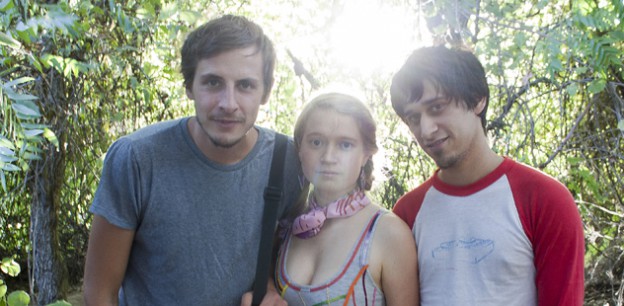
Content-wise, Trudeau has also moved forward. With the help of a fresh lineup, he’s evaluating the things that matter most: family, friendship and the freedom that can only come with self-knowledge. “Lyrically, [Inconvenience] is about knowing who you are by yourself,” says Trudeau. This focus on personal reflection may have paid off in the form of his project’s most realized work to date. As of now, the project is fronted by Trudeau, with additional instrumentation and vocals by hometown buddy Daniel Ramirez and Davis native Molly Raney, who is a talent in her own right as Poppet, an electronic pop artist and one-woman show.
As a live act, the trio become a kind of living sound exhibit, committing all their energy into the array of samplers, drum pads, effects pedals, MIDI-loops and microphones at their disposal. It’s not a rock show, but there’s something quite rewarding in hearing the lush, complex sound of their records reproduced seemingly out of thin air, filling the corners of any living room, stage venue or theater with music that’s as much visual as aural.
I met Trudeau and Raney at a quiet cafe across from The Witch Room, a venue they’ll be filling with sound next week alongside fellow pop explorers TV Girl and Brothertiger. They seem like kind, earnest people who prefer their art complicated and their friendships easygoing. They graciously offered some time to speak about their lives, their art, the boundaries of pop and the business of making their dreams move forward.

The Pregnant project has now been around 10 years. What was its inception? What ideas or hopes did you have for it at the time? How’d you come up with the name, again?
Daniel Trudeau: It was originally just me, making electronic beats and finding how pleasantly simple it was to make it sound like something other than electronic music. I always wanted it to be a bunch of people collaborating—that’s what it was going to be initially—Pregnant as a project “conceiving” with a bunch of different people. By now, there’s been a revolving cast of other people coming in and helping with it. Some of the members have been more entitled to it, some of them more under my guidance.
Pregnant is the most adequate name for this project. I’m constantly changing and giving birth to new ideas. Of course, I get all the “pregnant” jokes too, like “When are you expecting?”
Since Pregnant has been around for such a huge portion of your life, do you think that it’s come to have a life of its own? Do you think before recording, “What is going to make this a Pregnant album”?
DT: Now I tend to think that Pregnant just means anything put out. Although it does have a distinct sound, I’m trying to keep it changing. Genre-flipping is really important to me, because I hate when things get stagnant and don’t go anywhere.
This one’s for Molly: How long have you been involved with Pregnant?
Molly Raney: Since last November, pretty much. It hasn’t been long, but I’ve known Dan for five years, and I’ve always been a fan of Pregnant. It’s one of the projects that I’m most excited about participating in. I feel like it’s the future of music.
DT: Aww…and since she’s joined it’s been super good, too. She’s bumped it up a notch! As far as live performances go, it’s been so much better.
Could you tell us about the Your Song project? Has that changed your songwriting process?
DT: People donate to Pregnant, about $7 or more, and I’ll write them their own song. It sucks, because it’s not that much money in the long run, but it’s been really good practice with sample-oriented music, and writing lyrics for people I don’t even know sometimes. It’s been fun, and the thing about that project is that it’s not songs about how I’m feeling, it’s songs about other people. So it detaches the ego from the songs, and it’s made it a lot easier to understand how to write songs that don’t have that imposing ego that a lot of songs have when you’re a solo artist. I do a new Your Song every two weeks if I have the time. There’s 65 now, so I’ve spent a lot of time just zoning in on those. It represents what I’m trying to put out there about myself: “Hey! I make music! I’ll be doing this no matter what!” Plus, I’ve made some mad friendships from doing them.
You’ve said before that Inconvenience is about relationships and working through the inconveniences of daily life. How would you explain that?
DT: The album is just about how inconvenient everything is, literally every single thing. It’s hard to live, it’s hard to do anything really, but it’s also a tool for being able to understand yourself, how to rise above the normal things that stress us out in life. I went through a really powerful breakup where I had to figure out who I was, and that’s been the major theme for much of my work lately.
So if we match up the chronology of your work with that of your personal life, when did this major change take place?
DT: Definitely around the last album, Pottery Mills.
MR: That’s like the break-up album, isn’t it?
DT: Yeah, all the last three albums including the new one. Life Hard: I Try was recorded right before my breakup, and it wasn’t just a breakup, it was a breakup with a child, so it’s been a real crazy, “Holy Shit!” scenario. Pottery Mills was all about sinking into depression over that, and I feel like Inconvenience is all about becoming comfortable in life after the fact.
Is there anything about living in the foothills that does something for your music versus, say, living in Sacramento or Oakland or San Francisco?
DT: No. It’s not like I’m making music out in the woods, I’m just in a room for the most part, and the room could be in L.A. just as well as it could be in Placerville. But as far as being more healthy-minded, I like living there, because it’s more eclectic. The people there are more eclectic. I mean, I hang out with everyone from 60-year-olds to 19-year-olds. There’s no age bias. That, and I’ve lived there for a long time. The only thing that would be beneficial to living in the foothills in terms of actual music would be, I guess you feel more entitled to be making music. It’s different than Oakland or San Francisco or L.A., where you’re overrun by art, everywhere.
What fuels you both in terms of influences? Do you put any of them into your work?
MR: Kate Bush is probably my number-one favorite artist. I have a radio show at KDVS that’s actually named after one of her songs, “This Woman’s Work.” It’s mostly solo female artists of all different genres, but a lot of electronic.
DT: So much stuff, man. For samples, I’ve been using a lot of the same stuff for the past year. Cocteau Twins, Prince, classical composers like Stravinsky, Debussy… MF Doom, Moondog, Miles Davis, Fleetwood Mac, anything, really. Anything that’s legitimate, to me. But when it comes to sampling, it doesn’t really have to be legit. If there’s a good drum or bass that I need in a Weird Al Yankovic song, then I have to use it.
We talked a bit about how relationships have been the inspiration for a lot of your albums. Has having a daughter or raising a child changed the way you approach the creative process?
DT: It hasn’t at all, actually. When my daughter was first born, I definitely felt blasted with a big, heavy heart. I made a song for her, that I put out on Regional Music, called “Wiff of Father.”
MR: I did a cover of that one as Poppet. I love that song so much!
DT: She’s a very inspiring little baby, for sure. She’s a toddler at this point, and she’s like a mini-me, with endless funny, weird things to say. She’s definitely made things more light-hearted as far as life goes, but the music has always remained its own thing for the most part. She’s there, and she’s my babe. She might be recording her own album soon.
So what’s going on in terms of the different releases you have out?
DT: Inconvenience is available on Porch Party records, which is a fresh new label out of Long Beach. We have another tape release of the Your Song donations that I mentioned earlier. It’s the first 35 tracks, which will be released on four different tapes. You can pick and choose, or buy all four. Also, all the remixes I’ve done over the last three years have been released on tape by Quantum Wampum records out of Providence, Rhode Island. Finally we have a 12-inch release coming out on Mush Records that I can’t say that much about. It’s been a two-year-long media project that took a long time to create, and will be coming out in fall or winter of this year. That one’s hyper-weird and secret.
Pregnant will be featured alongside Brothertiger and TV Girl on Sunday, July 13, 2014 at The Witch Room. To hear some of their mind-bendingly good pop, you can visit Pregnant.bandcamp.com or check out some of Trudeau’s music on Soundcloud or Spotify. Inconvenience is currently out on Porch Party Records. You can also learn more about Poppet at Poppet.us.

Bows & Arrows secondhand hipster apparel boutique is not known for its live entertainment, but the dozen or so hip enough to be in the know got a brief, but aurally excitable performance from Placerville’s Pregnant Dec. 3.
Formerly grid kids, Pregnant moved out to the sticks, possibly to their greatest benefit. Their album, Liquidation on Swans, is a complicated experience. Bountiful in picturesque collages, the record will rack your brain in wonderment as to where Daniel Trudeau found these sultry sounds—which is why seeing Pregnant perform is such an enlightening delight.
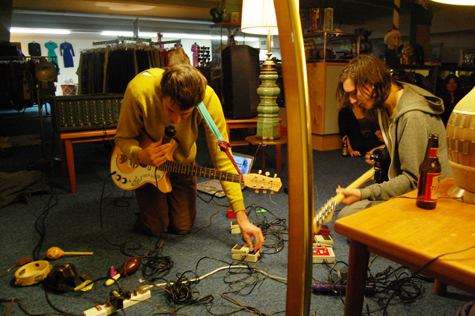
The Bows & Arrows atmosphere complemented Trudeau and his guitar-strumming assistant, Michael Saalman. The lights were turned off except in the small floor space, cleared for their instruments. The band played in the lighting of kitschy lamps for sale, while onlookers sat on the floor, giving these living room scientists a fitting workspace to kneel among their array of pedals and build each song from scratch.
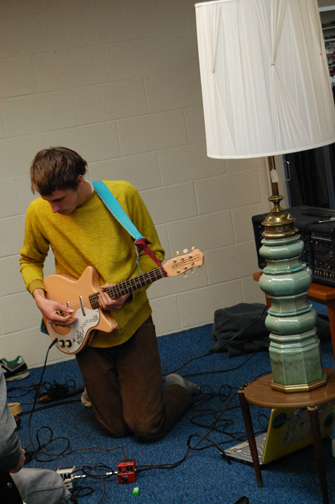
The joy of watching Pregnant comes precisely from that. Saalman noodled at his guitar endlessly, while Trudeau methodically looped each piece of his instrumentation into the fold. Trudeau beatboxed, pitch shifted his voice into kooky layers and strummed a wooden lizard to complete the steps of “Do That.” He created bass from rhythmically breathing heavily into the microphone, tweaked a kazoo into a swarm-of-bees buzz, and skronked on a saxophone, proving his talents beyond the junkyard noise. The scatter of percussion tools on the floor and the effects pedals were all utilized to steadily bring each song to fruition. The sound was reminiscent of Brooklyn-based noise bands like Say No! To Architecture, GDFX and Zs. However, Pregnant is inherently California freak folk. Those Brooklyn kids are all harsh noise from buzz saw reverb and nose bleeds, while Pregnant is countrified and tender. Birds chirp, wind chimes made of bones jingle and the warmth is candid.
There’s nothing to fear in a Pregnant record and that kindness is present in their performance. The duo never acknowledged the audience, far too engulfed in their process, but once they finished, they thanked us, awkwardly bowed, locked hands and dry humped a lamp.
Pregnant plays traditional venues, but if you have the chance, see them in a living room, a boutique or a basement. Make sure there’s carpet and a place to kneel. It’s best to be as comfortable as the musicians, which means removing your shoes and letting those toes wiggle a little.