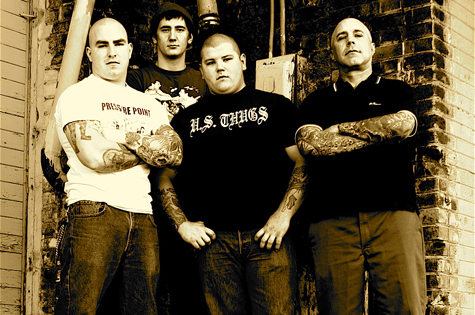
Madhouse Disciples proof positive that hard work, and doing what you love, always pay off
Despite what you may have learned from watching the troglodytes on The Jersey Shore, working for a living hasn’t completely gone out of style. Most of you probably do it every day, schlepping from job to job, making ends meet–you know, basically working-class life in America. The members of the Sacramento-based punk band Madhouse Disciples do it too, but unlike many of us, in their off hours, they fucking rock.
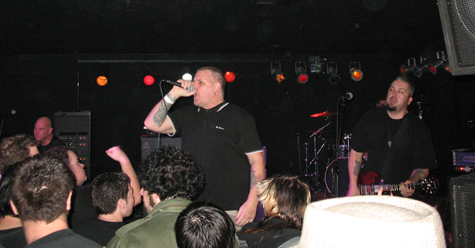
Starting as a three-piece, the street rock/Oi! band formed in 2003. In that time, members have come and gone, but as of now Madhouse Disciples stands strong as a tight-knit four-piece ready, at long last, to release their debut full-length album. Mike Montero, Madhouse Disciples’ drummer, is the sole founding member of the group. But he says no matter how many personnel shakeups there may have been, he never felt the need to stray from the band he formed or playing the music he loves.
“We play street rock ‘n’ roll, Oi!,” Montero says. “That’s what I love, that’s what I’ve grown up on. The people who have came and gone in this band were also into that same thing. That’s one thing that all of our members have shared. And the name, I wouldn’t change it because I’ve been doing it since I was 16. It’s my baby.”
When the band parted ways with its vocalist in 2007, Montero turned to his cousin Brian Rawlins to fill in, even though he wasn’t the most obvious choice. Though Montero had fostered Rawlins’ acceptance into the Traditional Skinhead (read: working class, pro-union, anti-racism) subculture, and Rawlins was an avid punk show-goer, he had never sung before, at least not in front of a crowd.
“The only times I’d sang before that was in the shower or in front of family,” Rawlins admits. “So it was something I wasn’t very comfortable with.”
Rawlins came to join Madhouse Disciples under peculiar circumstances. Around the time the band’s singer had left the band, Rawlins was out on tour with venerable Sacramento punks Pressure Point, working as a roadie. One night in Elko, Nev., Mike Erickson, Pressure Point’s frontman, blindsided Rawlins with a severe ultimatum.
“Mike and some of the other guys were telling me that I had to do karaoke,” Rawlins recalls. “I was like, no, I’m not really comfortable doing that… Mike told me, ‘If you’re not going to do it, we’re leaving you here and you’ll have to find your own way back.’”
The threat of being abandoned in the middle of Nevada was all the motivation Rawlins needed. He nervously belted out a rendition of “Fortunate Son” by Creedence Clearwater Revival. However, his performance left enough of an impression on Erickson that he phoned Montero and told him he should consider Rawlins for Madhouse Disciples’ vacated vocalist position. Strangely enough, the thought had already crossed Montero’s mind.
“I already wanted to try Brian out because I’d known him forever and just thought it’d be fun, but then I heard he actually could sing,” Montero says. “Mike told me about that, and it just kind of clicked.”
With a solid group, the band went into the studio to record its first full-length album. Fittingly, Erickson served as producer. Montero says that financial concerns kept the LP from seeing the light of day, but in January, the band plans to finally release the record. Not only was he a first-time singer, but Rawlins also wrote lyrics for just about every song on the record–also a new experience for him. He did what any good writer would and just pulled from his own experiences.
“I write about things like working-class ethics, unity and anti-racism. I also write about things on a personal level that can also touch other people,” he says. “Coming from divorced parents, who also had a heavy drug abuse background, there’s stuff that I learned from that. It’s not a path I have to follow.”
At 12 tracks, the self-titled album is long on message, but also extremely entertaining–just good, honest rock ‘n’ roll with searing lead guitar work courtesy of guitarist Tony Courtney. Who said having a conscience and having a good time had to be mutually exclusive? In separate interviews, Montero and Rawlins broke down for us their experiences working on their debut record as well as living in the punk rock subculture.
Mike Montero
Did you have an inkling that Brian would be a good vocalist, or was it just because you had a good relationship and thought it would be fun to have him in the band?
One, because we were related and I knew he was a solid dude. Two, if you’ve ever met Brian or know anyone who’s met Brian, he’s got more energy than any human being alive. I thought if nothing else, he would have great stage presence. That was the basis for me wanting to try him out.
You recorded your first full-length album coming out soon. You worked with Mike Erickson from Pressure Point to record this album. I know you did a split with Pressure Point before, but what was it like going into the studio with him to record your own album?
Mike is a great producer. He has an amazing ear for music. We spent a lot of time in pre-production. We played those songs over and over, to the point we didn’t have to think about it any more. Mike was a big part of that. He kept us motivated and going in the right direction as far as being militant about practicing and getting so good with those songs that we could play them in our sleep. As far as recording goes, Mike was producer and Eric Broyhill was the engineer. We recorded it at the Pus Cavern. Eric and Mike have been working together for years, and those two together are a deadly combination when it comes to making music. They know what it should sound like as far as tones and everything. Once we got in there, we let those two figure out the tones we were going for. We gave them a small amount of what we wanted. We wanted to sound more like an old rock ‘n’ roll record, and they knew what amps would sound good, what guitar combinations and stuff like that. It went like clockwork, really. It came together like it was meant to be.
As a drummer, have you had to adapt to each new player coming in?
Not so much. With the kind of straight-forward rock ‘n’ roll stuff we play, the drums aren’t really supposed to be super flashy. There’s not a whole lot to change. The drums are just the backbone. It’s nothing real fancy.
You’re doing the CD release at a house show. Do you prefer those over shows at venues?
The venue to me isn’t really the point so much. I prefer to play all-ages shows, where the younger kids can get into it and have a good time. It’s a good positive outlook. You play bar shows, and often times there are a lot of people sitting at the bar who don’t care about the music. They just want to get drunk, and that’s fine. Whatever, that’s cool. You want to get drunk, get drunk. Typically punk and Oi! subculture has been a youth subculture. It has a lot to do with the younger kids. All-ages venues are more preferable. Our bass player [Dirty D] owns a house that has a great big shop in the back, and it’s totally DIY. We put a stage and a PA in there, and it’s a cool thing where this is our thing.
How did you get involved in the Oi! subculture?
It was a natural transition for me. I was a punk rocker. I had crazy hair and all that stuff. It got to the point where, “I can’t find a job if I look crazy.” I didn’t change any of my values in that sense. This is what I am. This is what I believe. I’m extremely anti-racist. I can’t stand that shit, and I’m extremely working class. It comes from my lower middle-class upbringing. I was taught that you work hard for what you get. That’s one of those values that I kept with me.
Your music is a lot of fun to listen to, but there’s also the message behind it that comes through very strong. Is the enjoyment or the message more important to you?
It’s a double-edged sword. In my opinion, in punk rock and Oi! music, the message is always more important than the music. It’s not like this new fucking pop bullshit that comes out that has no message or anything to it. There are definitely things that need to be said, and I think Oi! and punk music is where that stuff is said more than in the mainstream.
Brian Rawlins
Mike said he was already thinking of asking you before he heard from Mike from Pressure Point about it. Were you aware of that at all?
A little bit, but not so much. We kind of joked about it. When their split CD with Pressure Point came out, I was like, “Dude, you should let me sing in your band,” and my cousin said, “No dude. We already have a singer. Sorry. You suck at singing.” I’ve known him my whole life, so he’s brutally honest with me, but it’s all in good fun.
How did you feel when you got off that karaoke stage? Did it make you realize that you wouldn’t mind singing for a band?
No, I was terrified, to be completely honest. I was nervous and extremely embarrassed. With my friends, we have a saying that ball-busting is a sign of endearment, and I was preparing myself to get handed a bag full of endearment, I guess you could say.
How is it for you now? You’ve been with the band for a while. Are you comfortable singing in front of people?
It’s weird. I still get nervous, but that’s one of those things, I guess. It depends on the person. I still get the jitters. I prefer not to eat before a show, but that’s the same way I was with sports growing up–playing football. I didn’t eat before games, because I knew I was going to throw up.
Sports and punk rock seem like two different worlds.
Polar opposites.
How did you move from one to the other?
Well, as far as sports went, I started playing when I was 7. I played football all the way up until I graduated. I found myself not going to parties in high school, because I just didn’t find myself getting along with the “jocks.” It wasn’t because I had a beef with them or I hated them, but I just didn’t fit in with them. They could tell I was not one of their upper middle class brethren. I was from a poor family, so it was definitely one of those class differences.
You worked with Mike from Pressure Point on this record. Was he a big influence for you heading into the band?
Going to Pressure Point shows sucked me in pretty hard. Watching those guys play was amazing. Everything he said in between songs, and reading the lyrics, spoke to me on a different level. That’s when I realized it was something that mimicked my life already. It was an easy thing to take part in.
And now you’re working with him on this record, so that must be a big thrill for you.
For Mike to produce us was really awesome. It was fun. And he’s actually someone I respect, so when he suggested something, I wasn’t like, “Uh, I know what I’m doing.” It was really nice, because I could listen to his point of view and perspective and take a different look at things. He’s been doing Pressure Point for over 15 years, and it’s like, of course I’m going to listen to him with respect and admiration. Any advice that he had, I listened to with open ears.
Mike, your cousin, was saying that you spent a lot of time practicing the songs in pre-production, and that Erickson was a big reason for that.
Huge. Before we went into production, he said that he wanted us to be able to play them forwards and backwards–know them so well that we could go and hit it the first time and then work on any little things we wanted to do. You’ve got musicians like Tony in the band, who’s an amazing guitar player. It was fun. Practicing with these guys has always been fun. It’s never been like work.
After Two Decades of Creating Music, Brian Hanover Collects No Dust
Words Anthony Giannotti | Photo Scot Stewart
Brian Hanover is most well known for his years fronting the Sacramento-based street punk band Hanover Saints. After seven U.S. tours, two full-length records, four EPs and nearly 10 years playing together, Hanover Saints called it quits in 2005. Fast forward to 2010: the 35-year-old is about to release his second solo album, publish a book of his writings, continue running his own screen-printing business and still finds time for his family. Brian’s mindset fully embodies the D.I.Y. lifestyle, going as far as to release his solo albums on his own record label Revolution Ink Records, casually saying, “I work hard, it’s just what I do; I don’t know anything else.”
This impressive work ethic has served him well in nearly two decades of playing music. Brian slyly smirks while saying, “I’ll always play music because my mind won’t let me stop writing songs!” His easygoing demeanor and friendly attitude make it hard to not to like him. The depth and honesty of his songs allow him to win over audiences with just an acoustic guitar and harmonica. Brian likes to involve the fans at his live performances by leaving a tambourine out for people to play. He laughs as he says, “You just hope whoever grabs it at least has a little rhythm.”
He also does something a lot of older musician don’t do. He doesn’t rely on his past successes. “I want to stay relevant,” Hanover says. “I don’t want to be the crusty old guy that doesn’t know what the kids are listening to.” I had a chance to catch up with Hanover over a few pints of Guinness at one of my favorite Sacramento dive bars, The Press Club.
Thanks for meeting up with me here; I know you’re a busy guy.
No problem, thank you. I’ve only been here a couple times. One of the first times I came to The Press Club was in the early ’90s to see U.S. Bombs. It was a crazy night; I was over there behind Townhouse smoking and some kid got stabbed at the show!
So you’ve been around the Sacramento punk scene a long time.
In 1984 I was skating a launch ramp with some friends, and someone down the street was blaring 7 Seconds Walk Together Rock Together. Later that day I made my mom drive me to the record store—back then there was Dimple, Record Factory and of course Tower. I got my first punk records that day, 7 Seconds’ The Crew, and Black Flag’s Damaged. I started going to local shows in the mid-’80s. I even met my wife at a Suicidal Tendencies show back when Big Shots was still open.
Yeah congratulations on the 10-year wedding anniversary. You just got back from a little trip?
Thanks, it’s been a good 10 years. We went up to wine country for the weekend.
What’s it like trying to balance your own business, wife, kid and being a recording/touring musician?
[Laughs] There really is no balance; I think it’s priorities for sure. My wife knew what she was getting into. This is just what I do, and I was already in a band when we got together. One thing that really strengthens us as a couple is being able to do our own thing, it allows us to grow together, really surrounds us with love and grace, [laughs] a lot of grace.
Speaking of doing your own thing, I took a listen to the new release. It’s very good, quite the departure from the Hanover Saints”¦
Yeah some of it is. For this album I wanted to strip most of the songs down so I really only used an acoustic guitar, tambourine, harmonica and on a few songs electric guitar. All accept the fourth track; it actually was a Hanover Saints song that never made it on an album. It was right toward the end of it. I had already been writing solo stuff, and I brought it to practice when we were playing as a three-piece with Chris from Killing the Dream on bass.
Some of the songs on here have a real Johnny Cash/Bob Dylan singer/songwriter vibe jumping off them.
Each song is a little bit different from the other; they may have a common thread but I tried to get a large variety. Everything I sing about is all true stories, all personal experiences, kind of a Pete Seeger thing. I wanted to do this release differently because of all the different formats everything is coming out in. So the way I’m doing this release is in three volumes, every four months four more songs come out. The next volume is going to come out with a book I wrote and a coffee mug, because it all started with coffee and late-night rants for me.
How did the book come about?
Like I said, I was always at coffee shops writing. Some of the Hanover Saints lyrics I always really liked as standalone pieces. I had been cleaning out some old papers, and I found old poetry, short stories and some other stuff. I thought I’d like to publish it; I don’t know if it’s any good. Sometimes writers can think a little too much of themselves, think they’re a little bigger than life, but I went to a bookstore and picked up a book of poetry and one of the stanzas I turned to was literally four sentences. I thought, I can totally do this. It’s ridiculous.
Do you think it was the writing that attracted you to more of the acoustic style as opposed to staying in the punk rock genre?
Most of the Hanover Saints was written on acoustic or electric. It just depended on how I heard it in my head. One day I was playing the song “Bad Man” at home, Mike Erickson happened to be doing some work for me and heard it. He talked me into putting that song on Hanover Saints record Murdertown, which Pressure Point was producing. By the end of Hanover Saints I felt I had said everything that avenue would allow me to say. I really wanted to get that one on one connection with the audience. I definitely think there is a place for the loud thing. I’m always going to be into punk, and I’ll probably play it again, it’s just if you’ve said what you need to say for that part of your life I don’t feel the need to keep dragging that dead horse around.
Have you found that one-on-one connection?
I wanted to try getting up and doing a solo show but I was too afraid. Then in 2005 Kevin Seconds talked me into being on a bill with him. I just fell in love with it. Being able to play coffee shops, small bars, garages, living rooms and really some sketchy places is an entirely different, incredible, personal experience for me. You can get to know the people and the city you are playing in instead of rushing through to the next gig like when you’re in a full band. I’ve made some great friends all over the country playing solo.
You can get personal with Brian Hanover at the Blue Lamp March 17, 2010 for his 21 and older CD release or March 19, 2010 at 16th Street Café (The old Javalounge).
7Seconds, Youth Brigade, Pressure Point, Boats!, The Knockoffs
Shire Road Club “¢ Friday, Jan. 29, 2010
Words & Photos by Anthony Giannotti
When I heard about this show I was really excited for several reasons: First, I hadn’t seen some of the bands in almost 10 years; second, it showcased a wide cross-section of Sacramento punk rock talent; and third, it gave me a reason to get out of the grid and check out a new all-ages venue. So I made the trip all the way out to The Shire Road Club.
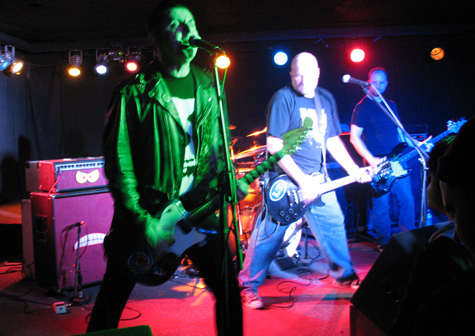
The Knockoffs
First up were The Knockoffs. The band consists of guys from other great Sacramento punk bands The Secretions and The No-Goodniks and Berkeley, Calif.’s Mr. T Experience. Right out of the gate these hometown heroes hit us with three-chord punk that would do The Ramones proud—songs chock-full of sing-alongs, power hooks and quirky choruses about girls. I found the drummer of this band to be very interesting; in fact I couldn’t take my eyes off him. Imagine if The Rock stopped taking steroids and played with the exact facial expression/drumming style of Ringo Starr circa 1964.
Next up was the pop punk trio Boats! The set started out with some equipment malfunction that caused the guitar player to miss some notes and forget chord changes. Anyone that has played in a touring band understands every show can’t be the best one you’ve ever played; you just move on and play better next time. These guys did have some catchy tunes. Similar to something you might hear on a late ’90s Screeching Weasel album, fun goofy three-chord punk. The bass player David blew me away, honestly one of the best young punk bass players I’ve seen in a long time.
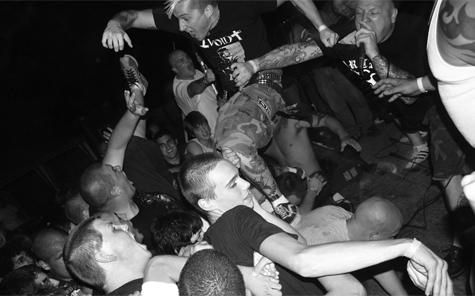
The third band, and arguably the best band on the bill, was Pressure Point. I really don’t know what else to say about these guys, they are just fantastic New York style hardcore punk. Apparently I was not the only person who felt this way because the previously motionless, expressionless crowd burst into a wild circle pit, fist-flying singing along to all the songs. These guys brought a little more musical complexity to the night, more than five chords per song and some flashy lead guitar. Pressure Point brought out an interesting observation; punks, skinheads and hardcore kids attended this show. Not a lot of other cities can boast such unity.
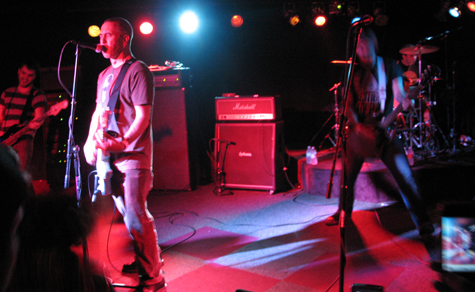
Youth Brigade
As soon as Youth Brigade hit the stage I was immediately unimpressed. Yeah I know, punk legends, been around forever, whatever. For some reason Shawn Stern (lead singer) had a problem with the majority of the audience not being born before his band started. He seemed to imply that we weren’t there so we don’t “get it.” This is the equivalent of Boss Hogg telling me I don’t “get” Dukes of Hazard because I wasn’t born in the south. I don’t see this in any other genre of music but for some reason some old punk rockers are ageists. Sorry for being younger than you. I don’t know what you want me to do about it. If you’ve seen the classic punk documentary Another State of Mind, you’ve seen modern day Youth Brigade. They still play teeth grinding aggressive ’80s style barking hardcore punk. Shawn is still singing about politics and playing the same power chords, I didn’t get the impression that he wanted to be there. He acted as if he was going through the motions, to get paid.
7Seconds
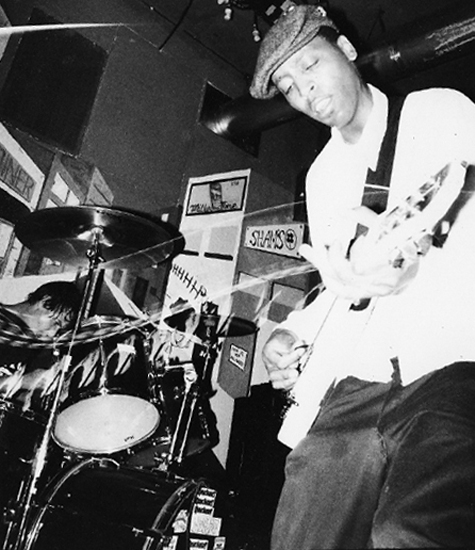
7Seconds was the last band to take the stage, they immediately kicked down the doors and tore the roof off. They played fast, loud, and hard. I was surprised Bobby didn’t break a string the way he slammed on that guitar. Steve Youth played about as complicated of a bass line as you can fit into a blazing fast punk song. I loved Kevin’s vocals, that distinct higher range is one of the things that has made 7Seconds so recognizable over there career. What an extraordinary band, they are celebrating there 30th anniversary so get out and see them!
All said and done it was a good night with very talented bands. It was a good reminder of what I love about punk rock. I hope Shire Road Club has more of these shows in store for us.
Pressure Point Celebrates Sweet 15
This year, Sacramento’s own street punk/Oi! prodigies Pressure Point will celebrate their 15th anniversary. An impressive feat in its own right—especially considering the tumultuous nature of the punk rock scene—what makes Pressure Point’s quinceañera even more notable is that they’ve managed to survive on their own terms. Though Pressure Point has shared stages with punk rock giants such as Rancid (Lars Frederiksen acted as their producer on two full-length albums and a 7-inch) the band has managed to survive, and thrive, in what lead singer/cofounder Mike Erickson calls an “underground within the underground.” To commemorate their 15th birthday, Pressure Point will release on Sept. 30 Get it Right, an anthology that re-imagines some of the group’s earlier material and includes a few new songs and covers. Before heading out on a tour that would take them to the Midwest and back, Mike met with Submerge to discuss the new release and the difficulties in bridging punk rock’s generation gap.
You’re heading out on tour pretty soon. Do you want to talk about that a little bit? Is it to promote the new album?
Sure. Honestly, one of the biggest reasons that I like to be in a band is that I get to travel, and it’s an unconventional way to see America. I see America through the eyes of people like me. It’s not a tour guide or a travel agent. I get to see this country through the eyes of people who are similar to me, who I enjoy being around, and have similar beliefs and philosophies. We’re not only touring to promote the record, but you know, it’s summer time. It’s a good excuse to get out and be with your friends and have a good time.
How have you seen the country change in the time you’ve been touring with Pressure Point?
In terms of the punk scene, the scene that I’m a part of, things have changed drastically since we started. There are still people like”¦Anti-Heroes and Agnostic Front—people that we met real early on who are still out there doing it and have the same beliefs and the same attitudes. But what I saw, with really good bands like Rancid—who were able to break through and bring what I consider legitimate punk rock to the masses—the aftermath of that was that every label wanted to get their own Rancid. They wanted to make even more money. They would get their carbon copies. They wanted to dumb them down. They would water them down, sweeten them up, so they could be more mass-produced. And there were some bands that were willing to play ball. When those bands did that, it watered down the punk scene at large and began to split it.
With the latest release, you guys are revisiting older material. What was that like for you guys?
A lot of the material was written by Kenny [guitar] and I really early on. When we started this band, we struggled to find the right fit with the different members because of the style we played. The approach we had and the type of politics we had were all really unconventional, and to be honest, kind of dangerous for this town. There weren’t a lot of promoters or record labels that were willing to work with us, and that was true all over the country. Pretty soon, we were able to connect and hook up and an underground within the underground developed. Because of all that, we always heard the songs a certain way when we wrote them, in our minds’ ear, but it never really came out on tape like we wanted them to. Over the years, we’ve had good friends and good band members and we’ve got the Nates [Hat and Mohawk, bass and drums respectively]. We’re turning 15 years old this year, and we wanted to celebrate that, so we went and revisited a lot of material, and now we were able to update it, refresh it and record it so it sounded the way we originally heard it.

Other than rerecording the songs, did you revamp them in any way?
That was a debate within the band. We decided that we were going to do the things we needed to do to make the songs better. Lyrically, I decided I’d leave the songs alone. There were a lot of lyrics that were really naïve when I wrote them. I wrote some of those songs in my early 20s, but I decided that they capture a time and a place and that I should just leave them alone. Musically, we altered and changed some of the songs.
Before you mentioned the songs you were doing were dangerous for the area. What did you mean by that?
Sacramento in the mid-’90s, the punk scene was kind of smoldering. It was suffering from a lot of things left over from the ’80s. Within the scene in the late ’80s, early ’90s, there were a lot of Nazi skinheads that were left over, and they were threatening the entire punk scene at large, so you had that violence and that danger, and then you had on the other side of it people like Kenny, people like me, who grew up in Sacramento lived in Sacramento, lived through that, and were battling, of course, against those kinds of notions. So for us being a straight up Oi! band, a street-punk band, a band that espoused a skinhead philosophy and attitude—of course a traditional one—a lot of promoters around here got scared. A lot of them said, “Oh, I don’t want that.” We were never ones to look at the problem and just sweep it under the rug. We confronted it head-on, recognized it and dealt with it. They were afraid there would be trouble at gigs, that if they put us on bills, it would draw them [Nazi skinheads] to shows. These guys were coming to shows anyway. We did our own shows, and now we have our own scene. It’s fresh and vibrant. We don’t have those same problems, we don’t have those same issues, and over the years, we were able to hook up with a lot of national acts that were really getting big, and if it wasn’t for them demanding that we get on bills, a lot of the promoters around here would not work with us.
For the new songs you wrote, could you talk about those lyrically?
One of the new songs on the record is “Fuck the Kids,” and it’s a hardcore song in the tradition of New York style or early ’80s style. The American landscape early on, there weren’t many divisions. When we went to shows, you’d have Reagan Youth playing with Bad Brains playing with Sick of It All playing with Gorilla Biscuits. So you’d have straight edge bands playing with skinhead hardcore bands playing with more leftist punk bands. Everyone had a lot of respect for each other and just did their thing.
It seems that over the last 10 years, especially the last five, there’s been a lot of sectioning off and divisions within the scenes at large. I noticed that as a skinhead that me and a lot of my punk rock friends would go to hardcore shows, because we really appreciate that kind of music, and the kids would shun us like we didn’t belong there because we didn’t look like them. And that with the infusion of metal made it so that it wasn’t really connecting with where it came from or where it was”¦or what it is.
I wrote a song called “Fuck the Kids” and Kevin Seconds from 7 Seconds sang on it. I asked him because they were pioneers of the original West Coast hardcore movement, which had more of a positive vibe, bringing people together. Even though we’re not a posi band, we have a similar attitude. It’s about taking people who are outside of mainstream society, or the people who at least don’t fit necessarily. They don’t want to fit”¦they would find their way in this other scene at large as individuals, and that seems to be lost. There seems to be a lot of conformity, a lot of packaging, a lot of formulaic nonsense within the hardcore scene, and it happened in the scene of music we play, too, in the late ’90s, and I think in a lot of ways that’s what killed it. And whenever you lose that identity, you lose that ability to sound original or to be original or to think on your own, then you lose touch with where you came from, and that’s why I wrote “Fuck the Kids.”
Why do you think that the fractioning of the scene has happened?
I think it’s largely people like me who are to blame for that. I’m 38, and I don’t think people my age were as vigilant as they should have been, or maybe in some cases as welcoming as they should have been to the new generation. I also think that, again, hardcore broke and record labels were like, “Oh, package it, sell it, it’s all about money,” so you had a lot of bands that sounded the same, and a lot of kids glommed on to it. The attitude became more of a mob mentality as opposed to a punk mentality. When I overhear people who are into hardcore—and I’ve overheard them telling Kevin Seconds that 7 Seconds isn’t a hardcore band—that’s the attitude right there that I’m talking about.