Madhouse Disciples proof positive that hard work, and doing what you love, always pay off
Despite what you may have learned from watching the troglodytes on The Jersey Shore, working for a living hasn’t completely gone out of style. Most of you probably do it every day, schlepping from job to job, making ends meet–you know, basically working-class life in America. The members of the Sacramento-based punk band Madhouse Disciples do it too, but unlike many of us, in their off hours, they fucking rock.
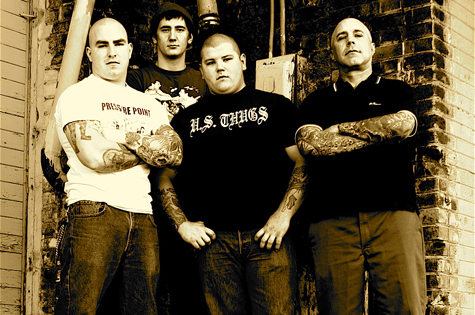
Starting as a three-piece, the street rock/Oi! band formed in 2003. In that time, members have come and gone, but as of now Madhouse Disciples stands strong as a tight-knit four-piece ready, at long last, to release their debut full-length album. Mike Montero, Madhouse Disciples’ drummer, is the sole founding member of the group. But he says no matter how many personnel shakeups there may have been, he never felt the need to stray from the band he formed or playing the music he loves.
“We play street rock ‘n’ roll, Oi!,” Montero says. “That’s what I love, that’s what I’ve grown up on. The people who have came and gone in this band were also into that same thing. That’s one thing that all of our members have shared. And the name, I wouldn’t change it because I’ve been doing it since I was 16. It’s my baby.”
When the band parted ways with its vocalist in 2007, Montero turned to his cousin Brian Rawlins to fill in, even though he wasn’t the most obvious choice. Though Montero had fostered Rawlins’ acceptance into the Traditional Skinhead (read: working class, pro-union, anti-racism) subculture, and Rawlins was an avid punk show-goer, he had never sung before, at least not in front of a crowd.
“The only times I’d sang before that was in the shower or in front of family,” Rawlins admits. “So it was something I wasn’t very comfortable with.”
Rawlins came to join Madhouse Disciples under peculiar circumstances. Around the time the band’s singer had left the band, Rawlins was out on tour with venerable Sacramento punks Pressure Point, working as a roadie. One night in Elko, Nev., Mike Erickson, Pressure Point’s frontman, blindsided Rawlins with a severe ultimatum.
“Mike and some of the other guys were telling me that I had to do karaoke,” Rawlins recalls. “I was like, no, I’m not really comfortable doing that… Mike told me, ‘If you’re not going to do it, we’re leaving you here and you’ll have to find your own way back.’”
The threat of being abandoned in the middle of Nevada was all the motivation Rawlins needed. He nervously belted out a rendition of “Fortunate Son” by Creedence Clearwater Revival. However, his performance left enough of an impression on Erickson that he phoned Montero and told him he should consider Rawlins for Madhouse Disciples’ vacated vocalist position. Strangely enough, the thought had already crossed Montero’s mind.
“I already wanted to try Brian out because I’d known him forever and just thought it’d be fun, but then I heard he actually could sing,” Montero says. “Mike told me about that, and it just kind of clicked.”
With a solid group, the band went into the studio to record its first full-length album. Fittingly, Erickson served as producer. Montero says that financial concerns kept the LP from seeing the light of day, but in January, the band plans to finally release the record. Not only was he a first-time singer, but Rawlins also wrote lyrics for just about every song on the record–also a new experience for him. He did what any good writer would and just pulled from his own experiences.
“I write about things like working-class ethics, unity and anti-racism. I also write about things on a personal level that can also touch other people,” he says. “Coming from divorced parents, who also had a heavy drug abuse background, there’s stuff that I learned from that. It’s not a path I have to follow.”
At 12 tracks, the self-titled album is long on message, but also extremely entertaining–just good, honest rock ‘n’ roll with searing lead guitar work courtesy of guitarist Tony Courtney. Who said having a conscience and having a good time had to be mutually exclusive? In separate interviews, Montero and Rawlins broke down for us their experiences working on their debut record as well as living in the punk rock subculture.
Mike Montero
Did you have an inkling that Brian would be a good vocalist, or was it just because you had a good relationship and thought it would be fun to have him in the band?
One, because we were related and I knew he was a solid dude. Two, if you’ve ever met Brian or know anyone who’s met Brian, he’s got more energy than any human being alive. I thought if nothing else, he would have great stage presence. That was the basis for me wanting to try him out.
You recorded your first full-length album coming out soon. You worked with Mike Erickson from Pressure Point to record this album. I know you did a split with Pressure Point before, but what was it like going into the studio with him to record your own album?
Mike is a great producer. He has an amazing ear for music. We spent a lot of time in pre-production. We played those songs over and over, to the point we didn’t have to think about it any more. Mike was a big part of that. He kept us motivated and going in the right direction as far as being militant about practicing and getting so good with those songs that we could play them in our sleep. As far as recording goes, Mike was producer and Eric Broyhill was the engineer. We recorded it at the Pus Cavern. Eric and Mike have been working together for years, and those two together are a deadly combination when it comes to making music. They know what it should sound like as far as tones and everything. Once we got in there, we let those two figure out the tones we were going for. We gave them a small amount of what we wanted. We wanted to sound more like an old rock ‘n’ roll record, and they knew what amps would sound good, what guitar combinations and stuff like that. It went like clockwork, really. It came together like it was meant to be.
As a drummer, have you had to adapt to each new player coming in?
Not so much. With the kind of straight-forward rock ‘n’ roll stuff we play, the drums aren’t really supposed to be super flashy. There’s not a whole lot to change. The drums are just the backbone. It’s nothing real fancy.
You’re doing the CD release at a house show. Do you prefer those over shows at venues?
The venue to me isn’t really the point so much. I prefer to play all-ages shows, where the younger kids can get into it and have a good time. It’s a good positive outlook. You play bar shows, and often times there are a lot of people sitting at the bar who don’t care about the music. They just want to get drunk, and that’s fine. Whatever, that’s cool. You want to get drunk, get drunk. Typically punk and Oi! subculture has been a youth subculture. It has a lot to do with the younger kids. All-ages venues are more preferable. Our bass player [Dirty D] owns a house that has a great big shop in the back, and it’s totally DIY. We put a stage and a PA in there, and it’s a cool thing where this is our thing.
How did you get involved in the Oi! subculture?
It was a natural transition for me. I was a punk rocker. I had crazy hair and all that stuff. It got to the point where, “I can’t find a job if I look crazy.” I didn’t change any of my values in that sense. This is what I am. This is what I believe. I’m extremely anti-racist. I can’t stand that shit, and I’m extremely working class. It comes from my lower middle-class upbringing. I was taught that you work hard for what you get. That’s one of those values that I kept with me.
Your music is a lot of fun to listen to, but there’s also the message behind it that comes through very strong. Is the enjoyment or the message more important to you?
It’s a double-edged sword. In my opinion, in punk rock and Oi! music, the message is always more important than the music. It’s not like this new fucking pop bullshit that comes out that has no message or anything to it. There are definitely things that need to be said, and I think Oi! and punk music is where that stuff is said more than in the mainstream.
Brian Rawlins
Mike said he was already thinking of asking you before he heard from Mike from Pressure Point about it. Were you aware of that at all?
A little bit, but not so much. We kind of joked about it. When their split CD with Pressure Point came out, I was like, “Dude, you should let me sing in your band,” and my cousin said, “No dude. We already have a singer. Sorry. You suck at singing.” I’ve known him my whole life, so he’s brutally honest with me, but it’s all in good fun.
How did you feel when you got off that karaoke stage? Did it make you realize that you wouldn’t mind singing for a band?
No, I was terrified, to be completely honest. I was nervous and extremely embarrassed. With my friends, we have a saying that ball-busting is a sign of endearment, and I was preparing myself to get handed a bag full of endearment, I guess you could say.
How is it for you now? You’ve been with the band for a while. Are you comfortable singing in front of people?
It’s weird. I still get nervous, but that’s one of those things, I guess. It depends on the person. I still get the jitters. I prefer not to eat before a show, but that’s the same way I was with sports growing up–playing football. I didn’t eat before games, because I knew I was going to throw up.
Sports and punk rock seem like two different worlds.
Polar opposites.
How did you move from one to the other?
Well, as far as sports went, I started playing when I was 7. I played football all the way up until I graduated. I found myself not going to parties in high school, because I just didn’t find myself getting along with the “jocks.” It wasn’t because I had a beef with them or I hated them, but I just didn’t fit in with them. They could tell I was not one of their upper middle class brethren. I was from a poor family, so it was definitely one of those class differences.
You worked with Mike from Pressure Point on this record. Was he a big influence for you heading into the band?
Going to Pressure Point shows sucked me in pretty hard. Watching those guys play was amazing. Everything he said in between songs, and reading the lyrics, spoke to me on a different level. That’s when I realized it was something that mimicked my life already. It was an easy thing to take part in.
And now you’re working with him on this record, so that must be a big thrill for you.
For Mike to produce us was really awesome. It was fun. And he’s actually someone I respect, so when he suggested something, I wasn’t like, “Uh, I know what I’m doing.” It was really nice, because I could listen to his point of view and perspective and take a different look at things. He’s been doing Pressure Point for over 15 years, and it’s like, of course I’m going to listen to him with respect and admiration. Any advice that he had, I listened to with open ears.
Mike, your cousin, was saying that you spent a lot of time practicing the songs in pre-production, and that Erickson was a big reason for that.
Huge. Before we went into production, he said that he wanted us to be able to play them forwards and backwards–know them so well that we could go and hit it the first time and then work on any little things we wanted to do. You’ve got musicians like Tony in the band, who’s an amazing guitar player. It was fun. Practicing with these guys has always been fun. It’s never been like work.
Hanover Saints release a new album, look to cement their legacy in their hometown
Words by Butch Ivory
For nearly 20 years, Brian Hanover has been devouring the sights, sounds and chaos of Sacramento punk rock. The Hanover Saints have spent the most crucial chunk of that time writing, recording and improving their place in its history.
In spite of numerous lineup changes and scurrilous misunderstanding from all sides, Hanover has managed to find his focus time and time again. The Saints’ latest offering, Bitter Pills, defines once more our need for the Hanover Saints in this city, and their need for a place of their own in it. As Hanover asserts, “As far as I see the scene in my hometown…I used to think it was fragmented, but now I just think it is fractured.”
For those of us who have toiled in the underbelly of the Sacramento music scene for so long, it’s a scene that at times has struggled to find a sense of itself, a sanctuary more rooted in folklore rather than history. Having witnessed bands as diverse and wide-ranging as ‘80s skate rock legends Tales of Terror, or the working class thrash dynamo Sins of the Flesh to the more recent Ramones-esque pop sensibility of The Groovy Ghoulies or the street punk anthems of Whiskey Rebels, this city has enjoyed a wealth of talent but suffered from an absence of cohesion.
Negotiating this landscape of division, The Hanover Saints now find themselves straddling the lines of separation. For Hanover, it’s a source of inspiration rather than of a loss of faith. “It puts me back into the ‘I don’t belong anywhere’ category, and once again I feel like I did when I was 10 and heard Black Flag or 7 Seconds for the first time,” he says. “What I felt at the time was the world is a mess; I am going to change it, even if it’s just my community.”
In the following interview, with a renewed sense of purpose and a brand new release in the can, Brian Hanover discusses and argues about what drives him and the band to once again climb back into the blood-stained ring of Sacramento’s underground.
After several lineup changes and a solid new record, Murdertown, The Hanover Saints seemed to vanish. Why the comeback? Why now?
I never really wanted to put it on hold. But at the time we went on hiatus I was going through a lot mentally, business- and family-wise, and just wanted to see things from a non-band perspective. I always hoped to one day get back, when it was right for me… I think at some point I was missing something inside myself that I needed to tap into and stepping away seemed to be the most honest thing to do. I started playing solo and fell in love with not having to rely on other people to make music, but it allowed me to challenge everything I was about.
How has your solo experience affected the Hanover Saints?
I needed to shake my core, and playing live by myself channeled a lot of those feelings, beliefs, and not compromising. So three years went by and Wy [Harrell], our drummer, played on some solo stuff and we always talked about it. He has stayed loyal through it all, and when asked to play a show last June, I called the three guys up. So much time had passed, and we missed being around each other and wanted to play. It was just time. The music business side has changed so much that we knew we had to do this all ourselves, and it was the truest place for us so we moved forward. The solo thing has really helped me be more focused when writing and allowed me to take more risks… I just write and what comes out just comes out. Hanover Saints material was coming out in my writing at home, and it came at a perfect time to start playing together again. Maybe not financially, but that never has been a deciding factor, but it has its challenges with releasing music these days. Anything goes in that area now. We are really enjoying the freedom of music and how creative it can be, which is making Hanover Saints a healthier situation for all of us.
Lyrically, you seem to focus more on the personal than the political. Is this a conscious decision? Or is it a reflection of the type of songwriters you most identify with?
On this EP, I left it more open-ended. We had a solid fellow produce us at a certain point, and we had a meeting to talk about the record. He said, “When I listen to your past songs, I don’t feel like I know you, but I do know you, and I know your personal story. I challenge you to dig deep.” I think at that moment it clicked for me. I hid a lot from my past because of the pain and just wanted to bury it and forget it happened. Those things have a way of resurfacing, and it helped me to become a more honest, well-rounded songwriter instead of a topical one. There are some political leanings on “Nailed to the Letter” that have to do with right-wing conservative politicians, which is so cliché. But coming from someone who believes in the Lord and can’t relate to one word they say, it puts me back into the “I don’t belong anywhere” category… I am not down with blind hatred and when a movement becomes more important than human beings.
For many of us who have followed The Hanover Saints for several years, we have witnessed an evolution of sorts, from a “Christian punk” band to a band that has members who are Christian but play to the masses and not just to the converted, so to speak. Please explain what led you personally and the band to this decision?
It’s never been a conscious decision per se. I think it’s easy for anyone to label what they are passionate about, whether it’s straight edge, or Rasta, or whatever it may be. I just felt like our actions and music spoke for themselves. I have never denied my faith and have had record offers pulled from the table because of what I believe, but I didn’t grow up in the church, and honestly still don’t fit in most so-called churches. I honestly believe with every ounce of my being that the American church is so tied up in the political power agenda that it misses everything Jesus said. But to get back on point, I hate labels. With my life and my struggles, and believe me I am a troubled human being, I need peace in my life otherwise I flip out. But I have never wanted to alienate a person who doesn’t “believe”… All I ever wanted to do is just write real songs and maybe I am longwinded, but I’m super passionate about songwriting, and it’s a gift that I don’t take for granted. I am hoping one day I can sing better though [laughs].
It is a gift, but at some point wasn’t there a decision to be made about playing with certain bands and on certain bills that made you aware of the labels that people on all sides of the coin want to place on you?
All I ever wanted to do is play music, as far back as I can remember, and when I discovered punk in late 1984/early 1985 and picked up a guitar, I never worried about what people thought. Not till I got into my mid-20s when Hanover Saints started did I see these labels define a scene. I have always played wherever to whomever, and if these certain people want to label me, so be it. I heard people’s rhetoric from stage and then I would be hanging out with them later and helping them or they would be helping us, so sometimes the whole idea of it just seems to blur the lines, and it comes from both sides. But, being misconstrued from both sides has never stopped me. I am a really caring person inside, and the thought of someone not liking us for playing with this band or that band could eat you up inside by trying to figure it out. Music is supposed to be creative, freeing, uplifting and life-changing, and if someone is worried about what I do and where I play and who I hang out with, they are missing the best part about music. I just finally recently found a huge amount of peace knowing I am never going to fit in and it’s OK.
How has being a father changed your music, your attitude, and your desire to continue to make punk rock?
Being a father has made me a better person. More patient, more forgiving, but also making music since my son was born has made me way more focused just on the fact that he comes first and all else comes later. He is a great kid. He loves me playing music and we play tunes together. It’s a part of our family. I have to be wiser about money, but we all love punk in this house. He loves everything from Madball to Kepi Ghoulie, from Youth of Today to The Clash. He likes what he likes. I remember one day a CD ejected from the car, and it turned to classic rock. It was Skynyrd, and he said, “Dad put on some real rock ‘n’ roll, this sucks.” So I said “Give me a second, I am trying to put another CD in,” but he has no time for what he doesn’t like. But he loves all the music I play. He is my biggest fan and punk will be around forever in this household.
Regarding the future, you have a new EP, Bitter Pills, coming out this month on Revolution Ink records.
We have our first release since our record Murdertown. I am releasing it on my label, Revolution Ink Records, digitally and on CD, and a local label Pleasant Screams Cassettes is doing a limited run on cassette. Hopefully we’ll have it on vinyl early next year. Money has been super tight, and we don’t play a lot, so basically we had $500 to record our EP and I am pressing it. The rest of our money has gone to rehearsal space rent. So we are excited to get back and playing live and writing even more songs.
The new songs seem to reflect a more soulful singing style. The songs still have the aggression of Murdertown but seem to have a more Iggy and the Stooges vibe in spots. What do you credit with your growth as a singer and as a songwriter?
I always feel uncomfortable singing, but I have always had this pent-up aggression within me. I just wanted to capture that with more soulful melody, but that’s always just hanging on the edge where at any moment it can just fall apart. During this session, which was five hours of vocals, I literally was grabbing the wall and just shaking and taking myself out. I found this spot where I trusted myself with being on the edge of it falling apart. But I think since the hiatus I have written about 40 songs in various styles, like Motown, straight folk almost Pete Seeger, Woody Guthrie style, to Creedence sounding tunes. What I was realizing was how much of a music lover I am, and how much different stuff I listen to from Joy Division, 4 skins, Swervedriver, to Joan Baez, The Damned, to the Australian band The Saints, so I just felt free to be free and that I had nothing to lose.
If it sucks, it sucks, but I love these songs. It is just a new chapter for me. I always go into Hanover Saints recordings as the band’s biggest fan. I ask myself would I listen to this and what do I want from us?
Can we expect The Hanover Saints to disappear again after this record or are you guys back for a while?
I hope we are around for a while, but I like not ever knowing. I want it as raw and close to the edge as possible. I am hoping for more time. I don’t think it’s done!
Â
Â
Street Dogs’ Mike McColgan Spreads Words of Punk Rock Wisdom
Words by Anthony Giannotti – Photo by Cindy Frey
“There’s a lot of fucking shit pissing me off right now,” Mike McColgan, lead singer of Street Dogs, gruffly says in response to a question about where he gets the inspiration for his politically and socially charged lyrics. You’d think the emotional and physical toll of releasing five studio albums in eight years and a few world tours would have squelched McColgan’s fury. “All the shit that happened with Bernie Madoff, the tough economy is affecting everyday Americans. A lot of people are living beyond the breaking point. Society is really pissing me off right now.”
In 1998, after two years fronting the Irish-American Celtic punk band Dropkick Murphys, McColgan left to follow his lifelong dream of becoming a firefighter. He couldn’t stay away from the stage for long, forming Street Dogs in 2002. Street Dogs are known as a Boston-based working-class punk rock band, praised for their in-your-face lyrics, pint-glass-raising anthems and high-energy shows. Showing he’s not all piss and vinegar, McColgan says, “I’m one of the luckiest men alive. To do what I get to do, I have to pinch myself every day to make sure I’m not dreaming.”
He’s not kidding. Not only have they had the privilege of sharing the tours with bands such as Bad Religion, The Bouncing Souls, Rancid and Flogging Molly, but they released their fifth full-length album this summer and are heading out on another headlining U.S. tour this fall. The Street dogs show no thought of slowing down either, McColgan says, “After releasing Fading American Dream in 2006, there was no looking back for us. This is what we do.” I got the chance to catch up with the man, the myth, the legend Mike McColgan to talk about the new album, more of what pisses him off, the spirit of punk rock and The Clash.
You guys have changed it up a little bit for this summer’s self-titled release. This album seems to have faster songs and a fuller sound. The deluxe iTunes version of the album features a few different versions of some songs, giving it a much more Celtic tinge than previous Street Dogs releases.
Nothing is off the table with us. We recorded 35 songs for this album and these are the best 18. We feel that this is our best collective effort to date;
that’s why we went with the self-title for this release. It’s five guys working collectively. This record was an easy record to make, and it’s the most honest
representation of us.
The drums really stand out on the new album; they seem to be very prominent. I like the way it changed your sound a little.
[Laughs] I joked while we recorded this album that we were just four guys lucky enough to play in a band with [drummer] Paul Rucker. I think recording in his hometown of Fort Collins [Colo.] really motivated him. It motivated all of us. It’s such an amazing city. Recording at the famous Blasting Room helped too.”
The lyrics of the new album cover a lot of different topics, everything from the U.S. economic situation, the still turbulent political environment, how the tech age overloads us with useless crap and songs about blowing off the steam created by these problems with friends. But would you agree the underlying message is self-empowerment?
We wanted to make a bold record. We have songs about personal empowerment, personal freedom and the search for personal redemption on
this record. I hope our lyrics encourage people to get off the couch and do something with life and not take anything lying down. We want people to
make a difference in their own lives. Don’t sign out of life; find something to believe in, find something that compels you… There is so much bad stuff going on right now. There are a lot of injustices in our society that really piss us off. If enough people stand up and change the things they don’t like in their own lives, it will eventually change everything.
So you believe being confrontational is what punk rock is about; if you don’t like something, get in someone’s face and change it?
That’s what punk rock has always been about. Don’t follow along with the norm, shake things up, question authority, don’t follow the status quo like sheep. I like being the underdog. I like being the outcast. I like being different. It’s where I feel comfortable. It’s where I fit in.
You’ve been in this comfort zone of outcasts for quite a while now. Where do your punk rock roots stem from?
Without The Clash I don’t think I’d be in a punk band; I honestly don’t think I’d be compelled to sing or write. We wanted to play it like Stiff Little Finger or The Clash. The Clash was public service announcements with guitars. The Clash took you all over the world with their songs, showed you where the problems were. They got people to take part in life. That was the first band that ever did that for me. [Laughs] I don’t think we are the next Clash or want to copy their style; we aren’t even fit to hold their jock straps, talent wise or music wise. They just put forth such a good example.
You are very adamant about the spirit of punk rock. In the song “Punk Rock and Roll” you talk about the spirit of punk not being able to die. Do you believe that the spirit of punk can’t die, that it is an ever-evolving being?
There is no way the spirit of punk can die. There is always going to be an underdog out there fighting for himself and his friends. Even though punk is not very commercially viable right now, we have faith in the younger generation “carrying the torch” so to speak. Out there on the road we see it in every town we visit. That is one of the reasons why we love touring so much. We get to see the kids go crazy just like we did.
While the music industry is struggling and a lot of bands are having a hard time, especially on the road, you guys seem to tour almost year ‘round.
We are a throwback band when it comes to touring. We go grass roots with it; we want to earn fans the old-fashioned way. We want to go out every night
and give our fans the best live performance we can. A little bit at a time, over time, has given us a crowd. We have pretty good followings on both coasts,
but we always try to visit every corner, nook and cranny of the country. Those out of the way spots are where we find the most enthusiastic kids.
With the expectations and comparisons a band like Street Dogs brings, did you guys have to do your time, cut your teeth to prove that you were in it for real?
We had to prove that we weren’t just jumping on a hot wagon, and I think we have done that because we have no axes to bury, no resentment toward other bands. Some of us came from successful bands [Dropkick Murphys and Mighty Mighty Bosstones]. We didn’t want to rely on past successes. We wanted to start something new, fresh. We are out there doing it because we love it.

Kevin Seconds finds solace in music
Listening to Kevin Seconds speak about his music, you’d hardly believe he’s been in the game for more than 30 years. Serving as frontman for 7 Seconds, one of California’s most seminal hardcore punk bands, you’d think the years on the road, spitting bile at the young and the restless would make him a salty individual, but that’s just not the case.
“We’re from the era of hardcore punk rock,” he says of his early days touring with 7 Seconds. “We would go out for two or three months straight, come back home for a month and then go back on the road. We thought that was the way to do it. At that time it was.”
Of course, as time marches on, things change, even for musicians. Children, marriage and the other trappings of adulthood eventually claim most of us–not that that’s a bad thing. Even the most unruly and defiant among us aren’t immune. Seconds has managed to change with the passing of time and not lose his edge, though the music he’s spending most of his time making nowadays is a far cry from the brazen punk rock of his youth. He stands as a perfect example that it’s possible to grow up gracefully in the music business and still have a good time doing it. When Submerge contacted Seconds, he was happy to report that he’d just received a text message from his label, Asian Man Records, that his latest solo CD, Good Luck Buttons, had come in.
“I was pretty excited, actually. After all these years of having different records out, it’s still pretty exciting to get word that the new CD is done,” he says. “It’s definitely one of those little thrills you get–realizing that something you’ve been working on for two years has come to fruition.”
It would seem that Seconds’ continued enthusiasm for his music has bled into his songwriting this time around. Good Luck Buttons, out May 11, 2010 bears a much sunnier disposition than its most recent predecessor, 2008’s Rise Up, Insomniacs! Seconds said a lot of Good Luck Buttons was written while he was on the road for Rise Up…, which had a big effect on the finished product.
In our interview, Seconds talks about how real-world stress got him down, and how he was able to find solace and brighter days by focusing on his music.
You did a lot of solo touring for your last record. Did those experiences have a big effect on your writing of Good Luck Buttons?
Yeah, definitely. Living in Sacramento, and I’ve been here a long time, Sacramento always inspires my writing–at least my acoustic stuff, because I got started doing the solo stuff here in Sacramento, playing open mics and coffee houses and stuff like that. This time around, I got to go to Europe a couple of times and toured around the States, and [the songs on Good Luck Buttons] definitely have a travel feel to them–at least in the way that I wrote. I would pull over, resting somewhere, and jot down ideas for a song. The last record was a tense, stressful record, because all the things leading up to that record coming out–it took me forever to put out. I had crazy back problems; I was dealing with our business going under. All this stuff was happening. It was more like, “Let’s get this thing done so I can get it out and be happy again.” This new one is a little more free-spirited. I think it’s a happier record, at least. The road influenced it quite a bit.
There’s a sunny vibe to this record, listening to it all the way through. There’s almost a pop feel to it.
That’s cool. I love melody and harmony. Good pop–I love it…unless you’re talking about Britney Spears pop. I love good melodic pop music. Even when I try to do one kind of thing so I can establish myself doing this kind of thing. I listen to gospel music, I listen to metal–if it pops up in there, I guess it’s bound to happen. It’s not an accident if it’s in there. [Good Luck Buttons] is more up-tempo and not as mopey-sounding as the last record.
You were mentioning the problems you were having with the business. Was it difficult to balance all your music projects while running the True Love coffee house?
It was. My wife Allyson and I ran the first location starting in 2001, and we were open for almost four years at that location, and I did some shows, and 7 Seconds did a couple of little road trips, but I decided it was going to be a big deal and that I should really commit to this and be a business owner. That was a big switch for me, because I’ve been pretty irresponsible for most of my adult life. I’ve just been able to get in a van and go, you know, and not worry too much about paying rent and paying bills, but I learned a lot from it. It also brought stress in my life. I was having panic attacks every other day. This was the first time in all the years I’ve been on Earth where I’ve been responsible…
We closed on a high note, we were doing the best we’d ever done, but we had a horrible relationship with our landlord, and we couldn’t renegotiate with him because he was being such a prick. We said, “Instead of dealing with this, let’s shut it down for a while, and if we want to do it again, we’ll do it at another venue.”
In that time between the first and second True Love, I purposely filled up my calendar with as many shows and tours that I could. It was great getting back to something I knew and that I’d been doing since I was 16, but as you get older, it takes a lot out of everything. When I was 20, I could get in the van for three months straight, but now it’s like, I love these guys, but come on.
But I’m still good at touring, and I love traveling. When you go to other cities and other countries, your brain and your heart change. You can’t be the same person you were when you come back. You look at people differently, you look at food differently, you look at art and music and film differently. If I don’t have that, I feel like I’m working at half-power. At the same time, it was really gratifying being a part of and running a place that meant something to Sacramento. It was a little more than just a coffee house. It was a hub for the community. It was nice to give that to Sacramento. Allyson and I talk about it like, “Are we crazy enough to do it again one of these days?” We probably both are.
The title of the album comes from the song “No Good Eggs.” Was there a reason you picked a line from that song in particular?
Titles are really hard for me. I try to stay away from the most obvious things, or what I think are the most obvious things. Whenever I sing the line, and Allyson sings that with me live a lot, and I think just because of her harmonies, it really resonates with me. I’m not really sure if it has a meaning or if it’s a good title or not, but it just stuck out, and I liked it a lot. The last record, now that I look back on it, was such a downer, and it seems like I was trying to make it a downer. A lot of stuff was going on, I lost a lot of really close friends, Allyson and I were having problems, so I had to fill it up with a lot of negative stuff to get it out of my system. Good Luck Buttons seems like a harmless, meaningless title–no huge meaning, but I guess it just came down to thinking it sounded cool.
It definitely fits the songs. One song in particular that I really liked was “Sunday Afternoon Bicycle Polo.” Where did the lyrics for that one come from?
I had this space that I turned into a studio. I did my paintings there, and I also did some recordings there. It was over near 19th and X streets. I had it for a few months. In fact, a lot of the stuff on the last record was recorded at that little studio. One day, I was not having a good day. Nothing was coming together. I was bummed at myself for wasting time and not getting anything done. I looked out the window, and across the street was an overpass for the Capitol Freeway, and there are these big concrete patches of property. There were these kids out on the concrete playing bicycle polo, and I thought it was funny because they were these young, hip kids. At first, I was really annoyed by it, like, “Look at these fucking hipsters. Who do they think they are?” Then I realized, it made this thing change in me like, “Why are you being this old, cynical prick?” It’s kind of cool that they’re out there doing it. It’s nice and warm. What I always do with songs is that I’ll have an idea for a song, and then in the middle of it, it just changes. All of a sudden it became this love song about someone I know. She’s a great person, but she’s always on the outs. She’s always trying to be a part of something, but she can’t quite fit in…
In the bio you sent us, you were sheepish about 7 Seconds’ influence on younger bands. You made a joke where you apologized if your band had had any influence on younger bands. Is the influence you’ve had on youth culture difficult for you to admit?
It’s not difficult at all. For me, it’s more of an embarrassing thing when people say it. I still haven’t embraced the idea that we might be a bigger deal in some people’s minds than we are. I love that we are. I love that when we play, a lot of great bands will come up and say that they were influenced by us. Of course it’s very nice to hear, and we love it. But I’ve never been good with big compliments–when people come up to me and start calling me legendary, it’s like, “I’m still alive!” Call me legendary after I die.
It all comes from a good place. I know that. I don’t shit on it. I don’t ever want to be somebody who comes off standoffish or who doesn’t appreciate the fact that people have been so supportive of what me and my good buddies have done for the past 30 years… I have this tendency to be a little too self-deprecating at times, and my wife will be like, “Stop that!” It’s how I handle people giving me or my band compliments.

Relentless About the Music
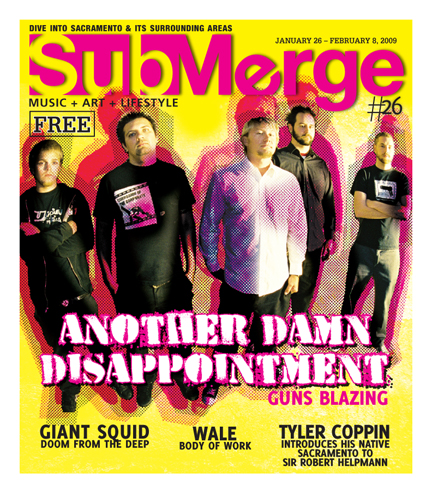
Forget about your one-hit wonders and starry-eyed kids just breaking into the music scene. Despite a lack of local publicity, Another Damn Disappointment has been a staple of the Sacramento music scene for a good 10 years and has a lot to show for it.
“We’ve done rad shit,” says singer and songwriter Josh Thompson. “Our shit was on MTV’s The Real World, in the background. I’ve been driving through other states and heard our stuff on the radio. But in Sacramento, we’ve had zero recognition.”
This lack of love from their hometown is partially responsible for their name, Another Damn Disappointment, a name which was chosen midway through the band’s career. In the early years, the band was known simply as ADD, an apt name considering two of the members of the band actually had Attention Deficit Disorder, and that their musical style was “punk-rock fast,” as bass player Casey Marsullo says.
The name Another Damn Disappointment was added later, when a record label prodded them for a more distinctive name. Considering the band’s dissatisfaction with the Sacramento music scene, this name is equally appropriate. “We have a great fan base here and a big following, but no one really sticks [up] for us. We’re on the radio all the time and KWOD has always been really nice to us, but as far as anything else goes, this city I don’t think supports its bands,” Thompson explains.
But ADD didn’t let this get them down. They started playing in Los Angeles, and found the crowd to be much more receptive to punk rock music. They’ve played all across the United States and Canada, including two summers of playing on Vans Warped Tour, a CD release show with Pennywise on Catalina Island and a show at House of Blues, Anaheim. “We’ve toured our asses off: Vancouver, Seattle, Portland, New York, Kansas, Florida, pretty much every major city you can think of,” says Marsullo.
In Sacramento, their hearts still go out to The Boardwalk, which is where they played their first show. “The first year we played there almost once a month and just packed it in,” Marsullo says. “That’s how we built up a reputation with promoters. [They were] like, God, ADD packs it in there! Where did this band come from?”
In the beginning, ADD was just a bunch of punk kids who wanted to be part of the music scene. “After years of going to punk rock shows and getting beat up in the mosh pit, one day I was thinking that it would be kind of cool to be the guy onstage looking down on that instead of the guy in it,” Marsullo remembers. They got together with some buddies at Folsom High, including current guitarist Ross Standley, and started playing, and it was crap. Thompson says, “We were so into punk and living that lifestyle for so long that it didn’t even matter that we sucked. We had the desire to play punk music so much that it was overwhelming everything else.”
Marsullo adds, “We just kept rocking.”
Luckily, the talent came with time. And just as the music grew and changed, so did the band members. In 2007, they added a second guitarist, Aaron Welch, who had been a fan of the band for quite a while. Thompson remembers that when Welch came to try out for the part of rhythm guitarist, he blew them away with his talent, he knew all of the songs, even the solos. It turned out that Welch had a degree in music, knew how to record and even listened to all of the same music. “It was a perfect fit,” Thomspon says.
ADD has been through their share of drummers before current drummer Carl Chang joined a couple of months ago, and every drummer has been better than the last. “It’s like the missing piece that needed to be there,” Thompson says about Chang. “[He is] the epitome of a bad-ass drummer.”
Thompson writes all the lyrics, usually while drinking a lot of coffee and taking some Adderall, he says. “Usually I will try to do a couple about society or politics, whatever bullshit is going on,” says Thompson. “And then there’s always the woman in my life that’s fucking me up. I’ll probably write a few about that. Standard punk rock.” And of course, a few songs are dedicated to going out and getting drunk.
Their first album, Quarter Life Crisis, was self-produced and came out in 2000. They describe this album as being “pop-y punk.” Next, they released Hooligan through Volcom Entertainment, which was a little more aggressive and dark than their first. Their new album will be released through Felony Records, and they describe it as being more “metal-punk.” It is called Relentless, which pretty much describes the attitude of the band. Thompson says, “Through all the trials and tribulations, whatever bullshit that has gone down, [we are] relentlessly playing.” The cover art illustrates this idea. Thompson describes it as, “an old fifties style bomber plane being shot and going down in smoke but still firing its guns, not stopping until it’s dead.”
Their sound has changed a lot since the band’s formation, continuing to move away from traditional punk music into a darker and more mature sound. Thompson explains, “The band’s talent level kept on getting better, so the music is just adapting. We can do so many more things now, especially with Aaron being on board with the second guitar.”
Although Relentless hasn’t even been officially released, they are already hard at work on their next album, and have four songs written. Thompson and Marsullo agree that this next album will be, overall, just the next step in their musical talents, heavier and more intricate. “[There are] more interesting things going on rather than your standard four-chord punk rock song,” Thompson says.
Goals for the near future? “I’d like to see this record really take off,” Thompson says. “It’s the first CD that we’ve done that I’m actually really proud of and I’m fully backing.”
Pressure Point Celebrates Sweet 15
This year, Sacramento’s own street punk/Oi! prodigies Pressure Point will celebrate their 15th anniversary. An impressive feat in its own right—especially considering the tumultuous nature of the punk rock scene—what makes Pressure Point’s quinceañera even more notable is that they’ve managed to survive on their own terms. Though Pressure Point has shared stages with punk rock giants such as Rancid (Lars Frederiksen acted as their producer on two full-length albums and a 7-inch) the band has managed to survive, and thrive, in what lead singer/cofounder Mike Erickson calls an “underground within the underground.” To commemorate their 15th birthday, Pressure Point will release on Sept. 30 Get it Right, an anthology that re-imagines some of the group’s earlier material and includes a few new songs and covers. Before heading out on a tour that would take them to the Midwest and back, Mike met with Submerge to discuss the new release and the difficulties in bridging punk rock’s generation gap.
You’re heading out on tour pretty soon. Do you want to talk about that a little bit? Is it to promote the new album?
Sure. Honestly, one of the biggest reasons that I like to be in a band is that I get to travel, and it’s an unconventional way to see America. I see America through the eyes of people like me. It’s not a tour guide or a travel agent. I get to see this country through the eyes of people who are similar to me, who I enjoy being around, and have similar beliefs and philosophies. We’re not only touring to promote the record, but you know, it’s summer time. It’s a good excuse to get out and be with your friends and have a good time.
How have you seen the country change in the time you’ve been touring with Pressure Point?
In terms of the punk scene, the scene that I’m a part of, things have changed drastically since we started. There are still people like”¦Anti-Heroes and Agnostic Front—people that we met real early on who are still out there doing it and have the same beliefs and the same attitudes. But what I saw, with really good bands like Rancid—who were able to break through and bring what I consider legitimate punk rock to the masses—the aftermath of that was that every label wanted to get their own Rancid. They wanted to make even more money. They would get their carbon copies. They wanted to dumb them down. They would water them down, sweeten them up, so they could be more mass-produced. And there were some bands that were willing to play ball. When those bands did that, it watered down the punk scene at large and began to split it.
With the latest release, you guys are revisiting older material. What was that like for you guys?
A lot of the material was written by Kenny [guitar] and I really early on. When we started this band, we struggled to find the right fit with the different members because of the style we played. The approach we had and the type of politics we had were all really unconventional, and to be honest, kind of dangerous for this town. There weren’t a lot of promoters or record labels that were willing to work with us, and that was true all over the country. Pretty soon, we were able to connect and hook up and an underground within the underground developed. Because of all that, we always heard the songs a certain way when we wrote them, in our minds’ ear, but it never really came out on tape like we wanted them to. Over the years, we’ve had good friends and good band members and we’ve got the Nates [Hat and Mohawk, bass and drums respectively]. We’re turning 15 years old this year, and we wanted to celebrate that, so we went and revisited a lot of material, and now we were able to update it, refresh it and record it so it sounded the way we originally heard it.

Other than rerecording the songs, did you revamp them in any way?
That was a debate within the band. We decided that we were going to do the things we needed to do to make the songs better. Lyrically, I decided I’d leave the songs alone. There were a lot of lyrics that were really naïve when I wrote them. I wrote some of those songs in my early 20s, but I decided that they capture a time and a place and that I should just leave them alone. Musically, we altered and changed some of the songs.
Before you mentioned the songs you were doing were dangerous for the area. What did you mean by that?
Sacramento in the mid-’90s, the punk scene was kind of smoldering. It was suffering from a lot of things left over from the ’80s. Within the scene in the late ’80s, early ’90s, there were a lot of Nazi skinheads that were left over, and they were threatening the entire punk scene at large, so you had that violence and that danger, and then you had on the other side of it people like Kenny, people like me, who grew up in Sacramento lived in Sacramento, lived through that, and were battling, of course, against those kinds of notions. So for us being a straight up Oi! band, a street-punk band, a band that espoused a skinhead philosophy and attitude—of course a traditional one—a lot of promoters around here got scared. A lot of them said, “Oh, I don’t want that.” We were never ones to look at the problem and just sweep it under the rug. We confronted it head-on, recognized it and dealt with it. They were afraid there would be trouble at gigs, that if they put us on bills, it would draw them [Nazi skinheads] to shows. These guys were coming to shows anyway. We did our own shows, and now we have our own scene. It’s fresh and vibrant. We don’t have those same problems, we don’t have those same issues, and over the years, we were able to hook up with a lot of national acts that were really getting big, and if it wasn’t for them demanding that we get on bills, a lot of the promoters around here would not work with us.
For the new songs you wrote, could you talk about those lyrically?
One of the new songs on the record is “Fuck the Kids,” and it’s a hardcore song in the tradition of New York style or early ’80s style. The American landscape early on, there weren’t many divisions. When we went to shows, you’d have Reagan Youth playing with Bad Brains playing with Sick of It All playing with Gorilla Biscuits. So you’d have straight edge bands playing with skinhead hardcore bands playing with more leftist punk bands. Everyone had a lot of respect for each other and just did their thing.
It seems that over the last 10 years, especially the last five, there’s been a lot of sectioning off and divisions within the scenes at large. I noticed that as a skinhead that me and a lot of my punk rock friends would go to hardcore shows, because we really appreciate that kind of music, and the kids would shun us like we didn’t belong there because we didn’t look like them. And that with the infusion of metal made it so that it wasn’t really connecting with where it came from or where it was”¦or what it is.
I wrote a song called “Fuck the Kids” and Kevin Seconds from 7 Seconds sang on it. I asked him because they were pioneers of the original West Coast hardcore movement, which had more of a positive vibe, bringing people together. Even though we’re not a posi band, we have a similar attitude. It’s about taking people who are outside of mainstream society, or the people who at least don’t fit necessarily. They don’t want to fit”¦they would find their way in this other scene at large as individuals, and that seems to be lost. There seems to be a lot of conformity, a lot of packaging, a lot of formulaic nonsense within the hardcore scene, and it happened in the scene of music we play, too, in the late ’90s, and I think in a lot of ways that’s what killed it. And whenever you lose that identity, you lose that ability to sound original or to be original or to think on your own, then you lose touch with where you came from, and that’s why I wrote “Fuck the Kids.”
Why do you think that the fractioning of the scene has happened?
I think it’s largely people like me who are to blame for that. I’m 38, and I don’t think people my age were as vigilant as they should have been, or maybe in some cases as welcoming as they should have been to the new generation. I also think that, again, hardcore broke and record labels were like, “Oh, package it, sell it, it’s all about money,” so you had a lot of bands that sounded the same, and a lot of kids glommed on to it. The attitude became more of a mob mentality as opposed to a punk mentality. When I overhear people who are into hardcore—and I’ve overheard them telling Kevin Seconds that 7 Seconds isn’t a hardcore band—that’s the attitude right there that I’m talking about.