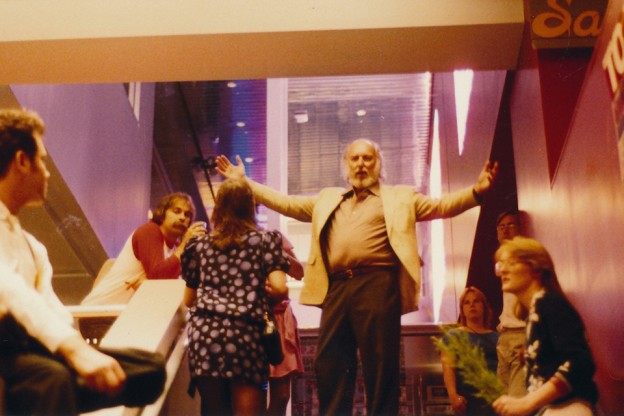
Editor’s note: It is with heavy hearts that we announce that Russell Solomon, founder of Tower Records, passed away last night (Mar. 4, 2018) at his home in Sacramento. The following interview with Russ took place in early 2015 and originally ran in issue #185 (April 13 – 27, 2015). RIP Russ! You will be missed!
No Music, No Life: Part 2
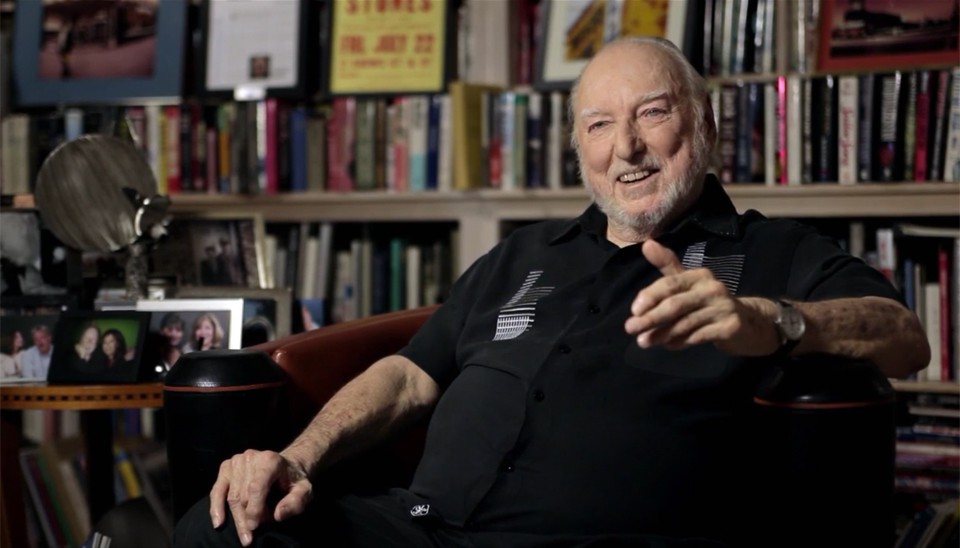
Russell Solomon, what a guy. As the founder of Tower Records, he’s been called the godfather of music retail, a visionary, a living legend. Even at nearly 90 years old, Solomon is still razor sharp, and he absolutely loves to talk about all things music, especially Tower, as evidenced by Submerge’s hour-and-a-half-long interview conducted recently in his Sacramento home, an excerpt of which can be read here. With a drink in hand (“It’s almost 5 p.m.!” he exclaimed as we sat down), a very humble and down-to-earth Solomon spoke with us about the new documentary All Things Must Pass: The Rise and Fall of Tower Records, how the company was like one big family, how he feels about Tower still going strong in Japan and a little bit about his life-long passion for photography.
When you were first starting a record shop, did you ever in a million years think that someone would want to make a documentary about you?
No, that’s the last thing I thought about, believe me. I thought about making a living, that was what I thought about. I thought they [filmmakers Colin Hanks and Sean Stuart] were nuts in the first place. It took them seven years and they got it together and figured out that they wanted to make a story out of it, and they managed to do it, I thought. From my viewpoint, you’re trying to cram literally 60-something years of experiences into 90 minutes. A lot gets left out, right?
So much great stuff probably hit the cutting room floor, as they say. At the end of the day, they are making a movie. It’s got to have a beginning, a middle and an end.
That’s right. More of a movie than a documentary, too, if you think about it. One of the things they didn’t have, which I didn’t really think about it until after it was all over, was they didn’t have a narrator. You know how most documentaries have a voice over?
Yup. But even without narration, this film gets moving! It’s got a heartbeat to it and it really gets pounding!
That’s a tribute to their editing.
It’s not your run-of-the-mill, slow-paced documentary about WWII or something, it really moves.
You know one of the things they told me, not sure if they told you or not, was they wanted to use the title “All Things Must Pass,” so they sent it to George Harrison’s wife, and she actually looked at it twice, they told me, and she loved it! She then gave permission to use it, although they didn’t really need permission to use the title.
More of a “can we have your blessing to use this” sort of thing?
She blessed it, yeah.
I’m curious, did watching the film for the first time make you emotional at all?
Patti [Russ’ wife] gets emotional. I just say, “Ah, I’ve been there.”
There is some pretty deep, personal stuff in some of those interviews, and the whole camaraderie of the Tower family comes through even though it’s a story of the rise and fall of the company.
That was the truth, that’s the way it was. As a consequence, they captured that. I told them up front, “Look, this company wasn’t me. This company was made up of all the people that worked for us.” It wasn’t even just that little group that was in the film. There were, and I didn’t know about this until late, in the American company from the time we started counting, which was probably in the late ‘70s, we had over 100,000 people that worked for the company!
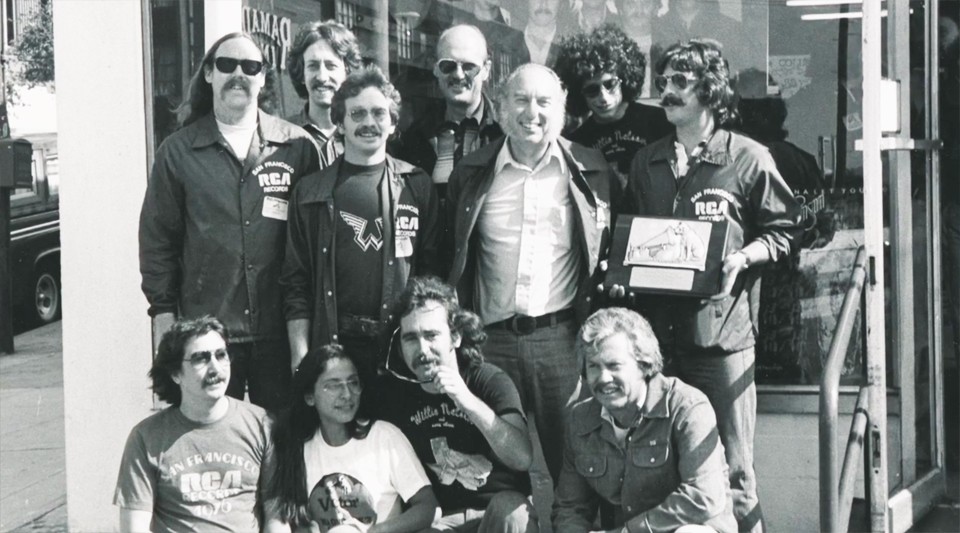
I love that the film shows how Tower employees went from clerks, to buyers, to assistant managers, to managers, to general managers, to vice presidents, etc. That family-type growth was important at Tower, wasn’t it?
Absolutely, yeah. All the managers came from clerk status.
In the movie Dave Grohl says something like, “Tower was the only place that would hire me with my fucking haircut.” He was this long-haired grungy looking kid but got a job at one of your stores. You guys attracted a lot of interesting characters to work for Tower, didn’t you?
It was true. The one thing we didn’t have was any kind of dress code. The only thing we insisted upon was that they wear shoes, but in Hawaii they didn’t wear shoes. What are you gonna do, you know?
The late and great Bud Martin wasn’t necessarily the face of the company as much as you were; he was more the money guy. Does it feel nice to be able to show how important he was to the company in this film?
Yeah. If I’d have just listened to him. The problem at the end with Bud was that the company got so big. Bud was a public accountant, as opposed to a CPA, and the company was handling so much damned money that we needed a CPA. It didn’t turn out to be the best thing to do, but, nonetheless it had to be done. Bud actually hired the CPA, which is the guy that ultimately replaced him. But he was getting sick, and, you know… He was a good guy. I miss him.
In creating Tower Records, you created more than a music store—they were hangout spots; people would link up at Tower.
It’s true, people liked to come to us. The clerks were like they were. If you looked at the other big stores, the Musiclands and Wherehouses and whathaveyou, they were pretty snobby. Why? I don’t know. I have a theory, now that I sit here and think about it. I have this idea, which is something you can’t tell bankers by the way, but the people in say a Musicland store or a Wherehouse store or whatever, they didn’t have any control over what was happening in that store, all the decisions were being made in their main office or whatever. But in our case it was just the opposite. We wanted the people in the store to run the store, it was their store. They could do what they wanted.
It’s kind of a good thing that the film took so long to make, because it’s really incredible that some of the interviews were done inside the Watt Avenue store after it had shut down. How did that work out?
That was at the beginning of filming the movie. The Watt store sort of stayed empty for a while after the liquidators emptied it of the merchandise, and all those racks were in there, and the sign was still there. When Sean and Colin first started the thing, they talked the landlord into letting us in and lighting it and so on. So we were able to do that in there.
Post-Tower, you opened up R5 Records in Sacramento in 2008, which was probably the worst year ever to open a store.
That was not my finest hour.
Do you think something like R5 would work now?
No, I don’t think so, except maybe in a market like New York. Obviously it works in Japan. Here’s the difference, the physical market is a combination of used and a little new in CDs and LPs, vinyl as they call it. So, what Tower was and what R5 was, was a new store. We didn’t carry used. We carried vinyl at the end at R5, and we carried a little vinyl in Tower at the end. The whole vinyl thing was just kind of starting back up, that’s back in 2004, 2005, it was just beginning to regenerate itself. But to replicate Tower and its “all new” kind of thing, which is what we were, that’s what R5 tried to do. As a result of that, it kind of failed. That and the economy falling apart. We had a perfect storm there. So your answer is no.
In this area we’ve got Dimple Records, Phono Select, Esoteric, Armadillo and others. There’s even a new little shop opening on R Street soon. Why do you think people are still running and opening these smaller record stores even today?
They have fun doing it! The trouble is that LPs are not going to grow to the strength they had before. One of the reasons is they can’t manufacture enough… There’s no production facilities to speak of, so it’s limited as to what they can put out. In the old days with LPs and for CDs, if they had a new release of a hot artist, they’d press a million copies and throw it out on the marketplace. If we didn’t sell it we’d send it back. Well that’s not the case today. So that limits the growth for LPs in retail for that reason. But I think there are always going to be collectors! That was the whole idea behind it was the collector, that was a big portion of the business.
Right, from your everyday average Joe collector, all the way on up to Elton John, who used to obsessively peruse your stores for records.
Just think of yourself as a young guy or a young girl who had a box full of their favorite songs on 45s. They were collectors, even though they only maybe had 30, 40, 50 records.
They were seeking out what they want, getting it, owning it, having it in their possession.
Exactly, and then sharing it with all of their friends and all that stuff.
And it happens so differently now…
If you want to read a story about collectors going to a point of absurdity, there’s a book called Do Not Sell At Any Price. It’s the background story of the freak 78 [rpm records] collectors, who collected old blues and original records that go back to the 1920s. These guys are digging around in garbage dumpsters. They’re obsessed, they know a lot about it, and they pay ridiculous prices for some of this stuff, ‘cause, you know, there’s only one copy left of Uncle George’s Jug Band or some damn thing [laughs].
People go to extraordinary lengths to collect. They are out there. Do you think that will essentially help these small little mom-and-pop record shops maintain?
Oh absolutely, that’s the fun part of it. The only thing that’s changed really is that there’s so much fewer people that are buying that stuff than there was in the past. I mean, the heyday of selling thousands of units or millions of units or something like that is gone in the physical world, because it’s changed so dramatically to streaming.
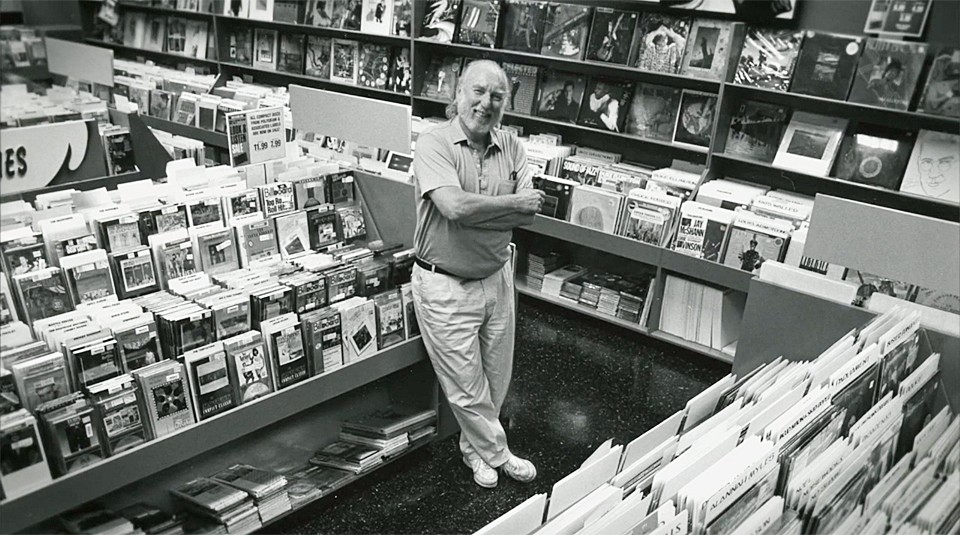
I think the release of this film will be a very big thing for Sacramento.
Yeah, I didn’t realize how much Tower meant to so many people. This isn’t in Sacramento, but Patti and I were in Palm Springs visiting some friends recently and we were sitting in a bar. The friends we were visiting, he always does this, which I would never do, he goes, “He’s the founder of Tower Records!” and points at me. And here’s these two old people sitting at the bar having a drink, they go, “Oh my God, Tower Records?” and then they carried on about how wonderful it was. I had no idea, really. Maybe I wasn’t thinking about it, how somehow or another we seemed to touch a lot of people through the years. You’ve got a lot of years involved, 1960 to 2006. Time to time I would actually run into people who would say, “I used to shop and listen to records in the booths at the drugstore.” I say, “Jesus, you have to be really old.”
In Japan there are over 80 Tower Records locations still to this day. How does it feel to see the Tower model working over there?
Very proud. Of course the thing that keeps it alive I think is the fact that they don’t have any financial problems, they’re owned by the telephone company essentially… So they don’t have to worry about debt or any of those mundane kind of problems, and they just keep it going. The nature of the Japanese market is that it’s the only market in the world that’s about 80 percent physical, compared to America which is 20 percent physical. So for some reason the physical world over there, physical records, are still going strong. I couldn’t be prouder. They are doing what we set up and they just kept it going, and like the Japanese always do, they improve on things.
Now that you’ve seen All Things Must Pass, do you think Colin, Sean and the whole team behind the film did you and your fellow Tower employees proud?
I would say so, yeah. I’m certainly proud of Colin and Sean, and their people that worked on it. I’m really pleased about the whole thing and I’m pleased with the way that they did it. As far as I’m concerned, it’s totally honest, and that’s what I wanted it to be. I wanted it to make plain the idea that this was a community project, it wasn’t just one guy.
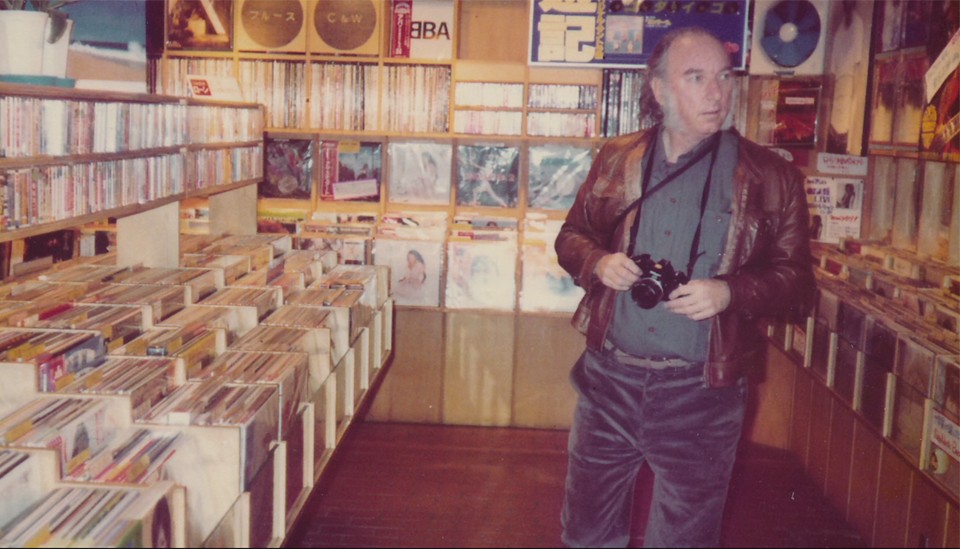
To wrap things up, I noticed in the film there are a couple old photos of you with a camera around your neck. How long have you been into photography?
Since I was about 15.
Were you mostly taking photos for business purposes, you know, research? Or was it more of an artsy approach?
It was more for fun. No matter where I went, I always had a camera to take pictures of the stores.
[Because he was being so humble, Patti interjected: “Did you know he had a gallery show? But didn’t you start in High School, Russ? Didn’t you do the pictures for the yearbook, but you never graduated, so you weren’t in it?”]
Russ Solomon: [laughs] It was really a dirty trick. I was the principal photographer for the McClatchy yearbook and because they kicked me out of school, they wouldn’t give me any credit. But the photographs were terrible, believe me, they were terrible. High school pictures, are you kidding me?
To keep up to date on what’s going on with the film, go to Towerrecordsmovie.com
**This interview first appeared in print in issue #185 (April 13 – 27, 2015)**