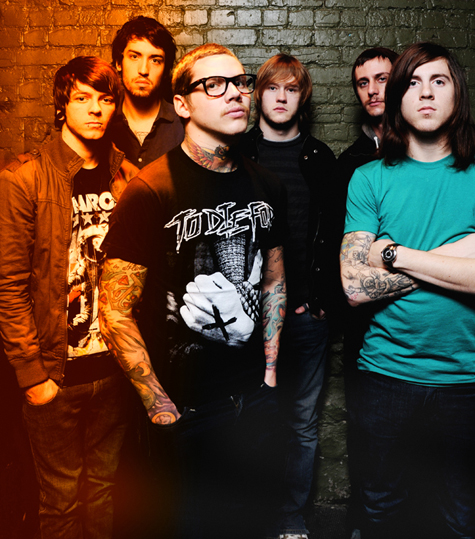
The Golden Cadillacs Evoke Classic California Country Sounds on Their Debut Album
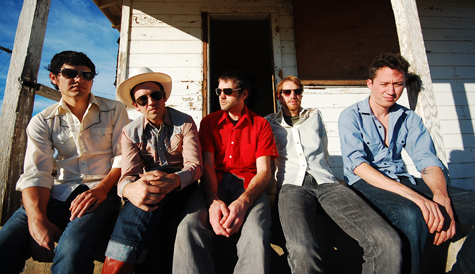
Friends who drink together stay together. That’s a saying, right? Regardless, it’s worked in the case of Nick Swimley and Adam Wade, who have been friends since high school. Two and a half years ago, they combined their shared love for music and formed The Golden Cadillacs, a Sacramento-based country outfit, which now stands as a five-piece band that includes James Neil on drums, Aaron Welch on guitars and vocals and Joe Davancens on pedal steel guitar and organ. Submerge spoke with Swimley and Wade as they were “just sipping on a few cocktails,” and they filled us in on the group’s origins.
The Golden Cadillacs’ roots spread as far as Placerville, where Swimley and Wade are from. The small town on the doorstep to the El Dorado National Forest may not be known for much; but like any town, it had a bar, which turned out to be an important landmark in the band’s history. Poor Red’s Bar-B-Q, located in neighboring El Dorado, is housed in a building that dates back to the mid-19th century. Both Swimley and Wade remember frequenting the establishment with their fathers while growing up.
“It was down the street from where I grew up,” Wade says. “It’s this real historic, funky old country kind of place.”
It was there that he and Swimley decided to form the band, while sipping (what else?) golden Cadillacs.
“We were drinking The Golden Cadillacs at the time, and all we had to do was basically look down and get that band name,” Wade says. Listening to the band’s music, it would seem like Jim Beam or Budweiser would be more apt alcoholic beverage complements as opposed to a frou-frou concoction of crème de cacao, Galliano and cream; however, as Wade says, it could have been worse. “We didn’t want to be the Buttery Nipples,” he quips.
Poor Red’s wasn’t only The Golden Cadillacs’ birthplace, but it also served as inspiration for the band’s de facto first song. On Nov. 27, the band will release their first album, a nine-song self-titled effort, of which the opening track is titled “Poor Red’s.” Wade says he wrote the song while battling a bout of homesickness.
“It’s the first song I wrote,” Wade says. “I was living down in San Diego at the time, and I was kind of missing my hometown and wrote that song.”
Wade and Swimley have a long history of playing music together, even prior to that night at Poor Red’s. In fact, Wade reports that they played music together the first day they met. The two were introduced by friend and band mate Joe Davancens.
“I guess three of us”¦started jamming as early on as high school,” Wade recalls. “We all went our separate ways during our college years and went to schools in different states.”
Wade and Swimley reunited to play a show at the Cosmic Cafe in Placerville, and The Golden Cadillacs were born later at Poor Red’s that same night. However, at the time, the band was in a different form, performing as a three-piece.
“When it started out, it was just Adam, myself and my brother on drums,” Swimley says. “We made a little demo so we could get gigs. Joey was going to school in New York, but he moved back, so we added him to the band, and my brother kind of moved on to another group, and we hired our drummer, James, and then Aaron came in.”
Swimley says the current lineup has been together for about a year. He says the addition of the new pieces was “huge” in filling out The Golden Cadillacs’ sound, allowing them to do things that were difficult to pull off as a trio.
Their debut CD was recorded together as a five-piece over the summer in a barn on Davancens’ parents’ property in Placerville. Davancens had converted the barn into a studio, and the setting turned out to be a great place for the band to work. Without having to keep one eye on the clock and the other on their wallets as they would have at a traditional studio, The Golden Cadillacs were free to create at their own pace.
“They have a bunch of acreage, and they have horses out there and the whole nine,” Wade says. “We’d just go up there and drink beer and make music. Whatever came out, came out. They had a pool, and we barbecued. We got to hang out in the sun. It was a really relaxing experience. We just wanted to make sure that we got the sounds and the parts that we wanted.
“It was cool not worrying about who we were paying or who we’re working with or how much time we had.”
Having a band member who doubled as an engineer was a great boon as well.
“It helped to have Joey engineer all of it,” Swimley says. “He’s got a great ear, and I trust his judgment more than anybody’s.”
The result was a sun-baked country album that pays homage to the classic California country sound, a rich tradition that Wade and Swimley take very seriously. However, The Golden Cadillacs realize they have some way to go before they can be mentioned in the same breath as their heroes.
“We look up to”¦Buck Owens, Merle Haggard, Dwight Yoakam—all those guys who came out of California and played honky tonk country music,” Swimley says “We hope our next record will be more straight up country sounding. I think we’re just trying to find our feet with our first record.”
Maybe they’re still working out the kinks, but The Golden Cadillacs are off to a great start. In fact, they’ve already caught the attention of notable California country songwriter Dave Gleason. The Golden Cadillacs have recently become Gleason’s backing band, a major compliment considering Wade and Swimley were big admirers of Gleason’s music before ever meeting him.
“Nick and I used to practice in Oakland, and we’d drive to Oakland and back every week,” Wade says “Nick turned me on to Gleason about three years before we ever knew him, and we were listening to Gleason the whole ride down and the whole ride back every week. It’s a mind bender to be in his band now.”
Despite their work with Gleason, and though their first album hasn’t been even released yet, The Golden Cadillacs are already at work on their next release. Though their self-titled album was mostly a product of Wade and Swimley “boozing and writing songs” together, their next release will be more of a true band effort.
“The thing we’re trying to go for is the less-is-more vibe,” Wade says. “The whole vibe of the songs that we’re all so fond of is the real lyrics and the real life aspect of it. It’s like being a great chef, right? You don’t want to get too crazy on it. You just want to make something really simple and good.”
If their early returns are any indication, it would seem that The Golden Cadillacs have the right recipe for a strong future. At the very least, they should find bright skies and good times along the way.
The Golden Cadillacs will celebrate the release of their first album at The Fox & Goose on Nov. 27, 2009. The cover will be just $3, and Leroy Virgil of Hellbound Glory will also perform.
On Nov. 1, I turned 33. And you probably didn’t even send a card or call. Asshole.
I’m sorry. I didn’t mean to snap at you. It’s just the older I get, the crankier I get around my birthday. This year has been especially dreadful. I keep hearing that this is my Christ Year. From what I’ve come to figure out, 33 was supposedly Jesus’s age when he was crucified. Why this should matter to anyone other than to those of the Christian faiths or trivia buffs is beyond me. Still, it’s something I’ve been having a difficult time coming to terms with.
All birthdays are significant in some regard. However, the only other age of adulthood I know to have such ominous connotations is 27, which seems to be the year all the good rock stars die. I remember the day I turned 28 was sort of bittersweet, because I had to face grim reality that, since I’d survived my 27th year, I would never write a song that would change the world. Though, to be honest, I was pretty well aware beforehand that the likelihood of me writing a classing was pretty slim since I don’t write music. I write words that people read, and most writers don’t get any good until they’re 50, or rediscovered 100 years after their death, whichever comes first.
So, I’ve been inundated with the term “Christ Year” over the past week or so, but I’m not exactly sure what it’s supposed to mean. Urbandictionary.com wasn’t that much help. Its definition stated only “The year of your 33rd birthday.” That much I knew. The example given was a bit more helpful, though: “Harold really came into his own in his Christ Year.”
I’m hoping that sentiment turns out to be prophetic, because I have to admit, I have no idea what the fuck I’m doing. You’d figure with three decades-plus experience under my belt, I would have at least figured something out, but every day I’m reminded that I’m more or less inept at confronting the ardors of day-to-day life. I’m actually surprised I’ve made it this far. Maybe that’s one of the benefits of reaching 33—realizing that all you know is jack and shit. When I reached my 20s, I thought I had stuff figured out, but now that I’m rapidly approaching my mid-30s, I realize that headstrong young lad I was in my 20s was a fucking moron. Realizing that all you know is that you don’t know nothing, however, seems like a pretty lousy tradeoff for creeping one year closer to my 40s.
Let’s assume that I won’t be nailed to a cross in the next 12 months (though, you never know), what should I expect from my Christ Year? Will there be sweeping changes in my life? Will there be sweeping changes in my financial/spiritual/political/romantical (if that’s a word) situation? Are these things set to explode like a time bomb after 33 years because 2000 years ago the Romans were total dicks and hammered some proto-hippy dude to a few planks of wood for spreading messages of peace, love and all that gushy stuff?
I’m not sure, but “coming into my own” sure has a nice ring to it. It’d be nice to finally feel comfortable in my own skin and not wear that perpetual Eeyore-style glumness that’s glued to me during the hours that I’m sadly sober. Also, it’d probably be nice not to drink so much. But does it have to happen now? Is my Christ Year my last chance to turn it around? Am I hanging precariously close to plummeting into the depths of true loser-dom? I’m not sure I can handle this kind of pressure, especially at my advanced age. In that light, crucifixion may not be such a bad option.
Dane Cook’s Art of Hustle
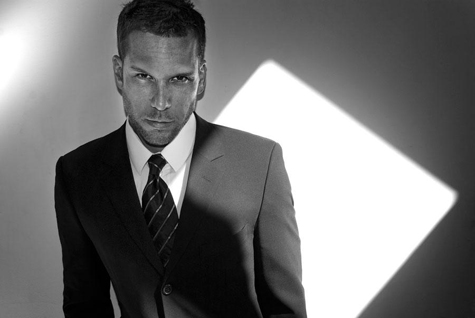
Dane Cook has reached the kind of stardom usually reserved for rock stars. It’s a height that most stand-up comedians never achieve, though not for lack of trying. However, it’s the sort of success that hasn’t come without its pitfalls.
Though Cook’s name has become ubiquitous in comedy circles, it wasn’t that long ago that he was a comic like many others, trying to figure out the best way to reach people. In the late ’90s, he began using the Internet as a tool to spread the word, and as it turned out, that word spread like wildfire.
“I really looked at it as a way to create a grassroots following,” Cook says about his first forays into using the Internet as a promotional tool. “You’re talking about 1998 that I started spending a lot more time on the computer. At that time, I was watching a lot of documentary stuff on bands in the ’70s and how certain bands took over. What I was really learning from it was the hustle factor of, like, getting flyers and what it means to paper the town”¦ The next thing you know, I’m sitting online, saying, ‘OK, if I create a Web site and add links to my comedy, maybe I can start reaching out to people.'”
Back then, the use of newfangled gadgetry as opposed to pounding the pavement may have made purists sneer with disdain. However, “Maintaining purity”—whatever that means—is not one of Cook’s main concerns. What he cares most about is putting his content in the hands of those who want it.
“I don’t really know what purist means,” Cook says. “I think it’s like the language of our country; it’s ever evolving. People say, ‘Oh, the way we speak now isn’t as articulate [as it used to be],’ but you know, the language we spoke when we first landed on Plymouth Rock was an abridged version of Old English. It’s an ever-changing thing.”
Those familiar with Cook’s work know that he’s taken the same non-traditionalist slant to his stand-up. Manic, absurd, perhaps downright goofy—Cook has run the gamut with his comedy, never lingering on a particular style. This is something the comedian takes great pride in.
“I talk to comedy—quote, unquote—purists, and I say that I don’t know what pure comedy is,” Cook explains. “Are you talking about standing still and delivering one line? Because Jack Benny may have done it one way—some guy holds a violin and the next guy does slapstick. I always seem to find the other side of whatever the purist’s conversation is.”
Maybe it’s his willingness not to take the traditional route most comedians have taken, or perhaps it’s the level of fame he’s acquired, but Cook has become a controversial figure not only amongst stand-up fans, but also amongst his fellow comics. Nevertheless, he’s still packing arenas all across the country. The latest leg of his world tour, Isolated Incident Global Thermo Comedy Tour has just kicked off in Las Vegas. The tour is in support of his most recent comedy album, Isolated Incident, his fifth, which was released in May 2009. Cook says he wanted the album, which he calls “a bit of an homage to Steve Martin’s Wild and Crazy Guy,” to be a sort of push and pull between dark and light.
“I wanted it to be like, track one would be maybe something about my family, vulnerability, something really sweet, and then I wanted it to go to something really dark and vulgar, maybe sexual, and then I wanted it to go back to something about my pop,” Cook says, though he adds that the final product was a bit different than he had originally intended. Still the ups and downs of his rise to fame and the tumult of his personal life shine through Isolated Incident.
“I found that was my life for three years: dark, light,” he says. “Success: I’m on Letterman. The next day, boom, cancer, my mom just got sicker. Or, ‘I’m in Time Magazine, 100 most influential, how great is that? Who would’ve thought I would ever be in that.’ And the next day, it’s like, ‘These people are starting a rumor about you. They’re saying that you steal.’ How do you deal with the constant blow by blow? And that’s really what I wanted the whole album to have. I wanted it to make you laugh, but I wanted it to be light and heavy.”
The remainder of the tour will take Cook out on the road until a New Year’s Eve show in his hometown of Boston, where he will celebrate his 20th year of stand-up. Hate if you want to, but don’t be surprised if Cook keeps laughing anyway.
I watched the Isolated Incident special that aired on Comedy Central on Youtube. Someone had posted it up there. Coming up on the Internet, now that you’re established, does that sort of thing bother you at all?
It’s just another channel airing your content. It’s another way for people to discover you and have an opinion. This is the tricky—there’s a lot of layers to this conversation, because there’s money involved. The question becomes, OK, is it financially hurting artists? I don’t think that there is a right way, or just one manageable way, to have this conversation, because someone on the other side is going to say it’s hurting the artists, but at the same time, I’ve seen a lot of independent artists who may have not had the airtime, so to speak, if they didn’t have such a strong Internet crowd passing their stuff around. There’s value in all of it. The key really becomes, “What do I want from it?” If that’s the question that you’re asking, I’d rather have fans enjoy something than keep it to myself and feel that it’s only for sale”¦ Someone from a highly regarded band might say, “Oh, I’m losing millions of dollars.” And I understand that, but I think that it’s a great source for passing around material”¦ This is the way people share content. When you were a kid, you gave a cassette to your friend and you’d say, “Listen to this. It’s called Guns N’ Roses. There’s a song on there called ‘Mr. Brownstone,’ and I think it’s about drugs,” and 10 people are listening to it. The next thing you know, Guns N’ Roses is the biggest band in the nation. Maybe that ripple effect is from a couple of kids passing around a cassette.
Your latest comedy album, Isolated Incident, certainly seemed like a different side of you. You had to deal with the death of your parents a little while back”¦
A lot of my comedy over the years was outward, in: observational or absurdist or something physical that I saw that I could recreate and share. Isolated”¦ was the first time I was impacted so deeply in my heart by tragedy, that I realized, “OK, I’m not going to go around it, because then I’m a phony.” I’ve never had anything that heavy happen to me, to that extent. I had my dark periods when I was a kid—some family stuff like anybody that was pretty brutal—but for the most part, my comedy was about joy. There was a lightness, and even the twisted dark shit in there was almost from an optimistic slant. So, here it is; I experience these two years of hardcore, traumatic situations with my family, and I realized as it informed my stand-up that a lot of people had been through cancer and a lot of people had been through these backlash moments in their lives. I thought I would approach that, and this might be a great chance also to put the camera down in one place, confine myself to a smaller stage—less about movement and more about language—and let that camera, with its stillness, look right at my eyes. I can’t move around too much, because, you know, the eyes are the window to the soul, and I wanted people to see that pain and how I came above it and found humor even in the darkest spots”¦ This was an isolated incident in my life. You’ll never again lose both your folks to cancer; you’ll never again have your star rise as high as it did and also have the backlash and the innuendo. No matter how many times the roller coaster ride will go up and down during the course of a career, it will never happen for the first time again”¦ It informed my comedy, and I feel really fortunate that when I read the e-mails after it [the Isolated Incident special for Comedy Central] aired, a lot of those kids who were coming drunk to my college shows 15 years ago were saying things like, “Hey, I felt like you were talking to me 15 years ago, and I feel like you’re talking to me now.” It sounds weird to say now, coming up on 20 years [of performing stand-up comedy] that I feel like I’ve grown up with a generation of fans, and it’s probably the last great gift that my mom and dad could’ve given me in an impossible time to say that, “You know what, Dane? It’s OK to change and to mature a bit.” I can still be silly or off-the-wall and vulgar; I can still be pensive. I can still bring all those things to my stand-up, but I never brought vulnerability. It’s a good place to be.
The one bit I liked from the special was when you were talking about finding your mom’s number in your cell phone’s address book, which is such a uniquely modern dilemma. How did you go from that moment to eventually be able to find the humor in it and turn it into a joke for your act?
For a situation like that, it really came to me so simply. I had my mom and my dad’s number in my book there, a year after I lost them both, and it was this weird moment that I was looking down at the phone and I was”¦just having this conversation with myself: Is it OK to delete them? Those numbers”¦there’s nobody there anymore”¦ It just occurred to me, “What if I called it? What could happen?” And suddenly I’m laughing to myself over this silly little conversation that I’m having with myself, and then of course, like most things that I think of that I think are funny, I say to myself, “I bet a lot of people might understand this.” I bet there are a lot of people who have lost somebody special and don’t know what to do in that moment, and it’s hard and heavy and sad.
It’s such a simple joke. I remember somebody saying to me, “It could have gone so many different directions. Why didn’t you build on it this way or that way?” It was almost like this person was saying that they were let down by an opportunity to turn this into an extravagant bit. And I was like, no, that’s the simple beauty of it. It’s just a moment we all have, and what if she answered? That’s what I said to myself, and that’s what made me laugh and feel lighter, and that’s what people—most people—appreciate about that joke. It’s a timeless joke, if I can toot my own horn. A hundred years from now, somebody’s going to hear that, and whatever form of communication we’re using, we’re always going to lose somebody, and there’s always going to be somebody’s time to let go.
You mentioned the backlash against you, and not only did you have to hear it from fans, but also from your peers. How does it feel to get that sort of backlash from your peers? Does that affect the way you go about your business?
It’s a little bit of a mixed bag. There’s a lot of innuendo, and there’s a lot of stuff that people put up on the bathroom wall that’s just myth. Haters are vocal; we all know that. The people who blog negativity aren’t sitting there in their three-piece suits with a smile on their face, enjoying their lovely lives. People who are relatively happy don’t carry an axe around waiting to bury it in somebody’s back. But that goes with the industry. I understand that that’s the dog eat dog mentality, and also from my peers, comedians are some of the most fragile and fascinating people I know—and very competitive”¦ So you look at a guy like me, who shot to this new level—or new, old level, not since like a Steve Martin or Dice—and you realize these are the guys who are going to try to take my legs out from under me. They’re going to be the ones who are going to say a lot of shit, and you know what? I’m not going to fight back”¦ History will unfold the way it’s supposed to, and I will continue to keep on doing what I do, which is listen to the fans. On the other side of that, I’ll say that when you do talk about my peers, the people who I could talk about with you are wonderful and reach out to me. Chris Rock has called me and said some of the most incredible things, and I admire him. I had lunch with Steve Martin, my hero, about three weeks ago. I’ve sat with Bill Cosby and talked for 45 minutes”¦and he said some incredible things about my stand-up, and I could go on. So, my peers, the ones who I admire, have reached out, and they’ve been very supportive. Eddie Murphy sat next to me at my Good Luck Chuck premier. I don’t know Eddie Murphy; I’d never met him. He just showed up at my movie, and in the darkness of my movie, about 10 feet away from me on the other side of the aisle, I heard [imitates Eddie Murphy’s laugh]”¦ I heard fucking Eddie Murphy laughing at me. So if you want to talk about people who are talking crap about me, or how I feel about that, bro, I heard Eddie Murphy laughing at me. Whoever these minions are who want to picket me or be envious, let them. If that’s what got me to where I’m getting, that I can sit next to Eddie Murphy or Chris Rock or have lunch with Steve Martin or Bill Cosby, I’ll take the hits.

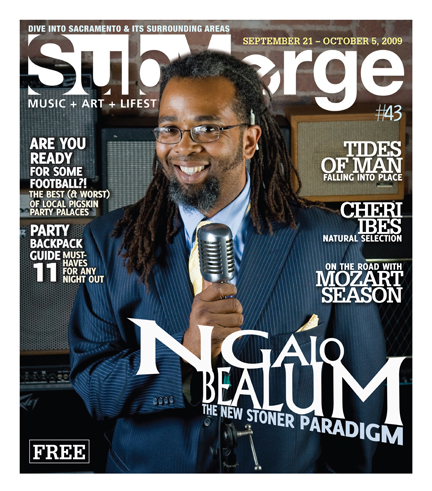
Ngaio Bealum Brings the Eighth or Ninth Cannabis Comedy Festival to Sacramento
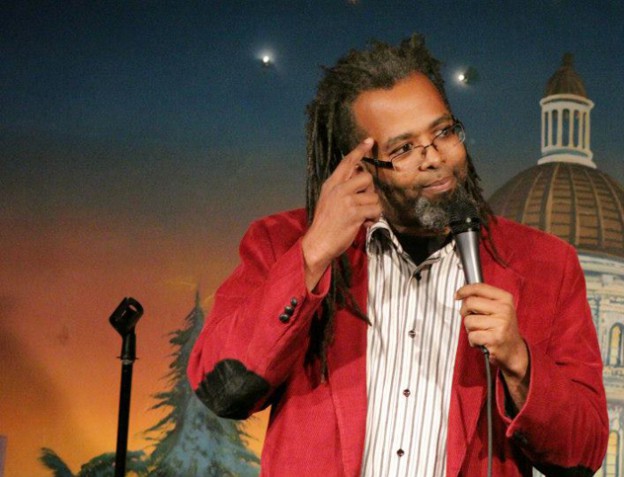
Ngaio Bealum is out to change your perception of what a stoner is supposed to be. Though the Sacramento-based comedian makes no qualms about his love affair with marijuana, his track record isn’t that of a couch-bound video game/Saturday morning cartoon junkie. Instead, you’ll find a man who is hard working and highly motivated.
“I’m not always a fan of how stoners are portrayed in the major media,” Bealum says. He believes his standup routine shows “cannabis consumers” in a different light. “I’m a pretty cool guy; I’m relatively smart, quick-witted. You know what I’m saying? I’m not dumb or unmotivated.”
If watching his act won’t change your mind, just look at his resume. Not only has he survived as a professional standup comedian for the past 20 years (he celebrates his 21st anniversary as a pro in October), he also publishes his own magazine, West Coast Cannabis, a full-color 96-page glossy, which first hit shelves in February 2008.
“It was really a ‘How hard can it be?’ sort of decision,” Bealum says of his choice to fit producing a magazine into his busy touring schedule. “But it turned out where it’s not too hard, but it was definitely a challenge at first. We’re getting it to where it flows pretty good now, but there was definitely a point or two where it was like, whoa, you know.”
In addition to that, Bealum also organizes the Cannabis Comedy Festival, which will celebrate its eighth or ninth installment (Bealum couldn’t remember which) Oct. 7 and 8 at the Punch Line in Sacramento. Bealum will host the event that boasts a lineup that includes DJ Mervin, Caitlin Gill, Keith Lowell Jensen and others. The traveling event has made stops in Portland, San Francisco and New Orleans in the past and is a fundraiser for Americans for Safe Access, an organization that helps “people who need marijuana for medical reasons have safe access to it,” says Bealum.
“I’m a big fan if you can raise money, educate and have a good time all at the same time,” he explains.
Submerge spoke with Bealum as he was preparing for a second night at Punch Line in San Francisco, after just returning from Hempstock in Portland, Ore., an event he likened to “an Oktoberfest or a wine tasting.”
“You know, all the connoisseurs get together and bring their favorite flavors, and other people bring smaller things that they had grown,” Bealum said of Hempstock and other events of its ilk, such as the Cannabis Cup. “It’s all really medical. It’s really nice.”
In the following interview, Bealum talks about his decades-long career and his favorite flavor of, well, you know”¦
Do you consider yourself a marijuana connoisseur? Do you have your favorite strain?
I’m a connoisseur for sure. I’m a big fan of sativas”¦not so much the Trainwreck, I like this new Green Ribbon that’s out right now.
What do you like most about it?
I like the kind of buzz-y head-high effects where you feel a little energized and maybe kind of chatty. I’m not so much the sit on the couch all day smoking weed stoner. That’s not for me.
If you were that kind of stoner, what would you recommend?
For that, if you’re old school, you’d go with a Romulan. But if you’re the new kids, they like the Kush or the Granddaddy Purple.
The number I’m calling you on is a Southern California number, but you’re living in Sacramento now, right?
I’ve been living in Sacramento for about a year, but it’s an open secret, so if they call me from L.A., I can still pretend. “I’ll be right there”¦in about five hours.”
What made you move up north? It seems like L.A. would be a more happening town for a comedian.
L.A.’s not really my style. I love Sacramento. It’s got a lot of civic pride, and my girlfriend lives up here, my brother lives up here, and my mom’s not too far away. She lives in San Francisco”¦ It’s got good restaurants. We rode our bikes to go to The Crocker, and then to the River Cats game. It was awesome.
Was there a final straw for you that caused you to move out of L.A.?
No, L.A. and I just get along better from a distance”¦ It’s better when I can just go down there to work and then come home.
I’ve had friends who have had prescription cards for marijuana. Do you have one as well?
I do.
A couple of friends who had cards, they didn’t really have a condition or anything. They just got their cards from doctors who were quick to give them out. I’m not saying that’s the case with you, but do you think that sort of thing hurts the cause of people fighting for marijuana legislation reform?
I quote Dennis Peron when he says, “All marijuana use is medical use.” Now, some people may not take it to that extreme, but if you derive some therapeutic value from feeling better”¦ Studies say that if you take a shot or two or have a glass of wine after dinner, you may actually get some benefit from it, so who’s to say that people who enjoy a toke or two aren’t getting some benefit from it. It’s a natural anti-inflammatory and mood leavener, so who doesn’t like to smooth out and feel less pain?
Do you foresee a day when marijuana is just legal across the board?
Yeah, I don’t think that’s too far in the future, actually. It’s getting there. We’re starting to reach the tipping point.
You’ve been doing this for 21 years now”¦
Yeah, 20 years. October will be my 21st anniversary as a professional comedian. Where’s my watch and retirement plan?
Is there a good pension for comics?
Yeah, it’s called shitty one-nighters. You can do those till you’re 80—have your kids drive you. “C’mon, we’ve gotta get to Missoula. Hurry!”
Does it bother you to be labeled as a weed comedian?
No. As I’ve said, I’ve made a pretty good career out of it. You know, it’s funny, because I did a show at the Punch Line last night, and it wasn’t even a stoner crowd, which was funny to me. It took me by surprise at first, because I didn’t really go for a lot of the marijuana jokes, so fortunately, I have a whole other act that consists of jokes about my kids and quantum physics and psychedelic poetry.
In the years you’ve been a professional comedian, how have you seen the scene change?
I started comedy in 1988, which was sort of the ass-end of the comedy boom. Comedy was just starting to take off, there were a lot of clubs and there weren’t really that many comics, so there was a lot of work everywhere. It was really comedy-based. If you were really funny, you’d get a lot of work. It didn’t matter if you were on TV or not. When I started, you had to do a lot of roadwork in clubs to get on TV, and now, you have to get on TV to get into the clubs. I also think that comedy is changing its model, because more and more corporations have gotten involved. You know, Viacom owns Comedy Central, so comedy has become a commodity and not just a visceral way to entertain people. But with the advent of the Internet, I think the underground scene is coming back again, and the do-it-yourself punk rock vibe where all you really need is a room and a microphone and 50 people who can pay $5. You can make some money and get your point across without worrying about what you can and cannot say and how you will be perceived on television.
See the Cannabis Comedy Festival on Oct. 7 and 8 at the Punch Line in Sacramento. The show is 18 and over and carries a two-drink minimum. For more information on Americans for Safe Access, go to www.safeaccessnow.org
There are plenty of movies that speak to the human soul. They dig deep and teach you a little something about the world around you and yourself. On the other hand, there are movies like Dead Snow, which only teach you what your guts might look like if they were splattered out over fresh-fallen powder.
Dead Snow should be a novelty for American horror fans. First, it’s Norwegian and the film’s snowy, mountainous landscape looks about as alien as its pale-skinned, blue-eyed cast. Second, there are enough nods to popular horror franchises such as The Evil Dead to appeal to diehard horror heads without coming off as pandering. Third, there’s enough gore and cheesy one-liners to make even the most steely of stomach feel a bit queasy. The kicker, however, the bit that should make Dead Snow an instant classic, is that the evil force that has swooped down upon a gaggle of unsuspecting young vacationers is a group of Nazi zombies. I know. It’s brilliant.
There’s few celluloid pleasures more satisfying than watching a righteous hero vanquish a horde of swastika-clad Nazi douchebags. They’re evil fucktards, and I’m sure most of you reading this (hopefully all of you) realize that. It’s nice to have a bad guy we can all agree deserves a good butt whooping.
Watching zombies getting their heads blown off or decapitated is the only thing I find just as, if not more so, cathartic. I don’t know why I enjoy seeing the undead get treated in such a manner. No zombie has ever done me any harm. I just hate them. All of them. I guess I’m racist against zombies.
The makers of Dead Snow are geniuses, because they were able to combine the two. Now, every bad guy who gets his head curb-stomped by a revved up Norwegian chick with dreadlocks isn’t just a zombie that deserves whatever’s coming to it, but a Nazi to boot. It’s two for one—a value in this down economy.
The only finesse involved in Dead Snow is in its humor. There are some sly cultural, historical and, of course, horror cinema references that may go unnoticed if you aren’t paying attention (probably because you’re doubled over puking into the nearest trash basket). The rest of the movie is pretty much just blunt force trauma. A plot is introduced when an old man happens upon our heroes’ cabin and tells a longwinded story about the “evil in the mountains” and blah blah blah. That’s all a bunch of hokum. And it’s boring. Even one of the characters seems to be falling asleep while the old man is rambling on. We want blood! And there’s plenty to be had. In an hour and a half, humans and Nazi zombies are slashed, mauled, chainsawed, and torn to shreds; beaten with axes, tree limbs, sledgehammers and even snowmobiles. White snow and even whiter people are stained with gooey blood and various innards—mostly intestines, but also some eye guts for good measure. Only the people who brought us black metal could have conjured up this darkly humorous gem.
There’s only one thing that bothered me, and this is a pretty big spoiler. In the end, the Nazi zombies more or less prevail. I’ll sometimes pull for the bad guy in horror movies. It’s hard not to pump a fist when Jason Voorhees uses his machete to julienne some dipshit jock. But only assholes want zombies to win, let alone Nazi zombies. That’s the ultimate triumph of death over life, evil over good. It makes all the fun and gory violence Dead Snow portrays seem futile and pointless. Could it be that its filmmakers were trying to make a point? God, I hope not.
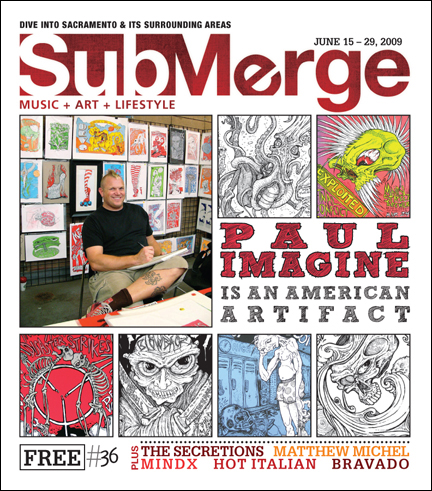
Sacramento Rock Poster Artist Paul Imagine Featured in Documentary
No matter what uptight musicians will have you believe, music is not all about the music. Image is important. If you don’t agree, go to any concert in any bar, club or arena anywhere in the world. Chances are, the look of the crowd will mimic that of the people on stage.
It’s nothing to be ashamed of. Hey, if you can cram yourself into a pair of skinny jeans, good for you. Humans are just visual creatures. But the images we associate with the music we love doesn’t have to be as superficial as the right pair of sunglasses or the ironic value of a T-shirt. What we see can actually—and should—enhance what we hear. And if those images say something about the time in which the music it represents was created, then all the better.
Documentarian Merle Becker has long had a fascination with the iconography surrounding music. A self-described “obsessive music fan,” Becker’s first job out of college was working for MTV’s embarrassingly seminal ’90s cartoon program Beavis and Butthead. She worked alongside the person who selected the music videos shown in each episode.
“I was going through the MTV library looking for obscure and bizarre music videos,” Becker admits. “It was basically 9-to-5 watching music videos, which I loved, but I think anyone else would probably have slit their wrists.”
If nothing else, her work with Beavis and Butthead only seemed to strengthen her draw to the imagery of music. Fast forward to 2004—years after the misanthropic animated duo uttered their final, “Heh, heh”—when in a book store, Becker stumbled upon The Art of Modern Rock, a coffee table compendium of rock poster art. Though she admits she wasn’t a collector or even a fan of the genre prior, the book certainly piqued her interest.
“That was the first time I was aware people were still doing [rock posters],” Becker says. “I thought the ’60s had happened, and I didn’t realize people were even still doing them.”
She was so “blown away” by The Art of Modern Rock that she decided to delve deeper into the world of rock posters. She left her job at MTV and embarked upon a four-year journey that culminated in American Artifact: The Rise of American Rock Poster Art, a documentary that follows the timeline of American rock poster art from its birth in the 1960s.

Merle Becker
American Artifact interviews collectors and also some of the genre’s most notable names, spanning decades, including Stanley Mouse, Jermaine Rogers, Frank Kozik, Coop and Tara McPherson. These artists have created posters for bands such the Grateful Dead, Death Cab for Cutie, Green Day, Tori Amos, Pearl Jam and many others. Also featured in the film is Paul Imagine, a Sacramento rock poster artist who has worked for bands that he admits, “Most people don’t know.”
“The thing I love about Paul is he’s always laughing,” Becker says of Imagine. “I don’t think I’ve ever talked to him when he wasn’t giggling. When I was putting the film together, it was a lot of fun to go through his footage, because he’s always joking around and laughing and giggling. We would sit in the edits and start giggling with Paul.
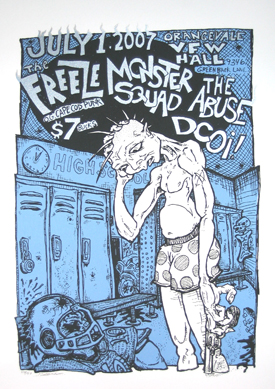
“He has done a lot, and is very active in his local scene,” Becker continues. “Not just with his poster art, but putting on shows, and bringing other poster artists to do shows in Sacramento. I was drawn to him because he’s so active, his work is so fabulous and he’s just a funny, super nice, giggly guy. And he said some fun stuff in the film. His quotes always seem to get a laugh from the audience.”
Submerge interviewed Imagine via phone from his home as he was “chilling and just checking e-mails.” And, as Becker suggested, he laughed quite often as he explained how he got into creating rock posters and got involved with American Artifact.
Imagine credits heavy metal album art as one of his earlier influences.
“I used to draw Eddies from Iron Maiden everywhere,” Imagine explains. “When I was in high school, I was a big metal head.”
However, it was in the punk scene that he eventually found a home. Originally, Imagine wanted to be a musician, but soon realized he “had absolutely no talent for it.” But being active in the scene, going to shows through out the ’80s and ’90s, he found another way to contribute.
“I met a lot of bands, and they needed fliers, and it went from there,” Imagine says. “I started doing friends’ bands and photocopied fliers. I’d learned how to screen print, because I wanted to put my artwork on T-shirts.”
It wasn’t until around 1999, when he attended a rock poster show in San Francisco, that he graduated to screen printing rock posters.
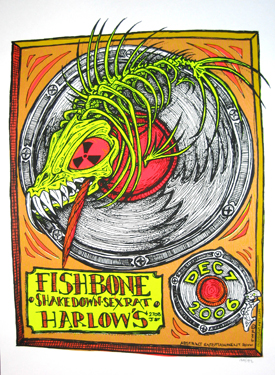
“I actually talked to some of the artists like Firehouse and Chris Shaw, and I was blown away,” Imagine explains. “I was like, ‘Dang, I can just start printing posters instead of photocopying fliers,’ and right after that, I
just started.”
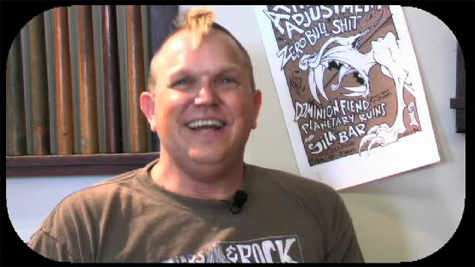
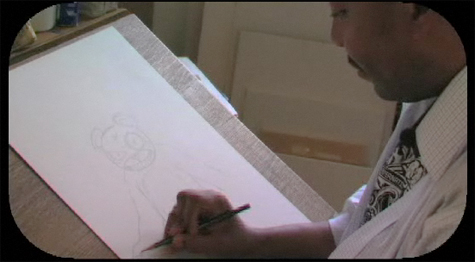
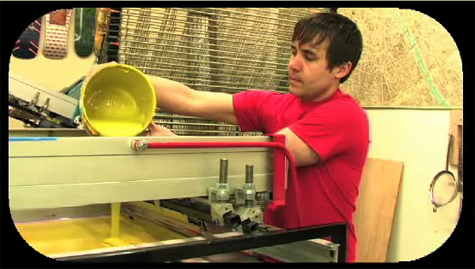
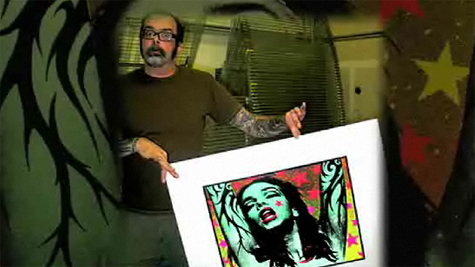
Since then, Imagine has managed to gain some measure of notoriety in the underground world of rock poster art without creating images for big names in the music world. Though he’s not entirely opposed to the idea.
“I would have to love them,” Imagine says of the possibility of working with marquis music acts. “I don’t listen to radio bands and stuff. I mean, if Iron Maiden wanted a poster from me, I probably couldn’t turn that down. I stick to shows that I would want to go to. I don’t go to the big auditorium shows. I stick with the punk rock bar shows and small clubs. If I don’t want to go to the show, I won’t do a poster for it.”
A lot of his aversion to working with major music acts has to do with his distaste for working under restrictions. Perusing Imagine’s art, you’ll find bizarre creatures, chaotic lettering arrangements and plenty of skulls—a freewheeling, outsider aesthetic befitting the bands (such as Melvins, Diseptikons and Secretions, also featured in this issue) Imagine chooses to work with.

“I don’t like the bigger shows where you get art directed,” Imagine says. “I can’t handle being art directed.”
Imagine got involved with American Artifact at the behest of The Art of Modern Rock co-author Dennis King, who suggested the artist to Becker. Imagine says he was surprised to be contacted.
“I’m always surprised when this stuff happens,” Imagine says. “Any of the books I’m in, I’m like, ‘Woah, I’m in!’ To get into this, with so many incredible poster artists out there, is pretty amazing—especially since my style is not quite mainstream. All the posters I do are for small label, no-label, touring punk rock bands, so I don’t have the whole, ‘Well, I did posters for Van Halen!’ thing going on.
“When I get asked to do these things, I just go along with it, and figure somebody made a mistake along the line,” he adds with a laugh. “I don’t want to alert them to their mistake.”
Mainstream or not, Imagine certainly holds an important place among the canon of rock poster artists. And while the genre has been labeled “lowbrow,” rock poster art, as Becker asserts during our interview and in the course of her film, should be “preserved”¦and celebrated,” she says. According to Becker, the work is important because it is an “artifact of the time period that it came from.”
“A hundred years from now, when you look back at the art that was coming out from the period, you’ll be able to look at the rock posters and see a little bit about what was going on in the underground and the political views of the artists at the time,” Becker says.
Pullout Picks Up Where Monster Squad Leaves Off
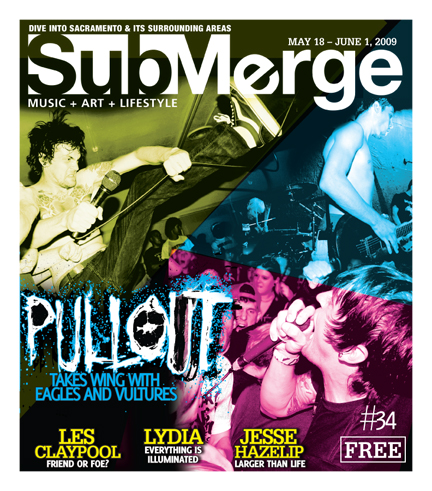
All good things must come to an end—or in this case, a pause. Though the members of Monster Squad—the venerable Vacaville-based hardcore band—haven’t called it quits, the group did decide to take an indefinite hiatus in 2007 after roughly 11 years of causing a ruckus.
“Some of the guys wanted to take a break and didn’t want to go on tour anymore,” says Pullout vocalist Chris, who played guitar and sang as a member of Monster Squad. “Those of us who wanted to keep doing it formed Pullout and kept going.”
“I was in another band called Rosevere, which had some guys from a band called Dcoi, but two of the guys in that band couldn’t tour, so we were going to call it quits with that band anyways, because we really wanted to tour,” adds Jason, Pullout’s drummer. “We were looking for a singer, and since Chris was already a good friend, and we knew we’d get along with him on the road, we decided to try him out. That’s how we started doing this.”
Pullout is set to release its long-anticipated (especially as far as the band is concerned) debut LP, Eagles and Vultures, on Sacramento’s The Downtown Academy label. The album will be released on June 5, almost a year to the date after it was recorded, Jason says. According to Jason, the road to getting the album in their hands, and in the hands of area punk fans, has been fraught with peril.
“We were trying to find a label, and that takes time,” Jason says. We had a label in Europe pretty much instantly, but finding an American label was pretty rough.”
Pullout was close to a label deal, but that fell through. Luckily for the band, some people from that label (neither Chris nor Jason would mention the name) moved on to The Downtown Academy, where Pullout eventually found its American home. But, even with a label deal, problems persisted.
“It seems like everything that could go wrong at a printing house or a pressing plant went wrong when sending this album out—from the art and the graphics being in the wrong areas for their format, or the masters not reading on their program,” Jason laments. “It was nuts.”
Production woes aside, Jason says the band never got frustrated.
“We knew it would get out eventually. We weren’t frustrated, just more anxious to get it out and get the finished product.”
Strangely enough, though Eagles and Vultures may have taken a year to be released, the album was recorded in a much more expedient fashion.
“We actually did it in three days,” Jason says. “We went back and did one day of touching up some small stuff in, like, half a day. But other than that, we banged it out in three days. We stayed there, got up in the morning, recorded all day, and then woke up and did it again the next day.”
Perhaps an album as aggressive as Eagles and Vultures could only have been created in such a fashion. Its hardcore-informed hooks are as slick as they are sharp, creating a multi-faceted punk rock assault. Chris says that Pullout’s collaborative songwriting process has contributed to the band’s variable sound.
“Basically, everyone in the band is a guitar player and writes songs,” Chris says. “Usually, one person will come up with an idea, or write the whole song, and the rest of us will throw our ideas in. I write the lyrics to all the songs, and on the music we collaborate together.”
He goes on to say that having so many songwriters in the group does not create a too-many-cooks scenario.
“I think it’s great, because we all feed in from different influences,” Chris elaborates. “We all can throw our ideas in and people will write different sounding songs, so they don’t all sound the same. There’s some mid-temp songs, some really fast songs, some hardcore songs, some punk-sounding songs. I think it’s great, because we don’t stick to one specific sound. We kind of experiment with everything.”
Though the band is collaborative musically, Chris is mainly responsible for lyrics. He says a lot of the songs on Eagles and Vultures play upon the dichotomy of positivity versus negativity in various aspects of life.
“A lot of the songs are about losing your friends to drugs and political and social issues and then personal battles,” Chris explains. “I think the eagle and the vulture is a perfect representation of the whole thing.”
The title track is political in nature. “Eagles and Vultures” is an exploration of Chris’s feelings toward President Bush leaving office.
“I was going through a phase when Bush was leaving office, and I was reading a lot about the war and Blackwater and all these privatizing the military kinds of things,” Chris says. “Basically, it was just a look at the U.S., and how we say one thing but do another. We’re this great power, but at the same time, we always have this other angle. It’s stuff like that: governments being two-faced and presenting what they’re doing, but doing something else in order to get ahead.”
Chris says that he was happy about the election of Barack Obama as president, and is supportive of his administration thus far. However, he doesn’t believe his positive feeling toward the current state of the U.S. government will have a negative effect on his songwriting.
“I think there’s always going to be something to fight for, a voice that needs to be heard,” Chris says. “There’s always stuff in other countries, or stuff in our country like Proposition 8 getting passed. That’s a whole other chapter to be opened up. There’s always a fight to be had, always something to be said.”
With Monster Squad on the shelf, expect to hear plenty from Pullout in the interim. With an album just a few weeks away from release, Chris and Justin report that they have seven songs already written and are in pre-production for a new album that they hope to have released next year.
Though Sacramento’s Buildings Breeding Started as a Joke, the Band is Serious About Moving Forward
A perusal of Buildings Breeding’s Myspace page will show that the band has a sense of humor. The tagline under the band name describes the group’s genre as a fantastical mix of “healing & easylistening/religious/black metal.” Of course, even a brief listen to Buildings Breeding’s music reveals anything but. In place of these incongruous genres are dreamy male/female vocals bolstered by jangly pop melodies and swift percussive sensibilities. Perhaps “easylistening” isn’t too far off the mark, because the band’s songs are just so catchy.
Buildings Breeding’s ability to poke fun at itself may stem from the fact that the band started as a bit of a joke—albeit a romantic one. Frontman and founder Chris Larsen started the band as a way to confess his feelings for his girlfriend and now band mate, co-vocalist Melanie Glover. Larsen concocted Buildings Breeding as a fake band with its own Myspace page in order to reach out to Glover while she was abroad. This quirky back-story is a bit of a bane and a boon for Larsen.
“It’s kind of a silly story that we’re trying to get away from,” Larsen says with an uneasy laugh. “That story is haunting us our whole career.”
Whether the band was make-believe or not, its music struck a chord with Glover, and others as well. While still living in Davis, Larsen sent his songs out to Mushpot Records, which signed Buildings Breeding, even though it technically didn’t exist.
“I was pretending to be all these people. I submitted to them just as a joke, and they wanted to put out the record, so I was like, I better put together a band then,” Larsen explains.
“I don’t even know if I ever told them, because I didn’t want to ruin the chances of getting my record released.”
Now just a few years after Larsen conceived the band (he says he got the idea in 2006, but the group didn’t really come together until 2007), Buildings Breeding has bloomed from an inside joke to a bona fide five-piece with a bright future ahead of it. This month, the band will release its first nationally distributed album, In the Key of Calloused Fingers on venerable Bay Area indie Devil in the Woods. The album will be available on vinyl, limited to 300 copies (a digital version of the album was released April 28 and can be purchased via iTunes and other online music stores). The album is a compilation of older material from prior Buildings Breeding releases chosen by friends and fans and also some newer songs. Fittingly, Larsen says the title “¦Calloused Fingers also has a humorous connotation for the band.
“[The album] is kind of like a collection of what we’ve been doing for the past couple years,” he says. “We’ve been playing them so much, our hands are calloused.”
Using Myspace, Last.fm and other sites, Buildings Breeding put the “¦Calloused Fingers‘s tracklisting up to a vote. And in some cases, the band was surprised with what their fans chose.
“It brought some songs that—at least for me—weren’t first picks,” says Chris Vogel, Buildings Breeding’s bass player. “There were some songs that did really well off the self-titled [album], but some of the fans picked some of the deeper songs on that record, so it was nice to include them on “¦Calloused Fingers.”
According to Larsen, letting fans choose their favorite songs keyed the members of Buildings Breeding into which of the songs were working better than others.
“When you have people e-mailing you what songs they like, you kind of know what your live shows should sound like,” Larsen says. “There are some tracks that, in my heart, I thought people might like, but it definitely gets you on the right direction as to where to take the band. It’s obvious when you listen to this record, people like certain ways we go better than others.”
However, both Vogel and Larsen say that fan reaction alone won’t drive the music behind their next recording.
“I think what the fans were telling us by picking the songs was definitely important, but at the same time, we want to grow as a band,” Vogel says. “You can sit and make songs that everyone’s going to like all the time, but you’re just going to fail.”
Though the songs on “¦Calloused Fingers may be new to many people nationwide, Buildings Breeding are more than familiar with them. The band is looking forward to recording new material. Larsen hopes the band will re-enter the studio sometime after May.
Whether fan reaction plays any part in the road ahead for Buildings Breeding will remain to be seen. A larger affect on the direction of the band’s music will probably come from the band’s desire to write their next album together, as opposed to Larsen as primary songwriter.
“With five different people’s input, you don’t know where that’s going to take you,” Larsen says. “I think creating a record together will be the happiest thing we can do.”
Recently, Buildings Breeding was injected with new blood. Kevin Dockter stepped in on lead guitar and Justin Titsworth joined as the new drummer. Both members have had a big impact on the band. Vogel and Larsen both praise Dockter for his “tasteful” playing.
“Kevin instantly just opened up a new door for us with his guitar parts,” Larsen says. Kevin really embellished the songs.”
Meanwhile, Titsworth has taken the band to “the next level,” according to Larsen. Titsworth’s arrival allowed Glover to step out from behind the kit and be more upfront with her vocals, with out causing Buildings Breeding to lose anything rhythmically.
“Some of her songs are our best songs and fan favorites, our top sellers of whatever we sold in downloads,” Larsen says. “It really made me disgruntled to not be able to do that properly. It definitely changes everything to have everything we want going on while she’s singing.”
“I think we’re at a point with five members that we can branch out and bring some new stuff to the table that we haven’t been able to before,” Vogel adds.
With a solid roster in place, it would seem that the good humored members of Builidings Breeding have plenty reason to be resolute going forward—whichever direction their music takes them.
The Devil You Know
Two nights in New York City have taken its toll on Jeremy DePoyster. America’s largest city is a lot to take in for new visitors and longtime residents alike, but for a member of a band whose star is on the rise, New York’s hectic pace can reach exhausting levels. DePoyster, guitarist/vocalist for Dayton, Ohio’s The Devil Wears Prada, has been shuffled from meet-and-greets to photo shoots to interviews, not to mention playing two shows at The Fillmore at Irving Plaza, which he says were “probably the craziest New York shows we’ve had.” DePoyster doesn’t mind all the fuss, though.
“I’d still take this over any other job,” he says through intermittent yawns, early in the morning after the band’s second show.
The Devil Wears Prada won’t have much time to rest in the coming months. As of this writing, the band’s latest album, With Roots Above and Branches Below, is just a month away from release. Recently, the band leaked a song, “Dez Moines” onto their Myspace page. In less than a month since posting, the song has already received close to 1.8 million plays, whetting fans’ appetites for the new material. DePoyster says the song is a good bridge to The Devil Wears Prada’s new songs as it closely resembles the sound of the tracks on the band’s previous effort, Plagues.
“The further we get into the tour, it seems like the more the kids are into that song,” DePoyster says of fan response to the new track live. “I don’t know if it’s getting more popular on Myspace or something like that, but it seems like the further we get into the tour, the more positive the response is to that song.”
Though DePoyster describes some of the songs on With Roots“¦ as having a Plagues-ish feel, he also believes the album is more mature and sees the band branching out (pun intended) in new directions. For example, With Roots”¦ marks the first time the metal-core group has opted to write songs in a tuning other than drop-D, dialing their tuning as low as drop-B for some songs.
“I really felt like we’d done two CDs in the same thing, and I really didn’t want all the choruses and chord progressions to sound the same as the last two records,” he says of the decision to drop down. “I didn’t want to write the same album again I guess.”
The band will be touring the country headlining the Sweet Brag Tour with A Day to Remember, Sky Eats Airplane and Emarosa until May 1, just four days before the album hits shelves; after that, they will fly to Russia for a couple shows, before returning to the states to join this summer’s Vans Warped Tour—not bad for a band barely 4 years old. Sacramento-area fans will be able to catch the Sweet Brag Tour when it rolls through Orangevale’s Club Retro on April 19, 2009. The Devil Wears Prada will once again visit Sacramento on Aug. 21, 2009 when the Vans Warped Tour comes to town.
Submerge rustled DePoyster out of bed for the following interview.
What did tuning lower do for your songwriting?
We could still write our same style and still do our same thing, but it had a different feel to it, just because we’re not used to playing in that tuning. Playing our same style of things and our same style of writing in a different tuning, it added a different feel to even the singing parts and everything like that. It was heavier.
Do you think it opened you up creatively?
Yeah, definitely.
Was there a particular song that was really benefited by using the lower tones?
There were two songs, I’d say, “Assistant to the Regional Manager” and “Wapakalypse,” that would have suffered if they weren’t in that lower tuning because of the style of the riffs and stuff like that. They were definitely helped by being in that lower tuning. There was this other song that we did that had this really epic singing part at the end of it that I thought was cool just because it was in a different tuning with different chords than we would normally play. I could do some different stuff with it, and if we had done 10 or 11 more songs in drop-D, it would have just been too monotonous. It would have been just like Plagues.
I read a quote by someone in the band that said the new album is “more mechanical” than what you’ve released before. Would you agree with that?
I don’t know who said that. I wouldn’t necessarily say it’s more mechanical. Maybe they meant better structured because I think we’ve become better songwriters together than our last two records. Plagues was a big step forward in our songwriting, but I think this one even more so. The songs flow better through out. Other than going into some weird tempos and things like that. We’ve done that before, and that was cool, but it’s not really what we want to do now. We want to write better songs and not just breakdowns and big metal riffs and stuff like that. I think it [With Roots”¦] is easier to listen to and it’s more catchy because they flow so well all the way through. My favorite songs on the last record were songs like “HTML”¦” and “Hey John”¦” and stuff like that, because they flowed pretty fluidly throughout the song. We tried to do that with all the songs on this record.
So it’s less about seeing how much you could cram into one song than it is making the songs cleaner?
Yeah, exactly, and I think we were a lot more apt to, like, if it didn’t make sense in the context of the song, we would just scrap it. As opposed to before, we would be like, “What should we play here, this weird little thing? Yeah, let’s do that. Why not?” This time we were stricter on what made the cut and what didn’t.
I was reading the lyrics for “Dez Moines,” and one of the lines goes, “Profit zero, achievement zero.” I know the band’s name deals with materialism, and that seems to work into that song in particular, as well as being a recurring theme within the band. Do you see materialism as one of the biggest problems this generation has to overcome?
I don’t even know if it’s necessarily this generation. It’s just one of those things where”¦well, it’s hard to say. As a Christian band, we’re working for God first. I know myself, in my own personal life, it’s easy to get wrapped up in other things, whether it’s guitars or video games. I collect DVDs and stuff like that, but none of that stuff really matters in the end of it, by any perspective. It’s not important. It’s just something that’s always been important to us, and Mike [Hranica, vocals] really dove into that again lyrically.
Given what you just said, are any of the songs on the new record inspired by the current financial situation? What’s your take on that?
Reading through the lyrics, I wouldn’t say any of the songs are inspired by the financial situation. We haven’t really talked or thought about that whole business too much. I know we have one political song, but it’s a little bit different than that. It’s obviously a scary time for everybody. Even before all this crap happened, it’s been really hard to sell records, because everyone downloads, and the labels are suffering, and the bands aren’t selling as many records. Someone’s record just came out, I don’t know, Kelly Clarkson or something, and it only sold 250,000 copies the first week, which is insane that she would only do that many, where if it was three years ago, she would have done a million or something. It hasn’t really affected us, because we still have a lot of people coming to shows. We’re really lucky in that. Obviously, it sucks. Industries are crashing—the auto industry and all that stuff—and that’s not cool.
You’re headed out on the Warped Tour, and I guess it’s a nature of the beast, but there’s a lot of marketing that goes on during the tour, in the tents between the stages, does the commercial aspect of the tour bother you at all?
Not really. We’re not a punk rock band or anything. It doesn’t really matter to me, I guess. I come from a different background. I used to go to Warped Tour when it was in the new shape of things—Fall Out Boy and all those bands—and I was really into it. I was telling someone the other day that Kevin Lyman is a genius, and he’s done a really good job of keeping the tour current. He could have kept it all old punk bands just to please people and appease people, but he hasn’t really done that. He still brings back those bands every year, but he also brings in a lot of the new things. We didn’t know what to expect going into it. We thought it was either a pop-punk tour or a punk rock tour, but we went in on the first day and had a huge crowd and that happened the entire tour—the craziest shows we ever played. He does a really good job of building a broad package that still does really well.
You already mentioned that you and the members of the band have strong Christian beliefs, but many bands in the metal genre have a decidedly anti-Christian message. Did you listen to a lot of metal growing up, and why did you choose this form of expression?
Yeah, I definitely listened to a lot of metal growing up—and even more so now. I love Judas Priest, Iron Maiden, Slayer, all that good stuff. Musically, I love those bands. I don’t necessarily agree with what they say, but I can appreciate the music. I think the same thing applies to us. I mean, obviously we’re a Christian band, but we’re not preaching. We’re not shoving things down people’s throats. If they do come from a metal background, and they’re really anti-Christian or whatever, I still think they can find something in the music that they like.

Also read The Devil Wears Prada at Club Retro in Orangevale on April 19
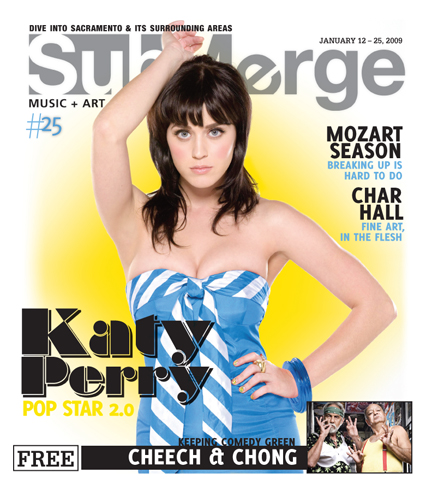
Hello Katy
Love her or hate her, Katy Perry dominated the pop music scene in 2008. First gaining Internet notoriety with “Ur So Gay,” the 23-year-old pastor’s daughter was quickly catapulted into ubiquity on the strength of her unnervingly catchy and coyly sinful hit single “I Kissed a Girl.”
Though she seemed to emerge miraculously out of the Internet ether, Perry’s road to pop stardom began in her teens. At age 17, she entered under the tutelage of Glen Ballard, the producer of Alanis Morissette’s star-making album, Jagged Little Pill. Armed with a bold voice, and the right people around her, Perry’s own platinum success appeared inevitable.
But no one rises through the ranks of pop culture it-dom without pissing off a few people along the way–intentionally or otherwise. Parents were outraged by Perry’s ringing endorsement of girl-on-girl experimentation; meanwhile, some homosexual rights groups frowned upon the perceived use of “gay” as an insult. Perry also ruffled the feathers of her peers: When she jokingly referred to herself as a skinnier version of Lily Allen, the easily roused British pop star (and Perry’s Capitol Records label mate) fired back in the press and threatened to publish Perry’s cell phone number on the Web. Most recently, Perry’s ex-boyfriend, Gym Class Heroes’ Travis McCoy, published scathing lyrics on his blog (not his own lyrics, mind you) in response to their breakup. This may sound like high school-level drama at best, but let’s face it: Controversy moves units, as does sex appeal, and Perry has plenty of both at her disposal.
A new year poses new challenges for the burgeoning superstar. Perry opens 2009 by embarking on the Hello Katy tour–her first headlining world tour–that will bring the young singer/songwriter to large clubs and small venues such as Sacramento’s own Empire on Thursday, Jan. 29. For the many sold-out dates lined up before her, Perry promises “plenty of eye candy” for ticket holders. In the following interview, she discusses with Submerge her upcoming tour, debunks some common misconceptions and explains why a virtual duet with Tay Zonday at the Grammys could be on the horizon.
I heard you caught the flu.
Yeah, I have the flu, and I’m taking all kinds of vitamins and everything and trying to get miraculously better by the hour.
I never get sick. I’m so surprised, but I think a lot of my band members were sick over the past week, and I’ve been in rehearsals and stuff. You know, no pain no gain.
I guess that’s what happens when you get cooped up with a bunch of musicians. I hear they contract disease a lot.
Yes. We keep the bus at a frigid temperature, because, you know, if it’s too warm, it spreads. So the bus is always super cold. And we do it all for you! We tour in pain for you.
You were pretty busy in 2008. Are you concerned about how you’re going to follow that up this year?
I really don’t know how it all happened… I mean, I worked really hard, and I’d hoped the fruits of my labor would show up one day…and they did. But, I don’t know. If everyone knew the secret, then I think they would all be using it right now. I’m just putting one foot in front of the other and doing the best job that I can. I’m always in competition with myself to be better than the last day, and to give people the unexpected, so that people don’t figure me out. So they have to wonder, “What’s she going to do next?”
With this tour, especially, I think a lot of people were expecting me to do huge venues, but I was like, no. I may have had a couple of songs, but I’m still doing 1,500 to 2,000 seaters, so if you’re standing in the front row, and I reach my hand out, you’re likely to pull me in with you. I just think that’s really important. That’s why I exist–I don’t really call my fans, “My fans.” They’re more like my friends. I know that sounds cheesy, but I feel really close with them. They’re all really smart, and they’re all creative in their own ways as well.
I’ve followed your blog for a while on Tumblr. It seems like the Internet has been very good to you, in general. I’m not sure if you use it better than some of your contemporaries, but you definitely have a connection to it. What are your thoughts on using the Internet and how that’s helped you get to where you are right now?
The Internet is a fast-moving train that’s heading to a great place, and if you’re not on it, you’re going to be left in the old place–the boring place. It’s vitally important. It’s the big gap between ages. Someone who doesn’t use it, or doesn’t know how to use it, needs to learn, because it’s going to be part of our future. It is a part of our future now. There’s no barrier between me and someone in London, or Tokyo. There used to be such a big barrier. You couldn’t really connect with anybody, and now you can… I have a really great forum of kid–it’s Katyperryforum.com–and they’re just so cool. I log in and leave posts and stuff like that, and my blog is really important to me. I think it shows a little bit more of my personality. I used to run my Myspace every day until it really got to an intense point. But my blog is my go-to for posting all kinds of things. I post funny shit that I see, sometimes I post responses to things. Sometimes I post subliminal responses to things [laughs] and you only get it if you really know–if you’re really following. I’m a fan of blogs, and a lot of my friends were doing it, and I thought I should figure out some HTML shit too.
Reading it, it doesn’t seem to fall into the category of promotional tool.
No, everything for me is really organic. A lot of people sometimes think, “She’s manufactured and she’s got 12 guys in suits pulling her strings.” I think over time they start to realize what they first thought I was is not where I’m at. I see in blogs and places like that, where people will write, “I didn’t know about her. I wanted to hate her at first, but I couldn’t.” Everybody wants to cast judgment really quick. I understand that. There have been a lot of lame pop girls who have let us all down. So it’s a good feeling for me when people change their minds.
When I was telling people that I would be interviewing you, they would either say, “I love her,” or, “I can’t stand her.” There didn’t seem to be much in between.
Some people don’t understand that I’m in on my own joke. If kitsch could be my middle name, I’d have it there. I realize I’m a love it or hate it situation, but at least they’re feeling something.
You’re a part of a contest in conjunction with the Grammys, “My First Grammy Moment.” I was hoping you’d like to talk about that.
It’s going to be awesome. The Grammy performance is going to be out of this world. When I pitched them the idea, I thought for sure they would say, “Oh, we can’t even fathom that,” or “That’s too MTV Awards,” you know what I’m saying? But they embraced it. I thought up this idea for a year, and I wanted to do it at some point, and I can’t believe the Grammys are going to let me do it. Also, [during the Grammy performance], the best videos picked that are going to be shown on these huge TV screens… It’s kind of like they’re parodies, but they’re going to actually be singing it. I’m telling everybody to put costumes in it, put some choreography in it, make it fun and colorful, because that will definitely win. I would do it [enter the contest] if I wasn’t performing [laughs].
You performed at the YouTube Live event. Are there any YouTubers that you follow that you hope submit a video?
Oh yeah, like, Fred and Tay Zonday [of “Chocolate Rain” fame]. I would die if Tay Zonday sang “I Kissed a Girl” in his voice.