I hear both presidential candidates going on and on about jobs. During the first debate, President Barack Obama touted that his policies have created plenty of jobs during tough financial times; meanwhile his opponent Mitt Romney blasted the president for not creating enough jobs and claimed that if he was elected, like everyone ever would be employed (paraphrasing)–even though he practically told the debate’s moderator Jim Lehrer that he’d probably be out of work after promising to cut PBS funding. I know unemployment is a problem, but a quick perusal of Craigslist.org shows that there are jobs everywhere, that’s even accounting the 70 or so percent of them that are probably pyramid schemes. And this time of year, there’s really no reason to be out of work. Sorry for the tough love but it’s true. Just bet on football like I do. Trust me, it’s a full-time gig.
Clearly betting on football is a big industry in this country. Everyone does it. Even my sister, who maybe has never sat through a full football game in her life, chips in for one of those Super Bowl box pools every year. The only reason why people were so pissed off about the replacement referees making up rules as they went along during the NFL officials’ labor dispute was because there’s so much money riding on even the most inconsequential and menial professional football game. It’s sort of the national pastime. So, since everyone does it, I’d like to think it’s legitimate work.
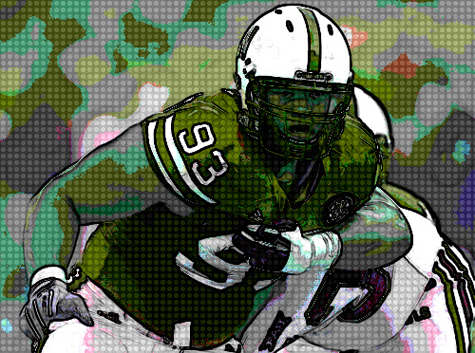
As the days grow shorter and the weather gets colder and 300-pound dudes don heavy armor and fly into each other at preternaturally fast speeds, I enter into self-employment. Though the season doesn’t start until September, I really get to work in August to prep my fantasy draft. I am in a points-per-reception, individual defensive player league, which basically means that I’m a nerd who plays in a league full of nerds. It’s also a keeper league, so I have to first think of which players from my previous year’s roster I’d like to keep for the next season, then I have to map out my draft strategy depending upon who’s available after the rest of the teams in the league have kept, taking my order in the draft and what holes I’ll need to fill into consideration. It keeps me up for hours looking at numbers and trying to find the story behind those numbers, such as, is this player on the way up? Does he have the team around him to put up better or worse stats than the year before? Does he have a history of injury? Is it in his character to do something utterly cruel and stupid like run an illegal dog fighting ring even though he’s a ridiculously well-paid athlete and clearly isn’t hurting for money? There are a lot of factors to consider.
Of course, you have to spend money to make money when it comes to betting, and that’s really all fantasy football is. It’s gambling just like calling up a bookie, except you probably won’t have to worry about the dork who’s your league commissioner breaking your legs if you don’t pay up. My league’s buy-in is just $60. It’s not a big money thing, but I’ve heard of leagues that play for some serious cash. The thing is, while even $60 may be a lot to toss away on a gamble, take into consideration that it’s a lot cheaper than buying a new suit for an interview and way less stressful. You can go to “work” in your underwear and drink a beer while you conduct your business. What’s better than that?
Once the season starts, shit gets serious. You have to hawk your league’s waiver wire, cut players from week to week, constantly check your stats while watching games, read injury reports. And this year fantasy football has taken up more time than ever as there are now games every Thursday (seriously annoying, because players who are banged up have less time to heal on short weeks, wreaking havoc on your roster). But you know, it’s a living. All it takes is $60 and a dream.
I’ve also entered a weekly football pool this year. A relative of mine convinced me to go in on a pick ‘em pool with him. He’s been doing it for years. He has charts and tables and numbers. He has five years of stats and figures that show which teams cover the spread and which teams don’t. He’s been doing it for years and has roped in a number of friends and relatives, and he keeps track of everyone’s picks and accumulates our wins and losses. He asked me to help him this year because he thinks I’m good at computers which means, he doesn’t use them so anyone who does must know what they’re doing (I don’t, really, but I can make a mean spreadsheet).
So now football betting really is a full-time job. With fantasy football, the results of games don’t matter, just so long as your players in that game have done well. Now, I have to worry about which teams won and by how much. I watch every post-game and halftime show. I actually pay attention to Monday Night Football instead of just drinking my face off. Well, I mean, I still do that too, but it’s cool because I’m on the job.
-James Barone
jb@submergemag.com
Faith is a powerful thing. It drives people to do all kinds of things–both positive and negative. For Sacramento Christian hard rockers The Seeking, faith has been a nourishing force in the band members’ lives. The band stands to release its full-length debut, Yours Forever, on Nov. 6, 2012. Before that, they will launch on a mammoth cross-country excursion, touring in support of Woe, Is Me.
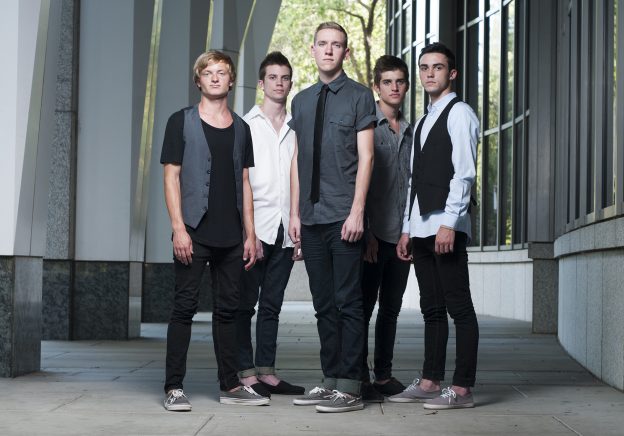
The tour begins in Atlanta on Nov. 2, 2012 and circumnavigates the United States before culminating in Greensboro, N.C. The trip will keep The Seeking busy, playing shows almost every day, and it’s so extensive that some of the band members (which include Taylor Green, vocals/screaming; Dylan Housewright, clean vocals/guitar; Grayson Smith, guitar; Shane Tiller, bass; and Ben Wood, drums) had quit their day jobs, taking a leap of faith in their music, so to speak.
It would be a nerve-wracking experience for anyone, diving headlong into a career in music, but considering the members of The Seeking range just 18 to 21 in age, it may even be more so.
“We’re probably going to cry,” Taylor Green joked in the first of two phone conversations about the band spending such an extended time away from family.
Green started the band with Housewright in 2010, the two still in high school. Green wasn’t sure what his role would be in the band they wanted to get together. He considered bass and guitar, but didn’t want to buy the gear. He even thought about drumming, but the physical coordination proved difficult.
“I was going to try to do drums, but the only thing I really needed to try to get down was the feet,” he said. “It’s the hardest freaking thing. I don’t know how Ben does it.”
Green had done more traditional singing in his church’s youth group, however, and settled on becoming Housewright’s vocal counterpoint in The Seeking. Though Green also provides traditional clean vocals, his guttural screams shake up Housewright’s soaringly melodic voice.
“Screaming showed up out of nowhere,” Green said. “I figured I’d just try it. I just went for it.”
It would seem Green made the right decision. The band signed to a label (Razor and Tie) in September, and when Submerge talked to Green, he and the band were in Los Angeles, recording with well-known producer John Feldmann, who’s worked with a litany of well known artists (The Used and Papa Roach this year alone) and is also the frontman for pop-punk stalwarts Goldfinger.
Listening to The Seeking’s Yours Forever reveals a barrage of heavy rock sounds–crushing guitars, pummeling breakdowns and snarling vocals–but the album’s most striking feature is its melodicism. It’s the band’s pop tendencies that The Seeking is working to bring out under Feldmann’s keen, catchy songwriting sensibilities. Green reported that the band was re-recording “Alone,” perhaps the most hook-laden track on Yours Forever, reworking it to make it even more radio-friendly as well as working on a new as-yet untitled song the band co-wrote with the producer that should be released in 2013. In the following interview, Green described what it was like working with Feldmann, offered clues into the band’s first music video and discussed matters of faith.

How has it been working with John Feldmann? What have you done in the studio so far?
Oh, it’s amazing. It’s an awesome experience working with him. The bands he’s recorded are legendary bands, and he’s done some solo artists as well. So far, it’s been awesome. We’ve done a lot of demoing the past couple days, and today we started doing the final product and it turned out really good. We’re laying down some drums, we got the bass track laid down in there. It’s turning out really well.
You mentioned a couple days ago that you were going to be working on “Alone.” Is that the track you’re going with for the radio?
We’re actually working on two songs. We’re releasing “Alone” on the album, the original one, but this one is redone a little bit. It’s going to have some new parts to it. It’s going to be released separately for something for radio–hopefully it will get there. We’ve got another song that we started completely from scratch, and it’s all ready to go. It’s all demoed out. That one sounds amazing as well.
You said you were working on rewriting the chorus for “Alone” with John Feldmann. How was it writing with him?
His writing is pretty cool. His studio is separate from his house–he works on his property–but he’ll go play his piano in his house. Dylan met up with him at the house and they worked something out. It’s definitely hot, and it’s definitely catchy, and it’s definitely awesome. It’s going to fit so well.
Tell me about this new song you guys started from scratch. Was it based on any ideas you and the band had kicking around?
We had some ideas, but we came in and we didn’t really get a chance to show them. He [Feldmann] started off asking us some questions when we first got there and took off and started writing. We came together and figured everything out. It’s all from scratch. We started writing it when we got here. It’s turning out awesome.
What kind of stuff did John ask you guys to get you going?
He just wanted to get to know us a little bit, to see what kind of band we were. We covered the fact that we were a Christian band. He asked us about how we grew up and what type of music we started playing and how were we before we got signed, and how we’re evolving. He went off and started recording stuff. The chorus is definitely the catchiest part, but it’s a really pop-y side to us. We think people are going to dig it.
You guys seem to be exploring the pop-ier side of things. You were saying that you came from a heavier music background. Is it fun for you to do something outside of your comfort zone?
It’s really fun. We’ve been playing a style for so long, and we definitely see ourselves staying in that style for a while, but this is something that’s different from the album. It’s way pop-ier than the album, but it’s fun to go in there and throw down some singing–no screaming at all.
You’re going to be filming your first music video on Sunday. What song are you shooting the video for?
It’s going to be for the title track, “Yours Forever.” I’m not sure where it’s going to be yet, but it’s somewhere in SoCal. It’s going to be fun.
Did you have a hand in the concept of the video?
Yeah, we picked the concept a couple weeks ago. We had about three concepts to choose from, and this one fit the meaning of the lyrics more. The other two didn’t fit the lyrics too well, but this one definitely did.
Can you talk about the concept more?
I don’t think so [laughs]. I’m not too sure what I’m allowed to talk about. The lyrics are about God talking to us… I’ll get into a little bit. I believe it’s about a girl, and something happens where she could lose her life. Right at the last minute, or right after she dies, her life flashes before her eyes, and then the music video kicks in, like everything kicks in, to what she sees in her future. It flashes to her at the end, to her before her dying, and then the video changes from there, and there’s a twist to it. I’m really excited about it. It’s a cool concept.
A lot of your music deals with your faith. Is that the band’s first goal when it comes to making music? Are you concerned with expressing that?
Definitely. We want people to know that we express our faith through our music. We’re not like those preaching bands, like For Today, but when we play, we want to show people that we’re there to love on them, and God is there to love on them. We’re here for a reason, not just to play music, but we’re here to be a shoulder to cry on or a friend to them. We’re trying to show God’s love through the band to them. It’s just an opportunity to show people that they’re not alone in struggle, that if they want to try God out, we definitely encourage that. Just, not make them feel uncomfortable when they come to watch us, that we’re there to simply hang out with them and talk with them about anything. If they want to have faith in the Lord, then we’re there to encourage them. Faith is a huge thing with the band. It’s something we want people to recognize.
Was music one of the things that helped you discover your own faith?
Yeah. I became a Christian when I was young, but nothing really hit me until I started high school, and even then, I wasn’t in any bands or anything. I grew up in a Christian home. My parents didn’t, but when I was born, they became Christian and their faiths grew as well. They didn’t pressure me like a lot of parents would. It was more of a choice for myself. I was always a clean-cut kid. In high school, I thought for a long time I’ve been faking it, but let me see what it is to really put myself [into faith]. It was an awesome experience. I grew to love the Lord. Music is one thing I want to do with the band, because I knew it would get me out of my comfort zone of just staying in my hometown and going to church and being on the worship team. I wanted to step outside my comfort zone and see where God could take me. I trust Him to take me out on the road…and see what He could do with me. It’s an awesome opportunity, and it’s going to change my life.
The Sacramento area will get a few chances to see The Seeking live. First, they play with Jonny Craig for a two-night stint at Luigi’s Fungarden on Oct. 26 and 27, 2012. The band returns on Nov. 19, 2012 with Woe, Is Me at Ace of Spades. The Seeking has also set up a donation page to raise money for gas during their long arduous trek across America. Help keep the fuel tank full by going to http://www.indiegogo.com/theseeking. For more show info, go to http://www.facebook.com/theseeking.
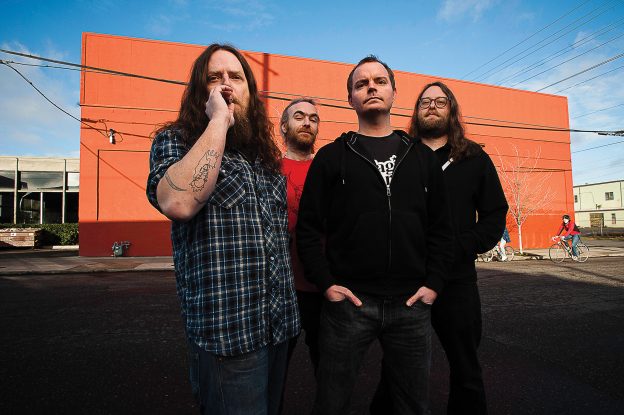
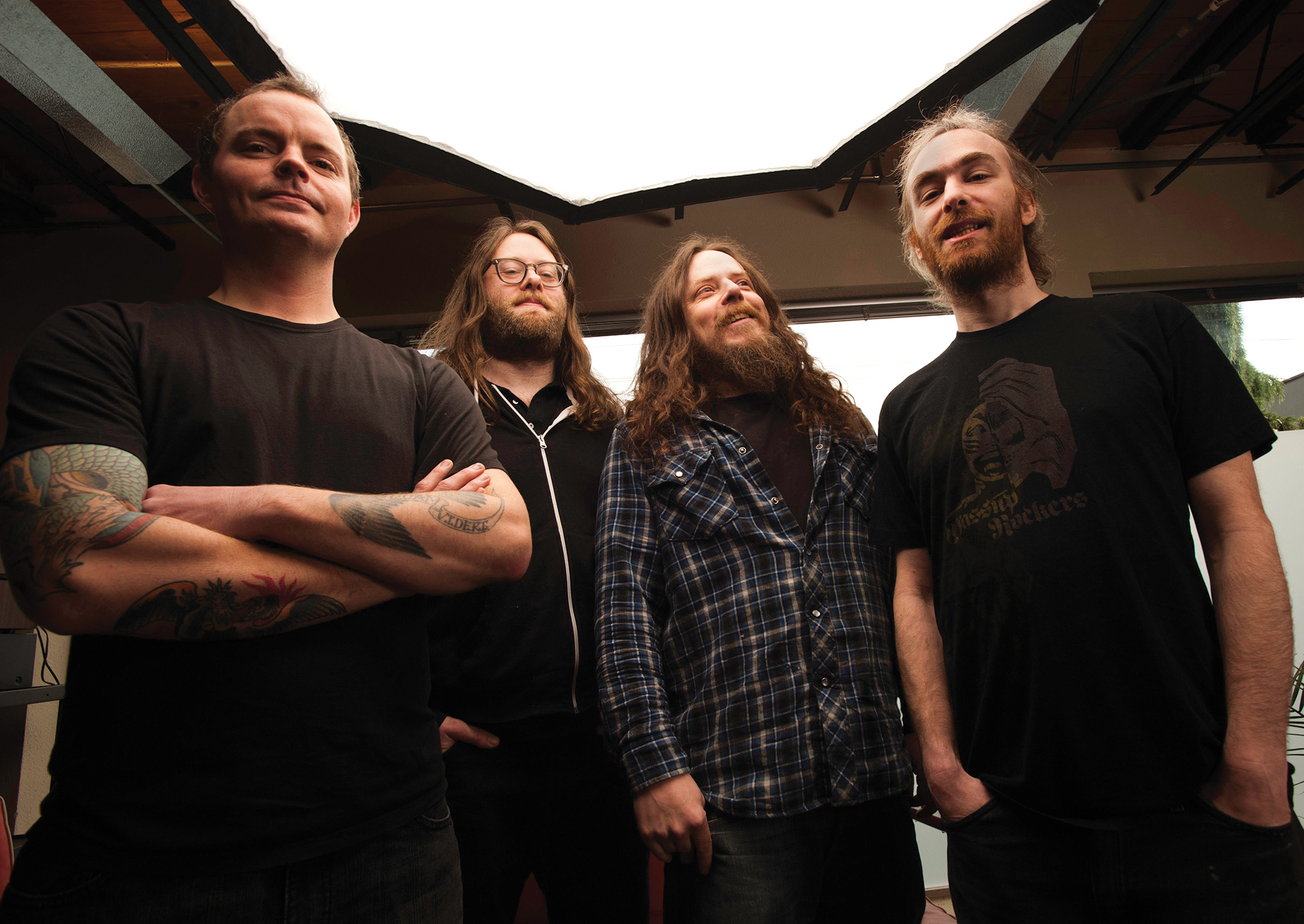
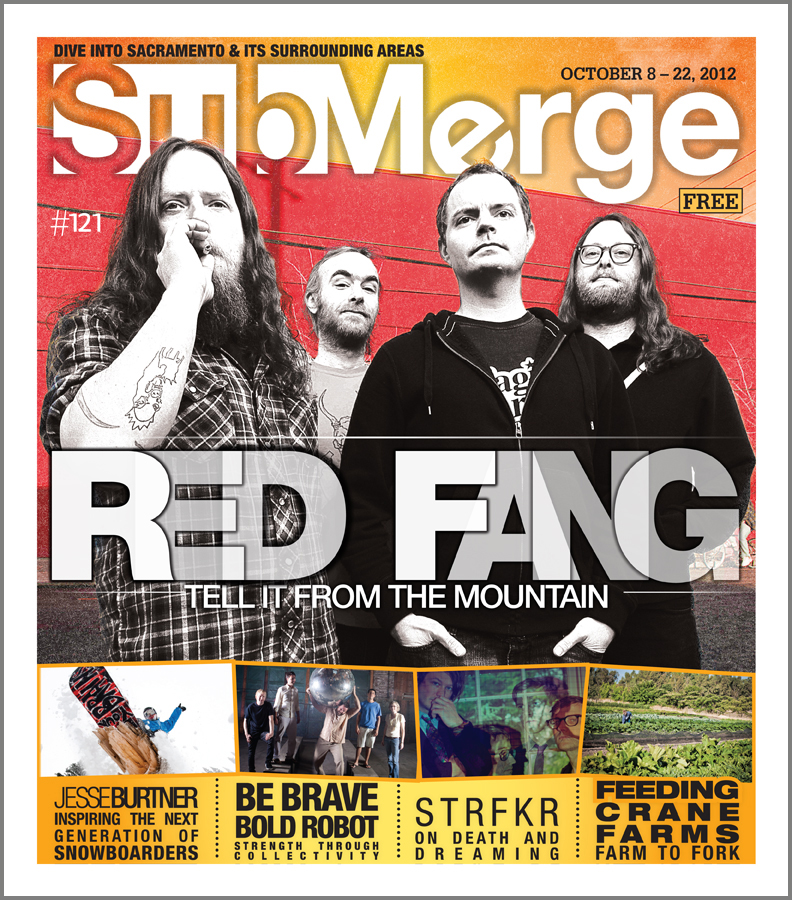
Some bands proclaim to be road warriors but Portland, Ore.’s sludge metal heroes Red Fang doesn’t have to proclaim anything. The band’s actions speak for themselves. When Submerge spoke with the band’s guitarist/vocalist Bryan Giles he was savoring a rare moment of hanging out in Portland. By the end of the month, Red Fang will be out on the road once more. Their U.S. tour with Black Tusk kicks off in Sacramento on Oct. 26, 2012 and finishes up just before Thanksgiving. Again, actions speak louder than words, and so does Red Fang’s music.
The band has been so busy touring that it’s hard to believe it’s been just about a year and a half since Red Fang’s latest album, 2011’s Murder the Mountains, was released. On Sept. 26, 2012 the band released a new song online, “Crows in Swine,” “primarily just to let people know what we’ve been up to as far as some of our new stuff,” Giles says of the track. “We just put it out there to remind people that we’re still a band.”
Giles reports that he hopes “Crows in Swine” will end up on a split 7-inch and that the savagely shredding track is indicative of what the band has been working on. He has been using this rare down time in Red Fang’s schedule to work on new material.
“I’d say two or three tracks are aggressive like that,” he says. “They’re a work out. It’s good. It’s keeping me on my toes–a lot of notes.”
Home cooking is important to Giles’ songwriting process. He admits that he and Red Fang have yet to figure out how to write while they’re on the road, though he knows at some point it’ll probably be a necessity.
“We don’t travel in buses. If I wanted to have the guitar in the van, I’d be knocking somebody in the head with the headstock, and that wouldn’t go well,” he says. “Plus, the way I do songwriting is that I do a lot of endless repetition, so people would probably try to strangle me with my guitar strings after having to hear the same riff over and over for an hour and a half.”
As it turns out, the band’s familial commitments have aided Red Fang in having time home to write. Aaron Beam, the band’s co-vocalist and bassist, is married and has a child with Sara Lund, a member of The Corin Tucker Band. When Lund is on the road, Beam is at home with the kid, which means Red Fang gets to work on music.
“It’s actually worked out great, because she can take time on the road with her band, and we can be at home woodshedding,” Giles says.
After Red Fang’s U.S. tour finishes up in Boise, Idaho, on Nov. 21, the band will take off just six days before embarking to Europe on a tour built around an invitation to play All Tomorrow’s Parties. It will be the band’s second headlining tour of Europe. The first, a mammoth excursion with Black Tusk, has been documented in a series of short films co-sponsored by Decibel Magazine and Converse. Giles discusses Red Fang’s previous jaunt to Europe and previews its upcoming journey in the following interview.
I was watching some of the Converse documentaries of Red Fang’s European tour… There were a few clips of you guys saying how few tickets you had pre-sold for the gigs, but then it would cut to the live concert footage and the venues were packed. Were you surprised at the turnouts?
I think Aaron said it in the documentary, and it’s true, people just don’t buy presale tickets for us so much. It’s a walk-up crowd. Although, that was only our third tour in Europe, so it’s not like we had a whole lot of experience…and having it be our first headlining tour, we had no idea what to expect. We were very pleasantly surprised. I think a lot of it was due to touring with Mastodon in the States in late 2011 and had already planned on that tour that our next European tour would be as a headliner, but I think three and a half weeks before Mastodon was going to Europe, they still didn’t have an opener. They asked us, and it didn’t really seem possible, but it didn’t seem like there was any way we couldn’t do it. A big reason [our headlining tour] was so successful was that we got to play in front of so many people. Mastodon is doing really well right now. They’re filling huge rooms, and we got to do main support from them all through out Europe. That was an awesome opportunity, and we went back like a month and a half later. It was really good timing.
When you were playing the Mastodon tour, did you see a lot of people in the audience who may not have been familiar with you being won over?
Sometimes it’s really hard to read a crowd. Sometimes we’ll play a crowd, and they’ll seem really sedate, but then you’ll look at how many T-shirts you sold, and you did better than when people were going batshit crazy. I don’t know. People appreciate music in different ways. There were definitely people who were looking at us the first three or four songs going, “Do I like this or don’t I?” It’s a challenge, that’s for sure. They’re not there to see you, they’re there to see Mastodon. It’s your job to convince them that they’re there to see Red Fang and Mastodon.
One other clip from the documentaries I liked was in the last part of the documentary when you were at a stop in Moscow, and you were looking at the Marshall stack you hadn’t used before.
There were so many buttons. I was like, “What the fuck?” Usually I can figure those things out. I just hit the button that makes it sound the most distorted and then turn all the knobs to the right, and that’s usually fine. And in that case, it was fine as well. Some Marshalls they’ve got that classic Marshall sound, but it just doesn’t work for us. It sounds more like AC/DC. It’s sort of a clean distortion. I like the real nutty distortion.
You’re going back to Europe in a couple months. Are you heading to places you didn’t hit the first time?
Yeah, we got invited to do All Tomorrow’s Parties, which we were blown away and flattered to be able to do that. It’s curated by Shellack, who I’m a big fan of, so we built a tour around it. Just getting over there is pretty expensive. You make a tour out of it so you can rationalize going all the way over there. We’re doing that, and I think we get two days off, so we’ll get to enjoy that whole event. It’s a three-day festival. Another amazing thing we get to do is a BBC Session, so I’m thrilled and terrified at the prospect of that as well.
Why do you say terrified?
Well, it’s a studio without a net. I guess you get a couple of runs at the song, but it’s live, man. If you flub, it’s out there, and people know it because it’s studio quality.
It sounds like a nice trip. It must be nice to have a couple of days off this time, too. Last time around it was 33 shows in 35 days. It didn’t seem like you had too much time to take in the sights.
The last tour we did before that, I think we had one day off, and that was a longer tour. We’re finally realizing we start going crazy if we don’t get a day off here or there, so the two days off on the last tour were very intentional. Where would be the most relaxing place to be, and what the shortest drives to and from would be, so we could maximize those days off. I think our second day off was in Budapest, and we got to go to the hot springs, the baths there, and it was a full-bore vacation day. It was really nice. I hope that trend continues.
You might as well enjoy yourselves.
You’re in some beautiful city and you show up for sound check–I like to call the club “the black hole,” because once you walk in, it’s almost impossible to get out and see the sights or anything, because you end up having to do stuff.
From your music videos, I saw that PBR was featured pretty heavily. While you were in Europe, were you able to find a cheap beer equivalent?
The swill you mean?
I was trying to be diplomatic.
No, but the clubs found it for us. We’d say, “We need a lot of beer,” and they’d be, “Alrighty, what’s on sale?” But truthfully, I think they take their beer pretty seriously over there, so even their bad beer is pretty good. My only complaint is that sometimes the inexpensive beer has a stronger flavor, and they’re not really into cold beer, they’re into cool beer. So when it’s not your favorite, you can really taste it when it’s floating around at 60 degrees, in a can to begin with. You’re like, “Oh yeah…beer…”
You won’t want to miss Red Fang and Black Tusk when they play Harlow’s in Sacramento on Oct. 26., 2012 It’s the band’s first stop on their latest U.S. tour, so help them kick it off in style. Lord Dying will also perform. Check with Harlows.com to purchase tickets. Listen to “Crows in Swine” at http://soundcloud.com/RelapseRecords.
Taken 2
Rated PG-13
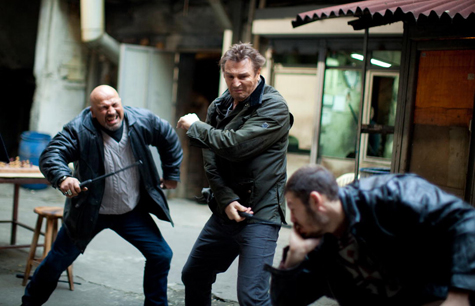
Liam Neeson has played some big name bad asses during the course of his lauded movie career. He was one of the Knights of the Round Table, Gawain, in Excalibur and Kegan in my favorite fantasy schlock fest Krull (come on, Krull was awesome!) back in the ‘80s. More recently he’s been stone cold criminal mastermind Ra’s Al Ghul in Christopher Nolan’s Batman trilogy and even starred as Zeus himself in the 2010’s Clash of the Titans and its 2012 sequel Wrath of the Titans. He’s even portrayed real life heroes like Rob Roy, Michael Collins and Oskar Schindler. It’s strange then that even with this impressive canon of roles he’s performed that Bryan Mills has become one of his most iconic. The character has become a cult hit among the Internet meme generation, and that’s a credit to Neeson, because though Mills is a retired U.S. spy who can easily throttle baddies, he’s not as flashy as your James Bonds or Jason Bournes. Taken was released back in 2008, and judging by the crowd at the theater on opening night, it would seem that this sequel was highly anticipated. Taken 2 delivers plenty of high-octane Neeson-ocity, which almost masks the fact that it’s kind of a by-the-numbers action flick.
The cool thing about Mills is that though he’s a kick-ass spy, he’s also a dad. In the first film, he unleashed holy hell on a horde of faceless villains in order to retrieve his daughter Kim (played in both films by Lost alum Maggie Grace). So, while Bourne whoops butt in hopes of regaining his identity, or Bond thwarts evildoers so he can score with a bevy of exotic women, Mills is much more relatable. Hey, he’s just a family man, you know? Why do you have to go and mess with the dude’s family?

Taken 2 sees Mills pitted against another family man, Murad Krasniqi (Rade Serbedzija). Krasniqi’s son was the man who kidnapped Kim in the first film and met a horrid end at the hands of Mills. Krasniqi assembles a group of ornery henchmen to exact revenge upon Mills and tracks the former spy to Istanbul, Turkey, where he’s relaxing with his ex-wife/baby momma, Lenore (Famke Janssen), and daughter. This time around, though, it’s Mills and Lenore who are “taken” leaving Kim to bust her parents out of a dungeon buried deep in the winding streets of Istanbul.
There are cutesy moments of Mills’ family life. He uses his spy training to track Kim down to her new boyfriend’s house and teaches her how to pass her road test. He gives Lenore a shoulder to cry on when he discovers that her new husband is just a big ol’ jerk, and on a boat in Istanbul, Mills asks Kim if this boy of hers is someone she thinks is special. It’s all very sweet and antiseptic.
Luckily, Mills is better at incapacitating well-armed villains than he is at Talking About Feelings. Be it via hand-to-hand combat or packing heat, he’s a one-man wrecking crew who’ll stop at nothing to defend his family and ensure that they will never again have to fear for their lives. There are some neat action sequences here, such as when Kim, still new to driving, escapes from corrupt Turkish police through labyrinthine streets with poppa bear in the passenger seat, unloading clip after clip into their pursuers. An epic boss fight occurs as Mills takes on Krasniqi’s head henchman, the man who was in charge of torturing his wife. Neeson, now 60 years old, more than holds his own in the fast-paced, bare-fisted battle.
Don’t worry, I won’t ruin the outcome for you, but you can probably guess who wins. But the burning question left for the end of the film is whether or not Kim will pass her road test. Spoiler alert: She gets a perfect score!

You might not realize it from this column, but I’m a pretty easygoing guy. Despite all my neuroses, paranoia and general anxieties, I’m outwardly placid. I don’t get up in arms about things. Not even about things that should really bother me. I guess my outrage reflex isn’t very well developed.
This outrage reflex is one of the many ways I seem to be behind the rest of humanity. I can only remember one instance where I participated in group outrage: I was walking on a busy street, and a man in front of me was walking along with a stroller in tow. Inside that stroller was an infant, which is the sort of thing you often find in strollers, that couldn’t have been more than a few months old. Then, all of a sudden, the man ran into a restaurant to check if seating was available. What he forgot to bring with him, however, was the child, still tucked comfortably into the stroller as the agape crowd parted around it. People gasped and jeered. I did too. Of course, none of us did anything about it, but the outrage was palpable. The only two beings unaware of the shared disgust were the man, chatting with the hostess and the baby, cooing in its cozy nook.
Outrage, as I found out, is a hell of a drug. It was exhilarating to share such vile feelings with complete strangers. For a brief moment in time, we were all united in our condemnation of this forgetful father and our feelings of superiority over such a horrid man. Really, who would do such a thing? You hear stories all the time where even the most dutiful parent turns his or her head just for a second, perhaps just to toss an empty banana peel into the garbage while spending a lazy Sunday afternoon at a playground when, poof!, their child has been abducted. The gall of this man to just leave that stroller unattended amongst a crowd of…
You see! Outrage can make you feel awesome. It validates every feeling you’ve ever had about how much better you are than everyone else. And you are, right? Come on, admit it. Like when you’re driving–especially when you’re driving–no one knows how to drive except you, right?
You’re not, though. You’re not better than every one else. Sorry to break it to you. And when I’m honest with myself, neither am I, really. Still, reality TV has become an institution because it preys upon the idea that no matter how shitty your life probably is, you’ve at least made better choices than the dude with five kids from four different baby-mamas, or any one of the crackpots on Dance Moms.
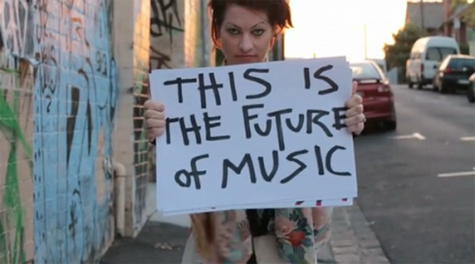
Maybe I’m just outraged at outrage, or maybe I’m not as awesome as I think I am because when I let my guard down, I can submit to it as easy as everyone else. Traffic, reality TV and crowded city streets are all good places to experience outrage, but if you want it distilled to its most potent form, the best place to go is the Internet. Specifically, the comments section to just about any article ever posted. Our good friend and editor Mandy Johnston will often send me links to inflammatory articles over Gchat. She’ll usually add an addendum to the link, “You have to read the comments” (italics mine). I usually can’t get past one or two before I start looking like Bill Bixby mere seconds before he, through the magic of TV, became Lou Ferrigno. Recently, though, she sent me an article pertaining to Amanda Palmer, who I had the pleasure of interviewing for Submerge a couple years back. Palmer had always been something of an Internet bright spot. She seemed universally loved, if not for her music, but at least for her connection with fans and her cute Twitter romance with her husband/fantasy author Neil Gaiman (another Internet bright spot). Using Kickstarter, Palmer recently raised over $1 million to record her latest album Theater Is Evil.
Clearly, she has a very generous fan base, but on Aug. 21, 2012, Palmer asked them for even more. On her blog, she put the call out for local musicians to join her on stage for each stop on her tour to perform with her band, the Grand Theft Orchestra. Instead of paying these musicians, “we will feed you beer, hug/high-five you up and down (pick your poison), give you merch, and thank you mightily for adding to the big noise we are planning to make,” Palmer wrote.
“Read the comments,” Mandy said. And there was outrage. Musicians lost their shit. In one of the more creative criticisms, Linden Killiem wrote, “What does that merch include? Is there a shirt that says, ‘I played for a touring “orchestra” and all I got was this T-shirt?’” Others were, as you’d expect, a lot cruder.
Palmer was sanctimonious in her dismissal of these criticisms, but on Sept. 19, 2012, she announced on her blog that she would start paying these “volunteers,” and that also her album charted at No. 10 on the Billboard charts. So everyone wins, I guess.
What bothered me most about the incident was that I found myself agreeing with those miserable outragers. I felt it too. In the only act of defiance I could muster, I unfollowed Palmer on Twitter. It felt dirty… And I liked it.
Resident Evil: Retribution
Rated R
There’s no telling how many Resident Evil movies there have been. OK. That’s a lie. I looked it up on the Internet, and the latest, Retribution, is the fifth in the series. Since the first flick based on the popular Capcom video game premiered in 2002, Sony Pictures’ Screen Gems has dutifully popped out a new one every other year. Clearly, this isn’t high brow entertainment, but having seen every film in the series–or at least I think I have, they all sort of blur together–I’m looking forward to 2014 for Resident Evil 6.
It’s nice to have something to depend on. It’s a crazy world out there. Not as crazy as the world in the Resident Evil movies–and thank God for that, what with the zombies and mutants and corporate-funded death squads and all that–but it’s nice that there’s something predictable out there. Paul W.S. Anderson has been at the helm for each movie in the series, be it as a writer, director or producer, or as was the case in Retribution its most recent predecessor Afterlife and in the very first Resident Evil, he’s served as all three. It’s what’s given this series the consistency that’s missing in other fast food movie franchises.
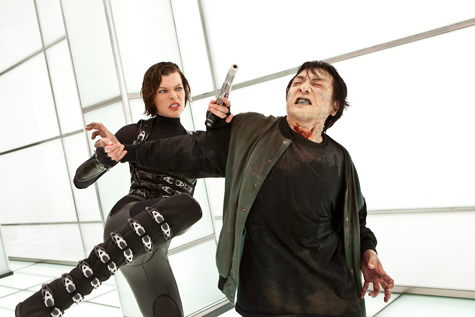
In addition to Anderson, Resident Evil also has its star, Milla Jovovich, who has played the role of Alice in each of the films. Jovovich turns 37 this year, and while that’s not old, it may as well be 105 in Hollywood starlet years. Still, the Ukranian born actress/super model looks remarkably fit. And she sort of has to be given the wardrobe Anderson and company cram her into. She’s still as spry as ever, performing admirably in Retribution’s many high-powered action sequences, and looks damn good doing it.
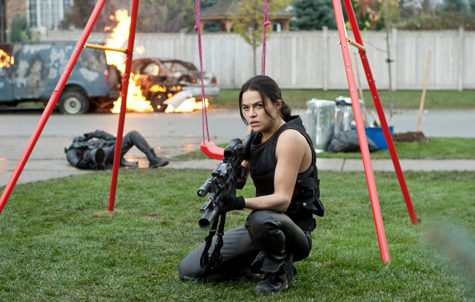
Jovovich is surrounded by an equally buxom supporting cast, including Li Bingbing as rogue Umbrella Corporation op Ada Wong, Michelle Rodriguez in dual roles and Sienna Guillory as Jill Valentine, Alice’s former ally turned insanely powerful zealot of the Red Queen, a being of artificial intelligence bent on the extinction of the human race.
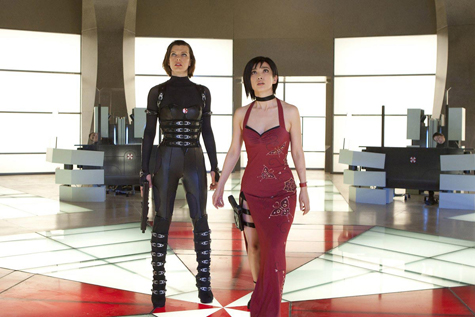
There’s a story here, too, sort of, which picks up immediately following the events of Afterlife. As Anderson has guided each of these films, each installment plays out like another chapter in a larger story. For those who may be late to the game, Jovovich neatly wraps up the events of the previous four chapters at Retribution’s opening; however, even without the primer, you wouldn’t have to be a proverbial rocket scientist to figure out what’s going on. There’s an evil multinational corporation (Umbrella) that has been tampering with nature to make weapons. One of those weapons led to a mutant zombie outbreak, and basically that’s all you need to know. The world is screwed and humanity pretty much has all its eggs in Alice’s basket as far as survival goes.
Retribution is really more scenario than plot. After being captured by Valentine, Alice, who lost her superhuman powers at the close of Afterlife, must escape from an underground experimental facility wherein each zone replicates a major city (Moscow, Tokyo and New York (there’s even a stock “Suburbia” zone)) and houses a different bio-engineered undead threat. With the shady Wong as her companion, Alice must fight through zombie hordes and killer giants to meet up with an all-male strike team of buff dudes with machine guns.
I guess why Resident Evil: Retribution scores as high as it does here is that you pretty much get what you pay for. It doesn’t try to do too much and operates well within its limitations. Other than a nifty, snow-obscured showdown between Alice and Valentine, the 3-D isn’t anything special, but this action/horror hybrid delivers plenty of gunfire, a thrilling Indiana Jones-style (except with a battalion of heavily armed zombies) car chase through the streets of fake-Moscow and plenty of MatrixÂ-esque fight sequences all unfettered by pesky dialogue or character development. In so doing, Resident Evil: Retribution perfectly mimics the video game experience without all the button mashing. Retribution’s ending seemed to hint at the possibility of the next film being the final chapter. In any case, as long as they keep churning them out, I’ll be there on opening weekend with a dopey, sated grin on my face.
Zion I looks inward on new album Shadow Boxing
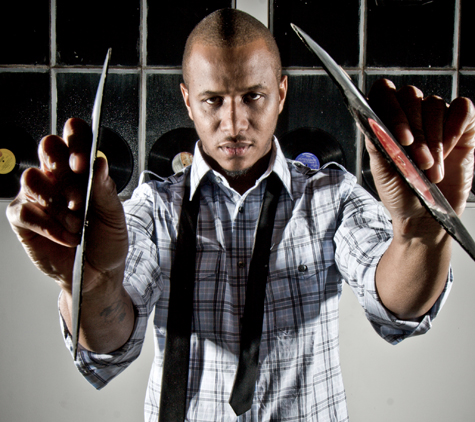
Oakland hip-hop duo Zion I (MC Zumbi and DJ/producer AmpLive) isn’t a group that will rest on its laurels, though it certainly could. Zion I released its now classic Mind Over Matter LP in 2000, and since then, both as a duo and teamed up with The Grouch, have put forth seven more albums. On Oct. 2, 2012 Zion I will put out their new release, Shadow Boxing, a sort of return to form after the live instrumentation of their most recent effort, Atomic Clock. Nine releases in 12 years is a prodigious output, but according to Zumbi, productivity is the key to survival.
“You have to these days, to survive, you have to go a little bit crazy,” he says.
Crazy or not, it’s easy to admire Zion I’s body of work. The fire to create isn’t only borne out of a desire to make music, but to make something different each time out. Compared to the live beats and the somewhat stripped down feel of Atomic Clock, Shadow Boxing delivers a much beefier, in-your-face sound.
“We decided we’d do a live album. It was a totally different energy,” Zumbi says of the thought behind Atomic Clock. “It didn’t even feel like a record, honestly, Atomic Clock, it just felt like we were doing a quick project. Shadow Boxing feels like something I feel. Atomic Clock, I felt it when we made it, but it’s not as deep of an idea around it for me personally.”
It’s not surprising that Shadow Boxing holds a deeper meaning for Zumbi, who has become a father in the time since Atomic Clock. He has also been getting into martial arts as of late as a way to improve his physical health. His still new fatherhood and his practice of tai chi play a heavy influence on the themes found on Shadow Boxing.
“The title of the album is referencing the battle of the self, self-affliction, but also like the confrontation of finding something wack within yourself and having the courage to look at it, be honest and conquer it,” Zumbi says. “It’s about embracing your inner-demons, but taming them.”
The discipline he’s learned through martial arts have also helped his focus, Zumbi says.
“I’m creative, but I have bad habits like everyone,” he explains. “What do they say? Idle hands are the devil’s play thing?
“I have to keep myself in a cool place. If I mess around and stay up all night, I might get injured. If I mess around and stay up all night, my son’s going to wake up at 4 in the morning, and I’m going to be too tired. It’s basically giving myself these different responsibilities, just like for myself, just to become a better, more responsible human being, and it’s been a blessing.”
Zumbi also went back and referenced some of Zion I’s early albums when writing for Shadow Boxing. Though he says he doesn’t usually listen to the group’s past recordings, doing so this time around reintroduced him to the MC he was a decade or so ago. He liked what he heard.
“With the Mind Over Matter songs, I was like, wow, I was really in the zone,” he says. “I remember back then, all I did was rap, meditate and do capoeira. That’s it. I wasn’t chasing girls, nothing. The reward in life was to be in the studio and rap.”
What Zumbi heard was a hungry rapper. He made a conscious effort to put himself back in that headspace.
“I was like, OK, I was flowing better then than I am now,” he says. “I was really being honest with myself in some cases. I had to get back in the zone like that.”
Whatever his reasons, it certainly seems to be working. Shadow Boxing sounds big, mean, aggressive and even extremely catchy, as evidenced in the grimy hooks of the title track and the bouncy electro beat of “Human Being.” Beyond that, though, there’s a rich variety of tones at play on Shadow Boxing, from the house reggae-tinged “Sex Wax” (featuring Collie Buddz) to the smoothly soulful “Life’s Work” (featuring Goapele). Meanwhile, the over six-minute “Joe Frazzzier” stands out as a compelling centerpiece, a sort of hip-hop/prog hybrid.
“That was just a crazy electro beat that I had, and [Zumbi] really liked it,” says AmpLive, who produced all but three tracks on Shadow Boxing. “He wrote something to it, but he sounded a little too far out, so I convinced him to do something more palatable. But then it lost its edge, so I wanted to just sort of bring that back.”
After the verses were laid down, AmpLive says the song felt a bit unfinished. Zumbi encouraged him to take the track further, to really draw it out. The producer was happy to oblige.
“I carried it out as far as it could go,” AmpLive says. “It got really crazy at the end, and I was like, we can’t end it like this, so I brought the music back so we could end on the same vibe.”
Though Zion I seems to revel in the fact that they can employ such a wide variety of sounds with success, AmpLive mentions that he’d like to try to have more uniformity to his songs.
“It’s more of a struggle to me to have everything sound the same,” he says. “I’ve been trying to do that a lot more. I do all kinds of different music, so I can do that easily if I wanted to, but I’m bored with changing it up all the time. My challenge now is keeping everything on the same wavelength.
“I think that probably for more of my solo stuff I’ll focus on that aspect of everything, maybe where everything is the same BPM or something like that,” AmpLive continues. “I just want to see what happens, because I’ve never done an album like that.”
This may come as a surprise to Zumbi, but if there’s one thing the MC has become used to in his years working with AmpLive it’s that the producer continues to amaze him.
“That’s what’s so dope about it,” Zumbi says. “I’ve known this guy for over 20 years. When you know anybody for that long, sometimes things become predictable, but that’s the beauty of the music. There’s always a surprise lurking. It’s always so fresh.”
Zion I fans will get the opportunity to hear the group’s fresh new songs on the road this fall during a 30-city tour with DJ Minnesota. In addition to that, Zion I will also be releasing a mixtape with the help of Brooklyn, N.Y.’s DJ J. Period called Bomb First. The mixtape will also feature A$AP Rocky, Kendrick Lamar, Action Bronson and others. Zumbi calls Bomb First a “family project.”
“If this was a battle for the soul of music, these are the people we would choose,” Zumbi adds.
Given the duo’s track record, it’s doubtless that there would be plenty who would choose to side with Zion I for the same fight.
The Words
Rated PG-13
Writing can be a selfish practice. Writing about writing is probably even more so. In The Words, actor-turned-writer/director Brian Klugman and co-writer/director Lee Sternthal, both in their debuts as feature filmmakers, delve deep into what makes a writer tick. It’s a story within a story within a story–sort of the nesting doll equivalent of storytelling. But unlike those placid-faced novelties, The Words bears a much more troubled countenance.
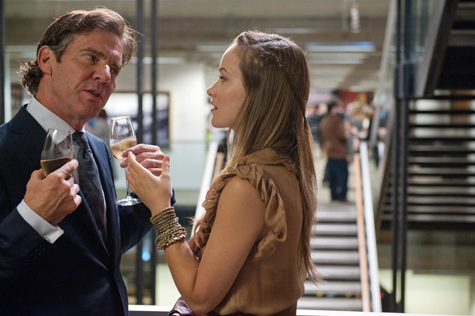
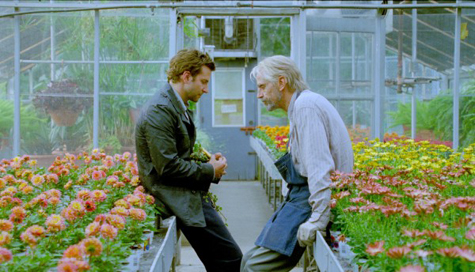
The film opens with writer Clay Hammond (Dennis Quaid) reading from his latest novel, which bears the same name as the movie, in front of a packed auditorium. This could be wishful thinking on the parts of Klugman and Sternthal, perhaps imagining that The Words would be similarly well received by real life audiences. Hammond’s story introduces us to Rory and Dora Jansen (Bradley Cooper and Zoe Saldana, respectively). Rory is a writer, too, and he’s on his way to pick up an award for his first novel, The Window Tears. However, as he and his wife pile into a limo on their way to the reception, there’s an old man (Jeremy Irons) lurking in the rain.
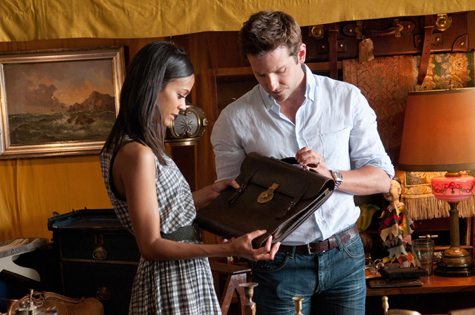
The Window Tears is a critical and commercial smash hit. The big break Rory, a struggling yet not-quite-starving artist, has always dreamed of. Unfortunately, he has a secret. While on vacation in Paris, Rory and Dora find a brief case in an antique store. Once they’re home, Rory discovers that it contains a tattered, old manuscript of a long-lost novel by an anonymous writer that was never published. Rory ends up getting the book published as his own, and the old man, whose name we never learn, reveals himself to Rory as The Window Tears’ author.
Meanwhile in Hammond’s world, he encounters a beautiful graduate student, Daniella (Olivia Wilde), during an intermission between chapters. He’s as taken with her as she is with his writing, but there’s something undeniably mysterious about her and her connection to what’s going on.
Back in the world of Hammond’s novel, the old man recounts to Rory the story behind The Window Tears, which is the kind of sprawling, tragic romance that novels are literally made of, and we are introduced to another set of characters, the old man as a young man (Ben Barnes) and his wife Celia (Nora Arnezeder).
To Klugman’s and Sternthal’s credits, the three layers of the story are clearly defined. The Words never falls into chaos, but the connection between the three couples isn’t drawn in an obvious way. In each case, we have a writer at different stages: the young man, just discovering his talents; Rory at the beginning of his career; and Hammond, middle-aged, confident and established. Irons as the old man, looking worn and grizzled, perhaps serves as the specter of death both in terms of being toward the end of his life, and also in literary terms since after he penned the novel Rory eventually stole, the old man never wrote again.
Though the male characters could be seen as archetypal forms, the female roles feel shallow. Saldana and Arnezeder are strong, painting endearing and sympathetic portraits of supportive wives, but they really don’t have much to work with. Wilde’s Daniella is presented as the most interesting. She’s guileful and captivating, shown off beautifully in expressive and intimate close-ups. But in the end, Daniella comes off written in as little more than a plot device.
Unlike nesting dolls, the storylines contained within The Words don’t fit together very neatly. As Hammonds tells Daniella, the worlds of reality and fiction may get very close to one another, but they never touch. And so, the frayed threads of these three stories are never tied together in a neat bow. However, The Words is still a literate, neatly executed and at times thought-provoking romance worthy of over-intellectualized discussion over coffee after it’s ended.
Ziggy Marley is a musician all his own
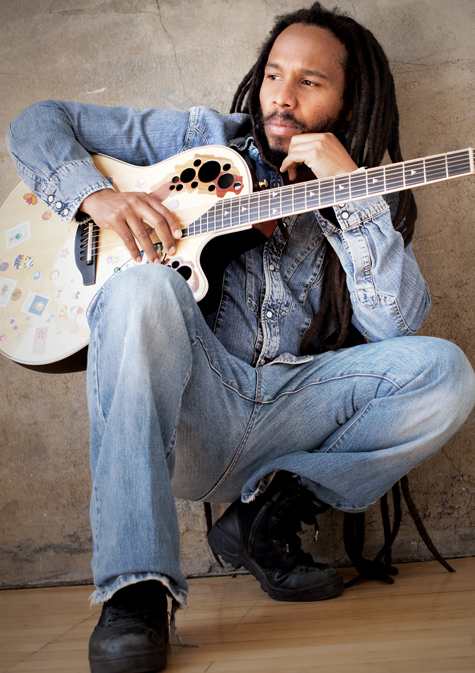
The name Marley is synonymous with reggae. Obviously, that’s due to the transformative music and brilliant songwriting of Bob Marley. Though he was just a young man when he died, his music has affected people from all walks of life in a variety of different ways. Whether simply wafting through a marijuana smoke-filled dorm room on Saturday or inspiring rebellious, under-privileged youths to rise up worldwide, Bob Marley is one of music’s most enduring figures. His music doesn’t only live on in fans, but through his children. Bob’s eldest son Ziggy is now 43, seven years older than his father was when he passed, and though he draws liberally from his father’s rich catalog of songs, Ziggy has certainly become a force of his own in the world of music.
Most of us strive to meet or surpass the achievements of our parents, but most of our folks don’t have a day dedicated to them. Recently, the city of Los Angeles, where Ziggy now resides, proclaimed Aug. 7 Bob Marley Day.
“It was a nice honor for my father,” Ziggy said to Submerge in a recent interview. “Everyone knows my father–his music, his personality, his lifestyle. There’s nothing hidden there about him, and so it’s good that they can accept him in that light.”
Bob Marley Day coincided with the Blu-ray/DVD release of Marley, a new documentary about the beloved songwriter directed by Kevin Macdonald (The Last King of Scotland). Ziggy served as one of the film’s executive producers.
“It’s in-depth, it shows a lot of different aspects of my father’s life and gives people a better understanding of who he is and will give people a connection to him and all that he went through–good times and bad times,” he said of the documentary.
If having a legendary father has put added pressure on Ziggy to succeed, you’d never know it by looking at him. Even though he’s been doing music since childhood, he still seems to have the same level of affection toward his craft, and it doesn’t seem to bother him that his father’s music is so popular with his audience. In a recent interview with ABC’s Nightline, Ziggy joked, “If I’m doing a concert, and I’m having a problem with the audience, I just play a Bob Marley song. All I have to do is play a Bob Marley song, and I’m good for the rest of the night. ‘Alright, I got them now. Let me go back and do some of my stuff.’”
He should feel secure in his own success, because Ziggy has had plenty of it. After an award-winning career with his siblings as part of The Melody Makers, Ziggy branched out on his own in the early ‘00s, earning a Grammy for his 2006 solo album Love Is My Religion, and his most recent effort, 2011’s Wild and Free also garnered a nomination for the Best Reggae Album at the 2012 Grammys (which his brother Stephen won).
Lately, Ziggy has been busy touring and also digging into the roots of reggae as a DJ on SiriusXM satellite radio channel The Joint. His monthly program, Legends of Reggae, delves into the music that provides him with the most inspiration. Ziggy told Submerge that hosting the show has rubbed off on his own music.
“I hear so many songs I wouldn’t have heard if I wasn’t doing the show–songs from way back in the history of reggae music,” he said. “If I wasn’t a DJ, I probably wouldn’t be listening to some of those songs. I enjoy doing it for that reason. I get to hear so many songs. It’s very good for me.”
He listed The Melodians and Ken Boothe as acts that he’s been listening to more recently.
“I draw from the oldies, and they’re inspiring,” Ziggy said. “It’s the music I come from. It’s helped me to create new music just to hear where I’m coming from.”
Ziggy Marley gave us more insight into where he’s coming from–and where he’s headed–in the following interview.
In June you released a free single “Can You Feel It” that you wrote in collaboration with Public Enemy’s Chuck D and Linda Perry from 4 Non Blondes. How did that song come together?
That song kind of started out of another song that I was doing called “Kingston.” While the Occupy movement was happening in America here, I started some lyrics that were about that movement… In Jamaica, we have a lot of politics, and politics are big here in America too. The song I was writing, which was kind of working around what was happening in Jamaica, had some connection with what was happening here at the time. I just flipped it around and made a song about what was happening here with the Occupy movement. That’s where that was coming from.
Did you follow the Occupy movement closely, and is it something you aligned yourself with?
Not really aligned, but I was happy to see people, because I think America is reaching a state of lackadaisical people movement. I know the ‘60s and the ‘70s and the movement of people was vibrant. Nowadays, just like in the Occupy movement, they find a way to label it and spin it around so it becomes less effective. I was just happy to see people standing up for something at that level where it’s not about a student or religious thing, or even a politic per se, it was just a people thing…and how the economic structure of America seems to have been manipulated by those who have this inside knowledge or inside track. The common people don’t have that inside thing…
I want to see more of that. What I knew America for was that, really, people standing up in the streets and protesting things, and changing things… During the Gulf War and even after that, I was wondering how so many things were being put over on the American people. How are all these things being done, and the American people seem to not be involved in it?
I was just happy to see people up and about and giving the system a run for its money. That song was a part of that.
I was reading through the lyrics of “Can You Feel It” and there was one passage I really liked that goes, “Can politicians find a solution? / Some may have good intentions / But when the root is corrupted / You know the fruit can’t be trusted…”
Yeah man, this is true. That’s true. I don’t know, man. The political system in America is used to divide people, and it’s used heavily because now all you find is that you have Democrat and Republican, but none of them is telling the truth. It doesn’t matter what the truth is, it’s what the Democrat idea is or what a Republican idea is, it doesn’t matter what the truth is, you know? The party lines have been drawn so deeply. I think it’s a great strategy to keep us apart and to control the people. It’s being done right now, right here in America. People cannot stand up for one thing together because they’re so divided. Republicans and Democrats can’t come together to stand up for something, because the system has divided them so deeply. It’s a real disservice to the idea of what America is. The people who we see as Americans or how we saw Americans, that portrayal of them is much different than the reality of what Americans are today, in terms of people who stand up.
Your last album Wild and Free came out in 2011. Are you working on something new now?
Well, we just started the writing season. How I work is that I write according to seasons. It happens very naturally where I just find myself starting to write songs in the past two or three weeks, and I can feel like, oh yes, I feel my mind and my body are getting ready to write a new record. So that’s where we are, but we have so many other things to do, like Marijuanaman, which is a graphic novel. Generally I want to do stuff outside of music and then come back to music.
Tell me more about the graphic novel. Is that something you’ve always wanted to do?
Well, the graphic novel has been out since last year. I’ve been into comics for a long time. I’ve been into the super hero genre. It’s all about having fun. Creativity should be fun. I want to have fun in what I do. Doing music is fun, and all that creative stuff that I want to do is going to be fun for me to do. I just like doing stuff, and I want to just do it. We’re going to explore more stuff with the graphic novel and some other visual stuff that I’m working on will just show up on the Internet and just make people watch it or download it for free. Not everything is about money or making money. Some things are just to have fun and be creative and share it with other people.
Can you talk about the visual stuff you have planned?
It’s still young in my mind. I haven’t really thought it through. I’m just waiting till I finish touring so I could sit down and work on it really. Right now it’s just little thoughts in my mind. Maybe have an idea for a children’s program. We had a children’s album out a little while ago called Family Time, and I want to do something in that world of children’s education. We have some other crazy ideas, but you’ll probably see them on the Internet when the time comes.
Comedian Erik Griffin takes the road less traveled and is rewarded
Erik Griffin is a lot of things: actor, writer, comedian. You may be familiar with his stand-up act, or perhaps you’ve seen him in commercials (he’s done spots for Office Max and McDonald’s). Most likely, you’ve seen Griffin as Montez Walker on the hilarious Comedy Central show Workaholics, which is now in its third season. One thing he’s not, however, is a morning person. Submerge spoke with a groggy Griffin at 8 a.m., and once he woke up a little, opened up to give us a little insight into his nine-year career in comedy.
Griffin worked at a school in his old life. He said he was a sort of “everyman” at his previous job, coaching a basketball team and even working in the school’s office. In 2003, he decided to pursue comedy full-time.
“I wasn’t happy,” Griffin admitted. “I didn’t want to wake up 50 and say I didn’t follow my dreams, and now here I am being interviewed by you at this insanely early hour.”
“Aren’t you glad you did it then?” Submerge retorted.
“Oh yeah, been living the dream!” he shot back.
The toughest part in making his dream a reality was believing that a career in comedy was even possible.
“I wish I had that belief when I was 22, but I didn’t,” Griffin said.
Embarking upon an entertainment career at any age is a leap of faith at best, but to get going a little later in life, and be successful, might be near impossible. However, Griffin believes that any art form takes time to cultivate, especially comedy. It’s not enough to be young and good looking, you also have to be, well, funny.
“I was so happy when Anne Hathaway and that guy [James Franco] hosted the Oscars and it was a complete disaster. That’s what they think comedy is,” Griffin said of the Hollywood establishment. “They think, ‘Let’s get these cute, young actors, and they’ll be able to pull this off,’ but it’s like, nope. They will not be able to pull this off. And I’m glad.”
He went on to say that it’s a tough business considering “Hollywood wants you to be young, cute and most of the time, white,” Griffin said. During our interview, the comedian referred to himself as “racially ambiguous.” It’s something he’s used in his comedy. In one bit, which can be found posted on YouTube, Griffin riffs about how other people try to figure out his ethnicity–black, Hispanic, perhaps Arabic? In truth, Griffin comes from a typically American, multi-cultural background. His father is of European descent, while his mother is Caribbean. Griffin said he didn’t think his “racial ambiguity” had much of an effect on his career.
“I don’t know. I think if they have a quota, they’re like, ‘This is perfect. He’s everything,’” he said.
Still, not fitting into the typical leading man mold hasn’t made things easy for Griffin. The obstacles seem to fuel his fire.
“It takes some time and some experience and some damage,” he said of the time it took to reach this point in his career. “Once you put all that together, that’s how you create an engaging stand-up comedian. Unfortunately, it’s sometimes contrary to what Hollywood is looking for. Well, they don’t know what they’re looking for. They think they know. As a comic, you just try to struggle and make it and hope there’s that one producer, that one person who believes in you that gives you a chance, and you can prove them all wrong. That’s what I feel like I’m doing every day of my career.”
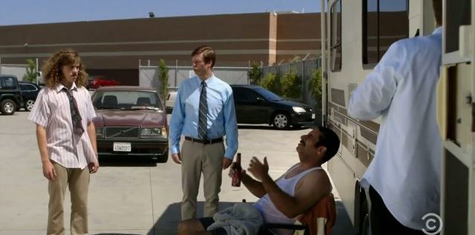
As the old adage goes: “Slow and steady wins the race,” and Griffin is surely reaping the benefits of his determination. As the confrontational Montez Walker on Workaholics, he has started to garner a cult following. On a recent episode, “Ders Comes in Handy,” originally aired July 24, 2012, Anders “Ders” Holmvik (played by Anders Holm), receives an over-the-pants hand job from a mysterious woman in the outdoors aisle of a department store. As it turns out, the woman is Walker’s wife. Hilarity, as they say, ensues.
“One of the original auditions was that scene from episode one, where Montez is talking about having sex with his wife,” Griffin said of his character. “Just from the very beginning, it kind of hit me that he’s just a really inappropriate kind of guy. It was just tapping into that part of myself and letting it out. It’s really fun to do.”
Griffin as Montez takes his love for his wife viral in a music video that you can find posted to the comedian’s website, http://erikgriffin.com/. The song, “My Queen,” is a hilarious and somewhat messy ode to the object of Montez’s undying affection.
“That was really fun to do,” Griffin said. “If I ever had a fantasy of being an R&B singer, I lived my fantasy, I’ll tell you that.”
When asked if he thought his R&B fantasy would involve so much baby oil, Griffin answered, “I don’t know if it involved that much baby oil. It was probably more like R. Kelly and I was peeing on somebody. But other than that, I think I did a pretty decent job on that.”
Watching Griffin in action as Montez Walker seems like the part was made just for him; however, he said getting the role was a surprise.
“I was surprised to get the role, just because of some of the people I was going up against,” he explained. “Not only because they had more experience, but also because of how they looked. I think they had really traditional Latino looking guys, and they were looking at really traditional black looking guys too. They ended up with me.”
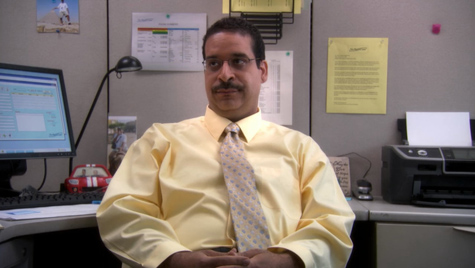
As it turned out, his multi-cultural upbringing provided him with a touchstone for getting into Montez’s head.
“Just from the description…he was very much a dude that they weren’t sure what he was,” Griffin said of the character. “He thought that he was more hip than he was. He’s a little urban, and I know a lot of guys like that. I grew up in a black neighborhood, and you know, you talk like that whether you’re black or not.”
Apart from Workaholics, Griffin will also be featured in the upcoming Funny: The Documentary, which boasts a who’s-who of comedians from Natasha Leggero to Pauly Shore. Along with fellow comedian Ahmed Ahmed, Griffin also was involved with another documentary, Just Like Us (2010), which followed a group of comedians touring the Middle East–a very different experience from Funny….
“Just like Us was this amazing experience traveling to all of these Middle Eastern countries and exposing the Arab world to comedy,” he said. “It was a pretty amazing thing. We were in Syria a month before all the violence started. We went up into Egypt, Qatar, United Arab Emirates, Oman… that was an amazing experience that I’ll never forget, just interacting with that culture and those people. It was amazing. This one [Funny: The Documentary] is just like talking about comedy and why comics are disturbed. It’s nothing really interesting like that.”
While it may not be as exotic as Just Like Us, Funny… features more of an inward journey, according to Griffin, delving into the inner workings of the comic mind.
“I think that a comedian or any kind of artist like that, I believe their extremes are further apart,” he said. “I think people who are quote-unquote normal, their happiest happy and their darkest dark are closer together than, say, a comedian who has this vast valley of emotions that aren’t as close together. I think that allows us to be more in touch with how people feel, how to make them upset, how to make them extremely happy and to be thoughtful, but at the same time, it makes us a little crazy.”
As summer ends, Griffin will spend a lot time on the road, playing dates around the Los Angeles area and also venturing to points east such as Pittsburgh, Penn., and Tampa, Fla. His travels will take him to Sacramento State on Sept. 6, 2012 for a free show at University Union Serna Plaza. With a schedule so full, it’s clear why the man enjoys his rest.
“You bastard,” Griffin joked as our interview ended about being disturbed at an early hour. “You can quote me on that.”
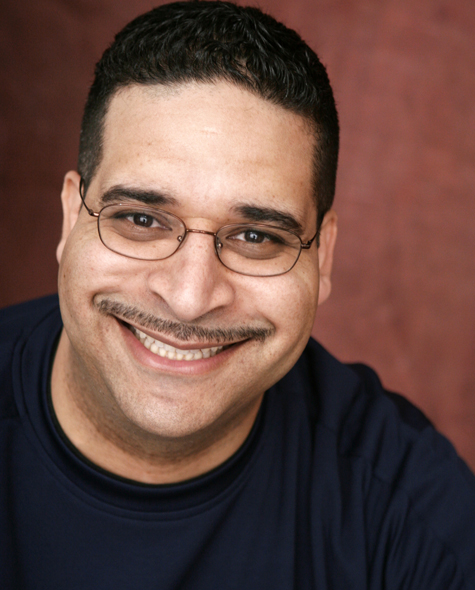
Catch Erik Griffin for the low, low cost of FREE when he performs live at Sacramento State on Sept. 6, 2012 at University Union Serna Plaza. The outdoor show starts at 7:30 p.m. This event is sponsored by University Union UNIQUE Programs. “Like” them on Facebook to learn about more upcoming events.