Slayer’s Dave Lombardo talks thrash
Words by Bobby S. Gulshan – Photo by Mark Seliger
I was 13 when Slayer released Seasons in the Abyss. At the time of its release, the United States was engaged in a war with Iraq. Around this time, I toyed around with the idea of becoming a writer. Grunge soon exploded on the scene, and the Seattle sound put the last nail in the coffin of glam metal. Meanwhile, seminal thrash metal records, such as Megadeth’s Rust in Peace and Anthrax’s Persistence of Time, fueled a burgeoning and bludgeoning style of metal called thrash.
In time, things change. We get older, and hopefully, wiser. People and places move in and out of our lives. Meanwhile, some things persist. I am still writing, we are still at war in Iraq and Slayer still retains its rightful place in the Pantheon of Metal Gods.
I had the chance to talk to Dave Lombardo, Slayer’s longtime drummer, and he too spoke of time. “We are wiser for sure, we understand each other more than before, the musicianship has improved. It’s just things you get as you mature,” he told me in describing the process of making their last record, World Painted Blood.
The first leg of the American Carnage Tour kicked off on Aug. 11, with Slayer joining Megadeth and Testament on the bill. Slayer will be performing Seasons… in its entirety while Megadeth will perform the whole of Rust in Peace. A bit of nostalgia, to be sure. A harkening back to what purists might call a Golden Age. But, as Lombardo tells it, “Metal always prevails; it’s always there. It may go underground for a while, but it’s like Tenacious D says, ‘You can’t destroy the metal.’”
Indeed, the tapes confirm it. World Painted Blood shows a return to form, while a renewed sense of creative vigor promises to keep fuel on the fire.
You guys are going out with Megadeth and Testament on the first leg of the American Carnage Tour, and will be joined by Anthrax on the second leg. What inspired this group of bands to get together?
A bunch of agents and managers got together and said, “Hey let’s put this together.” I don’t know how these things come up, we just get word, like, “there is a possibility of Slayer and Megadeth and Testament getting together,” and they ask us if we want to do it and we said, “Hey, why not?”
I want to talk a little about the latest record, World Painted Blood. It seems to me that the record picks up in some sense where Seasons in the Abyss left off, sort of a return to form, if you will. Was there something you did differently as a drummer when approaching this record?
I was in a whole different state of mind when I worked on this record. I had a different approach, a wiser approach and more song constructive ideas when it came to the structuring of the drums, so I think it’s just a very mature record.
I was looking at some videos you had done for Modern Drummer magazine and you mentioned a quote from Art Blakey, when he said he heard violins in his cymbals. In talking about World Painted Blood, did other music such as jazz or groovy sorts of things inspire the work?
Yes, definitely. It’s music but also the movement of the music, how its rhythm is composed. It’s so deep, I don’t know. I live and breathe rhythm and music, and it’s hard to pinpoint.
I also noticed you talked about changing the actual configuration and setup of your kit, eliminating some of the toms and coming in with a slightly smaller set. Did that new configuration provide new ideas in terms of what you do physically?
Absolutely, yeah. It had me think and approach the drums in a whole different way.
Maybe giving you some new ideas to do different things that you haven’t tried before?
Exactly. And it’s like the rolls that I do, the way they come out when you take away some of the toms. When you’re improvising like I am–I don’t write things out, whatever comes out at that moment, whatever inspires me at that moment is what gets recorded. When you take these pieces [of the kit] out, it sort of impacts that ability in a different way. And you are forced into performing something totally different than if you have the extra tom.
Gets you out of the box, so to speak.
Yeah, gets you out of that rut.
You said that World Painted Blood was a bit of a wiser record. I read somewhere that you said the record had a special sort of magic to it. What exactly do you think that is?
I don’t know, I can’t pinpoint it. I can only relate that there are these records that you buy and you listen to from beginning to end and enjoy every bit of music on there, and that can be of course mastery of your songwriting or your art. But sometimes you need more, you need chemistry between the musicians that are executing the hits and strumming the strings. And when you get that combination, plus good songwriting, it’s a magical record. They play off each other. They know how to play off each other, having done it so many years on stage and in the studio, you kind of work out this instinct when you’re playing, you know what the other guy is going to do.
A sense of anticipation.
Yeah, definitely.
I understand that this record was a different approach for the band, in general. You guys went into the studio to write, as opposed to having the material all written beforehand. Do you think that made a difference?
Absolutely. Usually we would have everything ready and go in and bang it out. No, we had to write some songs and we had to work on things for a while, which was good because it put us under a constructive pressure. It wasn’t negative or a deadline, just constructive.
And it probably fostered another level of communication between the four of you.
Yeah, because we didn’t have time to fuck around. We had to get the job done and that’s it. Ain’t no time to go whine or whatever because they aren’t using a piece of your music. Instead we thought, “Let’s just throw everything in the fuckin’ pot and make this album the best as we could possibly make it.” That was my approach, and I sensed that from the other musicians as well. The camaraderie during the recording was unlike any other record that we’ve had.
And how did working with Greg Fidelman affect that process?
He’s like a fifth member of the band. It was amazing.
What advice might you give to aspiring musicians out there?
Never give up. And even if you don’t achieve the status you dream of, it’s always fun to keep playing. You don’t ever need to stop playing, whether it’s jamming at your friend’s house or playing at the local bar. As long as I’m playing, that is happiness for me.
After the tour, what’s in the future?
After this we are touring, after that we are going to tour, and then after that a little more touring.
I sense a trend.
And put out another record. Not maybe, definitely put out another record.
The American Carnage Tour featuring Slayer, Megadeth and Testament will hit the ARCO Arena on Sept. 1, 2010. For more info and tickets, go to www.ticketmaster.com and search “American Carnage.”
The Nibblers
Friday, Aug. 13, 2010 – The Torch Club – Sacramento
“Thank you for showing up early. It’s going to be a long night, and we can’t think of anything better than spending it with you,” announced Hans Eberbach, The Nibblers’ frontman.
A good 75 people were in the house at The Torch Club to hear the funk and soul grooves of The Nibblers, and it was only 9 o’clock (good thing I was on time!).
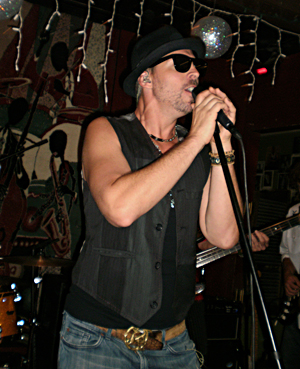
Eberbach is supremely cut out for his job, with a charismatic personality that was trumped only by his outfit. Donning a huge metal belt buckle that matched his chains that hung over his black tank top and vest, he peered out from behind a pair of black sunglasses as he approached the microphone to exhale his lyrics. Behind him, an eight-piece band was bangin’, strummin’ and blowin’.
A good funk tune is something of an aphrodisiac for the older crowd, apparently, because there were some love makers on the dance floor. The 35-to-60 crowd was out in full effect, and unlike the wallflower crowds seen all-too-often at dance and indie clubs, mom and dad can cut a rug. Not to say that I’m surprised, it’s just that I’m used to seeing young whippersnappers having a hard time walking from too many shots of Jameson, not from a recent hip replacement.
But I digress. The Nibblers are a solid band with members that have musical credentials as long as my arm. Jon Wood (guitar), Mike Palmer (bass) and Reggie Marks are of Mumbo Gumbo fame, and the very talented Ryan Robertson was sitting in on trumpet. All the elements to crush a set were in place, and the boys ran through a mix of originals and covers that you could tell were picked out very carefully. Songs like “Who’s Making Love to Your Old Lady” by the late Johnnie Taylor absolutely killed. One of my favorite covers of the night was a song called “Snatching It Back” by Clarence Carter. Eberbach smoothly and soulfully sang, “How can I get your love, when you keep on snatchin’ it back?” Great question.
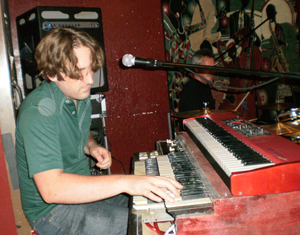
What really does it for me when I’m watching a funk/soul band like The Nibblers is the presence of the keys player. I don’t want to play favorites here, but damn, a solid keys player like Jeremy Spinger takes a good song, turns it upside down, shakes out all the contents of its pockets and leaves it red hot like an iron in the coals. I just want to shout like James Brown!
At the 11 o’clock hour it was standing room only with the head count up to a hefty 125. The boys took a well deserved break and then returned shortly after for a second set that they dared to have rival the first. James Brown covers set the tone and their list of originals was standout rather than filler. It’s clear these guys are real students of the genre and really take the time to weed through what seems like an endless pool of music that dominated the charts of the ‘60s and ‘70s. Their sets just feel good. It’s too much work at times to come to a show and have to be seriously concentrated on what’s going on. There’s a time and a place for that, but it feels nice to see a band like The Nibblers and the only thing to worry about is spilling your drink on the dance floor.
The New Humans’ Avalanche Drops, Finally
Words by Vincent Girimonte | Photo by Raoul Ortega
Don’t broach the time before The New Humans with The New Humans; it’s akin to rehashing a saga and you’ve missed the first couple of installments where some real heavy shit went down. Sitting in front of Temple Coffee on 10th, that savory little nook of downtown Sacramento that feels like a downtown, Cole Cuchna and “new” singer Scott Simpson gingerly sidestep their previous selves as if they were officers in some cult; Simpson speaks briefly on his days with Sacramento rock outfit Still Life Projector while Cuchna is less forthcoming.
“I’m going to drop [Cuchna] out right now too–Cole was in a band called Red Top Road that was kind of big around the same time,” says Simpson. Once you’ve jumped from the ‘burbs, all that noise must be like Calvin Klein to Mark Wahlberg.
But nobody likes the then, especially when the now has finally shown up. The New Humans release their first EP, Avalanche, Aug. 21 with a Korg shakedown of sorts at The Townhouse, supported by Dusty Brown side project Little Foxes and those plucky FAVORS kids making their live debut. And yes, this is The New Humans’ first EP, which is no doubt a little surprising given the all the buzz The New Humans have created over the past few years, playing as an instrumental band nonetheless.
“It was never planned,” says Cuchna of the band’s instrumental phase. “We always thought the songs sounded incomplete. It was never really what we wanted to do.” Simpson took over the vocals after an arduous search for that elusive frontman, futile as they often seem to be. “We got tired of it. Trying out a bunch of people, no one was really going to grasp what we were going for besides one of us,” Simpson admits, though the group maintains that perhaps it was for the better.
The New Humans were conceived on a laptop, initially with a fairly direct “screw the guitar” mentality stemming from their previous ventures. Simpson and Cuchna, childhood friends from their days growing up in Elk Grove, wrote dozens of songs before picking up bassist Robert LaCasse and later adding current drummer, Mike Steez.
“When we started we were a lot more excited about it. I almost forget about it now,” recalls Cuchna. “Our intention was never to be like, ‘Oh check out this band, they don’t have guitars.’ I guess that would be one cool thing about us now.”
No guitars in today’s Midtown doesn’t turn any heads. It’s not uncommon to see a show with the MPC 1000 or something of the like running things on the floor, people kneeling over it awkwardly like some Ouija board. The New Humans occupy a very different side of this trend, though. Sugary, glam-y, coked-out even; it’s glitzy–not janky–in the way K Street is trying to be. “Fever” is the punchy single that predates the EP by what seems like eons, but it’s “All the Kids,” the EP’s opener, that does well to outline the album’s general framework: catchy synth melodies, live drums with percussion loops on top and a piano underneath trying to tether it all down.
“[Not having guitars] lets in the stylistic, bluesy or jazzy undertones–there’s a song on the EP with a Latin-y undertone. It lets all that color come through,” says Simpson, the pipes of this sassy “disco generation.” Some opening falsettos belie his trepidation over taking the lead vocals, and I wasn’t the first to mention that his inner diva was beginning to surface.
“I feel like every show we play, it’s coming out a little more, and in another year I’ll be a complete fucking monster.”
If there’s a sense of relief following the completion of any project, The New Humans are the divorcee who finds love again after Dad packs up and leaves. Six months were spent recording in a Sacramento studio (names are omitted per band’s request), and though both parties remain cordial, those six months were scrapped due to artistic disputes and “fake promises.”
“He wanted to produce it, so we were like, ‘OK, produce it,’ not knowing how far the producing would go,” Simpson says. “It’s a lot of trust to put in someone when you’ve never heard anything they’ve produced before. I don’t trust anybody with my band that way, unless maybe you like, produce fucking Radiohead.”
Cuchna adds, “I think that it was probably our fault for not really setting ground rules.”
Cuchna cites differences in process rather than the actual material being recorded; Simpson recollects on an uncomfortable foray into “L.A. bullshit,” where the band was allegedly being pushed into a deal with a sheisty label.
“It was a commercialized process, which could work for us, but it was an over-commercialized process,” says Simpson. “All the bands, they were trying to get them on The Hills, shit like that.”
The group self-produced with some guidance from Ira Skinner, using his studio space essentially for their own devices–“[Skinner] put in advice where we needed it and where we asked for it,” says Simpson. The New Humans purport to be in the “electric piano rock” vein, and though we can’t derive too much from that, the production doesn’t always speak to the band’s live panache–some tracks lack articulation, components grind together, coming up a little short in the “pop” factor that one generally demands with any electronic project under the umbrella of “dance-y.” But it’s their first production, more of a “demo” according to Cuchna, and he stresses the fact that they were past due on getting the EP released.
“That’s my only thing with the EP–it’s kind of all over the place…not all over the place, but we’re kind of treating it more as a demo,” he says. “At this point, we just needed to get the songs out.”
A mini-tour is planned for the fall, hopefully with a label supporting it. At this point the band is eager to get the EP “in the hands of the right people,” whomever they might be. Suffice it to say they’re in no particular hurry.
Ganglians, G.Green, Fungi Girls
Wednesday, July 28, 2010 – Undisclosed Location – Sacramento
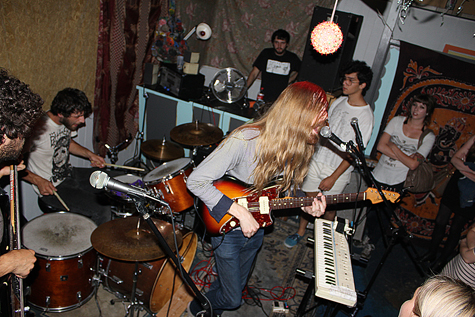
Venues so discrete we have to refer to them as “undisclosed locations” are where the raddest shows go down. These hole-in-the-wall, permit-be-damned DIY dives are incubators for garage bands ready to put their art on parade for the ultra-knowing scene. The covert show I attended on Wednesday gave discounts to members that found out about it through a taco stand–it’s that exclusive. As a member, I was there to see a night of local celebrities in the making, a 7-inch release and three teenagers from some vast distance called Cleburne, Texas.
Fungi Girls, the band from Texas, are a strong case study as to why these shows exist. The 16-year-old lads possess one solid driver’s license, at best, between the three of them. Fungi Girls’ tour is a teen movie in the making about a summer road trip without mom and dad. If that is indeed the story, I’m eternally jealous of how those young dudes must feel traveling around the country playing gigs to strangers in California. The best I was doing at 16 was overnight basketball camps at the local college.
Fungi Girls recorded is alarmingly impressive, but a further shocker is that the lo-fi sonics translate well to the live setting. I recall a few brief moments during the more shred-heavy jams, thinking it was like watching Weezer before they were signed, which is meant as a compliment. It might be tough to stomach, but there was a time when Weezer was a celebrated comparison. It’s clear the Fungi dudes’ tastes are growing beyond Woodsist and HoZac Records catalogues, as the set flourished with songs that ripped and balanced into a few sprawling numbers–they grow up so quick.
The boys of Fungi Girls played a tight set, devoid of the minor tuning lapses. Drummer Skylar Salinas was a beast in the backdrop, stuttering in the occasional light-speed drum roll with a surgeon’s precision. (Is there a Doogie Howser joke there?) The Fungi Girls played “Owsley Knows,” a favorite that is catchy beyond belief, and closed with the A-side and B-side of its HoZac 7-inch.
Comfort is a sacrifice for good entertainment. There’s no air-conditioned room for members and as I walked in, the door girl was notified that my friend and I would be the last new entrants. This meant a packed, windowless room that sat without ventilation through the dead heat of summer, would be filled to the walls with bodies. If the lineup is hype-worthy enough, attending a renegade gig is comparable to an economy pack of tampons stuffed inside a nuked hot pocket–in this metaphor you’re a tampon.
Ganglians are back from its European tour. Besides a release party for friends G.Green, the night was a welcome home to the gangly ones. The room was a pre-heated oven, but Ganglians counteracted the burn with its breezier songs, playing a new song called “My House” and “Crying Smoke.” The latter I have never seen performed live, but it turns out I’m not the only local who feels a soaked connection to it. People in the back clapped along, heads swayed to the acoustics and the throng of front row beauties danced with each other.
Feeling at home, lead singer Ryan Grubbs announced they would play a song the band wrote the night before, proceeding to pull out his cell phone to hear a recording he made, so as to remember the chords. Shouts of “play ‘Voodoo’” were honored as Ganglians closed with the request, a song I no longer recognize.
Often I’m shameless in decrying the DIY show, as it breeds exclusivity. Last Wednesday was an exception. If it weren’t for DIY shows, Fungi Girls’ touring schedule would slim dramatically and Ganglians would not have an intimate hideout to share its demos with friends.
Far
At Night We Live
(Vagrant)
“Don’t call it a comeback…” Oft-quoted, L.L. Cool J’s assertion that he’s “been here for years” is perfect for occasions such as this. In the mid- to late ‘90s, Far blurred the line between backwards-cap, Addidas-clad nü metal and heart-on-sleeve emo rock, and managed to do so in the most graceful manner possible. Their emotionally potent, fist-pumping (not the Jersey Shore kind) brand of heavy music probably could have had a huge impact on the world outside of Sacramento–it should have. And though Far certainly carved a niche among music fans at large, their 1998 breakup truncated what could have been.
Of course, the members of Far never went anywhere. The band’s name has always been uttered with no small amount of reverence, and its members had no problem moving on to other successful projects: Guitarist Shaun Lopez went on to helm The Revolution Smile, bassist John Gutenberger played with Two Sheds and Jackpot and frontman Jonah Matranga became most notable after Far’s demise for his solo work under the name Onelinedrawing. He even got a good dose of radio airplay when he provided vocals for the Fort Minor (Mike Shinoda of Linkin Park’s side project) single “Where’d You Go.” At Night We Live, set for a May 25, 2010 release, will be Far’s first album in 12 years. Will it make good on the promise they showed over a decade ago, or is it too little too late?
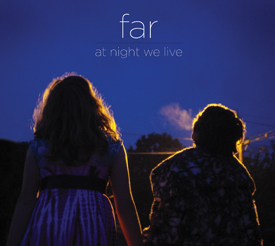
At Night We Live makes a statement toward the former with its huge opening track, “Deafening.” Fittingly, the sound of a timer rattles a few clicks before erupting into a brief battery of powerful riffs. Gutenberger’s sinewy bass lines and drummer Chris Robyn work in perfect symbiosis, powering the verses before giving way to Lopez’s mammoth guitars on the choruses as Matranga wails, “It’s deafening,” as if he’s pointing out the obvious. Later, Gutenberger and Robyn shine again on “Dear Enemy,” a palpitating and circuitous rocker punctuated by a stuttering outro.
It’s not all punch, though, as Far shows that even after a long absence, they’re not afraid to mix it up. Atmospheric tracks “When I Could See” and the sprawling “The Ghost That Kept on Haunting” pull from a much more subtle sonic palette, allowing Matranga’s breathy vocals to take on a sort of dark croon. This creates just enough variety among a collection of songs that sticks to a pretty consistent tone and tempo.
If there were one complaint with At Night We Live, it would be that it’s a bit one note. Songs such as “Give Me a Reason” get lost in the shuffle and are easy to overlook. Also, the final track, “Pony,” the Ginuwine cover that sowed the seeds for Far’s reunion, serves as an anticlimactic conclusion for an album that starts off with such bombast–a clever novelty maybe, but a novelty nonetheless.
Otherwise, there should be more than enough positives here for those who have been waiting with crossed fingers in hopes that another Far album would come. Rest assured that it’s been worth waiting for. But whether or not the band’s shot at a share of the spotlight has come and gone remains to be seen.
Words by James Barone
Click for our interview with Far’s Jonah Matranga and Shaun Lopez [Dec. 2008]
W. Kamau Bell on America’s Racial Tourette’s
Words by Vincent Girimonte
W. Kamau Bell reassures me in our conversation last week that yes, I read the fine print correctly: if you bring a person of a different race to his show, The W. Kamau Bell Curve: Ending Racism in About an Hour, slated for two performances Aug. 20, 2010 at The Comedy Spot, you will be rewarded with a two-for-one discount. This bargain first struck me as some sort of revealing trap, or maybe just a joke I wasn’t quite in on–“people are so cynical.” My next question: who’s in charge of this…profiling of a racial nature?
“We have a strict ‘don’t ask, don’t tell’ policy at the door,” says the San Francisco-based comedian, who, in addition touring with the Curve, released his second stand-up album, A Face Full of Flour, earlier this year. “You don’t want to put some door person at the forefront of telling somebody ‘you two are the same race!’”
The show’s moniker is as unambiguous as Bell himself, a “race-ist” commanding attention through a blunt dialogue on our racial States, and his build even–6-foot-4 with an afro. Digital slides, video clips and various other media are used as part of Bell’s shtick, striving to stimulate and invigorate the atrophied, “post-racial” conscience, white, black, brown or Polish (remember: no asking or telling).
It seems as though your show employs some didactic techniques; are you giving us a race lesson, in a sense?
I definitely like people leaving the show thinking “I didn’t know that,” but it’s a comedy show. If people want to learn, there are people way smarter than me to learn from–it’s not a funny lecture. I’ve always liked comedy that left you with something afterwards, though. I’m a big fan of Bill Hicks and Lenny Bruce, people who were comedians first, but also want to change the way you think about things, change the air in the room a little bit. I’d be stupid to compare myself to two of the greatest comics in the history of mankind, but I think that’s the school of comedy [under which I perform]. I think that’s also true of Chris Rock; he wants you think differently when you leave the room.
How did race first manifest itself in your material?
Like a lot of things, it’s the fault of your parents. My mom was a Ph.D. student at Stanford back in the ‘70s. She was trying to get her degree in African-American literature, but at that point Stanford didn’t consider African-American literature to be a field of study. She withdrew from the program rather than take a Ph.D. in a program she didn’t want…so that’s my mom. My dad has always been the kind of black person who was either the first or “I’ll be better than everyone around me.” He’s been a super successful businessman because he refuses to be defined by his race. Being raised by those people sort of puts you in the way I see the world. I’ve always struggled with how the world sees me versus how I see the world.
You spent much of your youth in Chicago. How did your time there influence your views on race?
Chicago is one of the most racially segregated cities in the United States. There are probably still places in Chicago where black people shouldn’t go. The difference in Chicago is they might tell you when you walk in, “Oh no, black people shouldn’t be here.” Oh thanks, I’ll see you later. Coming out to San Francisco, which has the reputation of being super liberal, there are places where black people shouldn’t go, but they just don’t talk to you. That’s true of every racial group–I’m only speaking from the black perspective. The racial dialogue in San Francisco isn’t usually talked out loud, because people think we solved it by virtue of our area code. In Chicago, I feel like you can tell somebody, “You’re being racist,” and they’d be like, “You’re damn right I’m being racist,” which is a different problem. In the Bay Area it’s, “What? How could I? There’s no way. I have a black friend. I order my burritos in Spanish.” I think living in San Francisco is what pulled the show out of me.
You’re a language guy. Give me an accepted word or phrase pertaining to race that you find annoying.
We’re two years into the era of the first black president, and there’s still this debate about whether or not we’re living in “post-racial” America. That was solely an invention of the media. It doesn’t even make sense. I looked it up in the dictionary and found out it’s not in the dictionary. It doesn’t mean anything. In the show I talk about how I can disprove the idea of post-racial America in two words: Cleveland Indians. I show the logos for the Indians, for the Redskins, the Braves: We still have sports teams named after races of people.
The last six months of news has been fraught with racial tension–I’m thinking Shirley Sherrod, the Tea Party, Arizona SB 1070. What did happen to that “post-racial” society of November 2008?
When I started doing this show, people thought this guy Obama could maybe be vice-president for Hillary Clinton. How quickly things changed. It’s interesting to me, because America having their first black president has become a lightning rod for racists. It’s almost like having racial tourette’s. And the right has done a really good job of making people believe that their problems are the fault of [Obama]; not that we, the rich people, have destroyed the economy. It’s easy to blame the black guy. I’m also not there to cheerlead Barack Obama. The show is hyper-topical; there are things that come in and out of the show based on how topical they are.
Why can Americans laugh about race but not talk about it seriously?
Well a lot of race humor–and this is what I try to steer clear of–is just making fun of other races. A large part of humor settles on making fun of people; not that there’s anything wrong with that, but it’s not the same as when Chris Rock talks about race, or Dave Chapelle talks about race. The thing I’m trying to do with the show is use jokes to indict stuff I don’t like, but I’m not just making fun of it. It’s easy to make fun of other people, you know, “That’s true! Chinese people do blah, blah, blah.”
Catch The W. Kamau Bell Curve: Ending Racism in About an Hour at The Comedy Spot, Aug. 20, 2010 playing back to back at 8 p.m. and 10 p.m.
Deftones are back at the top of their game
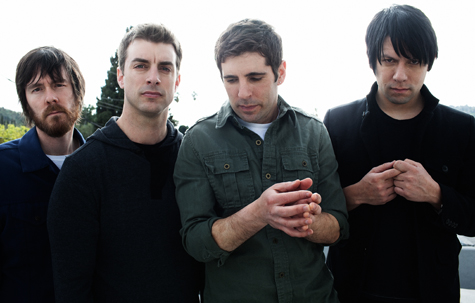
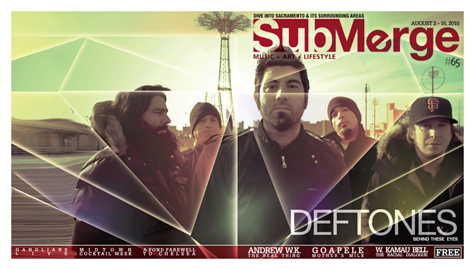
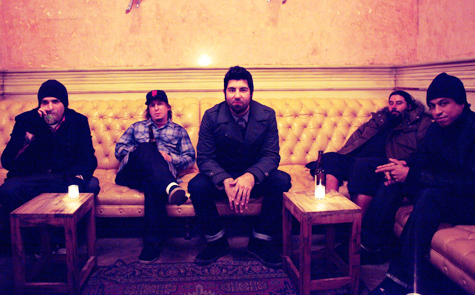
Sacramento’s own marquis band, Deftones, have come quite a way since their inception in the late ‘80s. From gigs at backyard barbecues to sold-out shows at the Cattle Club, to landing a record deal and headlining huge tours all around the world in support of chart-topping, genre-busting albums, these guys have been through thick and thin and have maintained momentum, as well as a rabid fan base, along the way. During a recent interview with Submerge, drummer Abe Cunningham reminisced on the old days. “We’ve surpassed any expectations,” he said with a chuckle. “We wanted to play the Crest Theatre; that was the huge goal.” After agreeing that they’ve achieved that goal and then some, he went on to say, “Every day from this point on, not to be corny, is a blessing. We’ve been so wild over the years and just fucked off so much and just been out of our minds fucked up on everything, just having the rock ‘n’ roll time of our lives. And I’m not saying that we’re angels now, we certainly have a blast to this day, but we’ve chilled out a bit.”
Unfortunately, Deftones original bass player Chi Cheng remains in a semi-conscious state after a horrific car accident in early November 2008 left him in a coma. This near loss of a friend and band mate quite obviously sent a shockwave through the group, who at the time was done with a record called Eros. After much deliberation, the band ultimately decided to put the release of Eros on hold and quickly got back to doing what they do best: making music. They enlisted longtime friend and former Quicksand bassist Sergio Vega to fill in as Chi slowly recovers. As the group began gathering at their West Sacramento rehearsal spot, it was quickly evident that they were all itching to create again, despite having just shelved an entire record that they poured themselves into for over a year. Before they knew it, the band had an entire new album’s worth of material. That material, born of tragedy and heartbreak, became the band’s sixth studio release called Diamond Eyes. The album charted at No. 6 on the U.S. Billboard 200 in May of this year and is arguably some of the band’s best material to date. “We’re better now than we’ve ever been,” Cunningham said with confidence.
In the following interview, Cunningham chats about their new record, Cheng’s current status, the band’s new lineup and more.
I’m curious, who in the band still calls Sacramento home?
Stephan [Carpenter], our guitarist, he moved down to the Los Angeles area a while ago. Chino [Moreno, vocals] lives in the L.A. area too. He moved down there maybe about three or four years ago. Frank [Delgado, keyboardist] and I are still here, and Chi is here. Sergio, our buddy who is playing bass with us is from New York. But I mean, we’re still a Sacramento band, we still claim it.
That’s cool because you guys have become such an international force over the years. It’s nice to see you still claim Sacramento. I feel like some bands that blow up from here end up claiming the Bay Area or L.A. or something.
I am sporting a Giants hat, but hey, you know? [Laughs] I mean shit, it’s where we’re from. Everybody’s from somewhere. And it’s not even that bad, so what the fuck, you know?
How is it performing the material off of Diamond Eyes? The record was conceived, produced and released in a very timely fashion, how does that affect the way the songs are translated in the live setting?
I mean everything is new still; the songs are still all very new. This is really the first record that we went in [to the studio] with the material all done since probably Around the Fur, actually really since our first record. Since then, we’ve mostly written everything in the studio, which can be really cool, but it also can be just fucking crazy because it’s super expensive and if you’re not gelling and getting shit done, it can just be insane. It can be a really costly, mentally draining experience all around. So that’s the way it’s kind of been for the past four records, at least up until this one. We just went in and blasted it out. We wrote it so quick and had a blast doing it despite everything that had been going on with Chi. It was a catalyst for us getting down to it.
So it was a more organic approach than you took with previous albums in that you guys were able to completely play all of these songs live in your rehearsal room before ever hitting record, right?
Yeah, dude! We can’t even play some of the songs on some of our records [laughs]. We’re actually like, “Wow, we’re a real band again. We can play our own shit.” Not that we couldn’t play all our other shit. In the studio we’ve never tried to do anything so outlandish that we could never really perform it live. Studios are great for that. You can get down and you can make the most insane masterpiece, but can you pull it off live? That’s why we always tried to limit ourselves a bit, because we’ve always wanted to be able to do it live. This time around we just blasted it out and had a great time doing it.
If you don’t mind, I’m sure it’s a touchy subject, but I’d like to talk briefly about Chi and that whole situation. When’s the last time you saw him?
Chino and I went down right around Easter; we were taking off for tour for quite some time. He’s back down in Stockton.
So he’s at home now, not in a hospital, right?
Yeah, he’s been home for a while. It’s way better than being in a hospital somewhere.
How is he doing? I read on www.oneloveforchi.com that he is undergoing some crazy “wake up protocol” and being looked after by top-notch doctors. What can you tell me about that?
These doctors that took him on are apparently involved with a lot of people coming back from the Iraq war and Afghanistan. There’s been a skyrocketing number of people coming back with traumatic brain injuries–roadside explosions and shit like that. Anyway, these doctors I guess have had tremendous success with people that are in exact or similar states that Chi is in, bringing them back to some degree. Because, I mean, he’s awake, he’s there, but he’s trapped. It’s kind of like the Metallica “One” video.
I just got the goose bumps, because I was thinking the exact same thing. It seems like he’s come a long way already, though, like his eyes are open now and he looks more aware and you can talk to him and he engages, right? How encouraging is that, being one of his closes friends and band mates?
All I want is the best for him, man. I think about his son, he’s got a son. I think about his whole family obviously, but he’s got a 12-year-old son who’s just the raddest kid and that’s really on my mind. He needs his dad back. Fuck him playing in the band again, that would be awesome if that could happen, but…
When it came time to make the call to bring in Sergio on bass and to continue playing and writing music without Chi, was that a tough decision?
I mean not really, and I don’t mean to be insensitive. Obviously we took time off to just try and figure what the fuck we were going to do and why this happened, and you just realize that some things you can never ever no matter how hard you try find an answer for, and this is one of them. Well, I’ll tell you why it happened; he wasn’t wearing his fucking seatbelt. So, of course we were trying to figure out what’s up with the band, and we took a couple months just to breathe and figure some stuff out. We just said, “Shit, this is what we do, we play music, we make music and we play it. We’ve been doing it for a long time now and it’s really what we do.” It was as simple as that. It’s what we do.
Was everybody in the band on the same page or was there some struggle between members?
Well yeah, it eventually came back to that struggle. At first Stephan wanted to just like start over again with a new band and all this stuff. Hey, I can dig that but come on, you know? Everyone was just kind of juggling ideas around, and it just came down really to getting back into our little spot out in West Sacramento. We have this studio we’ve had out there for a really long time. We just wanted to get out there, and we started jamming again, just for the sake of playing music. We actually had a record pretty much done called Eros. We’d been working on that for over a year already, and that was pretty much done. The whole thing with Sergio is, we had a show booked and we had this one thing we needed to fill, this one obligation. He had played with us before, he’d filled in for Chi way back, but he also came from this band Quicksand that we loved and was totally a huge influence on us, so we were all buddies over the years.
Was there ever anyone else in the running or was it Sergio all the way?
Yeah, it was kind of funny. He’s all neurotic, all New Yorker and shit. He came out here and I think he thought in his mind there was going to be 50 or 100 people in line to try out like that Metallica movie. He came out and he was all nervous, and we were like, “Dude just come out here, fuck this, come kick it.” We kind of shot the shit for a little bit and in actuality we were like, “Dude, you’re the only person we had in mind. There was nobody else.” He was just like, “Phew” and took a deep breath.
Can you tell me a little about the decision to put Eros on hold and start the writing process all over again for what would become Diamond Eyes?
It was really a huge decision for us. When it was brought up, I was like, “Yeah, I’m down,” when inside I was like “Fuck, I really don’t know.” I knew we could do it, but I had some reservations. We had just done this Eros thing. We were totally tapped creatively and all this shit. I was like, “We can do it! But wait, can we really do it?” But everything just came, you know? And with Eros, honestly, if we would have put that record out right now, it just was not the right time for that record. It’s not that it’s bad, there’s some good stuff on it; it just wouldn’t be good for us, man. And really it was out of respect for Chi, too. We spent all this time writing and recording and making these songs with him, and for us to go out on tour with those songs without him would be a trip. We just said, “Fuck it, let’s not shelve it, let’s put it on simmer on the backburner and let it chill a while and Chi, hopefully he can join us.”
You worked with a new producer on this one, Nick Raskulinecz. How much of an influence did he have on this record? Was he there during a lot of the writing?
Oh yeah, he was in there every single day with us from the get-go until we finished the record.
Was that new for the band, to sort of have that outside influence when crafting a record? Have you ever let anyone in creatively like that?
Never. We did most of our records with Terry Date, who is a dear friend. He’s a producer, but he’s more of an engineer. If he had an opinion, of course he’d say it, but he never was hands-on up in our shit. Normally we don’t like that shit, we’re like, “Fuck man, we can do this. We’re doing OK, leave us alone,” but Nick is just a rad dude and is so much fun to be around. He was right up in there with us. Everyone totally gelled and trusted him. Our biggest hang up is we’ll be jamming for hours and hours and hours and have cool shit come out, but nobody will ever stop and say, “That was tight, do that.” What he did was just float around the room and encouraged us to do what we were already doing. He just made everyone confident, like, “Wait, I’m doing rad shit, cool!” It was like fire, man.
It seems like everything was in place, you know? Nick was a fan of the band and on board to produce, Sergio came out and fit right in, you all started creating music again together in your old band room. It’s pretty uplifting, and frankly I think Chi would be pretty proud.
That’s our whole goal; there will always be some people that don’t get it. They ask, “How could you? How dare you?” You know what, fuck you, you have no idea how this works. You can sit on your keyboard on the Internet and talk shit. It’s really not been like that though. For the most part everyone’s been very supportive. We’re out doing our thing in Chi’s name, in his honor. He’s right there with us in spirit. I know he’s around.
Goapele Has the Voice of an Angel, the Spirit of Oakland
Much like her music, Goapele is not a one-dimensional individual. Born in Oakland to a South African father and Jewish American mother, her lineage and upbringing provided a fountain of culture for her to draw upon. From activism to the arts, she absorbed it all and channeled her experiences through music. With an angelic voice and adventurous ear, Goapele defies genres and has continued to evolve over the past decade.
Since her debut in 2001 the sultry vocalist has gone on to release three albums. After a five-year hiatus brought on by the birth of her first daughter, Goapele is putting the finishing touches on her fourth, titled Milk and Honey. With big name producers from across the country, the album is a melting pot of sounds, from synth-driven and heavy drums to sweet melodies. Goapele says that becoming a mother played a big part in expanding her world and making her “more open in general.”
“I think it was more so how much bolder and empowered, and also how vulnerable I felt after the whole experience,” she says. “It has expanded my sense of love. Also, it really pushed me through the writing and recording process. I don’t feel like lyrically I’ve changed very much, except that I’m putting myself out there a little bit more on this album instead of holding my cards close.”
A soft-spoken, strong soul blessed with boundless talent, Goapele has all the tools. It’s her world, and she is the architect. In advance of her Aug. 13, 2010 performance at Harlow’s, Submerge linked up to talk about Milk and Honey and some of the misconceptions that follow her.
I heard you say in an interview how people thought you would come back and write lullabies, but how that’s not the case.
Yeah, yeah [laughs]. It’s kind of interesting in that way because it didn’t make my music softer or my lyrics more edited, it made me more open and bold.
Â
With your time off did you find you came back with a renewed energy or creative pulse?
I took my time recording this album, and I feel ready right now. After I had my daughter I took time to be home with her and take advantage of that experience, but I have really dedicated the past couple of years to craft this album the best way I can. What it is was that I was able to take more time than I ever had before because it was on my terms and pace.
Â
I feel it’s been public for a long time that Milk and Honey was your next album title. I’m always interested when a title holds for so long. Did you build down from a certain concept and sort of mold the album off of that?
Well, it was one of the first songs I recorded. It was a very sensual song, and I felt like that would be the overall tone throughout this album. There were songs I was writing at the time that had a different vibe, but I really liked the “Milk and Honey” idea. I like that it was something nourishing and sensual… I need to find more words to explain it [laughs].
Â
Did that song steer you in a certain direction?
Not really, I just kept recording. In the creative process I just like to get everything out there. I hooked up with so many producers and musicians along the way things were always changing. I would feel like, OK, I’m done, but then another opportunity would open up so I just kept going. At the end I think it will all make sense, and it will all tie together. When I first started recording, it started with my in-house producers like Bedrock, Mike Tiger, Dan Electric, and throughout the process I got to work with different people I had met throughout the years like Kanye West; Khao, who is out of Atlanta; Raphael Saadiq and others. More recently I worked with Drumma Boy who produced the next single, “Right Here.”
Â
Again, I read a quote I really liked where Drumma Boy talked about playing you his R&B stuff but you identified with the harder, crunk stuff.
Yeah [laughs]. I feel like as producers and musicians, we have to give our truest selves. That’s what I know him for, so that’s what I want from him. I can come off super laid-back and positive, and I do want my music to have a positive impact, but I’m not strictly a calm, soft and gentle person. I really like hard-hitting drums and bass lines. And then my natural way of singing is kind of laid-back, so I like how those two things fit together.
Â
You have a universal sound, but do you feel there is an element that is a direct reflection of your Oakland/Bay Area roots?
Probably the combination in my sound–that it’s raw but still beautiful. I feel like that is Oakland. It has a rough vibe but it’s gorgeous at the same time. It has the water right there, so much green, but there are other elements that can be rough around the edges. I would be happy if the violence went down, but I do like that people can be individuals and not worry about fitting in a box.
Â
Yeah, I feel like that is really personified in the “Milk and Honey” video. It’s a very elegant video, but you got the two slugs in the bottom row of the teeth.
[Laughs] Yeah, exactly. It’s not typical. We all have so many different aspects of ourselves, and in entertainment it’s like people want us to be one certain way but that’s not how most of us are as men and women.
Â
You may have just answered this, but what do you think is the biggest misconception of you?
Yeah, kind of what we were just talking about and people just wanting to keep me in the neo-soul category. Yes, I have been strongly influenced by soul music and I always want what I do to be soulful, but it does bleed out of that category.
Â
Is that a term you have come to disgust, or are you just kind of eh with it?
It turns me off, but I understand it. When you’re doing something that doesn’t quite fit the titles that are already out there then it’s easy to just make a new title, but it’s the best when you don’t have to have any title at all. Just your name. That’s what I’m working for.
Â
Midtown Cocktail Week will raise your drink awareness
Words & Photos Anthony Giannotti
What is your favorite alcohol? Whiskey? Vodka? Tequila? How do you like to drink said favorite libation? Sip it? Shoot it? Mix it? Well no matter what your drink of choice is or how you prefer to get it down your throat, Midtown Cocktail Week will have an event for you. This week of cocktail enlightenment will be held Aug. 9—15, 2010 at various locations around Midtown Sacramento. It isn’t a week for just getting trashed and throwing up on your neighbor’s lawn–being a little tipsy may be a by-product of the festivities–but this week’s focus is cocktail education and appreciation. “Our goal is to educate people,” says Joe Anthony Savala, one of the event organizers and founder of the drink program at Zocalo. “We want people to drink better. People in Sacramento are eating better than ever, so why not drink better? We want them to know what fresh ingredients taste like. We also want people to get out and try new stuff!”

Education is an apparent theme in the week’s list of activities. Starting off the festivities on Monday will be L Wine Lounge, where the theme will be the art of drinking well, and timely drinks. They will be showing how you should be drinking through an entire meal, from aperitif to digestif. “We are excited to be involved again this year,” says Chris Tucker, lead mixologist of L. “We are trying to raise people’s expectations of their local bars.”
Tuesday’s events will give some of the local bartenders a chance to show off their chops with a mixology competition. This cocktail creation competition has a similar format to Iron Chef. The battle for cocktail king will take place at Lounge on 20.
For all you whiskey enthusiasts out there, De Veer’s Irish Pub will be showing off their impressive whiskey selection with their Whiskey Around the World tasting on Wednesday. The whiskey experts at De Veer’s will be sharing some pretty intense knowledge while helping you find a whiskey that suits your palate. So come with a thirst and an open mind. Shady Lady Saloon will be handling Wednesday’s after party, as well as hosting a number of their own events throughout the week. “We are really excited about this event,” says Shady Lady bartender Travis Kavanaugh. “We have different events going every night of the week.” Just a few of the special attractions at the Shady Lady during Midtown Cocktail Week will include a Don Julio presentation, a tiki-themed night, live hand-rolled cigars and visiting guest bartenders from San Francisco’s prohibition-themed saloon Bourbon and Branch.
“We really want people to know how much better fresh hand crafted cocktails taste,” Kavanaugh says.
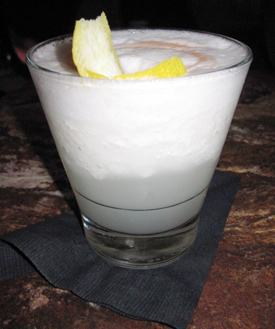
Tequila guru Joe Anthony Savala breaks down Thursday’s activities at Zocalo. “I love Latin spirits–mezcal, pisco and tequila,” he says. “We want people to enjoy them as much as we do, that is why we are doing a mezcal tasting and education.” Zocalo will be sampling different mezcals from different regions of Mexico. They will also be demonstrating how you can make simple, fresh drinks from south of the border at home. As if a smorgasbord of tequila and regional Mexican food isn’t enough, notable fine dining restaurant and bar Ella will be dispensing late-night drinks and tastings to finish off the evening.
The new dim sum restaurant Red Lotus will be starting off Friday with specialty block ice cocktails. If you have not had a chance to indulge at Red Lotus, this would be a great time to sample from its diverse menu and try an Asian fusion cocktail. Grange will be closing out Friday with some local spirits and food pairing. To say that Sacramento is proud of its local produce is an understatement; we like to see it in our local restaurants. The staff at Grange Restaurant are also very strong believers in the slow food movement. “We have some really neat local alcohols and fresh local ingredients, as well as some very high profile bartenders guest spotting,” said Ryan Seng, mixologist at Grange.

We all know that The Golden Bear is known for their enticing front patio, tacos and $2 Miller High-Life, but on Saturday afternoon, be sure to investigate their newly remodeled back patio and freshly devised cocktail list. Sunday will kick off at Hot Italian for some unique Italian cocktails. I don’t know exactly what Italian cocktails consist of, but I’m sure my fellow I-tie’s will bring more flavor than Steve Zissou’s campari and grapefruit juice concoction. Sunday night the wrap party will be held at The Torch Club. The Torch Club was founded the year Prohibition ended, so come dressed in your best suspenders and flapper dresses. It will be a Prohibition-themed party featuring five classic drink recipes.
Remember these are just a few of the events at a few of the locations. Check Midtowncocktailweek.org or ask your favorite local bartender for a full list of events.
DLRN keeps their latest release, and those to come, close to the vest
It’s coming back around. Young artists are expecting more from their culture. Take the art of Kehinde Wiley, for example: He paints the stereotypical street hustler in gentlemanly poses against backdrops of elegant tapestries, juxtaposing the ghetto with the affluent. Sacramento’s DLRN is analogous to Wiley’s vision of celebrating the complexity of hip-hop culture.
Hip-hop has reached a reputable age, and decades deep it has its own version of royalty. As of late though, it has become less of a culture, less of an art form and more of an economic commodity. Sean La Marr, under the nom de plume 5th Ave, sees a potential for change without leaving the sleepy city of Sacramento. La Marr’s video for the song “Dear Langston” is a testament to his hometown pride, as it used Wiley’s art as inspiration–showcasing the city’s talented inhabitants mimicking the regal poses of the elite–the same poses present in Wiley’s portraits.
It’s clear La Marr loves Sacramento hip-hop with the sincerest of hearts. Our interview was intended to discuss the new record his group, DLRN, is dropping this week. Yet, it was during our post-interview hangout session that he revealed his passion for the local scene.
Last year DLRN dropped its No More Heroes record with the intention of introducing new heroes to the hip-hop canon and creating an alternate narrative not traditionally found within the genre. “From an MC standpoint, I was very disillusioned with it,” 5th Ave said. “I came to the realization that a lot of the faces of hip-hop these days I do not relate to. I don’t see them as role models or the influential voices that they once were.”
DLRN, formerly known as Delorean, consists of MC 5th Ave, born Sean La Marr, and producer Jon Reyes. DLRN is retro-fashioned and reactionary, operating in a space that is not quite conscious rap and not quite club rap either. “We’re a product of different time periods and different people, that’s part of how we came up with the name Delorean,” Reyes said.
Unfortunately, a Spanish trance-pop had already claimed the Delorean moniker.
“Our tastes are more eclectic than most acts you’ll hear,” La Marr said, which means they were aware of a possible conflict in their future if they kept the name. By dropping the vowels to DLRN, the group hoped to dodge any cease and desist suits or mistaken-identity tour dates.
“It’s funny because we knew about them when we decided to go with the name,” La Marr said. “We just decided we better blow up before they do. But, then they were on ABC, they had a national tour and became Pitchfork darlings.”
La Marr continued with an anecdote, “We almost didn’t get booked at a show in Seattle because they played at the same venue two weeks prior. We’ll have stuff posted on our Facebook page about events that they’re doing and vice versa.”
Reyes added, “We can’t really hate it, because they’re a really talented band.”
The duo is excited about the switch, citing MGMT and MSTRKRFT as other successful bands that dropped the vowels. Sacramento is now tallied at two non-vowel band names (the other being CHLLNGR) with potential to join the celebrated ranks.
The topic evolved into a discussion over the ethereal trends in cycle of kindred band name themes–such as bands named “wolf-something” or rappers named Lil’. Apparently, there was a birth explosion of Deloreans around the early Naughties. “We thought about adding a word to make it Delorean Brown,” La Marr said. Reyes interjected, “A good reference to one of the greatest wrestlers of the modern era, D’Lo Brown. “ La Marr continued, “But, it turns out there was a Delorean Brown already in Sacramento. Here I think we’re being clever.”
With a new name, DLRN sought out to craft its followup to No More Heroes. The Bridge was recorded at Pinnacle College in Rancho Cordova, which La Marr described as a “sterile” environment in comparison to Omina Labs, where No More Heroes was recorded. It took time, but DLRN enlisted the help of its student body to help them settle into the new digs. “It’s good working with people that you’re friends with outside of the music,” Reyes said. “It makes for very chill sessions.”
Reyes described the recording process for The Bridge, out July 20, 2010 as a free download, as a humbling and surreal experience. The students that volunteered were mostly fans of DLRN prior to the sessions. “Those are the people you’re making it for and they are sitting right next to you,” he said.
Accessing the privilege to hear the new record has been kept to limited company–possibly on a “nothing leaves the studio” policy. The reasoning is DLRN has a purpose with its messages. It’s encoded in the video for “Dear Langston” and on The Bridge. The two releases reference one another, and provide insight into the already planned third album. When I asked the name of the next record, I was met with stoicism and a round-about answer. “There is a hint in the last song,” La Marr said. “I hate to not tell it to you, but when you hear the next DLRN project it will make sense.”
I did not hear the hint in my exclusive The Bridge listening session. But I did hear a reason alongside the Cloud City record to be excited about local hip-hop in July. The Bridge’s first video features Prometheus Brown of Blue Scholars, while the record has further appearances by Hopie Spitshard, Illecism and Chuuwee. That’s all I am allowed to disclose.
DLRN has major plans to kick off August by celebrating the release of The Bridge in what La Marr hopes will be the biggest hip-hop event of the summer. After hearing the words “tequila tasting,” “kegs of free Miller High Life,” “free sushi” and “the Miller High Life girls,” I am not opposed to declaring it the event of the summer either. “I’ve been to a lot of hip-hop shows and I’d hate for this to be just another hip-hop show,” he said. The release party is Aug. 6, 2010 at Beatnik Studios.
In my brief tenure with Submerge, I’ve met a lot of local rappers, most of which have this ambition, rooted in frustration, to overcome their surroundings. It is a career plan that includes reaching or leaving for the Bay Area and Los Angeles markets. La Marr never once spoke with a belittling tone toward his hometown. Instead, we sat for an extra half-hour talking about our favorite Sacramento rappers, putting me on to a great local joint by Blee featuring Doey Rock. “You know what, come to the show and I’ll have a mixtape for you of all my favorite Sacramento shit,” La Marr said. I left thinking, it’s that kind of dedication to the scene that makes someone the founder of a collective such as the Neighborhood Watch. He’s got our best interests at heart.
Go to Beatnik Studios on Aug. 6 for DLRN’s The Bridge record release party. Free Tequila tasting and beer for those 21-and-over will be available. There will also be VIP wrist band bottle service. Come dressed as Alice in Wonderland and get in free. Prize awarded for best costume.