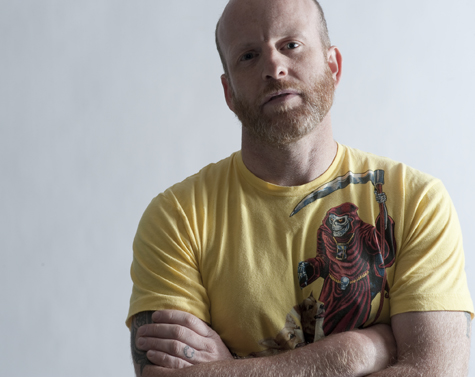
[Editor’s note: We here at Submerge were devastated to hear of Daniel’s passing on April 8, 2017. His impact on Sacramento’s music and art communities will never be forgotten. Rest easy, old friend.]
The P and 21st block is a sleepy pocket in Midtown. Tucked away from the white noise of the freeways, littered with parking lots and office buildings and a tattoo parlor, it’s low-profile–unless it happens to be a dance night at Press Club or The Townhouse.
Both clubs are infamous alternatives to the posh world of dress codes and bottle service. At Townhouse, or Toho as some call it, the beer’s cheap, the drinks are stiff, the tagged-up bathrooms are claustrophobic and the entire interior is low-lit to obscure seedy behavior. It’s the only spot in town suitable for a dubstep and bass night called Grimey. Being coined by a local DJ who goes by Whores is just another notch in its anti-glamour esteem.
On his birth certificate, Whores is Daniel Osterhoff. He’s Dan to those who knew him before he was Whores. We met at his apartment on the north side of Midtown a few hours prior to Grimey. He does not live in a high-rise loft or a gutted warehouse that doubles as a skate park. He lives like the rest of us, in a modest complex with carpeted floors and enough space to stretch. Two fellow DJs, one of which was Jubilee just flown in from Miami, and Grimey resident photographer Eric Two Percent were hanging out. The walls were like those you’d find at any graf-writer/graphic designer’s abode; dozens of pieces from abstract to lowbrow with the exception being a giant rusted-red W mounted on the wall.
“Russell Solomon of Tower told me the letters were lying around on the roof of Tower Cafe,” Whores said. “So one night I climbed up there and took the W.”
While grabbing me a Red Bull from the fridge he apologized for the hair on the kitchen floor. A stylist friend that was hanging out had sharpened Whores’ close-cut before my arrival.
We stepped outside for a cigarette and chopped it up. It was not long before James Blake’s controversial quotes to the Boston Phoenix that caused a stir in dubstep were discussed. An uber-popular British electro-soul and dubstep artist, Blake railed the genre’s burgeoning “frat-boy market,” which is being labeled “bro-step.” His rant was widely publicized for statements like, “It’s a million miles away from where dubstep started,” and “It’s been influenced so much by electro and rave, into who can make the dirtiest, filthiest bass sound, almost like a pissing competition, and that’s not really necessary. And I just think that largely that is not going to appeal to women.” Periodically throughout the night, Whores and his fellow DJs coolly reminded me that it’s neither their taste nor in step with the identity of Grimey.
The success of the night is owed to the attention to taste, which can be misperceived as snobbery, but should not be construed as such. Even when resident DJ Jay Two approached Whores with the idea of a dubstep night, Whores was interested but hesitant due to a feeling that dubstep had reached its high water mark.
An attendee of Grimey is not given the opportunity to gripe “not this damn song again,” because its resident DJs (Whores, Jay Two and Crescendo) are intent on remaining ahead of the curve by playing records acquired on advance or playing the newest tracks they think need to be heard. It’s a dedication to the cutting edge that is scarce in the local clubs that rely on Top 40 or are just held down by stubborn old dogs disinterested in new tricks.
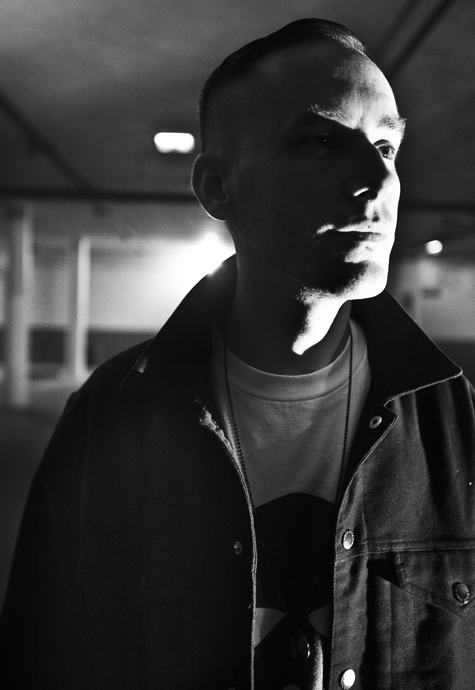
“I just hold steady with playing what I think people would like,” Whores said. “I’ve attended a lot of different dance nights everywhere from New York to Los Angeles, Seattle, Portland, San Francisco and Oakland. From the most underground to the most mainstream clubs, and I’ve taken little elements from each. But once you get the word out there, the word kind of does it itself.”
Much like fellow local veteran DJ, Shaun Slaughter, Whores is well traveled. He started DJing in 1997 as part of 916 Junglist before moving away in 2000 to Portland. Each move, he connected with different crews in Portland and Seattle before moving back to Sacramento in 2005. “Most people don’t know that about me,” he said. “They just think I came on the scene or think I’m from Portland, but I’m born and raised in Northern California.”
I reconvened with Whores outside of the Townhouse around 9:30 p.m. He was talking with Matt B of Bass Science, who had arrived in a rental from Tahoe. Whores was quick to share his knowledge on Bass Science, practically orating a short bio. “He started the whole glitch hop scene basically,” Whores said. “When Glitch Mob was starting out and Lazer Sword, he was right there. This guy’s got quite a big history in the newer EDM alternative craze.”
All professions have a language and despite my familiarity with Grimey and its music, talking to the actual artists involved meant brief interruptions to ask if they were saying “IDM” (intelligent dance music) funny, only to learn that EDM translates to electronic dance music–the domain in which the sub-genres operate. The confusion then sparked the two DJs into weighing the blurring sciences between EDM and IDM. “Some of it is [IDM] though nowadays,” Whores said. “Some of the juke stuff. Machinedrum’s new album.”
“The Lazer Sword,” Matt B added. “It’s intelligent footwork basically.”
“EDM is basically a very blanketed term,” Whores continued. “Nowadays everybody plays a little bit of everything because people’s attention spans are about this small [makes his index and thumb nearly touch]. So if you play one genre of music, you’re pretty much pigeonholing yourself and boring the shit out of the crowd.”
Whores stepped into the booth at 10 p.m. The bar was filling out and overflowing onto the dance floor with more than just gangly dudes having acid flashbacks from the Jungle club days. Whether it’s the Whores hype, the distancing from “bro-step” and “filthy bass” or just a misnomer, Grimey is never short on female attendees. By 10:30 p.m. the dance floor was gaining steam with a few girls entertaining each other, but come 11 p.m. to 2 a.m. the floor was a grinding, thrusting hot box of sweaty bodies–sweet, sweet uninhibited decadence.
Whores neither bores the crowd nor himself when he DJs. He keeps a folder of over 10,000 tracks on his computer at all times and does not practice a strict set. “It’s a lot more fun freestyling sets,” he said. “Sometimes when I record the sets and go back to listen to them, it’s like, ‘Man, that mix really worked.’ Others it really didn’t work, but what it comes down to is if you’re a professional, you can treat it like a jazz musician and play out of it. It’s all what you do with an error. Some DJs don’t know how to bounce back, they flop or they panic and that shows. That’s the difference between me and some DJ who took it up two years ago.”
Back outside we resumed our interview session in hopes of a quieter haven, but Grimey is the dance night with just as many attendees milling about the roped-off outdoor smoking section and back parking lot as there will be jammed into the dank of The Toho.
Whores clearly enjoys the popularity of Grimey, but he lamented that its success led to the compromise of his HUMP night on Wednesdays opposite Grimey. Originally called Warpaint Wednesdays with Terra Lopez, Whores came on to assist with the DJing and teach her techniques. Once Lopez began Sister Crayon, she forked over the night to Whores who renamed it HUMP.
“It used to be a popular night,” he said. “When Grimey came around it took the spotlight. I’ve been bringing around a lot of relative and instrumental electronic artists and musicians to try to bring it back.”
It was none of my business, but Whores willingly broke down the financial losses he’s incurred in the past two months that’s led to HUMP’s demise. DJs that are not conveniently touring the West Coast are flown into Sacramento and given hotel accommodations on Whores’ dollar. If no one shows, it means he bites the bullet.
San Francisco electronic artist EPROM and Frite Nite’s Salva, two rising beacons in the West Coast, are booked for HUMP at the Press Club this week. After that it’s the anniversary party with locals only in November, including Dusty Brown’s Little Foxes project, which is quite possibly also HUMP’s night of eulogy.
With Fuck Fridays dissolved, the Toho was in need of a new Friday night event, and Shaun Slaughter was back on the market for work. Rather than compete for the local crown, Whores and Slaughter teamed up to create Heater, an exclusive once-a-month party that combines glitter and gutter. “It’s more like HUMP with an open format,” Whores said. “We can play anything from house to electro to Baltimore to indie to dubstep and bass n’ breaks, whatever. It’s just straight party.”
The party debuted last month with the two DJs performing separately, and then trading off tracks for the last hour. “There’s always been an odd tension between us, but we’ve always been super-friendly with each other. I’ve been super-supportive of his nights and he’s been super-supportive of mine. The odd tension was because it’s a small town and he’s held the crown for quite a while. I think we’d really benefit if we did more stuff together, which is why we’re only doing it as a monthly.”
Our vibrations are in good hands with the Grimey residents. It’s a rare event where making requests is the greatest faux pas. “I don’t think it’s common knowledge that people know it’s rude,” he said. “Believe it or not, I have one job and one job only and that’s keep the vibe going. As soon as I stop to talk to someone and they go into detail about what they want to hear and why they want to hear it, all of a sudden they take me out of the groove I’m in, which takes away from the vibe. The next mix I do will be less involved and the crowd will notice, believe it or not. They won’t necessarily think about it like, ‘That mix sucked,’ but just have a moment to consider going out for a smoke.” Put your trust in Whores, kids.
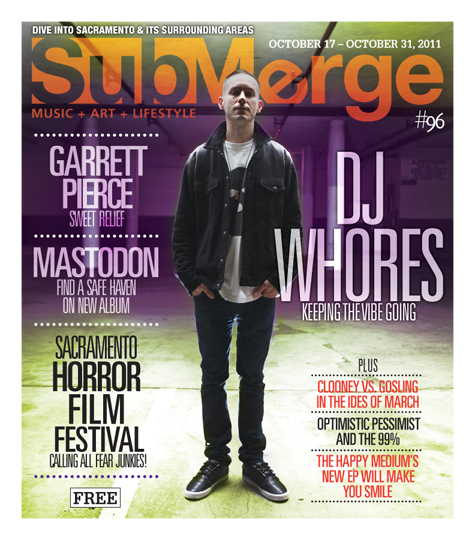
Grimey gets down at the Townhouse every other Tuesday night at 9 p.m. ($10 cover). DJ Whores and Shaun Slaughter’s Heater happens one Friday per month, also at the Townhouse. It’s free to get in before 10 p.m. with an RSVP. You can also catch DJ Whores at the Golden Bear on Saturday nights.
Juan MacLean Adds a Very Human Touch to Electronic Music
“You know what’s weird is a name came up on my phone. You must be calling from a landline,” said Juan MacLean from his tour bus. When Submerge contacted him for our interview, we did in fact call from a landline. It was a quirky way to start the interview, but set the tone for speaking with a man whose career in music is flavored with contradictions, and we mean that in a good way.
MacLean, or The Juan MacLean or just John MacLean, began his career in music as a founding member of the ‘90s dance punk band Six Finger Satellites, which was signed to the influential indie label Sub Pop. After he parted ways with his band, MacLean eventually reinvented himself as a solo electronica artist. With help from LCD Soundsystem’s James Murphy, MacLean has released a few recordings under The Juan MacLean moniker for another influential indie label, Murphy’s DFA Records. MacLean’s most recent album of original material, The Future Will Come, was released in 2009 and features another LCD alum, Nancy Whang, on vocals.
When he’s not performing his own music, MacLean can also be found touring the world as a DJ. When we caught up with MacLean, he was on the road with Simian Mobile Disco and had just performed dates in Canada. In 2010, he released his first mix album, DJ-Kicks, a collection of modern house music. MacLean said that the process for cultivating tracks for the mix wasn’t as arduous as creating his own music, a process he described as “torture,” but it certainly had its challenges.
“I did spend a lot of time thinking about it, which might not seem like working,” he explained. “Because of the Internet, you can really start chasing your tail, because at some point you realize that you’re never going to have tracks that people can’t just get within 30 seconds, because everything is out there and everyone knows everything. So playing this game of having the most obscure tracks is pretty much pointless at this stage of the game.”
Instead of trying to find tracks off the beaten path, he took a different approach to putting together DJ-Kicks. He didn’t attempt to wow listeners with rare songs, but rather allowed the craft of actually making the mix take center stage.
“My answer to that was first of all to use all vinyl and mix it in the classic way,” MacLean said. “Making a mix live with vinyl–I think it always does impart this human feel to it…”
It’s this inherent humanity that MacLean feels is missing from modern music. Interesting, considering he has made a name for himself in the world of dance and electronica–two traditionally mechanical genres. He explained that the little imperfections and “constantly correcting the mix in the middle of the mix” creates “a more friendly, human feel to the actual mixing.” He likened the experience to listening to old Rolling Stones or Led Zeppelin albums, “where everything sounds kind of off.” As for the auto-tuned, pitch-corrected and quantized music of today, MacLean added, “They don’t sound like human beings anymore.”
In the following interview, MacLean also shared his opinions on the difference between the dance music cultures in the States and overseas.
How is the tour with Simian Mobile Disco going?
Yeah, it’s actually been really good. Even in places like Denver on a Monday night it’s been insane.
Is Denver just not a happening town?
Yeah, it’s usually really bad for all of us. It’s just one of those places for dance music, it’s just really bad. It was crazy. It was packed. I think they were on a lot of drugs.
That helps, I guess.
It does.
You’re on the road a lot. You must have a pretty good idea of what kind of crowd you’re going to get from place to place, but do you get surprises like that night in Denver often?
For sure. It’s mainly in the United States where there are the most wild cards, because most other places in the world, dance music culture is a little more ingrained and established. You really know what you’re getting when you get there–in a good way. In the United States, it’s a battle. It’s just a relatively new thing here.
So it’s just not as ingrained in the culture here as it is in Europe?
Well, there are a few different elements to it. In the United States, traditionally, people who are into live music–rock or indie rock–are not interested in seeing dance music or a DJ in any way. The two things are incredibly divided. I think it’s fair for DFA to take credit for being a big part of bringing indie rock audiences to the dance music world. Now there is a lot of crossover, and it’s not unusual to see rock music and dance music at the same time, or see a band one night and a DJ the next night. In Europe, that’s just the way it’s always been. They don’t understand that kind of fragmentation–being restricted to one thing.
It’s funny because I grew up listening to alternative rock in the ‘90s, and you see clips of live shows back then and people are just jumping up and down and getting into the music, and then when it began to segue into indie rock, the crowds got very still and stagnant. They don’t move at all. You think that’s part of the reason why it’s hard to get the indie kids to come out and dance?
I spent the ‘90s playing in an indie rock band signed to Sub Pop. I just got used to playing a sold out show and looking out and seeing a room full of people with their arms folded. It was also a very male-dominated thing. The audiences were like 80 percent male. Especially in American culture, doing much of anything while music is playing would be considered really gay or something. We live in a very homophobic society, no matter how open-minded people in the indie rock world think they are, when it comes to indicators like that, I think it’s still a really homophobic batch of people. Dance music seems to be a bit more female-driven, in a practical way. If you’re trying to get a room full of people who aren’t dancing yet, girls are always going to be the first ones to dance, because guys aren’t going to be the first ones out there dancing. I think it’s because they’re afraid of being perceived as gay–unless it’s at a gay night, which are always my favorite gigs to do in the United States.
Just because the crowd is the most receptive?
At gay nights, nobody cares about being cool, about being cool in front of other people. It’s just totally removed. It tends to be just people having fun.
I was reading one of the reviews of your live shows from your current tour and the writer was quick to point out that you use mostly vinyl on stage. I thought it was interesting, because the laptop is the instrument of choice among DJs now.
I think people are starting to take notice again, especially in the United States. They’re just not used to seeing people use vinyl. I think when you see someone up there, even if you’re not doing much and just hanging out and listening, which is fine, to watch someone mixing vinyl or to watch someone looking for the next record play, and putting it on and getting the mix right, it just makes the DJ… For one thing, you have to move. You have to move around a lot, you have to always be doing something. It’s even more interesting just to look at than someone looking at a laptop screen. I think there’s a psychological thing now, when they see someone looking at a laptop screen, that image is what they associate with the world of work or down time looking at Facebook or something. I think there’s a psychological process that is off-putting to people, and that’s not even to disparage people DJing with laptops. I have friends who are amazing using a laptop. I’m not. I just can’t do it. But there are also a lot of people who are abusing how easy it is to DJ with a laptop. I think that’s where the trouble comes in.
Does that bum you out a little bit? I guess it could be relative, but I know photographers who really like digital cameras, but they’re bummed that they make it easy for anyone to think they’re a photographer.
It is very analogous to a bunch of fields. Also graphic design–everyone thinks they’re a graphic designer now just because they have Photoshop and Illustrator. It’s actually been a big conversation on this tour with Simian Mobile Disco, because in America, it’s much more prevalent than it is elsewhere in the world. I think you can say the same thing in any of these fields, which is now we have an abundance of people who are not so good or mediocre at doing all of these things, but it does make it even easier for those who are professionals and have put a lot of time and effort into honing their crafts and have real talent, it makes it easier for them to stand out when people see it.
For the DJ-Kicks collection, you made a collection of modern house music. Dubstep has become really popular in dance clubs recently. Was this mix sort of a statement that house is still alive and well?
Well, from the beginning for me, it’s always been an influence. It’s comparable where for James Murphy in LCD Soundsystem, he’s always really been into disco, but LCD Soundsystem songs often don’t sound very disco. It was just always something I was into, especially early Chicago house tracks–some of them were things that I’ve ripped off for years and years. When it came time to do a mix, it was just the most logical thing for me.
You said these are things that you’ve been ripping off for years, is this your way of paying it back?
Yeah, in a way. This is where I’ve been coming from forever, and also I think in the hipster world, people have been into disco for so long, for me, it got really old and tiring. I thought if there was some way to expose people to what came after disco, then maybe that would be a good thing.
Juan MacLean will perform a DJ set at Mix Downtown in Sacramento on April 7, 2011. This will be opening night of a new monthly party Lights Down Low, featuring resident DJs Shaun Slaughter, Adam J and Alx-T. To RSVP for free admission (before 11 p.m.) go to Ldlsac.tumblr.com

New Year’s Eve is the most hyped-up-yet-somehow-always-disappointing night of the year, but it doesn’t have to be. If you head to Townhouse this year for some serious ass shaking thanks to the fine folks behind Fuck Fridays and Lipstick, there’s no chance it will be. Their NYE bash will take full advantage of the two stories inside Townhouse, with upstairs being the “Booty Bass Exxxplosion” room with Shaun Slaughter, Adam J and Taylor and special guest Richie Panic; downstairs will be the “Lipstick Year in Review” room with Roger Carpio. Sponsors include Filter Magazine, Hot Italian, Phono Select, Vitamin Water and Bows and Arrows (where pre-sale tickets are available for just $5). And with companies that legit come rad giveaways and freebies. The Facebook invite page for this party even says that “guests are encouraged to bring air horns, noise makers and other loud NYE celebratory stuff,” and that there will be a “booty ball drop at midnight.” Sign us up! Kicks off at 9 p.m., $8 at the door.
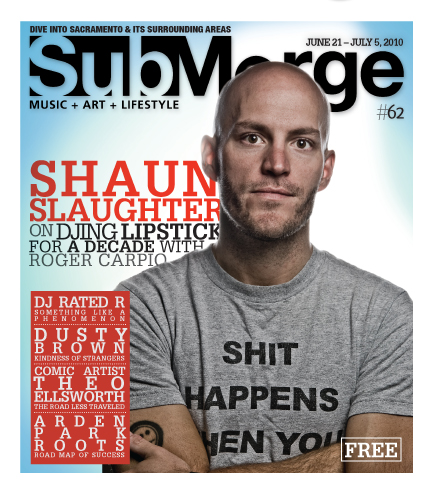
DJ Shaun Slaughter Talks his Trade as Lipstick Turns 10
Words by Adam Saake – Photo by Matthew Burks
A jazz album plays in the background of Shaun Slaughter’s Midtown apartment as I sit down to discuss the 10-year anniversary of Lipstick, his indie dance club at Old Ironsides here in Sacramento. I guess maybe I expected a Phoenix song to be playing, or something along those lines, but then it all makes sense.
“I don’t want to have to play ‘1901’ ever again,” says Slaughter, half-joking. “I love that song, but I love it so much that I don’t want to play it so I don’t ruin it for myself.”
It’s like making burritos all day: you don’t hate burritos you just don’t want to have one right when you get off work. Alright, bad comparison. Indie rock isn’t really like burritos. But imagine for a second that Slaughter and Lipstick-partner-in-crime, Roger Carpio, are the tortillas. Wrapped up inside of these two musical encyclopedias is a plethora of songs that each have dug up from the depths of record bins and music blogs to play for a finicky crowd, week after week, year after year. Maybe you can’t eat Mexican food every day, but many faithful Lipstick-goers show up damn-near every Tuesday to see what the boys have drummed up now.
It wasn’t always as packed as it is these days; it was a bit of slow climb. And in the beginning it wasn’t always just Slaughter and Carpio. The original Lipstick lineup consisted of four DJs who all had very different ideas about how the night should sound. But what unified them was one simple idea–make them dance.
Slaughter was friends with a fellow house-head named Chad Nardine. Both he and Slaughter were new to downtown. Slaughter himself was a kid from the suburbs and barely 21, and they were given a slot at the Press Club to DJ. They cut their teeth there for a while but frustrations with the manager and too many randoms walking in requesting Madonna had them looking elsewhere. They were then approached separately and asked to DJ at Old Ironsides on one fateful Tuesday. Realizing they had both been solicited for the same gig, they of course decided to do the night together.
“Our first Tuesday ever was just Chad and I, and it was all electronica and it bombed,” says Slaughter. “No one was there!”
The two needed to revamp, so they went back to the drawing board to figure out how they were going to put together a better club night that would hit. The two of them were growing tired of DJing dance music and Slaughter had a taste for older alternative rock like the Rentals, Weezer and Sonic Youth. Nardine picked up on this and told Slaughter about Carpio.
“Chad said, ‘I have this friend named Roger who’s really into Britpop,” recalls Slaughter. “And I had no idea what that even meant.”
Carpio added his own ideas to the sound of the night and each peppered in their unique styles. To round out their indie rock dance night, Roger brought one more DJ into the mix.
“Then Roger said, ‘I know this guy Sean Meyers who DJs really good ‘60s rock.’ We heard him play this set one night, and it was just amazing. We added him on and then it was the four of us,” says Slaughter.
During that first year of Lipstick at the Press Club, the four played to lackluster response and were perfectly OK with that. The few that showed up showed support the best way a DJ could hope for.
“It was good, and we were happy with 30 or 40 people,” says Slaughter. “We couldn’t believe that people would dance to it.”
Nardine eventually ended up moving away and Meyers excused himself to pursue other endeavors. That left the two DJs, Slaughter and Carpio, who couldn’t have been more different from each other. But what at first may have seemed like a duo doomed to butt heads, disagree over music choice or altogether fail as partners ended up being the exact right pairing that would keep Lipstick running after all these years.
“We were both really particular about how the night went,” explains Slaughter. That’s why…it’s been around so long. Both of us were really stuck on the fact that it had to be a certain way.”
And that certain way was “some indie, Britpop and some old stuff” as well as no guest DJs. Whatever they were playing, they were doing something right and that mindset of sticking to a format was the foundation that drew in crowds night after night. Over time, though, the box they DJed inside of eventually proved to be too small and it was time for more legroom.
“I think that if we would have stuck with that, it would have just died out, because ultimately people don’t want to listen to the same stuff,” says Slaughter.
So again, what the two shared in common was what kept Lipstick new and interesting over the years. Their shared passion for discovering new music coupled with Lipstick happening every week made for the right motivation to keep introducing the dance floor to new bands.
“Roger and I are super avid. All we do is dig for music and listen to new stuff,” says Slaughter.
At times it can be “a double-edged sword” Slaughter says, hand on his chin and thoughts on his mind. Keeping the night always new and always changing is fun when you’re a DJ because you’re never playing anything out. You’re able to keep a song like “1901” for your own enjoyment. Yet, certain songs are guaranteed to pack the dance floor and in the end, isn’t that your job as a DJ?
“You’re doing people a disservice if you don’t play some of that stuff,” says Slaughter. “You do it every Tuesday and you’re thinking, ‘Fuck! I’ve heard this song so many times.’ But then I think about the people who haven’t been coming every week and how excited they are to dance to a song they’ve never heard before.”
It’s rare for anything in the music and art scenes to last 10 years, let alone a club night. People change, bars close, relationships go south. It’s just the way it is. For Lipstick to have endured 10 years on an ever-changing music scene and all the while under what seems like constant scrutiny from naysayers calling Lipstick a club night for “hipsters,” is pretty amazing. This common misconception is immediately squashed when you walk through the doors on any given Tuesday. It’s a shot in the dark as to whom you’re actually going to find inside at the bar. Most likely you’ll find those same naysayers who are socializing with the “hipsters” while buying shots for your introverted co-worker from the office.
“We’ve gone through so many waves,” explains Slaughter. “Roger is like, ‘Dude. How many times have we gone through this?’”
Maybe that’s why Slaughter and Carpio have stuck it out all these years. Keeping the crowd showing up is one thing, but keeping themselves interested is another. But when each year brings a new crowd, with new friends and more good times to add to the memories, it makes it easier to stick around. Plus, Slaughter and Carpio switch it up around town and have been behind the wheel of many other successful, and most importantly, just really fun club nights around Sacramento. One of their most popular nights, FUCK Fridays at the Townhouse Lounge, is their sort of alter egos where they can completely let loose. Here they promote a “let’s lose our shit and go completely crazy” attitude while Slaughter is dressed up as say, an M&M or a rat costume [pictured].
What people don’t always realize is that many DJs and promoters in Sacramento, including Slaughter and Carpio, have their finger on the pulse of what’s good in the music and club scenes around the country. Slaughter frequently travels to other cities to DJ, and when he returns he brings back with him the best ideas he’s encountered to apply to his own club nights. In the words of Slaughter, “We stole everything from somebody.” Although, I prefer borrowed, for what are ideas without inspiration?
“Everyone always thinks there is something better,” says Slaughter. “Compared to a lot of other cities, we’re actually doing pretty well. The nights we’re throwing are really current.”
Recently, Slaughter has been focusing his energy on the production side with a new project called D.A.M.B. that just got picked up by DJs Are Not Rock Stars Records. “Daylight,” his first track released, plays with samples of Harry Belafonte’s “Day-O” backed by a tropical house beat. His second track, “Waiting,” has already been remixed by the LOL Boys, Mom & Dad and Wolfie and has found its way around a number of high-traffic blogs. Not too bad for his first two tracks. We’ll see where it goes in the coming months, seeing as how Slaughter has his hands pretty full booking up-and-comers for FUCK, scouring the Internet for Lipstick and doing the graphic design for all his flyers. It’s a lot of work, but he’s managing to make a living doing what he loves.
“I’m definitely super, super happy. I could be playing Top 40 every night,” says Slaughter. “I get the privilege of DJing with Roger too, and I get to hang out and get paid to do something amazing. I think it’s insane that after 10 years people are still there.”
Here’s to another 10.
Check out Lipstick Tuesday nights at Old Ironsides. For more info, go to www.blasefaire.com.