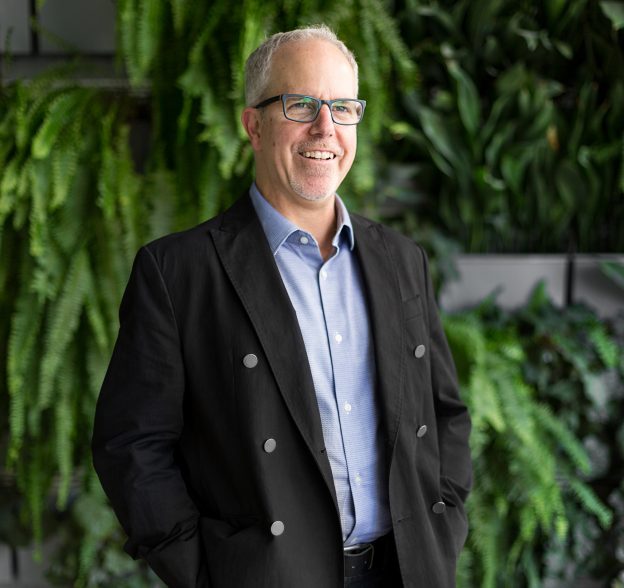
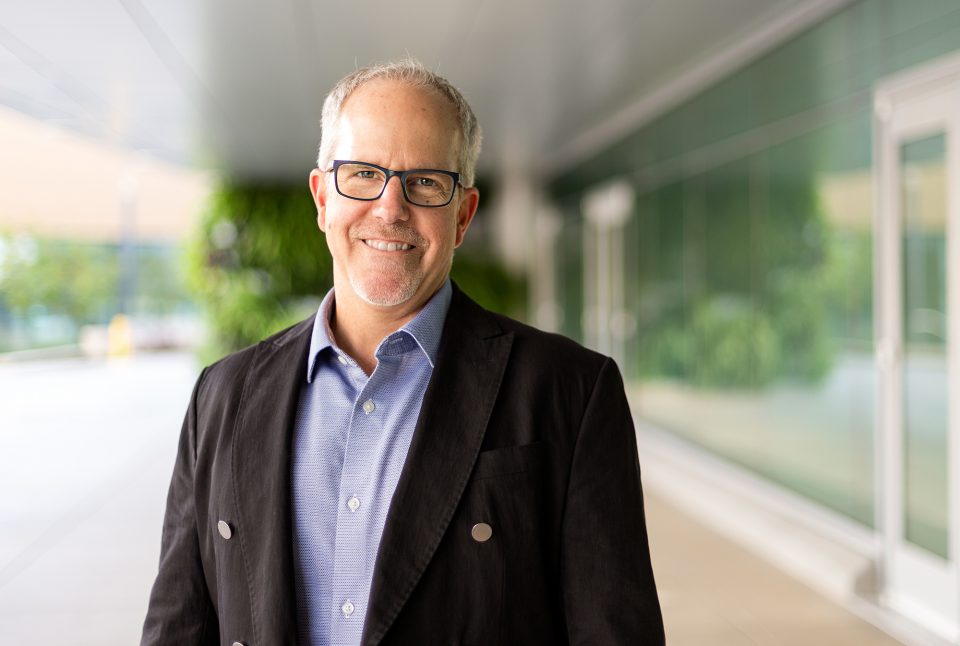
Michael Tuohy is now entering year two inside Golden 1 Center as the General Manager of Legends Hospitality, and has been busy making sure that almost everything from the hot dogs to the house made nacho cheese sauce has been sourced from within 150 miles of Sacramento.
This goal may seem daunting given the scale at which food is served inside a professional sports arena, but Tuohy is no stranger to tracking down and sourcing the freshest local ingredients he can find. He recalls a time as a 20-something chef in Atlanta, when fresh produce wasn’t as abundant as one would think.
“There was a woman from the local newspaper, she had a friend and they were kind of growing some things, they would bring them to me at my restaurant,” Tuohy recalled.
As the women delivered homegrown produce, she asked if she could set up a meeting with Tuohy and a group of farmers.
“I was like, ‘Of course!’” Tuohy continued, “So we met in some dirt parking lot with these farmers in pickup trucks … who showed up with random [produce] in paper bags.”
Not long after their first meeting, the Georgia Grown Co-Op was formed, for which Tuohy sat on the initial board.
Whether in San Francisco, Atlanta, Napa or Sacramento, Tuohy has always sought out the freshest ingredients he can get his hands on, which was one of the main reasons he decided to move back to California in 2007 as founding executive chef of Grange Restaurant and The Citizen Hotel in downtown Sacramento.
“The real clincher for me to come and accept it was the fact that we have a farmers market across the street at Cesar Chavez Park from May through October. I was like, ‘Are you kidding me? There’s a farmers market right across the street from the restaurant?’” Tuohy said. “It was as good as having your own farm or even better maybe.”
Recently over coffee and Liege waffles, Tuohy and I discussed his farm-to-table roots, the tricky problems that arise when sourcing locally while feeding the masses and how the discovery of a farmers market in The Peach State moved him to tears.
Sacramento has been labeled the “Farm-to-fork” capital, but you’ve been part of the movement for a some time now right?
Yeah, so I grew up in San Francisco and went to hotel and restaurant school there at City College, graduated, and was in San Francisco at a very exciting time in the early ‘80s, when the culinary revolution was happening. I’m glad you’re asking because farm-to-fork is like this “new” thing right? But it’s really not. I mean, it’s great that somebody branded it as such, and it’s something for Sacramento to grab onto. You know we exemplify the lifestyle here more than anybody, but in the ‘70s and early ‘80s, chefs in the city, like my cousin, Mark Miller, who ran the kitchen at Chez Panisse alongside Jeremiah Tower and Jean-Pierre Moulle—he even hired Judy Rodgers who became famous at Zuni—these chefs were all connecting with farms and buying fresh ingredients. We changed our menus everyday based on what was market-driven, so that was the way it was happening. In that little epicenter is where it started and it eventually had this ripple effect across the country until people like myself who grew up watching that, and seeing that, left and brought it somewhere else.
And that’s when you took that style of cooking to Atlanta?
I went to Atlanta and thought that’s just what you would do there as well. But I got there and I was like, “Who grows lettuce here?” And they were like, “What do you mean who grows lettuce? We buy it from California.”
Wow, so what did you do? Was it hard to find fresh produce?
I was so happy when I found this one farmers market. It was this little tiny place that was jam-packed. It had sawdust on the floors, people crashing into each other with shopping carts. There was a frenetic energy there, but they had polenta, they had sundried tomatoes, olive oil and a lot of imported things. It brought tears to my eyes because I was like, “Yes! It actually exists here. This is great!” I was really happy, because all I knew is what we were doing out here in California, doing a Mediterranean style of cooking using fresh local ingredients.
So you are going into year two at the Golden 1 Center now.
Yeah, it’s very exciting! The first year was a monumental undertaking. I began the project three years ago, so I’ve been part of this from literally demolition, to excavation, to laying the foundation, to watching it come up. I was involved in a lot of the coordination and planning on the construction site. I was the guy on the ground for Legends Hospitality for over a year before I had my first hire join me. It was pretty intense.
From the very beginning you’ve been setting and meeting unheard-of goals when it comes to sourcing food for a professional sports complex.
We wrote a very ambitious sourcing and sustainability charter. It’s an amazing document, which I want to see if we can get framed and put up all over the building because it’s so compelling and powerful. It really does tell our story. It’s huge for an industry that’s notorious for not having good food or good practices.
Your goal is to have 90 percent of your food sourced from within 150 miles. How is that even possible?
I spent a little time at Google a few years back and was very familiar with how they were sourcing and what they were sourcing. It was all of these great products and everything was from within 250 miles. So that was a pretty wide net in California, but still unprecedented. Sourcing from 250 miles to feed all their workforce there was very groundbreaking, but I said, “We can beat that. We’re in Sacramento!”
Currently you’re at 85 percent in the first year, what can you do to bring you up to 90 percent?
There’s some low-hanging fruit I’m looking to go after right now, like ketchup. So we have to do better. I think there’s an opportunity there for somebody to make a really good ketchup that is flavor-profiled similar to a Heinz that’s made closer to home, that is manufactured here creating another industry. A big compelling part of our story is how many things we’ve done with our program that has affected the economy locally in our region, whether it’s working with Rancho Llano Seco in Chico for all of our pork, or sourcing the cheese we use for our nacho cheese sauce from Petaluma Cheese.
Wow! Even the nacho cheese sauce?
Yeah, we get a custom blend of four different cheeses from Petaluma Cheese and we make the sauce in house.
Who supplies your other classic stadium options like hot dogs?
Schwarz supplies our hot dogs. They’re made in Fairfield by [Engelhart Gourmet Foods], which is 43 miles away. When I grew up in San Francisco they were the hot dogs that I grew up with. Schwarz Hot Dogs were a thing on Mission Street. Engelhart’s was actually down there too, so the two families had their separate businesses making sausages and cured meats and then in the ‘80s I believe the Schwarz family sold to the Engelharts.
What kind of changes are you experiencing or looking to make now that you are going into year two?
I’m looking to build on what we have in place, on what we’ve accomplished, but now I’m looking for what’s going to push us over 90 percent. Two of our local restaurant partners had menu items for which they were constantly buying vegetables out of season, so we have to get them from somewhere else, it doesn’t help our cause. I’d like to get them to swap out that summer squash—for example—with fresh peppers.
Why do you think it has taken this long for a sporting complex to focus on local and fresh food?
It’s getting better, it’s evolving, but it’s like trying to turn the Titanic, which is why a lot of chefs or food people never really went in that direction, because it just wasn’t appealing. This project was so different because it was really about Sacramento and for Sacramento. The fact that the Kings’ vision was not only to do good, to make an impact, and to make Sacramento proud; they wanted local food and asked, “How can we be farm-to-fork?”
Where do you like to eat locally when you’re not at Golden 1 Center?
You know I’ve become a big fan of Binchoyaki and the food right now at the new Paragary’s—and I say this because Ryan O’Malley is the chef there, he was one of my opening sous-chefs at Grange and is really doing a great job. He’s focused, he has this nice Italian aesthetic going on. I’ve just had some really great meals there recently.
Now that you’re not cooking in a professional kitchen on a daily basis, do you ever think about jumping back in one day?
I often think it would be a taco stand on the beach. You’re not dealing with the masses, and the public and all that stuff. If I had a taco stand on the beach, I could set my own hours, do one thing well and call it a day.
**This interview first appeared in print on pages 14 – 15 of issue #251 (Oct. 23 – Nov. 6, 2017)**
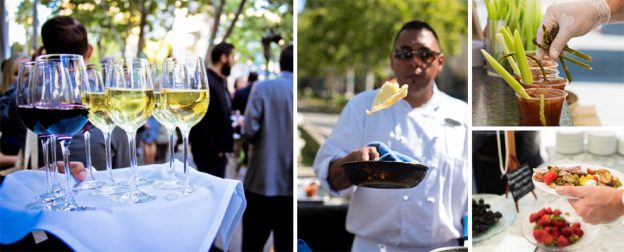
Try some tasty food and drink, all with a heaping side helping of Sacramento pride, at the upcoming “Taste of Summer” Farm-to-Fork event, presented by Save Mart. On June 3, from 4–7 p.m., you can relax to the sounds of Current Personae while sipping some of the best of what local wineries have to offer at the Grand Tasting event, which will take place at Cesar Chavez Plaza. Beer from craft breweries, such as Lagunitas, will also be on hand, and, of course, plenty of food from Jollity Farmstead Cheese and local restaurants such as Downtown and Vine, Dawson’s Steakhouse and others. On June 4, it’s time for the third annual Farm-to-Fork Sunday Brunch, which will take place outside on a tree-lined stretch of 13th Street. Expect bottomless bloody Marys and mimosas, as well as some of the best food Sacramento has to offer. Tickets can be purchased for the individual events, or you can save money by purchasing a bundled ticket for both at Farmtofork.com.
**This write-up first appeared in print on page 10 of issue #240 (May 22 – June 5, 2017)**
Sacramento’s First Farm-to-Fork Week Takes Root
Sacramento has long struggled with its reputation as a cow town. But with foodies the world over regarding our city as a culinary epicenter because of its proximity to rich harvests and ranches and its multitude of highly rated restaurants, Sacramento has decided to embrace its agricultural ties and plant its cow town flag proudly in the soil by proclaiming itself America’s Farm-to-Fork Capital and hosting its first-ever Farm-to-Fork week.
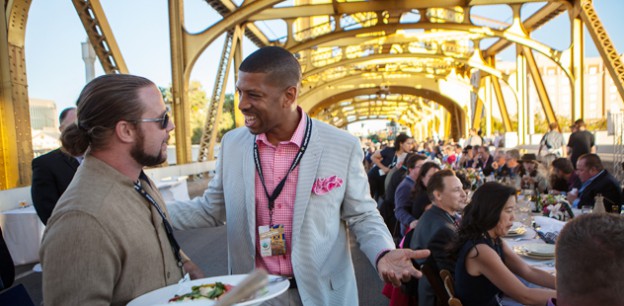
The festivities organized by the Sacramento Convention and Visitors Bureau involved large-scale events. The week kicked off Sept. 23, 2013 with the Cattle Drive from the Tower Bridge up J Street, followed by Legends of Wine on Sept. 26 featuring local wines handpicked and poured by internationally recognized culinary experts Daryl Corti and David Berkley on the west steps of the Capitol building. The Farm-to-Fork Festival on Capitol Mall followed on Sept. 28, and the event culminated in the Tower Bridge Dinner on Sunday, Sept. 29. Additionally, restaurants all over town hosted their own farm-to-fork showcase events.
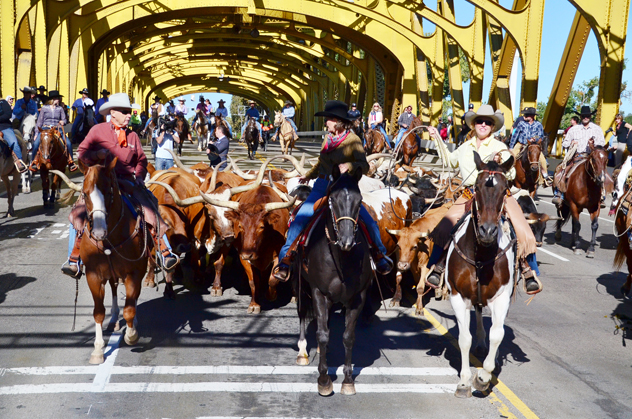
Photo: Lisa Nottingham
This was no easy undertaking, but well worth the effort, said Sonya Bradley, Chief Marketing Officer for the Sacramento Convention and Visitors Bureau.
“For the farmers, ranchers, food producers, chefs and restaurants, it’s their livelihood,” she says. “While our role as a sales and marketing organization is to give this movement some context and push it to the forefront so that one day saying, ‘America’s Farm-to-Fork Capital’ becomes as natural as saying, ‘Sacramento Kings.’”
On a picture-perfect Saturday in late September along Capitol Mall, with views of the Capitol and Tower Bridge flanking the rows of booths and food trucks, the Farm-to-Fork Festival was in full swing. Among the neatly lined-up booths were California Restaurant Association, Lucky Dog Ranch, Del Rio Botanical, Passmore Ranch, Full Belly Farm, Nugget Market, Save Mart (yes, they source local produce, too!), and the Dairy Council of California, who showed up equipped with a mobile dairy classroom.

{Photo: Lisa Nottingham}
Among a sea of marketing materials promoting local businesses, Downtowngrid’s booth also handed out a flyer listing all the farmers’ markets in Sacramento. There is at least one farmers’ market cropping up somewhere nearby every day of the week, making it easy for people to buy local, seasonal food directly from farmers and other vendors who produce food within the proverbial stone’s throw. I wondered: did cities elsewhere in the country have as many proximal farms and farmers’ markets available to conscientious consumers?
Josh Nelson, whose stepfather is Randall Selland, owner of The Kitchen, Selland’s Market Café and Ella Dining Room and Bar, says that Sacramento has been America’s Farm-to-Fork Capital long prior to its recent self-proclamation.
Since opening The Kitchen 22 years ago, they’ve always shopped at the farmers’ markets for the ingredients used to create their menu. They weren’t philosophically locavores initially, but he explains that our region’s best-tasting food comes from the farmers’ market due to its freshness. Sacramento is centered within the largest piece of Class 1 soil in the world, in a longitudinal belt running in California from Bakersfield to Redding, while also being uniquely positioned surrounding two rivers. For this reason, he feels that we’re just inherently the capital of farm-to-fork fare.
He believed that to declare Sacramento as such, officially, would cause outsiders to connote Sacramento with world-class dining, while also inspiring its residents.
“Food and agriculture is what we are. The health and environmental benefits of eating locally grown food are now being nationally recognized,” he says, making this a strategic time to make the claim.
Feeling strongly that to tout Sacramento as America’s Farm-to-Fork Capital would promote the region and the already-popular concept in a positive way, the Selland family spent their time, money and resources to create the America’s Farm-to-Fork Capital logo and secure the handles on various social media outlets and the Web address (Farmtoforkcapital.com), wrote the resolution, and with the help of Patrick Mulvaney of Mulvaney’s B&L in the final meeting, pitched the idea to the Sacramento Convention and Visitors Bureau and Mayor Kevin Johnson about one year ago.
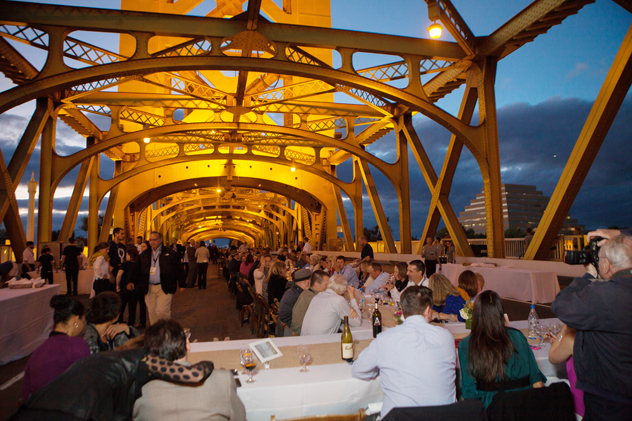
{Photo: Carl Costas}
They don’t think they deserve full credit for this endeavor by any means, though.
“What makes [the movement] special is that it’s not a single effort— it doesn’t work if it’s one person, one voice, one restaurant,” Nelson explains.
It’s clear the community has shown its support. If you look at the success of the Tower Bridge Dinner—whose tickets sold out by 3:30 p.m. the day they went on sale—or the fact that 25,000 people attended the Farm-to-Fork Festival on Sept. 28, it is obvious that this initiative has an army of locavores backing it.
According to Nelson, becoming America’s Farm-to-Fork Capital isn’t the flip of a switch, it’s an endless walk down an arduous path that involves not just marketing and politics, but grassroots participation. But thanks to the reinforcement of the local government and the SCVB, the platform is in place for the hardworking community to continue to roll out the initiative, the benefits of which are both social and economic.
“It isn’t all about the festival,” he says. “It’s just one week that is part of a year-round effort, and the festival is to celebrate the region.” Sonya Bradley agrees.
“[Farm-to-Fork Week] allows us to tell a very real and authentic Sacramento story,” she says. “This region was built on agriculture—just drive 20 minutes south to the Delta and see the rows upon rows of pear orchards, or north along I-5 and see the acres of rice fields… It’s such an integral part of our heritage.”
All Photos Courtesy of the Sacramento Convention & Visitors Bureau
The Gillilands celebrate their 10th anniversary by giving back to the city that has given them so much
Words by Joe Atkins • Photos by Nicholas Wray
Nestled neatly on that delicate transition between downtown and Midtown, Lucca Restaurant and Bar is already, as of our print date, halfway done celebrating a decade of success. Longtime restaurant workers, the Gillilands, opened Lucca with two paintings and an idea: large plates with locally farmed food.
The blue goose and the red bull still hang on the walls of Lucca today, and the aspirations of locally sourced meats and produce has inspired the Gillilands to open Lucky Dog Ranch in Dixon, Calif., producing pasture-raised beef. While this holistic vision might not seem all that original in today’s farmers market, farm-to-fork atmosphere, it is worth noting that this wasn’t always the case. No one wants to admit that they’re sacrificing quality for price, but this is a primary obstacle for restaurants. And not all wind up making the right decisions. The Gillilands have been able to sustain their vision with Lucca, open the equally successful Roxy Restaurant and raise their own cattle to supply their restaurants and others, and this speaks volumes.
Lucca is successful, hands down, but Terri Gilliland is quick to note they’ve been successful because of Sacramento. “We’re so grateful to be at this point,” says Gilliland. “We’ve weathered it all, especially the last five years. We’re incredibly grateful to the Sacramento community for the support.”
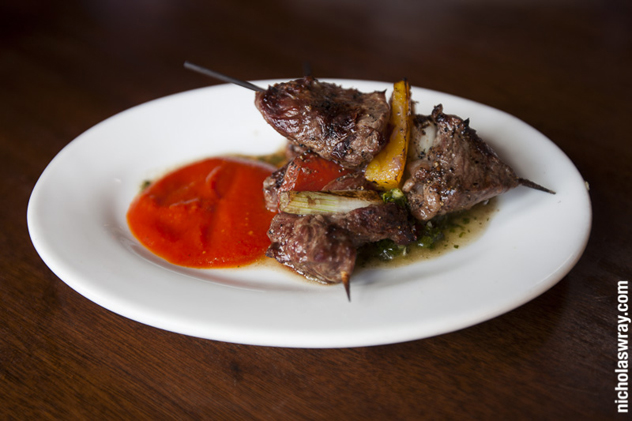
It’s clear that Terri enjoys being a restaurateur, in all its capacities. Before our interview begins, she lets me know that she has to travel to the family ranch in Dixon to aid some of the newborn calves—Terri serves as the de facto caretaker for new calf additions at Lucky Dog Ranch. One employee even told me in passing that it can be trouble, because once she’s named them, they’re no longer available for slaughter.
It’s this sort of devotion, not only to their livestock but to the details of their restaurants that have made the Gillilands, and Lucca in specific, profitable. “We got off to a great start,” explains Terri. “We had a lot of community support and friends.” She contributes the early success of Lucca to three factors: “Ron and I were experienced restaurant people; we’ve worked all aspects of restaurants. We have an exceptional group of people at our restaurants, especially our management. They walk the walk. And we were embraced by Sacramento.”
Over the last 10 years the Gillilands have fostered many relationships, the most famous being ex-governor Arnold Schwarzenegger. While the Governator did have a large influence on their early success—many cigars have been smoked on their back patio—this relationship is not the most important. Terri mentions a boy who decided to celebrate his eighth birthday at Lucca, and his family has returned every year since. Terri mentions a couple who had their first date, their wedding and their child’s baptism all at Lucca. On rare occasion, Terri and her husband Ron will even hug patrons, mistaking them for friends.
“We’re both really affectionate people,” she laughs.
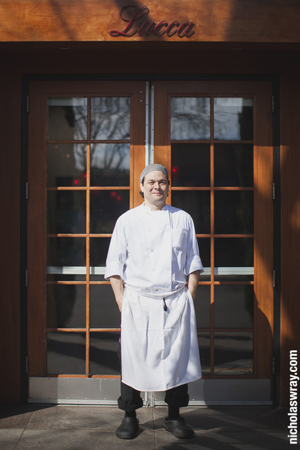
But when we talk about restaurants, what actually matters is food. This brings us to head chef, Ian MacBride, who has been at Lucca for seven years, shopping local markets, planning salads and entrées, plating dishes. Thinking about it, as a local, I can say that Lucca is unexpectedly one of the restaurants I’ve most frequented in the last six years, meaning MacBride has overseen a significant amount of my meals. And I’m sure I’m not alone. As MacBride states, “On a good Saturday, we’re putting out 500 dinners.”
That’s a lot of entrées, yet Lucca faces different obstacles in today’s economy. “There are so many more seats, and not necessarily that many more people downtown,” says MacBride, quick to list a handful of restaurants that have both opened and closed in the last seven years. The pivotal economic shift in 2008 brought a new set of challenges to the existing restaurant scene. “The dinners are the same,” says MacBride, “the lunches have slowed.” He points out that even the traditional high-end eateries have done most anything possible to lure more customers during the day. In 2013, even Ella has a happy hour.
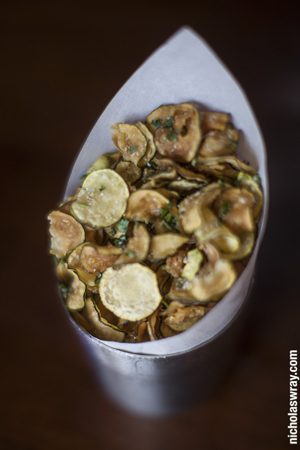
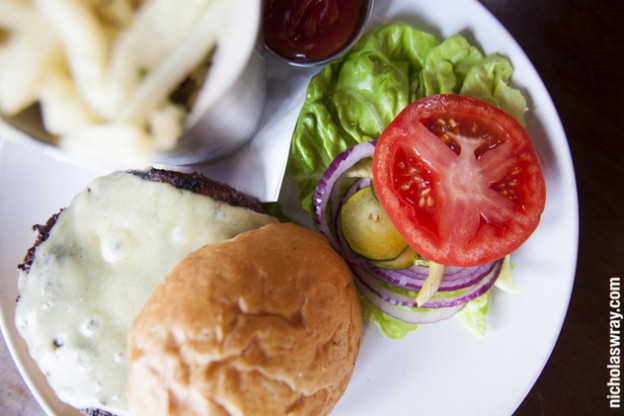
Looking over Lucca’s menu, I think I’ve had almost every item, stealing bites from friends and family, as I’m wont to do. Lucca’s zucchini chips are my favorite appetizers in Sacramento. But until my most recent visit, I’d never tried the Lucky Dog Ranch hamburger, with cheese. This burger comes undecorated, with the accompaniments on the side: pickles, onions, lettuce, tomato. The produce is fresh, and the fries are nicely seasoned with a touch of salt, but the patty is unique. It doesn’t have that greasy, fat dripping everywhere quality so inescapable in most burgers. The meat is cooked nicely with just a touch of pink showing, and the seasoning doesn’t overpower the actual taste of beef. Clearly the burger is thought out from top to bottom, and for that alone I’d recommend it. Especially paired with a nice Ruhstaller 1881 Amber Ale.
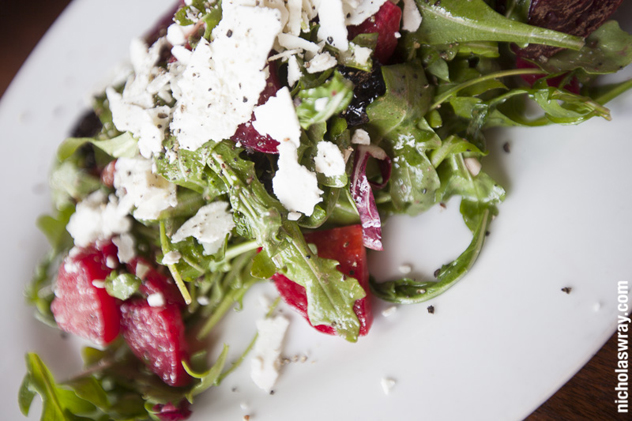
The other surprise from my visit: roasted beet and citrus Salad. The bed of baby kale with olives, almonds, and ricotta, gives the beets a complimentary pairing. The beets themselves are smoky and sweet, and the flavor is rounded out with a coriander citronette, a dressing made of olive oil and lemon. If you’re a fan of beets, this is a must try dish. Likewise, the cheese flatbread with chickpea hummus, olive tapenade, and red pepper romesco, will disappear from one’s table immediately. These two small dishes couple together nicely. Also, for the more adventurous, Lucca might have the best escargot puff pastry in town, when it’s available.
For dinner, I’m a fan of Lucca’s spicy sausage. The Spicy Penne, with baby artichokes, olives, capers, roasted tomato, garlic, chili flakes and sausage; or the Paparadelle, with said spicy sausage and mushroom ragu, are both highly recommended. The pork chop with apple and dried cherry chutney is always rewarding. It’s moist, flavorful, and the apples and cherries provide a delicious sweetness to this entrée.
While I’ve never had a bad experience at Lucca, I’d describe the restaurant as good, specifically consistent, but not quite excellent. This seems to be the general consensus from my community as well. The atmosphere is open and inviting, the lighting well placed, the patio inviting, the bar easygoing and conversational. There’s no specific quality that seems to be lacking exactly. Lucca does what it’s been doing for the last 10 years well. While it’s not always the restaurant that pops to mind when we’re looking for a bite, it’s never disappointing.
It’s also clear that both Terri and head chef MacBride are conscious of this to some degree. In passing Terri mentions that it’s good to just realize what the restaurant is, what its strengths are and figure out how to take advantage of those in pursuing growth. MacBride is excited about the upcoming anniversary events, where he will show off all new items, moving completely away from the staples of Lucca’s menu.
It is, after all a celebration, as MacBride notes, “The 10th year is a benchmark. You know you’re doing something right.”
And owner Terri Gilliland is happy to give back to the city that has so long supported her restaurant: “We want to make a small contribution back to the community.”

For the next two Wednesdays, Lucca will be hosting the final pair of 10 year anniversary events, the previous two benefitting Verge Center for the Arts and Mustard Seed Spin.
On April 17, MacBride will reveal his “Eating Like a Kid Again” menu, and guests will enjoy a recycled fashion show; the proceeds for this event will benefit Sacramento Children’s Home. On April 24, the five-course fixed menu will have a farmers market focus, emphasizing locally sourced edibles; proceeds will be donated to Sacramento Farm-to-Fork. Both dinners start at 5:30 p.m., and seating is limited but available.
If people started eating a little more like cranes, nature and the economy might be a little better off for it.
This is what prompted the naming of Feeding Crane Farms, a small farming operation with a big vision that sits along a bird grove on the East Levee Corridor in Natomas.
“Cranes are a really wonderful example of what we’re doing with Feeding Crane Farms,” says general manager Shannin Stein. “Cranes eat locally, they eat seasonally.
“They will actually create habitats for small bugs where they live, they’ll tend to those areas and actually cultivate the bugs,” she adds.
Stein oversees Local Food Done Right, an umbrella company that owns both Feeding Crane Farms and Lulu’s Kitchen. The vision behind the two operations is to promote local, sustainable food production, from “farm to fork.”
She, alongside company owner and visionary Brian Shaad, farm manager Antonio Garza, and operations manager Dylan Keith, are part of a team of less than 10 keeping Lulu’s Kitchen and Feeding Crane Farms alive. Needless to say everyone wears a lot of hats, Stein says.
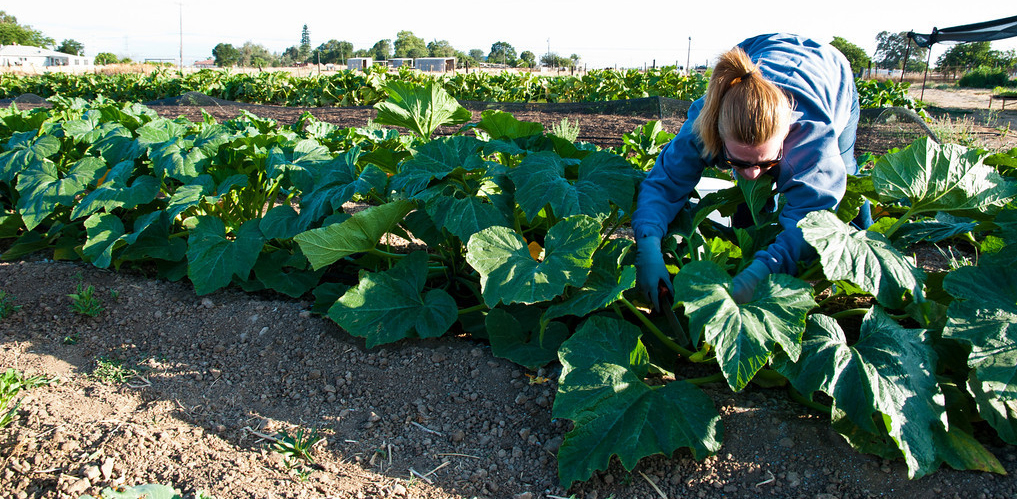
This is a very new operation. After prepping and plowing three-and-a-half acres, and adding all natural amendments like bloodmeal and oyster shell to the soil, the organic farm “broke ground” last September. They began selling crops to local restaurants and grocery stores early this year.
Beyond providing fresh produce for grocery stores, local restaurants and farmers’ markets in Oak Park, Natomas and Cesar Chavez Park, the small team has come up with some really innovative ideas along the way, like Farm to Fork dinners, where locals who already support farmers’ markets and buy organic can experience the talent of chefs in the community who are committed to using local, organic ingredients.
The company recently purchased Steel Magnolia, a commercial kitchen in Sacramento, which they are renaming Lulu’s Kitchen after Shaad’s grandmother, Mary Lou Cayocca. Lulu’s will be accessible to local producers who have recipes but don’t have access to a commercial kitchen or some of the logistics needed to get their products on grocery shelves, Stein says.
The team has its own products it is developing to sell, too. By the start of 2013, you can start looking out for things like arugula pasta, pepper pasta, handmade butternut squash ravioli, squash bread, arugula pesto, and roasted pepper chutney on store shelves. According to Stein, the recipes are being developed as you read.
They also plan to expand into two more properties along the East Levee Corridor, putting an additional 12 acres into production by January and quadrupling their production capacity.
And last but not least, if you’ve caught wind of the first annual Harvest Sunset Celebration, yes, they are planning that as well. But with all the events already happening this fall, they’ve decided to postpone it until the spring.
With so much going on, it’s hard to believe Stein has a moment to breathe, let alone talk through an interview. Yet Submerge somehow managed to catch up with her while she was on a drive through the Midwest.
You guys said you are along the East Levee in Natomas?
Yeah, we’re in North Natomas, and basically it’s called the East Levee Corridor. So it’s a levee bypass system that comes off the Sacramento River out in Yolo and Sutter counties.
Gotcha. There’s a fair bit of ag activity in that region, right?
Yes and no. A little bit further to the west of Sacramento, closer to I-5, there’s a lot of commercial rice production, there’s a lot of big ag. But along the East Levee Corridor, the majority of the land is fallow; it’s not in any form of production.
And so, you guys are trying to cultivate some of that land out there…
Our goal is to basically try and reinvigorate that entire East Levee Corridor, and to create a system and create farms that are duplicate-able. We want to be able to take what we’ve learned in starting our first small three-and-a-half-acre property and we want to be able to basically duplicate it on other properties along that corridor. Then we will create an actual, thriving agribusiness along that corridor to make that area two things: one, less susceptible to development, and two, to basically make Sacramento far more sustainable in regards to food production.
So what kind of stuff do you guys grow?
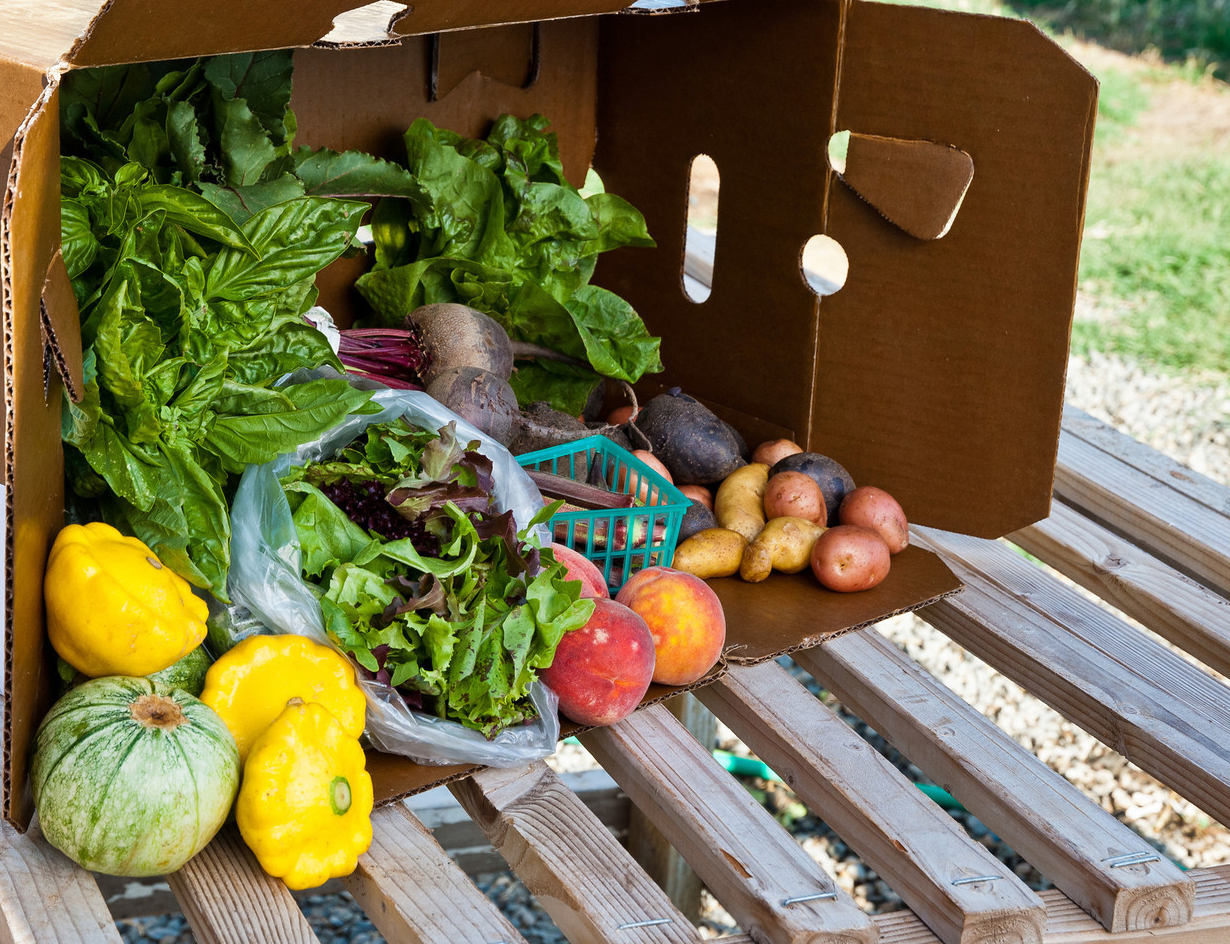
We have upward of about 30 different varieties of items in the ground at any given time. For this winter, we’ll have a full-crop harvest, we’re not going to take a break this winter. So we have salad mix, head lettuces, arugula. We did tomatoes this summer, eggplant, okra, lots of root vegetables, we grew beautiful beets and radishes, turnips. As Antonio, our farm manager, likes to refer to it, our main property right now is really kind of a salad bowl. There are carrots, onions. Amazingly for our harvest season, part of it has really been experimentation and learning what does well in the soil that we’re working with and getting a feel for crop rotation and our product demands by community.
What’s the plan with Steel Magnolia [now Lulu’s Kitchen], and why did you guys decide to buy it?
Well, as I mentioned, our motto is basically the same thing as our parent company, “local food done right.” And we really believe that “local food done right” doesn’t just mean growing the food locally, it means producing food locally… We want Lulu’s Kitchen to be an incubator kitchen for local producers to come work on their recipes [and] work on their processes. We have fully trained chefs on our team who can help mentor them… At the same time we want to help those producers navigate the often confusing and sticky system of working with the County Health Department and working with the city and learning how to do labeling so it’s FDA approved and how to get your ingredients improved, you know, all of that process. We want help small producers so it’s easier for them to go from concept to the shelf.
I thought I read something about you guys developing your own products to sell in stores, is that right?
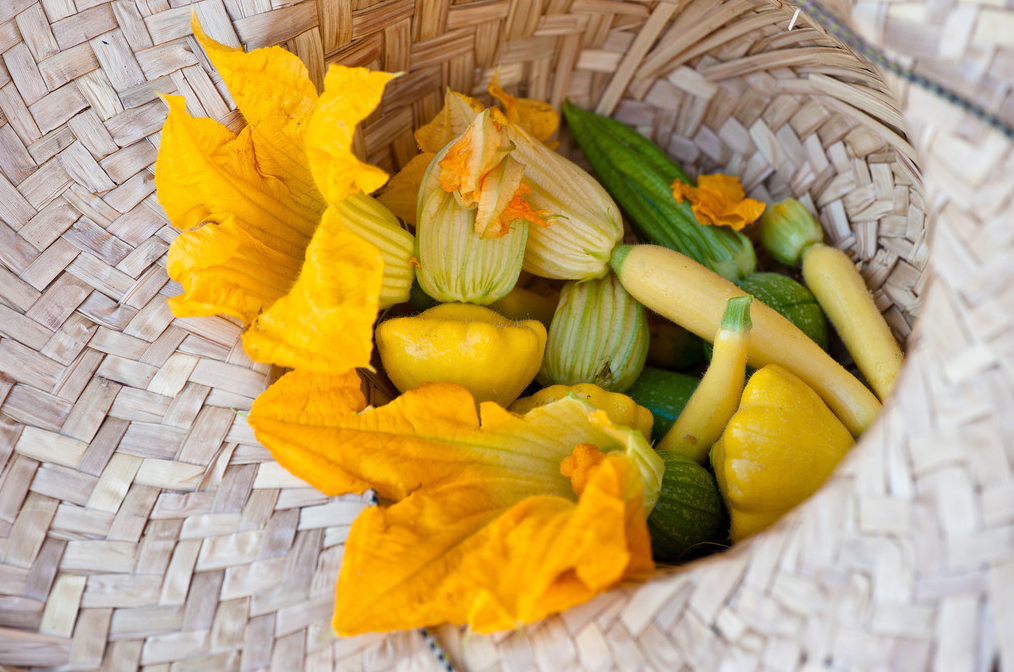
We will be, yeah. Absolutely. In fact, you can go to the GOOD market and you can try some of our value-added items. You’ll hear us talk a lot about [value-added items] with small farms in particular. Farming itself is not necessarily a lucrative business. It’s a cash-heavy investment business, there’s a lot of investments needed to really get a farm going and keep a farm operating. Small producers, small farmers really need to have the opportunity and the outlet for additional revenue streams, and so creating value-added products: jams, jellies, breads, sauces, pastas, things along those lines, where the primary ingredients are from your farm, is a great way to do that. So we have a ton of summer squash still out in the field, so one of the chefs on our team is making squash bread.
Now Farm to Fork Dinners, whose idea was that?
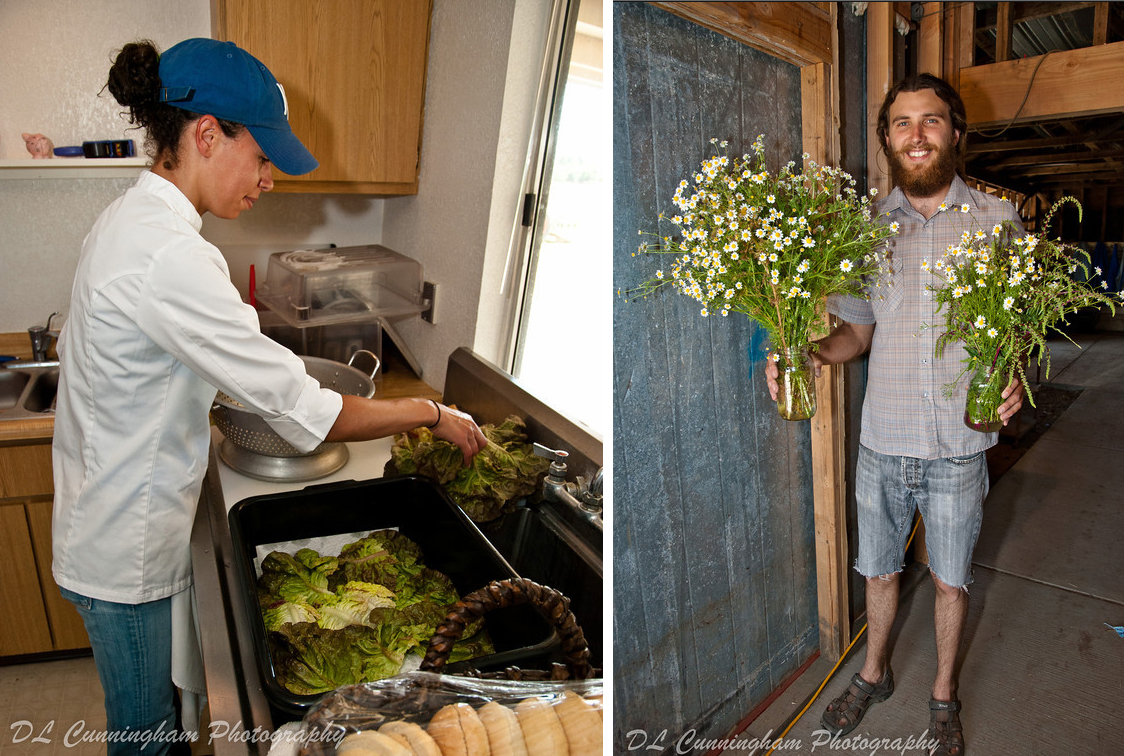
Well, actually, that was a joint discussion. It started out where once every two months or so, the farmers and myself, just kind of our core team, we were going to one of the restaurants for dinner and we provided food, because the farmers work their butts off, and they deserve the opportunity to enjoy the fruits of their labor occasionally. But in doing that, we also built these really beautiful relationships with the chefs we work with. They have given us fantastic feedback. It started out, actually, with Mama Kim, of Mama Kim Eats, who said almost immediately, “I want to do a brunch.” So we started out with a brunch at Mama Kim Eats, and she said, “I want to do a brunch and I want to focus specific dishes around your produce and your products.” And I was like, “That’s fantastic.” And so Farm to Fork was born. And now we work to do at least one Farm to Fork event each month with our partner restaurants to help bring in business for them on an off-shift. Like at Michelangelo’s, it was on a Sunday night, and we basically helped them triple their sales on a Sunday night.
Do you have an estimate of about how much you produce per season?
You know, we’re putting those numbers together, to be honest [laughs]. But what I can say is we have been able to sustain upward of about 20 to 25 restaurants, the Natural Foods Co-Op, Corti Brothers and three farmers’ markets for this entire season, so since January basically, off of three-and-a-half-acres. And that’s pretty amazing, to begin with.
To learn more about what Feeding Crane Farms and Lulu’s Kitchen have in store, follow Feeding Crane on Twitter @FeedingCrane or like it on Facebook.