DLRN keeps their latest release, and those to come, close to the vest
It’s coming back around. Young artists are expecting more from their culture. Take the art of Kehinde Wiley, for example: He paints the stereotypical street hustler in gentlemanly poses against backdrops of elegant tapestries, juxtaposing the ghetto with the affluent. Sacramento’s DLRN is analogous to Wiley’s vision of celebrating the complexity of hip-hop culture.
Hip-hop has reached a reputable age, and decades deep it has its own version of royalty. As of late though, it has become less of a culture, less of an art form and more of an economic commodity. Sean La Marr, under the nom de plume 5th Ave, sees a potential for change without leaving the sleepy city of Sacramento. La Marr’s video for the song “Dear Langston” is a testament to his hometown pride, as it used Wiley’s art as inspiration–showcasing the city’s talented inhabitants mimicking the regal poses of the elite–the same poses present in Wiley’s portraits.
It’s clear La Marr loves Sacramento hip-hop with the sincerest of hearts. Our interview was intended to discuss the new record his group, DLRN, is dropping this week. Yet, it was during our post-interview hangout session that he revealed his passion for the local scene.
Last year DLRN dropped its No More Heroes record with the intention of introducing new heroes to the hip-hop canon and creating an alternate narrative not traditionally found within the genre. “From an MC standpoint, I was very disillusioned with it,” 5th Ave said. “I came to the realization that a lot of the faces of hip-hop these days I do not relate to. I don’t see them as role models or the influential voices that they once were.”
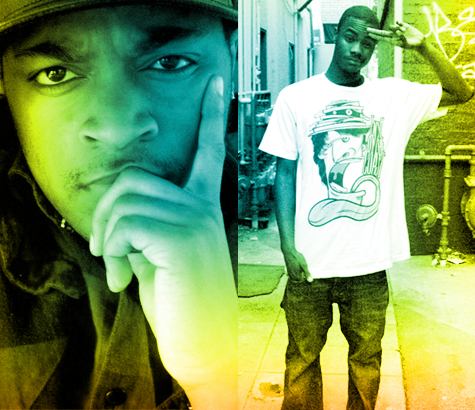
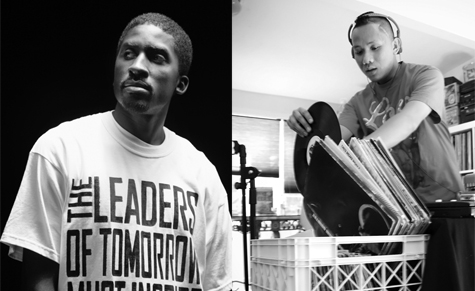
DLRN, formerly known as Delorean, consists of MC 5th Ave, born Sean La Marr, and producer Jon Reyes. DLRN is retro-fashioned and reactionary, operating in a space that is not quite conscious rap and not quite club rap either. “We’re a product of different time periods and different people, that’s part of how we came up with the name Delorean,” Reyes said.
Unfortunately, a Spanish trance-pop had already claimed the Delorean moniker.
“Our tastes are more eclectic than most acts you’ll hear,” La Marr said, which means they were aware of a possible conflict in their future if they kept the name. By dropping the vowels to DLRN, the group hoped to dodge any cease and desist suits or mistaken-identity tour dates.
“It’s funny because we knew about them when we decided to go with the name,” La Marr said. “We just decided we better blow up before they do. But, then they were on ABC, they had a national tour and became Pitchfork darlings.”
La Marr continued with an anecdote, “We almost didn’t get booked at a show in Seattle because they played at the same venue two weeks prior. We’ll have stuff posted on our Facebook page about events that they’re doing and vice versa.”
Reyes added, “We can’t really hate it, because they’re a really talented band.”
The duo is excited about the switch, citing MGMT and MSTRKRFT as other successful bands that dropped the vowels. Sacramento is now tallied at two non-vowel band names (the other being CHLLNGR) with potential to join the celebrated ranks.
The topic evolved into a discussion over the ethereal trends in cycle of kindred band name themes–such as bands named “wolf-something” or rappers named Lil’. Apparently, there was a birth explosion of Deloreans around the early Naughties. “We thought about adding a word to make it Delorean Brown,” La Marr said. Reyes interjected, “A good reference to one of the greatest wrestlers of the modern era, D’Lo Brown. “ La Marr continued, “But, it turns out there was a Delorean Brown already in Sacramento. Here I think we’re being clever.”
With a new name, DLRN sought out to craft its followup to No More Heroes. The Bridge was recorded at Pinnacle College in Rancho Cordova, which La Marr described as a “sterile” environment in comparison to Omina Labs, where No More Heroes was recorded. It took time, but DLRN enlisted the help of its student body to help them settle into the new digs. “It’s good working with people that you’re friends with outside of the music,” Reyes said. “It makes for very chill sessions.”
Reyes described the recording process for The Bridge, out July 20, 2010 as a free download, as a humbling and surreal experience. The students that volunteered were mostly fans of DLRN prior to the sessions. “Those are the people you’re making it for and they are sitting right next to you,” he said.
Accessing the privilege to hear the new record has been kept to limited company–possibly on a “nothing leaves the studio” policy. The reasoning is DLRN has a purpose with its messages. It’s encoded in the video for “Dear Langston” and on The Bridge. The two releases reference one another, and provide insight into the already planned third album. When I asked the name of the next record, I was met with stoicism and a round-about answer. “There is a hint in the last song,” La Marr said. “I hate to not tell it to you, but when you hear the next DLRN project it will make sense.”
I did not hear the hint in my exclusive The Bridge listening session. But I did hear a reason alongside the Cloud City record to be excited about local hip-hop in July. The Bridge’s first video features Prometheus Brown of Blue Scholars, while the record has further appearances by Hopie Spitshard, Illecism and Chuuwee. That’s all I am allowed to disclose.
DLRN has major plans to kick off August by celebrating the release of The Bridge in what La Marr hopes will be the biggest hip-hop event of the summer. After hearing the words “tequila tasting,” “kegs of free Miller High Life,” “free sushi” and “the Miller High Life girls,” I am not opposed to declaring it the event of the summer either. “I’ve been to a lot of hip-hop shows and I’d hate for this to be just another hip-hop show,” he said. The release party is Aug. 6, 2010 at Beatnik Studios.
In my brief tenure with Submerge, I’ve met a lot of local rappers, most of which have this ambition, rooted in frustration, to overcome their surroundings. It is a career plan that includes reaching or leaving for the Bay Area and Los Angeles markets. La Marr never once spoke with a belittling tone toward his hometown. Instead, we sat for an extra half-hour talking about our favorite Sacramento rappers, putting me on to a great local joint by Blee featuring Doey Rock. “You know what, come to the show and I’ll have a mixtape for you of all my favorite Sacramento shit,” La Marr said. I left thinking, it’s that kind of dedication to the scene that makes someone the founder of a collective such as the Neighborhood Watch. He’s got our best interests at heart.
Go to Beatnik Studios on Aug. 6 for DLRN’s The Bridge record release party. Free Tequila tasting and beer for those 21-and-over will be available. There will also be VIP wrist band bottle service. Come dressed as Alice in Wonderland and get in free. Prize awarded for best costume.
Lee Bannon and Chuuwee look to make a mark among local hip-hop connoisseurs
With the recent death of legendary MC Guru of Gang Starr, nostalgia is running strong in hip-hop for the golden era sound. Gang Starr’s simplistic formula of Guru lending his commanding voice only to DJ Premier’s gritty boom bap production was a staple of an era that would be followed by meandering albums with a gang of producers tugging the sound in all directions.
So it goes, with every death there is a birth. Local rapper Chuuwee wasn’t born yesterday, but he was barely an infant when Gang Starr’s Step Into the Arena first hit the streets. Out to get a rep, Chuuwee is only 19, but his mind is old. Case in point: I never expected the first influence he mentioned to be Big L, another late great-just like I never expected Chuuwee to be underage when I inadvertently invited him to meet me at a pub. “Am I allowed in here?” he asked sheepishly, but I shrugged it off and guided the kid to the beer garden-he looks old enough.
On “6 Feet Deep,” a track Chuuwee played for me, he harks back to the Nas lyric, “I keep falling, but never falling 6 feet deep,” like he grew up on Illmatic. With the right influences in place, Chuuwee just needed his Premier, his Large Professor, hell, even his DJ Jazzy Jeff, to provide the proper backdrop to his voice. He found his complement in Lee Bannon, who is three years his elder. “There’s been duos throughout time and usually the producer is older,” Bannon said. “I look at it like we’re part of that tradition-the classic way of doing it.”
Bannon is neither a household name, nor a certified buzz name on the streets or blogs. Such credentials are inconsequential since it’s only a matter of time until the honors are added to his résumé. Bannon has lent his sound to Inspectah Deck of the Wu-Tang Clan, Talib Kweli, the Bay Area’s The Jacka and Los Angeles’ U-N-I. He has also produced numerous solo instrumental records. Like most producers, his sound can carry further than the name. Too often we appreciate the voice, but neglect to look to the maestro assisting the voice. As we continued to listen to music, Bannon would name drop producers like DJ Muggs and Madlib as styles he aimed to mimic.
Typically, when a producer does this, I nod politely, but consider the comparisons a stretch. But, as Bannon played beats to an upcoming project, it actually had DJ Muggs qualities, like an off-kilter bounce and the sharp chop of cacophonic samples.
The two met by chance at a local beat battle. Bannon took the initiative, reaching out to Chuuwee before the battle and giving him a beat to perform over. Initially, Chuuwee wanted a single beat from Bannon, but Bannon challenged the young pup to write a record. “I got a call from him unexpectedly,” Chuuwee said. “We started kicking it at a homegirl’s house and he got inspired by a pizza box. It all started falling into place from there.” Titled Hot ‘n’ Ready, the collaborative album has taken a wildly creative turn with a unique limited run in packaging. Forty pizza boxes filled with T-shirts designed by 12ftdwende, stickers and the CD will be available at urban boutiques like Havoc and United State, as well as other Midtown/downtown locations. “It will be a scavenger hunt-type thing,” he said. “If you seriously want the project in the collector’s box, you have to search for it. It’s a really cool idea. I ain’t never had nothing like that before, so I’m pretty excited about it.”
Bannon’s creative marketing strategy, matched with Chuuwee’s infatuation with concocting well thought out projects (a sensitivity sparked by his Obsessive Compulsive Disorder), make Hot ‘n’ Ready a unique project. The marketability of CDs is a dying art with the shift to digital formats. Bannon intends to intrigue new and old fans alike by presenting his music as a collector’s item before it’s even out of print and up for high-dollar auctions. “I’m trying to push the envelope with every project I go into concept-wise,” he said.
The pizza theme is not limited to the packaging, as Chuuwee said the concept loosely runs through the album, as evidenced by the closing track, “Last Slice.” “I wrote it in three-and-a-half weeks,” he said. “I don’t want it to seem like I rushed it. I’ve got extreme OCD, so my projects are always overly thought out. I only wrote it fast because [Bannon’s] beats were so inspiring. It just flows out.”
Chuuwee said he’s been stuck in the ‘90s since he started rapping. For the project, he requested that Bannon cater the beats to that style. “I’ve heard his first mixtape and it had a huge range,” Bannon said. “He did stuff over Neptunes, Dr. Dre and Common beats. It was a big spectrum of taste, so I knew I couldn’t make it all ‘90s boom bap, but a lot of it is that style.”
Bannon is more than a producer when it comes to conducting his business. A PR team is hardly necessary. His inspired approach with Chuuwee is just one of many projects with intricately thought out publicity plans. He is in talks of possibly having unplugged Chuuwee sets at local pizza parlors-although it’s a mystery as to how hip-hop can go unplugged. “What’s the biggest thing you’ve seen come out of Sacramento in the last five years?” Bannon asked, to which I could only reply Brother Lynch Hung. “It’s been a minute, and I think we can get into the masses like that. With his talent and my resources, I’m hoping to duplicate the past success I’ve had except through his words, instead of just my production.”
Happy Mayfield, Righteous Movement
Old Ironsides was a rocking boat April 18. Old friends were conversing and new friends were connecting, and for those who were rusty at socializing, the bar was there to hug. Lee Bob fans spoke fluently with leftover Bucho fans as Happy Mayfield heartthrobs conversed in familiar circles with Righteous Movement aficionados. It was clear that everyone in attendance had gathered for the same reason: to have a good time.
If there are two styles of music that are all about having a good time, they are hip-hop and funk. Historically speaking, one came from the other and so it seems so natural that they cross-pollinate. With that said, you need look no further for one hell of a good time than a bill that includes the aforementioned Righteous Movement and Happy Mayfield. If you are from Sacramento, then you’ve most likely seen Righteous but might not be familiar with Happy Mayfield yet. Happy Mayfield, a funk band to be reckoned with, is a harmonious marriage between singer/songwriter Lee Bob Watson and The Park (ex-members of local favorites Bucho). To my delight, I discovered upon viewing the stage that The Park was set up to play with Righteous as well. Hip-hop shows take on a whole new life when live instruments are part of the equation, and the boys in The Park were nice and warmed up after a stint at SXSW where they backed artists Alice Russell, Keelay and Zaire in the buzzing city of Austin, Texas a few weeks back.
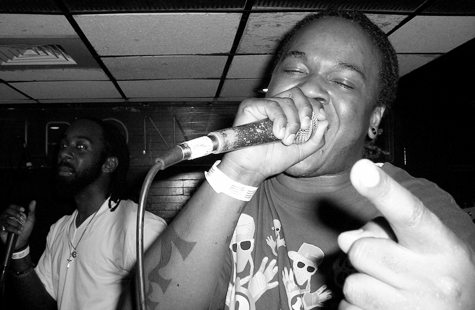
Righteous Movement’s set began with no introduction. Derek Taylor laid right in to the kit with Josh Lippi on bass, Ben Schwier on keys and Ross Grant on guitar following closely behind. Each backbeat groove was laid out with ease for the three (usually four) MCs to do what they do best: rap their asses off. The energy pouring from Old Ironsides’ small, dimly lit stage was almost overwhelming as the seven-player-deep ensemble blasted their way through a continuous set of funk-powered hip-hop tracks. Verses were traded back and forth, and each delivery had its own voice while still achieving that barbershop quartet harmony that Theek, Tais, Skurge and S.O.L. have carved out for themselves. The rhymes were well thought out, the hooks were fun and the gentlemen had a stage presence that exuded personality and experience. Righteous’ own DJ Tofu even made his way to the stage at one point, charismatically raising his poison of choice in a celebratory gesture. The audience, as thin as it had become at that point, needed no persuasion.
At the bar earlier that evening, The Park’s bassist Josh Lippi had told me that, “”¦Happy Mayfield is Lee Bob’s alter-ego.” We laughed and I didn’t think much of it until Lee Bob hopped up on stage wearing a pair of retro frames wrapped around his face, a faded T-shirt and a pair of bellbottoms to finish it off. Now don’t get confused, they weren’t all dressed up like a cheesy ’70s cover band. Happy just had a funky style, man.
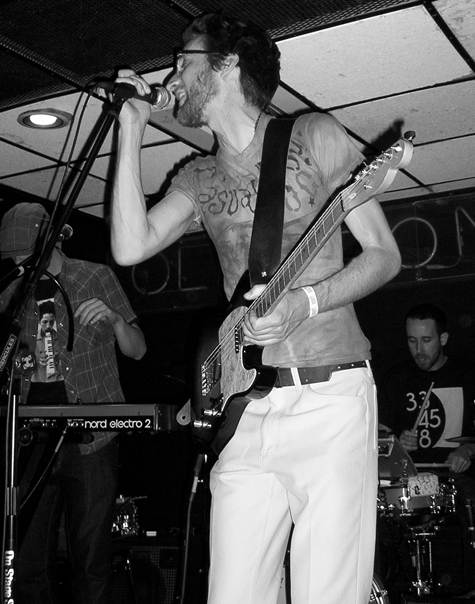
On stage, Lee Bob became this alter-ego. He was some sort of a shaman, writhing and whipping his head back and forth as if possessed by the spirit that he sought to conjure. The defining song of the evening found him screaming, “Happyyy!” at the top of his falsetto lungs—the band behind him pumping away, yelling more and fueling his hysteria. “You can’t get this at no corner store,” he cautioned his congregation. Taylor’s machine gun snare fills stuttered through Lee Bob’s mantra all the while Schwier’s keyboard cried and moaned to the crowd, which hung on every last note, their eyes ablaze and wishing strangely for the song to end but not knowing how; sadistically enjoying the agony. Lee Bob expelled his guitar, sprang onto the dance floor and erupted into an involuntary dance that then sent the rest of the movers and shakers into like positions. Local guitar guru Mike Farell, who had been looming in the audience, made his way to Lee Bob’s guitar and struck up a solo that built as the band swelled, and heavy-washed cymbals filled the spaces in between. Lippi’s solid bass playing anchored it all down. This was funk music in its most raw form.
I finished my Pabst and walked the four blocks back to my apartment feeling”¦happyyy.
Music Breathing With Life
A good friend warned me about using the word unique, because as he said, few things actually are, but Butterscotch’s music warrants such a bold claim. Meshing her classical piano training and angelic voice with a more unconventional method of making music with her mouth, Butterscotch has elevated the art of beatboxing to uncharted levels of musicality. Tactfully integrating the beatbox into more predominant elements of jazz and soul music, she in turn embodies the living spirit of hip-hop. As she said without hesitation, “If you already have hip-hop in your veins, it comes naturally.” Despite her age, the soft spoken 22-year-old Davis native, who last year was a finalist on NBC’s America’s Got Talent, was the international Women’s Beatbox Champion in 2005 and toured the world with Mike Patton as a member of Peeping Tom.
Butterscotch is equally grounded and humble by her talents. Her music defies any one genre, and she remains focused, dedicated and determined as she preps her debut album. Butterscotch welcomes the challenge of changing the face of music.
I know you grew up playing and studying classical music, when did you discover hip-hop?
I grew up listening to it, basically since the day I was born. I was the youngest of five kids, and my brother, he was like my biggest hip-hop influence. He was listening to Public Enemy and N.W.A. I just loved hip-hop. I played piano and guitar, but I didn’t start beatboxing until my senior year of High School. LeeJay—he’s a beatboxer—he was one of my friends and he introduced me to it. I had seen and heard Doug E Fresh and Rahzel, but I didn’t really care to do it until I met him. I picked it up like any another instrument I played. I didn’t take it too seriously, but then in 2005 I got an offer to go to the world championships in Germany and actually won the championship, and it took off from there.
You mentioned you were introduced to beatboxing through a friend, when did the idea come to merge that in with the piano?
It came pretty soon, like right after I started beatboxing. I would just be messing around trying to play the piano and beatbox at the same time, ’cause I thought it would sound cool. I’d seen people beatbox and sing, but I’d never seen anybody beatbox, sing and play the piano, so I started to do that.
So the singing evolved with the piano and beatbox as well?
Yeah, I mean I don’t remember how it all happened. I used to write a lot of songs, but once I found out about beatboxing I got stuck on that and did that for a couple years. I still played piano, and did the whole piano and beatbox thing, but what’s happening now is I’m writing a lot. It’s just a balance trying to sing and play the piano and other instruments as well.
Did you realize when you started blending it all together just how unique it was and that it could turn into something bigger?
At first I was doing what I was doing. I was always experimental with my music, so I didn’t really think anything of it.
To change the pace, you were on the last season of America’s Got Talent. Do you have any good Hasselhoff or Springer stories?
Jerry was really cool; he was a really cool guy. He would always try to beatbox, and he would show me new hip-hop dances he was learning and then ask if he could be one of my backup dancers. We didn’t really have much interaction with the judges, though, just for legal reasons.
Was it weird for you, someone who is performing at such a high level of musicality, to be critiqued by someone like David Hasselhoff?
I mean, they never really said anything that negative to me except that they didn’t like my outfit one time. But I guess the choice of judges was kind of interesting, just based on what they’ve done. It’s entertainment, though, so you know.
That’s probably the best answer you could give right there. Again to shift gears and wrap things up, what is the next step for you and your music?
I’m working on my album right now, and I’m trying to do it independently so I can keep my artistic freedom. Combining everything I know with one product”¦ A lot of albums these days lack concepts so that’s what I’m trying to bring with this. I want to see a change in music and what’s popular because there is a lot of crap out there.
What you’re doing is so different, and a lot of people might not understand it at first. Does that affect how you approach things?
The cool thing about music is that you don’t have to talk; you just have to listen and feel whatever you feel. It’s cool with beatboxing, because I’ve performed to people from 80 to 2. I performed at this Rotary Club a couple months ago and it was the funniest reaction, because people were laughing. It wasn’t like they were laughing at me, they were laughing because I guess they couldn’t believe what they were seeing. I’m fortunate that I’m able to bring it to different ages of people.
Discovering such a broad talent so young and then taking on and reaching such a big group, there must be a lot of pressure.
I mean there are a lot of things I want to do, but it’s just finding the goals; short term goals versus long term goals and then just execute what I want to do and be patient. My mind is filled with a lot of things that I want to do. Of course, there is a lot of pressure, especially after being on national TV and people expecting a lot of things, but I know what I have to do, and there is only one way I’m gonna do it.

Random Abiladeze is wise beyond his years. It’s hard to deny the truth behind most of his songs and even harder to deny the amount of talent this young man has. His newest full-length album, Brutally Honest, deserves your undivided attention. Random will celebrate the release of the album on May 9 at the Main Street Brewery in Roseville with a party that is sure to be off the hook. The young hip-hop artist was nice enough to take some time out of his rigorous schedule to answer of few of our questions.
To start things off, explain a little about yourself. How long have you been rapping? What got you started?
I first rhymed in 1998 on a dare to freestyle because I was the square from the suburbs. I took it very serious in Feb 1999—inspired by Slick Rick’s verse on “The Art of Storytelling Pt.2″ with Outkast; that was my favorite single at the time.
You rap about some very mature subjects for a young man who’s just 22 years old. Why do you think you grew up so quickly?
I’m old school. Not ’80s or even ’70s. I am 1940s to 1960s old school because I have older parents than most people my age, especially my dad. Both my parents were raised by families from the Deep South—many of those mannerisms and thinking patterns were passed on to me. Also, I read all the time and have always been a nerd. I’m pretty sure taking martial arts as a kid has a lot to do with my outlook on life. I’m an old man trapped in this physical vehicle. It’ll all make sense when I’m 79 or so.
Along with being a hip-hop artist you are a well seasoned, award winning spoken word poet. How does your music and spoken word stuff coincide?
My first public poetry experiences were at Sacramento’s legendary Mahogany Poetry Series, in 2004. I was advised by Miss Marianna to try my rhymes in front of that crowd because they would be open to hearing the conscious themes I have rhymed about for years. I’ve entered slams and used my raps; it’s the same message—only thing that really changes is the frequency of rhyme.
I want to talk about your new album, Brutally Honest. It’s 17 tracks chock-full of extremely conscious lyrics on all levels: politically, socially, spiritually, etc. How long has this record been in the works?
I knew that I was in Brutally Honest creation mode around October 2006. I had the beats for “Lay the Foundation” and “Don’t Stop It” since that time. Some of my verses are actually from when I was 16 (“True Master” and third verse on “Lay the Foundation”). “Wake Up Call” is actually a remix from an unreleased original. That was one of the first songs I performed in Sacramento, back in January 2005. I say this to highlight the fact that I’ve been thinking this way for a long time. I learned more things as I went along, but I had most of these ideas when I was in high school, even junior high at times. The difference between what I write now and then is my greater understanding of what I’m actually talking about. In the past, I knew things were crazy, but I was searching for ways to properly articulate my concerns.
You included a spoken word poem on the album entitled “Read,” and at the very end you say, “When you read between the lines you got a reason to raise your fist, so my people, please read!“ What texts have proven to be the most influential in your life?
In terms of confidence, knowledge of self, spirituality, it all started with Wayne Dyers’ Pulling Your Own Strings. I read that my senior year of high school and have been doing so ever since I read it. There are some monstrous texts I’ve tackled that have utterly changed my entire being. The Biggest Secret by David Icke, Slaughterhouse-Five by Kurt Vonnegut, Jr., Soledad Brother by George Jackson, Infinite Self by Stuart Wilde, Twelve Universal Laws of Success by Herbert Harris, Peace Is Every Step by Thich Nhat Hanh, Rebirth of Gods by Paul Goss. That’s not even the half of it. I love reading so much that I wish I could get paid for it. I love reading more than experiencing life sometimes. Not just because it’s an escape, but also because it often feels realer than what I see in the world. Reading has been the gateway to so many gifts in my life. People often ask me about how I get into certain things in the music business”¦it’s because I’ve taken the time to study what you need to do be successful in life. I am by no means rich, but I take care of business with what I have. I Don’t Need a Record Deal! by Daylle Deanna Schwartz is the single most important book I have ever read when it comes to music business as an independent artist. That and Wisdom for a Young Musician by Bruce Warren have kept me completely focused and shown me so many things that have proven to be very rewarding.
Do you think there will ever be a point in your career/life that you’d call it quits and put down the microphone for good?
I can easily see myself not rapping forever, and even putting it to the side as a young man. Hip-hop has been a part of my life since youth, and it always will be. I was just an excited fan who decided that, “Hey, I can do this, too.” I will most likely become an author; I already do public speaking and youth outreach throughout California, and I’ve always been pretty dramatic, so acting is almost bound to happen. I am living my dream right now. I’m watching everything happen and I’m just happy to be here and in control of my art. This is the epitome of what I want my life to be. Everything happens for a reason, even though most don’t understand how or refuse to believe it. If I died today, my life has been lived the way I always wanted it to be; I am being myself. I send many thanks to God for that everyday.

Phonte of Little Brother on the Lyrics and Concepts of Getback
When Little Brother introduced themselves to the hip-hop world in 2003 with The Listening they were met by an audience desperate for something that felt real. As cliché as the saying has become in rap terms, it couldn’t be more true. Hip-hop heads were searching for fresh young minds to bring light in the new millennium, and Phonte, Rapper Big Pooh and producer 9th Wonder fit the criteria with a Golden Era vibe void of the modern bullshit. The chopped samples pumped with soul, and lyrically Phonte and Pooh brought fourth a level of creativity that was bonded by an honest humor and dedicated spirit. They arrived right on time, and over the past five years have established themselves as the premier purveyors of dope hip-hop.
In that time the group has taken their knocks, from being put through the major label ringer and back, but they refuse to stay down. Through four albums they have stayed committed to their original objective of delivering music with substance, and gotten stronger with each release. Their latest offering, appropriately titled Getback, is full of insight and conceptual gems, giving listeners something to think about as they’re bobbin their head. At press time the group was overseas touring in Europe, and only reachable by email, so instead of the typical interview we had Phonte explain the words and ideas that made Getback so poignantly powerful.
“Sirens” starts the album off, and sets the tone. It’s an amazing song, and you end saying, “Them ain’t videos/Nigga that’s psychological warfare/20 different variations of the same face/Designed to keep ya broke ass in the same place/Something else more it’s got to be/But I’m gonna end transmission cause they’re watching me.“ The concept isn’t something new, but I wanted to get you to elaborate on the idea.
Phonte: Whenever your mind is being exposed to the same shit over and over again, that’s a form of programming. Programming can either be a positive or negative thing. In the case of much of the entertainment that kids watch in the mainstream media, I personally find much of it to be negative. I’ve never been big on the phrase, ‘its just entertainment.’ Expose your mind to anything long enough, and eventually that’s what you’ll become.
The chorus on “Sirens” fits the mood perfectly, with Carlitta Durand singing, “They’re coming closer for you/And they wont stop until you believe/Watch out/Don’t sleep, beware.” How does that fit in with the above mentioned concepts?
Phonte: For the chorus, I just wanted it to sound like some super-paranoid; “Minority Report” style shit. The underlying theme is that all the bullshit we see in the mass media from videos to reality TV is just a diversion to keep you away from things that are really important. I’m not sayin to not watch reality TV, and not indulge in some mindless fun every once in a while, just realize that everything you see, read, and hear has some sort of agenda. Don’t sleep…and beware of what you feed your mind
One of my favorite verses on the album comes from “Can’t Win For Losing.” It’s the most honest verse I’ve heard in a minute. Can you expand on the lines, “Then I said I’d do it for the props/Til I realized that the props always seem to stop/When niggas can’t keep you all to they self/Take you home, and put you in they little box.”
Phonte: Over the years, I had come to the realization that many of our fans were fans of us because we were their own little personal secret, and that they like you for really selfish reasons. As long as you’re their best kept secret that no one else knows about, then all is well. The minute you try to achieve some sort of outside acclaim (i.e. a Lil’ Wayne collab), they’re ready to cry foul. That’s what that verse represented. Fuck ’em…I gotta keep doin me…
I don’t know if it’s an original or a piece of game passed on to you but can you further explain the line on “Breaking My Heart” where you say, “A woman’s life is love, a mans love is life.”
Phonte: Man, that’s actually some shit I got from talking with one of my old adviser type cats. It’s summa the realest shit he ever wrote (c) Pac…lol. Basically, I was just describing the fundamental difference between men and women.A woman will relocate and pack her whole life up for a man, and a man will pack up and leave his whole family behind for a better paying job. It’s just how life is.
Can you talk about the internal battles you have with your conscious, which you addressed on the introduction to “After The Party,” with the line, “Maybe I should tell what a famous rapper I am. Yeah, that will get her on my side…I am your conscious.”
Phonte: Every rapper is a star in his own mind, yet we still have our insecurities. We could sell a million records, have crazy money in the bank, and still be mad at the bitch who called us ugly in 2nd grade. That’s what the little monologue at the beginning of “After the Party” was about.
Last one, on “Dreams” you say, “Every now and then you gotta ask yourself/Do you really want to win or just look good losing.” What did you have in mind when you penned those lines?
Phonte: A lot of times people fight ‘the good fight’ without the intention of really winning. They just wanna lose, and look good in the process, and then afterwards say ‘well, we tried’. I guess John Kerry’s Presidential campaign could be a good example. It’s like, ‘nigga, please stand for SOMETHING!’ In life you either gotta go hard, or sit the fuck down. There’s really no in-betweens.
Cawzlos Weighs In On His Art and Business
Carlos Lopez wasn’t born a musician. The allure of MCing isn’t what led him to a lifelong devotion to hip-hop. However, over the last 10 years that has been the road he has followed, and while at points throughout he has questioned his position, music has remained a vital element of his livelihood. It’s a part of everything he does, and when you hear him, it shows.
His innate creativity and desire to express it led him to graffiti, where he first earned his stripes. After feeling limited by the confines of graffiti, and under the influence of various other stimulants, Carlos began to explore the art of language, more specifically his lyrical capabilities. It was from there that Cawzlos emerged. A fixture on the scene for a good chunk of his life, Cawzlos has found a way to mesh his musical side with another passion of his: business. With a plate full of projects and opportunities on the table, and the energy and ambition to carry the load, Cawzlos is making sure that he will be heard one way or another.
To start off can you give a brief history of yourself up to the present?
When I was 14 I went to a school called Hiram Johnson, which was a GATE program school, and I was the opposite of that. I met Adam McIntyre there”¦ They call him Ef Double, and he was doing the graffiti thing. From 14 to 18 I was just doing straight graff, like really in the streets and staying present with the graffiti. That was when I started getting high, too, and venturing out in the mind a little more, and everyone was talking about freestyling. I didn’t give a fuck about music or rapping or any of that until I was like 18. I didn’t realize what I was doing, but people would be like, “Man, you need to rap and pursue that.”
One thing led to another, and graffiti kind of got played out to me, and I felt like what I put on the wall just represented what I put on the wall, like it didn’t represent me. Graffiti is a secretive world, but I’m a real loud person and very vocal; I wanted to be seen and heard, and that’s all I wanted. Around that time we started the Cawz, which was me and Adam, this dude Byron, and Jeremiah, and it took about four years to finish our first album, which is called Tracks. We were doing a lot of shows, and a lot of promotion type campaigns, and that is when graffiti and music really clicked for me, like, “OK, I can use my graffiti mentality of just getting out there and representing and mixing that with marketing and promotion.” was never like, “Carlos is a great rapper,” or, “Carlos is a great performer,” was like, “Carlos is a great promotion guy.” Adam was a great rapper, Byron was a great rapper, Jeremiah was a great producer, I just instilled the hustle into the circle. That was like ’97 or ’98.
When did you recognize that you had the potential to do something
with the rapping?
We all moved to LA and got management out there, and even then I was still real insecure. I knew I could do it, but I would play the background. It wasn’t until we moved back to Sacramento that I really started stepping my game up. When the Cawz broke up though, that’s when I was like, “OK, I’m not gonna stop this now, I’m too deep. I’m feeling this too much, I gotta get better,” and that’s when everything started happening. That was like four years ago. I started buying gear, and recording tons of songs. I was naturally a poet, but rhythmically I wasn’t there. It wasn’t until a year ago that I got signed by a guy named Michael Concepcion in LA, and that was when everything started to get serious. I had to be elite, because I was around elite people. I ended up getting shelved, and that made me realize I was closer than I’d ever been, but I still wasn’t the guy. But in that year, I studied real hard, and got better, and now my bar game is vicious. I always knew I was meant for this, but I just didn’t know my position. I thought I was just the CEO, or the marketing director, but now because of my studies, I feel like I can do all of that and be that dude on stage.
It’s crazy because when I listen your music, you speak with so much passion, it just sounds like it does something for you much deeper than just spitting out words.
I’m a real spiritual and deep person, and I’m trying to bring a message to what I’m doing. If I didn’t find music, I would be strung out on drugs, hands down. It was never about the money. I come from the graff scene where it’s all about recognition and never about the money, and I still carry that in my music today. I’m 27 years old and people come up to me like, “You gotta get your money,” but I always say it will come. If the money comes, it comes. I know what I need to do, but I don’t do it for that. I don’t know why I think that way, I just do. I’m not in the record sales business. Cawzlos is not here to sell records; if I sell a record, that’s cool. I want to go platinum selling T-shirts or whatever.
To wrap things up can you talk about what you’re up to at the moment?
Right now I’m working on some new stuff with Jeremiah to take on the road. I’m doing some tour managing for these guys MC Rut, Middle Class Rut, and they produced two of the songs on there. MC Rut is like number three on KWOD right now, which is real good for independent group going heads up with mainstream acts. Warner Brothers is putting us up in LA; they’re playing El Rey. I’m also managing my cousin, M I Gezzus, who is real dope. I also started a record label with Ahman aka Wisdom, Josh aka 26Hrz and Mathie Bush called Trendsetters, and our saying is, “Being yourself is in.”
Is there a time when you think you will put the music aside and strictly be doing the business side of things?
Yeah I could see that. Right now being an artist comes first.