Garrett Pierce taps the healing powers of lyrics on his new EP
Envision sitting on a boat along a murky jungle river in a downpour of a storm in Guatemala, watching the river boat captain try to navigate the boat, except for the fact that he is lost.
This wouldn’t seem like a time for laughter.
But for semi-local songwriter Garrett Pierce, the moment could not have been more perfect.
“I just started laughing. It’s one of those epiphany moments where things that were built up from my time in San Francisco were just kind of built up and went down that water,” he remembers.
These are the heavy emotions that often play out in Pierce’s songs.
This October, Pierce is releasing a four-song collection on the EP Everybody Breaks under Narnack Records, which will be followed by his full-length City of Sands, which is set for release in January or February 2012.
Everybody Breaks is both melancholic and uplifting. At times it feels like reading a diary in the gray of winter. “In Silence” is sung over the sound of a warped organ, while “Shape Us Like Waves” is a rich composition in which Pierce sings, “We are people of the coast, so we know that the waves can break if we make it so,” in a dreary ode to the Bay.
What has been a constant is Pierce’s passion for writing. His musical beginnings were fostered in Southern California, starting when his dad bought him his first acoustic guitar around age 12.
“The first thing I did was write, which was very strange. He wanted me to take lessons and learn blues guitar, but I had no interest in shredding, I guess. I just wanted to write,” he said. “It hasn’t really changed since then.”
Growing up in what is considered either the armpit or artistic mecca of California, depending upon your outlook, Pierce has immersed himself into music from a young age.
First he went through a grunge phase that morphed into a hard rock phase by the time he joined a rock band in high school.
Pierce remembers when he first dabbled with writing acoustic-based songs after moving back to Los Angeles.
“Everybody was trying to be Jewel or John Mayer or something on the acoustic guitar, and it was a terrible time for me because I had all these songs. I just didn’t feel like I had an audience yet,” he said.
It was during this time that a friend invited Pierce to move to Davis to start playing music.
He laughed at the question and asked, “Why on Earth would I move from L.A. to Davis?”
As it turned out, he said it ended up being the best move of his life. He established his roots as a songwriter and connected with the likes of Davis experimental indie band Sholi as well as Michael Leahy, a KDVS host and founder of Crossbill Records, which would eventually put out Pierce’s first two albums, Like a Moth and All Masks.
“L.A. was not the place for me, there was just all these people trying to cut you record contracts down there,” he said.
Davis provided something that L.A. didn’t. There was a tight-knit musical community and he could play his songs where people would listen to him as a songwriter. And it was at this time that other lyrically creative, acoustic-based performers like Joanna Newsom and Devendra Banhart began to garner attention in the music world.
“That was just a totally great time to be playing music,” he said.
Nowadays, Pierce finds himself again adjusting to new territory, this time in Sonoma.
When Submerge caught up with Pierce over the phone, he had just gone for a five-mile run through the oaks and pines.
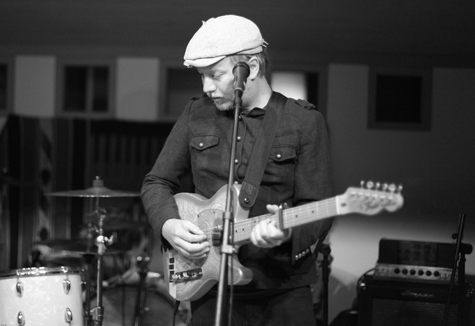
It sounds like you’re an advocate of having strong lyrical content.
Oh yeah, that’s the biggest thing for me. It doesn’t mean I don’t listen to music that doesn’t have lyrics. Thirty Three is one of my favorite bands, and they don’t have a singer. For me, it’s really important that people who are interested in my music think of it first as a lyrically based form, that writers are my biggest influences, taking from people like Steinbeck and Richard Wright, they are my biggest influences… Lyrics are huge, and shaping the right mood of the song around the lyrics is the most important thing.
Everybody Breaks struck a chord with me, both the EP as well as the song. You said some of these songs are older, but I was interested in knowing what you were feeling at the time you wrote “Everybody Breaks.”
That’s a tough one. I was talking to Nathan, our publicist, and just describing the songs to him, and I realized that the EP sounds pretty and it sounds uplifting even at times, but the lyrical content is on the darker side. I was thinking of long-term relationships and thinking about the body breaking down and all these dark feelings started coming together into one mass. I was listening to a lot of John Jacob Niles, an old soul folk singer, and my buddy who is Ellie Fortune, they both have this really nice, rootsy, folk guitar playing style. So I based the vibe of the song around this sparse guitar picking, and then the lyrics were just trying to lift me out of a funk of just thinking about the end of things.
And what about “A Bus in Africa?”
I was listening to NPR, and I heard this horrendous story, about–I think it took place in Uganda, if I’m correct–about this group of people in a bus who got pulled to the side by child soldiers, and pulled out of the bus and taken out at gunpoint, and people were put underneath the bus, and the bus driver was [forced] to get back in and run over the people, over and over. It was the most disturbing thing I had heard all year, and I couldn’t get it out my head, the image was terrifying to me.
For me, it’s harder to talk about those things sometimes. You don’t just want to bring it up in a conversation like that with your friends. So I take myself to a place where I can find out what was really happening in the minds of some of those people on the bus. It’s a first-person account, for some reason it’s the only way I could think to write it, and the chorus, like a lot of my songs, it’s not purely dark. The chorus has this amazing, positive chant, “That’s what love is for.” And it sounds very strange in juxtaposition to the lyrics that talk about these bandits that are killing everybody. But this person [has] this mantra of love for his family and why you need to have love so you don’t turn into these monsters that were taking the lives of people around them.
You were in an experimental noise band, 60 Watt Kid…
[Laughs] You have done some pretty good research. Where did you get that information from?
It’s amazing the things you find online. It looks like you were the drummer, and I listened to it, and I thought, “Man, what prompted this drastic change from you being in an experimental noise band to being a folk singer/songwriter?”
Well, actually those were concurrent. I was still playing plenty of solo stuff, but my whole goal when I moved to San Francisco was to be able to play my own music and kind of make a living from it… I just ran into them randomly at a bar in Oakland, and they said they were looking to hang out with new people and play music. He and this guy Derek had started this band 60 Watt Kid, and I invited them to play a couple shows with me. They were looking for a drummer, and I said, “Hey, I think I know how to play drums. And I’ll play with you guys until you find somebody.” And we just ended up clicking really well. The songs actually started more acoustic-based. We were like a lot of people at the time, we were listening to a lot of Animal Collective and it definitely showed in some of the earlier recordings. And then it just kind of got crazy… We would play characters on stage too, and dress up in sparkly weirdness. And I would kind of go caveman crazy on the drums. I was playing all four toms and a cymbal, and a tambourine around my ankle. It was not very complicated drumming, it was that caveman tribal stuff. It was so good to be physical, and we would break stuff and yell at each other’s faces. It was more Andy Kaufman, honestly. It was wild and it was so much better than standing with an acoustic guitar for me, for a little bit. It was a performance aspect I had missed since I was in rock bands in high school.
Garrett Pierce’s Everybody Breaks is out now on Narnack Records. He’ll celebrate the release in Sacramento on Oct. 21, 2011 at Bows & Arrows. Look for his new full-length album early next year.
Sea of Bees is a buzz with debut album
Just as I was getting ready to ring the bell labeled “Tape Op” on the door of Sacramento recording studio The Hangar, I heard a voice down the street call my name. “Adam!” I turned, and up rode Julie Ann Bee on a well-worn brown bicycle. We exchanged salutations and made our way inside the giant warehouse studio that was once a punk venue years ago. Bee treats me like a friend she’s known for years, a facet of her personality that makes her so easy to engage. I’m really excited for our interview.
Inside the engineer room, where Bee recorded and mixed her first EP appropriately titled Bee Eee Pee, a large mixing console and strange audio concoctions surround us as we sit down to begin. She informs me of the soul this particular room has. Besides being the place where her own journey began, this space was where Terra Lopez of Sister Crayon mixed parts of their record, and the bassist for Rilo Kiley, Jonathan Wilson, recorded a few tracks here himself. Bee hums me a line from a Rilo Kiley song titled “Silver Lining.” It’s a treat, and I’m lost in her voice for a second and stumble over my words when she asks me if I’ve heard of them.
Bee is the singer/songwriter of Sea of Bees, and she is a rare talent. Like a ship in a bottle, she has slowly built herself up inside with love and passion for everyone to see and hear. To watch her sing is almost as enjoyable as hearing her, as the harrowing words flutter from her tiny mouth and her hands strike the strings of her acoustic guitar, brown hair falling over her face. YouTube videos show Bee playing songs like “Skinnybones” and “Gnomes” to rooms full of people who stare at her mesmerized as if gazing into a supernova.
It was at age 15 that she first knew that she wanted her own voice, a different voice.
“But I didn’t know how to go about it,” says Bee.
At that time, Bee was in a youth group at her church where a woman she admired was singing and playing guitar. Bee was “in love” with her voice, and like all great artists have done, she emulated the voice she admired most.
“I just blended with her voice and knew how to do it, compressed it and worked on it.”
Eventually she wanted to make this voice her own, and over time she crafted it to sound the way that it does–natural. Not a word feels forced when you hear Bee sing and even when she cranes her neck and reaches for notes, they wail as if being squeezed from the depth of her very being.
It was her voice that, like a siren’s song, lured in the man who would help guide Bee along her blossoming career.
John Baccigaluppi, publisher of Tape Op magazine and owner of The Hangar, was walking down the hallway of his studio one day when he heard Bee’s voice for the first time. Bee was passing the time in one of the rooms while her current band at the time, Find Me Fighting Them, was recording in the studio. She grabbed a guitar and was recording some demos on Garage Band. Baccigaluppi popped his head in after thinking to himself, “whoever is singing has a nice voice.” He gave her his card and when they talked later, it became clear pretty quickly that Bee needed to come into the studio. She had no real demo and Baccigaluppi wanted to help.
“I said come over and we put her in this room and I kind of showed her how to work ProTools and then left for the day,” recalls Baccigaluppi.
Bee, brand new to ProTools and left to her own devices in the studio control room, went to work. At the end of the day, she had a nearly complete five-song EP that would become Bee Eee Pee.
“I was under the impression that she would come in here and just bang out something,” says Baccigaluppi. “But I would come back and there would be all these overdubs. I was like, ‘Well I guess you figured out how to do that!’”
Having never really recorded a record herself, Bee took full advantage of the opportunity she was granted.
“I didn’t know how many days people spent on recordings. I was just like, ‘Gotta get it done,’” she says.
Maybe it was that exact attitude, that excitement to record, that kept Bee and Baccigaluppi working together. When Bee’s EP was complete, they decided to continue recording, tackling two songs in full production together (“Gnomes” and “Willis”) to see if they “got along together and wanted to go further.”
“We decided to do a whole record,” remembers Baccigaluppi.
With Songs for the Ravens, Bee and Baccigaluppi worked at a slower pace, only doing a few tracks at a time. The recording experience was centered on having fun making a record and exploring any ideas that came into the picture along the way. Bee would record an idea on Garage Band and show it to Baccigaluppi so he could get an idea. From there, they slowly pieced together the songs one track at a time, adding bass here or drums there. Bee herself played 80 percent of the instruments on the album, some of which she had never played before.
“She’s super intuitive as a musician. There’s a lot of stuff on this record with instruments that she played in one or two takes that she’d never seen prior to that,” says Baccigaluppi.
Very limited editing was required for the record, too, and a lot of what you hear on Songs for the Ravens are raw, uncut tracks. Half the tracks on the record, including “Blind,” the masterfully crafted outro song, were live takes, recorded with the other musicians. That says a lot about this record and the musicianship that was involved. Standout players include the tasteful drum set playing of James Neil, who, at times, nailed tracks immediately with very little time to record or to rehearse. It seems as though everybody involved in the creation of this record connected seamlessly with Bee and was able to interpret her ideas perfectly.
“The songs that were in my head, I had a vision of what I wanted them to be. They somehow came out exactly how I wanted,” says Bee with gratitude in her voice.
Another interesting note is the appearance of Wes Steed of Hearts and Horses, who offered his meticulously placed drum programming on songs like “Won’t Be Long” and my personal favorite, “Willis.” Steed was given very rough mixes of the songs to allot as much room as possible for him to navigate the drum tracks. Steed’s tracks were imported toward the end of finalizing the songs, and they would, without fail, fit perfectly into the mix.
The business side of putting out the record was always tucked in the back of both Bee and Baccigaluppi’s minds, but it didn’t need to be dealt with until it was finished. With that moment now upon them, the first thing they did was send it out to a few people that were close in both of their circles. Michael Leahy, who runs Crossbill Records in Davis, was one of the first to respond to Songs for the Ravens. Baccigaluppi sent him a copy immediately after mastering and he replied quickly, saying that what they had created was pretty awesome and to shop it around to lots of different labels. So they did, but to no avail.
“We spent a fair amount of time looking for labels and had some interest from some larger labels, and in the end no one was willing to move fast enough,” explains Baccigaluppi.
In the end, they went where open arms would receive them and inevitably ended up going with Crossbill. This turned out to be a great decision for Bee and was mutually beneficial, as Leahy scored a distribution deal through Burnside Distribution in Portland, Ore., with help from the strength of Songs for the Ravens.
“They’ve been really working it. Every week there’s more good news from Burnside,” says Baccigaluppi.
On top of Leahy standing behind the record and pushing it aggressively, he had a couple more friends up in Oregon that he wanted to introduce Bee to. Riot Act Media, a boutique publicity firm in Portland, picked up on Songs for the Ravens and offered their support for Bee.
“Riot Act’s Joan Hiller and Nathan Walker, they’re good people. It’s like family,” says Bee.
The pace of Bee’s success is steadily picking up with the anticipated release of Songs for the Ravens. And although she’s no stranger to performing, she’s just now starting to warm up to her audience–just in time for a 12-date tour that will land her in San Francisco, Los Angeles and New York, to name a few.
“I’m learning to open my eyes and see [the audience]. I’m starting to understand that it’s not just about me and my music, it’s about them,” says Bee. “I want to bring more to the table.”
When I asked Bee if she had measured out any sort of success for herself, she brought up musician friends that she and Baccigaluppi have who are able to “pay their rent and buy a car” by playing music. Modest goals for someone so talented.
“How do they do it?” Bee pondered. “It’s a lot of work. But it’s what I want to do.”