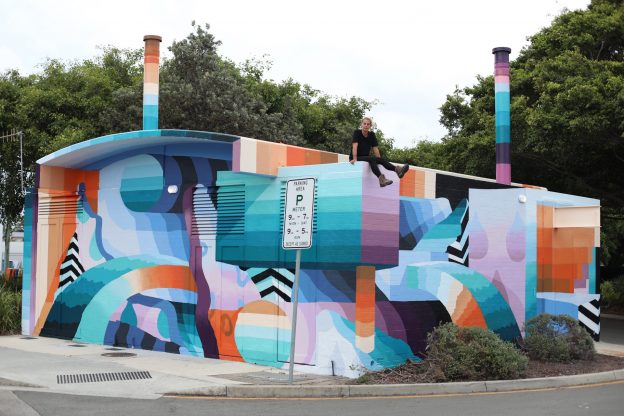
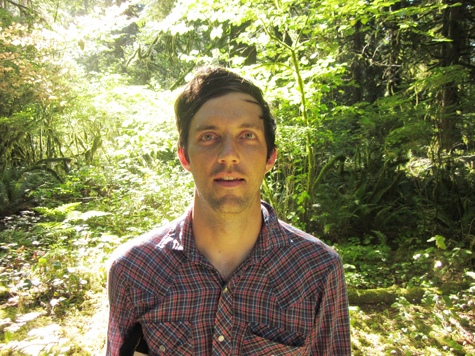
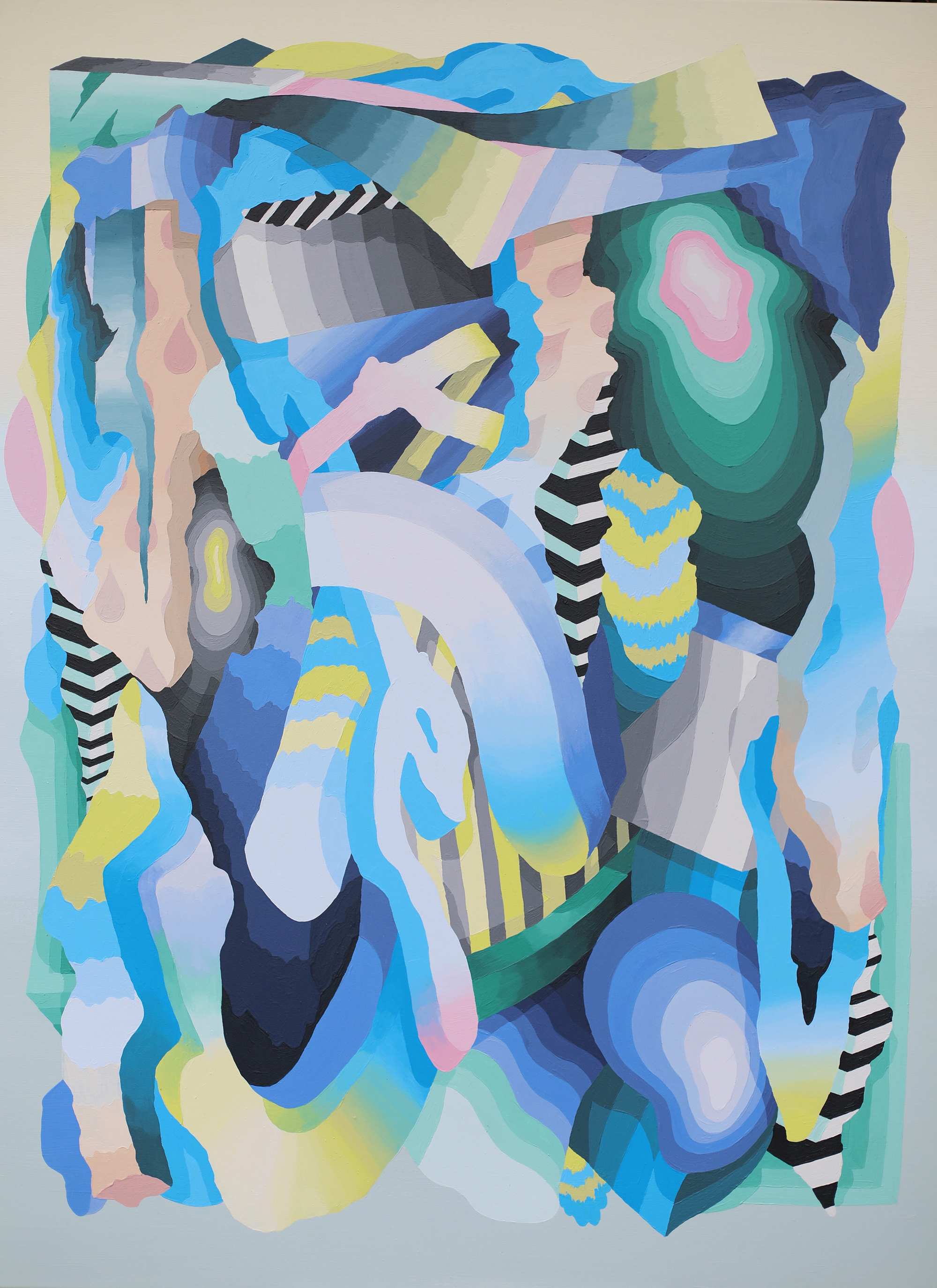
Before his U.S. debut and solo art show entitled Exordium, the 23-year-old Australian street artist who goes by the name Leans is completing a series of unusual commissions. He has carved out a niche for himself by painting the exteriors of houses and large-scale public art in his native land of Brisbane, Australia.
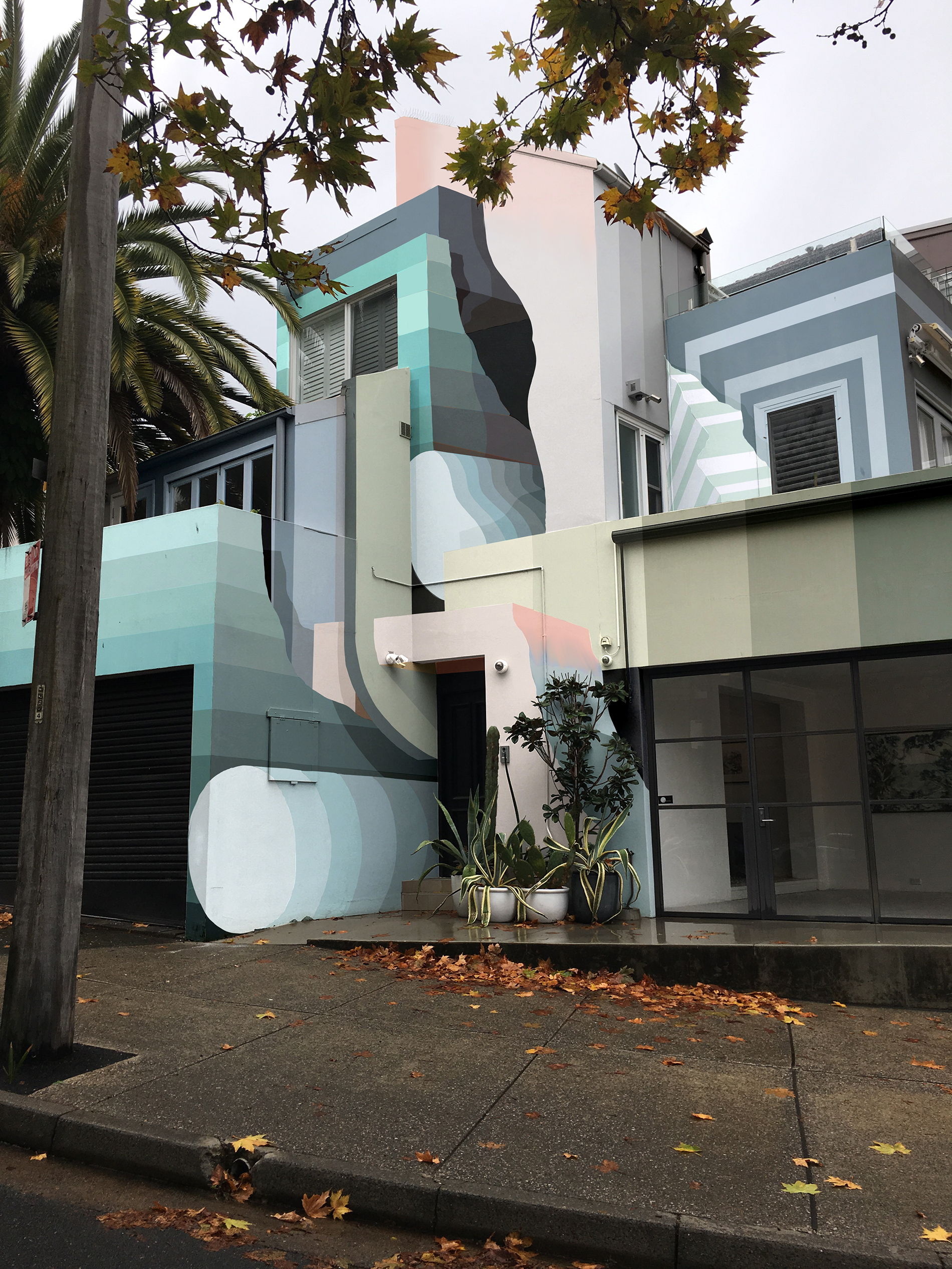
Most people love, or at least appreciate murals, but they wouldn’t necessarily envision having one adorning their homes. Maybe that’s because they haven’t seen Leans’ work. With his reimagining, the flat predictable box of the standard family home becomes a startling optical illusion where corners disappear into trees and sky. It’s only by moving around the building that the visual elements devolve and reveal the simple colors and forms that create the optical effect.
Despite only painting with seriousness for six years—a ridiculous feat by any measure, Leans appears to have gotten the right cross section of education and come along at the ideal time. Veteran Aussie street artists Drapl, Treazy and Sofles taught Leans how to paint in unfriendly circumstances, how to scale from small sketch to big wall, and how to create dimensional letters. Australia, like most other countries, viewed graffiti as an act of rebellion and vandalism when this first wave of artists emerged. But just like here in the States, as the styles went from simple tagging to more sophisticated, vibrant throw-ups, scorn became admiration. The timing couldn’t have worked better for Leans; a good portion of his commissioned work comes from Queensland Funding for the Arts.
When he was still too young to drink legally in the United States, Leans jumped on Instagram (as millennials are wont to do) to seek inspiration and feed his imagination as he developed his visual voice. Within a few years, his feed blew up and made him a full-time artist.
“It’s just a square that says ‘this is me,’” Leans jokes, referring to Instagram’s format. “But it got me thinking about squares.”
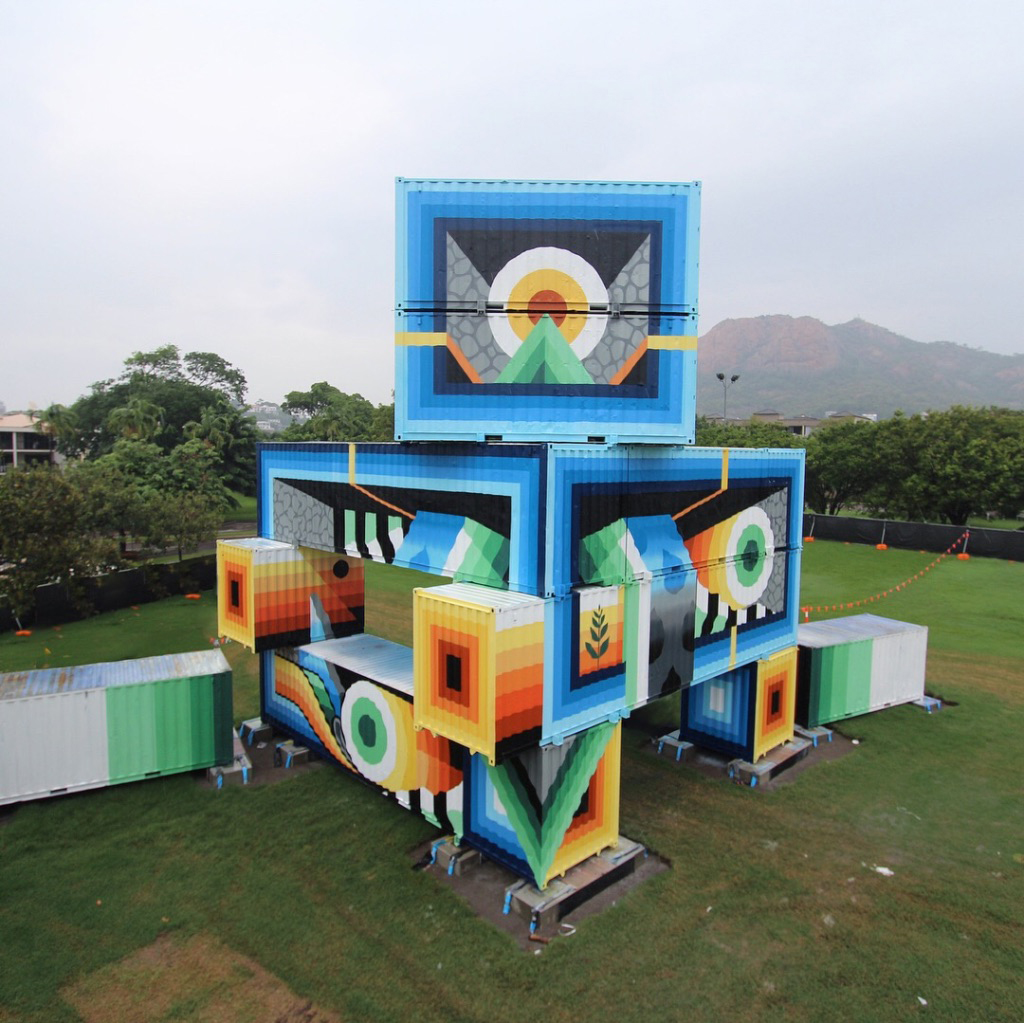
This might have also contributed to his obsession with buildings and his regular nod to retro video games.
Recently, his output has morphed toward something more abstract and psychedelic than graffiti. He credits his evolution and meteoric rise in part to his collaborative relationship with his partner, Zan, who has contributed to all his outdoor work over the last year.
It’s impossible to tell sometimes where the object leaves off and the paint begins. In his words, he’s going for “real and unreal at the same time.” Rivers of pixels give way to voids and the edges blur into the background.
“I got an iPad about a year ago,” Leans explains. “So I take a photo from an angle that I like and then I add shapes and patterns wherever I want on the screen. Using this new tool gave me the confidence to paint whatever I wanted. I got there faster with no restrictions.”
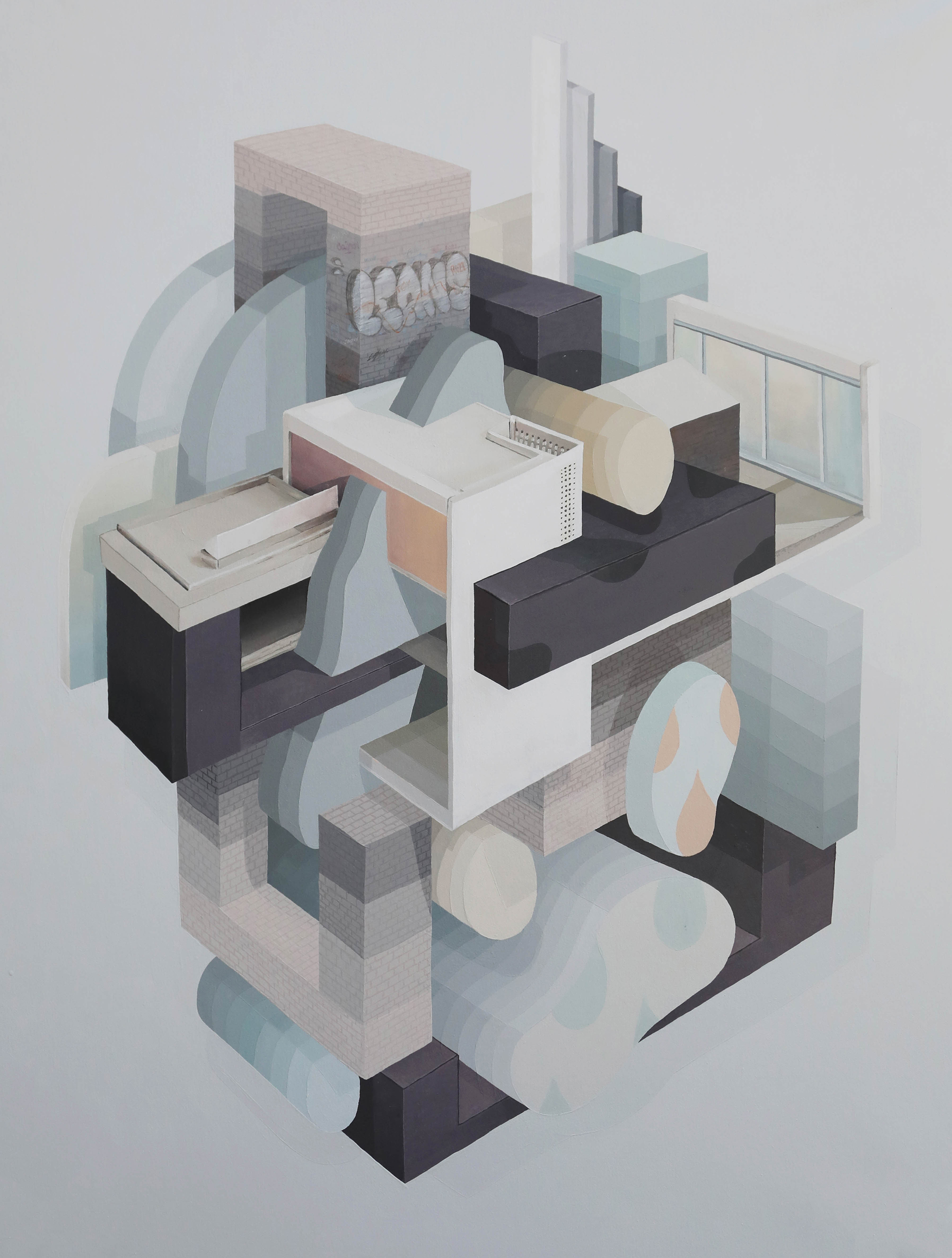
This technological leap forward allows him to put ubiquitous 21st century imagery in a blender with Magritte-esque trompe l’oeil and push the “high” button. It’s a fascinating and even comic reinvention of everyday objects that we visually take for granted.
One year in architecture school made a deep impression, enough to teach Leans some things, including that he doesn’t want to be an architect. It did give him some drafting chops, though, so he understands how to use the lines created by the siding or the nail heads in the photo as visual markers, then he sketches an outline or mock up. When he applies the mock up to the building, he and Zan, who helped develop this technique, fill in the shapes accordingly.
“Kind of like my own paint by numbers,” Leans jokes.
One artist that Leans really admires is Felipe Pantone, whose work is almost an amalgam of industrial design and art. Pantone’s control of space made a big impression on Leans early on. Though the two are vastly different with Pantone favoring sleek, expensive-looking geometry and Leans’ style more fluid and free-form, it’s easy to see they are playing with similar technical approaches that compel the viewer to double-take.
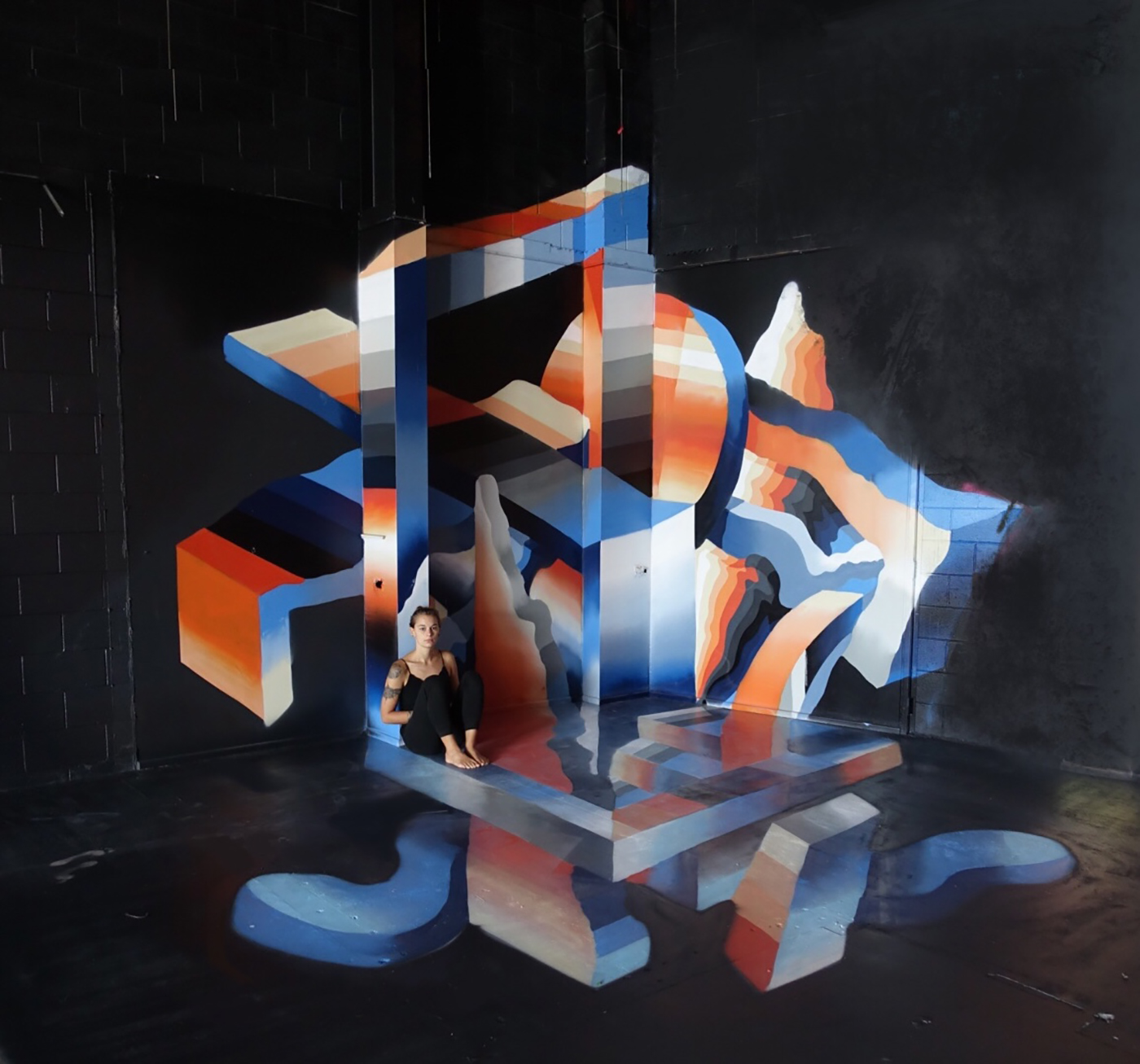
In the upcoming exhibit at The Chambers Project in Nevada City, Leans will show eight paintings, his first collection on canvas. When asked how that feels, he replies, “It’s different, it’s just a flat surface, and it’s small!” then laughs.
In some ways, canvas is much easier because he doesn’t have to contend with dimensions, surfaces and weather, but the paintings have a similar magic, just scaled back down and with more intricacy.
One highlight in the Exordium show that Leans is quick to point out as his favorite, is an embroidered design Zan created from a drawing he did. Another piece is an augmented reality collaboration with digital artist Sarah Capon. When you hold a tablet in front of the work, it comes alive on the screen. This piece is probably a good indicator of where his work is going.
In the future, Leans wants to move into sculpture and hands-on fabrication so that he is creating the objects he’s painting, rather than just adapting to prescribed space. He’s also eager to experiment with virtual reality that would interact with an installation so that viewers have an immersive, dual experience.
His fascination and startling expertise in executing optical illusions as well as his subtler color combinations have given Leans a keen international audience and plenty of play in his home country. Shockingly, he hasn’t had to find work—it finds him.
“I’ve got all my work from Instagram and word of mouth,” he says.
Australia is dotted with public works by Leans, but he’s relatively unknown in the United States—until now.
Despite the demand for his flavor of art, Leans is humble to the point of bashful. Brian Chambers, owner of The Chambers Project, notes that aside from his prolific body of art for someone so young, it helps that Leans has a great work ethic and a positive attitude, “all the right tools to go far in the art world.”
It’s fitting that Leans’ art has a futuristic bent to it since he is keenly focused what will happen next, specifically everything he’s hungry to accomplish. To catch an artist with this much promise at the beginning of his career is a rare opportunity that is not to be missed.
Exordium opens Oct. 27, 2018, at The Chambers Project (103 Argail Way, Nevada City). The gallery will hold an opening reception on the 27th from 5–9 p.m. Exordium will be on exhibit until Nov. 24. For more info, go to Thechambersproject.com.
**This piece first appeared in print on pages 12 – 13 of issue #277 (Oct. 24 – Nov. 7, 2018)**
Holiday shopping doesn’t have to suck. All you’ve really got to do is seek out interesting and unique items that are tailored to the interests of those that you’re shopping for. Think about what they love, take into account their hobbies, what makes them smile, and search for gifts that will fit each particular person. Still stuck? That’s OK, we’re here for you. This year our Holiday Gift Guide is packed to the brim with awesome finds for men and women, most of them local items, some of them found on the interwebs. Take a look, get inspired and if you end up keeping some of this stuff for yourself, that’s cool, we won’t judge. Happy holidays from your friends at Submerge!

Spice Kits from The Allspicery. To take care of the home chef on your shopping list, you really need to check out Sacramento’s first and only one-stop spice shop, The Allspicery (1125 11th St.). They’ve got cute and affordable (starting at just $25) spice kits that are ready to go, including the Italia Spice Kit, Baking Essentials, African Safari, Asian Invasion and plenty of others. Hopefully whoever you gift these to will invite you over for some kick-ass meals!

Rogue Vest by Iron and Resin. Whether it’s worn layered under a jacket or on its own, this 100 percent polyester vest by the ultra-cool Southern California company Iron and Resin will help keep you warm and steezy this winter. Pick one up in the military colorway (shown here) or in black at Quality Boutique and Bru (2312 K St.) for $89.99. Check the boutique’s gear out online at Shopatquality.com (but we suggest stopping in, ‘cause their adorable shop dog Sancho will greet you at the door, and their store is chock full of killer finds for men and women).
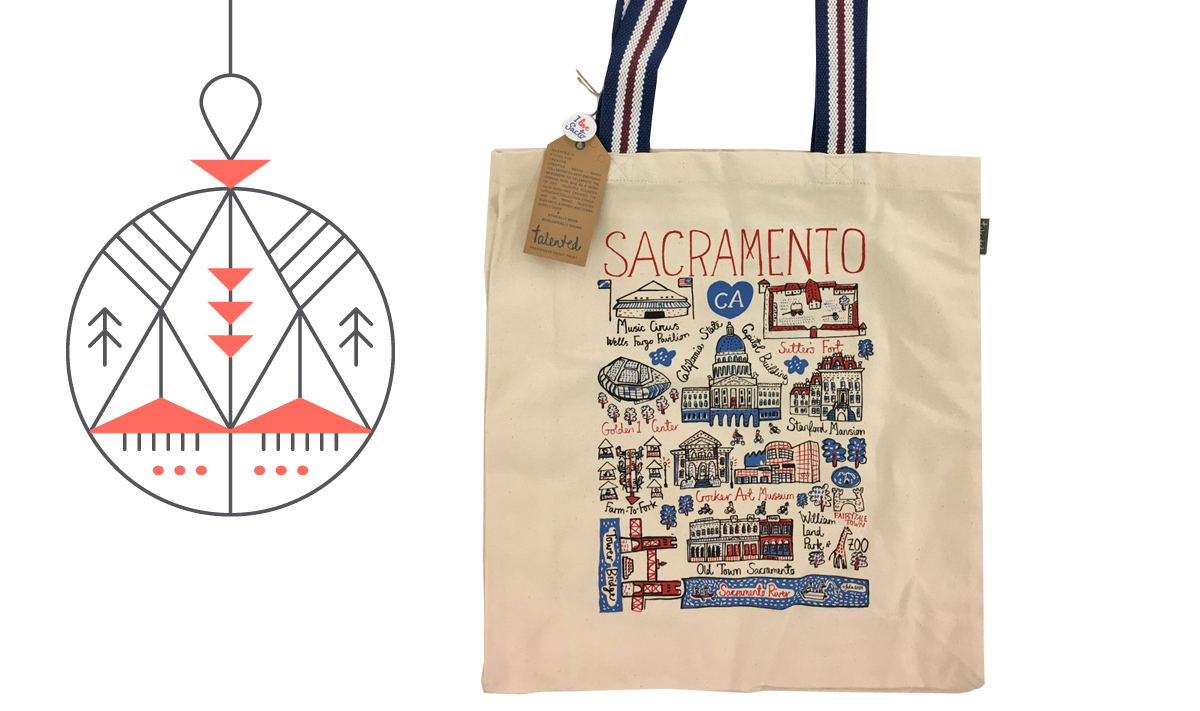
Sacramento Cityscape Tote Bag at Crocker Art Museum’s Gift Shop. Show your local pride with this durable, reusable tote bag designed by Julia Gash, an artist based in Sheffield, England, known for her whimsical illustrations of cityscapes from all around the world. The State Capitol Building, Sutter’s Fort, the Tower Bridge, Old Town Sacramento, Crocker and many other local landmarks are featured in her Sacramento design. Snag one for just $28, only available at Crocker Art Museum’s Gift Shop (216 O St.).
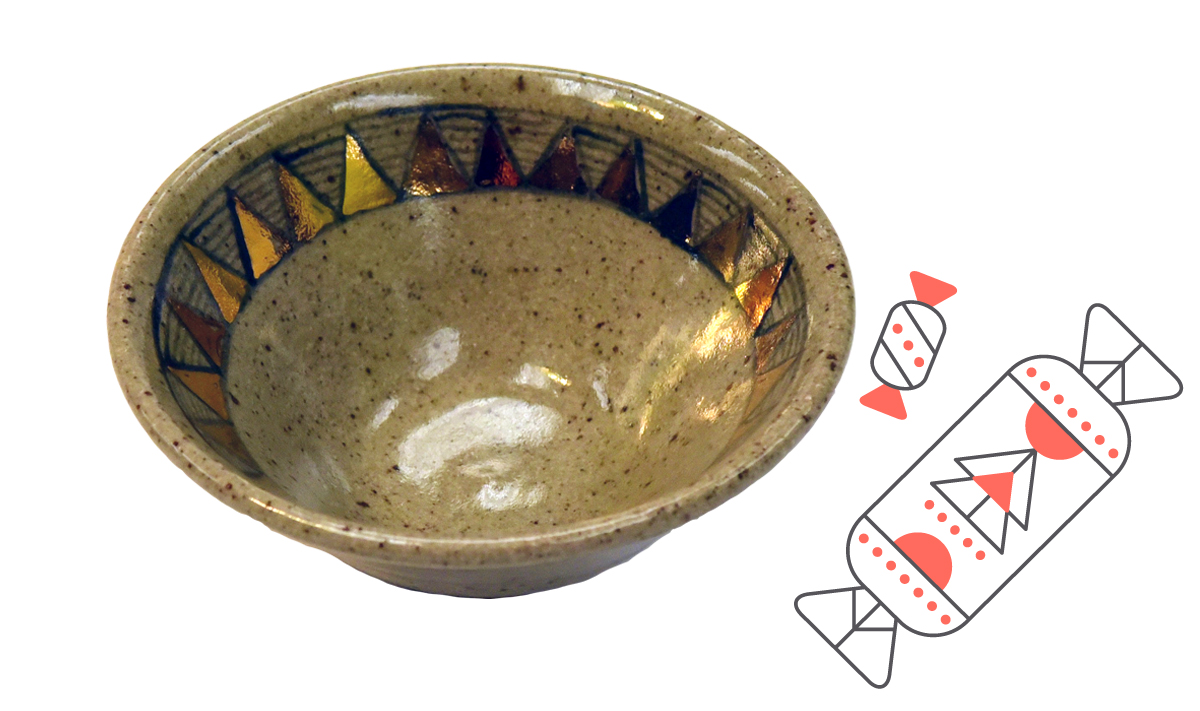
Locally Handcrafted Cups, Bowls and Plates from Pickle Pottery. Nevada City-based artist Stephanie Adams handmakes all of her Pickle Pottery goods—including plates, bowls, mugs and more—using high fire clay and high quality glazes. We found an awesome small bowl (pictured) at the recent Makers Mart event in Midtown for just $26, perfect for holding jewelry, change, keys or any other trinkets. Find Pickle Pottery’s various goods at Kitkitdizzi (219 Broad St., Nevada City) and Bespoke (10130 Donner Pass Road, Truckee) or online at Picklepottery.com. Every piece is food safe, and no two are alike.
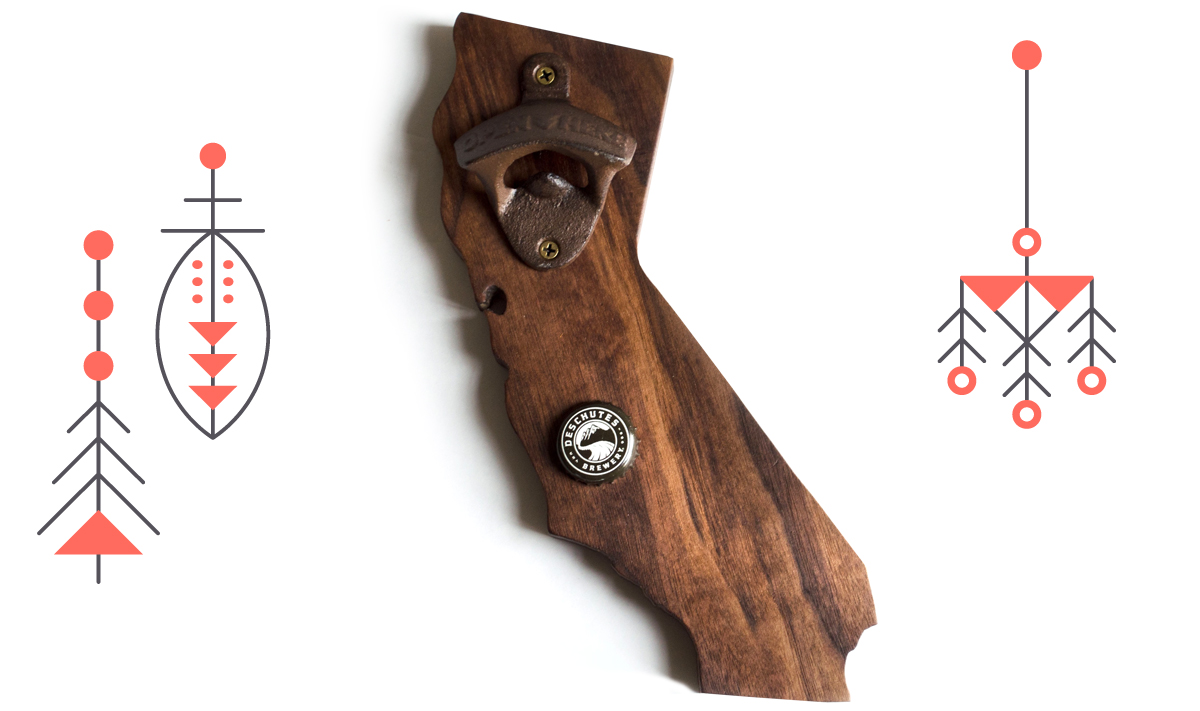
Stately California Beer Opener by local makers Newton Booth Builds. Handmade in the Newton Booth area of Midtown Sacramento, this beautiful wooden bottle opener in the shape of the best state in the country (ahem, California!) will not only solidly stick to your fridge via extra strong magnets, it also has smaller magnets hidden inside it so that it catches your bottle caps as they fall. Genius. Pick one up for $40 at Display (3433 Broadway). You can often find Newton Booth Builds at local events like Midtown Farmers Market, Stock Market in Stockton and many others, or online at Newtonbooth.com.
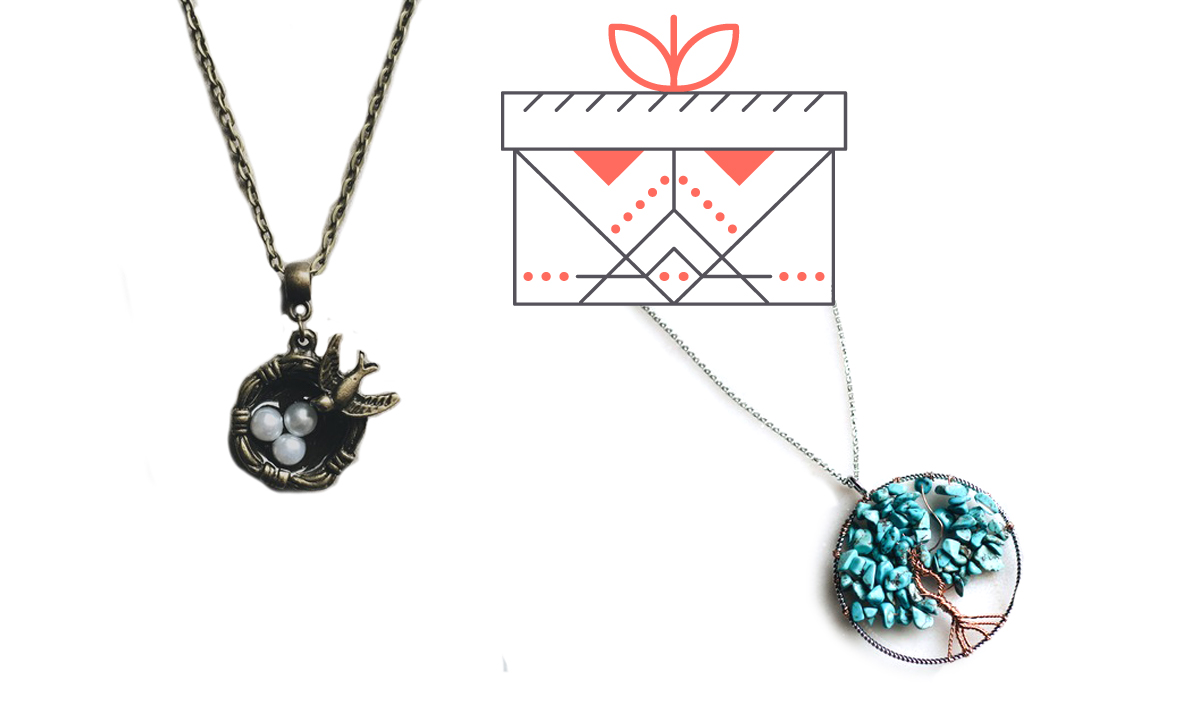
Assorted Necklaces from Folsom-based jewelry crafter My Trendy Trailer. Local artisan Karyss Bollen started her jewelry company My Trendy Trailer as a young mom with big dreams and empty pockets. Her incredibly rad designs are handcrafted and she’s got a ton of them available. Best yet, they’re super affordable, take for example this bronze “Birds Nest” necklace (on an 18-inch chain for just $15.99), or this copper and silver “Tree of Bounty” necklace (on a 30-inch chain for just $34.99). See Bollen’s entire collection online at Mytrendytrailer.com and assorted pieces at brick and mortar stores like Anna’s Boutique in Lincoln, Southern Kissed in Folsom, Moulin Rouge in Auburn and others. You can also check out Bollen’s work at Mytrendytrailer.com.
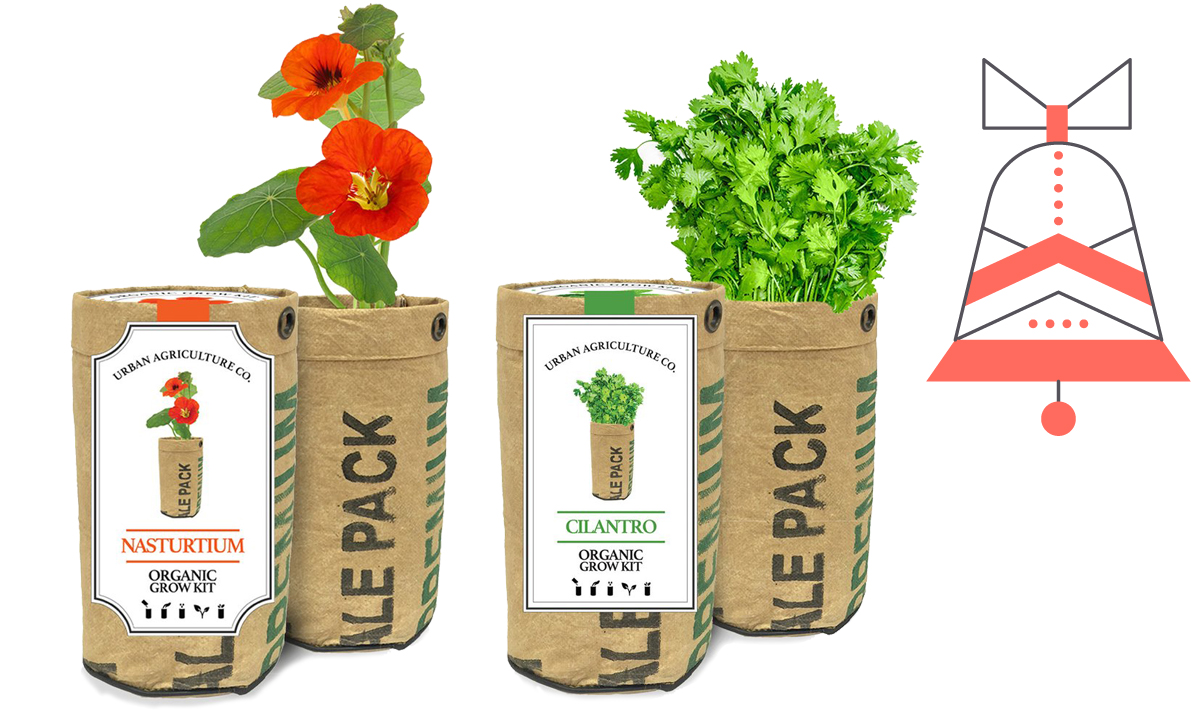
Organic Grow Kits by Urban Agriculture Co. Los Angeles-based Urban Agriculture Co. has come up with a genius way to grow all sorts of herbs, vegetables and flowers via these compact and practical Organic Grow Kits. Each one comes with a pack of organic seeds, a portioned bag of organic soil and a cool-looking container, which is made from 100 percent recycled teabags. Pick a couple up today at The Plant Foundry Nursery and Store (3500 Broadway) starting at just $14.99 on up. Last time we checked they had cilantro, sage, parsley and nasturtium in stock. For growing tips and more info, visit Urban-agriculture.net.

Hanging Concrete and Macrame Air Plant Holders from Its Knot Love and Tufarock. When two local makers come together for a collaboration, what do we call ‘em? Super-makers? That works for us. Its Knot Love (who specializes in macrame, fiber art and vintage decor) worked with Tufarock (natural accents for the home and garden) on these crazy awesome handmade hanging concrete and macrame air plant holders (just $40 with one small air plant included). Check the makers out online at Itsknotlove.com and Tufarockdesign.com.
*******CLICK HERE FOR MORE GIFT IDEAS! Submerge’s Ninth Annual Holiday Gift Guide • 2016 {Part 1}*******
Four months ago I was in the desert, surrounded by a chilling frost at 32 degrees and the only thing my mind could focus on was the coming summer heat; basking on warm rocks on the river, snorkeling in nothing but a bikini and soaking in the hot Sacramento rays that never disappoint.
Sacramento snorkeling—did you know this even exists? I’m not talking about snorkeling in freezing cold, murky water that hinders your vision 3 feet in front of you. I’m talking a bout clear, warm waters with majestic fish dancing next to you as the sun ricochets off gleaming algae. Yeah, Sacramento has this.
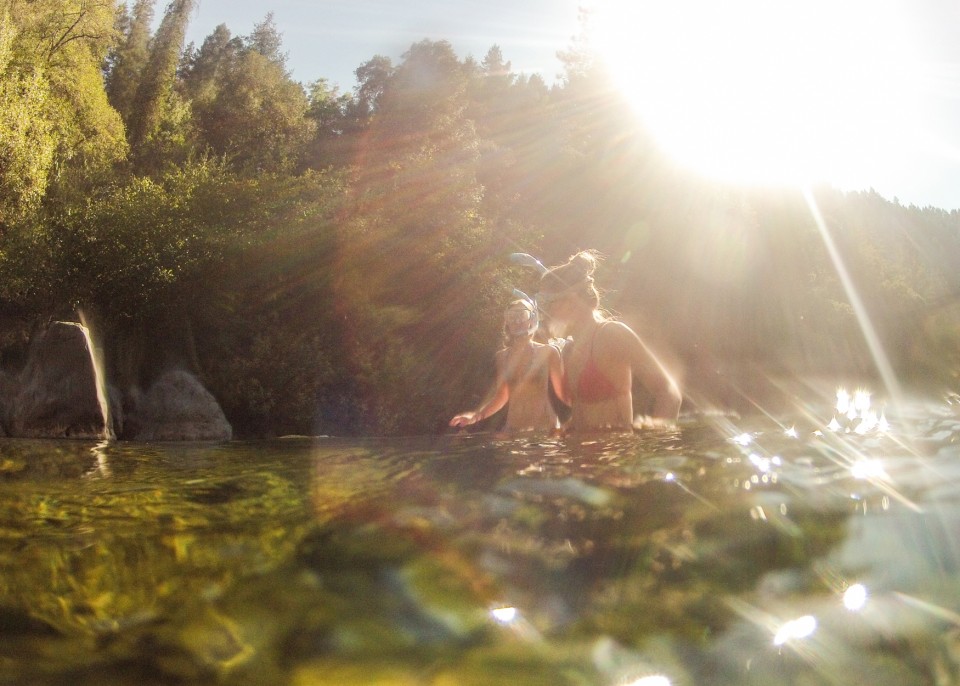
Katherine and I bearing the first dip
Just north of Nevada City, off Highway 49, the Yuba River winds through a canyon alongside giant boulders cresting the shores. With an array of swimming holes, cliff jumping and waterfalls, it’s easy to spend more than a day exploring less than a mile of the river.
If heading up north to the Yuba River, a snorkel is a must. A few years back, some friends and I discovered that you can hike upstream, strap your snorkel on and float all the way down the river back to your car, swimming through underwater caves, through waterfalls, in the company of fish … need I say more?
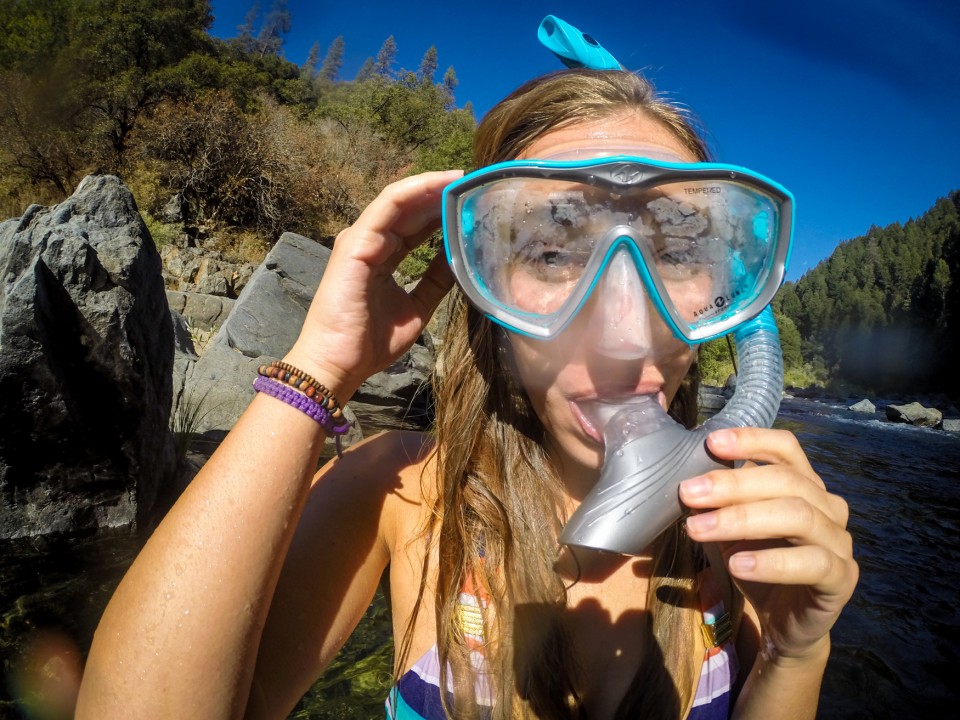
Katherine getting ready to take the plunge
The current of the Yuba in this sweet section flows at just the right speed, making paddling unnecessary and the worry of being taken away by a vicious current nonexistent. It’s like taking a float down the “Lazy River” at a water park, minus the people, the concrete, the chlorine, the floaters (you know what I mean) and the noise, with the added beauty of nature. So really, it’s nothing like floating down the “Lazy River.”
Following Highway 49 all the way to the Yuba River will land you right in the vicinity of good snorkeling, rock-hopping and cliff jumping. There are multiple bridges near where Highway 49 crosses the river and there should be adequate parking near the bridges as well.
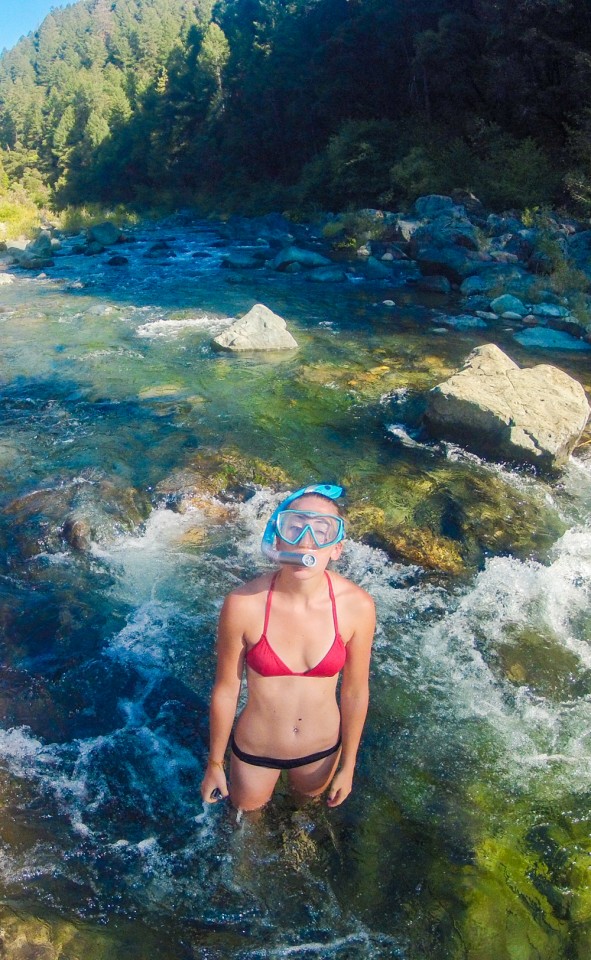
Ditch everything at the car besides your snorkel. Start walking upstream. I have attempted to hike in the water as well as on the shore, but the shore seems to be easier terrain—less slippery and just as straightforward. If you’re extra lazy, persuade someone to drive you up-river and drop you off. Once you feel like you have gone far enough, dive in and float on down back to your car.
This is one of my favorite summer day trips. Upper-100 degree days are on the way and this is a spectacular way to see Northern California’s river beds up close and personal. If your summer is completely booked up or you don’t like being in a bathing suit or in the sun—or if you are just a badass—bring a wetsuit and go for it in December. I would love to hear that story.
Once you get back to the bridge where you parked your car, grab your beer, kombucha, gatorade, whatever it is, chill out and enjoy the sunset. If you’re headed back to Sacramento, I suggest stopping in downtown Auburn for some grub. There are a few hidden gems in that town that I’ll let you discover on your own.
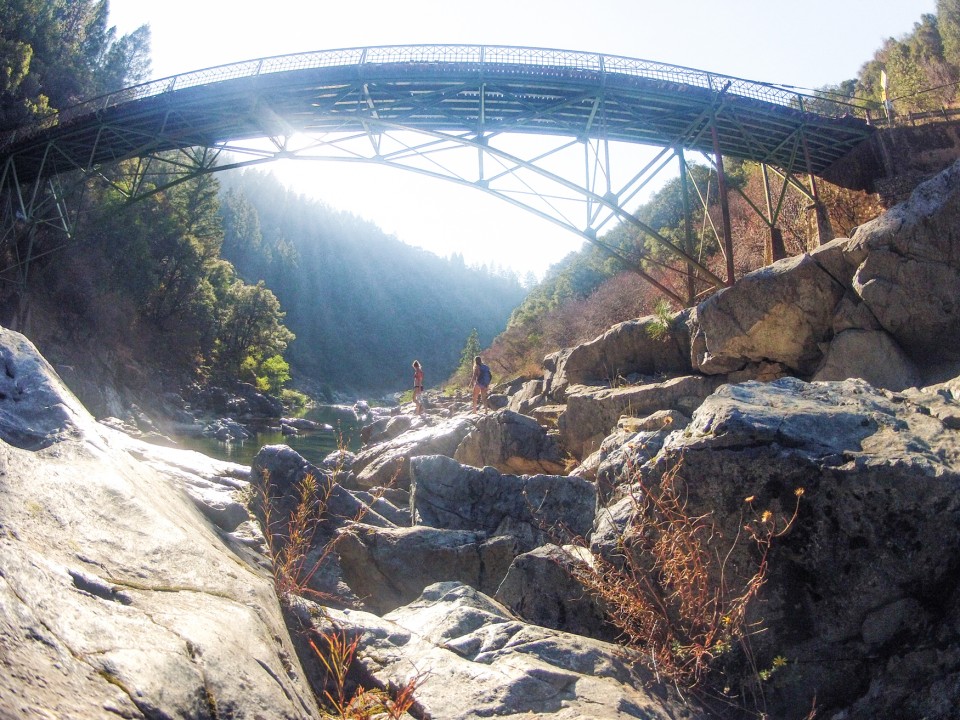
Finally back to the starting point
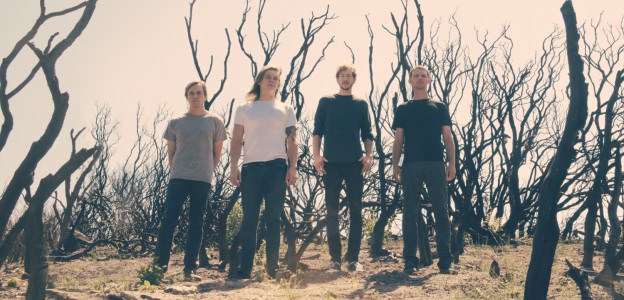
Like a wrecked ship caught halfway in the transition from steel construct to living reef, Pinnacles achieves harmony through clashing processes. They often characterize their music as “prog” or “math” rock, but their work is not overly indulgent in the byzantine excesses of the former or the regimented oblivion of the latter. Instead, they are a varied landscape unto themselves, with tight, earthbound rhythms and sky-borne melodies that rise and fall gracefully like birds of prey pulled aloft by thermal gusts.
Indeed, one has a hard time listening to songs like “Sinking vs. Sourcing,” a highlight off of their last album Convolve and Reflect, without imagining a soaring birds-eye view of dramatic, forested mountains. It is only after a few listens that the second side of Pinnacles—one of intricate, carefully designed technical wizardry and layered production, becomes readily evident.
This background machinery is mostly the realm of the band’s two guitarists/vocalists, Justin Hunt and Robbie Landsburg. After an intense collaborative songwriting and recording process with bassist Jesse Kinseth and drummer Zach Peach, who both weave a maze of mutating (but surprisingly naturalistic) time signatures, the former two can spend months fine-tuning the results, capitalizing on their introverted natures and retreating to a world-within-a-world where endless experimentation for its own sake eventually crystallizes into a record. One gets the sense that they could continue indefinitely—and their shifting, engrossing songs reflect this, almost striving to expand ever outward, refusing to be fully contained by the boundaries of an album. This is the environment from which Convolve and Reflect emerges.
The environment from which Pinnacles emerged about two years back is likewise fertile, in more ways than one. The Nevada City/Grass Valley area, where the band members grew up, has long been a hotbed for creativity, especially in music. The band members cite a supportive local scene, along with the solitude afforded by the lack of sprawl and proximity of the nearby forest, as producing favorable conditions for their exploration into the boundaries of melodic art rock.
At times aggressive or purposefully delicate, precisely arranged or freely drifting, Pinnacles are now at the top of their game and have only bigger and brighter things ahead. While gearing up for an extensive regional tour and considering how they might diverge stylistically in the future, Hunt and Landsburg were able to chat and lend more insight on their genre-bending nature, the unique locale they hail from and the virtues of having countless guitar pedals.
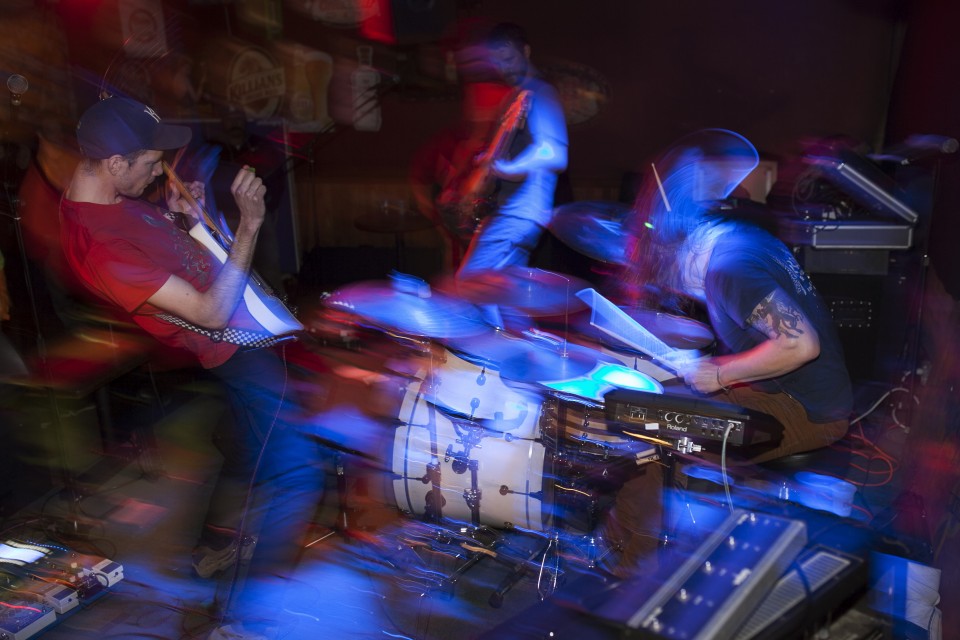
Photo by Jobi Otso
Does the name “Pinnacles” refer to anything in particular?
Justin Hunt: There was actually a long list of potential names that we were crossing off a wall, and “Pinnacles” ended up being the one least offensive for all of us. I’ve always liked the way the name sounded, the imagery that it conjures, just as a knee-jerk reaction.
Robbie Landsburg: Also, there’s a lot of builds in our music, a lot of high points—that’s sort of a connection, there.
JH: Hmm … I never thought about that [laughs].
What about the latest album title, Convolve and Reflect?
JH: That one wasn’t quite as arbitrary—there’s something very onomatopoetic about those two words together. Convolution and reflection are terms used to describe reverberation, or reverb. There’s the reverb that we were using on the record and in our recording spaces. If there was a theme to the record, though, it would be empathy or the lack thereof these days—people not being emotionally connected to each other, just kind of broad-stroke themes like that. So convolving and reflecting is kind of about people coming together, bouncing off one another and existing in the same space. It was a very loose idea that I liked.
RL: Our previous album, Automaton—that name was a reference to automation, which is also something you use when you’re in the studio. Our band is like a merge of digital and analog worlds. On the vocals sometimes we’ll have weird, harmonizer effects that are kind of robotic, blended with natural acoustic instruments. There’s a mixing of the digital and analog, as well as the emotional and emotionless.
Are your natural surroundings a big influence on your music?
JH: I’d say yes, but mostly subconsciously. It’s a beautiful place—there’s not nearly as many distractions as in a big city.
RL: For me, living in this small town in the foothills, surrounded by nature, and yet I’ve always been a very computer-oriented person as well, I appreciate the outdoors just as much as I appreciate nerding out on computers. There’s always that duality, and it’s something I’ve always been fascinated by.
Was there a particular style or sound you hand in mind for this project from the beginning, and is it the same as what it is today?
JH: I don’t know if we had any particular ideas, to be honest. I don’t know if there were any preconceived notions of what we wanted it to be, which is part of the fun, at least for me.
RL: Yeah, totally. I think we all played to our strengths, like I do a lot of guitar tapping, and then Justin tends to write in some really weird time signatures—it’s never really in 7, never really in 9, it’s shifting throughout. And Zach, our drummer was in a really prog-y band before this, and he’s a really straight-ahead rock drummer that can also do some really cool stuff in odd time signatures. We each play to our own strengths, and I think we kind of took that as far as we could with that last album. I’ve been talking about branching out and getting a little less rock ‘n’ roll and guitars on our next endeavor. I think Convolve and Reflect is our “mastery” of what we initially started with.
Were you always a fan of progressive/math/post rock? When did you first discover these genres?
JH: I don’t know. I’d say I’ve become more of a fan of that kind of music of late, but I don’t know how much it informs the songwriting process of our band. I didn’t grow up listening to a lot of traditional “prog” bands of the ‘70s like Yes and Rush, but I knew those bands, and I liked them. The genre wasn’t something that was terribly influential for me, as a guitar player or songwriter. The weird, odd meters is just something that happens naturally, more just what comes out when we get in a room and start messing around. And after a while, it feeds on itself and becomes what we do regularly.
RL: Justin and I are both huge fans of the guitar and drum sound on Siamese Dream [by Smashing Pumpkins]. Our bassist Jesse is a huge Tool fan, and I think we’re all huge Tool fans, Aenima and Lateralus were influential as we were growing up.
JH: I think the idea is to use odd time signatures, but not make them sound incredibly complicated. Maybe because we’re all neurotic and want to keep it interesting for us, but at the same time, we don’t want to sound too pretentious.
The influences you mentioned seem to all have special attention to loud/quiet, heavy/delicate dynamics.
JH: I think, at least Robbie and I, we’re huge fans of a lot of ‘90s rock music, which did that extremely well—especially that Tool/Smashing Pumpkins kind of flavor. I started playing guitar in that era, and there’s a lot of that dynamic in the music from that time. Another thing that was influential on me was the prettier soundscapes and then heavier sections, trying to blend those together.
RL: I love every type of music out there, but it can get kind of tiresome in a band doing nothing but heavy or quiet stuff exclusively. It sort of desensitizes you as a listener. I like to keep a contrast, keep the listener on their toes and also present a journey or cinematic experience.
JH: Also, we get to play with more pedals! The more sounds we mess with, the more pedals we get to justify buying.
Speaking of messing with sound, you’re both credited as producers on your last two releases. What is your approach to production?
JH: Just as a financial decision, we’ve always valued the DIY aesthetic in this band, and it has become something that defines us. When we set out to make our first record we just wanted to do a demo on a lark, and it sounded reasonably good, so we decided to do everything else by ourselves as well. To do things on your own as a band—for one, it’s a lot cheaper. It’s a small investment of money and a large investment of time. I like keeping things under our control. A lot of it was Robbie and I just sitting in there, tweaking the music bit by bit.
RL: If this record had been made in the ‘90s, on a studio budget, it would have been like $500,000. The amount of time we spent on it, just going down the rabbit hole, exploring options, coming up with harmonies, we completely re-amped all our guitars, sending it through the interface of our computer, and through the pedals, and back out of the amps—that way, we could do live pedal performances with our hands instead of stomping on them. Just going down the rabbit hole of soundscapes and ambiances, and not always to a tasteful effects either [both laugh].
What’s your take on Nevada City’s unusually rich music scene as a small town?
JH: Yeah, there’s a disproportionate amount of talent that comes out of here, considering its size. My take is that, there was an era where there was a lot of hippies who left the cities and moved up here to raise their families, and those same hippies became parents who really fostered the arts with their children. Thinking about that question, that’s the best answer I can come up with. It’s a peaceful, quiet community, with a lot of parents who are very supportive of their children who have become this generation of musicians who at least had opportunities to flourish.
RL: And I think there’s a compounding effect as well, when you see other people who are a bit older than you who are performing, and you know some of them, or their siblings, it makes it seem that much more attainable to attempt it yourself.
Pinnacles kick off their West Coast tour March 17, 2016 in Grass Valley at Center for the Arts’ Off Center Stage. On March 23 they’ll play The Press Club in Sacramento. To listen to and/or purchase Pinnacles’ latest album Convolve and Reflect, go to Pinnacles.bandcamp.com. Trust us, you’ll be glad you did.
We’ve said it before and we’ll say it again: there must be something in the water up in the foothills because good Lord there are a lot of talented musicians up there! A young bluegrass/Americana band from Grass Valley made up of four siblings (ages ranging from 13 to 20) called Paige Anderson and the Fearless Kin are the latest to completely blow our minds. Paige is the eldest sibling and songwriter of the group, also playing guitar and banjo. Aimee plays fiddle and is a master at vocal harmonies. Their younger brother Ethan plays stand-up bass; and the youngest sister, Daisy, started out on the fiddle at age 3 but nowadays plays the dobro (a particular brand of resonator guitar, sort of like a lap steel).
It’s no surprise that this group is so damn good at such young ages, as they have all been cutting their teeth touring and releasing albums with their parents under the Anderson Family Bluegrass moniker since 2004. They even played Hardly Strictly Bluegrass, Wintergrass and other reputable festivals and venues around the United States. Now, continuing on without Mom and Dad (although they still travel with the kids and occasionally hop on stage during shows), Paige Anderson and the Fearless Kin are getting ready to release their second full-length album of original material called Foxes In June on Dec. 2, 2014, and will celebrate with a dual album-release show with Halfpence and Haypenny on Dec. 7, 2014, at Main State Theater (314 W. Main Street, Grass Valley).
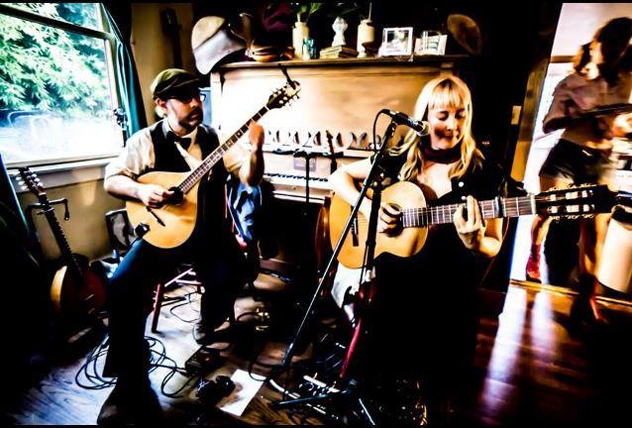
{Halfpence and Haypenny}
Halfpence and Haypenny are yet another wildly talented group from the foothills (Nevada City to be exact) who are getting ready to release their debut album To Hold a Candle To The Devil. H&H is made up of Eva Riihiluoma (Classical Guitar, Mandola, Vocals) and Sage Arias (Irish Bouzouki, Banjo, Mandola, Hurdy Gurdy). They have a self-described “old-world inspired folk” sound, performing both originals and unique versions of folk songs from England, Ireland, America and more. Learn more about both groups and order their new albums at Thefearlesskin.com and Halfpenceandhaypenny.com. Their dual album-release show on Dec. 7 starts at 7:30 p.m. and is $15 for Center for the Arts members and $18 for non-members. Tickets can be purchased at Thecenterforthearts.org
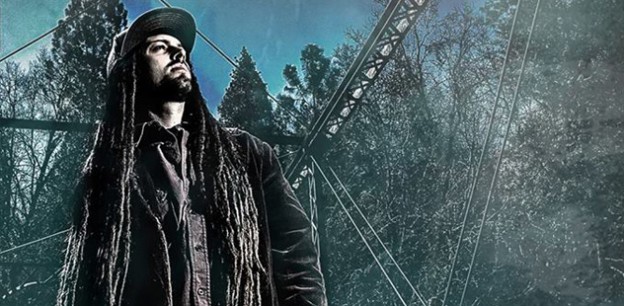
The foothills of Northern California are a breeding ground for creative talent. Reggae/hip-hop/dancehall artist J Ras is just one of a seemingly endless list of people churning out quality tunes from towns like Grass Valley, Auburn, Nevada City, etc. J Ras’ newest full-length album Find My Way just dropped last week and quickly started building some major hype online, making it all the way to the No. 1 spot of the “100 best selling reggae songs” chart on iTunes on Nov. 12, 2014, ahead of headlining reggae acts like Common Kings, The Movement and Iration. “Feeling so blessed and grateful for all of the support and feedback from this album,” J Ras wrote on his Facebook page (Facebook.com/JRasMusic) upon announcing the big news with a screen capture of the website Musicianwages.com, which tracks up-to-date sales on the albums released each week.
J Ras’ recent success comes as no surprise, as he spent the entire summer performing on Warped Tour, grinding hard and self-promoting every single day all across the country. J Ras is living proof of the old “hard work pays off” saying.
“It was seriously crazy but so much fun,” J Ras told Submerge of his time on Warped. “I think of it like boot camp for musicians. If you can make it through Warped Tour, you’re ready for any other tour!”
Find My Way is 10 tracks and features guest appearances from Scarub of the Living Legends hip-hop collective, Jamaican reggae artist Prezident Brown and a few others. It’s out now on iTunes and Spotify. You can see J Ras live in Tahoe City on Nov. 28, 2014 at Hacienda Del Lago (760 North Lake Boulevard No. 30) and his next Sacramento show is Dec. 26, 2014, at Capitol Garage (1500 K Street). Visit Jrasmusic.com for more information and to sample some tunes.
SOLOS’ Spencer Seim on His and Aaron Ross’ Excellent New Project
The seeds of SOLOS were sewn around 2007. That was the year Nevada City freak-folk troubadour Aaron Ross rounded out an unlikely five-man partnership for Hella’s fourth full-length, There’s No 666 in Outer Space, providing vocals to a band internationally known for its aversion to much beyond breakneck time-signature gymnastics, sizzlingly technical guitar-and-drum patterns and explosive live shows. And while Hella’s been on a hiatus of sorts after its last LP, Tripper, was released in 2011–much of that having to do with drummer Zach Hill’s quiver of spectrum-spanning projects, such as the hugely popular Death Grips–guitarist Spencer Seim sought a crisp creative direction to aspire toward. There was only one person he considered to fill the half of that whole he was looking for.
“There’s just something about what Aaron does that I’m really into,” says Seim. “I’ve seen him play around town for years and there’s never been a single time I’ve seen him where he’s up there playing at a coffee shop or a local venue that I haven’t gotten goose bumps many times. I don’t know many other musicians that I get that with that consistently.”
So began the process of sussing out SOLOS, a new collaboration between Ross and Seim that’s already yielded probably the best, most imaginative and most sonically ballsy album of 2012 in their debut, Beast of Both Worlds (set to be released Sept. 11, 2012 via Joyful Noise Recordings). As hyperbolic as it felt to type that, it’s a rare occasion to verbalize a reaction to an album with repeated, “Holy fucking shit”s while kneeling in front of a Netbook for the entirety of the record. But Beast… is really that good. It’s brimming with enormous power-psych hooks, thick drums and the kind of sonic alchemy that seems totally unfair to other bands trying to make noise with instruments. Albums that sound this great, of course, take a lot of time to put together.
“It’s the way things work in the music world unless you fully plan everything and know exactly when things are happening,” says Seim of the year-and-a-half-long process to release the record. “But this was by the seat of our pants–kind of a more punk way of doing it. We just did everything on a budget and had a lot of people helping us and loaning us gear.”
Seim and Ross began writing together about two years ago, hoping to forge a unique hybrid wherein Seim’s progressive drumming would complement Ross’ seismic melodies, powerful guitar and witty, weird lyricisms. They performed around Nevada City and Sacramento under the working title Amaranth to demo songs in a live setting and dial them in a bit.
“The songs just needed a little boost I guess,” explains Seim. “Sometimes you write stuff and it comes out kicking ass in exactly the way you want it, but sometimes all the ideas are there and it needs some more working through. Playing it live in front of an audience, in my experience, changes songs quite a bit. Usually for the better.”
As Amaranth, Ross and Seim composed the songs that would reside on Beast… in about a month-and-a-half, and after playing out for a few months, they began the arduous task of talking with labels. But the duo didn’t get many responses to their work. Frustrated, Seim showed local producer Josh Henry their demos, who then passed them on to sought-after Abbey Road Studios engineer Guy Massey (Radiohead, Spiritualized, Depeche Mode) in England. Massey was immediately impressed by the group, who were now going by SOLOS, and invited them to travel overseas to make the record.
Seim was initially hesitant to work with a big-time engineer or producer, especially since without label support the duo were financing the record entirely themselves. On the strength of the demos, though, SOLOS seemed to already have their first number-one fan in Massey.
“Josh and Guy weren’t just hired to do this and try to make it sound as good as possible; they both did it for no money, just for the fun of the project,” says Seim. “They both had amazing ideas that we both really respected and enjoyed. There was no ego or anything involved, it was just all of us trying to make the best record we could in 21 days. It was different than I had expected, but way better because it wasn’t this big time producer telling us what to do. [Guy] was this super level-headed dude with rad ideas, sitting Indian style on the floor surrounded by guitar effects dialing stuff while [Aaron] played, blasting stuff through amps and basically trying to get weird sounds that none of us had ever heard before.”
Considering Seim’s instrumental pedigree with Hella–as well as with Nintendo-core crew The Advantage–getting weird sounds he hadn’t heard before would seem a pretty daunting task. But after hearing Ross’ mystical guitar progressions, and the overall haunted funhouse vibe of opener “Jung at Heart,” the Zeppelin-ish follow-up “All My Tribulations” and the excellent closing cover of Michael Jackson’s “They Don’t Care About Us,” you begin to understand just how far down the rabbit hole SOLOS was willing to travel.
For Seim, it was about channeling his musical sensibilities outside of the chaotic math-noise of his other projects, and allowing room for Ross’ songwriting talents to hold equal footing on Beast… After all, for Seim, two heads have always been better than one. Or three, or four or five for the most part.
“I’ve really enjoyed working on projects with just one other person in the past,” says Seim, “just because it’s two minds, and the way they fit together can make something really cool, especially if they’re very different. Even though Zach and I were making a very specific type of music in Hella, we’re both very different and have very different ideas about music. It was much more of a rhythmic connection we had there. With Aaron, we have more of a melodic connection.”
Seim and Ross were also careful to strike a true balance between their seemingly disparate styles for SOLOS.
“We had both just come from a band [Hella] that was very technical and was really trying to innovate in time signature and the way songs are arranged,” explains Seim. “With this project, we’re really just trying to do something new, something we haven’t heard before. But obviously, we don’t want to overplay in areas that aren’t necessary. We just want the beats or guitar parts to be interesting on their own and not have to be interesting because they’re fast or they’re in a strange time signature.
“We want it to be one entity and want you to be able to hear both of us in it, but not sound like us playing separately together, if that makes any sense.”
SOLOS began work on an even newer album six months ago, adding fellow Nevada City denizen Jeff Schmidt into the fold, officially making the band a trio. The timing of this addition is fortunate for the band, considering the instrumentation they included on Beast of Both Worlds and its impossibility to transfer live with just two people. Schmidt is taking on a kind of bass/keys hybrid with baritone guitar in helping compose the band’s new tracks, as well as during live performances.
SOLOS is only just now dusting off the soot of all that recording. They’re booking local shows in and around Sacramento, San Francisco and Nevada City for now, and are mulling over fall and spring touring options, though nothing has still been announced. But with another record 90 percent finished, perhaps the best is still to come.
“We’re just starting to get back into live band mode,” says Seim. “We’ve been in record mode for basically a year now. This is our first album, and we really plan to get out there and make a lot more.”
Beast of Both Worlds will was released Sept. 11, 2012. For more information and for touring and live performance updates about SOLOS, visit http://www.facebook.com/solosband, or http://www.joyfulnoiserecordings.com/artists/solos.
The Coloma/Lotus area in El Dorado County approximately 36 miles northeast of Sacramento is strangely connected to the river. In 1848 James W. Marshall first discovered gold at Sutter’s Mill in Coloma, leading to the California Gold Rush. Over 160 years later, the South Fork of the American River still breathes life into the area’s few, lucky residents, as well as countless tourists seeking adventure on the water.
“The river, without it, this would be just another one of those oddly dry foothill spots,” says Matt Semonsen, a longtime resident of Lotus, Calif. “But because it’s such a gorgeous natural resource, most people are completely connected to the river in one form or another.”
Semonsen was a river guide in the late ‘70s, and he points out that there are a ton of people that live in the Coloma/Lotus area that are also ex-river guides, or current ones.
“It’s a really amazing small-time community that way,” he said. “If you aren’t connected with moving water somewhere, you are somewhat out of place.”
Being a huge fan of live music, Semonsen founded the American River Music Festival six years ago to connect the small river community with musicians and concertgoers from all over. This year the festival will take place from Sept. 14—16, 2012 and will feature dozens of performances from top-notch musicians handpicked by Semonsen as well as three campsites for attendees to choose from, a 14-mile whitewater rafting trip that includes a secluded riverside acoustic concert halfway through the float, a hike along the river that includes a tribal percussion jam circle, live art, food and so much more.

“Part of our identity is bringing national talent to this region that normally never makes it here,” Semonsen said. “We have a little bit of blues, we have a little bit of singer/songwriter, we have a little bit of jam, we have a little bit of rock.”
This year’s main stage performers include eight-time Grammy nominee and world renowned slide guitarist Roy Rogers (with his band the Delta Rhythm Kings); South Carolina-based roots rock group Dangermuffin, whose newest album Olly Oxen Free recently topped the Homegrown Music Network radio charts; the Tony Furtado Band; Poor Man’s Whiskey; Wheeler Brothers; The Joe Craven Trio; Birds of Chicago; and many more. For Semonsen, building the lineup is fun, albeit rather stressful.
“We’re broadcast live by KVMR out of Nevada City,” he says, noting that because the station generously allots so much of its airtime to the festival, it adds extra pressure when choosing which acts will perform. But Semonsen finds ways to have fun with it, too, by challenging himself.
“One of the guys who heads up the collaboration between the fest and KVMR is a guy named Wesley Robertson, that guy’s been on the air for 20 years,” Semonsen said. “The guy knows his music up, down and sideways. I always pride myself on bringing somebody that he’s never heard before.” This year Dangermuffin and Wheeler Brothers were the two acts that Semonsen stumped Robertson with.
“I think those bands are both really, really fine,” he said.
Whether you hit up the American River Music Fest for just one afternoon or you decide to do the whole shebang and camp out for the weekend, you’re sure to discover some great new music and make some new friends, all while enjoying the beautiful scenery. Disconnect from your computers, iPhones and Androids and head up to the Coloma/Lotus area to experience something different. You’ll witness a small river community being transformed into a music mecca.
“The festival kind of immerses the community in music throughout that whole weekend,” Semonsen said. “Everybody always has a lot of fun. It’s really dialed.”
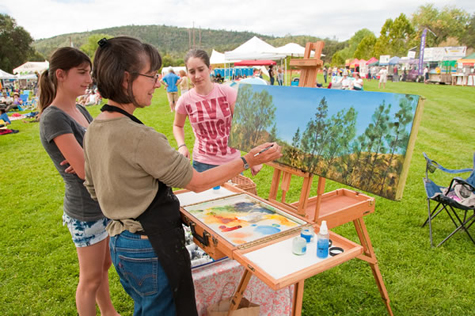
To learn more about American River Music Festival and to purchase tickets, visit http://www.americanrivermusic.org/. There is also a “Fest Best” giveaway that you can enter until Aug. 15, 2012 where two people will win all access passes worth over $500 that includes riverfront camping, entry to all concerts, access to the whitewater rafting trip, free meals and more.
Neal Morgan’s Impulsive New Record a Raw Delight
You’re likely at least a little familiar with Neal Morgan, even if the name doesn’t quite ring a bell right away. Fans of Joanna Newsom or Bill Callahan will recognize the name as belonging to the drummer responsible for holding down percussive duties on their respective tours the last few years, as well as on record–notably Newsom’s Have One on Me, and Callahan’s Apocalypse. But Neal Morgan, the solo artist, is something of an anomalous alter-ego to the drummer heard on those recordings. His 2009 debut solo record, To the Breathing World, premiered a symbiosis of voice-and-drums-only compositions, created largely from first impulses to a cassette boom box in his Portland, Ore., garage. The result was a unique, primal offering of polyphonic voice melodies cooing over sometimes-frantic, sometimes-structured drumming. For his newest album, In the Yard, Morgan has also added a spoken word element, a new passion he hopes his work evolves naturally toward.
The self-released In the Yard is out Jan. 24, 2012, with distribution help by Drag City. Morgan is returning to the Sacramento area on the heels of the release, and took some time to speak with Submerge regarding his muses, his music and his hatred of poetry.
Is there anything special about getting into the mindset of making a solo record for you, as opposed to your more regular gig of drumming for other people and being part of a unit?
Well, everything I do is based on first impulses. So even arrangements I’ve made for Bill’s music or Joanna’s music start as first impulses and then it goes from there. But those first impulses when I’m arranging for someone’s record are based on some amount of conversation in advance–what they might be hearing for a particular piece and talking about the piece itself, and then arranging for that. I guess having a blank slate is the major difference.
What draws you to want to create on that impulse, and to have the final product be a really improvisational vibe?
For my own artistic enjoyment, it’s most fun to just be playing and just to do it without thinking too much and editing while I’m working. I tend to like listening to records where it was clearly the first pass that someone made at something. I always love my friends’ demos more than their records, for example. Really early on, I didn’t know how to make music of my own. I thought, “Well you make some demos and then you make a record.” Why make demos? Just make it. Get in the garage and just start and end up in something. Not always, but most of the time I love the thing that happens first, when I wasn’t thinking, the fresh impulse. But after a certain point, I’m a heavy, heavy editor. I spend 20 percent of the time tracking and then 80 percent editing. It definitely flips; it goes from being this impulsive thing into this heavy cerebral experience.
Of the songs that aren’t improvised like “Father’s Day” or “The Evidence,” how do you reconcile getting into the mindset of arranging or composing those songs that are more structured?
Sometimes the first thing you did is just exactly what it needs to be. Sometimes that’s just what happens. There’s a need for further tracking and re-recording of initial impulses. There are a few moments like that on this album, like “Father’s Day” happened fairly quickly. Those initial impulses really just kind of happened. But there are a couple songs on the second side, one in particular–“Thinking Big”–I’d had that drum beat kicking around for a really long time. I decided I wanted to make a highly structured composition. But then the two spoken word pieces [“On Tour,” “I Stand on a Roof”] happened after I thought the record was done. I went away [on the summer 2011 Bill Callahan tour] and came back, and [the record] was very clearly not done with fresh ears. I recorded those in 20 or 30 minutes. It was exactly what the record needed, and I finished it right then.
Sometimes you have to take a step back and give it space…
Yeah. Do you know the painter Philip Guston at all? There’s a response on the record to him, and his painting is on the cover. I think about him a lot and read a lot of his writings and interviews. He talks about being led during the course of painting, and I think that happens. As these things start to show themselves, they kind of tell you which way to go.
What is your recording process like? I read you recorded some of the album on a boom box.
I have a cassette eight-track, and an old boom box that has a microphone. I have a digital program, but I’m not good at any of that stuff. I just wanna hit record and play. Side A [of In the Yard] is really a foreshadowing of what the next record is going to be. Side B is really a wrapping up, I think, of a lot of the ideas that started with the first album. The next one’s gonna be spoken word.
You mentioned you hadn’t really done any spoken word before. How did you get into that?
[I was] in Atlanta [with Bill Callahan], and I was opening the show there. I had just written something that I really liked, but I didn’t really have a melody or anything like that to sing it. I decided just to say it. I just tried it and I loved it.
Was it liberating? It takes a lot of confidence to release music that’s based on first impulses, but also to speak naked words that aren’t under the veil of a melody and just saying it.
Yes, it did feel that way. I think that maybe that’s what continues to draw me to spoken pieces. The next record will be that, because you’re right–it’s the barest of the bare. That show, for me, was an incredible show. My shows are almost always improv. I’ll just decide to play a song at the drum kit one night, or instead I’ll just sing that song. This was a night where I did four or five really new things that I’d never done.
What topics interest you most to write lyrics or spoken word pieces about? Is that also coming from an impulsive source?
I have a notebook, and I’m often writing. You write when an idea comes or something happens that you think is interesting, or you come upon a way to express something that you’ve been curious about. I do a lot of writing and no editing as I’m writing. Zero. I think that’s so important. Then I will look at it some time later, and sometimes nothing resonates for me so I don’t act on any of it. But sometimes pieces of it will resonate and will connect to other ideas I have at the moment. Maybe drum ideas, or they’ll connect to other things I’ve written. Now my process includes speaking those written words in the editing process, because I’m now thinking that way for live and for the next record–hearing how it sounds and seeing how it feels to speak particular lines and then making editing adjustments based on that.
Like working on cadence and intonation?
Yeah, which is all stuff that I’d never really explored before. But it’s all very rewarding for me right now. I also don’t have a lot of frames of reference necessarily, and I want to stay that way.
In terms of spoken word artists?
Yeah, and just for the written word. I don’t have a lot of writers who are heroes of mine in that form. I’m kind of limited in that way.
You haven’t gravitated toward spoken word artists, now that you really enjoy it artistically for yourself?
No, I haven’t done that. I’ve read some more poetry in the past year, but I like so little of it. It’s really wild. But I also don’t devour it. If I read a lot more, I’m sure I would find a lot more I would like. But I really hate a lot of what friends have given me and said, “Oh yeah, this is a great poet, a great book.” I just don’t like it, like 90 percent of it [laughs]. When I’m working on music, I tend to not want to hear much at all. I just want to keep those first impulses what they are without having other ideas flying around.
Neal Morgan performs at the Milk Gallery in Sacramento, Friday, Jan. 27, 2012. The show is all-ages and has a $5 cover. Show starts at 8 p.m. Morgan will also play at the Haven Underground in Nevada City Saturday, Jan. 28, 2012 (also a $5 cover). For more info, go to Havenunderground.org. Both shows feature Aaron Ross opening.
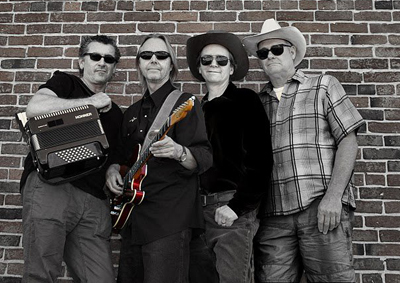
Photo by Kurt Bertilson
Bob Woods Band CD Release/Video Shoot
Sacramento musician Bob Woods goes way back. He started playing music in 1971 with the Sacramento Western swing band Tokpela. He then went on to form the Nevada City club favorite band the Bob Woods Trio. He’s played with a slew of notable cats, including Tiny Moore, Bill Kirchen and Ramblin’ Jack Elliott, among others. Now, his current four-piece band (Woods on guitar and vocals, Pete Kmeto on bass and accordion, Steve Namie on drums and Ray Elzey on pedal steel), is readying their full-length, This Town, for release on March 12, 2011 at Marilyn’s on K. The group will also be shooting a music video that night, so bring your dancin’ shoes and your best moves, and you just might end up in the final cut. Also performing will be Nothin’ Personal and Dirt Nap Band. Doors open at 7 p.m. and tickets are just $10 at the door. If you RSVP ahead of time, you’ll save yourself five bucks. Call (916) 524-9671.