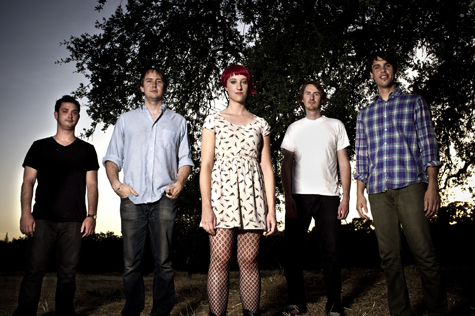
The term noir is typically used to categorize retro crime films with a black and white visual style. We’re most familiar with the aesthetic of these films, but what entices us are the authentic and grim storylines and how the characters are affected. For pop renegade Noirre, we’re familiar with his sound: upbeat electronic pop music highlighted by melodic hooks; but what draws us closer are the stylistic variations to this typically uniform genre and the personal subject matter of his music. Although it may be difficult making sense of this world at times, the young artist is slowly finding comfort in the grayscale of life through his art.
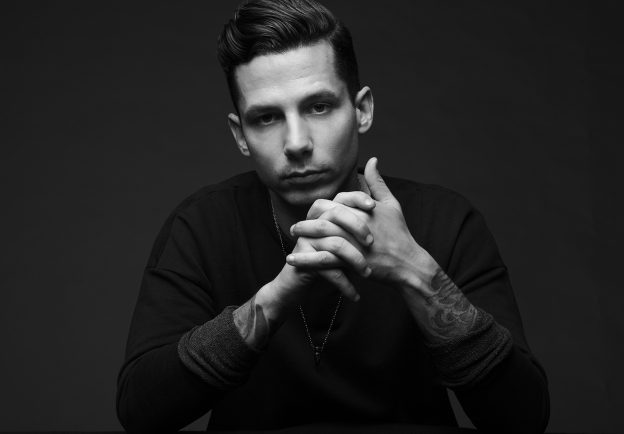
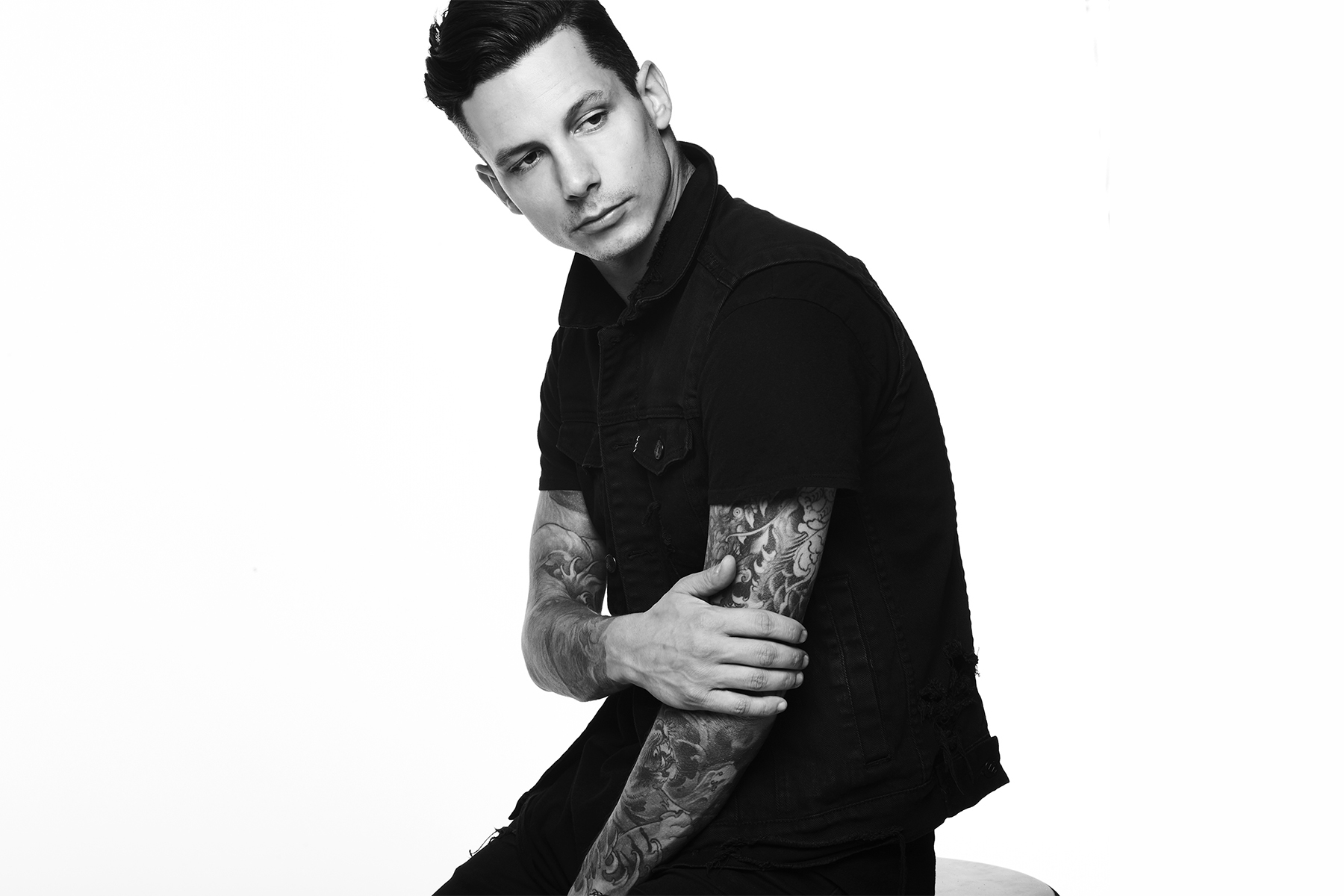
Noirre, real name Devon Murray, began his music career at age 15, recording his first album Nite Tales, eventually releasing it when he turned 17. Born in Rocklin, California, Noirre comes from an artsy family; however, he’s a self-taught musician. He first gained traction in the music industry when a Tower Records owner in Japan contacted him with the intention of buying physical copies of Nite Tales. So, 10,000 copies and a couple hundred cardboard cutouts later, Noirre had established a global audience before he could legally buy a lottery ticket. That was in 2014; a year later, he released Nostalgia, expanding upon his diverse sound. While he may have coached himself through the first portion of his career, the story wouldn’t be complete without mentioning a unique cast of musically inclined characters.
His fellow band mates, The Usual Haunts, are an unusual group of friends. Following the release of Nostalgia in 2015, Noirre recorded Living is Easy with The Usual Haunts and released the album in 2016. This album has more of a Grateful Dead indie jam band feel to it. The music is groovy, the artists are talented, but the unique element that made Noirre a hit in Japan was lacking.
Around the time that Living is Easy was recorded, Noirre and The Usual Haunts rented out a house known as “Spirit House” to establish a community for artists around the Rocklin area. With the new house, graphic designers, musicians, painters, fashion artists and many other types of creative’s were free to live together, make art and empower each other to challenge the status quo. For a group of friends growing up in the suburbs, this was a place to “leave town without leaving town,” as Noirre explained.
“You want to paint a place like that as perfect, but every place has its own issues,” he continued when discussing his hometown. From an early age, he knew that something was unusual about his own perspective in an area like this.
“We’re a bunch of kids from the suburbs who shouldn’t know what we know. We brought ourselves to the fire and tried to burn off the fat,” Noirre said about his childhood.
The metaphorical fat: the lack of individualism in a town like Rocklin, one typically depicted as a “safe and nurturing” place for families, but a town with a sheltered outlook on life.
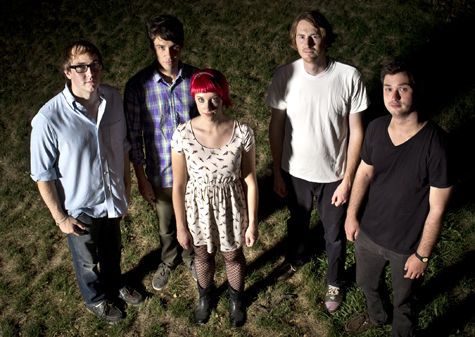
Noirre met CJ Caffrey, The Usual Haunts’ lead guitarist, when he was looking for a band to tour with in high school. “He’s a total wallflower … but I saw something in him … He was wearing a Ramones T-shirt, so I thought that was cool, and he could just play, and he adds a little something different,” Noirre said about the first official band mate. After securing Caffrey as a member, Noirre searched Twitter for another artist, leading him to find Dustin (Dusty) Soares, the first person that he found with a guitar as his profile picture. In a simple yet fateful decision, Soares introduced Noirre to the group’s future drummer, Noah Corbitt. The band was now official and the “Spirit House” would be ground zero for a new style of music that combined the spirit of punk and jazz rebelliousness with the hooks and melodies of popular music.
However, coming from a punk and jazz background made this a difficult transition, and during this time, Noirre experienced an existential crisis around the essence of his music. The Usual Haunts was a way to get away from the “pop” sound that he felt lacked depth. But this was a superficial ideal, one that came from the type of thinking that the “Spirit House” fought so hard to overcome. It was difficult, but he finally came to terms with this new sound.
“Tide rises all boats,” he said when talking about the mutual relationship he has developed with The Usual Haunts. They do what they do best: jam out and perfect the craft. Noirre can be the man behind the dials, turning switches to create an authentic brand of music. This evolution in thought led to his most recent album, Chroma.
Released in 2018, Chroma bookmarks the maturity that Noirre has gained in his music. The sound is more pop-like, but the content isn’t typically popular. Some parts of the album feel like a therapeutic session with the empathetic vocalist. “Freedom flying in my soul, diamond on my nose, Lucy in my bones, fuck where I’m at,” he sings, a new mantra for the Rocklin-born musician.
From a strictly musical perspective, the album is an introspective yet catchy work of art. The album is segmented into three chapters, split by variations of the title track. The first rendition, only 83 seconds in length, is a quick hit of a house-driven sound with a simple melody to level out our musical dose. The album continues with “She” and “Holy Grail”—the more popular tracks to ease the listener into his world. By the time “Chroma 2” hits, the album pivots into a semi-conscious, dream-like state. The hook is the same, but we slowly get pulled further into the album. By the end, “Chroma 3” fully immerses the listener into his subconscious. The song is longer, slower, but just as compelling as the first two versions.
Noirre described this album as a “healing process … an awakening.” Keeping in step with his love for symbolism, the artwork for Chroma—NASCAR-themed font and colors—depicts the feeling you get when listening to the album, racing through his feelings from song to song with a colorful vehicle for music and a man at the wheel driving our thoughts. “It’s ironic, because it’s the most pop thing [I’ve made], but it’s so releasing for me,” Noirre said about Chroma.
The path to success doesn’t come without challenges, though, as Noirre is quickly realizing. Most of the feedback on his music has been positive, but the negative sentiment is slowly surfacing. It’s never easy to be criticized, especially over something as personal as music, but he’s getting used to it.
“If you’re not hated, you’re not loved,” he said.
Pinpointing his audience is another challenge for the young artist. As an artist who crosses multiple genres, he never knows what to expect at shows. At a show earlier in his career at a Rocklin coffee shop, “kids were dancing on tables,” but when Living Is Easy came out, they saw more “cool kids with their arms crossed in the back.” But this, like many things he’s faced in his life, is but a minor challenge for a man who has found comfort in his art.
“I didn’t know what I was … All I knew that was black and white, was my music … my art,” he said, explaining the reason behind picking Noirre as his moniker.
In life, not much makes sense to us, but when you find something that does make sense, you tend to gravitate toward it. Noirre didn’t just shift towards his art, but immersed himself in it, and in turn, is bringing his listeners in closer for a deep look into his thoughts and dreams. His personal film is just beginning. The plot is slowly taking shape. We’re familiar with the format, we’re even familiar with the main character at this point; but what lies ahead is the unknown—a liberating notion for an artist from Rocklin who’s found solace in his craft.
Help Noirre celebrate the release of his new album, Chroma, live at Holy Diver (1517 21st St., Sacramento) on Oct. 11, 2018. The Usual Haunts, a guest DJ and a Stellar Brand Pop-up Shop will also be on-hand. This all-ages show starts at 7 p.m., and tickets can be purchased through Holydiversac.com.
**This piece fist appeared in print on pages 24 – 25 of issue #274 (Sept. 12 – 26, 2018)**
Devin Dawson has had a charmed career in music thus far. Back in December 2014, Dawson was attending Belmont College in Nashville when he and fellow student Louisa Wendorff posted their mashup of Taylor Swift’s “Blank Space” and “Style” on YouTube. It featured the two artists standing back to back near the bend in a tree-lined road. Simple and beautifully harmonic, Dawson and Wendorff easily made these songs seem like their own. The video quickly began turning heads, including Taylor Swift herself, who tweeted out the link to her followers just four days later.
“We just did it because we were having fun, and we had something special that we wanted to share,” Dawson said of the video, which now has well over 35 million views. “We didn’t expect any of that. I’m thankful for her and the way she puts up new artists and sticks her neck out for things she believes in. I’m grateful to have been one of those things. It gave me the confidence to keep stepping forward as an artist.”
Though Dawson came into his own as a student in Nashville, where many country artists go to pursue their careers in music, his roots are in the Sacramento area. Hailing from Orangevale, Dawson attended Casa Roble High School and was part of the metal band Shadow of the Colossus for a few years before he hit his early twenties and decided on a new course.
“I wasn’t as fulfilled with that music or that genre,” Dawson said. “It was fun. I loved it, and I wouldn’t change it for the world. I started to write other songs that took over my heart.”
As it turns out, following his heart has worked out rather well for Dawson. His debut album, Dark Horse, was released in January 2018 on Warner Music Nashville. He’s also graced the hallowed stage of the Grand Ole Opry and now finds himself on the road with country music legends Tim McGraw and Faith Hill.
When Submerge caught up to Dawson, he and his bandmates (Kip Allen on drums, guitarists Austin Taylor Smith and Nick DiMaria and bassist Sam Rodberg, all of whom appear on Dark Horse) were nearing Seattle for a half-day off. We asked him about his burgeoning career, its fortuitous start and about how he and his band’s raw, intimate sound plays in large arenas. But first, of course, we had to get a little nerdy …
Your metal band, Shadow of the Colossus, was that name taken from the video game?
Yeah man, props to you. We would always play that as kids, and we said, “That’s a really metal band name. We should change our names to that.” So we just did.
It’s strange because it’s such a peaceful game.
It is, but it’s also kind of Middle Earth. The subject matter is pretty metal.
Where did you meet the other guys in the band?
We met in college. We all went to Belmont University together. Pretty much most of us met on the first day. A lot of us were in the same dorm together freshman year. We’ve just been jamming ever since.
Belmont College is where you met your bandmates, and it’s also where you met Louisa, with whom you shot that YouTube video that sort of propelled your career forward. Was it an artsy campus?
It’s a really small school. It’s kind of landlocked in a way. It’s a gorgeous campus. There are old historic buildings, and then there’s new buildings. It’s small compared to Vanderbilt, which is out there, too, and it’s a huge, huge campus, which really didn’t appeal to me. Belmont is mostly known as a business school, but they also offer performance, composition, songwriting, which is what I did. I think it’s more about the community of people you meet there, who are just as crazy as you are to be pursuing music for a living. It’s just the kind of incubation period of four years of getting to do it, or the excuse to do it, whatever that means. I met so many of my crew at Belmont, and I had so many opportunities through that school. It’s easier to get integrated into the community in Nashville when you’re going to school as opposed to being somebody who’s moving there and going to bars and meeting people on the street. It’s not as easy to get integrated that way. People aren’t going to want to take you to coffee if you’re just some random person, but if you say, like, “Hey, I’m a student, and I heard you speak the other day. I want to take you to coffee,” they’re like, “Yeah, let’s do it.”
I read in a People Magazine article about you that when you moved to Nashville, you were hoping to focus on songwriting for other artists. Was the mashup video you posted with Louisa the big turning point for you?
Yeah, I’m still writing and that’s still the main focus of mine. I write music every day, but there was this other part of me that wanted to be on stage and share my story and help people through that, but I wanted it to be on my own terms. I had so many people pushing me to do it, but I was like, “Nah, I’m going to keep writing songs and see what happens.” But like I said, the video gave me confidence to say like, OK, somebody likes what I’m doing as an artist in one way or another, so maybe I should pursue this full time. And it gave me the opportunity to say what I wanted to do. I had all these options and opportunities coming from it, and it was like, I can take a jump start in any direction I wanted to go and it was more about figuring out what that was. For me, it was the perfect time to capitalize on the songs I’d written about myself and for myself.
OK, that was the question I was going to ask. I was wondering if the songs on your debut were written generally enough so other people could sing them or if they were more specific about your life and the things you had going on.
Nothing I have on my album was written before the Taylor Swift thing. I tend to skew a little more selfish with my songwriting, just to tell my story. I’m just telling my truth, so at the end of the day, it’s going to be a little more selfish, but I want to tell it in a way that other people can relate to it and put their own story into it. I don’t want to make it so specific to me that someone isn’t going to want to listen to it or sing along, but I’m not going to write something that’s not true. I think it’s important for an artist to play a character sometimes. Not every song has to be exactly about your life, but the ones that are need to be relatable, because a lot of our lives are overlapping. A lot of the things that have happened to me have happened to other people. I think that’s what music is about is realizing that you’re not alone—whether it’s happiness or peril or whatever it is. There’s a song on my album called “Dark Horse,” which is the title track. It’s my story. It’s the things that I believe in, the things that I struggle with. That was a strictly selfish song to tell people who I was, but it’s become this relatable anthem for a lot of different people, when that wasn’t necessarily my goal … It helped me to realize I wasn’t the only one like that, and neither were everyone else. That’s a beautiful thing.
You’re on the road with Faith Hill and Tim McGraw, two of the biggest names in country music. The past couple of years must have been a pretty wild ride so far.
Yeah, dude, it’s freaking awesome. We got to play a couple of shows with them last summer, like four or five … but this summer we’re doing pretty much the whole thing. It’s pretty cool because we already made that introduction, and they’ve become fans of what I do, and they asked us back out. I hung out more with Faith last time, but this time I’ve gotten a little closer with Tim. We’re like playing football, which is crazy. Like you said, they’re superstars. They’re people I grew up listening to … To have that support, again, it keeps giving me this confidence in some way or another I’m doing something right and I should keep going. It’s fucking fun. It’s a blast to be on tour with them. It really is a dream come true.
You’re playing arenas like Golden 1 Center on the tour. Is it daunting to play in such a large space?
I don’t know man, I think I get more nervous with friends and family and intimate smaller things. When I look out, I can’t really see much [laughs], but you definitely feel the energy of that many people. It’s been cool to flex that muscle and get more used to entertaining a crowd that size and what they react to. I think my first reaction was to play louder and be crazier, but the things that make more of an impact in a room like that are the things that are more intimate. When you tell a story to 20,000 people, they don’t expect that. They expect the jumping and screaming, but when you tick it back and make them lean in a little bit, I think that’s become, for me, the more powerful moment.
Check out Devin Dawson live at Golden 1 Center in Sacramento supporting Tim McGraw and Faith Hill on July 22, 2018. Tickets start at $50 and can be purchased through Golden1center.com. For more on Devin Dawson, go to Devindawsonmusic.com. You’ll also be able to catch Dawson live at the Homestead festival at Quarry Park Amphitheater in Rocklin on Aug. 18, 2018. Tickets for Homestead are available at Homesteadca.com.
**This piece first appeared in print on pages 12 – 13 of issue #270 (July 18 – Aug. 1, 2018)**
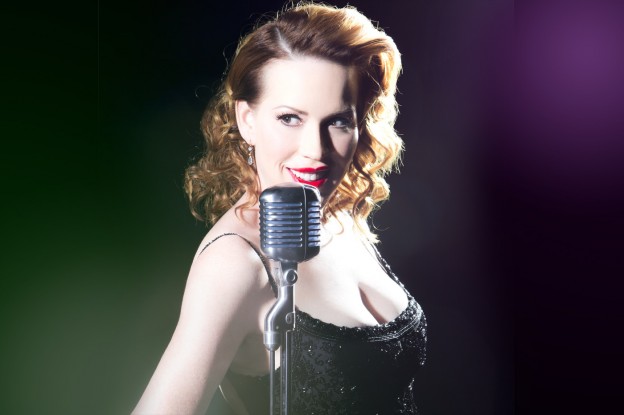
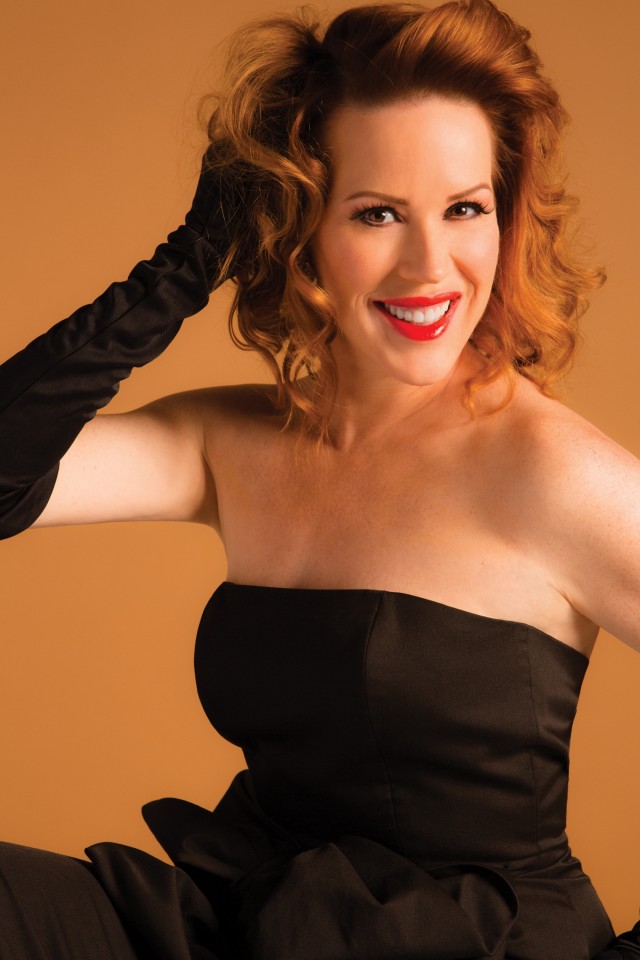
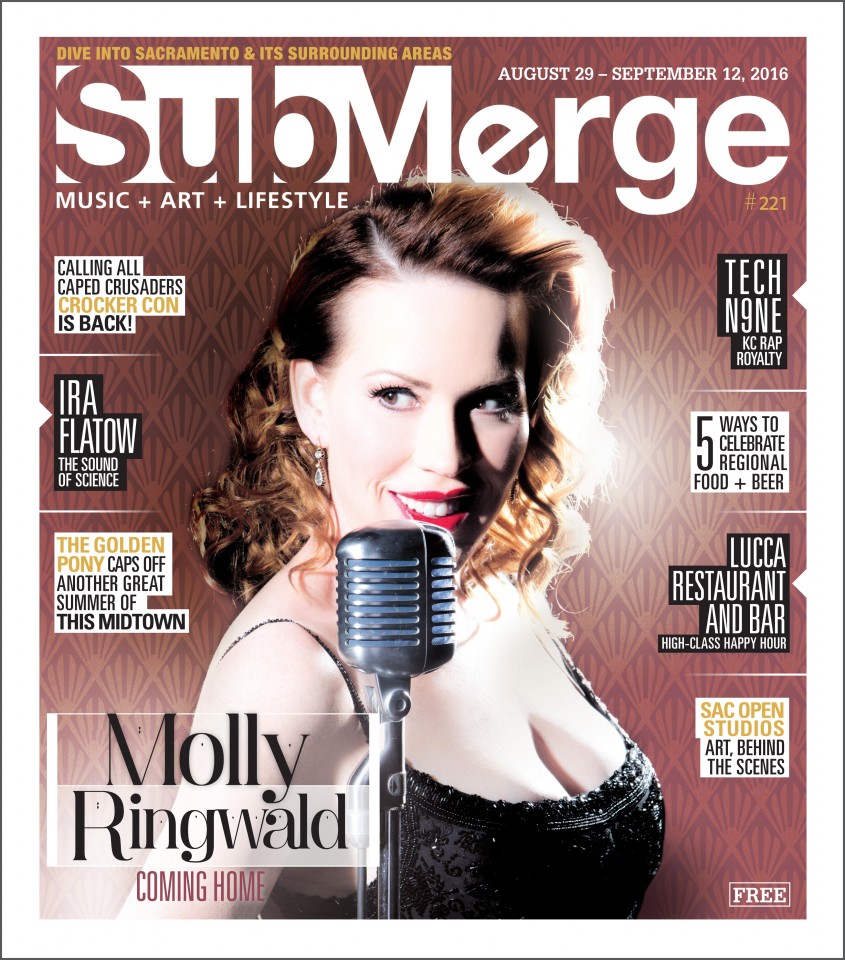
Roles in the films Pretty in Pink and The Breakfast Club pretty much granted Molly Ringwald permanent icon status. But before she became a whole generation of teen boys’ first crush, she was a singer. From right here in Sacramento, in fact.
Daughter of local musician Bob Ringwald, Molly was weaned on jazz from an early age.
“I think singing was almost pre-verbal for me,” she told Submerge in a recent interview. “Apparently … before I could even talk, my brother noticed I would make up songs and I would be singing to the animals. It was something I was always doing. When I was 3, I started to sing with my dad. My first performance in front of an audience was at the California State Fair. I still remember it. I did a lot of performing around the Sacramento area … It was something I always remembered doing and enjoyed doing.”
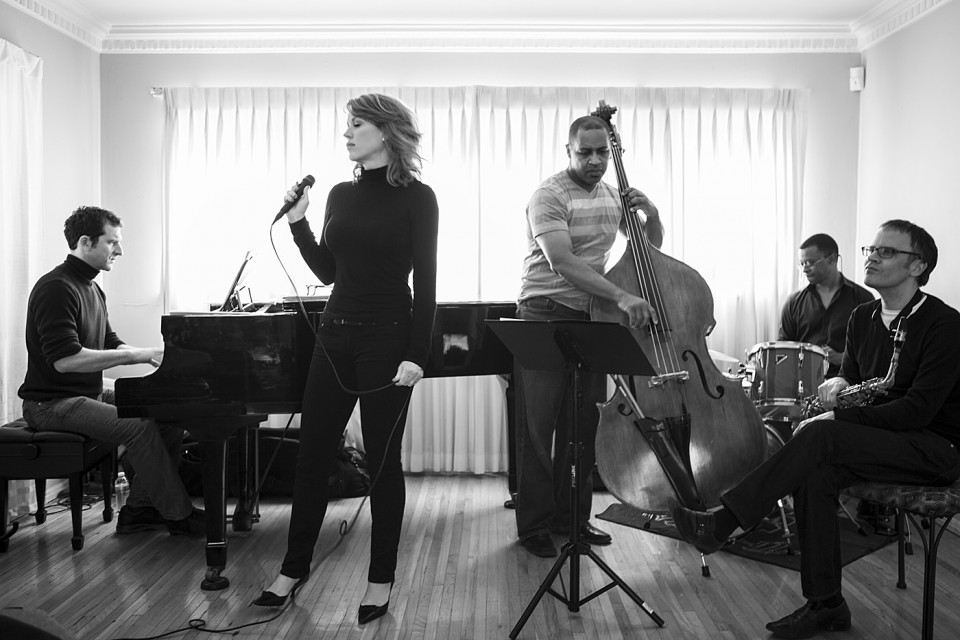
Though she recorded an album with her father when she was a child, Ringwald released her adult debut, Except Sometimes, a warm and romantic collection of standards for stalwart jazz label Concord Records, in 2013. She also recently finished recording a live album at New York City’s landmark club, Birdland, and has a few shows lined up for this coming September, including a homecoming of sorts at Quarry Park in Rocklin, where she will be performing with her father.
“My dad is much more traditional than I am,” Ringwald said of her and her father’s differing takes on jazz. “I like old-timey jazz. Anybody who listens to jazz or sings jazz knows it’s not contemporary pop music, but I think my sound is more hard bop and my dad is more straight-up Dixieland.”
In anticipation of her upcoming concert, Submerge spoke with Ringwald about a range of topics from growing up in the Sacramento area to passing her love of music to her own children. And she didn’t even seem to mind when this writer totally geeked out and gushed about how The Breakfast Club changed his life. I mean, it really did. Thanks, Molly.
I saw that you grew up in the Roseville area. Do you get back there often?
My parents live above Sacramento in the Gold Country. I don’t get back there as often as I like, but I usually come around Thanksgiving. My kids were just there visiting their grandparents, and I have a lot of family in Sacramento.
Sacramento has really grown a lot in recent years. Have you noticed a lot of the changes over the years?
Oh yeah, definitely. When I was younger, the theater, the Music Circus, was just sort of this old tent. It wasn’t really very good. I loved going, but it’s become a real theater now. And of course the venues have grown, and there’s fashion, everything.
You usually perform songs out of the Great American Songbook, but you’ve written books in the past. Have you dabbled in your own songwriting or lyric writing before?
A little bit, but the writing that I tend to do right now, I’m still focused on fiction. I’m interested in writing music, but there are a lot of different things I do. I sing, I act, I write books and essays. There are so many things to do. There are so many things I want to do, it’s just a matter of finding the time. Also, my family just bought a house, so we’re fixing up the house and unpacking boxes. There never seems to be enough hours in the day.
I think moving must be the most stressful thing in the universe …
Yeah, that’s what everyone says. I think it’s right up there with divorce. I would say moving is much worse, though [laughs].
Yeah, I heard it was in the top three: Death, divorce and moving.
Having a teenage daughter should be up there too.
That’s probably in the top five. Your father is a well-known jazz musician, and you got into jazz through his influence, I would imagine. Have your own children shown interest in music?
They’re all very musical. My elder daughter—I had a ukulele that I’d always intended to learn and I didn’t get around to it. It was just in the closet. She found it and within two weeks she was walking around playing ukulele. She’s very musical. They all can sing really well, and they all have their particular tastes in music. They’ve listened to jazz because of me, but I think they’re all going to find their way into music, and they all have their distinct tastes.
Do you have your fingers crossed that they’ll get into jazz and sort of carry the torch?
[Laughs] Um, I really don’t care. I’ve introduced them to the music, so I think they’ll know about it. Like with me, jazz is my comfort music. Even though I listen to all kinds of music, I think that’s what jazz will be like for them—whenever they listen to it, it’ll make them think of me.
Did you ever want to pursue a different genre of music since your dad was so established as a jazz musician?
Oh yeah. During my teen years … I sang it a little bit with my dad, but I was really into more contemporary music. At that time, I never really thought that I would be performing jazz professionally at all. I think when you’re a teenager, you want to go and do your own thing, but I found my way back to it, of course.
When your movie career started picking up steam in the ‘80s, there were all these big pop stars like Cyndi Lauper and Madonna. Since you had a singing background, was there any outside pressure like, you’re becoming such a popular figure in all these movies that are striking a chord with teenagers, let’s try to capitalize on that?
It was sort of a unique time. Like, in the golden age of Hollywood, people were expected to sing, dance and act and be a triple threat, and it’s really sort of come back to that now. But when I was coming up, it was not done that much. The only person I can think of who was doing that was Barbra Streisand. I really thought at the time that I couldn’t do both. I had to choose one, and I chose acting. It’s kind of silly, but that was the time. I sang with my dad’s band and I also sang with a rock band called the Ray Bops, and I would do special things like that, but I was never encouraged to record my own album as a teenager. It wasn’t the direction I was going.
I remember around that time that Eddie Murphy made an album, and there was this attitude, like, Oh, now he’s got to make an album … Like, he’s already a big movie star.
It was looked at like a vanity project. Even if people could sing, it was like oh yeah, Bruce Willis is recording an album. It wasn’t taken seriously.
Was that something that influenced your decision to not pursue music?
Yeah, I guess. It wasn’t something I was into. I think my interests at the time were elsewhere. In the back of my head, I thought, “Oh, I’m going to put together a jazz group,” but I didn’t know I was going to record or anything. It was just something I was going to do under the radar, for fun … But it’s kind of hard, once you’re a celebrity, to do anything under the radar. It turns into something else. But it’s been great for me. It’s been really enjoyable. Even though I’ve been singing my whole life, even just from my first album to the one I just recorded, I think I’ve grown a lot. It’s been a real interesting musical journey for me.
I’m sure you’ve gotten this a lot, but The Breakfast Club was one of those movies that really shaped my life.
I really like it, too.
It’s become such an iconic film, but when you were making it did it feel like it was going to be something special?
I thought it was really special. Of course, I didn’t imagine that I’d still be talking about it 30 years later, but I loved the script. I thought all the actors who were in it were really good, and we were good in it together. It was a movie that I really wanted to see, but you never know if what you like is going to catch with a larger audience.
Do you mind the fact that people still bring it up or would you rather not talk about it?
It’s fine. I like to talk about other things, but … I realize it’s such an iconic movie. I know people have a deeper connection to it that goes way beyond me … I’m cognisant to the fact that there’s still a lot of interest in those movies, but it’s not all I want to talk about, which is pretty understandable since I’ve done a lot of things since then.
Just recently you came out with a film, King Cobra, which was at Tribeca Film Festival this year.
Yeah, and I think it’s having a general release in September.
Can you talk a little about that one? It’s about the murder of a gay porn producer, so that must have been a pretty striking script.
It was based on a true story. It was based on a Rolling Stone article about this murder that had happened. I just thought it was a really interesting treatment of this seedy world, but the director really managed to humanize these characters. I play someone who doesn’t have to do with the industry. I play the sister of the main pornographer, who’s played by Christian Slater. It was a good project to be involved with.
See Molly Ringwald perform live at Quarry Park in Rocklin on Sept. 17, 2016 with her father, Bob Ringwald, and The Peter Petty Revue. Tickets start at $39 and can be purchased through Rocklin.ca.us (just click “Special Events”), or go to Iammollyringwald.com.
“We all kind of sound alike …” one of the young women of the pop/country trio Auburn Road admitted during our interview, as this interviewer, sheepishly, had difficulty differentiating their voices over the phone. That’s one possible reason why their voices soar to such great heights when they sing together.
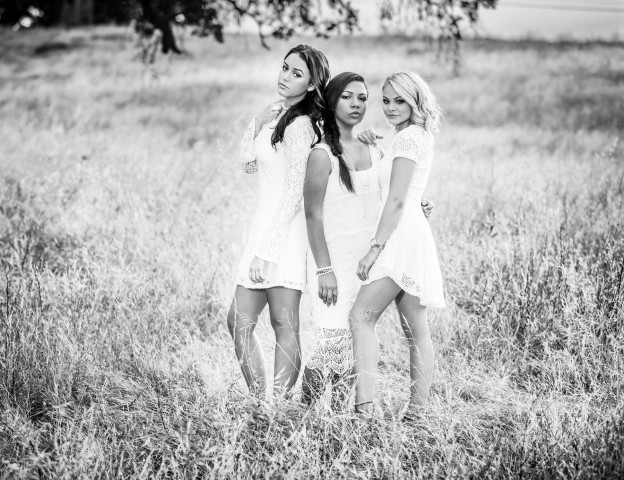
Paxton Martin, Alicia Paulson and Kristen Brown are more sisters than friends. The three practically grew up together in the surrounding Sacramento area (Elk Grove and Roseville), both literally and vocally.
“Me and Kristen didn’t know, but we actually grew up together when we were like 4 years old,” Paulson recollected in a recent interview with Submerge. “We had a friend in common, and we would always go to her house together and go to the parties together, and we didn’t even know. Our parents didn’t even figure it out until we were older and we were like, ‘Oh! Hey!’ All of our families are really close.”
By age 7 or 8, Paulson says, the trio was enrolled in music classes at the same singing studio. They cut their teeth performing as part of a larger group called Pop Academy.
“We got to do a lot of fun things through there and get comfortable with performing,” Paulson said. “We got to go to Disneyland to perform. It was a great opportunity.”
The trio’s bond carried on into their teen years. In fact, two of the girls (Paulson and Brown) just graduated high school this spring. Martin is scheduled to do the same later this year in December. (“I’m actually graduating early,” she said with a hint of pride.) However, it was about two years ago, according to Brown, that Auburn Road really started to come to fruition.
One catalyst for the group’s formation was meeting manager Michael Anderson, who Brown said the girls met in 2013 through a choreographer they were working with at the time.
“He’s done everything for us. He’s done everything on the album and made all the decisions on the album,” Brown said, referring to Fancy, Auburn Road’s debut EP, which was released on Jan. 16, 2016. “He went down to Nashville when they recorded the music for us.”
Though the girls recorded their vocals separately from the music, Brown, Martin and Paulson had serious country music clout behind them in the studio. From the crisp snap of the opening drum hits on Fancy’s opening track, the EP’s title song, it’s clear that this album isn’t just a hastily cobbled together demo, but a polished, professional product, aimed at catapulting three talented young people toward a bright and promising career.
Backing Auburn Road on Fancy are members of Jason Aldean’s band, bassist Tully Kennedy, guitarist Kurt Allison and drummer Rich Redmond, who give these catchy and memorable pop/country songs serious punch, and a bit of a rock ‘n’ roll edge.
“When we were writing music for the album, we knew that we needed a band,” Brown said about enlisting help from these seasoned pros. “After a lot of praying, we got really lucky. We had a couple contacts in common who hooked us up with them.”
But it’s the voices of Auburn Road that are really upfront, as showcased in the stirring power ballad “Love of My Own,” which seems perfectly suited to raising your cigarette lighter at an outdoor concert to.
Photo by Lavenda Memory
It’s the melding of the trio’s voices that are the real hook here (as well as some kick-ass guitar solos), but that shouldn’t be much of a surprise. Though Brown, Martin and Paulson are young, they’re no strangers to singing with one another. Since they started at such a young age, they could almost be considered veterans in their own right.
“I think it really helps that we grew up together, singing together,” Paulson said of Auburn Road’s striking vocal harmonies. “I think it’s harder when you’re at this age, and you’re put together as a group and you don’t know each other. We always seem to be on the same page, so it’s really nice, especially when it comes to our harmonies, because we can read each other’s minds.”
Though their vocal performance may border on intuitive at this point, the members of Auburn Road are eager to learn and grow as musicians. When Submerge contacted Paulson for our interview, she was on her way home from drum practice. Brown and Martin also reported that they were learning to play bass and piano, respectively.
“We’re all trying to learn instruments right now.” Paulson said. “We’re not onstage performing with them quite yet, but eventually we’ll throw a couple of things in there into the show. It’s not necessarily what we do, but we would like to be able to play a little bit.”
“Right now we’re in search of a band in Sacramento,” Martin added. “It’s really hard to find a younger band in Sacramento, and that’s what we’re looking for right now. Right now, we’re performing with backing tracks, which is fine. It works out OK … for now …”
Auburn Road just recently had another dose of music industry education when they spent time during the Independence Day holiday week in Nashville. Submerge spoke to the group prior to their trip to Music City, and they were looking forward to sinking their teeth into the vibrant scene there.
“We have a bunch of meetings set up, a photoshoot in the works, a couple of writing sessions,” Martin said. “We’re just going out there to network and meet people and get a sense of the music business out there.
“We’re still young in life and in music,” she later went on to say. “Just to be around people who know so much and can show you different things with writing and how to take a song from one perspective and do it in another, so I think we just want to learn. We want to be great artists, and in order to do that, we need to learn from great people.”
With high school almost behind all of them, the trio has its sight set on a career in music. Fancy is an emphatic first step forward toward that goal.
“Our main concern right now is music,” Martin said. “One of our main goals is to live in Nashville and be able to do our music there. Our goal as a group is to tour and hopefully win a Grammy one day and travel the world singing for a bunch of different people.”
While a Grammy may still be a little ways away, local fans can check out Auburn Road at the upcoming Country Fest at the beautiful Quarry Park amphitheatre in Rocklin, where they’ll be sharing the stage with American Idol finalist Kree Harrison and JT Hodges. When asked if it felt surreal to have had so much success and to be performing with people they admire at such a young age, Paulson answered with unflinching confidence.
“It’s a little taste of the future for us.”
Country Fest, featuring Auburn Road, JT Hodges and Kree Harrison will take place July 23, 2016 at Quarry Park in Rocklin. Tickets start at $25 and can be purchased through Rocklin.ca.us (just click “Special Events”). Auburn Road’s Fancy is available online through iTunes, CD Baby and Amazon. You can also purchase the EP locally at Dimple Records. For more on the band, go to Auburnroadmusic.com.
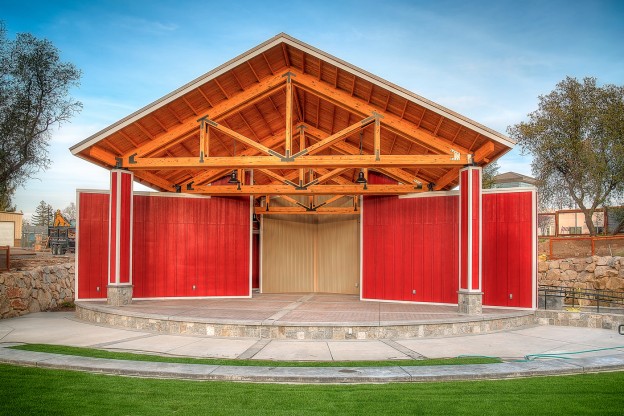
With the official opening of their new 1,000-seat outdoor amphitheater at Quarry Park just days away, the city of Rocklin is looking to smash the age-old notion that there is nothing to do in the suburbs. And judging by how the first two big concerts there are already sold out—Grammy nominated artist James Bay on April 20 for the Cap City Concert Series, and The Marshall Tucker Band on April 29 for the kick-off of the Concerts at Quarry Park Series—we’d say that Rocklin and the surrounding communities are looking forward to more large-scale live music events coming their way.
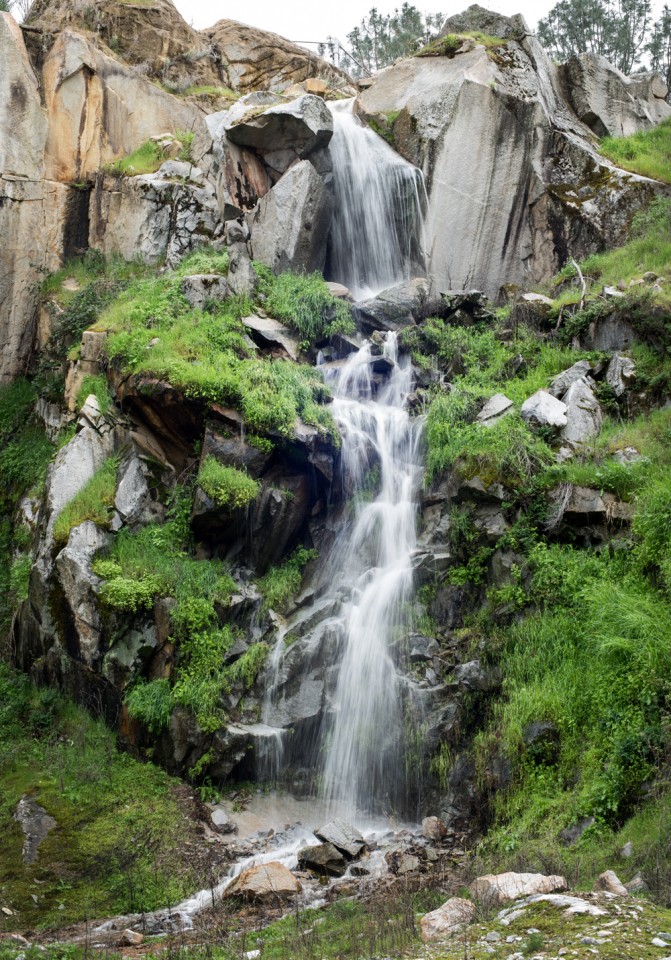
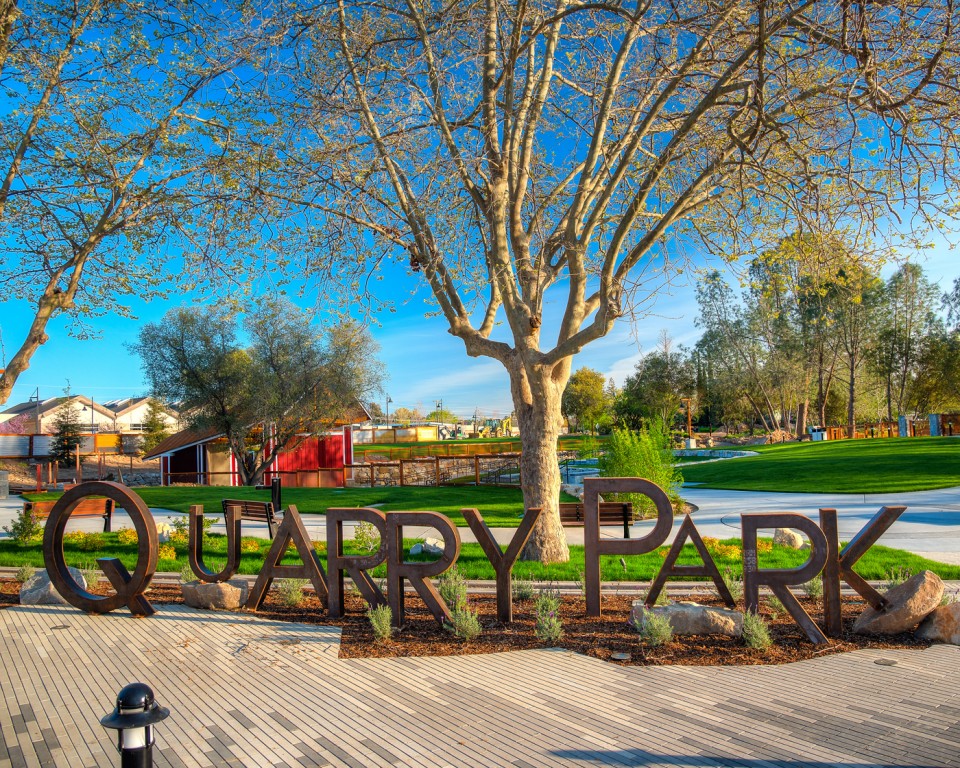
Submerge got a private tour of the $2.5 million first phase of Quarry Park in March, and let us tell you, it is legit! There are two stages, the main area seats the 1,000-person crowd on a beautifully tiered grassy area. The second stage is up and off to the side in an area that looked like it was primed and ready for food trucks to pull up, beer tents to start pouring and local vendors to start selling. The whole place is stunning, really. There’s a serene lake, green grass and mature trees all around providing shade. There’s even going to be an 8-story waterfall flowing into the Big Gun Quarry just behind the amphitheater. Yeah, a freakin’ waterfall, people! The history of the park is fascinating, too. Back in the day, granite from the quarries in the area was shipped out to be used in historical buildings all over the state, including the State Capitol. Future phases of the new Quarry Park project will include nature trails, rock climbing, zip-lining and other features. We believe Quarry Park will truly succeed at becoming what the city of Rocklin hopes it will: a gathering space for community events that locals can be proud of, and that can draw in people from outlying areas.
If you didn’t score tickets to either of the first two sold-out shows, don’t worry. On Saturday, April 16, 2016 there will be a free Community Celebration from noon–4 p.m. with kids activities, live music, a dedication ceremony, food and more. The Concerts at Quarry Park Series will run this month through September and will feature such headliners as Papa Doo Run Run (May 21), Tim Flannery and Lunatic Fringe (June 18), a giant Country Fest (July 23), Sons of Champlin (Aug. 13) and Molly Ringwald (Sept. 17).
Rocklin Band Wife and Son Release Their Debut Album
Rocklin-based indie pop band Wife and Son is a shining example of why you shouldn’t take yourself too seriously. Formed in 2009, the now five-piece group was originally the brainchild of guitarist/vocalists Richie Smith and Robert Brundage. They had been making music together for a while in a series of what they refer to as “joke bands,” until they started taking music more seriously under the moniker of Wife and Son. This That and the Other, the band’s debut album was released digitally in April but it is now ready for its official physical release.
Smith and Brundage have been friends for about eight years, Smith says, and were introduced through his little sister Alexis. Smith, a Grass Valley native, and Brundage, born in Monterey, Calif., but raised in Folsom, played in a variety of bands before entering into Wife and Son. These early bands included The Outrights and Polar Bear Filth. These outfits garnered some coffee house gigs, but Smith says that they were strictly just for fun. However, though they say that none of the songs on This That and the Other find their origins in the Polar Bear Filth catalog, those formative years of goofing around with music have played some part in where they’re at today.
“I feel like the joking around allowed me to not take anything seriously,” Brundage says. “That way, you’re not afraid to try some crazy harmony that’s kind of flashy or too pop-y–just being willing to try anything, even if it might sound like something that you told yourself you’d never write.”
Funny enough, Wife and Son also started out as a joke but quickly morphed into something much more. With Smith’s wife Mars Wheeler (synthesizer/vocals) rounding out the original lineup, the group immediately started demoing songs.
“We started writing songs, and we really liked them, so we decided to actually try and do it,” Brundage explains.
“The goal was to be as original as possible,” Smith says of the band’s early writing sessions. “We all are big fans of pop music and good pop songwriting, like the Beatles as one of the best examples, but we also wanted to forego the classic pop song formula. We wanted to write freely and not necessarily go with the typical verse-chorus-verse format. Those are the things we would talk about a little bit, and we just wrote these song poems, almost, and put them together.”
Those demos stuck, however. Brundage says that all but one of the songs from the band’s original demo have found their way to This That and the Other, though they have evolved considerably since thanks to playing and gigging them a lot. The additions of bass player Josh Quimby and drummer Luke Arredondo also had a huge role in the songs’ maturation process.
“How we wrote the album was we wrote all the parts,” Smith says. “We composed the bass lines and we composed the drum parts as well. We’re not drummers. We can play a little bit, but we composed in our minds what kind of beat patterns we wanted to go with the songs. We presented them to Luke, and he would make it make sense.”
“He’d make them actual drum parts,” Brundage adds.
This That and the Other was produced and recorded almost entirely by the band. Other than the drums, which were tracked at One Eleven Recording and Music Studio in Roseville with the help of Kevin Prince, the album was recorded in Smith’s apartment using Logic and Brundage’s Macbook. It was an arduous task, but the band is happy with the result.
“We worked on the record over the course of a year, off and on,” Smith says. “It was a long process. There was a lot of stuff we had tracked that we ended up retracking. Honestly, we’re glad to be done with that process. We learned a ton on this first record.”
This being their first album, a lot of trial and error went into the process. Brundage says that some of the songs were recorded up to eight times.
“I was basically learning how to record while we were recording, and we were all learning about production too,” Brundage says. “It was like this huge music school on how to make a record.”
You’d probably never realize the meticulous nature of its recording by listening to This That and the Other. Opening track “Sea Salt” sets the tone with its carefree structure and generous use of reverb. The song feels loose, but in a good way–in a way that speaks of a band just having fun with the music and not coming off as guarded.
“Sea Salt,” one of the first songs the band demoed, was written in a very free-wheeling manner.
“We just hit record and Mars and I started singing,” Brundage says. “We just started freestyling, and we liked what we had to say.”
“Rob and I were just jamming on guitar parts,” Smith says of the song. “We wrote the guitar, bass line and drum part all in one sitting, in about an hour, then Mars woke up from a nap to lay down the vocal.”
Other songs came from a more structured writing process. The Brundage-penned “Little Baby Hurricane” had more intent behind it.
“I just sat down one day, and I just wanted to make a tribute to ‘50s doo-wop,” he says. “I sat down and pretty much wrote the whole thing and brought it to Richie and Mars, and they put in their two cents. Richie added this great guitar solo at the end.”
In this way, Wife and Son mix up their approach to writing. Smith, Brundage and Wheeler all split songwriting duties (as they do with vocals), sometimes writing separately and presenting the songs to the rest of the group, and other times writing together in the same room. The different approaches may have been a reason why This That and the Other, aptly titled, has such a fresh and varied sound.
Though the album is only just recently completed, Smith, Brundage and company have their sights set on the future of the band. Smith says that the band already has enough material on tap for a second album, which they also hope to produce themselves.
“We like the creative control,” Smith says. “The fact that we learned so much on the first record, we’re actually excited to work on the songs for the second record.”
Smith says that the lessons learned will make Wife and Son’s recording process faster next time around. He says the band will set deadlines for itself and work on being more efficient. It almost sounds like they’re taking themselves seriously. If Wife and Son’s exciting debut is any indication, that’s definitely not a bad thing.
This That and The Other’s release show will take place at The Press Club in Sacramento on June 28, 2012. In addition to Wife and Son, The Tambo Rays and Sicfus will also perform. If you’d like to listen to the album before you buy it, go to Wifeandson.bandcamp.com and of course, you can keep up with their latest happenings by liking them on Facebook (Facebook.com/wifeandson).
Sacramento’s genre-smashing math-rock trio Tera Melos is hard at work recording a new full-length record, a notion that excites Submerge very much. Their 2010 release, Patagonian Rats, scurried its way onto our annual year-end list, they snagged the cover of issue No. 67 and most recently they co-headlined/melted faces at our 100th Issue Party at Ace of Spades in December. The yet-to-be-titled album is being recorded at Earth Tone in Rocklin with longtime friend Pat Hills (who plays in Bastards of Young and has been in other credible local bands over the years including Hanover Saints).
“He’s like our go-to guy,” guitarist/vocalist Nick Reinhart told Submerge, pointing out that Hills has added his touch to every Melos record in some form or another. “We all grew up playing in punk bands together. We know him really well, he’s super familiar with our musical personalities.”
In the end, Reinhart predicts there will be 13 songs on the album. “To me, it’s a progression from the last record,” he said of the new material, all written within the past couple months. “It does not sound like the last record. It sounds like the record our band would make after Patagonian Rats, if that makes sense…Without giving too much away of what it’s sounding like, I just definitely think it’s like, ‘Oh wow, these guys stepped it up and did something even more different this time.’”
Reinhart said to expect an early 2013 release via Sargent House. In the meantime, catch Tera Melos opening up the fIREHOSE reunion tour dates (including Harlow’s on Thursday, April 5, 2012) before they head overseas for two months in May for their first ever “proper” European tour. “We’re finally making it over there for reals!” To learn more about the band and view tour dates visit Facebook.com/teramelosmusic or Teramelosmusic.com