At the dawn of the decade—a blink of an eye ago, and yet seemingly a bygone era—South Florida’s Surfer Blood seized the indie blog zeitgeist with their brand of perpetually sunny, reverb-drenched power-pop, spearheaded by singles like “Swim” and “Floating Vibes,” the choruses of which are still echoing in fan sing-alongs, TV and video game soundtracks.
Since then, however, the tide has turned in on itself time and again, almost on a yearly basis. From being dropped by Warner Brothers Records following their sophomore album Pythons, to lead guitarist Thomas Fekete’s re-diagnosis and succumbing to cancer between their last two releases, Surfer Blood’s trajectory has been constantly re-routing since it first began. On the music front, they’ve faced a similar situation to other bands of an “endless summer” outlook that debuted around the same time (Best Coast, Wavves, etc.), who have had to contend with the storm clouds of the increasingly divergent and sometimes grim-faced modes indie rock has taken.
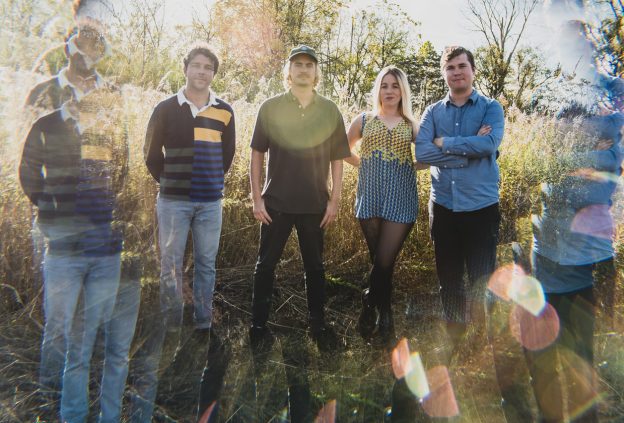
All of this says more about the capricious whims of the novelty-hungry hype machine than the artistic evolution of the band. The past few years has seen Surfer Blood regroup to produce some of their most interesting, well-crafted statements. It may be a gentler, more reflective, fine-tuned beast than the one encountered in the brazen wash of their first two albums, but the Surfer Blood of 2017 (two original members, John Paul Pitts and Tyler Schwarz plus two new additions, high school friends Lindsey Mills and Mike McCleary) has managed to stake out a new swath of territory to explore, with their most ambitious songwriting to date.
Whatever clouds may have hung over the release of their fourth album, Snowdonia, back in February, the result was a faithfully balmy, yet more melodically complex installment in an oeuvre marked by insuppressible optimism. Aside from a decidedly psychedelic flavor on tracks like “Instant Doppelgängers” and the title track (their longest song at nearly eight minutes), the clearest indication of a change in artistic latitude is the stark, understated Antarctic photography that serves as the album’s artwork. If the group has come to a similar place of icy stillness and reflection, then it is only on the route to warmer climes.
In October, they issued their latest release, an album of cover songs fittingly titled Covers, which showcases every facet of Surfer Blood’s sensibility, and confirms their efforts to embody a mood rather than a genre—the coy romanticism of New Zealand indie band The Verlaines, the unkempt rock exhibitionism of Mudhoney, the hyper-pop surge of Outkast’s “Hey Ya!,” the nostalgic chug of Polaris’ “Hey Sandy” and the latent unconventional inclusions by Pavement and Cream.
On Jan. 20, 2018, a string of West Coast tour dates will bring Surfer Blood (once again) to Blue Lamp in Midtown. In preparation, we recently dropped a line to John Paul Pitts to talk about the role of the band’s far-flung influences, finding solace in a time of tragedy and transformation for the band, and settling into the creative long-run.
I wanted to talk about influences, because the most recent release from Surfer Blood is a covers album. What do these songs mean to you? Had you always planned to do a covers release at some point?
I’d say they’re artists who a lot of them were around during my formative years as a young musician, like The Verlaines and all the Flying Nun Records bands that I got into. Some of the songs we’d already recorded for fun, like “I Melt With You” by Modern English, and over the course of six years or so, they start to pile up, and we realized we had enough material for an LP. Mike [McCleary] the guitarist has a studio space—many of them we had done in band practice before. All of the songs sound really different, recorded at different times in different spaces, with different equipment, with different band members—just sort of all over the place. If nothing else, it’s a nice trip down memory lane.
You’ve said you went to a more arts-oriented high school. Would you say you were introduced to “indie” or “underground music” at an early age? Did you have any older siblings that influenced your music taste?
I think I was into what most kids around me at the time were into—At the Drive In, a lot of emo and some older punk stuff, a lot of the DC hardcore stuff. I was messing around, playing a little bit of guitar. I didn’t have any older siblings, but I did have an older friend who was very influential. He gave me a copy of You’re Living All Over Me by Dinosaur Jr. when I was in ninth grade, and it was like the mother lode, because it still had the same sort of edginess as the contemporary stuff I was into at the time, but it was also sensitive, and the singing was softer. The guitar solos were very melodic and emotional, and I really connected with that. I just started writing songs in that vein. You know, sincere and a little bit sappy, lots of layers of buzzy guitar, fast tempos. This was when all of the pieces connected for me as a songwriter, so I’m very grateful to my older friend for introducing me to such great music. I started taking it all in, and here I am, 15 years later.
There’s more of a psychedelic bent to Surfer Blood’s latest work. What influenced this change?
I’m always being exposed to new music. When Thomas [Fekete] was alive, I was very lucky to have somebody who was seemingly a bottomless well of knowledge. He could talk with authority about most forms of musical genres and movements. Most of it is just being around people who are smart and have really good taste, and aren’t afraid to tell you what their opinions are. I guess for Snowdonia, I was listening to a lot of Can, which was one of Thomas’ favorite bands. I admire their level of improvisation, which is something I’ve tried to cultivate with this band in the past few years, turning the live show into something more extended, jammier and dynamic.
I think [on Snowdonia] there was a deliberate focus on not coming up with an idea and automatically assuming that it had to be a straightforward pop song, and I’m really happy with the result. When you’re brainstorming, I think it’s probably a good thing to not have too many preconceived plans or notions about the ideas that are coming to you.
The time period of Snowdonia’s recording and release was heavily affected by Thomas’ passing.
It’s definitely put everything into perspective, that life is so short and fragile. You can only take all of this so seriously. At the end of the day, the music has to be fun, and it has to be enjoyable … Now, it’s so clear that everything happens for a reason. If I hadn’t met Thomas, I might still be in Florida working at a restaurant or doing some other job. This was always my passion to be writing and recording music and touring. You know, we got to spend the golden years of our lives traveling around the world with our best friends and playing music together. In hindsight, all the work was its own reward. And I’m really grateful to have gotten the opportunity to be on the level that we’ve been able to.
You’ve said that the idea for “Snowdonia” came from a dream where a muse-like figure—a wintry snow-woman—came to visit you. Why do you think she came to you?
Probably just because I needed to be comforted by something at the time … I was making demos for this album, Thomas had left the band months before for health reasons, and Kevin, who had been in the band for years and who I had known since we were kids, was leaving the band and moving away to have a more stable adult life. I was back in my apartment again writing these weirder songs, wondering if it was a huge mistake, or if I was on the right path. There was something about that dream that tried to help me get the ball rolling, and this long, winding song, “Snowdonia,” came out of it. The character represents the solace, and ironically, the warmth of committing to something again.
What was it like writing songs alone for the first time?
It was extremely hard because, I guess like a lot of millennials, I like to get affirmation super quick as soon as I get an idea, and there was just crickets, you know? But I’ve been trying to stop being so much of a perfectionist and work and rework the same songs over and over, and unfortunately that’s my nature.
After eight years and four albums, what’s the most important thing you’ve learned about yourself/being in a band?
If there’s one thing I learned about this, it’s that maybe I don’t do too well under pressure. When we were on a major label, working with really notable, talented people with lots of experience, I don’t know if that’s great for me, actually. But now, even though this record was challenging, I think things started coming my way. As I get older, I realize I’m more private and introverted than I thought I was when I was younger. Going from 2010, just being a community college student to someone traveling the world and constantly being interviewed, it was more shocking than I thought it would be. I’d been a bit optimistic in thinking I could bite off more than I could chew. The whole thing was a learning experience.
Would you say the current iteration of Surfer Blood has found its footing? Has your approach to music changed?
For one, I’m much older, and probably much wiser than I was when I was young. I can say that now. I try not to set expectations anymore. I think setting expectations is what caused us to sign to a huge label that we had no business being on so early in our career. Now we’re in a zone that’s comfortable, and that’s not a terrible thing. We’re on a label that really appreciates us, has tons of good ideas and is super supportive and helpful—just a great overall place, and I’m sure we’ll continue making music with them. We’re touring in a way where we don’t get too burnt out or homesick, or where it gets too uncomfortable to be fun, and without spending too much money. Right now my bandmates are the easiest people to be with eight to 10 hours a day, I know them all well, they’re super easy-going, they’re not dramatic, and all the stars are aligned to keep doing this in a sustainable way where we’ll be healthy and keep chugging along.
What’s changed in indie rock or music in general since you started out near the turn of the decade?
It’s hard for me to tell. I mean, obviously, the elephant in the room is that record labels won’t stay in business forever. People were complaining about that when our first record came out, and a decade before that. Most people are just trying to make their way in this crazy world where people are over-stimulated with all the content falling in and out of their lives. I know things change, but at the same time, nothing changes.
Finally, what music should I listen to this week that’ll change my life?
There’s this guy named Tony Molina who lives in Oakland who I have gotten really into the past six or seven months. He used to play in this band called Ovens. You can find the album online—it has a black and white cover, all the songs are like 20 seconds long. If you hear it, you’ll definitely understand why someone in Surfer Blood would like a band like that.
See Surfer Blood live at Blue Lamp (1400 Alhambra Blvd., Sacramento) on Jan. 20, 2018, at 9 p.m. Tickets are $14 in advance and can be purchased through Abstractpresents.com. Terry Malts and Honyock will also be performing.
**This interview first appeared in print on pages 16 – 17 of issue #256 (Jan. 1 – 15, 2018)**
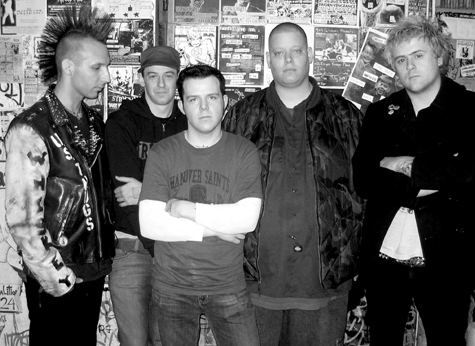
Sacramento street punk legends Whiskey Rebels are throwing in the towel after more than a decade of rockin’, and they have lined up two epic Northern California farewell shows on Aug. 31. and Sept. 1, 2012 for fans and friends to celebrate, reminisce and sing along one last time.
“We actually kind of stopped playing a little while ago,” vocalist Charles Gladwyn (better known as Big Chuck in the punk community) recently told Submerge. “Different friends of ours mentioned many times that we should play a last show, so we just said screw it, and we decided to do it. Not to say we won’t have a good time, obviously. There was no big dramatic breakup necessarily, we just kind of stopped. So we thought it would be fun to play the songs one last time, you know?”
Whiskey Rebels formed in 1999 and since has toured countless times up and down the West Coast. They also did several East Coast tours and even made it to Europe once. They released a ton of material: a couple full-lengths on GMM Records, multiple split albums with both Sacramento locals (like the Hanover Saints) as well as other important California punk bands and they were on a bunch of compilations as well.
“There are parts of it that are weird, there are parts of it that are not,” said Big Chuck of the band’s final shows. “I actually honestly always kind of thought it was weird when bands did have last shows. But I get it now, it’s like fuck it, lets just play a couple last shows and make it a blowout thing. It’ll be fun.”
On Friday, Aug. 31, 2012 catch Whiskey Rebels at 924 Gilman Street alongside Pressure Point, Gravemaker, Factory Minds and Shambles. Doors open at 7 p.m., cover is $10 and all ages are welcome. Then on Saturday, Sept. 1, 2012 it’s your last chance to see them at Plainfield Station in rural Woodland as part of a seriously bad-ass lineup including DCOI, Brain Rash, Union Hearts, Monster Squad, Sabertooth Zombie and Bastards of Young. Doors open for that one at 4 p.m., it’s also all ages and the cover is $10.
“I can honestly say that I don’t think shows like this have been in Northern California in a long time, just in terms of the lineup and these bands all being on the same bills together,” said Big Chuck. “Most of the bands are major Northern California punk bands. They’re all bands that had a big impact on us and on California too.”
Be sure to keep an eye out for members of Whiskey Rebels playing in their other projects: Cold Feelings, Grim Tide and Setting Sons.
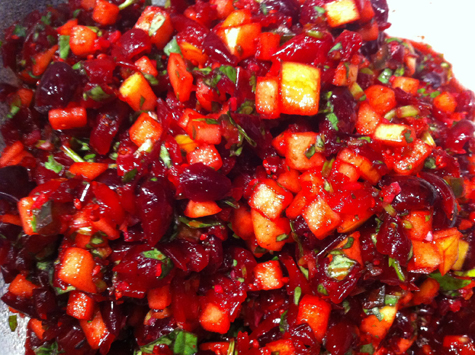
During our recent patio visit to Bows and Arrows whilst enjoying a bottle of wine, Submerge was surprised with a sneak-taste of their new cranberry apple salsa and it was impressive. In the words of our fine publisher, Melissa-Dubs, “Honestly, it’s the best shit I’ve ever tasted.” It’s sweet, obviously because there’s fruit involved, but it still has those traditional salsa elements like cilantro, Tabasco, etc. Spicy and sweet, the best combination! Bows and Arrows is located at 1815 19th Street, Sacramento and the food portion of their operation is run by Fat Face Cafes Jaymes Luu. Music, art, retail, tasty food and a well-chosen beer/wine selection make it hard to leave this place, not to mention they have easily one of the best patios in town. See for yourself!
A Submerge guide to pumpkin libations
Words by Adam Saake – Photos by Nicholas Wray
Hey look! It’s fall. Oh, there it goes. Living in Sacramento, you know that fall makes a quick appearance yet there are so many ways to indulge. Having your checklist done early, your Halloween costume pre-ordered and a trip to Apple Hill in permanent marker on the calendar is a good start, but there are still a few things that fly by under the radar. Pumpkin beer is one of them and if you’re not quick to grab a six-pack off the end cap, you might miss out on some limited edition suds that can be quite delicious. What once seemed like a novelty has now become a tradition for some serious beer drinkers and the choices have multiplied. Ales, lagers and even ciders are popping up on the shelves and each offer unique takes on the flavors that this iconic orange squash has to offer.
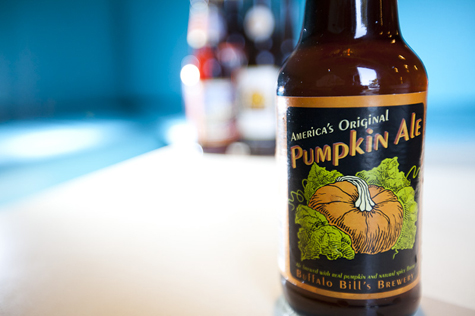
America’s Original Pumpkin Ale
Buffalo Bill’s Brewery, Hayward, Calif.
Buffalo Bill’s Brewery offers a quality pumpkin ale that is firmly centered on drinkability and not necessarily pumpkin overload. Not to say that pumpkin isn’t the focus here, but on a scale of Linus to Return to Oz, this is somewhere in the Silver Bend Pumpkin Patch. The first initial sips yield the pumpkin and then the luster slightly fades, but still very refreshing. Clocking in at a little over 5 percent alcohol and 11 IBUs (international bittering unit), even grandma might have one with you to celebrate the holidays.
The Hayward, Calif.-based brewery who are also known for their Alimony Ale and Orange Blossom Cream Ale have had their feet in the microbrew market since 1983. These guys definitely know what they’re doing with their pumpkin beer, so you’re safe to grab a six-pack and enjoy.

Blue Moon Harvest Pumpkin Ale
Blue Moon Brewing Co., Golden, Colo.
Surely the most recognizable name we’ll mention here in our Pumpkin Beer spotlight, and either you love it or you hate it. Blue Moon, a Miller/Coors product, hit the scene around 1995 at The Sandlot Brewery in Boulder, Colo. (then just owned by Coors) and it didn’t take long before it had made its way into many watering holes around the country.
Originally launched in 2006, the Harvest Pumpkin Ale has had a facelift this year and according to Miller/Coors has been “re-launched and reformulated this year.” What does that mean? Well instead of brewing the beer with just pumpkin and cloves, they add nutmeg and allspice as well. That and the label become a little less artsy and lot more branded. What you get is a quite enjoyable beer with a good body, smooth finish and great balance between the hops, pumpkin and spices. Coming in at 5.7 percent alcohol, Harvest Pumpkin Ale is a step up in intensity but not overpowering and certainly a beer you can enjoy more than one of.

Pumpkin Lager Beer
Lakefront Brewery Inc., Milwaukee, Wisc.
Located on the Milwaukee River in Milwaukee, Wisc.–pronounced mealy-walk-ay if you’re Alice Cooper–Lakefront Brewery has been crafting quality microbrews since 1987. The brewery itself is a huge tourist attraction to the point where sold-out brewery tours gave way to online ticket sales. Still independently owned and cranking out large volumes of beer, boasting over 20 different selections, Lakefront is testament to the little guy doing big things.
Their Pumpkin Lager Beer, apparently inspired by a Thomas Jefferson recipe that brewery owner Russ Klisch stumbled upon, is as close to pumpkin pie in a beer form that you might find. Pour one into a glass and you’ll immediately notice that the nose jumps out; heavy with pumpkin, cinnamon and clove aromas. The mouth feel echoes the nose; rich yet goes down easy and the use of Caramel and Munich malts lend to the texture and depth of this fun drinking beer. Slightly copper in color and 6 percent alcohol, you might spill a few family secrets after a few of these.
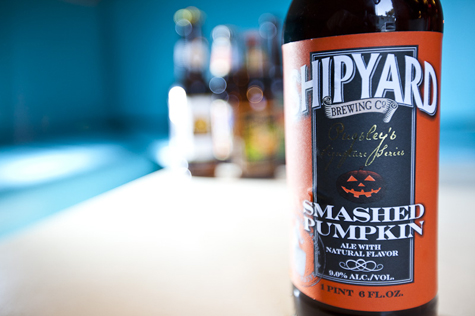
Pugsley’s Signature Series: Smashed Pumpkin Ale
Shipyard Brewing Co., Portland, Maine
Caution: double entendre approaching! Shipyard Brewing Company’s co-founder and Master Brewer Alan Pugsley has outdone himself with this Smashed Pumpkin Ale. Not only will you be “smashed” after a few of these, but your head will feel like Gallagher took his sledgehammer to it in the morning. Packed with so much spice, pumpkin, hops and malts and 9 percent alcohol, this pumpkin beer is truly a trick and a treat. Submerge asked local beer guru Mark Neuhauser of Pangaea Two Brews Cafe what he thought and he called it “very sweet…pumpkin pie in a bottle.” Pugsley uses three different malts including Pale Ale, Wheat and Light Munich along with two different kinds of hops; Willamette and Hallertau. The high alcohol gives it the backbone and bite, making this beer perfect for any of your spice filled holiday foods.
Of course, it’s no surprise that Shipyard would blow the stem off the pumpkin beer category. These guys are known for amazing craft beers that they’ve been perfecting since 1992. They’re Maine’s largest brewery that also makes Capt’n Eli’s Soda, a craft soda that comes in seven different flavors and are the 19th largest craft brewery in the country. All that from little ol’ Maine, go figure. On top of that, Pugsley is kind of a rock star in the East Coast microbrew world. Back in the ‘80s he bounced around and helped establish quite a number of breweries as well helped design and build breweries in the United Kingdom.
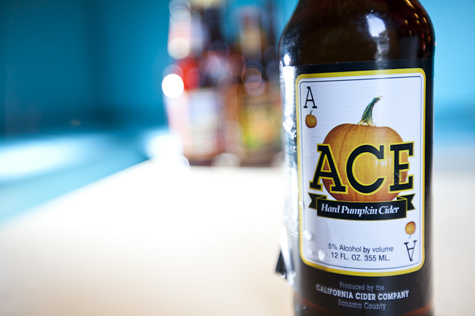
Hard Pumpkin Cider
Ace Cider: The California Cider Company, Sebastopol, Calif.
Alright, here’s your wild card. Ace Cider based out of Sebastopol, Calif., has been making cider for 15 years. Before there were really cider options, there was Ace and over the years they’ve stayed amongst the companies making really high quality, gluten free and delicious ciders. This year is the first year that the company has released their Hard Pumpkin Cider, an apple-based cider that is blended with pumpkin and allspice. Jeffrey House, owner and master cider maker, says that he made 10,000 gallons this year and it’s already all gone.
“People are racing to drink it,” says House.
With the popularity of the product, House says they’ll more than likely double or even triple production next year to meet the demand. The cider is quite a unique product that doesn’t scream pumpkin but merely suggests it. The allspice is subtle and you pick up the apple on the finish along with an interesting aftertaste reminiscent of pear candy. This cider is 5 percent alcohol and quite low in sugar content, 9 grams per 12-ounce bottle. If you’re really aiming for pumpkin, I’m not sure if this is for you but overall a tasty cider that fits in perfectly with their existing line.
These beers and ciders can be found at Total Wine, Whole Foods, Corti Bros and other select specialty markets. Call ahead because they are seasonal and will disappear quick.
Still thirsty for more pumpkin beer? Pangaea Two Brews Café has Dogfish Head’s Punkin Ale on draft. Pangaea was lucky enough to acquire three of the six kegs allocated to the entire Sacramento area, so get it while it’s here. Or, head over Alley Katz and try a Double Pumpkin Ale on draft from Sam Adams.

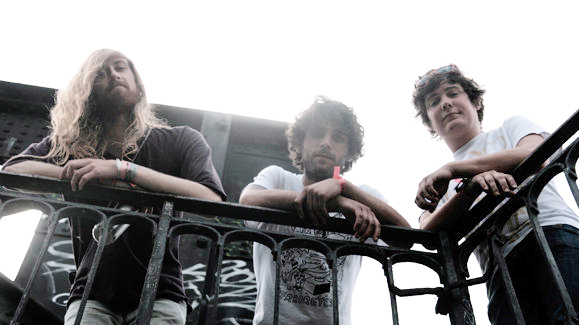
Sacramento psychedelic lo-fi group Ganglians are wrapping up their yet-to-be-titled new full-length record with local producer Raleigh Moncrief. “It’s pretty different than any of the old shit,” Moncrief told Submerge of the band’s new material. “This record is borderline hi-fi and more deeply tailored for headphone listeners, you know, more textural and colorful and, for lack of a better term, ‘psychedelic.’ Maybe not as blatantly psych as some of the older stuff, more subtle or something. I like to think of it as ‘new’ sounding psych.” They’ve recorded 14 songs, 11 or 12 of which will make the final cut. The album should be out this summer; Moncrief said, “June/July-ish, but honestly we’re not sure.”
RJD2 Doing What He Wants to Do
After releasing his debut, Deadringer, in 2002, it was clear that RJD2 was embarking upon a fruitful career of longevity and innovation. The DJ/producer, and later vocalist, had an undeniable vibe and an eclectic palette of sounds at his disposal. With an understanding of music theory and chord progressions, his instrumentals played out more like a score than the average programmed beats, and while it was natural to lump him into the hip-hop gene pool at first, you knew he would eventually go on and grow into his own.
His preceding solo albums showed a quick evolution. As he began shifting further away from his hip-hop base with Since We Last Spoke and The Third Hand, he had group projects with MCs like Blueprint and later Aceyalone that were catered more toward his core. RJ’s output, whether it was his own albums, lending his production to other projects or through a series of mixtapes, remained consistent and always pushed the creative boundaries he had cast on his last.
Complacency is a word that doesn’t exist in RJ’s vocabulary. He is always recording and creating, always touring, and now that he started his own label to back it up he is always working. It’s a job he enjoys though, and one that he is quite good at.
In support of an upcoming stop at the Crocker Art Museum on Oct. 16, 2010 Submerge reached out to the Oregon-born renaissance man. Excited to bring his four turntable and two sampler setup, he talked about the past and present and what to expect in the near future.
I want to talk about the progression of your career. From your early days with MHz on the underground rap tip, to creating what some dubbed as an “indie rock” album, to your last album The Colossus which was a collage of all kinds of genres, you have shown you can do it all. Was it always the plan to be this all-encompassing artist?
No, I never had any kind of any master plan of this is where I want to be in five or 10 years. I’ve just been kind of looking at what’s immediately in front of me, and behind me too, and sort of responding and reacting to those things. One thing that I feel compelled to mention is you brought up the “indie rock” record. I haven’t been working on that in any master plan, but there have been some constants in my career; some common threads that have ran through almost everything that I’ve done. From the beginning of my career to now the most driving influence in everything I do still is soul and R&B music. It has permeated in every record and decision. It’s not conscious or anything, it’s just how it comes out. I know people refer to The Third Hand as more of an indie rock record, and I assume that is because of the singing, but from my perspective if you look at the production and sound of that record, it’s very much drawn from soul, funk and psychedelic rock influences.
Going off what you just said, and I hope this doesn’t come off offensive, but do you think it was labeled that because you are white?
[Laughs] Well, I’ll put it this way… For one, I don’t take that as offensive. I’ll pose a statement to you: A band like TV on the Radio can make a certain type of record, and for better of for worse they are going to get lumped into the category of “black rock.” I don’t know how they feel about it, but I assume a group like that doesn’t really care for that classification. I don’t know, we could play the game of hypothetically speaking thing all day, but to answer the question, it’s entirely possible [laughs]. One thing I will say to play devil’s advocate, I wouldn’t rule out the opinion of it’s how I sang on that record made it feel more like an indie rock singer than, say, a Curtis Mayfield soul record. And you know, to this day I don’t particularly fancy myself as the most accomplished vocalist. On that record, though, it’s not a bravado-heavy style of singing, it’s harmony-dependent. Singing-wise, I can see how people would say it was an indie rock style of vocalization, but to me there is so much more that goes into all music than just who’s singing; it’s the sound of the drums, the production techniques and all that other stuff make up the cumulative effect.
Is it bothersome for someone like yourself who works without boundaries that ultimately it’s the journalists and such who say what each album is? Do you read that stuff and just get a headache?
I learned it doesn’t put me in a healthy place to read reviews of my records. I do everything possible to avoid them actually. Right around the time of The Third Hand is when I learned to disassociate myself from reviews. I vividly remember reading the first two reviews, and they were so wildly disparate it just made me realize it wasn’t making me more effective as a producer, or better yet as a person. The only thing I lament about with the current climate is that it seems we have entered into an arena where the reigns over and the rest follow. It’s funny because I’ve had journalists tell me that other journalists, or magazines and blogs or whatever, wait for the larger source in their field to sort of say what’s good and what’s not, and then everyone else follows suit. As a listener, I don’t think that serves anyone well.
Have you found in the interviews that you do that the level of journalism has dropped?
Yeah, I have found that people are less prepared. A lot of times it seems like I’m answering questions that are straight out of my bio. It doesn’t bother me, but it annoys my publicist the most [laughs]. I’ve gotten used to answering the same questions over and over. But yeah, I have noticed people not doing any research. Again, I’m not reading them, so I don’t see the final product, but the preparation seems to have dropped. There are still a lot of folks writing about stuff that they are interested in, which to me makes the most sense. It seems natural that you would write about the stuff you like opposed to the things you don’t.
OK, fair enough. To switch gears completely, I want to talk about your new label that you created, Electrical Connections, and get your perspective on being an artist/label owner. Was it more work than you expected?
It has been more work than I expected, but not a huge amount. At first it was tough, and I was taking on a lot of things–I reissued three records, put out a box set and released a new album in the course of four months. That period, of what was essentially putting out four records in as many months, was really rough. In hindsight though it’s only about 20 percent more work than what I was used to. I had a small label I was running called Bustown Pride on which I just pressed CDs and sent them straight to the distributors. Honestly, looking at the profit margins and the work that goes into everything, I’m still in awe how any record label can afford to have a staff.
Would you say it was a grueling process with a big reward, a grueling process with little reward, or say a fun process with a great reward?
I would say somewhere between grueling and a tolerable process, with a great reward. The reward for me is ownership of masters, which isn’t always immediately gratifying. It’s basically either going to pay off or not in the future, but I’m still wholeheartedly pleased with the way I’ve gone about it. My biggest concern was that I would put The Colossus out and no one would know anything about it. Love it or hate it, I feel like the visibility is about the same as it has in the past, and that is good enough for me.
With the name Electrical Connections, I have to ask about a video I saw of you where you built a wireless MIDI controller that linked up to your MPC… I gotta say, it was pretty awesome. I know you enjoy building and tweaking your equipment. I wanted to know if you have any other big projects in the works?
[Laughs] Recording-wise yes, I just moved and I set up a new studio space that is much bigger than my previous. The added new space will allow me to have several rooms that are all inter-connected in the house. The ergonomics of doing completely live music, or synth-orientated music, or sample-based music and having each in their own spaces but will all great. It’s all wired into one control room, and I have video and USB feeds going through each room. There are times you don’t want to blend it together, but one of the things I really liked about my last record was having all kinds of themed approaches to recording. I get bored doing the same thing over and over, but I like the idea of doing just sample-based music, but I like to be able to easily blend them. I have a couple records finished that I’m in the process of getting ready to be released. I’m just waiting to get the studio done.
Can you divulge on those?
Yeah, the first one… I’m pretty into horror and sci-fi soundtracks from like the mid-‘70s to like 1984. It’s all instrumental, and sort of an homage to that kind of cinematic approach to scoring music. I also did a record with a group I started with a singer named Aaron Livingston, who is featured on The Colossus. It’s all him singing and me on production, the group is called Ice Bird. Those two will be coming out in the next year for sure, hopefully before that.
And with a little foresight, how will journalists label Ice Bird?
[Laughs] I have no idea. I have proven to be a poor judge of that.
Last one. This interview is in support of your upcoming gig in Sacramento at the Crocker Art Museum. I have a feeling this may be different from a typical club gig you might get on tour, so I’m wondering if or how you change up your set depending on the setting?
I try to stay prepared. In the last year I’ve been using Serato [DJ software], but in the past I had to create dub plates so that I’d have everything for the live show. If I find myself in front of a crowd that doesn’t necessarily know my music, and they just want to hear something else, it’s like an eject button. Depending on the crowd though, I try to keep focused on doing my own thing.

RJD2 will perform as a featured guest at Neo-Crocker 2010: A Modern Culture Party at the Crocker Museum on Oct. 16. The party will run from 8 p.m.—2 a.m. and will also feature performances from DJ Shaun Slaughter, the Sacramento Ballet and much, much more. Tickets are $75 in advance and $90 at the door. For more information, go to www.neocrocker.com.
DLRN keeps their latest release, and those to come, close to the vest
It’s coming back around. Young artists are expecting more from their culture. Take the art of Kehinde Wiley, for example: He paints the stereotypical street hustler in gentlemanly poses against backdrops of elegant tapestries, juxtaposing the ghetto with the affluent. Sacramento’s DLRN is analogous to Wiley’s vision of celebrating the complexity of hip-hop culture.
Hip-hop has reached a reputable age, and decades deep it has its own version of royalty. As of late though, it has become less of a culture, less of an art form and more of an economic commodity. Sean La Marr, under the nom de plume 5th Ave, sees a potential for change without leaving the sleepy city of Sacramento. La Marr’s video for the song “Dear Langston” is a testament to his hometown pride, as it used Wiley’s art as inspiration–showcasing the city’s talented inhabitants mimicking the regal poses of the elite–the same poses present in Wiley’s portraits.
It’s clear La Marr loves Sacramento hip-hop with the sincerest of hearts. Our interview was intended to discuss the new record his group, DLRN, is dropping this week. Yet, it was during our post-interview hangout session that he revealed his passion for the local scene.
Last year DLRN dropped its No More Heroes record with the intention of introducing new heroes to the hip-hop canon and creating an alternate narrative not traditionally found within the genre. “From an MC standpoint, I was very disillusioned with it,” 5th Ave said. “I came to the realization that a lot of the faces of hip-hop these days I do not relate to. I don’t see them as role models or the influential voices that they once were.”
DLRN, formerly known as Delorean, consists of MC 5th Ave, born Sean La Marr, and producer Jon Reyes. DLRN is retro-fashioned and reactionary, operating in a space that is not quite conscious rap and not quite club rap either. “We’re a product of different time periods and different people, that’s part of how we came up with the name Delorean,” Reyes said.
Unfortunately, a Spanish trance-pop had already claimed the Delorean moniker.
“Our tastes are more eclectic than most acts you’ll hear,” La Marr said, which means they were aware of a possible conflict in their future if they kept the name. By dropping the vowels to DLRN, the group hoped to dodge any cease and desist suits or mistaken-identity tour dates.
“It’s funny because we knew about them when we decided to go with the name,” La Marr said. “We just decided we better blow up before they do. But, then they were on ABC, they had a national tour and became Pitchfork darlings.”
La Marr continued with an anecdote, “We almost didn’t get booked at a show in Seattle because they played at the same venue two weeks prior. We’ll have stuff posted on our Facebook page about events that they’re doing and vice versa.”
Reyes added, “We can’t really hate it, because they’re a really talented band.”
The duo is excited about the switch, citing MGMT and MSTRKRFT as other successful bands that dropped the vowels. Sacramento is now tallied at two non-vowel band names (the other being CHLLNGR) with potential to join the celebrated ranks.
The topic evolved into a discussion over the ethereal trends in cycle of kindred band name themes–such as bands named “wolf-something” or rappers named Lil’. Apparently, there was a birth explosion of Deloreans around the early Naughties. “We thought about adding a word to make it Delorean Brown,” La Marr said. Reyes interjected, “A good reference to one of the greatest wrestlers of the modern era, D’Lo Brown. “ La Marr continued, “But, it turns out there was a Delorean Brown already in Sacramento. Here I think we’re being clever.”
With a new name, DLRN sought out to craft its followup to No More Heroes. The Bridge was recorded at Pinnacle College in Rancho Cordova, which La Marr described as a “sterile” environment in comparison to Omina Labs, where No More Heroes was recorded. It took time, but DLRN enlisted the help of its student body to help them settle into the new digs. “It’s good working with people that you’re friends with outside of the music,” Reyes said. “It makes for very chill sessions.”
Reyes described the recording process for The Bridge, out July 20, 2010 as a free download, as a humbling and surreal experience. The students that volunteered were mostly fans of DLRN prior to the sessions. “Those are the people you’re making it for and they are sitting right next to you,” he said.
Accessing the privilege to hear the new record has been kept to limited company–possibly on a “nothing leaves the studio” policy. The reasoning is DLRN has a purpose with its messages. It’s encoded in the video for “Dear Langston” and on The Bridge. The two releases reference one another, and provide insight into the already planned third album. When I asked the name of the next record, I was met with stoicism and a round-about answer. “There is a hint in the last song,” La Marr said. “I hate to not tell it to you, but when you hear the next DLRN project it will make sense.”
I did not hear the hint in my exclusive The Bridge listening session. But I did hear a reason alongside the Cloud City record to be excited about local hip-hop in July. The Bridge’s first video features Prometheus Brown of Blue Scholars, while the record has further appearances by Hopie Spitshard, Illecism and Chuuwee. That’s all I am allowed to disclose.
DLRN has major plans to kick off August by celebrating the release of The Bridge in what La Marr hopes will be the biggest hip-hop event of the summer. After hearing the words “tequila tasting,” “kegs of free Miller High Life,” “free sushi” and “the Miller High Life girls,” I am not opposed to declaring it the event of the summer either. “I’ve been to a lot of hip-hop shows and I’d hate for this to be just another hip-hop show,” he said. The release party is Aug. 6, 2010 at Beatnik Studios.
In my brief tenure with Submerge, I’ve met a lot of local rappers, most of which have this ambition, rooted in frustration, to overcome their surroundings. It is a career plan that includes reaching or leaving for the Bay Area and Los Angeles markets. La Marr never once spoke with a belittling tone toward his hometown. Instead, we sat for an extra half-hour talking about our favorite Sacramento rappers, putting me on to a great local joint by Blee featuring Doey Rock. “You know what, come to the show and I’ll have a mixtape for you of all my favorite Sacramento shit,” La Marr said. I left thinking, it’s that kind of dedication to the scene that makes someone the founder of a collective such as the Neighborhood Watch. He’s got our best interests at heart.
Go to Beatnik Studios on Aug. 6 for DLRN’s The Bridge record release party. Free Tequila tasting and beer for those 21-and-over will be available. There will also be VIP wrist band bottle service. Come dressed as Alice in Wonderland and get in free. Prize awarded for best costume.
Submerge Scours Sacramento to Find the Perfect Pint of Guinness
Budweiser claims to be the King of Beers. If you consider sales numbers alone, it’s difficult to dispute such a claim. With its billboards, pop culture-defining Super Bowl ads and presence at just about every bar, pub, tavern, concert and sporting event in the United States, there is no beer more ubiquitous. So we acquiesce; yes, Budweiser is truly the king of beers, but if that’s so, that makes Guinness the sagely old druid inhabiting the forests surrounding the kingdom. Sorry to blow your minds like that, but it’s totally true. Guinness is like Magic the Gathering, but better because you don’t have to be a nerd to drink it and it’ll give you a hearty buzz.
There is no beer on earth quite like a Guinness. Sure, there are far more adventurous and esoteric choices. In fact, right here in Sacramento, there are a plethora of homegrown brews that provide a wide breadth of flavors and brewing styles—all of which deserve your attention. But Guinness should always hold a special place at your beer-drinking table. Rich, creamy and delicious (and believe it or not, relatively low in calories and alcohol content), Guinness is readily available at most pubs, restaurants and supermarkets (or at the very least, any such establishments that are worth going to). It may have been your first foray from the world of dark beers. Anywhere you go, no matter what drinking establishment you may venture into, if the place serves Guinness, rest assured you can enjoy a quality adult beverage at a decent price.
Know this: as you watch your trusty barkeep serve you a pint of Guinness, you’re not just having a beer, but you’re partaking in a tradition that dates back centuries. In 2009, Guinness celebrated its 250th anniversary, making this noble Irish stout older than the United States. The story goes that in 1759, Arthur Guinness signed a 9,000-year lease for an unused brewery in Dublin, Ireland. The signing cost ran him around $100 and rent was settled at $66 annually. Arthur died in 1803, but Guinness is still brewed in that same brewery to this very day.
It’s easy to see why Guinness has stood the test of time. It’s truly a beautiful sight to behold: from the rolling cascade of a perfect pour, to its creamy head and its dark, rich color (considered dark ruby as opposed to black), Guinness looks like a work of art in a glass. But are all pints of Guinness created equal? There are rules that must be followed to build the perfect pint—a ritual, if you will: According to Guinness, a pint should take just under two minutes to pour. The pouring process is two-fold; first, a quick pour into a tilted, tulip-shaped pint glass (Imperial, please). This first phase should fill the glass about three-quarters of the way. The pint should then be left to settle before finishing with a slow pour that should result in the head forming a dome over the mouth of the glass.
With St. Patrick’s Day approaching, you may be asking yourself, “Are Sacramento pubs and taverns doing their part to uphold the Guinness tradition?” Fear not! We here at Submerge took it upon ourselves the arduous task of scouring the streets of Sacramento in search of the perfect pint. Don’t get stuck drinking green beer this St. Patrick’s Day—have some respect for yourself! Read on and discover the best place to gorge yourselves on sweet Guinness this March 17.

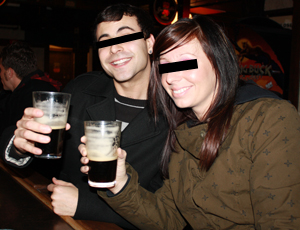
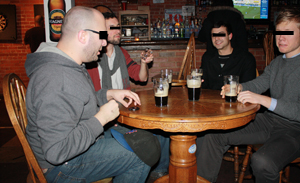
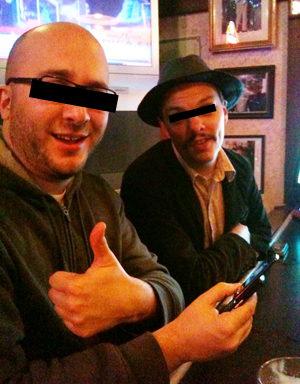
O’Mally’s (1109 2nd Street, Sacramento)
POUR 7.7
ATMOSPHERE 7
VALUE 7.7
TASTE 215
Our first destination on our epic journey. O’Mally’s scored favorably, but not exceptionally, in every category. $4.50 is a great price for a pint of Guinness, but it was served in a regular 16-ounce glass, thus leaving a small 4-ounce void in our souls.
de Vere’s (1521 L Street, Sacramento)
POUR 10
ATMOSPHERE 9
VALUE 6.3
TASTE 300
Though the spotty cell phone reception in the back room made it difficult for Submerge‘s advertising director Jonathan Carabba to tweet, “beers at de Vere’s” on his fancy-ass iPhone, de Vere’s atmosphere and pour were both of the highest quality. A knowledgeable bartender schooled us on the history of the pub. Hell, Guinness even issued de Vere’s its own branded tulip imperial pint glasses. However, at $6 per imperial pint, how are we supposed to enjoy our favorite stout and still pay said fancy-ass iPhone bills?
Streets of London (1804 J Street, Sacramento)
POUR 7.5
ATMOSPHERE 5.8
VALUE 10
TASTE 1,469
If you like seeing boobs and fights—and let’s be honest, who doesn’t?—then this is the place for you. In fact, two scrums broke out during our time there. But don’t let Streets of London’s rowdy interior fool you, those comely lasses behind the bar can serve up a killer pint. Our pours were excellent, and at just $5 for an imperial pint, we had plenty of money left to invite Guinness’ best friend Jameson to the party. Now, who wants a head butt?
Bonn Lair (3651 J Street, Sacramento)
POUR 5.3
ATMOSPHERE 9
VALUE 8
TASTE 835
This is a quaint and neighborhood-y place—pretty much Streets of London’s cozy antithesis. We loved the atmosphere, but unfortunately, atmosphere doesn’t get you drunk. We paid just $4 for our regular pint, which is a good enough deal that we won’t miss our extra 4 ounces; however, our pour left much to be desired. Our bartender shaved off our bubbles from over the mouth of the glass. We mourned the loss of our foam dome by ordering a second pint.
Gallagher’s (1201 K Street, Sacramento)
POUR 7.5
ATMOSPHERE 5.8
VALUE 10
TASTE 4,147
Our final stop on our long and harrowing quest. We almost didn’t find the place because you have to walk through a lobby to get there, but all in all, Gallagher’s wasn’t all that bad. The pub is a part of The Broiler Steakhouse, but on this night, our only meal came in a glass. The bartender gave us a quick and loveless pour, and it showed in a flimsy head, but with a value that rivaled Streets of London, Gallagher’s was a fitting if not somber ending to our journey.
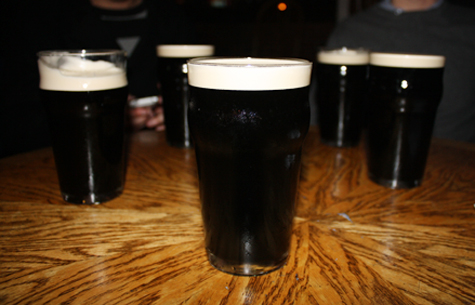
THE WINNER!
As you can see, we took a very scientific approach in this guide to finding the most perfect pint of Guinness Sacramento has to offer. We attempted to factor in “Taste” into the scoring, but it became quickly apparent—as scores rose into the stratosphere—that Guinness is like sex: even when it’s bad, it’s still really fucking good. Strangely enough, the more we had, the better it tasted. Go figure! But enough with the buildup, who was crowned champion in this perfect pint face-off? Obviously, the winner is you for deciding to celebrate St. Patrick’s Day with such a fine beverage (also, Submerge for figuring out a way to write off two nights of solid drinking on our 2010 taxes). We congratulate you! Wherever you find yourself on March 17, order yourself a frothy pint of plain, and know that you’ve made the right choice. But, you know, drink responsibly.
Whether center-stage or behind the scenes, Sean Lennon continues on a remarkable music legacy
If your father was one of the most respected and beloved songwriters of all time, and your mother was one of the most polarizing figures in pop culture, anonymity would be difficult to come by. Still, Sean Lennon has managed to keep a relatively low profile–and that’s fine by him. The only son of John Lennon and Yoko Ono, Sean hasn’t flaunted the fame that was his birthright. Instead, though he’s followed in his parents’ footsteps, he’s taken an almost workman-like approach to his music career.
“I pretty much started off playing bass with Cibo Matto, and I came to music from that part of the game, which is being a player and someone who plays in someone else’s project, like a session musician,” Sean explains. “That certainly is as much, if not more, a part of who I am as a musician as being a frontman.”
When Submerge spoke to Sean over the phone from New York City, he was keeping himself busy as usual, putting together a mid-February show at the Brooklyn Academy of Music that will honor his mother’s music. Sean says that organizing an event of such magnitude is a new experience for him.
“I’m sort of in pre-production for this BAM show, which is kind of complex, because there are a lot of players involved,” he says. “I’ve never actually participated in organizing anything of this scope, so it’s been a lot of work, but it’s been a lot of fun as well… We have a lot of guest stars performing my mom’s songs, and she’s going to be performing with them, and I’m sort of music directing and producing.”
Sean was also busy with his own music. His latest project is the eerily titled Ghost of a Saber Toothed Tiger, a duo that consists of himself and girlfriend Charlotte Kemp Muhl. GOASTT is still in its nascent stages, but Sean says that he hopes to tour and have an LP out by this summer. Though the name may sound menacing, judging from the songs posted on the group’s Myspace page, GOASTT creates dreamy, incandescent pop soundscapes. He and Muhl are currently in rehearsal for a show at Union Pool in Brooklyn, which will take place Feb. 19, 2009. Sean says that rehearsing for both shows simultaneously has had its challenges.
“I’m rehearsing the BAM show at the same time, so it’s confusing to remember all the different sets–all the chord changes and stuff,” he says. “It’s interesting to have to think about two different projects in the same week.”
West Coast fans can catch Sean Lennon when he performs with GOASTT and also plays with his mother in the Plastic Ono Band at this year’s Noise Pop Festival in San Francisco. Sean co-produced the band’s latest album, Between My Head and the Sky, alongside his mother. The album was released in fall 2009 and received a very positive reception from critics. Sean worked with his mother on a record previously well over a decade ago. Rising was released when Sean was just 17 years old and led him to a worldwide tour with his mother. Though he says he was well aware of his mother’s capabilities going into the recording of Between My Head and the Sky, he found that Ono was still full of surprises.
“I was still surprised at how inspired she was and how prolific she was,” Sean says. “On the most prolific day, we did six songs. She came in with six song ideas, and we recorded them all in one day. The whole record was made in…seven days, recording wise, and then the rest was spent mixing. It was really fast. It was more like a jazz record than a pop or rock record, which are usually belabored.”
In the following interview, Sean Lennon discusses working with his mother, his girlfriend and the excitement of wearing many different hats.
Last year, you put out Between My Head and the Sky with your mother. I heard an interview with her on NPR where she said it was your idea to resurrect the Plastic Ono Band name for this album. Why did you decide to do that?
It was my mom’s band, and I felt it was her best band name. It was really just a matter of aesthetics. I didn’t realize how people would react. I think a lot of people were excited, but I wasn’t really trying to say I was resurrecting the original Plastic Ono Band, which was basically Ringo [Starr], Klaus Voormann and my dad and my mom. It was more that I just liked the sound of the name. I think it’s a cool-sounding band name, and it’s her band, so I figured since it was her band, she had the right to use it.
Was it something she was open to right away, or did you have to talk her into it?
No, no. She was fine with it. I think it was one of the three coolest band names of all time: The Velvet Underground, Spiders from Mars and the Plastic Ono Band. I don’t think any other band names are cooler than that.
From what I’ve heard of the album, it seems like there are a lot of different jumps stylistically, but would you say there’s a common bond between the songs?
I think so. For me, I’m the last person to be thrown off by mixing or shifting between what one would call musical genres, because I don’t even notice it. At this point in time, music is such a diverse landscape, I can’t imagine making a record that just sounds like one thing all the way through anymore. It almost seems like you’re upholding a tradition if you’re doing a jazz record, and it’s the same sound all the way through. It’s almost like a ritual. In this day and age, I feel like there’s so many different styles of music and there’s been so many fusions between different styles that there are no limitations to what you can do on one record. To me, when we were making the record, I wasn’t thinking in terms of genres, I was thinking what was appropriate for each lyric and moment.
Before you mentioned that you made the Rising record with your mother when you were 17. Now you’re a man in your 30s. Did being older affect the working relationship between you and your mother?
Yeah. I think I might be more professional. I have more experience. More tricks up my sleeve. I have more of a sense of what I like and don’t like. I’m probably more patient with myself and others, I think–I hope.
You’re playing a show later this month with your other project, Ghost of a Saber Tooth Tiger. How is that project going?
That project is going great. We just finished a 45, 7-inch. That’s going to be coming out soon. We’re going to be touring this summer, I think, and we’re going to try to finish the record by the summer. I hope we can. It’s hard, because I’m also running the label and have my hands in a lot of different things, so it’s hard to be sure. Sometimes I wish I could just focus on the band and nothing else. I’m trying to wear many hats and see how it works for me.
Can that get frustrating?
It’s never frustrating in itself, because it always feels really fun. It feels like I’m on a roller coaster while I’m juggling or something. It’s exciting, but it can be taxing physically. I can get really tired and not sleep that much because I have to do so much, but I’m sure everybody’s in that position at this point. One of the main things is doing all the visual artwork as well. It takes time drawing. For the label [Chimera Music], we do all the drawing in house, which basically means my kitchen has a drawing table. That in itself could be one job, you know? Trying to do that, design the merchandise and mix the songs and write the songs and perform the songs…no, it’s not frustrating, it’s really fun, but sometimes my body feels really taxed, mostly from not sleeping enough.
With GOASTT, you work with Charlotte Kemp Muhl, who’s your girlfriend. How is it working with your girlfriend on a record as opposed to working with your mother?
It’s totally different just because they’re completely different. There’s nothing similar about it. For me, the most exciting thing I’ve ever done was start this band [GOASTT]. I’ve been really having fun. It’s almost the first time that I’ve ever been proud of what I’m doing. Working with Charlotte has been the most inspiring time of my life.

Sean Lennon will perform twice at Noise Pop: Feb. 23, 2010 at Fox Theater in Oakland with The Plastic Ono Band and Feb. 24 at The Independent in San Francisco with GOASTT. For more information, check out www.noisepop.com“
The Bread Store
1716 J Street, Sacramento
Words & Photo by Josselin Bassaldu
Driving east through Midtown, I was on my way. With my hair pulled up in a ponytail, a college sweatshirt on my back and a water bottle in my bag, I was determined to be prompt to photography class.
A long, late night of work and an early morning of class had the guttural depths of my belly begging for baked goodies. Luckily, I just “happened” to be driving in the lane nearest to The Bread Store and was able to pull over and appease the craving for a crunchy-topped bran raisin muffin. Prompt? Psssssht, I made like a Parisian and embraced a laissez-faire approach to time for a pastry.
Walking up to the cash register, I looked over and was enthralled with the beauty before me. Who knew a cold, bright morning would be the setting to one of “those” encounters?
Never expecting such a serendipitous situation, I made an acquaintance Nov. 5 that inspired me to share my story with my dear Submerge-ists.
Through the groggy beginning of one of those sleep-in-Saturdays, the wonderosity of oncoming winter winked from the center of the glass shielded display at visitors of The Bread Store, with the glistening golden of an icy, orange confection, never before seen.
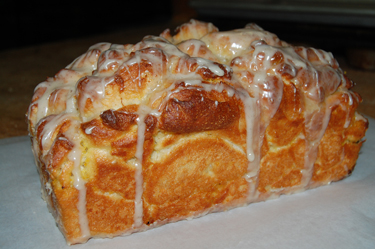
The large, center-staged tray was filled with orange bread, the gentlemen behind the counter answered when customers inquired. Oh, but it wasn’t just some measly orange bread, it was Orange Cobblestone Bread with vanilla bean bourbon icing. A quick sample made me feel like a purchasing pushover; I decided I needed two goodies.
Orange has almost always been a flavoring that kids would choose only after the red flavor (cherry, strawberry) of candies, popsicles and gummi snacks were gone. And to me, orange has been a second-class flavor. This only slightly sweet orange bread was unique, causing me to consider the folly of my second-classifying ways.
For $2.25, the nearly inch-thick slice of Orange Cobblestone Bread was doughy, had a great crust and was topped with vanilla bean and bourbon icing. It was French bread-like, but doughier, crunchy and sweet in places. The icing topped it off. The top of the bread was textured with escaped bubbles of dough that hardened and offered that melt-in-your-mouth crunch that glazed fritters have, with that vanilla bean bourbon of an icing blessing.
This “baked good” was so difficult for my culinary mind to understand. The hybrid bread was a melding of different classifications of meals, techniques and expectations. It was bread, it was breakfast, it was dessert; it was sweet and not so sweet. Uni-cultural fusion baking?
I had to hit the streets and figure out this culinary conundrum. Back at the source, Bread Store employee of two and a half years Lauren Cassavoy was on site. She put me in touch with the man responsible, head baker Kevin Reynolds, but not before raving about how much she loved the bread and still had half a loaf at home.
A five-year veteran at The Bread Store, Reynolds has spent 20 years in the business of baking. The Tower Café, New Roma Bakery and River City Brewing company are just a few of the Sacramento spots contributing to Kevin’s culinary credentials.
As it turns out, the Orange Cobblestone Bread was the result of a happy—and ingenious—accident. Kevin had to do something with leftover orange zest and orange essence from The Bread Store’s orange cookies. Since he had some scraps of ciabatta bread dough, he threw it all together, baked it in a pound cake tin and iced it for consumption.
When he made and tasted his creation, Reynolds realized, “People are going to want that.” He then admitted, “I was just trying to use stuff.”
Reynolds has begun to have more creative control, Cassavoy told me. A new schedule establishes a rotation of featured baked goods each second, third and fourth Saturday. But Reynolds will get to work his magic on whatever he likes each first and fifth Saturday. If the Orange Cobblestone Bread was any preview of what Reynolds has in store, I recommend marking your calendars for a trip to The Bread Store the first Saturdays of the month.
There’s no telling when the Orange Cobblestone Bread will return. It would all depend upon whether or not he has the basic ingredients are on hand.
With orange being such an essential holiday fruit, the time seems right. With inquiries from lots of interested eaters (that means you, Sacramento!), Andy Smith and other folks calling the shots at The Bread Store just might see the benefits of baking this bread for Sacramentans more often.
Screw Atkins, everything about bread says love. Everyone could use more love—especially if it’s zesty and sweet, like Orange Cobblestone Bread.