Ryan Sollom’s name might ring a bell. His former band Shortie had quite an impact on the 2000s music scene in Sacramento, and at the time it seemed whether someone liked them or not, everyone had an opinion on the matter. Sollom was much of what made their sound unique, and his talent was evident.
However, in 2006, the group abruptly parted ways, with some members going on to the project Will Haven, while Sollom continued on his own path, first with the band One Dying Secret, and most recently in 2014 with Surviving the Era.
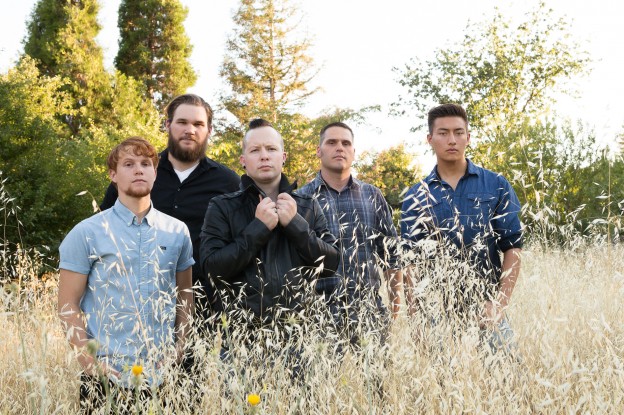
Surviving the Era is due to release their second album, Parallax, the follow-up to their self-titled debut, on June 18. The album, recorded at Little Russia Recordings with Dryw Owens behind the controls, includes the recently dropped first single, with subsequent video, “Queen of the Sea.” Other than Sollom, the group currently consists of Kyle Newton and Kevin Cortez on guitars, Seth Borges on bass and vocals and Jake Cooley on the drums.
When discussing the transition from their self-titled debut to the upcoming release during a phone interview with Submerge, Sollom regarded the prior release as not really being representative of the band as they exist now. “The self-titled [album] … really the first five or six songs, the first batch we ever wrote,” said Sollom. “As we were recording it, we were writing other songs.”
“Pretty much the day it came out it was outdated,” he continued. “We were coming into our own. Our identity was already changing by the time that EP was back and we were putting it out. It was hard to push on people because it wasn’t who we are … It was who we were the first couple of months as a band. Our identity naturally changed. We knew what we wanted to be as far as style of music we wanted to portray and what we wanted as individuals, so [Parallax] is an exact representation of Surviving the Era.”
When listening to the various tracks that make up Parallax, it’s not difficult to find both similarities and differences between the style of Surviving the Era and Sollom’s prior work. His vocals and the recording are far more polished, while the music that backs his vocals has softened a bit, giving off more of an early 2000s emo/power pop feel than the more pop-punk vibes featured in many Shortie tracks. At the same time, Surviving the Era’s tracks are still drenched in guitar-driven goodness, and there are definitely tracks from the old days that line up with Sollom’s most recent work. A good example is “Queen of the Sea,” which would pair nicely with Shortie’s “Every Single Word” off of their 2005 album, Without a Promise.
“I think that naturally with life you change, you adapt. I think Surviving the Era, as individuals, have grown and changed. Circumstances around my life has changed too. The writing has changed. As an older person I can not shun any happy feelings, where when I was younger I was like, ‘Oh, this is happy … I don’t want to write about that,’ where now I’m like it’s a happy-vibing song and happy things come up when I’m writing lyrics, I’ll embrace that. Of course, yeah, things have changed, life has changed, writing songs have changed a little bit, but as far as inputs go for myself, I’ve always been influenced by the same stuff. That’s who I am.”
Prior to Surviving the Era, Sollom was in a project called One Dying Secret, which ended in 2013. He had actually left Shortie to join the band, and while he is no longer involved in the project, they did make it a healthy seven years of existence, which in band years is almost an eternity. Unfortunately, the group tasted minor success, but in the end Sollom was only left wanting more.
“We released one EP officially, put one EP out for free and we ended up going out to Los Angeles and recording, doing some demoing for John Feldmann [Goldfinger, producer for Panic! at the Disco, Atreyu, The Used], and we ended up doing two songs and putting those out for free as well. That was in hopes of landing something for John Feldmann on his record deal, and that went really well. Then, things just kind of fell apart after we got back from Los Angeles. The people in that band just kind of ‘lost their fire,’ if you will.”
If you track the timeline of Sollom’s various projects, from Shortie to the present, you will only find one year where he is not officially in one of the three projects previously mentioned. When it comes to music, this really isn’t an alternative option: “If I found myself not being involved with music, I felt off-kilter,” says Sollom. “I’ve always been involved with something, as an individual I have to be. It’s everything to me.”
When asked whether or not he has ever considered working apart from a group atmosphere, Sollom says he prefers the company of others. “I don’t have enough balls to [work as a solo artist], I don’t think. I love creating with other individuals, because of the aspect of what they bring. I have nothing against the Justin Timberlakes or something like that, but I like creating with people, because that’s how things blossom and take different shapes. You can have an idea and work with someone else and that thing will change to something even better. It keeps things fresh, you get different perspectives. I love creating with other people, it’s just a much better fit for myself.”
Sollom has spent his entire life in Sacramento, with all three of his projects performing a majority of shows in the area. While this does not make him an expert on the local music scene, he definitely has perspective on the subject. When asked about the state of the scene, Sollom echoed other musicians in the area that have recently felt frustrated with the current environment.
“I feel the [Sacramento music] scene is really bad right now,” said Sollom. “A decade ago it was thriving … there was lots of all-ages clubs, lots of bands that would play together and help each other out. I think it was a much more vibrant scene. Now, with how things are ran, from local bands having to sell tickets to draw people to shows … that sucks. People should be able to make up their minds if they don’t want to see you day of [the show]. They shouldn’t have to commit in advance. It’s been ridiculous, and a lot of bands feel that way. So, I think that has hurt the scene. I think the lack of clubs, the lack of all-ages venues hurts the scene. It seems like there’s not a whole lot of bands … I mean, there’s a fair amount of bands, but compared to what it was back in its heyday, it’s definitely a dying scene.”
“I love Sacramento … born and raised,” Sollom continued. “I think even if there was a level of success with Surviving the Era, I still probably would want to live here. I love the fact that Sacramento is not far from the Bay, not far from the mountains … It’s always good weather. The city itself, we have an arena coming in, and that brings possibilities for new music stuff. I love it. I’m a loyal guy.”
The band, due to drop their new album, will continue to develop their live sound as they work toward a full-length album, which Sollom said he would like to do in the coming year. In the years they have been active, they have been quite active in the live scene, essentially playing any place that will take them.
“Last year we played over 100 shows,” said Sollom. “There’s a lot of bands I know that won’t play unless it’s a big show, and that is totally not our motto. We play everywhere and anywhere because we want the experience. We’re trying to build our show ourselves and get as good as we can. There’s no show not good enough or too small. No house shows yet. We would play a house show in a heartbeat. I love house shows. It’s cool because it’s so not formal. We’re down to play, send us a message if you want us to play your house show.”
Parallax will be released on June 18, and you’ll be able to celebrate with the band when they play live that very day as part of a stacked lineup at this year’s First Festival. The mammoth two-day music festival runs from noon to 10 p.m. at Southside Park in downtown Sacramento on June 18 and 19, 2016. Just a few of the other bands performing will be Epsilona, Death of Reason, Sun Valley Gun Club, Tell the Wolves and Drop Dead Red. To purchase tickets in advance, go to Firstfestivalsacramento.com, and to learn more about Surviving the Era, go to Survivingtheera.com.
Horseneck: Born out of Booze and Ready to Rock Your Face
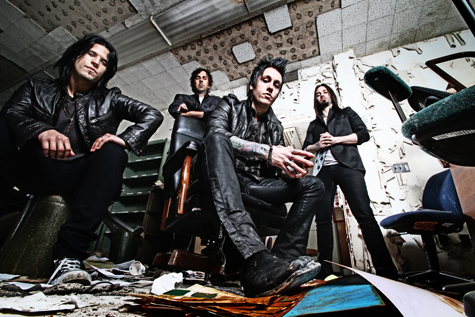
Most of us would agree that bars are wonderful places. They’re great places to go with your friends or significant others, or to meet new friends or significant others (at least significant for a night or so). And, hey, if you go alone, your bestest buddies Jack Daniels and John Jameson are already there waiting for you. Besides sources of booze, bars can also be houses of inspiration. Artists, writers and musicians have flocked to bars for as long as they’ve existed hoping to find their muse—either at the bottom of a glass, or hidden in the cacophony of overheard conversation. As Sacramento heavy music purveyor Anthony Paganelli tells us, his newest band Horseneck owes a lot to local bars.
He had known bandmate Lennon Hudson through their mutual manager, Eric Rushing. Paganelli and Hudson were both entrenched in the music scene as members of other bands (Paganelli as part of Tenfold, Shortie and Will Haven, and Hudson as part of Still Life Projector). The two got together one night at Golden Bear with Hudson’s longtime friend Matthew Ison, and the conversation eventually turned toward the three playing music together.
“We weren’t doing anything else but drinking and having fun,” Paganelli says. “We were like, ‘Might as well start jamming, kill time that way.’ We started a band. It wasn’t this band. Then we changed it to Horseneck and it just felt right.
“Will Haven wasn’t really doing much. They’d put out a record and did a little bit of touring in Europe, and that was it,” he goes on to say. “I was getting really bored and I wanted to start something new. I had all these riffs and ideas, so I called Matt and Lennon and said let’s do this.”
Paganelli says that he formed Horseneck because “there weren’t very many heavy bands out in Sacramento that I could relate to.” A counterpoint to the many scream-o and metalcore bands on the scene, Paganelli wanted Horseneck to hearken back to a different, blues-based era of metal.
“I was drawing influences from all the classic rock like Led Zeppelin and stuff like that…blues-driven rock stuff,” says Paganelli, who says he first started playing blues when he picked up the guitar, inspired by the music his father would listen to, before he got into punk and metal later in life.
The music got heavier, though, when the band decided to put Paganelli behind the mic. He says Horseneck felt right as a power trio, and they really didn’t want to go out and find a vocalist that would possibly stir the pot.
“None of us could really sing, so I just grabbed a mic and started yelling and it just worked,” Paganelli explains. “We became this heavy band, but that was what we wanted anyway. We wanted to do what everyone else wasn’t doing.”
Their vibe must have been right as the band released two EPs in 2013. The first, Belly Full of Blood, is the heavier of the two—a low, throbbing, grungy, Melvins-esque five-song EP with similarly gruesome song titles like “Dirt Turkey” and “Hooker Toilet.” The second, The Worst People Ever, is still heavy but is less pure brute force and has more of a calculating attack.
“The first EP, we had just started playing. That was the first five songs we wrote. I was trying to figure everything out,” Paganelli says of the difference between the two EPs. “I feel like it was a little bit harder of a record, too—more metal influence. With The Worst… EP, we were a little bit more organic about writing. We were jamming more, and I felt a little more confident with my vocals. With the new stuff we’re writing, it’s getting more organic, and I’m even more comfortable with my voice.”
The differences between the two was one of the reasons why Horseneck ended up having two separate releases as opposed to one full-length album.
“We never planned on releasing anything,” Paganelli says. “I gave it to Eric Rushing, because he’s a longtime friend of mine, and I thought he could help me get on shows or just network and stuff, and he told me to hold on to it and not release it. He said, why don’t we go back and record more songs, and we’ll talk to the label, Artery Records, and maybe release it through Artery.”
Horseneck has a distinctly different sound than many of the bands in Artery’s stable; however, both Rushing and Paganelli thought Horseneck could help the label diversify.
Both EPs were recorded at Pus Cavern with the help of Matt Pedri, who’s worked with Armed for Apocalypse and Will Haven in the past. The Worst People Ever was mixed by Dance Gavin Dance’s Josh Benton.
“We went back and recorded seven tracks, which became The Worst People Ever EP, but they sounded totally different,” Paganelli says. “We recorded them in a different process and spent more time… We weren’t going to put them both together as a weird sandwich, like, we don’t care if they sound weird. So I said, why don’t we release them as they were recorded? That sounds better. It makes more sense. We felt comfortable with that approach, and Eric thought it was a better idea as well.”
Paganelli says the band is currently writing new material for a possible full-length, hopefully to be released early next year. He says that the confidence in his songwriting that he built coming into The Worst People Ever is continuing to grow on the new material.
“I feel like I’ve thought it out a little more than I did in the past,” Paganelli says of the new material he’s working on. “Having more confidence in my ideas helps.”
Paganelli also has a new songwriting partner, his 1-and-a-half-year-old son.
“I play guitar for my son, and when he likes it, he dances around. So sometimes I actually bounce riff ideas off of [him],” he says. “We play guitar all the time at home and sing songs and stuff. It definitely changed a bit of my songwriting.
“It’s more difficult being in a band as a parent, because, obviously, you have a lot more responsibility,” Paganelli says of being a rock ‘n’ roll dad. “Touring is a little harder, practicing is a little harder, but it’s still doable, and it’s still fun. We still do it. I don’t think I could not do it. He enjoys it. He watches me do it, and maybe when he’s a bit older, I could play with him, or he could play with me. It would be rad.”
It’s funny to think that the good chemistry and momentum Horseneck has going probably started with a simple conversation between colleagues over drinks at a bar. The opening track on The Worst People Ever, “The Birth of the Neck,” is actually an homage to the band’s booze-y beginnings. It’s a short track featuring ambient bar noises—conversation, people fiddling about. In fact, the whole EP is based on the bar that Paganelli, Hudson and Ison usually hang out at, Cheaters.
“Most of the songs on that EP are reflections or stories or things that we went through hanging out there all the time,” Paganelli says. “It’s a bunch of inside jokes, well, not just inside jokes, but things that happened to us there. That whole EP is a little story about that bar…a little Cheaters storyline, I guess.”
So what is it that makes bars so inspiring?
“I love bars,” Paganelli enthuses. “I was a bartender for like four years. We collectively love to drink. Love beers and whiskey. I live on 32nd and Matt and Lennon live on 35th so Cheaters is smack dab in the middle and that is our home base. I love bars! I love bar noise. I love meeting people and the social interaction you get at a bar. It is different than any other place.”
So get out there and go to a bar. You never know. You might even become inspired. As if you needed another reason to go out drinking…
Check out Horseneck as they blow the doors of the place at Blue Lamp in Sacramento alongside Armed for Apocalypse and Death Valley High on July 12, 2013. Horseneck’s EPs are available via iTunes. For more on the band, go check ‘em out at Facebook.com/horseneckmusic.
Grady Avenell Returns for first new Will Haven album in years
A calming flow of synthesizer builds gradually, luring in all curious listeners. And for the moment, everything’s serene–but secretly there are other intentions. The role of the antagonist for this song’s tale has become apparent and all are vulnerable; no one is safe. Unexpectedly, the once soothing hum is quickly ambushed by the constant, albeit macabre, pulse of keys chiming steadily like an old grandfather clock at a slightly higher pitch. The sound instantly signals the mood has now changed and there’s no turning back. Melodic guitar suddenly strolls by, equally not to be trusted as the composition is then met by shrieks grave enough to raise the hairs on one’s arms and neck. The screams forever burn images of neck veins into your psyche, and then the music fades. For now, you’ve survived this six-minute dark opus written by one of Sacramento’s most respected longtime metal veterans, Will Haven.
What should have been the perfect theme song to Wes Craven’s A Nightmare on Elm Street had it been written 20 years ago, the track (“Lost” off of Will Haven’s newest full-length album, Voir Dire, translated as “Speak the truth”) is only a snippet of what’s to come from this band in the future. With original vocalist Grady Avenell back at the mic, the addition of keyboard and synthesizer courtesy of Adrien Contreras and a new bass player who happens to be the percussionist for a little band called Slipknot, Will Haven is back on the scene and in full force.
“This record is the starting point to what we can do,” explained Jeff Irwin, guitarist and founding member of Will Haven, at their practice space off of Marconi Avenue. “To me, this album is definitely deeper. When I listen to our old records, I see the skeleton of what we’re becoming. We’re getting older and we’re taking our time now. Before, we put out a record just because we knew we were going to go on tour, but now, recording days have slowed down, we don’t play as many shows and that energy is put into the music and we feel we have a deeper passion for it.”
According to Irwin, throughout what most might see as a four-year stint of silence since the band’s release of new material, the guys of Will Haven have never stopped playing music completely. Whether they were playing in alternate side project bands to fill their musical voids, or deciding to come together to play music in support of a close friend in a coma, Irwin credits the return of original vocalist Grady Avenell for ultimately fueling Will Haven’s passion to once again begin writing and rekindling the family vibe the band was built on.
“We played some of the Chi benefits and I just got the itch to do it again,” Avenell said of the shows developed to support Deftones bassist Chi Cheng, currently in a minimally conscious state after a 2008 car accident. “We talked about it and went forward from there. I’m excited. It’s been almost 10 years since I’ve put an album out and here we have an album coming out. I’m just looking forward to playing some shows and having a good time.”
Formed in ‘95 right after high school, Will Haven have since paved a hard road releasing countless albums and EPs, touring the world with the likes of Deftones, Earth Crisis and Slipknot, where they would find a new member to welcome into their family unit of pure metal: Chris Fehn, percussionist for Slipknot turned bassist for Will Haven.
“He’s been in the band since this record. We toured with Slipknot in 2000 and we just became good friends with him and we’ve been close ever since,” explained Irwin. “He’s really passionate about music, he’s not in it for anything else and that’s hard to find nowadays. With him, he’s like, ‘I don’t give a fuck who you guys are. I love the music. I love you guys. I just want to play.’ And that’s exactly what we want, someone who has passion, loves the band and is here for the right reasons.”
However, touring with world renowned bands such as Slipknot or Deftones kept the band grounded. And instead of rolling up to venues with tour buses and crews of roadies, Will Haven took the more punk rock approach, pulling up in an old van with one goal in mind–to share their music with a crowd of thousands.
“When we did tours like that, I think that made the band what it is. We’d go on tours with Deftones or Slipknot and there’d be thousands of people there, but for us, it would be almost like a punk rock show because they’re in buses and have crews, and we pull up in this crappy, little van and our goal is to try and kill everybody. We aren’t there to sell tickets. We’re there to show people that this opening band just kicked your ass even more than the headliner did. I think that’s what drove us and what kept us grounded; we’ve put in our work,” Irwin said.
With the band’s average age being in the mid-30s, Will Haven recall the days when self-promotion was solely up to the musicians. A time prior to social networks like MySpace or Facebook, where one didn’t just Google a band and decide whether or not they’re worthy, but actually visit a music store, purchase an album and research them at their own discretion. A time when tacking flyers to poles and actually speaking to people in person was prevalent–which later turned into inviting fans personally out to shows. Those days, go figure, are now gone. To the members of Will Haven, this has become a lost art form and they blame the ever-evolving monster that is social networking.
“Before, it was all about the music,” says Irwin. “We started before Myspace, and we’re kind of new to the whole Internet thing, but when we started, you made a demo tape and gave it to a record label and see what happens from there. At our age right now we’ve seen the decline of the ‘rockstar days.’ The labels and getting signed for a crap load of money doesn’t happen anymore. In the late ‘90s it just seemed like that took a shit. It’s a whole different world. So, we got to see the height of [the music industry] and we saw the crash of it, too.”
With more than 10 years of music behind them and an unwritten future ahead, the guys of Will Haven have become a well-respected entity within Sacramento’s tight-knit music scene. Whenever their name is mentioned, conversations of praise and an air of respect are present. Irwin said the band’s local popularity stems from the guys choosing to be true to themselves and to their music, but other local musicians say Will Haven have earned respect because they’ve always kept it real.
“These guys have been grinding it out since ’95, always doing their own thing,” explained Jesse Mitchell of Red Tape/Kill the Precedent and longtime friend of Will Haven. “Since the beginning, they have been following their own path, but still staying true and recognizing Sacto as being home base. We as fellow Sacto musicians respect what they have achieved, not just locally, but worldwide. They have always been good friends with my bands and are cute as buttons to boot. Will Haven will be sonically slapping your face for years to come.”

Will Haven’s Voir Dire will be released Oct. 11 on Bieler Bros. Records.
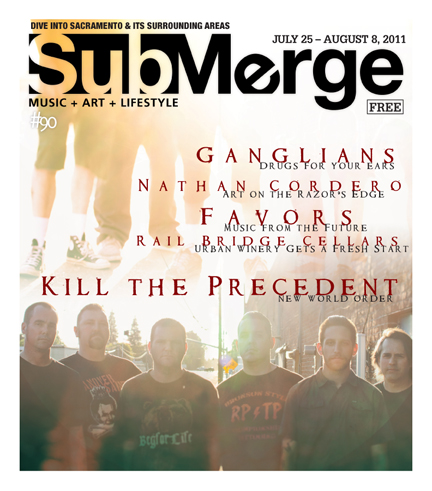
Kill the Precedent load up with a new EP
Industrial metal might conjure images of military-like precision with perhaps a totalitarian-style frontman at its controls. Kill the Precedent certainly evokes those images with their music. Thundering beats–both live and electronic–blast behind thrashing riffs and the two-pronged vocal attack of Twig the Exfoliator and The Ugly American. However, speaking with the two vocalists in a recent interview, the guys seemed jovial, bordering on jolly. For instance, if you were to call The Ugly American’s cell phone, you might hear The Dead Kennedys’ classic “California Uber Alles” playing while you waited for him to answer your phone. He said that since Jerry Brown was re-elected as governor, it seemed appropriate. “It’s such a fucking mess out here,” he quipped. “I thought it was pretty damn funny. At least it’s not an actor.” If KTP was indeed an army, in demeanor, they’d be more akin to the cool jokesters from Stripes than the cold-blooded killers of Full Metal Jacket.
Make no mistake, though; the band’s music is a no-holds-barred aural assault. KTP is ready to release a new EP, Stories of Science and Fantasy, which will consist of six original songs and two covers (The Smiths’ “Death of a Disco Dancer” and Jessica Lea Mayfield’s “We’ve Never Lied,” which Twig says was recorded in a hotel room in Oakland). Evoking the days when bands like Ministry and KMFDM crashed mainstream rock’s party, songs such as “Questions for Weapons” wield an imposing arsenal or metal riffs and huge beats, courtesy of electronic beatsmith/guitarist Hamburger, guitarist Killsbury and drummer Sgt. Pepper, while “Free Reign” is a throbbing, almost dance-y track highlighted by Jon the Jew’s pummeling bass line and an underlying, monolithic electronic groove.
Members of the band are no strangers to the Sacramento rock scene. They have played in bands such as Red Tape, Diseptikons and Rivithead in the past, but Kill the Precedent started as a side project of The Ugly American and Hamburger.
“Hamburger and I got together in 2006 and started screwing around with the drum machine,” The Ugly American explained. “We were kind of doing a little Big Black kind of deal, just having some fun. We recorded some music and got a hold of Twig, and I said, ‘I got to record some vocals, can you come down and help me out?’ We recorded vocals. Twig and I had been friends for many years, and he was giving me this blank stare, so I was like, ‘OK, you didn’t like it, but thanks for coming down and recording.’ And he said, ‘No, I want in. I’m fucking in.’ He took over from there.”
Twig’s introduction to the band was through the song “Cop Out,” which will appear on Stories of Science and Fantasy. More songs were started, but Twig said they were left unfinished. As each new member of the band became a permanent fixture, the songs began to flesh out.
“I wanted Killsbury to put a guitar riff over that–just that one song [“Cop Out”],” Twig said. “I’ve been in bands with all these other people in Red Tape and Diseptikons, and I was like just do this one song, but then it became do this song and that song…and eventually that’s how each member has come to be in the band.”
For The Ugly American, Kill the Precedent became a way of rediscovering the music he loved to make in the late ‘80s and early ‘90s with bands such as Rivithead and Battalion 53 after years of playing in punk bands.
“It dawned on me that I really missed that shit,” he said. “It was powerful, it was fun, it was endless. You could do whatever you want and get away with a hell of a lot more.”
In the following interview, KTP’s two vocalists fill us in on the making of the forthcoming EP and what draws them to making this kind of music. We find out that the reason why the harsh-sounding vocalists are so jovial is because they’re playing music they actually love.

It seems like industrial is a genre of music that’s gone back underground. Is that part of the excitement of revisiting it?
The Ugly American: Kind of, but not really. There’s no denying that those bands have had an influence. It’s obvious–and it should. It’s fucking awesome music… I can just say I missed the power of it.
Twig the Exfoliator: I liked the freedom of it. When we first started jamming around, with Jeremy from the Snobs, the bass player, was doing a bunch of electronic beats and me and [Ugly] would sing over it. It wasn’t hip-hop singing, but it was like a Fugazi overlay over dance music. I definitely wanted to not do just Ministry type stuff, but I wanted some melody in there to make it a bit different.
Listening to the music, you can definitely hear that sort of punk-type melodies.
Twig: Whatever [Hamburger] makes up beatwise and gives to us, half of them could be more on the dance side, some of them are more hard and fast, or slow and driving. If we hear something that we like, we’ll get working on that. Part of the reason why I wanted to do this was because I didn’t want to work with drummers anymore [laughs]. I was mad at all the drummers I’ve ever played with, and they take too long to set up. I was sick of loading all their shit into my van. That was the original idea, “Oh, we do whatever. We don’t need a drummer. Be like a hip-hop band, just plug in an iPod and do it like that.” That’s the way I wanted to do it. I wanted to put on a big production of a show, but within our budget.
Ugly: When Twig was on tour with Hoods–I think they were in Europe. He was adamant about it. He was like, “No drummers. I don’t want any fucking drummers.” Before we even put a drummer in there, I wanted one, because I wanted to add to the power and the beats and make it sound as large as we could. But he was all, “Hell no, we’re not doing it.” So, he goes to Europe and we grabbed our old buddy [Sgt.] Pepper. We brought him in to practice while Twig was gone. When he got back, he showed up for practice, and we were like, “Oh look, it’s…Pepper.” He was like, “You dick.” [Laughs.]
Twig: [Laughs] But it worked out.
Twig, you said you came in and did the middle section of “Cop Out,” but after doing that you wanted in. What drew you to this project?
Twig: I wanted to do something different. I wanted to do drum machines and just sample stuff by myself, but I’m completely computer illiterate. I don’t know how to do any of that stuff, and I couldn’t get anyone to do it. I talked to [Ugly], and they were already doing it for a couple of months, so I went in to record with them. The beats were big and huge, and it was something different. Since he let me even try something, and I could overlay a couple different vocal layers, and me and Sean could go back and forth instead of having to write a song’s lyrics all by ourselves–and you know, run out of breath–it made it better that we could share the vocal part. I liked that. I liked who he was working with, because I had known [Hamburger] from Rivithead and Battalion 53. We were also working with Evan at that point, Tha Fruitbat.
It seems like everyone who has come into the project has left their own stamp on it. Is that how the songwriting goes or do you start with the beats and go on from there?
Twig: Hamburger does all the beats and stuff. He’ll do two different parts with maybe some guitar, because he plays guitar too. He’ll just send us two-minute loops so we can get an idea about it. Then usually we will come up with singing structures, and then we’ll leave it alone. We won’t finish anything, and then we’ll bring it to practice and everyone else will listen to it and have their input. We start arranging the songs from there, cutting out parts, changing the drum beats, adding different parts, then we actually start writing the songs, the lyrics and stuff.
Ugly: It goes in reverse. It’s not the typical way you write a song, but it’s totally working for us.
Twig: Everyone’s really busy, so it’s all sent over the computer. Hamburger will send the beats to us, and we’ll pick the ones we like–the whole band will. And we’ll just work on it from there.
A lot of the bands we were talking about as influences before are largely associated with one guy, like Al Jourgensen for example, but it sounds like you guys actually play the songs to write them, which I think is kind of interesting for industrial music.
Twig: It’s like any other band. We’ll start arguing…but it all works out in the end as long as no one’s picky and tries to be the highlight of the song. Everyone knows their place.
Ugly: There are no egos, arrogance or bullshit. I know this sounds hokey, but it’s a completely collective effort. Everyone has their say. Like Twig says, we’ll argue to friggin’ death over it, but everybody’s got their two cents, and it just keeps piling things on without making it too much. It’s one cool idea after the other. It’s fun. I think the biggest thing is just that it’s a hell of a lot of fun.
I’ve seen that you guys have had girls in costume dancing at the shows, people covered in blood, synching up videos to your songs. Is that something you get together and collaborate on?
Twig: [Killsbury] handles most of the video stuff. He takes a while to get it with the beats and intros to every song. Except for [Hamburger], none of us are that great with computers. To do all that is a bit of a learning experience. And we don’t do it the way we should. We’re rolling into shows with DVD players and stuff, and a projector from like 1992.
Ugly: We try to change it up every time if we can. We did a good run, if you don’t mind me saying, at Blue Lamp. We called it “Cocaine Drug Dealers” or “Colombian Drug Dealers.” Everyone in the band was dressed up in cammo and we were dressed up in white suits. I filled up a bunch of baggies with flour. It was a great show, but it was the stupidest thing I ever did. Twig and I started throwing these bags of flour out into the audience and hit a fan. It went everywhere. Everyone was covered. I got off stage, and the guy was like, “It’s going to be $450 to clean up the place.”
Twig: It’s kind of like having sheet rock down or something. You can’t get rid of it… All the bottles were covered. We were like, “$450? No, we’ll come in tomorrow.” So we were hung-over as shit, and we had to be there at noon the next day. He was waiting for us with the mops, and he’s like, “Here you go.” Of course he opened the bar, and we got drunk and cleaned that place for four or five hours, and I can say it’s the cleanest it’s ever been [laughs]. It’s the cleanest club in Sacramento.
Kill the Precedent will play an EP release show at Harlow’s on Aug. 6, 2011 with Will Haven, The Snobs and City of Vain. Tickets are just $10 and can be purchased through Harlows.com. For more information on KTP, like them why don’t you at Facebook.com/killtheprecedent.
Beloved Sacramento rock band Shortie will play on Aug. 20, 2011 at Ace of Spades, their first show since breaking up five years ago. Guitarist Anthony Paganelli (who currently plays in Will Haven and also has a new project called Horseneck) recently told Submerge, “The idea of the Shortie reunion came up because we all were chatting about music and projects we were currently and recently in. Ryan [aka Pogus, vocals] mentioned that we should all get together at some point and hang out and watch our old tour footage. He put up a couple songs from a show we played at CBGB on Youtube. Then, of course, the idea of us playing again came up.” The guys hit up Eric Rushing to see if he’d be interested in hosting the show at his new venue, Ace of Spades, and he didn’t hesitate to say yes. “Eric was our manager,” Paganelli said. “So it’s full circle.” Shortie saw a fair amount of success back in their heyday: record deals, sponsorships, legit tours and songs in movies (2005’s Hostel), television shows (Viva La Bam, CSI, North Shore) and in video games. What I’ll always remember Shortie for, and what I’m looking forward to seeing most on Aug. 20, was their balls-to-the-wall live energy. They put on a damn good show back when they were young bucks. Let’s hope they can still bring it. “We are just so happy to play this show and have our friends there so we can have a super good time and party all night long,” Paganelli said of the reunion. “So many people we haven’t seen since the last Shortie show will hopefully make it out.” A slew of killer bands will be opening, including F1rst Class Citizen, Eightfourseven, Self Centered, Above the City, The Seeking and Mark Wears Clogs. Hit up Aceofspadessac.com for more information.
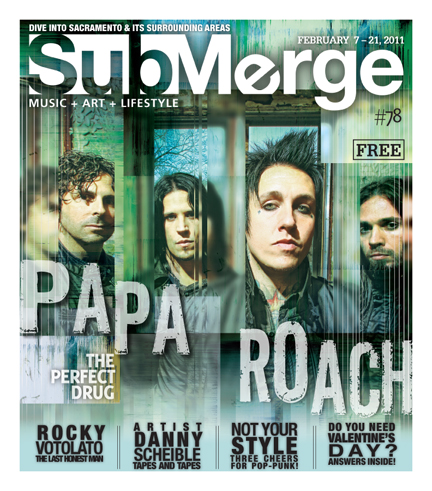
Papa Roach’s Jacoby Shaddix is addicted to bringing the rock
Love ‘em or hate ‘em, there is no denying that Papa Roach has earned their rank as one of the most successful bands to come from the Sacramento region. They’ve sold upwards of 10 million records worldwide, have toured the globe for over a decade playing venues packed with adoring fans and have truly lived the rock ‘n’ roll lifestyle. But for every high point, there’s been a low. Be it battles with their record label or battles within the band itself, Papa Roach has shed its fair share of blood, sweat and tears, most notably when they parted ways with long-time drummer Dave Buckner in 2008. It wasn’t a smooth split. Buckner, who in the early ‘90s co-founded the band with vocalist Jacoby Shaddix, filed suit against the band saying that they owed him money. They ultimately settled out of court. Papa Roach has since continued on with new drummer Tony Palermo of the San Diego rock group Unwritten Law.
Through all the ups and downs, there have been a number of things keeping P-Roach pushing ahead, Shaddix explained during a recent interview with Submerge. “I would say our relationship with our fan base, the kids that are coming out to the shows being affected by the music,” he said. “We’ve just got that drive inside of us as a band. We’ve got this heart that just fucking pops. It’s all we got and it’s all we need. We all are living this dream, which sometimes can seem like a nightmare, but I’d sound like a bitch if I were to complain. We just love it.”
As for the incalculable hardships that always seem to creep their way into the picture, Shaddix said that after a career like theirs, he and his crew are ready to take on anything. “It’s always a challenge. You’re always up against a challenge,” he said. “But the members of this band are always up for it. I think it makes it easier for us as time goes by too because we’ve just seen so many genres come and go and so many trends come and go.” He chuckles. “We almost came and went.”
In the following interview, we chat with Shaddix about his band’s deep Sacramento roots, how making music is like a drug, their plans for a new full-length record and more. Be sure to catch Papa Roach live in Sacramento for their first time in years when they headline Ace of Spades two nights in a row on Feb. 25 and 26, 2011.
What are some of the first thoughts that come to mind when you think back to Papa Roach’s humble beginnings when you were gigging in and around Sacramento all of the time? Do you ever trip out on how far you’ve come?
For me it’s a daily kind of realization, more so when I’m home around the people that I was with. Not only am I with my band on the road, but then it’s like we’ve got sound guys and light guys, a whole crew, you know? I never had that back in the day. Then I come home, and I’m back around my wife. She’s been with me since I had Papa Roach in the very beginning. We’re old school. We go through our old photos, and we see pictures of me and my wife and my band from way back in the day. My band was in my wedding way back. It’s a trip, you know, especially when I come back home.
I used to go watch you guys in the late ‘90s at this little club near where I grew up, the Gaslighter Theater in Gilroy, Calif. Do you remember that place? That was right on the brink of when you guys were getting the major label deal and whatnot I think.
Fuck yeah, dude! That was a really cool time for P-Roach.
I tripped out when talking to Eric Rushing, longtime Sacramento music enthusiast and promoter, the other day about that era of P-Roach because he was like, “Yeah those were my shows even down there. I was at most of those shows!”
Yeah for these upcoming shows that we’re doing in Sacramento, just to interject on that point, it’s kind of a full circle for us 10 years later. Eric and Brett [Bair] have been very successful. Brett used to manage Papa Roach; we split the sheets, we’re still OK, and we’re friends and such. But it’s cool to see that people who started in Sacramento are all still around here killing it. That’s even kind of why we wanted to put the type of bill together that we put together.
Yeah that’s cool. It’s all Sacramento cred-bands.
Yeah, bring it on home!
So the first night it’s Track Fighter, Will Haven and you guys. The second night it’s Lonely Kings, MC Rut and you guys. So many good Sacramento-based bands! I’m especially digging MC Rut lately. They’ve got a crazy work ethic. Are you familiar?
Fuck yeah, dude. That record is one of my favorites. I mean you’ve got to work hard in this business no matter what. If you want to make it, you’ve got to go in and slug it out in the trenches and build a fan base by playing rock shows. That’s the proving ground for rock music is touring. If you come with a hot song for a minute, that’s all good, but can you go out and tour and pack houses and rock audiences throughout America? Not just like San Francisco and New York, I’m talking, like America, you know what I mean?
Bringing it back to Sacramento for a second, don’t you guys own a studio space downtown? What’s that space all about?
Yeah right now it’s just pretty much essentially a demo studio for Papa Roach, and we’ll have some bands go in there. Like Dance Gavin Dance is going in a few days. They’ll be in there making some noise. Michael Rosen, he used to run out of J Street Recorders, Brian Wheat’s studio, he’s been bringing down some of his gear. He’s got really good gear, and he’s pretty much running it like a proper studio at times with bands. So that’s cool as well. We just don’t want it to collect dust while we’re out on the road.
Must be nice to just to get new riffs and song ideas recorded fast?
Yeah, exactly. I just got a new jam from Tobin [Esperance, bass] today actually. He programmed it on his computer, did the beats himself. There’s no guitar on it yet. It’s just keyboard sounds right now, but it’s like Papa Roach meets…I don’t know, it’s real good though.
So it’s sounding like there’s going to be another full-length ready for release sometime when? Next year?
Pretty much what we’re doing is this, Doomsday Radio, 2012, Papa Roach.
Oh really? I didn’t see that anywhere in any of my research! Is that a working title?
Yup. Working title, Doomsday Radio. There you go, print it.
Throughout the years Papa Roach has morphed quite a bit musically; it always seems like you’re progressing your sound. Can you talk a little about the many phases of your band?
I think for us it’s always been, “Go where the music takes us.” That’s the goal with Papa Roach: If it moves us, we think it will move our fans, and sometimes that’s true and sometimes it’s not. I think more times than not it has moved our fans. That progression that you speak of, we’re still in it. The track that Tobin just sent me, I was like, “Oh shit here we going again, we’re flippin’ it up.” But I’m into it, man. Music is this drug, and you want to try all different types of them. It’s like sex, you know, it’s like you do it the same way over and over and it just gets boring, so you’ve got to flip it up, put a wig on her, hit it doggy style. Switch it up.
What sort of vibe does the new song that Tobin sent you have? I read somewhere that Jerry [Horton, guitar] said the new record will have more electronic elements or something like that?
Oh yeah, for sure. It’s like somewhere between Prodigy meets Nine Inch Nails meets Papa Roach. It’s still got our sound to it, though, like when you hear the groove and the vibe, it’s still us, it’s just sometimes we want to use that texture in the music. I think we started to dabble in it with songs like “Burn” and “Kick in the Teeth” [off of 2010’s Time for Annihilation…On the Record and On the Road]. I think that it’s fun and our fans are receptive to it, and we like it because it opens up a whole new floodgate for us. I think it can make our music more beat-driven at times, which will be fun.
What’s one big goal of yours for the next record?
I don’t want to make a record that sounds like I’m a 35-year-old man, because I am a 35-year-old man, or I’m going to be, but I’m an exciting motherfucker when it comes to making music. I don’t want to make music that sounds compromised. That’s the goal for the next record is to kind of–and we’ve discussed this together–is to make a record that’s a little bit more experimental at times and a little bit more progressive. The last couple records have been song, song, song, etc. If you look back at one of our first releases, Old Friends from Young Years, there was a whole concept behind the way the record was laid out. I think we want to do something like that again.
Like as far as flow and transition tracks and whatnot?
Exactly, just to kind of dig deeper and make it more of an experience this time around. Not really a concept record, but something that is more than just song, song, song, song.
Even to the way that we’re going to do music videos in the future and the way that the band is imaged as well. For us, it’s a goal to kind of evolve all elements of what we do just a bit.
You might be getting older, but I sense that you are just as hungry as ever to succeed.
Yeah, look at the Chili Peppers. You don’t think of it that way. You think it’s just timeless. That’s what we’re going for. We’ve got a long, long road ahead of us. This is just another step in the path for us.
Papa Roach has heavy staying power in the music business, doesn’t it? It’s been so many years, but you guys remain relevant.
We definitely don’t take that shit for granted. But the fight is not over, dude. You look at a band like Green Day, they made that record, you know what I’m saying? For us, we still feel like we have that record in us. We still feel like we haven’t made the record of our career. Maybe it’s just that junkie inside me.
Papa Roach will play live in Sacramento for the first time in years at Ace of Spades (1417 R Street) on Feb. 25 and 26, 2011. Tickets are available at Dimple Records, The Beat, Armadillo (in Davis) and online at aceofspadessac.com. Grab their latest album, Time for Annihilation…On the Record and On the Road, a collection of nine live renditions of P-Roach hits and five newly recorded tracks, at record stores everywhere or through any major online retailer.
Helmet, Bison B.C., Will Haven
Harlow’s – Sacramento, Calif. – Wednesday, Sept. 8, 2010
Words by Bobby S. Gulshan
As promised on the flyer, Grady Avenell has indeed returned to vocals, and the local faithful flocked to Harlow’s for Will Haven. Some call it metalcore, or post-hardcore, but Will Haven’s particular brand of bombast proves too elusive for quick categorization. Opening with “I‘ve Seen My Fate,” the dual guitar attack combined with keyboard atmospheres and driving rhythmic breakdowns conspired to create a steady sonic barrage. Avenell’s searing screams hammered the point deeper. With his back often to the audience, Avenell and the rest of Will Haven tore through their set with high-energy physicality, head banging in lockstep with one another. Songs such as “Helena” and “Carpe Diem” displayed the straightforward appeal of Will Haven’s approach.


Their music relies on power and heaviness coupled with a driving rhythmic intensity. Tonally, the riffs were almost monochromatic, with guitarist Jeff Irwin providing occasional hints of color with high-pitched staccato runs. Closing with “Stick up Kid,“ the band displayed its full physical force, finishing up a blistering set of six songs that left the hometown crowd hungry for more.

Hailing from the Great White North, Bison B.C. took the stage in the second slot. On tour with Helmet in support of their new LP, Dark Ages, the Canadian metal outfit added classic thrash-style riffs to a night of hardcore punishment. The guys themselves look like modern primitives, as if they wandered out of the same deep forest as the mythical Wendigo, which they reference in one of their more epic tunes. James Farwell and Dan And provide guitars and vocals, one singing with a characteristic death metal growl, and the other providing a cleaner vocal on more melodic sections. As drummer Brad McKinnon told me after the show, “When I first heard Dio all those years ago, it hit a place, and it’s been metal ever since.” Indeed. Bison B.C. fills their sonic space with complex riffs and blistering solos, as well as hardcore breakdowns. “Slow Hand of Death” displayed Bison’s ability to combine thrashing riffs with off-kilter time signatures, moving seamlessly into a galloping melodic section, and then returning to churning extended breakdowns. “Wendigo Pt.1” featured both guitarists locked in harmonies that evoked one part Slayer, one part Iron Maiden. However, the development of the songs–particularly the ability to transition from a blast beat to an extended break with ease–is signature Bison. The Harlow’s audience seemed a bit unprepared for this metal onslaught, but showed their appreciation nonetheless.
Turning 50 doesn’t seem to have slowed Page Hamilton. By the time Helmet took the stage, Harlow’s was packed and surging, and the seemingly ageless Hamilton did not disappoint. He told the audience that he was supposed to be on a juice diet, and then promptly took a swig from his Corona. Hamilton played to the audience, constantly engaging them with wit and charm. At one point between songs, Hamilton brought up the subject of football, taking a quick shot at the Pittsburgh Steelers by pointing out that “their quarterback is a rapist.”
Helmet’s classic album Meantime was released in 1992. While new tunes still bear the signature of Hamilton’s “glory days,” nothing sounds dated. Helmet has mastered extended breakdowns, utilizing various downtuned and detuned setups to create deep, heavy tones. The almost mechanical rhythms are persistent and stark, while the start-and-stop nature of the riffs keep bodies moving with an internal groove. Hamilton’s clear vocal melodies are somewhat refreshing in an age where the growl has become the lingua franca of hardcore and metal. Yet the riffs and breakdowns are as hard as anything out there. Old tracks like “Ironhead” and “Role Model” blended perfectly with new material, like the title track of the new album, “Seeing Eye Dog” and “So Long.” The show, of course, would not be complete without a performance of “Unsung,” which jolted the crowd into a frenzied sing-along with Hamilton. The back and forth with the audience continued during the encore when Hamilton asked the audience to pick three songs. “Black Top,” “In the Meantime” and “I Know” finished off the show, as requested by the fans. For a band that hasn’t toured in some time, Helmet and Hamilton have not lost a step, and all indications point to a long and hard-hitting future for the hardcore legend.
Death Valley High is All the Doom with None of the Gloom
What else to do in the face of a zombie apocalypse besides dance your ass off? Sure, you could hunker down in a fortified location with some canned food and a shotgun, but you’re really just delaying the inevitable—that is, if the movies hold true. You might as well just have a good time before you’re eviscerated by a ravenous horde of undead. That would seem to be the thesis posed by Death Valley High’s latest effort, Doom, in Full Bloom. The San Francisco-based “doom pop” group may be heavy on the doom, but they ditch the gloom in favor of dance-worthy beats and savage pop-rock hooks.
Death Valley High began as the brain child of producer Eric Stenman and long-time rock musician Reyka Osburn, whose talents have graced two notable bands in the past: Tinfed and Ghostride. Death Valley High was born out of Osburn’s confusion over where his other projects were headed at the time.
“I didn’t know where Ghostride was going,” Osburn says. “I had a body of songs that weren’t Tinfed, they just didn’t feel like Tinfed anymore”¦ Everybody was assuming that I was going to move into this Queens of the Stone Age kind of area. It was tempting to go that type of route. When I realized I didn’t want to go desert rock, I shifted everything to the death side. I wanted everything to be black and white, and horror movie style.”
Death Valley High was the result. The band’s first album, 2007’s The Similarities of the Loveless and the Undead, featured Stenman writing and performing bass lines and working behind the board as producer. Other than that, however, the album was the sole work of Osburn, who says he wrote the songs “from the drums up.” It’s not that Osburn is a typical control freak. In fact, as a member of Ghostride, he had very little input in the songwriting.
“Basically, I was just the singer in that band. I didn’t do anything,” he says. And it was a role he really enjoyed.
“I love the challenge, because you have to integrate more with the music and someone else, as opposed to when I pick up a keyboard and start to write something, I’m already thinking what the vocals are going to do,” he goes on to say. “I already have an advantage. I already know if something is going to stick or if I’m going to like it, because I’ve already started to put those things together. With Ghostride, I don’t have much of a say, so I have to fit myself in the cracks, and I love it.”
Doom, in Full Bloom also showcases Osburn’s willingness to share creative duties. He says that the songwriting process for the band’s most recent album—released Nov. 3 on iTunes—was much more “integrated” than Death Valley High’s debut effort, a development he hopes will continue to evolve.
However, the extra hands on deck didn’t help the process move any more quickly. Osburn admits that Doom, in Full Bloom has been done for about a year. He says that breaking in a new bass player, Huffy Hafera; using two mixers, Stenmen and Alex Newport; and being on tour in Europe with Will Haven when the album was sent off to be mixed were all contributing factors in the delay.
“I thought I was going to pull my hair out at that point,” Osburn says. “It was like, it was time to move on to the next chapter, but we’re stuck on these last few pages.”
The delays caused Osburn to change the title from The Endless, which turned out to be sort of prophetic, to the current Death, in Full Bloom, taken from a tagline that was posted on the Death Valley High Twitter page.
“I was like, ‘We’ve got to change the name, because I think that’s got to be part of it,'” he says.
In the following interview, Osburn tells Submerge about the new album, his work as a DJ and his recent preoccupation with Rick Springfield.
On the Death Valley High Twitter page, there was a recent post that said you were warming up for your show at Annie’s Social Club by singing some karaoke. Is that how you normally prepare for a show?
[Laughs] You know, I wish there was a karaoke machine backstage, not just because it would be fun, but it would be helpful in a way. You get so used to singing your own songs, you know, and doing your own warm-ups.
Do you have a go-to karaoke song?
I can do a mean Rick Springfield. I’d spotted it in there, and I had Rick Springfield on my mind for some reason—like maybe thinking back to my childhood or something—so I pulled out a little “Jessie’s Girl.”
I’m thinking I might have to put it on my play list tomorrow night. I’m doing a rock and punk DJ set tomorrow night, and it’s four hours, so I’m pulling out everything. But I don’t want to be, like, Mr. Jukebox. I want it to be a little more fluid. But “Jessie’s Girl” has got to be in there somewhere.
Do you draw parallels between playing your own music and working as a DJ?
When I got into the DJ culture, I always thought that people didn’t put enough into it. Playing a show, you’re going crazy, you’re moving around, and I always tend to look at those as my favorite shows—when the band is going crazy”¦
It’s all performance, and I just try to be there with it. It’s almost the same thing when you’re playing a show, and you’re not all the way there in it”¦ I don’t know if you’ve seen a lot of hardcore bands, but the singer will all of a sudden start pacing before the show starts, trying to get that momentum. One DJ told me when I was first starting out, “Play your very favorite, newest song first, and just let the rest happen.” A lot of DJs are like, “I don’t want to drop my favorite track in the beginning,” but at the same time, whatever warms you up and gets you there, and gets the crowd ready for what you’re going to do, I think is very much the same.
Death Valley High has been called “doom pop,” and “doom” is in the title of the latest album, but it’s not really gloomy music because of the dance element. Is that a dichotomy you enjoy toying around with?
You’d probably find a lot of my favorite dance music tends to be a little somber. Right now we’re covering a Kid Cudi song, “Day ‘N’ Night,” and that’s a morose little ditty. It’s a lonely guy who starts to come alive at night. I find myself more attracted to that kind of thing; even though there is a thread of that, there’s still this upbeat vibe.
The thing about it is—Doom in Full Bloom—a lot of that doomsday thing, 2012, a lot of that started to develop right around when I was writing the record, so it just made sense. There’s not that many bands doing the dance-punk thing that had that kind of slowness interspersed in the music. I’m a really big fan of Godflesh, so I’m into that heavy, slow stuff that breaks into these weird disjointed beats. I used to be a drummer years and years ago, and that’s why I started DJing, because of drumbeats. I was really into drum ‘n’ bass and jungle”¦ Just growing up in that ’90s time when that doom metal was crossing over with industrial, I think that stuck with me a bit.
So DJing has really informed your songwriting up to this point?
Totally. There will be times when I’m wasted, and I’ve broken away from my pals, and I’m just being a spectator, watching everything happen; or I’m just listening to the music and becoming isolated, and a lot of times, I’ll start to drift. I’ll start getting ideas for lyrics or a guitar riff or whatever. It has influenced me pretty heavily. I’ve been DJing for 10 years or something like that, and I think I’m starting to get good at it right about now [laughs].
Before, we talked about how the hubbub over 2012 was in the media when you started writing the record, did that make a big impact on you when you were writing Doom, in Full Bloom?
This album, I felt like I was envisioning 28 Days Later—a zombie apocalypse sort of thing. I’ve read many places that experts, scholars, scientists or whatever, claim that if there were some sort of zombie outbreak, that would be the end of civilization as we know it. If there was a plague or a chemical plant that grew up and it changed us or whatever. I’m a horror fan, and the whole Death Valley High approach was that I wanted it to be in the horror genre thing without it being the typical rockabilly or psychobilly, or a Misfits punk rock. I still wanted to do what would be considered kind of different and risky, but still have that element”¦
If you read into the lyrics, they become about some sort of scenario that’s not real life, but it was important to me to describe daily life survivalism. Like watching a horror movie, it’s like, “Wow, that’s what they had to do to survive?” That’s like every day. I live in San Francisco, and that can be scary. Everything can be scary. I wanted to touch on themes that were human and natural, but give them my own twist.
Death Valley High’s Sacramento record release party will took place at The Fire Escape on Nov. 29, 2009. Armed for Apocalypse, Name and Rise of Caligula also played.