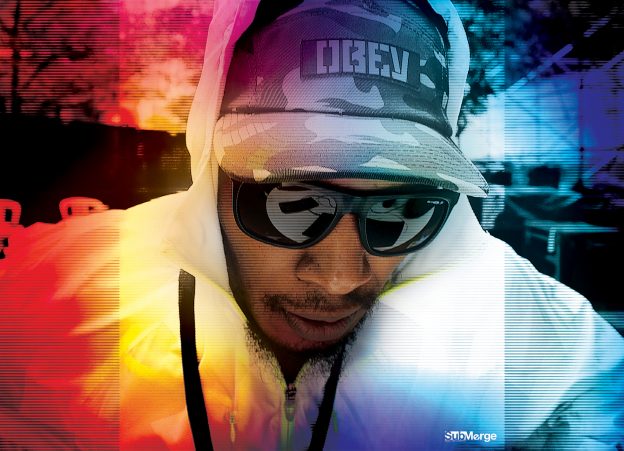
The ‘90s is considered the golden age of hip-hop. A Tribe Called Quest, Wu-Tang Clan, N.W.A., Tupac Shakur and The Notorious B.I.G. easily come to mind. The raw truth, political content, clever rhymes and seemingly countless notable figures have molded the style’s existence into the unique limitless genre it is today. One of those responsible is Oakland’s very own, Del the Funky Homosapien.
California’s role during the golden age is most notable for the rise of gangsta rap. Del was among those, however, involved with alternative types of reality. His rhymes consistently mark a distinct abstract sense of thought. He is known for his eclecticism and awareness of the past, present, and more dominantly, the future.
I was introduced to Del the Funky Homosapien’s sound through Gorillaz’s pivotal 2001 single “Clint Eastwood.” The track off their self-titled debut album shot them to stardom not only through the song’s melancholic tinges; the lyrics rapped throughout the tune by Del specifically kept audiences hooked. His verses make the song.
Though many give praise to Gorillaz and their own elaborate brilliance on the single, as a child I was frustrated and more concerned with understanding why the funky ghost from the video wasn’t rapping on all the other songs on the album.
Obviously, as I grew older I learned he wasn’t a ghost but an undeniable hip-hop legend. He’s had impressive albums like 1991’s, I Wish my Brother George Was Here (co-produced by cousin Ice Cube) and 2000’s Both Sides of the Brain. Plus he’s largely responsible for founding underground supergroup Hieroglyphics.
I got the chance to talk to Del the Funky Homosapien about what he’s been up to, his creativity and process, the Japanese language and his thoughts on today’s music before he headlines Concerts in the Park on June 9, 2017.
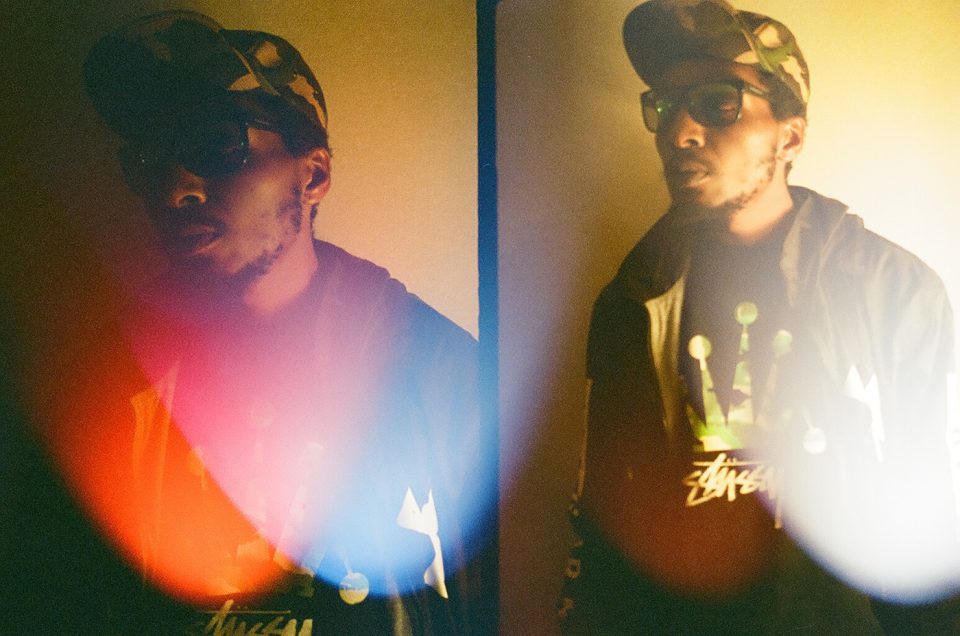
Photos by Galen Driver
Your last release Iller than Most was put out in 2014 and in interviews circulating the internet you tease talks of new material. Can you tell me a little about that?
Basically I’m trying to update hip-hop sound. You know, I like the aesthetic from the ‘90s—the golden age, whatever you want to call it. I like the idea, the process. I think it needs to be updated. Other than battle rap, it’s [sound is] missing. I mean I’m not going to say it’s missing, because I’m not aware of everything that’s on the planet Earth. I don’t wanna offend nobody by saying, there is no hip-hop in existence unless I perceive it. But for me, as an artist and as a fan, what I want to listen to is not readily available.
What goes into making a Del the Funky Homosapien project? Where do you usually start?
It depends on what type of project it is. Something like Deltron takes several years to make. If it were up to me, it’d be pretty basic. I’m trying to keep my music more rhythmic than anything else. I don’t want it too melodic. Like my idea of music is more from an African, afro-centric perspective, based more on rhythm like funk or hip-hop too, centered-around beats.
You’ve worked with MF Doom, Wu-Tang Clan, Zack De La Rocha—the impressive list goes on. Do you have any new collabs in the works?
I just did a project with Amp Live. He’s a producer for Zion I.
When’s that going to come out?
I don’t know … It’s finished now. So we’re just trying to figure out what we’re gonna do with it. We think it’s good enough to be sold. But the industry is kind of dominated by, you know, a few conglomerates.
On “Stay on your Toes” (2000) and “Immediate Rap Hits” (2014), you not only talk about the lack of originality in popular hip-hop, but you also cover greed and the dangers of giving up one’s creative integrity for mainstream success. How have you stayed so centered and grounded throughout your career?
I guess it’s just my personality. There are certain things I’ll do and there are certain things I’m not gonna do. I’m not gonna do things that are not within my belief system or my integrity. No matter what it is.
Regarding new artists, who’s standing up with originality these days?
A lot of cats in New York are very creative. L.A., too. Daylyt. Disaster is extremely creative. This cat named Steams. I’ll just keep it simple. URL [Ultimate Rap League] and We Go Hard on the East Coast primarily are what I’m into. King of the Dot, Black Ice Cartel I’m into, too. So these are like [battle rap] leagues. So anybody on those leagues, you’ll be safe with probably.
In the battle rap scene, anyway.
Yeah, in the battle rap scene. But I feel if they made records they’d probably make bomb records too. But I think that’s part of what’s missing in the music now. And I feel like that’s a big reason why people stopped listening to it [hip-hop] because the lyrics started going from being fun and clever to, “I’m threatening you,” or, “I got more money from you. Now I’m richer than you.”
Do you go to anyone first about creative projects? Or do you just get an idea, stick to it, and then pursue it right away?
Sometimes I talk to people about it, but I’m pretty much by myself most of the time. I mean I just contemplate things. I’m trying to figure out solutions to questions or problems I might have either musically or lyrically. Right now I’m studying humor. Wordplay is about half of what humor is. That’s why I’m into it. Just to get my lyrics more clever, to surprise you, keep you entertained or keep you locked in with what I’m saying. Like Richard Pryor was a childhood hero of mine. But I never thought I could be involved with it all because I had a misconception about it.
In an interview, you mentioned studying the Japanese language in college. I hear the influences of the culture in your music. Have you spoken any Japanese lately?
Not very much. I studied for like three years but obviously if you don’t use the language, you’re not gonna be able to speak it. So I don’t know a lot of it. I know how it works, but if I picked it back up and practiced it, I’d know how to speak it, ‘cause I know the syntax. I would need more than a refresher. You know I’d need the whole set of vocabulary. It’s basically a lifelong thing you don’t just learn in a few days.
When I listen to your music, specifically Deltron 3030, I hear the future. It reminds me of the dystopian settings in classic novels like George Orwell’s 1984 and Ray Bradbury’s Fahrenheit 451. Do you have a favorite dystopian novel? And if so, have they played a role in your music?
I’ve read a few. Definitely 1984 is one of my favorite books. That was a big influence on just how I look at things. Another that comes to mind is One Who Flew Over the Cuckoo’s Nest. Not the book, but the movie. Jack Nicholson is in it. So that’s when I started being a fan of him, kind of really. His acting was just really good in that movie. But just what it was about was like mental institutions and how they keep dogging people.
Can you tell me about how you, Dan the Automator and Kid Koala came up with the stories for Deltron 3030?
Well, I pretty much came up with the stories, they sort of filled some parts in but like really me and a friend of mine was chatting, I guess on AIM back then, and came up with the need of it. Then in about two hours we had the core of what I wanted the Deltron record to be. This is the second one. The first wasn’t really about nothing. It was basically just me battle rapping. Everything was just in futuristic terms with futuristic imagery and language and all that.
Do you think there will be a third one?
There could be. Dan [the Automator] got the music all ready. I just have to be interested in writing it. But honestly it takes so much, and honestly, I don’t get that much out of it. I don’t feel like putting the amount of work in it, compared to what I should be getting back to.
Another level of it is like, “Why make a third one?” If it was me as a fan, after the second one, if I’d seen a third one, I probably wouldn’t buy it. Like I wish they would make another game other than Mario Bros. But they’ll probably never do it. They’ll just sit on that little nugget they got forever and just leach and blood suck it out dry
How do you maintain sanity in this chaotic world?
Man, it takes a lot. I’ll tell you that. From dealing with crazy people that come in and out of my life, I’m pretty relaxed for the most part. I don’t consider myself crazy, but it takes work to not lose your mind. I just try to keep focused on what I’m trying to do. I skate a lot, too. I’d say skating is something that helps me definitely settle my mind.
See Del the Funky Homosapien live for FREE at Concerts in the Park at Cesar Chavez Plaza, downtown Sacramento, on June 9, 2017. Also performing will be Soosh*e, The People’s Revolution and DJ Epik. For more info, go to Godowntownsac.com. Check out Del’s latest album Iller than Most via the Bandcamp player below.
**This interview first appeared in print on pages 28 – 29 of issue #241 (June 5 – 19, 2017)**
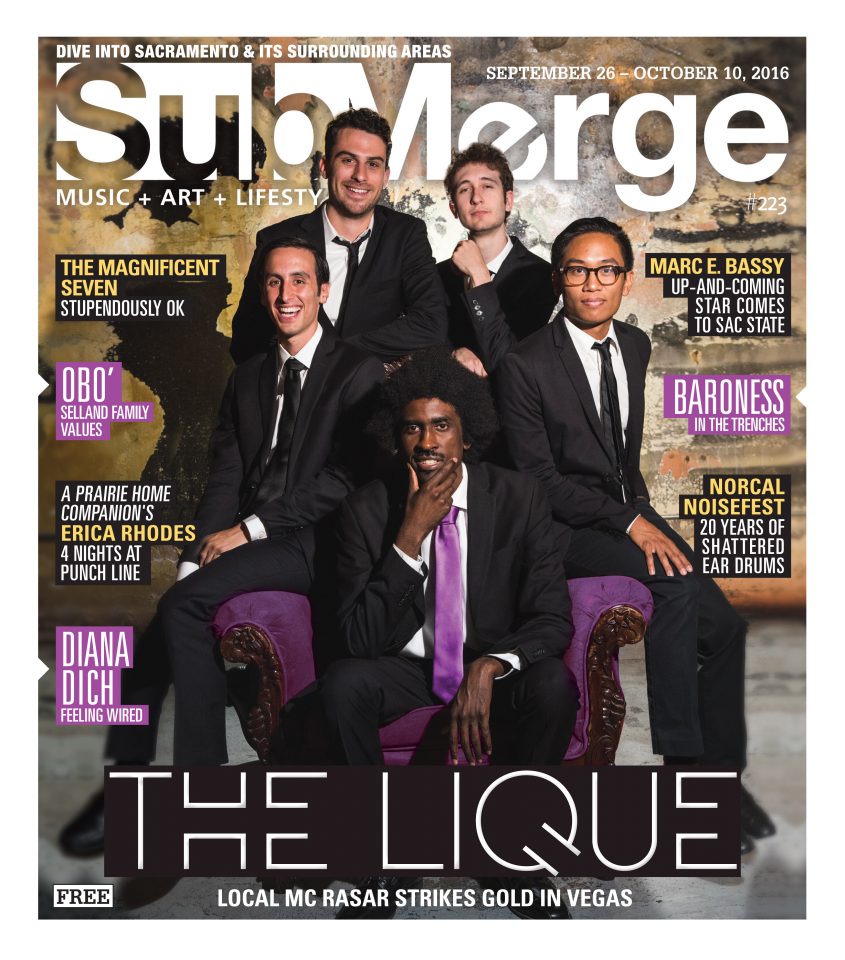
Followers of Sacramento’s underground hip-hop and spoken word circuits may recall the smooth, slick-talking voice of Rasar Amani, formerly Random Abiladeze. He was one of the kids behind the cash register at Dimple Records more than 10 years ago, the only MC on Sacramento sensation Joe Kye’s EP Joseph in the Well and a regular at local venues and colleges.
A call in 2013 from a close friend—world champion beatboxer and America’s Got Talent finalist Butterscotch—led Rasar to try his luck in Las Vegas. That call, Rasar says, forever changed his life. He credits Butterscotch for where he is today—the lead vocalist of one of Las Vegas’ top-rated new bands, The Lique.
Rasar wasn’t looking to join a band. He had completed a successful run in a nightclub show and was planning to leave Las Vegas last year when a friend told him about a group of local jazz musicians looking for an MC.
Guitarist Sean Carbone had a vision for a hip-hop jazz band. His University of Nevada, Las Vegas (UNLV) peers Jeremy Klewicki on drums and Nick Schmitt on bass joined him first. After offering the MC gig to Rasar, the group found Jason Corpuz (“the dopest piano player,” according to Rasar) and in the last year and a half, have scored a residency at a local club, toured venues like Brooklyn Bowl in New York, played music festivals and recorded the band’s debut album Democracy Manifest.
The Lique plays Harlow’s in Sacramento on Friday, Sept. 30 as main support at the album release show for Rituals of Mine (formerly known as Sister Crayon) with James Cavern opening the show. The following night, Saturday, Oct. 1, The Lique will head to Downieville, California to play at ZuhGFest, a grassroots festival at the Sierra Shangri-La Resort along the Yuba River.
Creation of The Lique and Democracy Manifest
Rasar says the guys didn’t know what kind of band The Lique was going to be when they formed. They started off playing his old tracks from the 10 albums he had recorded over the last decade, but as their fan base grew in a matter a months, the need for new material and a unique sound was evident. They had become THE hip-hop band in Las Vegas.
“We had the vision of being classy, wearing suits, having kind of a jazz feel,” he says. “We all got thrown in together and we knew we were musicians but it took a few weird talks about time and the fourth dimension and somehow politics and police brutality came up, but we had never talked about this stuff before over the four months we knew each other. When it came up, I thought, oh, we can go there? That changed the writing.”
Rasar’s past music is rife with political and social commentary, but he hesitated politicizing his fellow cats who just wanted to groove.
“But once we started talking about death and religion … now I write some challenging stuff,” he says. “That was a turning point in the kitchen.”
Bassist Nick Schmitt started writing riffs, building the jazz foundations of the tracks “Batman,” “Velveteen Dream” and “Nastiness.” This was The Lique’s first unique work.
To get a taste of what The Lique is all about, listen to the track “Billie’s Holiday.”
“It really shows what kind of band we are and goes to the heart of what we want to accomplish here,” Rasar says.
Hidden within the track are approximately 20 Billie Holiday songs. The song itself is about traveling, Rasar notes, and how we have to get away from our comfort zones.
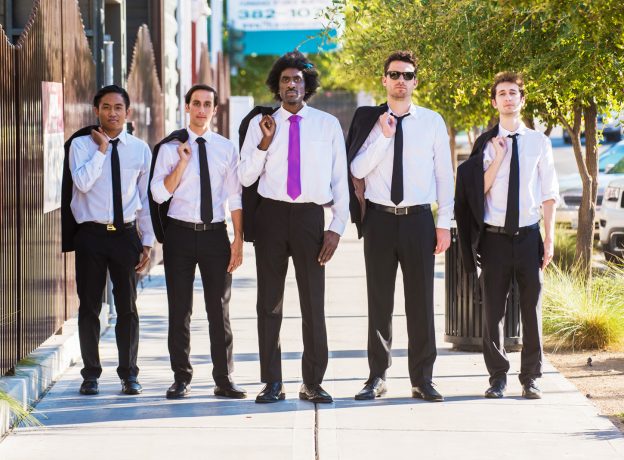
The Lique’s look also has a backstory and its own track on the record. The last track, “The Suits,” was inspired directly by what Rasar, who functioned as the band’s manager and booker until recently, calls the “red tape, hierarchical b.s.” of the music industry.
“We’re a conundrum to the higher ups,” he says. “We’re underground, but we’re sophisticated enough that it confuses people. There’s a ton of suits out here—that’s why we wear suits, because it’s ironic. It comes from me traveling the world with Butterscotch and realizing people took me more seriously when I dressed up. So the whole thing is a big, fat wink in everybody’s faces.”
Rasar tells the story of an agent saying, “We gotta appease the suits” when he tried booking a gig. The funny phrase reminded him of a James Brown song called “Pass the Peas” and the Brown-inspired lyrics and riffs for “The Suits” was born.
The industry’s recent repressive ways are a bit of a theme on the album, and Rasar talks at length about 360 record deals that cause artists to lose themselves and their brand as executive greed takes over.
“Walk into my Office” speaks to that in an eerie, Mr. Grinch meets Led Zeppelin kind of way, through a blend of storytelling, characters, voice changes and rap. The song, like many of the others on the album, has multiple layers and side stories. It’s one of the most bizarre hip-hop tracks you’ll listen to this year. You may even have heard it already in one if its reincarnations.
“Walk into my Office” is a remake from a song Rasar did in 2010 in collaboration with Adambomb from New Orleans. Rasar’s (then known as Random Abiladeze) album Indubitably has the original version, which is two-and-a-half minutes long (the current version is more than six minutes).
“I showed the band the song and they loved it,” Rasar says. “We started exploring it, and I would start telling crazier and crazier stories live with it that were never recorded.”
A few obscure references pop up in the album version, including a growl tribute to “I Put a Spell on You” by Screamin Jay Hawkins to honor him.
“I saw an awesome documentary on him on YouTube and he was a contemporary to Etta James, Stevie Wonder … all the original rock ‘n’ roll greats but was too weird and a one-hit wonder and fell off.”
The third theatrical verse in the song is also a tribute and intended for Dead Western, a dark folk/new American artist Rasar did a show with in Sacramento in 2008.
“He was one of the weirdest dudes I was ever paired with in my entire career and it was the best thing they could have done. You don’t really get a chance to do songs like this too many times in your entire life.”
(Note: Rasar has not been able to reach Dead Western to share the song, so, Dead Western, if you read this, contact Rasar).
Another standout track is “Democrashy Manifesht,” which juxtaposes Rasar’s compelling, often agitated lyrics of historical and political significance with the range and expertise of The Lique’s musicians. The backdrop could almost be a 1950s Las Vegas steakhouse, but without the veil in front of the realities of racism and power struggles.
Part of what went into the writing of “Democrashy Manifesht” is Rasar’s family background.
“My parents are older so I grew up on jazz, Motown, gospel, and my dad is from the old deep South, while segregation was still a thing,” he says. “He was born when WWII was rocking on, growing up around the Klan. Yes, I talk on current issues, but there are so many levels of how we got to where we are right now.”
“Democrashy Manifesht” is controversial, but The Lique finds engagement is an important part of their M.O.
“People are making noise but not impact,” Rasar says. “Every moment is potentially wasted if you’re not doing something toward progress and that’s what this album is about. How can we get all this genre bending, norms shifting, sounds and ideas out in 40 minutes without sounding rushed. The epitome of this band, this album, and the city of Las Vegas is how to fit an hour into 40 minutes.”
Collaborators on the Album
More than 20 people contributed sound to this album, including Rasar’s friend Butterscotch on the song “Soul for You.” Rasar credits her for making him the star he is today, connecting him globally through tours and appearances and bringing him to Las Vegas.
UC Davis alum Ruby Ibarra, one of Rasar’s best friends, is on “Nastiness.” DJ Mr. Vibe scratches on that song and he rolls with the Sacramento crew Sleepwalkers, who work with legendary crew, Hieroglyphics. Rasar reconnected with DJ Mr. Vibe when he moved to Vegas to head up music for the Jabawockeez show at MGM.
But for Rasar, the two biggest contributors to the album are sound engineer Dan Brodbeck and Bay Area hip-hop legend Zion-I.
“The unofficial sixth member of the band is Dan Brodbeck,” he says. “He is one of the best audio engineers in the world. He won a Juno [Canadian Grammy] and worked with Dolores O’Riordan from The Cranberries. We recorded in the back of an old vinyl record shop, which set the tone for the album.”
Zion-I is one of those people who is really big but you don’t know it until you see him, according to Rasar.
“Someone gave me his album in 2005 and it’s one of my top albums of all time,” he says. “I had a chance to open for him at Sac State and UC Davis years ago. When he was in Vegas last year, he remembered me. All of a sudden this person I had been looking up to all these years really wanted to connect with me as, it’s hard to say an equal, but we’re all equal as human beings. It was a dream come true.”
For Rasar, working with Zion-I was indication that he’s on the right path.
“The resilience that brings you back to the people you need to connect with, is what the song [Zion-I is on] is about, ‘The Frequency.’ The whole point is how your vibe attracts your tribe and that’s why we put him on the song. He always talks about that energy kind of like a hip-hop hippie.”
Learn more about The Lique and keep up with their tour dates at Thelique.com or at Facebook.com/theliqueband. Check out their debut album Democracy Manifest via the Bandcamp player below.
Panamanian-born Bay Area hip-hop stars Los Rakas gear up for Coachella
Words by Andrew Bell
Coachella is arguably the biggest festival in the world. Tickets sold out in just under 40 minutes this year for the two weekend-long festival that will include AC/DC, Drake, Florence and the Machine, Jack White, Lil B and over a hundred other musical acts including Panamanian cousins Los Rakas.
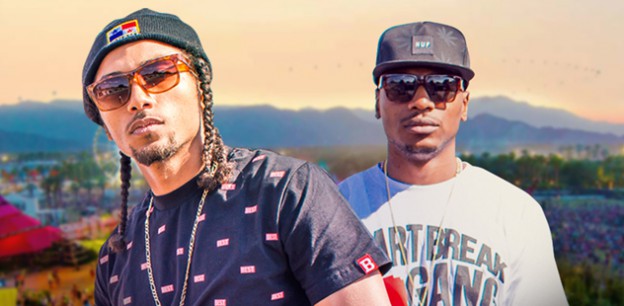
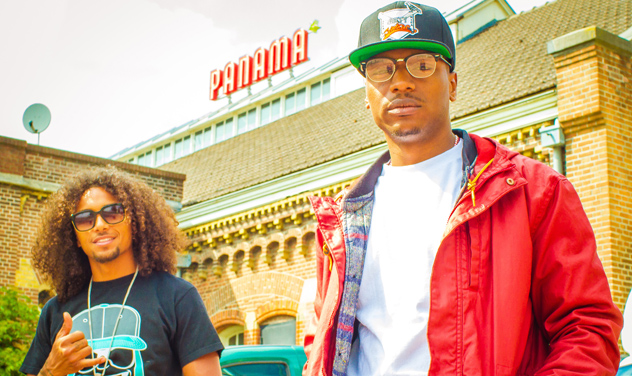
For those of you who haven’t been using their albums as a post-hyphy Rosetta Stone, Los Rakas is composed of MC Raka Dun and Raka Rich. The name Los Rakas is derived from Rakataka, a Panamanian slur for people from the ghetto. The duo is from Oakland by way of Panama and has been all over the country, captivating crowds with their bass-heavy bilingual mixture of dancehall, hip-hop, soul, reggaeton and R&B that can only be described as Raka music.
There was no business model when Los Rakas got started. There wasn’t a detailed plan to bridge a cultural gap by becoming one of the most successful Urban Latino rap groups in history. They just wanted to make music.
“In the beginning we didn’t really think ‘What genre we gonna do? Are we gonna rap in Spanish or in English? Who’s gonna be our audience?” explained Dun. “We were just creating and performing anywhere.”
The Panabay duo has come a long way from peddling mixtapes on Oakland street corners in 2006. Last year, Los Rakas released their first album on Universal Records. El Negrito Dun Dun Y Ricardo received rave reviews, reaching No. 1 in the iTunes Urban Latino Charts. The pair spent 2014 hitting festival stages both nationally and internationally, including Reggae on the River, Supersonico and Cali Roots, and became one of the first Latin acts selected for the Honda Civic Tour alongside Mexican EDM heavyweights 3BallMTY. The duo is one of only three Latin acts at this year’s Coachella including Chicano Batman and Nortec Collective’s Bostich and Fussible.
In one of the most pleasantly unexpected musical moves of 2014, new wave legends Blondie reached out to Los Rakas to feature on Blondie’s song “I Screwed Up” for their new Ghosts of Download album. The track is a playful apology for a drunken night driven by an infectious Cumbia rhythm and finished off with verses from Rich and Dun.
“She was looking for something different and they called us,” explained Rich.
“We didn’t believe it at first,” Dun jokingly explained. “I talked to Rico [Raka Rich] and he’s like, ‘Do you think it’s the real Blondie or is there some new school Blondie we don’t know about?”
El Negrito Dun Dun Y Ricardo follows the duo’s critically acclaimed underground albums Chancletas y Camisetas Bordada and Raka Love as well as a host of popular singles and features that gained them international recognition. Although it is their first major record label release, the Raka duo says the recording process was the same as it always has been for them. “Ever since our first mixtape, Panabay Twist 1, we called it a mixtape for legal purposes but in our minds we were creating an album,” explained Dun. “Every project we do we think of it as an album, whether it’s an EP or a mixtape song, we treat the track like it’s our album song.”
El Negrito Dun Dun Y Ricardo continues the Raka tradition of genre-bending and covers bases from hard-hitting dancehall hits like “No Tan Listo” to some deep hip-hop storytelling on “Sueño Americano” before ending on a highly danceable house/future bass note with “X-Tacy.” The duo took an Outkast-esque approach to El Negrito Dun Dun Y Ricardo and split the album right down the middle with Dun taking the first half and Rich taking the latter. The album showcases Dun and Rich’s individual personalities while also providing the seamless musical fusion that Los Rakas fans have come to expect.
Last year also saw another childhood fantasy come to fruition for Los Rakas when the Panabay duo had one of their songs selected for the soundtrack of their favorite video game. El Negrito Dun Dun Y Ricardo’s electro-cumbia/dancehall banger “Hot” was featured on EA Games’ FIFA 2014. When asked if they played FIFA before being included in the latest edition’s soundtrack, Dun laughs. “We’ve been playing FIFA since the ‘90s,” he explained. “So that was a dream come true.”
In the wake of last year’s success, Los Rakas find themselves lined up to step onto one of the biggest music festival stages in the world this April at Coachella. The feeling is understandably still a little surreal for the pair. “It won’t hit me, like, I won’t believe it until I’m actually rocking on stage. I don’t think we’re nervous as much as anxious to get on stage. We love performing,” Rich explained. “The bigger stage just gives us more room to do more kicks and more jumps.”
Before Los Rakas takes the Coachella stage, however, they will be departing on The Rapture tour alongside a couple of the most prolific West Coast lyricists of all time. The tour joins the duo with hip-hop legends Zion I and Locksmith, and hits Sacramento at Ace of Spades Feb. 17, 2015. “Our first tour was a hip-hop tour with The Grouch,” Dun said. “From there we did reggae tours and Latin tours, but we’re happy to be back on a hip-hop tour because that’s how we started.”
The duo is also busy working on their second studio album with Universal, but as of right now they are keeping details heavily under wraps. According to Los Rakas, there is no working title or release date currently, but they were able to divulge a little bit about the musical direction they were headed in on this next project. “We’re trying to give people a little bit of everything we do in one album,” Rich explained. “This time we wanna put everything in one plus some new genres you haven’t heard us hop on before.”
After years of hard work, gaining corporate sponsorships, touring the world and gaining major record label success, Los Rakas’ music has never deviated from its original intention. The Raka movement at its heart is still the same as it was when the cousins first stood on Bay Area street corners selling mix tapes out of the trunk. The Raka philosophy still centers around fearless creativity without boundaries. “It’s all about positive vibes,” explained Dun. “And not being afraid to just be yourself.”
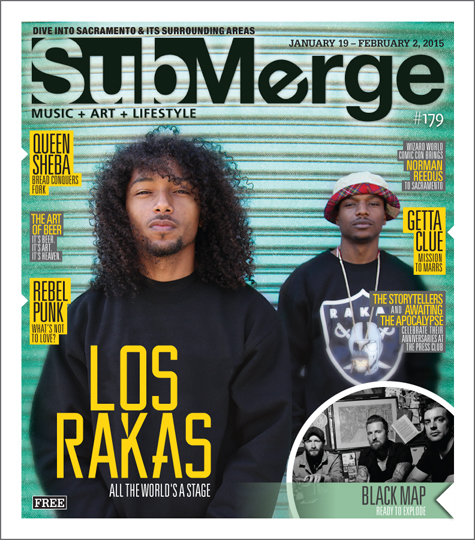
Missed out on those Coachella tickets? Los Rakas will play Ace of Spades Tuesday, Feb. 17, 2015, when the Rapture Tour rolls into town with Zion I and Locksmith. The all-ages show is $15 and starts at 6:30. Visit Losrakas.com or Aceofspadessac.com for more info.
Zion I looks inward on new album Shadow Boxing
Oakland hip-hop duo Zion I (MC Zumbi and DJ/producer AmpLive) isn’t a group that will rest on its laurels, though it certainly could. Zion I released its now classic Mind Over Matter LP in 2000, and since then, both as a duo and teamed up with The Grouch, have put forth seven more albums. On Oct. 2, 2012 Zion I will put out their new release, Shadow Boxing, a sort of return to form after the live instrumentation of their most recent effort, Atomic Clock. Nine releases in 12 years is a prodigious output, but according to Zumbi, productivity is the key to survival.
“You have to these days, to survive, you have to go a little bit crazy,” he says.
Crazy or not, it’s easy to admire Zion I’s body of work. The fire to create isn’t only borne out of a desire to make music, but to make something different each time out. Compared to the live beats and the somewhat stripped down feel of Atomic Clock, Shadow Boxing delivers a much beefier, in-your-face sound.
“We decided we’d do a live album. It was a totally different energy,” Zumbi says of the thought behind Atomic Clock. “It didn’t even feel like a record, honestly, Atomic Clock, it just felt like we were doing a quick project. Shadow Boxing feels like something I feel. Atomic Clock, I felt it when we made it, but it’s not as deep of an idea around it for me personally.”
It’s not surprising that Shadow Boxing holds a deeper meaning for Zumbi, who has become a father in the time since Atomic Clock. He has also been getting into martial arts as of late as a way to improve his physical health. His still new fatherhood and his practice of tai chi play a heavy influence on the themes found on Shadow Boxing.
“The title of the album is referencing the battle of the self, self-affliction, but also like the confrontation of finding something wack within yourself and having the courage to look at it, be honest and conquer it,” Zumbi says. “It’s about embracing your inner-demons, but taming them.”
The discipline he’s learned through martial arts have also helped his focus, Zumbi says.
“I’m creative, but I have bad habits like everyone,” he explains. “What do they say? Idle hands are the devil’s play thing?
“I have to keep myself in a cool place. If I mess around and stay up all night, I might get injured. If I mess around and stay up all night, my son’s going to wake up at 4 in the morning, and I’m going to be too tired. It’s basically giving myself these different responsibilities, just like for myself, just to become a better, more responsible human being, and it’s been a blessing.”
Zumbi also went back and referenced some of Zion I’s early albums when writing for Shadow Boxing. Though he says he doesn’t usually listen to the group’s past recordings, doing so this time around reintroduced him to the MC he was a decade or so ago. He liked what he heard.
“With the Mind Over Matter songs, I was like, wow, I was really in the zone,” he says. “I remember back then, all I did was rap, meditate and do capoeira. That’s it. I wasn’t chasing girls, nothing. The reward in life was to be in the studio and rap.”
What Zumbi heard was a hungry rapper. He made a conscious effort to put himself back in that headspace.
“I was like, OK, I was flowing better then than I am now,” he says. “I was really being honest with myself in some cases. I had to get back in the zone like that.”
Whatever his reasons, it certainly seems to be working. Shadow Boxing sounds big, mean, aggressive and even extremely catchy, as evidenced in the grimy hooks of the title track and the bouncy electro beat of “Human Being.” Beyond that, though, there’s a rich variety of tones at play on Shadow Boxing, from the house reggae-tinged “Sex Wax” (featuring Collie Buddz) to the smoothly soulful “Life’s Work” (featuring Goapele). Meanwhile, the over six-minute “Joe Frazzzier” stands out as a compelling centerpiece, a sort of hip-hop/prog hybrid.
“That was just a crazy electro beat that I had, and [Zumbi] really liked it,” says AmpLive, who produced all but three tracks on Shadow Boxing. “He wrote something to it, but he sounded a little too far out, so I convinced him to do something more palatable. But then it lost its edge, so I wanted to just sort of bring that back.”
After the verses were laid down, AmpLive says the song felt a bit unfinished. Zumbi encouraged him to take the track further, to really draw it out. The producer was happy to oblige.
“I carried it out as far as it could go,” AmpLive says. “It got really crazy at the end, and I was like, we can’t end it like this, so I brought the music back so we could end on the same vibe.”
Though Zion I seems to revel in the fact that they can employ such a wide variety of sounds with success, AmpLive mentions that he’d like to try to have more uniformity to his songs.
“It’s more of a struggle to me to have everything sound the same,” he says. “I’ve been trying to do that a lot more. I do all kinds of different music, so I can do that easily if I wanted to, but I’m bored with changing it up all the time. My challenge now is keeping everything on the same wavelength.
“I think that probably for more of my solo stuff I’ll focus on that aspect of everything, maybe where everything is the same BPM or something like that,” AmpLive continues. “I just want to see what happens, because I’ve never done an album like that.”
This may come as a surprise to Zumbi, but if there’s one thing the MC has become used to in his years working with AmpLive it’s that the producer continues to amaze him.
“That’s what’s so dope about it,” Zumbi says. “I’ve known this guy for over 20 years. When you know anybody for that long, sometimes things become predictable, but that’s the beauty of the music. There’s always a surprise lurking. It’s always so fresh.”
Zion I fans will get the opportunity to hear the group’s fresh new songs on the road this fall during a 30-city tour with DJ Minnesota. In addition to that, Zion I will also be releasing a mixtape with the help of Brooklyn, N.Y.’s DJ J. Period called Bomb First. The mixtape will also feature A$AP Rocky, Kendrick Lamar, Action Bronson and others. Zumbi calls Bomb First a “family project.”
“If this was a battle for the soul of music, these are the people we would choose,” Zumbi adds.
Given the duo’s track record, it’s doubtless that there would be plenty who would choose to side with Zion I for the same fight.
The Grouch Set to Leave Paradise for West Coast Tour
Over the past decade, Oakland, Calif. native The Grouch has proven to be the embodiment of the independent musician. Alongside his crew the Living Legends, Grouch built an underground empire from the ground up, building a reputation by pounding the pavement with dope product, selling his music to fans hand-to-hand. He always made himself visible and bridged the often-murky area between supplier and consumer. Hustle aside, it was his music that resonated with fans. Instead of a fast food filling, Grouch based his lyrics in reality—honest and candid, intelligent and insightful. Through 10 solo albums, five group collaborations and more than a handful of Living Legends projects, Grouch has never led fans astray. An inspiration for anyone looking to make it happen by doing it their way, his career has shown that hard work and dedication go a long way.
In support of How the Grouch Stole Christmas, his aptly titled 11-city West Coast tour, the man whose fuzzy 4-track songs I once put on a Maxell mixtape spoke from his newly settled island paradise on topics ranging from modern-day subsistence living to Dr. Seuss—and of course, music.
I understand you’re out in Hawaii at the moment. Is that for work or pleasure?
Nah, I’m living out here doing the family life, growing vegetables and chillin’. Working of course, every day, all day, grinding over the Internet and over the telephone. It’s not a permanent thing, I don’t think, but we like it out here a lot so we wanted to give it a trial period. We were supposed to stay six months, but at the end of the six months we were like, we got to go for another six months. We’re taking it as it comes.
You said growing vegetables, are you really on some subsistence level shit out there or what?
Nah, we’re just living. We’re staying at a house that get its water from the rain and has solar power, and we have a good vegetable garden going. We’re just doing natural family life: kicking it, and jumping in the ocean and drinking coconuts.
That sounds amazing.
Yeah, it’s been a real good experience. It’s a good change, and we did it at a good time. It’s still the United States, but it feels a little bit detached out here. There is less advertising, less TVs around.
Your latest tour, How the Grouch Stole Christmas, is going to take you away from your paradise for a couple days. Off the top, it was nice to see fellow Living Legend Eligh’s name right there with yours.
Yeah, it worked out good because me and Eligh have an album coming out March or April of next year. People always ask when the next G&E album is coming out. Me and Eligh are good friends so when we do shows, it’s always fun, and people love to see the combination of us two. We’re both on the same page, as far as us both doing sober shows and all that, and we’re both at a time in our careers where we are taking everything very seriously and trying to step our games up.
I was going to say, it’s been a long time since I’ve heard mention of G&E as a group. What can you say about the album so far?
We’ve got a strong single with Gift of Gab, so you’ll hear that. But as far as everyone else, we have Mistah Fab on there, Sage Francis and Slug on a couple different songs. We’ve got a song produced by Flying Lotus, a joint produced by Amp Live of Zion I. It’s going to be a good release. I’m really proud of the music so far.
The Bayliens are also scheduled to play, but there is one name that I didn’t recognize: Paul Dateh.
Yeah, he’s dope. He’s from L.A. and played violin on my last album; he’s also a vocalist too. If you Google him, there are some pretty amazing videos of his violin skills, and how he combines them with hip-hop. He’s just coming up and making a name for himself. When you watch the set though, you’re like damn that was dope. Every time I have him open up for me, he gets a really good response. The Bayliens, they’ve been working real hard and I like the way they do their stuff, so it all works together.
Alright, last one to wrap it all up. Looking at Dr. Seuss as a writer, in terms of his story telling, his structure, his rhymes, how would you rate him in MC terms?
Dr. Seuss is a dope poet, and would make a dope MC. I think if he wanted to rap, he could probably have some tight raps. I don’t know how much of a coincidence it is that I’m using one of his themes, but I’ve had a lot of people tell me that my rhyme style reminds them of Dr. Seuss. I don’t know if that’s a diss or not [laughs]. It wasn’t like, “You have the most Simple Simon rhymes in rap,” but I have been told that they can see a resemblance, and I take that as a compliment. I like the dude’s style. He’s not the most complex, but he’s successful for a reason. The way he put his books out there, and the content in them with the pictures and the whole package, I really respect the dude.
Simple or not, at the end of the day he’s saying something of substance, which can always be said of your music.
Exactly.